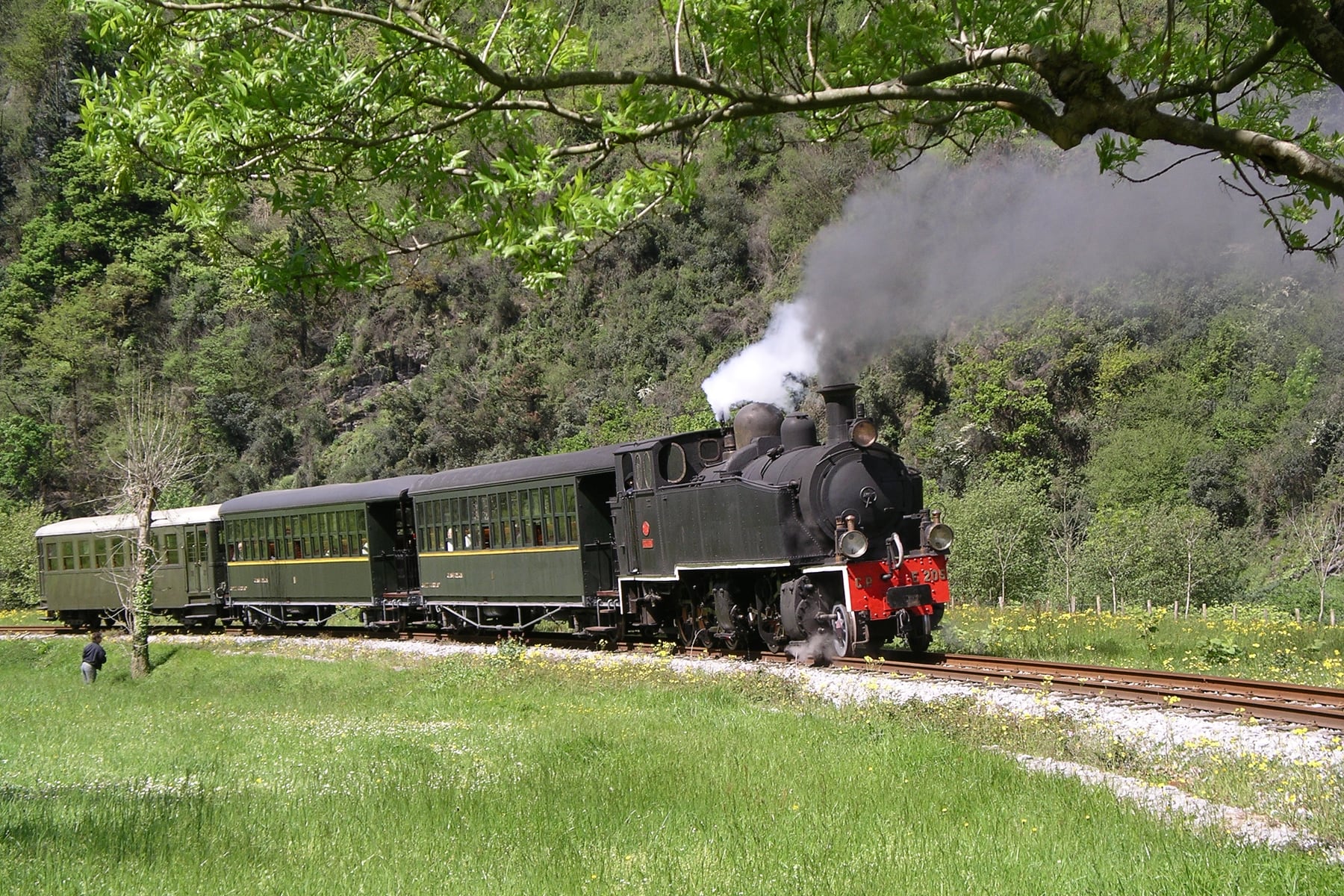
Tren de Vapor de Azpeitia — the electric pioneer that now runs on coal
Nils Öberg / Wikimedia Commons · CC BY-SA 3.0 · cropped
- Distance5 km each way
- DurationAbout an hour, there and back
- Best seasonWeekends, Easter to 1 November
Introduction
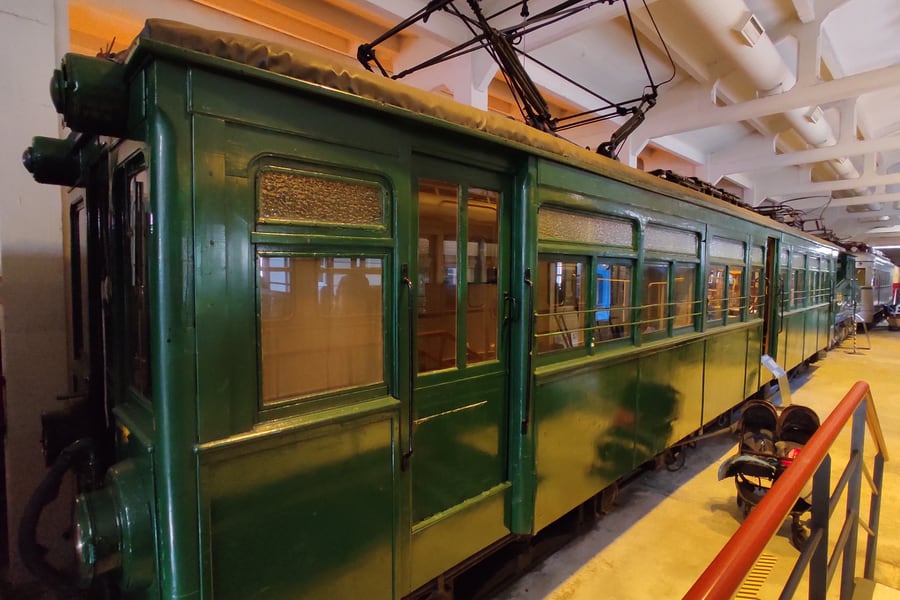
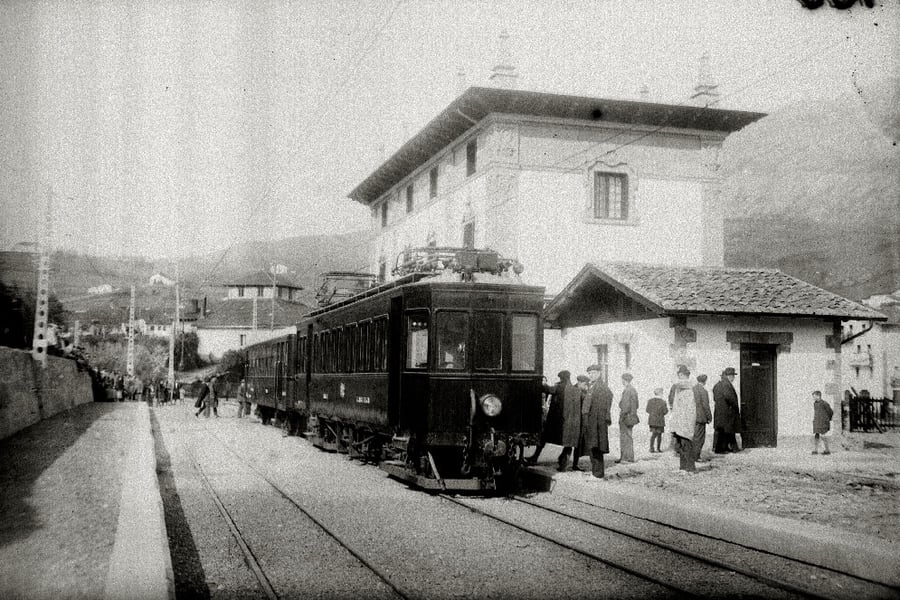
On 22 February 1926 Alfonso XIII opened the Ferrocarril del Urola, a metre-gauge line running the length of a narrow Basque valley from Zumárraga down to the sea at Zumaia. It was the most modern railway in Spain. There was no smoke and no coal: the trains were electric from the first day, seven Siemens railcars drawing 1,500 volts of direct current from a catenary strung the whole way — the first railway in the country to use that voltage. Its carriages, built by CAF at Beasain, were the first in Spain with all-metal bodies.
Sixty years later it was still running those railcars. The same seven Siemens machines, on the same rails laid in 1926, under the same wire. In its whole working life the railway turned a profit in eight years. When the province handed it to the Basque Government in 1985, the choice was to rebuild it from nothing or replace it with three or four buses, and the buses won. The last train ran on 14 July 1986.
What runs there now
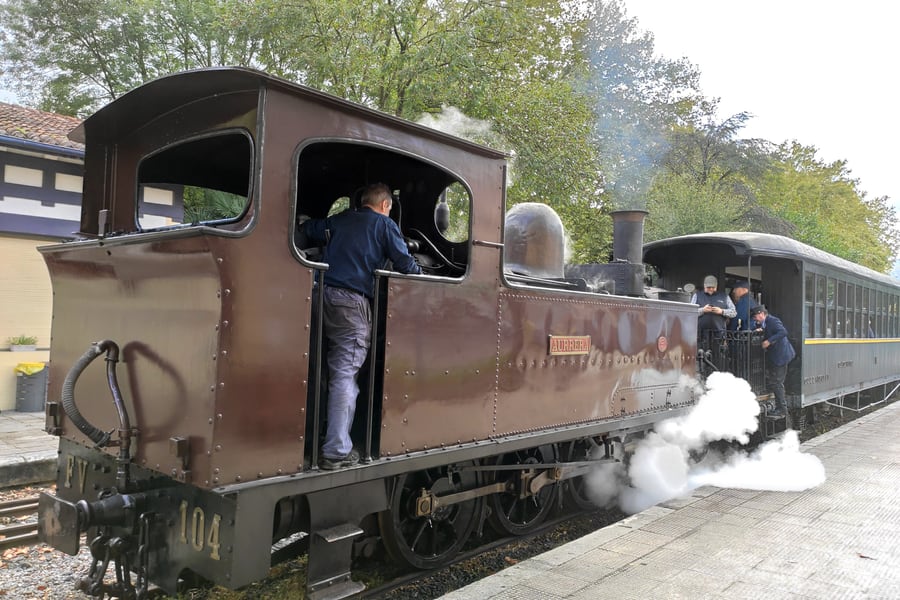
Five kilometres of the formation survive, between Azpeitia and the little station at Lasao, and the trains on them burn coal. The usual engine is a tank locomotive called Aurrera, built by Nasmyth & Wilson in Manchester in 1898 — twenty-eight years older than the railway it works, and of a technology the Urola line was built to skip. It came from the Elgoibar–Donostia line, ran until 1960, and was brought back by the Museo Vasco del Ferrocarril in 1991.
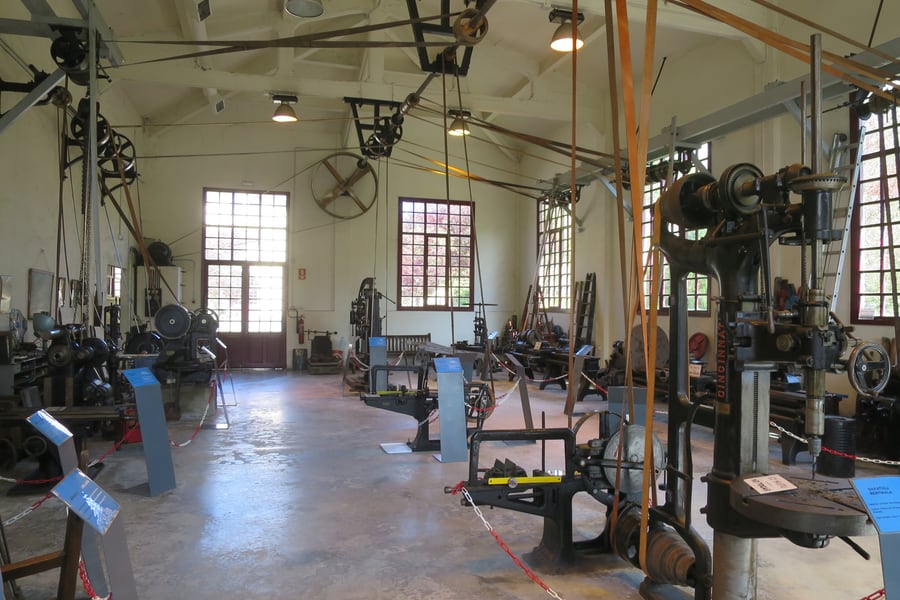
The museum occupies the Urola's own station, offices, carriage sheds and workshops at Azpeitia. Its electric railcars are inside, standing still. The traction substation is inside, with its mercury-arc rectifiers. The machine shop of 1925 is inside, sixteen machines still turned by one electric motor through a ceiling of belts and shafting. Everything electric about this railway is now an exhibit. The only thing moving outdoors is steam.
An hour, and six euros
The ride is short and makes no claim to be otherwise: ten kilometres there and back in about an hour, in wooden CAF carriages of 1925 and 1944, alongside the Urola, over a reinforced-concrete bridge designed a century ago by the engineer José Eugenio Ribera, and through a tunnel of 225 metres. A ticket covering the museum and the train costs €6.
Azpeitia itself has had no railway since 1988. Reaching the steam train means a bus from Zumaia, Zumarraga or Eibar — which is its own kind of comment on what happened here.
The Journey
The train stands in the old Azpeitia station, which has been the Museo Vasco del Ferrocarril since 1992. It is not a museum built beside a railway; it is the railway's own establishment — the passenger building, the administrative offices, the traction substation and, above all, the carriage sheds and workshops, more than two thousand square metres of them, taken over intact when the Urola line stopped.
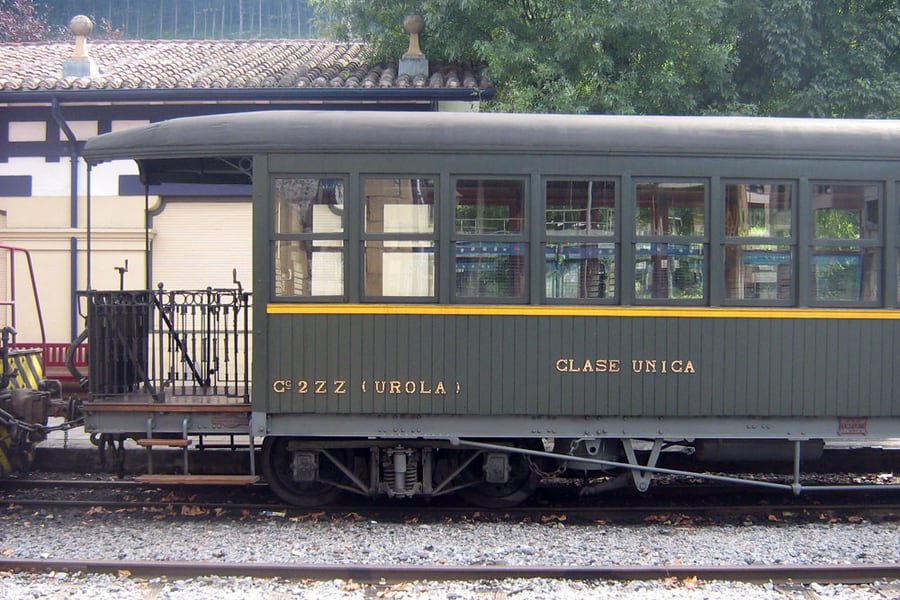
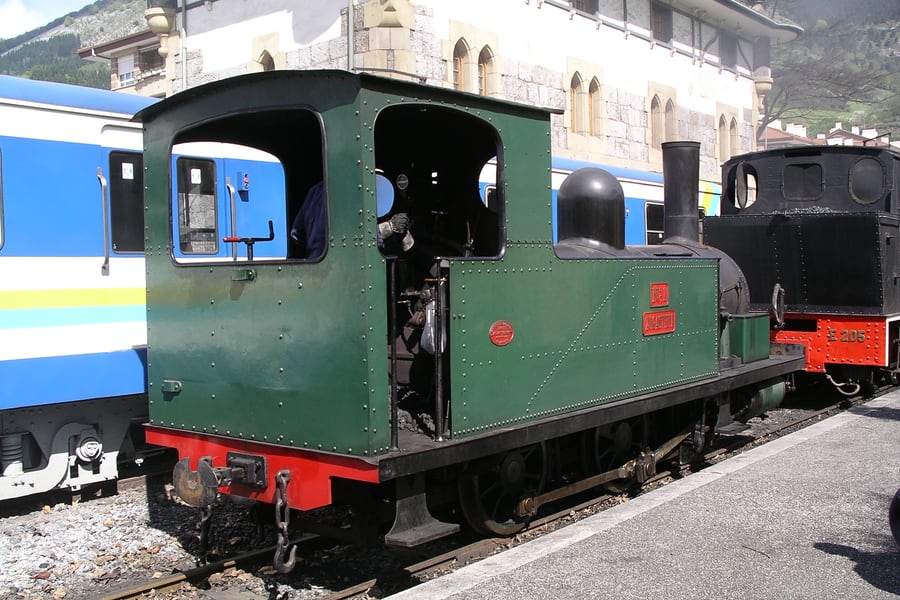
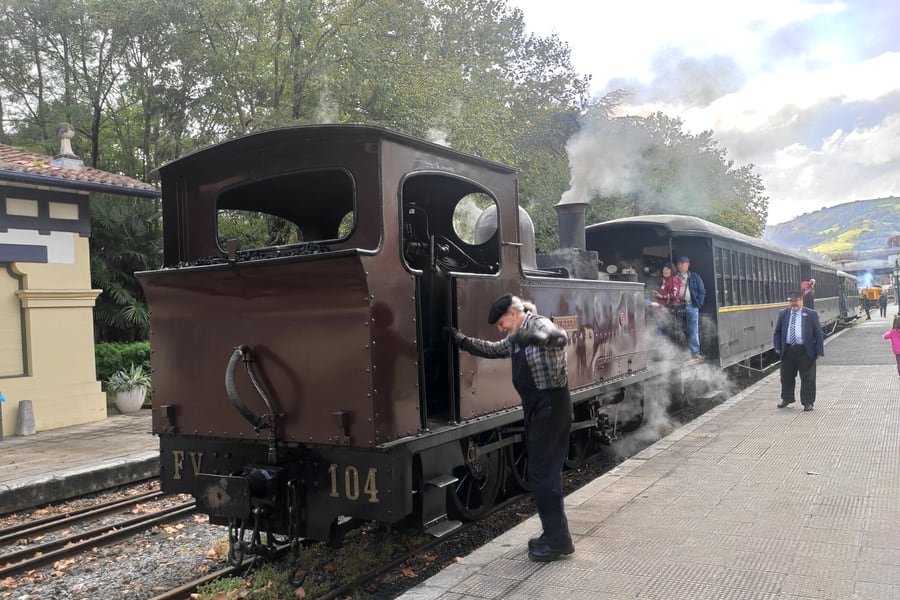
At the head is normally Aurrera, an 0-6-0 tank engine turned out by Nasmyth & Wilson of Manchester in 1898 as works number 551. It is the last of a series built between 1892 and 1898, it worked the line from Elgoibar to Donostia-San Sebastián for six decades, and it was withdrawn in 1960. The museum recovered it in 1991 and it has hauled the historic trains ever since; it carries the number FV 104 of the Ferrocarriles Vascongados on its tanks. Behind it come two or three wooden carriages built by CAF at Beasain between 1925 and 1944 for the Urola and the Vascongados — one of them still lettered C2 ZZ (Urola), clase única, single class.
Five kilometres down the valley
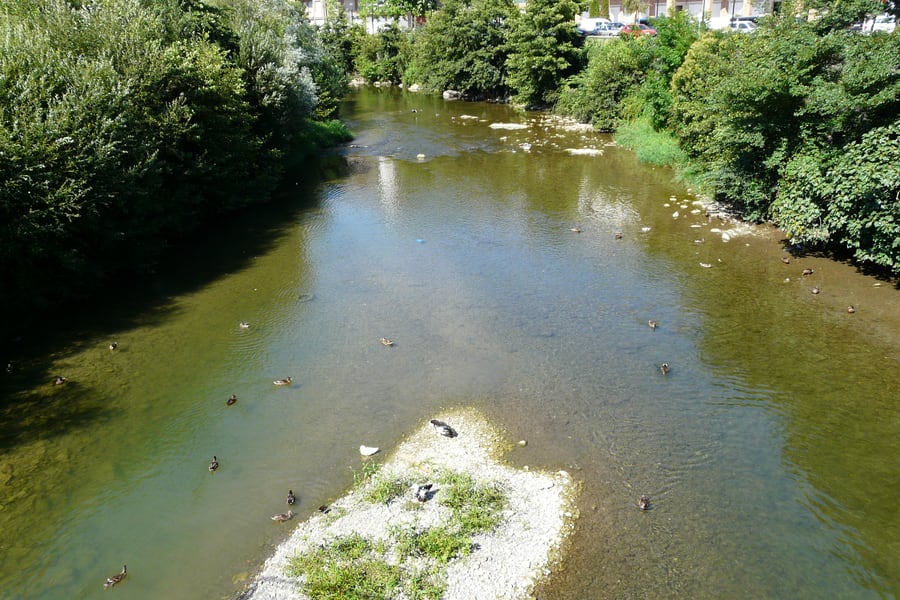
The line leaves the museum and settles beside the river Urola, keeping its right bank for the first two and a half kilometres. The fall is gentle to begin with — an almost imperceptible 2.5 in a thousand through the first kilometre, then 8.8 through the second. A small level crossing marks the start of the third kilometre, which is dead level and holds everything worth seeing.
Here the railway crosses to the left bank on bridge number 18 of the old Urola line: four spans of ten and a half metres each, carried on prefabricated reinforced-concrete π-beams designed by José Eugenio Ribera, the engineer who did more than anyone to establish concrete construction in Spain. It was a demonstration of new material when it was built, as the catenary overhead was a demonstration of new traction — and the only thing crossing it now is a Victorian steam engine. Immediately beyond the far abutment the line enters tunnel 22, 225 metres of it, and the carriages fill with the smell of the smoke that has just gone through ahead of them.
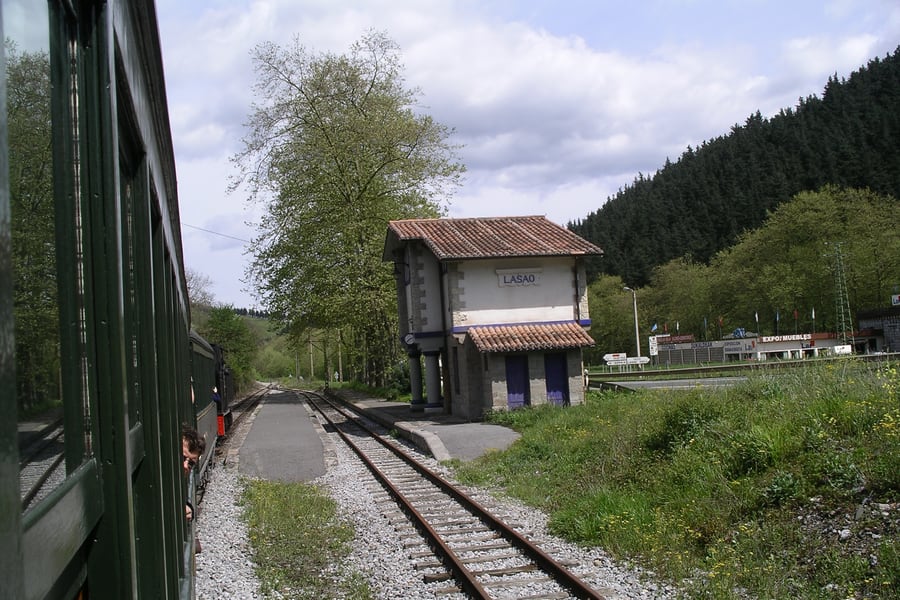
Out of the tunnel the gradient steepens to 16 in a thousand for over a kilometre, and then the line runs level into Lasao. The station building is one of the Urola's originals, designed in the neo-Basque manner of the valley's farmhouses, and it has been fully restored — the Friends of the museum put back the ticket office, the signalling cabin, the stationmaster's living quarters and the passengers' lavatories as they were. There are two platforms and two tracks, because the engine has to run round its train for the journey back. The pointwork at Lasao includes the last two trailable points still in use on the Basque metre-gauge network, a fitting that was once ordinary and now survives in one place.
Who owns what
The arrangement is worth knowing, because it explains why a five-kilometre museum line is maintained to main-line standards. The track itself has belonged since 2005 to Euskal Trenbide Sarea, the Basque government's infrastructure company, which does the preventive and corrective maintenance and also owns and has rehabilitated the Lasao building. Euskotren runs the service through its museum and maintains the vehicles. The volunteers of the Asociación de Amigos del Museo Vasco del Ferrocarril work alongside them.
Steam is the normal traction, but not the only one. On weekdays in August the museum adds services worked by diesel — either an Allan railcar of 1955, on loan from the Portuguese railways, or an Alsthom locomotive from the old Vasco-Asturiano. The line opened as a heritage railway on 12 June 1998, after a first attempt in the other direction: between 1992 and 1995 the museum's trains ran the two kilometres from Azpeitia to Loyola, until a steelworks expansion cut the alignment and the route to Lasao was rebuilt instead.
Along the route
 Ksarasola / Wikimedia Commons · CC BY-SA 4.0 · cropped
An engine twenty-eight years older than the line
Aurrera was built by Nasmyth & Wilson in Manchester in 1898. It worked the Elgoibar–Donostia line for six decades, was withdrawn in 1960 and recovered by the museum in 1991 — a generation older than the electric railway it now runs on.pere prlpz / Wikimedia Commons · CC BY-SA 3.0 · croppedRibera's concrete, and 225 metres of dark
The third kilometre holds everything worth seeing. The line crosses the Urola on four spans of prefabricated reinforced concrete, designed when concrete was still new in Spain, and enters a 225-metre tunnel immediately beyond it — straight into the smoke the engine has just left behind.Pascual Marín / Kutxa Fototeka via Wikimedia Commons · CC BY-SA 3.0 · croppedProfitable in eight years out of sixty
The Urola line was built by the province because private capital would not touch it, and the investors were right: between 1926 and 1986 it returned a profit in eight years, never enough to repay what it cost. There was nothing left to modernise with.A bit of history
Culture & experiences along the way
 Ksarasola / Wikimedia Commons · CC BY-SA 4.0 · cropped
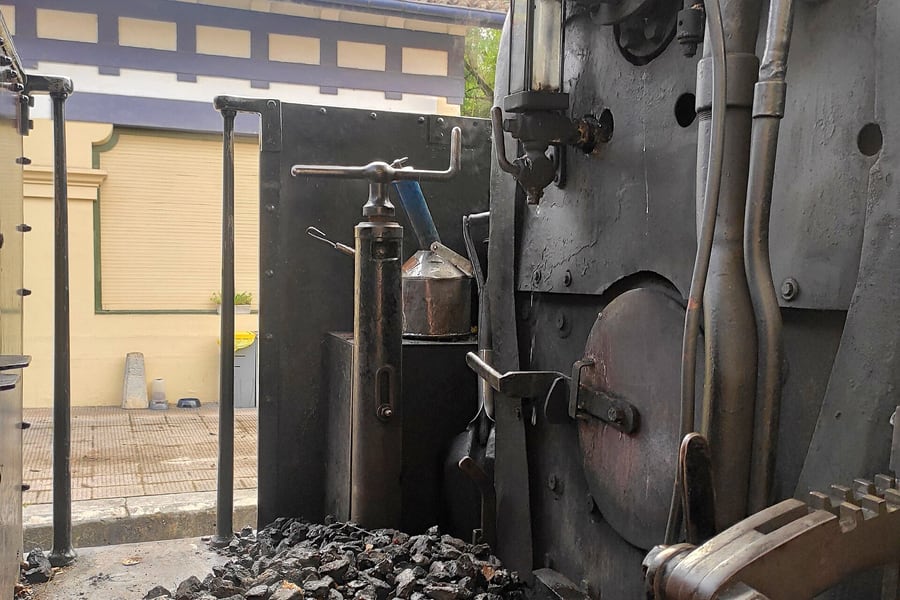
One seat in the cab, one person a day
Fogonera/o por un día was the first footplate experience of its kind on the Iberian Peninsula. It takes one participant per day, booked at least 72 hours ahead by email, arriving an hour and a half early to be trained and equipped, and then working alongside the driver and fireman through the raising of steam and the whole round trip to Lasao. It runs on Sundays and public holidays.Reinhard Dietrich / Wikimedia Commons · CC BY-SA 4.0 · croppedA workshop that still runs off one motor
The Urola's mechanical shop survives exactly as it was commissioned in 1925: sixteen machine tools driven by a single electric motor through a ceiling of shafting, pulleys and belts. It is among the most complete sets of machine tools in the Basque Country, and next door the traction substation still holds its original mercury-vapour rectifiers.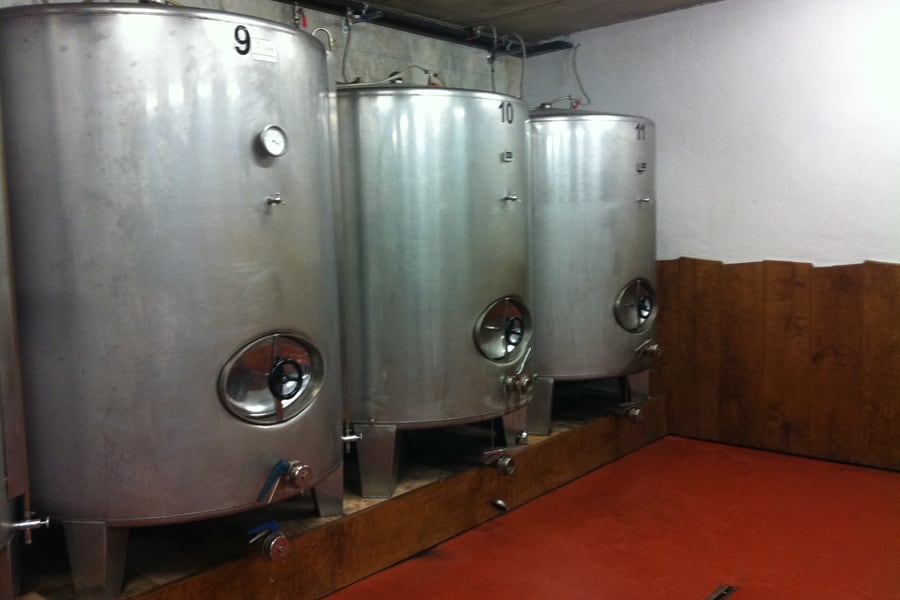 Kippelboy / Wikimedia Commons · CC BY-SA 3.0 · cropped
Txotx, and the cider houses in season
From January to about April the Gipuzkoan sagardotegiak open their doors, and the ritual is fixed: someone calls txotx, the peg comes out of a barrel taller than you are, and everyone queues with a glass held low to catch the jet. It is drunk standing, between courses of cod omelette, chop and walnuts with cheese and quince.Timetables
The steam train runs at weekends and on public holidays through a season that opens at Easter and closes at the start of November. Departures are from the museum's own platform at Azpeitia, and each one is a return trip to Lasao lasting about an hour.
As of August 2026, from the operator's published season:
| When | Departures from Azpeitia |
|---|---|
| Saturdays | 12:00 and 17:30 |
| Sundays and public holidays, except Mondays | 12:00 |
| Easter, 2–6 April 2026 | 11:00 and 16:30, two a day |
The regular service began on 7 April 2026 and runs to 1 November 2026 inclusive. The museum adds extra trains when weekend demand calls for them, and again over the December Constitución–Inmaculada holiday. A historic train can also be chartered on any day the museum is open, which groups — schools, tour operators, associations — use a good deal.
Museum opening hours
The train only runs when the museum is open, so the two timetables belong together. The summer hours in force are:
| Tuesday to Saturday | 10:30–14:00 and 16:00–19:30 |
| Sundays and public holidays, except Mondays | 10:30–14:00 |
The museum is closed every Monday of the year, and takes a winter break from 22 December to 6 January. Outside the summer months the weekday hours shift slightly, to 10:00–13:30 and 15:00–18:30 from Tuesday to Friday.
Getting to Azpeitia
There is no railway to Azpeitia. The Urola line was lifted after 1988 and the town has been served by road ever since, so the last stage of the journey is a Lurraldebus coach whichever way a traveller comes. The museum gives three approaches:
- From Bilbao — Euskotren to Eibar, then Lurraldebus to Azpeitia.
- From Donostia-San Sebastián — Euskotren to Zumaia, then Lurraldebus to Azpeitia.
- From Vitoria-Gasteiz — Renfe to Zumarraga, then Lurraldebus to Azpeitia.
Zumaia and Zumarraga were both stations on the old Urola railway, at its two ends. Travelling to the steam train therefore means covering part of the closed line by bus in order to ride the surviving five kilometres of it.
Times confirmed against Euskotren's published 2026 season and the museum's own site, August 2026.
Tickets
There is one ticket, it is bought at the museum, and it costs six euros — museum admission and the return trip on the steam train together. Admission alone is €3.00, and groups of more than 25 pay €2.00 a head. There is no seat reservation, no class of accommodation and no online booking: the train is sold as part of a museum visit, at the door, on the day. Since a departure is two or three carriages, arriving well before the advertised time is sensible on a fine summer Saturday.
The one thing that does need booking is the Fogonera/o por un día footplate turn — one person a day in the cab for the whole round trip, taken by email at least 72 hours ahead. Participants arrive ninety minutes early and join the crew through raising steam. The museum publishes no price for it, so none is quoted here. Prices checked August 2026.
Book your tickets
 Ksarasola / Wikimedia Commons · CC BY-SA 4.0 · cropped
Museum admission and the steam train
One ticket, bought at the museum on the day
Six euros covers the collection, the 1925 machine shop, the traction substation, the clock and uniform rooms and the return trip to Lasao behind the steam engine. Museum admission on its own is €3, and groups of more than 25 pay €2 a head. There is no online booking, no reservation and no class of accommodation — the train is sold as part of a visit, at the door, on the day it runs.
Book Tickets (opens in a new tab, on euskotren.euskadi.eus)via euskotren.euskadi.eusRail Passes
A rail pass is of no use on this train, and of very limited use in getting to it. That is worth saying plainly, because the Basque Country is one of the places in Spain where an Interrail or Eurail pass covers less than a traveller might assume.
The steam train itself
The trip to Lasao is sold as museum admission, not as a rail fare. At €6 for the museum and the train together there is nothing for a pass to discount, and no pass product includes it.
Reaching Azpeitia
Interrail's own list of participating companies in Spain puts Euskotren in the excluded column — alongside Renfe's luxury and tourist trains, Ferrocarrils de la Generalitat de Catalunya, Ferrocarrils de la Generalitat Valenciana, Serveis Ferroviaris de Mallorca, and the two low-cost high-speed brands Avlo and OUIGO Spain. Euskotren is the operator of the metre-gauge network along this coast, and it runs the trains to Zumaia and Eibar, which are two of the three approaches the museum recommends.
What a pass does cover in Spain is Renfe: Cercanías, Media Distancia, Intercity, Alvia, Avant, Euromed, AVE and AVE International, plus the former FEVE services now branded Cercanías AM. ⚠️ It does not cover Avlo, which is Renfe's own low-cost AVE and looks like an ordinary one on a departure board. Of the three routes to Azpeitia, that leaves one — Renfe to Zumarraga, on the Madrid–Irun main line, and then a Lurraldebus coach up the valley.
So is a pass worth it
For this journey alone, no. For a wider trip through the north of Spain it can be, provided the itinerary is built on Renfe rather than on the Basque narrow gauge — the Cantabrian coastal route from Bilbao westwards is Renfe's and is covered, while the Bilbao–San Sebastián–Hendaye run is Euskotren's and is not. Anyone planning to move about Gipuzkoa and Bizkaia on local trains is better served by Euskotren's own fares and travel cards, which are not pass products at all.
Pass conditions checked against Interrail's published list of participating railway companies, August 2026.
Places to Visit
The train covers five kilometres, which leaves most of a day. Everything below is in the Urola valley — the same valley the closed railway served for sixty years — and the first two are within walking distance of the museum.
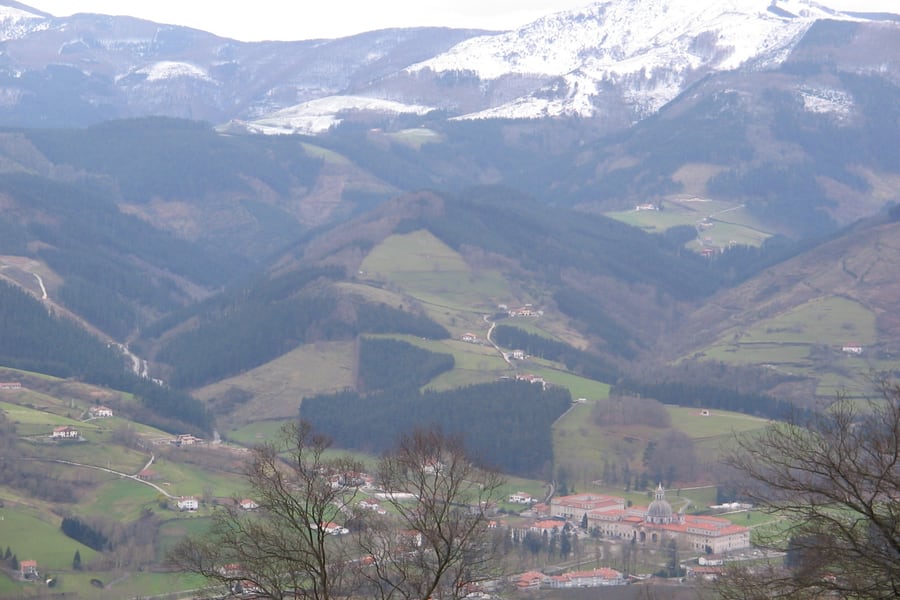
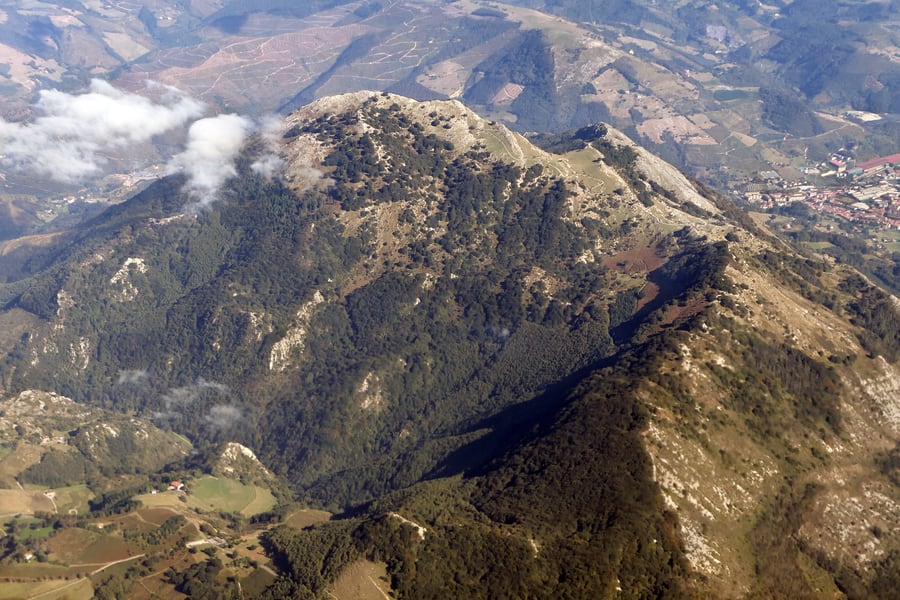
Azpeitia is a town of about fifteen thousand people, built on metal and timber and standing at 80 metres above the sea with mountains of eight hundred to a thousand metres around it. Its visitors have always come for one thing, and that thing is a kilometre and a half from the platform where the steam train stands.
 Roberto Chamoso G / Wikimedia Commons · CC BY-SA 3.0 ES · cropped
Santuario de Loyola
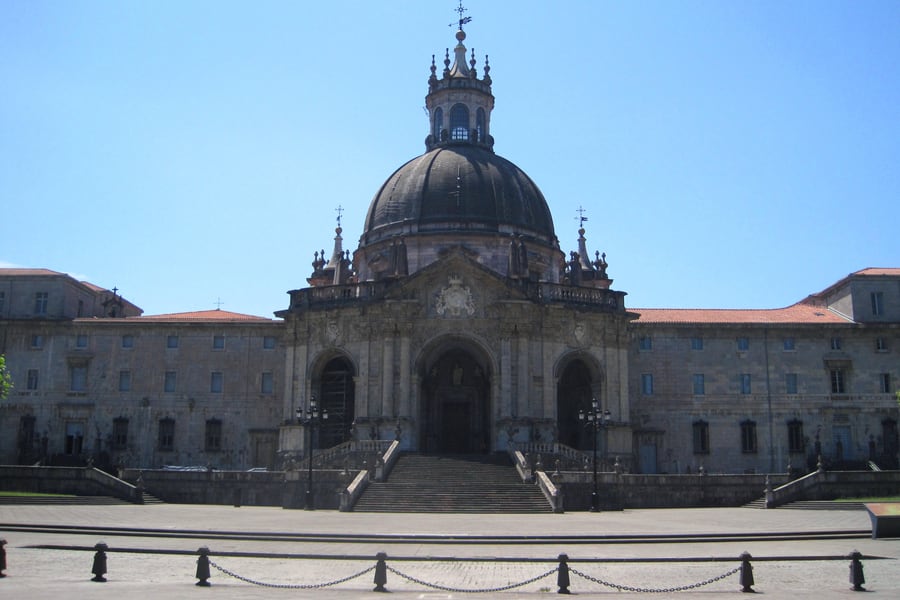
Ignatius of Loyola was born here in 1491, in a fourteenth-century tower house, and the Jesuits built a baroque complex around it — a domed basilica flanked by two long wings, covering 10,000 m² of ground and more than 40,000 m² of floor. The limestone came from the Izarraitz massif that closes the valley. The old railway had its own station at Loyola, two kilometres up the line from Azpeitia.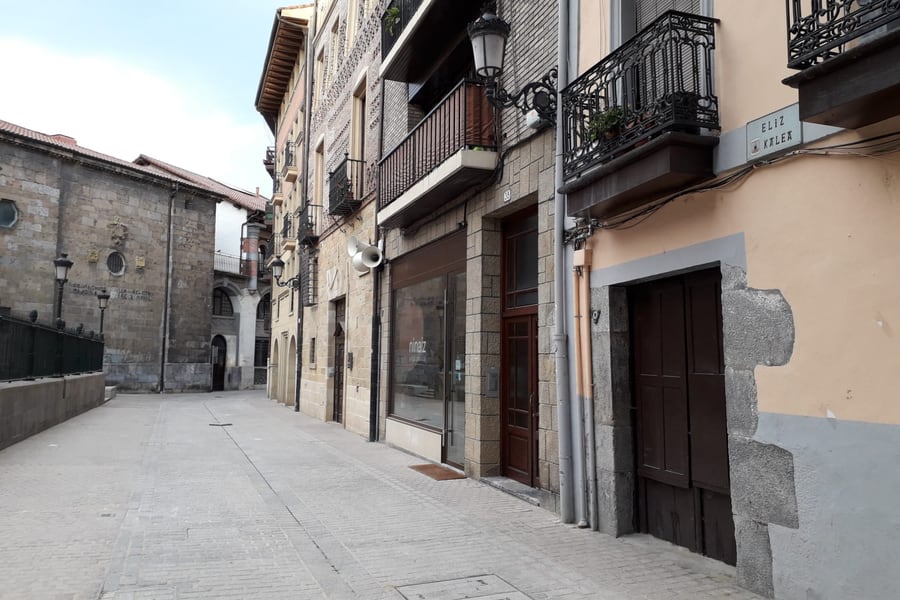 Irati Urbieta / Wikimedia Commons · CC0 · cropped
Azpeitia old town
A town chartered in 1310 by Fernando IV, built on ironworking and timber and still largely doing both. The parish church of San Sebastián de Soreasu holds a baroque high altar, an organ by Aquilino Amezua and the font in which Ignatius was baptised; its neoclassical doorway is by Ventura Rodríguez. The streets around it are quiet stone and close enough to walk between trains.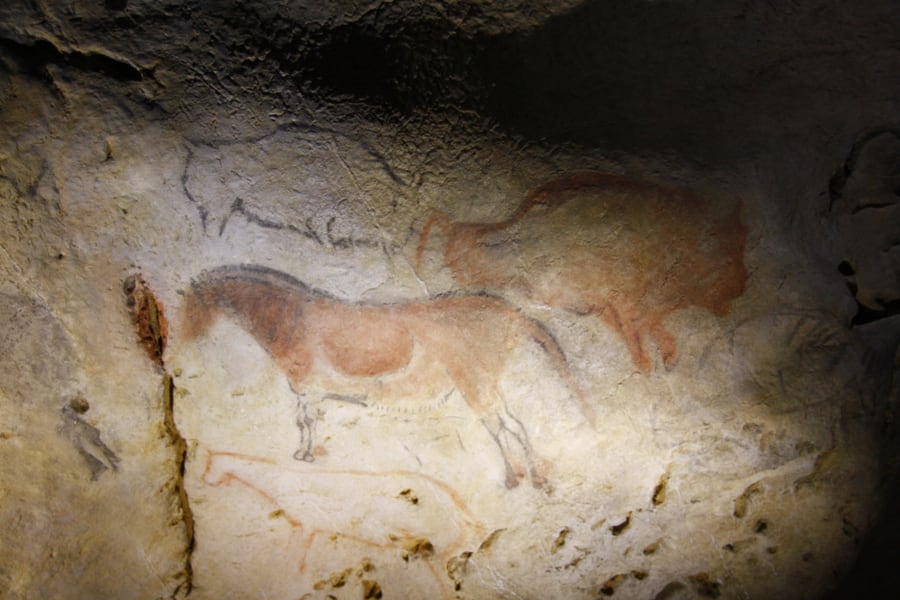 GipuzkoaKultura / Wikimedia Commons · CC BY-SA 2.0 · cropped
Ekainberri
The cave of Ekain was found on 1 June 1969 by two members of an Azpeitia society walking the Izarraitz hills. Its Magdalenian horses are among the finest in all Franco-Cantabrian art, and UNESCO listed the cave in 2008. The original is shut to protect the paintings; Ekainberri, the full replica beside it, is what visitors see.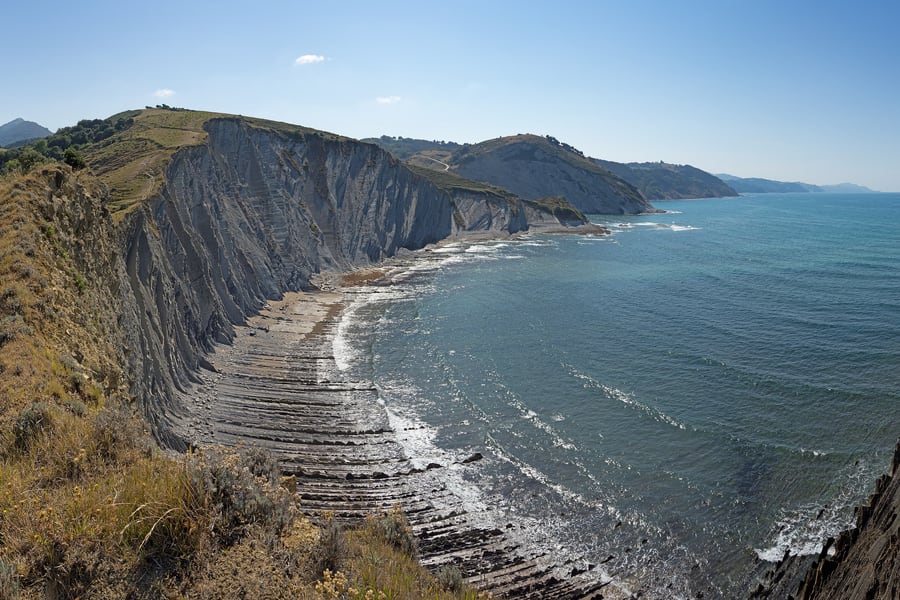 Jörg Braukmann / Wikimedia Commons · CC BY-SA 4.0 · cropped
The flysch coast at Zumaia
Zumaia was where the Urola railway met the sea, and it has its own port and quay. The cliffs between here and Deba expose flysch in vertical sheets that read as about sixty million years of continuous geological record, including the boundary marking the extinction of the dinosaurs. UNESCO made the stretch a Global Geopark in November 2015.Where to Sleep
Azpeitia is a working Basque town rather than a resort, and its accommodation reflects that: a short list, family-run, aimed at pilgrims to Loyola and at people with business in the valley. The alternative is to sleep down the line at Zestoa, where the spa the railway once served is still taking guests.
Both of the houses below sit near a station of the old Urola railway — one by Loyola, a stop two kilometres up the line from the museum, the other beside the halt that was built to serve the spa itself and closed with everything else.
Where to stay
Hotel Loiola
Family-run, 500 metres from the sanctuary
Opened in 1996 on Loiolako Inazio Hiribidea in Azpeitia, half a kilometre from the Sanctuary of Loyola and a walk from the museum. Its own account gives modern rooms, a restaurant open all year and a meeting room, with the family-run welcome it makes a point of. The town sits in the middle of Gipuzkoa, ringed by green mountains, with the coast about a quarter of an hour away.
Check Availability (opens in a new tab, on hotelloiola.com)via hotelloiola.com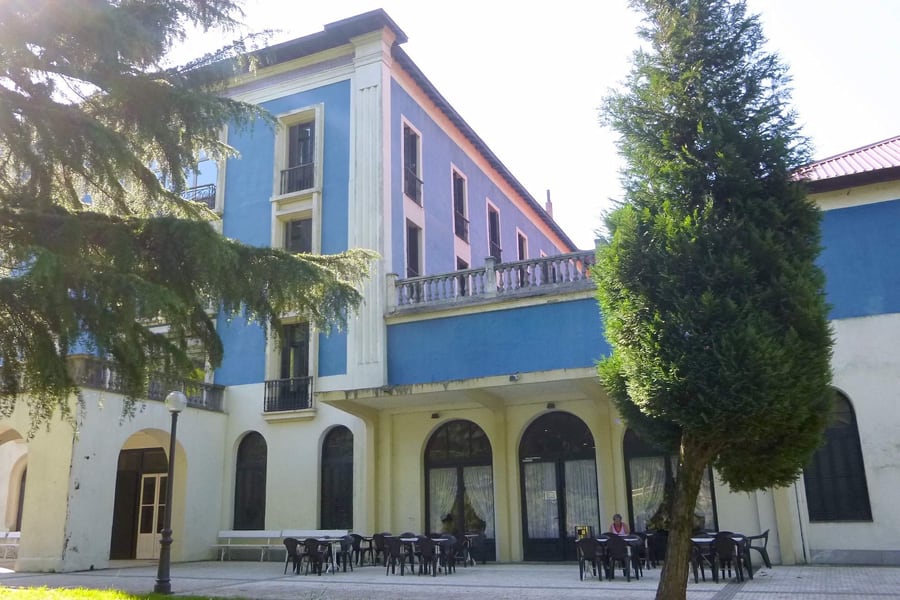 Zarateman / Wikimedia Commons · CC0 · cropped
Gran Hotel del Balneario de Cestona
The spa the railway was built past, still open
A nineteenth-century spa in the Urola valley at Zestoa, on the stretch of line beyond Lasao that closed in the 1980s — the Urola railway gave it a station of its own, called Balneario de Cestona. The house gives 127 rooms over three floors, some of them in the former Hotel Etxeberri, looking onto the gardens or the river Urola, with two restaurants, a cafeteria and a terrace.
Check Availability (opens in a new tab, on balneariosrelaistermal.com)via balneariosrelaistermal.comQuestions or corrections
Planning this trip and stuck on something, or spotted a time, fare or detail that has changed? Send us a message about Tren de Vapor de Azpeitia — the electric pioneer that now runs on coal. We read every one, and we update this page when something has changed.