Expreso de La Robla — the train that was built as a classroom
Ander Ibarra / Wikimedia Commons · CC BY 4.0 · cropped
- Distance335 km · Bilbao-La Concordia to León, metre gauge
- Duration3 days / 2 nights
- Best seasonJune and September — the only months it runs
Introduction
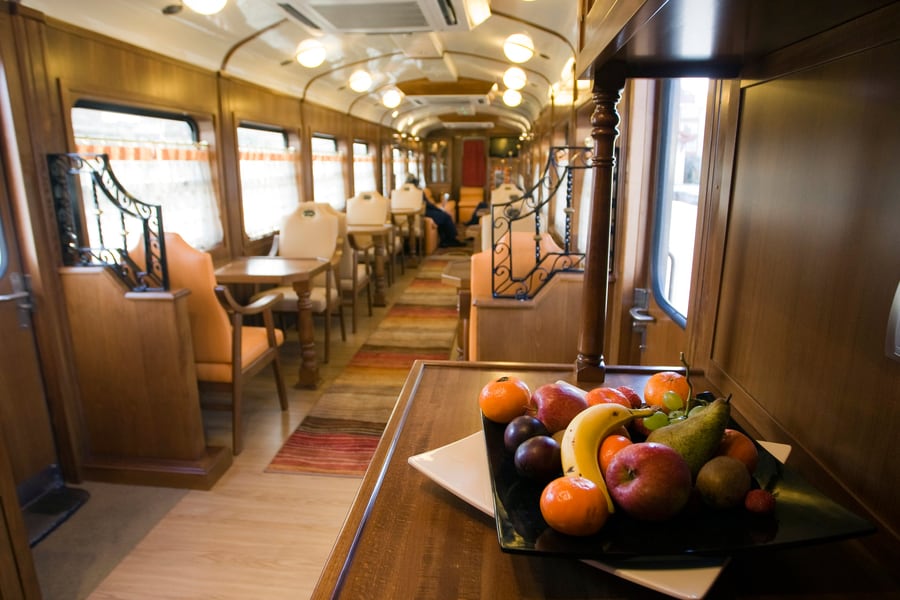
When Spain's narrow-gauge operator unveiled this train in December 2009, the thing it wanted to talk about was not the beds. Nine coaches had been rebuilt in FEVE's own workshops at El Berrón and Santander for about three million euros, and three of them — made out of ordinary carriages from the middle of the last century — were saloons fitted with a bar, an office and a pub lounge with large projection screens, described in the company's own announcement as rooms for holding meetings and giving courses and lectures.
The first product sold on it was called the Taller del Románico: the Romanesque Workshop. Four days out of León and back, Thursday to Sunday, with specialists lecturing on board between the visits — Europe and Romanesque Art, Knowing and recognising the Romanesque — audiovisual material to go with them, and a diploma handed to every passenger at the end. The launch offer was 595 euros a head. The operator's own website called it a luxury train adapted to every pocket.
The workshop lasted one season. By the start of 2011 it had gone from the line-up, replaced by a run along the Galician coast, and what is sold today is three days and two nights between Bilbao and León at 1,550 euros a person. The lectures are gone and so is the diploma. What survives is the syllabus: the middle day of the trip is still Frómista, Carrión de los Condes and the Roman villa at La Olmeda, the same Palentine Romanesque the course was built around, now visited by coach with nobody to explain it but the guide.
That is worth knowing before you book, because it explains the shape of the three days. The Expreso de La Robla is named after one of the great industrial railways of northern Spain — 335 kilometres of metre gauge built in the 1890s to carry coal from León and Palencia to the blast furnaces of Bilbao, and still the longest narrow-gauge route in western Europe. The train runs on it. But the railway is the address of the classroom rather than its subject, and a luxury coach follows the train the whole way to take passengers to the things on the programme.
The Journey
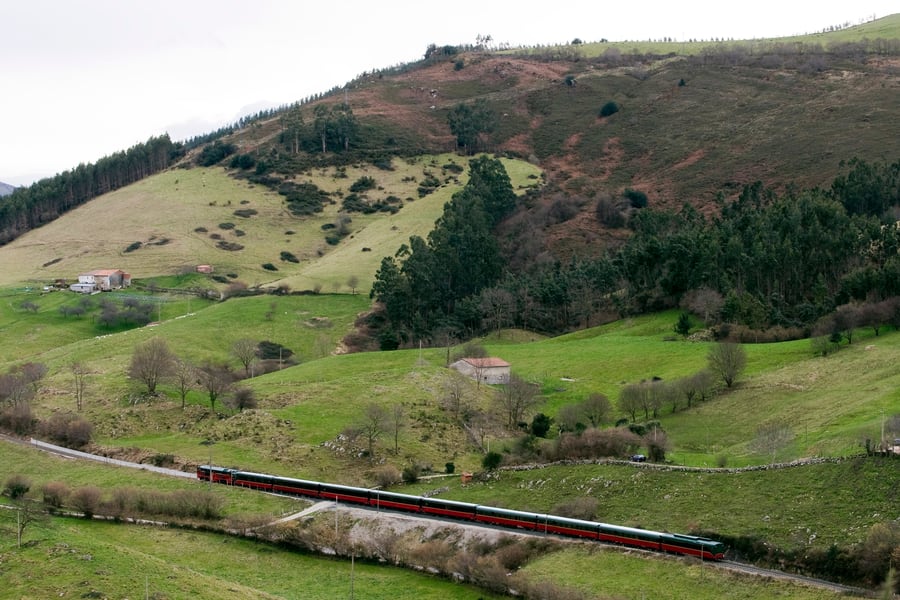
The railway came out of a problem with arithmetic. By the end of the nineteenth century Bilbao was one of the great iron and steel districts of Europe and the only major one in the world that did not sit on a coalfield. Coke had to arrive by sea from Asturias and England, in the same ships that carried the iron ore out, so the price of fuel was tied to the price of exporting ore — and when British coal jumped in 1889 and 1890 the Basque steel houses went looking inland instead.
The answer was a railway to the coalfields of León and Palencia, projected by the mining engineer Mariano Zuaznávar and put to the Cortes in November 1889. Two versions were studied, one of them at Iberian gauge; metre gauge won because it was reckoned to save around sixty per cent against a standard-gauge line through that country. The company was formed in April 1890 with Basque money, the first 45 kilometres from Valmaseda to Espinosa de los Monteros opened in October 1892, and the main line was inaugurated on 11 August 1894 at Los Carabeos — a station in the middle of nowhere in Cantabria, chosen because a train could reach it from each end on the same morning.
It worked for sixty years. Coal traffic peaked at 908,464 tonnes in 1958 and passenger numbers at 1,450,984 in 1948, and the towns along it — Cistierna, Guardo — grew into industrial places on the back of it. Then the coal went. The company went bankrupt in 1972 and FEVE took it over; in December 1991 the passenger service between Guardo and Valmaseda was stopped outright on safety grounds, cutting the middle out of the line. Local councils and campaigners spent the next decade getting it back, section by section, and on 19 March 2003 a through León–Bilbao service ran again.
What the train is made of
Very little of the Expreso de La Robla was built for it. The three saloons — Picos de Europa, Ciudad de León and Villa de Bilbao — began as ordinary BB-series carriages of the mid-twentieth century. The sleeping accommodation was made by gutting multiple-unit trailers and fitting seven compartments into each, which is why there are exactly 28 cabins in four cars and a maximum of 56 people on board. Each compartment holds two folding bunks 70 cm wide and 1.80 m long, a wardrobe, a reading light, adjustable air conditioning and its own bathroom with a shower, in about 3.42 square metres including the bathroom. The whole train is gangwayed, and the saloons — the ones designed for the lectures — keep the permanent bar and the big windows.
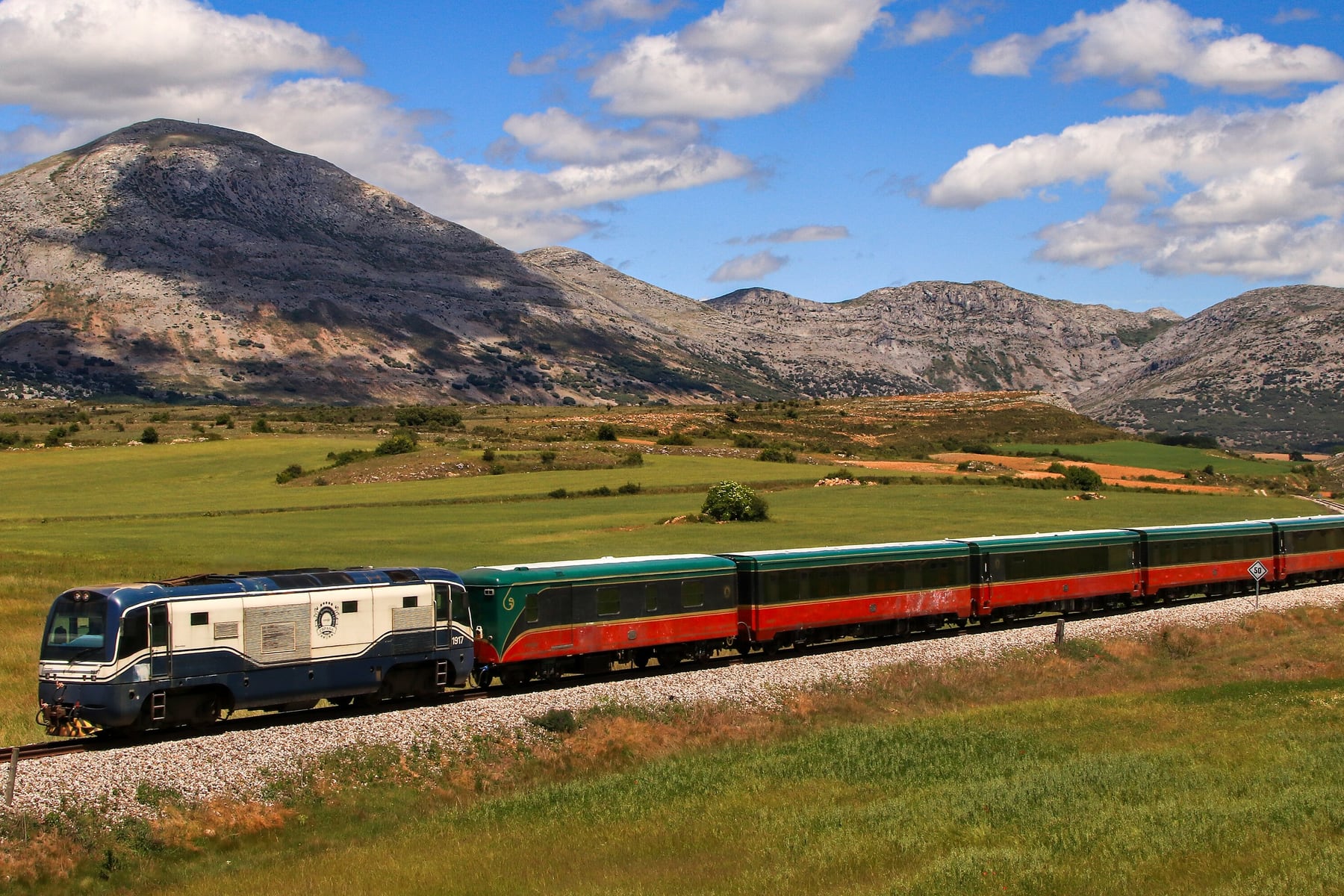
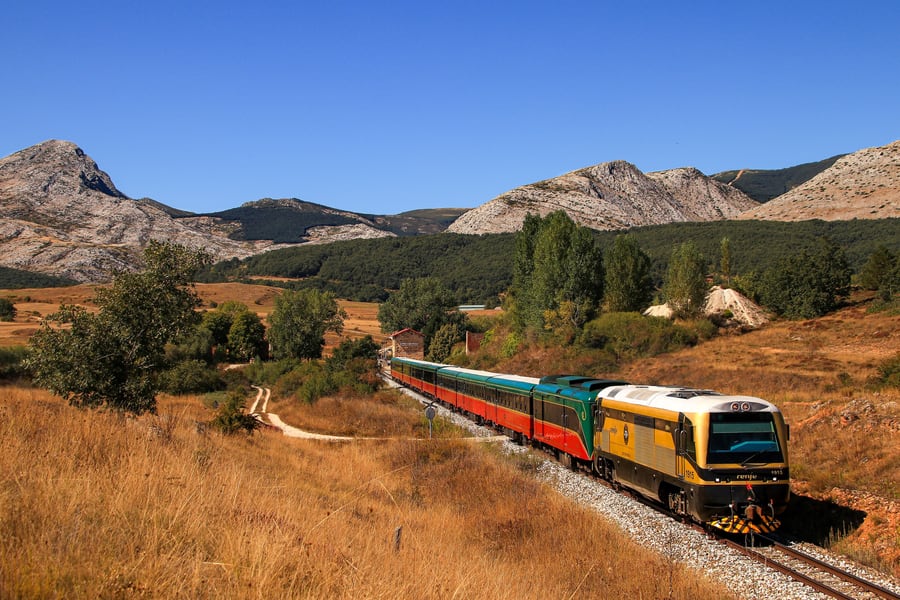
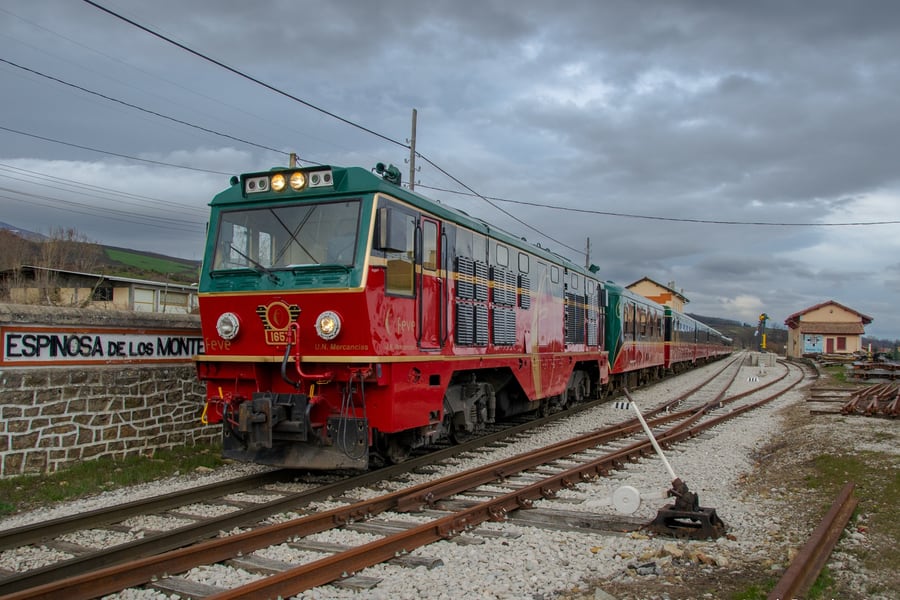
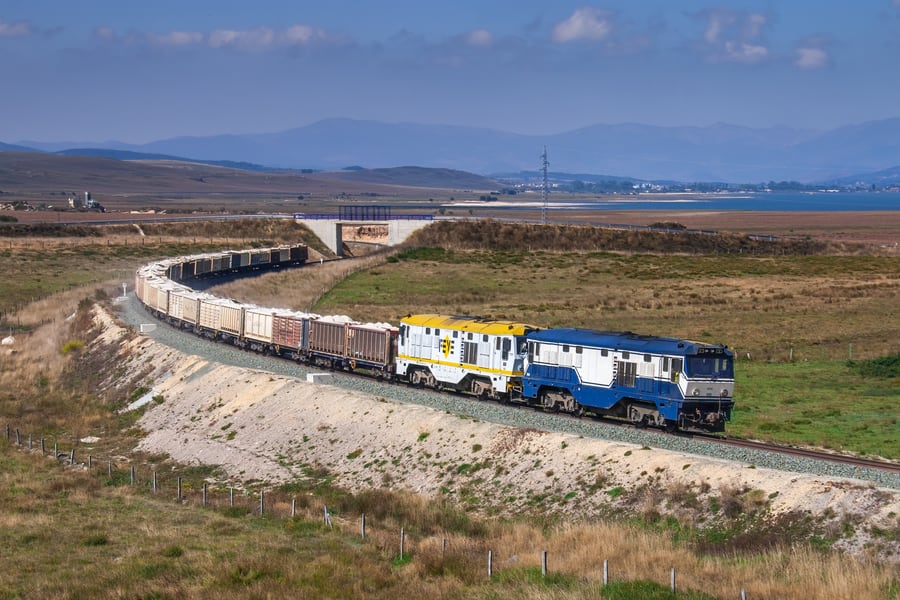
The locomotive is the newest thing on the train. It is usually no. 1917, the last of seventeen machines that Renfe now calls Class 619 and FEVE called the 1900s: 1950s Alsthom diesels stripped to the frames and rebuilt between 2002 and 2004 by CAF–Sunsundegui at Alsasua with Siemens equipment, able to work off the overhead wire or off their own diesel engine, a combination with no precedent in Spain. Nos. 1911 to 1917 arrived in 2004. On this line the electric half is dead weight, because the La Robla railway has never had a wire over it.
How the three days actually go
The pattern is a short rail leg over breakfast, a long coach excursion inland, and another rail leg before dinner, with the train stabled overnight in a station — Espinosa de los Monteros one night and Cistierna the other. Renfe's own description of the trip includes a luxury coach that accompanies the train for the whole route.
That coach does a great deal of the work. In the Bilbao-to-León direction the first afternoon leaves the train at Espinosa and drives to Frías and the falls at Tobera; the second day the passengers spend at Frómista, Carrión de los Condes, Saldaña and La Olmeda while the train makes its own way across Palencia; the last morning ends at San Feliz, from where a coach runs into León for the cathedral and San Isidoro. Going the other way, day one starts with lunch in León and a coach up the Hoces de Vegacervera to the Valporquero cave, and the final morning is the only stretch where the scenery and the itinerary agree completely — breakfast while the train crosses the Valle de Mena into Bilbao.
The eight-hour version
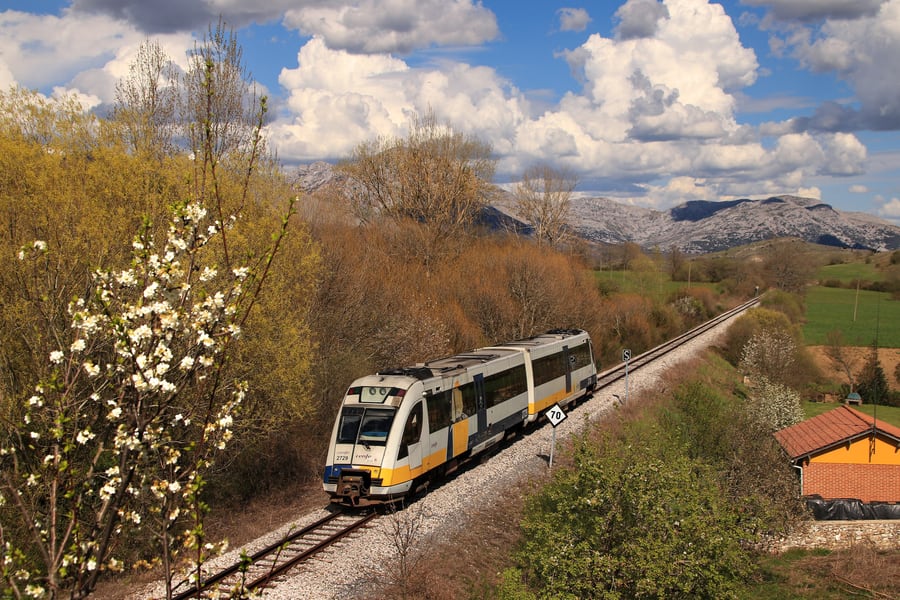
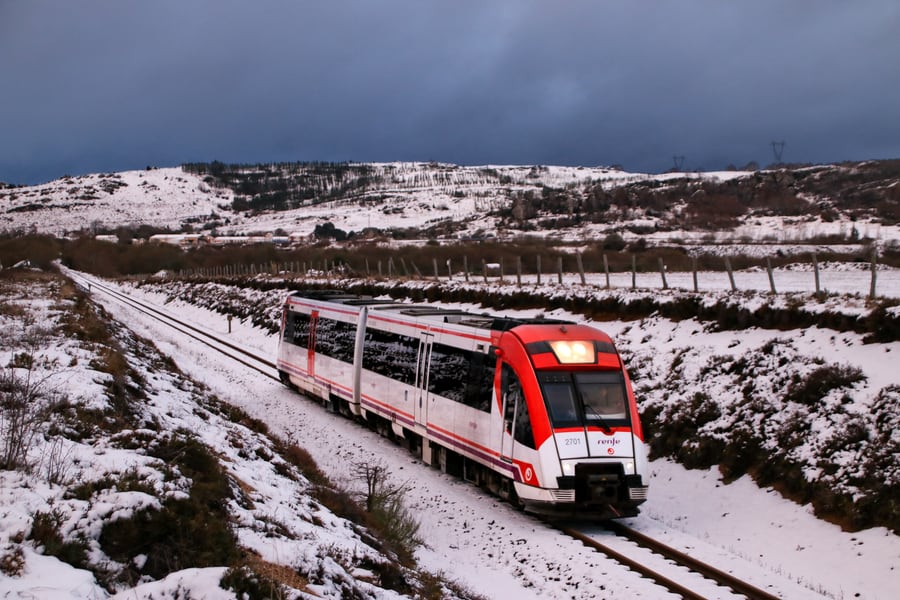
The same railway carries an ordinary train. Renfe runs one Media Distancia working each way every day over the full 335 kilometres, calling at some fifty stations: 71891 leaves León at 13.40 and reaches Bilbao-La Concordia at 21.47, and 71876 leaves Bilbao at 14.25 and is in León at 22.22. It costs 23.35 euros from León as far as Balmaseda. It has no beds, no guide and no coach, and it stays on the rails for the whole of it — over the Puerto del Cabrio at 750 metres, along the arm of the Ebro reservoir at Arija, and down the Cadagua into Bilbao. The Expreso's programme takes its passengers off the train for a good part of the middle day; the ordinary one never leaves the line.
Along the route
José Ignacio Esnarriaga San José / Wikimedia Commons · CC BY 4.0 · croppedA railway built because Bilbao had no coal
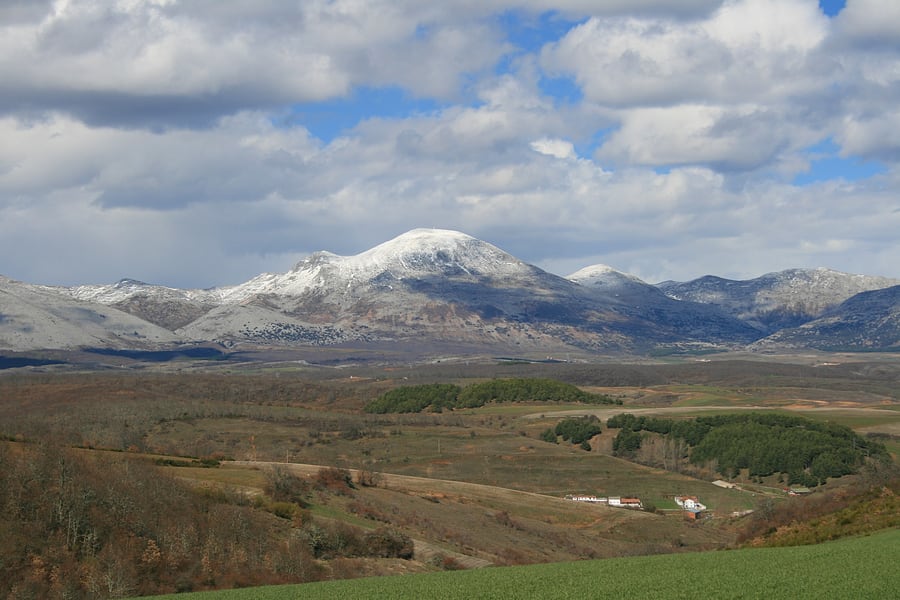
Bilbao was one of the great steel districts of Europe and the only major one not sitting on a coalfield. When British coal jumped in 1889 the Basque houses financed their own line inland. Metre gauge was chosen over Iberian for a saving reckoned at about sixty per cent.José Ignacio Esnarriaga San José / Wikimedia Commons · CC BY 4.0 · croppedOpened in the middle of nowhere
The main line was inaugurated in August 1894 at Los Carabeos in Cantabria — an intermediate station picked for the ceremony because a train could reach it from each end on the same morning.Ander Ibarra / Wikimedia Commons · CC BY 2.0 · croppedThe locomotive is the modern part
The train is usually headed by a 1950s Alsthom diesel stripped to the frames and rebuilt in 2002 to run off the wire or off its own engine. On this line the electric half is dead weight: the La Robla railway has never had a catenary.A bit of history
Culture & experiences along the way
respenda1 - Miguel / Wikimedia Commons · CC BY 2.0 · croppedThe middle day is a coach day
Renfe's own description of the trip includes a luxury coach that accompanies the train for the whole route. On day two the passengers spend the daylight hours at Frómista, Carrión de los Condes, Saldaña and the Roman villa at La Olmeda, none of which is beside the railway, while the train makes its own way across Palencia. It is the shape the 2010 Romanesque workshop left behind.Luxury Train Club / Wikimedia Commons · CC BY-SA 2.0 · croppedNobody sleeps on the move
The train stops for both nights in a station — Espinosa de los Monteros and Cistierna — so the running is done in daylight and the nights are spent stationary. There is one grade of accommodation: a standard compartment with two folding bunks 70 cm wide, a wardrobe, a reading light, its own air conditioning and its own bathroom with a shower, in about 3.42 m² including the bathroom.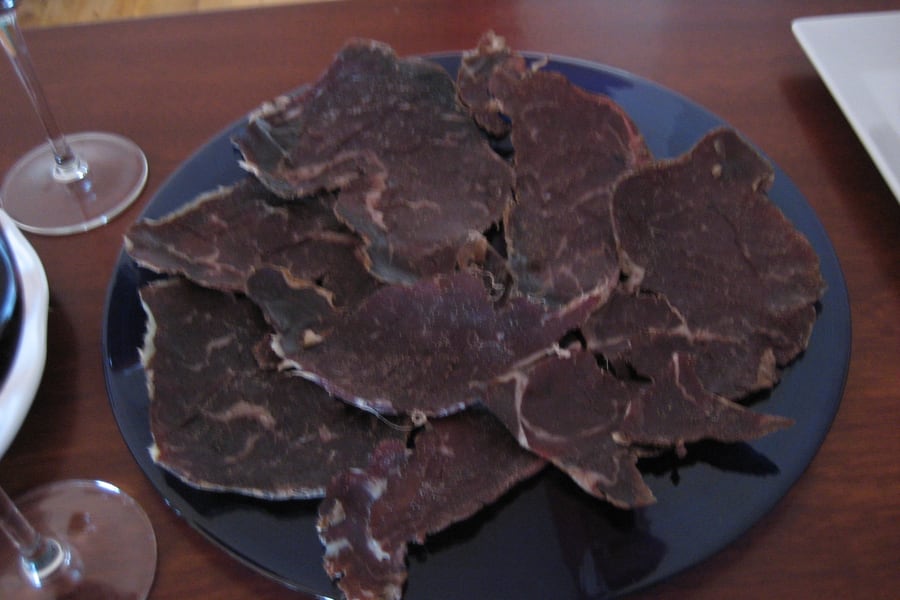 Boca Dorada / Wikimedia Commons · CC BY-SA 2.0 · cropped
Cecina, at the León end
León's contribution to the table is cecina: a hind quarter of beef salted, smoked over oak and then air-dried for a year or more, carved into sheets so thin the light comes through them. It carries a protected origin, it is eaten cold with oil and a glass of Bierzo red, and every bar in the city will put a plate of it in front of you.Timetables
The Expreso de La Robla runs a handful of times a year, always Friday to Sunday, and the seasons are short. Everything below is taken from the operator's own itinerary and price pages, read on 19 August 2026, and the 2027 season was already on sale on that date.
2027 departures
| Direction | June | September |
|---|---|---|
| Bilbao → León | 4, 18 | 3, 17 |
| León → Bilbao | 11, 25 | 10, 24 |
Three days and two nights each way, Friday to Sunday. Eight departures in the year, and no service in July, August or October.
2026 departures
The 2026 season was four trips: Bilbao to León on 5 June and 11 September, León to Bilbao on 19 June and 25 September. Both June departures have already run.
The shape of a day
Leaving from Bilbao, the 2026 brochure gives baggage handover at 14.00 at Bilbao-La Concordia and boarding at 15.00, with the first afternoon spent reaching Espinosa de los Monteros and visiting Frías by coach. The trip finishes in León after lunch on the Sunday. In the other direction passengers are received in León in the middle of the morning, and the 2026 brochure puts the end of the trip at about 16.00 on day three in Bilbao. The train stops for both nights in a station — Espinosa de los Monteros and Cistierna — so nobody sleeps on the move.
The daily train on the same line
There is also an ordinary Renfe service over the full 335 kilometres, one working each way, every day. Checked against Renfe's own timetable system for a Tuesday, a Saturday and a Sunday in September 2026, the times were the same on all three:
| Train | From | Depart | To | Arrive |
|---|---|---|---|---|
| 71891 | León (FEVE) | 13.40 | Bilbao-La Concordia | 21.47 |
| 71876 | Bilbao-La Concordia | 14.25 | León (FEVE) | 22.22 |
It calls at about fifty stations on the way, among them San Feliz, Matallana, Boñar, Cistierna, Guardo, Mataporquera, Los Carabeos, Arija, Espinosa de los Monteros and Balmaseda. Renfe classes it as Media Distancia. Engineering work does interrupt it — in May 2026 the section between Guardo and Mataporquera was worked by minibus for a fortnight — so it is worth checking the operator before travelling.
Timetables and departures are published by Renfe (opens in a new tab).
Tickets
The Expreso de La Robla is sold as an inclusive package rather than a train ticket. Renfe's published 2027 price is €1,550 a person sharing a standard double compartment for the three-day Bilbao–León route, with a €1,100 supplement for sole occupancy. That covers the compartment with its own bathroom, all meals on board and ashore, the coach that accompanies the train, every visit on the programme and a multilingual guide. Booking goes through Renfe's luxury-trains reservations centre rather than the ordinary ticket machine.
There is another way to ride the line. A daily Media Distancia service covers the same 335 kilometres for €23.35, takes about eight hours, and stays on the railway from end to end. For a traveller whose interest is the line rather than the package, that is the whole of it in an afternoon and an evening.
Book your tickets
Ander Ibarra / Wikimedia Commons · CC BY 2.0 · croppedExpreso de La Robla, three days between Bilbao and León
Friday to Sunday, June and September only
Sold as an inclusive package rather than a rail ticket: the compartment with its own bathroom, every meal on board and in restaurants along the way, the coach that accompanies the train, entry to every visit on the programme and a multilingual guide. Renfe publishes €1,550 per person for 2027 sharing a standard double compartment, with a €1,100 supplement for sole occupancy. Booking is through the Trenes Turísticos de Lujo reservations centre.
Book Tickets (opens in a new tab, on spanishluxurytrain.com)via spanishluxurytrain.comAnder Ibarra / Wikimedia Commons · CC BY 4.0 · croppedThe same railway, on the daily train
One Media Distancia working each way, every day
Train 71891 leaves León at 13.40 and reaches Bilbao-La Concordia at 21.47; 71876 leaves Bilbao at 14.25 and is in León at 22.22. About eight hours, some fifty stops, €23.35 from León as far as Balmaseda, bought like any other Renfe ticket. No beds and no programme — but it stays on the rails from end to end, over the Puerto del Cabrio and along the Ebro reservoir, and an Interrail or Eurail pass covers it.
Book Tickets (opens in a new tab, on renfe.com)via renfe.comRail Passes
A rail pass is no use on this train, and quite useful on the line it runs over.
The Expreso de La Robla is not a scheduled service. It is an inclusive package sold by Renfe's tourist-train arm, priced per person for three days with meals, excursions and a guide, and an Interrail or Eurail pass buys nothing towards it. There is no pass-holder fare and no reduction.
Interrail is explicit rather than silent about this. Its table of railway companies for Spain lists what Renfe services a pass covers and, in the column beside them, what it does not: "RENFE Luxury trains" and "RENFE Tourist trains" head the exclusions. That is the category this train belongs to, whatever the rails beneath it are.
The ordinary trains are a different matter. Interrail's own guidance for Spain, checked in August 2026, lists Renfe's Media Distancia services and its Cercanías — including what it describes as the former FEVE trains of northern Spain, now branded Cercanías AM — among the train types a pass covers. The daily León–Bilbao working over the full La Robla line is a Media Distancia train, and the local services at the León end are Cercanías AM, so both are travelled on the pass with no reservation to make.
Whether the pass is worth buying for this alone is another question. The end-to-end fare is €23.35, so a pass earns its keep here only as part of a longer trip through northern Spain — where the same metre-gauge network also carries the coast route between Bilbao, Santander, Oviedo and Ferrol, and the pass genuinely pays.
Pass conditions checked against Interrail's published list of railway companies on 20 August 2026.
Places to Visit
Almost everything on the programme is reached by the coach that follows the train, and the stops are a fair reflection of what the 2010 Romanesque workshop was built around: three of them are on the Camino de Santiago and two of the finest small Romanesque buildings in Spain are among them. The rest is what the railway happens to run through — a medieval city on a crag in Burgos, a cave under the Leonese mountains, and the two cities at either end of the line.
 Windwhistler / Wikimedia Commons · CC BY-SA 4.0 · cropped
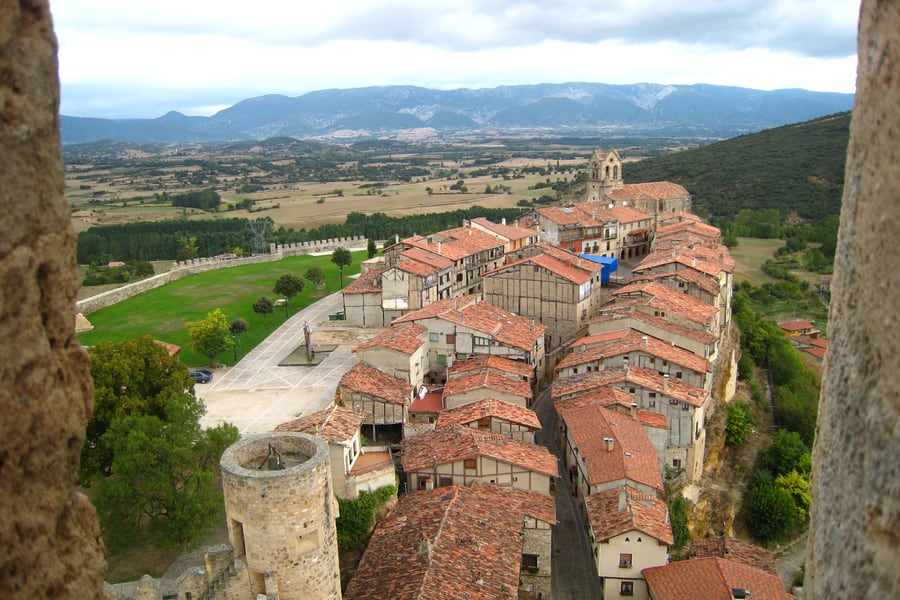
Frías
A place that holds the title of city, stacked on the Cerro de La Muela above the Ebro in the Merindades of northern Burgos, where the crossing of the river carried the road from the Cantabrian coast to the meseta from Roman times onward. The medieval street plan is intact, crowned by the castle of the Velasco family and the church of San Vicente, with the houses built hard against one another and their upper floors framed in timber and tufa. This is the view down from the castle.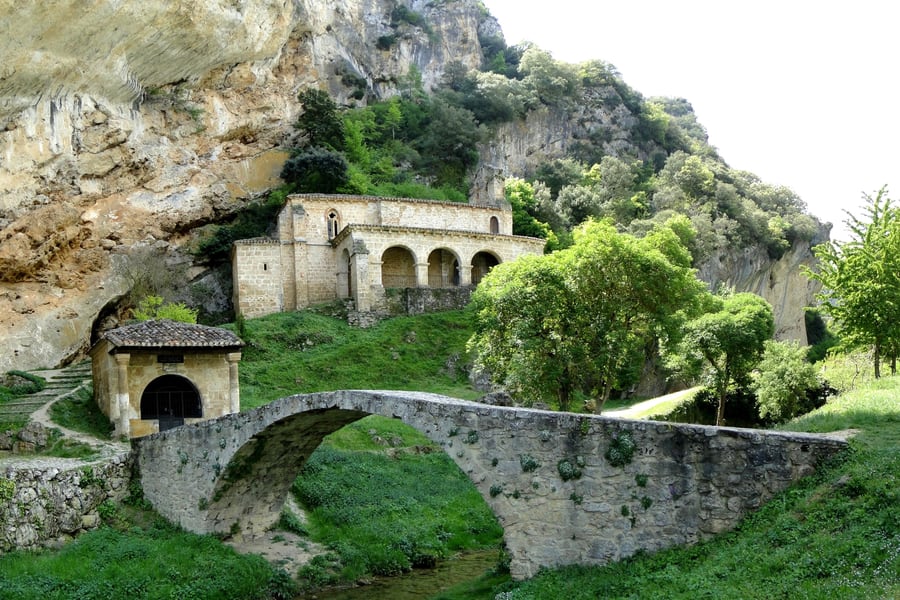 santiago lopez-pastor / Wikimedia Commons · CC BY-SA 2.0 · cropped
The falls at Tobera
Tobera is a hamlet of the same municipality, and the medieval hermitage of Santa María de la Hoz is wedged almost at the mouth of the Molinar gorge, with a stone bridge over the stream below it. The falls step down the ravine beside the path. It is a short walk rather than a viewpoint, and the water is loudest in spring.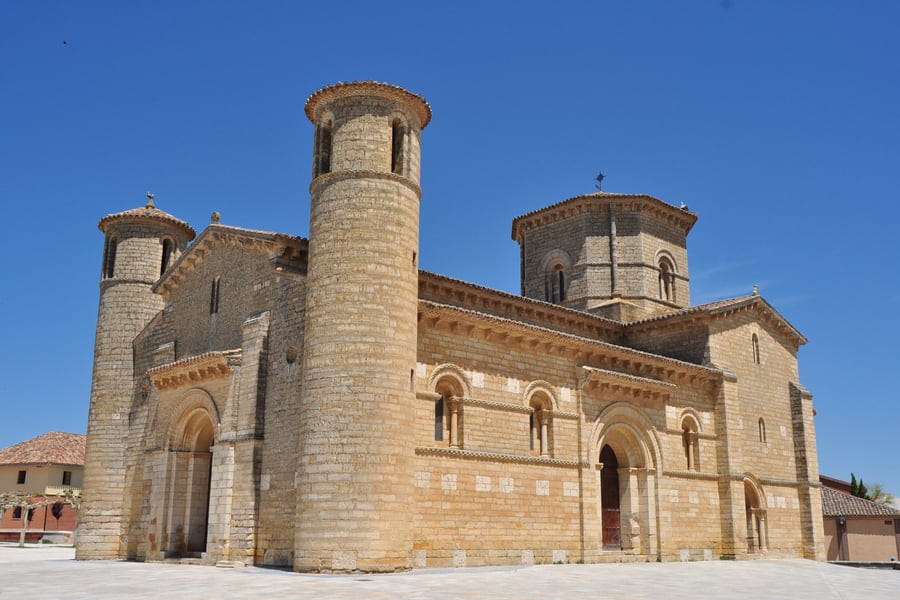 Luis Rogelio HM / Wikimedia Commons · CC BY-SA 2.0 · cropped
San Martín de Tours, Frómista
The building the Romanesque workshop was built around, and one of the accepted prototypes of the European style. It was under way by 1066, for doña Mayor de Castilla, and from 1118 it belonged to the priory of San Zoilo at Carrión. Closed as unfit for worship in the nineteenth century, it was made a national monument in 1894 and restored by 1904 — the worst-damaged capitals and corbels going to the museum in Palencia, and copies of them going onto the building.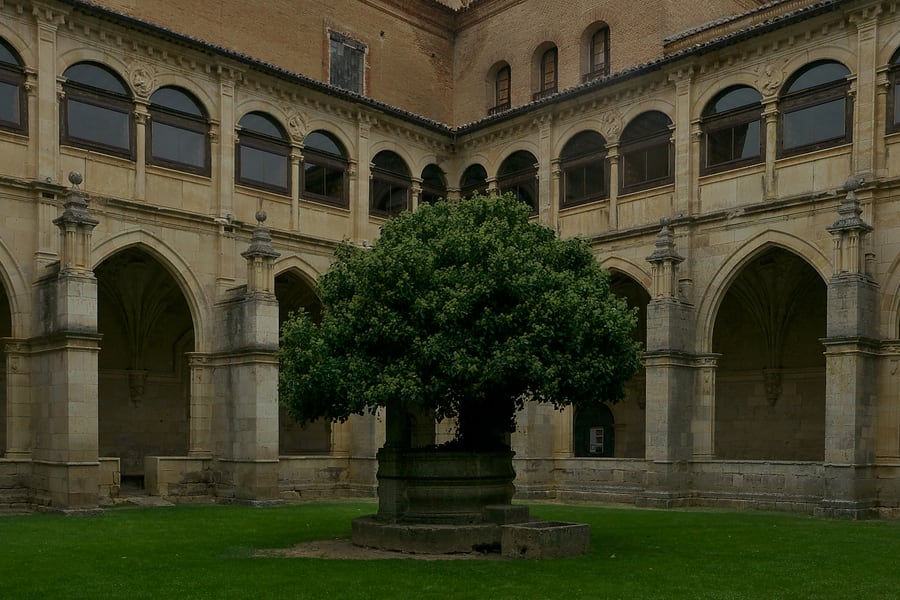 José Luis Filpo Cabana / Wikimedia Commons · CC BY 4.0 · cropped
San Zoilo, Carrión de los Condes
The monastery Frómista's church answered to. It stands across the river from the town, was founded before 948, and was renamed about 1075 when the relics of St Zoilus arrived from Córdoba. In 1076 it was placed under the Cluniac rule and became a priory — the burial place of the counts of Carrión and the seat of the order's administrator for the whole peninsula. On the pilgrim road it was known for giving walkers bread and wine without limit. It is a hotel today.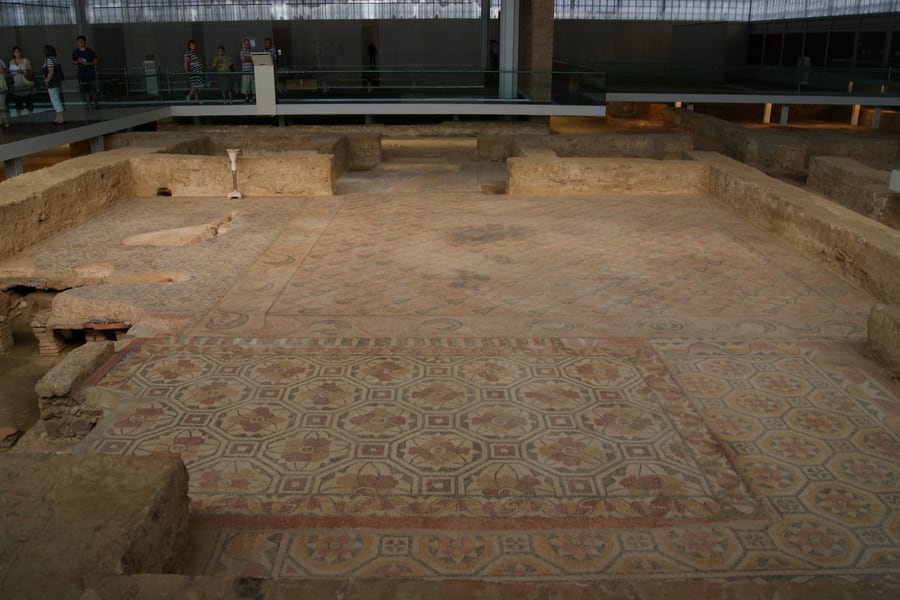 Rea 92 / Wikimedia Commons · CC BY-SA 3.0 ES · cropped
Villa Romana de La Olmeda
A Roman farming estate of the first century, rebuilt in the fourth and abandoned in the sixth, found in 1968 during work on Javier Cortes's own land and excavated privately until he gave it to the province in 1980. The present steel-and-glass building, by the architects Paredes and Pedrosa, opened in April 2009 and won a Europa Nostra award the next year; visitors walk above the floors. The great mosaic in the oecus carries a hunting scene and the discovery of Achilles on Skyros.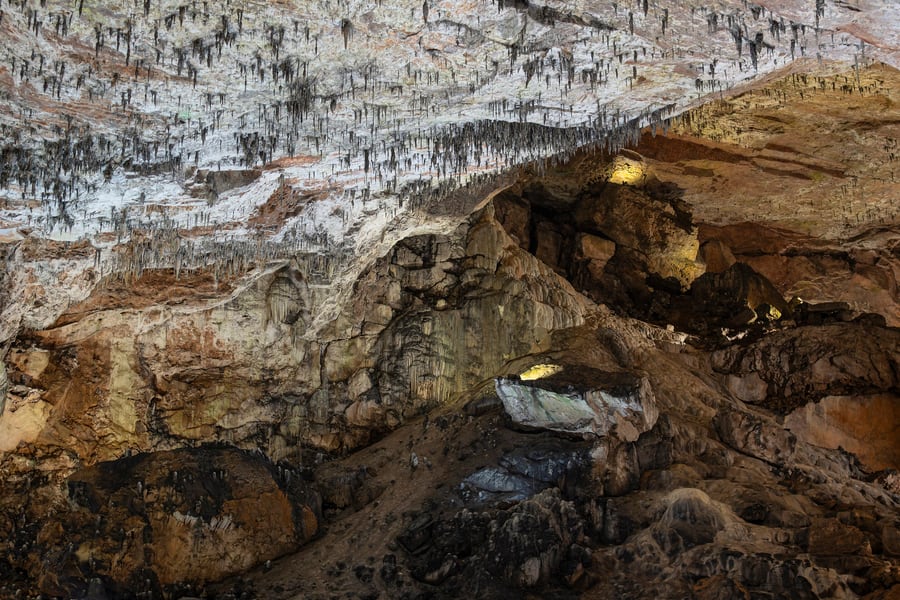 Rafa Esteve / Wikimedia Commons · CC BY-SA 4.0 · cropped
Cueva de Valporquero
A cave beside Valporquero de Torío in the municipality of Vegacervera, 47 km from León, open to the public since 1966 and run by the provincial council. The visitor route is 1,300 metres through six chambers that grow steadily more elaborate, from the Hall of Small Wonders to the Hall of Wonders at the end. It is reached up the Hoces de Vegacervera, a limestone gorge the coach climbs from San Feliz, and it is cold inside in any month.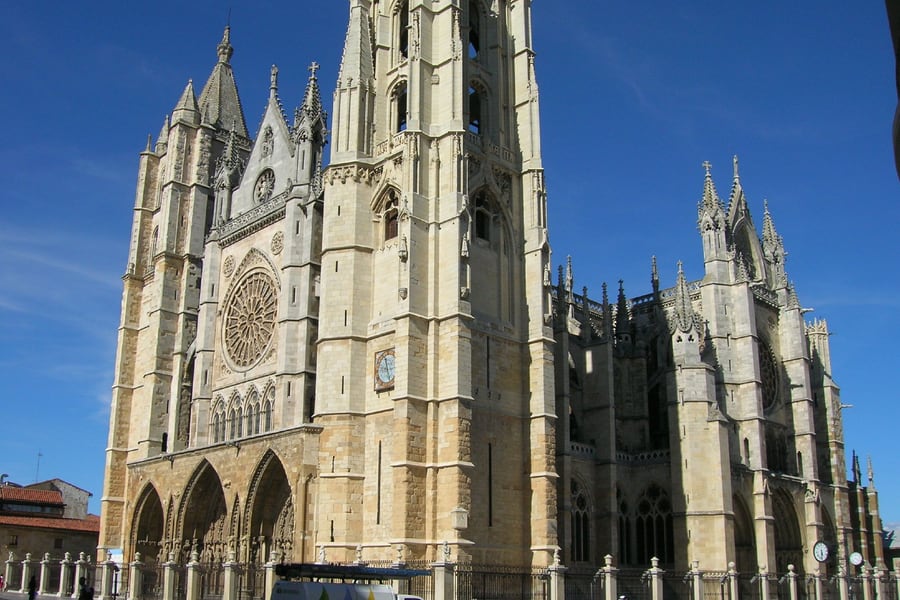 José Antonio Gil Martínez / Wikimedia Commons · CC BY 2.0 · cropped
León
The cathedral is the reason the trip finishes here. Begun in the thirteenth century and French in its Gothic, it takes the dissolving of the wall as far as it goes: the masonry is reduced to a minimum and replaced by one of the largest collections of medieval stained glass in the world. It was also the first building in Spain ever declared a monument, by royal order of 28 August 1844. The Real Colegiata de San Isidoro is on the programme too.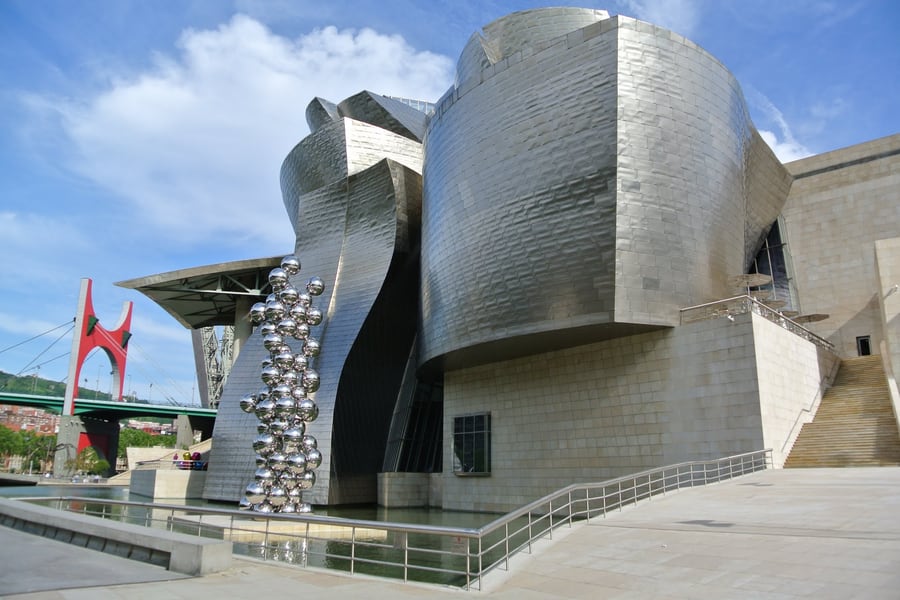 Ben Bender / Wikimedia Commons · CC BY-SA 3.0 · cropped
Bilbao
The city the railway was built to feed, and the last morning of the León-to-Bilbao trip is spent in it. The Guggenheim is on the programme — Frank Gehry's building of curved limestone, glass and titanium, opened on 18 October 1997 on the Abandoibarra riverside beside the La Salve bridge, with Anish Kapoor's mirrored Tall Tree and the Eye standing in front of it. The terminus at La Concordia is along the same river.Where to Sleep
Both nights of the trip are spent on the train, stabled in a station at Espinosa de los Monteros and at Cistierna, so the only rooms a traveller has to arrange are the ones on either side of it.
Bilbao and León both have plenty. The three below are near the ends of the line or on it: one a few minutes from the terminus at La Concordia, one inside the monastery where the trip itself begins or ends, and one in the small Burgos town where the train spends a night — useful for anyone riding the ordinary service and breaking the journey rather than sleeping on board.
None of the three carries a photograph here. Wikimedia Commons has no free image of any of them, and a picture of the church next door would not be a picture of the hotel.
Where to stay
Hotel Tayko Bilbao
In the Casco Viejo, facing the river
A short walk from the terminus at La Concordia, in the old town on the far bank. Its own account is that it occupies a historic building of 1924 — which it says was the fourth in Spain built with a concrete frame — kept for its industrial character and converted into the hotel it is now, with a restaurant run under Martín Berasategui's name.
Check Availability (opens in a new tab, on taykohotels.com)via taykohotels.comHotel Real Colegiata de San Isidoro
Inside the monastery where the trip begins or ends
The house the operator's own itinerary uses in León. It describes itself as a hotel inside the Real Colegiata complex — at once temple, royal pantheon, convent, palace, library and museum — opened to the public in 2005 and completely refurbished in 2020, with original architectural elements kept alongside modern work. It stands on Plaza Santo Martino.
Check Availability (opens in a new tab, on hotelrealcolegiata.com)via hotelrealcolegiata.comPosada Torre Berrueza
Espinosa de los Monteros, where the train stops for the night
A small rural inn in a twelfth-century tower restored by its owners, with a separate restaurant building in a walled garden around a very old walnut tree. Espinosa is where the Expreso stables overnight and a stop on the daily León–Bilbao train, which makes it a practical break for anyone riding the line rather than the package.
Check Availability (opens in a new tab, on torreberrueza.es)via torreberrueza.esQuestions or corrections
Planning this trip and stuck on something, or spotted a time, fare or detail that has changed? Send us a message about Expreso de La Robla — the train that was built as a classroom. We read every one, and we update this page when something has changed.