Galaico Expreso — the museum sent its exhibits back to work
Contando Estrelas / Wikimedia Commons · CC BY-SA 2.0 · cropped
- DistanceAbout 46 km
- Duration52 minutes each way
- Best seasonWeekends, July to September
Introduction
The Museo do Ferrocarril de Galicia sits at the end of this line, in Monforte de Lemos, inside the roundhouse where the town's locomotives were once turned and repaired. Among the things it owned were four passenger carriages that had not carried anyone for fifteen years.
In 2026 they went back to work. Restored at a cost of some €500,000, they now run as the Galaico Expreso, a scheduled tourist train between Ourense and Monforte de Lemos through the gorges of the Ribeira Sacra. The first departure was on 11 July 2026. It is the first tourist train in Galicia to be run by a private company — Alsa, under its Trenes Turísticos brand — and the museum whose collection supplied the carriages is both the partner in the project and the destination at the end of the trip.
That circularity is the whole appeal. Most heritage railways are museums that happen to own a track. This one is a museum that put its exhibits back into traffic on a working main line, and then sold tickets to the place they are normally kept.
Fifty-two minutes, and most of it worth watching
The journey is short. The operator advertises an hour; its own booking system prints 52 minutes against every departure, and 50 against the last one of the day. In that time the train covers roughly 46 kilometres of the line from Monforte de Lemos towards Ourense, a route opened on 1 December 1884, and calls at four intermediate points.
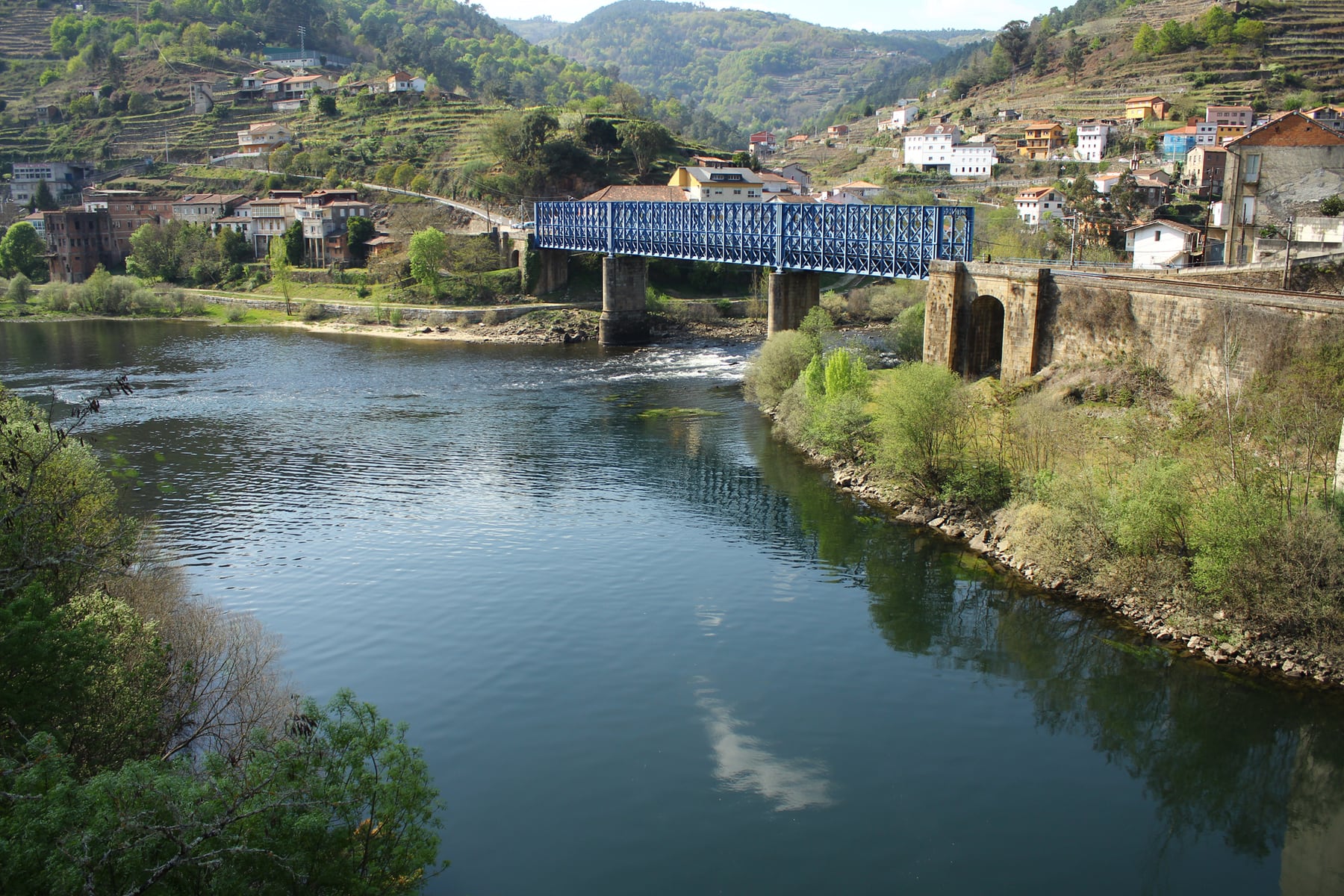
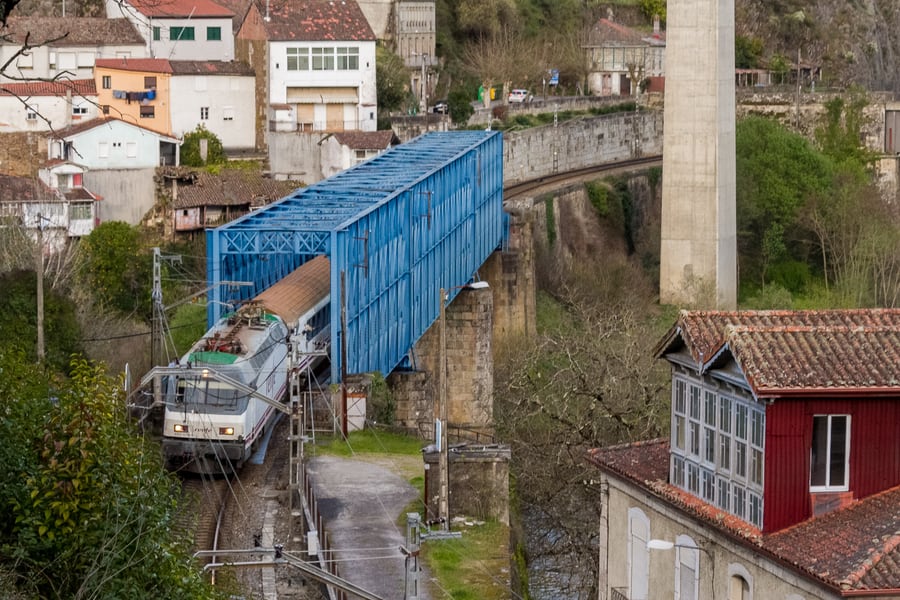
The best of it is in the middle. At Os Peares the railway crosses the Sil on a blue lattice viaduct at the exact point where that river meets the Miño — a confluence that gives its name to a village split between three municipalities and two provinces. Beyond it the line runs under the walls of the Sil canyon, where vines are worked on terraces so steep that the growers call it viticultura heroica, heroic viticulture, and mean it literally.
What it is not
This is not a luxury train, and it does not pretend to be. There is no accommodation, no dining service in the sense that El Transcantábrico understands the term, and no multi-day package. A single from Ourense to Monforte in the premium coach costs €16.95; a child pays €15.00. It is a ride, in old carriages, through country that repays looking at — closer in spirit to a good branch line than to anything with a chef on board.
It is also very new, and it shows in the small ways. Between what the operator publishes on its timetable page and what its booking engine will actually sell, there are two clear disagreements, both set out in the timetable section below. In the shoulder season the checkout is the more reliable of the two.
The Journey
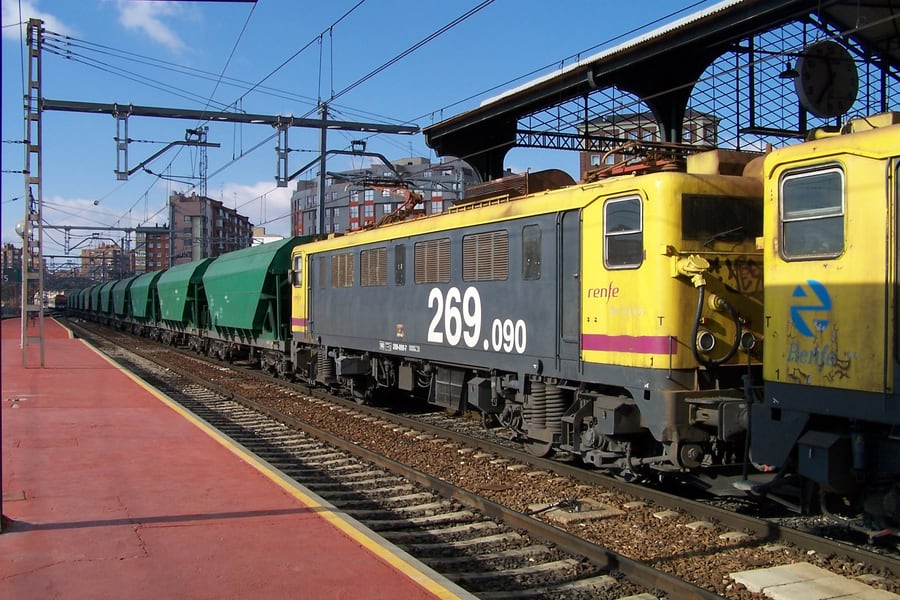
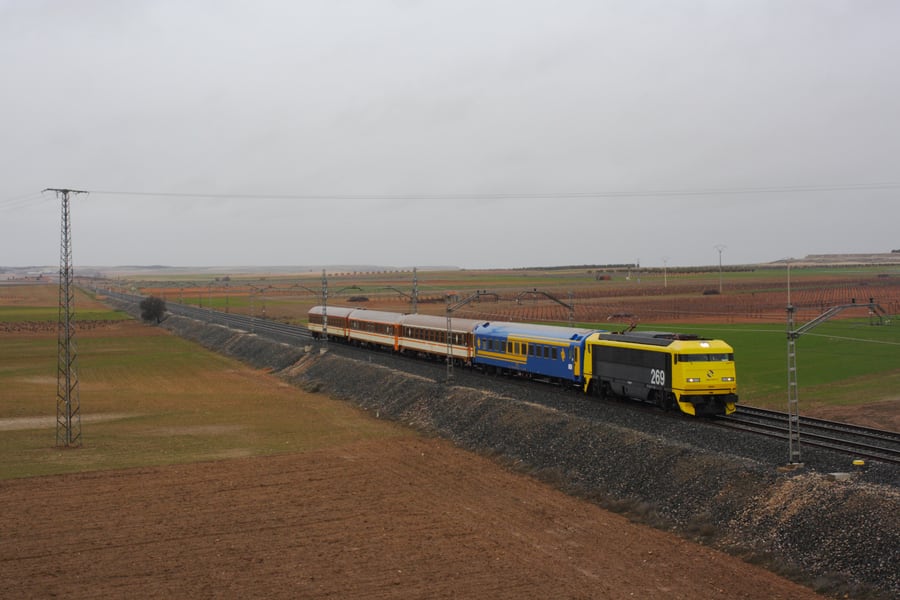
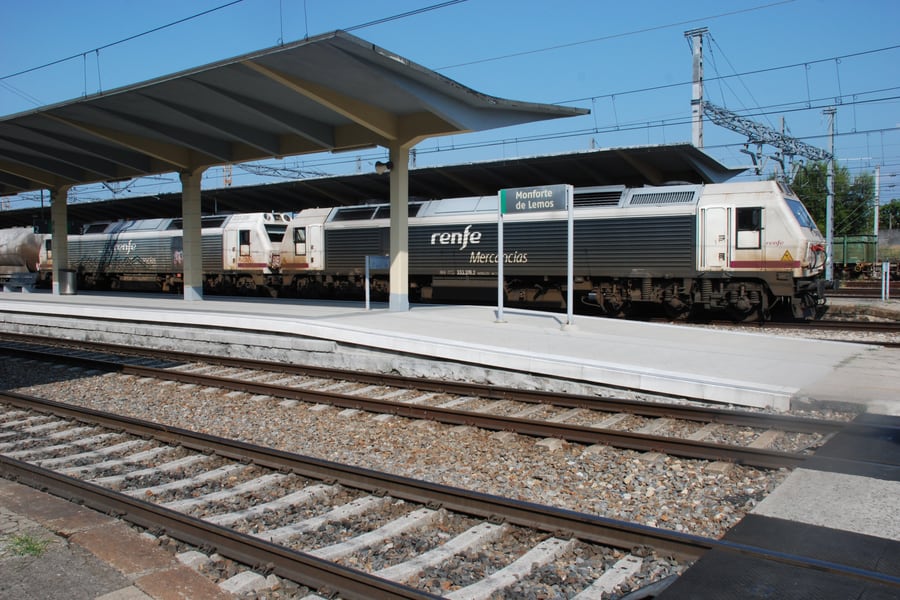
The train is hauled by a RENFE series 269 electric locomotive. The class was built in Spain during the 1980s under licence from Mitsubishi, and Spanish railwaymen and enthusiasts have called it La Japonesa — the Japanese woman — ever since. Nearly three hundred were built; they worked everything from heavy freight to the Talgo, and the survivors are now mostly on secondary duties, which is how one comes to be available for a summer tourist working in Galicia.
Behind it are four carriages from the collection of the Museo do Ferrocarril de Galicia, generally known as MUFERGA. The operator describes them as classic stock of the 1980s, restored to keep their original fittings and their panelling in fine woods; some press accounts of the launch say three date from the 1980s and a fourth from the 1950s. The formation includes lounge cars, first-class accommodation and a café car. Seats are numbered and allocated, and the operator closes access control five minutes before departure.
There is a small oddity in the pricing worth knowing before you choose. The train carries both premium and panoramic coaches, and the panoramic one — the coach with the large windows the marketing is built around — is the cheaper of the two: €15.95 against €16.95 for the full run to Monforte. It is also sold only over the complete Ourense–Monforte leg, so passengers joining or leaving at an intermediate station travel premium by default.
Out of Ourense
Ourense station, still called Ourense-Empalme in railway usage, is a junction where the conventional line meets the high-speed route to Santiago and Madrid. The Galaico Expreso leaves it eastward, on the older alignment towards Monforte, and within a few minutes is running with the Miño on one side.
The first stop, Barra de Miño, is a river beach — a place people come to swim rather than a settlement of any size. From here the valley begins to close in.
The confluence
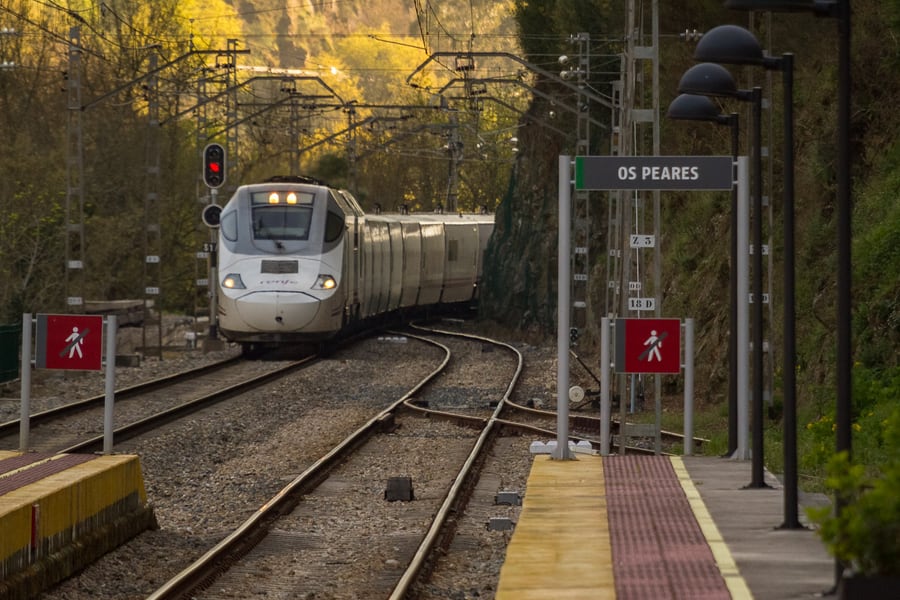
Os Peares, about twenty minutes out, is the reason to take this train rather than read about it. The village stands where the Sil joins the Miño, and it is administratively peculiar even by Galician standards: the settlement is divided between three municipalities and falls across the provincial boundary between Ourense and Lugo. The station is at kilometre 27.873 of the line, at an altitude of 137 metres.
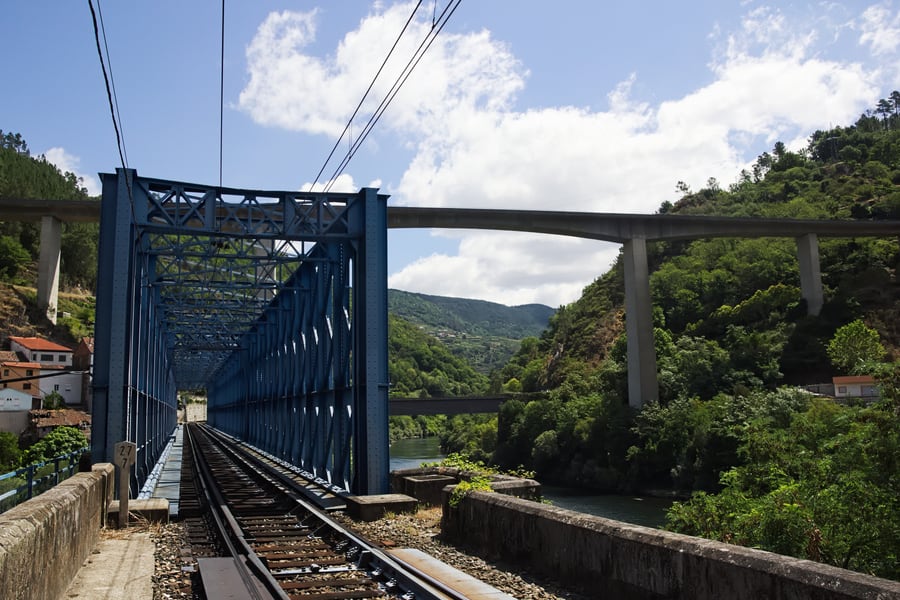
The railway reaches it by crossing the Sil on a blue steel lattice viaduct, immediately above the meeting of the two rivers, with a modern road viaduct striding across the valley on concrete piers behind it. The two structures together are a compact lesson in how differently a nineteenth-century railway and a twentieth-century road solve the same problem.
Under the canyon walls
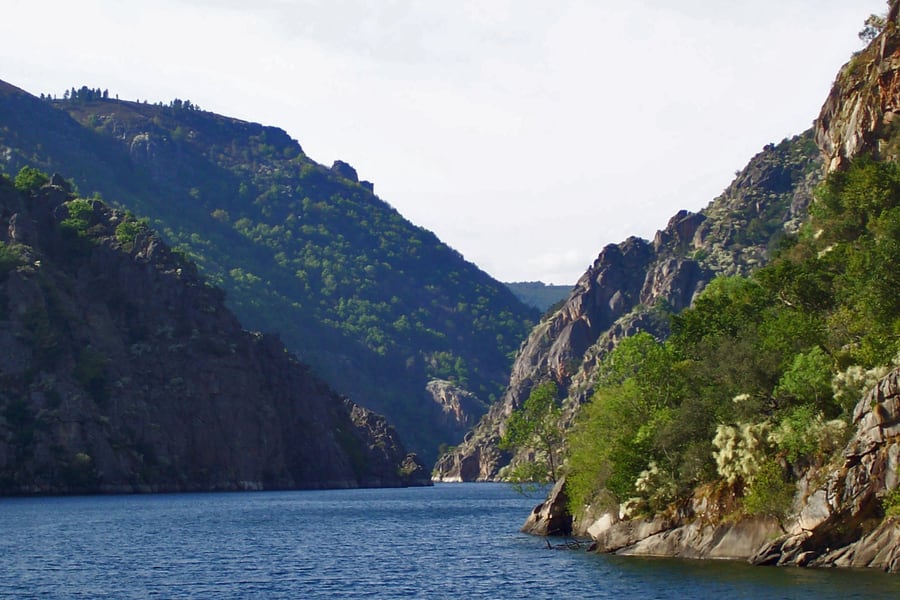
Beyond Os Peares the line works along the flank of the Cañón do Sil, the gorge the river has cut several hundred metres deep into the granite and slate. This is the heart of the Ribeira Sacra, a wine region whose terraces were first cut by Roman colonists and extended by the Benedictine and Cistercian houses that give the district its name — the sacred riverbank, for the density of monasteries in it.
The operator's own description claims these are landscapes hidden and unreachable by road, visible only from this train. That is a marketing line rather than a surveyed fact — roads and viewpoints do reach parts of the canyon, and the catamarans that run on the river below carry a good many people who never board a train. What is fair to say is that the railway holds a continuous ledge along the gorge that no road follows for its whole length.
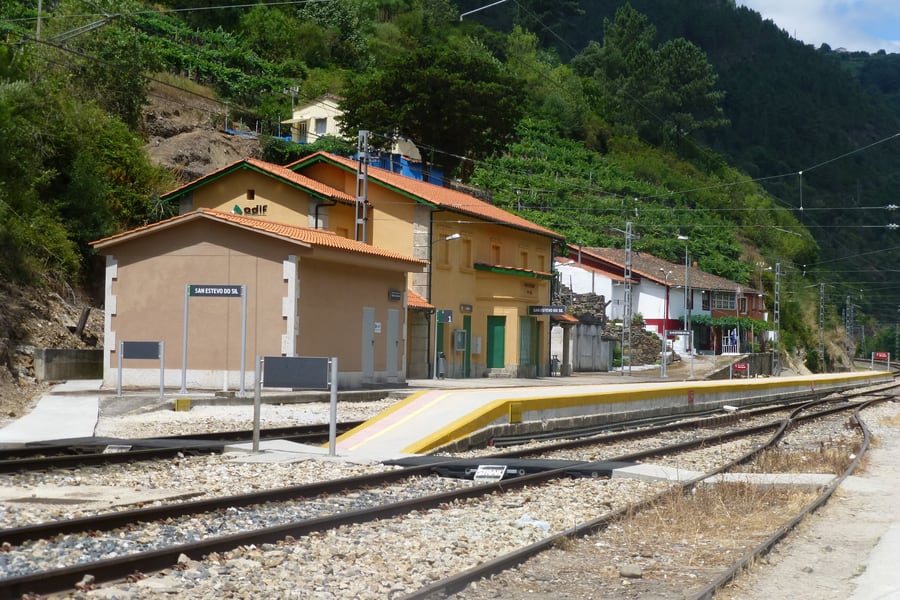
San Estevo do Sil is the last stop before the end. The station serves the monastery of Santo Estevo de Ribas de Sil, a Benedictine house of tenth-century foundation that is now a Parador, and it has a jetty from which the canyon catamarans depart.
Monforte, and the roundhouse
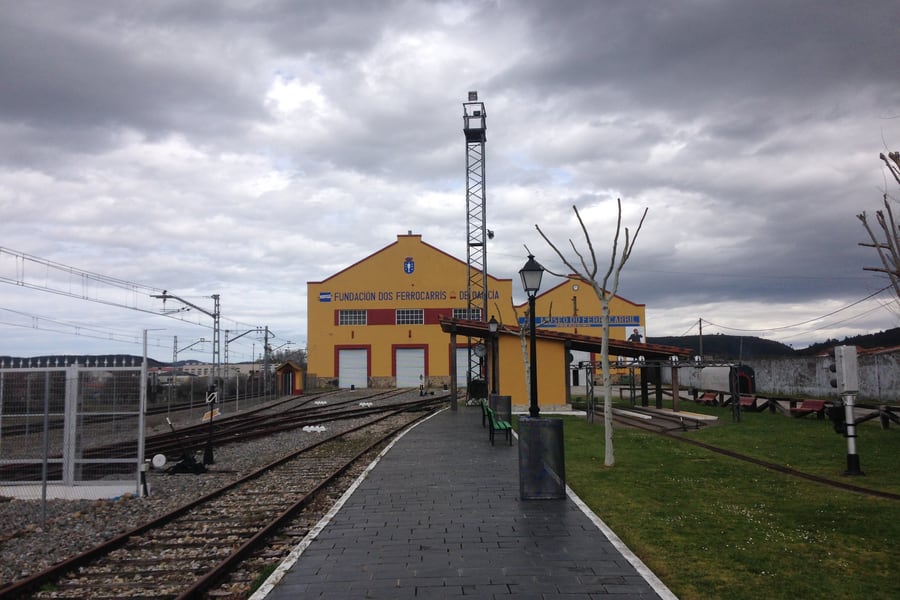
Monforte de Lemos was Galicia's railway town. It was the junction where the lines from Ourense, Lugo and León met, and it carried the depot, the works and the housing that went with them. Much of that traffic now runs elsewhere, but the infrastructure survives — and the best of it is the rotonda, the horseshoe-plan engine shed with thirty-eight radial roads and a working turntable at its centre, which the European Union has listed as an outstanding building of European industrial heritage.
MUFERGA has occupied the old traction workshop and shed since 2001. The train that brought you here was, until recently, part of what is on display.
Along the route
Piquito / Wikimedia Commons · CC BY-SA 4.0 · croppedFifteen years in a shed, then back on the main line
The four carriages belong to the Museo do Ferrocarril de Galicia and had not carried a passenger for fifteen years when Alsa took them on, spent about €500,000 putting them right, and returned them to traffic in July 2026. Most museum pieces travel the other way.Piotr Kłos / Wikimedia Commons · CC BY-SA 4.0 · croppedThirty-eight roads and a turntable
Monforte de Lemos was the junction of the Galician network and kept the depot to match: a horseshoe engine shed with thirty-eight radial tracks around a working turntable, listed by the EU as outstanding European industrial heritage.Xosema / Wikimedia Commons · CC BY-SA 4.0 · croppedWhere two rivers and three councils meet
Os Peares stands at the junction of the Sil and the Miño, divided between three municipalities across a provincial boundary. The railway reaches it over a blue steel viaduct thrown across the Sil just above the confluence.A bit of history
Culture & experiences along the way
Daniel Luis Gómez Adenis / Wikimedia Commons · CC BY 2.0 · croppedThe cheaper coach is the one with the windows
The train carries premium and panoramic accommodation, and the panoramic coach — the one built around its large windows — is priced below the premium: €15.95 against €16.95 for the full run. It is sold only over the complete Ourense–Monforte leg, so it is the obvious choice for anyone travelling end to end.Wikimedia Commons · CC BY 2.0 · croppedHeroic viticulture
Beyond Os Peares the line runs under the terraces of the Ribeira Sacra, cut into the canyon wall at angles that make machinery useless and the harvest a matter of ropes and baskets. The growers call it viticultura heroica. The terraces were begun under Rome and extended by the Benedictine and Cistercian houses that gave the district its name.Pedro Seoane Prado / Wikimedia Commons · CC BY-SA 4.0 · croppedFifty-two minutes, not sixty
The operator advertises an hour each way. Its own booking system prints 52 minutes against the first three departures and 50 against the last. Over about forty-six kilometres with four intermediate stops, that is a train taking its time — which, given what is outside the window between Os Peares and Monforte, is the point.Timetables
Four trains run in each direction on an operating day. These are the operator's published times, as of August 2026, and they matched the departures its booking system offered for every date tested.
Ourense → Monforte de Lemos
| Stop | 11250 | 11252 | 11254 | 11256 |
|---|---|---|---|---|
| Ourense | 10:30 | 13:15 | 16:55 | 19:20 |
| Barra de Miño | 10:38 | 13:24 | 17:04 | 19:29 |
| Os Peares | 10:49 | 13:34 | 17:14 | 19:39 |
| San Estevo do Sil | 11:00 | 13:45 | 17:25 | 19:48 |
| Monforte de Lemos | 11:22 | 14:07 | 17:47 | 20:10 |
Monforte de Lemos → Ourense
| Stop | 11251 | 11253 | 11255 | 11257 |
|---|---|---|---|---|
| Monforte de Lemos | 08:40 | 11:40 | 14:45 | 18:25 |
| San Estevo do Sil | 09:04 | 12:09 | 15:09 | 18:49 |
| Os Peares | 09:08 | 12:13 | 15:13 | 18:53 |
| Barra de Miño | 09:17 | 12:22 | 15:22 | 19:02 |
| Ourense | 09:31 | 12:31 | 15:36 | 19:16 |
The advertised journey time is one hour. The booking system prints 52 minutes for the first three departures of the day and 50 minutes for the last, which is the figure to plan around.
Two things the operator's own systems disagree about
Both were checked on 18 August 2026 by running real dates through the operator's booking engine at trenesturisticos.es (opens in a new tab).
The season. The train page gives the operating calendar as July, August, September and October. The booking engine would not sell a ticket for any date after 30 September 2026 — the date picker stops there and will not advance into October. Either October dates had not yet been loaded when this was written, or the advertised calendar is optimistic. Until the operator opens those dates for sale, an October trip rests on the brochure alone.
The operating days. The timetable page states, in capitals, that the train runs Saturdays and Sundays until 13 September and Saturdays only thereafter. The booking engine sold all four departures on Sunday 20 September and again on Sunday 27 September. This is not an artefact of a system that simply lists the timetable regardless of date: a test booking for Wednesday 23 September returned no trains at all, so the engine does check the day of the week. On the evidence, more Sundays are running in September than the published rule allows for.
The rest of the year
Outside the tourist season the line itself stays open, and Renfe's ordinary Media Distancia services run between Ourense and Monforte de Lemos all year for a few euros. They use the same track, the same viaduct at Os Peares and the same canyon; what they do not have is the old carriages, the guiding or the café car.
One piece of recent history is worth knowing when planning. This corridor was closed completely for two years — from November 2022 until 26 November 2024 — for a modernisation costing more than €500 million, against an original programme of eight months. Further works on the same overall scheme continue into 2026, but those are on the section north of Monforte towards Lugo, not on the stretch this train uses.
Tickets
Tickets are sold through the operator's own site and priced by the pair of stations travelled between, in either direction. An adult single over the full route, Ourense to Monforte de Lemos, is €16.95 in the premium coach and the return €28.95; children pay €15.00 and €27.00. Unlike some Spanish tourist operators, what this one advertises is what it charges — confirmed against the checkout on 18 August 2026.
The panoramic coach is the interesting one: sold only over the full route and priced slightly below the premium coach, at €15.95 single, which makes it the cheaper ticket as well as the one with the larger windows. Seats are numbered and allocated, and access control closes five minutes before departure — which matters at Ourense, where the tourist train shares a busy junction station.
Book your tickets
Wikimedia Commons · CC BY-SA 2.0 · croppedGalaico Expreso, Ourense to Monforte de Lemos
Single or return, premium or panoramic coach
Sold through the operator's own shop and priced by the pair of stations travelled between, in either direction. An adult single over the full route is €16.95 in the premium coach and €15.95 in the panoramic; the returns are €28.95 and €27.95. Children pay €15.00 and €14.00 single. Seats are numbered and allocated, and access control closes five minutes before departure.
Book Tickets (opens in a new tab, on trenesturisticos.es)via trenesturisticos.esTxo / Wikimedia Commons · CC BY-SA 3.0 · croppedThe everyday train over the same rails
Renfe Media Distancia, Ourense to Monforte de Lemos
The same viaduct at Os Peares, the same ledge under the canyon and the same arrival at Monforte, for a few euros and with no booking. Renfe's ordinary services run all year, which is what makes the route reachable outside the tourist train's summer weekends. They are covered in full by an Interrail or Eurail pass, with no compulsory reservation.
Book Tickets (opens in a new tab, on renfe.com)via renfe.comRail Passes
A rail pass is of no use for the Galaico Expreso itself, and saying so plainly is the useful part.
The train is operated commercially by Alsa under its Trenes Turísticos brand. It is not a Renfe service, it does not appear in Renfe's timetables, and it is ticketed entirely through the operator's own shop.
That settles it, because Interrail's table of railway companies for Spain is a list of companies rather than of routes, and it names five: RENFE, iryo, SNCF, FEVE Cercanías and CP. Alsa is not one of them. ⚠️ It is worth noticing that the same table excludes Renfe's own tourist trains by name — so even the Renfe badge would not have helped here. A pass holder pays the same €16.95 as everyone travelling without one.
Where a pass does earn its keep
The ordinary Renfe Media Distancia trains between Ourense and Monforte de Lemos are covered by an Interrail or Eurail pass, with no compulsory reservation. They run all year, several times a day, over exactly the same rails — the same crossing of the Sil at Os Peares, the same ledge under the canyon walls, the same arrival into Monforte past the roundhouse.
So the sensible way to use a pass here is to treat the two as different products rather than alternatives:
- The Galaico Expreso is the experience — the 1980s carriages, the café car, the guiding, and a timetable built around having time at each end. Bought separately, at full price.
- The Media Distancia train is the transport, and it is free on the pass. It is also what gets you to Ourense or Monforte in the first place, and what covers the route out of season, when the tourist train is not running at all.
Getting to the line on a pass
Ourense is well served on a pass. It sits on the high-speed route from Madrid to Santiago de Compostela and A Coruña, and Renfe's AVE and Avant services call there. Those carry a compulsory seat reservation that a pass does not include, so the reservation has to be bought separately and in advance — they sell out in summer. Regional trains into Ourense from Vigo and Pontevedra need no reservation.
Pass conditions checked against Interrail's published list of railway companies on 20 August 2026. Reservation requirements on Spanish high-speed services change with the timetable, so they are worth re-checking close to travel.
Places to Visit
The Galaico Expreso stops at five places, and they are unusually varied for a line of forty-six kilometres: a spa city, a river beach, a confluence, a monastery on a cliff and a railway town with a museum in its engine shed.
The timetable makes stopping off practical. With four trains a day in each direction, a passenger can leave Ourense in the morning, spend several hours at Os Peares or San Estevo do Sil, and pick up a later working onward or back — and because fares are charged station-to-station in either direction, breaking the journey costs little more than travelling straight through.
The cards below cover what is within reach of the train. The catamarans through the Sil canyon, which leave from the jetty at San Estevo do Sil, are the one excursion that genuinely needs planning around the timetable rather than the other way about.
 GFreihalter / Wikimedia Commons · CC BY-SA 3.0 · cropped
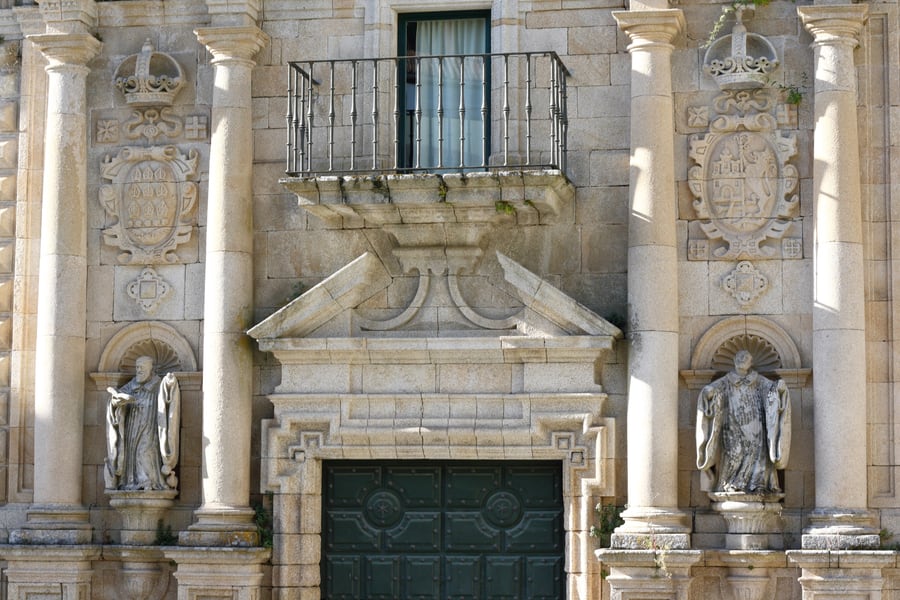
Mosteiro de Santo Estevo de Ribas de Sil
A Benedictine house whose existence is documented in the tenth century, standing on a shelf above the canyon. It grew over six hundred years and shows it: three cloisters, one Romanesque, one Gothic and one Renaissance, wrapped around a church with a carved Romanesque doorway. The Spanish state restored it as a Parador, so the building is open to anyone who walks in for a coffee as well as to guests.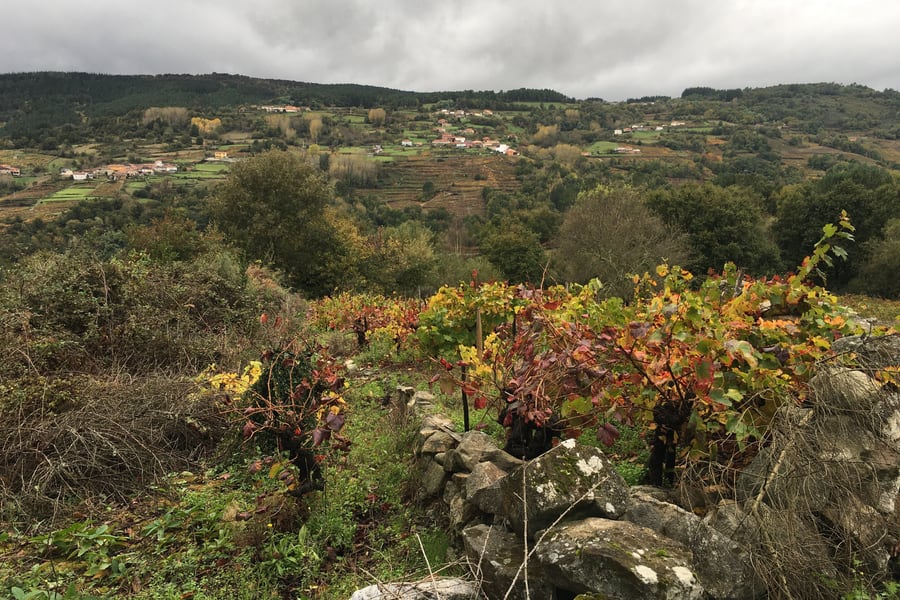 Tanja Freibott / Wikimedia Commons · CC BY-SA 4.0 · cropped
The Cañón do Sil by water
The gorge is cut several hundred metres into granite and slate, and the view from the river is a different thing entirely from the view along it. Catamarans run from the jetty near the station, through walls terraced with vines to a height that looks impossible from below. It is the one excursion here that needs planning around the train times rather than the other way about.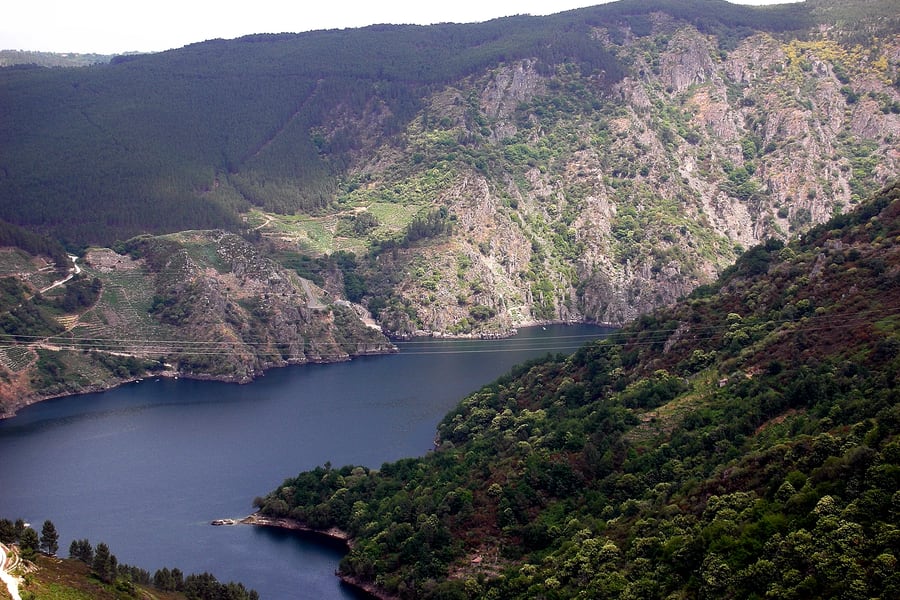 Enrique Dans / Wikimedia Commons · CC BY 2.0 · cropped
Os Peares
A village at a river junction, and an administrative curiosity: it is split between three municipalities and falls across the boundary between the provinces of Ourense and Lugo. The Miño arrives as the larger river by name and the Sil as the larger by volume, which has kept Galicians arguing about which one continues downstream.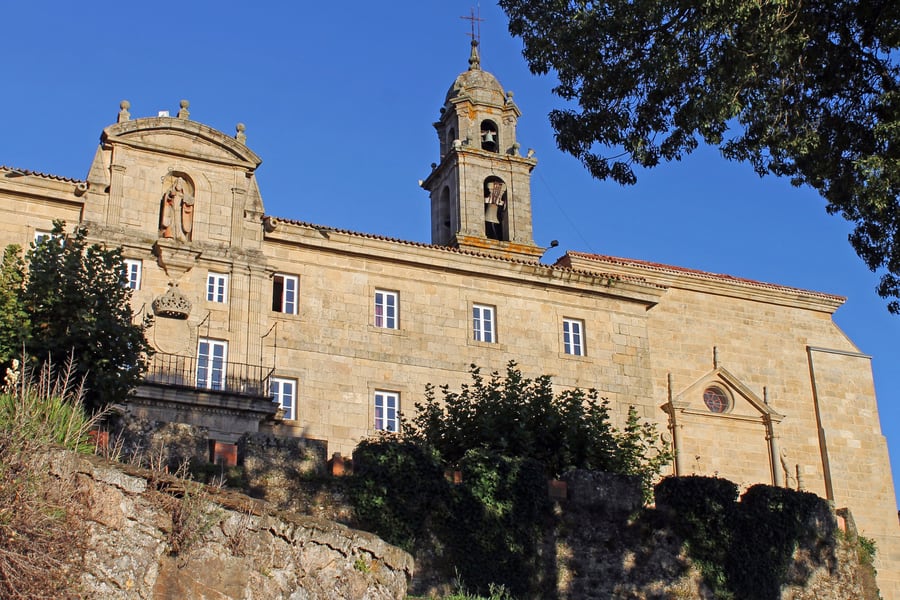 Gabriel Conde Arias-Camison / Wikimedia Commons · CC BY-SA 4.0 · cropped
San Vicente do Pino
Monforte is built up a hill, and the Benedictine monastery of San Vicente do Pino holds the top of it alongside the tower of the old castle and the palace of the Counts of Lemos. The monastery is itself a Parador now. From the terrace the whole basin of the Cabe is laid out, with the railway running across it.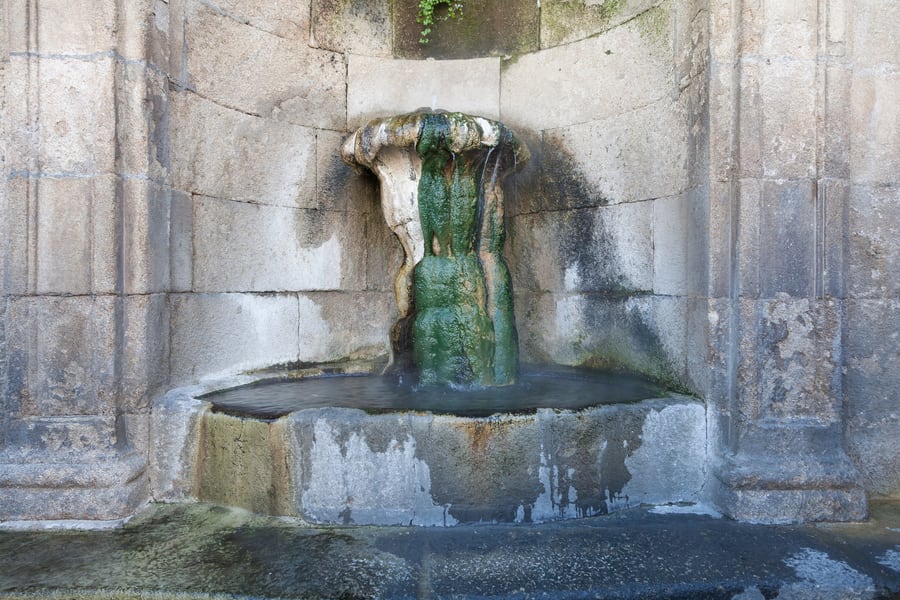 Luis Miguel Bugallo Sánchez / Wikimedia Commons · CC BY-SA 4.0 · cropped
As Burgas
Ourense is a thermal city, and As Burgas is the spring it grew around — water rising in the centre of the old town at temperatures over 60°C, used since the Romans were here. There are open-air pools along the Miño a short way out at Outariz, and the whole thing is within a walk of the station the train leaves from.Where to Sleep
The journey is short enough to be done in a day from either end, and most people do exactly that. Ourense has the widest choice of places to stay and the best onward connections; Monforte de Lemos is smaller and quieter, and puts the museum on your doorstep.
The one place worth travelling for, though, is neither of them. At San Estevo do Sil — a stop on the line — the Benedictine monastery of Santo Estevo de Ribas de Sil has been a Parador since the Spanish state restored it, and it stands directly above the canyon. Staying there turns a 52-minute train ride into a proper night away.
A caution on timing: in the shoulder season the train's last departure from Monforte back to Ourense is at 18:25, and the last from Ourense is at 19:20. Anyone booking a room at one end and a table at the other should check those against the day they are travelling.
Where to stay
 Cayetano / Wikimedia Commons · CC BY-SA 2.0 · cropped
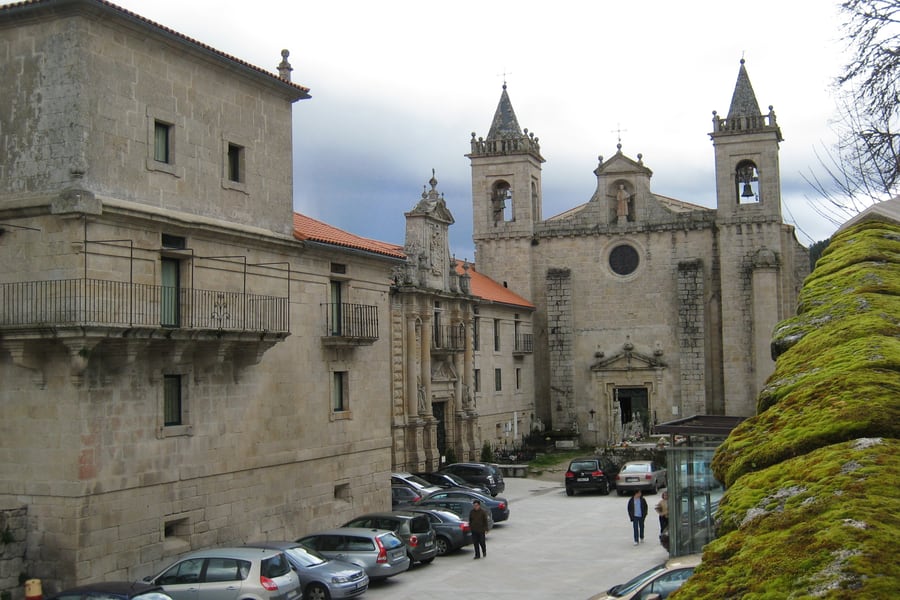
Parador de Santo Estevo
A Benedictine monastery above the Sil canyon, at a stop on the line
The monastery of Santo Estevo de Ribas de Sil, documented from the tenth century and extended in every style down to the Renaissance, taken on by the Spanish state as a Parador. Its own account gives guest rooms in what were the monks' cells, three cloisters — Romanesque, Gothic and Renaissance — a spa in the former wine cellars and an outdoor jacuzzi looking into the forest. It stands in the heart of the Ribeira Sacra with the canyon below it, and San Estevo do Sil station is a stop on this train.
Check Availability (opens in a new tab, on paradores.es)via paradores.esQuestions or corrections
Planning this trip and stuck on something, or spotted a time, fare or detail that has changed? Send us a message about Galaico Expreso — the museum sent its exhibits back to work. We read every one, and we update this page when something has changed.