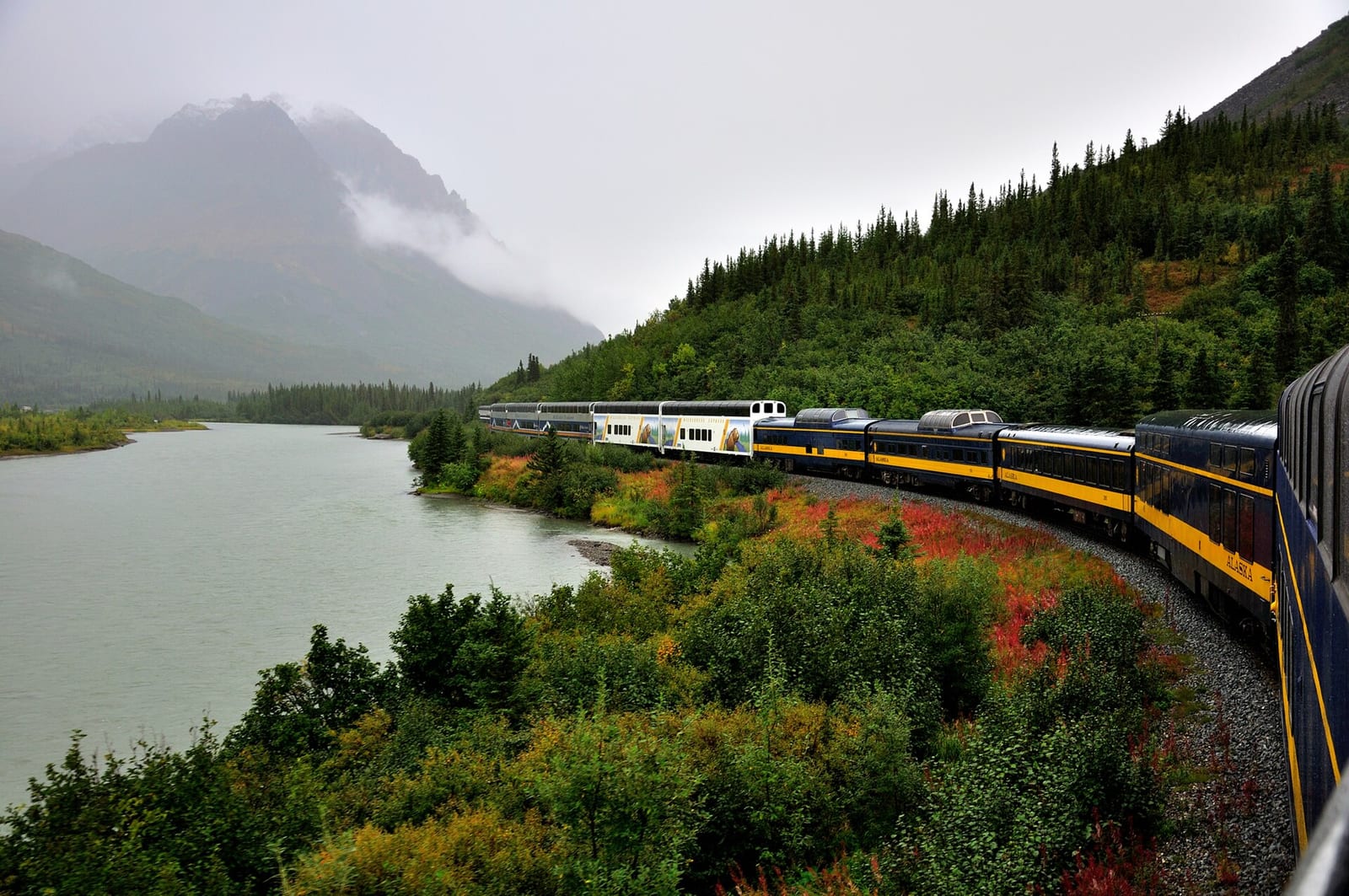
Alaska Railroad
Len Turner / Wikimedia Commons · CC BY 2.0
- Distance~470 miles (760 km)
- DurationDenali Star · ~12 hours
- Best seasonMay–September
Introduction
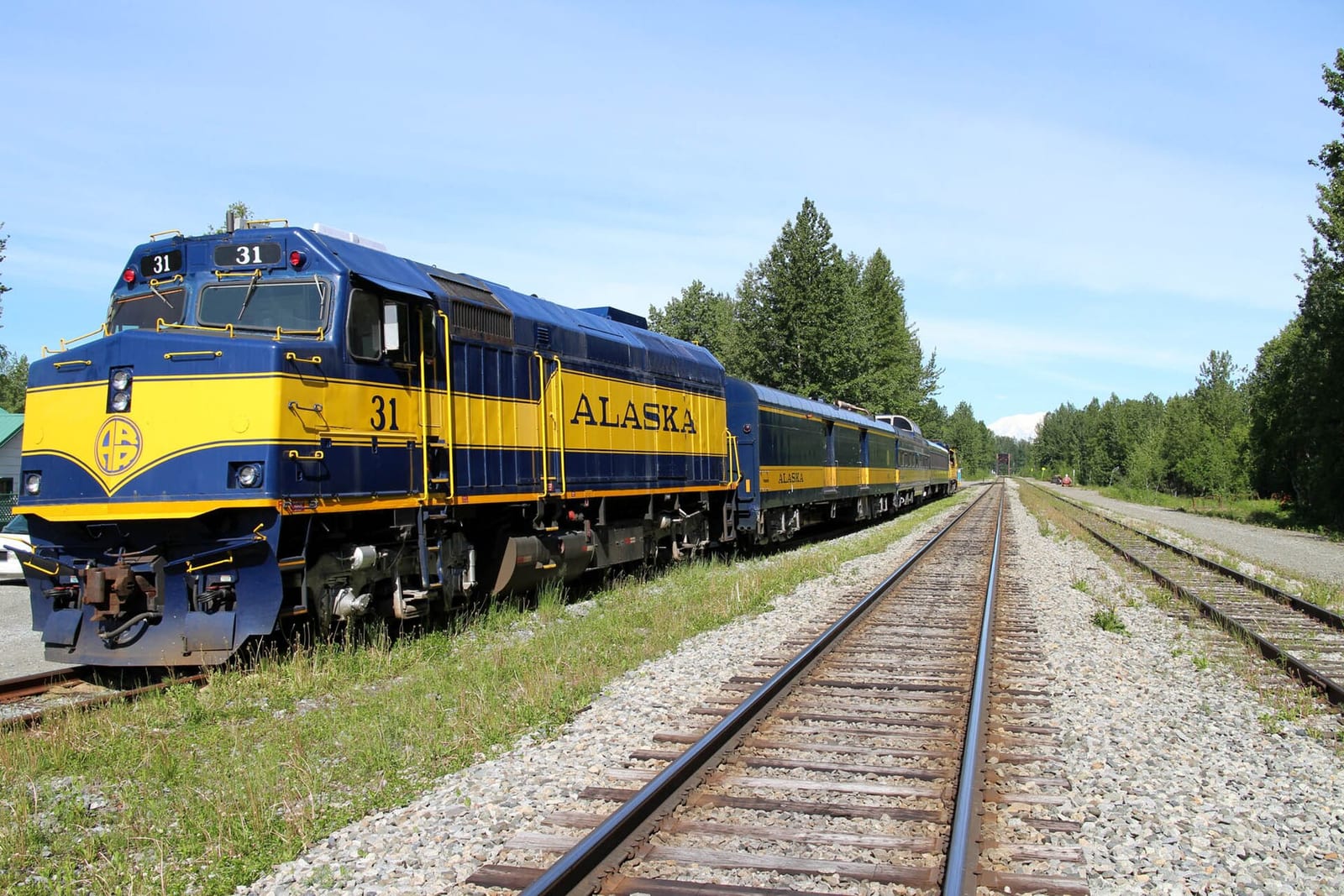
There are bigger railways and faster ones, but few as wild as the Alaska Railroad. For some 470 miles it runs the length of the state's inhabited heart — from the ice-free port of Seward on the Gulf of Alaska, through Anchorage, past the flank of Denali, the highest mountain in North America, to Fairbanks in the deep interior.
Much of it crosses country with no roads at all. This is a railway that still stops for anyone who flags it down, that slows so passengers can photograph a bear on the riverbank, and whose flagship trains carry glass-domed carriages built for one purpose: to let you look up and out at all of it.
The line was hammered together in the early twentieth century and finished in 1923, when President Harding drove a golden spike at Nenana. A century on it belongs to the State of Alaska and carries visitors through summer and, under the northern lights, through winter. Ride the Denali Star from end to end and you get the north in a single, unforgettable day.
The Journey
The mainline runs from tidewater to the interior, and most travellers ride it as two great legs.
The southern leg is the Coastal Classic, from Seward up along Turnagain Arm to Anchorage — a morning of glaciers, fjords and sheer coastal mountains, the track hung between the water and the rock. Anchorage, roughly halfway along the system, is where most journeys begin.
North of Anchorage the flagship Denali Star takes over for the long haul to Fairbanks — about 356 miles in some twelve hours. It climbs away from the coast through Wasilla and out into the Susitna valley, and near Talkeetna — a ramshackle, lovable frontier town — the Alaska Range rears up ahead. On a clear day Denali itself appears, an impossible wall of white; the crew will announce it, because it doesn't show itself often.
The train threads on past Denali National Park, over trestle bridges and braided glacial rivers, through canyons and spruce forest, before dropping into the wide interior and rolling at last into Fairbanks, gateway to the Arctic.
Somewhere in the middle, on the roadless stretch beyond Talkeetna, runs the railway's most Alaskan service of all — the Hurricane Turn, a flag-stop local that halts wherever a homesteader waves it down. There is nothing else quite like it left in America.
Along the route
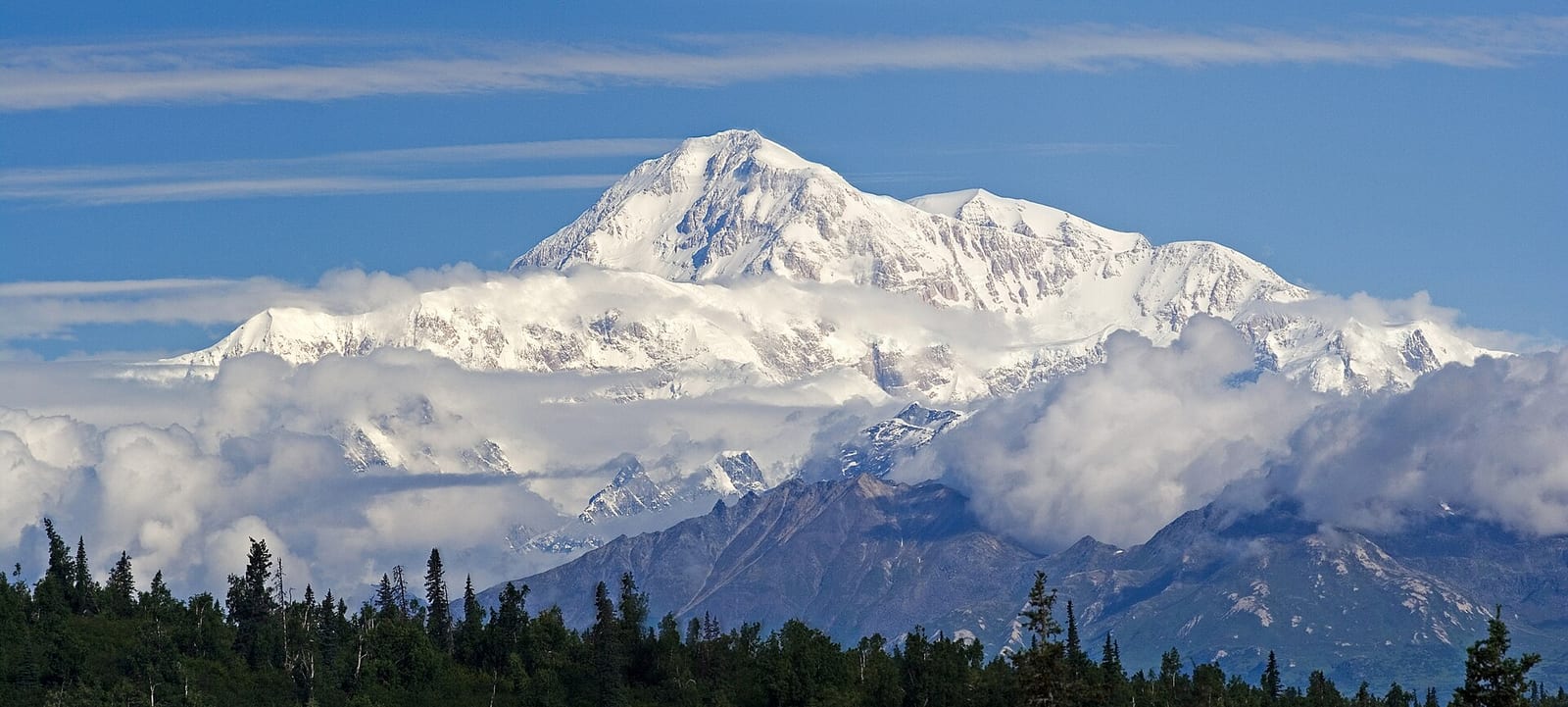
Smial / Wikimedia Commons · CC BY-SA 2.0Denali, the great one
For much of the run north the train shadows the Alaska Range, and on a clear day the highest peak in North America — Denali, "the great one" — fills the horizon in white. The mountain makes its own weather, so a clear sighting is a genuine event.Diego Delso, delso.photo, License CC BY-SA · Wikimedia CommonsTrestles and glacial rivers
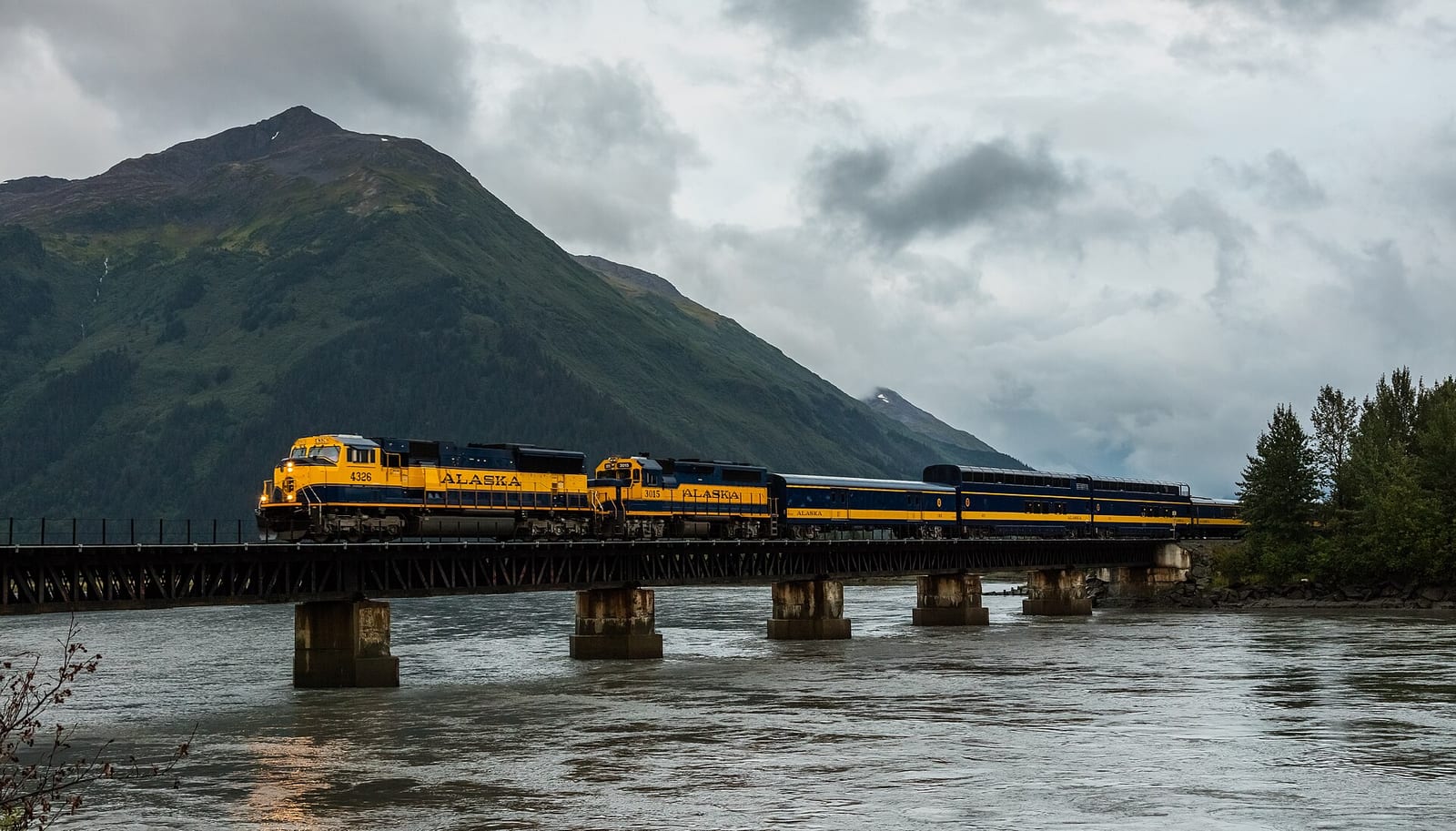
The line was hand-built across some of the wildest country on earth, crossing braided glacial rivers on timber and steel trestles and threading canyons where no road has ever gone — the engineering as much a part of the journey as the scenery.Nils Öberg / Wikimedia Commons · CC BY-SA 3.0Wilderness by the mile
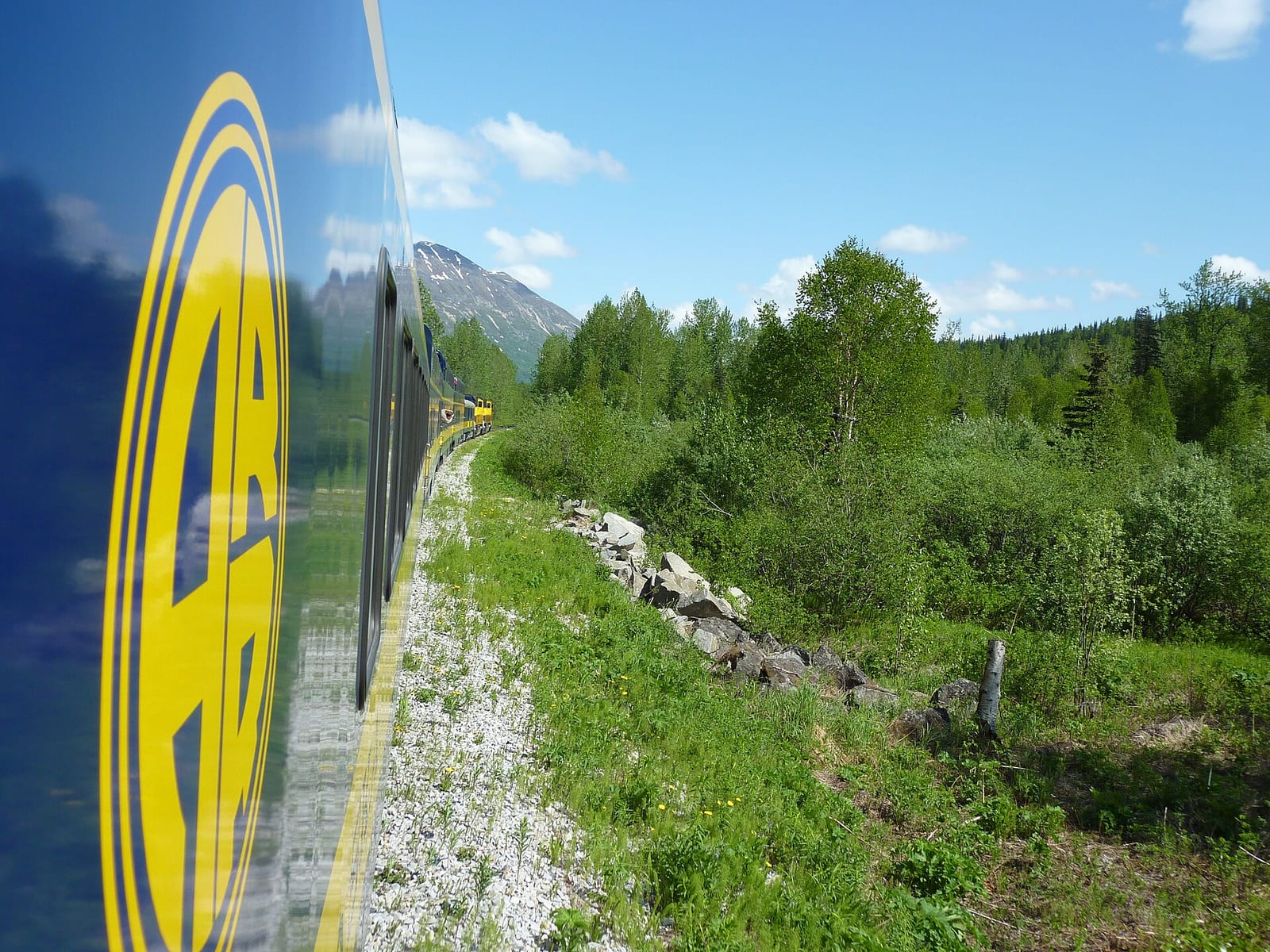
Between the towns there is simply Alaska: spruce forest, tundra and muskeg, the odd homestead, and wildlife the crew will slow the train to point out — moose in the willows, bears on the riverbank, bald eagles overhead.A bit of history
Culture & experiences along the way
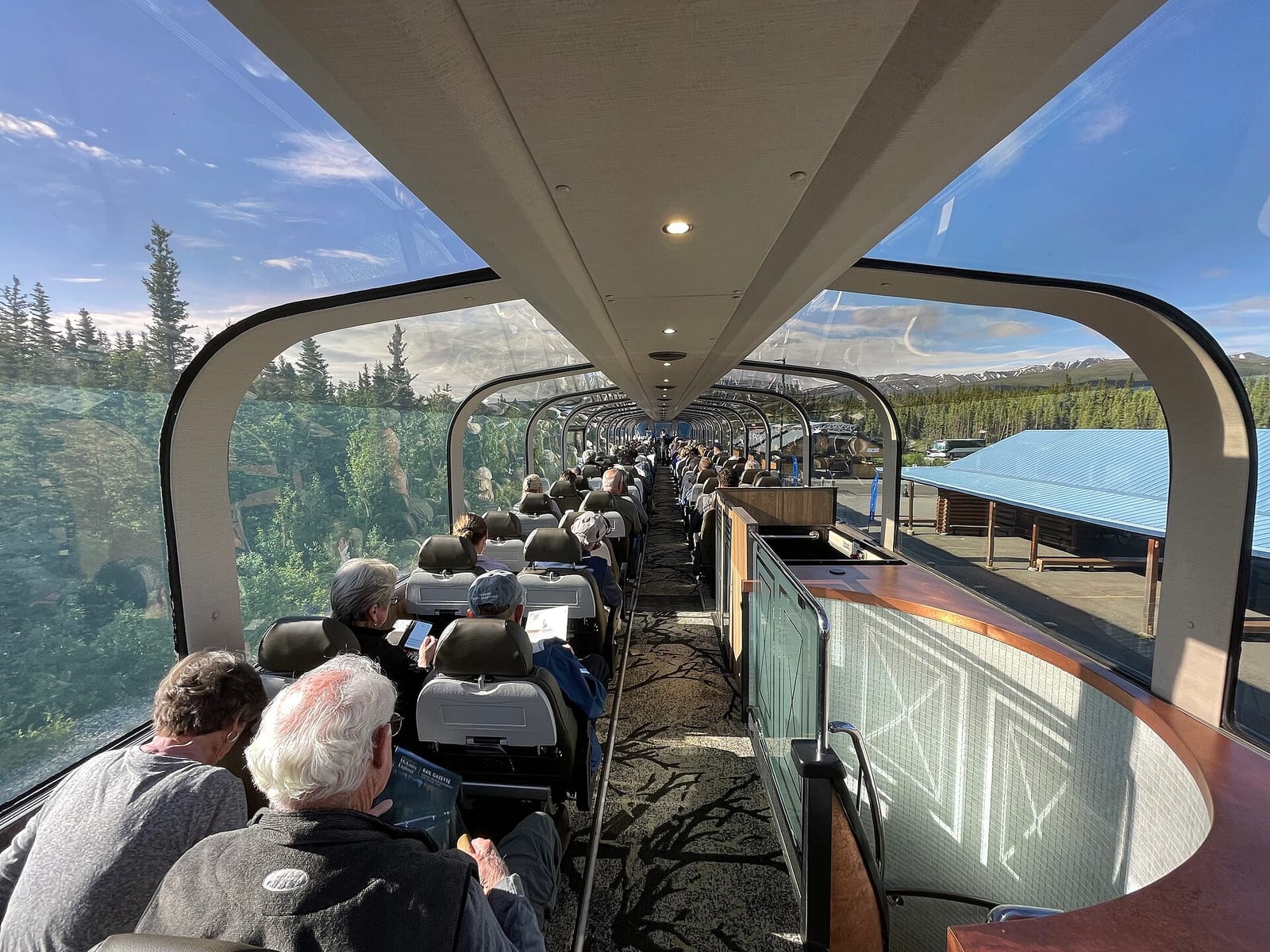
Richard N Horne / Wikimedia Commons · CC BY-SA 4.0The GoldStar glass dome
Ride the flagship in GoldStar Service and you get the top deck of a bi-level glass-domed car — 360-degree views under a curved glass roof, a dining room below, and the only outdoor upper-level viewing platform of its kind in the world.Kolmkolm / Wikimedia Commons · CC BY-SA 4.0Flag down the Hurricane Turn
Ride one of the last true flag-stop trains in America. On the roadless run north of Talkeetna, the little Hurricane Turn will halt anywhere you wave it down — the local train for trappers, homesteaders and anyone wanting the backcountry to themselves.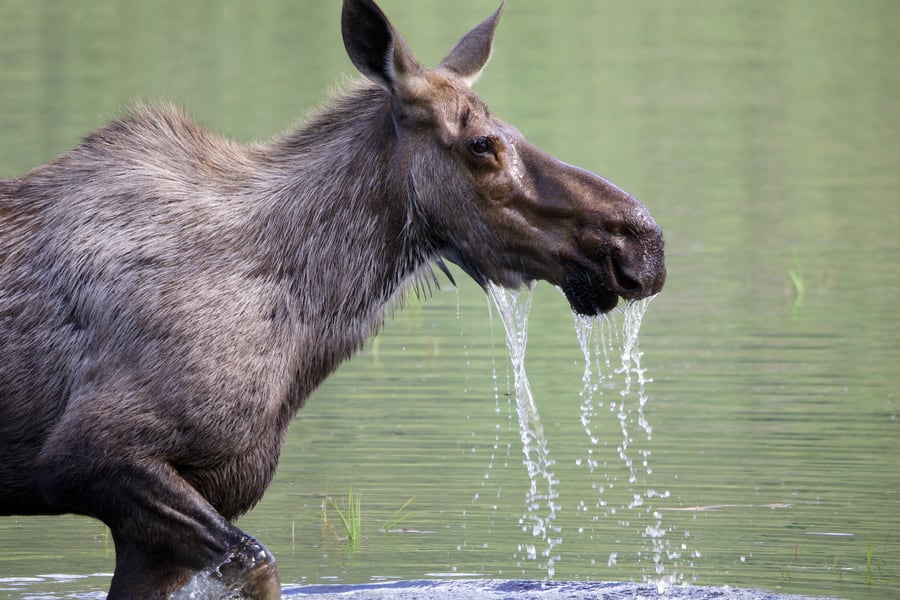 A moose is loose / Wikimedia Commons · CC BY 4.0 · cropped
Watching for wildlife
Keep your eyes on the window. Moose, black and grizzly bear, Dall sheep, caribou and eagles are all regular sightings from the train, and the crew know where to look — half the fun is the running commentary and the sudden slow-down for a bear.Timetables
The Alaska Railroad's passenger trains are seasonal, and the timetable is really a set of distinct routes rather than one train. The flagship Denali Star runs daily from 13 May to 17 September 2026.
Real Denali Star times (2026):
| Anchorage → Fairbanks | Fairbanks → Anchorage | |
|---|---|---|
| Depart | 08:20 | 08:20 |
| Talkeetna | 11:05 | 16:40 |
| Denali Park | 15:40 | 12:10 |
| Arrive | ~20:00 | ~20:00 |
The two trains leave each end at 08:20 and pass in the middle of the day, arriving around 20:00 — about 12 hours over 356 miles.
The other services (all summer, daily unless noted):
| Train | Route | Rough time |
|---|---|---|
| Coastal Classic | Anchorage ⇄ Seward | ~4½ h |
| Glacier Discovery | Anchorage ⇄ Whittier / Grandview | half-day |
| Hurricane Turn | Talkeetna ⇄ Hurricane (flag-stop) | ~½ day round trip |
| Aurora Winter Train | Anchorage ⇄ Fairbanks (Oct–May, weekends) | ~12 h |
Good to know:
- Summer is the season — outside mid-May to mid-September, only the weekend Aurora Winter Train links Anchorage and Fairbanks.
- You don't have to ride end to end — Anchorage–Talkeetna or Anchorage–Denali makes an easy day.
- Book ahead for GoldStar — the glass-dome cars sell out in peak summer.
- Denali is a lottery — the mountain is cloud-hidden more often than not; give yourself more than one chance.
Times as of the 2026 season. Confirm current schedules with the operator — see the Tickets section below.
Tickets
Tickets are booked directly with the Alaska Railroad, and the only real choice is which carriage you ride in. Both share the same route and the same views; the difference is the seat, the service and the dome. GoldStar puts you on the upper deck of a bi-level glass-domed car with a dining room below, meals and drinks included, and an open-air viewing platform. Adventure Class is the value fare — reclining seats, large windows, and shared vista-dome cars and a café you can wander up to.
Fares are seasonal, so the railroad holds the live price. Book early for July and August, when GoldStar especially sells out well ahead, and consider a package: the railroad and Alaskan operators bundle the train with Denali lodges and cruises, and many people ride north one way and fly the other.
Book your tickets
GoldStar Service
Upper-deck glass dome · all-inclusive
The premium way to ride: reserved seating on the top deck of a glass-domed car, meals and soft drinks (plus a couple of adult beverages) included, a dining room downstairs and an open-air viewing platform. The best seats on the railroad.
Book Tickets (opens in a new tab, on Alaska Railroad)via Alaska RailroadAdventure Class
Comfortable seats · shared vista domes
The value fare — comfortable reclining seats and large picture windows, with shared vista-dome cars and a café so you can still get up under the glass. Everything the journey is famous for, at a friendlier price.
Book Tickets (opens in a new tab, on Alaska Railroad)via Alaska RailroadRail Passes
No rail pass covers the Alaska Railroad. Interrail and Eurail are European schemes, and the United States is not among the 33 countries in Interrail's list of covered railway companies (opens in a new tab). The railroad sells its own tickets, in Adventure Class or GoldStar, and multi-day packages with hotels; Amtrak's passes do not reach Alaska.
Checked October 2026 against Interrail's list of covered railway companies (opens in a new tab).
Places to Visit
The railroad strings together the best of south-central and interior Alaska, and every stop on it is worth time of its own. The cards below run from the sea at Seward to the interior at Fairbanks.
Two practical notes are worth having before you book. The first is Denali: the park road is closed at Mile 43 while a bridge is built over the Pretty Rocks landslide, so buses currently turn round well short of the old routes, and the Park Service expects that to last through the summer of 2026. It is still very much worth going — the accessible stretch holds the Savage River country, the visitor centre and most of the wildlife people come to see — but plan around a shorter road than the guidebooks describe.
The second is the weather. Denali is big enough to make its own, and the mountain is hidden in cloud more often than not — local operators talk about the "30% club", reckoning that only about a third of visitors ever get a clear look at it. Give it more than one chance if you can, and treat a clear day as the bonus rather than the plan. The same goes for the northern lights at Fairbanks, which need darkness as well as luck, and so belong to a winter trip rather than a summer one.
 Balazs Barnucz / Wikimedia Commons · CC BY-SA 3.0 · cropped
Seward & Kenai Fjords
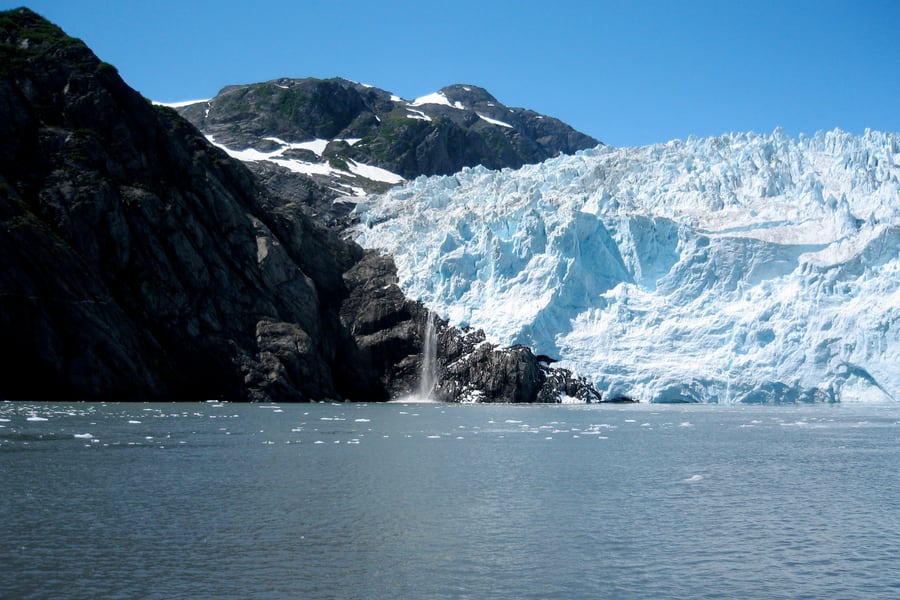
The railroad's southern end sits on Resurrection Bay, at the door of Kenai Fjords National Park — 669,984 acres established on 2 December 1980, almost none of it reachable by road. Day boats run from the harbour out to tidewater glaciers such as Aialik, calving into the sea among otters, puffins and whales. Behind them lies the Harding Icefield, source of at least 38 glaciers. Only Exit Glacier can be driven to.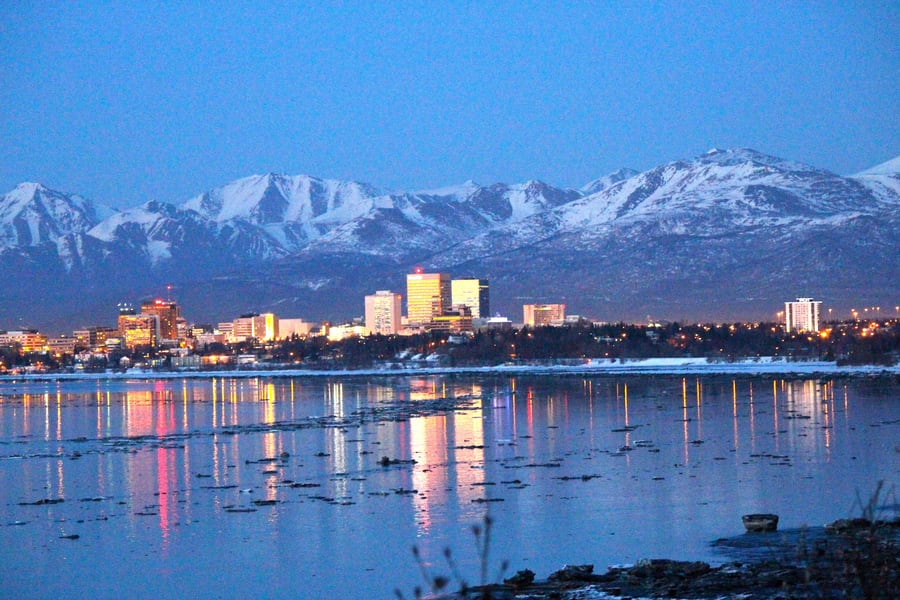 Photo by Didier Moïse / Wikimedia Commons · CC BY-SA 4.0 · cropped
Anchorage
Alaska's only real city holds 291,247 people — close to 40% of the whole state — on a coastal shelf with the Chugach Mountains rising straight off its eastern edge and a state park inside the city limits. It was rebuilt after the Good Friday earthquake of 27 March 1964: magnitude 9.2, nearly five minutes long, still the second largest ever recorded. Museums, floatplanes and the coastal trail fill a spare day easily.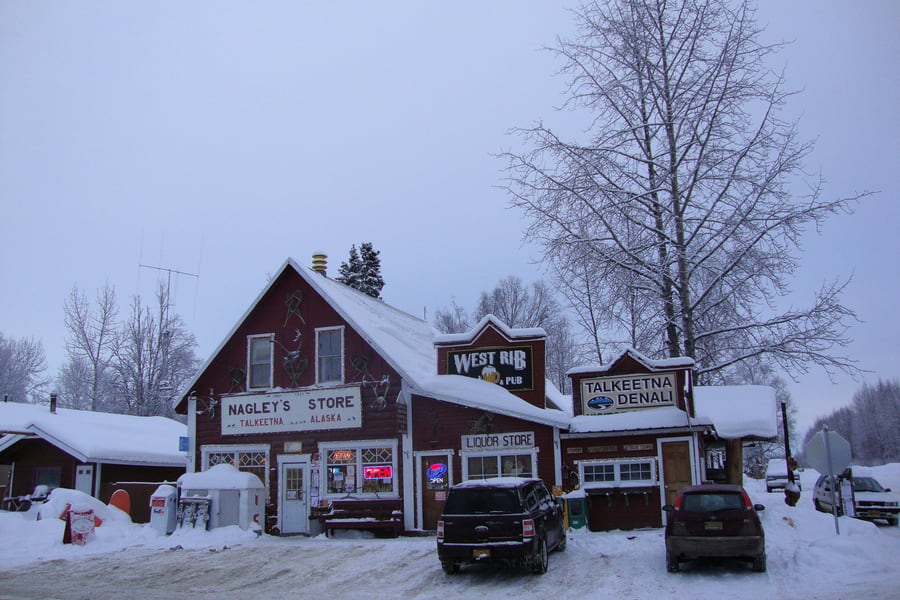 Laura Alier / Wikimedia Commons · CC BY 4.0 · cropped
Talkeetna
A village of about 1,000 that exists because of this railway: it began in 1916 as a district headquarters for the Alaska Railroad, and in 1919 the company surveyed and auctioned 80 lots at an average price of $14.25. That early-1900s core is now the Talkeetna Historic District. Climbers register for Denali at the ranger station here, and the air taxis fly sightseers onto the glaciers.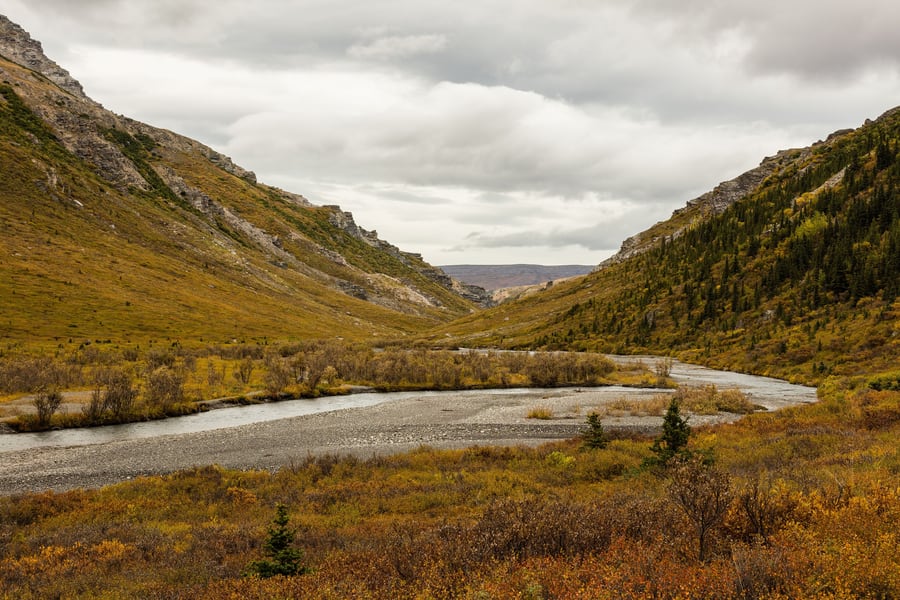 Diego Delso, delso.photo, License CC BY-SA · Wikimedia Commons · cropped
Denali National Park
Six million acres of tundra and mountain, protected on 26 February 1917 as Mount McKinley National Park and renamed in 1980. Check the road before you plan. The 92-mile park road has been shut at Mile 43 since a landslide at Polychrome, and the Park Service expects that to hold through summer 2026, with buses turning at the East Fork Bridge. Private cars have always stopped at Savage River, Mile 15.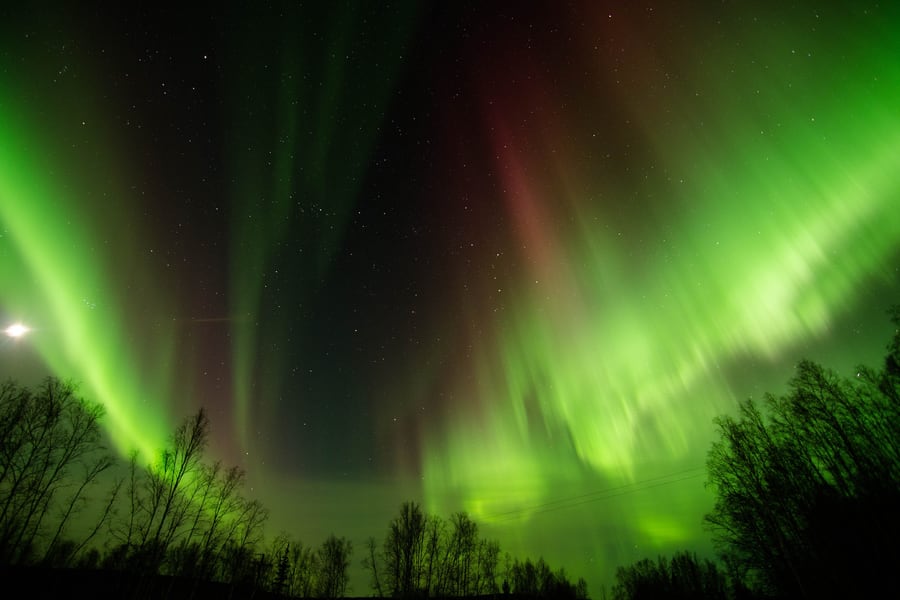 FairbanksMike / Wikimedia Commons · CC BY 2.0 · cropped
Fairbanks
The end of the line, founded in August 1901 by E. T. Barnette and lying 196 miles by road south of the Arctic Circle — squarely beneath the auroral oval, which is why the northern lights show on average more than 200 nights a year. It is also the coldest city of its size in the United States, averaging −8.3°F (−22.4°C) in January. The Dalton Highway runs north from here to the oilfields at Prudhoe Bay. Christoph Strässler / Wikimedia Commons · CC BY-SA 2.0 · cropped
Whittier & Prince William Sound
Reached on the Glacier Discovery train through the Anton Anderson Memorial Tunnel — at 2.51 miles the longest highway tunnel and the longest combined road-and-rail tunnel in North America, a single lane sharing the floor with the track, so cars and trains take turns. It was cut in 1941–42 and opened to road traffic on 7 June 2000. Beyond it, boats run out among the Sound's tidewater glaciers.Where to Sleep
The train covers the distances by day, so nights are spent in the towns and lodges along the line — and Denali deserves at least one of them.
- Anchorage — the natural base at the start or middle of a trip, with the widest choice of hotels and easy connections north and south.
- Talkeetna — characterful lodges and a famous historic roadhouse; a fine place to break the journey and hope the mountain comes out at dawn.
- Denali National Park — a cluster of wilderness lodges and hotels near the park entrance, many built for the rail-and-tour trade; book well ahead for summer.
- Seward & Fairbanks — comfortable hotels at each end of the mainline, handy for the fjord cruises in the south and the aurora and hot springs in the north.
Alaska's summer season is short and busy: reserve lodges — especially around Denali — months in advance for July and August. In winter, Fairbanks is the place to bed down for the northern lights.
Questions or corrections
Planning this trip and stuck on something, or spotted a time, fare or detail that has changed? Send us a message about Alaska Railroad. We read every one, and we update this page when something has changed.