USA

The United States is as big as a continent, and its railways run to the same scale. The network is overwhelmingly a freight one, so the passenger train here is rarely the fastest way to travel — it is something better, a way of watching the country go past that no highway or airline offers.
The long-distance passenger trains are run by Amtrak, the national passenger railroad created in 1971, which serves more than 500 destinations. Its trains run on track owned by the freight railroads, such as BNSF and Union Pacific, and share the line with freight. Every seat and room is reserved, and fares move with demand. In the West the trains are made up of double-deck Superliner cars, with sleeping rooms whose fares include meals in the dining car, and a lounge car with windows curving up into the roof. Scenic and heritage railways are separate businesses: they sell their own tickets, and Amtrak's rail pass does not cover them.
Rail journeys in USA
1880 Train
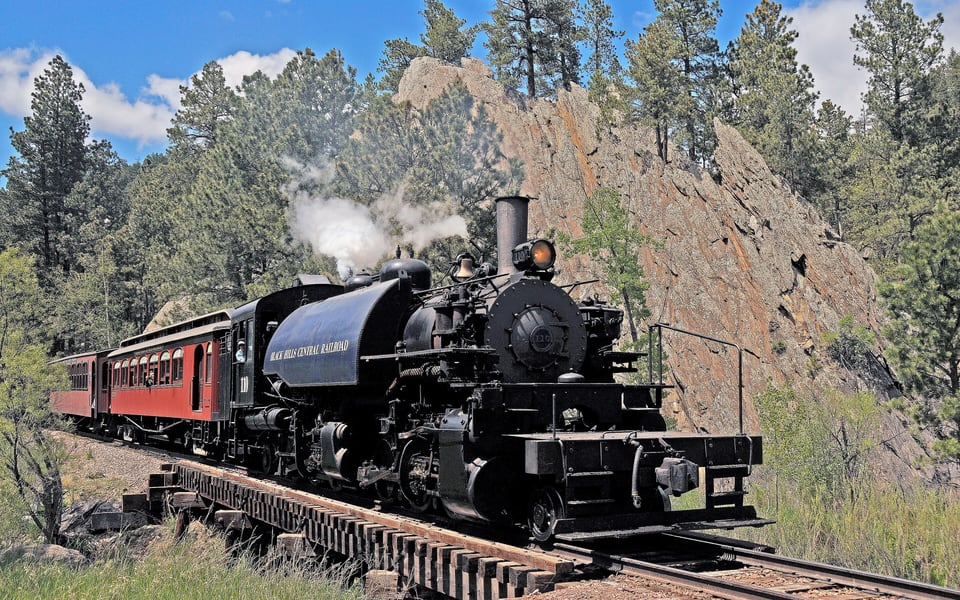
Steam on the last ten miles of railroad in the heart of the Black Hills, Hill City to Keystone, behind a pair of 1920s Mallet logging engines.
View journey →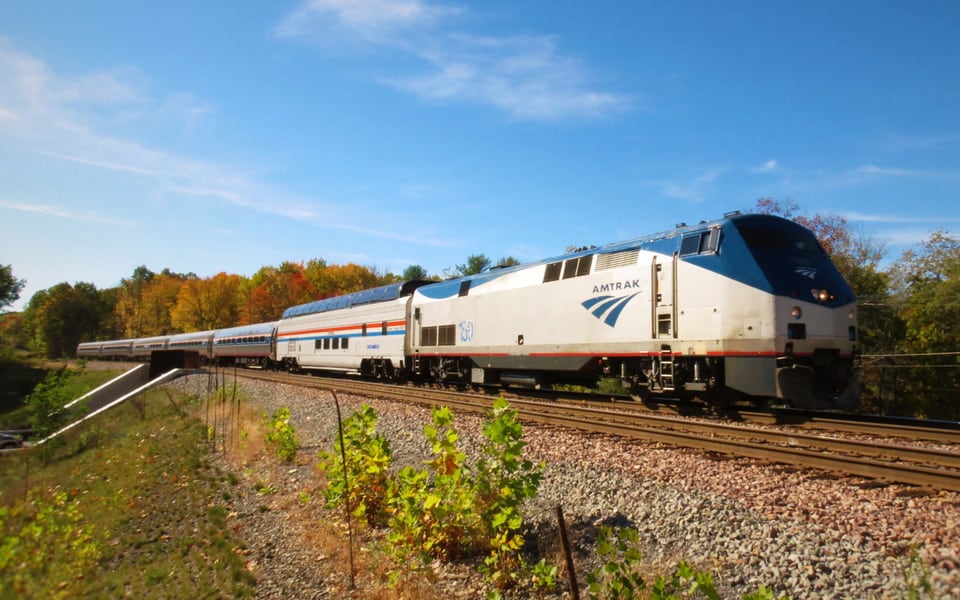
Adirondack
New York to Montreal in a day: the Hudson all morning, Lake Champlain's shore all afternoon, and into Canada over a bridge built in 1859.
View journey →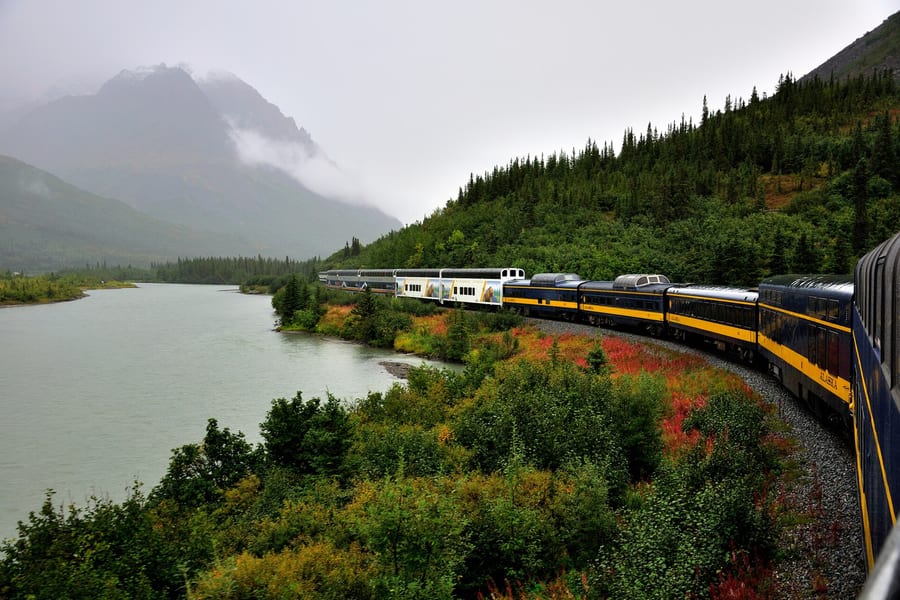
Alaska Railroad
A wilderness railway on the grandest scale — glass-domed carriages past Denali, through roadless country where the train still stops if you flag it down.
View journey →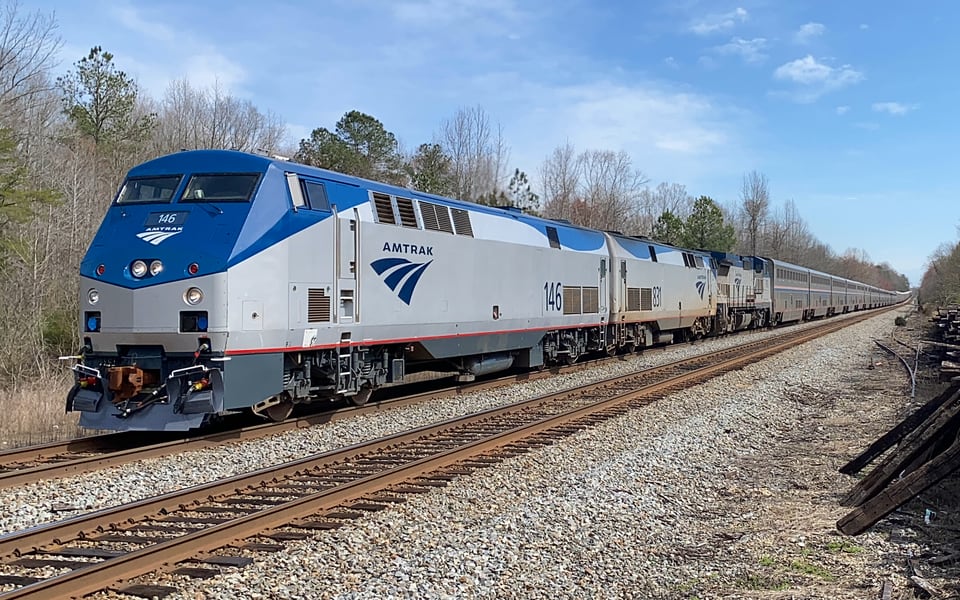
Auto Train
Washington to Orlando overnight, and your car comes too — the only train in the US that carries its passengers' vehicles, in autoracks at the back.
View journey →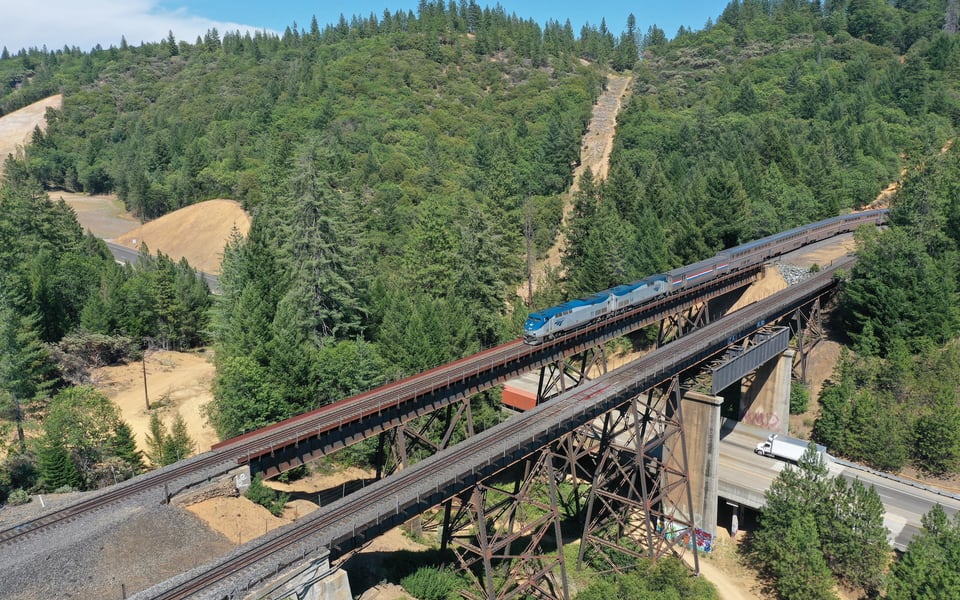
California Zephyr
Chicago to San Francisco Bay in about 52 hours, every day — up through the Rockies, then over the Sierra Nevada at Donner Pass on the same train.
View journey →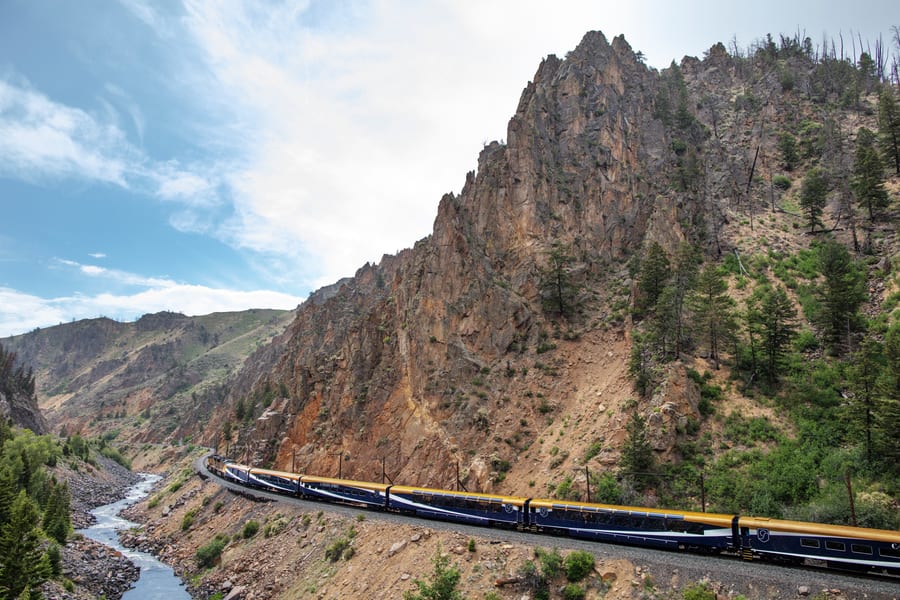
Canyon Spirit
An elevated daylight rail journey through the American Southwest — from the Colorado Rockies to Utah's red-rock canyons, by the team behind Rocky Mountaineer.
View journey →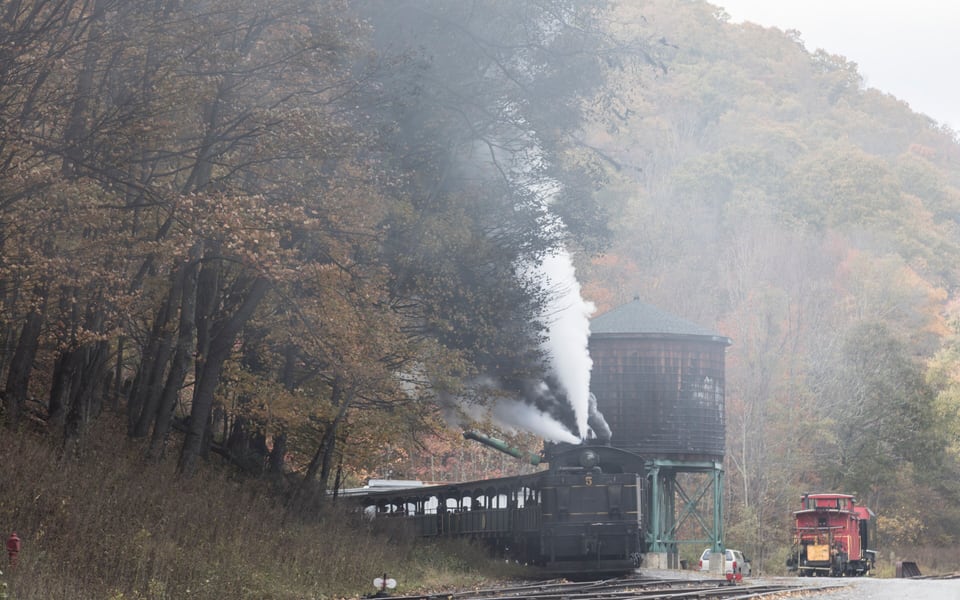
Cass Scenic Railroad
Geared Shay steam engines push open logging cars 11 miles up Back Allegheny Mountain to Bald Knob, the third-highest point in West Virginia.
View journey →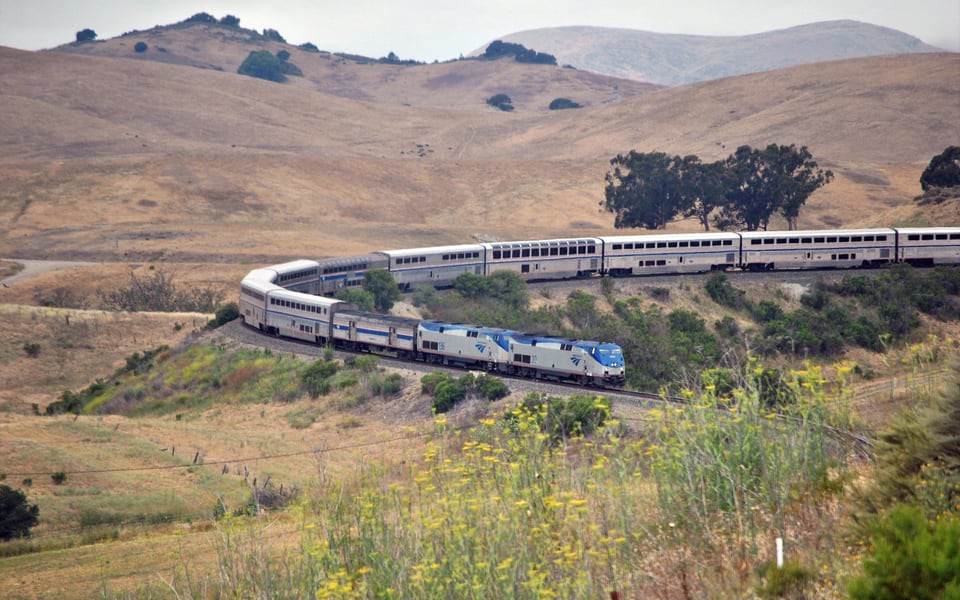
Coast Starlight
Los Angeles to Seattle in about 35 hours, every day — along the Pacific shore north of Santa Barbara, then past Mount Shasta and over the Cascades.
View journey →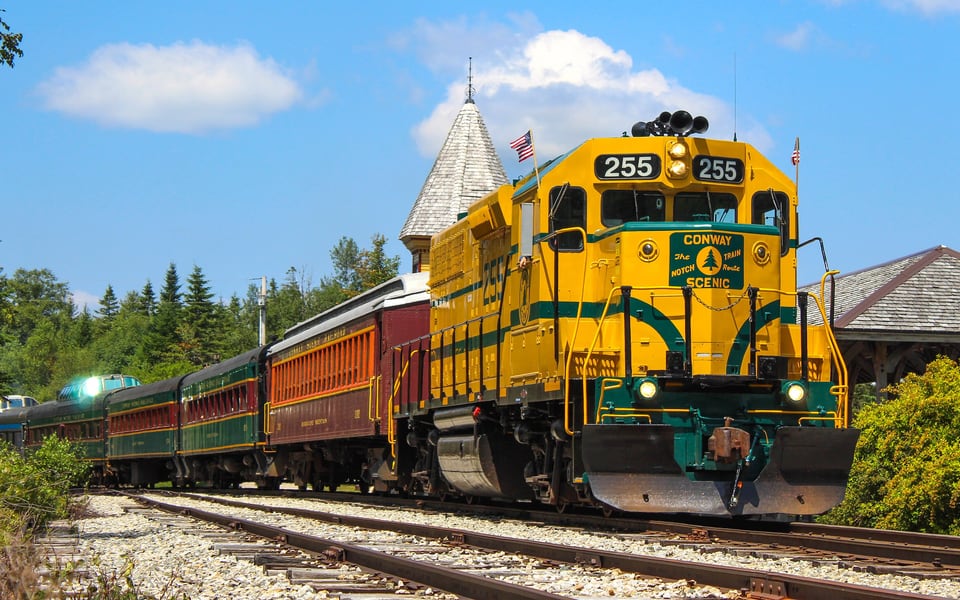
Conway Scenic Mountaineer
From North Conway's 1874 station up through Crawford Notch on the old Maine Central, over the Frankenstein Trestle, 85 feet above the gulf.
View journey →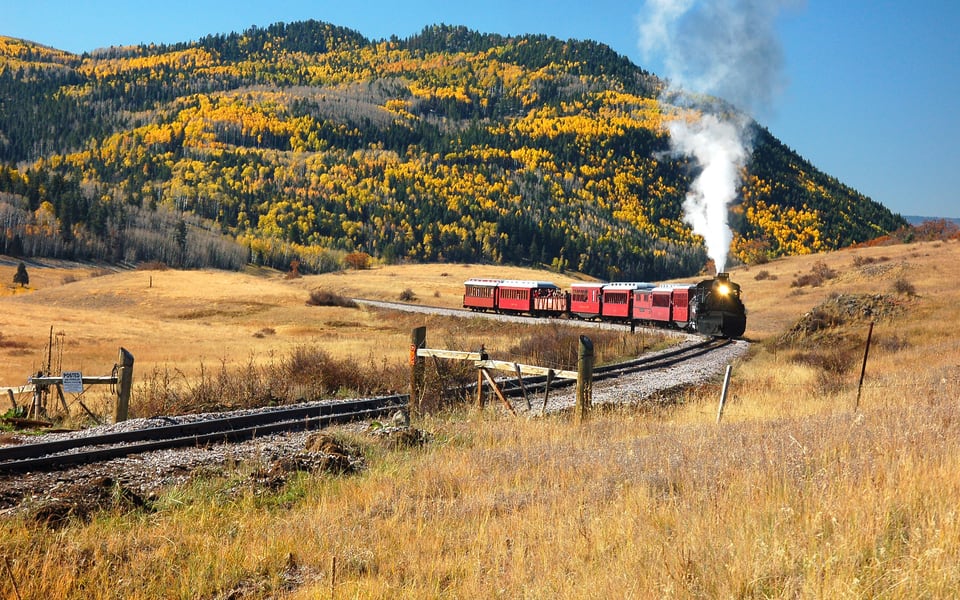
Cumbres & Toltec
Steam over Cumbres Pass at 10,015 ft — 64 miles of 1880 narrow gauge that crosses the Colorado–New Mexico line eleven times.
View journey →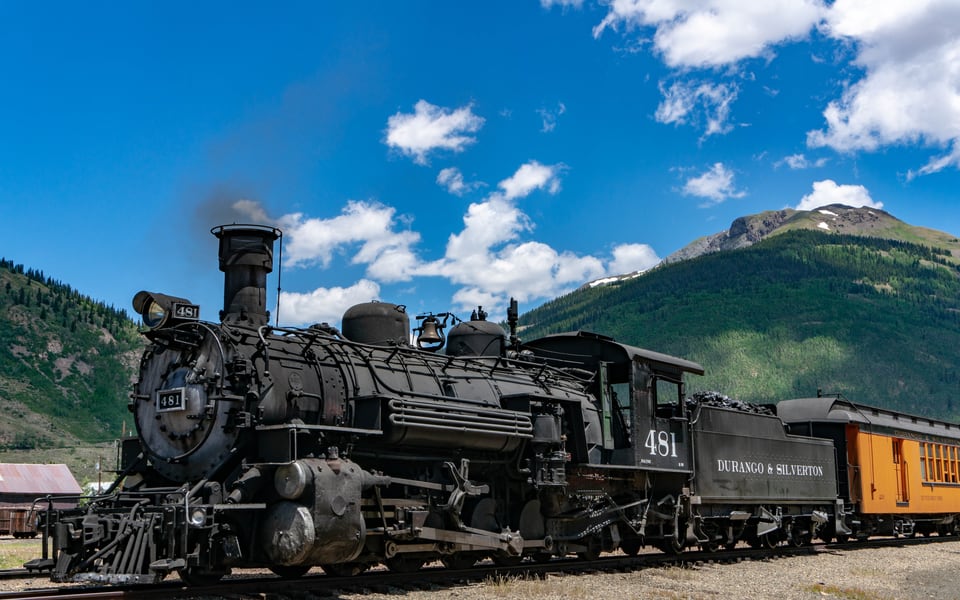
Durango & Silverton
Steam up the Animas canyon since 1882 — 45 miles of narrow gauge to the mining town of Silverton, on a ledge blasted into the canyon wall.
View journey →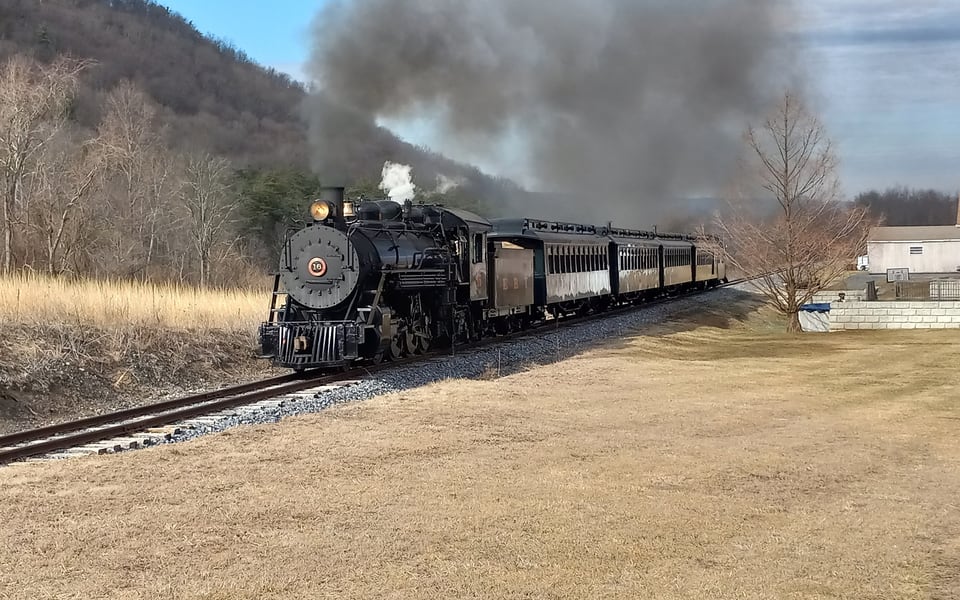
East Broad Top Railroad
Steam on the last three-foot-gauge common carrier east of the Rockies, from a Pennsylvania yard its crews walked out of in 1956 and left as it stood.
View journey →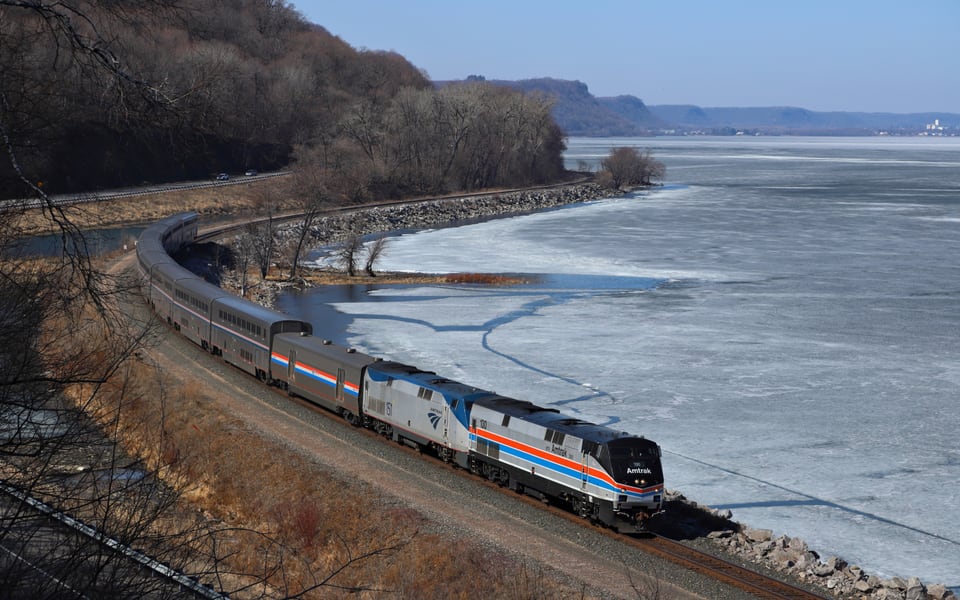
Empire Builder
Chicago to Seattle or Portland in about 46 hours, every day — over the Rockies at Marias Pass, on the southern edge of Glacier National Park.
View journey →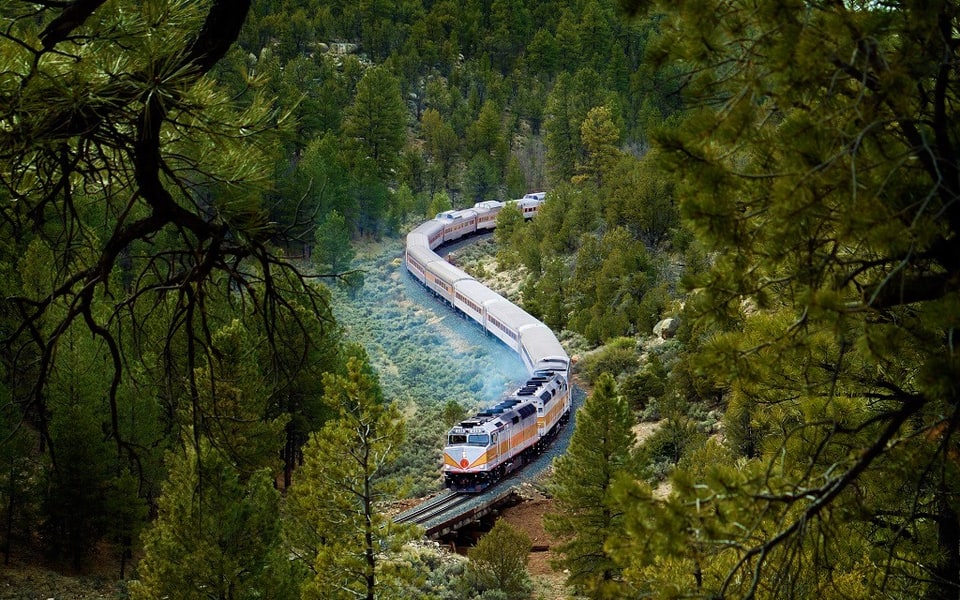
Grand Canyon Railway
A vintage train through the Arizona high country to the rim of a natural wonder.
View journey →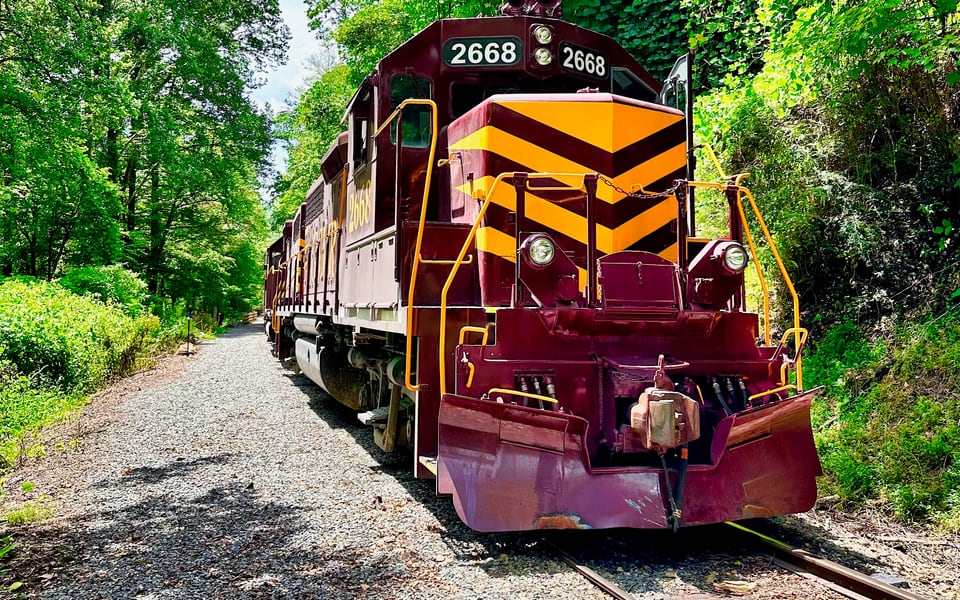
Great Smoky Mountains Railroad
Bryson City across the Fontana Lake trestle into the Nantahala Gorge and back, on many days behind a steam engine built for the US Army in 1942.
View journey →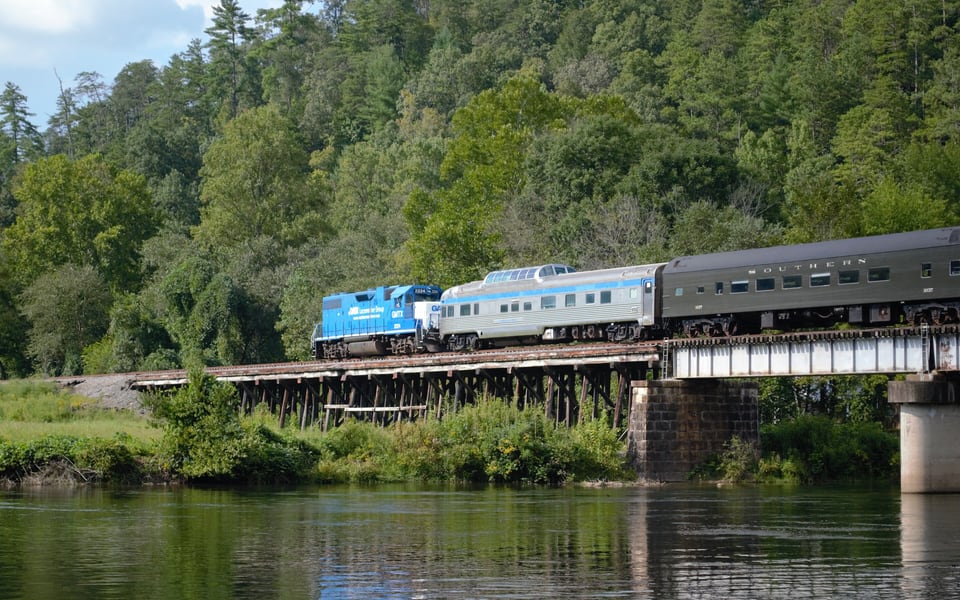
Hiwassee Loop
Up the Hiwassee River Gorge in Tennessee to a spiral of 1898, where the train crosses a bridge 62 ft above the track it climbed minutes before.
View journey →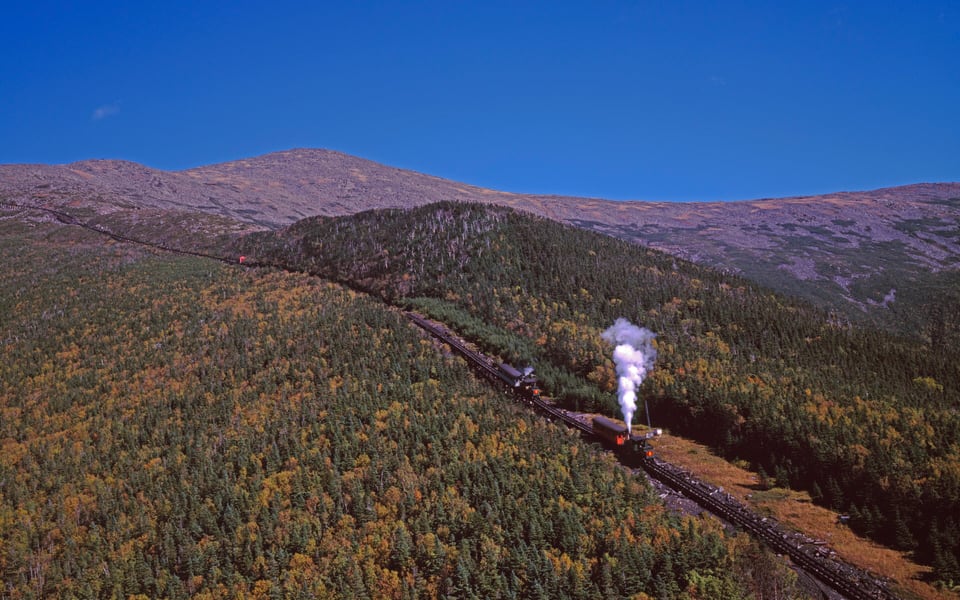
Mount Washington Cog Railway
The world's first mountain-climbing cog railway, running since 1869: three miles up Mount Washington, over a trestle that climbs at 37.41 %.
View journey →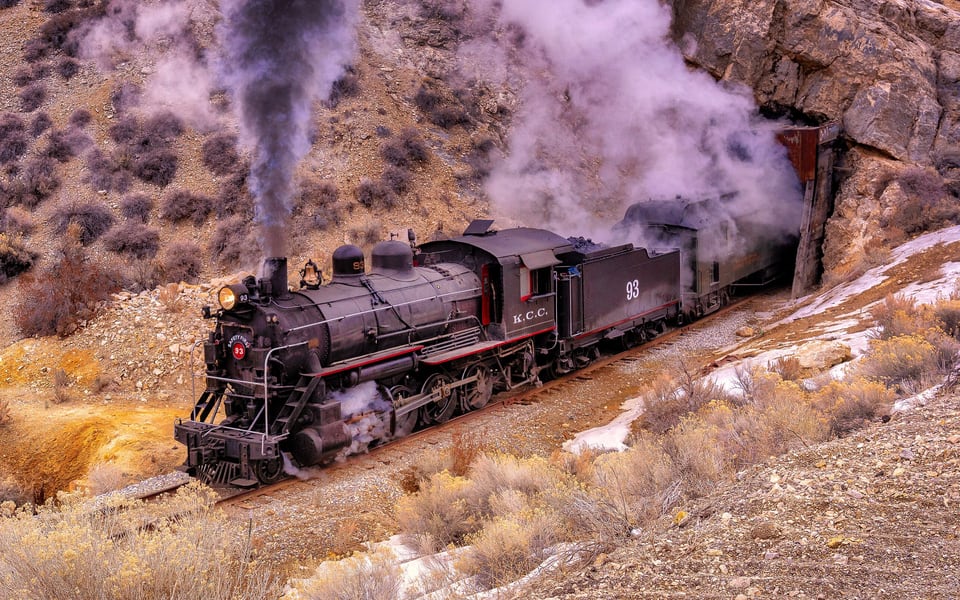
Nevada Northern Railway
Ely's copper railroad, left whole when it closed in 1983 and now a National Historic Landmark: a 1917 Baldwin steams up Robinson Canyon through two tunnels.
View journey →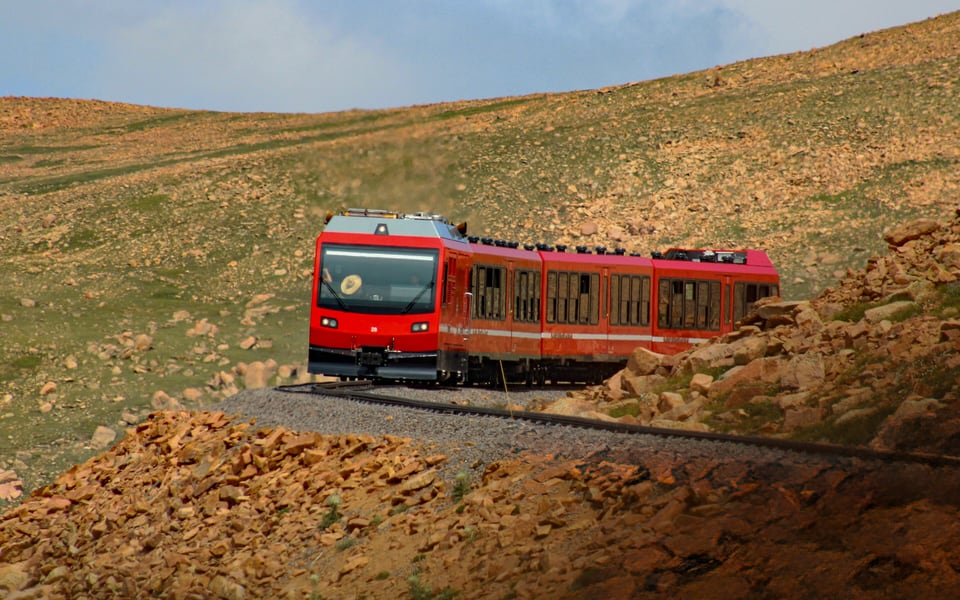
Pikes Peak Cog Railway
The highest cog railway in the world: nine miles from Manitou Springs to the 14,115 ft summit of Pikes Peak, far above the tree line.
View journey →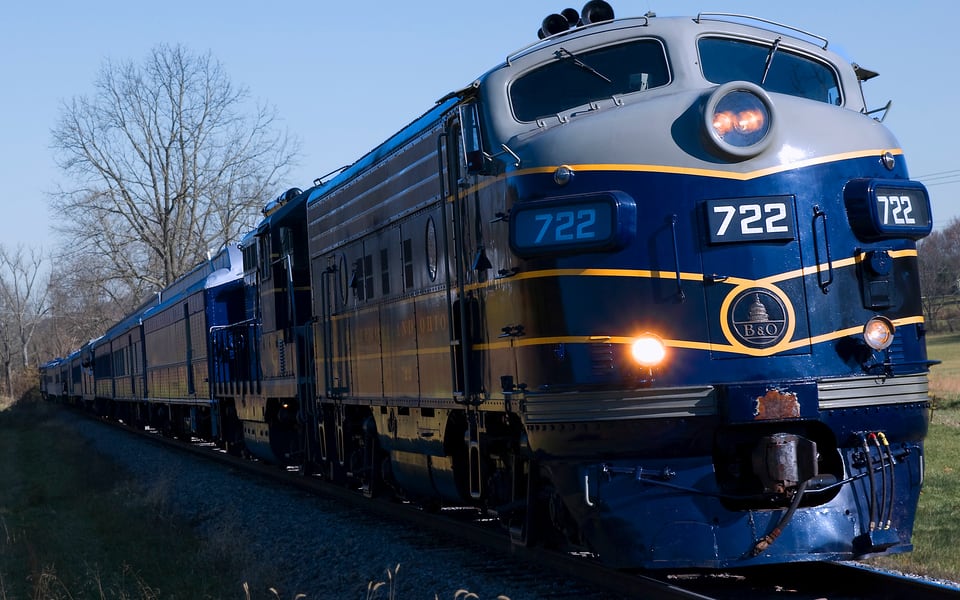
Potomac Eagle
The only passenger train through the Trough, a six-mile canyon of the Potomac's South Branch with no road in, where West Virginia's bald eagles nest.
View journey →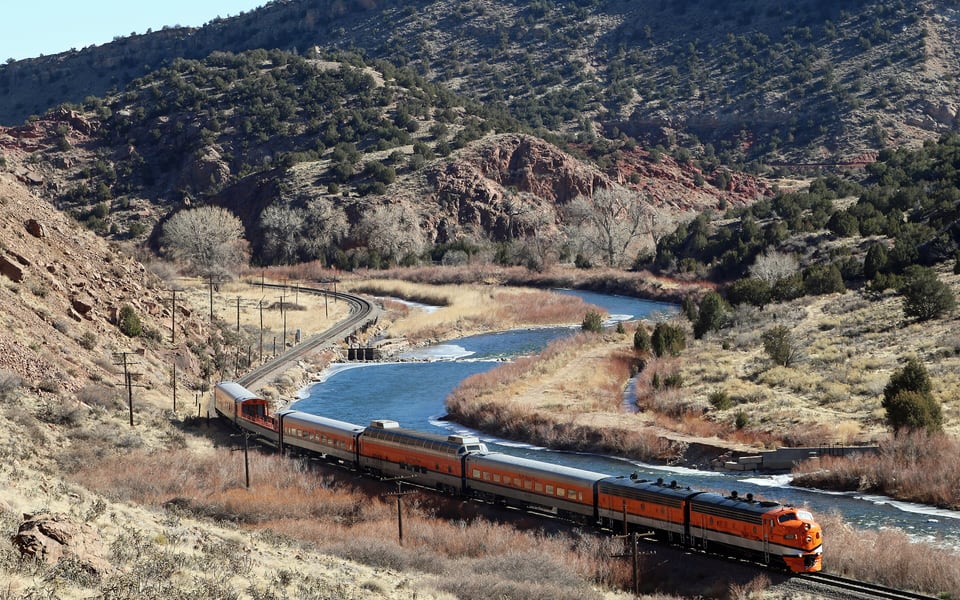
Royal Gorge Route Railroad
Along the floor of Colorado's Royal Gorge in 1950s domes, under granite walls over 1,000 feet high and over a bridge hung above the river in 1879.
View journey →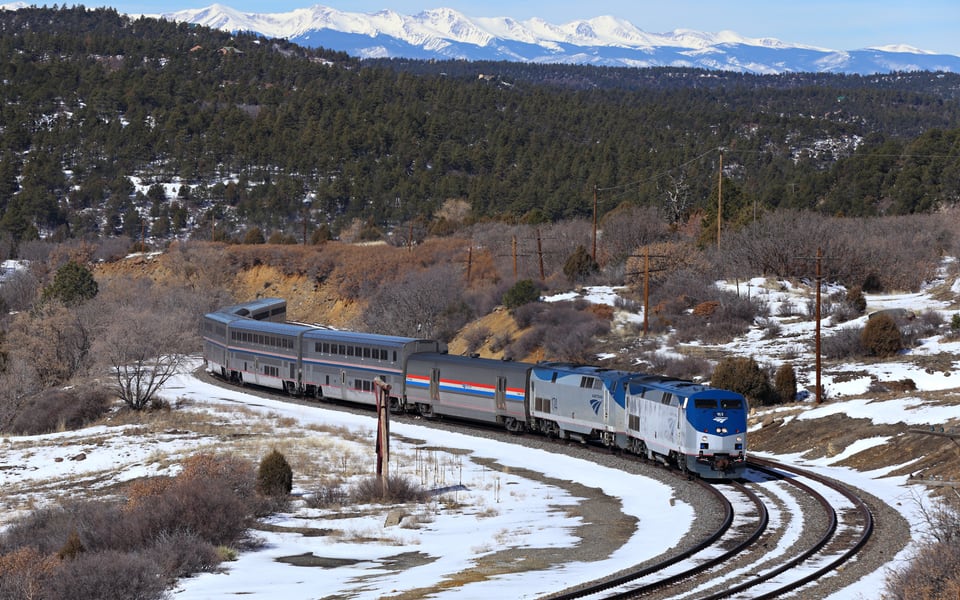
Southwest Chief
Chicago to Los Angeles in about 44 hours, every day — south along the Santa Fe Trail and over Raton Pass, at 7,588 ft the top of the line.
View journey →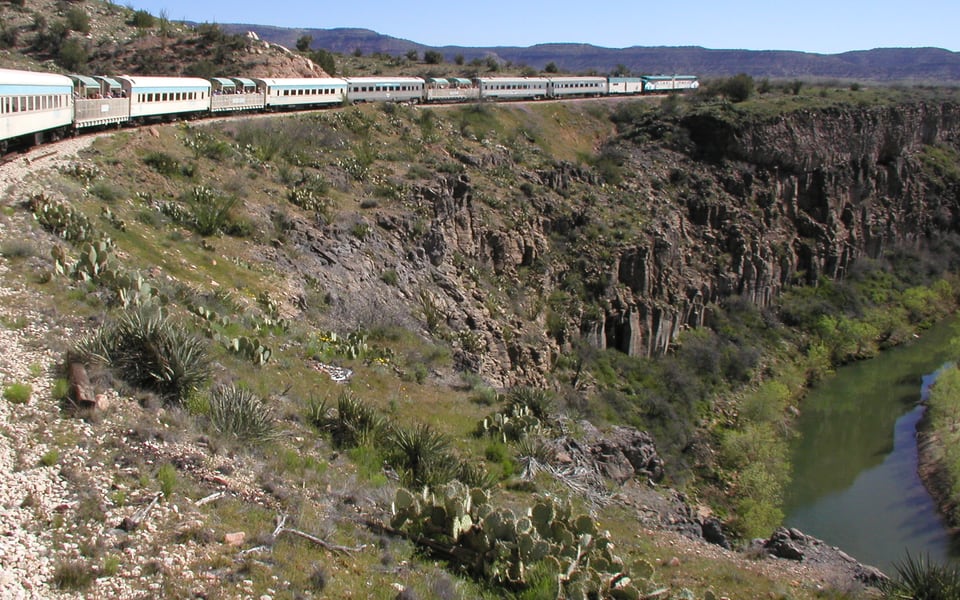
Verde Canyon Railroad
Four hours into an Arizona canyon no road runs through, behind two FP7s of 1953, and through a curved 734-foot tunnel blasted out of rock in 1911.
View journey →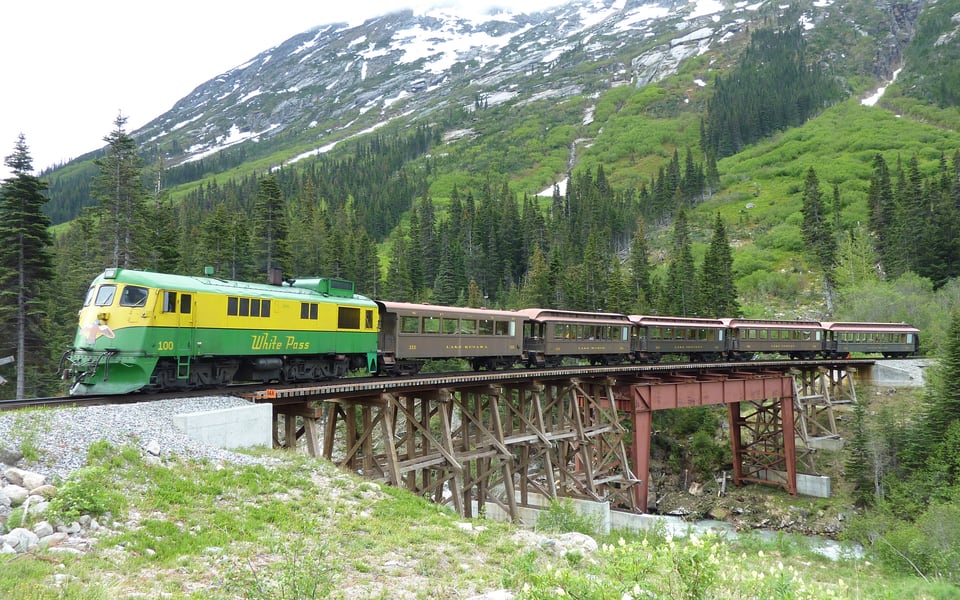
White Pass & Yukon Route
The railway the Klondike gold rush built: from the docks at Skagway it climbs almost 3,000 ft in 20 miles to White Pass and the Canadian border.
View journey →Good to know
Can you get around the USA by train?
The network is overwhelmingly freight, so passenger rail is sparse and slow compared with flying or driving. Amtrak runs long-distance and corridor trains — best treated as scenic journeys in their own right — with the busy Northeast Corridor (Boston–New York–Washington) the main exception where the train really is the fastest way. Alaska is the outlier: there the railway is genuinely the practical way into country the road network never reached.
Do I need to book, and are there rail passes?
Amtrak long-distance trains are reserved, so book ahead — well ahead in summer, and early for sleeper cabins. A USA Rail Pass covers a set number of journeys within a period. Scenic excursion lines are booked by class of service instead, and the glass-domed cars — GoldStar on the Alaska Railroad, the dome classes on the Grand Canyon Railway and the Canyon Spirit — are the first things to sell out.
When is the best time for US rail travel?
It depends on the region, but spring through autumn suits most routes. The Grand Canyon Railway runs year-round except 25 December, with steam on the first Saturday of the month and the Polar Express taking over in November–December. Alaska is far more seasonal: mid-May to mid-September is the main season, after which service drops back to the weekend Aurora Winter Train, which is its own reason to go.
What are the USA's best scenic railways?
Amtrak's western routes — the California Zephyr, Coast Starlight and Southwest Chief — are the long-distance classics. For shorter and more spectacular rides, the Grand Canyon Railway runs to the South Rim, the Canyon Spirit crosses the Rockies to Moab and Salt Lake City, and the Alaska Railroad links Seward, Anchorage, Denali and Fairbanks. The Durango & Silverton and the Cass Scenic are worth adding too.