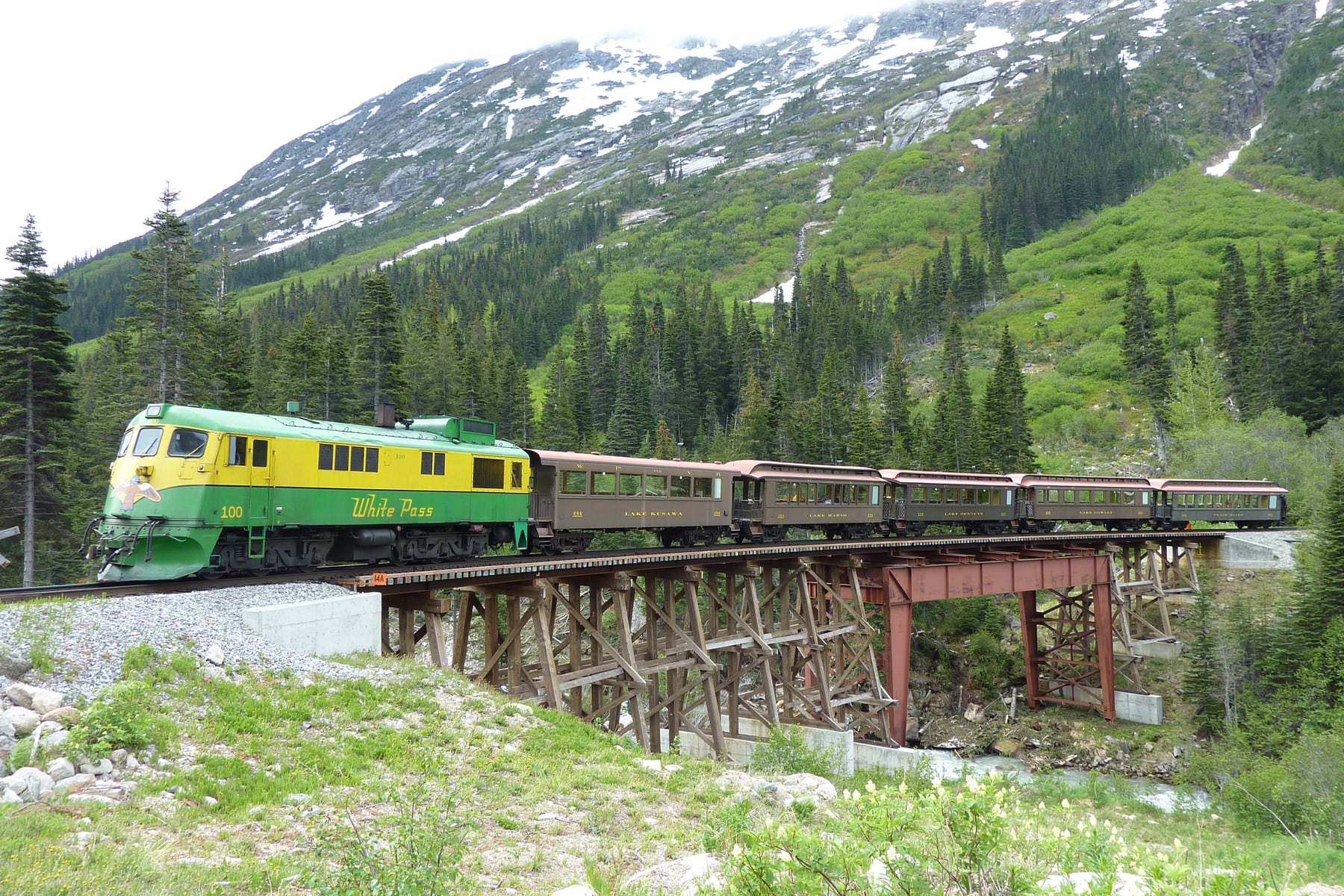
White Pass & Yukon Route
Nils Öberg / Wikimedia Commons · CC BY-SA 3.0
- Distance20.4 miles to White Pass summit; 67.5 miles to Carcross, Yukon
- DurationSummit Excursion 2.5–2.75 hours round trip; Carcross 4.75 hours one way
- Best season30 April to 7 October; Bennett and Carcross 26 May to 12 September
Introduction
The White Pass & Yukon Route is the railway the Klondike gold rush built. When gold was found on Bonanza Creek in 1896, tens of thousands of stampeders landed at Skagway and hauled their supplies over the Coast Mountains on foot. Construction of a 3 ft narrow-gauge line began in May 1898, and by 20 February 1899 its rails had reached White Pass: almost 3,000 ft of climb in 20 miles, on grades of almost 3.9 %, blasted out of solid granite.
The line starts in Alaska, which is why it is filed here under the United States, but beyond the summit it runs through British Columbia to Carcross, in Yukon. It closed in 1982, when the mines it served shut down; since 1988 it has run for travellers, and in summer its trains leave Skagway almost every hour.
Most people ride the Summit Excursion, a round trip of 2.5 to 2.75 hours that never leaves Alaska and needs no passport. Longer trains continue to Fraser, Bennett and Carcross.
The Journey
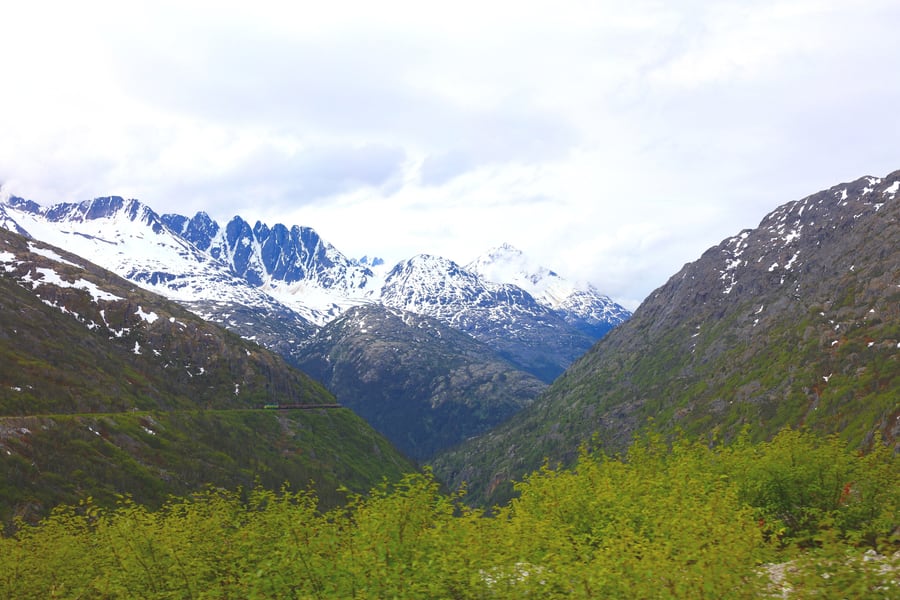
Trains board at the depot on Broadway in Skagway or right beside the cruise ships on the town's docks, and set off up the valley of the Skagway River. Within a few miles the line leaves the valley floor and starts to climb the mountainside on a narrow shelf, the grade rising more than two feet in every hundred. The route follows the one Captain William Moore and Skookum Jim scouted before the rush, and the conductor's commentary picks out the landmarks: Bridal Veil Falls, Inspiration Point, the line of George Brackett's toll road, and the Trail of '98 worn into the rock where the stampeders walked.
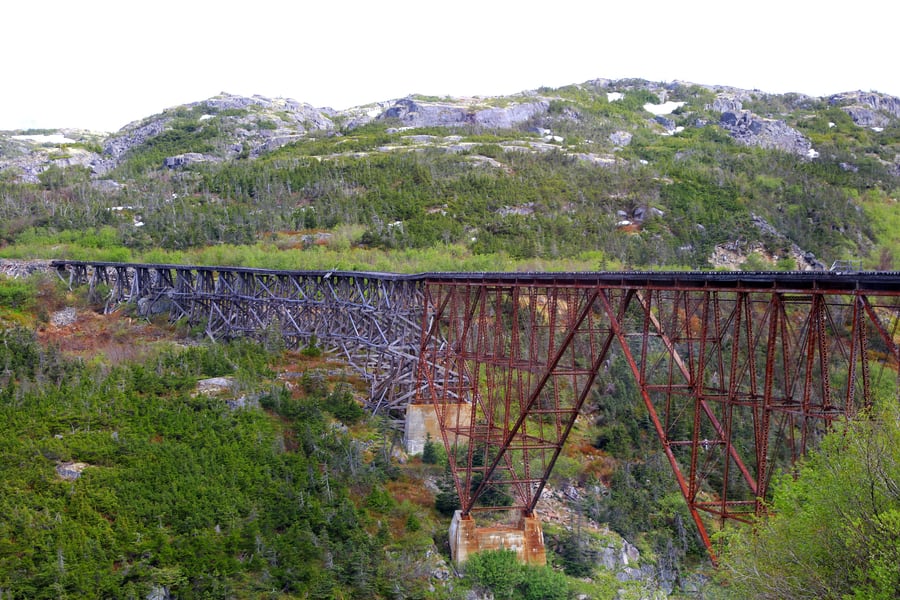
Near the top the line crosses Dead Horse Gulch, where the railway's old steel cantilever bridge still stands beside the tunnel and bridge that replaced it in 1969. At milepost 20.4 and 2,865 ft the train reaches the summit of White Pass and the Canadian border, marked by flags and a small log cabin. Summit Excursion trains swing round the Summit Loop, finished in 2019, and head back down; trains going up and down pass one another at Boulder, Glacier and the summit.
Beyond the summit
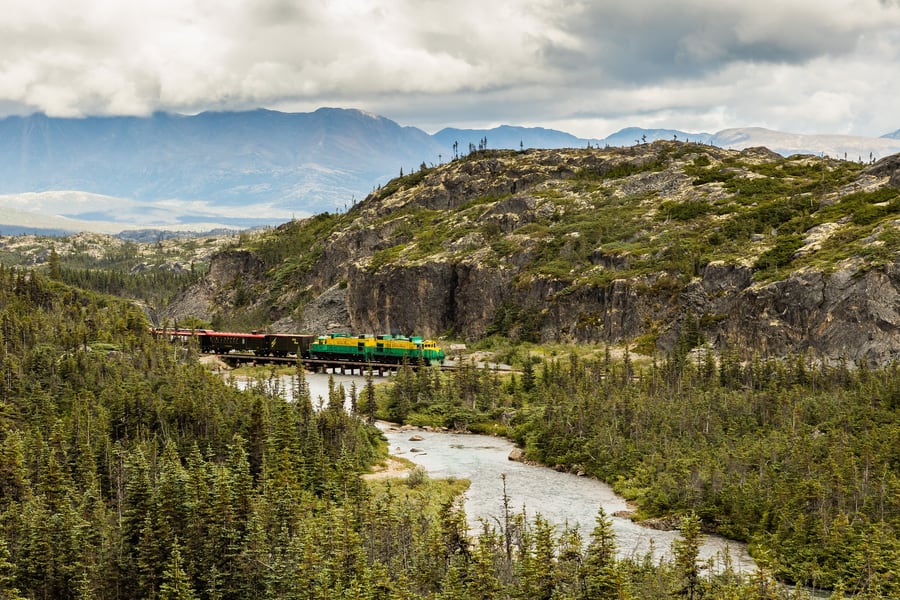
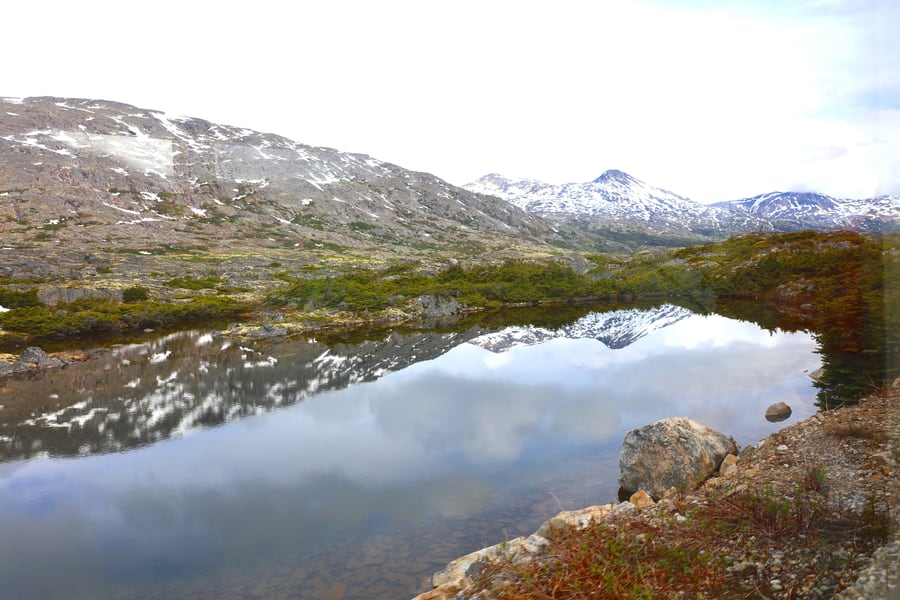
Longer trains carry on into British Columbia, across a bare, lake-strewn upland to Fraser, where the line first meets the South Klondike Highway and Canadian customs. At Bennett, where the White Pass and Chilkoot trails met and a tent city built boats for the Klondike, the train stops for 45 minutes by the 1903 station and St Andrew's Church. Lunch is served aboard along the length of Lake Bennett, and the train rumbles over a bridge into Carcross, where the last spike was driven on 29 July 1900.
The trains
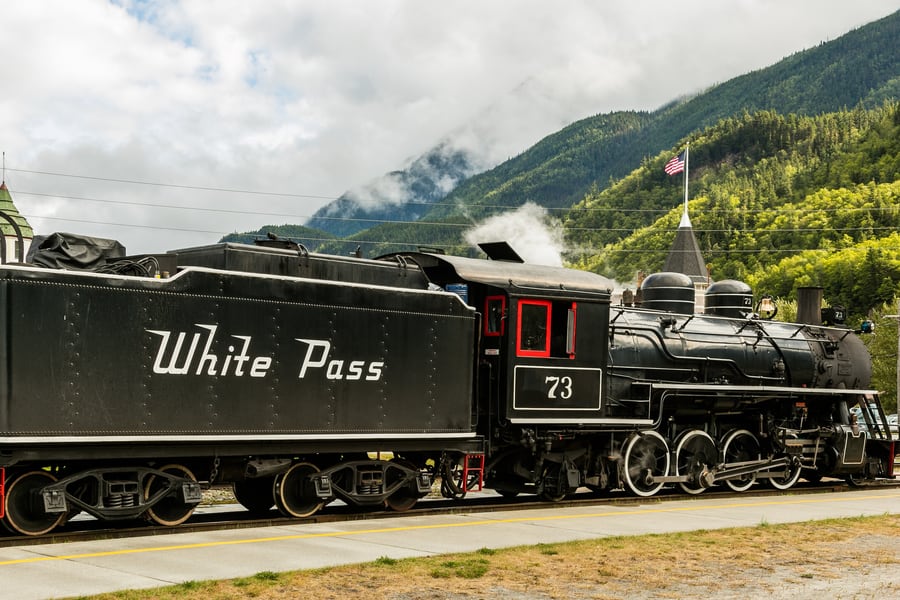
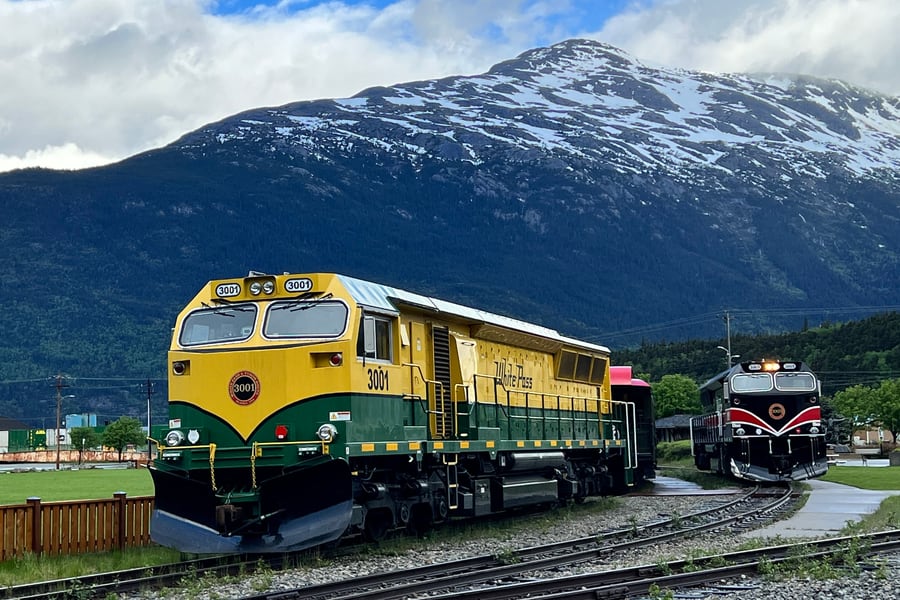
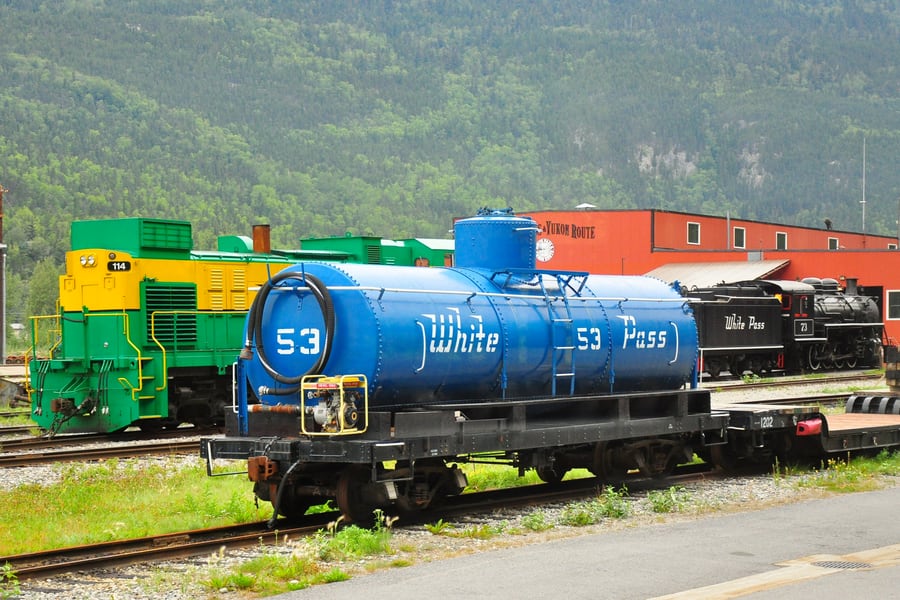
Steam ran the line until 1954. The railway then bought General Electric diesels, the rounded "shovelnose" units of the 1950s and 60s, and ALCO road-switchers from the 1960s, all painted green and yellow. In 2020 came six National Railway Equipment diesels built in Illinois, the 30-class, the first new locomotives since the 1970s. Steam survives in No. 73, a Baldwin 2-8-2 built for the railway in 1947, which hauls the Steam Summit Loop Excursion.
The coaches are named after lakes and rivers of Alaska, British Columbia and Yukon. The four oldest, built by Jackson & Sharp in 1889 and 1891, are older than the railway itself.
Along the route
 Enrico Blasutto / Wikimedia Commons · CC BY-SA 4.0 · cropped
Dead Horse Gulch
Some 3,000 pack horses died on the White Pass Trail in the rush of 1897–98, and this gorge near the top still carries their name. The railway's tall steel cantilever bridge still spans it, bypassed since 1969 by a tunnel and a newer bridge.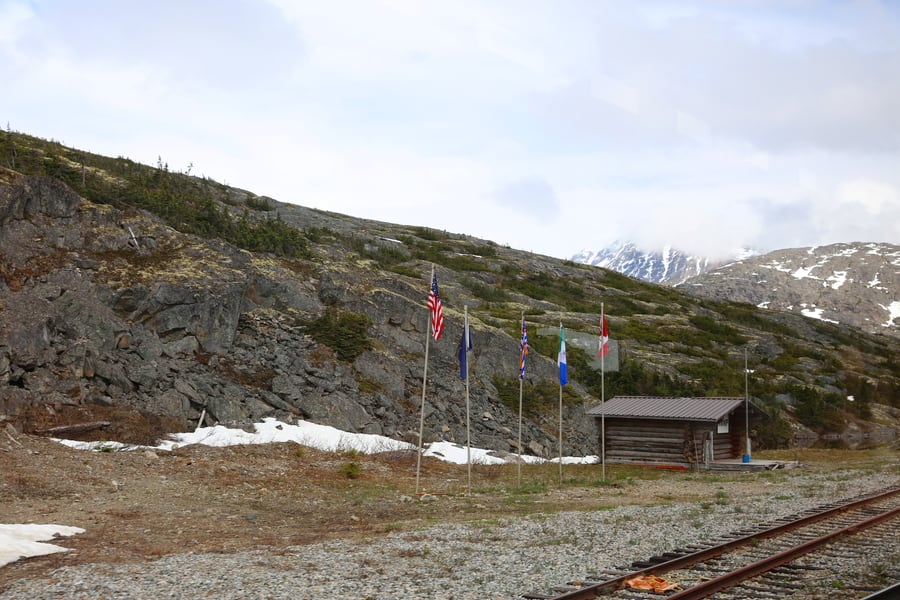 Enrico Blasutto / Wikimedia Commons · CC BY-SA 4.0 · cropped
White Pass summit
At milepost 20.4 and 2,865 ft the train reaches the summit and the border between the United States and Canada, where Mounted Police once turned back anyone without a year's supplies. Summit Excursion trains turn here on a loop.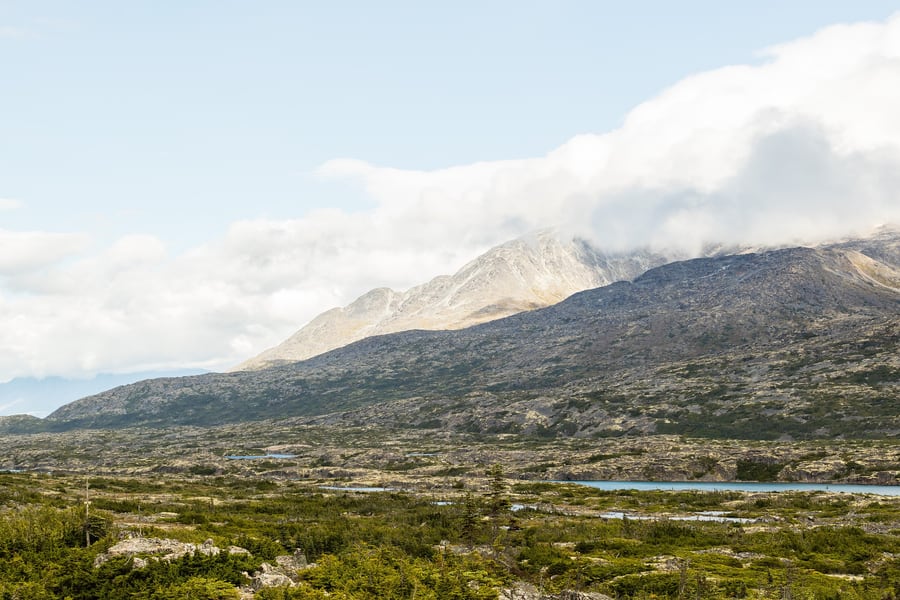 Diego Delso, delso.photo, License CC BY-SA · Wikimedia Commons · cropped
Summit Lake to Fraser
Beyond the border the line crosses bare, lake-strewn upland in British Columbia to Fraser, 27.7 miles from Skagway, where it first meets the South Klondike Highway and passengers going on by road clear Canadian customs.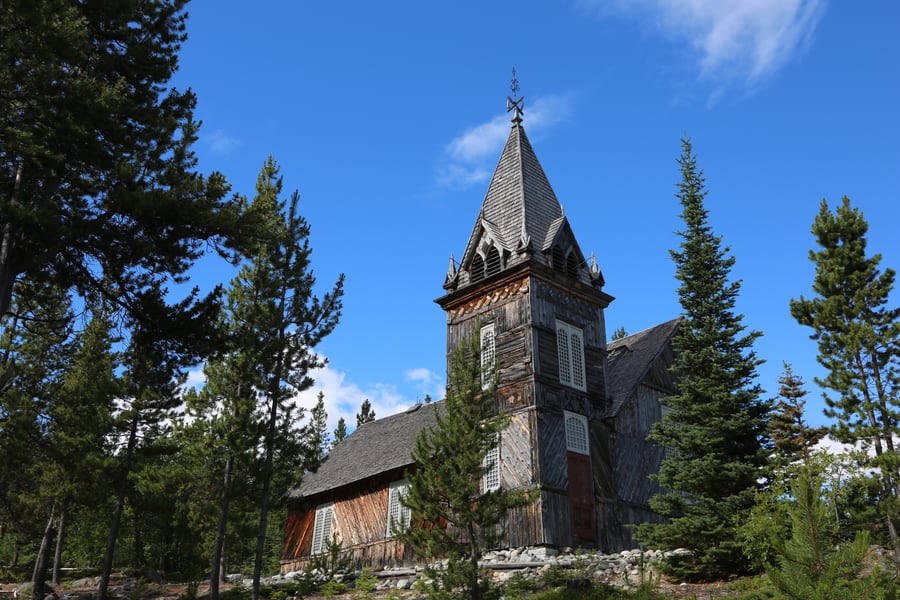 Riro01 / Wikimedia Commons · CC BY-SA 4.0 · cropped
Bennett
Here the White Pass and Chilkoot trails met, and stampeders built boats to float on to the Klondike. The tent city is gone; St Andrew's Church and the 1903 station remain, and trains stop for 45 minutes.A bit of history
Culture & experiences along the way
 Explorer1940 / Wikimedia Commons · CC BY-SA 4.0 · cropped
The Trail of '98
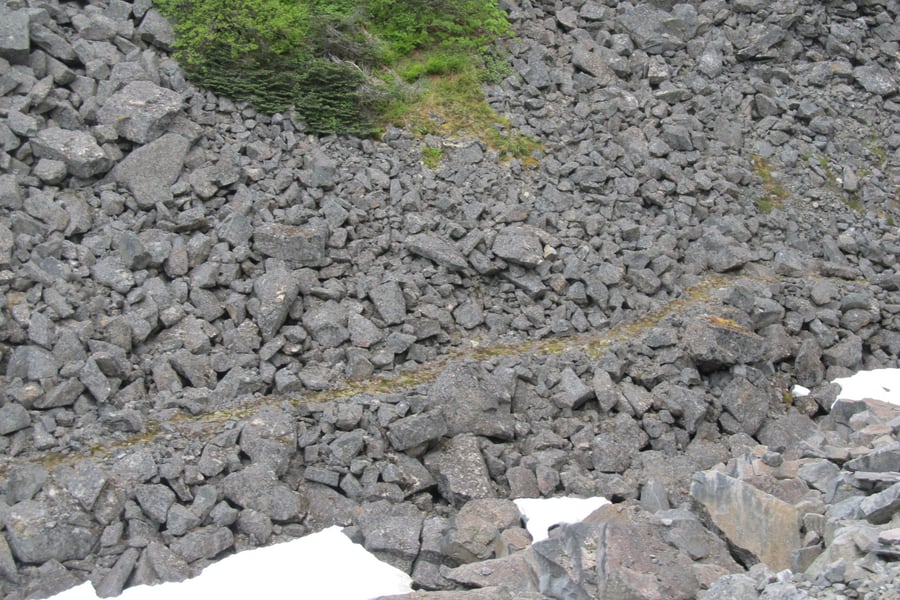
From the train you can see the trail itself: a line worn into the rock by the feet and hooves of the stampeders who crossed White Pass in 1897 and 1898, leading pack horses loaded with the supplies the Canadian authorities demanded. The railway, finished in 1900, made the walk unnecessary.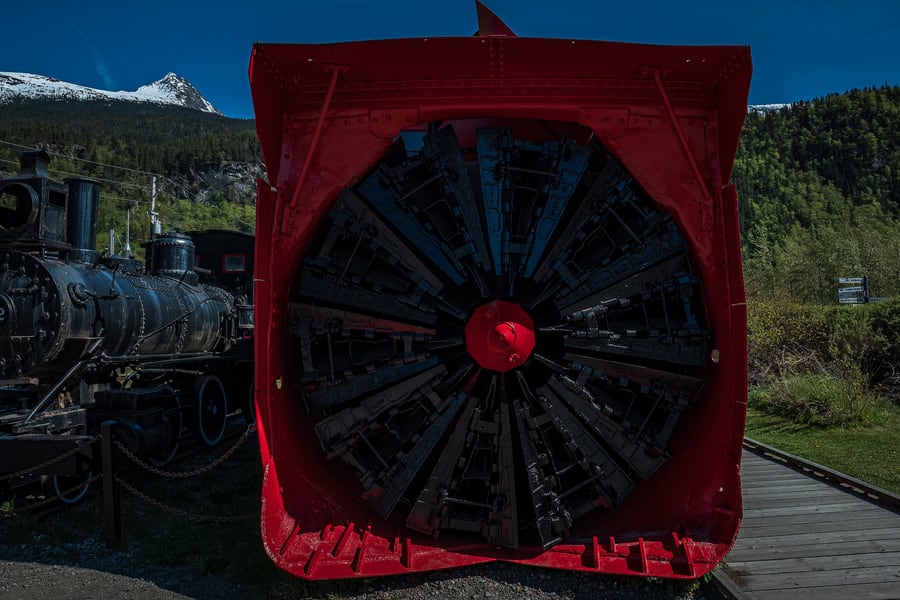 Ryan Elwell / Wikimedia Commons · CC BY 2.0 · cropped
Rotary Snowplow No. 1
Built for the railway in 1898 by the Cooke works of Paterson, New Jersey, the rotary cut through drifts up to 12 ft deep, pushed by up to two engines while its ten blades flung the snow aside. Retired in 1965 and restored, it stands by the Skagway depot.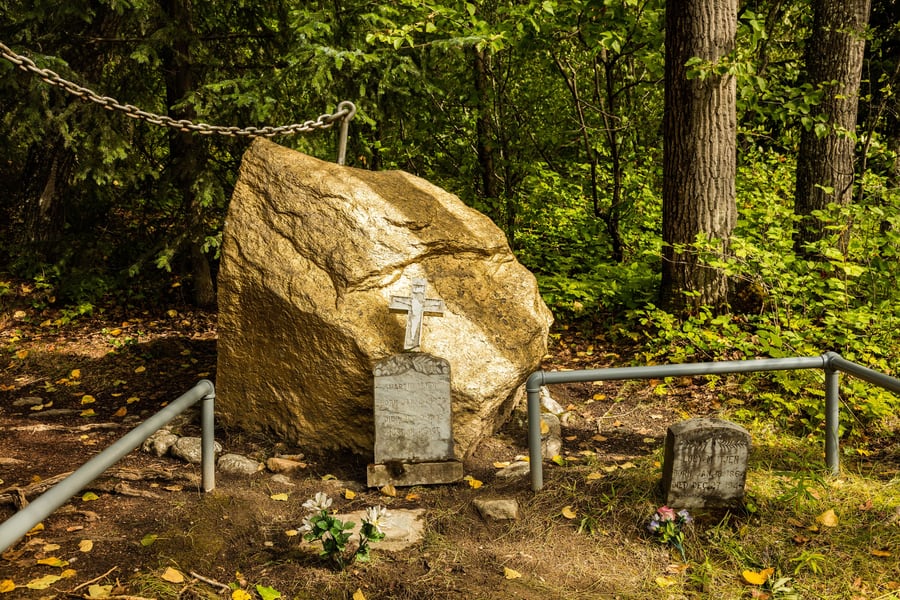 Diego Delso, delso.photo, License CC BY-SA · Wikimedia Commons · cropped
Soapy Smith and Frank Reid
The con man Soapy Smith ran Skagway in 1897–98 until 8 July 1898, when he was shot on Juneau Wharf; Frank Reid, the town surveyor who fired back, died twelve days later. Both lie in the Gold Rush Cemetery, 1.7 miles from downtown, where a short trail climbs to Reid Falls.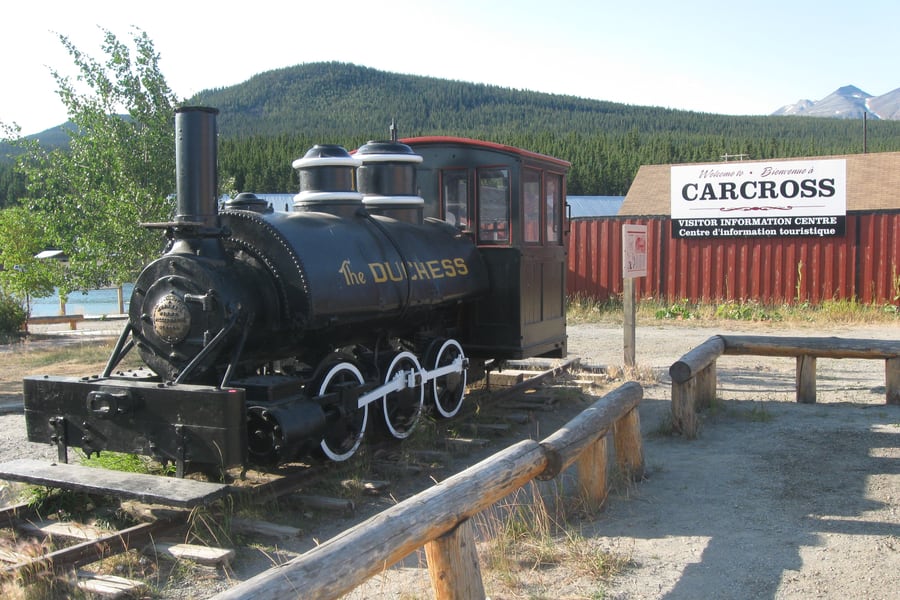 Iwona Erskine-Kellie / Wikimedia Commons · CC BY 2.0 · cropped
The Duchess
The little tank engine by the Carcross visitor centre worked the Taku Tram, the railway's portage line between two lakes, from 1900 to 1920 and has been on display since 1931. Nearby, a marker recalls the last spike of the main line, driven in Carcross on 29 July 1900.Timetables
Trains run from 30 April to 7 October 2026. All times are Alaska time, which the railway calls "rail time", including at the Canadian stations.
| Train | Season 2026 | Departs | Arrives |
|---|---|---|---|
| Summit Excursion, round trip | 30 Apr–7 Oct | Skagway, morning and afternoon | Skagway, 2.5–2.75 h later |
| Fraser one way, northbound | 30 Apr–30 Sep | Skagway 07:40 and 12:40 | Fraser 09:30 and 14:30 |
| Fraser one way, southbound | 30 Apr–30 Sep | Fraser 10:15 and 15:25 | Skagway 11:50 and 17:00 |
| Carcross one way, northbound | 26 May–12 Sep | Skagway 07:45 | Carcross 12:15 |
| Carcross one way, southbound | 26 May–12 Sep | Carcross 13:10 | Skagway 17:35 |
Summit Excursion times change with the day and the cruise ships in port. On 30 September and 6 October 2026 the booking system offered departures at 09:00, 13:00 and 14:15; on 7 October, the last day, at 10:15 and 14:15. There is no Summit Excursion on 2–4 May, 26–27 September or 1 and 3–5 October 2026.
The Bennett Scenic Journey rides the train one way and a motorcoach the other: train out at 07:45, or bus out at 09:30 and train back. From Yukon, a bus leaves Whitehorse at 07:30 for the 10:15 train from Fraser, reaching Skagway at 11:50, and returns at 14:00.
Good to know:
- Bring a passport for anything beyond the summit. The Summit Excursion needs none.
- Cruise passengers can book through their ship and board on the pier.
- Every car on the longer trains has a toilet, and the Summit Excursion has lift-equipped cars; tell the railway when booking.
Times as of September 2026, from the railway's excursion pages and its booking system. Confirm before travelling on wpyr.com (opens in a new tab).
Tickets
You can book directly with the railway online or on 1-800-343-7373, independently of any cruise. The Summit Excursion costs $155 for adults and $77.50 for children aged 3 to 12; under-threes ride free. The Bennett Scenic Journey to Carcross is $289, the Steam Summit Loop Excursion $299.99, and one-way tickets cost $108 to Fraser and $210 to Carcross, with children at half fare.
Cancelling costs $10 a person, and a refund is only possible up to 24 hours before departure. Fares checked September 2026 at wpyr.com (opens in a new tab); US dollars.
Book your tickets
White Pass Summit Excursion
Round trip · 2.5–2.75 hours
Skagway to the summit of White Pass and back in vintage coaches, with no passport needed.
Book Tickets (opens in a new tab, on White Pass & Yukon Route)via White Pass & Yukon RouteBennett Scenic Journey
Train and motorcoach · 8 hours
The whole line to Carcross with a stop at Bennett and lunch aboard, returning by road.
Book Tickets (opens in a new tab, on White Pass & Yukon Route)via White Pass & Yukon RouteSteam Summit Loop Excursion
Round trip · about 3 hours
To the summit behind steam locomotive No. 73, in a parlor car with a snack and a guide.
Book Tickets (opens in a new tab, on White Pass & Yukon Route)via White Pass & Yukon RouteRail Passes
No rail pass covers the White Pass & Yukon Route. It is privately owned and sells its own tickets; Amtrak's USA Rail Pass is valid only on Amtrak's own services, and Interrail and Eurail do not apply in North America.
The only reductions are the railway's own: half fare for children aged 3 to 12, and free travel for under-threes. For everyone else the answer is simple: book the train you want directly.
Checked September 2026 against wpyr.com (opens in a new tab) and amtrak.com (opens in a new tab).
Places to Visit
The railway runs between two gold-rush towns: Skagway, at the head of the Inside Passage, and Carcross, on the lakes of southern Yukon. Around each lie the relics of the stampede and some of the North's strangest scenery.
 Diego Delso, delso.photo, License CC BY-SA · Wikimedia Commons · cropped
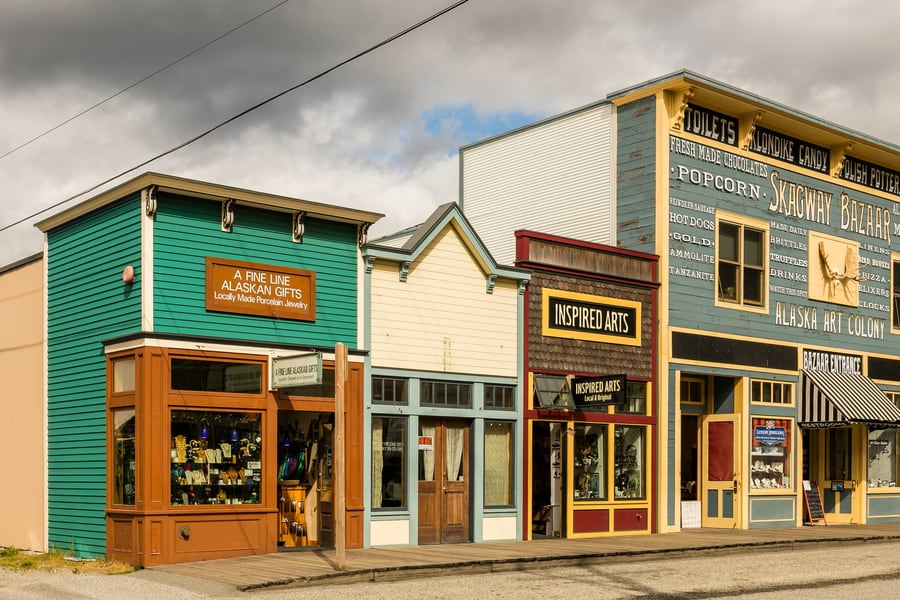
Skagway
Within months of the first prospectors landing in 1897 Skagway had grown from tents to a town of perhaps 20,000, and in 1900 it became Alaska's first incorporated city. Today 1,240 people live here year-round. The boardwalks and false fronts of Broadway are largely part of the Klondike Gold Rush National Historical Park, whose visitor centre is in the railway's first depot, finished in December 1898.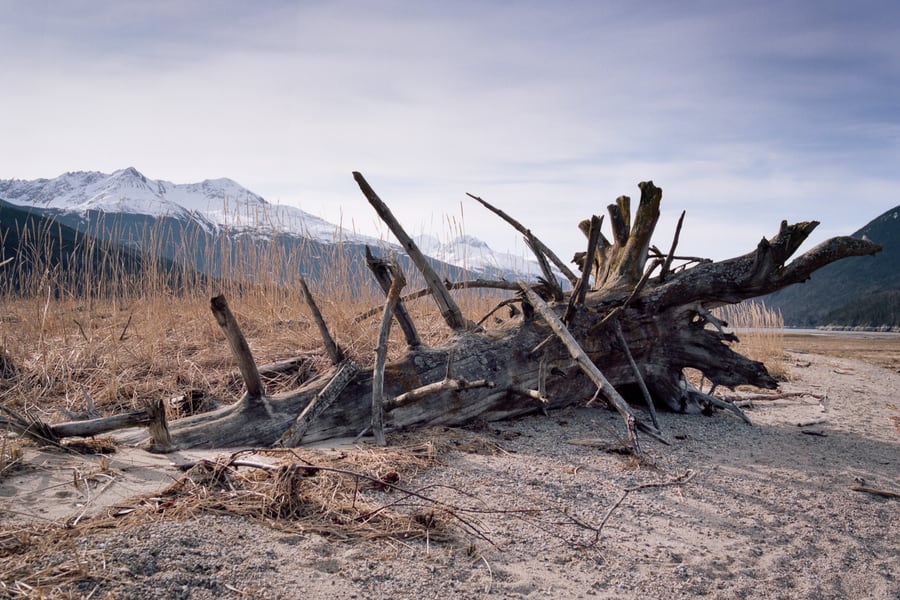 Anthony DeLorenzo / Wikimedia Commons · CC BY 2.0 · cropped
Dyea and the Chilkoot Trail
Dyea was Skagway's rival, the port for the Chilkoot Trail, a Tlingit trade route over the Coast Mountains. When the railway chose White Pass the town was abandoned; foundations, three cemeteries and the ruins of the wharf remain, and bears come to feed in summer. The trail still runs 33 miles to Bennett, which only hikers and the train reach.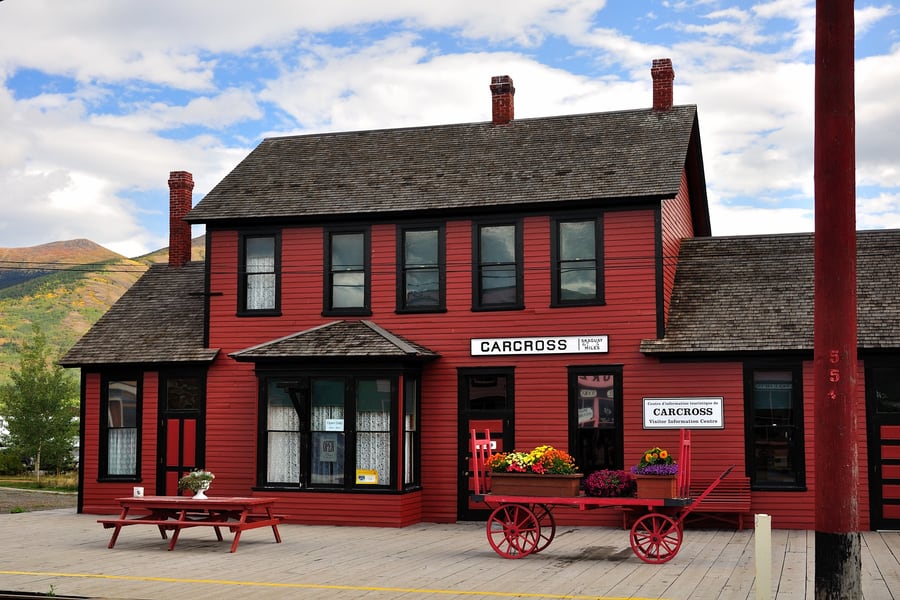 Len@Loblolly / Wikimedia Commons · CC BY 2.0 · cropped
Carcross
Caribou Crossing, a Tagish and Inland Tlingit hunting and fishing camp on the narrows between Bennett and Nares lakes, was renamed Carcross in 1904. It is home to the Carcross/Tagish First Nation and 317 people lived here in 2021. The station, where trains from Skagway end, is protected under Canada's federal railway station heritage law.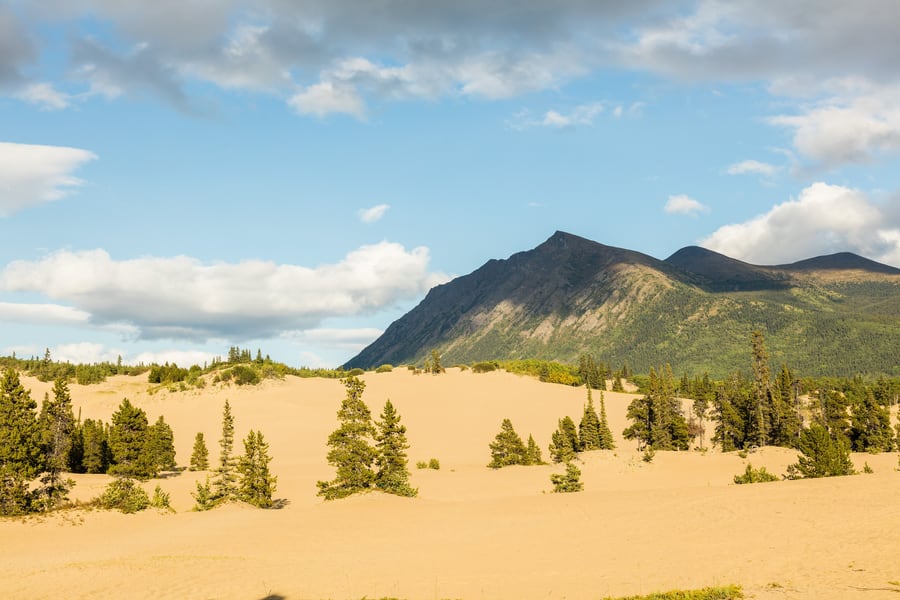 Diego Delso, delso.photo, License CC BY-SA · Wikimedia Commons · cropped
Carcross Desert
About 2.6 km² of sand dunes, left behind when the glacial lakes of the last ice age dried out and still fed by wind-blown sand from Bennett Lake. It is too humid to be a true desert, but the mountains' rain shadow keeps it dry, and Baikal sedge grows here, known at only four other sites in North America.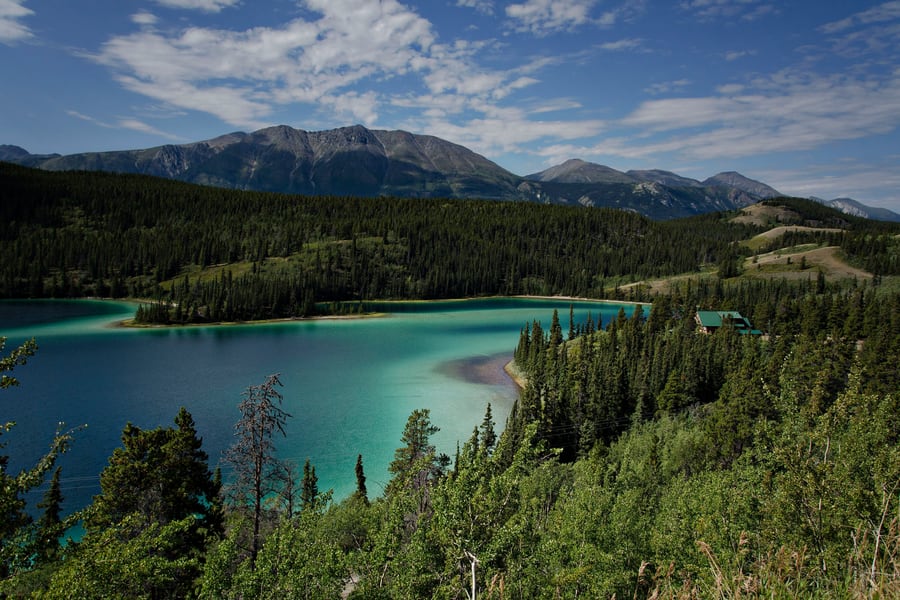 Boris Kasimov / Wikimedia Commons · CC BY 2.0 · cropped
Emerald Lake
At km 117.5 of the highway from Skagway lies a shallow lake of startling green. The colour comes from light reflecting off marl, a white mix of clay and calcium carbonate on its bed, washed down as limestone gravel from the surrounding mountains by the glaciers of the last ice age.Where to Sleep
The railway's own advice is to stay the night in Skagway: once the cruise ships sail in the evening, the town is quiet, and the first trains leave early. These are two historic houses a short walk from the depot.
Where to stay
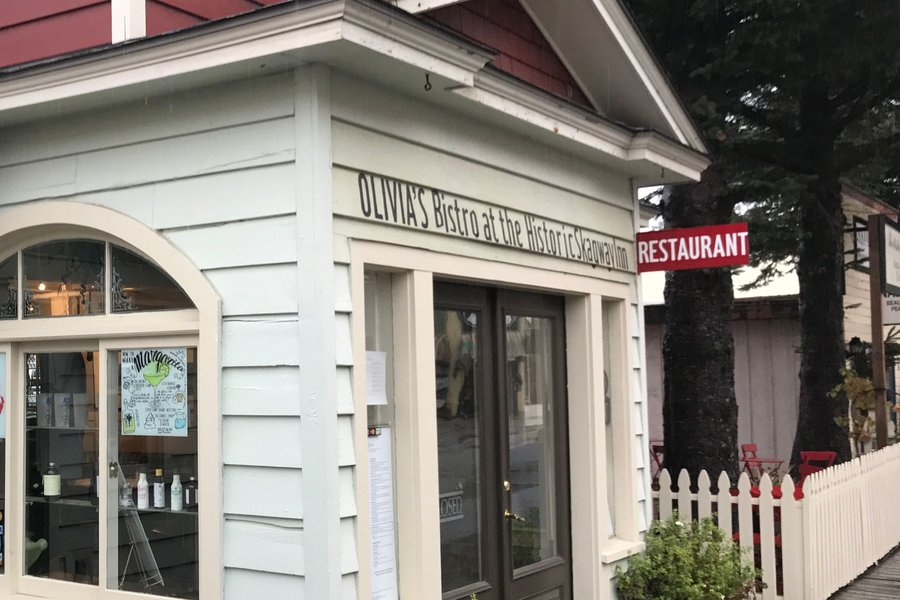 Rob Wynne / Wikimedia Commons · CC BY-SA 2.0 · cropped
The Historic Skagway Inn
Skagway · a house of 1897
A bed and breakfast on Broadway in the historic district, built during the gold rush, with Olivia's Bistro downstairs.
Check Availability (opens in a new tab, on skagwayinn.com)via skagwayinn.comAt The White House
Skagway · a home of 1902
A house on the National Register at 8th Avenue and Main Street, two blocks from the historic district.
Check Availability (opens in a new tab, on atthewhitehouse.com)via atthewhitehouse.comQuestions or corrections
Planning this trip and stuck on something, or spotted a time, fare or detail that has changed? Send us a message about White Pass & Yukon Route. We read every one, and we update this page when something has changed.