Potomac Eagle
Ron Cogswell / Flickr · CC BY 2.0 · cropped
- DistanceAbout 35 miles round trip to Sycamore Bridge; 76 miles to Petersburg and back
- Duration3 hours; 9 hours to Petersburg, with a 3-hour stop
- Best seasonLate March to December; trains every day in October, for the autumn colour
Introduction
South of Romney, in the Potomac Highlands of West Virginia, the South Branch of the Potomac River cuts through the mountains in a gorge six miles long. George Washington, surveying here in 1748, called it the Trough. No road runs through it: you can walk in, float through by canoe, or ride the one railroad along its floor. The Potomac Eagle has run excursion trains over that railroad since 1991, and it calls itself the only passenger train through the Trough.
The train is named for the bald eagles that nest on the canyon walls. They came back to the valley as the species recovered from DDT, and by 2017 West Virginia counted eight nests in the Trough. The regular trip leaves Wappocomo Station, just north of Romney, and runs south through farmland and into the canyon as far as Sycamore Bridge before turning back: about 35 miles and three hours, narrated, with nobody getting off. Once a month an all-day train goes on to Petersburg, at the end of the line.
You ride behind vintage diesels in coaches of the 1920s with windows that open, or in dining and club cars of the 1940s and 1950s with a meal served at your table. Romney is about 120 miles from Washington, DC, and 27 from Cumberland, Maryland.
The Journey
The trains run on the South Branch Valley Railroad, a 52-mile branch line from Green Spring, on the main line near the Maryland border, south to Petersburg. It reached Romney in 1884 and was pushed on through the Trough to Moorefield in 1910. When the Baltimore and Ohio gave it up, the State of West Virginia bought it in 1978, and on weekdays it still carries freight for the valley's farms, timber, plastics and lime. It has never hauled coal. The flood of 1985 tore away its bridges over the river, and the line was rebuilt by 1989. Cattle and deer still wander across the track, and the railroad calls itself the only open-range line in the East.
Every trip starts at Wappocomo Station, a siding on the old Wappocomo farm north of Romney. Check in at the blue and yellow caboose that serves as the ticket office, which opens an hour before departure; boarding begins 30 minutes before. Seats are assigned by class of service, and every class may use the open-air gondola and the observation car.
Through the Trough
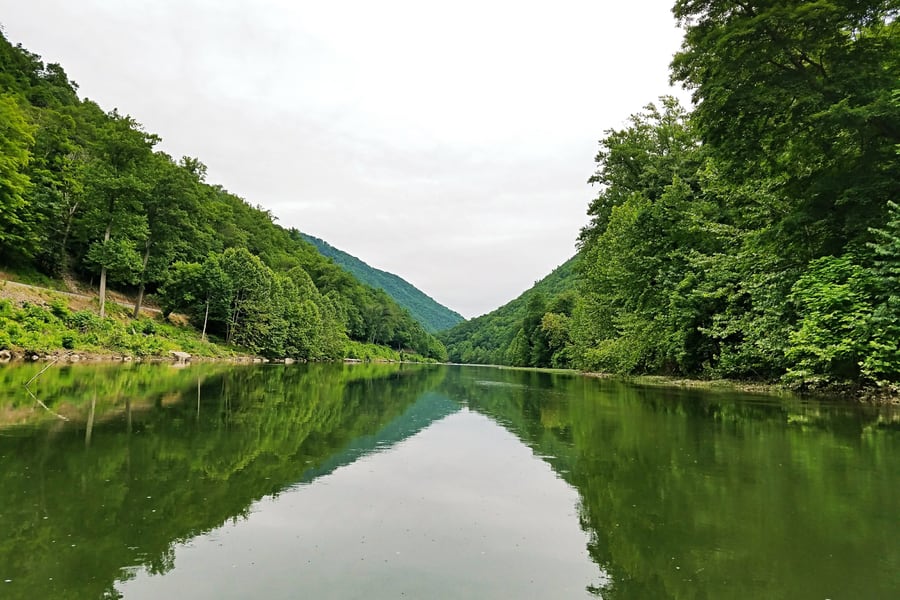
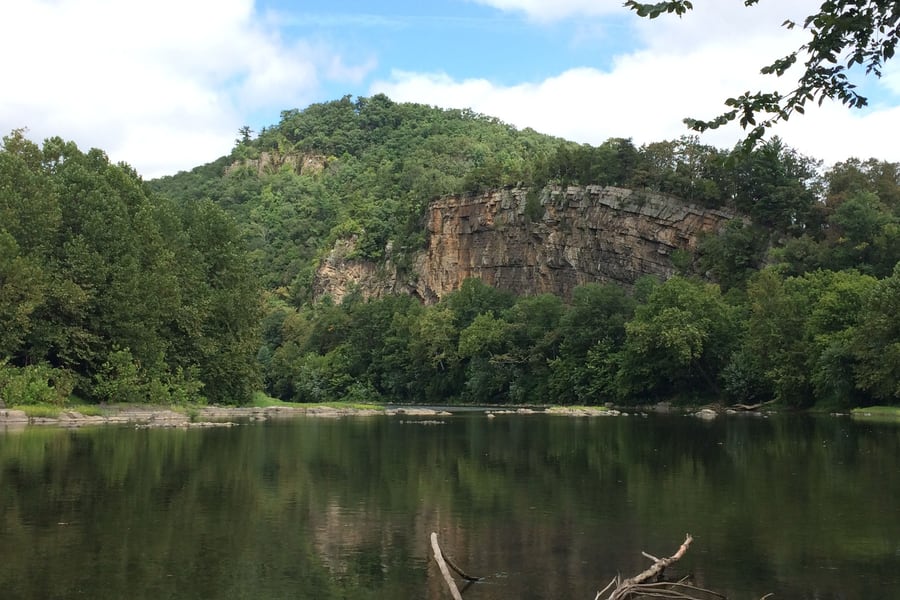
The train runs south past Romney and across the valley farms, beside the stone Kuykendall House of 1789, and then the hills close in. For six miles the line follows the foot of Mill Creek Mountain with the river below and Sawmill Ridge across the water, both steep, wooded and broken by rock outcrops. In 1756, in the French and Indian War, a band of Shawnee defeated settlers here in the Battle of the Trough. The trip is narrated, and the eagles' nests can be seen from the train. At Sycamore Bridge, at the southern end of the canyon, the train crosses the South Branch and turns back for Romney.
On the last Saturday of the month the all-day train carries on, out of the canyon to Moorefield and up the valley to Petersburg, about 76 miles there and back, for a three-hour stop at the end of the line. The Green Spring Special goes the other way, north for an hour and a half past the cliffs of Hanging Rocks, rock cuts and riverside farms towards the Maryland line.
The locomotives and cars
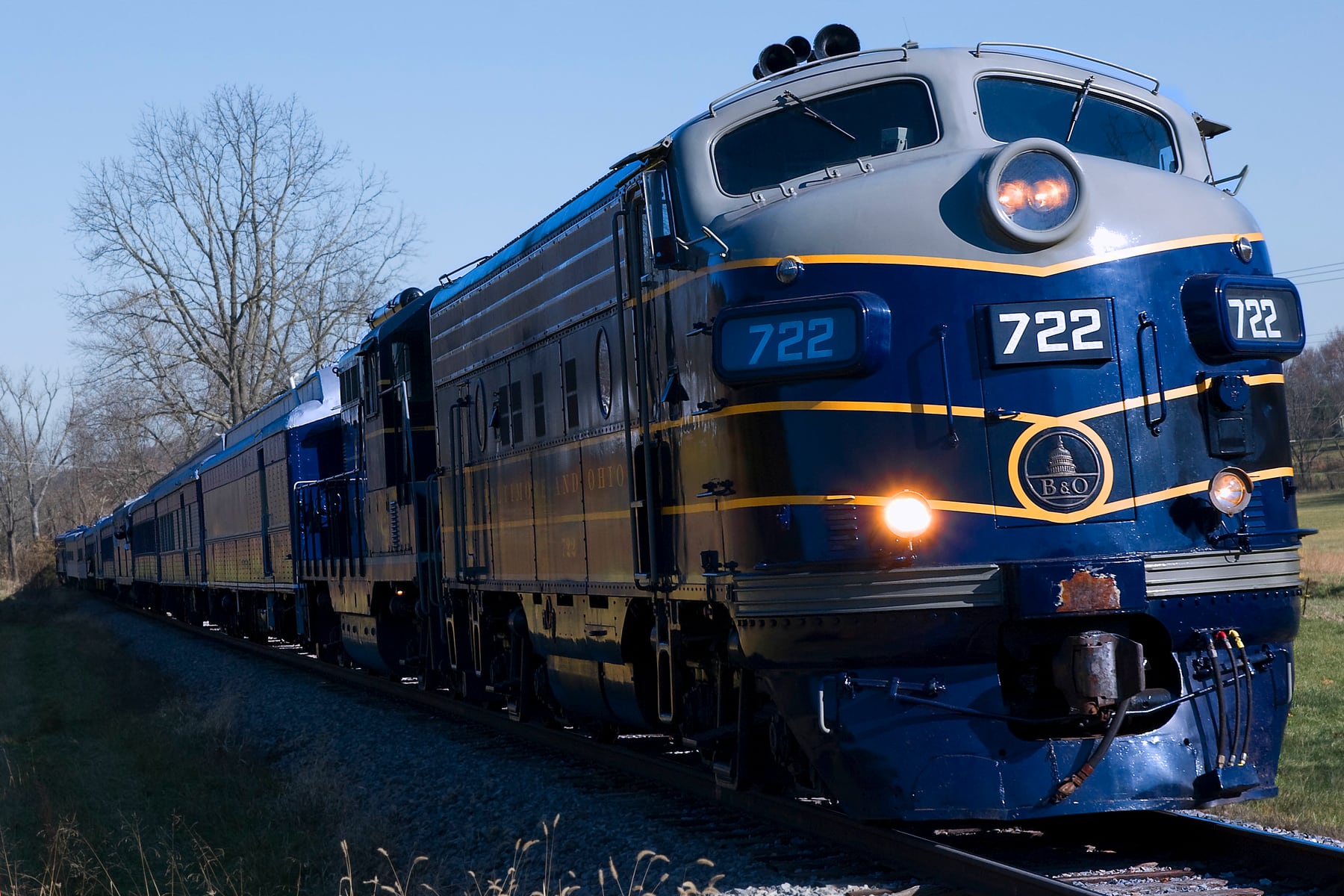
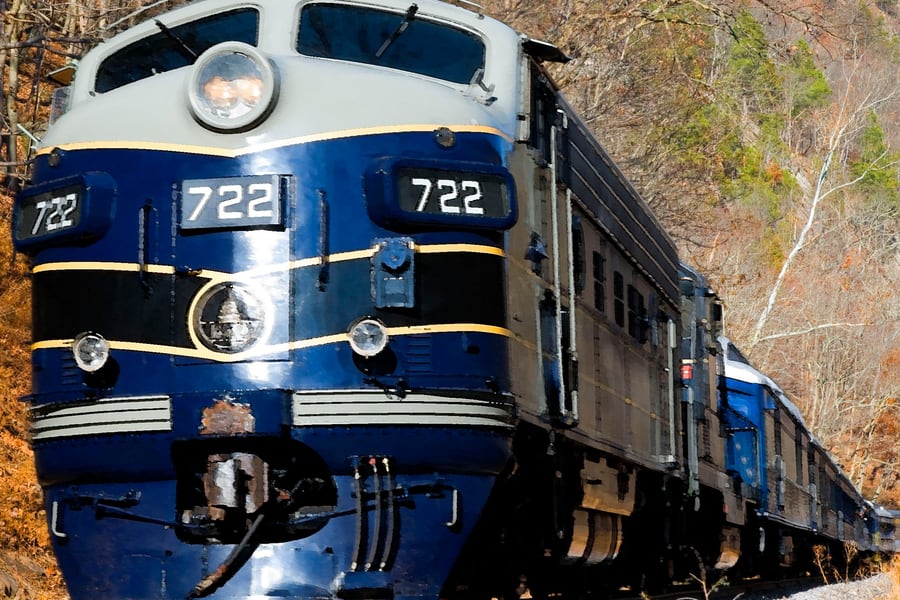
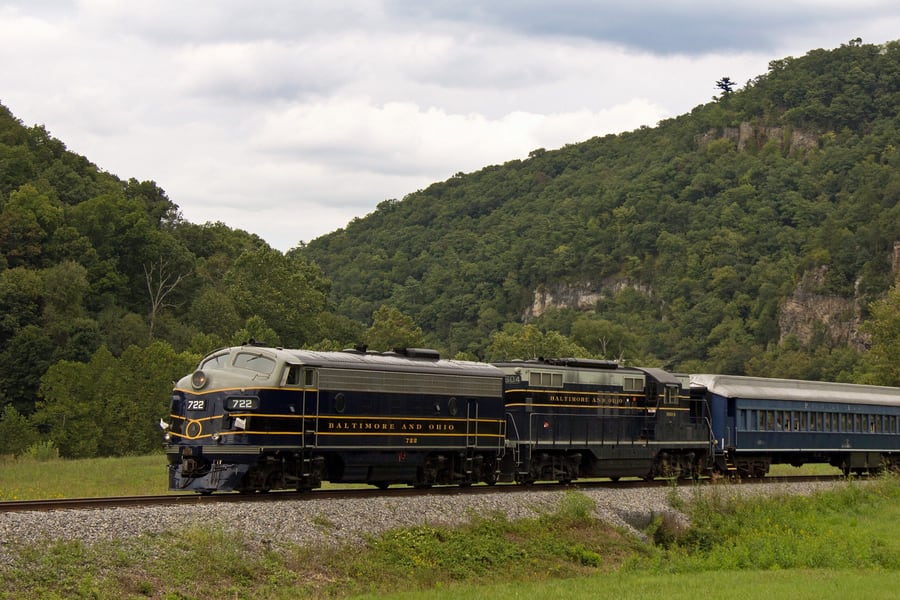
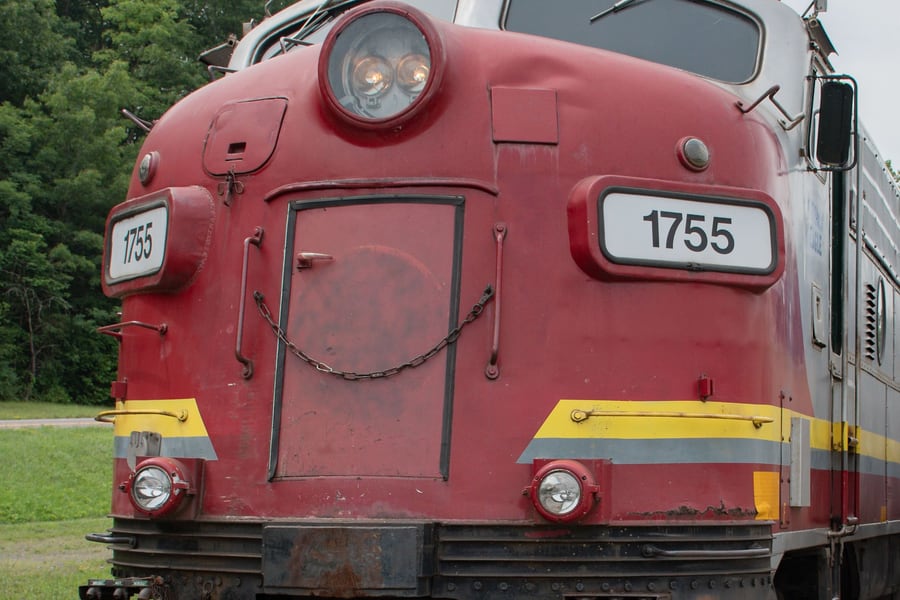
The trains are hauled by diesels from the 1950s. No. 722 is an EMD F7 built in 1952 for the Bessemer and Lake Erie, where it hauled ore, coal and coke between Lake Erie and the Pittsburgh steel mills until an accident retired it in 2000; it reached Wappocomo in 2002 and has worn Baltimore and Ohio blue since 2010. No. 1755, an FP9 built in London, Ontario, in 1957, ran for Canadian National, VIA Rail and the Algoma Central before coming here in 2020, and appears in the 2023 film A Man Called Otto. Behind them run blue coaches of the 1920s from Canadian National's commuter trains, Budd dining cars of 1949 to 1954 from the Southern, the Southern Pacific and the Pennsylvania Railroad, and two club cars built by Pullman-Standard in 1950, the Chessie Club and the Eagle Canon.
Along the route
 Justin A. Wilcox / Wikimedia Commons · CC BY-SA 2.0 · cropped
Wappocomo Station
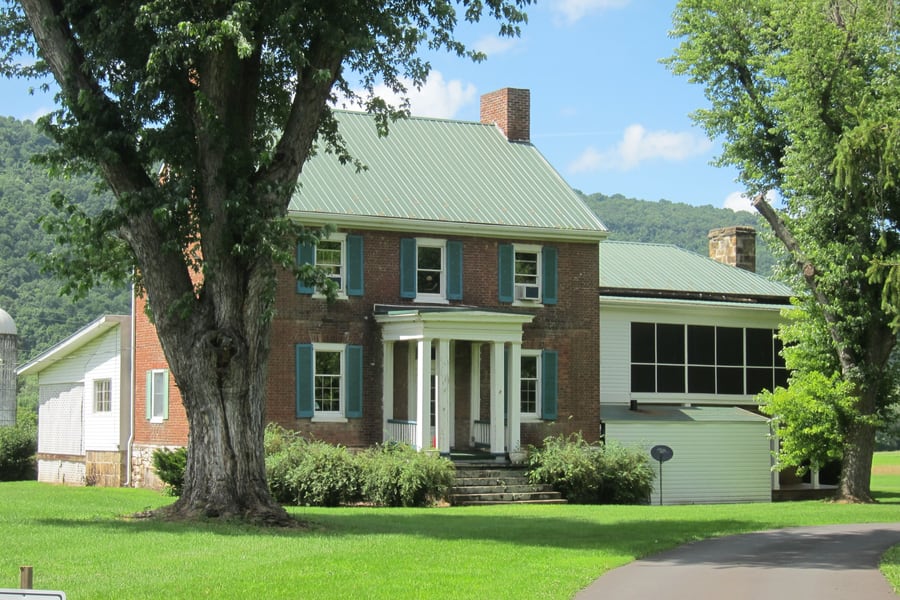
Trains leave from Wappocomo Station, just north of Romney, on the farm of the same name. Its brick mansion, begun in 1774 and still owned by the Parsons family, stands by the line, and the ticket office is a blue and yellow caboose.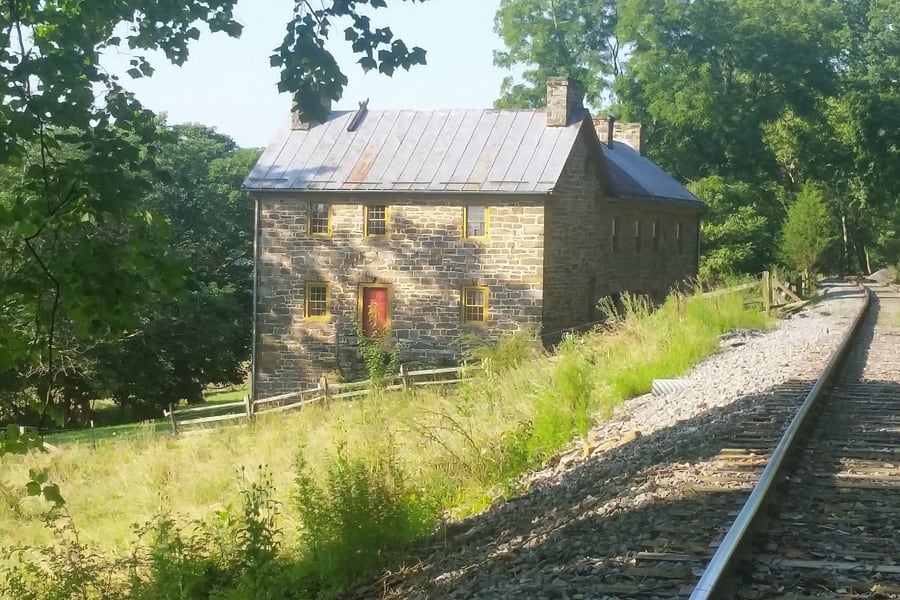 RLSinclair / Wikimedia Commons · CC BY-SA 4.0 · cropped
The Kuykendall House
South of Romney the train runs through old valley farms. Right beside the track stands the stone house Nathaniel Kuykendall and his son Isaac built in 1789 and enlarged in 1826, when most houses in the area were built of logs.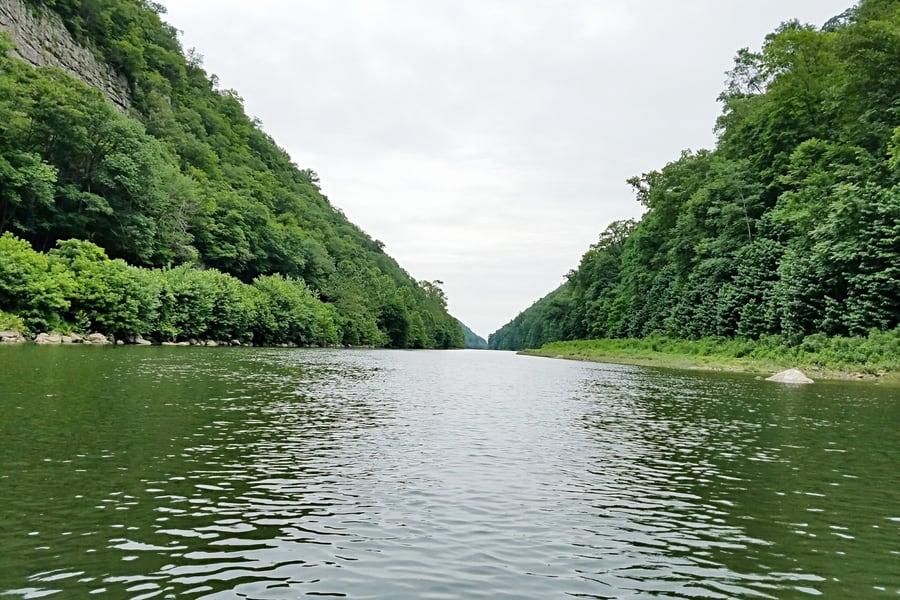 Ruberhelios / Wikimedia Commons · CC BY-SA 3.0 · cropped
Into the Trough
Then the river turns into the Trough, a six-mile gorge between Mill Creek Mountain and Sawmill Ridge. No road runs through it: the only ways in are on foot, by boat or on the train, which hugs the foot of Mill Creek Mountain.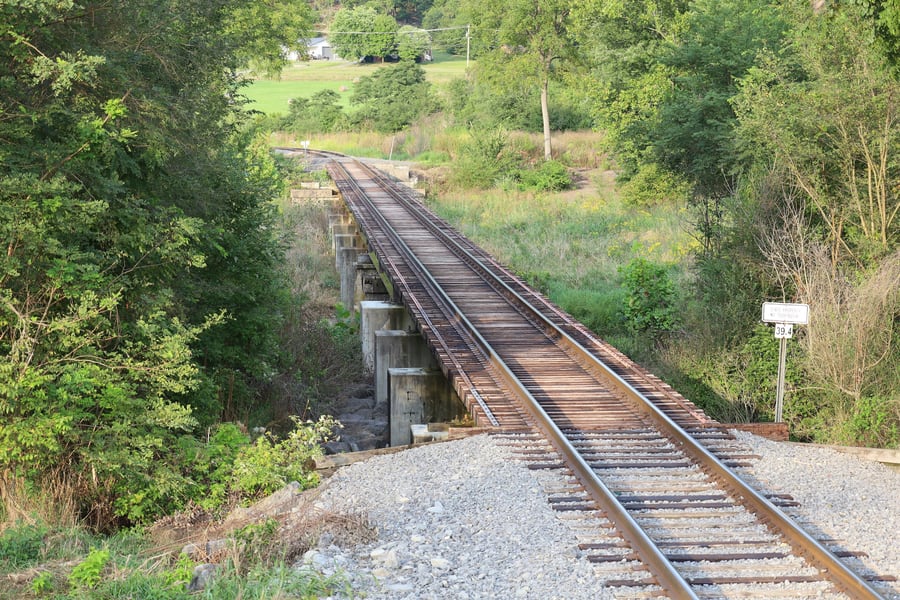 Antony-22 / Wikimedia Commons · CC BY-SA 4.0 · cropped
On to Moorefield
The all-day trains run on past Sycamore Bridge, out of the canyon and through Moorefield, crossing the South Fork in the town where it meets the South Branch, to the end of the line at Petersburg.A bit of history
Culture & experiences along the way
 U.S. Fish and Wildlife Service / Wikimedia Commons · public domain
The bald eagles
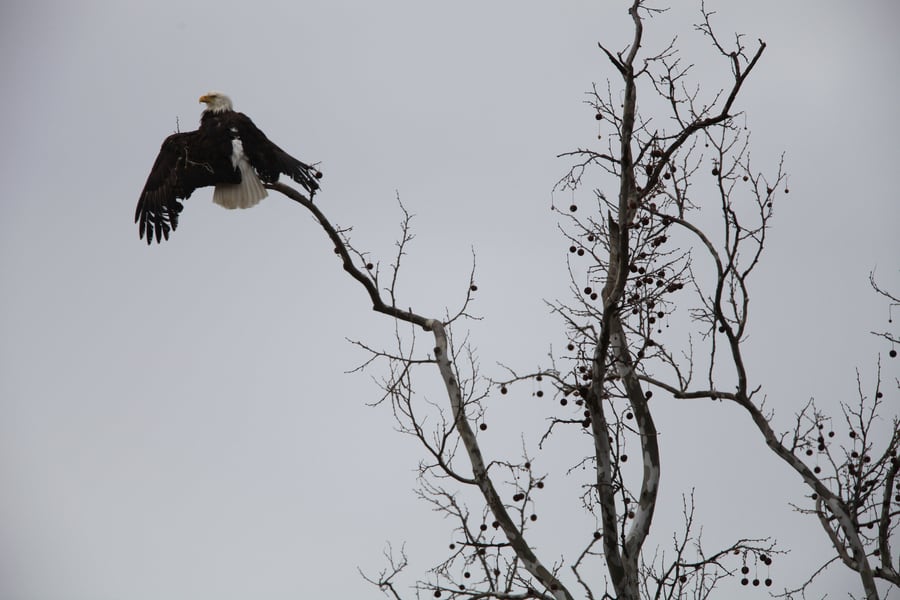
The train is named for them. West Virginia's first bald eagle nest was found on the South Branch in 1981, and by early 2017 the state counted eight nests in the Trough alone, on the canyon walls in sight of the line. Sightings are not guaranteed; bring binoculars, and hope for an overcast day, when the eagles are most active.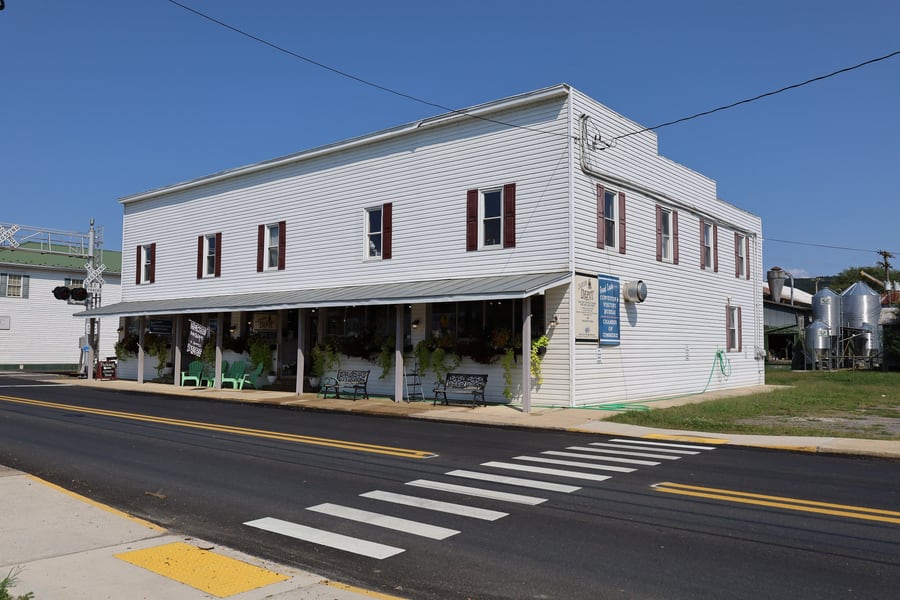 Antony-22 / Wikimedia Commons · CC BY-SA 4.0
The South Side Depot
On the all-day trip the train waits about three hours at Petersburg, the end of the line. The South Side Depot sells pottery, jewellery, textiles and other work by regional artists and craftspeople, with local food, wine and hard cider, and the town's courthouse museum is a short walk away.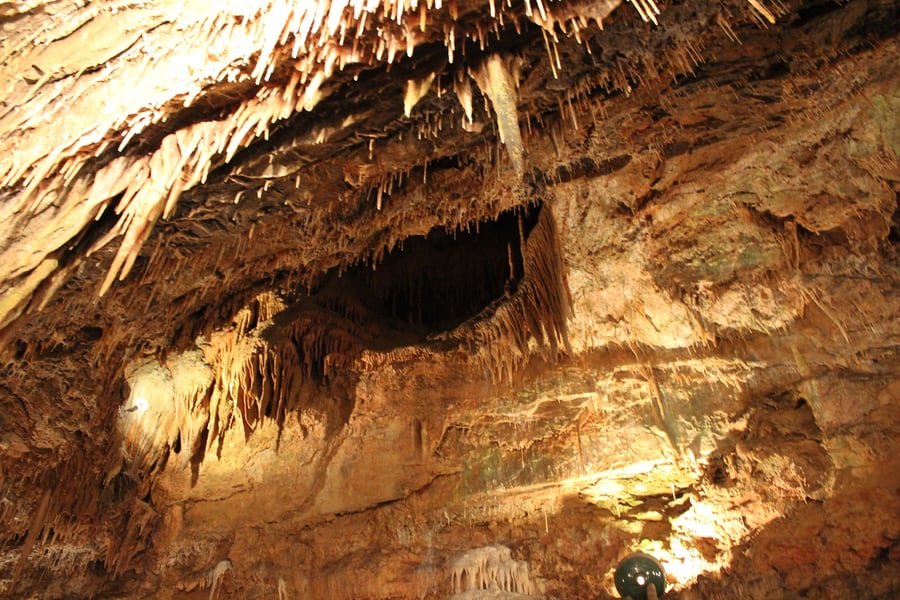 Gregory & Sarah / Wikimedia Commons · CC BY-SA 3.0 · cropped
Canyon to Caverns
On the all-day trip, a limited number of riders can book ahead to be taken from Petersburg to Smoke Hole Caverns, a show cave open since 1940, for a 45-minute guided tour past stalactites, a coral pool stocked with trout and a moonshine still from Prohibition days. The cave stays at 56°F all year.Timetables
Every train leaves from Wappocomo Station, 149 Eagle Drive, on WV 28 just north of Romney. The ticket office opens an hour before departure and boarding begins 30 minutes before. The season runs from late March to the end of December, and these were the regular trips in 2026:
| Trip | Departs | Back | When (2026) |
|---|---|---|---|
| Trough Canyon | 13:00 | 16:00 | Most Fridays, Saturdays and Sundays, 27 March – 27 September; daily in October; into mid-November |
| Trough Canyon | 10:00 and 14:30 | 13:00 and 17:30 | Saturdays and Sundays in October, in place of the 13:00 |
| Sunset Trough | 17:00 | 20:00 | Two Fridays a month, May – September |
| All Day Petersburg | 09:30 | 18:30 | Last Saturday of the month, April – October, and 7 November (08:30) |
| Green Spring Special | 10:00 | 11:30 | 12 April and 13 September only |
| Holiday Trough | 12:00 | 15:00 | Selected days, 20 November – 31 December |
For the rest of the 2026 season the Trough Canyon train runs every day until 30 October at 13:00, except on 3, 10, 17, 18, 24 and 25 October, when it leaves at 10:00 and 14:30. The last all-day trips to Petersburg are on 31 October and 7 November, and the last regular Trough trips on 13, 14 (at 12:00) and 15 November.
From 14 November to 31 December the North Pole Express runs several times a day: a 75-minute ride with milk and cookies, and Santa boarding with a gift for every child.
Good to know:
- The all-day train reaches Petersburg at 12:30 and leaves again at 15:30.
- Meals must be booked ahead: every ticket that includes one needs an advance reservation.
- Tickets can also be bought at the station on the day, if seats are left.
Departures as of October 2026, from the railroad's 2026 calendar and its booking engine. Confirm before travelling on potomaceagle.com (opens in a new tab).
Tickets
Fares depend on the trip and the class. On the Trough Canyon train a Standard Coach seat costs $74 for an adult, $69 for a senior aged 60 or over and $44 for a child aged 2 to 16; children under 2 ride free on a lap. Standard Dining adds a boxed lunch ($99), Premium Dining a three-course meal ($124), and the Club Service ($154) and Superior Dining ($159) cars are for adults aged 17 and over. The all-day Petersburg trip starts at $114 and the Green Spring Special at $49.
Tickets are non-refundable, but can be turned into credit for another date if you cancel a week ahead. Military discounts are booked by phone, on (304) 424-0736, and group rates by email. Fares checked October 2026 at potomaceagle.com (opens in a new tab); US dollars.
Book your tickets
Trough Canyon
3 hours · to Sycamore Bridge and back
A seat in the 1920s coaches through the Trough, with snacks from the concession car.
Book Tickets (opens in a new tab, on Potomac Eagle Scenic Railroad)via Potomac Eagle Scenic RailroadDining on the Trough
Boxed lunch to four courses · 3 hours
The same trip with a meal at your table, from a boxed lunch to four courses.
Book Tickets (opens in a new tab, on Potomac Eagle Scenic Railroad)via Potomac Eagle Scenic RailroadAll Day Petersburg
9 hours · last Saturday of the month
Through the Trough to the end of the line at Petersburg, with about three hours in town.
Book Tickets (opens in a new tab, on Potomac Eagle Scenic Railroad)via Potomac Eagle Scenic RailroadGreen Spring Special
1.5 hours · north past Hanging Rocks
A short morning run north along the river, with breakfast in the dining classes.
Book Tickets (opens in a new tab, on Potomac Eagle Scenic Railroad)via Potomac Eagle Scenic RailroadRail Passes
No rail pass covers the Potomac Eagle. It is a private excursion railroad that sells its own tickets. Amtrak's USA Rail Pass is valid only on Amtrak's own services, and Interrail and Eurail do not apply anywhere in the United States.
The railroad's own reductions are the senior and child fares, a $10 discount on regular trips for military personnel, and group rates for parties of 20 or more, booked by phone and by email.
Checked October 2026 against potomaceagle.com (opens in a new tab) and amtrak.com (opens in a new tab).
Places to Visit
Romney is the county seat of Hampshire County, and its oldest streets, its Civil War trenches and its cemetery on the bluff are all a short drive from the station. Lost River State Park lies to the south in Hardy County; Seneca Rocks is up WV 28 beyond Petersburg, and the Paw Paw Tunnel is on the Potomac to the north-east.
 Carol M. Highsmith / Wikimedia Commons · public domain · cropped
Romney
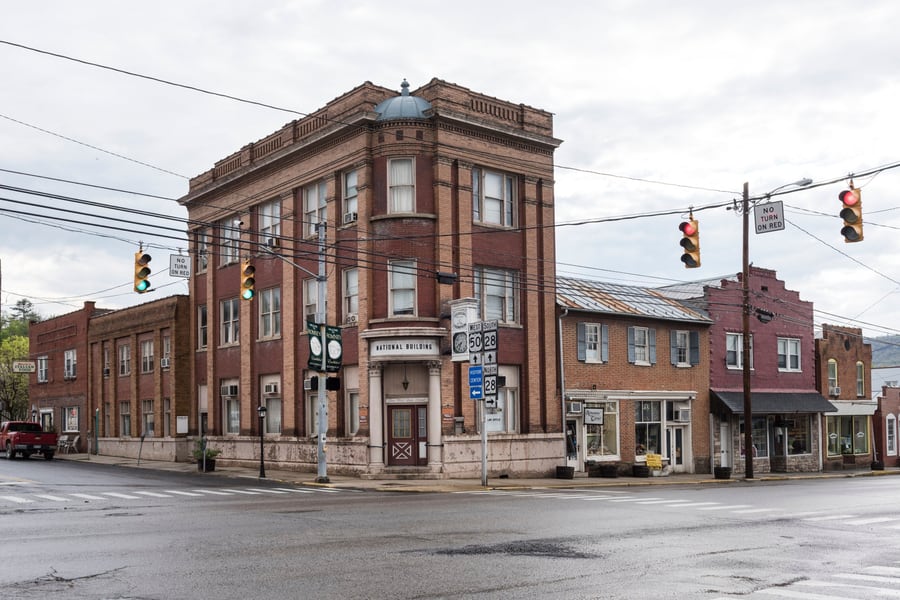
Founded in 1762, Romney shares with Shepherdstown the title of oldest town in West Virginia; Lord Fairfax named it after Romney in Kent. In the Civil War it was occupied by both armies many times over. On High Street, Taggart Hall, built in the 1790s, houses the museum of the Fort Mill Ridge Civil War trenches.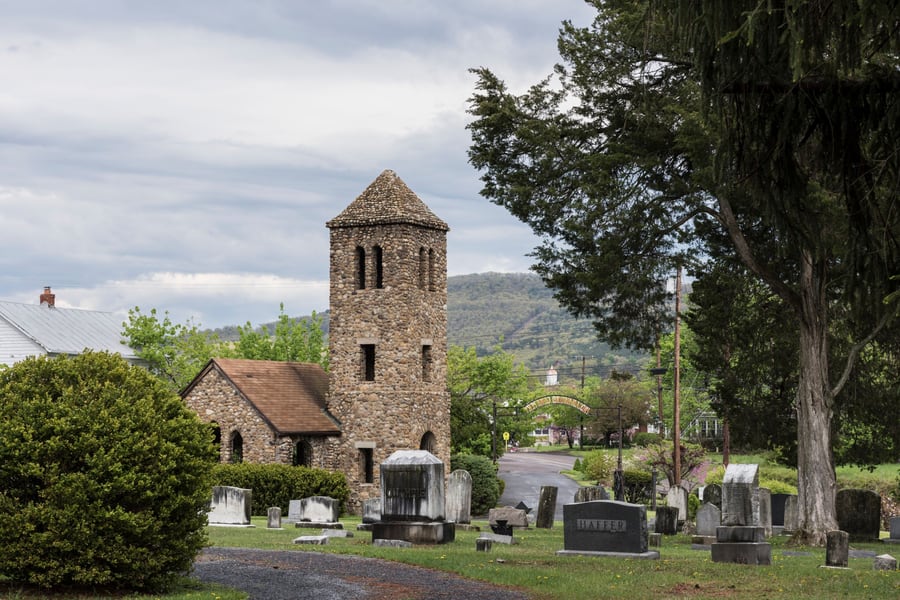 Carol M. Highsmith / Wikimedia Commons · public domain · cropped
Indian Mound Cemetery
On a bluff over the river at the edge of town, a cemetery has grown up around a Hopewell burial mound about 7 feet high, probably raised between 500 and 1000 CE and never excavated. It also holds the site of Fort Pearsall from the French and Indian War, the stone Parsons Bell Tower and a Confederate memorial.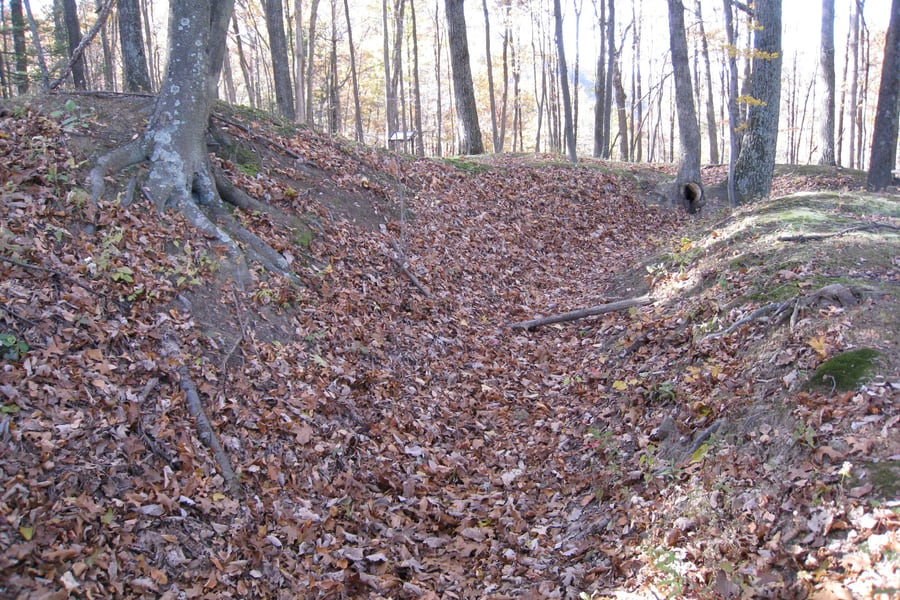 Justin A. Wilcox / Wikimedia Commons · CC BY-SA 3.0 · cropped
Fort Mill Ridge Civil War Trenches
Earthworks dug in 1861 and 1862 to guard the approaches to Romney along the Northwestern Turnpike and the river. Union troops held them through the war and rebuilt them in 1863, and they are thought to be among the best-preserved Civil War trenches anywhere. They were listed on the National Register of Historic Places in 2014.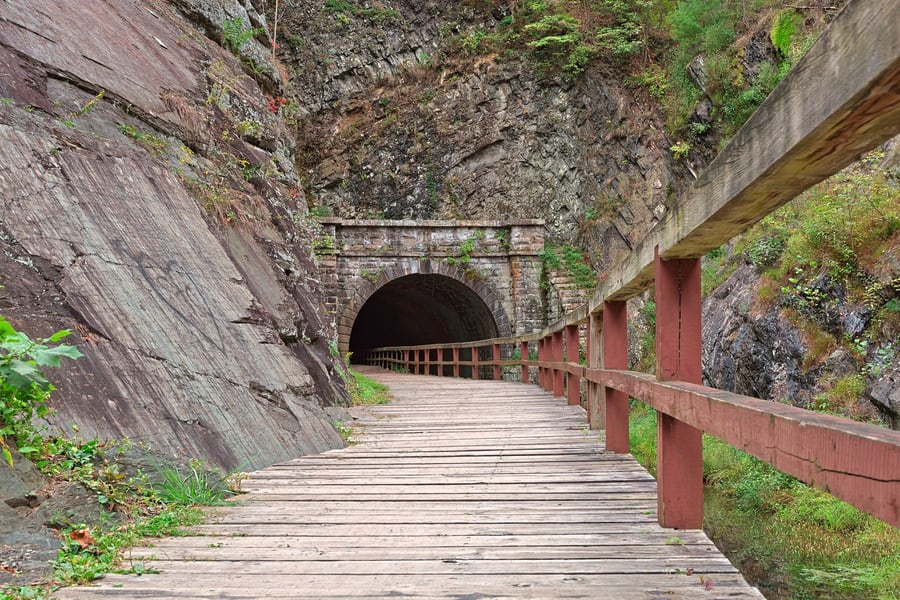 Nicolas Raymond / Wikimedia Commons · CC BY 2.0
Paw Paw Tunnel
Across the Potomac from Paw Paw, the Chesapeake and Ohio Canal goes through a ridge in a tunnel 3,118 feet long, lined with more than six million bricks. Begun in 1836, it took until 1850 and nearly bankrupted the canal company. Boats used it until the canal closed in 1924; today the towpath runs through it, open to walkers.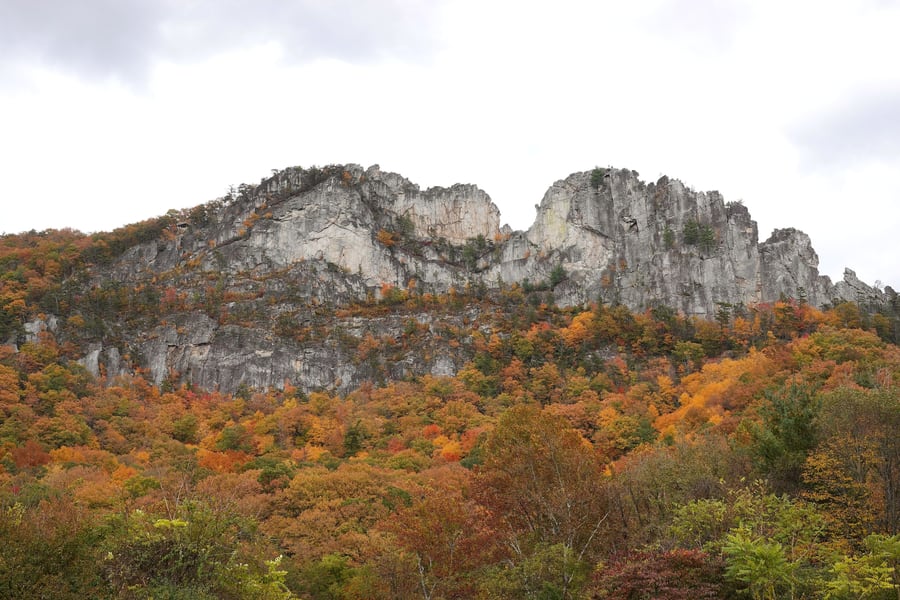 hug_78 / Wikimedia Commons · CC BY 2.0 · cropped
Seneca Rocks
Fins of white quartzite rise nearly 900 feet above the North Fork of the South Branch, in the Spruce Knob–Seneca Rocks National Recreation Area. One of the best-known sights in West Virginia, they are a favourite of rock climbers: the south peak is the only summit on the East Coast that can be reached only by technical climbing.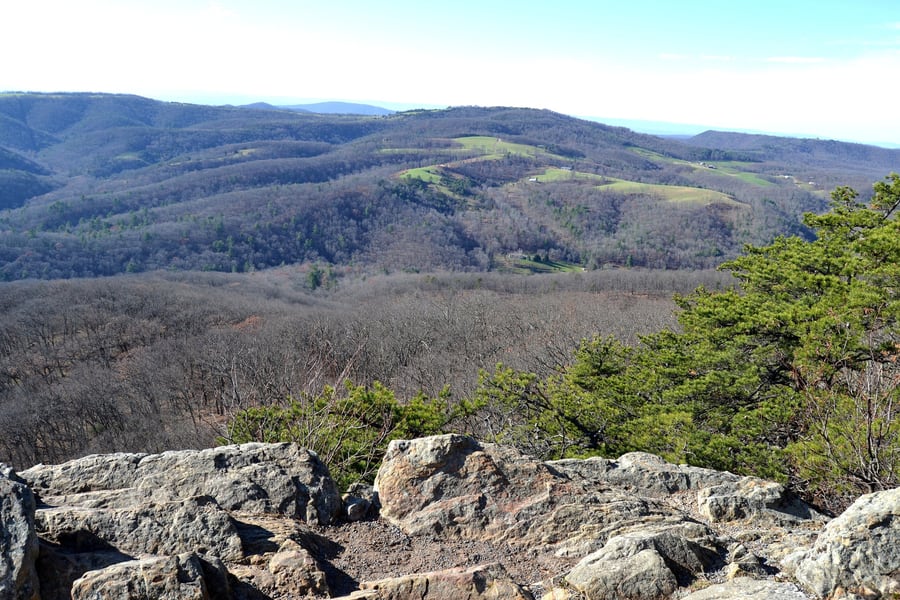 ewg4xuva / Wikimedia Commons · CC BY-SA 2.0 · cropped
Lost River State Park
3,934 acres of wooded mountains with cabins, trails and horseback riding. The 3.8-mile out-and-back White Oak Trail climbs steeply to Cranny Crow Overlook, with a view across five counties of West Virginia and Virginia. The summer cabin of Light-Horse Harry Lee, of about 1800, is now a museum.Where to Sleep
There are motels and inns in Romney, near the station, and in Moorefield, on the all-day route. Lost River State Park rents cabins in the mountains to the south. Book ahead for October, when the trains run every day for the autumn colour.
Where to stay
South Branch Inn
Romney and Moorefield · family-owned
An independent, family-owned hotel with two newly remodelled locations, in Romney near the station and in Moorefield on the all-day route.
Check Availability (opens in a new tab, on southbranchinn.com)via southbranchinn.comQuestions or corrections
Planning this trip and stuck on something, or spotted a time, fare or detail that has changed? Send us a message about Potomac Eagle. We read every one, and we update this page when something has changed.