Canyon Spirit
Canyon Spirit
- Duration2 or 3 days
- Best seasonspring to autumn
Introduction
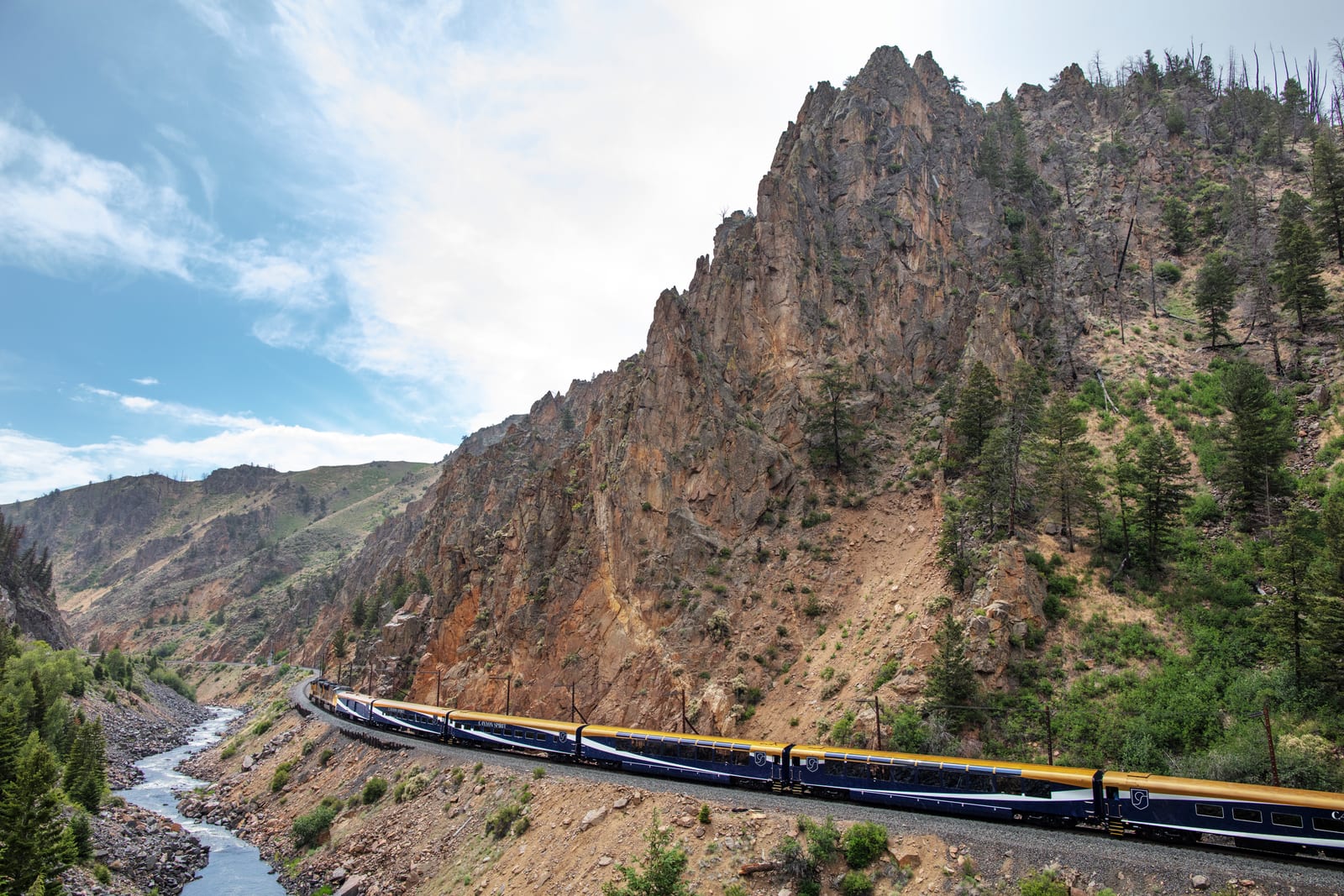
For decades, the great rail journeys — the ones people cross oceans for — belonged to other countries. The Canyon Spirit is the American answer: a glass-domed, daylight-only train that turns a corner of the Southwest into one of the finest railway rides anywhere.
It runs the Rockies to the Red Rocks route, climbing out of Denver, tunnelling under the Continental Divide, and following the Colorado River down through a succession of ever-more-astonishing canyons until the Rockies dissolve into the red-rock desert of Utah, at the national-park town of Moab. Like its Canadian sibling the Rocky Mountaineer — the two share the same operator, the Armstrong Collective — it travels only by day, so nothing is missed, with hosts telling the stories of the land as the scenery unspools past the dome windows.
There are no overnight berths; you sleep in a hotel and ride fresh each morning. What you get in return is a front-row seat to a landscape carved over millions of years — mountains, gorges, ghost towns and sandstone the colour of embers.
The Journey
The Canyon Spirit travels the Rockies to the Red Rocks route, and it comes in two lengths — both broken by a night ashore, because the train runs only in daylight.
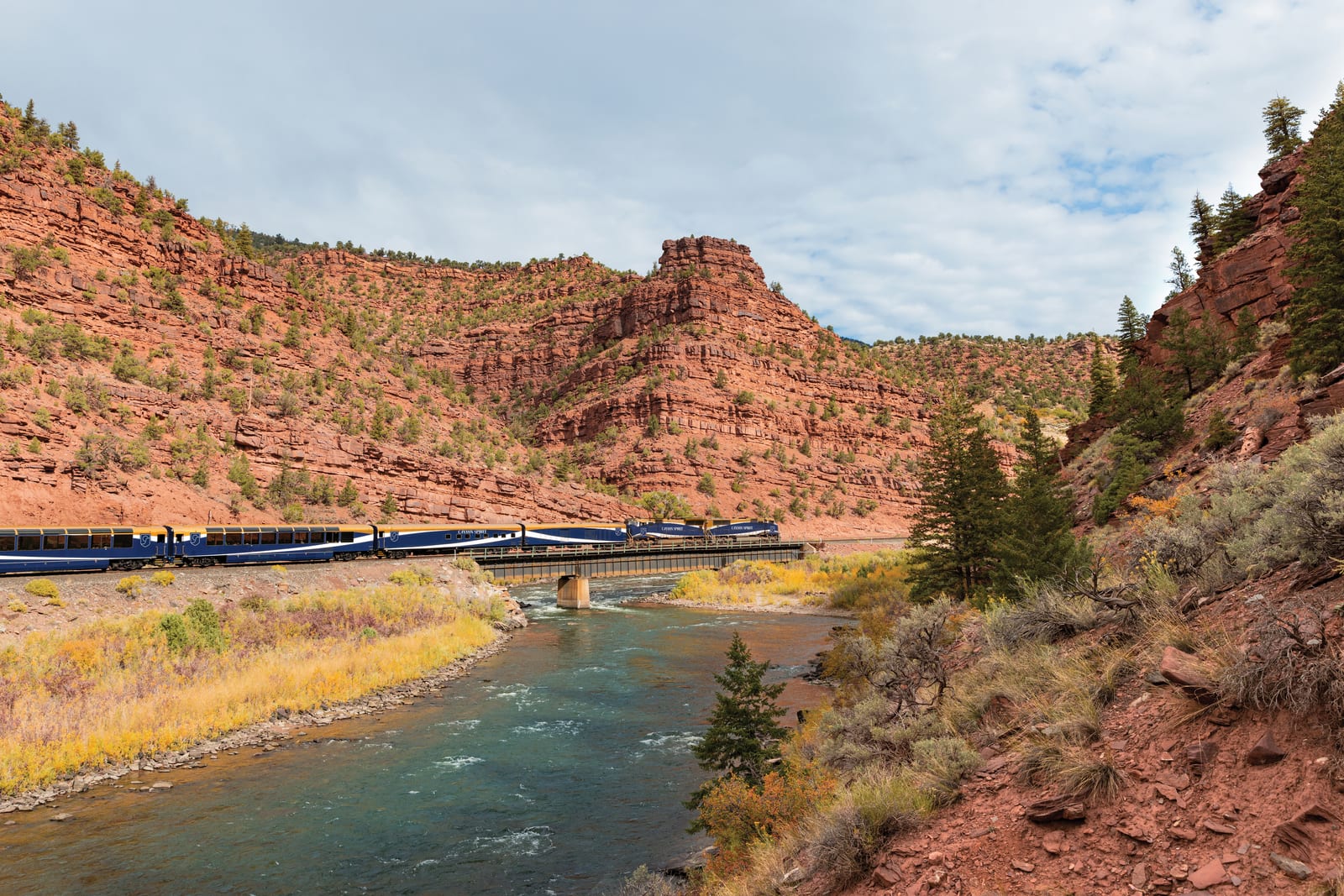
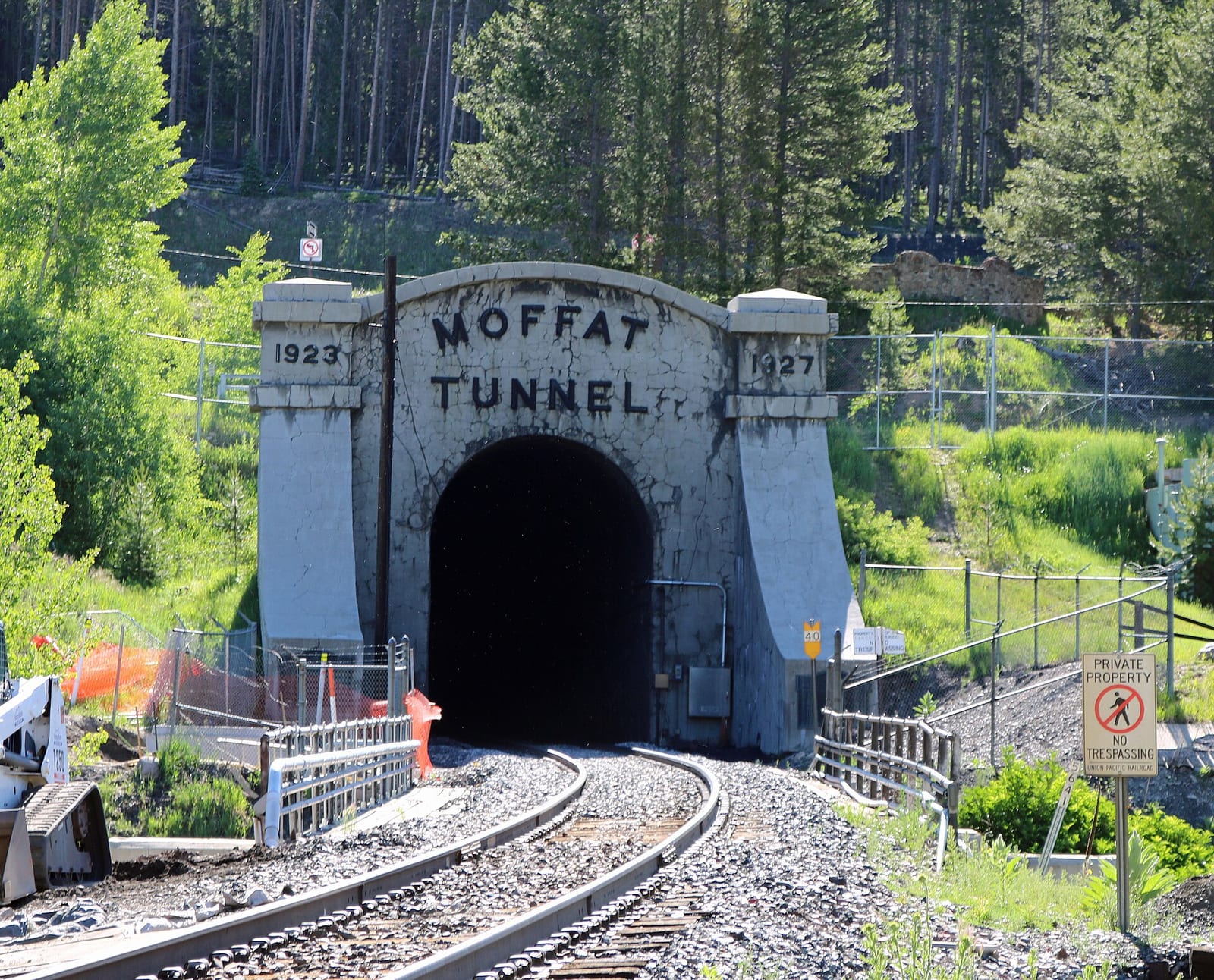
The journey climbs west out of Denver, the Mile-High City, and almost at once meets its first marvel: the Moffat Tunnel, a six-mile bore that carries the railway clean under the Continental Divide. Beyond it the line drops into the mountains and picks up the Colorado River, which it will follow, on and off, all the way to Utah. Through Burns Canyon and the sheer sixteen-mile gorge of Glenwood Canyon — the largest canyon on the Upper Colorado — the train reaches Glenwood Springs, the Colorado spa town where every itinerary stops for the night.
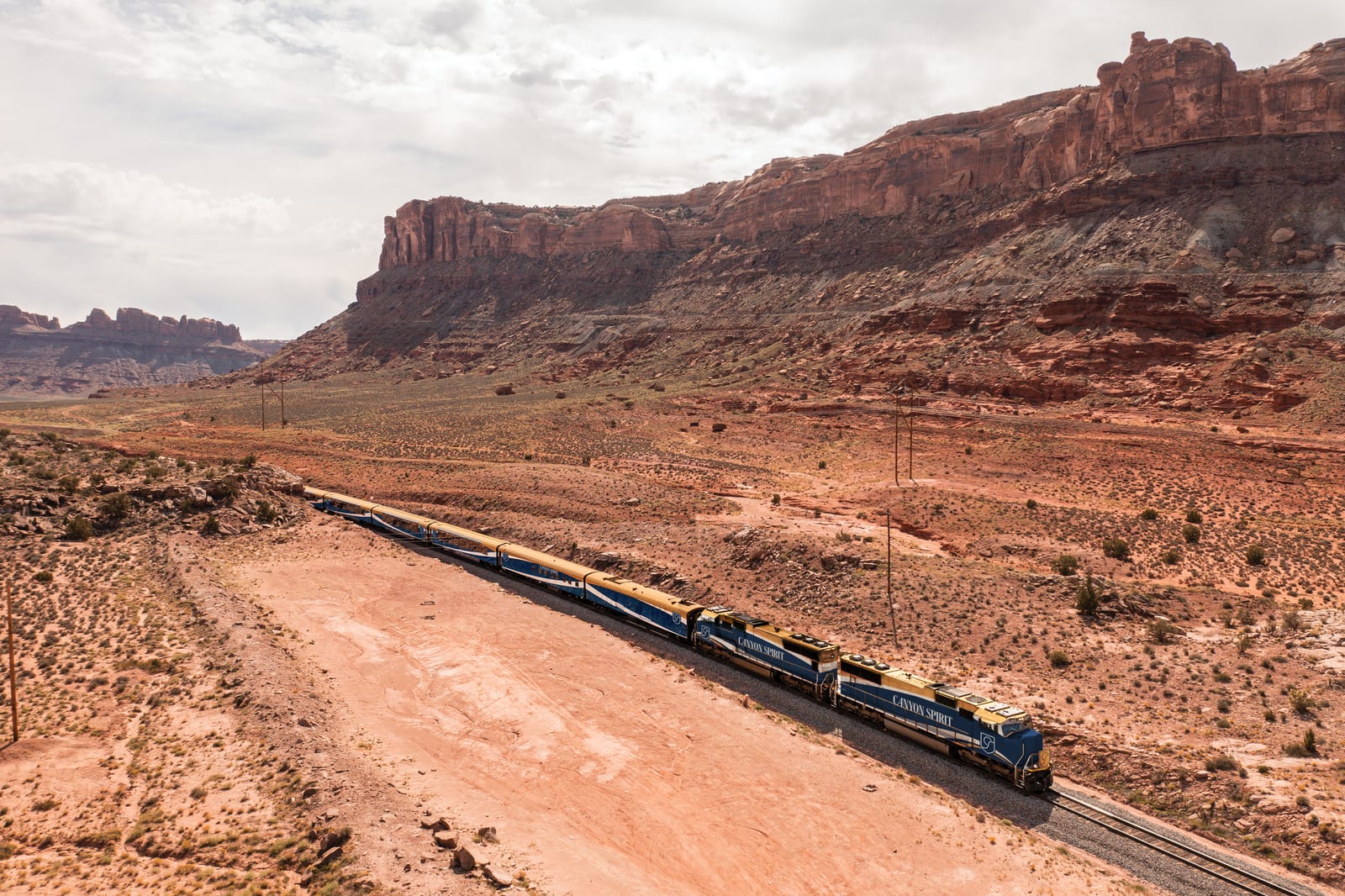
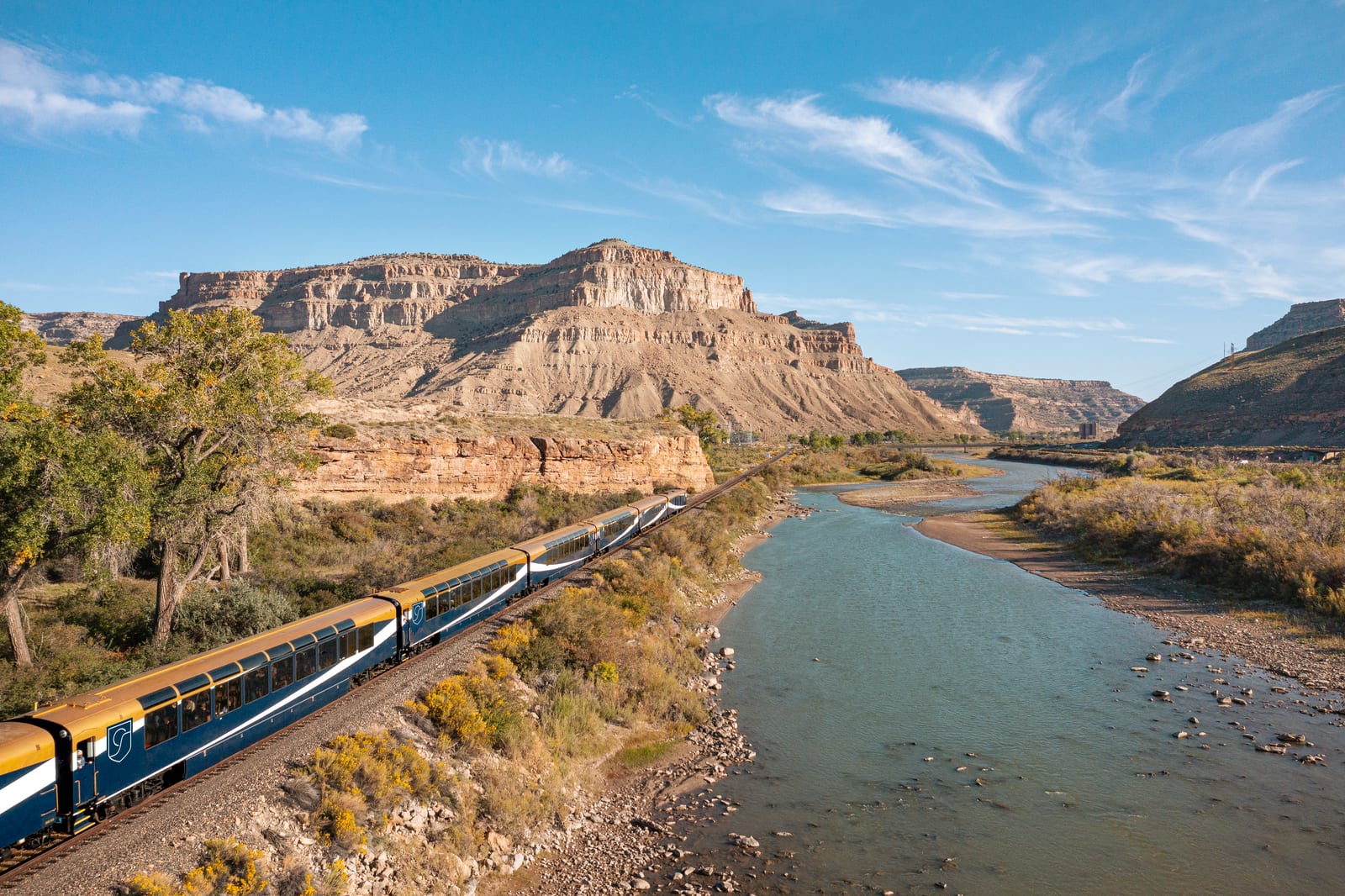
Day two is the transformation. Past the vineyards of the Grand Valley, under the desert ramparts of Mount Garfield and the Book Cliffs, the line threads De Beque Canyon and then the glorious Ruby Canyon, where fifteen miles of glowing red sandstone escort the river across the state line into Utah. The two-day journey ends at Moab, gateway to Arches and Canyonlands; the three-day version pushes on through the Price River country to finish in Salt Lake City, between the Wasatch Mountains and the Great Salt Lake.
Throughout, the experience is built around the view: glass-dome coaches, regionally inspired meals prepared on board, and hosts who fill the miles with the geology, history and tall tales of the American West.
Along the route
 Don Graham / Wikimedia Commons · CC BY-SA 2.0
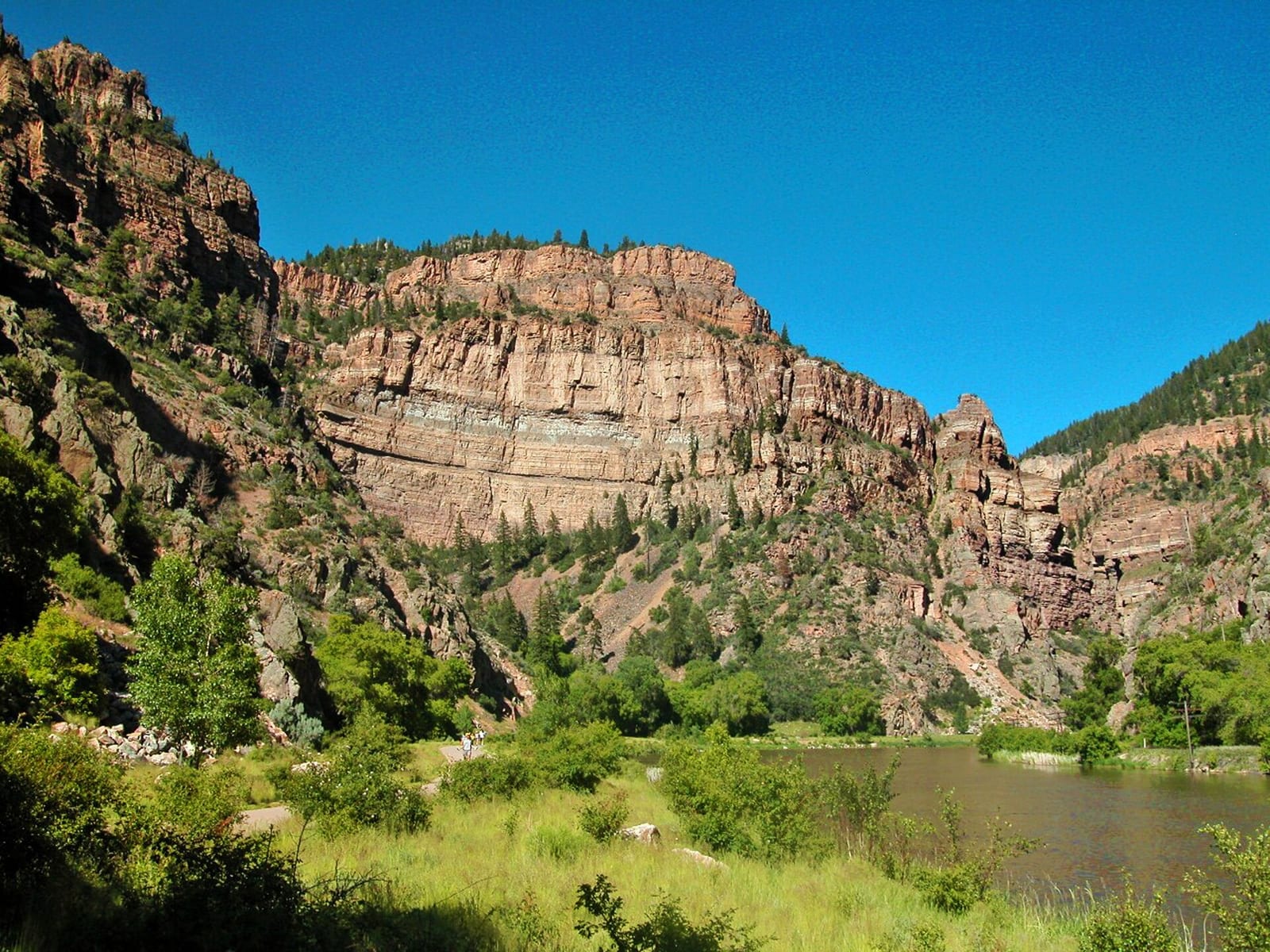
Glenwood Canyon
A sixteen-mile gorge carved over three million years — the largest canyon on the Upper Colorado River, its walls rising sheer from the water beside the train.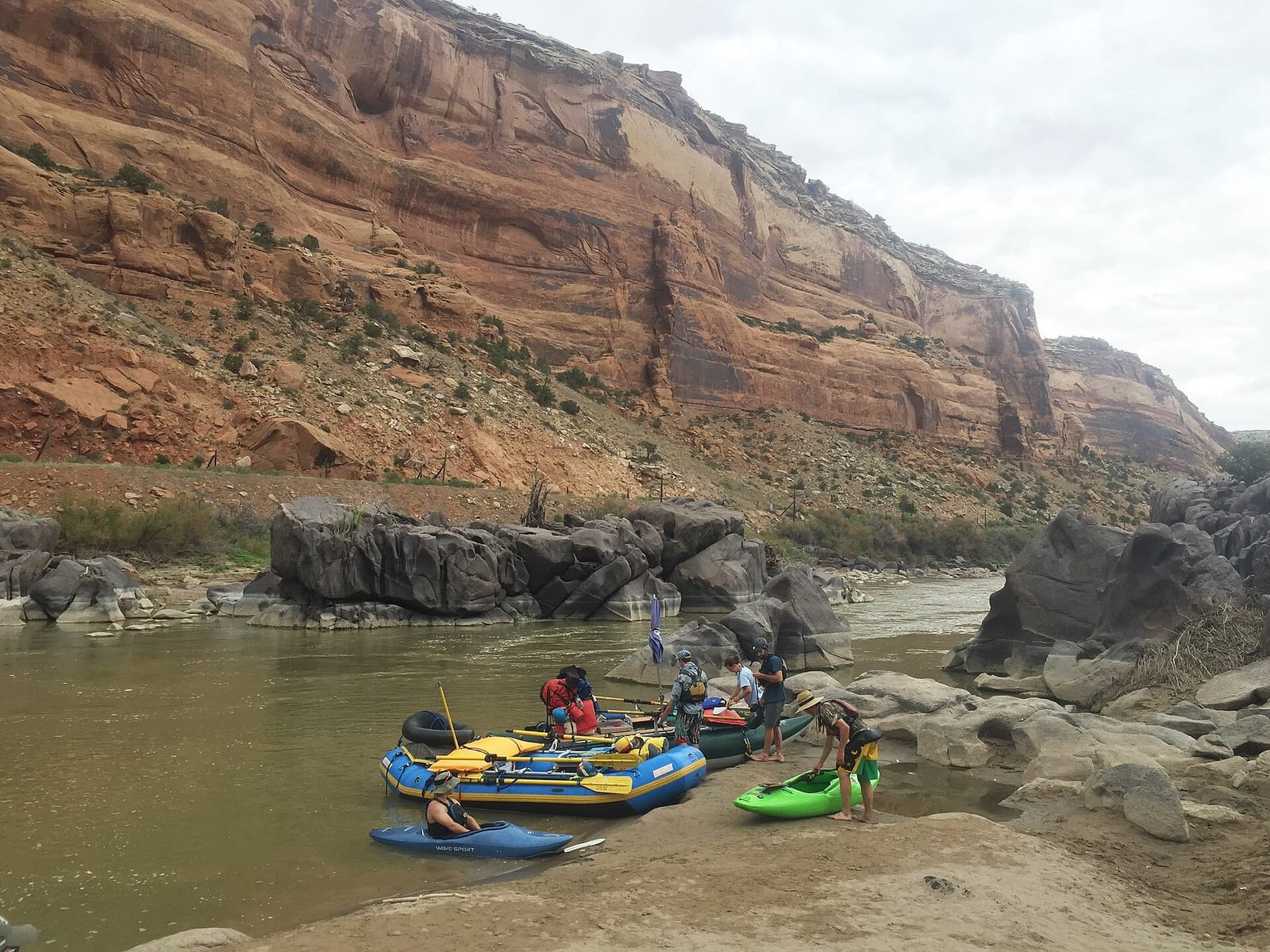 Bureau of Land Management / Wikimedia Commons · Public domain
Ruby Canyon
Fifteen miles of red sandstone along the Colorado River in the McInnis Canyons conservation area — the moment the Rockies give way to Utah's red-rock country.Jeffrey Beall / Wikimedia Commons · CC BY 4.0The Moffat Tunnel
Leaving Denver, the line burrows six miles through the Rockies beneath the Continental Divide — an engineering marvel that opens the way west into the mountains.A bit of history
Culture & experiences along the way
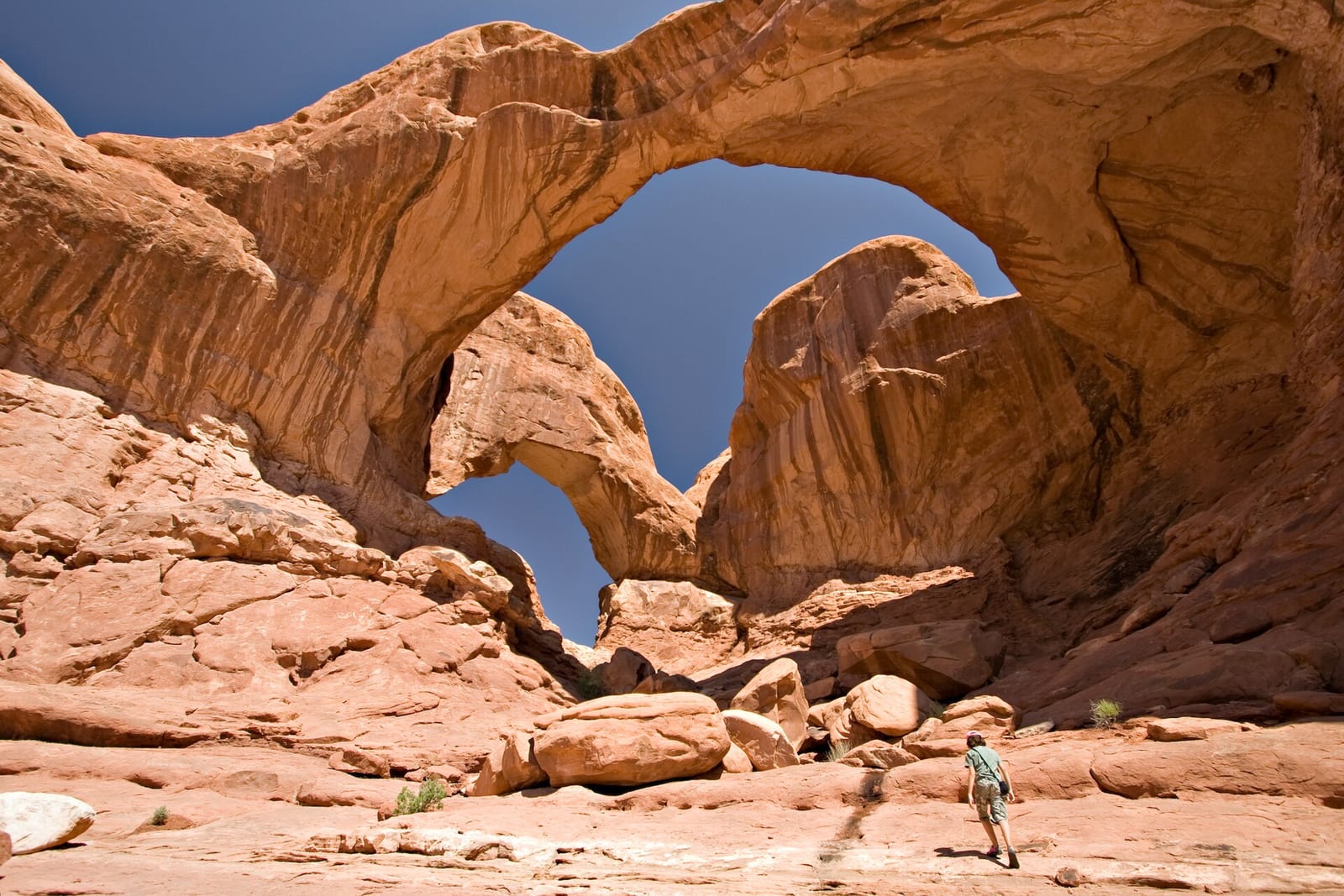
Luca Galuzzi / Wikimedia Commons · CC BY-SA 2.5Moab & the Mighty 5
The red-rock town of Moab is the gateway to Utah's "Mighty 5" national parks — Arches and Canyonlands are on the doorstep, a landscape of fins, spires and impossible balanced rock.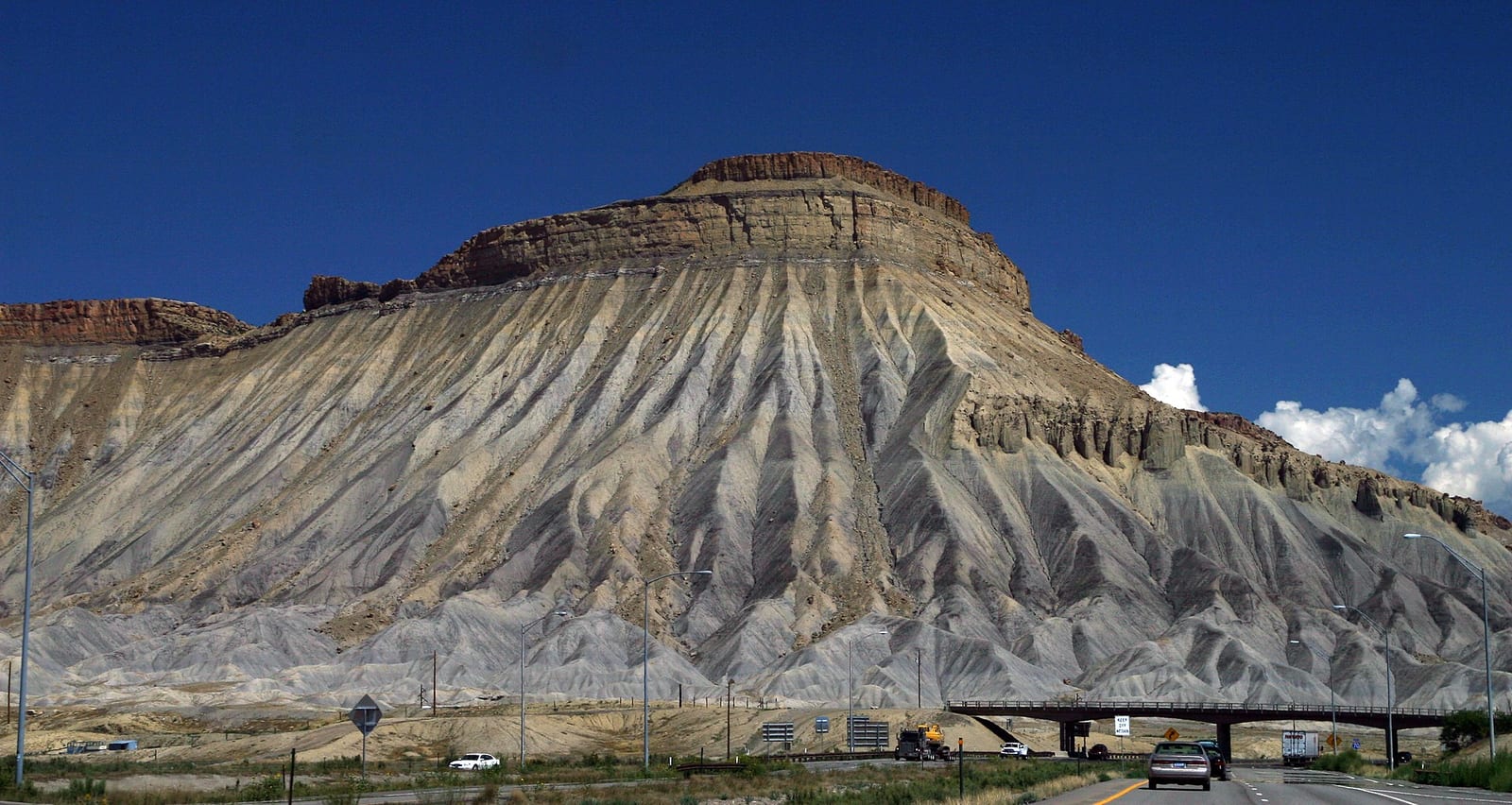 Doc Searls / Wikimedia Commons · CC BY-SA 2.0
Mount Garfield & the Book Cliffs
Above the vineyards of the Grand Valley near Grand Junction, Mount Garfield marks the western end of the 200-mile Book Cliffs — desert mountains glowing at sunset.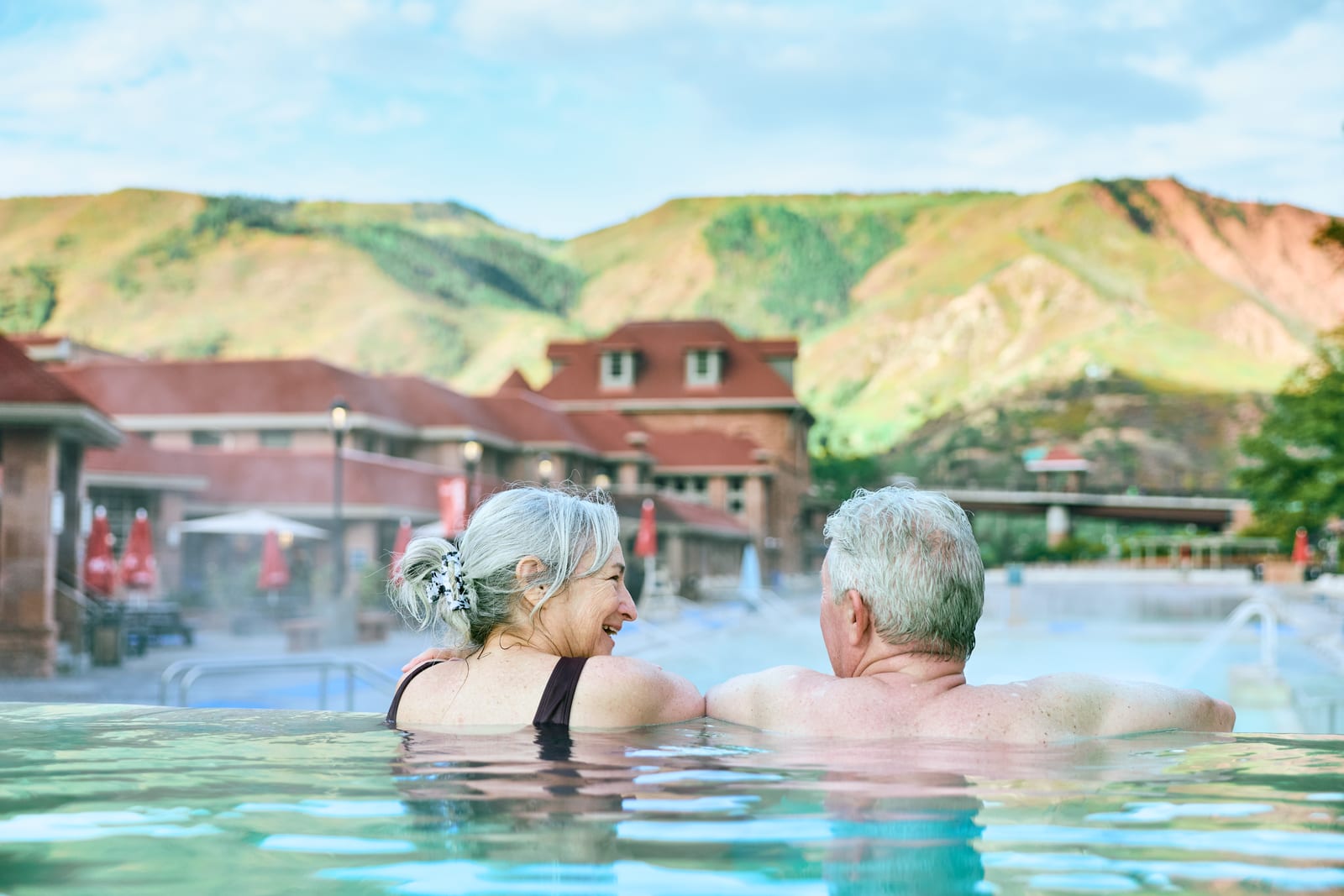 Canyon Spirit
A night in Glenwood Springs
Every journey breaks with a night in Glenwood Springs, a Colorado spa town famous for the world's largest hot-springs pool — the perfect soak between two days of scenery.Timetables
The Canyon Spirit runs a seasonal timetable, roughly April to November, with a weekly departure rather than a daily one — the train leaves Denver Union Station at 09:00 (Mountain Time). It is sold as a package that bundles the rail journey with your overnight hotel(s), and every route can be travelled eastbound or westbound — start in the Rockies or start in the desert. (2026 is the first season under the Canyon Spirit name; it was previously Rocky Mountaineer's "Rockies to the Red Rocks".)
There are two itineraries:
| Journey | Nights | Route | Overnight(s) |
|---|---|---|---|
| Two-Day Rail | 1 | Denver ⇄ Moab | Glenwood Springs |
| Three-Day Rail | 2 | Denver ⇄ Salt Lake City | Glenwood Springs & Moab |
Both share the same spectacular first stretch out of Denver through Glenwood Canyon; the three-day option (new for 21 April 2026) simply adds the run beyond Moab, through the Price River country, to Salt Lake City. Reserve early, as capacity is limited.
Season, the 09:00 Denver departure and the routes as of 2026. Confirm current dates with the operator — see the Tickets section below.
Tickets
The Canyon Spirit is a premium experience, sold as a package that includes the rail journey and your overnight hotel stay(s). Fares are quoted per person and vary by season, direction and length of trip, so we point you to the operator for a live price rather than quote a figure that may be out of date.
The choice is really one of length:
- Two-Day Rail — Denver ⇄ Moab, with one night in Glenwood Springs. The essential taste of the route.
- Three-Day Rail — Denver ⇄ Salt Lake City, with nights in Glenwood Springs and Moab. The complete crossing of the Southwest.
A few pointers:
- Either direction. Both routes run eastbound and westbound; choose based on where you'd rather begin and end (Denver, Moab or Salt Lake City).
- Book ahead. The season is short and seats are limited, so popular departures — especially autumn — fill early.
- It's all glass-dome. Every carriage has panoramic windows and onboard dining, so there is no wrong seat.
Book your tickets
Two-Day Rail
Denver ⇄ Moab
Two days on board with an overnight in Glenwood Springs — a shorter taste of the route, from the Colorado Rockies to the red rocks of Moab.
Book Tickets (opens in a new tab, on Canyon Spirit)via Canyon SpiritThree-Day Rail
Denver ⇄ Salt Lake City
The full journey across the Southwest, with overnight stops in Glenwood Springs and Moab, finishing between the Wasatch Mountains and the Great Salt Lake.
Book Tickets (opens in a new tab, on Canyon Spirit)via Canyon SpiritRail Passes
No rail pass covers the Canyon Spirit. It is sold as a package, with the rail journey and hotel nights together. Interrail and Eurail are European schemes, and the United States is not among the 33 countries in Interrail's list of covered railway companies (opens in a new tab).
Checked October 2026 against Interrail's list of covered railway companies (opens in a new tab).
Places to Visit
The Canyon Spirit links four very different corners of the American West, and each end of it rewards a few extra nights. The cards below cover the pick of them, from the Beaux-Arts train hall in Denver to the mountains above Salt Lake City.
A few things sit just off that list. Glenwood Springs is built around the world's largest hot-springs pool, which is a destination in its own right — there is more on it further up this page. Around Grand Junction the Grand Valley is Colorado's wine country, with tasting rooms strung along the benches beneath the Book Cliffs, and Moab is the base for Utah's Mighty 5, with Arches National Park a few minutes from town and best seen at either end of the day.
One honest word about the Great Salt Lake, which the map still shows as an inland sea west of the city. Years of drought and water diversion have pulled it back a long way: Antelope Island is reachable across a land bridge, the marina ramps are dry, and from most car parks the water is a long walk out over exposed lakebed. It is a remarkable and rather sobering place to stand, but do not go expecting the beach that older photographs promise.
 Missvain / Wikimedia Commons · CC BY 4.0 · cropped
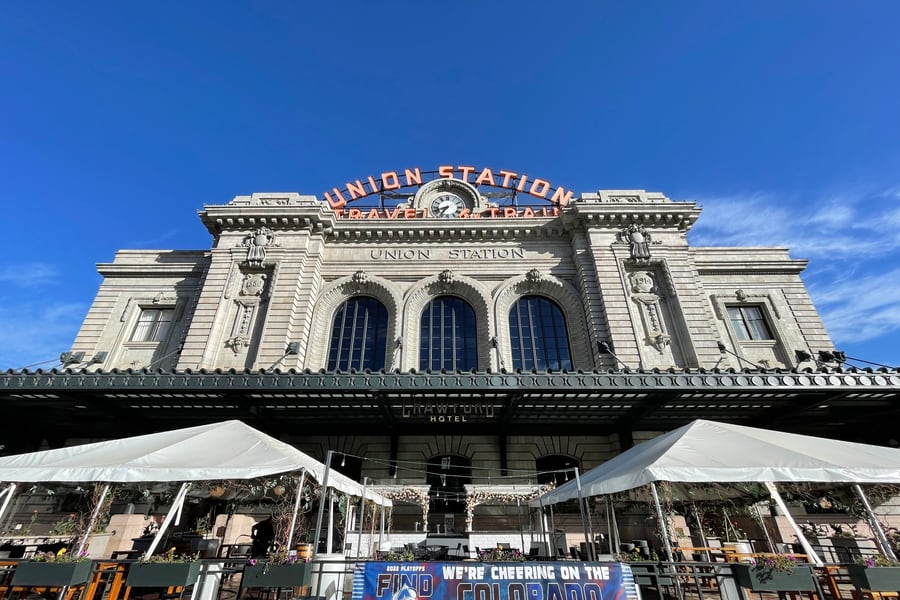
Denver Union Station
Denver's Beaux-Arts train hall opened in 1914, replacing an 1894 building lost to fire; the orange Travel by Train sign went up in 1958, the year the airport first outdrew the railway. It closed in December 2012 and reopened on 26 July 2014 after a rebuild that put the 112-room Crawford Hotel, bars and a bookshop under the old departure board. The Canyon Spirit leaves from here — worth arriving a day early for.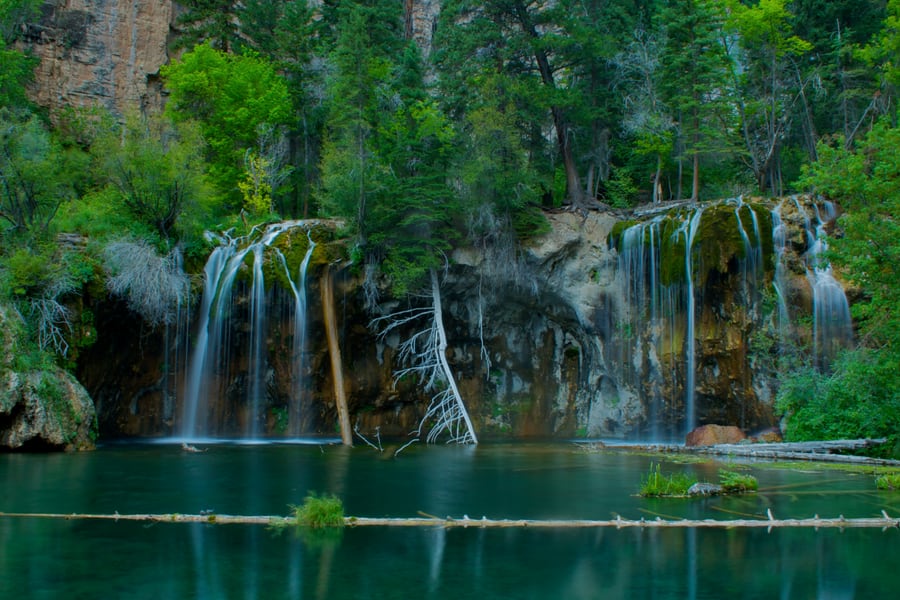 Zach Dischner / Wikimedia Commons · CC BY 2.0 · cropped
Hanging Lake
A turquoise shelf of water held on the canyon wall at 7,323 ft, dammed by travertine and fed by falls that spill over its lip; the colour comes from dissolved carbonate minerals. The trail reopened in June 2026 after a $4.9m rebuild following the 2020 Grizzly Creek Fire and the debris flows that came after it — seven new bridges and a boardwalk at the lake. It is 1.38 miles and 1,200 ft of climbing, permit-only ($12 in summer), and nobody may touch the water.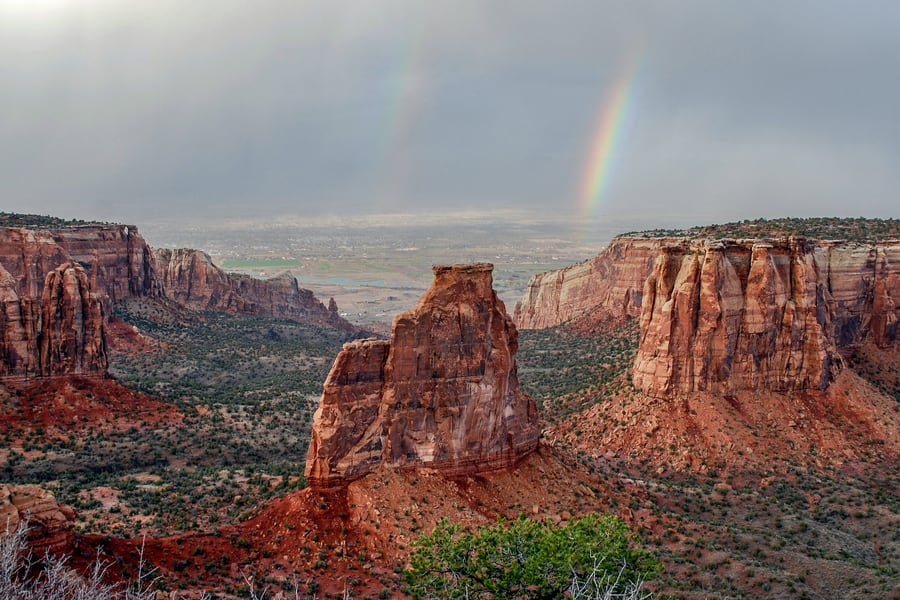 Gordon Leggett / Wikimedia Commons · CC BY-SA 4.0 · cropped
Colorado National Monument
Red canyons cut into the plateau above the Grand Valley, proclaimed a national monument on 24 May 1911. The free-standing tower is Independence Monument, 450 ft of Wingate sandstone — dunes laid down roughly 200 million years ago. John Otto, the recluse who built the first trails here and badgered Washington into protecting it, climbed the tower on 14 June 1911 and flew the flag from the summit for Flag Day. Climbers still raise one there every 4 July.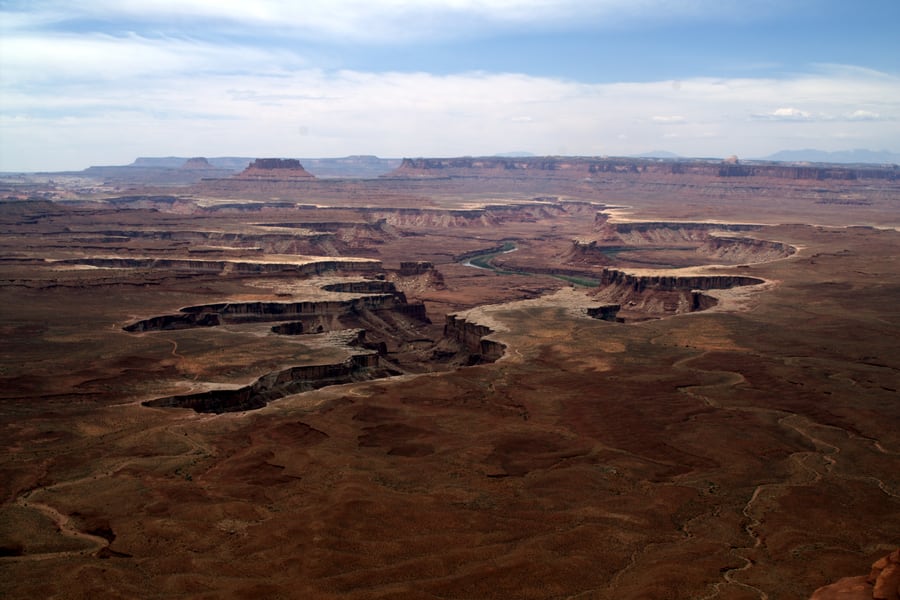 Aneta Kaluzna / Wikimedia Commons · CC BY-SA 4.0 · cropped
Canyonlands National Park
Established on 12 September 1964 and quartered by the Green and Colorado rivers into districts that barely connect to one another. The half within reach of Moab is Island in the Sky, a mesa standing 1,200 ft above the White Rim bench with the rivers a further 1,000 ft below that again. From the Green River Overlook the whole staircase drops away at once — emptier and wilder than Arches, and half an hour up the road.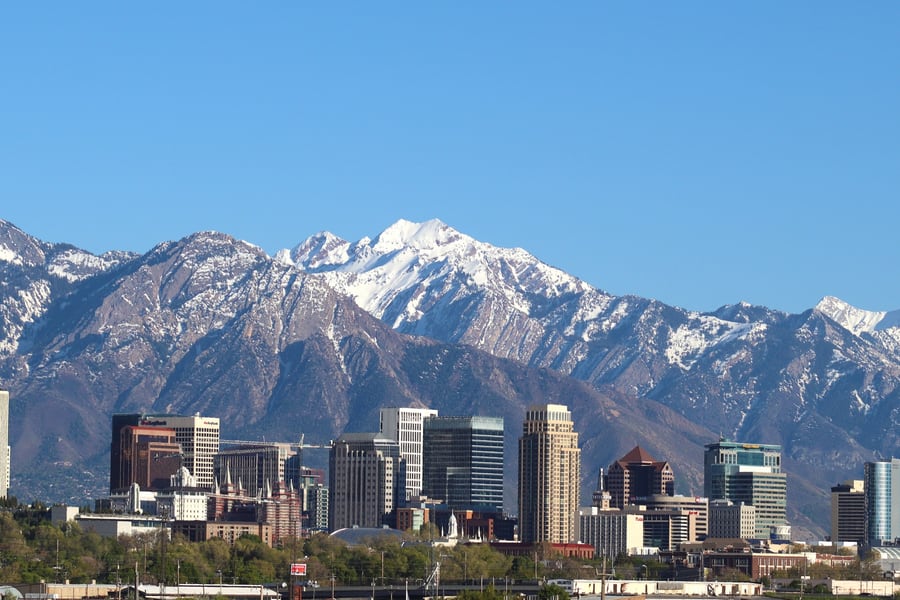 Invictus323 / Wikimedia Commons · CC BY 4.0 · cropped
Salt Lake City
The three-day route ends in a city founded in 1847 and laid out on a grid measured from Temple Square, hemmed in by mountains on both sides: the Wasatch reach 11,330 ft at Twin Peaks to the east, the Oquirrh 10,620 ft to the west. At 4,327 ft it has seven ski resorts within an hour of downtown and will host the 2034 Winter Olympics. Temple Square is still finishing a long rebuild; its public open house runs April–October 2027.Where to Sleep
Your on-route night — in Glenwood Springs on the two-day journey, plus Moab on the three-day — is part of the package and arranged for you, so there's nothing to book yourself for those stops.
At the ends of the line, plan a night or two of your own:
- Denver — everything from downtown boutique hotels to the historic Brown Palace; stay central for the restaurants and an easy start to the westbound train.
- Moab — a wide range of desert lodges, resorts and campsites; splurge on a stargazing stay or a room with red-rock views, and get up early for Arches.
- Salt Lake City — plentiful downtown hotels near Temple Square, handy for the airport and the ski resorts up the canyons.
- Glenwood Springs — if you're not on the package overnight, the town's spa hotels (some with hot-spring access) make a relaxing add-on either side of the trip.
Book well ahead around the short spring and autumn season, when Moab in particular fills up fast.
Questions or corrections
Planning this trip and stuck on something, or spotted a time, fare or detail that has changed? Send us a message about Canyon Spirit. We read every one, and we update this page when something has changed.