Great Smoky Mountains Railroad
Harrison Keely / Wikimedia Commons · CC BY 4.0 · cropped
- Distance44 miles round trip, Bryson City to the Nantahala Gorge and back
- Duration4½ hours, with an hour by the river
- Best seasonApril to October; steam on most summer days and every October train
Introduction
West of Bryson City, North Carolina, an old branch line leaves the town, runs down to the coves of Fontana Lake, crosses an arm of it on a tall steel trestle and climbs into the Nantahala Gorge, a valley so narrow that its Cherokee name is said to mean "land of the noonday sun". The line was cut through these mountains between 1880 and 1891 by convict gangs, to link the far west of the state with Asheville and the outside world, and it carried passengers until 1948.
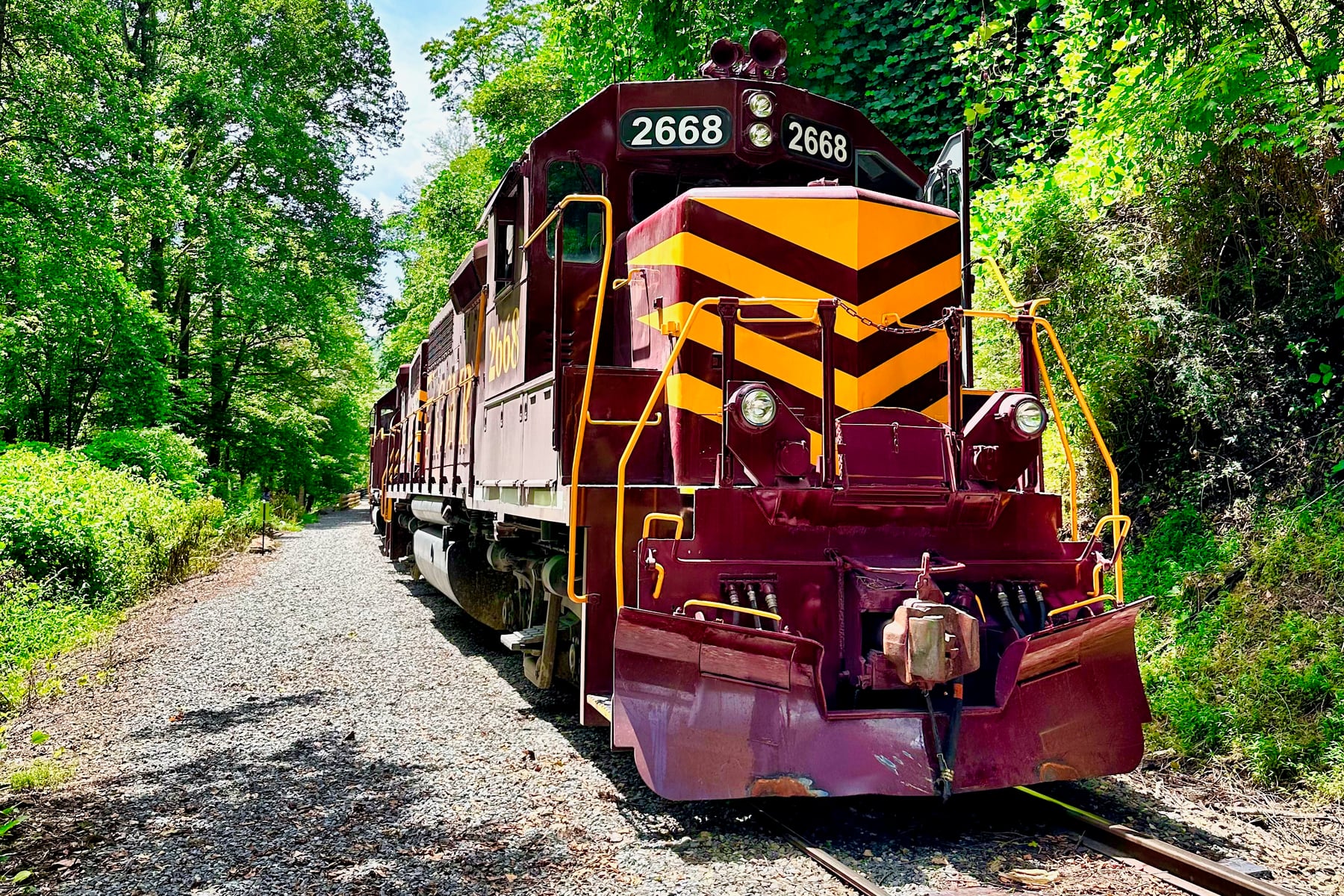
Since 1988 the Great Smoky Mountains Railroad has run it again for visitors. The Nantahala Gorge Excursion is a 44-mile round trip from the depot in Bryson City: an hour and three quarters out, an hour's layover by the river at the Nantahala Outdoor Center, where the Appalachian Trail crosses the gorge, and back, four and a half hours in all. On many days, and every day in October, the train is pulled by No. 1702, a steam engine built in 1942 for the US Army; on the rest, by one of the railroad's diesels.
Trains run from early April to the end of October.
The Journey
The trip starts at the depot on Everett Street, in the middle of Bryson City. The railroad asks you to arrive an hour before departure and park in its lot across the street, at 45 Mitchell Street; boarding starts half an hour before the train leaves. Tickets come by email, and there is nothing to print. Across Greenlee Street is the railroad's own Smoky Mountain Trains Museum, free with any ticket.
Seats are assigned, in one of six kinds of car. Coaches date from as early as 1920 and have windows that open; Crown Class has the same vintage cars with climate control and picture windows; the open-air gondolas, built from old baggage and flat cars, have outward-facing benches under a roof. First Class and the premium gondola serve a meal cooked on board, for adults only. A concessions car sells hot dogs, snacks, coffee, beer and wine.
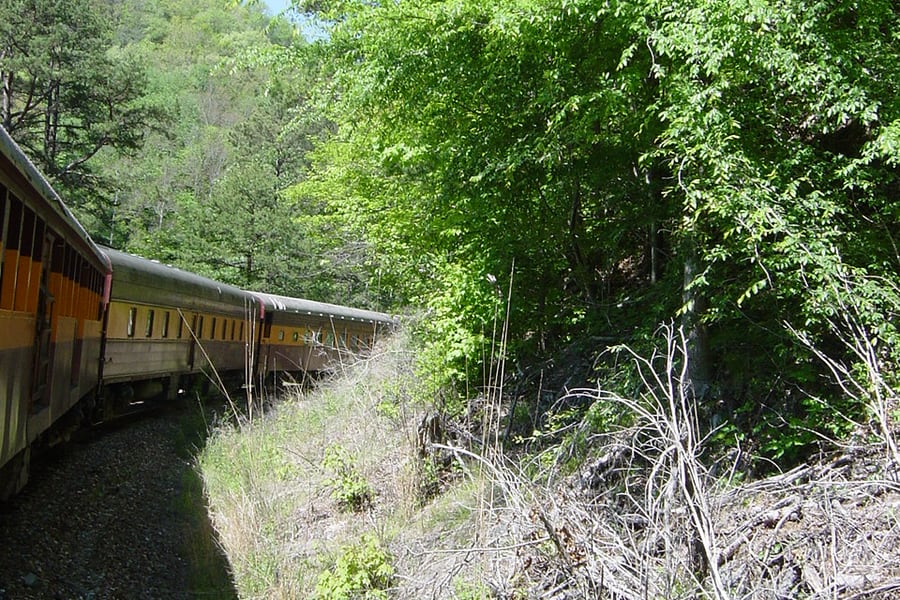
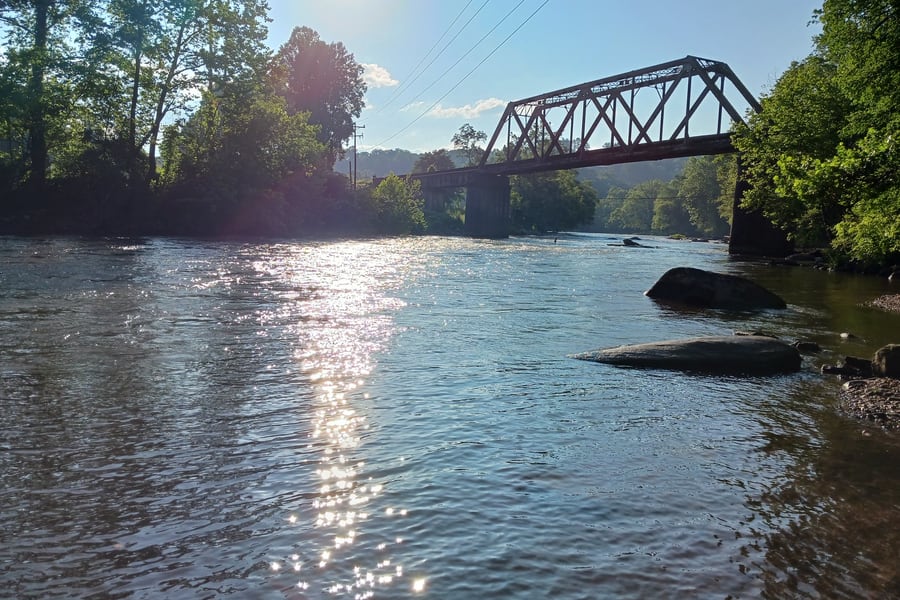
The train leaves Bryson City westbound, following Alarka Creek down to Fontana Lake, the deepest lake in North Carolina, formed when the Tennessee Valley Authority dammed the Little Tennessee River during the Second World War. The line runs high above its coves and then crosses an arm of the lake on the Fontana Trestle. Beyond it the train turns up the Nantahala Gorge beside the river, where rafts and kayaks come down the rapids, and an hour and three quarters after leaving Bryson City it stops at the Nantahala Outdoor Center. For an hour you can sit by the river, eat, or walk to the footbridge where the Appalachian Trail crosses the Nantahala, and then the train takes you back the way you came.
The engines
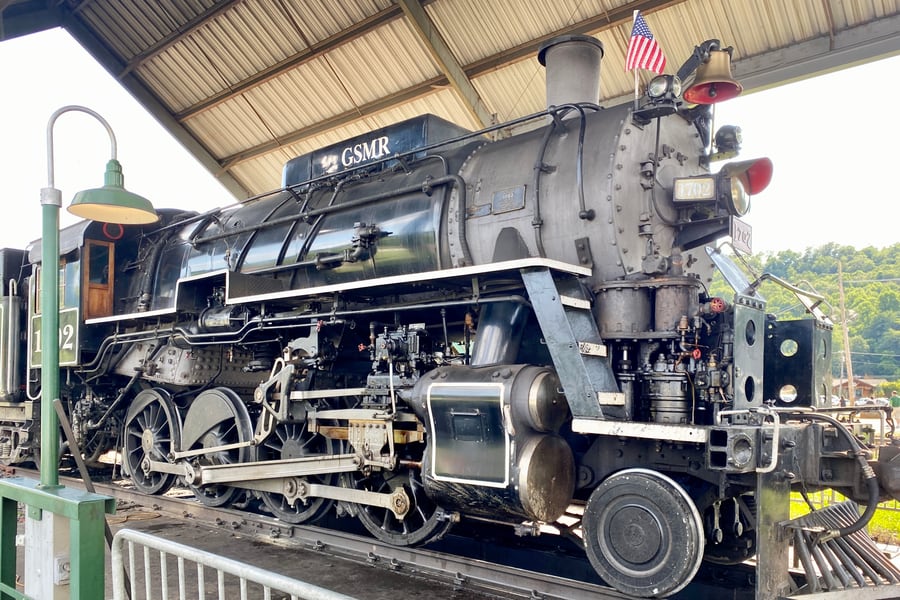
No. 1702 is a 2-8-0, built by Baldwin in 1942 for the US Army Transportation Corps, one of more than two thousand of its class sent to railways around the world during and after the war. It was built to burn coal and now burns a mixture of heavy diesel fuel and recovered motor oil. Out of service from 2004, it returned to the railroad on 22 July 2016 after a rebuild in a new workshop at Bryson City, where it is also turned on its own turntable. Before departure it stands at the depot for photographs.
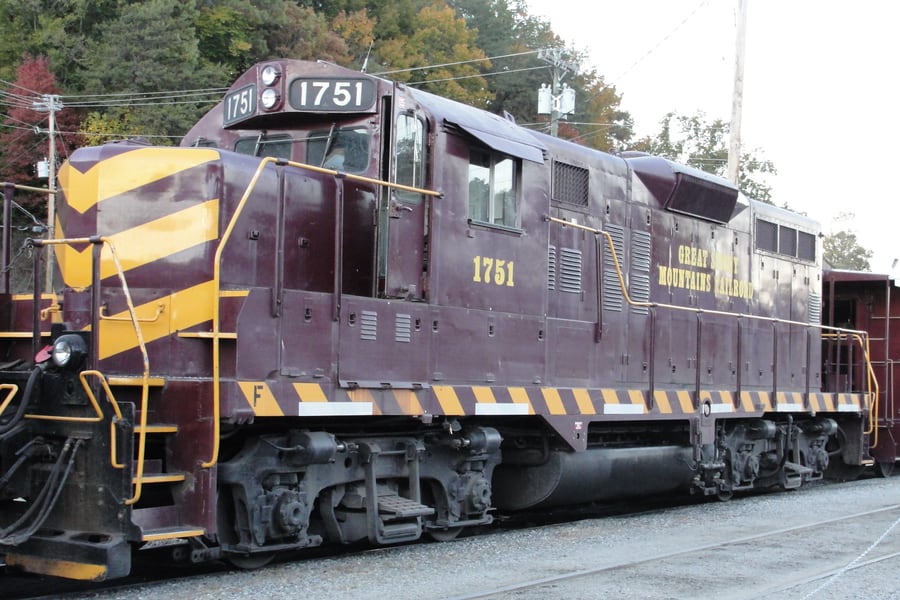
On the other days the train runs behind the railroad's diesels: GP7, GP9, GP30 and GP38-3 locomotives, all of them four-axle units, because anything longer would not fit the line's tunnels and tight curves. A second steam engine, No. 722, which worked this same branch from 1904 to 1952, is being restored in the Bryson City shop.
The line
This is the old Murphy Branch of the Western North Carolina Railroad, built westward from Asheville after the rails reached that city in 1880. Much of it was dug and blasted by convicts working under guard; nineteen of them drowned in the Tuckasegee River when their raft capsized during the building of the Cowee Tunnel, east of Bryson City. The Southern Railway ended passenger service on 16 July 1948, and when freight fell away in the 1980s the State of North Carolina bought the western end of the line to save it. The railroad that runs it today owns 53 miles of track, with two tunnels and 25 bridges, and is part of American Heritage Railways, which also owns the Durango & Silverton in Colorado.
Along the route
 Warren LeMay / Wikimedia Commons · CC0 · cropped
Bryson City depot
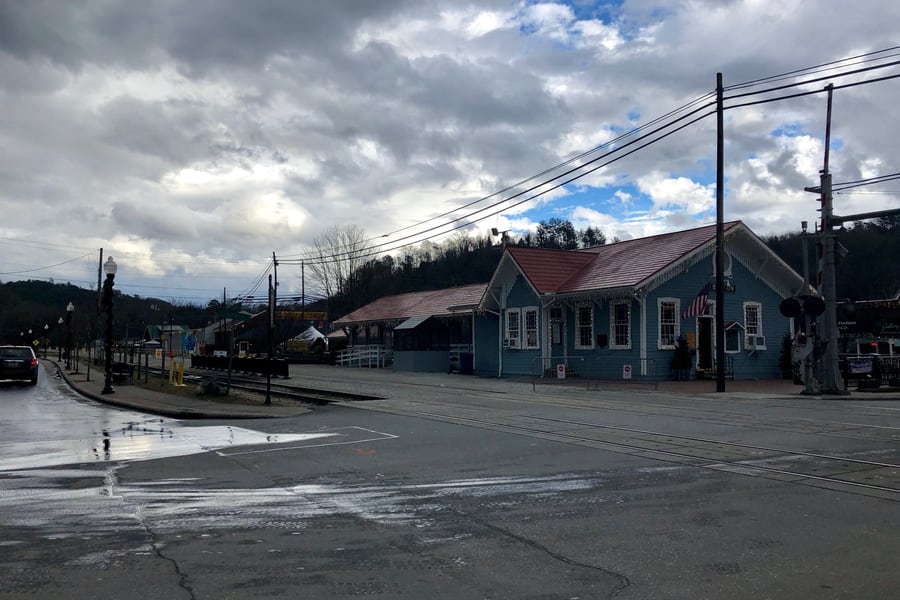
Every train leaves from the depot on Everett Street, in the middle of town. Board half an hour before departure; on the days No. 1702 is working, it stands ready beforehand for photographs.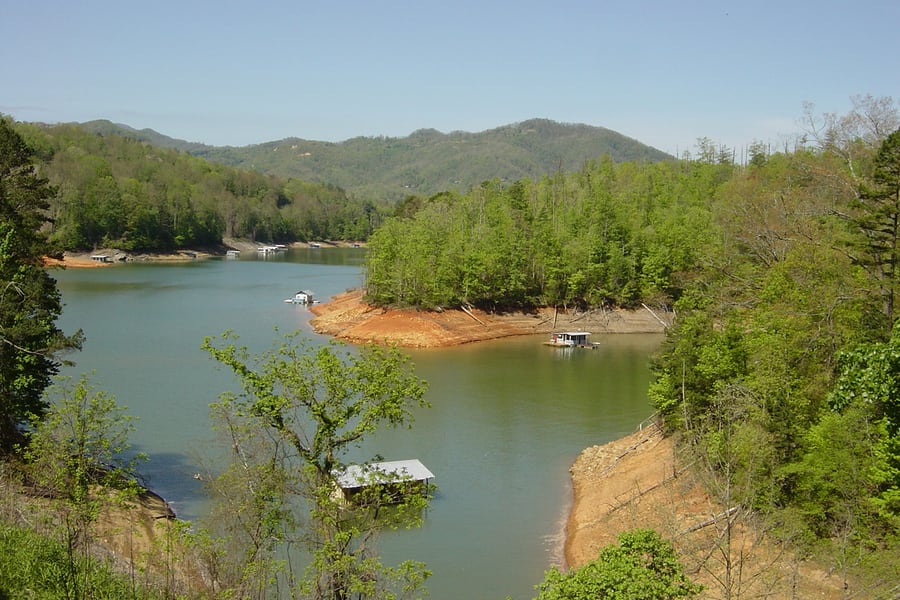 Brian Boardman / Flickr · CC BY 2.0 · cropped
Along Fontana Lake
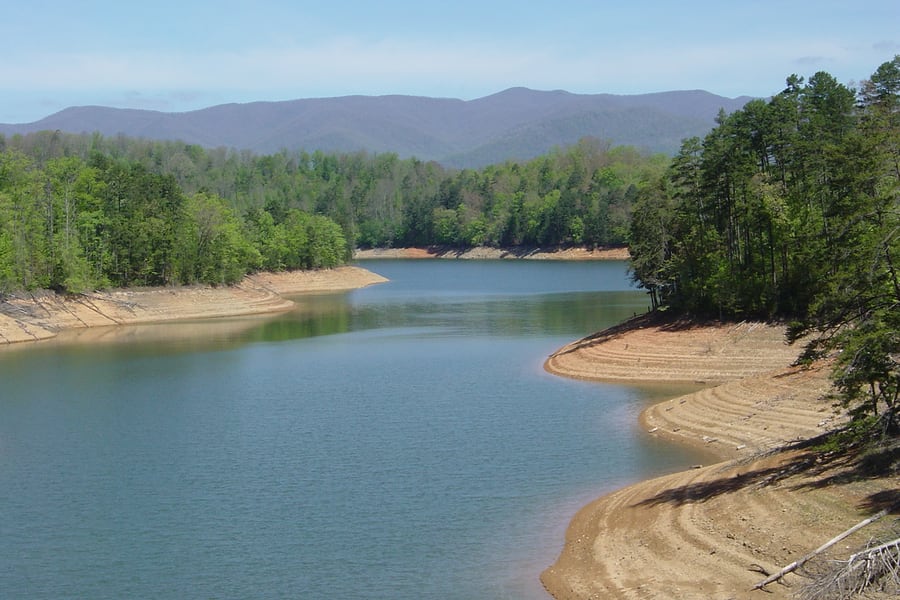
West of town the line follows Alarka Creek down to Fontana Lake, the deepest lake in North Carolina, and runs above its coves. When the water is low, the red-clay banks show in tiers.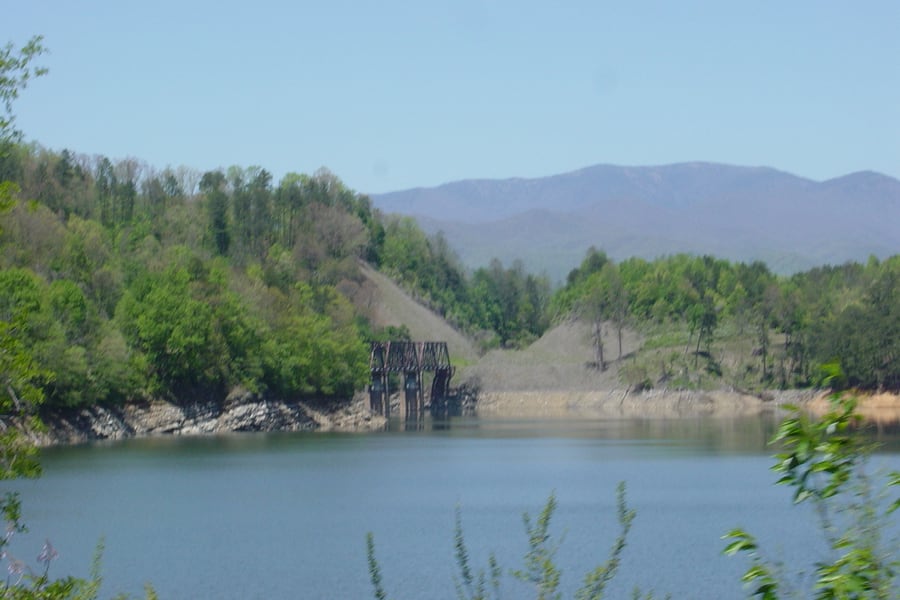 Brian Boardman / Flickr · CC BY 2.0 · cropped
The Fontana Trestle
The line crosses an arm of the lake on a tall steel trestle, its towers standing in the water. You see it from the shore a few minutes before the train rolls out onto it.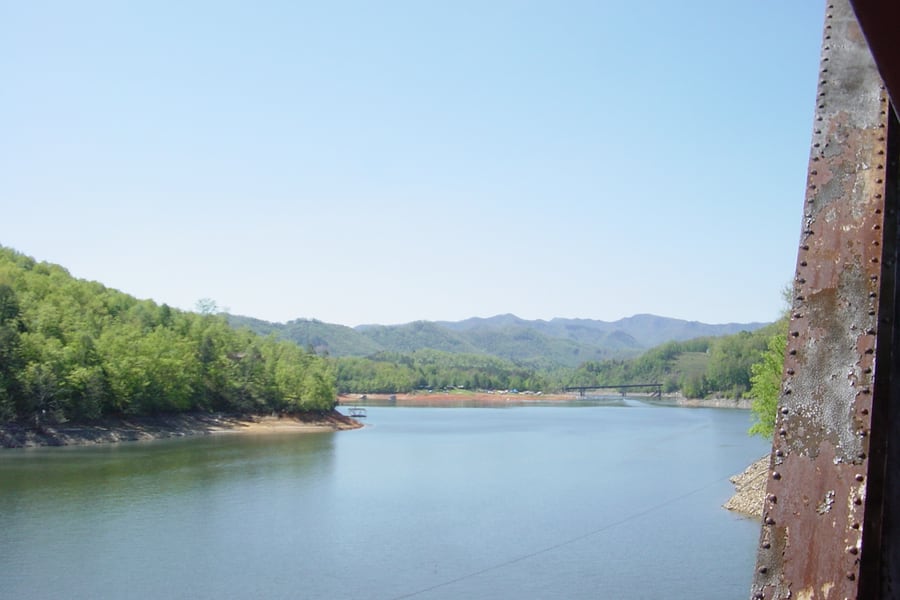 Brian Boardman / Flickr · CC BY 2.0 · cropped
Out over the water
From the trestle the lake opens in both directions, with the Smokies on the skyline. Then the train turns up the Nantahala Gorge to the Nantahala Outdoor Center, an hour and three quarters from Bryson City.A bit of history
Culture & experiences along the way
 Warren LeMay / Flickr · CC BY-SA 2.0 · cropped
The turntable
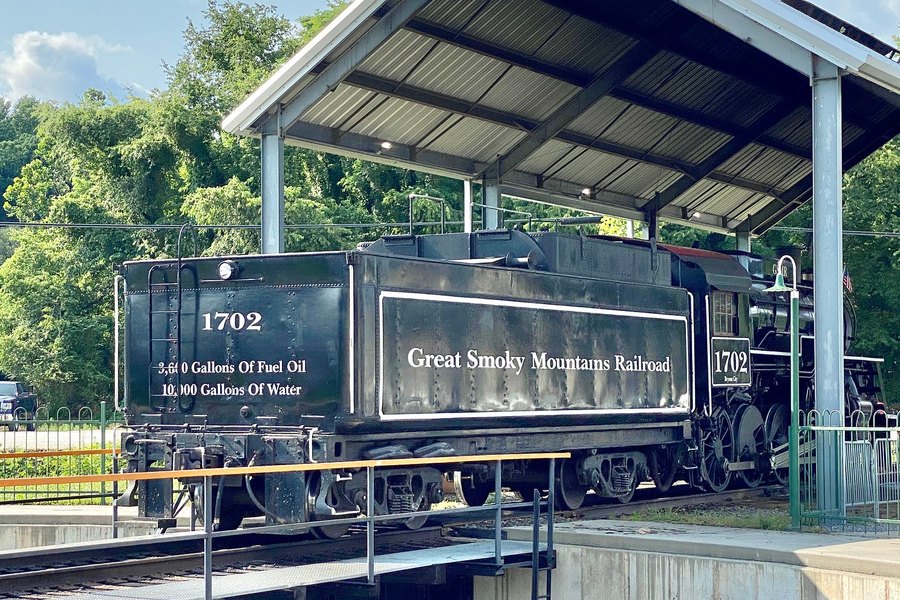
No. 1702 is turned at Bryson City on its own turntable, under a shelter beside the line. On some days the crew turns it in front of an audience and asks for volunteers to help push the engine and tender, which weigh 353,540 pounds together.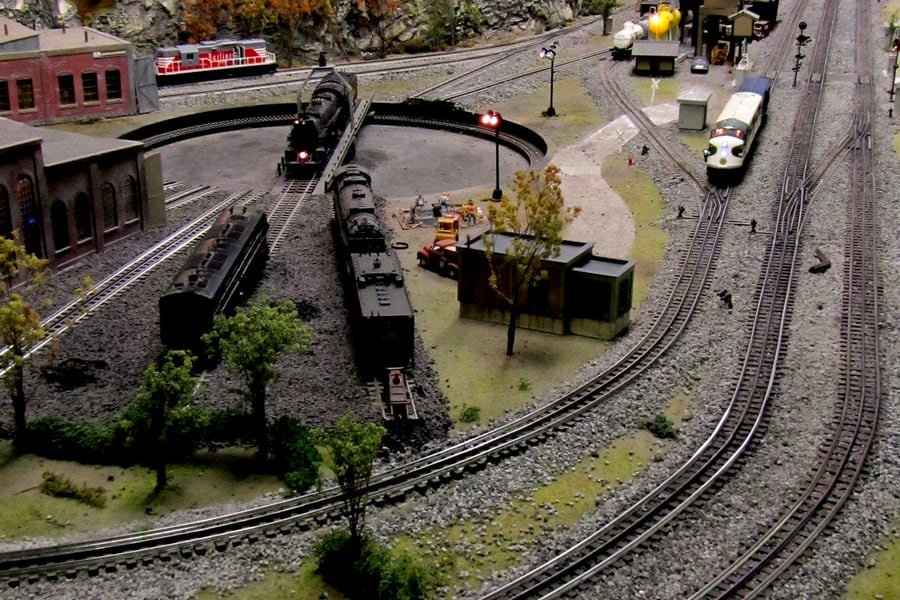 Todd Fowler / Flickr · CC BY-SA 2.0 · cropped
Smoky Mountain Trains Museum
Across Greenlee Street from the depot, the railroad's museum holds some 7,000 Lionel engines, cars and accessories, a large operating layout and a children's activity centre. Admission is free with any train ticket.Timetables
The Nantahala Gorge Excursion runs from early April to 31 October, from the depot at 226 Everett Street, Bryson City. There is usually one train a day, two on October days from the 9th. The round trip takes about 4½ hours, including an hour's layover at the Nantahala Outdoor Center.
| Dates (2026) | Departs Bryson City | Back about | Engine |
|---|---|---|---|
| 3 April – 21 May | 11:00 | 15:30 | Diesel; Tuesdays to Sundays in April, daily in May |
| 22 May – 31 May | 11:00 (10:00 and 15:00 on 23–24 May) | 15:30 | Mostly steam |
| June – September | 10:30 | 15:00 | Steam on most Wednesdays to Sundays; diesel on Mondays and Tuesdays, and on every day of some weeks |
| 1 – 8 October | 10:30 | 15:00 | Steam |
| 9 – 31 October | 09:00 and 14:00 | 13:30 and 18:30 | Steam |
On some Saturdays from mid-June to late July a sunset train leaves at 17:00, with dinner in First Class. In 2026 the whole weeks of 17–24 June and 3–11 August, and the second half of September, were diesel. Each date on the booking calendar says whether it is a steam or a diesel day, and the railroad warns that the engine can change; it will tell you if it does.
Good to know:
- Book ahead for October and for weekends, when trains and classes sell out. You can buy at the depot on the day, but online booking closes the day before.
- Arrive an hour early and park in the railroad's paid lot at 45 Mitchell Street; street parking is limited to two hours.
- Bad weather does not stop the trains.
Departures as of October 2026, from the railroad's calendar for April to October 2026. Confirm before travelling on gsmr.com (opens in a new tab).
Tickets
Fares depend on the class and on the day: a diesel day costs least, a steam day more, and October and the peak steam weekends most. Coach starts at $63.72 for an adult on a diesel day and reaches $86.40 on a peak steam day; children aged 2 to 12 pay less, and under-2s ride free except in Crown Class. First Class and the premium gondola, with a meal, are for adults aged 21 and over only. Every fare includes the railroad's 7% historic preservation fee.
You can cancel up to five days before departure for a refund less $14 per adult and $7 per child ticket, or move to another date in the same year for $7 a ticket. Fares checked October 2026 at gsmr.com (opens in a new tab); US dollars.
Book your tickets
Coach
Round trip · 4½ hours
A vintage coach with windows that open, ceiling fans and heating; pre-order a boxed lunch when you book.
Book Tickets (opens in a new tab, on Great Smoky Mountains Railroad)via Great Smoky Mountains RailroadOpen Air Gondola
Round trip · outward-facing seats under a roof
An open car with half-height walls, built from old baggage and flat cars, for the clearest view of the lake and the gorge.
Book Tickets (opens in a new tab, on Great Smoky Mountains Railroad)via Great Smoky Mountains RailroadCrown Class
Round trip · climate-controlled
Assigned seats in a climate-controlled car with large picture windows, with beer and wine for sale.
Book Tickets (opens in a new tab, on Great Smoky Mountains Railroad)via Great Smoky Mountains RailroadFirst Class
Adults 21 and over · lunch served
A dining table in a climate-controlled car, with a meal cooked on board and served by the car's attendant.
Book Tickets (opens in a new tab, on Great Smoky Mountains Railroad)via Great Smoky Mountains RailroadRail Passes
No rail pass covers the Great Smoky Mountains Railroad. It is a private heritage railroad that sells its own tickets. Amtrak's USA Rail Pass is valid only on Amtrak's own services, and Interrail and Eurail do not apply anywhere in the United States.
The railroad's own savings are group rates for 20 or more paying passengers, its "Hot Deals" page, and packages that combine the train with a night in Bryson City or with rafting, zip-lining or a jeep tour in the gorge.
Checked October 2026 against gsmr.com (opens in a new tab) and amtrak.com (opens in a new tab).
Places to Visit
Bryson City, the seat of Swain County, sits on the Tuckasegee River just west of the North Carolina entrance to the Great Smoky Mountains National Park. Deep Creek and the Road to Nowhere are a short drive from town; Oconaluftee, Mingus Mill and Kuwohi lie up the valley beyond Cherokee, and Fontana Dam is about 30 miles to the west.
 Brian Stansberry / Wikimedia Commons · CC BY 3.0 · cropped
Bryson City
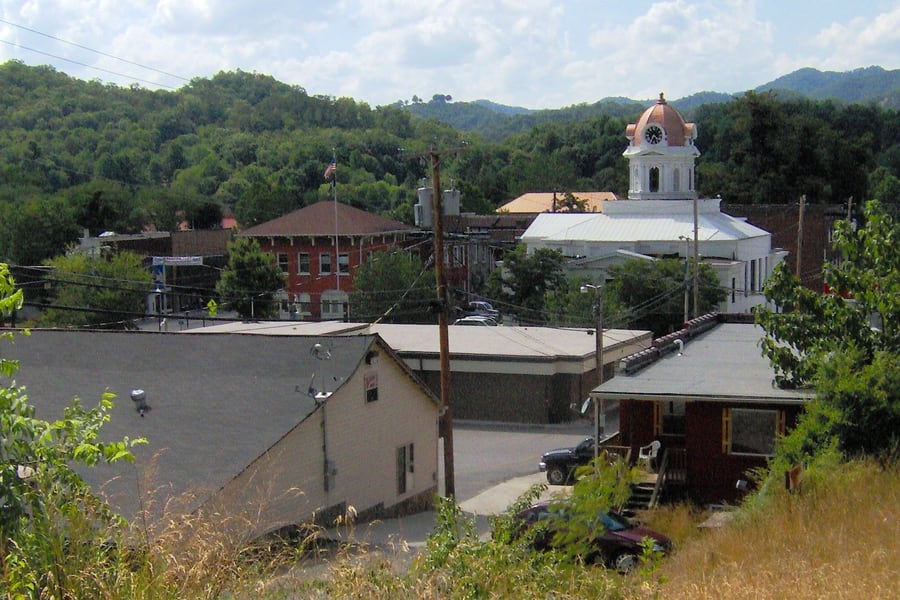
A town of about 1,600 people on the Tuckasegee River, the seat of Swain County, and the railroad's home. The old courthouse with its domed clock tower stands over a small downtown of shops, restaurants and breweries, and the Deep Creek entrance to the Great Smoky Mountains National Park, known for its streams and waterfalls, is just to the north.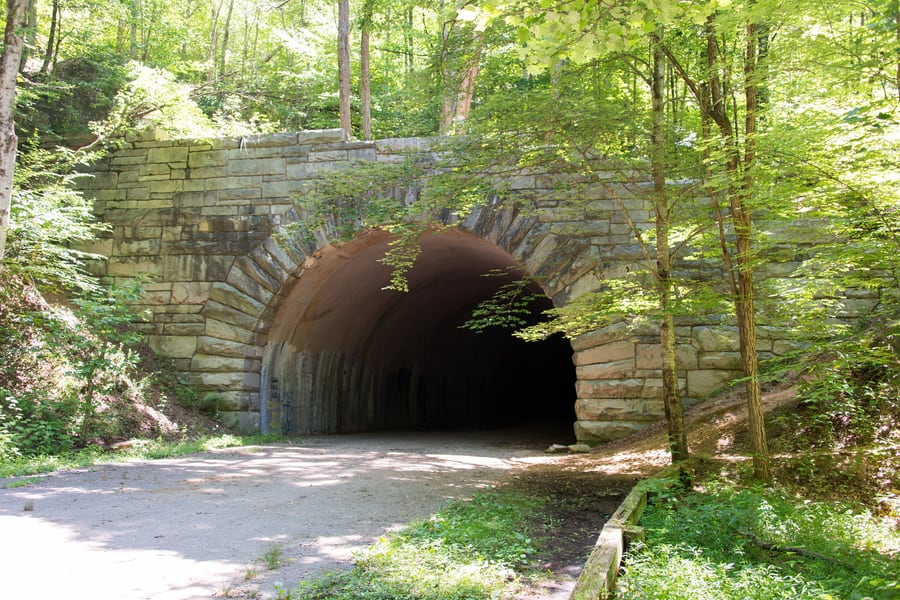 Washuotaku / Wikimedia Commons · CC BY-SA 4.0 · cropped
The Road to Nowhere
When Fontana Lake drowned the old valley road in the 1940s, the government promised families a new road along the north shore to reach their graveyards. It got six miles and a 1,200-foot tunnel before work stopped for good in the early 1970s; Swain County was paid $52 million instead. You can drive to the end and walk through the unlit tunnel to the trails beyond.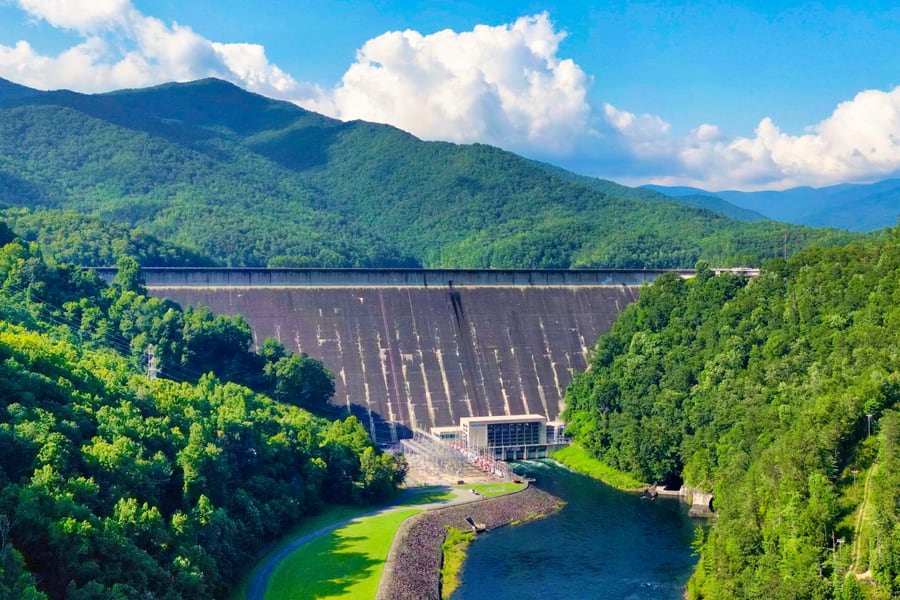 Harrison Keely / Wikimedia Commons · CC BY 4.0 · cropped
Fontana Dam
The Tennessee Valley Authority built the dam in the early 1940s to power aluminium plants for the war, and at 480 feet it is the tallest dam in the eastern United States. The railroad carried the cement and machinery in on a spur from Bushnell. The Appalachian Trail crosses the top of the dam, and the lake behind it covers whole towns.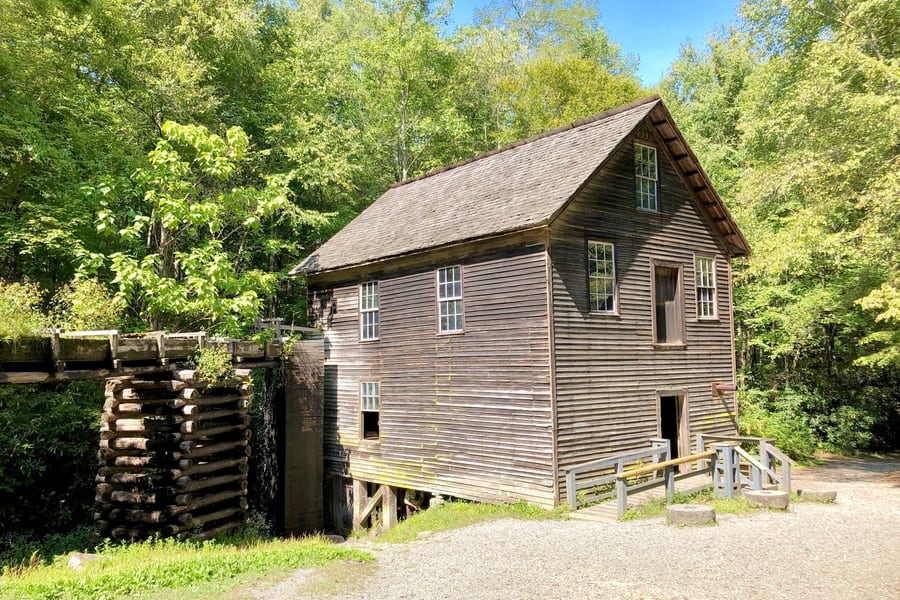 Warren LeMay / Wikimedia Commons · CC BY-SA 4.0 · cropped
Mingus Mill
A wooden gristmill of 1886, still on its original site half a mile north of the Oconaluftee Visitor Center. Instead of a water wheel it drives its machinery with a water-powered turbine, fed along a wooden flume. The interior is closed for restoration for now, but you can walk around the outside.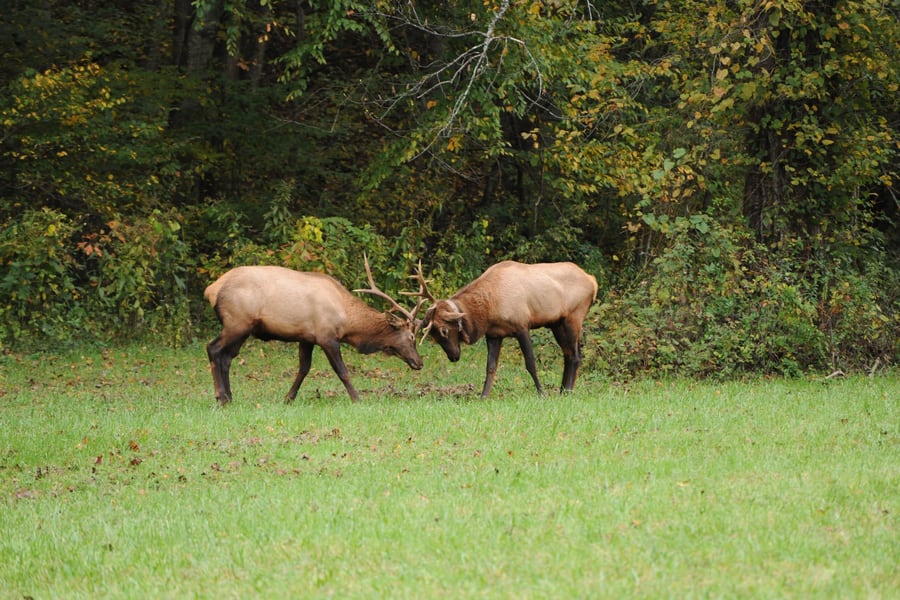 Carl Wycoff / Wikimedia Commons · CC BY 2.0 · cropped
The elk of Oconaluftee
Elk were hunted out of North Carolina by the late 1700s. The park brought 25 back in 2001 and 27 more the next year, and the broad fields of the Oconaluftee valley are one of the best places to see their descendants, early in the morning or late in the evening. Stay by the road: it is illegal to go within 25 yards of them.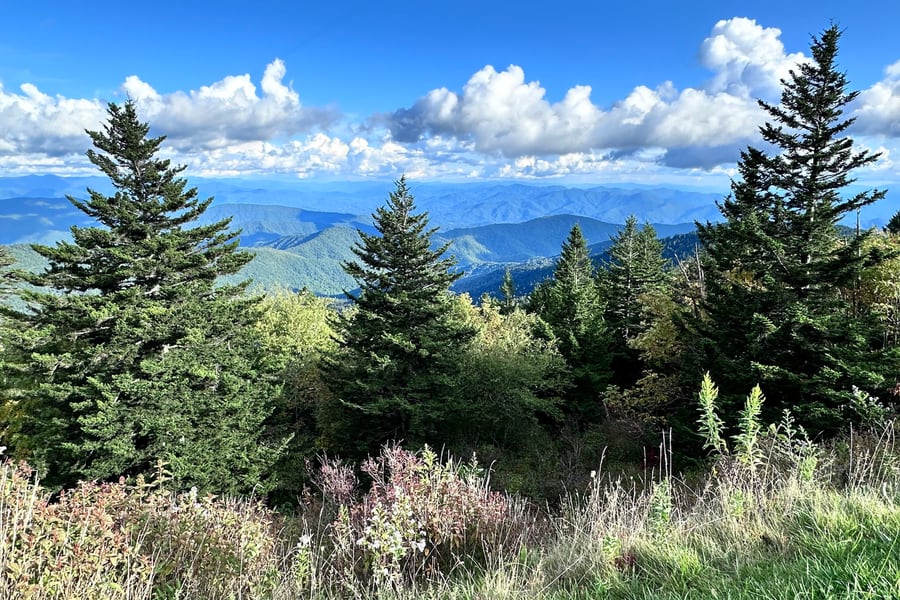 APK / Wikimedia Commons · CC BY 4.0 · cropped
Kuwohi
At 6,643 feet, Kuwohi, formerly Clingmans Dome, is the highest point in the park and on the whole Appalachian Trail. Kuwohi Road leads up to a small visitor centre, and above it a concrete observation tower of 1959 stands among the spruce and fir. On a clear day you can see Fontana Lake nearly a mile below.Where to Sleep
Bryson City has inns, lodges and cabins within a few minutes of the depot, and more along the Nantahala River, including the Nantahala Outdoor Center's own cabins. The railroad sells its own train-and-room packages; ask when you book.
Where to stay
Fryemont Inn
Bryson City · a family-run lodge of about 1923
A lodge of 37 rooms on the hillside above town, with a long rocking-chair porch facing the Smokies and dinner included from mid-April to Thanksgiving.
Check Availability (opens in a new tab, on fryemontinn.com)via fryemontinn.comThe Everett Hotel
Bryson City · ten suites on Courthouse Square
Suites and a bistro in the Bryson City Bank building of 1908, with a guests-only rooftop terrace.
Check Availability (opens in a new tab, on theeveretthotel.com)via theeveretthotel.comStonebrook Lodge
Bryson City · 50 rooms on Main Street
A lodge within walking distance of the depot, sold by the railroad in a package with the train and the trains museum.
Check Availability (opens in a new tab, on stonebrooklodge.com)via stonebrooklodge.comQuestions or corrections
Planning this trip and stuck on something, or spotted a time, fare or detail that has changed? Send us a message about Great Smoky Mountains Railroad. We read every one, and we update this page when something has changed.