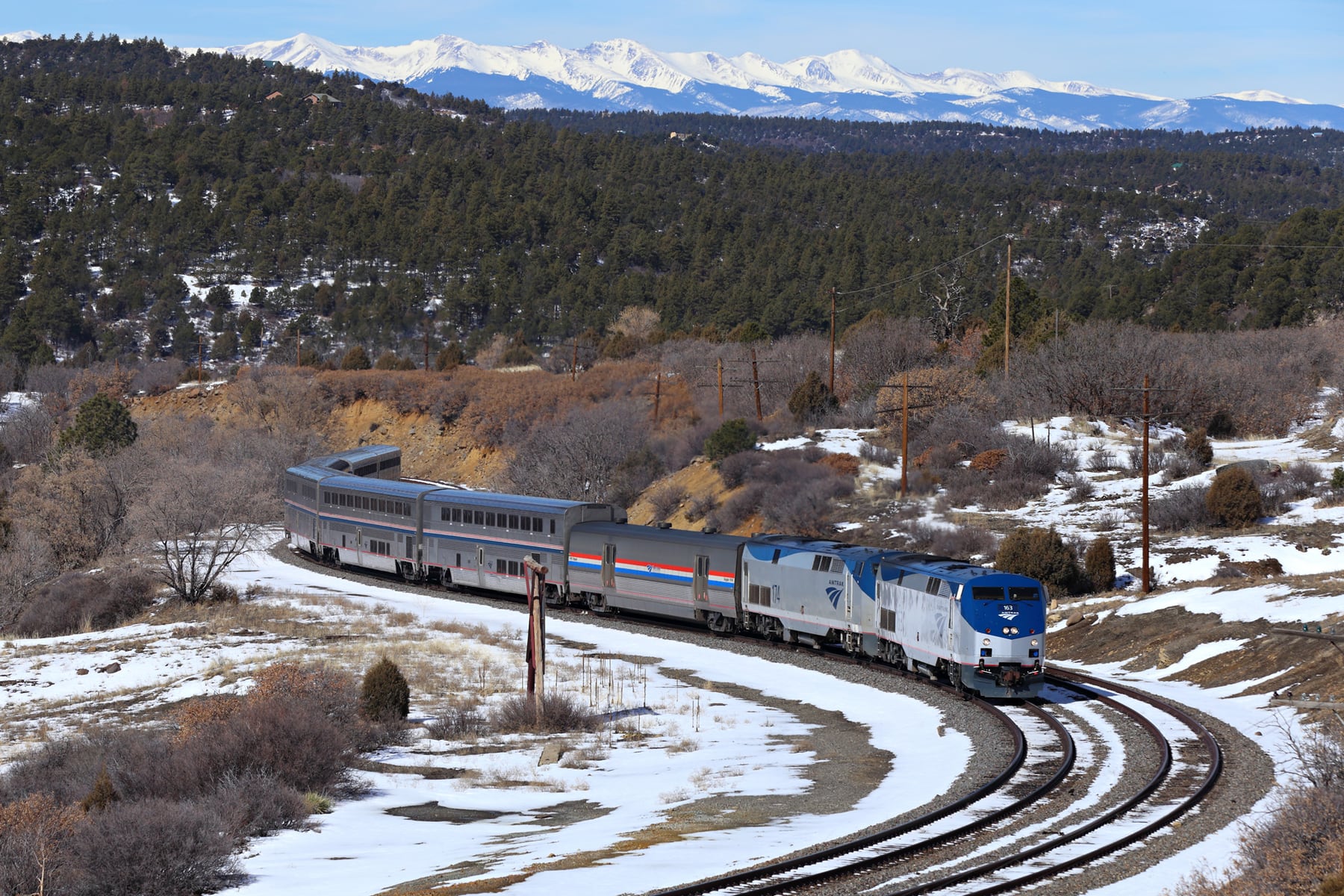
Southwest Chief
Jerry Huddleston / Wikimedia Commons · CC BY 2.0
- Distance2,256 miles (3,631 km)
- DurationAbout 44 hours · 2 nights
- Best seasonAll year · daily
Introduction
The Southwest Chief runs every day between Chicago and Los Angeles — 2,256 miles through eight states, in about 44 hours with two nights on board. On the way it calls at Kansas City, La Junta, Raton, Lamy for Santa Fe, Albuquerque and Flagstaff.
It is the heir to the Santa Fe Railway's Super Chief, which from 1936 was the railway's all-Pullman flagship between the same two cities. Amtrak took the train over on 1 May 1971, ran it as the Southwest Limited from 1974, and gave it back a Chief name on 28 October 1984.
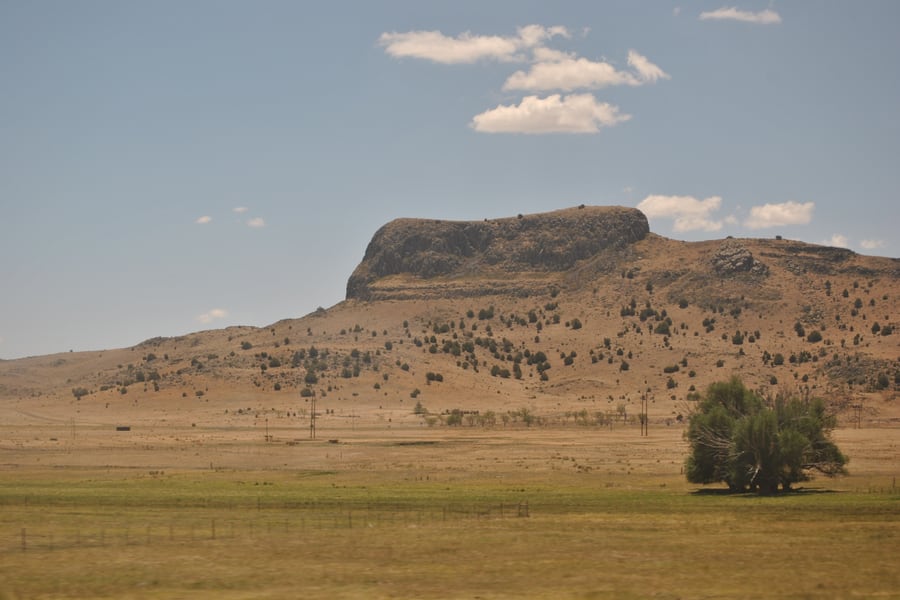
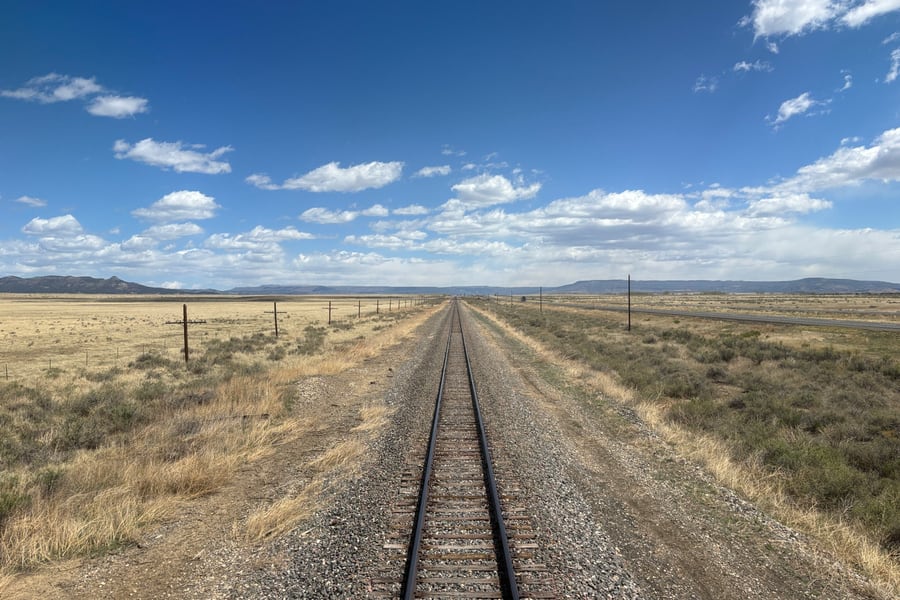
What sets it apart is the way it goes west. Freight trains long ago moved to a flatter route; the Chief keeps to the Santa Fe's original line and at La Junta turns south along the old Santa Fe Trail over the Sangre de Cristo Mountains — through the tunnel at the top of Raton Pass, at 7,588 ft the highest point on the line, and over Glorieta Pass into the Rio Grande valley. Beyond Albuquerque come the mesas around Laguna, the Arizona plateau and the Mojave Desert.
The Journey
Train 3 leaves Chicago Union Station at 13:30 and runs west across the Illinois prairie by Naperville, Mendota and Galesburg. In the late afternoon it crosses the Mississippi into Iowa on the Santa Fe's 1927 swing bridge at Fort Madison, then turns south-west across Missouri to Kansas City, reached at 21:37. The Kansas wheat country — Topeka, Newton, Hutchinson, Dodge City — passes in the night.
The Santa Fe Trail
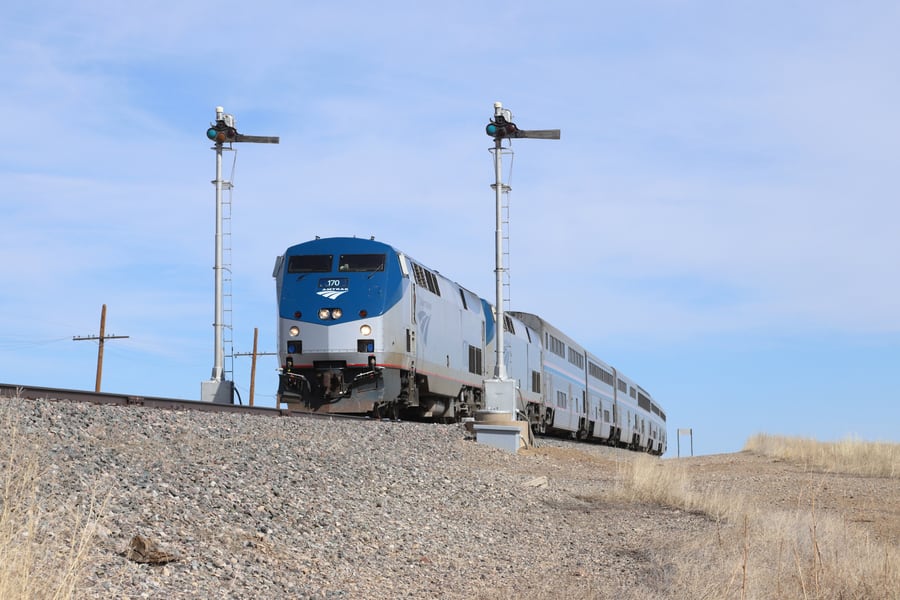
Morning comes on the high plains of south-eastern Colorado. At La Junta the train turns south and follows the route of the Santa Fe Trail to Trinidad, then climbs grades of up to 3.5 % to the tunnel at the top of Raton Pass, 7,588 ft — the highest point of the whole journey, just inside New Mexico. Down the other side the line crosses open ranch country under Wagon Mound, past a handful of Santa Fe-era semaphore signals still at work, to Las Vegas.
Glorieta and the Rio Grande
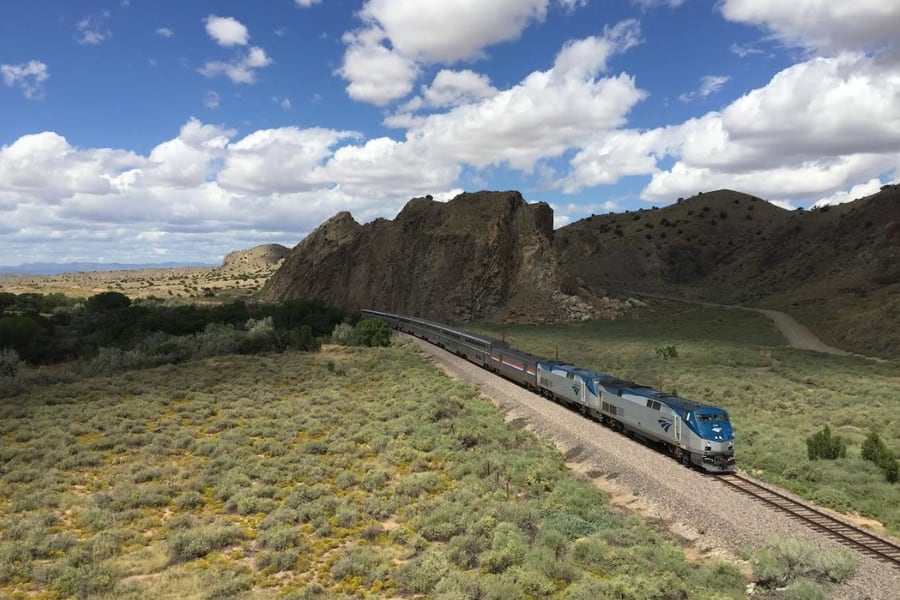
From Las Vegas the train climbs again, over Glorieta Pass in the southern Sangre de Cristos, where Union troops turned back a Confederate advance in March 1862, and descends to Lamy, the station for Santa Fe. It runs on past Los Cerrillos to the Rio Grande and Albuquerque in mid-afternoon. West of the city it rejoins the freight main line, passes Laguna and crosses the Continental Divide to Gallup before evening.
Arizona and the Mojave
Westbound, the Arizona plateau — Winslow, Flagstaff and Kingman — passes in the evening and the night, and the Mojave Desert and Barstow in the small hours. After San Bernardino and Fullerton the train reaches Los Angeles Union Station at breakfast time on the third day. Eastbound the pattern is reversed: the desert and Arizona are crossed at night, and New Mexico and Raton Pass by day.
The train itself
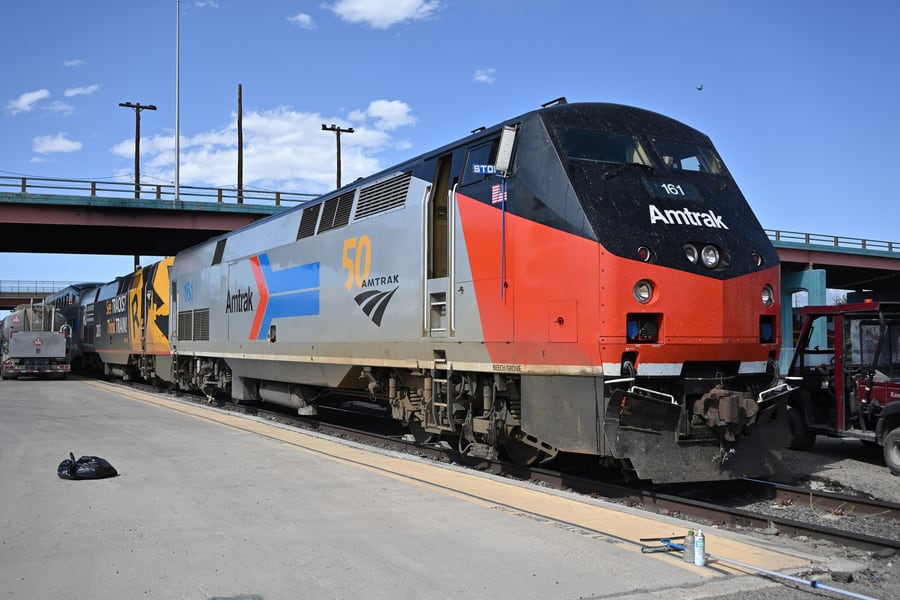
The Southwest Chief is made up of Amtrak's double-deck Superliner cars — sleeping cars, a dining car, a Sightseer Lounge with windows curving into the roof, and coaches — usually behind two locomotives: GE P42DC "Genesis" diesels or Siemens ALC-42 Chargers. The Superliner design itself was based on the Santa Fe's own double-deck Hi-Level cars from the El Capitan, one of the two trains the Chief replaced.
Along the route
 José De La Rosa / Wikimedia Commons · CC BY-SA 3.0 · cropped
The Mississippi
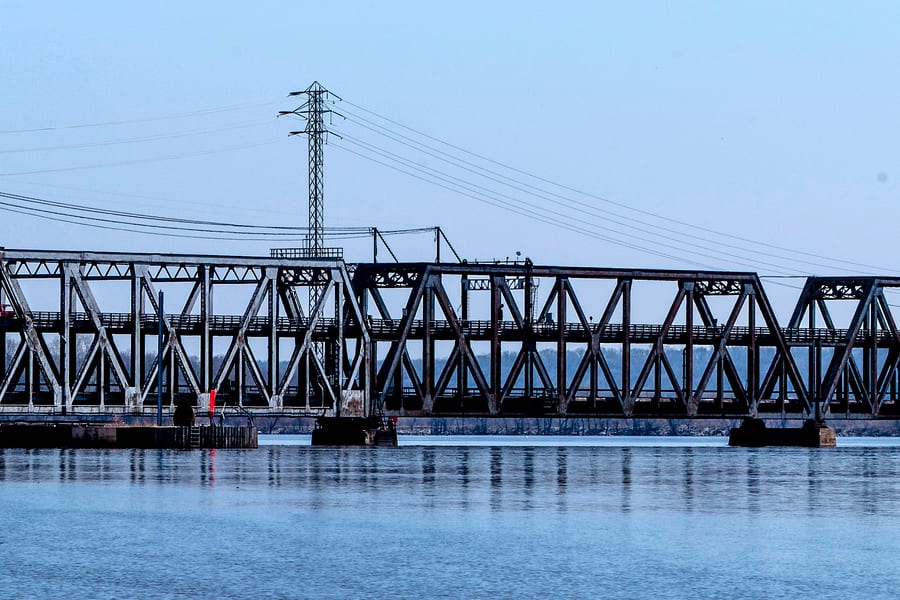
West of Galesburg the train crosses into Iowa on the Fort Madison bridge of 1927: about a mile long, with trains on the lower deck and a road above, and a 525-ft swing span that opens for river traffic more than 2,000 times a year.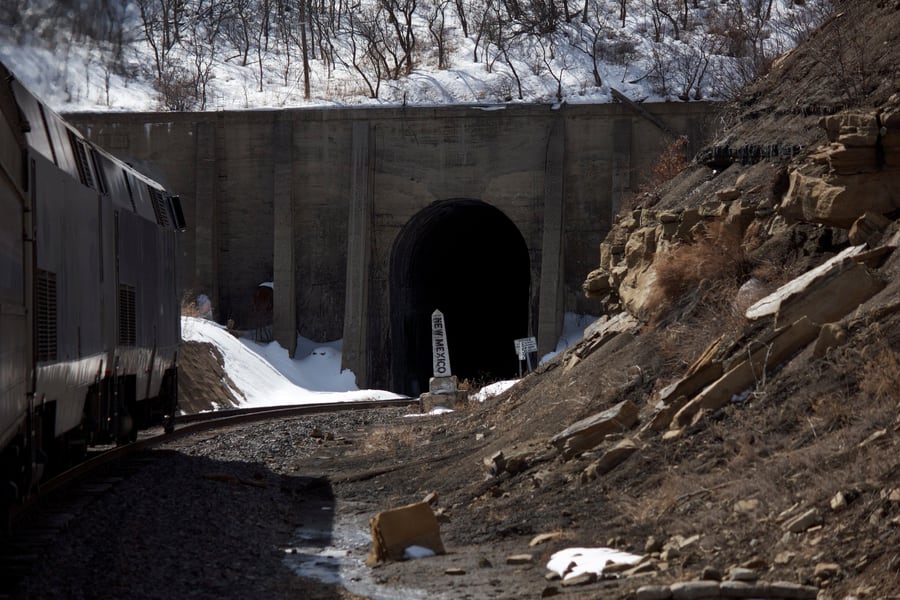 Peetlesnumber1 / Wikimedia Commons · CC BY-SA 4.0
Raton Pass
South of Trinidad the line climbs grades of up to 3.5 % to a tunnel at 7,588 ft, the highest point on the old Santa Fe. The pass carried the Santa Fe Trail, and is a National Historic Landmark for it.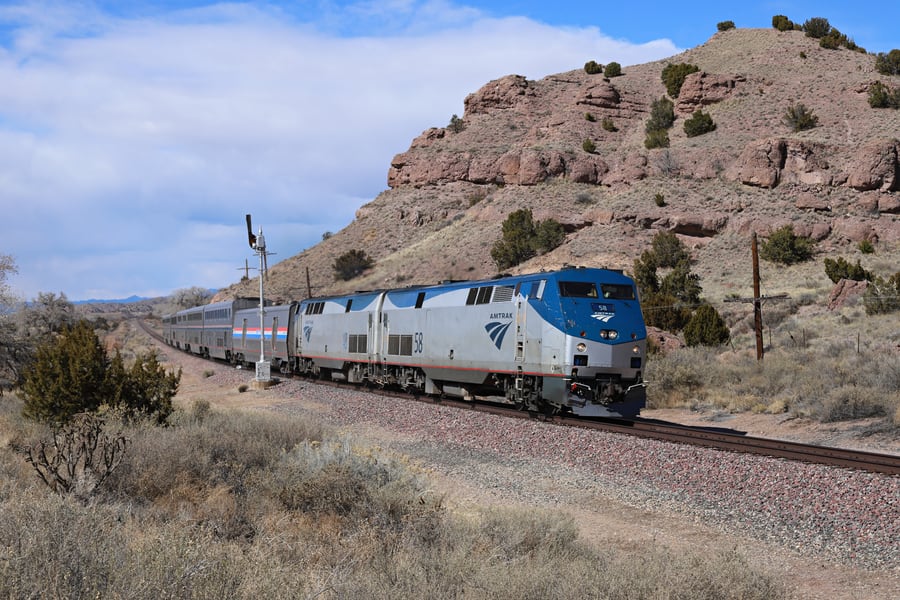 Jerry Huddleston / Wikimedia Commons · CC BY 2.0
Glorieta and Los Cerrillos
Beyond Las Vegas the train climbs over Glorieta Pass, where a battle in March 1862 halted a Confederate advance north, then drops past Lamy and Los Cerrillos towards the Rio Grande.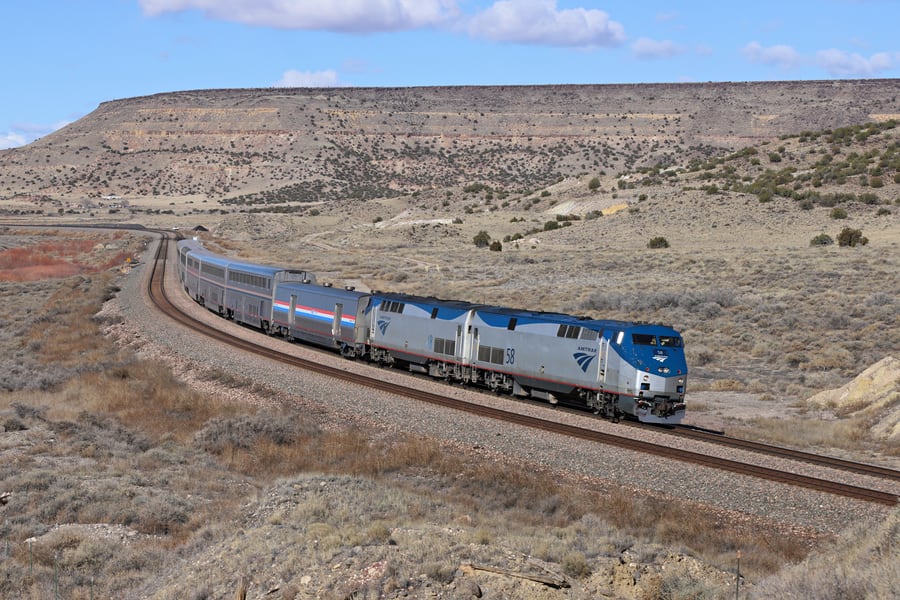 Jerry Huddleston / Wikimedia Commons · CC BY 2.0
Laguna and Route 66
West of Albuquerque the Chief rejoins the Santa Fe's freight main line and at Laguna passes under the old Route 66, today NM-124, among the mesas that lead on to the Continental Divide and Gallup.A bit of history
Culture & experiences along the way
 4300streetcar / Wikimedia Commons · CC BY 4.0 · cropped
The Sightseer Lounge
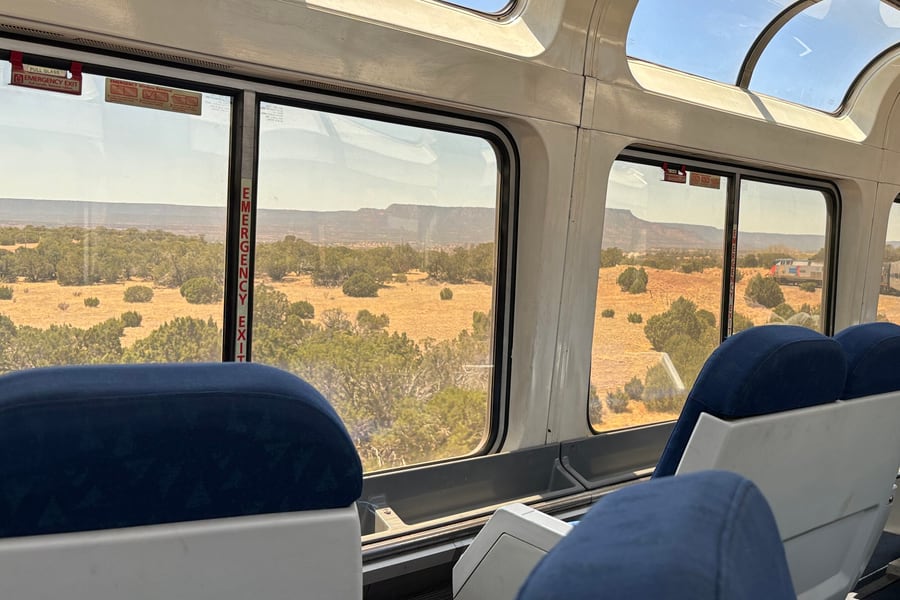
The Sightseer Lounge is a double-deck car whose upper level has floor-to-ceiling windows and seats turned to face them. It is open to every passenger, coach or sleeper, and on this train it is the place to be for Raton Pass in the morning and the New Mexico mesas after lunch.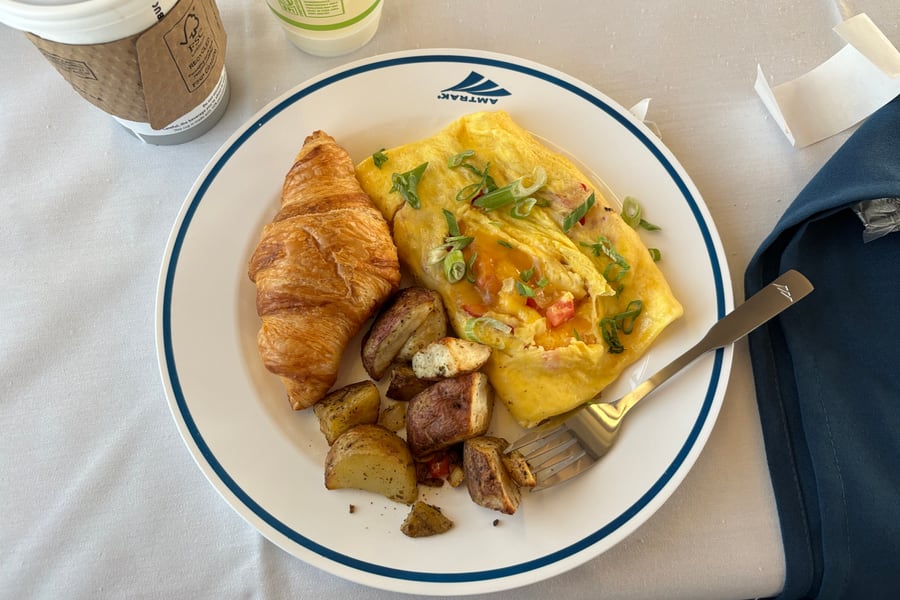 4300streetcar / Wikimedia Commons · CC BY 4.0 · cropped
The dining car
Meals are served at laid tables in the dining car — Amtrak's Traditional Dining — and are included for every passenger in a private room. Westbound the pattern is dinner, breakfast, lunch, dinner and breakfast; eastbound it adds a last lunch before Chicago.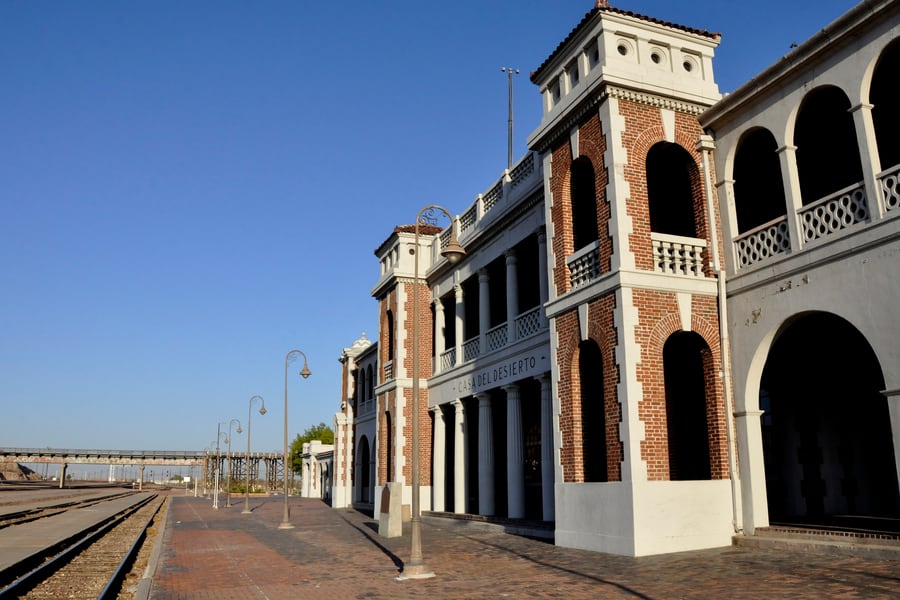 Paul Hermans / Wikimedia Commons · CC BY-SA 3.0
The Harvey Houses
From 1876 Fred Harvey fed and housed the Santa Fe's passengers in station restaurants and hotels. Several still stand on this line: the Castañeda at Las Vegas, La Posada at Winslow, and Barstow's Casa del Desierto of 1911, now the station, city offices and two museums.Timetables
The Southwest Chief runs once a day in each direction, all year. Westbound, train 3 leaves Chicago at 13:30 and reaches Los Angeles at 08:12 two days later, 44 hours 42 minutes on. Eastbound, train 4 leaves Los Angeles at 16:55 and reaches Chicago at 15:29 two days later, 44 hours 34 minutes on. Every seat and room is reserved.
All times below are local. The train crosses four time zones — Central, Mountain, Arizona and Pacific — and the day is counted from departure.
| Station | Westbound · train 3 | Eastbound · train 4 |
|---|---|---|
| Chicago Union Station | dep 13:30 · day 1 | arr 15:29 · day 3 |
| Galesburg | 16:09 · day 1 | 11:47 · day 3 |
| Fort Madison | 17:10 · day 1 | 10:41 · day 3 |
| Kansas City Union Station | 21:37 · day 1 | 07:13 · day 3 |
| Topeka | 23:24 · day 1 | 04:17 · day 3 |
| Dodge City | 04:14 · day 2 | 23:15 · day 2 |
| La Junta | 06:50 · day 2 | 18:55 · day 2 |
| Trinidad | 08:10 · day 2 | 17:17 · day 2 |
| Raton | 09:12 · day 2 | 16:18 · day 2 |
| Las Vegas | 10:57 · day 2 | 14:27 · day 2 |
| Lamy (for Santa Fe) | 12:53 · day 2 | 12:38 · day 2 |
| Albuquerque | 15:14 · day 2 | 11:31 · day 2 |
| Gallup | 17:54 · day 2 | 07:36 · day 2 |
| Winslow | 18:43 · day 2 | 04:43 · day 2 |
| Flagstaff | 19:55 · day 2 | 03:39 · day 2 |
| Kingman | 22:49 · day 2 | 00:37 · day 2 |
| Barstow | 03:23 · day 3 | 20:47 · day 1 |
| Fullerton | 07:24 · day 3 | 17:33 · day 1 |
| Los Angeles Union Station | arr 08:12 · day 3 | dep 16:55 · day 1 |
Good to know:
- Raton Pass by day either way, for most of the year. Westbound, Trinidad to Raton is between about 08:10 and 09:10; eastbound, 16:20 to 17:20. Glorieta and the run to Albuquerque are in daylight in both directions too.
- Arizona is a westbound sight, and a summer one. Westbound, Gallup to Flagstaff runs through the evening; eastbound it is crossed in the small hours.
- The times move. Amtrak's timetable is generated for a single date rather than a season. The times above are from the one for 29 September 2026; a booking for 6 January 2027 showed train 3 leaving Chicago at 13:30 but reaching Los Angeles at 07:27, after 43 hours 57 minutes. Check your own date.
- Santa Fe is a shuttle from Lamy. Amtrak's timetable shows a shuttle meeting the train daily for Santa Fe and Los Alamos; Amtrak asks for advance reservations.
- Leave slack. The train runs mostly on BNSF freight lines, so allow time before any onward connection.
Times as of September 2026, from Amtrak's published timetable for 29 September 2026. Confirm before travelling on amtrak.com (opens in a new tab).
Tickets
Every seat and room on the Southwest Chief is reserved, and fares move with demand rather than sitting on a published table. Sampling Amtrak's booking engine in September 2026 for one adult, Chicago to Los Angeles on Wednesday 6 January 2027, gave Coach from $137, a Roomette at $912, a Bedroom at $2,244 and a Family Room at $1,891 — each room price for the room, up to two adults (the Family Room adds two children). Book early, and book direct.
Coach is a reclining seat with the Sightseer Lounge and the café. A room adds a bed, an attendant and all meals in the dining car; the Bedroom adds its own washroom and shower. Fares checked September 2026 at amtrak.com (opens in a new tab); US dollars, one way.
Book your tickets
Coach
Reclining seat · two nights
A reserved reclining seat on the upper or lower deck, with the Sightseer Lounge and the café open to you.
Book Tickets (opens in a new tab, on Amtrak)via AmtrakRoomette
Up to two adults · meals included
Two seats that become an upper and a lower berth, with meals in the dining car and showers down the corridor.
Book Tickets (opens in a new tab, on Amtrak)via Amtrak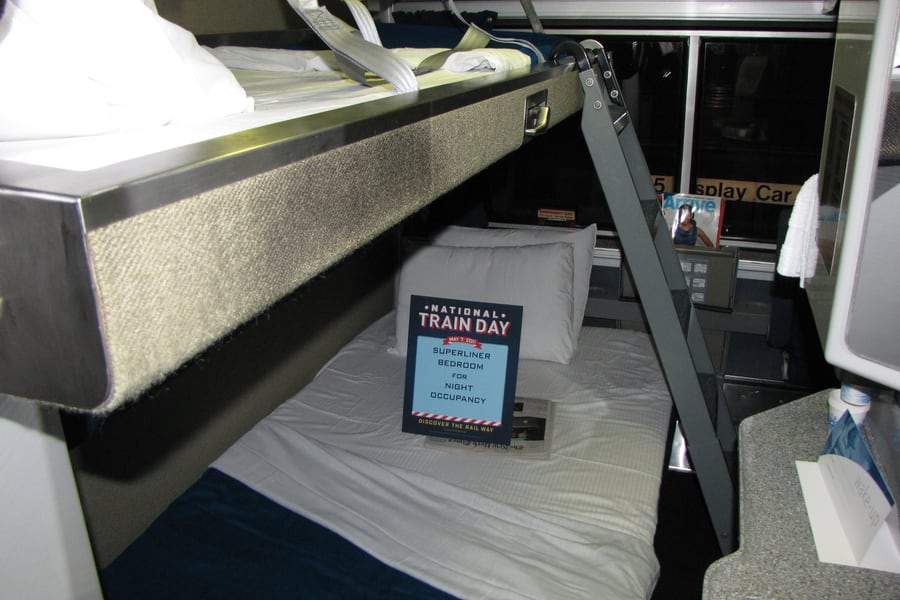
Bedroom
Private sink, toilet and shower
Twice the floor space of a roomette, for up to two adults, with its own washroom and all meals included.
Book Tickets (opens in a new tab, on Amtrak)via AmtrakRail Passes
Interrail and Eurail do not apply anywhere in the United States. The pass that does is Amtrak's own USA Rail Pass: $499 for 10 segments over 30 days, in Coach only — upgrades to a Roomette or Bedroom are not available on it. A segment is one boarding and one alighting, so riding Chicago to Los Angeles straight through uses one of the ten. The pass is valid for 120 days from purchase, and each segment has to be booked through Amtrak before you board.
For the Southwest Chief alone it is not worth buying. Coach from Chicago to Los Angeles sampled at $137, well under the pass price. It pays when the Chief is one leg of a bigger loop — breaking the ride at Raton, Lamy and Flagstaff, say, and then heading north on the Coast Starlight — and only if you are happy to sit up for the nights on board. The pass does not cover Amtrak's Thruway buses numbered 7000 to 7999, which includes the Lamy shuttle to Santa Fe.
Checked September 2026 against amtrak.com/usa-rail-pass (opens in a new tab).
Places to Visit
The Southwest Chief runs once a day, so breaking the journey means a night off the train and a new reservation for the next day's departure. Chicago has its own card on the California Zephyr's page and Los Angeles on the Coast Starlight's; the places below are the ones this line has to itself, from east to west. For the Grand Canyon, Amtrak points riders from Flagstaff to connecting buses for the Grand Canyon Railway at Williams.
 Michael Barera / Wikimedia Commons · CC BY-SA 4.0
Kansas City
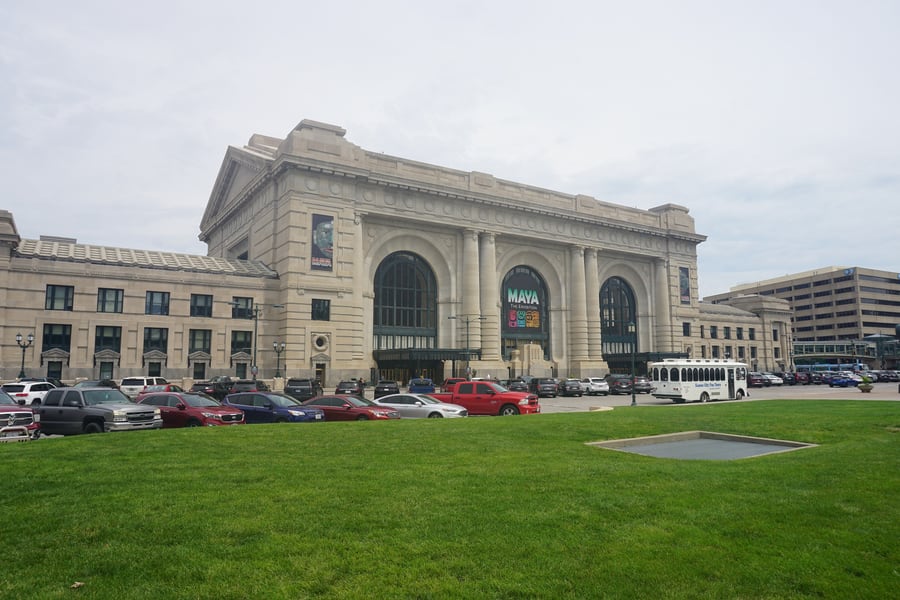
Union Station opened in 1914 and at the end of the Second World War handled more than 670,000 passengers a year. It closed in 1985; a $250 million restoration reopened it in 1999 as a home for museums and Science City, and trains returned in 2002. The KC Streetcar has called at the door since 2016.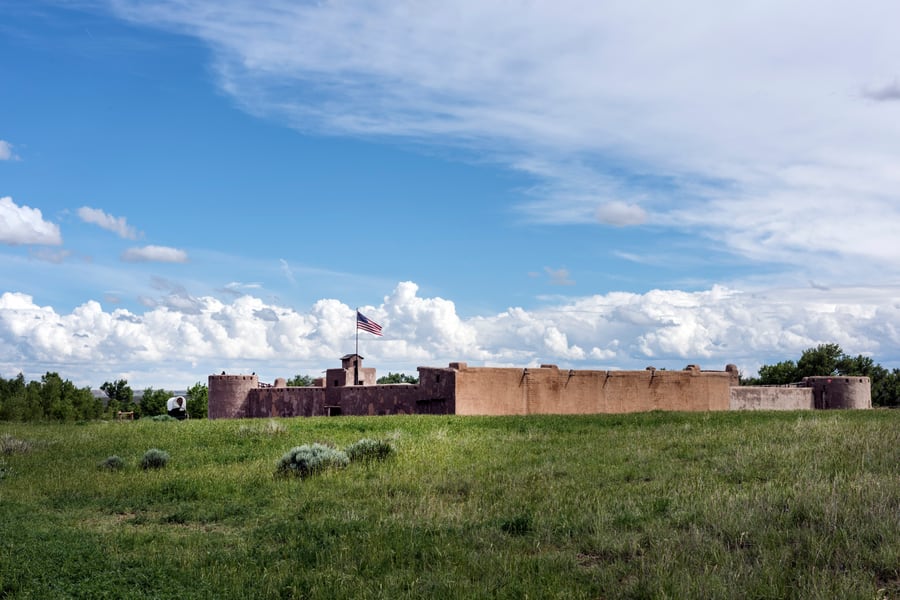 Carol M. Highsmith / Library of Congress · Public domain
La Junta
Near La Junta, Charles and William Bent and Ceran St. Vrain built an adobe trading fort in 1833 to trade buffalo robes with the Southern Cheyenne and Arapaho. For most of its 16 years it was the only major permanent American settlement on the Santa Fe Trail between Missouri and Mexico. Bent's Old Fort was rebuilt in 1976 and is open to visitors.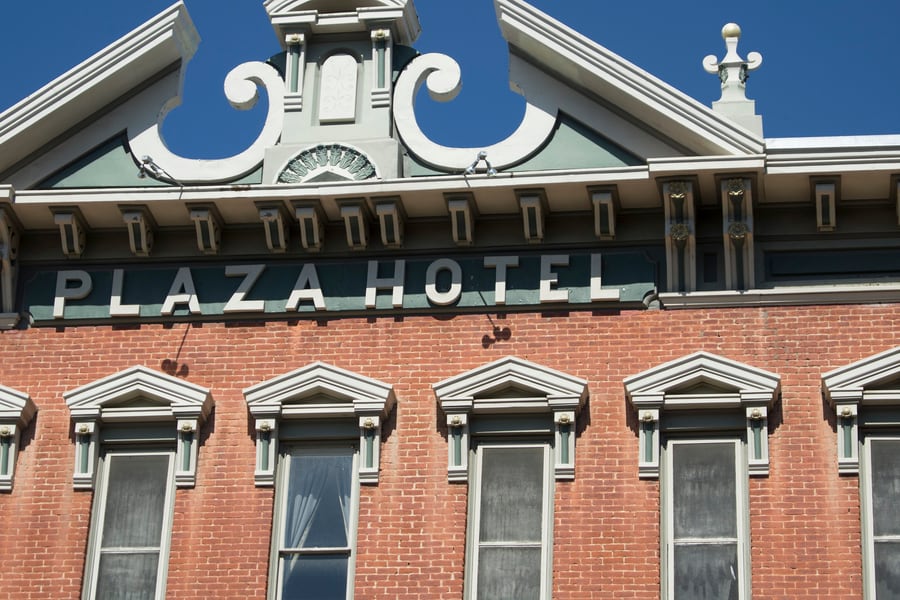 Johnaragon1323 / Wikimedia Commons · CC BY-SA 3.0 · cropped
Las Vegas
Founded in 1835 on a Mexican land grant around a central plaza, Las Vegas prospered on the Santa Fe Trail; in 1846 General Kearny stood on the plaza to claim New Mexico for the United States. When the railway arrived on 4 July 1879 it built its station and a New Town a mile to the east, where the Castañeda stands today.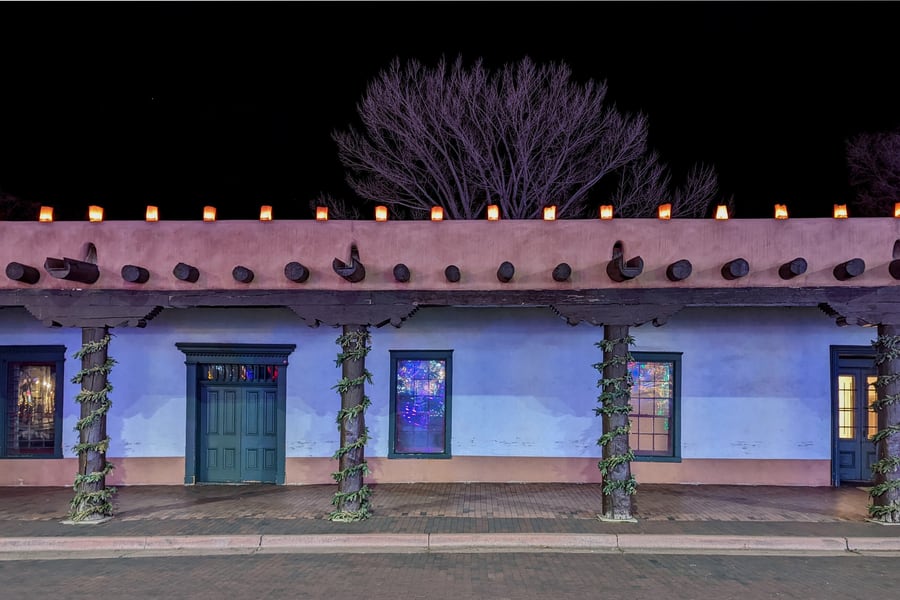 Dicklyon / Wikimedia Commons · CC BY-SA 4.0 · cropped
Santa Fe
Lamy is 18 miles south of the city, and a shuttle meets the train. On the Plaza, the adobe Palace of the Governors was established in 1610 as the capitol of Spanish New Mexico and stayed the seat of government until 1901. The Plaza was also the end of the Santa Fe Trail from Missouri.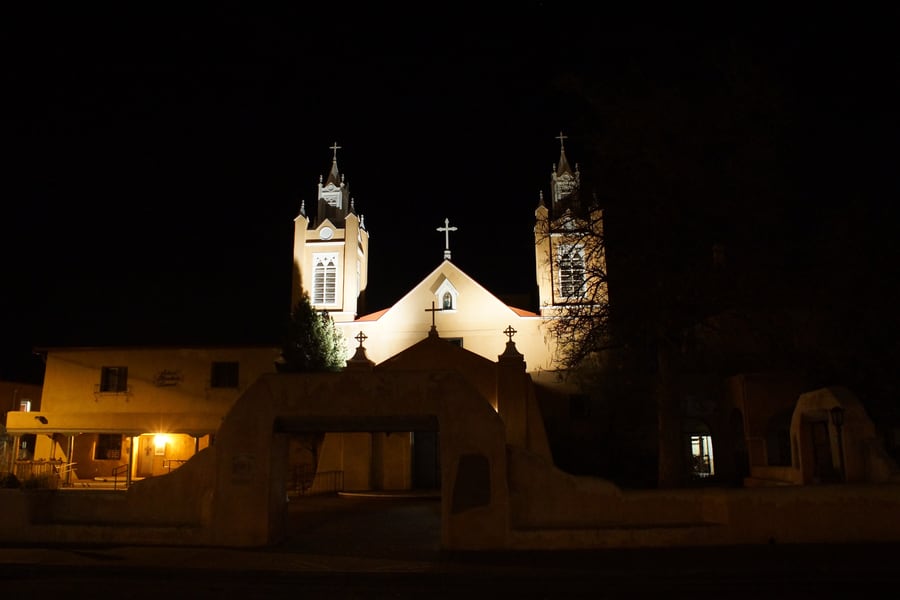 Chris English / Wikimedia Commons · CC BY-SA 3.0
Albuquerque
San Felipe de Neri, on the north side of the Old Town Plaza, was built in 1793 to replace a church dating from the town's founding in 1706, and has been in use ever since; its Gothic Revival bell towers were added in the Victorian era. It is one of the oldest surviving buildings in the city.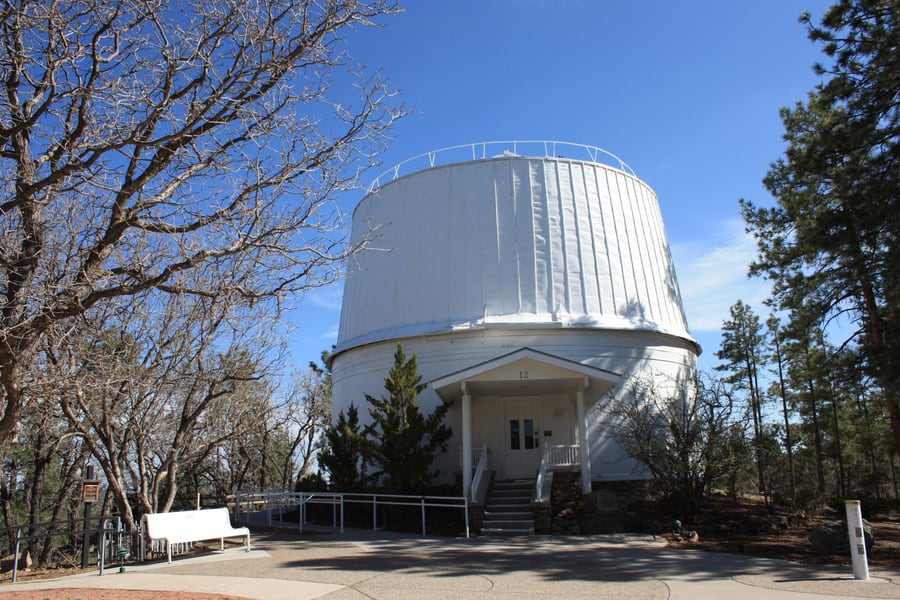 Kaldari / Wikimedia Commons · Public domain
Flagstaff
On Mars Hill above the town, Lowell Observatory was founded in 1894, and it was here in 1930 that Clyde Tombaugh discovered Pluto. The 24-inch Clark refractor of 1896, under the dome in the picture, is still used for public observing. The observatory draws more than 150,000 visitors a year.Where to Sleep
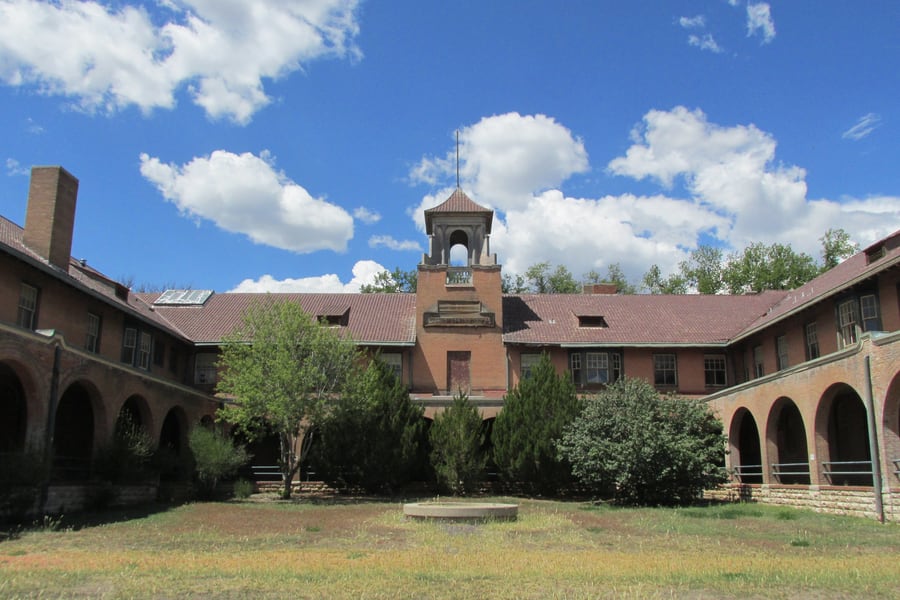
Three places to break the ride, and all three were Fred Harvey hotels on the Santa Fe Railway's route: the Castañeda beside the station at Las Vegas, La Fonda on the plaza in Santa Fe, a shuttle ride from Lamy, and La Posada beside the tracks at Winslow.
Where to stay
 John Phelan / Wikimedia Commons · CC BY-SA 3.0 · cropped
Castañeda Hotel
Las Vegas · beside the station
Built by the Santa Fe in 1898 and run by Fred Harvey until 1948, it reopened in 2019 with 22 rooms.
Check Availability (opens in a new tab, on castanedahotel.org)via castanedahotel.org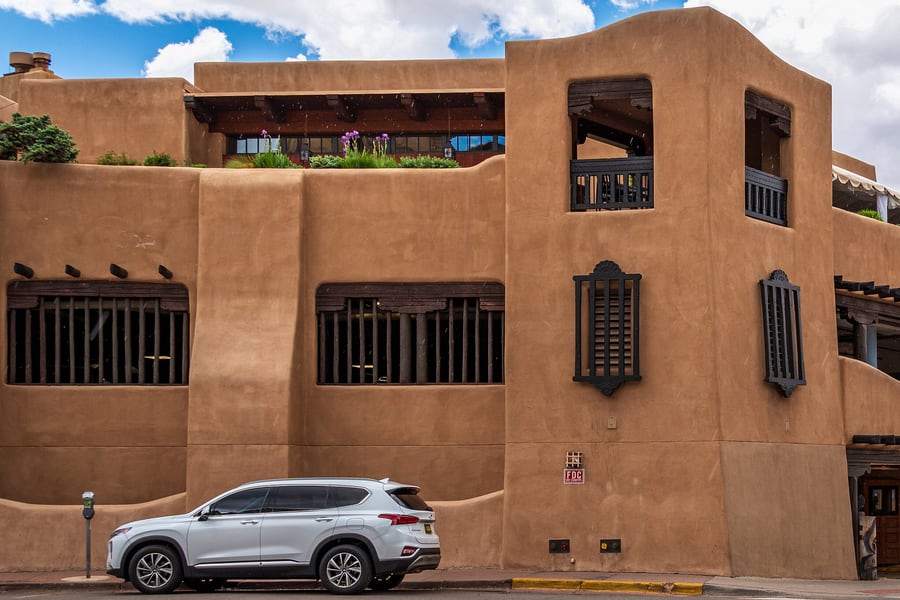 dconvertini / Wikimedia Commons · CC BY-SA 2.0 · cropped
La Fonda on the Plaza
Santa Fe · a Harvey House until 1969
The only hotel on the historic Santa Fe Plaza, at the end of the old Santa Fe Trail.
Check Availability (opens in a new tab, on lafondasantafe.com)via lafondasantafe.com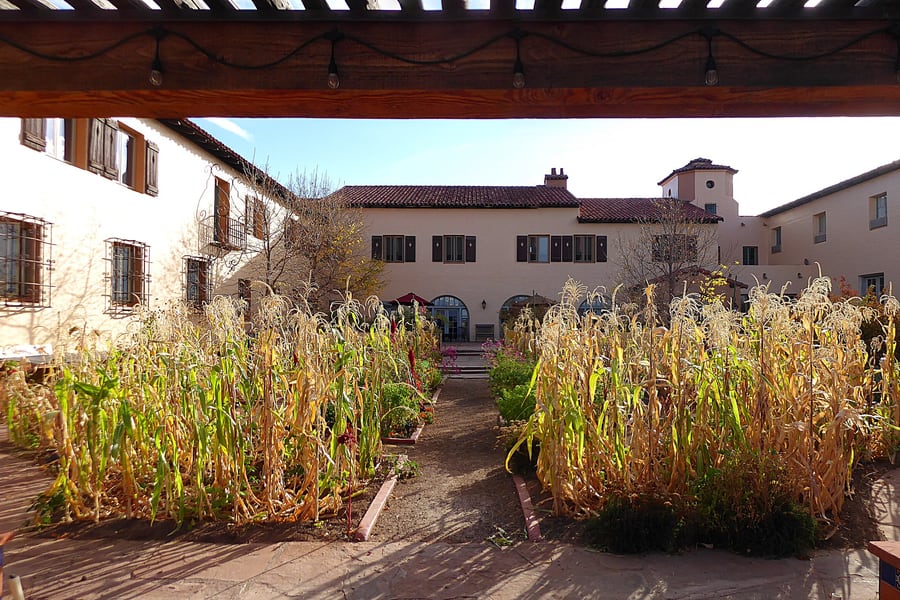 Volker Schmidt / Wikimedia Commons · CC0 · cropped
La Posada
Winslow · Mary Colter, 1930
Opened in 1930 to Mary Colter's design beside the tracks and on Route 66, with the Turquoise Room restaurant.
Check Availability (opens in a new tab, on laposada.org)via laposada.orgQuestions or corrections
Planning this trip and stuck on something, or spotted a time, fare or detail that has changed? Send us a message about Southwest Chief. We read every one, and we update this page when something has changed.