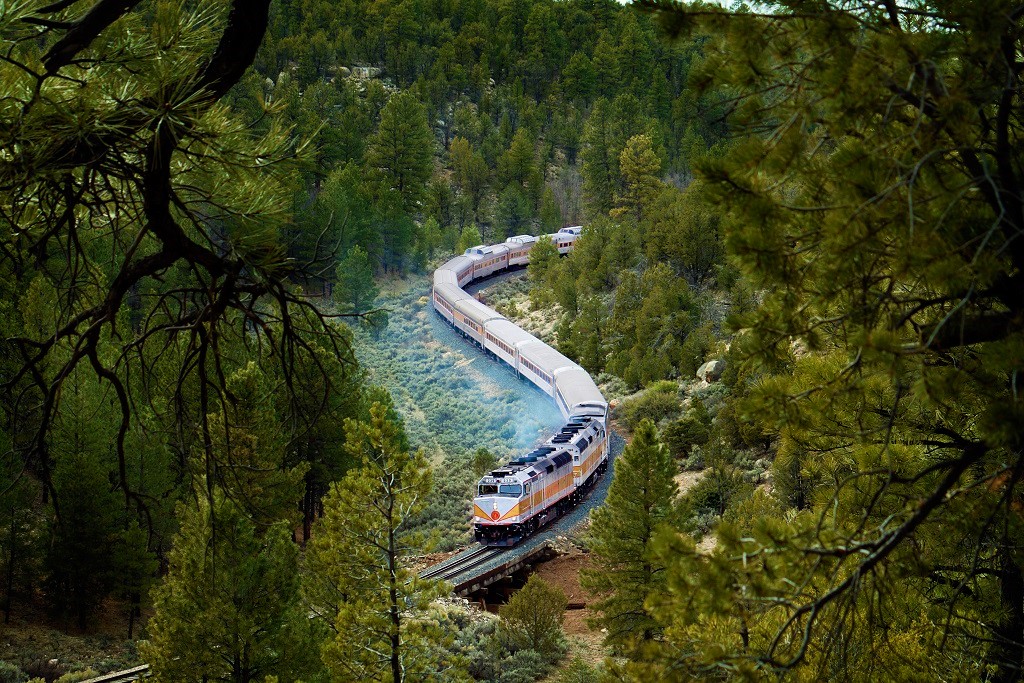
Grand Canyon Railway
- Distance65 miles (104 km)
- Duration~2 h 15 m each way
- Best seasonYear-round; steam on the first Saturday Mar–Oct, Polar Express Nov–Dec
Introduction
The Grand Canyon Railway first ran on 17 September 1901, largely thanks to the determination of Buckey O'Neill — sheriff of Yavapai County and Mayor of Prescott — who saw that money could be made from both the mines and the tourism of the region.
In the late 1800s Americans were pushing west, and new forms of transport were built to carry them. The main line west ran between Chicago and Los Angeles, passing through Williams, Arizona. At first the railroad hauled ore out of the Wild West, from the Anita mines some 45 miles (72 km) north of the town.
O'Neill sought investment to make his vision real, winning the backing of the Lombard, Goode Company of New York and the Santa Fe Pacific Railroad. The Santa Fe & Grand Canyon Railroad was incorporated in 1897 and the line was finished in 1901. O'Neill never saw it completed — he was killed in 1898 fighting in the Spanish–American War.
Santa Fe kept investing in the line, above all in lodging and restaurants. The El Tovar Hotel opened in 1905 and remains the finest hotel on the South Rim, once famous for the fresh food and milk produced by its own herd and greenhouses.
As the motor car took over, interstate highways were laid parallel to the railroad and its use declined until passenger service stopped in 1968. It was the determination of entrepreneurs Max and Thelma Biegert that brought the railway back: after rebuilding the decaying tracks and the old depots, they reopened it for passengers on 17 September 1989 — 88 years to the day since the first train.
Today, riding the Grand Canyon Railway is a chance to watch a piece of history roll by — dramatic country outside the window, and a journey back into an important era of the American West.
The Journey
The Grand Canyon Railway departs daily from Williams and runs 65 miles (104 km) north to the South Rim of Grand Canyon National Park, taking a little over two hours each way.
This is high country. The Grand Canyon sits on the Colorado Plateau in northern Arizona, and both Williams and the canyon rim stand at around 7,000 ft (2,100 m). Between them the line dips toward the wide, open plateau before climbing again, so the scenery changes as you go: the Ponderosa pine forest around Williams gives way to open range, then rises back into piñon pine before you reach the park. East of Williams, the San Francisco Peaks — crowned by Humphreys Peak, the highest point in Arizona at 12,633 ft (3,851 m) — dominate the horizon.
The experience on board depends on the class you choose, as each carriage offers a different level of comfort. The glass-enclosed Observation Dome and Luxury Dome cars give the most immersive, panoramic view of the passing country.
Pullman Car
Built in 1923 and refurbished by the Grand Canyon Railway, its seats flip to face each other so a family can travel together. A Passenger Service Attendant rides along to share the history of the line and help plan your stay.
Coach Class
Comfortable bench-style seats in a classic 1950s car, with on-board musicians and a café car.
First Class
Oversized reclining seats, plenty of legroom and panoramic windows. Pastries, fruit, coffee and juice are served in the morning, with snacks and soft drinks on the return.
Observation Dome
A glass-enclosed car that opens up the great views of the journey. You ride on the upper deck, watching the country roll past from high above the train while enjoying the food and drinks on offer.
Luxury Dome Class
The dome views of the Observation car, paired with elegant, classic furnishings for a cosy ride. Stay upstairs for the scenery or head down to the lounge for a drink.
Luxury Parlor Class
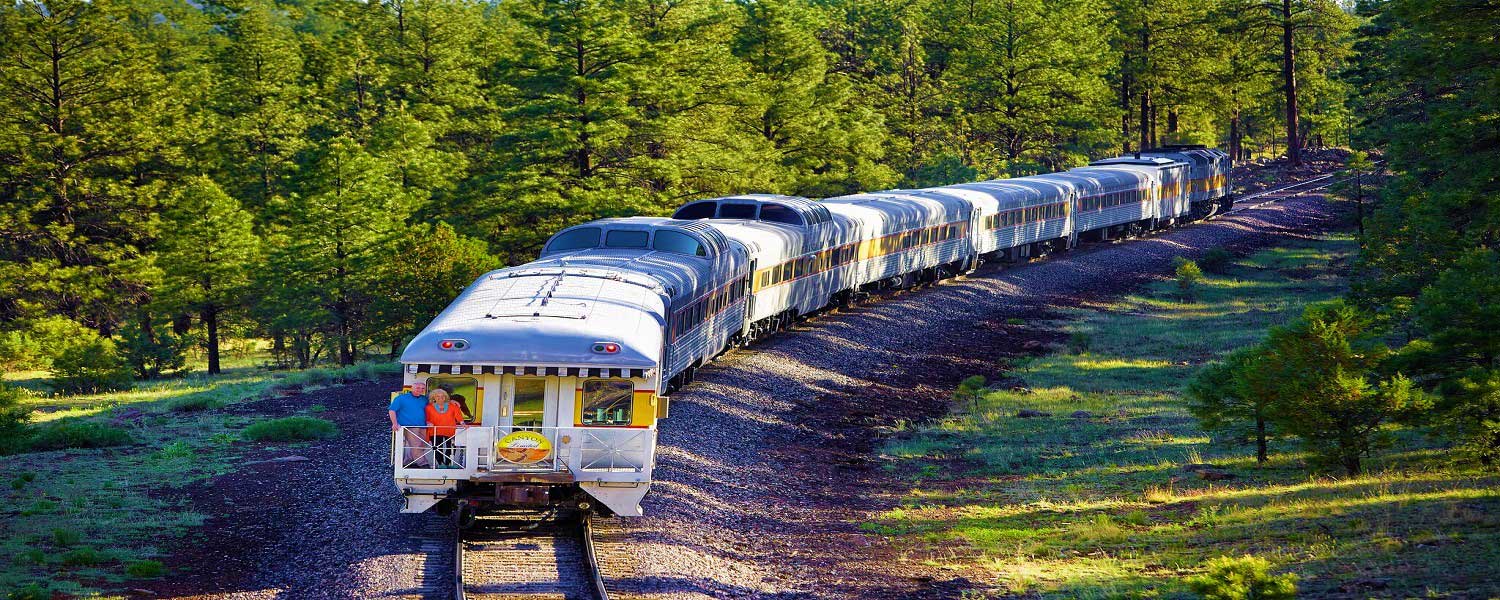
The most exclusive carriage of all: the finest service, a private bar and comfortable sofas in a beautifully appointed car — with access to the open-air rear platform, where you can take a drink out into the fresh air.
Every car is accessible, with ADA-compliant restrooms and power lifts at both stations. Wheelchairs, power chairs and scooters can be stored on board; it is best to let your reservation agent know your needs in advance.
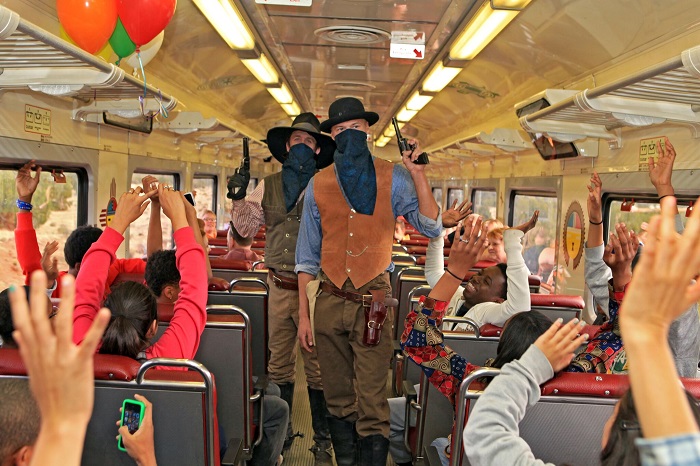
Western characters keep the journey lively with music, and a re-enacted Old West train robbery — cowboys, a hold-up (hands in the air!) and a shootout — brings a little of frontier life back to the rails. Rest assured, the Marshal always gets his man.
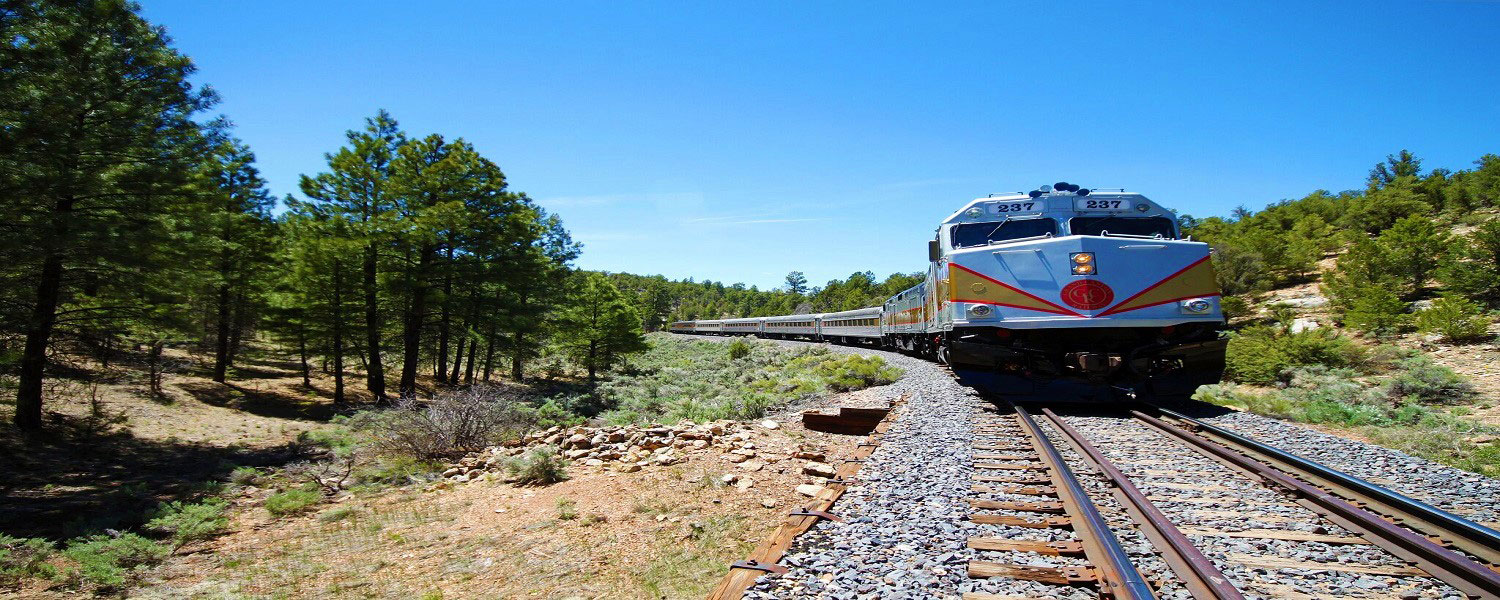
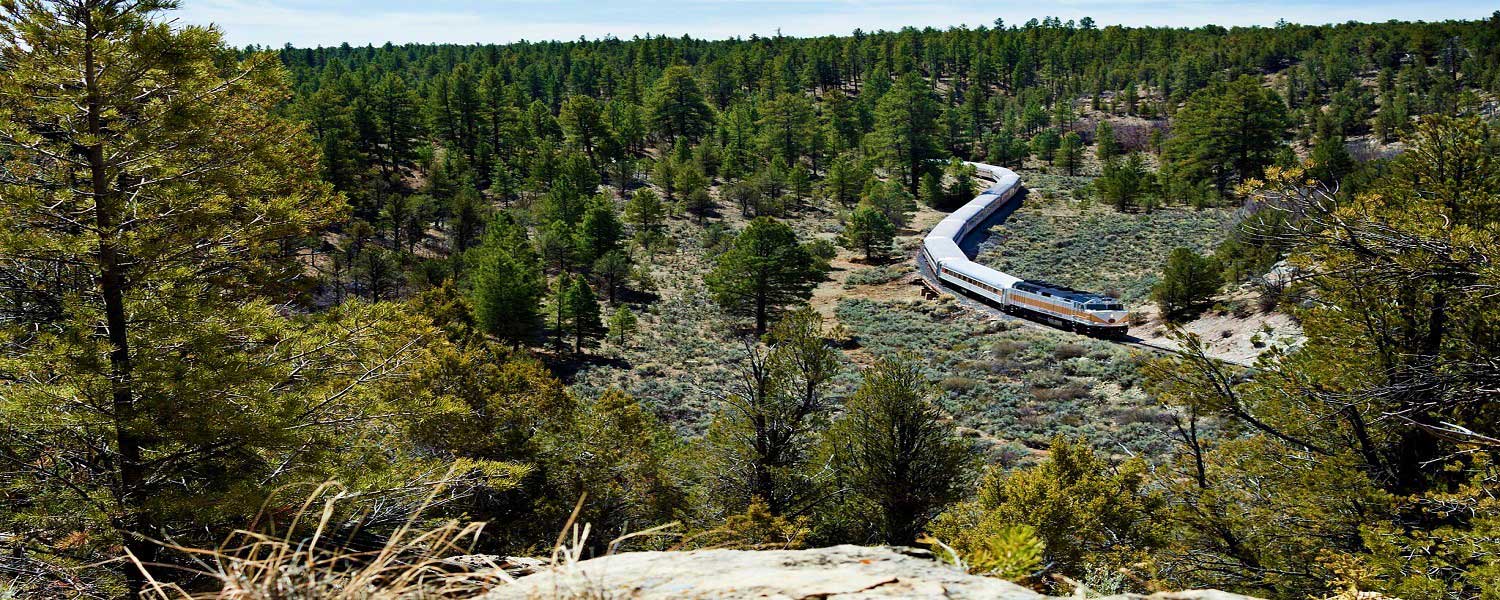
Along the route
© Xanterra Parks & ResortsPonderosa Pine Forest
The scented pinewoods around Williams that open the journey north.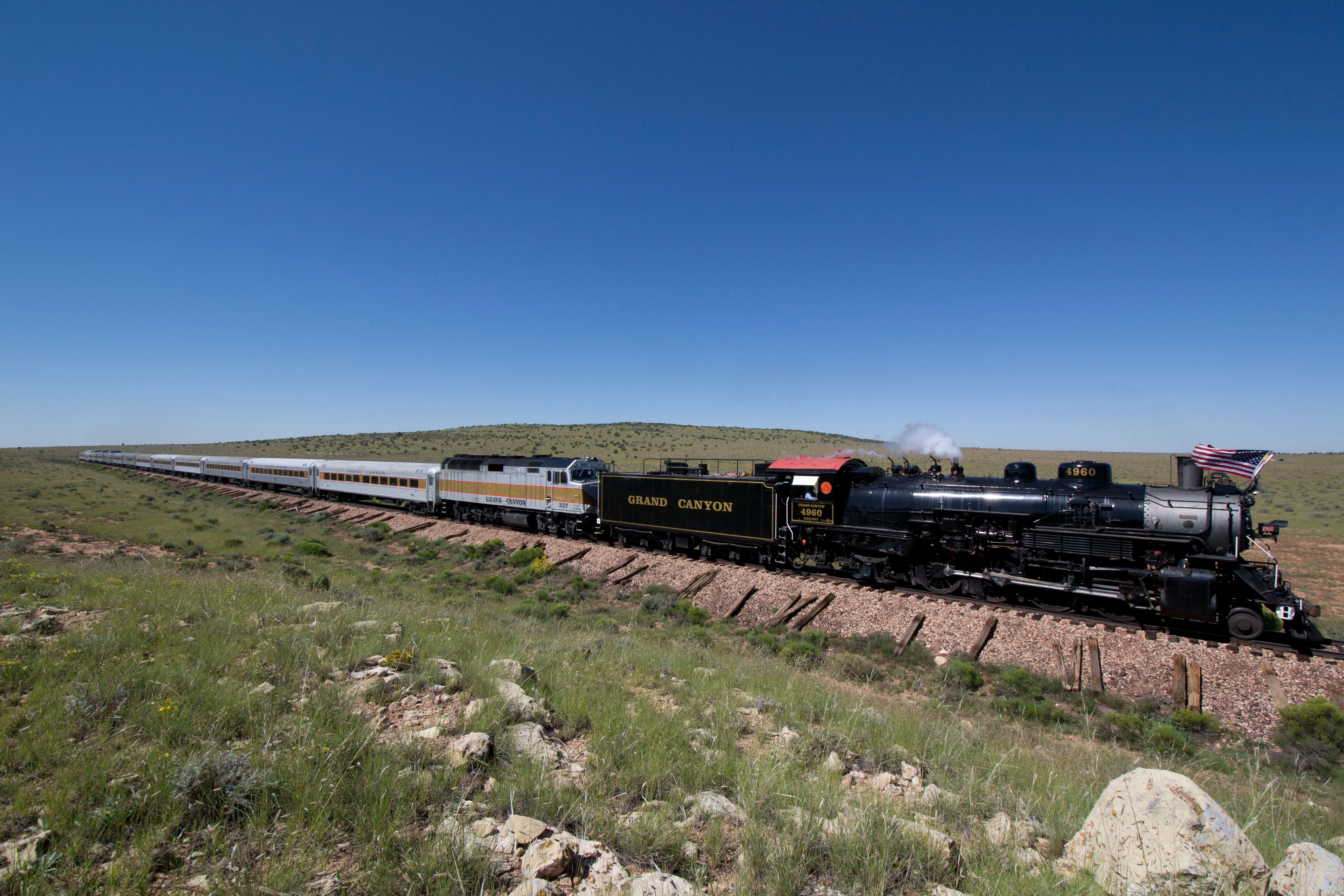 © Xanterra Parks & Resorts
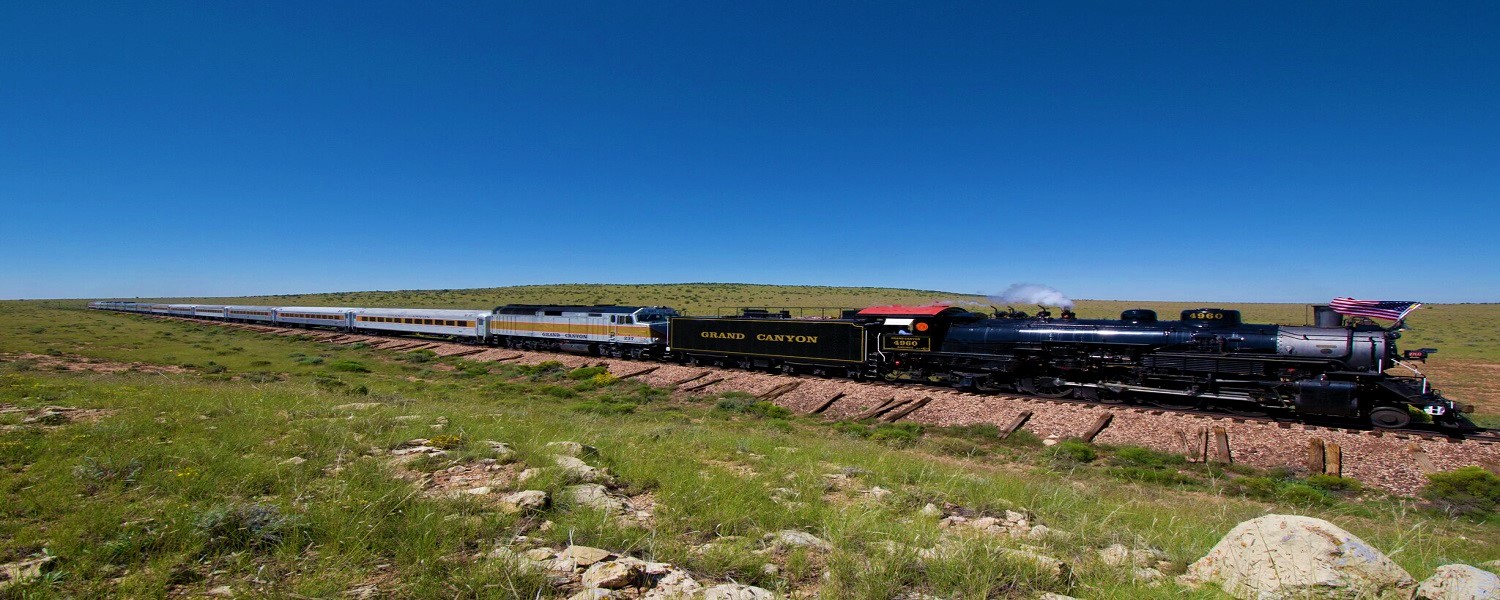
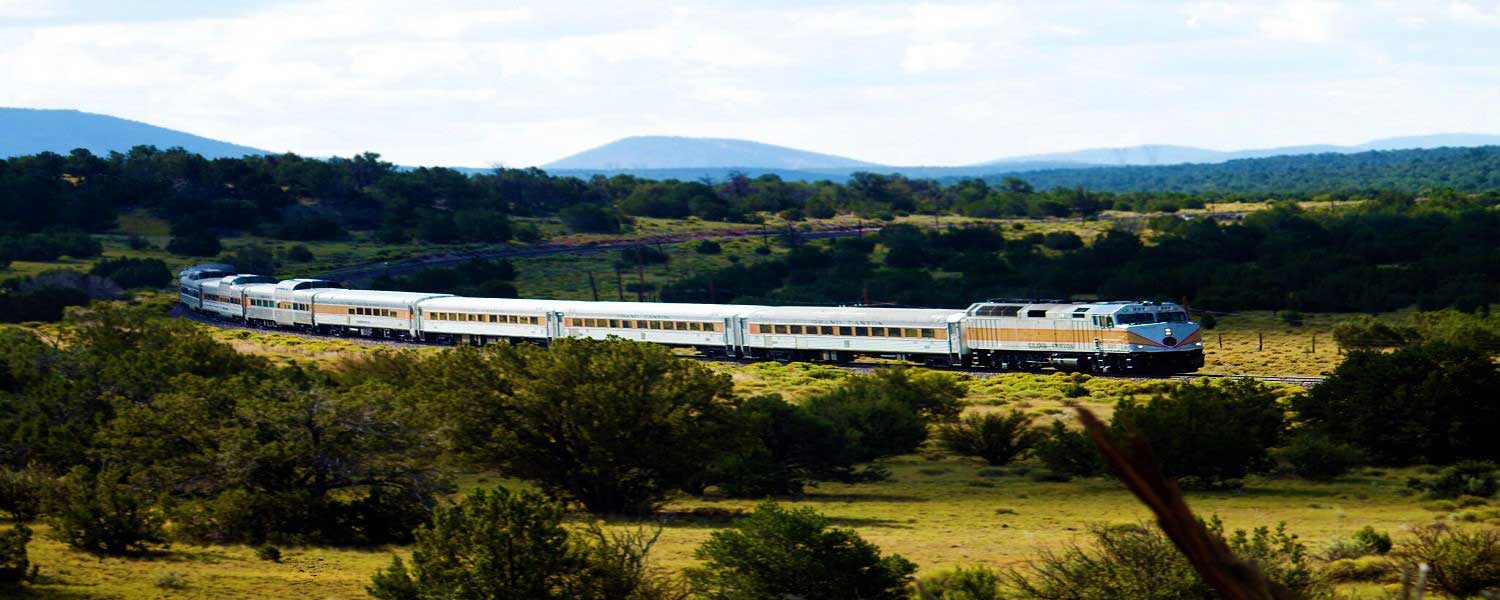
The Coconino Prairie
Wide-open high-desert range at the low point of the line.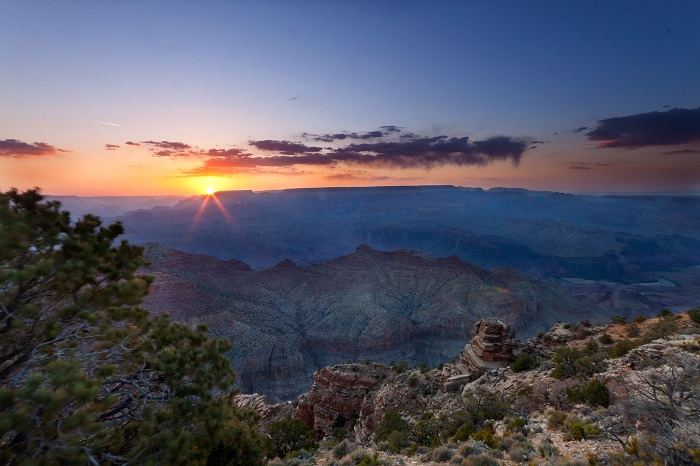 © Xanterra Parks & Resorts
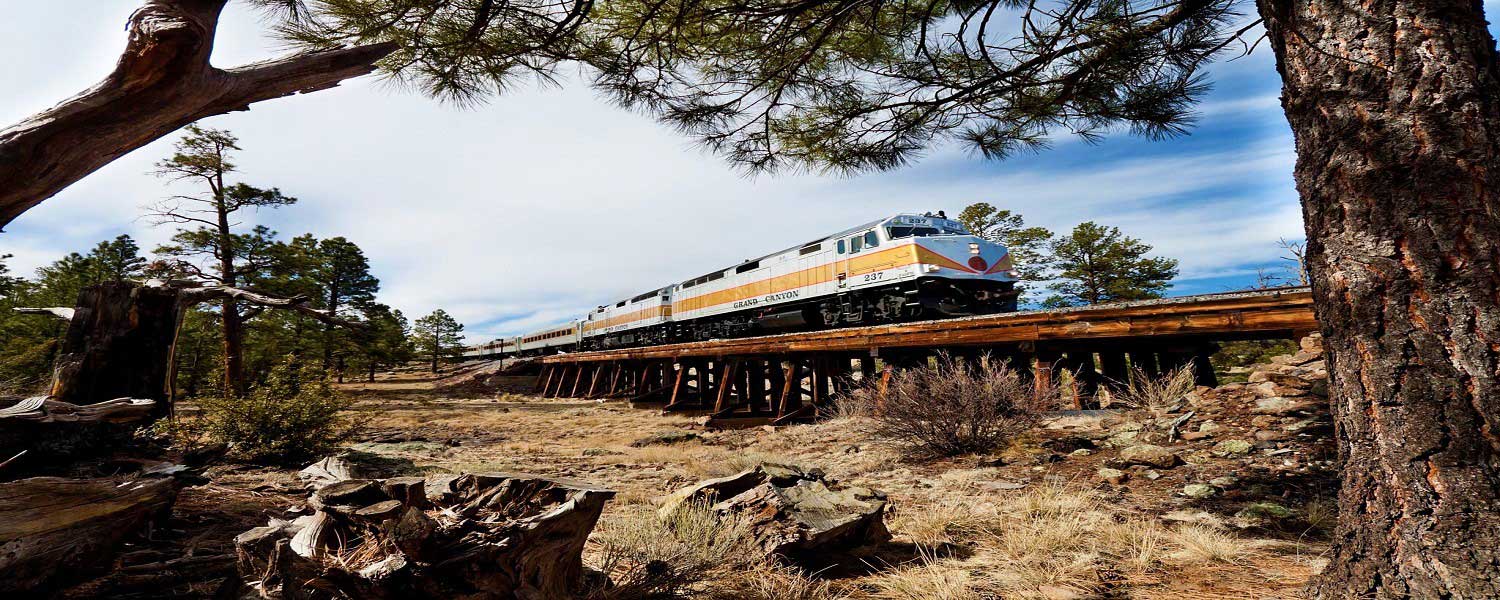
The South Rim
The train's end, a short walk from one of the world's great views.A bit of history
Culture & experiences along the way
 © Xanterra Parks & Resorts
Wild West Train Robbery
Cowboys, a hold-up and a shootout re-enacted on every trip.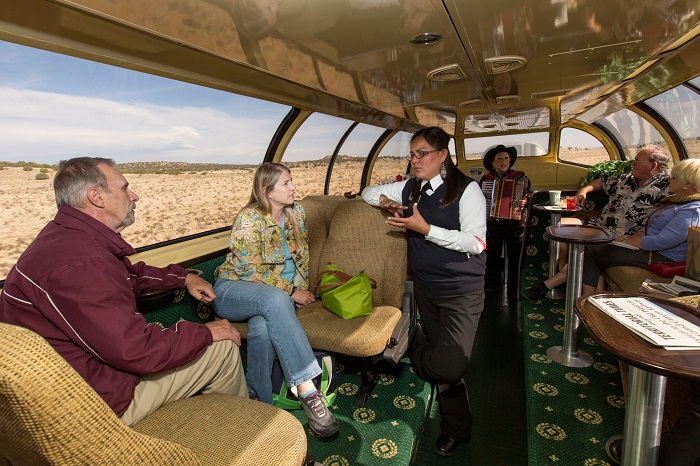 © Xanterra Parks & Resorts
Luxury Dome Class
Glass-roofed panoramic views paired with classic lounge comfort.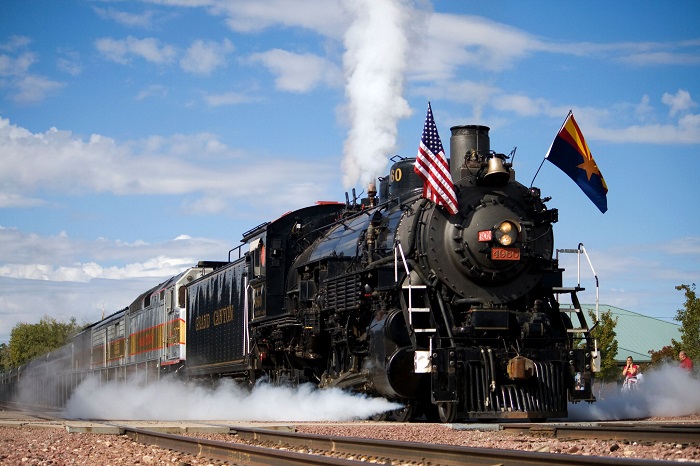 © Xanterra Parks & Resorts
Steam Saturdays
Make the run behind a restored 1920s steam locomotive.Timetables
The Grand Canyon Railway runs a single daily round trip (every day except 25 December), giving you a little over three hours at the South Rim before the return. Times shift about an hour earlier in November and December, and a second train is added on selected spring dates.
The pattern below is a guide only — always confirm current times on the operator's live timetable before you travel.
| Service | Departs Williams | Arrives South Rim | Departs South Rim | Arrives Williams |
|---|---|---|---|---|
| Standard (Jan–Oct) | 09:30 | 11:45 | 15:30 | 17:45 |
| Winter (Nov–Dec) | 08:30 | 10:45 | 14:30 | 16:45 |
| Second train (selected Mar–Apr dates) | 10:30 | 12:45 | 16:30 | 18:45 |
The journey takes about 2 h 15 m each way.
Timetable last checked: July 2026 against the operator. Confirm current schedules at thetrain.com (opens in a new tab) or via your booking provider.
Tickets
Fares vary by class of service, from the family-friendly Pullman car up to the exclusive Luxury Parlor. The classes below give a sense of what each carriage offers; the prices shown are indicative adult fares for the round trip — confirm the current price, availability and any child restrictions with the operator when you book.
Tickets can be booked directly with the Grand Canyon Railway. Fares checked July 2026 against the operator's class listing (opens in a new tab); the Pullman car runs seasonally, March–October.
Book your tickets
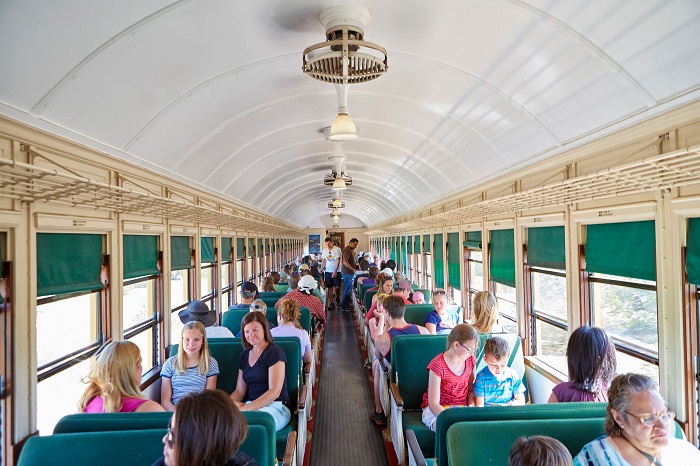
Pullman Car
Refurbished 1923 coach, family seating
Flip-over seats so families face each other, with an on-board host.
Book Tickets (opens in a new tab, on Grand Canyon Railway)via Grand Canyon Railway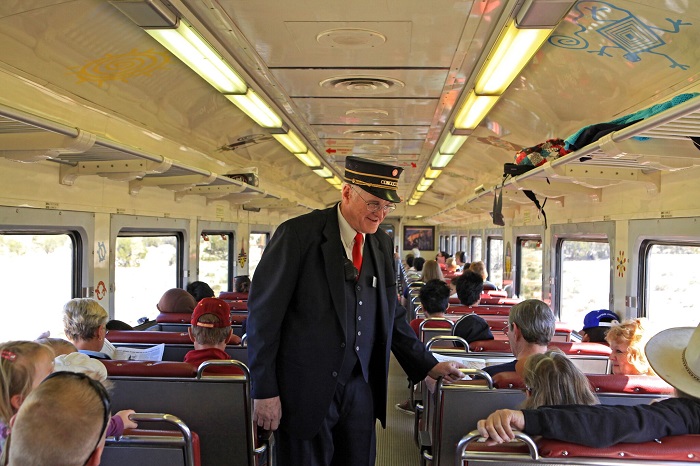
Coach Class
Classic 1950s car with live music
Comfortable bench seating, on-board musicians and a café car.
Book Tickets (opens in a new tab, on Grand Canyon Railway)via Grand Canyon Railway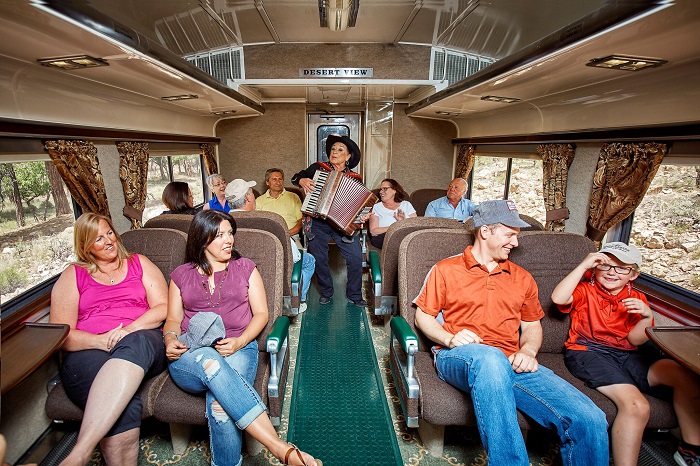
First Class
Oversized reclining seats
Extra legroom, panoramic windows and morning pastries and coffee.
Book Tickets (opens in a new tab, on Grand Canyon Railway)via Grand Canyon Railway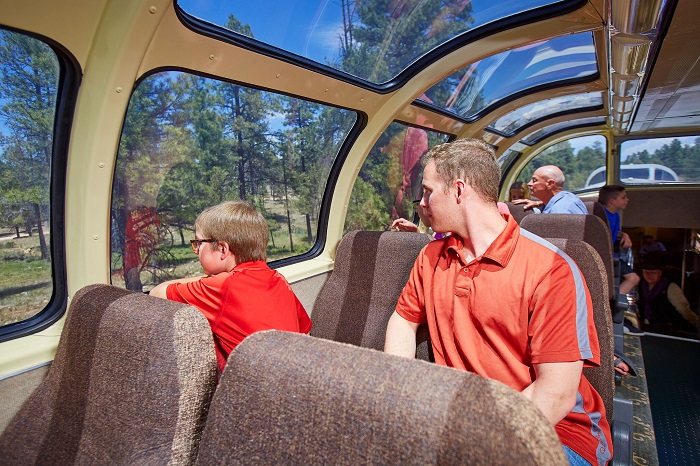
Observation Dome
Upper-deck glass-roofed car
A glass-enclosed upper deck for the most immersive views of the ride.
Book Tickets (opens in a new tab, on Grand Canyon Railway)via Grand Canyon RailwayLuxury Dome Class
Dome views with lounge comfort
Panoramic dome plus an elegant downstairs lounge and bar.
Book Tickets (opens in a new tab, on Grand Canyon Railway)via Grand Canyon Railway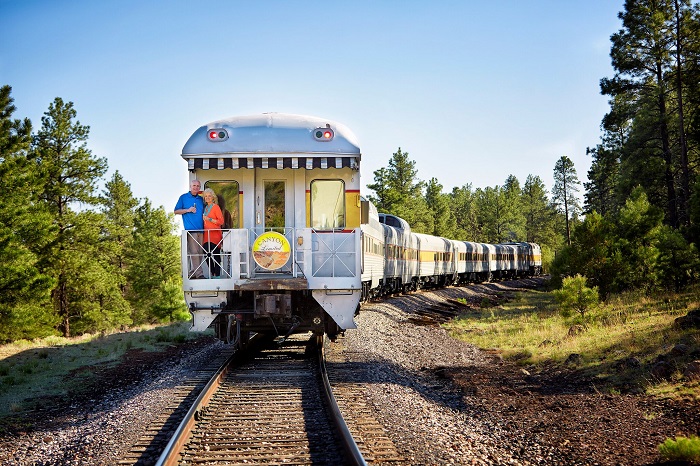
Luxury Parlor Class
The most exclusive carriage
Private bar, sofas and access to the open-air rear platform.
Book Tickets (opens in a new tab, on Grand Canyon Railway)via Grand Canyon RailwayRail Passes
No rail pass covers the Grand Canyon Railway. It is a private railway selling its own fares by class. Interrail and Eurail are European schemes, and the United States is not among the 33 countries in Interrail's list of covered railway companies (opens in a new tab).
Checked October 2026 against Interrail's list of covered railway companies (opens in a new tab).
Places to Visit
The South Rim has plenty to see once the train has set you down, and the cards below cover the pick of it — the canyon itself, the two great Santa Fe buildings on the rim, the river a mile beneath them, and the depot town you left that morning.
Getting about is easy and mostly free. The park's shuttle buses run along the rim and out to Hermit's Rest on a road closed to cars for most of the year, and the Rim Trail links the viewpoints on foot with almost no climbing. Coach tours run to the eastern viewpoints, and mule rides into the canyon are booked well in advance through the park concessioner rather than on the day.
One correction worth making, because it is a common and expensive misunderstanding: Havasu Falls cannot be visited from the South Rim. It is not a walk from the rim or an afternoon's excursion. It lies on Havasupai land some 200 miles away by road, followed by a ten-mile hike, and it requires a permit bought months ahead for a fixed multi-night stay. Treat it as a separate trip, planned on its own terms — the card above sets out what it actually involves.
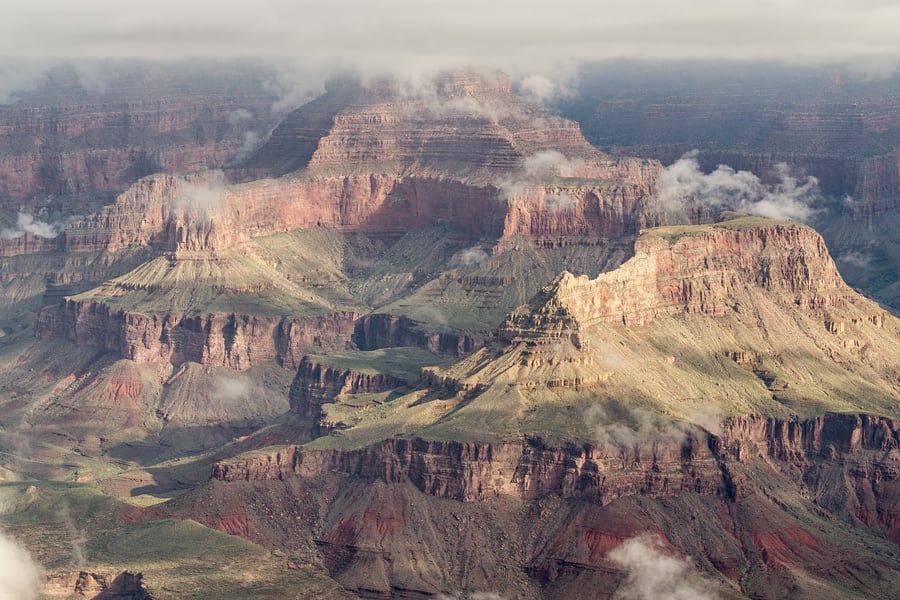 Tuxyso / Wikimedia Commons · CC BY-SA 3.0 · cropped
The Grand Canyon
277 river miles long, up to 18 miles wide and over a mile deep — 6,093 ft at its greatest. It was protected as a national monument on 11 January 1908 and became a national park on 26 February 1919. It is the sort of place that defeats photographs: the scale only really arrives after you have watched the light move across it for an hour. The train sets you down a short walk from the rim, which is the civilised way to arrive.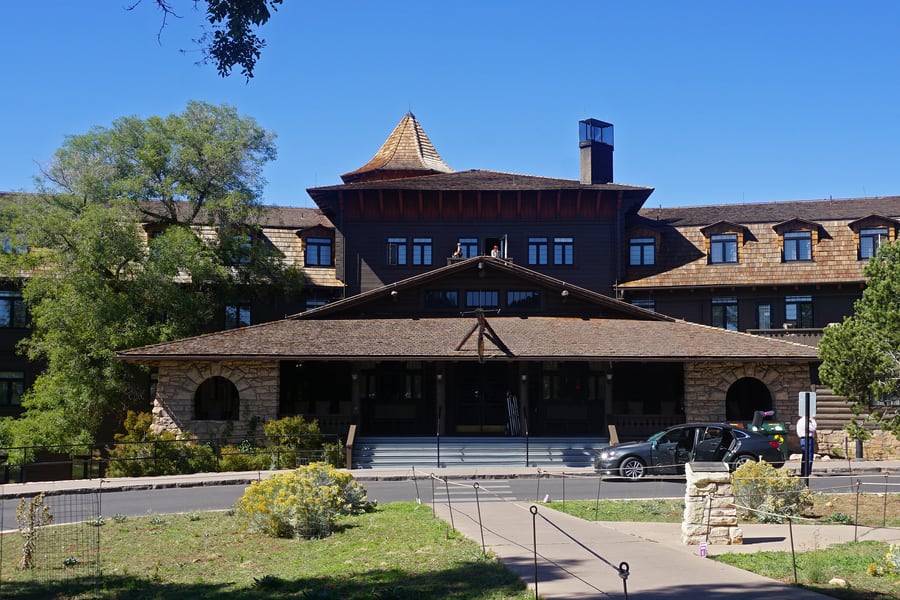 Mario Roberto Durán Ortiz / Wikimedia Commons · CC BY-SA 4.0 · cropped
El Tovar Hotel
Opened in January 1905 by the Santa Fe Railway and run by the Fred Harvey Company, El Tovar was built from local limestone and Oregon pine in a manner its architect Charles Whittlesey described as part Swiss chalet, part Norway villa — an early ancestor of the rustic style the Park Service later made its own. It began with 103 rooms and 21 bathrooms and now has 78, each with its own. A National Historic Landmark since 28 May 1987.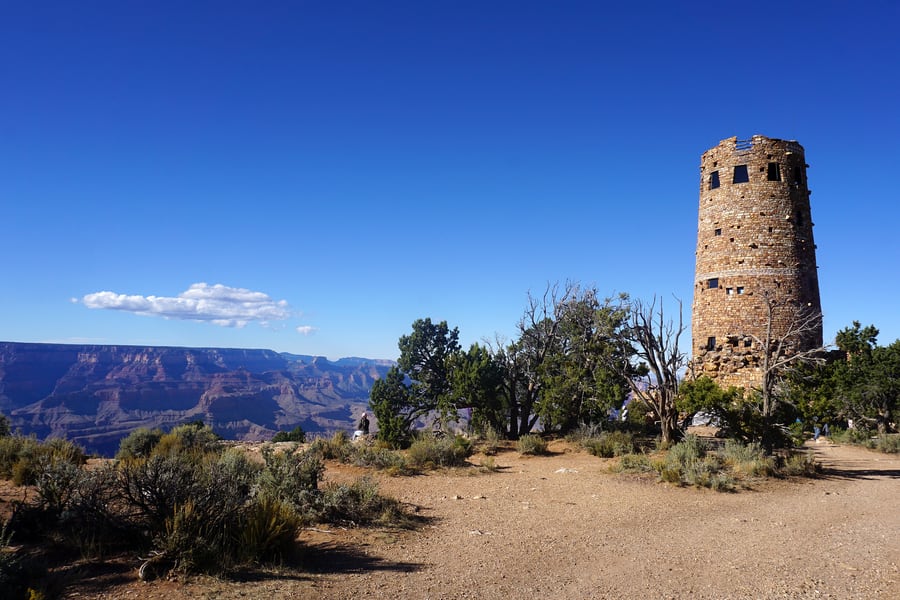 Mario Roberto Durán Ortiz / Wikimedia Commons · CC BY-SA 4.0 · cropped
Desert View Watchtower
Mary Colter's 70-ft tower of 1932 stands more than 20 miles east of the village, where the canyon swings north and the Colorado finally comes into view. Colter modelled it on Ancestral Puebloan towers, studying the prototypes at Hovenweep, then had it built around a hidden steel frame so that it would look far older than it is. Inside are Fred Kabotie's painted rooms; outside is the longest view on the South Rim.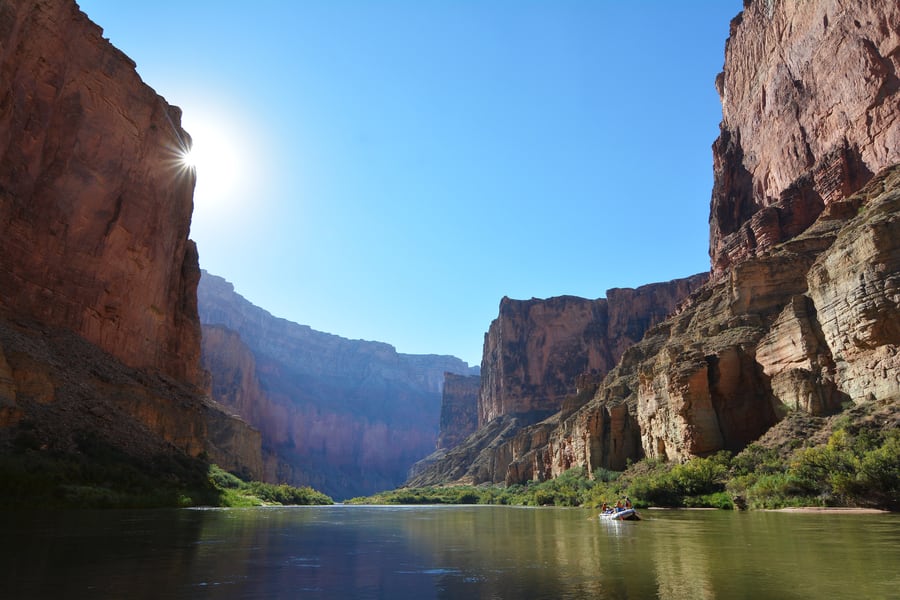 Paxson Woelber / Wikimedia Commons · CC BY 2.0 · cropped
The Colorado River
The river that did the digging runs 277 miles through the canyon, a mile beneath the rim and hidden from most of it. Licensed outfitters run trips lasting anything from a day to three weeks; the long ones are booked years ahead, and they launch upstream rather than from the South Rim. Even so, picking the thread of green water out from Lipan or Moran Point — and hearing nothing at all from it — is the moment the depth registers.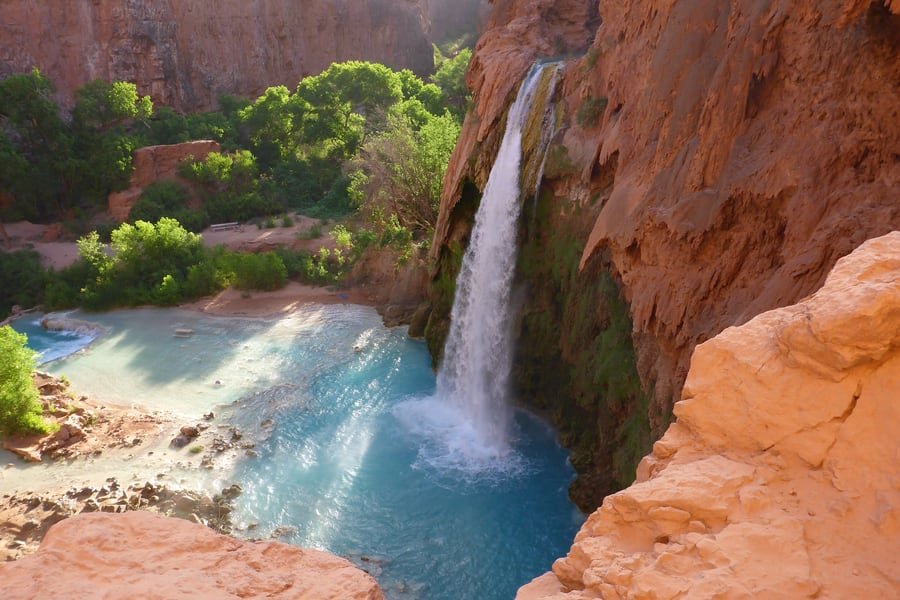 Traveling Man / Wikimedia Commons · CC BY-SA 3.0 · cropped
Havasu Falls
The blue-green falls drop 90–100 ft into travertine pools, coloured by the calcium carbonate that also builds the dams. Be clear about what reaching them takes. They lie on Havasupai land, and the trailhead at Hualapai Hilltop is roughly 200 miles by road from the South Rim — then 8 miles on foot to Supai village and two more to the falls. Permits are compulsory and sell out fast; 2026 camping is $455 per person for a fixed three-night stay.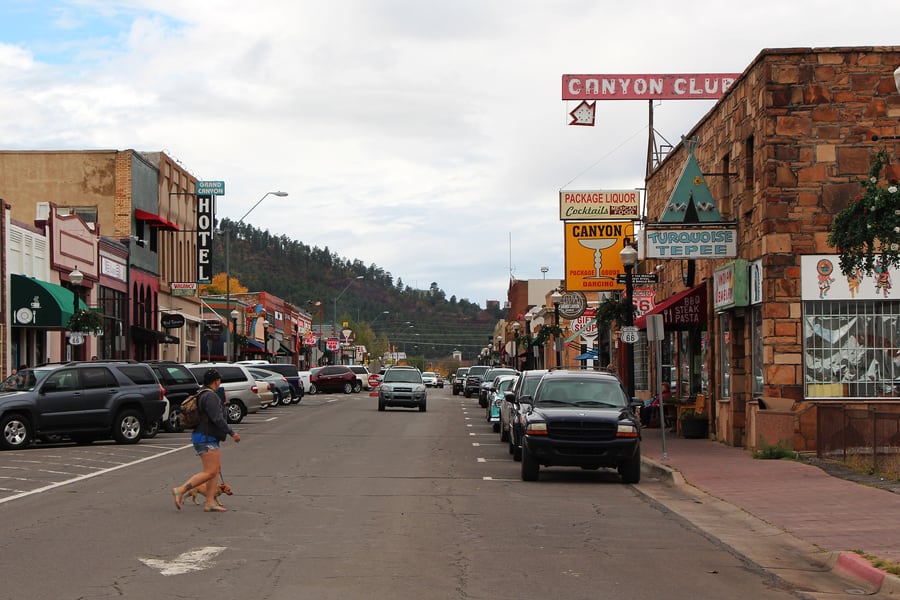 Steven C. Price / Wikimedia Commons · CC BY-SA 4.0 · cropped
Williams, Arizona
The depot town sits 6,916 ft up among the pines. It was incorporated on 9 July 1901 and named for "Old Bill" Williams, a trapper and mountain man who died in 1849. It bills itself the Gateway to the Grand Canyon, but its sharper claim is this: on 13 October 1984 Interstate 40 opened around the town, making Williams the last place on Route 66 to be bypassed. Its main street still trades on it.Where to Sleep
The Grand Canyon Railway Hotel in Williams is the natural place to stay, right beside the depot so you can step from your room almost straight onto the train. It is a comfortable, cosy hotel with all the amenities you would expect, and packages that pair a night's stay with your journey.
If you would rather stay on the South Rim, El Tovar and the other in-park lodges put you a short walk from the canyon edge — book these well ahead, as they fill quickly in the high season.
The Polar Express & Steam Saturdays
Around Christmas, the Polar Express sets off into the night-time wilderness around Williams, bound for the "North Pole". It is a one-of-a-kind evening for children — pyjamas encouraged — and for families, with Santa and his elves handing out hot chocolate and chocolate-chip cookies. Between the decorated train and the station, it is a place where imagination takes over and the old story comes to life. Aboard, you can visit the Polar Room and play the Naughty or Nice O'Meter to find out whether you are due a present or a lump of coal.
Steam Saturdays
The sight of an old steam locomotive is rail history on wheels, and the Grand Canyon Railway restored two of them — both built in the 1920s — to keep it alive.
On the first Saturday of each month, from March to October, you can make the journey to the canyon the classic way, behind steam — on those days the 09:30 departure from Williams is steam-hauled, returning from the South Rim at 15:30. Steam schedule checked July 2026; runs can be cancelled for weather or mechanical reasons, so confirm before you travel.
Questions or corrections
Planning this trip and stuck on something, or spotted a time, fare or detail that has changed? Send us a message about Grand Canyon Railway. We read every one, and we update this page when something has changed.