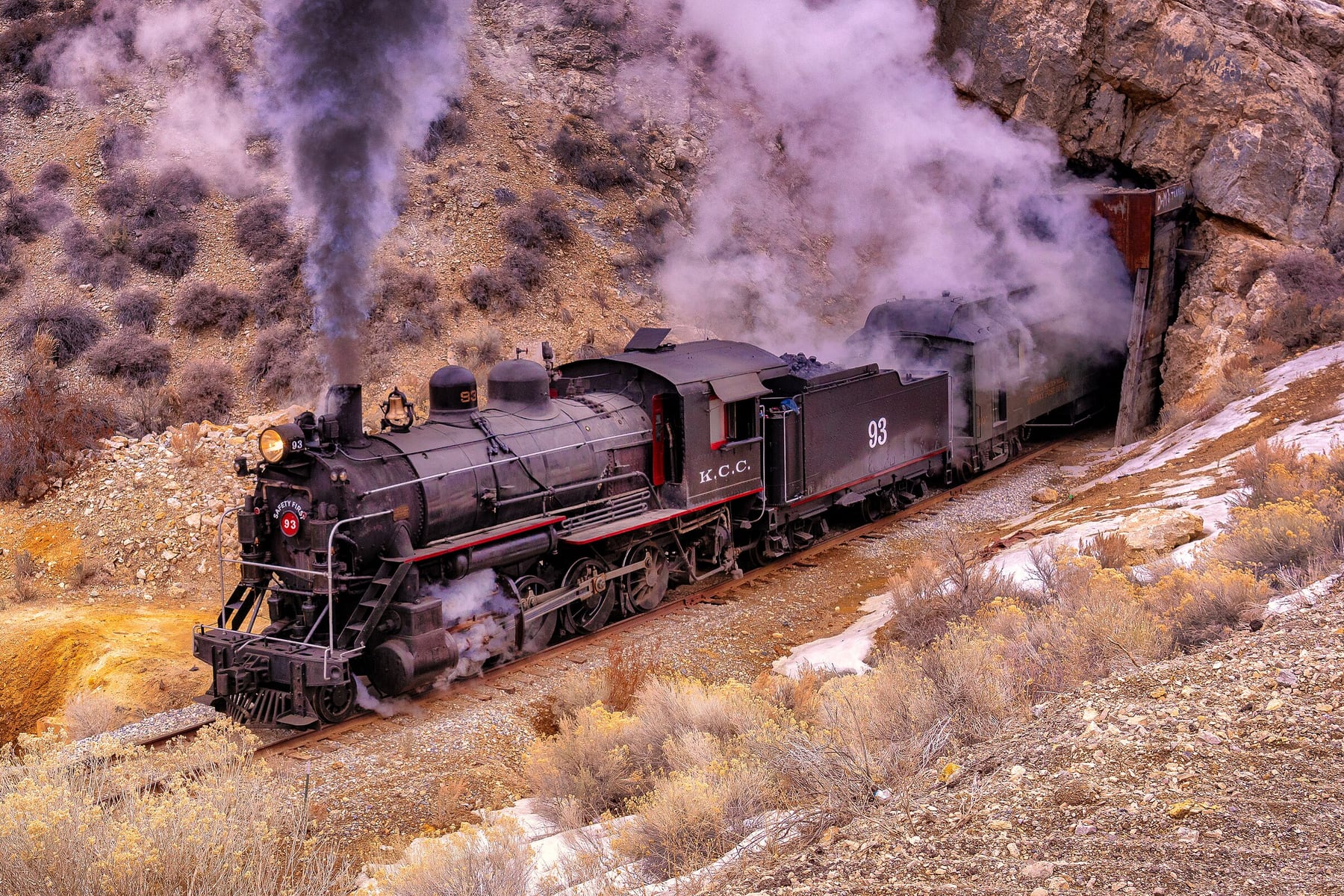
Nevada Northern Railway
Mobilus In Mobili / Wikimedia Commons · CC BY-SA 2.0 · cropped
- DistanceAbout 7 miles each way, East Ely to Keystone and back
- DurationAbout 90 minutes
- Best seasonSummer and autumn; steam on Friday, Saturday and Sunday trains
Introduction
In 1906 a railroad reached Ely, in the high desert of eastern Nevada, to carry copper from the mines at Ruth to the smelter at McGill and on to the main lines 140 miles north. For three quarters of a century the Nevada Northern did just that, and when the smelter closed in 1983 the trains simply stopped. Its owner, Kennecott Copper, gave the yard, the shops and the line up Robinson Canyon to a local foundation, which turned them into a museum. The museum calls it America's best-preserved standard-gauge short line, and in 2006 the East Ely yard became a National Historic Landmark: more than 70 buildings and structures and 30 miles of track.
The railway's own trains still run on it. Most excursions leave the 1907 depot at East Ely and climb west up Robinson Canyon, through two tunnels to the wye at Keystone below the old copper pits, a round trip of about 90 minutes; others head out on the Hiline above Steptoe Valley. You can ride in a coach or an open-air car, and the steam trains are pulled by No. 81, a Baldwin locomotive of 1917 that hauled ore over this same line until 1958.
Ely is a long way from anywhere: about 245 miles from Las Vegas or Salt Lake City, on US 50, the "Loneliest Highway in America". The railway runs at about 6,500 feet, so bring a jacket even on a summer evening.
The Journey
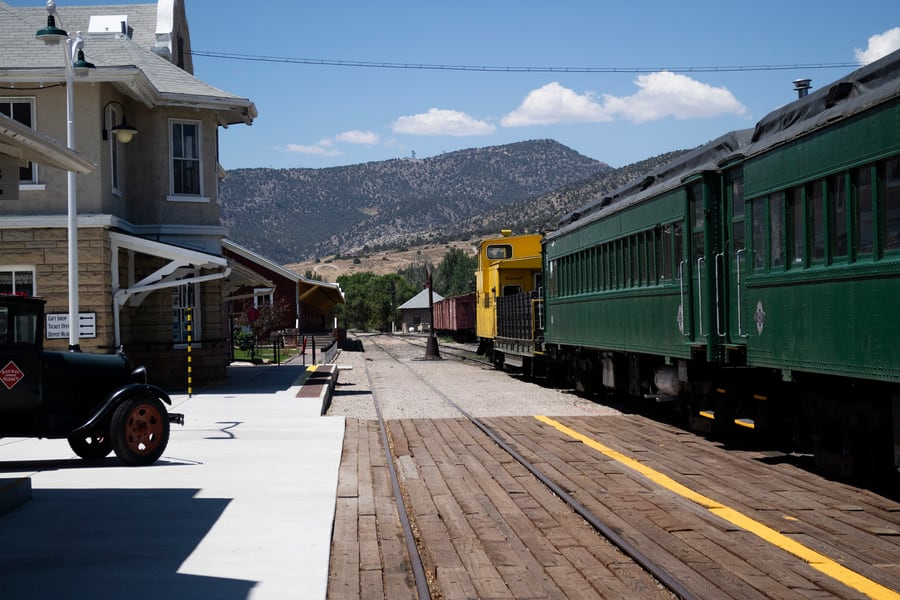
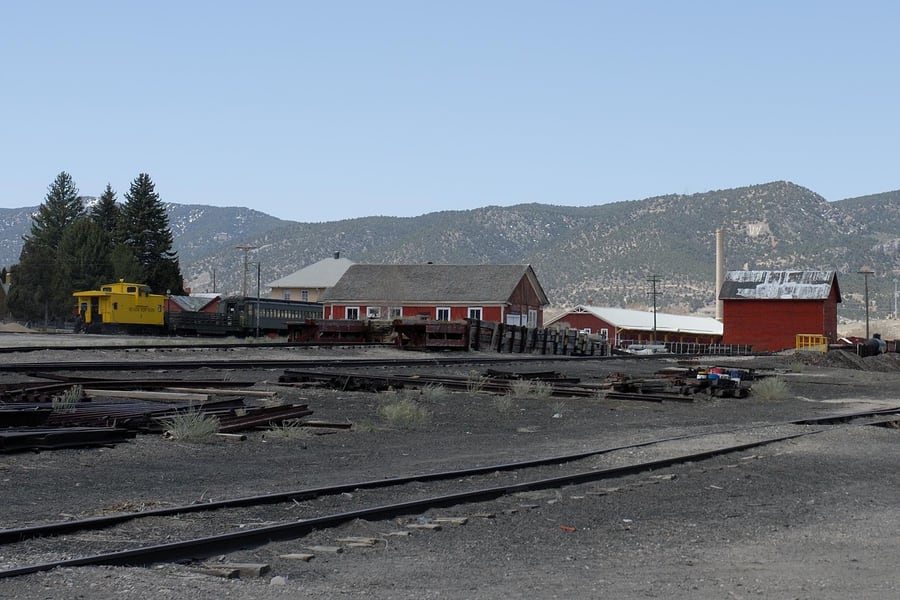
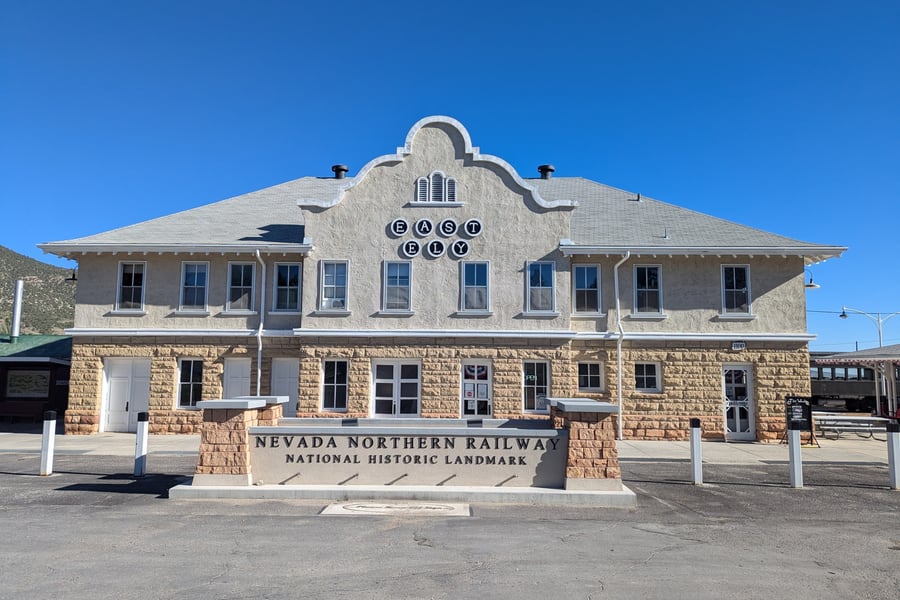
The trip begins at the East Ely Depot, a two-storey Mission Revival building of 1907 with curved gables, a stone ground floor and separate waiting rooms that were once for men and for women. From 1906 a passenger train ran every day between Ely and the main line at Cobre, until the Steptoe Valley Flyer made its last run on 31 July 1941 and buses took over. Behind the depot spreads the 56-acre East Ely yard: the engine house, the 1907 machine shop, a water tank and more than 60 pieces of the railroad's own rolling stock, much of it dating from the 1910s.
The train is made up of vintage coaches and an open-air car, and you are free to move between them; a hat and sunscreen help in the open car, and a jacket on the evening trips. There is a restroom on board, snacks and drinks for sale, and the train is wheelchair accessible. For an extra fare you can ride in the caboose at the back, or up to two people can ride in the locomotive cab with the crew.
Up Robinson Canyon
Most excursions take the Robinson Canyon route, the old Ore Line of 1908. The train runs west past Ely and climbs into the canyon, sharing its floor with Gleason Creek and US 50, then plunges through two tunnels cut through the rock. For seventy years this line carried ore from the mines at Copper Flat, Ruth and Veteran to the McGill smelter, and its 11 miles through the canyon cost more to build than the whole 140-mile main line. At Keystone, beneath the open-pit copper mines of the Ruth district, the locomotive is turned on a wye, and the train drifts back down the canyon to East Ely.
The other route, the Valley Vista, heads east on the old Hiline towards Adverse and climbs above Steptoe Valley, with a view across the whole basin; the sunset and star trains take this line. A third route, north to the old smelter town of McGill, is being rebuilt, and the railway's own map gives 2028 for its completion.
The locomotives
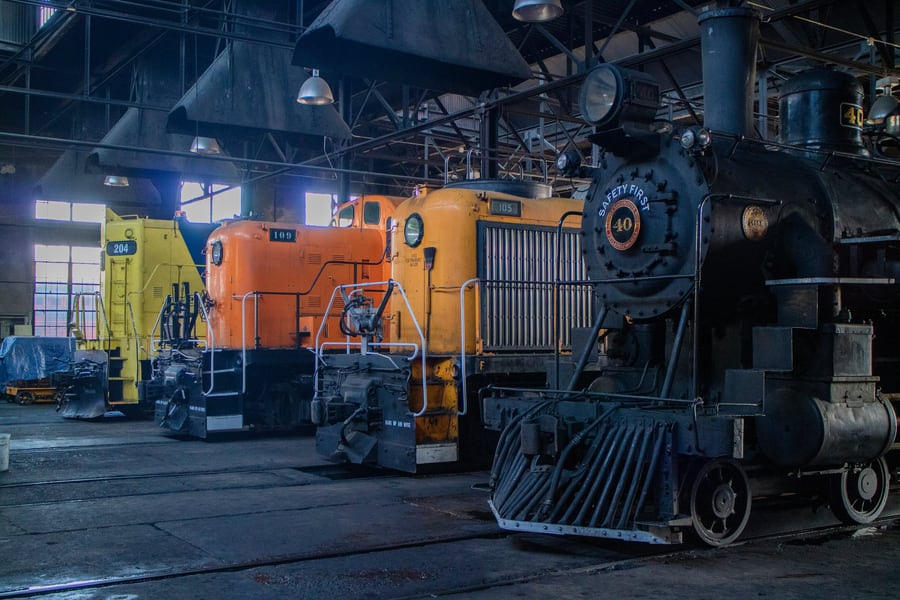
The Nevada Northern still has three of its own steam locomotives. In 2026 the one in service is No. 81, a Baldwin 2-8-0 of 1917 that hauled copper ore until 1958, spent decades on display in town, and returned to steam in 2021. It was out of service again from 2023 and was fired up once more in February 2026. No. 40, a Baldwin 4-6-0 that pulled the Steptoe Valley Flyer and is Nevada's state locomotive, has been under overhaul since October 2020, and No. 93, an ALCO 2-8-0 of the class that hauled the first ore in 1908, is also out of service; the railway hopes to have all three in steam together. The other trains are hauled by the vintage diesels, such as 109, an ALCO RS-3 that was already running specials for Kennecott in 1982.
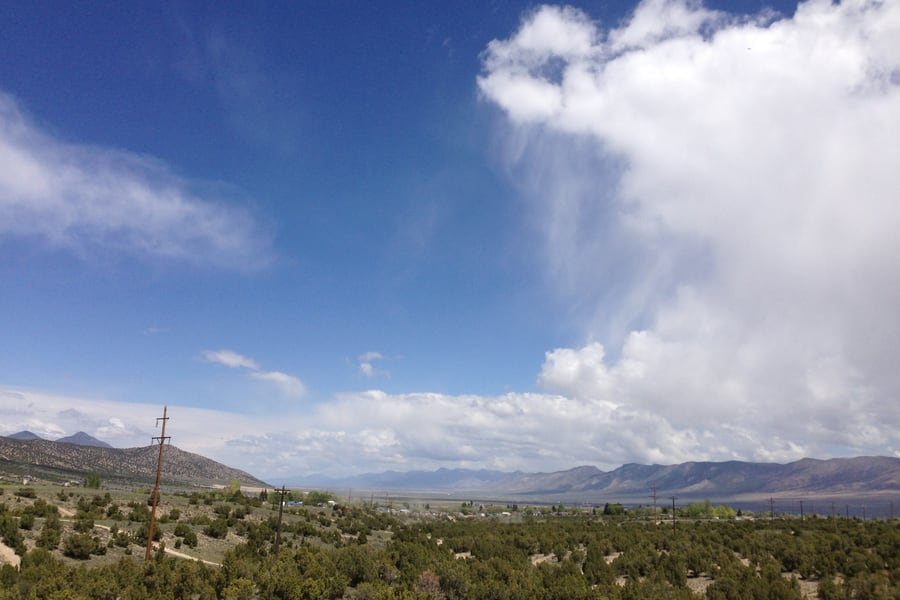
Along the route
 Jeremy Thompson / Wikimedia Commons · CC BY 2.0 · cropped
The East Ely Depot
Every train leaves from the depot of 1907, a two-storey Mission Revival building with curved gables, separate waiting rooms for men and women, and the railroad's offices upstairs. The museum yard opens out behind it.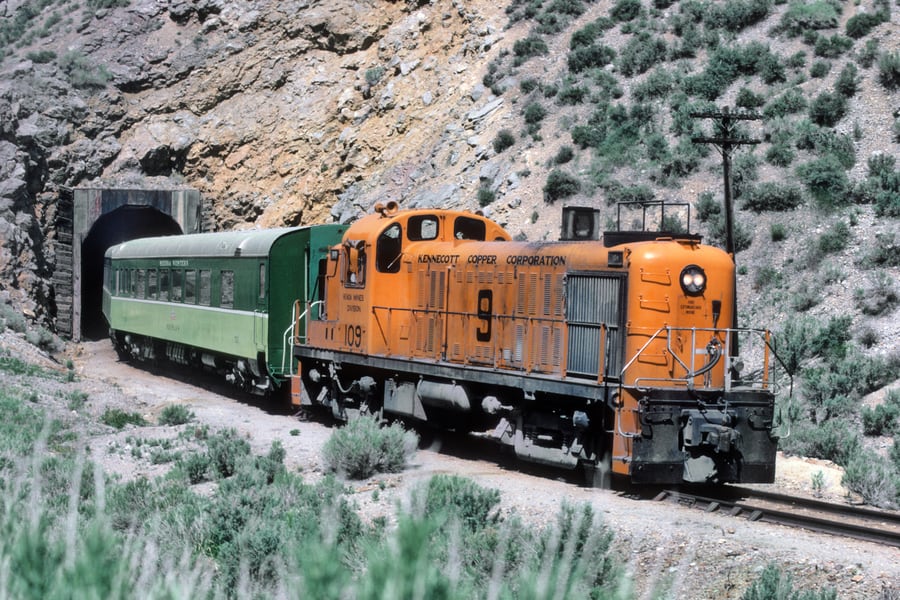 Roger Puta / Wikimedia Commons · public domain · cropped
Through the tunnels
West of Ely the line climbs Robinson Canyon beside Gleason Creek and US 50, through two tunnels in the rock. This is the Ore Line of 1908, built to carry copper ore down from the mines.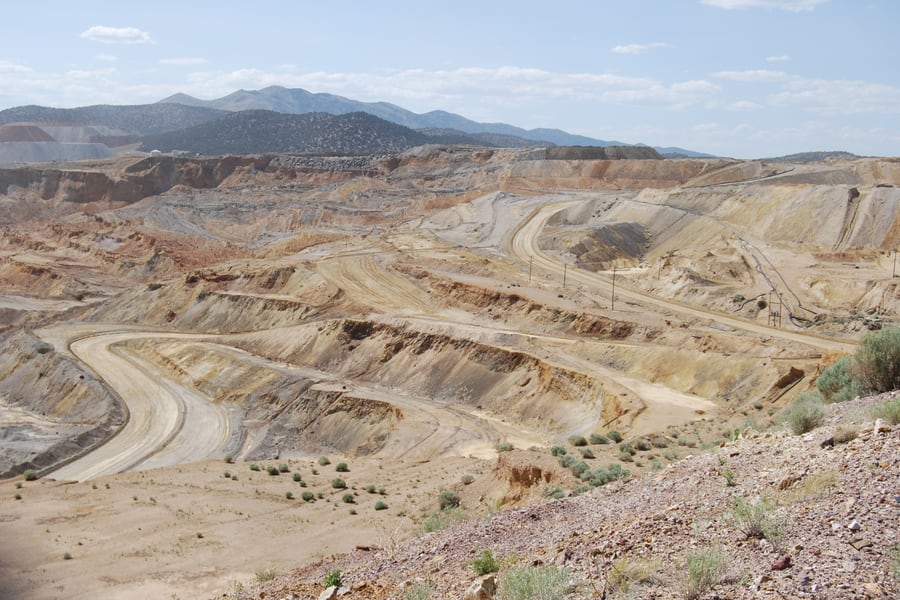 Geographer / Wikimedia Commons · public domain · cropped
Keystone and the copper pits
The canyon trains turn on the wye at Keystone, below the old Ruth mining district, where steam shovels began open-pit mining in 1907. The great copper pits are still there in the hills above.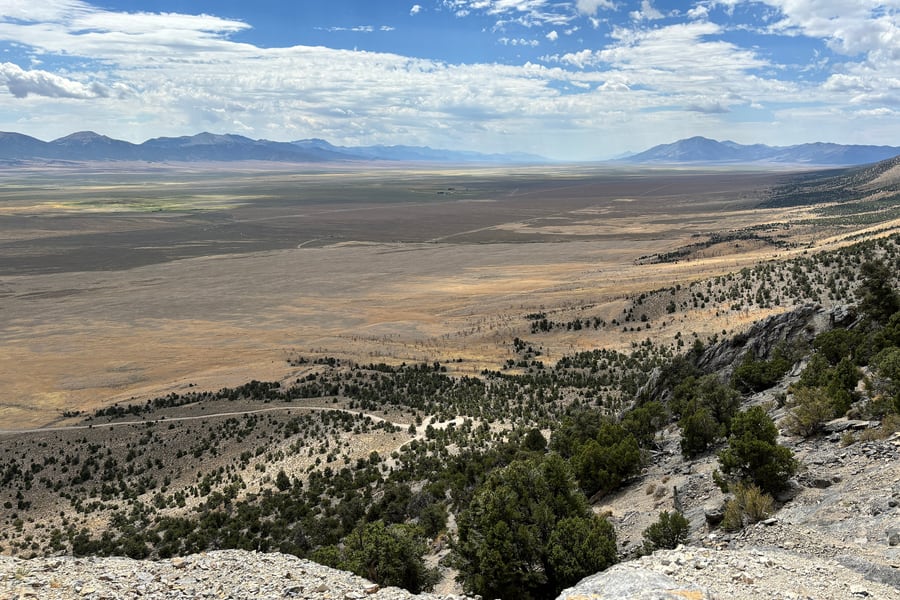 Samantha Szesciorka, BLM Nevada / Wikimedia Commons · public domain · cropped
The Valley Vista route
Some trains head east instead, out on the Hiline towards Adverse, climbing above Steptoe Valley for a view across the whole basin. The sunset and star trains run this way.A bit of history
Culture & experiences along the way
 Mobilus In Mobili / Wikimedia Commons · CC BY-SA 2.0 · cropped
The engine house
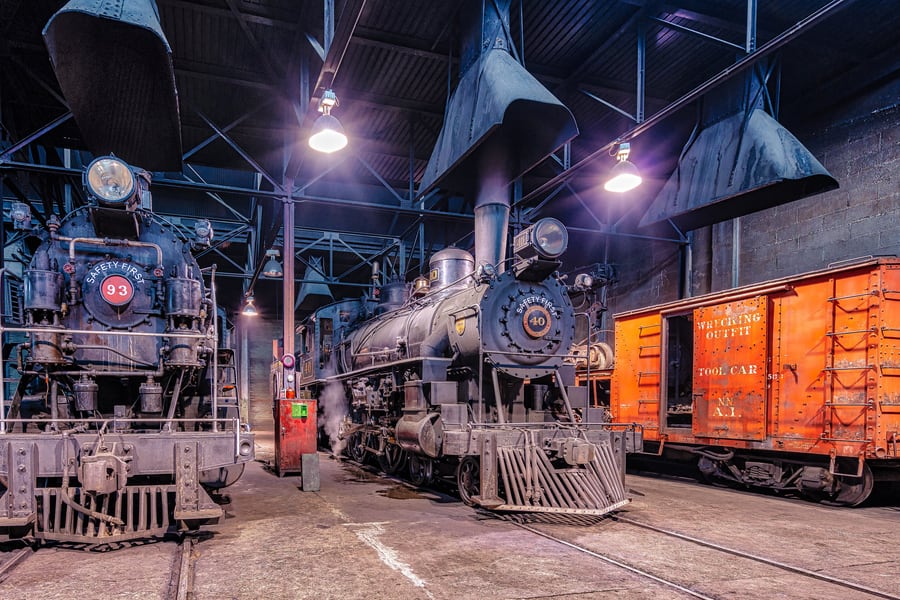
The 56-acre yard is the museum, and it is a working one. In the engine house the steam locomotives are made ready for the day's trains beside the railroad's own wrecking outfit, much of it delivered here more than a century ago and never moved away.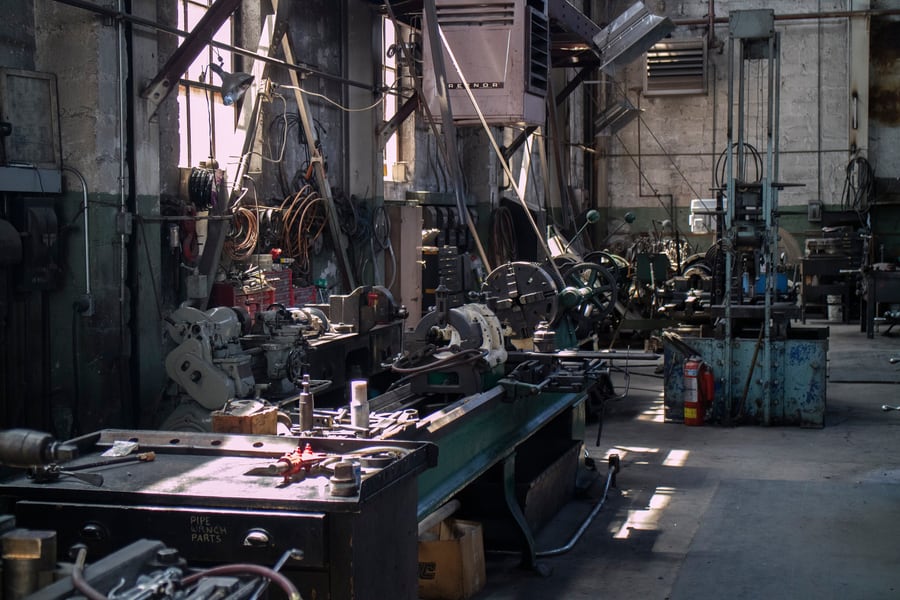 Thomas Farley / Wikimedia Commons · CC0 · cropped
The machine shop
The original machine shop of 1907 is still in use, crowded with the lathes, drills and presses the Nevada Northern bought to keep its engines running. The museum's crews rebuild its locomotives here, and guided tours of the yard run through the day.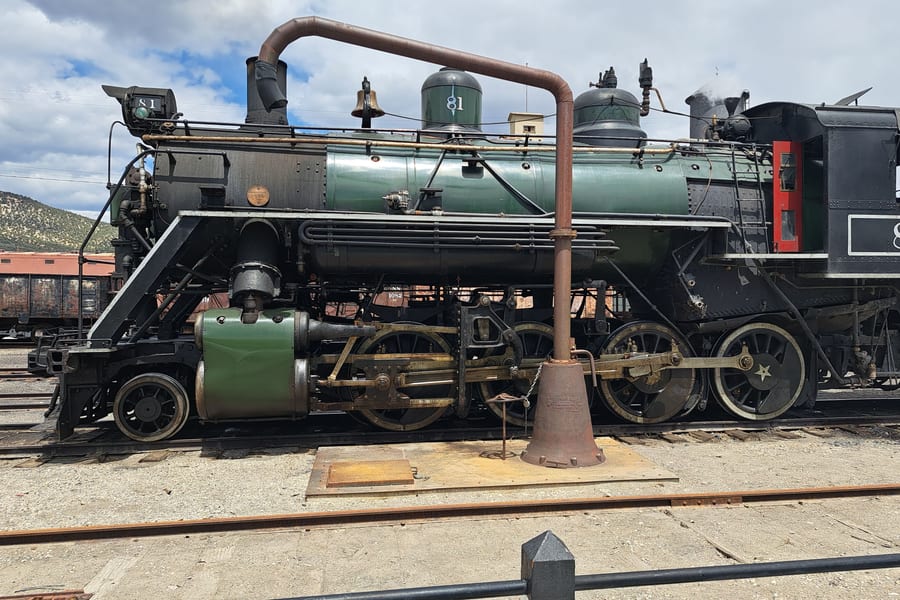 RBauske / Wikimedia Commons · CC BY-SA 4.0 · cropped
Be the Engineer
The museum lets visitors drive one of its own engines. After a lesson in the yard, a Be the Engineer run takes a steam locomotive up the Keystone branch through the two tunnels, or a vintage diesel out on the Hiline. No. 81, a Baldwin 2-8-0 of 1917, is the steam engine in 2026.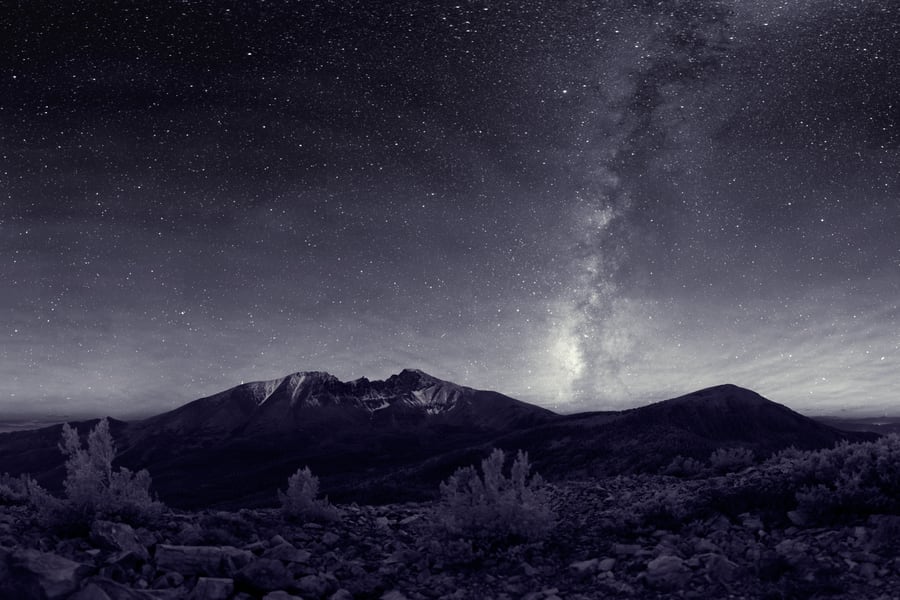 NPS / Wikimedia Commons · public domain · cropped
The Star Train
At 6,500 feet and far from city lights, the railway runs star trains from mid-May to mid-September: up the Valley Vista route at sunset to Star Flat, where astronomers set up telescopes for the planets and the Milky Way.Timetables
Every excursion leaves from the East Ely Depot, 1100 Avenue A, and takes about 90 minutes there and back. The depot opens at 8:00; arrive half an hour before your train. The pattern changes with the season, and these are the regular excursions on sale for the rest of the 2026 season:
| Dates (2026) | Departs East Ely | Back about | Days | Route and traction |
|---|---|---|---|---|
| 2 October – 30 October | 16:30 | 18:00 | Fridays | Robinson Canyon, steam |
| 17 October – 31 October | 13:00 | 14:30 | Saturdays | Robinson Canyon, steam |
| 18 October – 1 November | 11:30 | 13:00 | Sundays | Robinson Canyon, steam |
| 5 October – 26 October | 09:30 | 11:00 | Mondays | Robinson Canyon, diesel |
| 7 October – 28 October | 09:30 | 11:00 | Wednesdays | Valley Vista, diesel |
| 7 November | 13:00 | 14:30 | Saturday, the last listed | Robinson Canyon, diesel |
The steam trains are pulled by No. 81. In summer there are more trains and the steam engine works more days: in the week of the Fourth of July 2026, for example, excursions left at 9:30 on Monday, 16:30 on Thursday, 13:00 on Friday on the Valley Vista route and 16:30 on the steam train, 13:00 on Saturday and 11:30 on Sunday.
Beyond the regular excursions the railway runs a long list of themed trains: the Star Train with telescopes on summer nights, Sunset, Stars and Champagne through the year, the Steptoe Valley Flyer in its original cars of 1882 and 1906, the Haunted Ghost Train and the children's Pumpkin Patch Caper in October, the Santa's Reindeer Flyer at Christmas, and the Fire and Ice fireworks train in January.
Good to know:
- Book ahead for the themed trains, which often sell out.
- Ely is over a mile high, and the weather can change quickly; bring a jacket for the open-air car.
- The museum is open daily, so a train ride and a walk round the yard fit easily into one visit.
Departures as of October 2026, from the railway's booking calendar and its 2026 schedules. Confirm before travelling on nnry.com (opens in a new tab).
Tickets
The same fares apply to the steam and the diesel excursions: $39 for an adult and $33 for a senior aged 65 or over. Children aged 4 to 12 pay $15, and ride free on the Monday and Wednesday morning trains in October; children under 4 always ride free. Groups of 12 or more save 18%. A ride in the cab with the engineer costs $150 a person, and the caboose can be booked for your own party, from $200.
Admission to the museum yard is a separate ticket, $10 for an adult. Themed trains are priced on their own, mostly from $38 to $65 for an adult. Fares checked October 2026 at nnry.com (opens in a new tab); US dollars.
Book your tickets
Steam Excursion
Robinson Canyon · about 90 minutes
A coach or open-air seat behind No. 81 up Robinson Canyon to Keystone and back.
Book Tickets (opens in a new tab, on Nevada Northern Railway)via Nevada Northern RailwayDiesel Excursion
Robinson Canyon or Valley Vista · about 90 minutes
The same trip behind one of the railway's vintage diesels, on Monday and Wednesday mornings in October.
Book Tickets (opens in a new tab, on Nevada Northern Railway)via Nevada Northern RailwayRide in the Cab
Up to two people · with the engineer
A place in the locomotive cab beside the crew on a regular excursion.
Book Tickets (opens in a new tab, on Nevada Northern Railway)via Nevada Northern RailwayRail Passes
No rail pass covers the Nevada Northern Railway. It is a museum railroad that sells its own tickets. Amtrak's USA Rail Pass is valid only on Amtrak's own services, and Interrail and Eurail do not apply anywhere in the United States.
The railway's own savings are its memberships, which bring discounts on train tickets and the Hands on History experiences, and a group rate of 18% off for parties of 12 or more.
Checked October 2026 against nnry.com (opens in a new tab) and amtrak.com (opens in a new tab).
Places to Visit
Ely is the county seat of White Pine County and the only town of any size for a long way in every direction. The copper pits and Garnet Hill lie just west of town, the Ward Charcoal Ovens and Cave Lake are a short drive south, and Great Basin National Park, with Wheeler Peak and Lehman Caves, is about 60 miles to the east.
 Famartin / Wikimedia Commons · CC BY-SA 3.0 · cropped
Downtown Ely
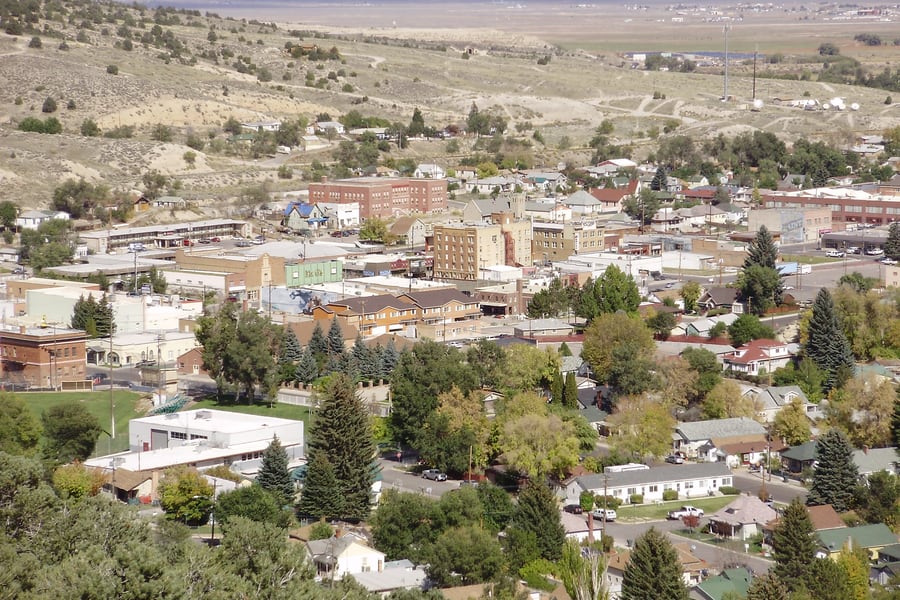
Ely grew up around the copper mines and is still the only city in White Pine County. Its main street, Aultman Street, has the Hotel Nevada of 1929 and its casinos and bars, and US 50, signed as the "Loneliest Highway in America", runs straight through the middle of town.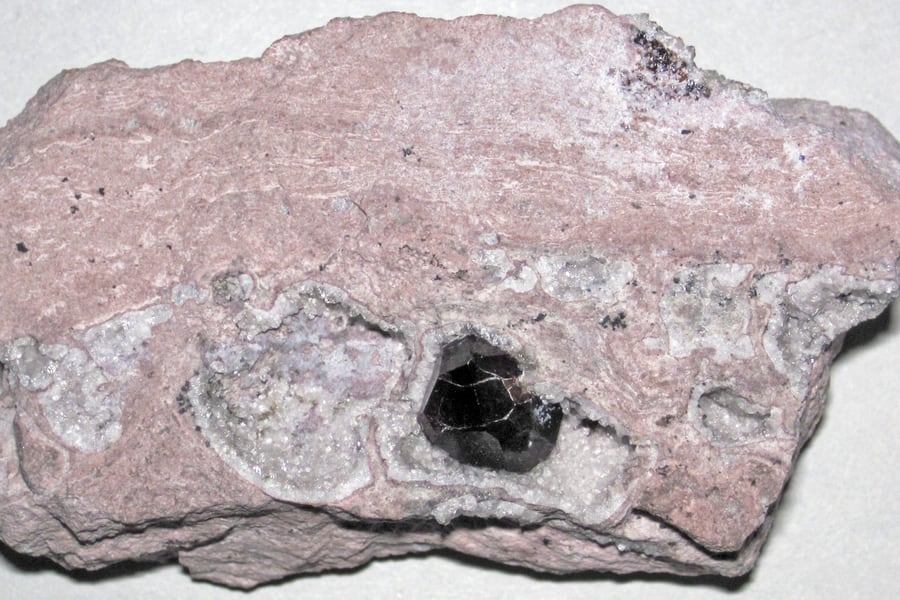 James St. John / Wikimedia Commons · CC BY 2.0 · cropped
Garnet Hill
The Bureau of Land Management's only rockhounding area in the Ely District is a hill of volcanic rhyolite where dark red garnets form in small cavities. Visitors break open rocks or search the gullies for loose stones, and the top looks out over the open-pit copper mines at Ruth.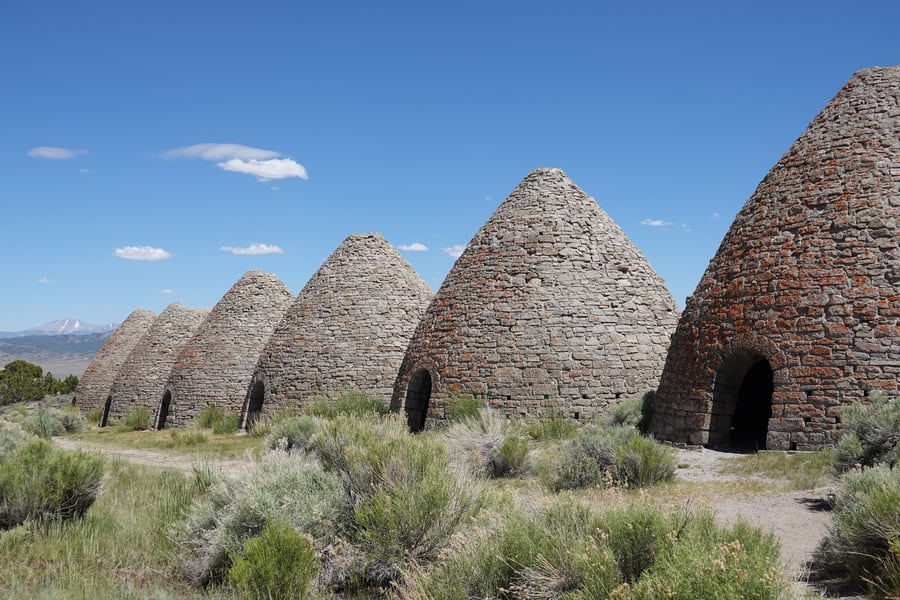 Micheladamonster / Wikimedia Commons · CC BY-SA 4.0 · cropped
Ward Charcoal Ovens
Six beehive-shaped stone ovens stand in a forested valley, built to turn pinyon and juniper into charcoal for the silver smelters of the Ward mines between 1876 and 1879. Later they sheltered prospectors and, so the story goes, stagecoach robbers. The ovens are open to walk round, with a campground and trails.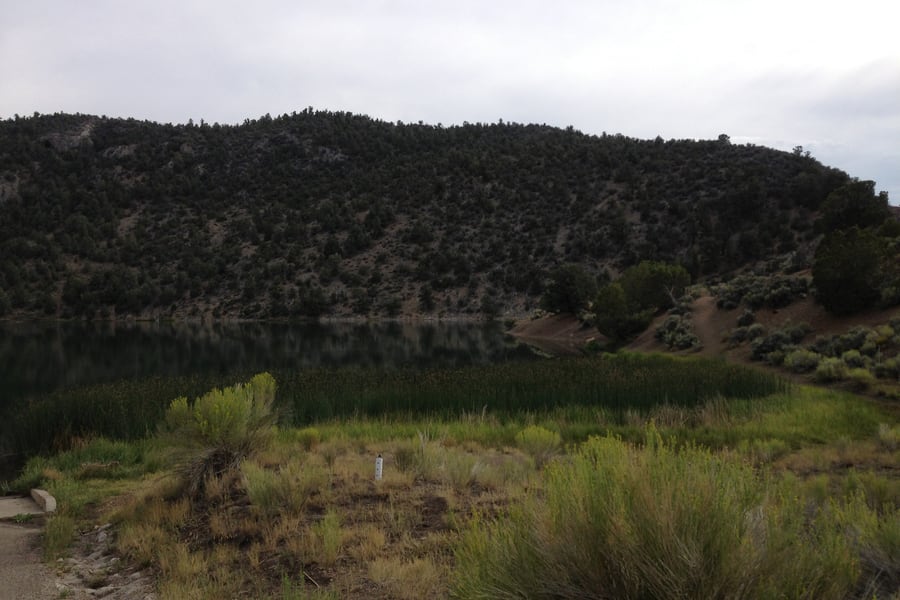 Famartin / Wikimedia Commons · CC BY-SA 4.0 · cropped
Cave Lake State Park
A 32-acre reservoir at 7,300 feet in the forested Schell Creek Range, stocked with rainbow trout and home to brown trout. In summer there is fishing, boating, swimming and camping; in winter the lake freezes for ice fishing and skating. The dam was built in 1939 to water a ranch in Steptoe Valley, and the land became a state park in 1973.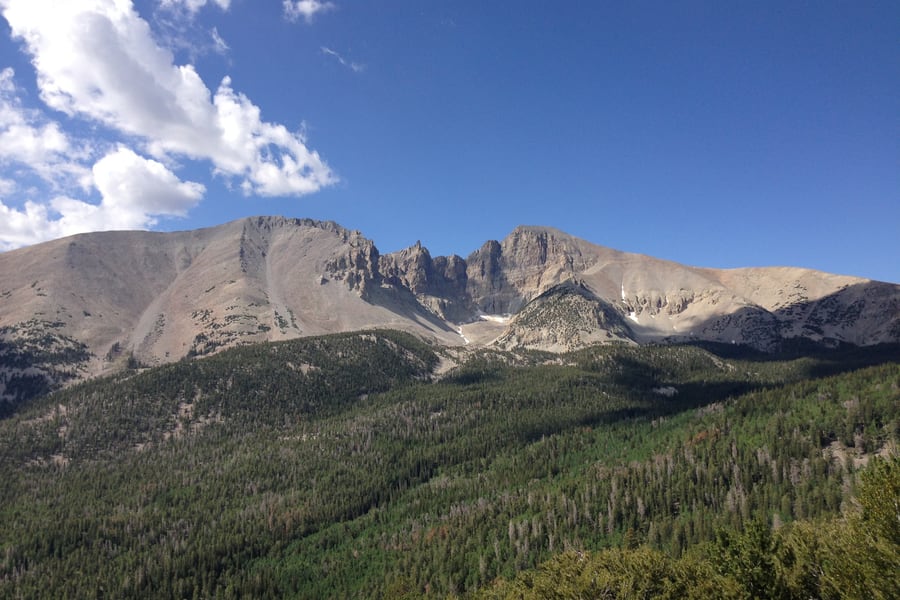 Famartin / Wikimedia Commons · CC BY-SA 3.0 · cropped
Wheeler Peak Scenic Drive
The national park lies about 60 miles east of Ely, near the Utah border. Its scenic drive climbs 12 paved miles and more than 4,000 feet, from sagebrush through pinyon and fir forest to over 10,000 feet, beneath the 13,063-foot summit of Wheeler Peak. Mule deer, marmots and coyotes are often seen along the way.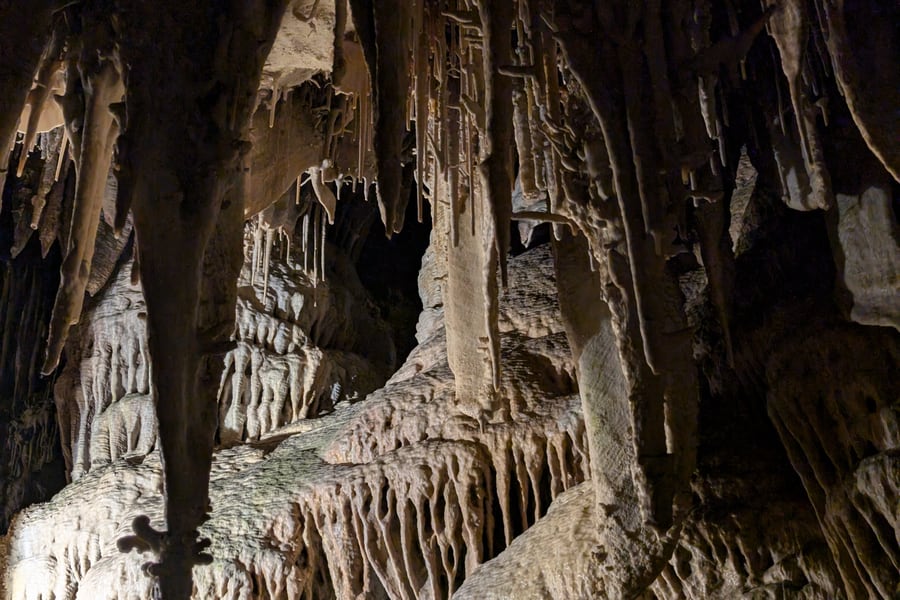 Roller Coaster Philosophy / Wikimedia Commons · CC BY 2.0 · cropped
Lehman Caves
The longest cave system in Nevada, hung with stalactites and columns, has been toured since 1885. It can only be entered on a ranger-guided tour of up to 20 people, and the tours often sell out, so book ahead on Recreation.gov. Walk-up tickets, when there are any, go on sale at the Lehman Caves Visitor Center when it opens.Where to Sleep
Ely has hotels, motels and a campground or two within a short drive of the depot, most of them along Aultman Street and US 50. Book ahead for the summer star trains and the October weekends.
Where to stay
Hotel Nevada
Ely · a landmark since 1929
Sixty-four rooms and suites above a gambling hall on Aultman Street, in the hotel that has stood in the middle of Ely since 1929.
Check Availability (opens in a new tab, on hotelnevada.com)via hotelnevada.comProspector Hotel & Gambling Hall
Ely · western-themed, with a pool
A western-themed hotel with an indoor pool and hot tub, pet-friendly rooms and a Mexican restaurant and steakhouse.
Check Availability (opens in a new tab, on prospectorhotel.com)via prospectorhotel.comQuestions or corrections
Planning this trip and stuck on something, or spotted a time, fare or detail that has changed? Send us a message about Nevada Northern Railway. We read every one, and we update this page when something has changed.