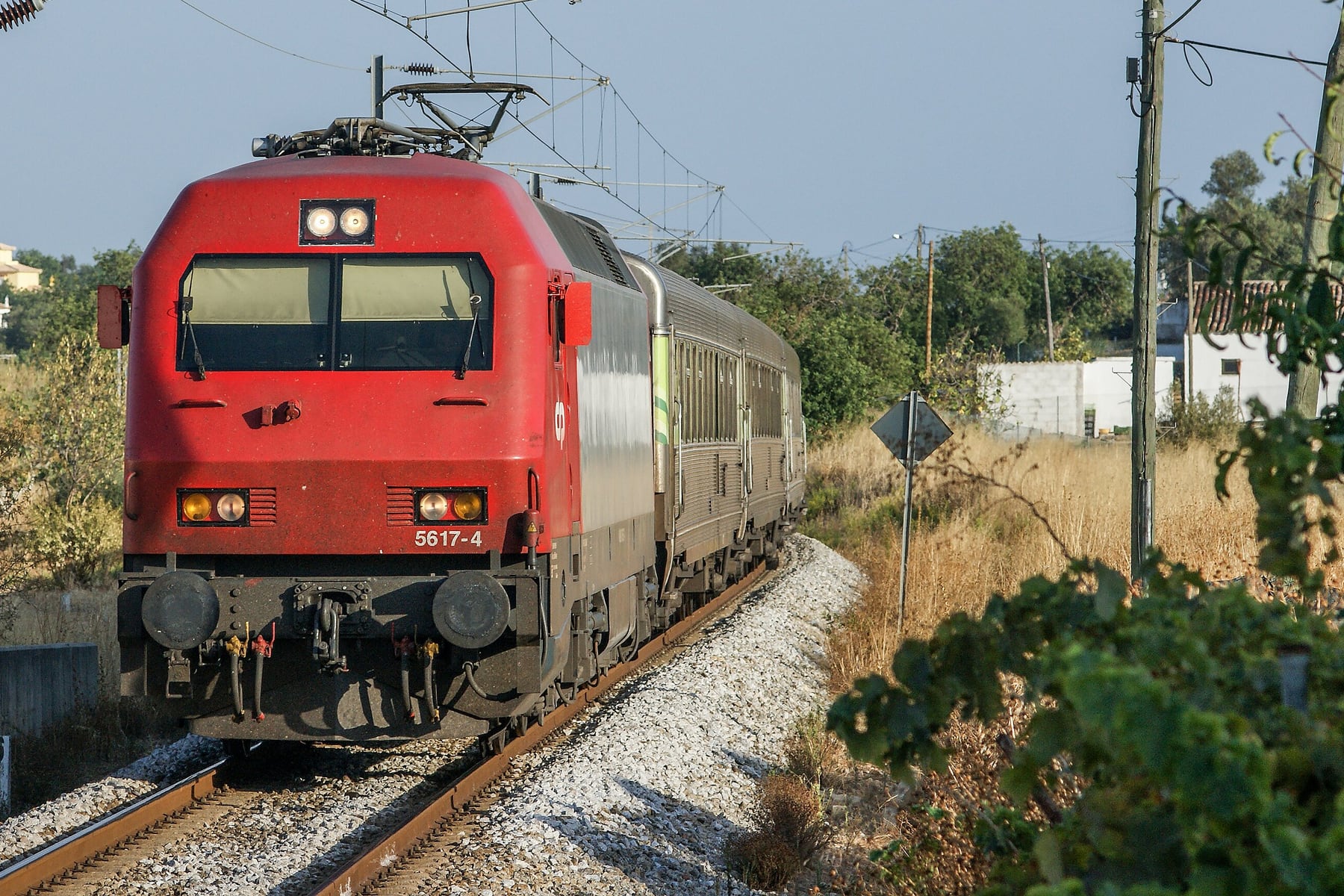
The Algarve Line
TGr_79 / Wikimedia Commons · CC BY 2.0
- DistanceAbout 141 km · Lagos to Vila Real de Santo António
- DurationAbout 2½ hours on a direct train
- Best seasonAll year · direct trains about every two hours
Introduction
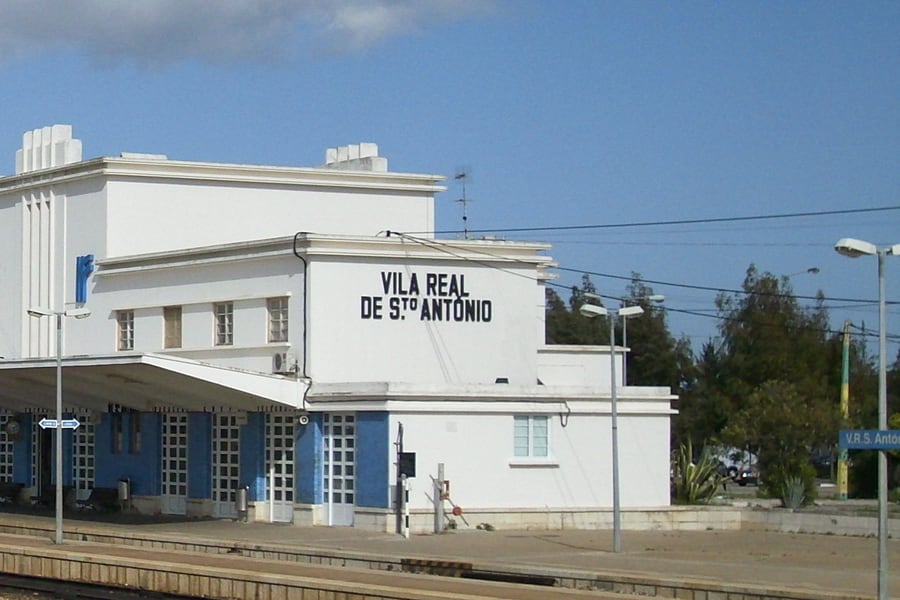
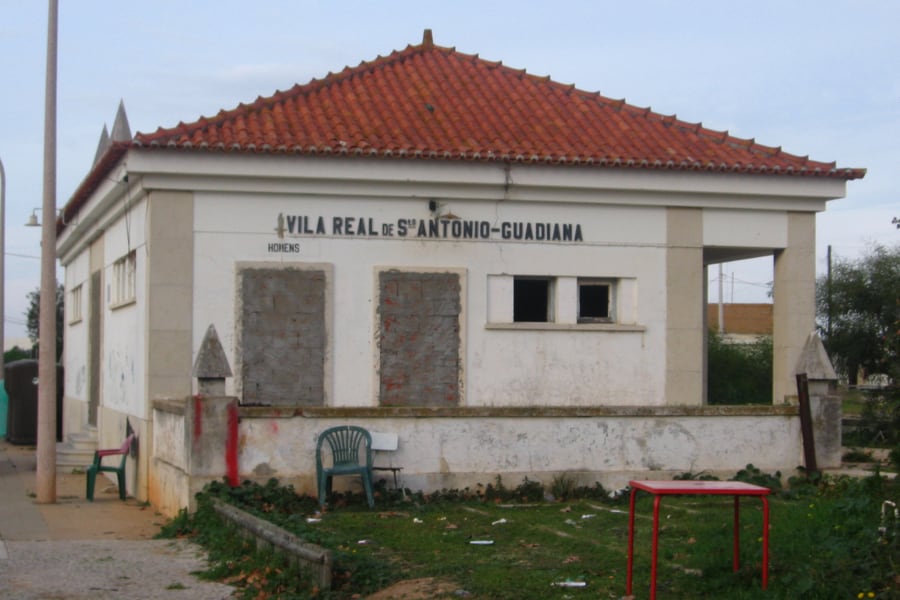
The railway reached Vila Real de Santo António, on the Guadiana opposite Spain, in 1906, and its station was built a kilometre short of the river on purpose. In 1951 the Gazeta dos Caminhos de Ferro, Portugal's railway journal, explained why: if a bridge were ever built across the Guadiana, the line would have to run straight on to the far bank, so the station stood where it should. The rail bridge never came. In 1952 the trains were extended to a halt by the customs house, near the river, instead, and the crossing built in 1991 was for the road. The trains end at the town station again, and the way on into Spain is still a ten-minute ferry from the quay.
The Algarve line runs about 141 km along Portugal's south coast, from Lagos past Portimão, Silves, Faro, Olhão and Tavira. Since 19 July 2026 it has been electric end to end, and direct regional trains run its whole length in about 2½ hours, with no change at Faro.
The Journey
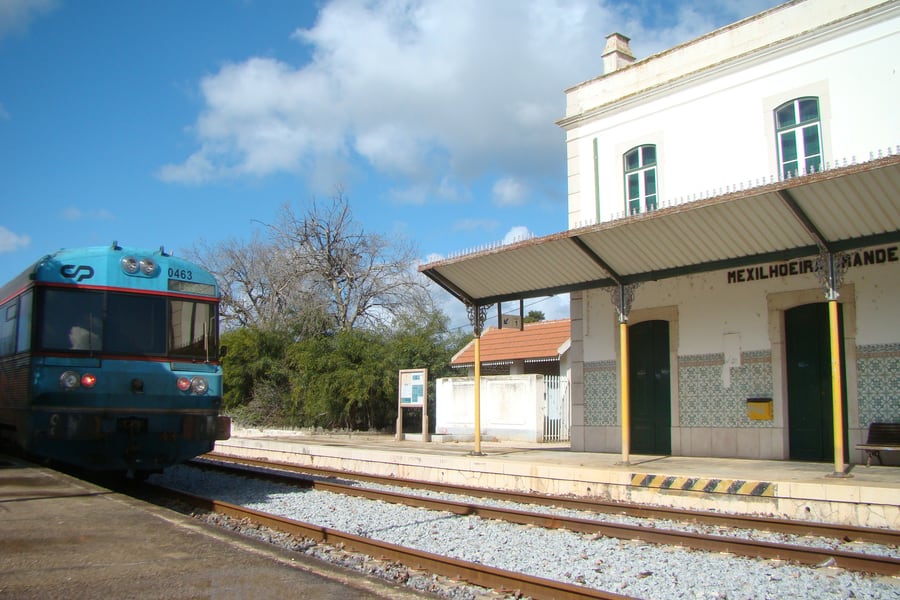
The train leaves Lagos, where the railway arrived last, on 30 July 1922, and runs east past Meia Praia and Mexilhoeira Grande to the Arade. It crosses the river on the bridge that opened with the Lagos line to reach Portimão, then turns inland to Silves, under its castle, through the orange groves of the Arade valley.
The junction at Tunes
At Tunes the line from Lisbon comes in from the north. This is the oldest part of the coast railway: trains reached Faro from Lisbon's direction in 1889, and the branch west from Tunes towards Portimão opened as far as Algoz in 1899. The Intercidades and Alfa Pendular from Lisbon share the tracks from here to Faro, past Albufeira–Ferreiras, Loulé and Parque das Cidades.
Faro and the Ria Formosa
Faro is the line's main station, where passengers used to change trains. Beyond it the line runs through Olhão and on behind the Ria Formosa, a lagoon of channels, salt pans and sand islands protected as a natural park, with halts at Fuseta, Livramento and Luz on the way to Tavira.
To the Guadiana
The last stretch, from Tavira to Vila Real de Santo António, opened in 1906 and completed what was then the Linha do Sul. Past Cacela, Castro Marim and Monte Gordo the line reaches the terminus at Vila Real. In 1951 a writer in the railway journal walked the kilometre from here to the quay, to find that the boat for Ayamonte had left: only two boats a day crossed each way, and their times did not meet the trains. A halt beside the customs house, by the river, opened on 24 January 1952, and every train ran on to it. The trains stop at the town station again today, and the crossing into Spain that came, in 1991, was a road bridge.
On board
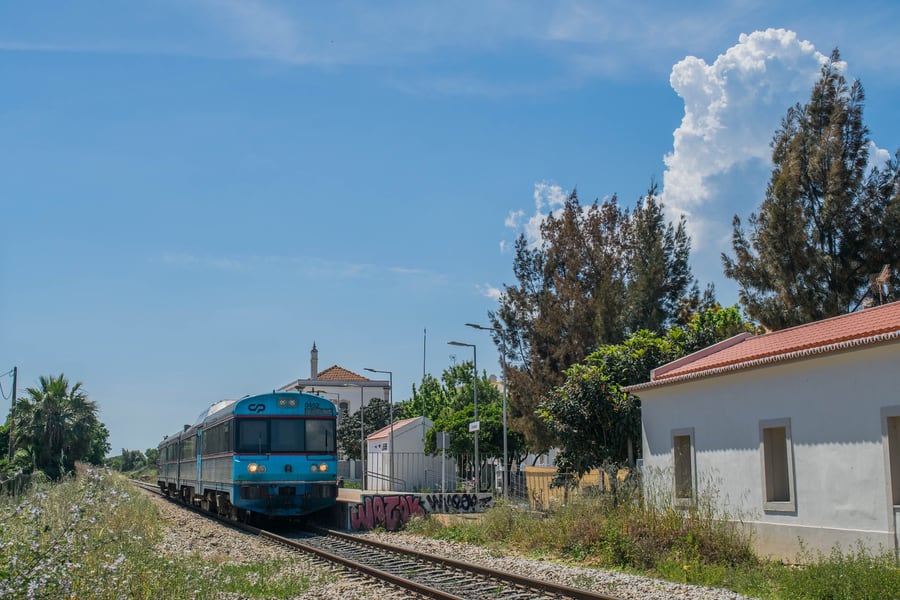
The line is worked by CP's UTE 2240 electric trains, which replaced the UDD 450 diesels in July 2026. They have about 40% more seats than the diesels, electric lifting platforms and spaces for wheelchairs, and announce the stops on screens and aloud. Two InterRegional trains a day each way make fewer stops.
Along the route
 Bextrel / Wikimedia Commons · CC BY 4.0 · cropped
The bridge at Portimão
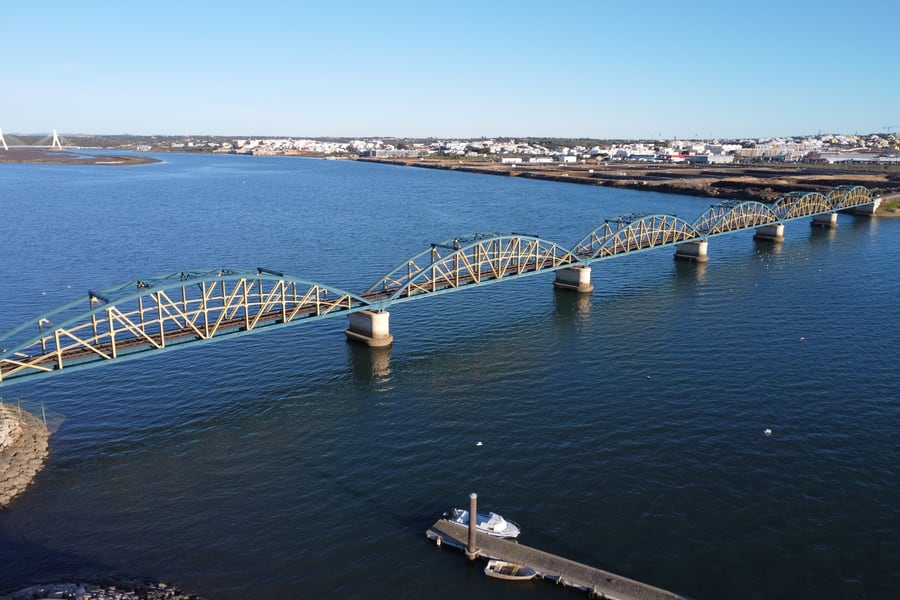
Between Ferragudo and Portimão the line crosses the Arade on a long steel bridge. It came into service in 1922, with the last stretch to Lagos.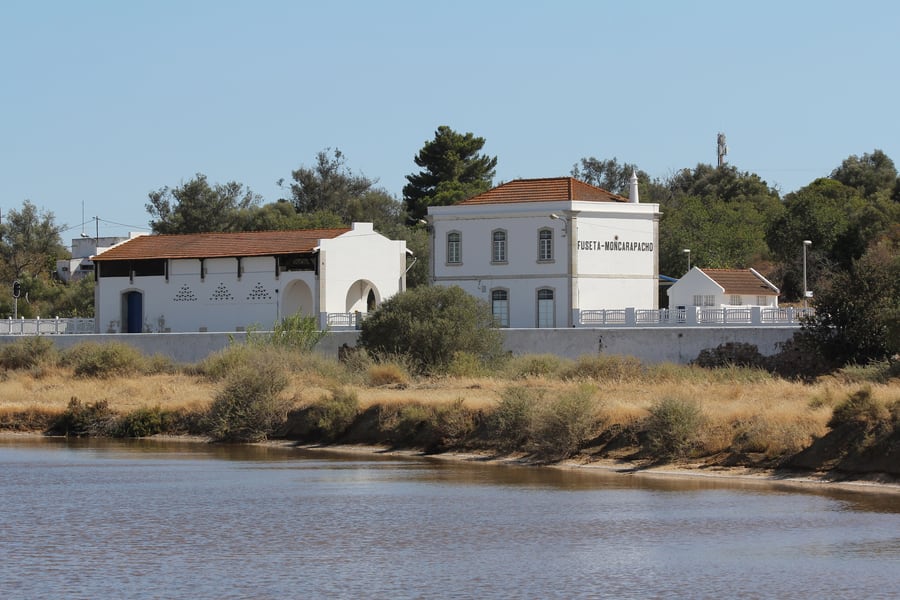 Till Niermann / Wikimedia Commons · CC BY 3.0 · cropped
Fuseta and the Ria Formosa
East of Olhão the line runs inland of the Ria Formosa, a maze of channels and salt pans behind the long strip of sand that keeps out the sea. At Fuseta the station stands by the water.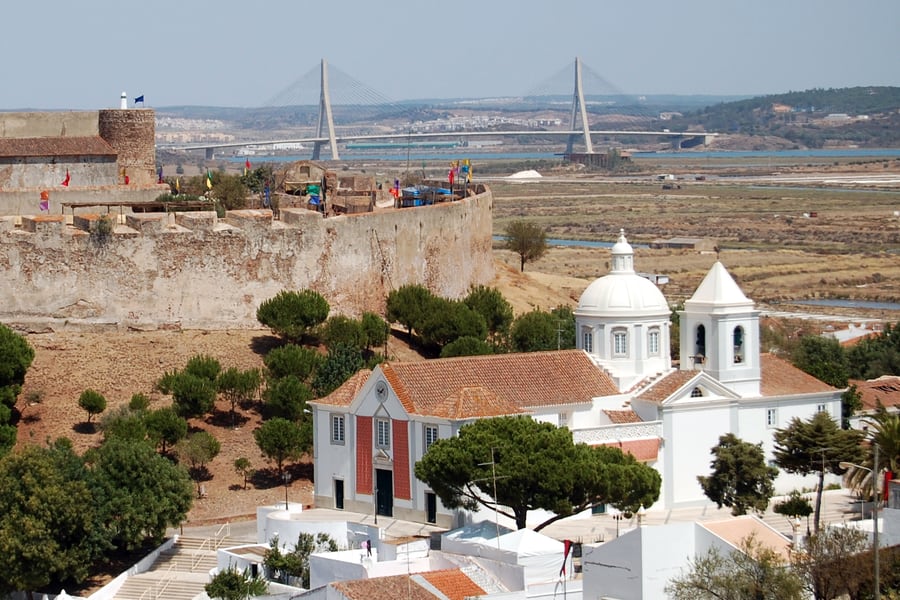 Steven Fruitsmaak / Wikimedia Commons · CC BY-SA 4.0 · cropped
Castro Marim and the bridge
Near the end the line passes Castro Marim, whose castle looks over the marshes and salt pans of a nature reserve. On the horizon is the Guadiana road bridge into Spain, opened in 1991.A bit of history
Culture & experiences along the way
 Alexkom000 / Wikimedia Commons · CC BY 4.0 · cropped
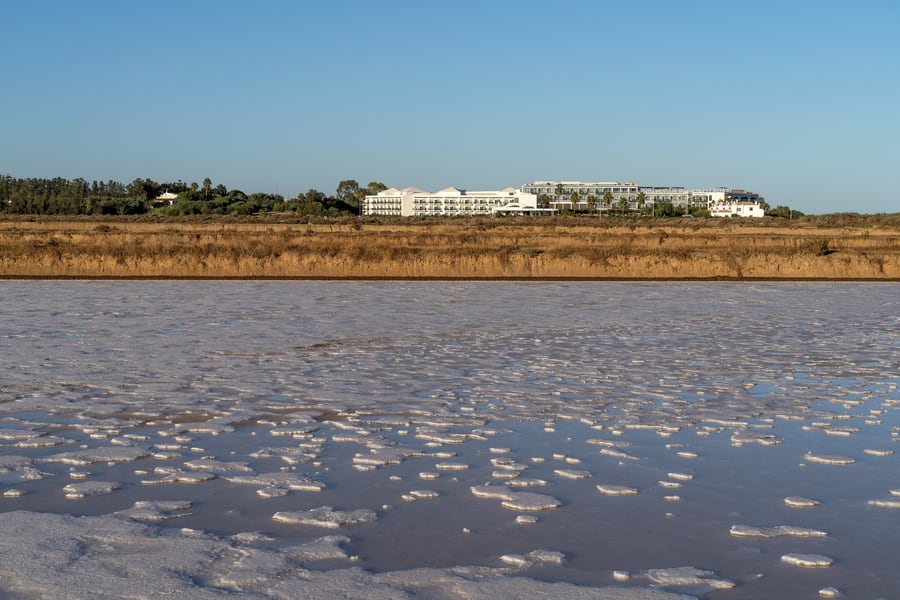
Flor de sal de Tavira
Sea salt harvested by hand in the salt pans of the Ria Formosa has carried a protected designation of origin since 2013, as Sal de Tavira and Flor de Sal de Tavira. The pans line the lagoon around the town, and Tavira is the place to buy some.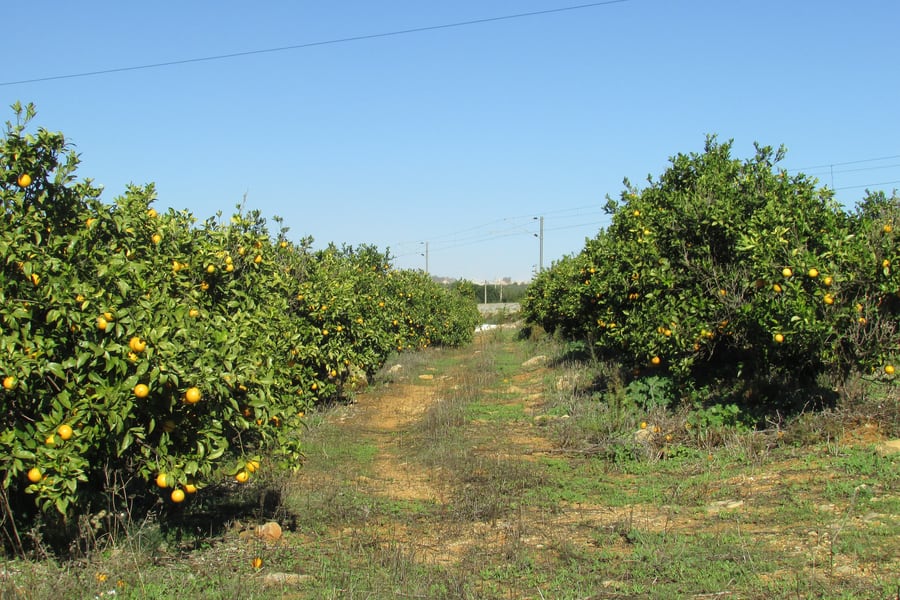 Kolforn / Wikimedia Commons · CC BY-SA 4.0 · cropped
Algarve oranges
The orange groves along the line grow fruit sold as Citrinos do Algarve, a protected geographical indication covering oranges, mandarins, lemons and limes. Silves is the heart of it: the Arade dam and its irrigation made the area Portugal's biggest orange producer.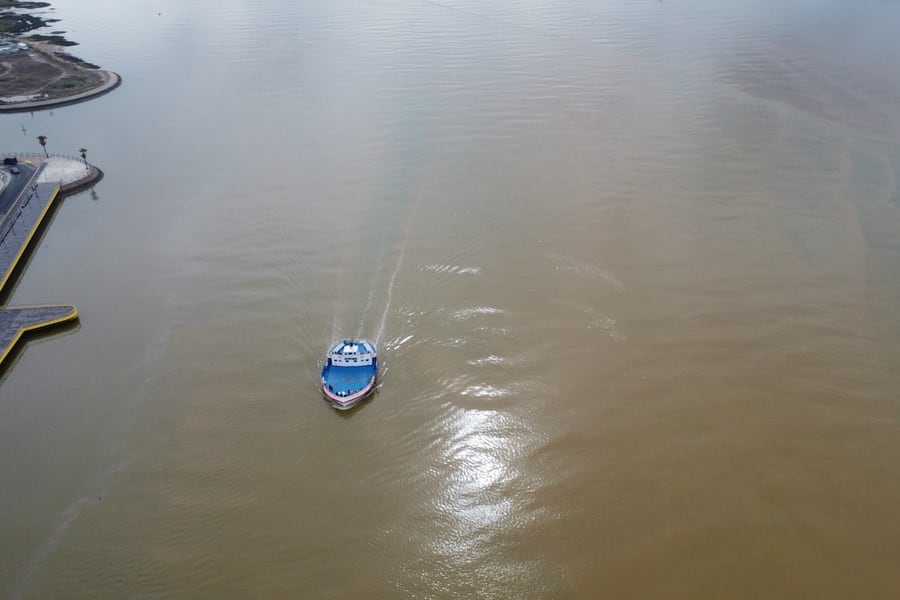 Jon Worth / Wikimedia Commons · CC BY 2.0 · cropped
The ferry to Ayamonte
From the quay at Vila Real de Santo António a small ferry crosses the Guadiana to Ayamonte in Spain in about ten minutes, several times a day and fewer on Sundays, for about €2. Tickets are sold at the marina; Spain's clocks are an hour ahead.Timetables
Since July 2026 most trains run the whole line from Lagos to Vila Real de Santo António without a change, in 2¼ to 3 hours; the rest change at Faro. Between Faro and Vila Real a train runs every hour, and between Faro and Lagos every two hours, more often at peak times. Every day of the week, with a few extra trains on weekdays. No reservation is needed.
Lagos to Vila Real de Santo António, direct trains
| Train | Lagos | Vila Real de Santo António | Runs |
|---|---|---|---|
| R 5901 | 06:20 | 08:58 | Daily |
| R 5903 | 08:22 | 10:58 | Daily |
| IR 881 | 10:34 | 12:54 | Daily |
| R 5905 | 13:22 | 15:58 | Daily |
| R 5907 | 17:18 | 19:58 | Daily |
| R 5909 | 18:22 | 20:58 | Weekdays |
| R 5911 | 19:25 | 21:55 | Daily |
Vila Real de Santo António to Lagos, direct trains
| Train | Vila Real de Santo António | Lagos | Runs |
|---|---|---|---|
| R 5900 | 05:34 | 08:09 | Mon–Sat |
| R 5902 | 07:30 | 10:07 | Daily |
| IR 880 | 09:37 | 11:53 | Daily |
| R 5904 | 11:34 | 14:13 | Daily |
| R 5906 | 13:34 | 16:13 | Weekdays |
| R 5908 | 15:34 | 18:13 | Daily |
| R 5910 | 17:34 | 20:16 | Weekdays |
| R 5912 | 18:34 | 21:17 | Weekdays |
| R 5914 | 19:34 | 22:28 | Daily |
A typical run, R 5905: Lagos 13:22, Portimão 13:40, Silves 13:54, Tunes 14:15, Albufeira–Ferreiras 14:20, Loulé 14:38, Faro 14:56, Olhão 15:06, Tavira 15:29, Vila Real de Santo António 15:58. The regionals stop at every station and halt; the InterRegionals skip the smaller ones.
As of October 2026, from CP's journey planner, train pages and Algarve line timetable on cp.pt (opens in a new tab), read for 23 and 27 October and 7 and 8 November 2026. Weekday and Mon–Sat trains do not run on public holidays.
Tickets
The Algarve line is an ordinary CP regional service, so the ticket is an ordinary point-to-point fare, bought from CP online, in the CP app or at the station, with no reservation needed. Lagos to Vila Real de Santo António costs €11.85 on a regional train and €13.05 on an InterRegional.
To stop off at Silves, Faro or Tavira on the way, buy a separate ticket for each leg. From CP's own pages, in euros, as of October 2026.
Book your tickets
Regional, end to end
€11.85 · Lagos to Vila Real de Santo António
A single on a direct regional train along the whole line, about 2½ hours.
Book Tickets (opens in a new tab, on CP)via CPInterRegional
€13.05 · fewer stops
The faster train that runs twice a day, Lagos to Vila Real de Santo António in about 2¼ hours.
Book Tickets (opens in a new tab, on CP)via CPRail Passes
Interrail and Eurail passes cover CP's Regional and InterRegional trains, and neither needs a reservation: show the pass and board.
For this journey alone, a pass is not worth buying. The full fare from Lagos to Vila Real de Santo António is €11.85. A pass pays when the Algarve line is one leg of a longer trip through Portugal or across Europe.
Checked October 2026 against interrail.com (opens in a new tab).
Places to Visit
Almost every stop is a town worth a few hours: a port of the Discoveries at one end, a Pombaline grid at the other, and a Moorish capital, a walled old town, a fishing market and a river town in between.
 Kolforn / Wikimedia Commons · CC BY 3.0 · cropped
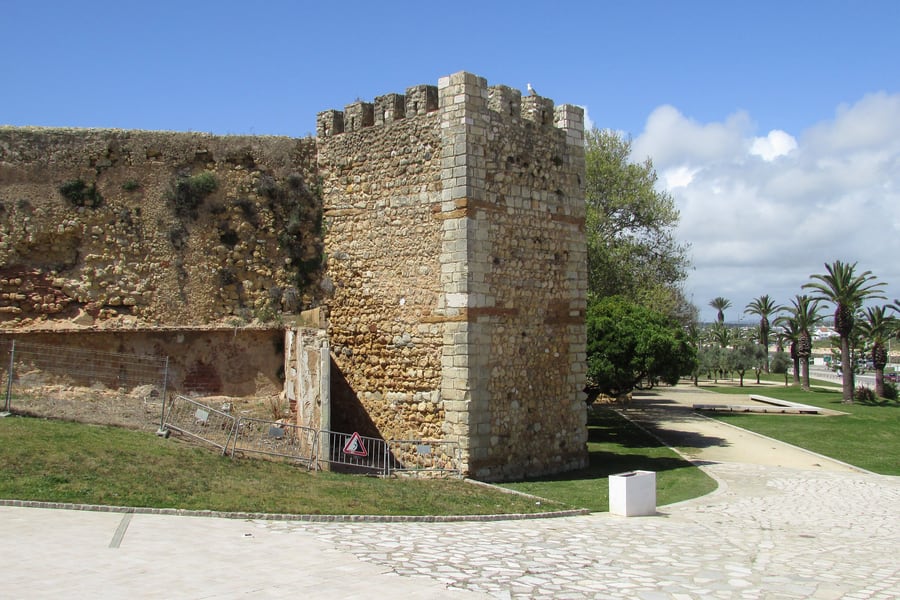
Lagos and its walls
Lagos was the great port of Portugal's voyages down the coast of Africa in the 15th century, and grew rich on the trade. Stretches of its walls, rebuilt in the 16th century as the town spread, still stand. The 1755 earthquake wrecked much of Lagos, and fish canning brought it back in the 19th century.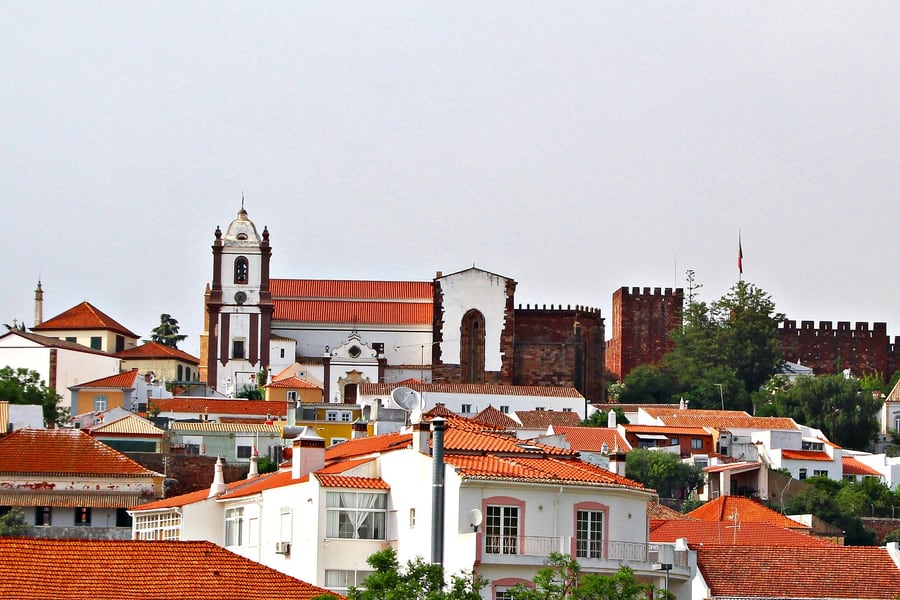 Hovallef / Wikimedia Commons · CC BY-SA 4.0 · cropped
Silves, castle and cathedral
Under the Moors, Silves was the leading city of the Algarve, praised as the Baghdad of the West. Its red-walled castle crowns the hill, and the cathedral below was built on the site of the mosque after the Christian conquest of 1242. The Arade, which made the town, later silted up.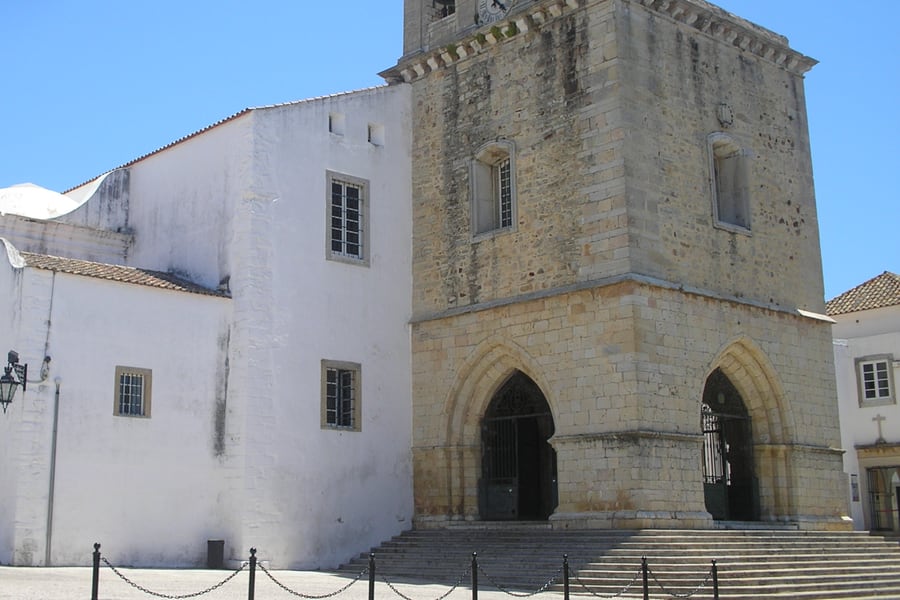 tiago186703274 / Wikimedia Commons · CC BY-SA 3.0 · cropped
Faro's Vila-Adentro
Faro's old town sits inside walls first laid out in the 9th century. Go in through the Arco da Vila, which keeps an Islamic gate inside it, to the cathedral square: the Sé was built on the site of the mosque after 1249, and Faro took the bishopric from Silves in 1540.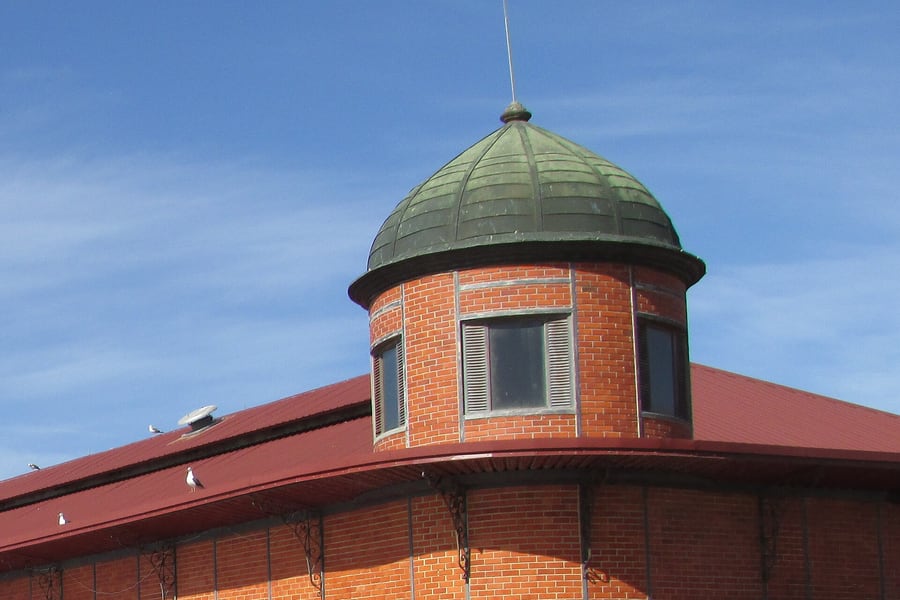 Kolforn / Wikimedia Commons · CC BY-SA 4.0 · cropped
Olhão's market and roofs
Olhão's brick market halls stand on the quay of the Ria Formosa, selling fish straight from the sea and fruit from the farms inland. From the main church tower the town is a field of flat roof terraces, the açoteias. Boats leave the quay for the islands of Armona and Culatra.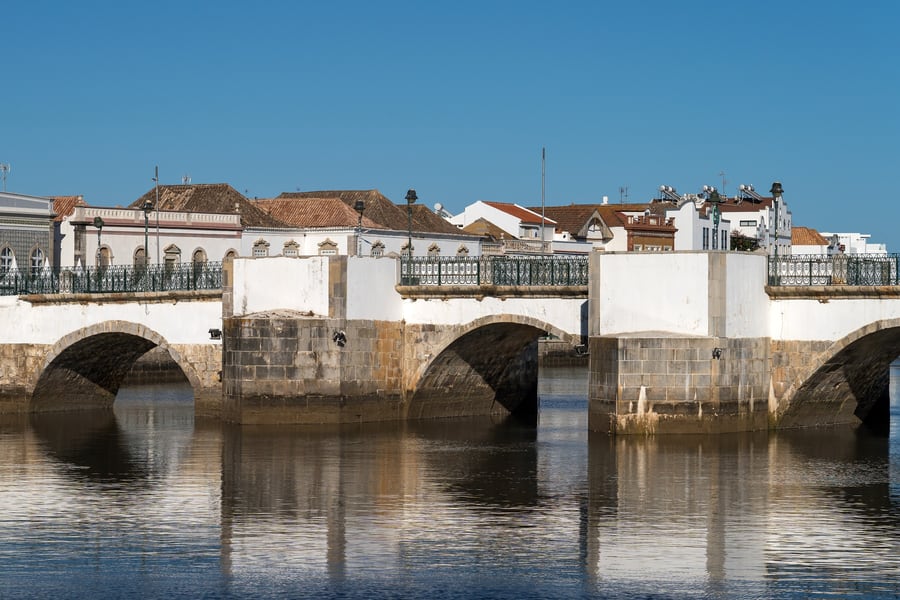 Alexkom000 / Wikimedia Commons · CC BY 4.0 · cropped
Tavira and the Gilão
Tavira straddles the River Gilão, joined by an old bridge believed to be Roman in origin and rebuilt in the 17th century. Climb the castle tower for the roofs, church domes and salt pans out to the sea, or see the town in the Camera Obscura set up in an old water tank. There are 37 churches to find.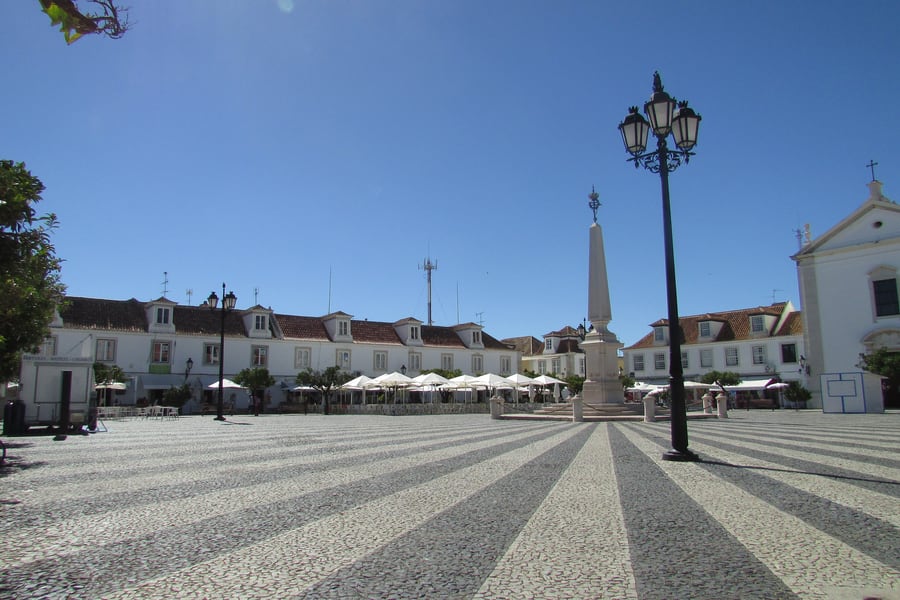 Kolforn / Wikimedia Commons · CC BY-SA 4.0 · cropped
The Pombaline town of Vila Real
Vila Real de Santo António was built in the 18th century on the plan that rebuilt Lisbon after the 1755 earthquake: a grid of streets, standard façades and stone cut in Lisbon and shipped down by boat. Black and white cobbles radiate from the obelisk of 1776 in the Praça Marquês de Pombal. Walk on to the old Customs House by the river.Where to Sleep
The whole line fits into a morning, but end it with a night in Vila Real de Santo António, by the river, and take the ferry to Spain the next day.
Where to stay
 Jose A. / Wikimedia Commons · CC BY 2.0 · cropped
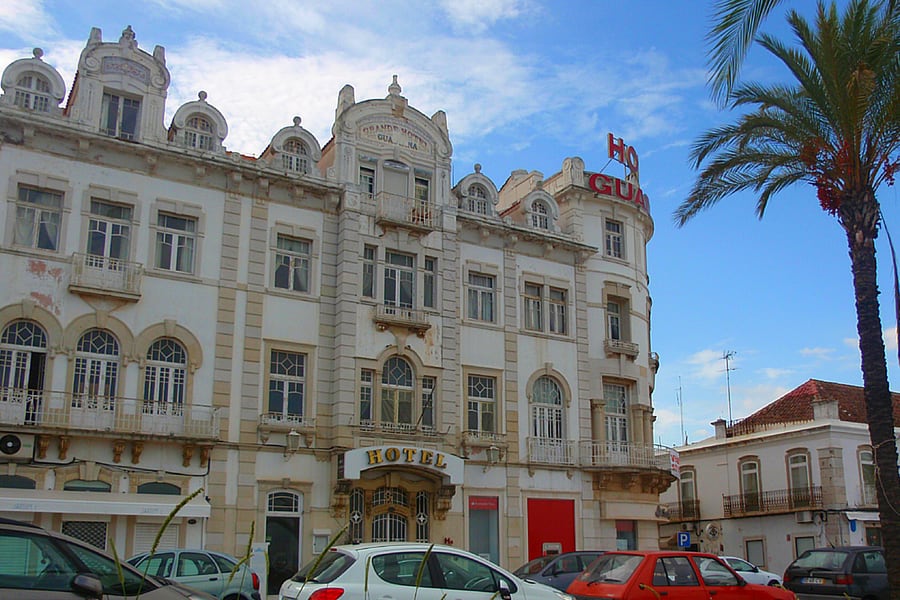
Grand House Algarve
A Belle Époque hotel on the Guadiana
The town's grand old riverside hotel, revived with 26 rooms and suites, looking across the Guadiana to Spain.
Check Availability (opens in a new tab, on bordoyhotels.com)via bordoyhotels.comQuestions or corrections
Planning this trip and stuck on something, or spotted a time, fare or detail that has changed? Send us a message about The Algarve Line. We read every one, and we update this page when something has changed.