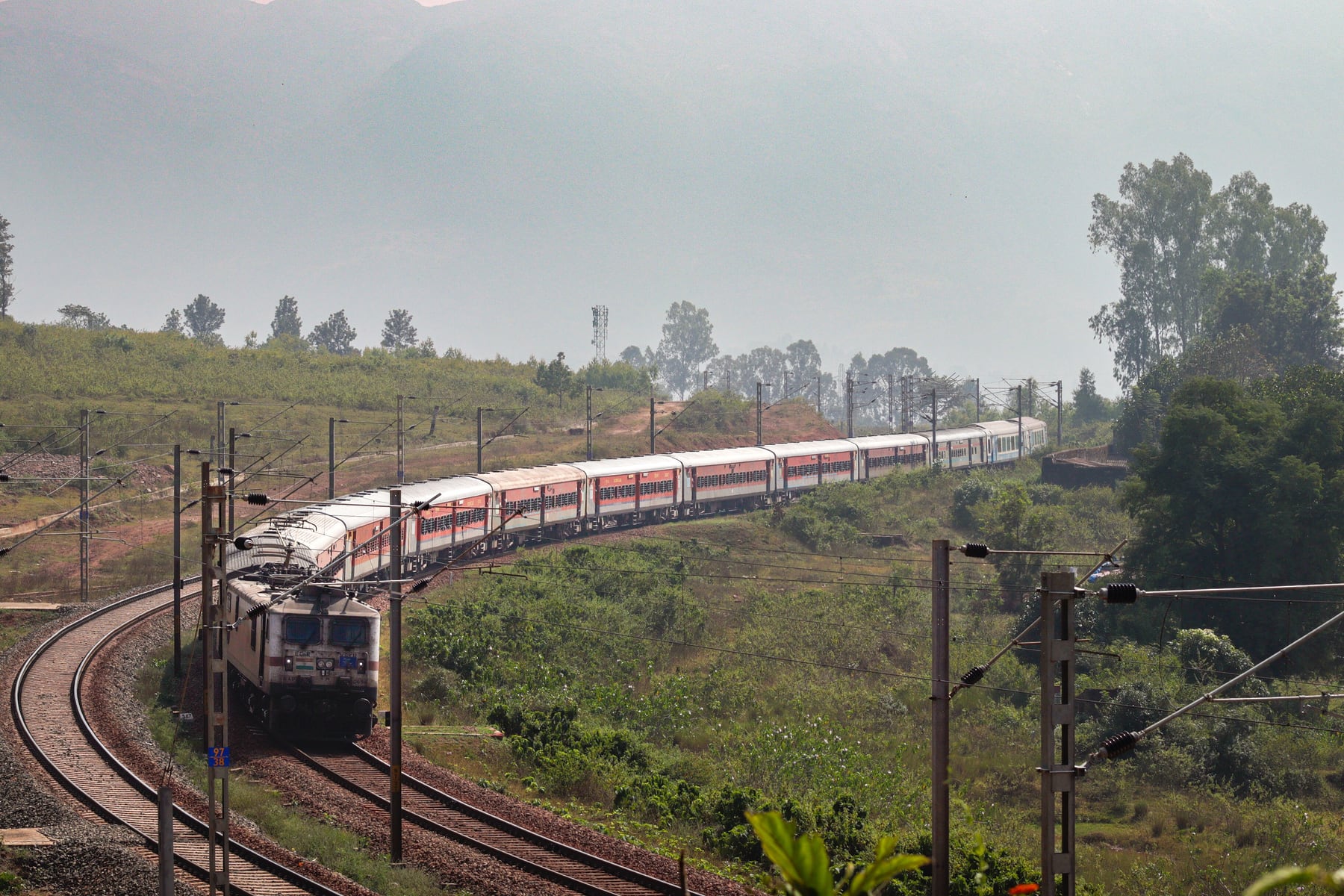
Araku Valley Vistadome
CS0207 / Wikimedia Commons · CC BY-SA 4.0 · cropped
- Distance131 km, Visakhapatnam to Araku
- Duration4 h up, 5 h 15 min down
- Best seasonNovember to February
Introduction
Indian Railways' glass-roofed trains began on this line. In April 2017 the first Vistadome coach, built at the Integral Coach Factory in Chennai with glass in its roof and seats that rotate, went into service on the line from Visakhapatnam to the Araku Valley. Vistadome coaches have since spread to other scenic lines, the Konkan Railway among them, but this is where Indian Railways tried the idea first.
It was not put on a fast train. Today the glass coaches ride on the 58501, an all-stops passenger that takes four hours for the 131 kilometres from the coast to Araku, climbing through the Ananthagiri hills of the Eastern Ghats, through dozens of tunnels, to a station board that reads 917 metres. The line was built in the 1960s to carry iron ore, and the ore trains still share it. At Araku the train is not even halfway: it carries on for another ten hours, to Kirandul in Chhattisgarh.
The Journey
The 58501 leaves Visakhapatnam Junction at seven in the morning and runs out through the city, past Simhachalam, the station below the temple hill, to Kottavalasa Junction. There it leaves the main line along the coast and turns inland onto the Kothavalasa–Kirandul line, taken up in 1960 and opened in 1966–67 to bring iron ore from the Bailadila range to the port at Visakhapatnam. It has been electrified throughout since 1982.
Into the Ghats
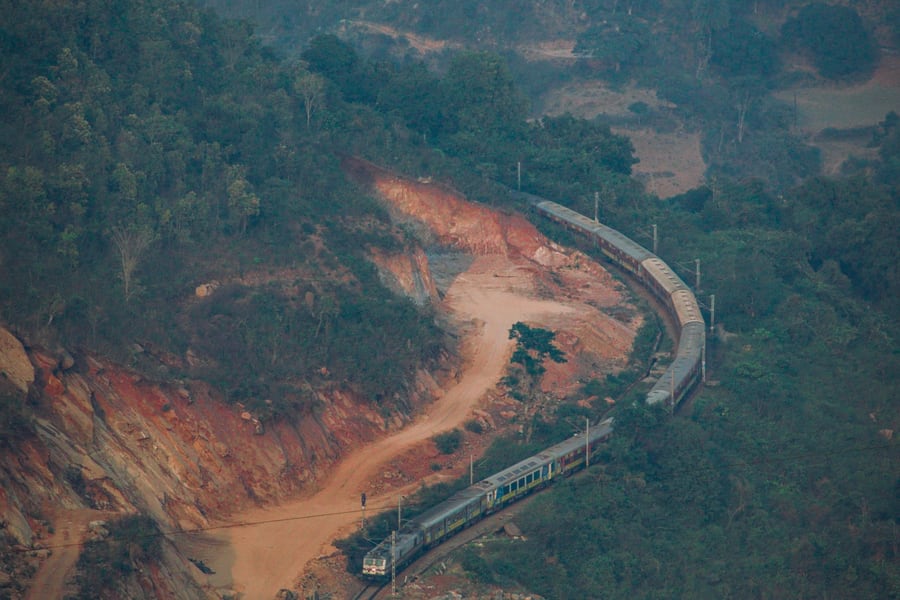
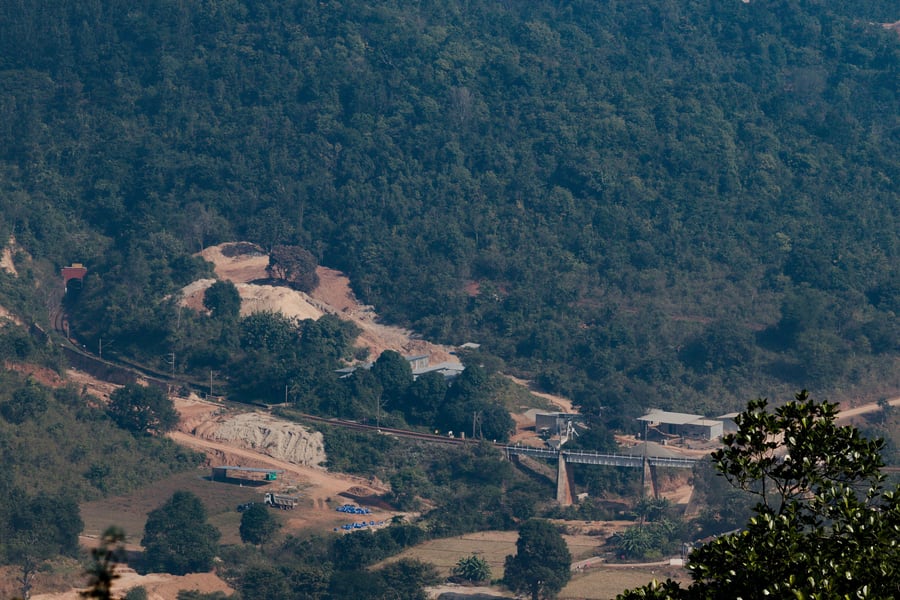
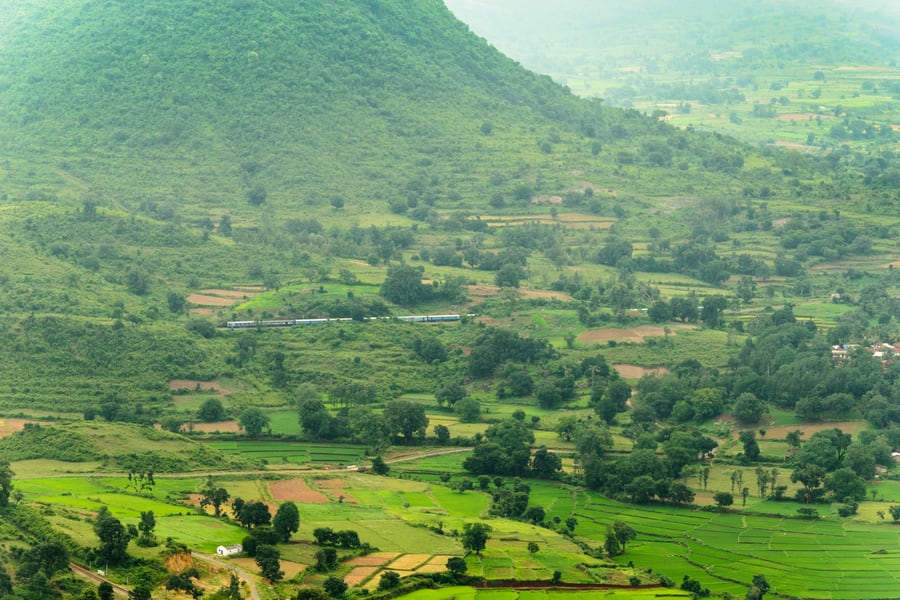
For the first hour the line runs across the coastal plain, as far as Shrungavarapukota. Then the climb begins. The track winds up the side of the Ananthagiri hills in curves that let the passengers see their own train from the windows, crosses gorges on tall girder bridges and passes through tunnel after tunnel. Near Borra Guhalu it turns through a full horseshoe, and at tunnel 32 it comes out of the hillside straight onto a bridge beside a waterfall.
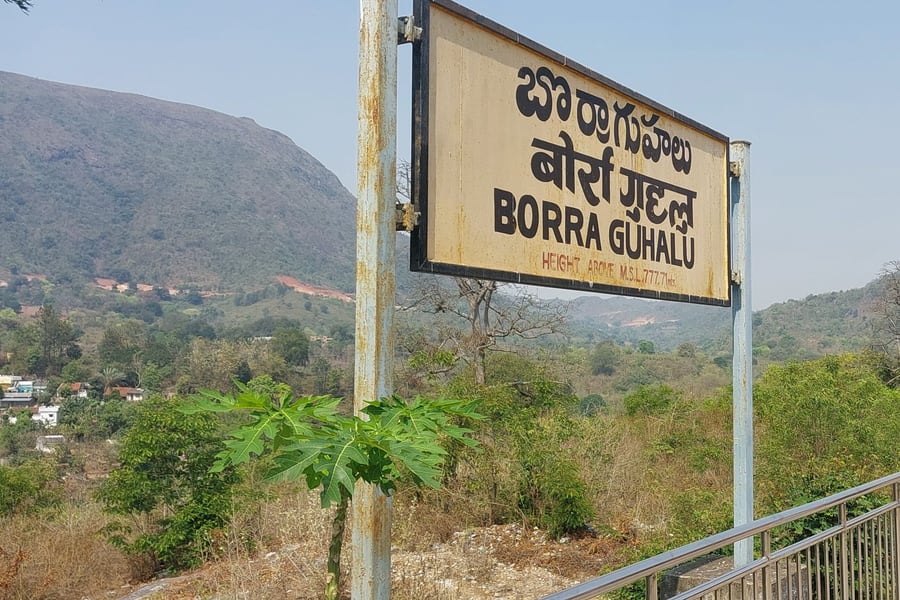
Borra Guhalu, the station for the Borra Caves, is reached at about twenty to ten; its board gives its height as 777 metres. The train stands for five minutes. Above it, the line climbs on to Shimiliguda and comes out onto the floor of the Araku Valley, among coffee estates, fields and villages, reaching Araku at 11:00.
The train
The Vistadome is one coach of a long rake, marshalled among the second-class seating and sleeper coaches of an everyday Indian passenger train, behind an electric locomotive. Inside the glass coach the seats rotate to face the windows, and the roof is glass, so the cliffs show overhead in the gorges. In the ordinary coaches the windows open, and the view is the same.
The 58502 brings the train back down from Kirandul in the afternoon, leaving Araku at 15:45, which gives a day visitor just under five hours in the valley. The overnight Kirandul Express uses the line too, but passes Araku after midnight in both directions: for the view, it has to be the passenger.
Along the route
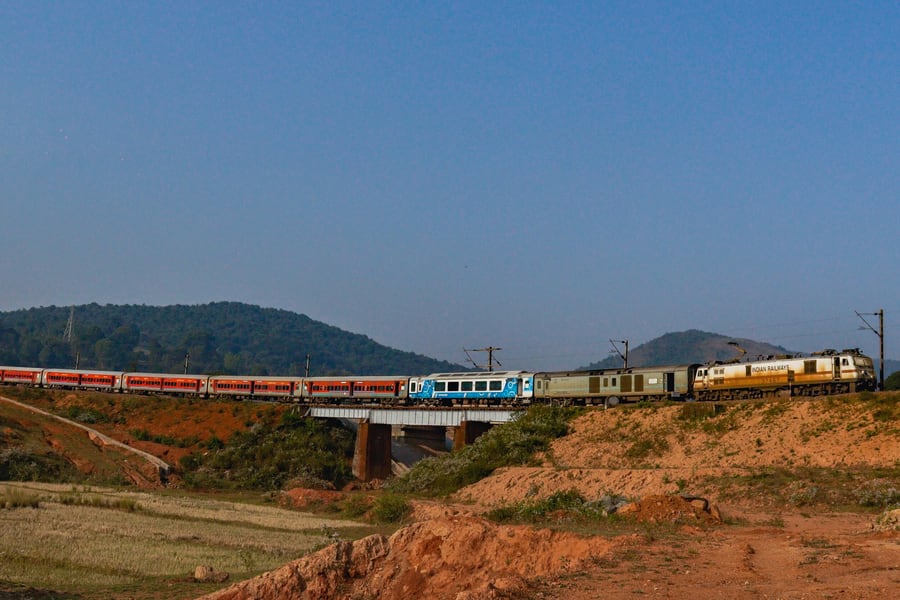
 Pinakpani / Wikimedia Commons · CC BY 4.0 · cropped
Borra Guhalu
The station for the Borra Caves, guhalu being Telugu for caves, stands 777 metres up by its own board. Both trains stop here for five minutes, the 58501 at about twenty to ten.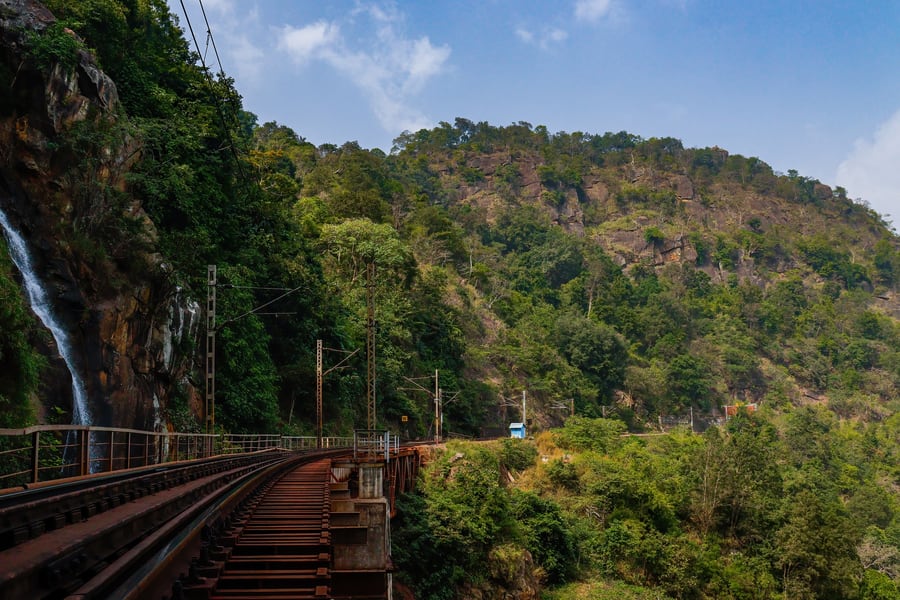 CS0207 / Wikimedia Commons · CC BY-SA 4.0 · cropped
Tunnel 32
On the climb the line comes out of tunnel 32 straight onto a bridge, with a waterfall dropping down the cliff beside it. One railway photographer calls it the finest spot on the line; from the train it is over in seconds.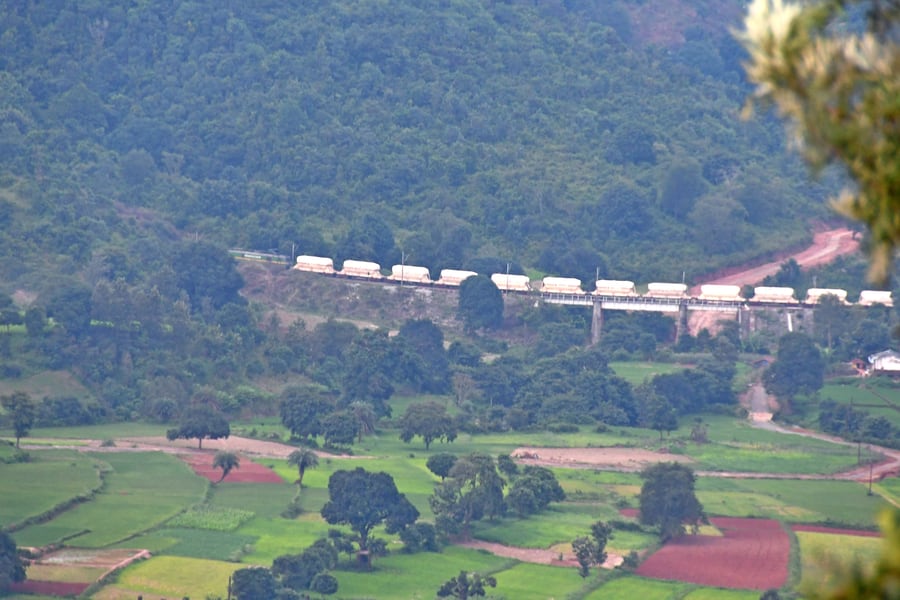 Drashokk / Wikimedia Commons · CC BY-SA 4.0 · cropped
The ore trains
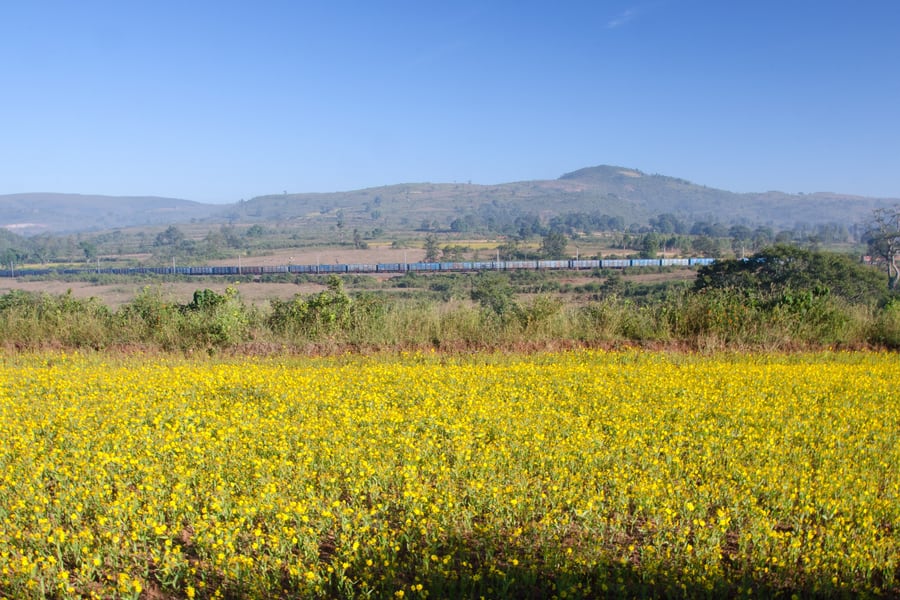
The line was built for iron ore from the Bailadila hills, bound for Visakhapatnam port, and freight still pays for it: in 2022–23 it earned ₹2,252 crore, over a quarter of its division's freight income.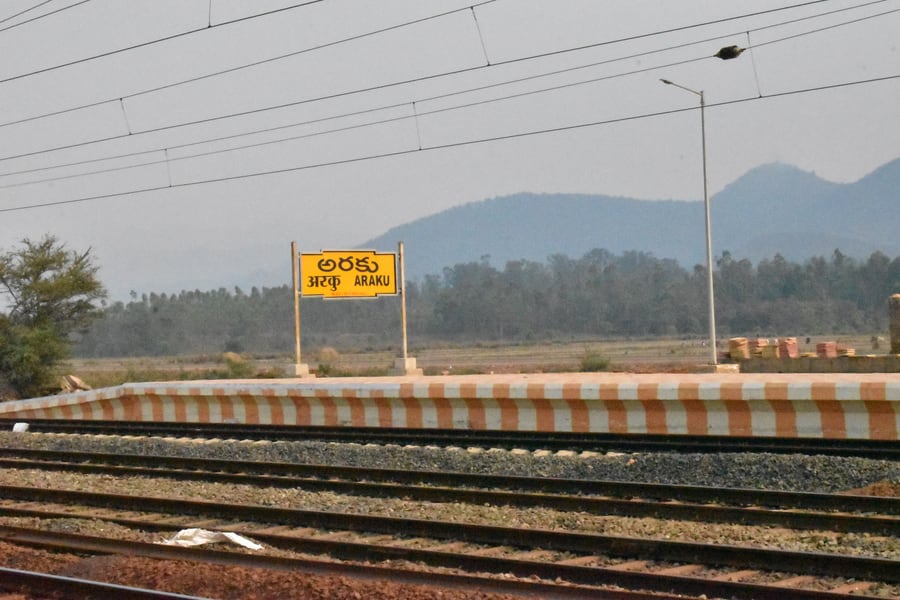 Pinakpani / Wikimedia Commons · CC BY 4.0 · cropped
Araku
At 917 metres by its board, Araku is where this ride ends, and barely a quarter of the way for the train. It goes on through Koraput and Jagdalpur to Kirandul, 472 km from Visakhapatnam, at nine at night.A bit of history
Culture & experiences along the way
 Amartyabag / Wikimedia Commons · CC BY-SA 3.0 · cropped
Araku coffee
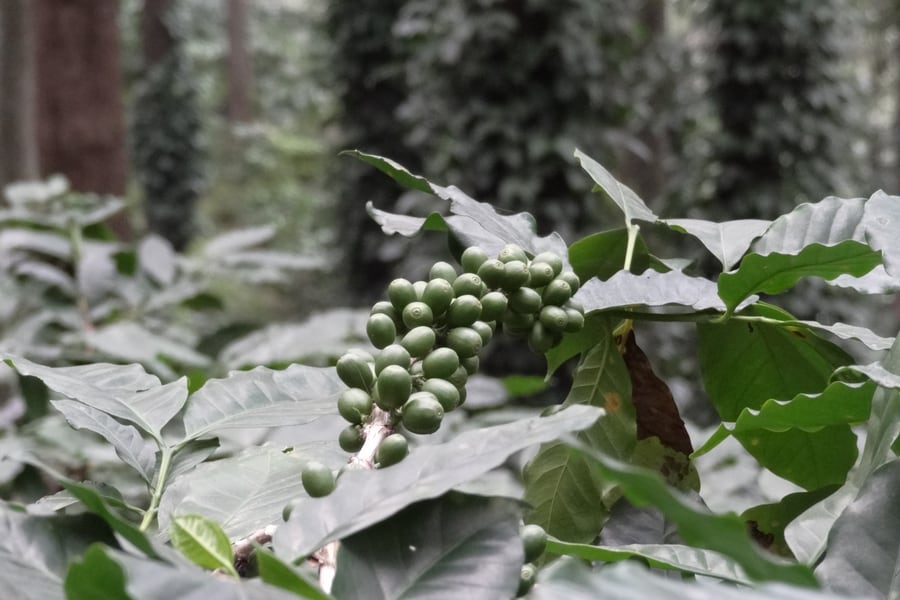
Coffee grows in the shade of tall trees across the Ananthagiri hills and the Araku Valley, much of it on two-acre plots handed to tribal families. Since 2019 Araku Valley Arabica Coffee has been a registered geographical indication, filed by India's Coffee Board.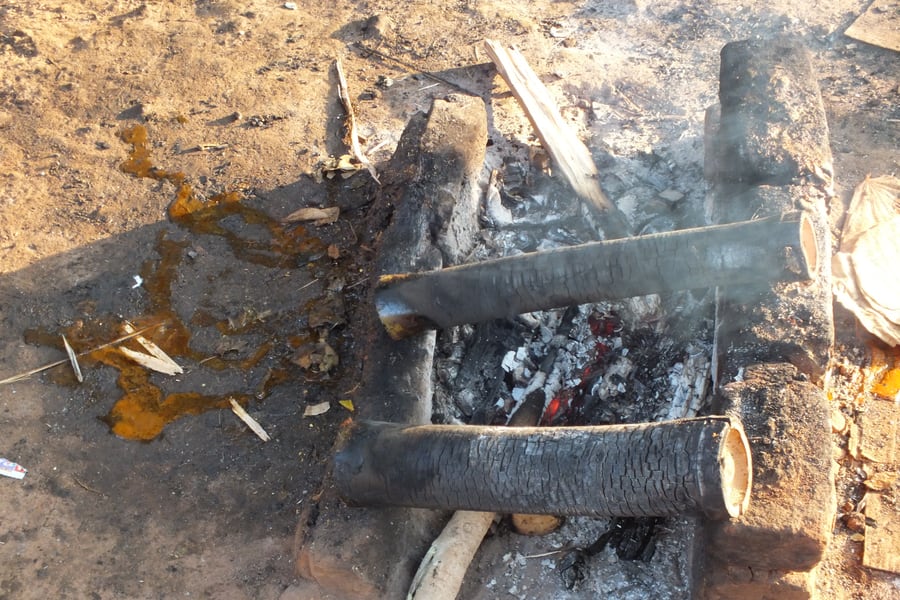 Rupasree / Wikimedia Commons · CC BY-SA 4.0 · cropped
Bamboo chicken
A dish of the tribal communities of the Eastern Ghats: marinated chicken packed into a length of green bamboo, sealed with leaves and turned over charcoal for up to an hour. The bamboo chars outside while the meat steams in its own juices. It has become a signature dish of Araku.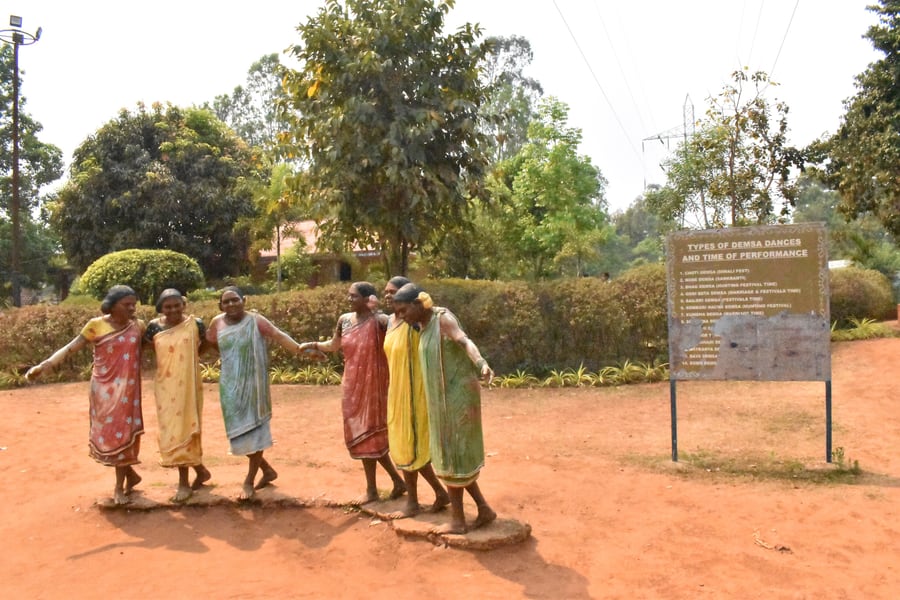 Pinakpani / Wikimedia Commons · CC BY 4.0 · cropped
Dhimsa
The dance of the hill peoples around Araku and the Borra Caves: a chain of fifteen or twenty women, arms linked, stepping in widening circles to drums played by the men. Performances are put on for visitors on Saturday and Sunday nights; the Tribal Museum has the dancers in sculpture.Timetables
The passenger train runs daily in both directions. Seats in the Vistadome, in second-class seating and in sleeper class are all reserved.
Visakhapatnam to Araku — 58501
| Station | Arrives | Departs |
|---|---|---|
| Visakhapatnam | — | 07:00 |
| Simhachalam | 07:18 | 07:20 |
| Kottavalasa | 07:40 | 07:42 |
| Shrungavarapukota | 08:15 | 08:17 |
| Borra Guhalu | 09:41 | 09:46 |
| Shimiliguda | 10:28 | 10:29 |
| Araku | 11:00 | 11:05 |
The train continues to Koraput (13:20), Jagdalpur (16:25) and Kirandul (21:00), 472 km from Visakhapatnam.
Araku to Visakhapatnam — 58502
| Station | Arrives | Departs |
|---|---|---|
| Araku | 15:30 | 15:45 |
| Shimiliguda | 16:03 | 16:04 |
| Borra Guhalu | 16:45 | 16:50 |
| Shrungavarapukota | 18:23 | 18:25 |
| Kottavalasa | 19:08 | 19:10 |
| Simhachalam | 19:31 | 19:33 |
| Visakhapatnam | 21:00 | — |
The 58502 leaves Kirandul at 06:00 and calls at Jagdalpur at 09:50 and Koraput at 13:15 on its way to Araku.
Overnight
The 18515 Kirandul Express leaves Visakhapatnam daily at 21:10 and passes Araku at 00:23; the 18516 passes Araku at 23:13 and reaches Visakhapatnam at 03:40. Both run in the dark through the Ghats.
Times are from IRCTC's train schedules, as of October 2026. Check your train on IRCTC (opens in a new tab) before travelling.
Tickets
Every seat on the passenger train is sold by IRCTC, Indian Railways' booking service, online and in its app, and at station counters. The Vistadome is the class marked EV; second-class seating is 2S and sleeper SL.
Book well ahead. Nine days before Thursday 22 October 2026, the Vistadome from Visakhapatnam to Araku was full, waiting list included, on every date we checked that month, and the return already had a waiting list. Sleeper and second class were nearly as hard to get. The fares below are those IRCTC quoted for that day, one way.
Book your tickets
CS0207 / Wikimedia Commons · CC BY-SA 4.0 · croppedVistadome
Visakhapatnam ⇄ Araku · 4 h, daily
The glass-roofed coach, class EV: ₹740 one way to Araku, ₹990 on to Koraput.
Book Tickets (opens in a new tab, on irctc.co.in)via irctc.co.inCS0207 / Wikimedia Commons · CC BY-SA 4.0 · croppedSecond class and sleeper
Visakhapatnam ⇄ Araku · same train
Reserved second-class seating from ₹45 one way, sleeper class ₹105.
Book Tickets (opens in a new tab, on irctc.co.in)via irctc.co.inRail Passes
No rail pass covers the line to Araku. Interrail and Eurail are European schemes, and India is not among the countries in Interrail's list of covered railway companies. Indian Railways' own pass for foreign visitors, the Indrail Pass, was withdrawn by Railway Board order on 19 September 2017. Every journey is bought as a ticket for a train, through IRCTC or at the station.
A pass would not help here anyway. Second-class seating from Visakhapatnam to Araku costs ₹45, and even the Vistadome is ₹740.
Checked October 2026 against Interrail's list of railway companies (opens in a new tab) and the Indrail Pass (opens in a new tab).
Places to Visit
Araku is the base for the valley, the Borra Caves and the waterfalls below it. Visakhapatnam, where the line starts, deserves a day of its own on the coast before or after the ride.
 Pinakpani / Wikimedia Commons · CC BY 4.0 · cropped
Borra Caves
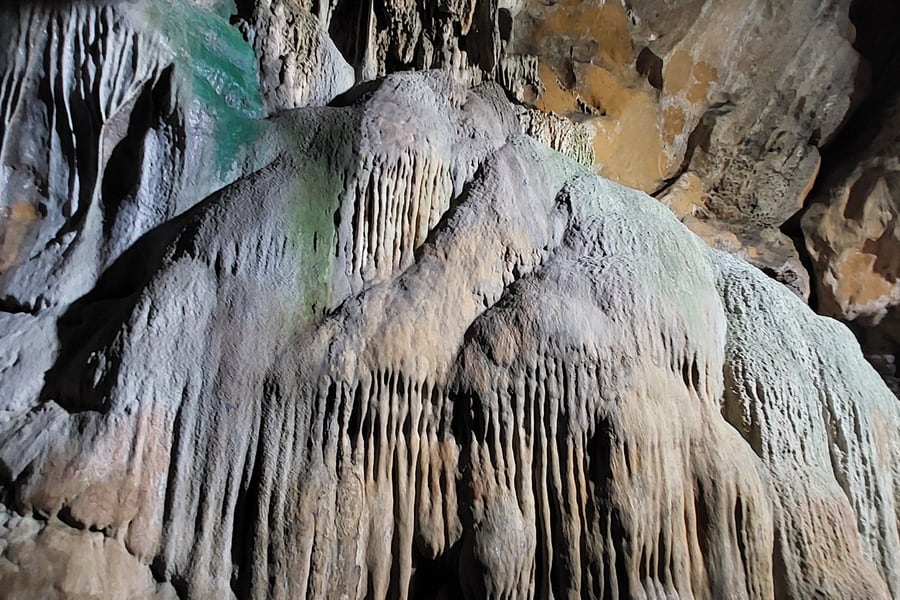
A limestone cave system reaching about 80 metres underground, its stalactites and flowstone shaped by the Gosthani river. The story told locally is of a cow that fell through a hole in the roof; the herdsman who climbed in after it found a stone like a Shiva lingam, still worshipped inside. The state tourism department lights the caverns.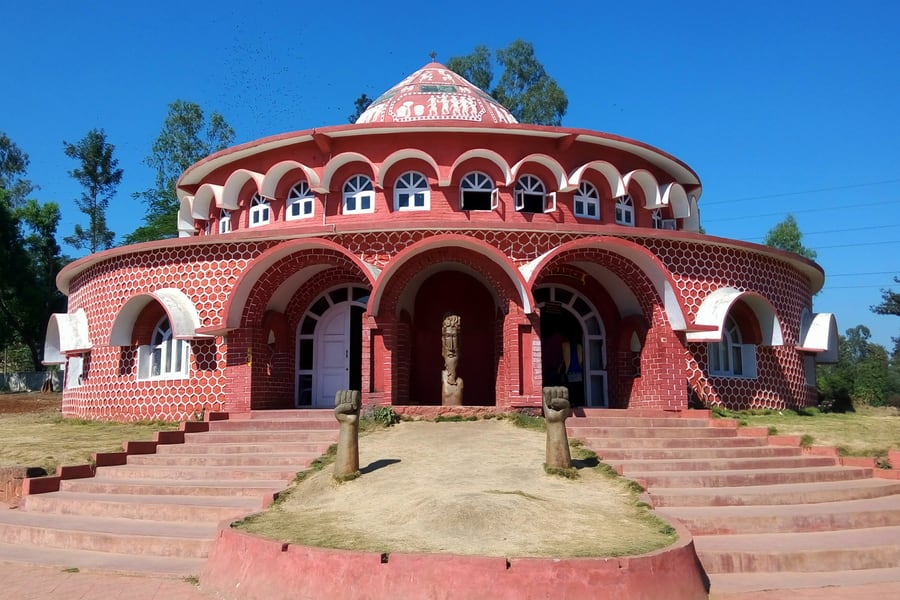 Ravi teja / Wikimedia Commons · CC BY-SA 4.0 · cropped
Araku Tribal Museum
A round red building in Araku given over to the hill peoples of the valley, who belong to more than seventeen tribal communities: their homes, tools, instruments and costumes, with sculptures of daily life and dance in the grounds. Tribal handicrafts are on sale.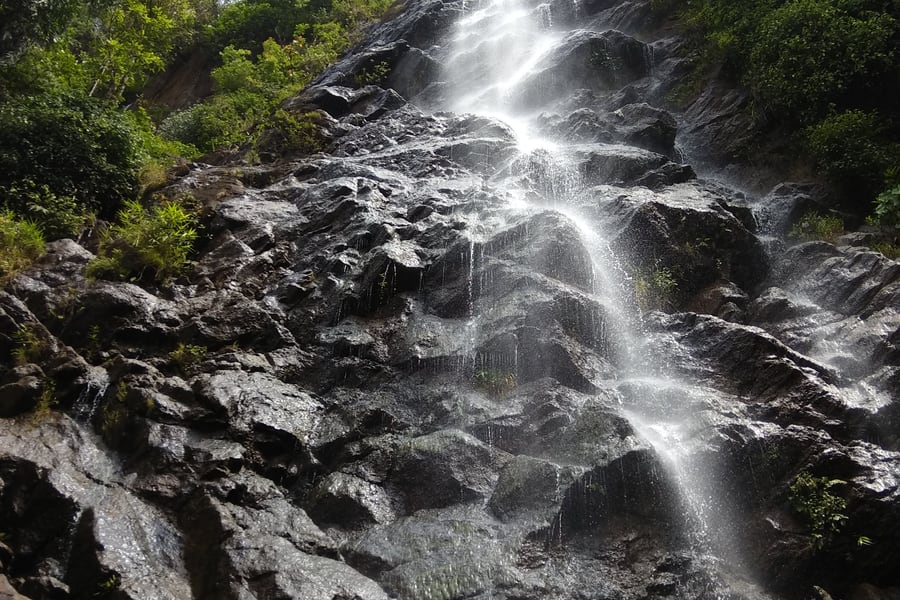 Svpsunanda / Wikimedia Commons · CC BY-SA 4.0 · cropped
Katiki Waterfalls
The Gosthani, the same river that shaped the Borra Caves, drops down a cliff of dark rock in the forest of the Ananthagiri hills, about 30 km by road from the caves. It makes an easy pairing with them on a day out from Araku.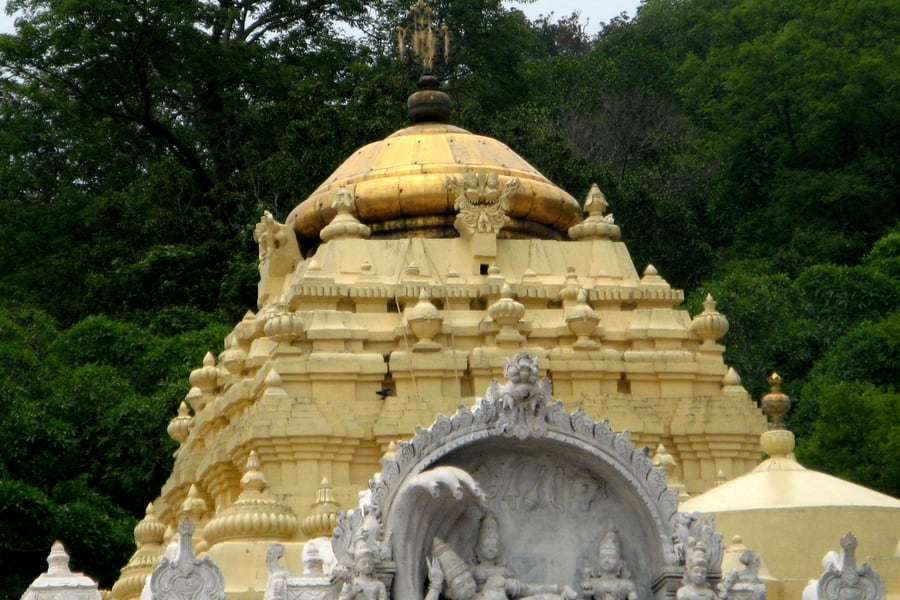 Adityamadhav83 / Wikimedia Commons · CC BY-SA 3.0 · cropped
Simhachalam
The hill temple of Vishnu as Varaha Narasimha stands 300 metres up, above the line's first station. The present temple was consecrated in 1268 under the Eastern Ganga kings. All year the image is covered in sandalwood paste, which makes it look like a lingam; it is shown uncovered only on the festival day of Akshaya Tritiya.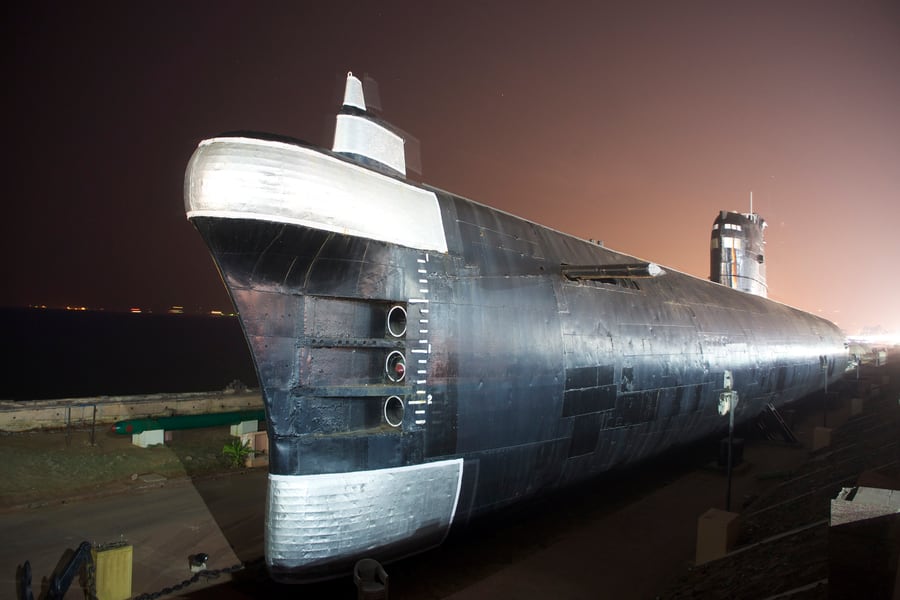 Av9 / Wikimedia Commons · CC BY-SA 4.0 · cropped
INS Kursura
A 91-metre submarine built in Leningrad, commissioned into the Indian Navy in 1969, on patrol in the war of 1971 and retired in 2001, now hauled up on the beach front as a museum. It opened to the public in August 2002, and is one of the few submarine museums anywhere to keep its original fittings inside.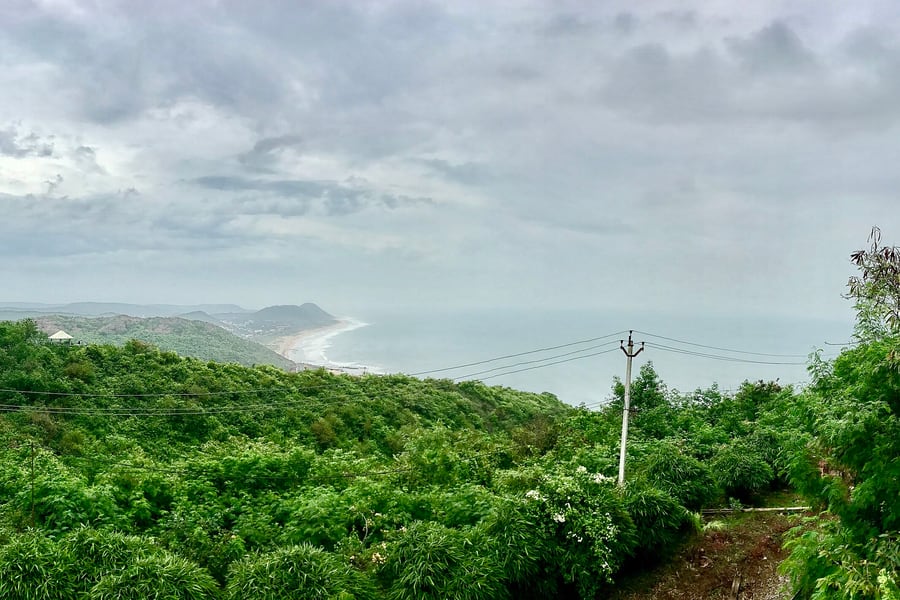 IM3847 / Wikimedia Commons · CC BY-SA 4.0 · cropped
Kailasagiri
A 380-acre park on a hill 173 metres above the city, reached by road or by a 350-metre cable car. From the top the view runs along the curve of the coast north of Visakhapatnam and out over the Bay of Bengal. Statues of Shiva and Parvati and a temple to Shiva stand on the hill.Where to Sleep
The morning train makes Araku a day trip from Visakhapatnam, but a night in the valley gives time for the Borra Caves as well. Visakhapatnam is the base for the night before: the train leaves at seven.
Where to stay
 IM3847 / Wikimedia Commons · CC BY-SA 4.0 · cropped
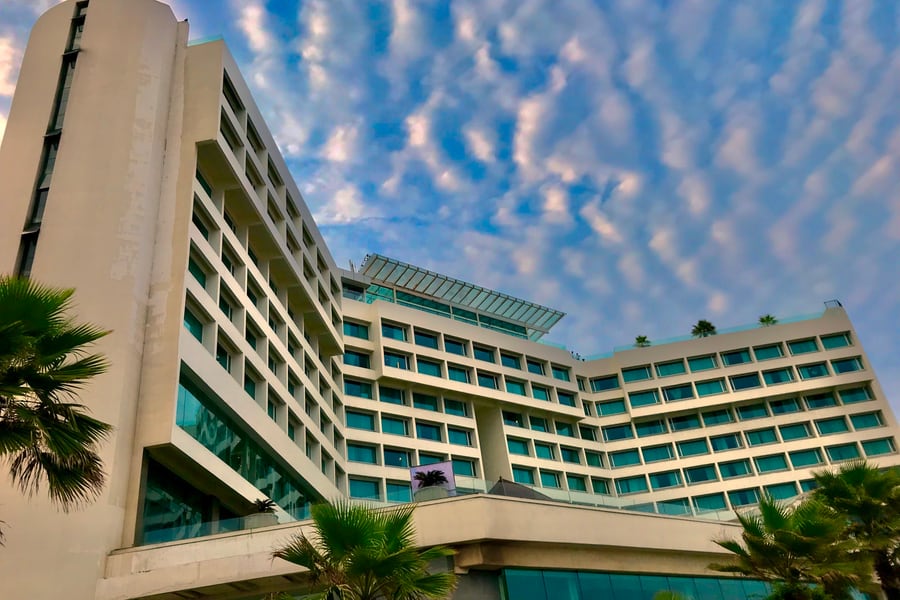
Novotel Visakhapatnam Varun Beach
On Beach Road, Visakhapatnam
A 225-room hotel on the seafront, a short walk from the submarine museum.
Check Availability (opens in a new tab, on all.accor.com)via all.accor.comQuestions or corrections
Planning this trip and stuck on something, or spotted a time, fare or detail that has changed? Send us a message about Araku Valley Vistadome. We read every one, and we update this page when something has changed.