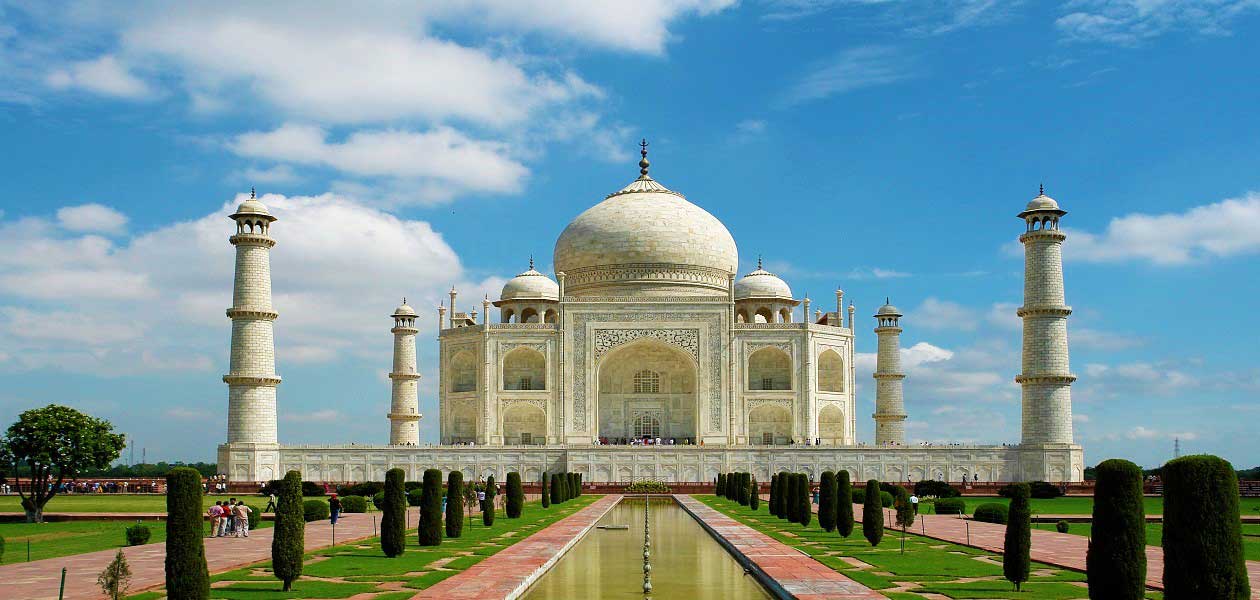
India
India runs on rail. Its network is among the largest and busiest on earth, carrying millions of people every day and reaching almost every corner of the subcontinent — and a train remains the classic, unhurried, endlessly sociable way to travel the country.
Among its journeys are true wonders, none more so than the UNESCO-listed hill railways — the little "Toy Train" that climbs to Darjeeling in the shadow of the Himalaya being the most beloved of them all.
Rail journeys in India
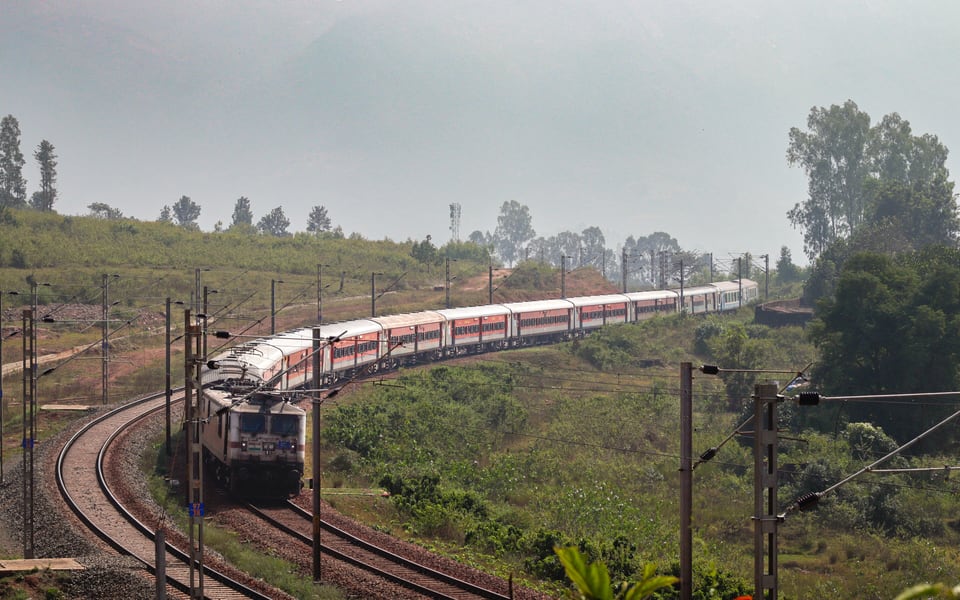
Araku Valley Vistadome
Indian Railways' glass-roofed Vistadome coaches began here, on an all-stops passenger from Visakhapatnam up through the Eastern Ghats to Araku.
View journey →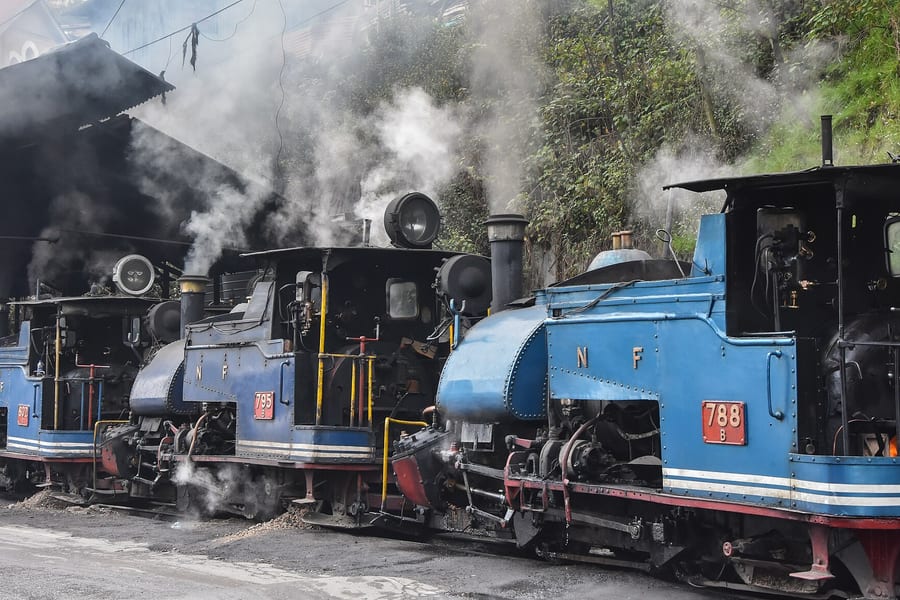
Darjeeling Himalayan Railway
The "Toy Train" — a UNESCO World Heritage narrow-gauge line that climbs from the plains to the Himalayan hill town of Darjeeling, in sight of Kanchenjunga.
View journey →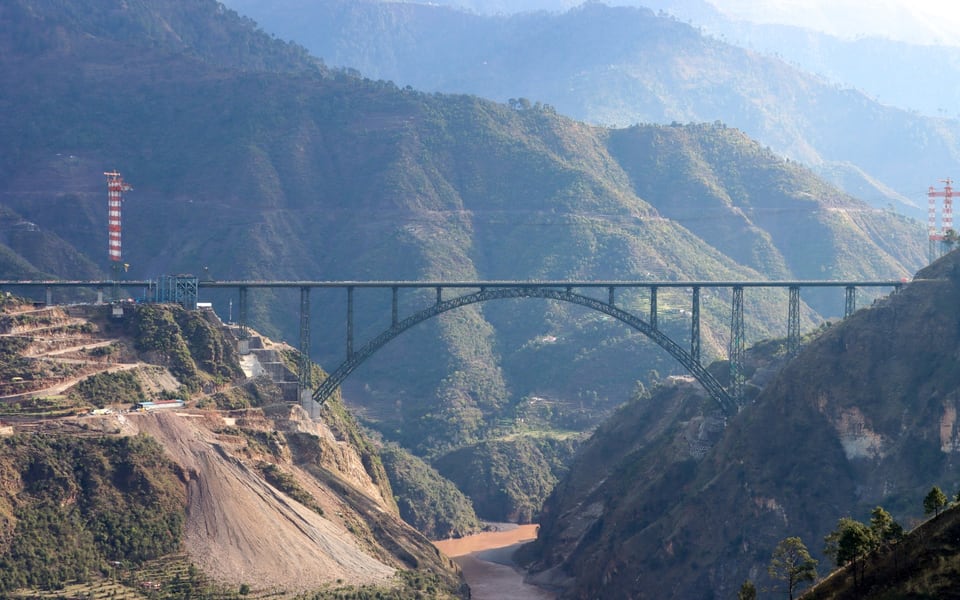
Jammu–Srinagar Vande Bharat
Jammu to Srinagar by Vande Bharat, across the Chenab bridge: the highest railway bridge in the world, 359 metres above the river.
View journey →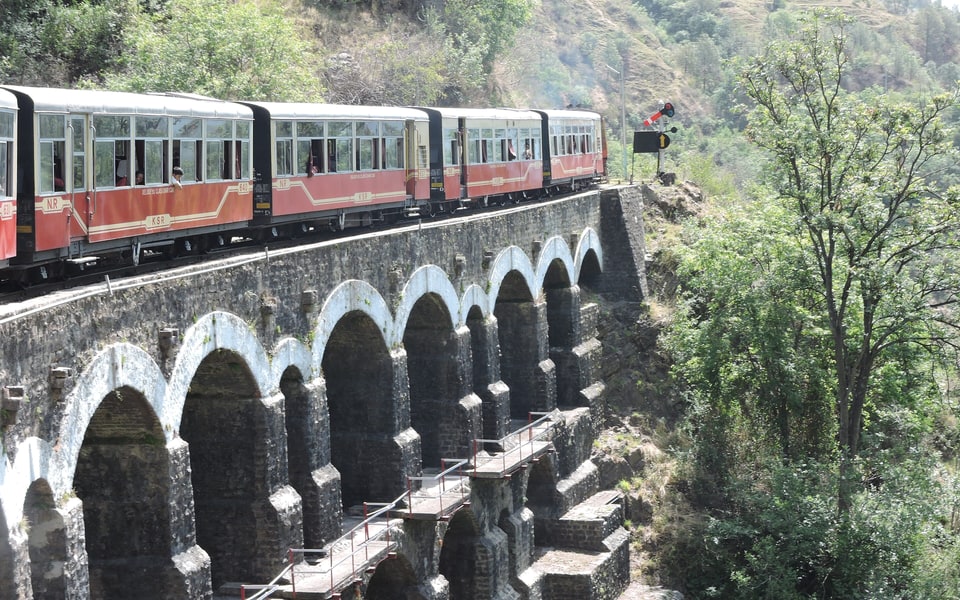
Kalka–Shimla Railway
A UNESCO narrow-gauge "toy train" that spirals up through 102 tunnels and hundreds of arched viaducts to Shimla, the old summer capital of the British Raj.
View journey →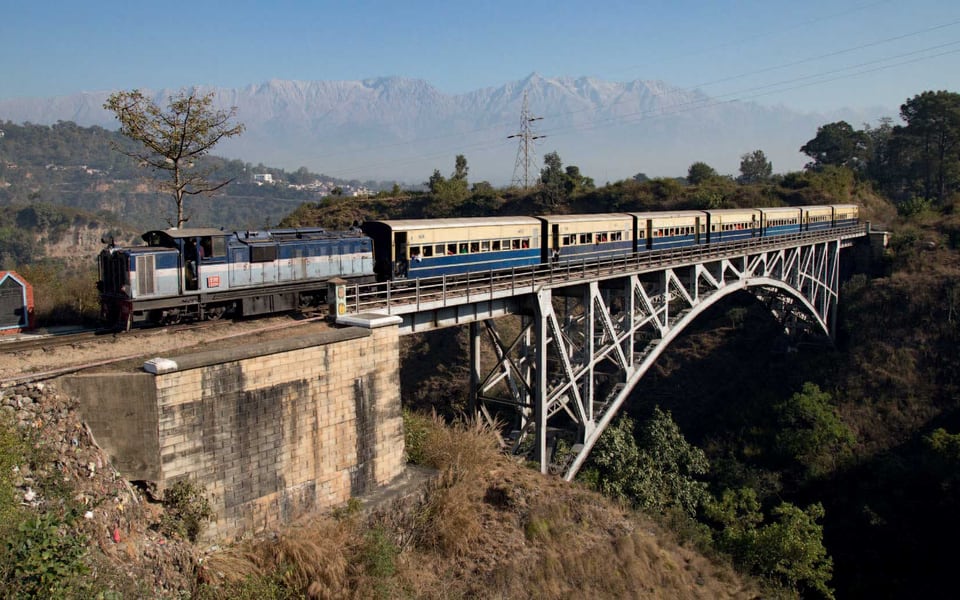
Kangra Valley Railway
The Kangra Valley's narrow-gauge lifeline, back since 2026 after its bridge fell: 164 km under the Dhauladhar for about ₹40. The bus costs ₹392.
View journey →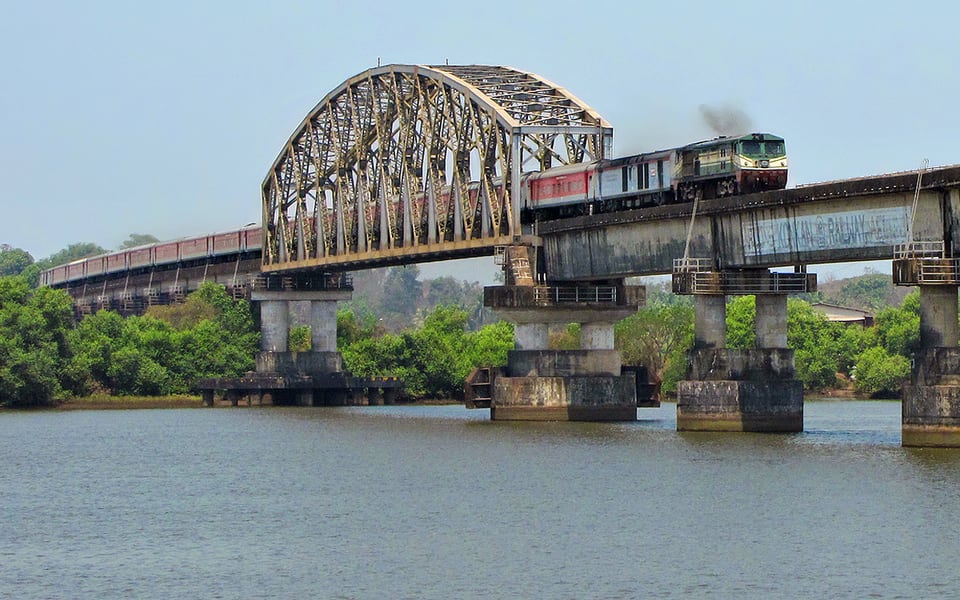
Konkan Railway
Ninety-one tunnels and 2,286 bridges down a coast the British never railed. From June to October the rain sets the timetable, and the train slows.
View journey →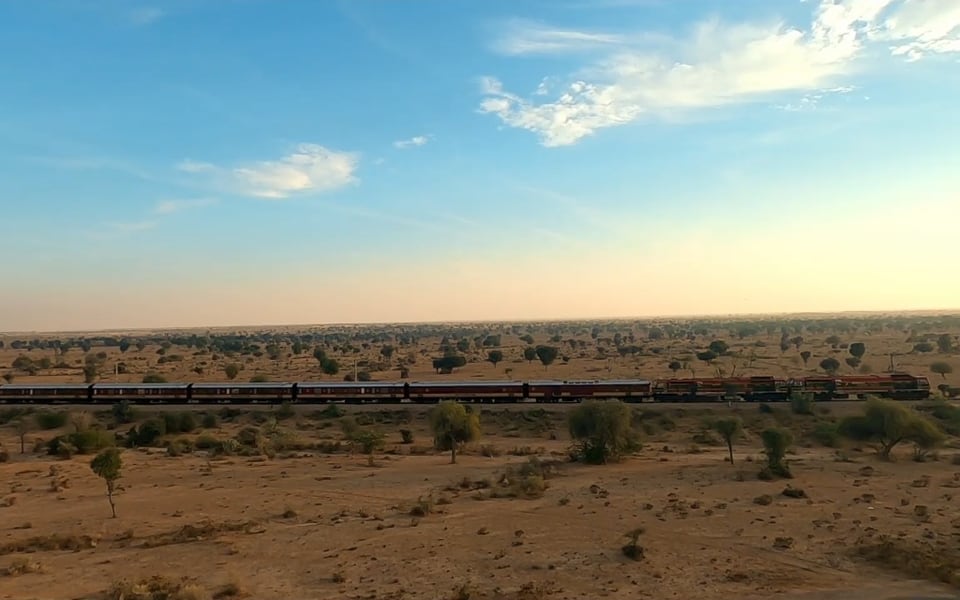
Maharajas' Express
A hotel that travels at night. India's luxury train spends its days at the Taj Mahal and Rajasthan's forts, and covers most of its miles after dinner.
View journey →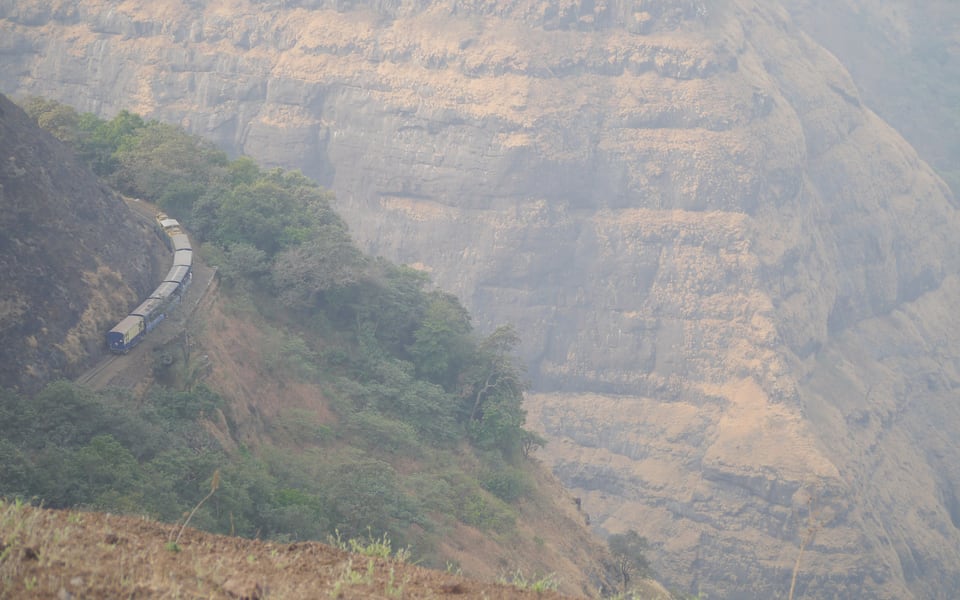
Matheran Hill Railway
A Bombay merchant family built this two-foot line in 1907 to reach their favourite hill. It still climbs 21 km to Matheran, where cars are banned.
View journey →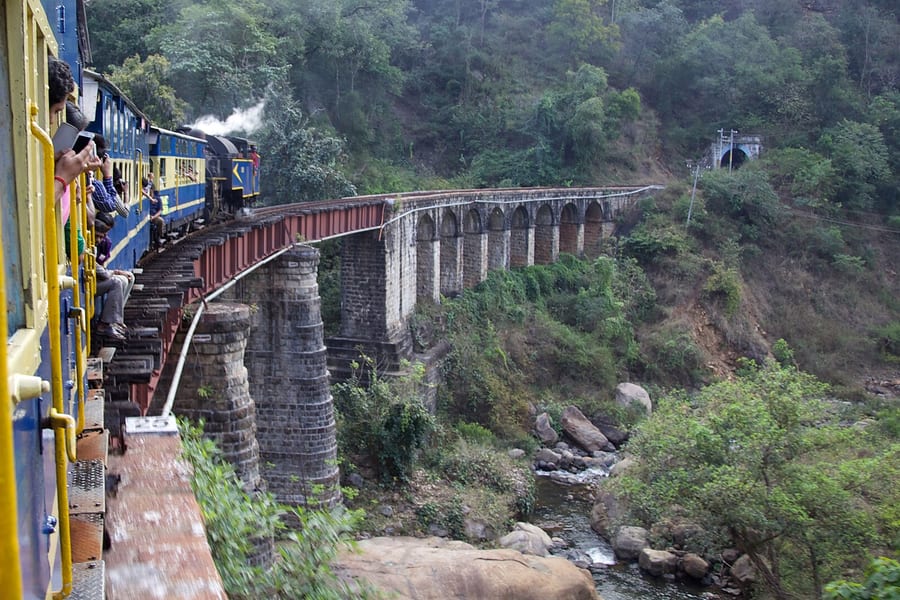
Nilgiri Mountain Railway
India's only rack railway and the steepest in Asia — a UNESCO steam line grinding up through tea country to the hill station of Ooty.
View journey →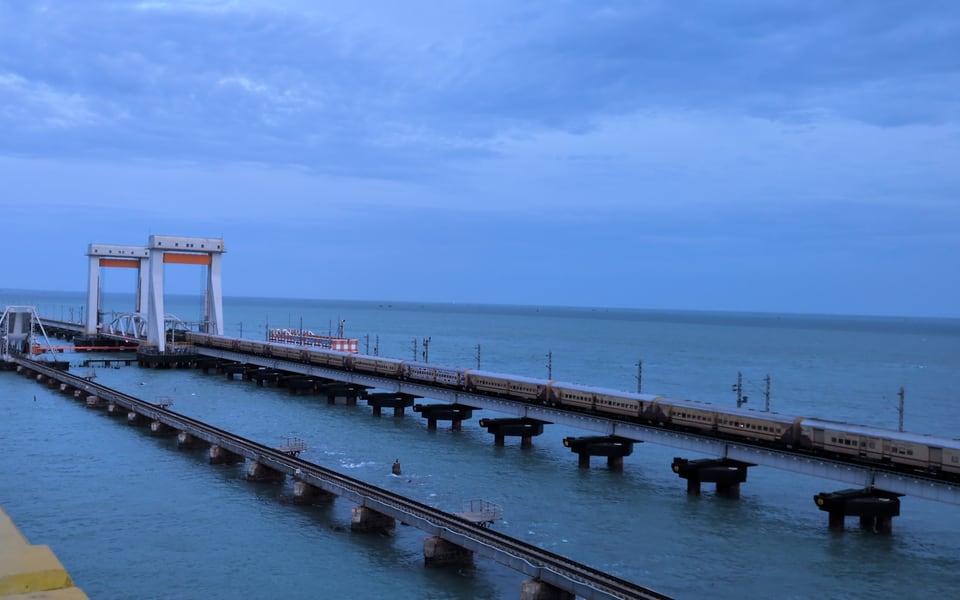
Pamban Bridge to Rameswaram
The last 2 km to Rameswaram are over the sea, on India's first vertical-lift railway bridge. When a boat needs the channel, the track rises 17 metres.
View journey →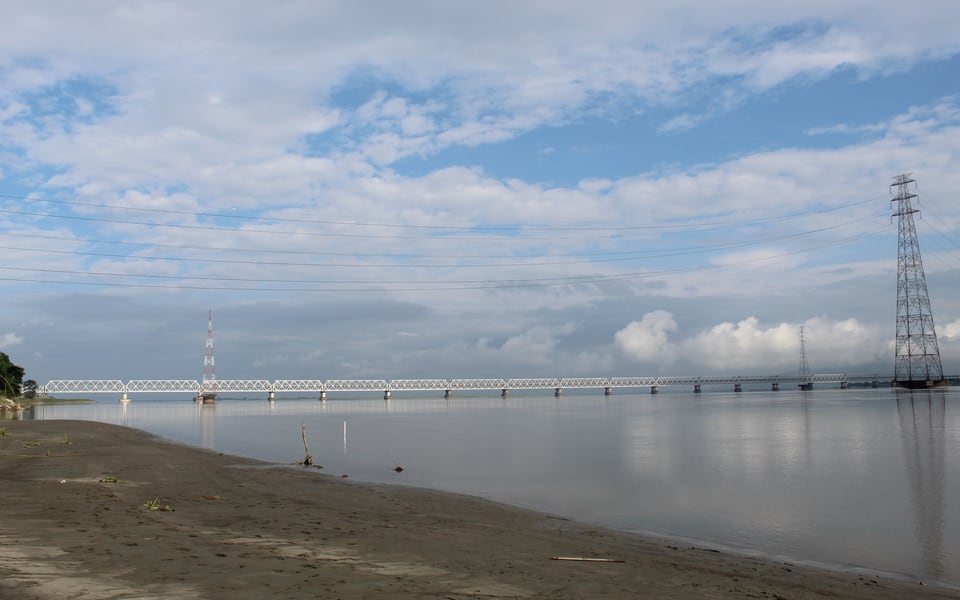
Vivek Express
India's longest train route: 4,188 km from the tea gardens of Assam to Kanyakumari, the rock where the monk it is named for sat for three days.
View journey →Good to know
Is India easy to explore by train?
India runs on rail. Indian Railways is one of the largest and busiest networks on earth, reaching almost every corner of the subcontinent cheaply — and the train remains the classic, sociable way to travel the country. It pays to plan ahead, as popular routes fill up.
What are the classes, and how do I book?
Long-distance trains offer everything from air-conditioned 1st Class and 2- and 3-tier sleeper berths down to non-AC sleeper and general seating. Book ahead through IRCTC, as trains sell out; a same-day "Tatkal" quota opens the day before for last-minute travel.
When is the best time to visit India?
Broadly October to March, when much of the country is cool and dry. Avoid the intense pre-monsoon heat and the June–September monsoon, which can disrupt the hill lines with landslips; the mountain railways are clearest in autumn and spring.
What are India's great rail journeys?
The three UNESCO "Mountain Railways of India" — the Darjeeling "Toy Train", the Nilgiri Mountain Railway to Ooty and the Kalka–Shimla Railway — are the scenic classics. For luxury, the Maharajas' Express and Palace on Wheels tour Rajasthan in grand style.