Kangra Valley Railway
Nikos Kavoori, Richard Wallace / Wikimedia Commons · CC BY-SA 4.0 · cropped
- Distance164 km, Pathankot to Jogindernagar
- DurationAbout 7 hours to Baijnath Paprola, then 1 h 35 on to Jogindernagar
- Best seasonOctober to June; the monsoon has closed the line in recent summers
Introduction
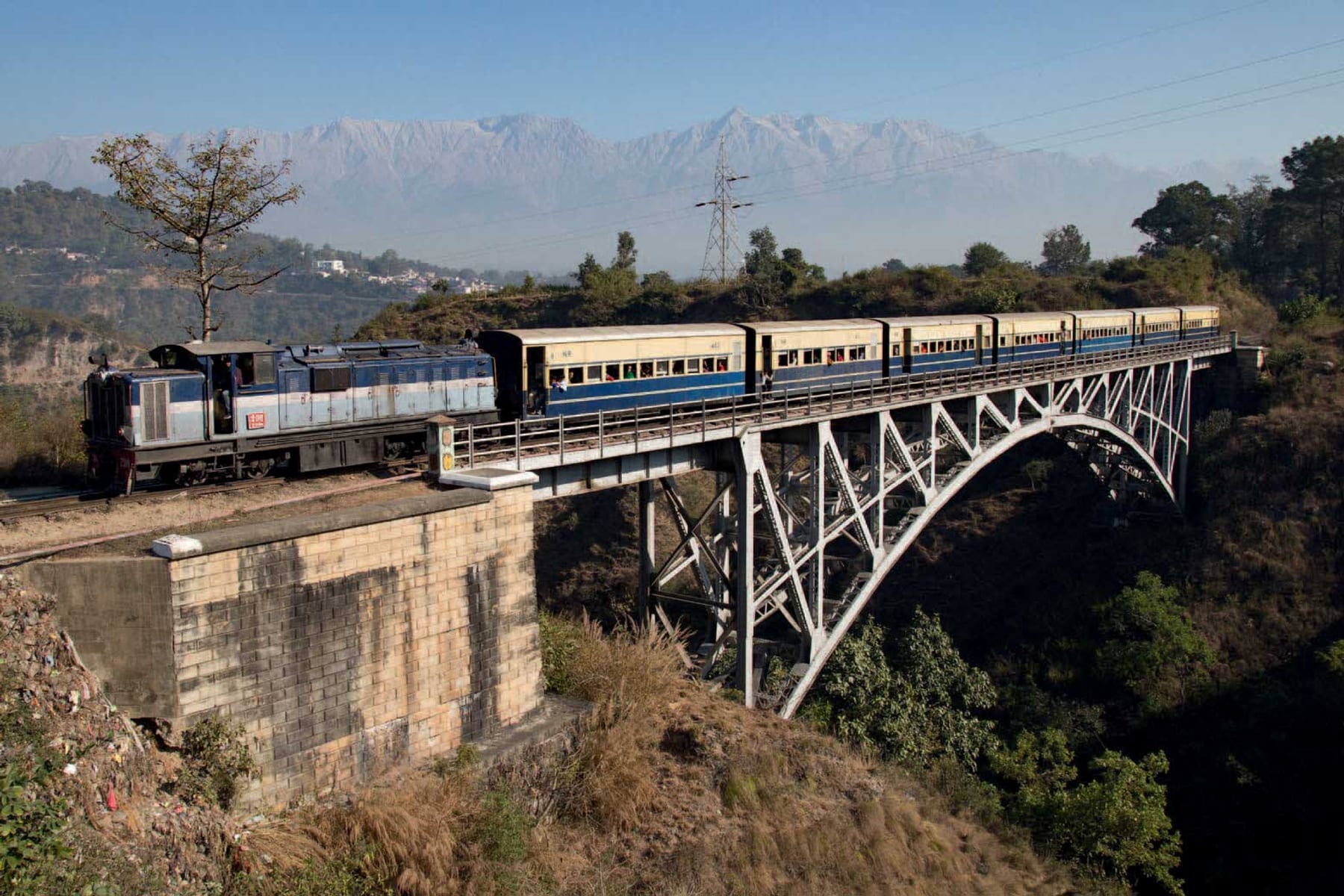
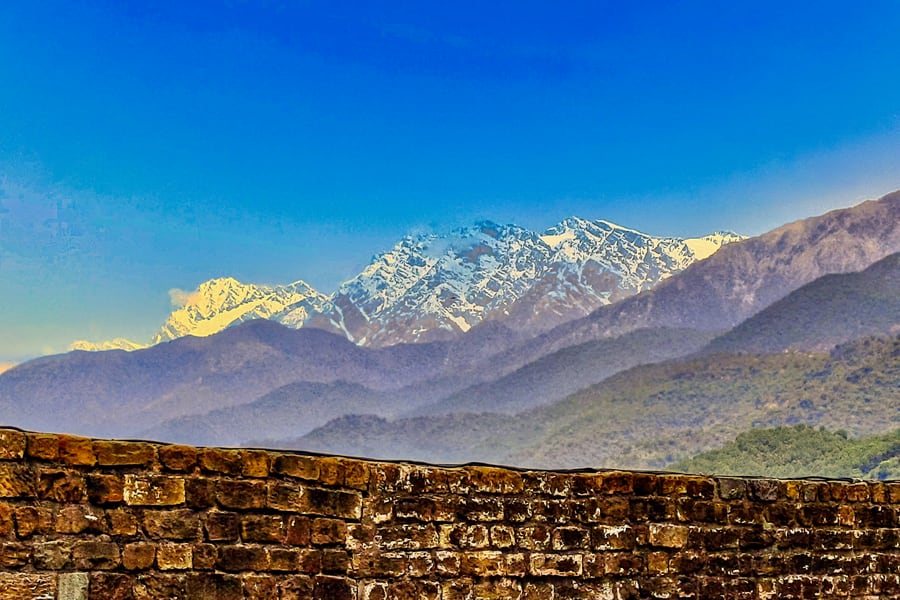
The Kangra Valley Railway runs 164 kilometres on narrow gauge from Pathankot, on the plains of Punjab, to Jogindernagar in the hills of Himachal Pradesh, with the snow wall of the Dhauladhar range alongside for most of the way. It is not a tourist train. Its blue-and-cream coaches are second class only and unreserved, and they carry the valley's students, traders and pilgrims as well as its visitors.
That is why the valley fought for it. In August 2022 a flood brought down the railway bridge over the Chakki river, just outside Pathankot, and the through trains stopped for almost four years. Residents protested; a new bridge was built for about ₹70 crore; and on 2 June 2026 the first train left Pathankot again at five in the morning. On reopening day the train fare to Jogindernagar was about ₹40. The bus cost ₹392.
The line was built in 1926–29 to carry the materials for a hydroelectric station at Jogindernagar, and it still climbs the way its engineers laid it: across a reservoir, through two tunnels, over 993 bridges and up gradients of one in 25, to a summit at Ahju, 1,290 metres up.
The Journey
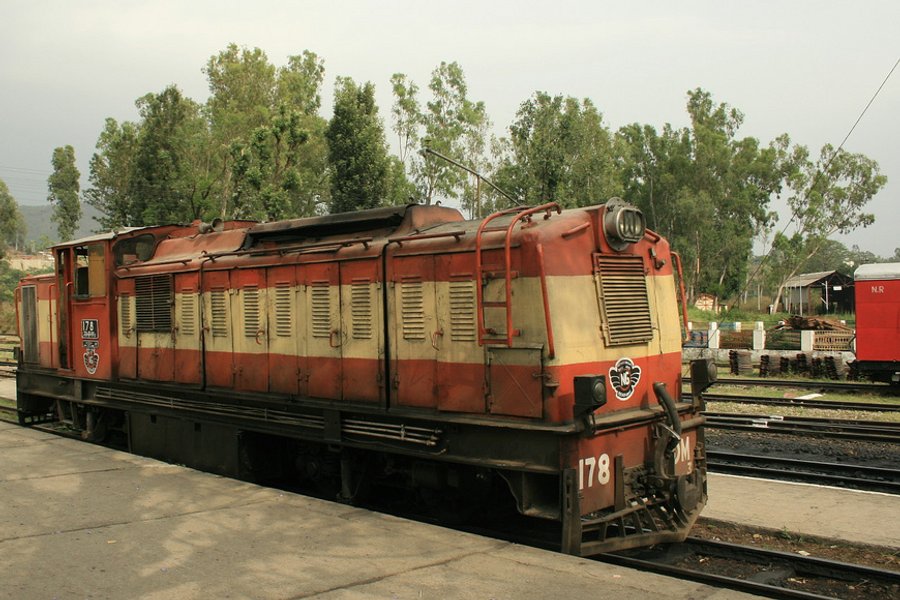
The train leaves Pathankot, 384 metres above the sea, behind a ZDM-4A diesel, the class that took over the line when steam ended in 1976. After Dalhousie Road it crosses the Chakki on the new bridge, the one that brought the trains back in 2026, and turns east into Himachal Pradesh at Kandwal. Nurpur Road is the station for Nurpur, the old capital of the Pathania rajas.
Round the reservoir
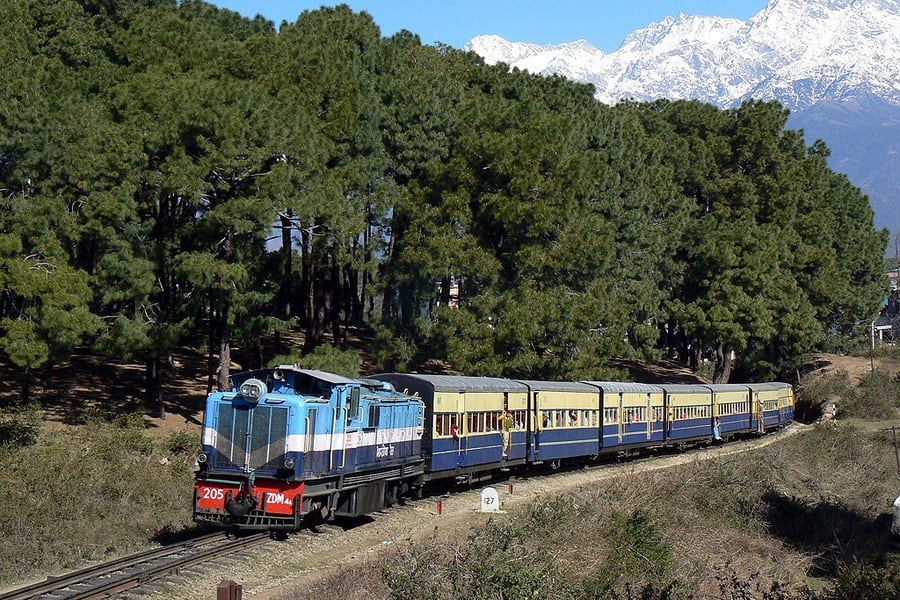
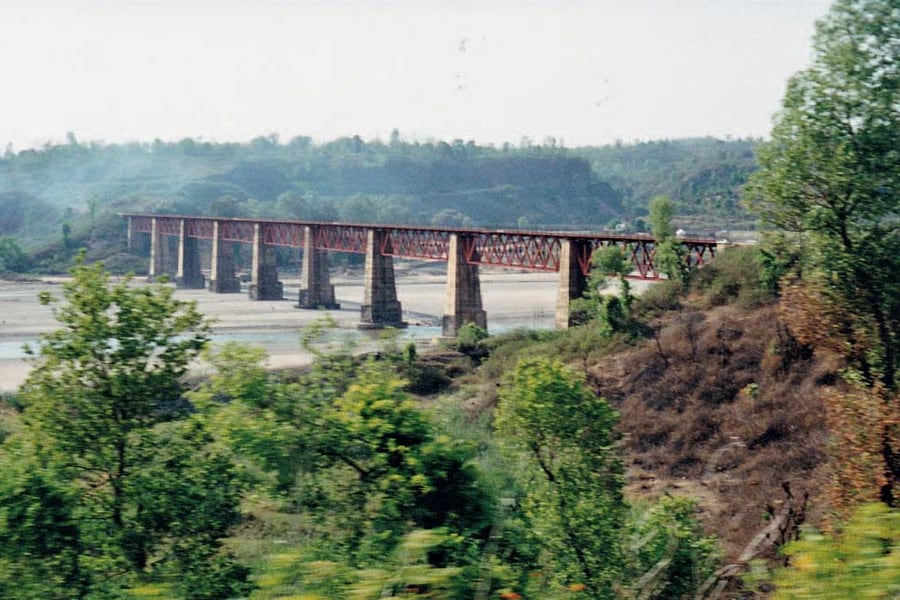
Beyond Talara the line drops towards the Maharana Pratap Sagar, the lake behind the Pong dam on the Beas. When the dam was built, about 25 kilometres of railway between Jawanwala Shahr and Guler lay in the way of the water: the line was lifted in April 1973 and rebuilt on higher ground along the lake's eastern shore, opening at the end of 1976. The new route crosses the Dehar bridge, and just after the Mehla Khad viaduct the piers of the old line can be seen where the two alignments meet again.
The pilgrim section
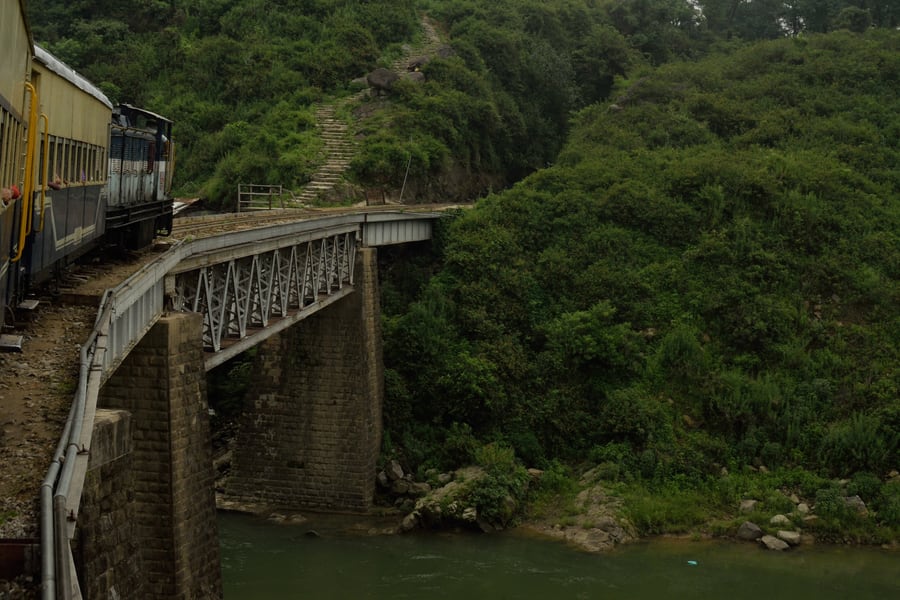
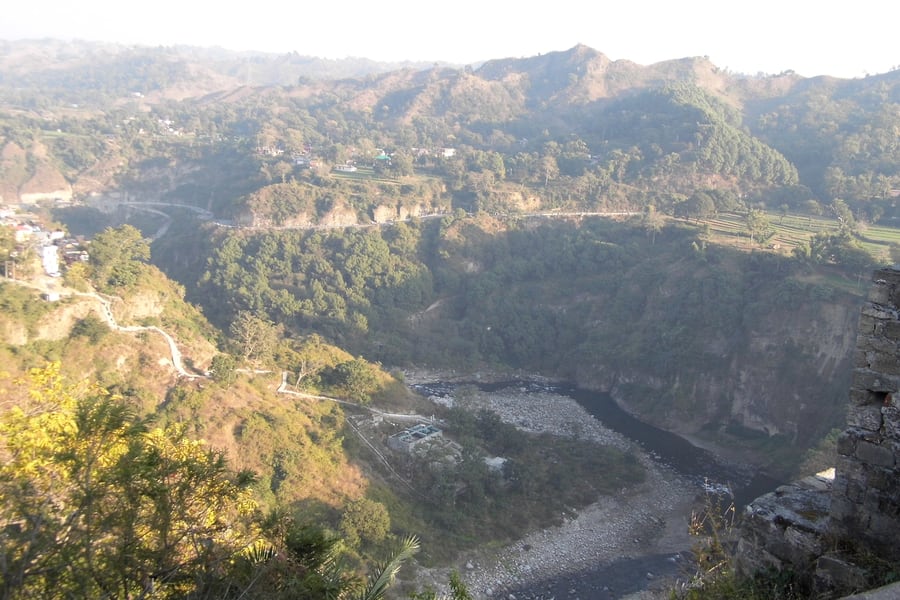
At Guler the line turns north up the Banganga, and the Dhauladhar comes into view. Jawalamukhi Road is the station for the flame temple of Jwalamukhi. Then the ground gets harder: the train curves over the Bathu viaduct, above a Hanuman temple in the gorge, and passes through the line's only two tunnels, at Dhundi and Daulatpur, the second 328 metres long. Approaching Kangra you can see Kangra Fort on the opposite cliff, across the gorge.
After Kangra the train crosses the Reond gorge on a steel arch, and from there the snow peaks stay in view. Nagrota was the end of the line from 1942 to 1954, when the track beyond it was lifted and shipped to the Middle East for the war. Past Chamunda Marg, for the Chamunda Devi temple, the train reaches Palampur, in the tea gardens.
To the summit and down
Most trains end at Baijnath Paprola, with its small locomotive shed and reversing triangle. Beyond it the line crosses the Binwa and climbs at one in 25, the steepest on the railway, past the 1204 Baijnath temple to Ahju, 1,290 metres up and the summit of the line. From there it runs down through low hills to Jogindernagar, 1,184 metres, where the Uhl's water drops 546 metres from Barot to the Shanan power house. That power station was the reason for the railway.
The line is still worked with Neale's ball tokens: no train may enter the single-track section ahead until the station's instrument has released a metal ball for its driver to carry.
Along the route
 Nikos Kavoori, Richard Wallace / Wikimedia Commons · CC BY-SA 4.0 · cropped
Round the reservoir
When the Pong dam was built on the Beas, 25 kilometres of line between Jawanwala Shahr and Guler lay in the way of the water. The railway was lifted in 1973 and rebuilt along the reservoir's eastern shore, over the Dehar bridge, reopening in December 1976.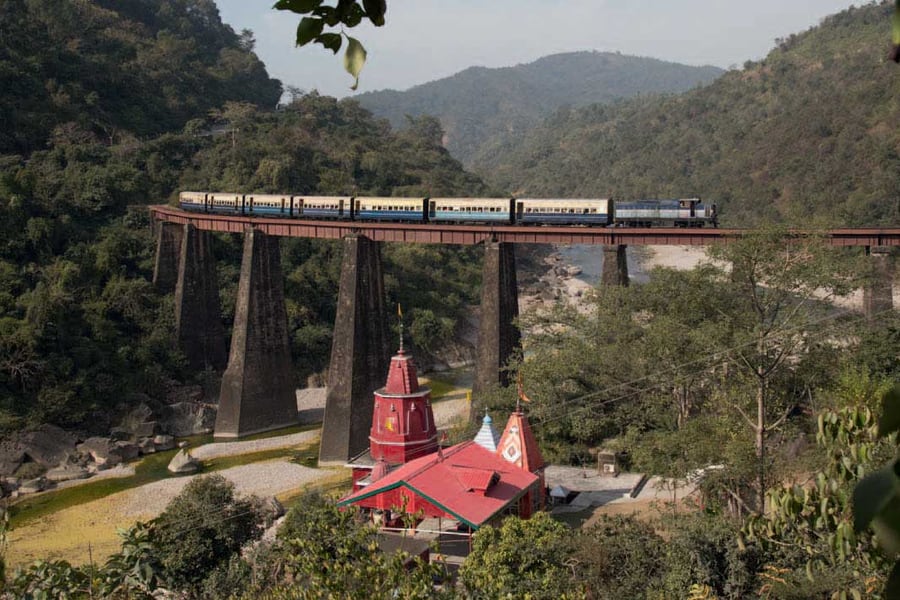 Nikos Kavoori, Richard Wallace / Wikimedia Commons · CC BY-SA 4.0 · cropped
The Bathu viaduct
Just after Jawalamukhi Road the train curves across the Bathu viaduct, high above a Hanuman temple in the gorge, and then enters the line's only two tunnels, at Dhundi and at Daulatpur.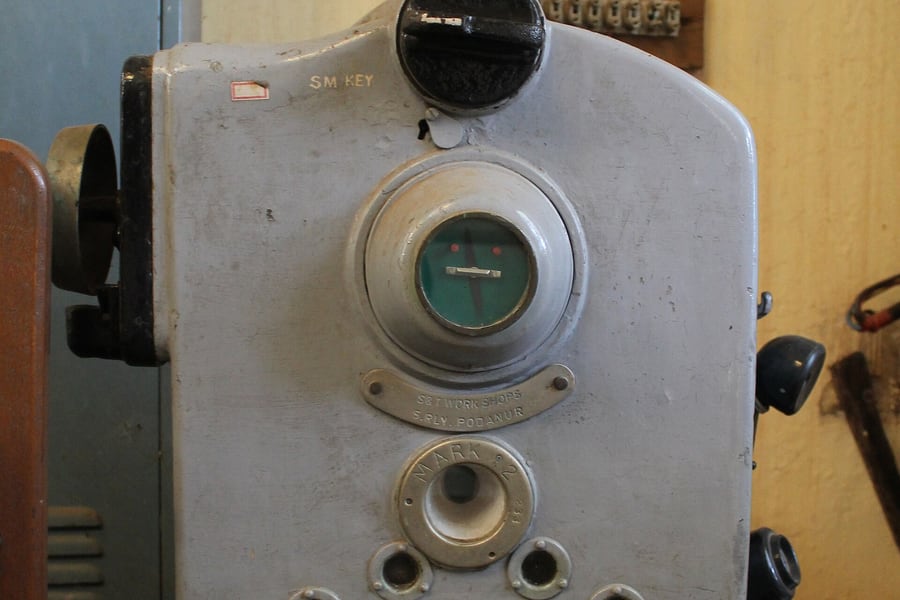 Rohini / Wikimedia Commons · CC BY-SA 4.0 · cropped
Ball tokens
The single track is worked with Neale's ball token instruments: no train may enter a section until the station has released a metal ball for its driver to carry. This one, from Southern Railway's Podanur workshops, is kept in the railway museum at Mysore.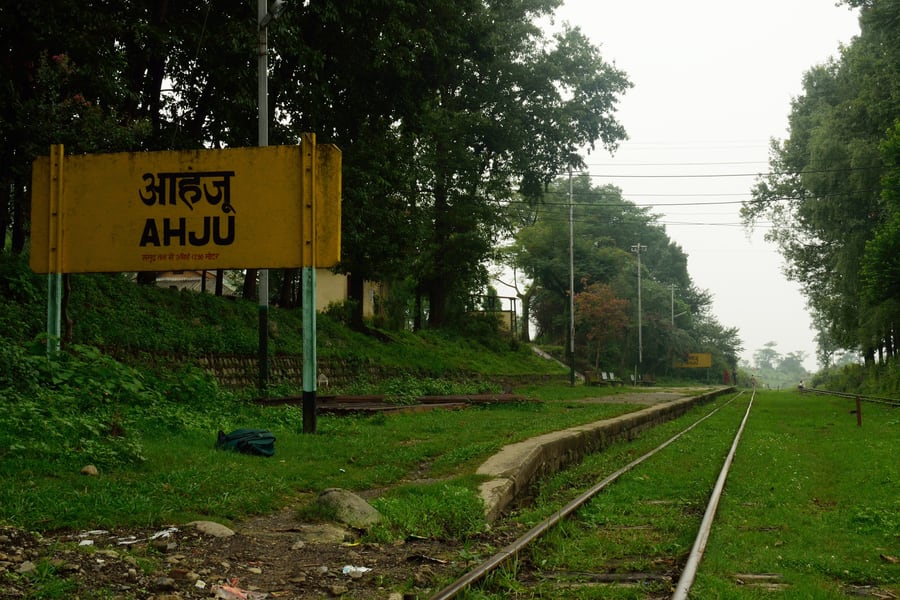 ChanduBandi / Wikimedia Commons · CC BY 4.0 · cropped
Up to Ahju
Beyond Baijnath Paprola the train climbs at one in 25, the steepest grade on the line, crossing the Binwa and passing the Baijnath temple. The summit is Ahju station, 1,290 metres up; from there the line runs downhill to Jogindernagar.A bit of history
Culture & experiences along the way
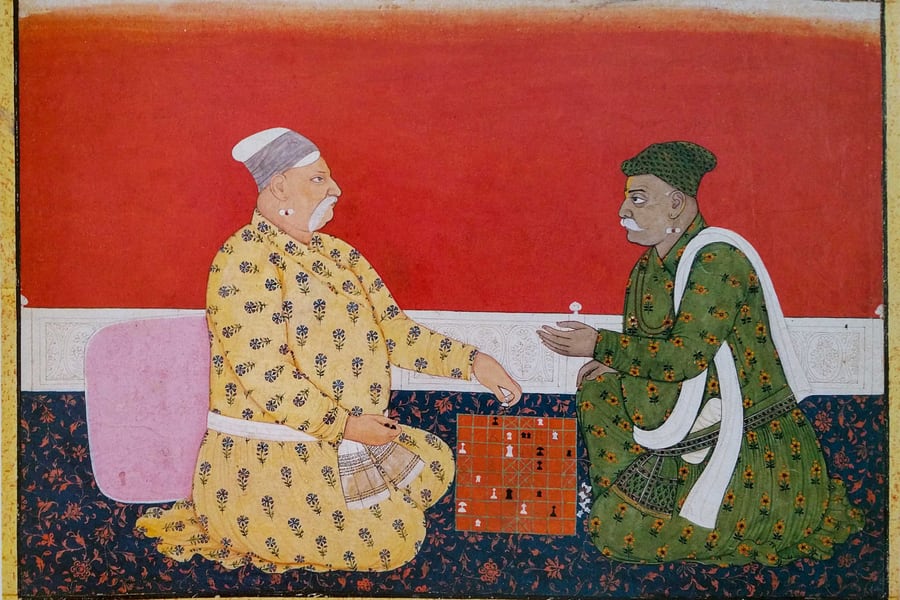 Pandit Seu of Guler, about 1720–25, Government Museum and Art Gallery, Chandigarh / Wikimedia Commons · Public domain · cropped
Kangra painting
The Kangra school of miniature painting began at Guler, a station on this line, when a family of Kashmiri painters trained in the Mughal style found shelter at the court of Raja Dalip Singh in the early 18th century. Under Sansar Chand of Kangra it became the centre of Pahari painting.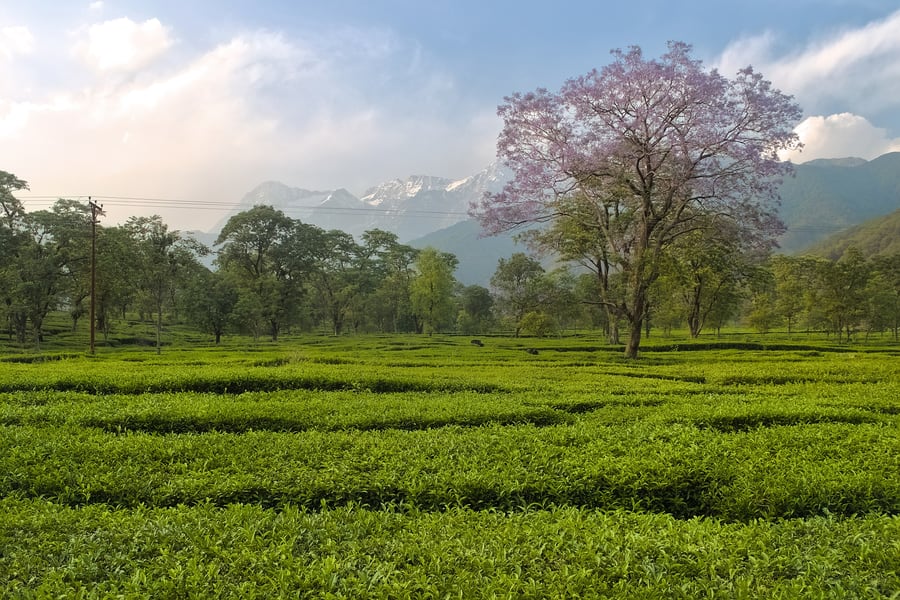 UnpetitproleX / Wikimedia Commons · CC BY-SA 4.0 · cropped
Kangra tea
Tea has grown in the valley since the mid-19th century, from Chinese bushes planted after an 1848 survey. By the 1880s it sold in Kabul and Central Asia, until the 1905 earthquake ended the boom. Nine-tenths is black tea, with a sweet aftertaste; it has held a geographical indication since 2005.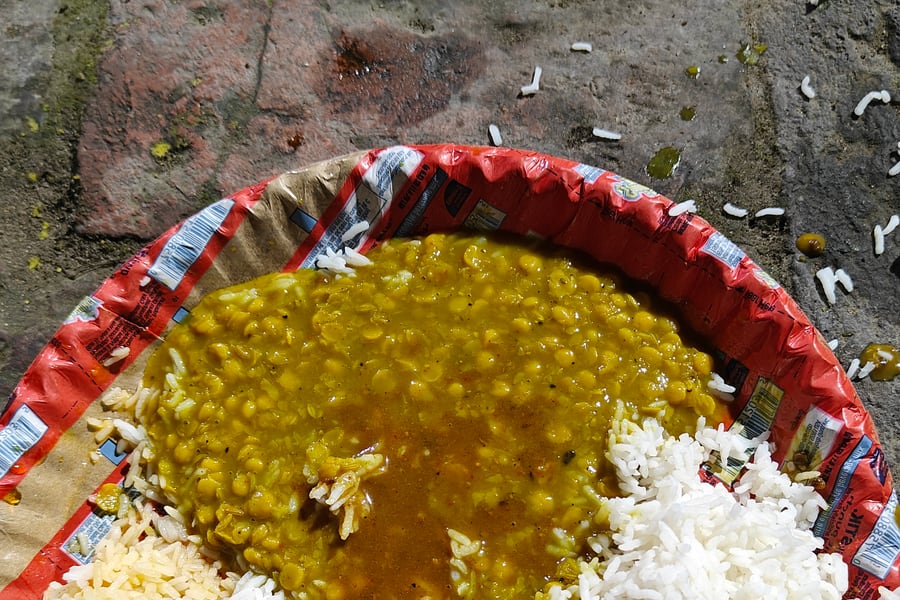 Niyati Sharma 1505 / Wikimedia Commons · CC BY-SA 4.0 · cropped
Kangri dham
Dham is the Himachali feast, cooked overnight in brass pots by hereditary Brahmin chefs, the botis, and served in courses on leaf plates to guests seated on the floor. A dham runs from rice and dal through madra, a yoghurt curry of chickpeas or kidney beans, to sweet rice; Kangri dham is the Kangra valley's own version.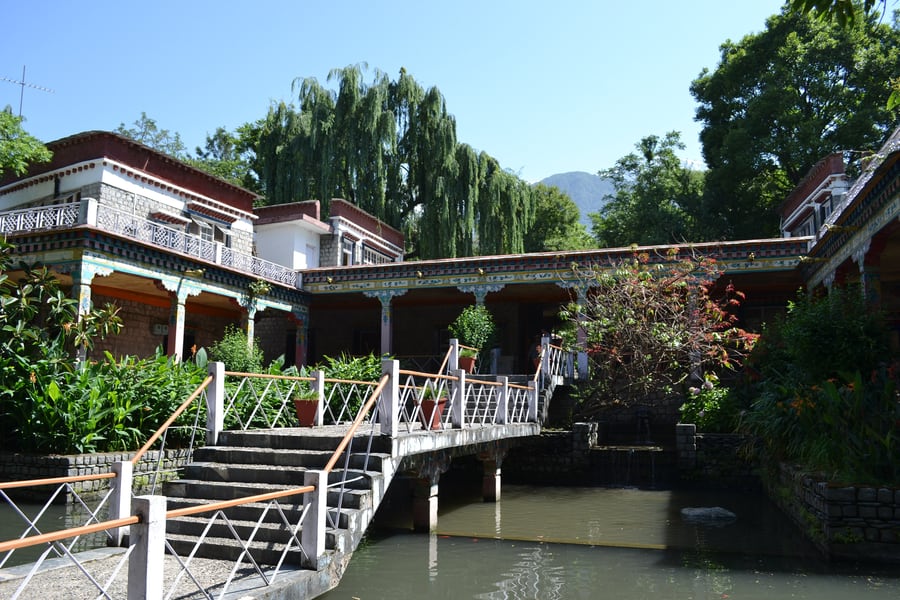 Japleenpasricha / Wikimedia Commons · CC BY-SA 4.0 · cropped
Norbulingka Institute
Founded in 1995 at Sidhpur, near Dharamshala, the institute keeps Tibetan arts alive. Its studios practise and teach thangka painting, statue-making, woodcarving and appliqué, visitors may tour them every day except Sunday, and its temple holds 1,173 murals of the Buddha.Timetables
No train runs the whole line. Two trains a day run between Pathankot and Baijnath Paprola, and one shuttle a day each way covers the last stretch to Jogindernagar. Every train runs daily, and every seat is unreserved.
Pathankot to Baijnath Paprola and Jogindernagar
| Train | Pathankot | Nurpur Road | Guler | Kangra | Palampur | Baijnath Paprola |
|---|---|---|---|---|---|---|
| 52465 | 05:00 | 05:45 | 08:06 | 09:11 | 10:42 | 12:00 |
| 52467 | 07:00 | 07:45 | 10:06 | 11:11 | 12:42 | 13:40 |
The shuttle 52473 leaves Baijnath Paprola at 08:00 and reaches Jogindernagar at 09:35, so going uphill the whole way means a night at Baijnath or Palampur.
Jogindernagar and Baijnath Paprola to Pathankot
The shuttle 52472 leaves Jogindernagar at 12:50 and reaches Baijnath Paprola at 14:30.
| Train | Baijnath Paprola | Palampur | Kangra | Guler | Nurpur Road | Pathankot |
|---|---|---|---|---|---|---|
| 52470 | 14:15 | 14:58 | 16:25 | 17:43 | 20:11 | 21:45 |
| 52474 | 15:40 | 16:23 | 18:03 | 19:08 | 21:32 | 22:50 |
Downhill, the whole line fits in a day: the 08:00 to Jogindernagar, the 12:50 back, and the 15:40 to Pathankot.
Short workings
A third pair runs between Baijnath Paprola and Jawalamukhi Road: 52464 at 10:00, reaching Kangra at 12:36 and Jawalamukhi Road at 13:30, and 52469 back at 14:20, reaching Baijnath Paprola at 17:30.
The monsoon
Rain and landslides have closed the line in recent summers. After reopening in June 2026, services were suspended for the monsoon and restored on 11 October 2026, once the bridges and track had been inspected.
Times are from the station tables of ConfirmTkt, an IRCTC partner, checked against the train numbers and departure times Northern Railway gave for the October restart — as of October 2026. Check the day's train on ConfirmTkt (opens in a new tab) or at the station before travelling.
Tickets
Every train on the line is second class and unreserved. There is no booking ahead and no online sale: IRCTC does not list these trains. Buy the ticket at the station counter before the train leaves, and take any free seat.
The fare is small. On reopening day in June 2026 the train fare to Jogindernagar was reported at about ₹40, against ₹392 for the same trip by bus. With no seat to reserve, the thing to plan around is the timetable: two trains a day from Pathankot, and one shuttle a day to Jogindernagar.
Book your tickets
GKarunakar / Wikimedia Commons · CC BY-SA 3.0 · croppedSecond class, unreserved
Pathankot ⇄ Baijnath Paprola · about 7 hours
Bought at the station counter; about ₹40 all the way to Jogindernagar on reopening day.
Book Tickets (opens in a new tab, on confirmtkt.com)via confirmtkt.comChanduBandi / Wikimedia Commons · CC BY 4.0 · croppedThe Jogindernagar shuttle
Baijnath Paprola ⇄ Jogindernagar · 1 h 35
One train a day each way over the summit at Ahju, unreserved, ticket from the station counter.
Book Tickets (opens in a new tab, on confirmtkt.com)via confirmtkt.comRail Passes
No rail pass covers the Kangra Valley Railway. Interrail and Eurail are European schemes, and India is not among the countries in Interrail's list of covered railway companies. Indian Railways' own pass for foreign visitors, the Indrail Pass, was withdrawn by Railway Board order on 19 September 2017.
A pass would be no use here anyway. The trains are unreserved and the whole line costs a few dozen rupees, so buy each ticket at the station.
Checked October 2026 against Interrail's list of railway companies (opens in a new tab) and the Indrail Pass (opens in a new tab).
Places to Visit
The line passes a string of forts and temples, most of them a short ride by taxi or bus from a station. Kangra and Baijnath Paprola are the easiest bases, and Baijnath's temple is close to its own halt.
 Viraat Kothare / Wikimedia Commons · CC BY-SA 3.0 · cropped
Nurpur Fort
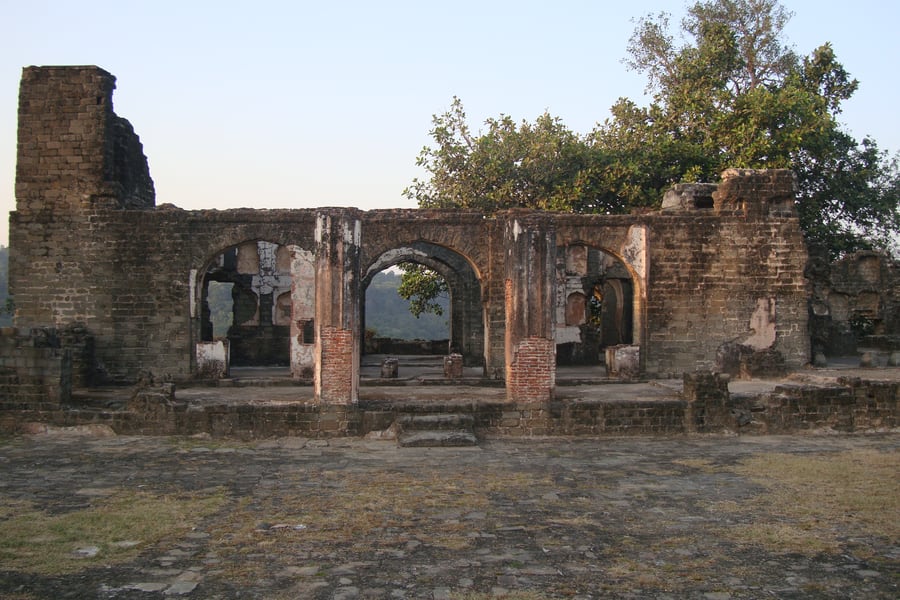
Five kilometres from Nurpur Road station, the ruined fort of Nurpur was built by Raja Basu Dev, who ruled from 1580 to 1613, when the Pathania kingdom was at its height. The town took its name from the empress Nur Jahan. Ranjit Singh annexed the kingdom in 1815, and in 1846 Raja Bhir Singh, who had won it back, died fighting at the fort's gates.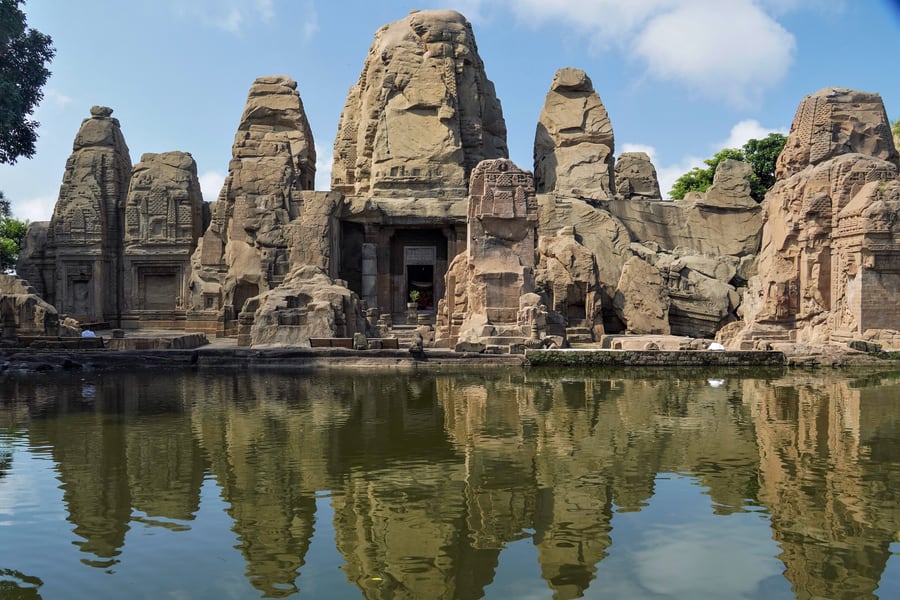 Dhruvaeng / Wikimedia Commons · CC BY-SA 4.0 · cropped
Masrur Temples
Carved in the early eighth century out of a single rocky hill, these Hindu temples face north-east across a sacred pool towards the Dhauladhar. The complex was never finished, and earthquakes have taken much of its sculpture, but its rock-cut spires still stand in a mandala around the main shrine. Archaeologists first heard of it in 1913.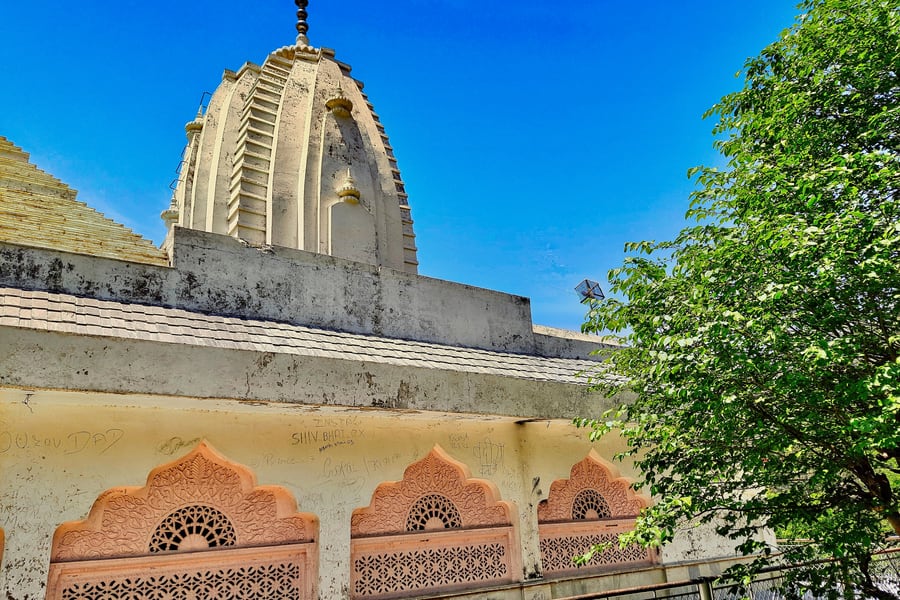 Ms Sarah Welch / Wikimedia Commons · CC0 · cropped
Jwalamukhi
Inside the temple at Jawalamukhi a natural flame burns from a fissure in the rock, and the shrine is revered as one of the Shakta pithas, the seats of the goddess. Pilgrims for it leave the train at Jawalamukhi Road, and the temple's pandas still keep genealogy registers of the families who have come.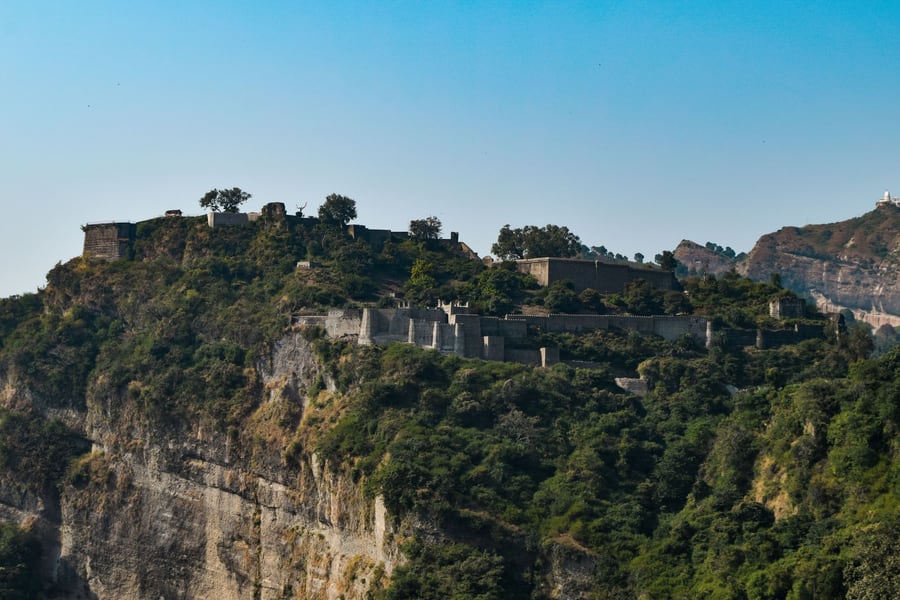 Ajay Kumar / Wikimedia Commons · CC BY-SA 4.0 · cropped
Kangra Fort
On a hill between the Manjhi and the Banganga, the largest fort in the Indian Himalayas was built by the Katoch rajas and fought over for centuries: Mahmud of Ghazni took it in 1009, Jahangir in 1620, and Sansar Chand won it back in 1786. The train passes it across the gorge, and the Maharaja Sansar Chand Museum stands beside it.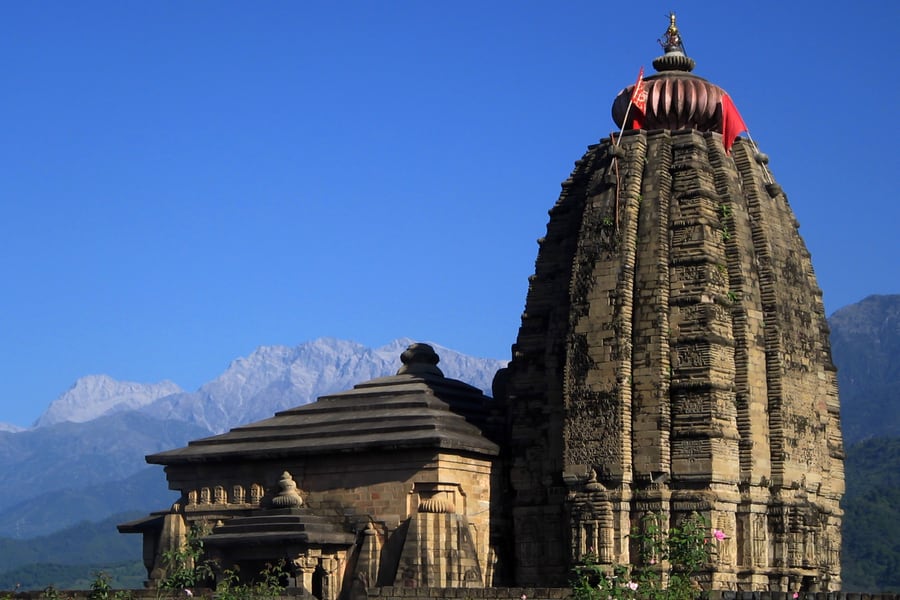 Pdhang / Wikimedia Commons · CC BY-SA 3.0 · cropped
Baijnath Temple
Two merchants, Ahuka and Manyuka, built this temple to Shiva as Vaidyanath, the lord of physicians, in 1204, and the line's Baijnath Mandir halt looks down on it. It came through the 1905 earthquake with little damage. By local legend Ravana set down a lingam here, and in his honour Dussehra is never celebrated at the temple.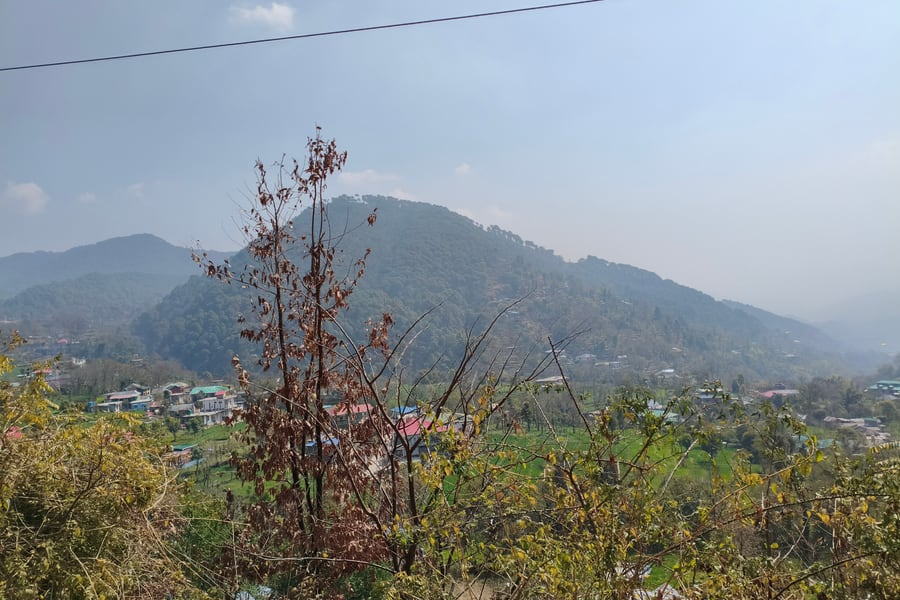 Dr. Chinchu C. / Wikimedia Commons · CC BY 4.0 · cropped
Jogindernagar
The end of the line lies in the valley below the Shanan power house, the reason the railway was built. Commissioned in 1932, two kilometres from the town, it was India's first hydroelectric station of megawatt capacity, fed with the Uhl's water from Barot, 546 metres higher and seven kilometres away across the range.Where to Sleep
Riding the whole line uphill means a night near the top, because the Jogindernagar shuttle leaves Baijnath Paprola before the morning trains from Pathankot arrive. Palampur and Baijnath are the places to stay.
Where to stay
 Jnzl's Photos / Wikimedia Commons · CC BY 2.0 · cropped
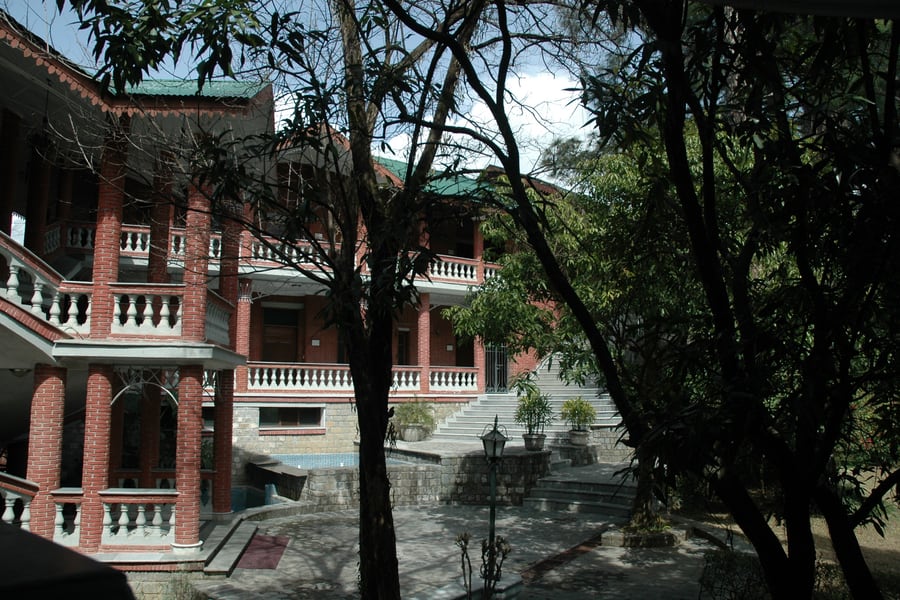
WelcomHeritage Taragarh Palace
Taragarh, near Baijnath
Built by the Nawab of Bahawalpur as a summer retreat, the palace stands at the foot of the Dhauladhar and serves Himachali dham.
Check Availability (opens in a new tab, on welcomheritagehotels.in)via welcomheritagehotels.inQuestions or corrections
Planning this trip and stuck on something, or spotted a time, fare or detail that has changed? Send us a message about Kangra Valley Railway. We read every one, and we update this page when something has changed.