Kalka–Shimla Railway
Sudarshan Sarkar / Wikimedia Commons · CC BY-SA 4.0
- Distance96.6 km
- Duration~5 hours
- Best seasonMar–Jun · Sep–Nov
Introduction
When the British ran India, they ran it in summer from Shimla — a town perched on a Himalayan ridge at over 2,000 metres, blessedly cool while the plains baked. The problem was getting there. The answer, opened in 1903, was one of the most audacious little railways ever built: the Kalka–Shimla Railway.
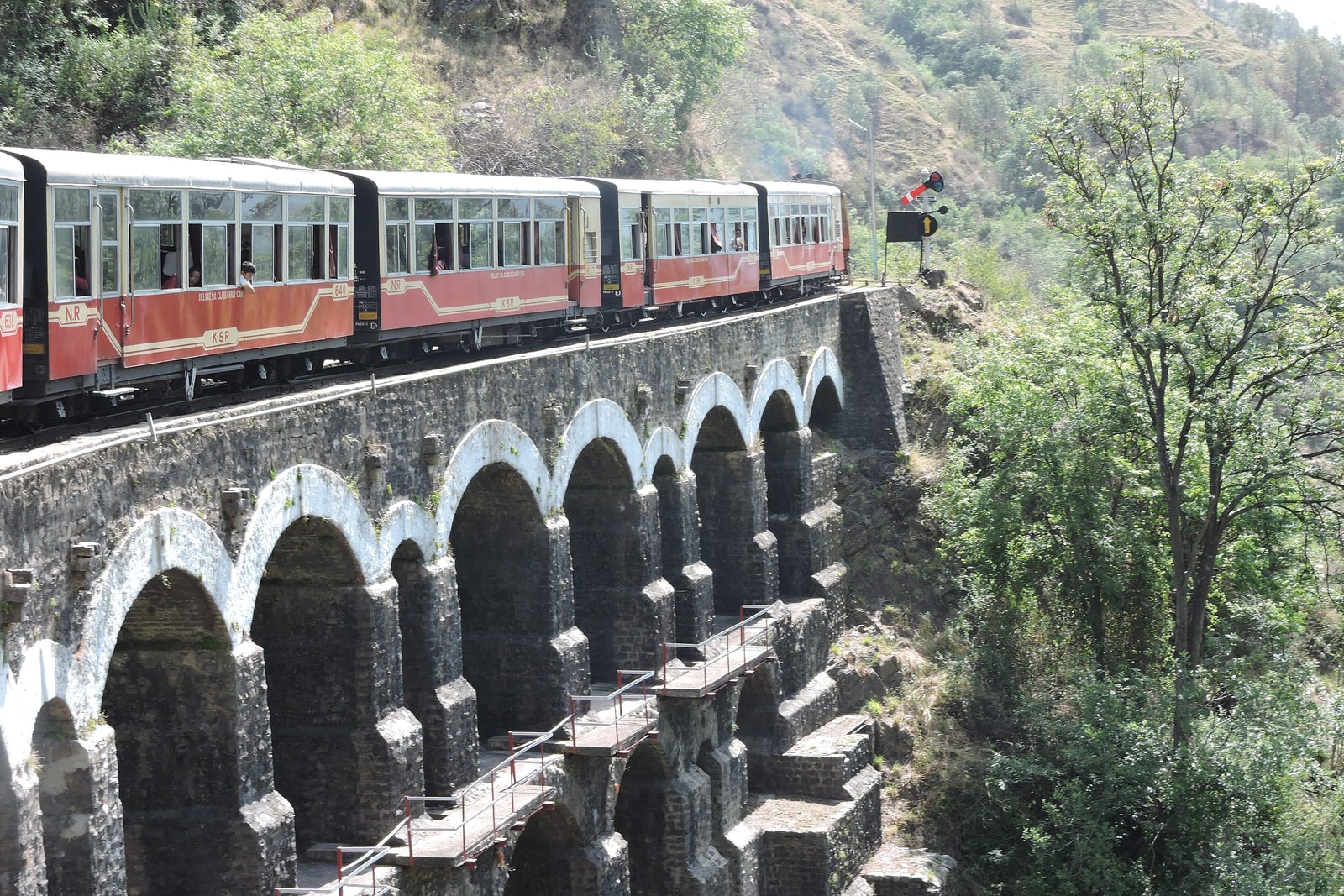
In under 100 kilometres of two-foot-six narrow gauge it hauls itself almost 1,500 metres up into the hills — and it does so the spectacular way, through 102 tunnels, over nearly a thousand arched bridges, and around a barely-believable 917 curves. Another of India's "toy trains", it is a UNESCO World Heritage Site, and the ride is a slow, swaying, five-hour delight of pine forest, hill stations and endless mountain views.
At the top waits Shimla itself, still wearing its Raj inheritance of mock-Tudor villas, a churchyard and the long promenade of the Mall — the perfect, faintly surreal reward for the climb.
The Journey
The line runs 96.6 kilometres from Kalka, on the northern plains at 656 metres, up to Shimla at 2,076 — a climb of nearly 1,500 metres that takes around five hours and never once stops twisting.
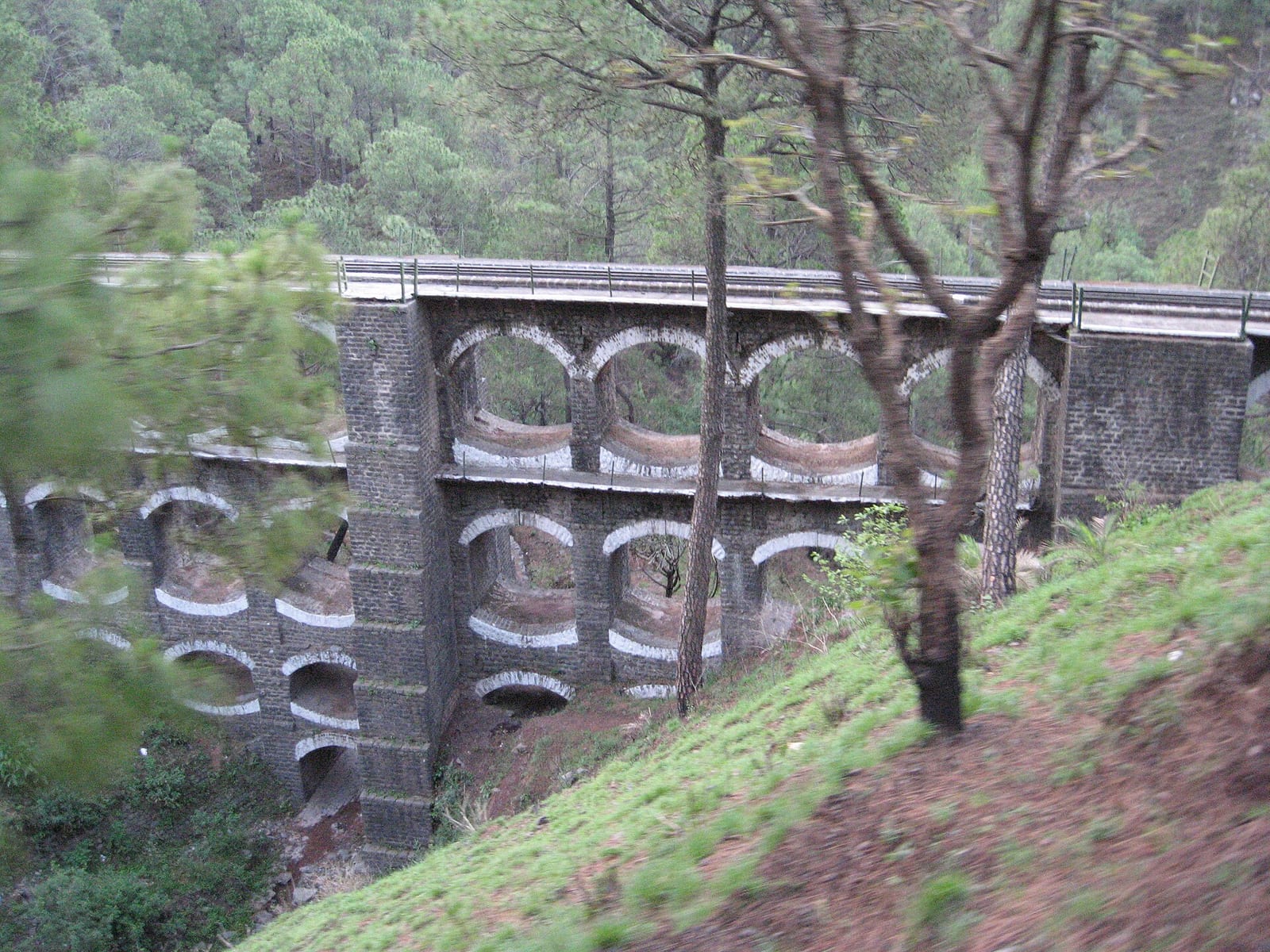
From Kalka the little train is soon into the foothills, and the engineering begins in earnest. To gain height on such steep, folded terrain, the Victorian builders resorted to sheer persistence: 102 tunnels, 988 bridges and viaducts, and 917 curves — some so sharp you can lean out and photograph your own carriages swinging round ahead. Many of the bridges are extraordinary in their own right: tiered galleries of stone arches stacked like Roman aqueducts across the ravines.
Near the halfway point comes Barog, beside the line's longest bore — the 1,143-metre Barog tunnel — with its own melancholy legend of the engineer who gave it his name. Beyond it the country softens into the deodar-forested hills of Himachal, past the hill stations of Solan and Kandaghat, before the final climb along the ridge into Shimla.
It is not a fast way to travel — but the Kalka–Shimla was never about speed. It was about reaching one of the loveliest spots in the Himalaya in style, and it still is.
Along the route
Vishmak / Wikimedia Commons · CC BY-SA 3.0102 tunnels & the Barog tunnel
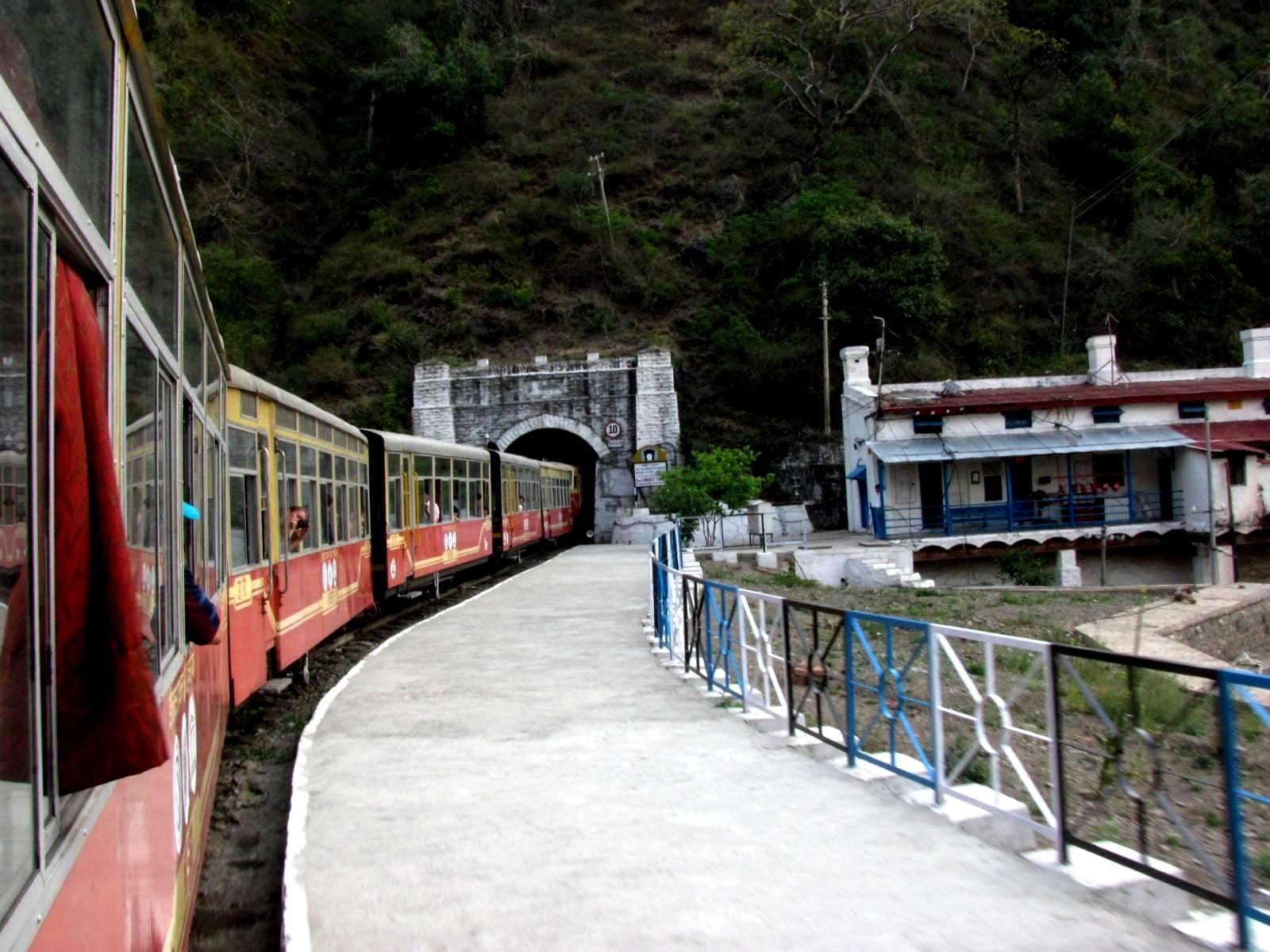
The line burrows through 102 tunnels on its way up. The longest, at Barog, runs 1,143 m — and comes with a legend: the engineer who first bored it, Colonel Barog, miscalculated, was fined a rupee, and in shame took his own life; the tunnel and station bear his name.Arpit chhonker / Wikimedia Commons · CC BY-SA 4.0The arched galleries
To carry the track across ravines the Victorian engineers built tiered, multi-arched viaducts like Roman aqueducts — nearly a thousand bridges in all, the most famous a four-storey gallery of stone arches.Soorajkurup / Wikimedia Commons · CC BY-SA 4.0917 curves to Shimla
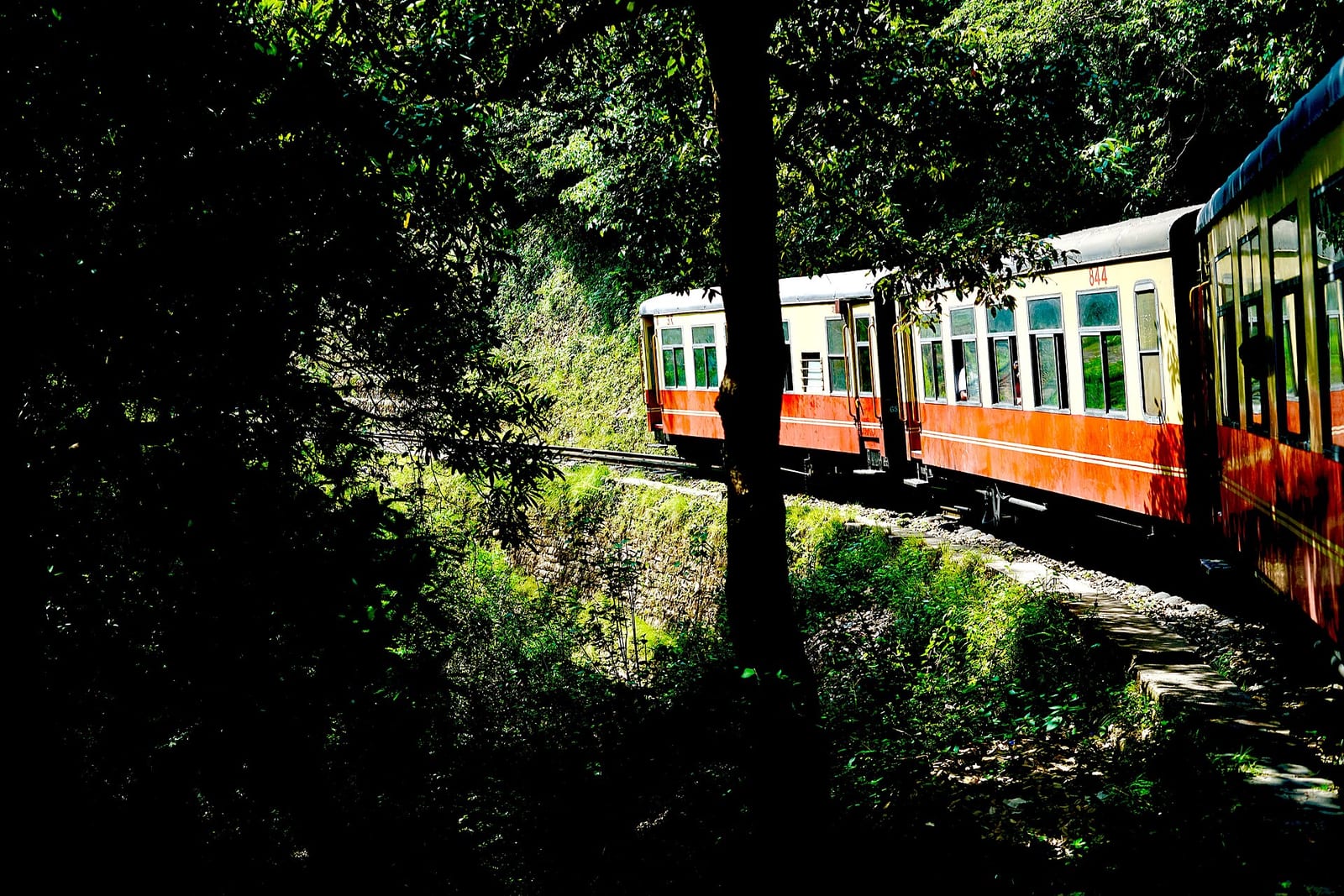
The train never stops turning — 917 curves in under 100 km, some so tight you can see your own carriages ahead — as it climbs almost 1,500 m from the plains to the ridge-top town.A bit of history
Culture & experiences along the way
Arupamdas / Wikimedia Commons · CC BY-SA 4.0The Shivalik Deluxe
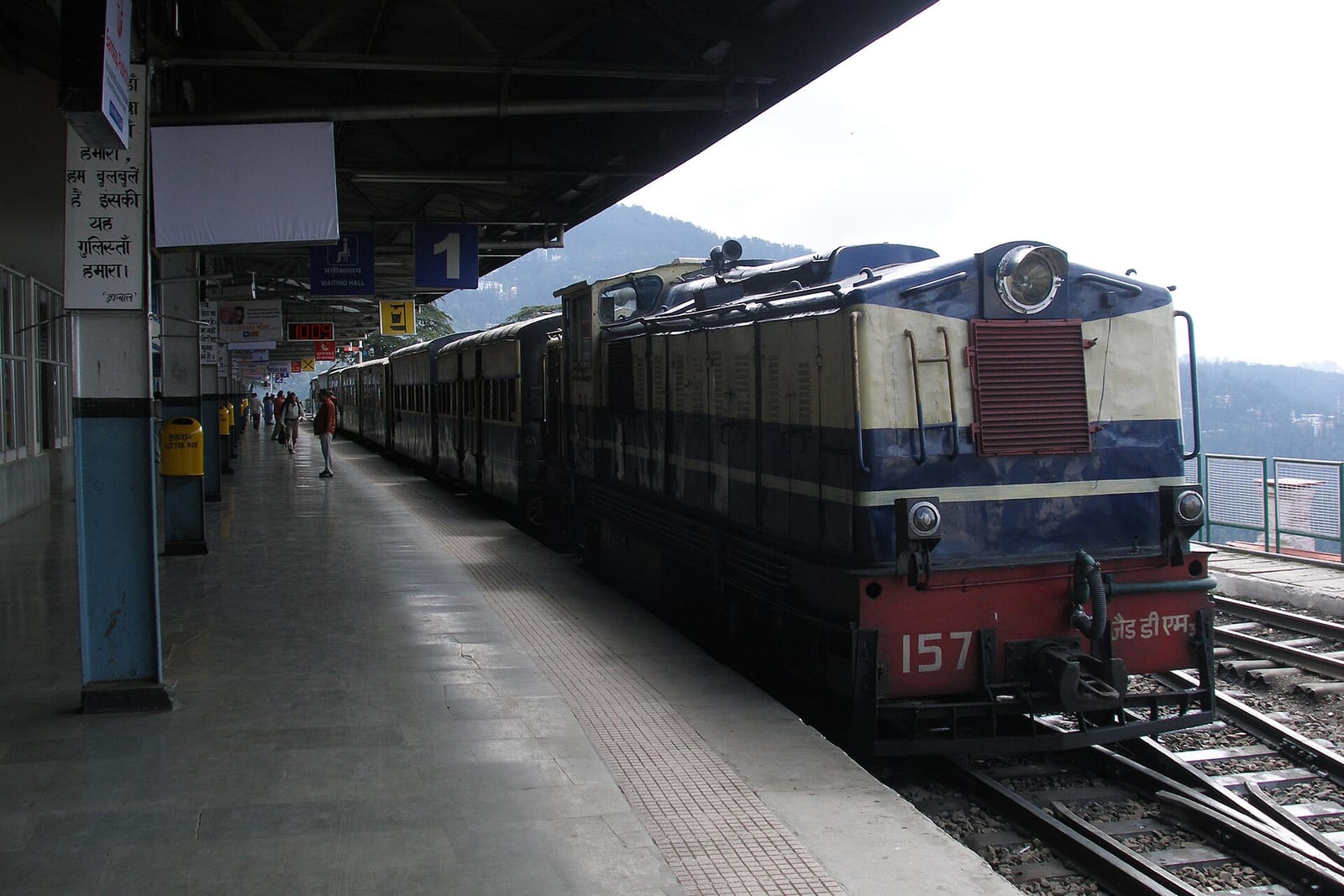
Beyond the ordinary toy train, the premium Shivalik Deluxe and glass-roofed "Vistadome" cars offer reserved comfort and even better views for the five-hour climb.KennyOMG / Wikimedia Commons · CC BY-SA 4.0Summer capital of the Raj
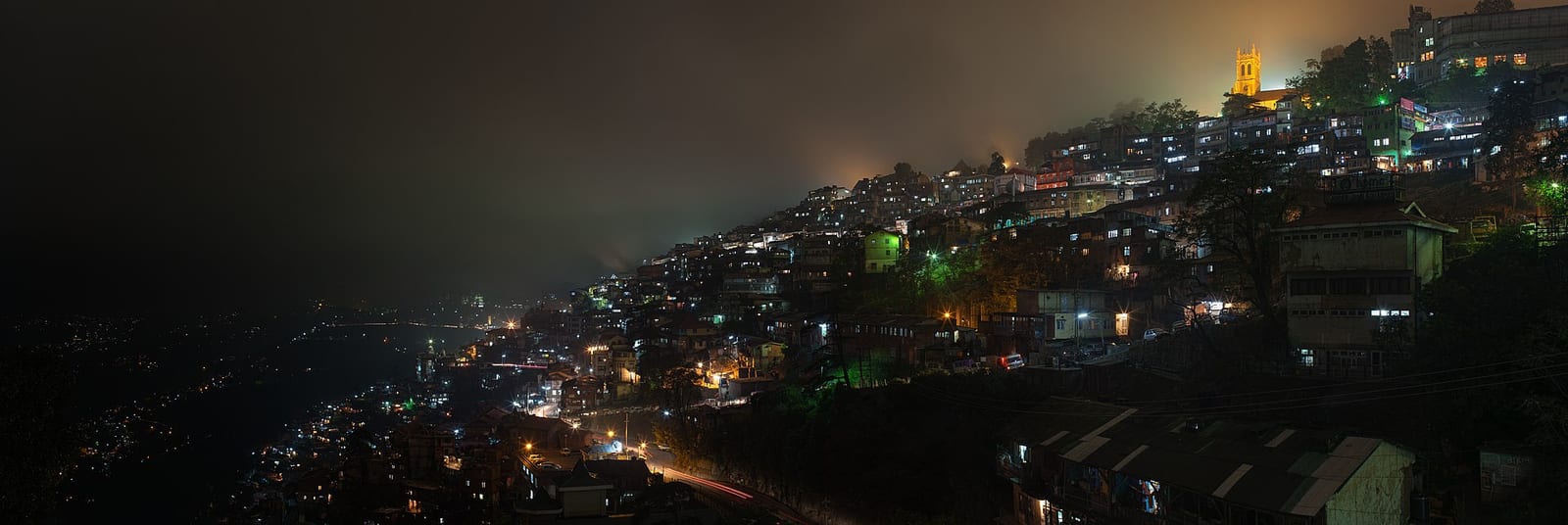
Shimla was where the British government fled the heat each summer, and it still wears its Raj inheritance — the Mall, the Ridge, mock-Tudor villas and Christ Church — strung along a Himalayan ridge.© Vyacheslav Argenberg / http://www.vascoplanet.com/ · CC BY 4.0Arrival at the ridge
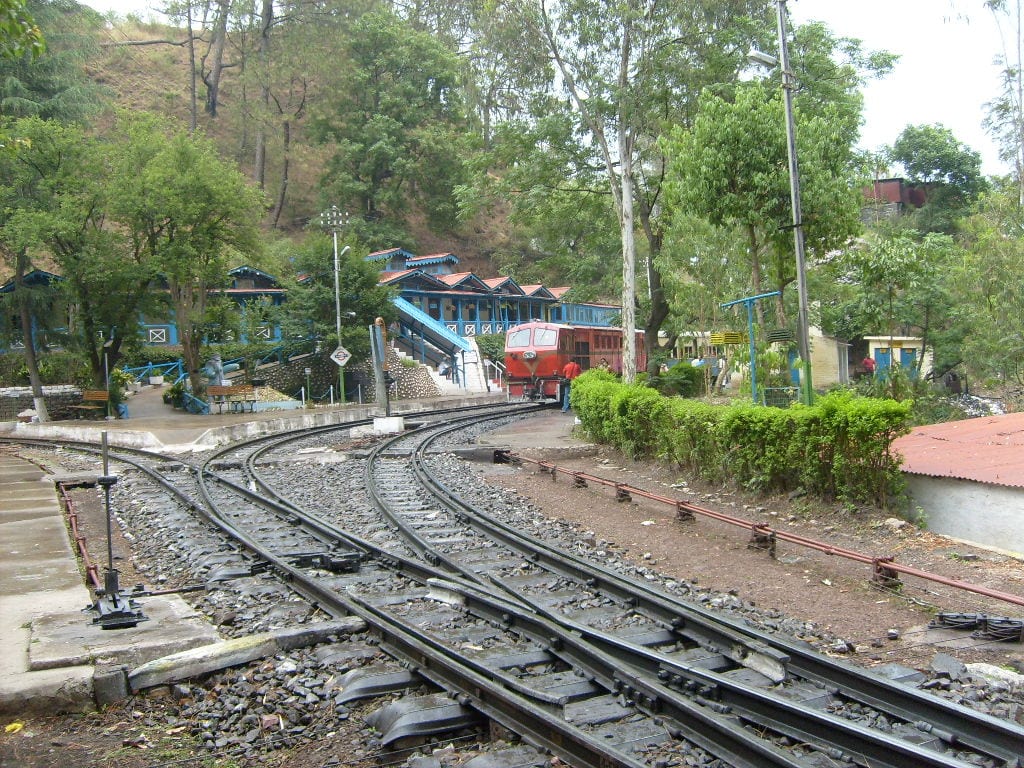
Rolling into Shimla station at over 2,000 m, with the deodar forests and, on a clear day, the snow peaks beyond, is a fitting end to one of the great little railway journeys.Timetables
The Kalka–Shimla Railway runs year-round, all seven days a week, with about five trains a day in each direction. Kalka is easily reached by broad-gauge train or road from Chandigarh and Delhi, and is the junction where you change onto the narrow gauge for the 96.6 km climb from 656 m to 2,076 m (roughly 4½–6 hours, depending on the train).
Real departures from Kalka (2026 — confirm before travelling): the first is the ordinary passenger at 03:30; a popular working leaves around 06:20 (~5½ h); and the last, the Himalayan Queen, departs 12:10. Between them run the premium reserved trains:
| Service | Character |
|---|---|
| Shivalik Deluxe | Premium, reserved, carpeted, meals, fewer stops |
| Himalayan Queen / express | Comfortable reserved 1st & 2nd class |
| Rail Motor Car | Little glass-roofed railcar, panoramic |
| Ordinary passenger | The classic all-stations toy train |
Tips:
- Book ahead through IRCTC, especially the Shivalik Deluxe and the summer (April–June) and autumn high seasons, when Shimla is busy.
- Best views are generally on the valley side; the morning light is loveliest.
- The ordinary passenger, stopping at every little station, is the most atmospheric — and the cheapest.
Times as of the 2026 timetable. Confirm current schedules with the operator — see the Tickets section below.
Tickets
Tickets are sold by Indian Railways through IRCTC and at the stations. Fares are very reasonable by world standards, and the premium services are still a bargain — so the thing to manage is availability, not cost.
The main choices:
- Shivalik Deluxe — the premium reserved train: fewer stops, better seats, a meal, and the shortest journey time. The one to book if you want comfort.
- Reserved seat on an express (such as the Himalayan Queen) — a good middle option.
- The ordinary toy train — cheapest and most characterful, calling at every hill station on the way up.
- Vistadome cars — where offered, glass-roofed carriages for uninterrupted views.
Tips:
- Reserve in advance on IRCTC; the Shivalik Deluxe and summer departures sell out.
- Combine with the mainline — take a broad-gauge train to Kalka and change onto the narrow gauge there.
- Which way? The uphill run (Kalka → Shimla) builds the drama; downhill is faster and easier on the timetable.
Book your tickets
Shivalik Deluxe
Kalka ⇄ Shimla · premium
The premium reserved service — fewer stops, cushioned seats and meals — the most comfortable way to make the five-hour climb. Book well ahead.
Book Tickets (opens in a new tab, on Indian Railways (IRCTC))via Indian Railways (IRCTC)The toy train
Regular narrow-gauge service
The classic, cheaper option: an ordinary carriage on the narrow-gauge train, stopping at the little hill stations all the way up to Shimla.
Book Tickets (opens in a new tab, on Indian Railways (IRCTC))via Indian Railways (IRCTC)Rail Passes
No rail pass covers the Kalka–Shimla Railway. Interrail and Eurail are European schemes, and India is not among the 33 countries in Interrail's list of covered railway companies. Indian Railways' own pass for foreign visitors, the Indrail Pass, was discontinued in 2017. Every journey is bought as a ticket for a named train, through IRCTC or at the station.
A pass would not help here anyway. The fares are low even on the Shivalik Deluxe; availability, not price, is what to plan around.
Checked October 2026 against Interrail's list of railway companies (opens in a new tab) and the Indrail Pass withdrawal (opens in a new tab).
Places to Visit
Shimla and the surrounding hills of Himachal Pradesh reward a stay of several days on top of the ride. The town runs along a single high ridge at just over 2,000 m, and almost everything worth seeing is either strung along that ridge or a short drive off it.
On the line itself, Solan and Kandaghat are pleasant places to break the climb — small hill towns with a slower pace than Shimla and hotels that cost a fraction as much.
Nothing in Shimla is flat. The Mall and the Ridge sit at the top of the town and everything else drops away beneath them in a tangle of stepped lanes, so allow considerably more time than the map distances suggest, and expect to arrive everywhere slightly out of breath.
 Tanweer Morshed / Wikimedia Commons · CC BY-SA 4.0 · cropped
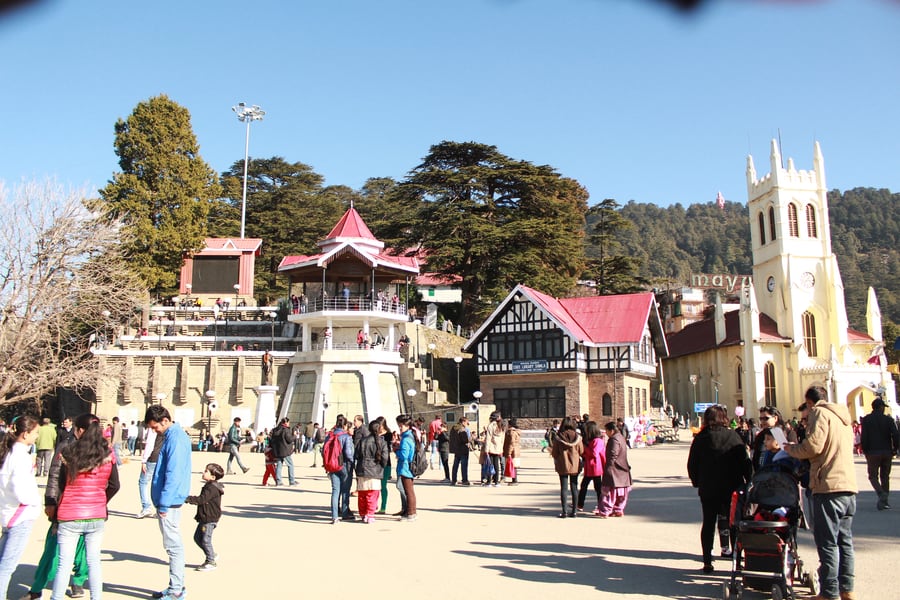
The Ridge & Christ Church
The Ridge is the broad open spine at the top of the town, joined to the pedestrian Mall Road just below it, and it is where Shimla walks in the evening. At its eastern end stands Christ Church, its neo-Gothic tower visible for miles around: designed by Colonel J. T. Boileau, begun in 1844 and consecrated in January 1857, it is the second-oldest church in northern India. Lockwood Kipling — Rudyard's father — worked on the chancel window.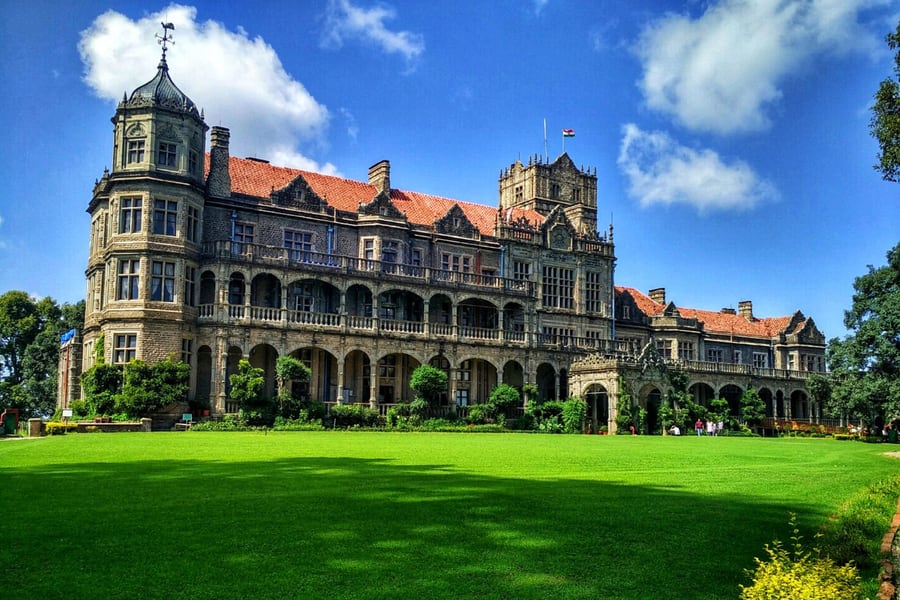 Manisha jahi / Wikimedia Commons · CC BY-SA 4.0 · cropped
The Viceregal Lodge
Henry Irwin's Indo-Gothic pile was finished in 1888 for Lord Dufferin, and it had electric light from the day it opened. Two of the twentieth century's heaviest decisions were taken inside it: the Simla Conference of 1945, and the 1947 agreement to partition India. Since 1965 it has housed the Indian Institute of Advanced Study, and the lawns and part of the interior are open to visitors.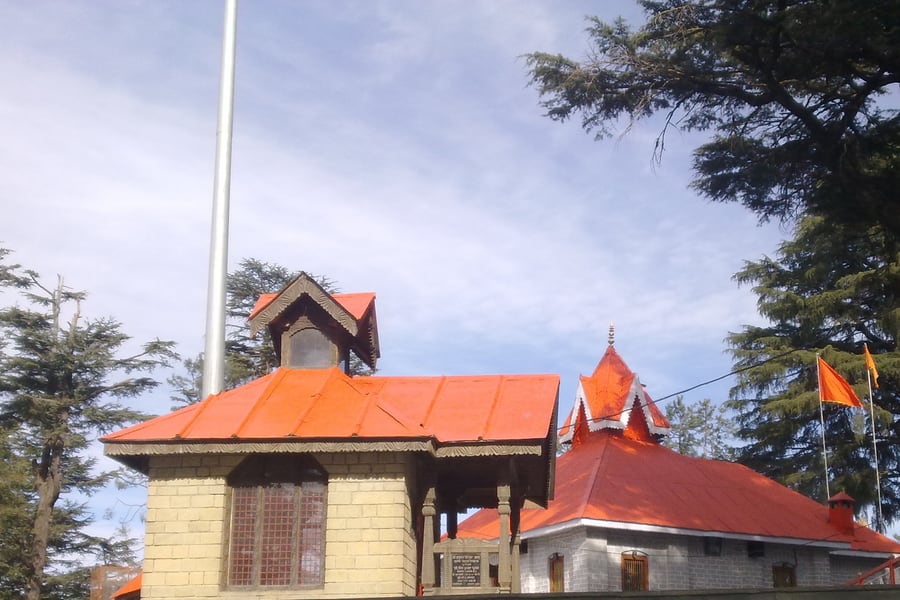 Minaxi choudhary / Wikimedia Commons · CC BY-SA 3.0 · cropped
Jakhoo Hill
Shimla's highest peak at about 2,455 m, crowned by an old Hanuman temple among the deodars and thick with monkeys — keep spectacles, sunglasses and food out of sight on the way up. A 33 m Hanuman statue was unveiled here in November 2010 and is now the first thing you pick out from anywhere in town. The walk up from the Ridge is steep; a ropeway opened in 2017 does it in about five minutes.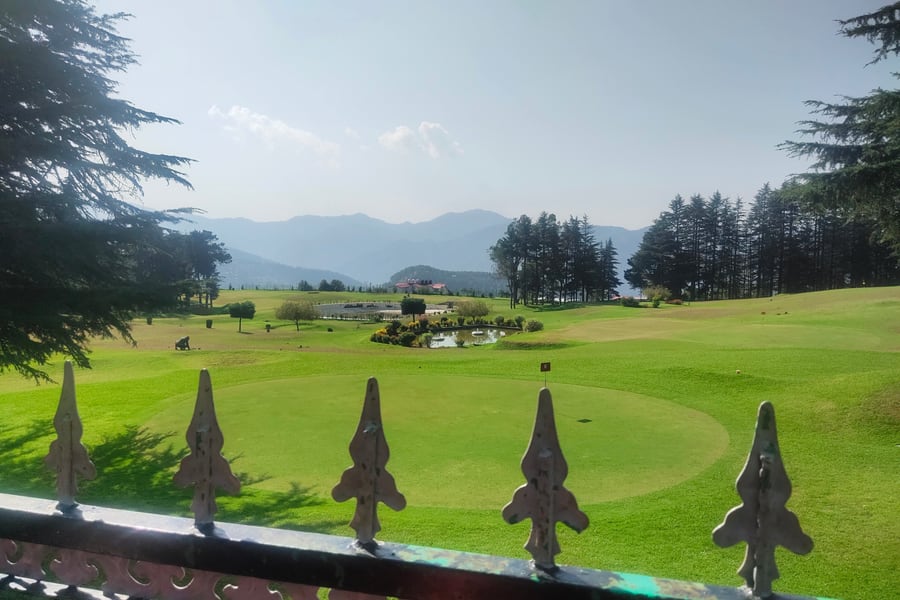 Vworlikar / Wikimedia Commons · CC BY-SA 4.0 · cropped
Kufri & Naldehra
Short hops out of Shimla for open meadow and deodar forest. Naldehra, at around 2,200 m, has a golf course laid out by Lord Curzon, who opened its first nine holes in 1905 and liked the place enough to name a daughter after it — the oldest golf club in India, still ringed by enormous cedars. Kufri, on the road towards Chail, is the winter-sports end of the same excursion.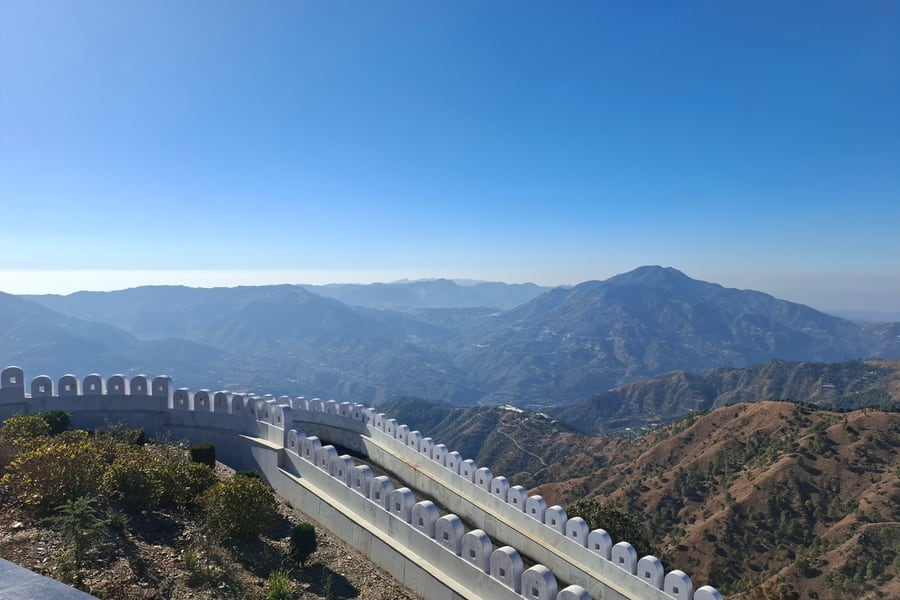 Kavittaa / Wikimedia Commons · CC BY-SA 4.0 · cropped
Chail
Maharaja Rajinder Singh of Patiala built his palace on Chail's Rajgarh hill in 1891–92, and the town went on to become the summer capital of Patiala state. Its cricket ground, finished in 1893 at 2,444 m, is still the highest in the world. Around the town, the Chail Wildlife Sanctuary — notified in 1976 and covering nearly 11,000 hectares — holds ghoral, sambar and cheer pheasant. Kali Ka Tibba is the viewpoint.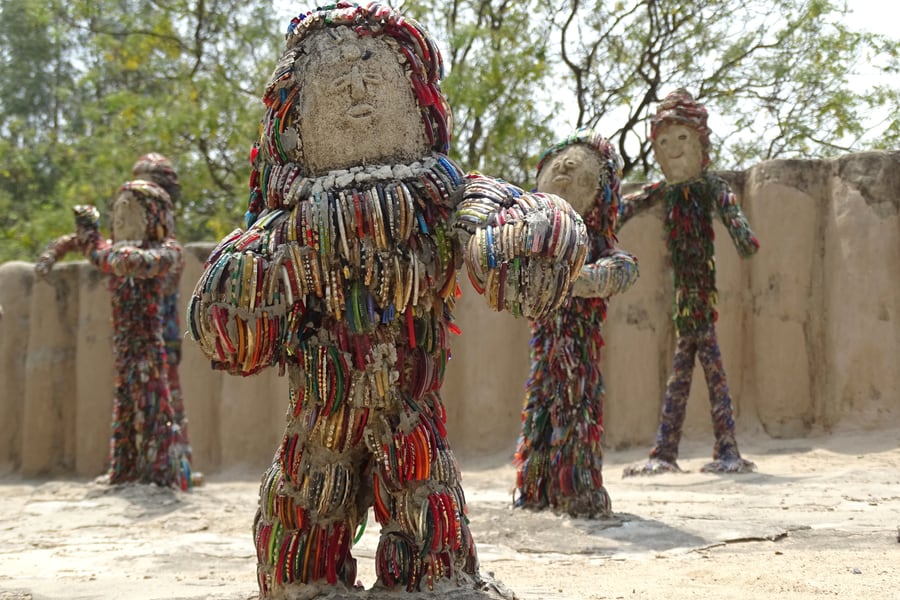 Adam Jones / Wikimedia Commons · CC BY-SA 2.0 · cropped
Chandigarh
Le Corbusier's planned city sits near Kalka at the foot of the line, and makes a logical start or end point. Its strangest sight is not the architecture but the Rock Garden: from 1957 a road inspector, Nek Chand, secretly built a world of figures out of broken bangles, tiles and industrial waste on land where building was forbidden. The authorities found it after eighteen years, in 1976 — and opened it instead of bulldozing it.Where to Sleep
Shimla is the natural base, and it offers everything from Raj-era grandeur to simple guesthouses — give yourself a couple of nights to enjoy the hill-station air.
- Heritage hotels — Shimla's colonial-era hotels, all wood panelling and mountain views, are an experience in themselves; several sit right by the Mall and the Ridge.
- The Oberoi Cecil / Wildflower Hall — for a splurge, the grand old Cecil in town or the palatial Wildflower Hall out at Chharabra, once Lord Kitchener's residence, set among cedar forest.
- Town guesthouses & homestays — plentiful, friendly and good value on the ridges and lanes below the Mall.
- On the line — a night in a quieter hill town like Solan, Kandaghat or Chail makes a peaceful alternative and lets you ride the railway in two easy halves.
Book well ahead for the April–June summer season and the autumn holidays, when Shimla fills with visitors escaping the heat of the plains.
Questions or corrections
Planning this trip and stuck on something, or spotted a time, fare or detail that has changed? Send us a message about Kalka–Shimla Railway. We read every one, and we update this page when something has changed.