Maharajas' Express
Kshitij08 / Wikimedia Commons · CC BY 4.0 · cropped
- DistanceDelhi to Mumbai by way of Rajasthan (Indian Splendour)
- Duration4 days / 3 nights to 7 days / 6 nights
- Best seasonOctober to April, the only months it runs
Introduction
The Maharajas' Express is a hotel that travels at night. Its days are spent standing still: at Agra for the Taj Mahal, at Sawai Madhopur for a game drive in Ranthambore, in Jaipur, Bikaner, Jodhpur and Udaipur for their forts and palaces. Most of its distances are covered after dinner. On the Indian Splendour the train leaves Jaipur at 23:00 and reaches Bikaner after breakfast; it leaves Bikaner at 21:30 and is in Jodhpur by 04:00. While its guests are out at a fort, it goes off to the yard for fuel and water.
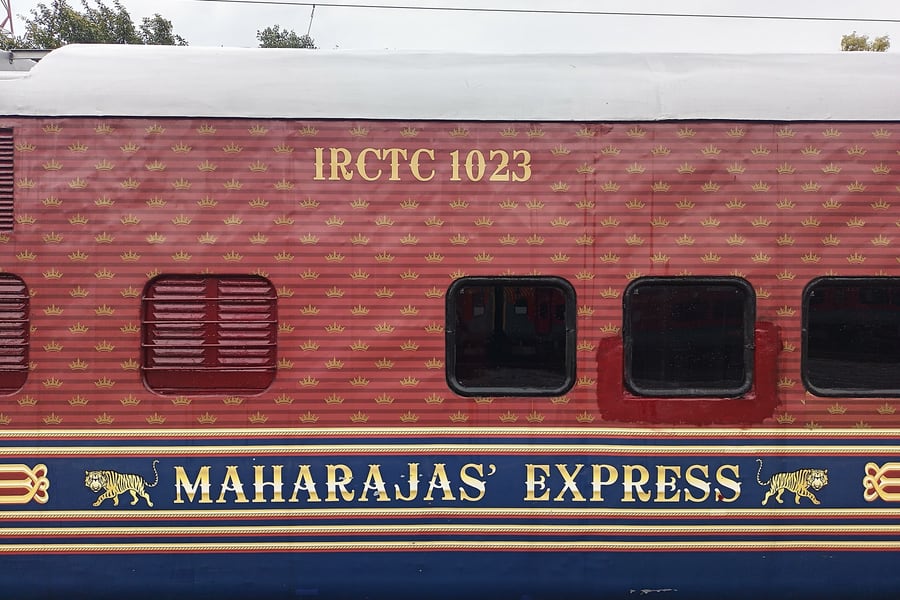
The train is IRCTC's, the tourism arm of Indian Railways, and it runs only from October to April, on four fixed journeys of three or six nights that start in Delhi or Mumbai. It is almost half a mile long and carries 88 guests in 43 cabins, with a butler to every carriage and two restaurant cars that each seat 42. Every meal, the house drinks, the guides and the entrance fees are in the fare.
The Journey
The Indian Splendour is the classic run. It leaves Delhi Safdarjung, a small suburban station in south Delhi, at 07:30 on a Sunday and reaches Agra at lunchtime. From there it works west into Rajasthan: Ranthambore, Jaipur, then out into the Thar Desert to Bikaner, south to Jodhpur and Udaipur, and finally down to the coast and into Chhatrapati Shivaji Maharaj Terminus in Mumbai at 16:40 the following Saturday. The Heritage of India runs much the same route the other way, from Mumbai to Delhi, and stops at Fatehpur Sikri on its last afternoon.
The other two stay closer to Delhi. The Indian Panorama goes east after Agra, to Orchha, the temples of Khajuraho and Varanasi, where guests take a boat on the Ganges for the evening aarti, and returns to Delhi. The Treasures of India is the short version: Jaipur, Ranthambore and Agra in three nights.
The train
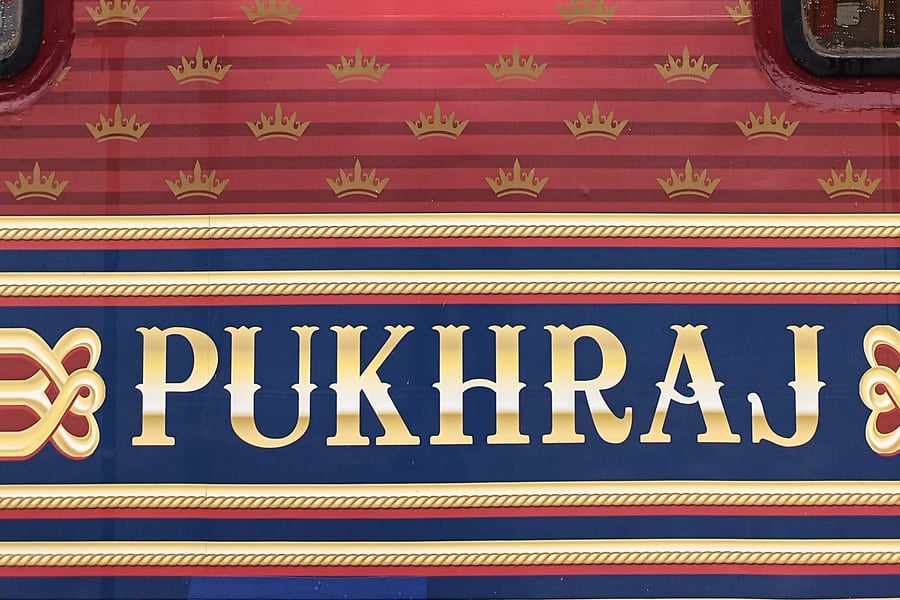
Every carriage is named after a gem. The Deluxe Cabins are in five, Hakik, Firoza, Katela, Beruz and Pitoniya (agate, turquoise, amethyst, aquamarine and bloodstone); the Junior Suites in six, Moti, Panna, Manik, Gomed, Moonga and Pukhraj; the four Suites in Heera and Neelam, diamond and sapphire. The Presidential Suite fills a carriage of its own, Navratana, the nine gems: 448 square feet with two bedrooms and a living room. Meals are taken in two restaurant cars, Mayur Mahal, after the peacock, and Rang Mahal, the palace of colours, under a hand-painted ceiling; drinks in the Safari Bar and the Rajah Club lounge.
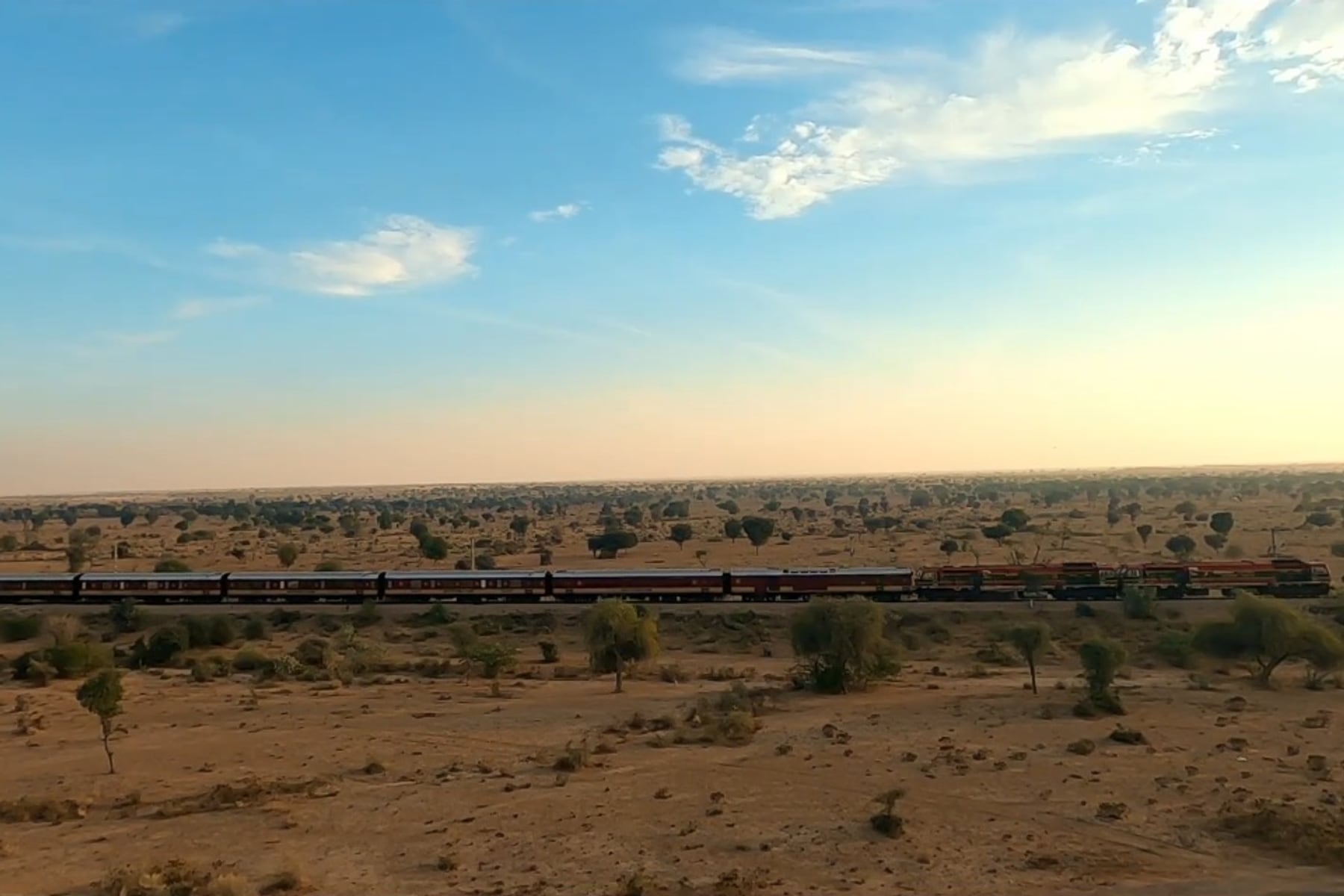
Indian Railways supplies the locomotives, diesel or electric according to the line. In the Thar Desert in April 2026, in the photograph at the top of this page, a pair of WDP-4D diesels was at the head.
And the Palace on Wheels
India's first luxury train is older. The Palace on Wheels was launched on 26 January 1982 by Indian Railways and the Rajasthan Tourism Development Corporation, with carriages built to recall the private saloons of Rajasthan's princely states, and it still runs a seven-night circuit of Rajasthan and Agra from Delhi. The Maharajas' Express followed in March 2010, and its journeys reach beyond Rajasthan, to Khajuraho, Varanasi and Mumbai.
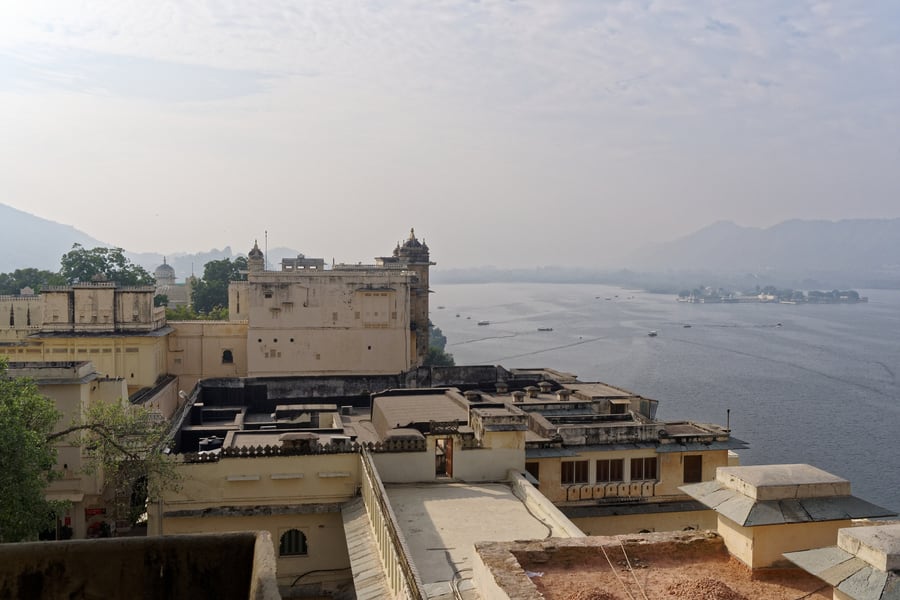
Along the route
 Jakub Hałun / Wikimedia Commons · CC BY-SA 4.0 · cropped
The Thar Desert
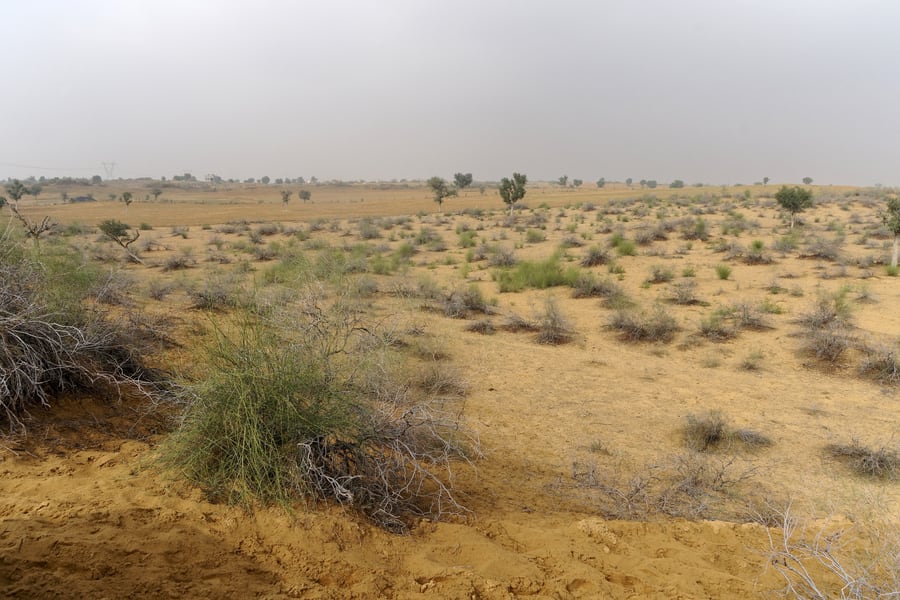
Beyond Jaipur the train runs out into the Thar, the Great Indian Desert: sandy plains and thorny scrub where less than 500 mm of rain falls in a year. At Bikaner the day ends with dinner out on the dunes.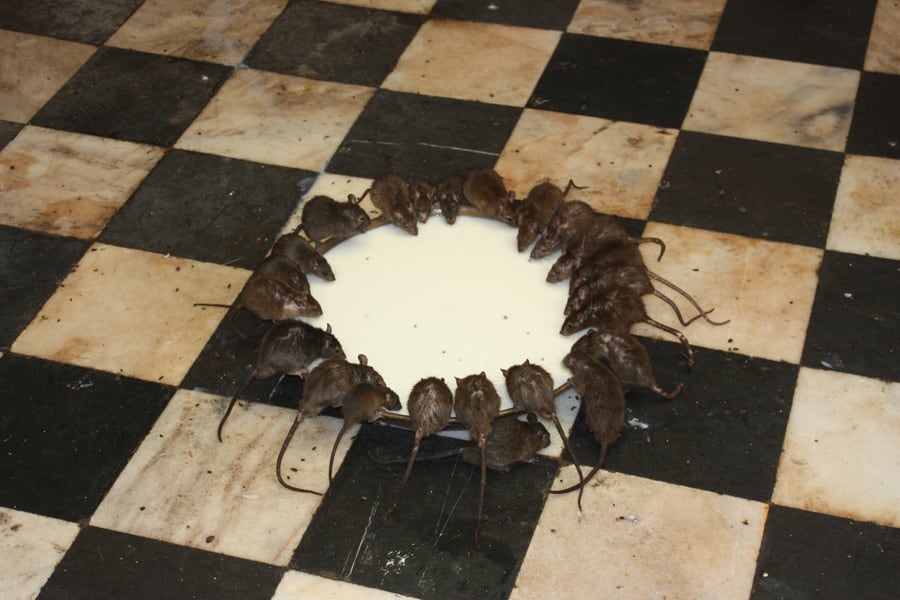 Arian Zwegers / Wikimedia Commons · CC BY 2.0 · cropped
Deshnok
Thirty kilometres south of Bikaner, the Karni Mata temple is home to about 20,000 rats, the kābā, cared for by its staff as kin and fed milk and sweets. The Heritage of India stops at Deshnok itself, at breakfast time.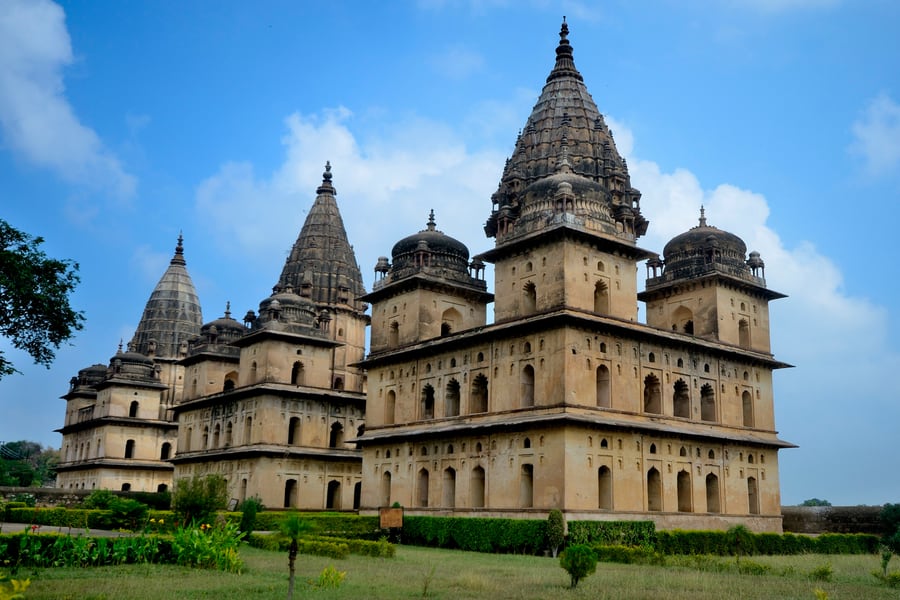 Sharvarism / Wikimedia Commons · CC BY-SA 4.0 · cropped
Orchha
The Indian Panorama pulls in at dawn. Founded after 1501 as the capital of the Bundela Rajputs, Orchha lies on the Betwa river, with its palace-fort on an island and the royal chhatris, domed cenotaphs, along the bank.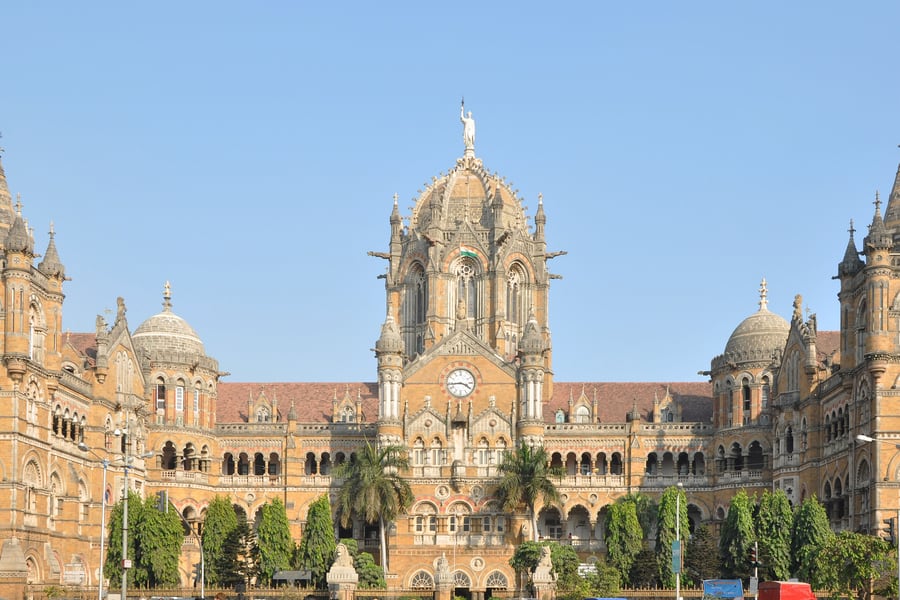 Joe Ravi / Wikimedia Commons · CC BY-SA 3.0 · cropped
Chhatrapati Shivaji Maharaj Terminus
The Indian Splendour ends, and the Heritage of India begins, at F. W. Stevens's Gothic station in Mumbai, built over ten years from 1878. It was Victoria Terminus until 1996, and a UNESCO World Heritage Site since 2004.A bit of history
Culture & experiences along the way
 Billjones94 / Wikimedia Commons · CC BY-SA 4.0 · cropped
Bikaneri bhujia
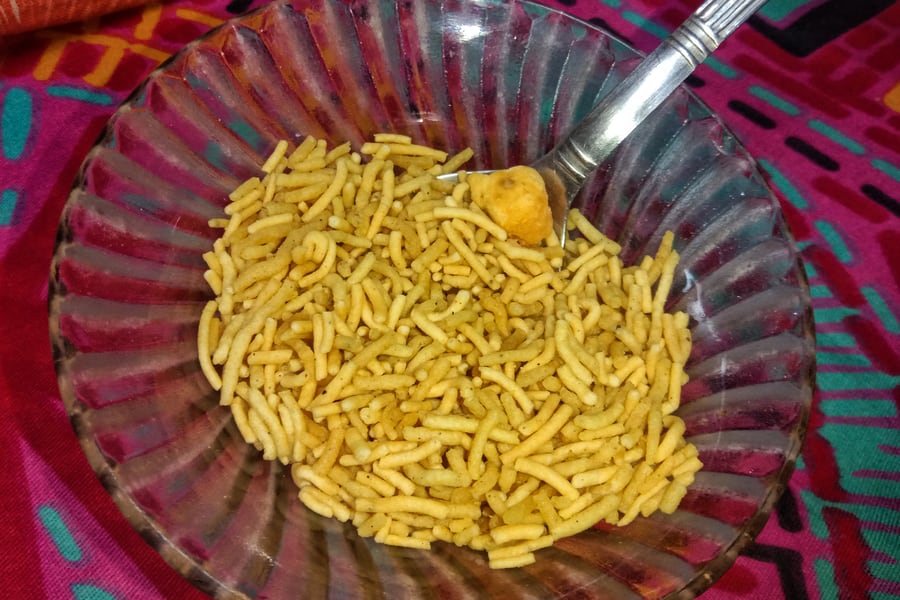
Bikaner's crisp fried strands are made from moth-bean and gram flour with spices, crunchier and sharper than ordinary sev. The first batch is dated to 1877, under Maharaja Dungar Singh, and since 2010 the name has had a geographical indication: only Bikaner's makers may use it.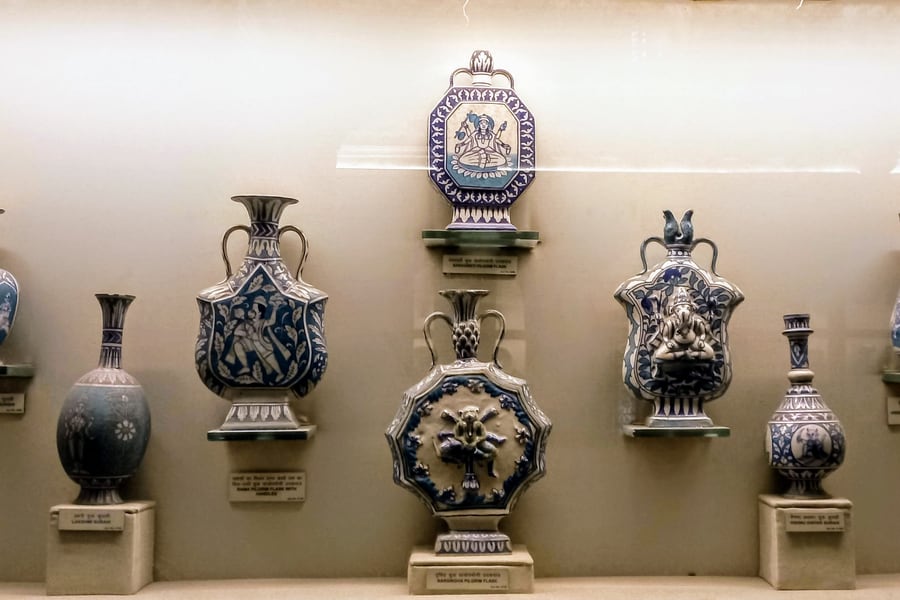 Neek-Theri / Wikimedia Commons · CC BY-SA 4.0 · cropped
Blue pottery
Jaipur's blue pottery contains no clay. Its dough is quartz powder, powdered glass, fuller's earth, borax and gum, painted in cobalt blue and fired only once, at a low heat. The Albert Hall Museum, on the Jaipur tours, shows late-19th-century pieces painted with Hindu gods.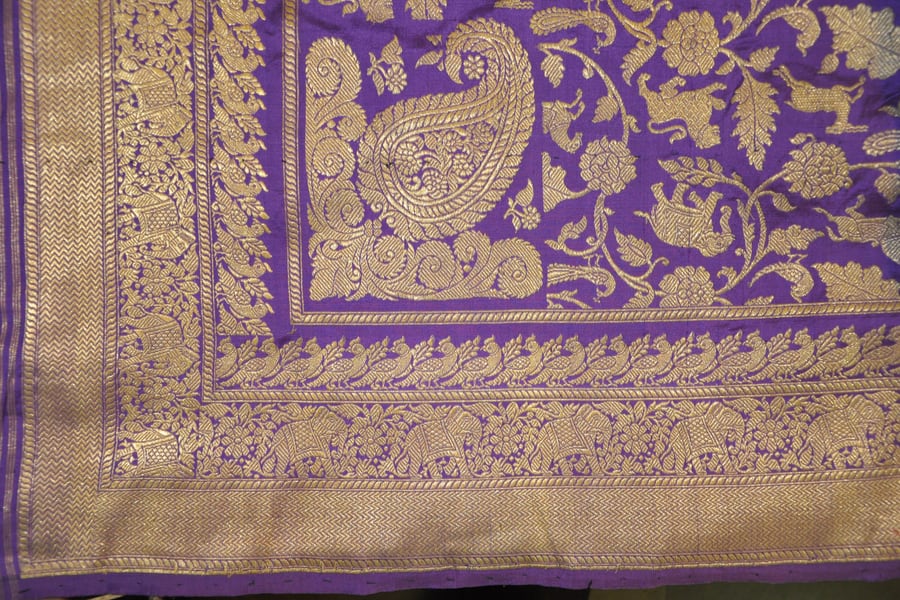 Anilbhardwajnoida / Wikimedia Commons · CC BY-SA 3.0 · cropped
Banarasi brocade
Varanasi's silk saris are woven with zari, threads of gold and silver, into dense patterns of flowers and climbing leaves. One sari can take from fifteen days to six months on the loom. The Indian Panorama's day in Varanasi includes a silk-weaving centre.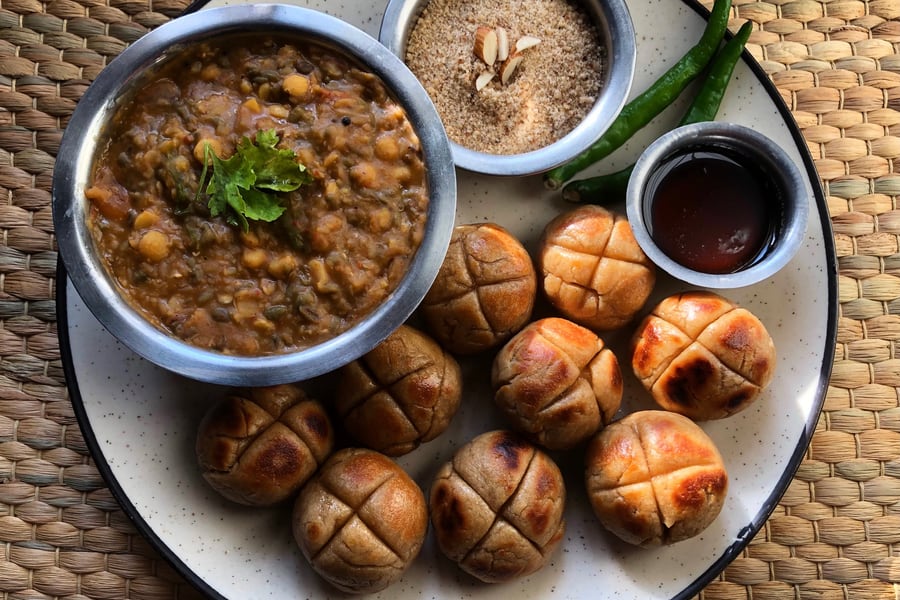 Mahi Tatavarty / Wikimedia Commons · CC BY-SA 4.0 · cropped
Dal baati churma
Rajasthan's best-known meal: baati, hard rolls of wheat dough baked golden and dressed with ghee, served with spiced lentil dal and churma, a sweet of fried dough ground coarse and mixed with sugar, cardamom and dried fruit.Timetables
The train runs one journey at a time, so each of the four leaves about once a month, October to April. Every departure in the table is a Sunday.
Departures, 2026–27
| Journey | Nights | From | Oct 2026 | Nov | Dec | Jan 2027 | Feb | Mar | Apr |
|---|---|---|---|---|---|---|---|---|---|
| Indian Panorama | 6 | Delhi | 4 | 1, 29 | 27 | 24 | 21 | 21 | — |
| Indian Splendour | 6 | Delhi | 11 | 8 | 6 | 3, 31 | 28 | 28 | — |
| Heritage of India | 6 | Mumbai | 18 | 15 | 13 | 10 | 7 | 7 | 4 |
| Treasures of India | 3 | Delhi | 25 | 22 | 20 | 17 | 14 | 14 | — |
The 2027–28 season is published too, starting with the Indian Panorama on 3 October 2027.
Boarding and arrival
| Journey | Check-in | Train leaves | Train arrives |
|---|---|---|---|
| Indian Splendour | Delhi Safdarjung, 06:15 | 07:30 | Mumbai CSMT, day 7, 16:40 |
| Heritage of India | Taj Mahal Palace hotel, Mumbai, 08:30 | Mumbai CSMT, 10:50 | Delhi Safdarjung, day 7, 16:30 |
| Indian Panorama | Delhi Safdarjung, 06:30 | 07:50 | Delhi Safdarjung, day 7, 14:30 |
| Treasures of India | Delhi Safdarjung, 06:30 | 07:50 | Delhi Safdarjung, day 4, 16:30 |
The Indian Splendour, stop by stop
| Day | Stop | Train arrives | Train leaves |
|---|---|---|---|
| Sun | Delhi Safdarjung | — | 07:30 |
| Sun | Agra | 12:30 | Mon, after breakfast |
| Mon | Sawai Madhopur, for Ranthambore | afternoon | 18:00 |
| Tue | Jaipur | overnight | 23:00 |
| Wed | Bikaner | 08:15 | 21:30 |
| Thu | Jodhpur | 04:00 | 22:00 |
| Fri | Udaipur | 10:00 | 21:30 |
| Sat | Mumbai CSMT | 16:40 | — |
Dates and times are IRCTC's, as of October 2026, and the operator warns that timings can change with the weather; in December and January, fog in northern India can delay the train, so leave time before an onward flight. Check the Maharajas' Express departure dates (opens in a new tab) before booking.
Tickets
The fare buys the whole journey, per person, sharing a cabin: every meal, soft drinks and the house wines, beer and spirits, a butler, and every excursion on the itinerary with its guide, transport and entrance fees. GST of 5% is added, and premium drinks, laundry, tips and transfers to the station are extra. Travelling alone costs a single supplement, from $6,300 in a Deluxe Cabin on a six-night journey to the full fare again in a Suite.
Book on the Maharajas' Express (opens in a new tab) website or through its agents. Children under five travel free in their parents' double bed, and those from five to twelve pay half. Prices are also quoted in rupees. The fares below are for 2026–27, in US dollars, per person.
Book your tickets
Jakub Hałun / Wikimedia Commons · CC BY-SA 4.0 · croppedThe Indian Splendour
Delhi → Mumbai · 6 nights
Deluxe Cabin $8,400, Junior Suite $10,700, Suite $15,600, Presidential Suite $26,800, per person sharing.
Book Tickets (opens in a new tab, on the-maharajas.com)via the-maharajas.comKishlay RF / Wikimedia Commons · CC BY-SA 4.0 · croppedThe Heritage of India
Mumbai → Delhi · 6 nights
Deluxe Cabin $8,800, Junior Suite $11,200, Suite $15,600, Presidential Suite $26,800, per person sharing.
Book Tickets (opens in a new tab, on the-maharajas.com)via the-maharajas.comJakub Hałun / Wikimedia Commons · CC BY-SA 4.0 · croppedThe Indian Panorama
Delhi → Varanasi → Delhi · 6 nights
Deluxe Cabin $8,400, Junior Suite $10,700, Suite $15,600, Presidential Suite $26,800, per person sharing.
Book Tickets (opens in a new tab, on the-maharajas.com)via the-maharajas.comKishlay RF / Wikimedia Commons · CC BY-SA 4.0 · croppedTreasures of India
Delhi → Agra → Delhi · 3 nights
Deluxe Cabin $5,300, Junior Suite $5,700, Suite $8,600, Presidential Suite $14,600, per person sharing.
Book Tickets (opens in a new tab, on the-maharajas.com)via the-maharajas.comRail Passes
No rail pass covers the Maharajas' Express. It is sold only as a whole journey, and Interrail and Eurail are European schemes: India is not among the countries in Interrail's list of covered railway companies. Indian Railways' own pass for foreign visitors, the Indrail Pass, was withdrawn by Railway Board order on 19 September 2017.
A pass would not help here anyway. The fare already includes every meal, the excursions and the guides, and the train cannot be boarded on an ordinary ticket.
Checked October 2026 against Interrail's list of railway companies (opens in a new tab) and the Indrail Pass (opens in a new tab).
Places to Visit
Every stop below is part of at least one of the four journeys, and the visit is included in the fare. They run in the order of the Indian Splendour, with Fatehpur Sikri and Khajuraho, from the other routes, at the end.
 Antrix3 / Wikimedia Commons · CC BY-SA 4.0 · cropped
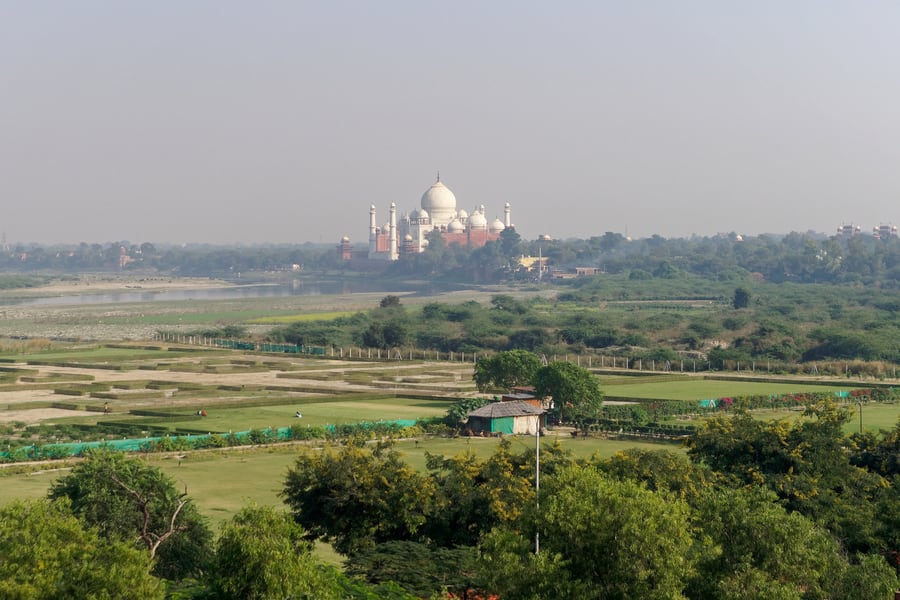
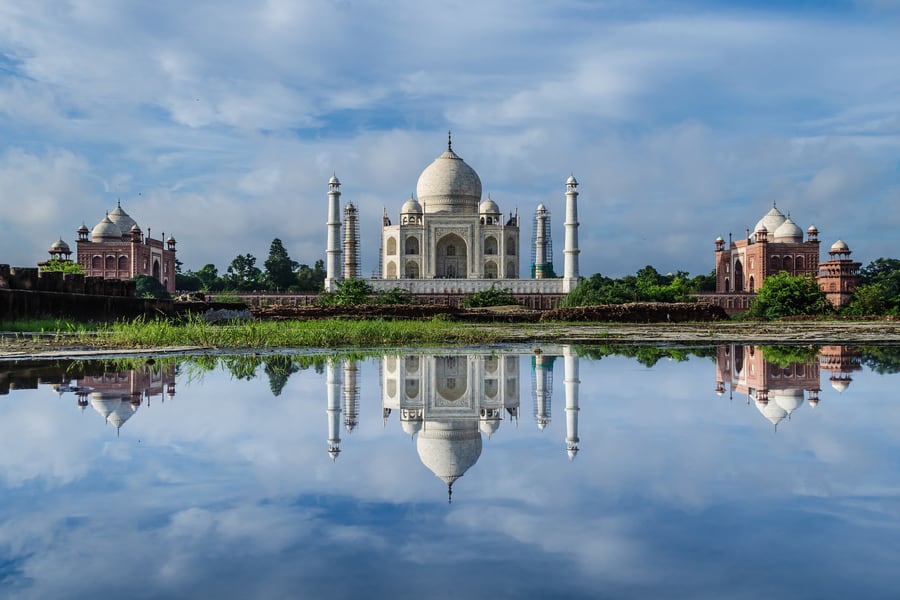
Taj Mahal
Shah Jahan commissioned it in 1631 as the tomb of his wife Mumtaz Mahal; the white marble mausoleum was finished in 1648, and he lies in it too. It stands on the right bank of the Yamuna at the centre of a 17-hectare complex of gardens, a mosque and a guest house, and has been a UNESCO World Heritage Site since 1983. Three of the four journeys visit it at six in the morning.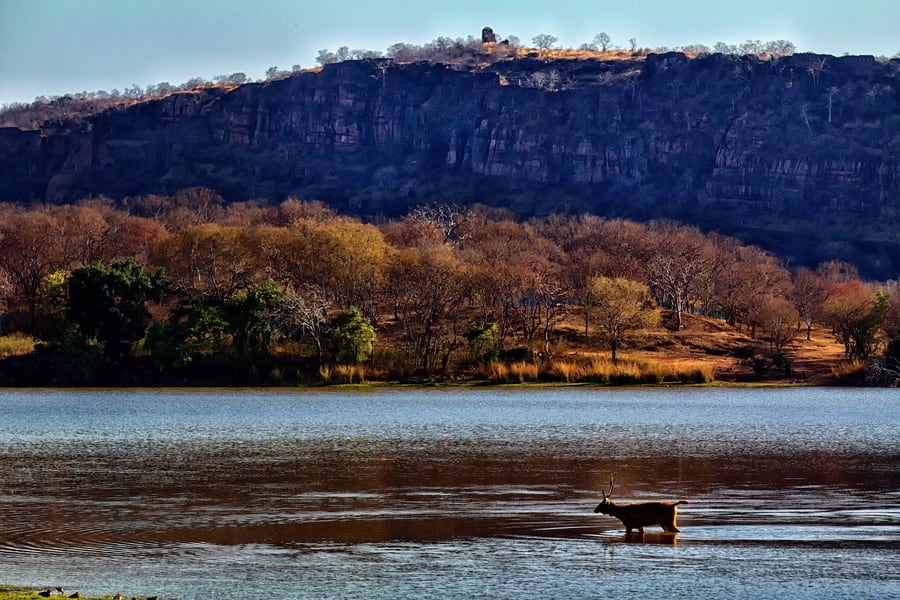 Jatin Sindhu / Wikimedia Commons · CC BY-SA 4.0 · cropped
Ranthambore
Named after the fort on its cliffs, the national park covers 1,334 km² between the Banas and Chambal rivers. It began as a game sanctuary in 1955, became a Project Tiger reserve in 1974 and a national park in 1980, and is known above all for its Bengal tigers: 69 in 2022, after numbers fell to about 15 in the early 2000s. Guests go in by jeep or open canter.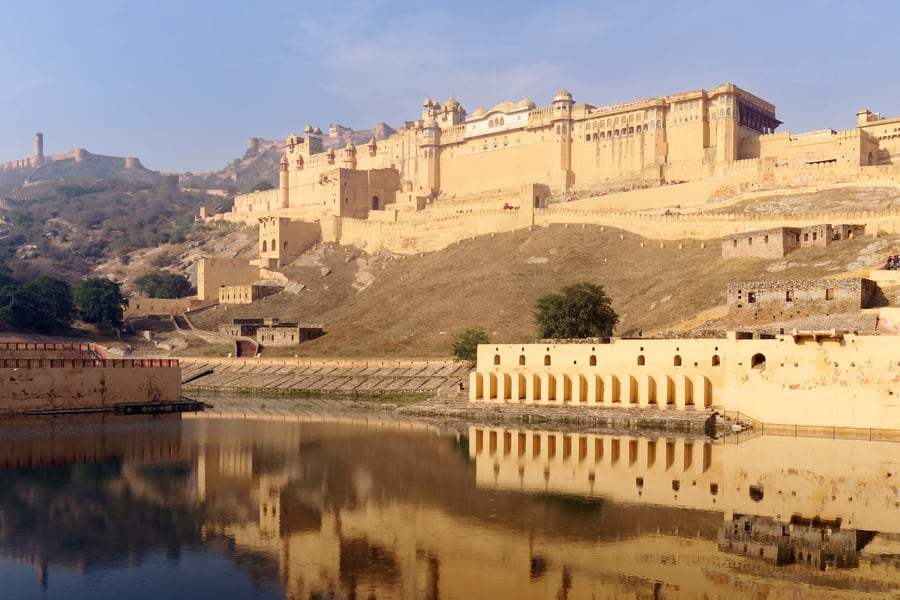 Jakub Hałun / Wikimedia Commons · CC BY-SA 4.0 · cropped
Amber Fort
Eleven kilometres from Jaipur, the palace of the Rajput maharajas climbs a ridge of the Aravalli hills above Maota Lake, its water supply. Built of red sandstone and marble on four levels, each with its own courtyard, it holds the Sheesh Mahal, the mirror palace, and the Sukh Niwas, cooled by wind blowing over a cascade of water. A passage links it to Jaigarh Fort on the hill above.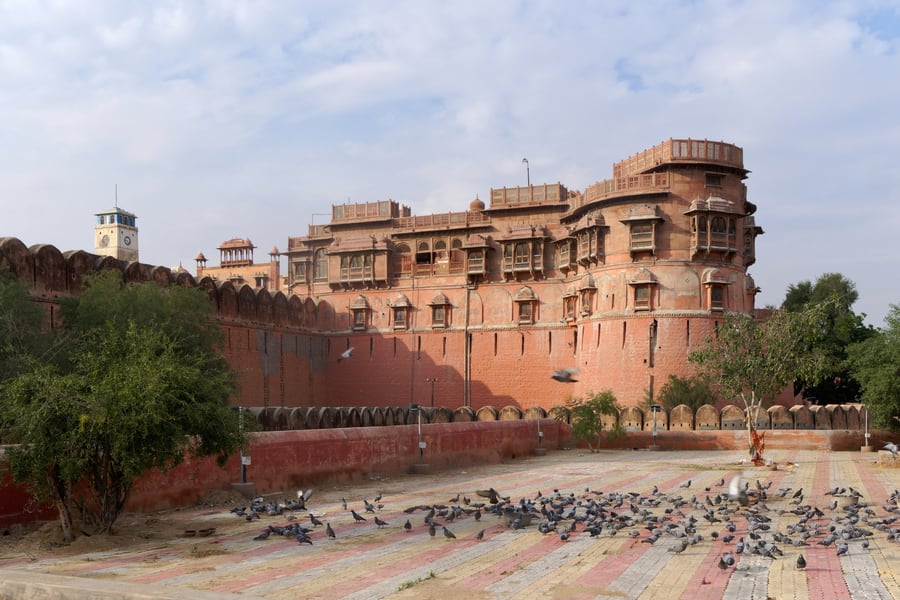 Jakub Hałun / Wikimedia Commons · CC BY-SA 4.0 · cropped
Junagarh Fort
One of the few great forts of Rajasthan not built on a hill: its walls and moat went up on the plain between 1589 and 1594, under Karan Chand, chief minister of Raja Rai Singh. Its 5.28-hectare precinct is crowded with palaces, temples and pavilions, and the modern city grew up around it. It became Junagarh, the Old Fort, when the royal family moved out to Lalgarh Palace early in the 20th century.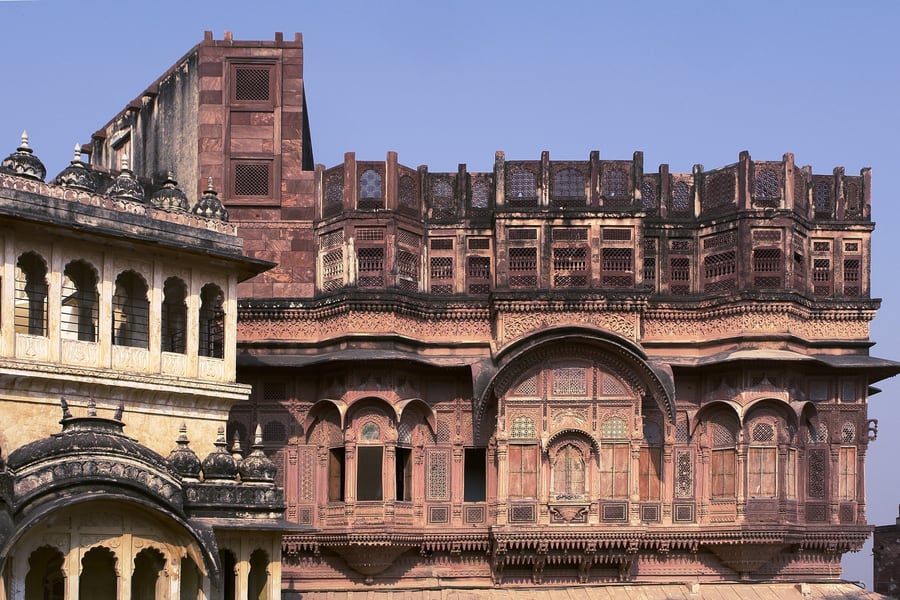 Yann / Wikimedia Commons · CC BY-SA 4.0 · cropped
Mehrangarh
Rao Jodha of the Rathores founded it about 1459 on a hill rising some 122 m above the plain, though most of what stands is 17th-century. Seven gates lead in. Jai Pol, the victory gate, was built by Maharaja Man Singh in 1806 after his wars with Jaipur and Bikaner, and the marks of Jaipur's cannonballs still show on the second gate. Inside are palaces known for their carving, and a museum.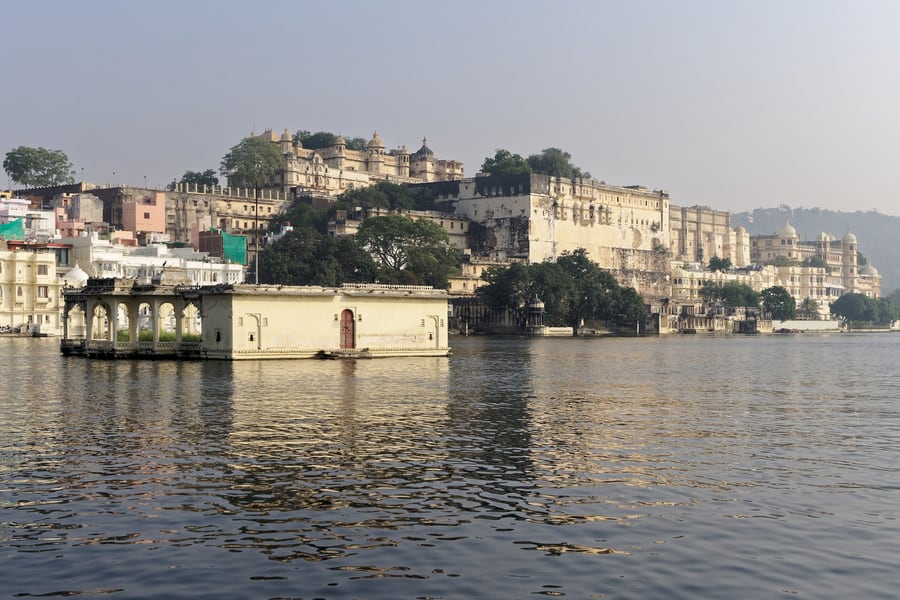 Jakub Hałun / Wikimedia Commons · CC BY-SA 4.0 · cropped
City Palace
Maharana Udai Singh II began it in 1553, when he moved the capital of Mewar from Chittor, and his successors went on building for nearly 400 years. It stands on a hill on the east bank of Lake Pichola, a lake made in 1362, whose islands hold the Lake Palace and Jag Mandir. The morning in Udaipur begins with a boat ride on the lake and ends at the palace.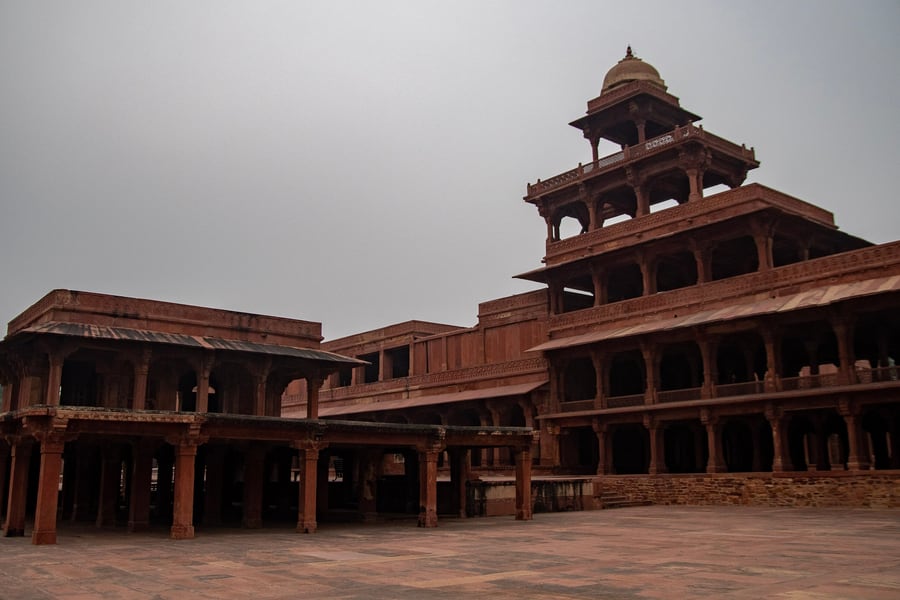 Darshanavenugopal / Wikimedia Commons · CC BY-SA 4.0 · cropped
Fatehpur Sikri
Akbar founded the city in 1571 as the capital of the Mughal Empire, left it in 1585, and by 1610 it was abandoned. In the royal enclave the Panch Mahal rises in five storeys, each smaller than the one below, on 176 carved columns, and was probably built for the women of the court. Fatehpur Sikri has been a UNESCO World Heritage Site since 1986.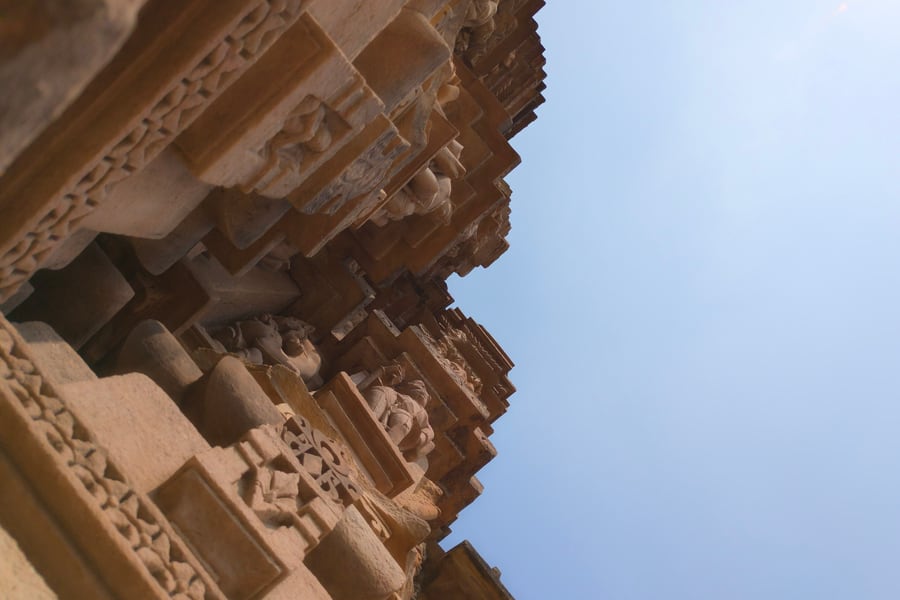 WarmaFiesta / Wikimedia Commons · CC BY-SA 4.0 · cropped
Khajuraho
The Chandela kings built most of these Hindu and Jain temples between 885 and 1000. There were 85 by the 12th century; about 25 survive, their walls covered in sculpture, a few of it famously erotic. The jungle hid them until 1838, when a British engineer, T. S. Burt, reported them, and they have been a UNESCO World Heritage Site since 1986. The train's guests visit the Western Group of temples.Where to Sleep
The operator recommends at least one night in a hotel before and after the train. Check-in at Delhi Safdarjung is at 06:15 or 06:30, so a night in Delhi is close to essential. Guests on the Heritage of India meet at the Taj Mahal Palace in Mumbai.
Where to stay
 Brihaspati / Wikimedia Commons · CC BY 4.0 · cropped
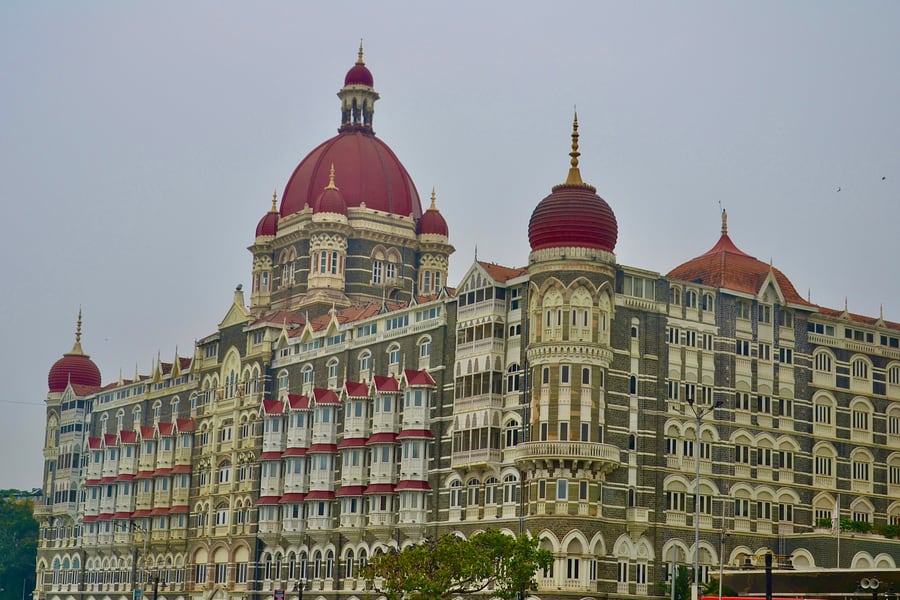
The Taj Mahal Palace
Apollo Bunder, Mumbai
Open since 1903 and looking over the Gateway of India to the Arabian Sea, with 243 rooms and 42 suites; the Heritage of India checks in here.
Check Availability (opens in a new tab, on tajhotels.com)via tajhotels.comQuestions or corrections
Planning this trip and stuck on something, or spotted a time, fare or detail that has changed? Send us a message about Maharajas' Express. We read every one, and we update this page when something has changed.