Darjeeling Himalayan Railway
Syed Sajidul Islam / Wikimedia Commons · CC BY-SA 4.0
- Distance88 km
- Duration~7 hours
- Best seasonOct–Dec · Mar–May
Introduction
It has been running since 1881, it is barely two feet wide, and some of its engines are older than most of the countries their passengers come from. The Darjeeling Himalayan Railway — the "Toy Train" — is one of the most loved little railways in the world, and a UNESCO World Heritage Site into the bargain.
Its job is a heroic one: to haul itself out of the steaming plains of West Bengal and up, and up, into the foothills of the Himalaya, to the old British hill station of Darjeeling at over 2,000 metres. It does this the hard way, on a 610 mm narrow gauge, without tunnels — instead clinging to the mountainside beside the road, doubling back on itself through zig-zags and spiralling through the famous Batasia Loop to gain height a few metres at a time.
The reward, on a clear day, is one of the great views on earth: Kanchenjunga, the world's third-highest mountain, hanging above the tea gardens. The whole climb takes the best part of a day — but nobody rides the Toy Train to save time.
The Journey
The full line runs 88 kilometres from New Jalpaiguri, on the hot northern plains, up to Darjeeling — a climb of more than 2,000 metres that takes around seven hours, so slowly you could step off and walk alongside.
From the junction the train trundles through Siliguri and out into tea country, then begins to climb in earnest along the Hill Cart Road, sharing the tarmac with cars, cows and market stalls. To beat the gradient without tunnels, the Victorian engineers resorted to ingenious tricks — zig-zag reverses where the train shunts backwards and forwards up the hill, and loops where it spirals over its own tracks. The tightest of the curves has the wonderful name Agony Point.
Up through the busy hill town of Kurseong the air cools and the views open out. Near the top the line reaches Ghum — at 2,260 metres, the highest railway station in India — before the celebrated Batasia Loop, a complete spiral around a garden and war memorial, with the snows of Kanchenjunga filling the sky behind. Then it's the short run down into Darjeeling itself, whistle echoing between the tea-clad ridges.
Short of time or a full ticket? Most visitors ride the two-hour steam "joy train" from Darjeeling up to Ghum and back — the essence of the line in an afternoon.
Along the route
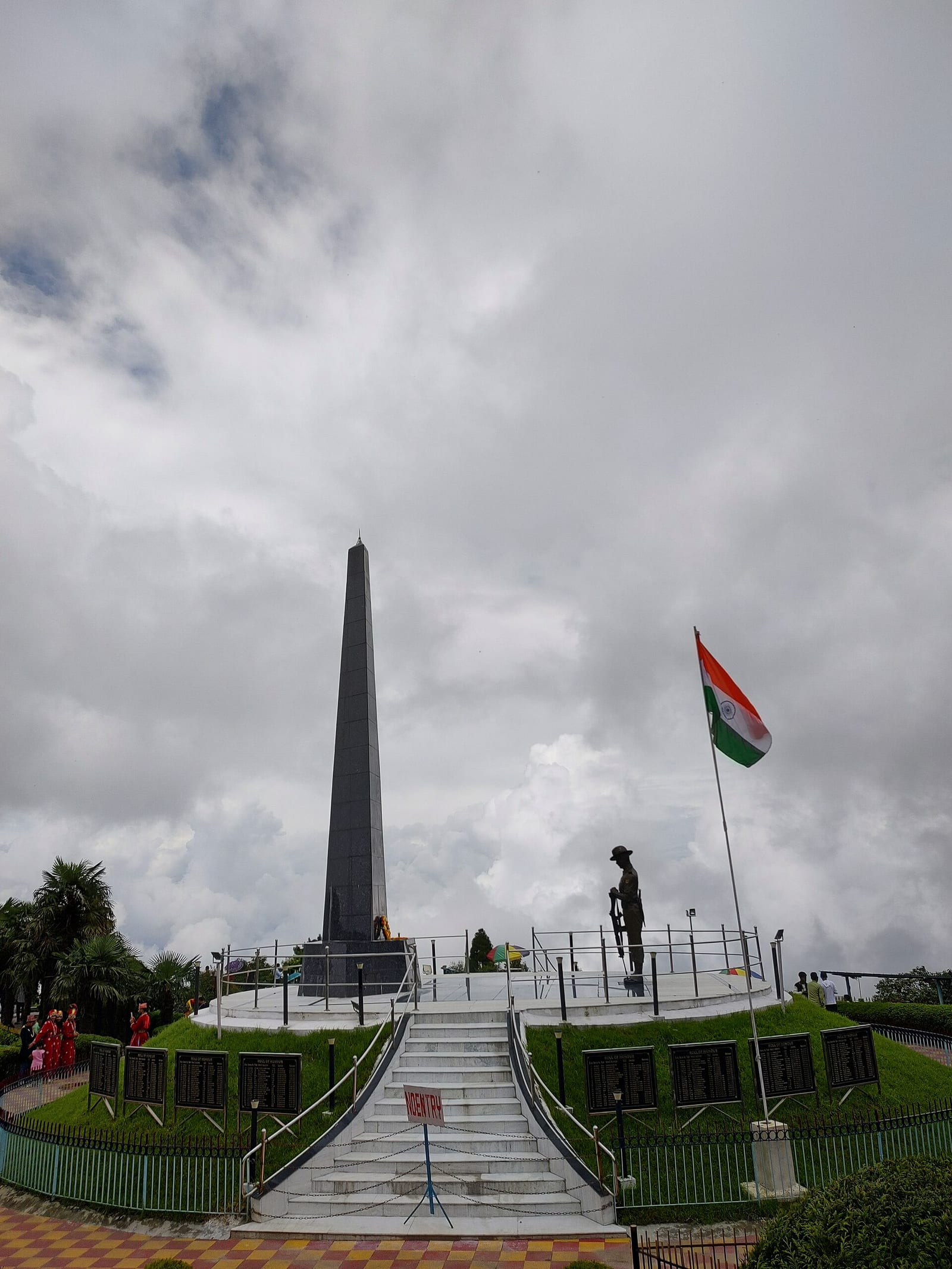
Kingshuk Mondal / Wikimedia Commons · CC BY 4.0The Batasia Loop
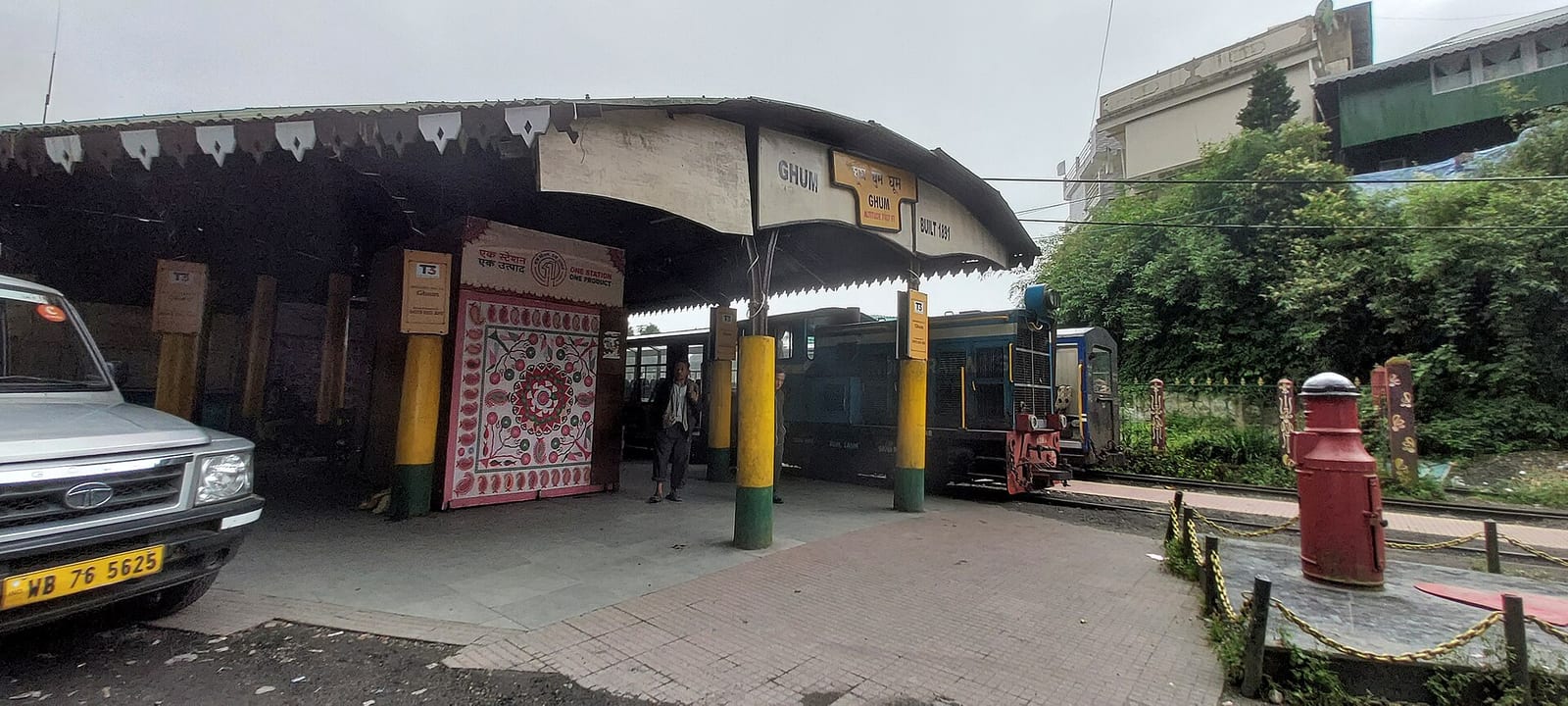
Just below Ghum the track spirals over itself in a complete loop, dropping height gently and swinging round a garden and war memorial — with the whole Kanchenjunga range laid out behind on a clear day.Pinakpani / Wikimedia Commons · CC BY-SA 4.0Ghum — the roof of the line
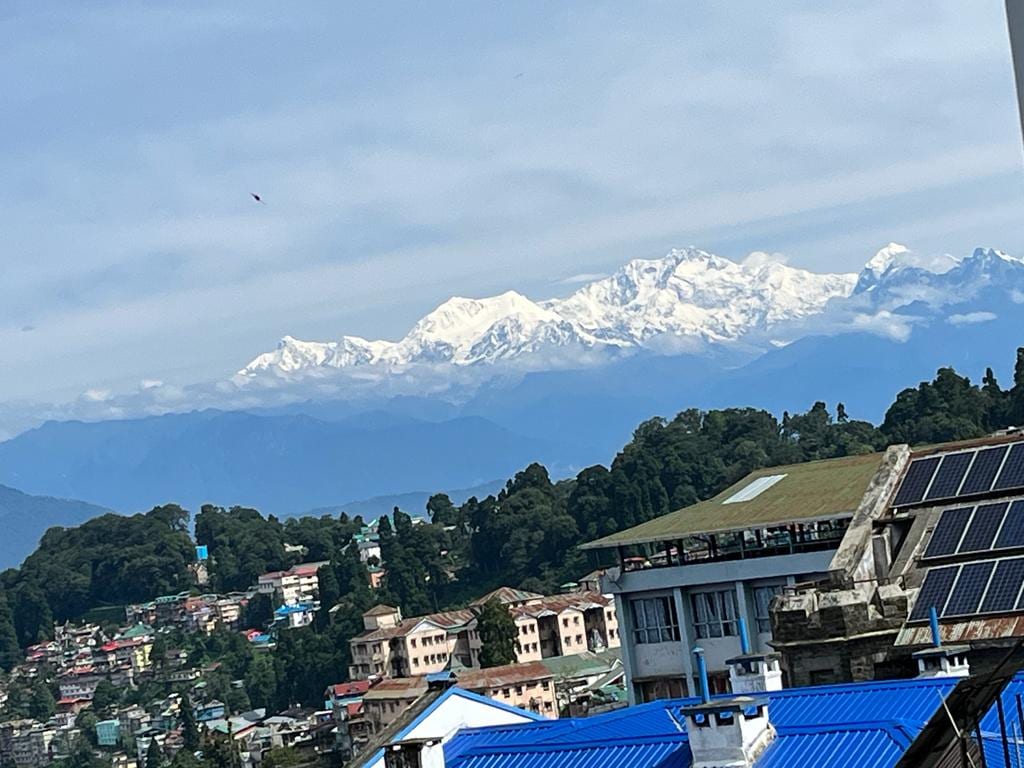
At 2,260 m, Ghum is the highest railway station in India and the summit of the climb — home to a little railway museum, and the turning point for the popular steam joy rides.Samakhtar / Wikimedia Commons · CC BY-SA 4.0Kanchenjunga
On a clear morning the world's third-highest mountain floats above the tea gardens — the view that has drawn travellers to Darjeeling for a century and a half.A bit of history
Culture & experiences along the way
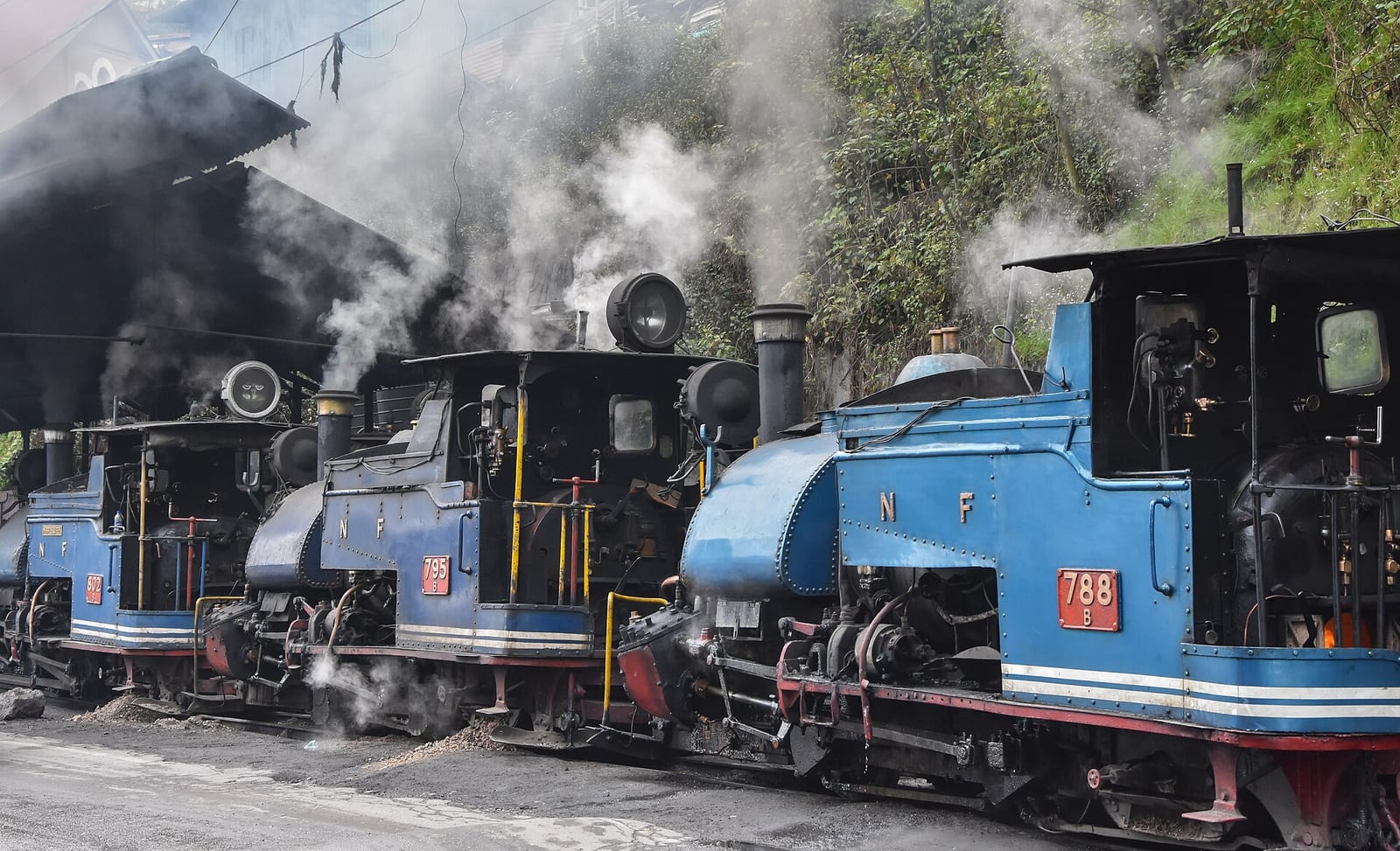
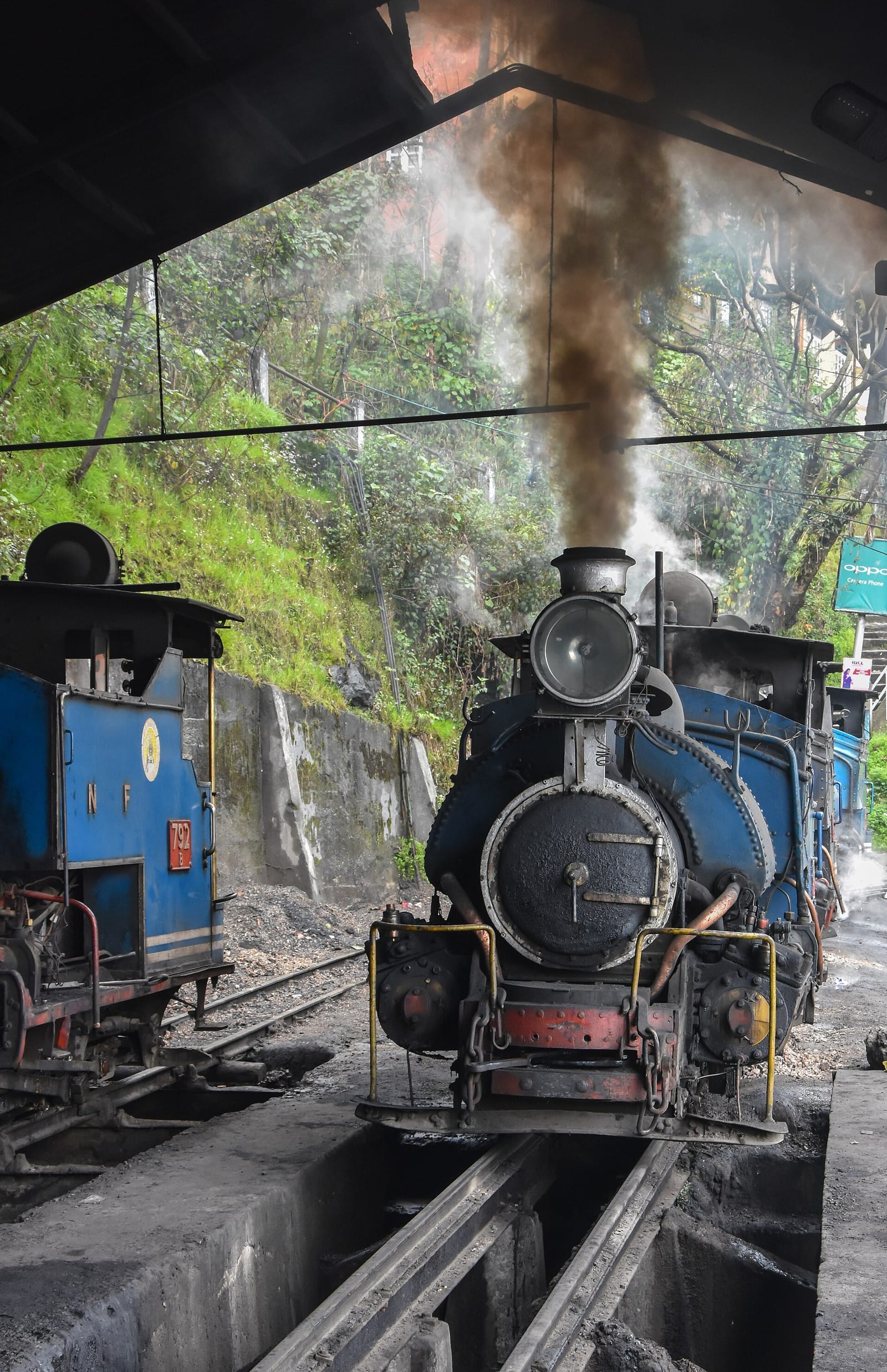
Syed Sajidul Islam / Wikimedia Commons · CC BY-SA 4.0A ride behind steam
The oldest B-Class engines date from the 1880s–1920s and still work the line — small, soot-streaked and endearing, whistling through the middle of hill-town streets and bazaars.Sourabh.biswas003 / Wikimedia Commons · CC BY-SA 4.0The gardens of Darjeeling tea
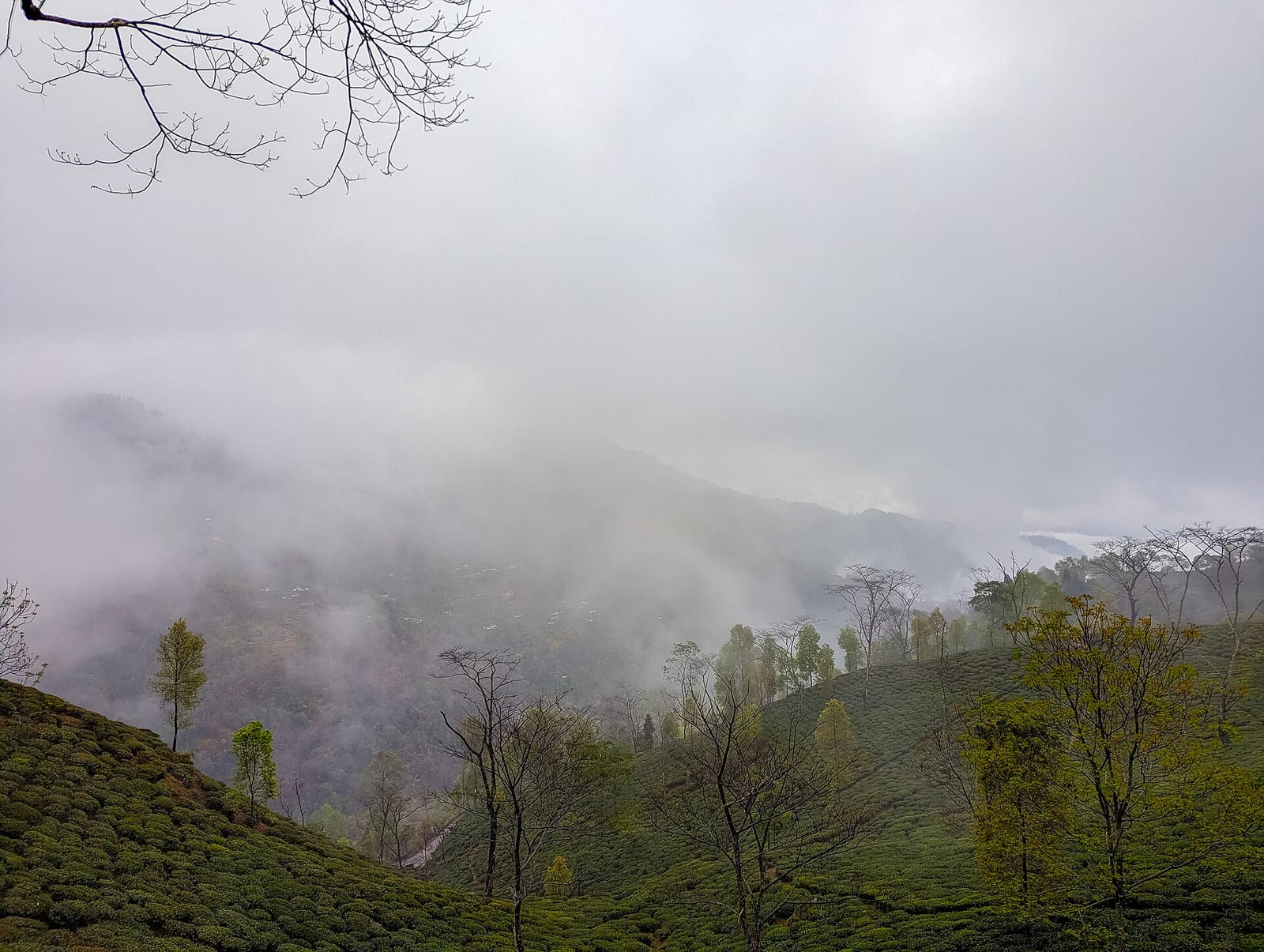
The hills the railway climbs are the home of Darjeeling tea, the "champagne of teas" — a walk through a working tea estate, tasting included, is the perfect pairing with the ride.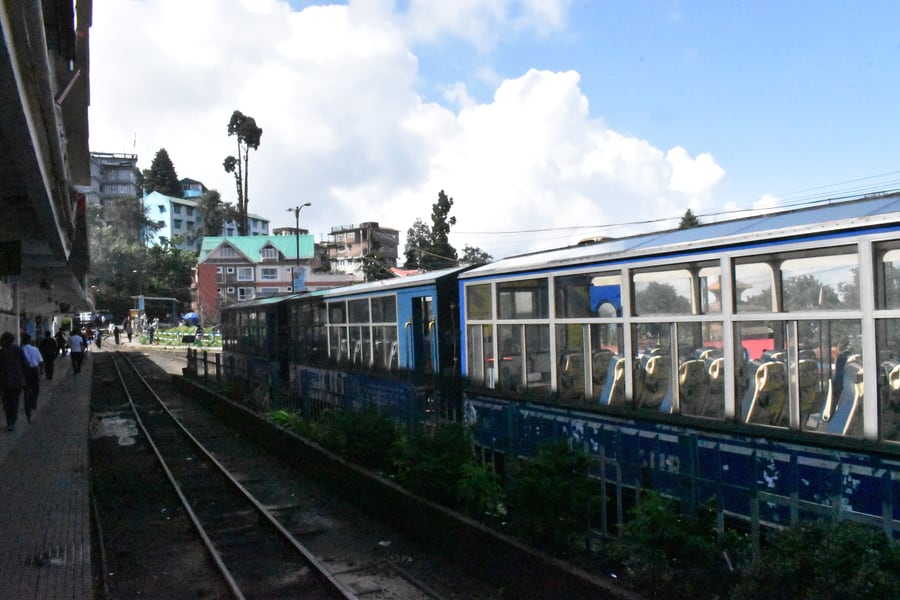 Pinakpani / Wikimedia Commons · CC BY-SA 4.0 · cropped
The Darjeeling–Ghum joy ride
Short on time? The two-hour steam "joy train" from Darjeeling up to Ghum and back, via the Batasia Loop, distils the whole experience — and is far easier to book than the full climb.Timetables
The Darjeeling Himalayan Railway runs year-round, and there are really two ways to ride it — most travellers choose the shorter joy ride:
| Service | Route | Times |
|---|---|---|
| Joy ride | Darjeeling ⇄ Ghum (via Batasia Loop) | ~2 h round trip; up to 18 departures a day from about 07:40; steam ("Red Panda") and diesel |
| NJP passenger (52541) | New Jalpaiguri → Darjeeling | dep 10:00 → arr 16:50 (~6 h 50) |
| Kurseong section (9D) | Kurseong → Darjeeling | dep 15:00 → arr 17:50 |
The joy ride pauses about 25 minutes at Ghum (the DHR Museum and India's highest station) and 10 minutes at the Batasia Loop for the Kanchenjunga view.
A few things to know:
- Book ahead. The steam joy trains are limited and hugely popular — reserve online through IRCTC well in advance, especially in the October–May high season (booking opens 60 days out).
- Weather closes the line. The monsoon (June–September) brings landslips that can suspend the lower sections; check before travelling.
- Clear mornings give the best chance of Kanchenjunga — aim for an early departure.
Times as of the 2026 timetable. Confirm current schedules with the operator — see the Tickets section below.
Tickets
Tickets are sold by Indian Railways through the IRCTC website and the DHR booking counters at Darjeeling and New Jalpaiguri. Fares are modest by the standards of the world's great railways, but the steam joy trains sell out, so the real currency is booking early.
The main choices:
- Joy train (Darjeeling ⇄ Ghum) — the popular two-hour return. Steam ("Red Panda") services cost more than diesel and go first; both take in the Batasia Loop and Ghum.
- The full journey (New Jalpaiguri ⇄ Darjeeling) — a single all-day ticket for the complete climb, usually diesel-hauled.
Tips:
- Reserve online in advance via IRCTC (foreign visitors may find a booking agent easier than the Indian site).
- Steam vs diesel — for the atmosphere, hold out for a steam departure; for reliability and a lower fare, diesel runs the same route.
- Sit on the valley side where you can for the views, and keep a hand free for the camera at the Batasia Loop.
Book your tickets
Darjeeling–Ghum joy ride
~2 hours · steam or diesel
The most popular option: a return joy train from Darjeeling up to Ghum via the Batasia Loop. Steam services (the "Red Panda") cost more and sell out — book ahead.
Book Tickets (opens in a new tab, on Indian Railways (IRCTC))via Indian Railways (IRCTC)The full climb
New Jalpaiguri ⇄ Darjeeling
The complete ~88 km, seven-hour ascent from the plains — a long, slow, unforgettable day for those who want the whole journey rather than a taste.
Book Tickets (opens in a new tab, on Indian Railways (IRCTC))via Indian Railways (IRCTC)Rail Passes
No rail pass covers the Darjeeling Himalayan Railway. Interrail and Eurail are European schemes, and India is not among the 33 countries in Interrail's list of covered railway companies. Indian Railways' own pass for foreign visitors, the Indrail Pass, was discontinued in 2017. Every journey is bought as a ticket for a named train, through IRCTC or at the station.
A pass would not help here anyway. The fares are modest; the steam joy trains sell out, so book early.
Checked October 2026 against Interrail's list of railway companies (opens in a new tab) and the Indrail Pass withdrawal (opens in a new tab).
Places to Visit
Darjeeling and its hills reward far more than a train ride — give the area a few days. The town itself sits at 2,045 m, and the ridges around it hold tea gardens, Buddhist monasteries and quieter hill towns: some are stations on the railway, others an hour or two away by shared jeep.
In Darjeeling proper, beyond the promenade and the tea, two institutions are worth the climb. The Himalayan Mountaineering Institute was founded in November 1954 with Tenzing Norgay as its first field director, and still trains climbers on the rock face behind it. Next door, the Padmaja Naidu Himalayan Zoological Park breeds red pandas and snow leopards, and is one of the few places you will reliably see either.
Whatever else you plan, plan around the weather. The mountains show themselves early and cloud usually wins by mid-morning, so put the viewpoints at the start of the day and the tea gardens after lunch.
 Alexkom000 / Wikimedia Commons · CC BY 4.0 · cropped
Chowrasta & the Mall
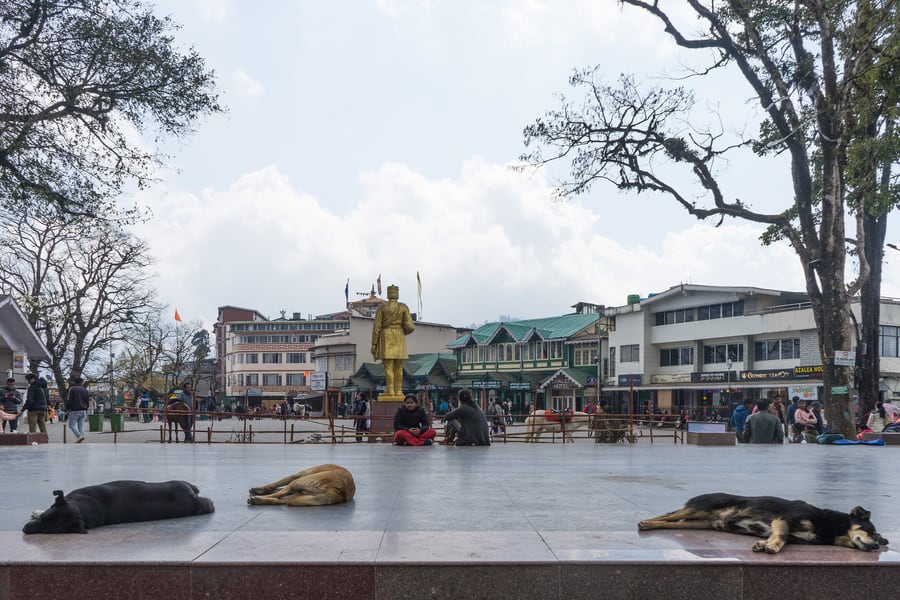
Four roads meet at Chowrasta, the flat open promenade at the top of Darjeeling, and this is where the town comes to sit, stroll and watch the light move on the hills. A golden statue of Bhanubhakta Acharya — the poet who put the Ramayana into Nepali — stands at one end, and the Mall Road curling away from it carries his name, Bhanubhakta Sarani. Bookshops, tea rooms and pony-wallahs fill the square. No cars are allowed up here.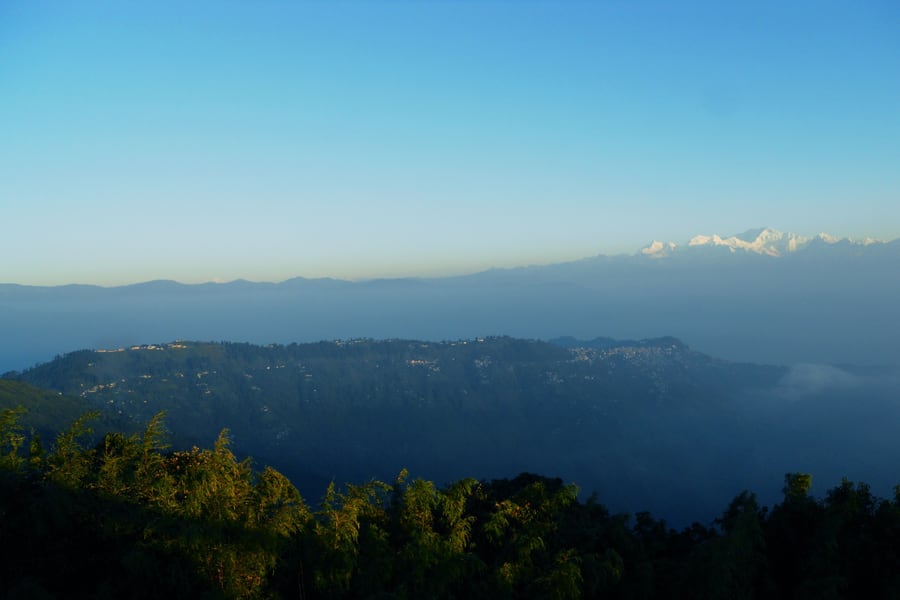 Owasim raja ahmed / Wikimedia Commons · CC BY-SA 4.0 · cropped
Tiger Hill
The classic pre-dawn excursion, 11 km from town at 2,590 m. The point of the cold, crowded start is the moment the first light strikes Kanchenjunga while the valleys below are still in darkness — and on the clearest mornings Everest, Makalu and Lhotse stand along the same horizon. Kanchenjunga looks the tallest of them, which is an illusion of distance: it is several miles nearer than Everest.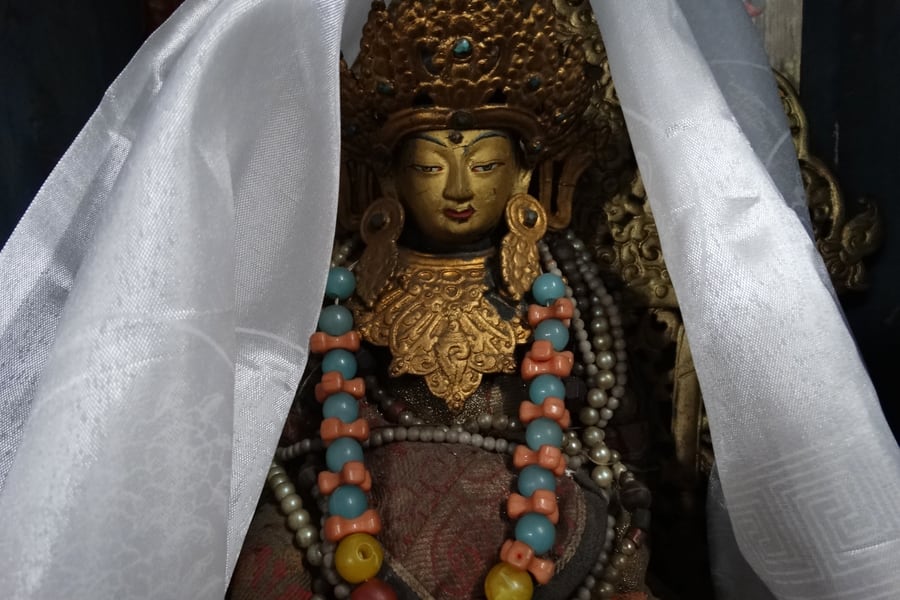 Adam Jones / Wikimedia Commons · CC BY-SA 2.0 · cropped
Ghum & Yiga Choling
Beyond the station at the summit of the line, Ghum holds the oldest Tibetan Buddhist monasteries in the district. Yiga Choling is the one to seek out — its outer structure was raised in 1850 by the Mongolian monk-astrologer Sokpo Sherab Gyatso, and the monastery properly founded in 1875 — a dim, butter-lamp-lit hall built around a 4.6 m seated Maitreya Buddha. A second gompa, Samten Choling, stands nearer the road.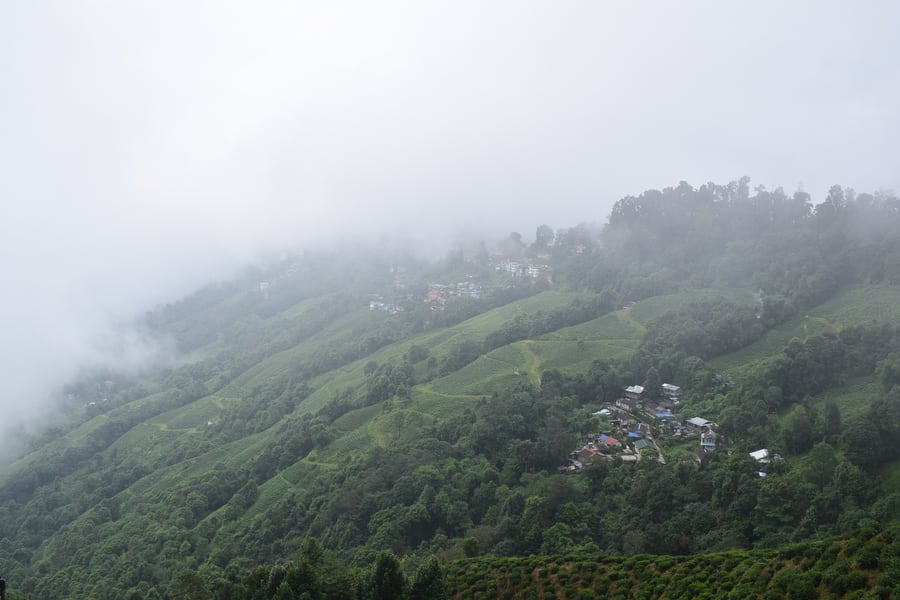 Mr. Debapriya Hore / Wikimedia Commons · CC BY-SA 4.0 · cropped
Happy Valley Tea Estate
Darjeeling's second-oldest garden, planted in 1854, two years after Steinthal — and the closest one to town, barely 3 km north. At 2,100 m its factory is among the highest in the world, and the original building now doubles as a museum of vintage rolling and sorting machinery beside the working plant. The estate covers 177 hectares and employs more than 1,500 people. March to May, the first flush, is the season to come.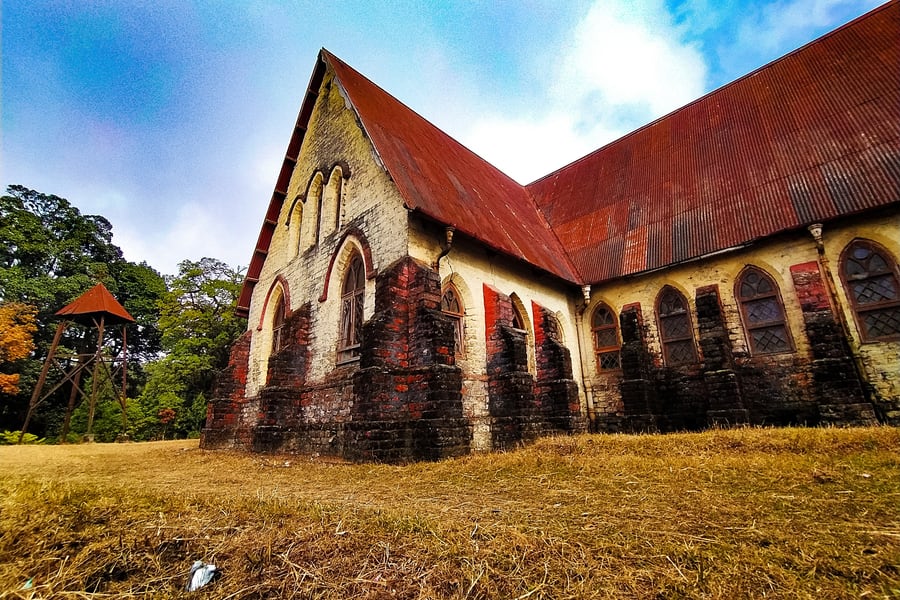 Arkashis Das / Wikimedia Commons · CC BY-SA 4.0 · cropped
Kurseong
The largest town on the line below Darjeeling, at 1,482 m, where the toy train runs down the middle of the bazaar between the shopfronts. The name may come from the Lepcha kurson-rip, small white orchid. Above the town, Dow Hill is a quiet quarter of Victorian boarding schools, a forest training school and deep deodar woods — and, in a clearing, a derelict church that local lore insists is haunted.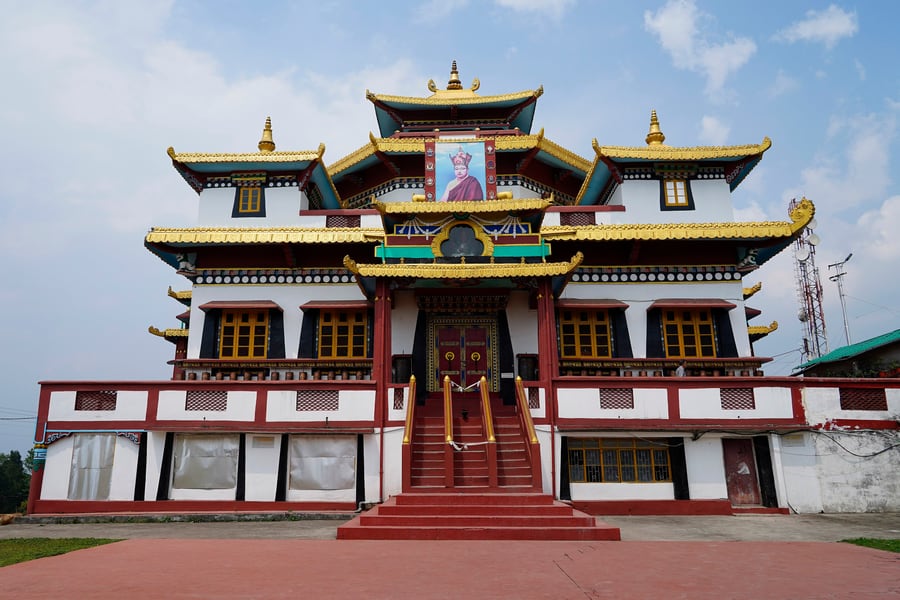 Amitabha Gupta / Wikimedia Commons · CC BY 4.0 · cropped
Kalimpong
A couple of hours east by shared jeep, and at 1,250 m lower and warmer than Darjeeling. Until the Jelep La closed after the 1962 war this was the post through which wool, furs and grain crossed between India and Tibet; flowers replaced that trade, and the town now grows orchids, gladioli and one of India's most complete cactus collections. On Durpin Hill, Zang Dhok Palri Phodang holds 108 volumes of the Kangyur.Where to Sleep
Darjeeling makes the natural base — you'll want a couple of nights to catch a clear morning for the mountains — and the choice runs from backpacker simple to full colonial grandeur.
- Heritage hotels — Darjeeling's old Raj-era hotels, all wood panelling, fireplaces and mountain views, are an experience in themselves and put you a short walk from the station.
- Tea-estate bungalows — for something special, stay in a planter's bungalow on a working tea garden in the surrounding hills, with the gardens (and often a private cook) to yourself.
- Town guesthouses — plentiful, friendly and good value around the centre and Chowrasta.
- Kurseong — a quieter alternative down the line, handy if you're riding the middle section, with a few characterful hotels and viewpoints.
Book well ahead for the October–May high season and around the autumn festivals, when Darjeeling fills up and the clearest mountain views draw the crowds.
Questions or corrections
Planning this trip and stuck on something, or spotted a time, fare or detail that has changed? Send us a message about Darjeeling Himalayan Railway. We read every one, and we update this page when something has changed.