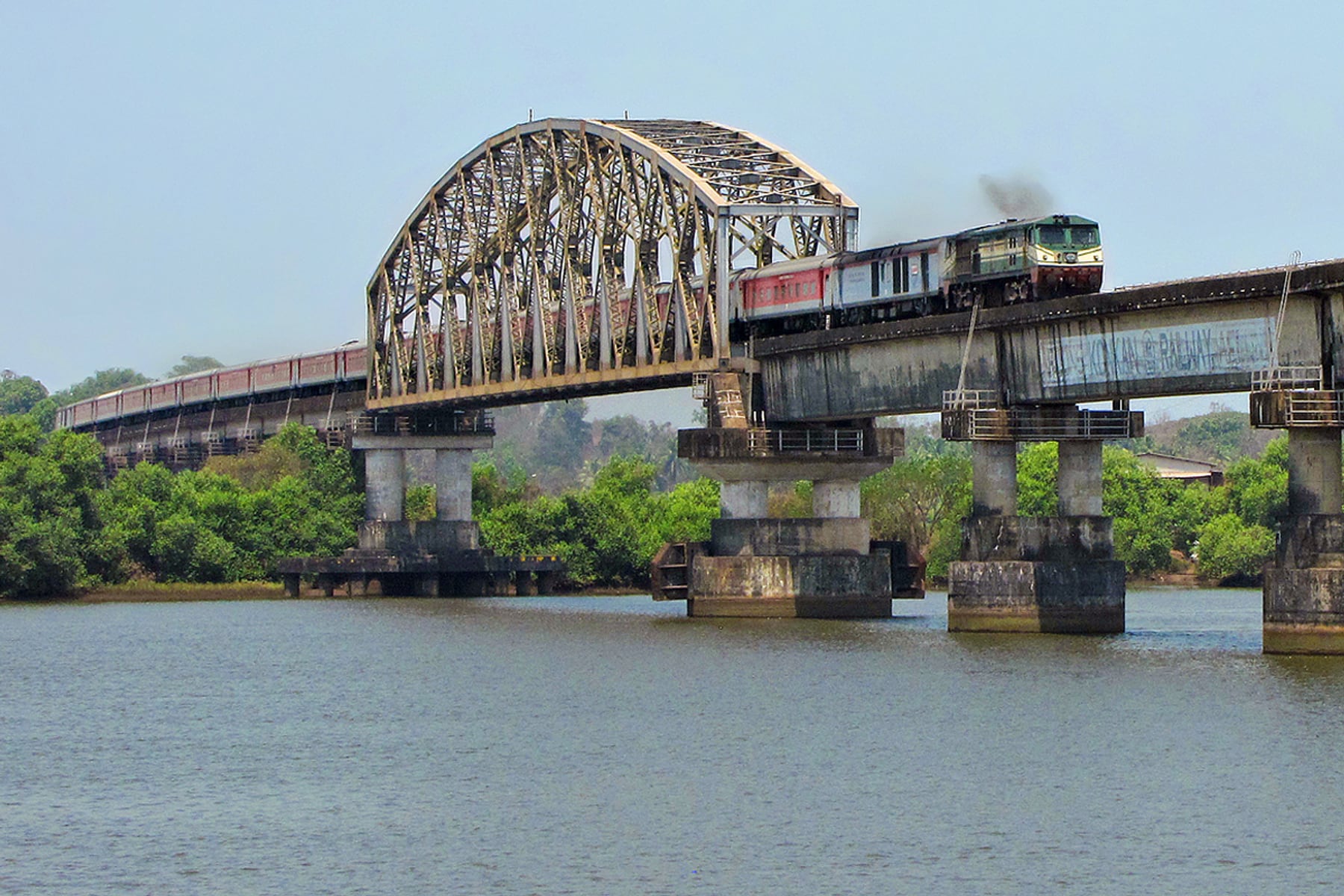
Konkan Railway
Lalam Mandavkar / Wikimedia Commons · CC BY-SA 2.0 · cropped
- Distance765 km, Mumbai CSMT to Madgaon
- Duration7 h 45 min by Vande Bharat; about 10 h 35 min in the monsoon
- Best seasonOctober to March; the slower monsoon timetable runs 15 June to 20 October
Introduction
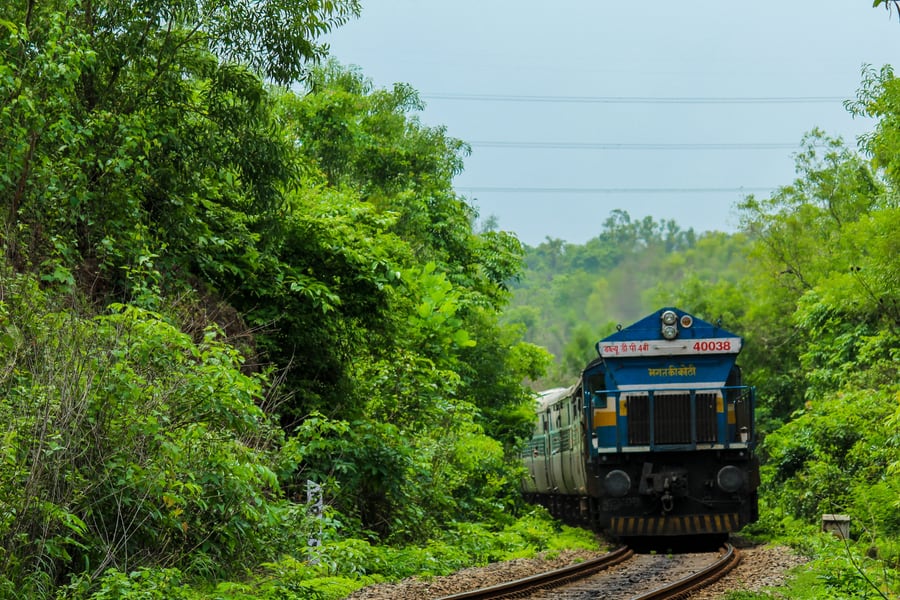
The Konkan Railway runs down India's west coast from Roha, south of Mumbai, to Thokur near Mangaluru, between the Western Ghats and the Arabian Sea. The classic ride is the 765 kilometres from Mumbai CSMT to Madgaon in Goa: through 91 tunnels and over some of the line's 2,286 bridges, past paddy fields, river mouths and laterite cliffs.
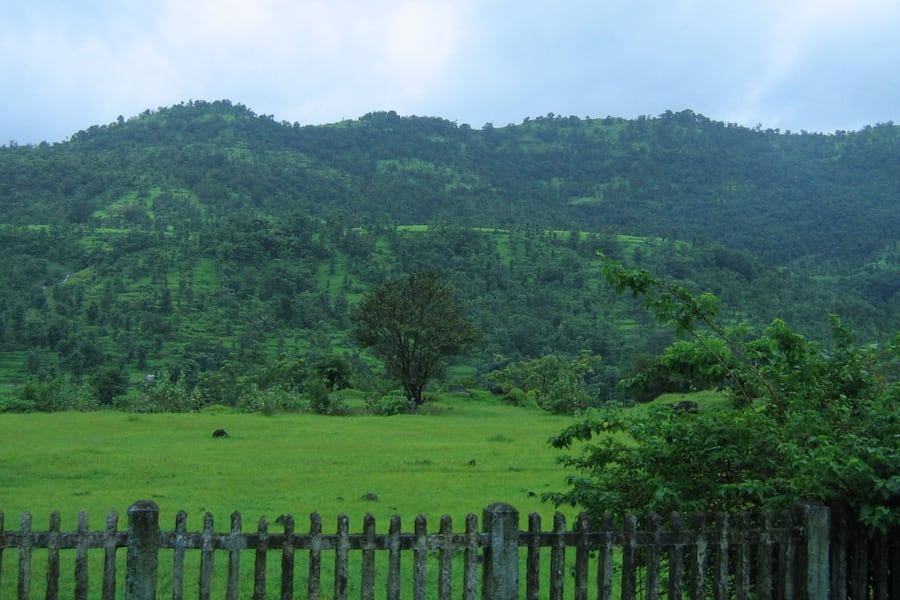
For four months of the year, the weather writes the timetable. From 15 June to 20 October Konkan Railway runs a separate monsoon timetable, with lower speeds and patrols on the cuttings. The Vande Bharat that reaches Goa in 7 hours 45 minutes the rest of the year takes 10 hours 35 in the rains, and runs three days a week instead of six. It is also the season when the Konkan is at its greenest, and its waterfalls run.
The coast had no railway under British rule. It took a company of its own, owned by the Centre and four states, to build one, and the whole line opened on 26 January 1998.
The Journey
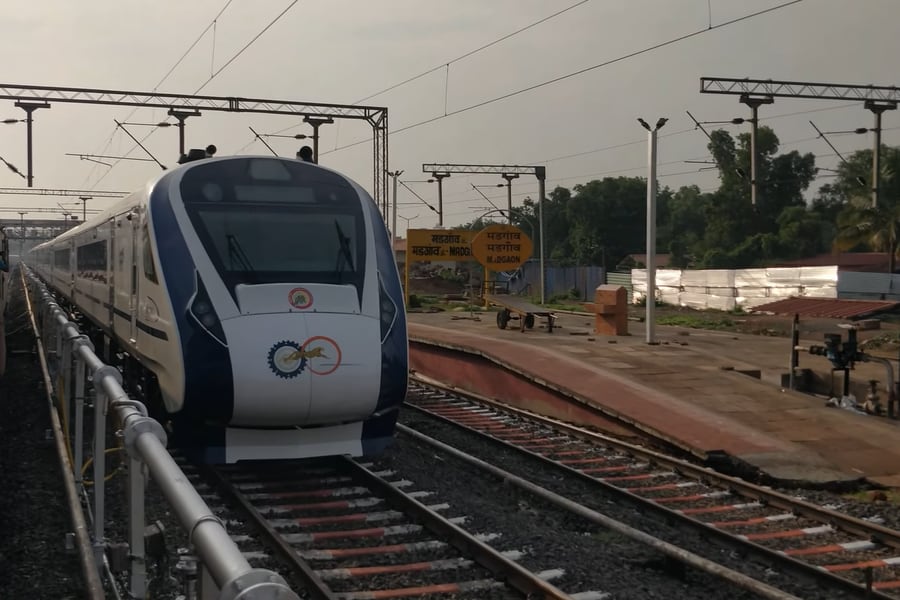
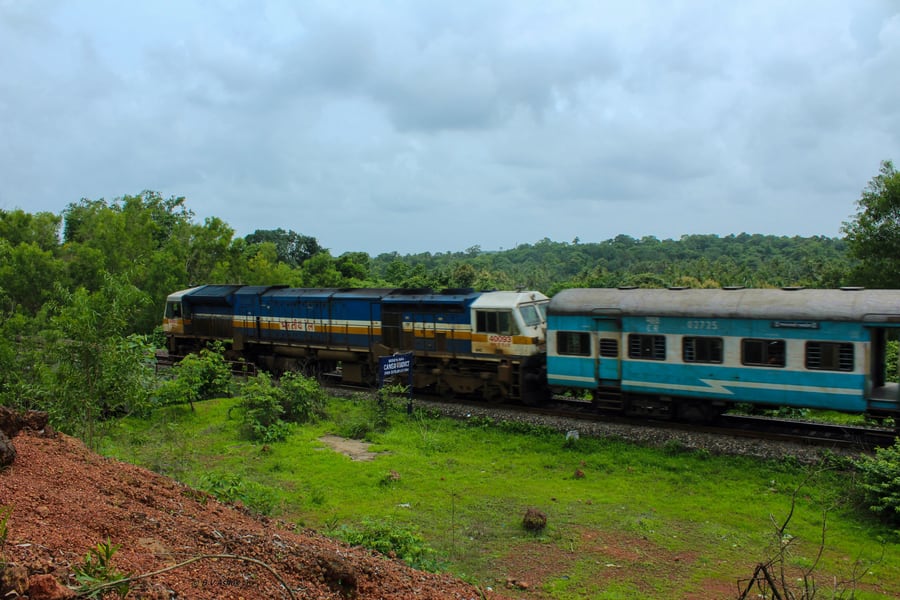
Trains for Goa leave Mumbai CSMT and run out through Thane and Panvel on Central Railway's lines. The Konkan Railway proper begins at Roha, and from there the line is the corporation's own: single track for most of its length, electrified since 2022, and laid to a ruling gradient of one in 150 so that heavy trains can run fast along a coast of hills and rivers. The day trains are the Vande Bharat, the Tejas Express and the Jan Shatabdi, the last two with glass-roofed Vistadome coaches, and the slower Mandovi Express, which calls at twenty stations.
Down the Konkan
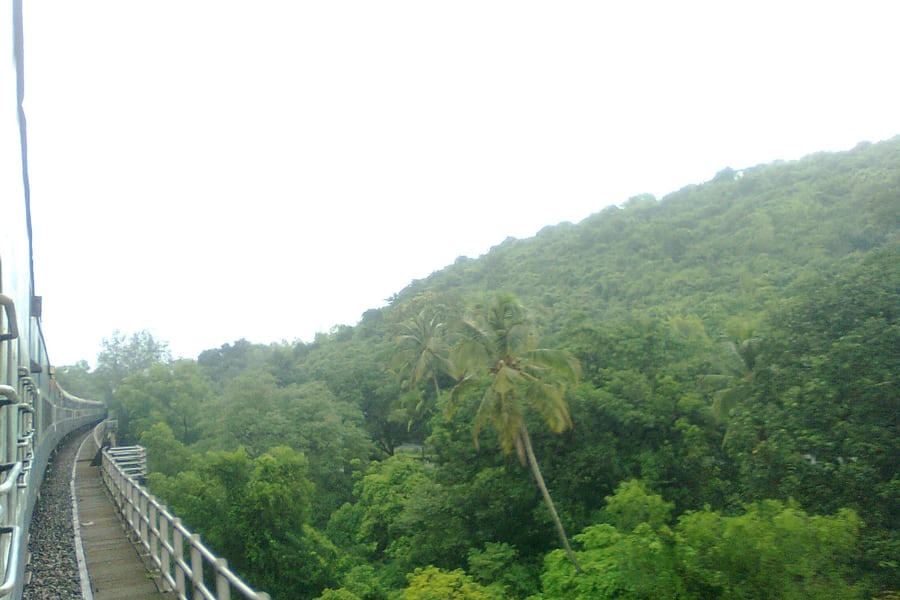
South of Roha the line crosses river after river where they widen towards the sea, and cuts through the spurs of the Ghats between them. Konkan Railway counts 91 tunnels on the route, 84 kilometres of them in all; the longest, at Karbude near Ratnagiri, runs for six and a half. In Ratnagiri district, too, is the Panval Nadi viaduct, 64 metres high, the tallest on the line and the first bridge in India built by incremental launching, pushed out from one bank across the valley. In the cuttings, steel netting holds the rock faces, and in the monsoon there are men on foot watching them.
Ratnagiri, a little over halfway, is where the day trains stop for five minutes. Beyond it the line runs on through Sindhudurg district, past Kudal and Sawantwadi Road, and reaches Goa at Pernem, where a tunnel that kept caving in held up the opening of the whole line until January 1998.
Into Goa
In Goa the surveyors went out on motorcycles, thirty teams testing sixteen possible routes, and the engineers then went house to house to find a way round each home. Only 35 houses were disturbed, and Goa has more curves than any other part of the line. The trains call at Thivim and Karmali and cross the Mandovi and the Zuari on steel spans of 124 metres, the longest on the line, before they pull into Madgaon. The line runs on to Karwar and Mangaluru; the Mangaluru Express from CSMT goes all the way.
Along the route
 Santulan Mahanta / Wikimedia Commons · CC BY 2.0 · cropped
Ukshi
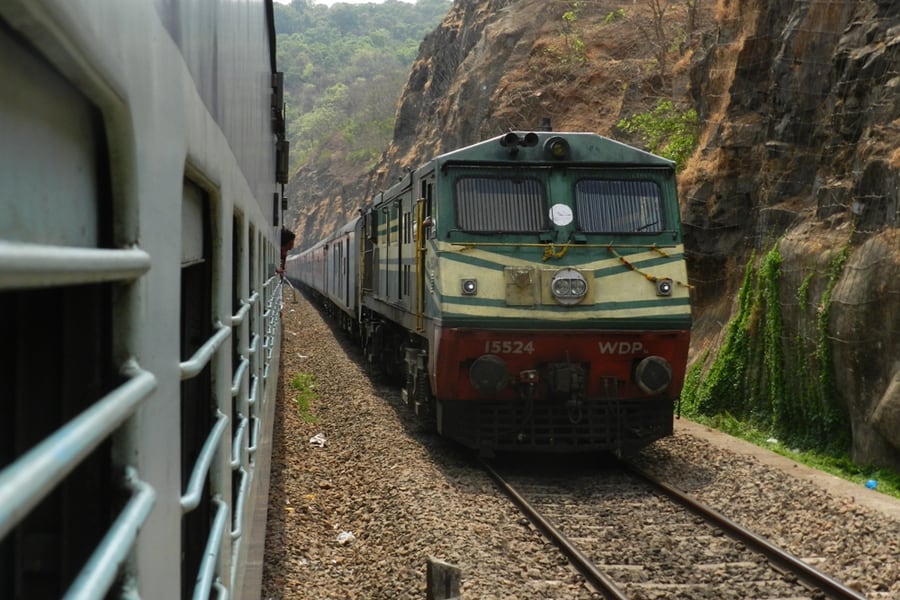
The line cuts deep through the rock at Ukshi. There, in July 1997, a whole mountainside came down on the works, burying the machines; the 200 labourers on site escaped. The cutting now carries every train to Goa.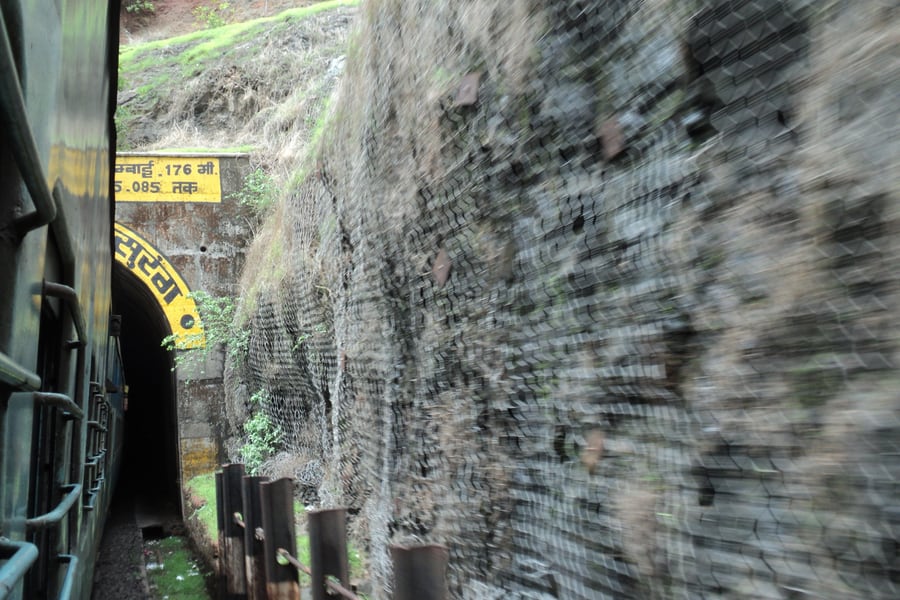 PP Yoonus / Wikimedia Commons · CC BY-SA 3.0 · cropped
The netting
Steel mesh pinned over the rock faces at the tunnel mouths holds back loose stone. Landslides in the line's early monsoons led to the netting, the patrols and the slower timetable that every train still keeps from June to October.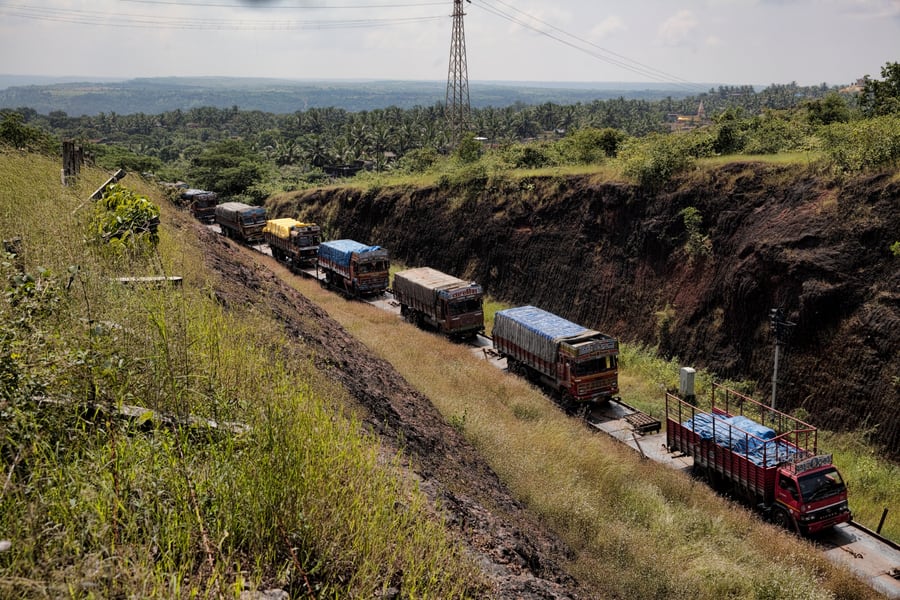 urbzoo / Flickr · CC BY 2.0 · cropped
Trucks by train
Watch for long trains of loaded lorries on flat wagons. Konkan Railway began carrying trucks this way in 1999, the first such service in India, and by 2009 had moved about 1.6 million of them off the coast road.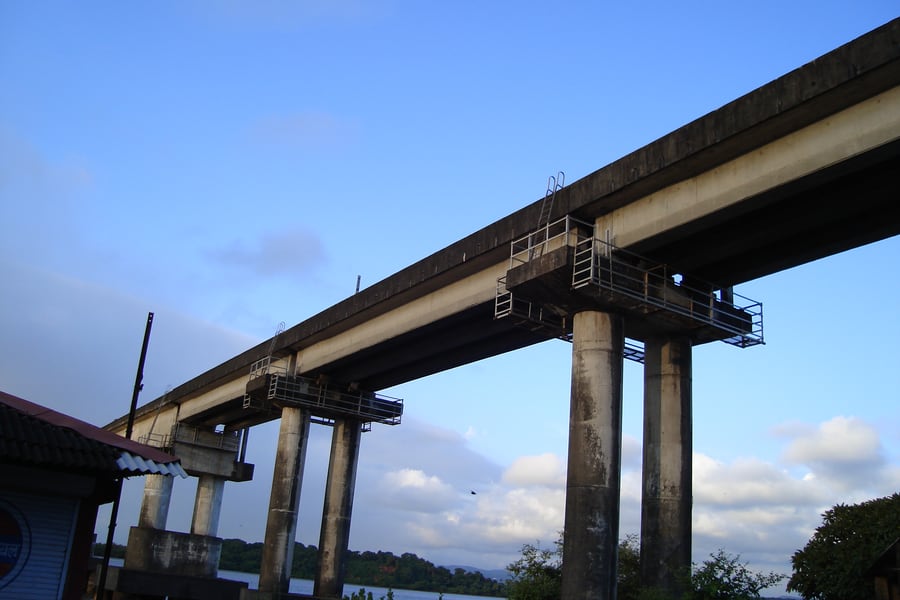 Fredericknoronha / Wikimedia Commons · CC BY-SA 4.0 · cropped
Through Goa
Goa was surveyed by teams on motorcycles, and the engineers went house to house to find a way round each home. Only 35 were disturbed, which is why Goa has the most curves on the line. Even the Mandovi bridge is on one.A bit of history
Culture & experiences along the way
 Vipulsharma16 / Wikimedia Commons · CC BY-SA 4.0 · cropped
Alphonso mangoes
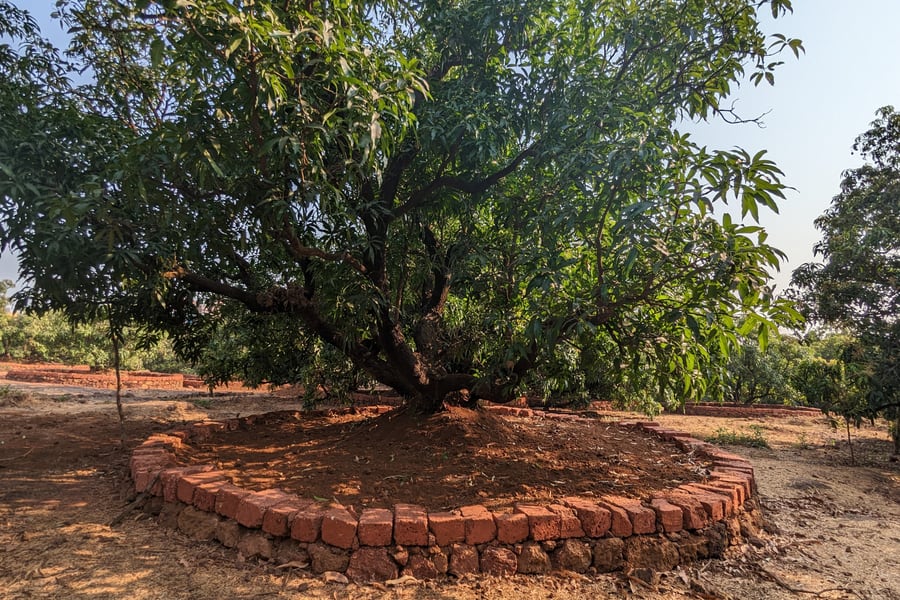
The Alphonso, a mango with saffron-coloured flesh, is counted among the most prized in the world, and the Konkan is where it grows: the Ratnagiri Alphonso is the famous name. The season peaks between April and June, when the Konkan holds a mango festival with fruit straight from the orchards.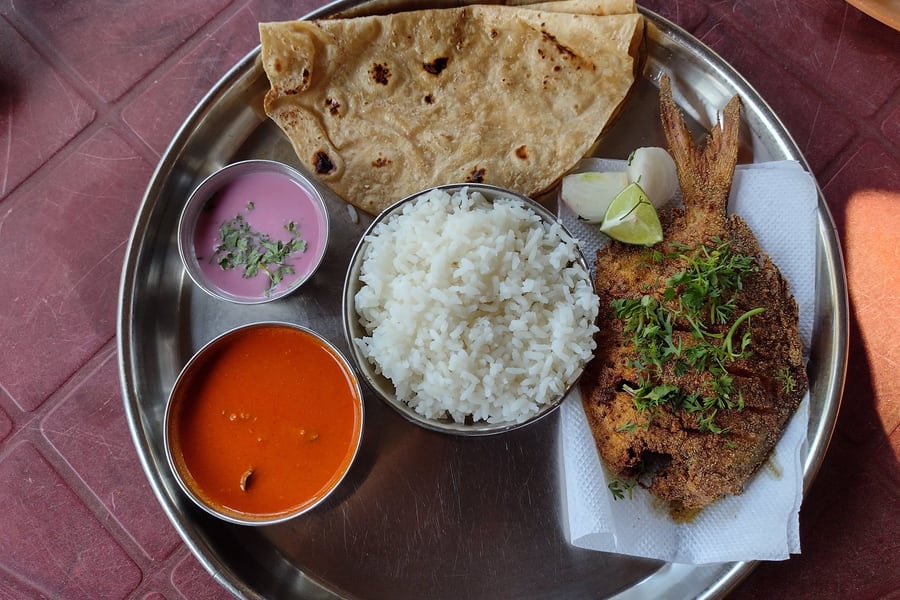 Bhuppigraphy / Wikimedia Commons · CC BY-SA 4.0 · cropped
Malvani fish thali
The food of the southern Konkan is built on fish, coconut and dried red chillies, ground into a masala of fifteen or more spices. A Malvan thali brings fried fish, a fiery curry, rice and a cup of solkadhi, pink with kokum and coconut milk, to cool it.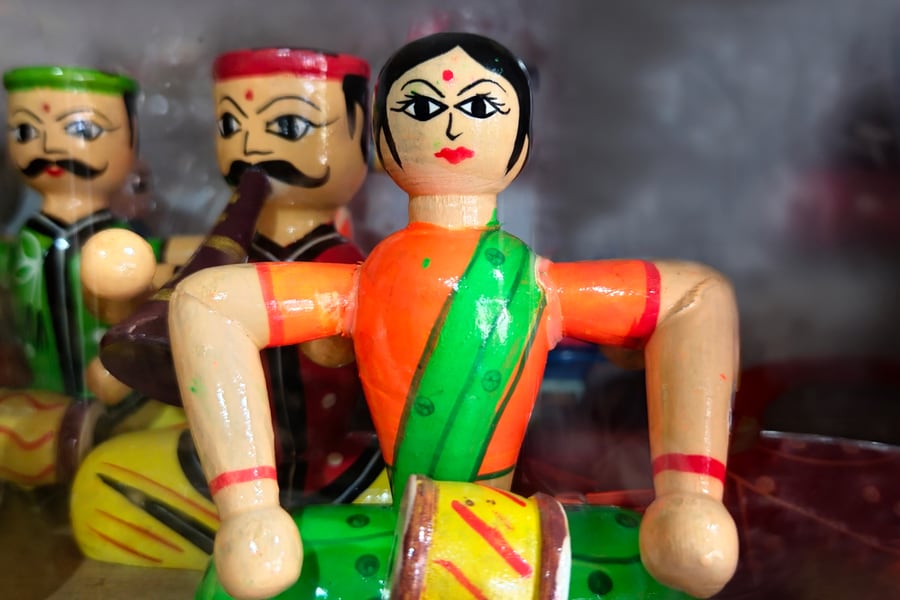 Art Projects MKCL KF / Wikimedia Commons · CC BY-SA 4.0 · cropped
Sawantwadi toys
Sawantwadi, with its own station on the line, is known for wooden toys made by artisans of the Chittar community: figures of musicians and villagers, miniature fruit and more, carved and then painted in bright colours. They are the town's best-known craft.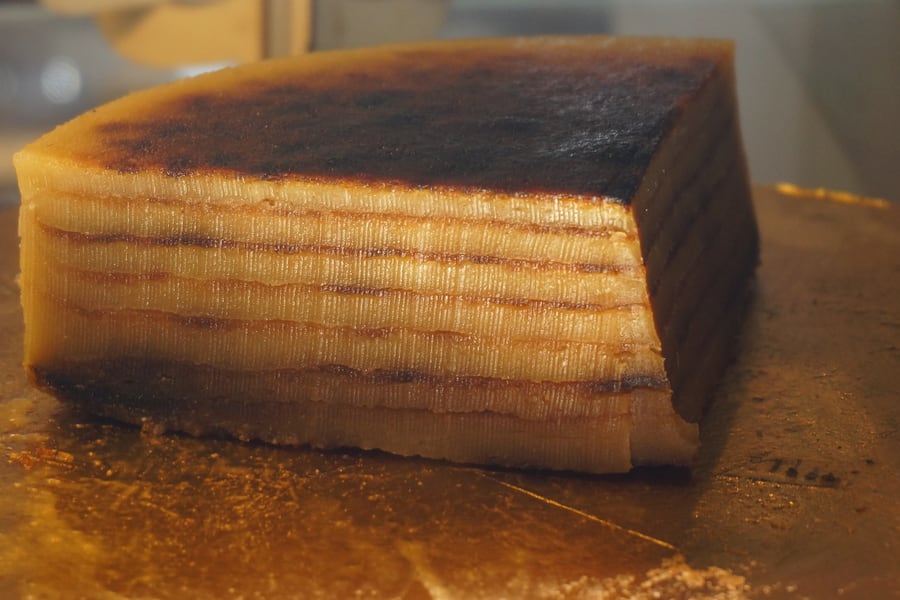 Fredericknoronha / Wikimedia Commons · CC BY-SA 4.0 · cropped
Bebinca
Goa's great dessert is an Indo-Portuguese layer cake, baked one thin layer at a time until there are seven to sixteen of them, and known as the queen of Goan desserts. It is made above all for Christmas, but sold all year, and keeps well for the journey home.Timetables
Konkan Railway keeps two timetables. The regular one runs from 21 October to 14 June; the slower monsoon timetable is in force from 15 June to 20 October (the 2026 dates).
Mumbai to Madgaon, 21 October to 14 June
| Train | Days | Mumbai CSMT | Ratnagiri | Thivim | Madgaon |
|---|---|---|---|---|---|
| 22229 Vande Bharat | Not Friday | 05:25 | 09:50 | 12:05 | 13:10 |
| 12051 Jan Shatabdi | Daily | 05:10 | 10:45 | 13:22 | 14:30 |
| 10103 Mandovi Express | Daily | 07:10 | 13:35 | 17:32 | 19:30 |
Madgaon to Mumbai, 21 October to 14 June
| Train | Days | Madgaon | Thivim | Ratnagiri | Mumbai CSMT |
|---|---|---|---|---|---|
| 10104 Mandovi Express | Daily | 09:15 | 10:08 | 14:30 | 21:45 |
| 22230 Vande Bharat | Not Friday | 14:40 | 15:22 | 17:40 | 22:30 |
| 12052 Jan Shatabdi | Daily | 15:05 | 15:52 | 18:35 | 00:10 |
The Tejas Express runs on Tuesdays, Wednesdays, Fridays, Saturdays and Sundays: 22119 leaves CSMT at 05:50 and reaches Madgaon at 15:00, and 22120 leaves Madgaon at 15:35 and reaches Dadar at 23:30. Overnight, the Konkan Kanya Express leaves CSMT at 23:02 and reaches Madgaon at 09:45 the next morning.
In the monsoon, 15 June to 20 October
The trains run slower and some run less often. The Vande Bharat runs only three days a week, leaving CSMT at 05:25 on Mondays, Wednesdays and Fridays and reaching Madgaon at 16:00; it returns from Madgaon at 12:20 on Tuesdays, Thursdays and Saturdays, reaching CSMT at 22:30. The Jan Shatabdi leaves CSMT at 05:10 and reaches Madgaon at 16:40, and the Mandovi Express leaves at 07:10 and arrives at 21:55. The Tejas runs three days a week.
Times are from Konkan Railway's own train schedule for the monsoon timetable and from IRCTC for the trains from 21 October — as of October 2026. Check your train on Konkan Railway's train schedule (opens in a new tab) or IRCTC (opens in a new tab) before travelling.
Tickets
Tickets are sold by IRCTC, Indian Railways' booking service, online and in its app. Each ticket is for a reserved seat or berth on a named train: Chair Car or Executive Chair Car on the Vande Bharat, second class, Chair Car or the glass-roofed Vistadome on the Jan Shatabdi, and sleeper berths on the Mandovi Express.
Book early. Two weeks before a Monday in late October 2026, the Vande Bharat's Chair Car was fourteen places into its waiting list and the Jan Shatabdi's Vistadome five. The fares below are those IRCTC quoted for that day, one way from Mumbai CSMT to Madgaon.
Book your tickets
Santosh4118 / Wikimedia Commons · CC BY-SA 4.0 · croppedVande Bharat
Mumbai CSMT ⇄ Madgaon · 7 h 45 min
Chair Car from ₹1,625 one way, Executive Chair Car ₹3,145, every seat reserved.
Book Tickets (opens in a new tab, on irctc.co.in)via irctc.co.inB V Ashok / Flickr · CC BY 2.0 · croppedJan Shatabdi Vistadome
Mumbai CSMT ⇄ Madgaon · daily
A glass-roofed Vistadome seat costs ₹2,530; the same train's second-class seats start at ₹310.
Book Tickets (opens in a new tab, on irctc.co.in)via irctc.co.inPP Yoonus / Wikimedia Commons · CC BY-SA 3.0 · croppedMandovi Express
Mumbai CSMT ⇄ Madgaon · daily, 20 stops
Sleeper from ₹430, AC berths from ₹1,130 to ₹2,670 in First AC.
Book Tickets (opens in a new tab, on irctc.co.in)via irctc.co.inRail Passes
No rail pass covers the Konkan Railway. Interrail and Eurail are European schemes, and India is not among the countries in Interrail's list of covered railway companies. Indian Railways' own pass for foreign visitors, the Indrail Pass, was withdrawn by Railway Board order on 19 September 2017. Every journey is bought as a ticket for a named train, through IRCTC.
A pass would not help here anyway. Even the Vande Bharat's Executive Chair Car costs a few thousand rupees; a confirmed seat is what to plan around, so book as soon as your dates are fixed.
Checked October 2026 against Interrail's list of railway companies (opens in a new tab) and the Indrail Pass (opens in a new tab).
Places to Visit
Each of these is reached from a station on the line. Ratnagiri is the base for the Konkan half of the coast, Panaji and Old Goa for the Goan half; break the journey for a night or two and take the next day's train on.
 Aniket Konkar / Wikimedia Commons · CC BY-SA 4.0 · cropped
Thibaw Palace
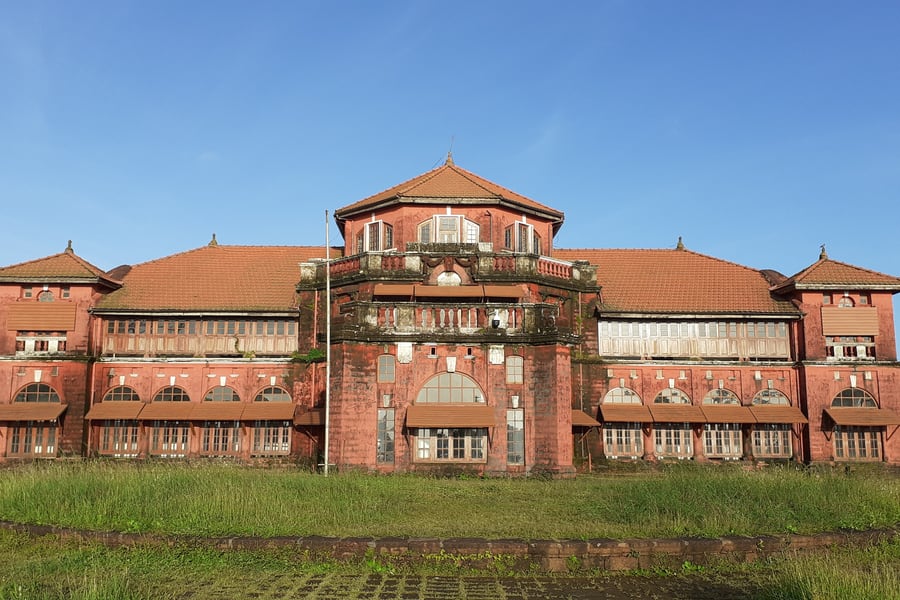
When the British sent King Thibaw of Burma into exile in Ratnagiri, they built him this three-storey palace, finished in 1910. He lived here until his death on 16 December 1916, and visitors from Myanmar still come to the palace and to his tomb in the town.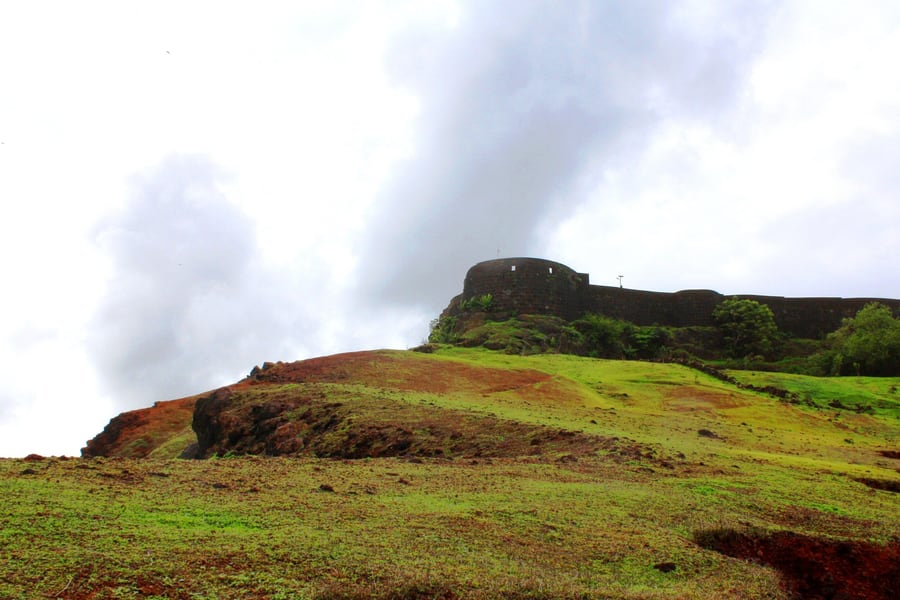 Omar AV / Wikimedia Commons · CC BY 3.0 · cropped
Ratnadurg
Two kilometres from Ratnagiri, the fort also called Bhagwati stands on a headland with the Arabian Sea on three sides. Inside the walls is the Bhagwati temple that gives it its other name, and from the ramparts the whole coast opens out, greenest in the monsoon.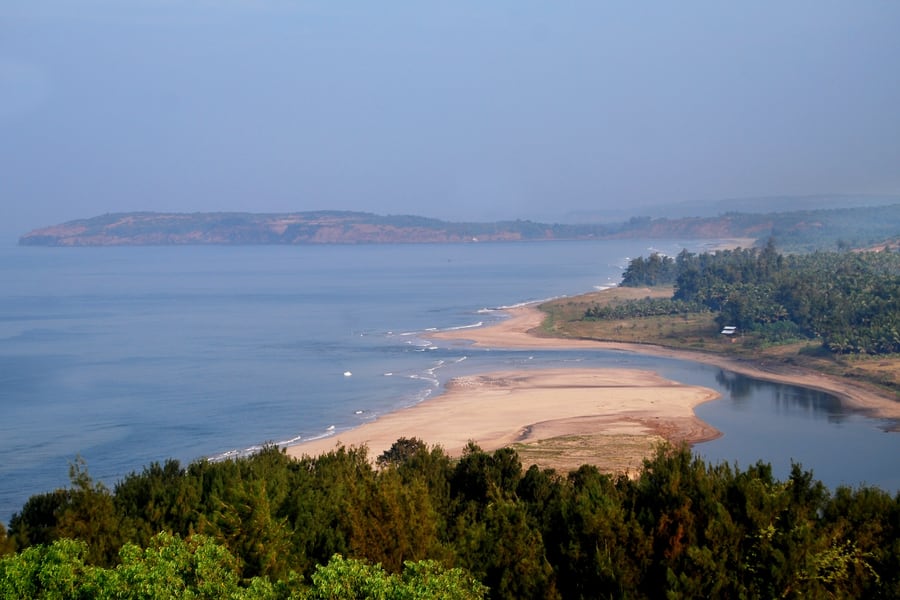 Sanjaybhagwat / Wikimedia Commons · CC BY-SA 4.0 · cropped
Ganpatipule
A beach of white sand below green hills, with a temple whose Ganpati is held to have risen from the ground and, unusually, faces the sea. A fair fills the village every February or March. Come between October and March: in the monsoon the sea is too rough to swim.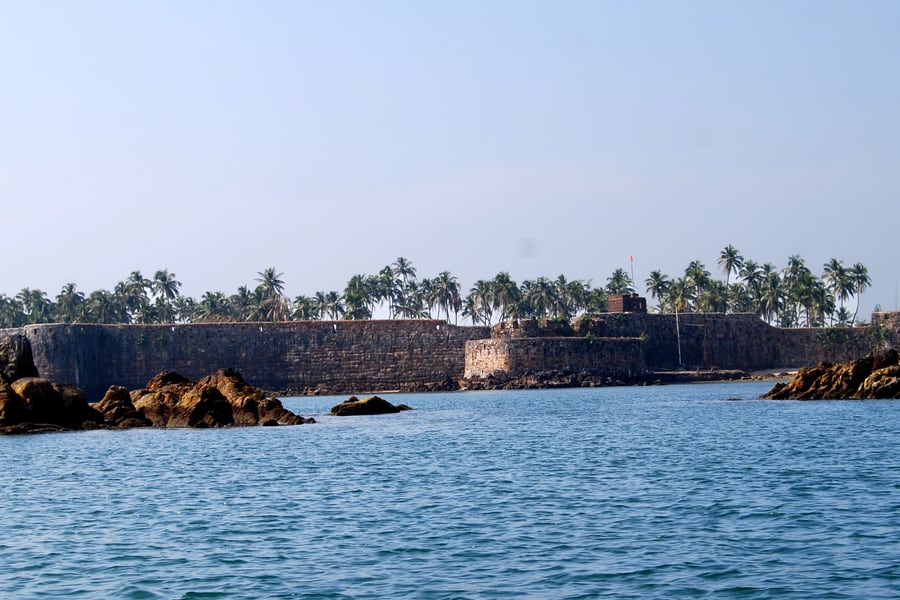 Sanjaybhagwat / Wikimedia Commons · CC BY-SA 4.0 · cropped
Sindhudurg Fort
Shivaji built this sea fort between 1664 and 1667 on a rocky island off Malvan, ringed by water and reefs so that no ship could close in unseen. The waters around it hold the coral reefs of the Malvan Marine Sanctuary, Maharashtra's only one.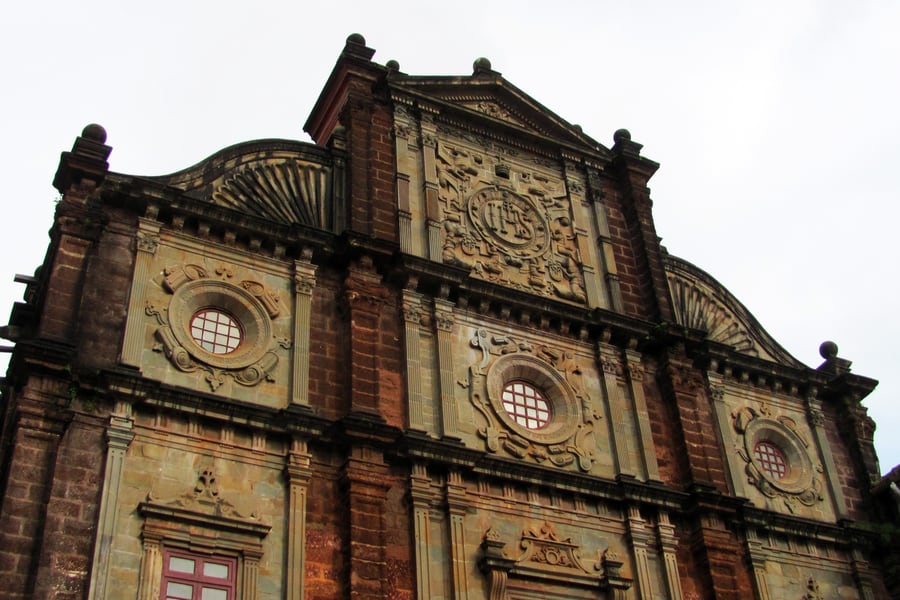 Aviatorjk / Wikimedia Commons · CC BY-SA 3.0 · cropped
Old Goa
About 10 km east of Panaji lie the churches and convents of the old capital of Portuguese India, which Portugal held from 1510 to 1961. The Basilica of Bom Jesus holds the tomb of St Francis Xavier, and these churches carried Mannerist and Baroque forms to the missions of Asia.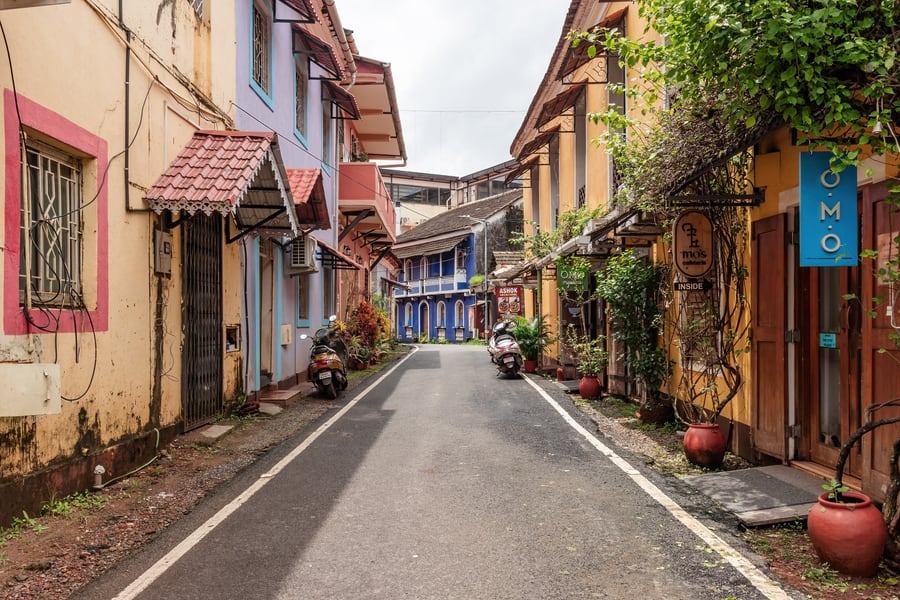 iMahesh / Wikimedia Commons · CC BY-SA 4.0 · cropped
Fontainhas
Panaji's oldest quarter grew up in the early 1800s, as Old Goa declined. Its lanes are lined with ochre, blue and yellow houses, street names on hand-painted azulejo tiles, and the old spring of Fonte Fenix. Come in the late afternoon, when the bakeries bring out the day's poi, the round Goan bread.Where to Sleep
The morning trains from Mumbai reach Goa in the afternoon, in time to settle into Panaji's old quarter before dark.
Where to stay
 urbzoo / Wikimedia Commons · CC BY 2.0 · cropped
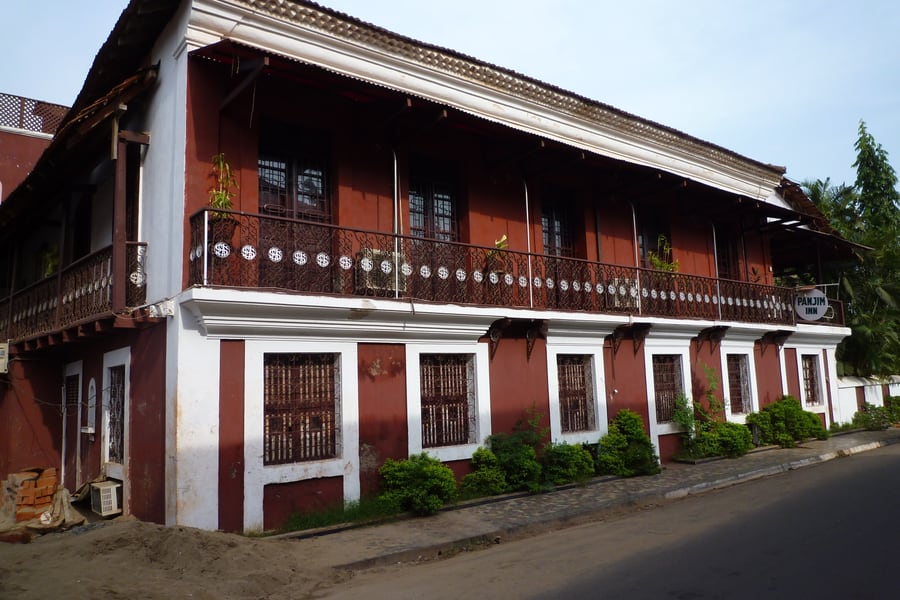
Panjim Inn
A family mansion in Fontainhas
A family home of about 130 years, still run by the same family, with 24 rooms facing the Ourem creek.
Check Availability (opens in a new tab, on panjiminn.com)via panjiminn.comQuestions or corrections
Planning this trip and stuck on something, or spotted a time, fare or detail that has changed? Send us a message about Konkan Railway. We read every one, and we update this page when something has changed.