Jammu–Srinagar Vande Bharat
Konkan Railway Corporation / Wikimedia Commons · GODL-India
- Distance269 km, Jammu Tawi to Srinagar
- DurationAbout 4 hours 50 minutes
- Best seasonYear-round; the train runs through the snow
Introduction
The Vande Bharat from Jammu Tawi to Srinagar covers 269 kilometres in under five hours, from the plains at the foot of the Himalaya to the Kashmir Valley. Until 2025 no train could make the journey: the railway reached Katra from the south and ran from Banihal to Baramulla in the valley, and the mountains in between were crossed by road, a drive often cut off by snow and landslides.
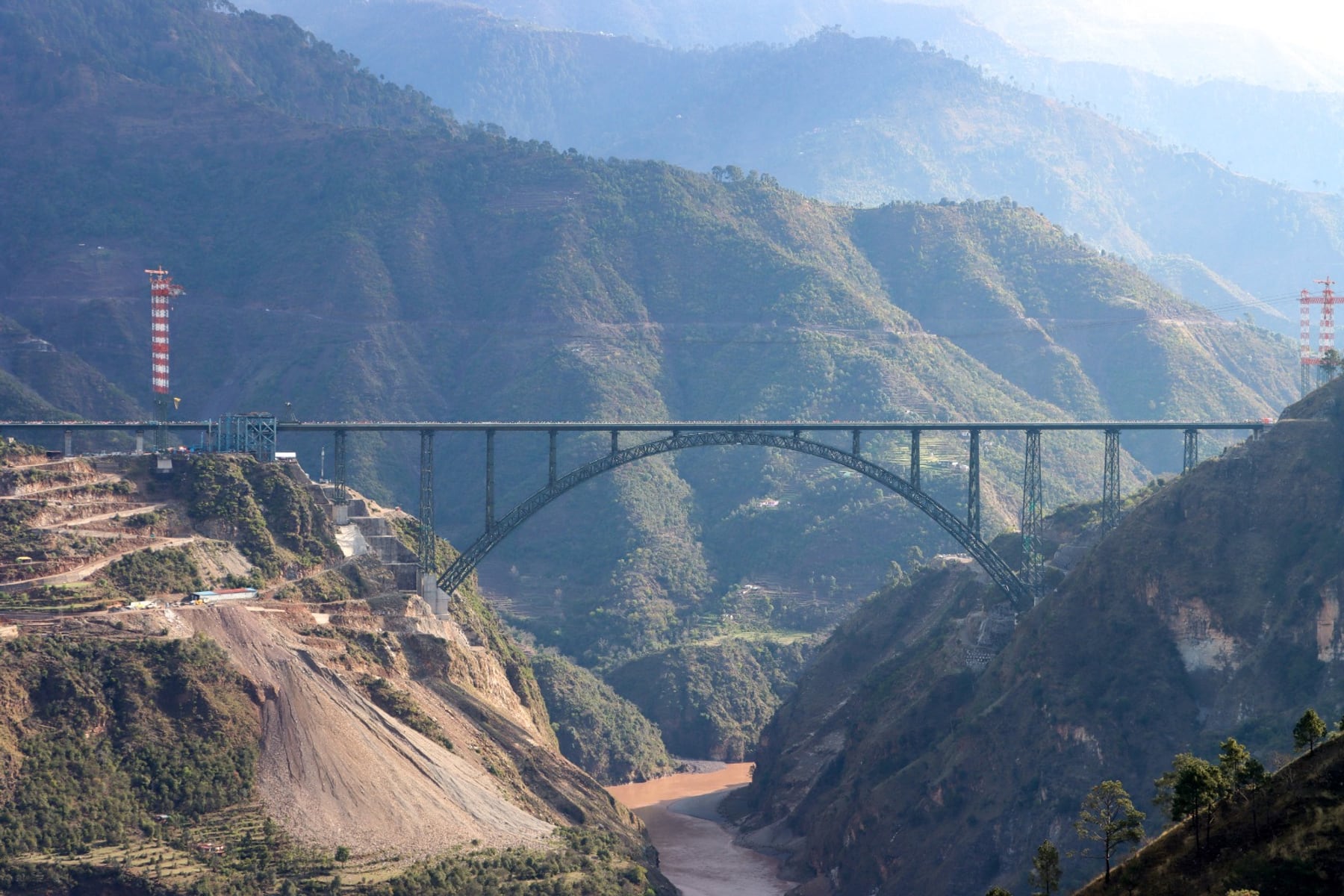
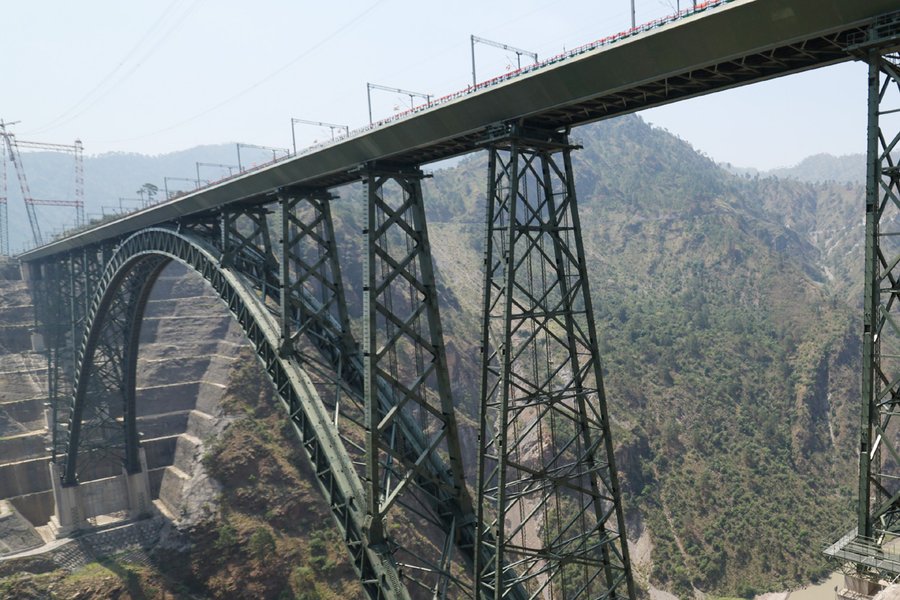
The gap was closed with tunnels and bridges, and one bridge above all. Beyond Reasi the train runs onto the Chenab bridge, a steel arch carrying the line 359 metres above the river — the highest railway bridge in the world, 35 metres taller than the Eiffel Tower. A few minutes earlier it has crossed the Anji gorge on India's first cable-stayed railway bridge, and beyond Banihal it passes under the Pir Panjal range in an 11-kilometre tunnel.
Two trains run each way on most days, with air-conditioned Chair Car and Executive seats and meals served at the seat. The trains were built for the Kashmir winter, with heating, heated windscreens for the driver and a plough on the front to clear snow from the track.
The Journey
The train leaves Jammu Tawi, the winter capital of Jammu and Kashmir, and climbs into the Shivalik hills on a line that reached Udhampur in 2005, 22 years after its foundation stone was laid. Udhampur's station is named for Martyr Captain Tushar Mahajan. From there the line turns west to Katra, reached in 2014, the town at the foot of the Vaishno Devi shrine.
Katra to Banihal
Beyond Katra begins the newest and hardest part of the railway: the 111 kilometres to Banihal, built through young, fractured Himalayan rock and opened to through trains in June 2025. Over 90 per cent of the section between Katra and Laole is in tunnel or on a bridge. Soon after Katra the train crosses the Anji Khad bridge, hung from 96 cables on a single pylon, and two of the four daily trains stop at Reasi.
Then, between Bakkal and Kauri, comes the Chenab bridge: 1,315 metres long, its deck carried 359 metres above the river on a two-ribbed steel arch spanning 467 metres. Built between 2017 and 2022, it is designed to stand winds of 266 km/h and an earthquake of magnitude eight. The whole line keeps to a ruling gradient of one per cent and curves no tighter than 676 metres, so the train needs no extra locomotive for the climb.
Under the Pir Panjal
At Banihal, 1,702 metres up, the train is on the south side of the Pir Panjal range, which divides Jammu from the Kashmir Valley. It passes under the range in the Banihal–Qazigund tunnel, 11.2 kilometres long and opened in 2013, taking about nine and a half minutes; the road crosses by the Jawahar tunnel, 440 metres higher.
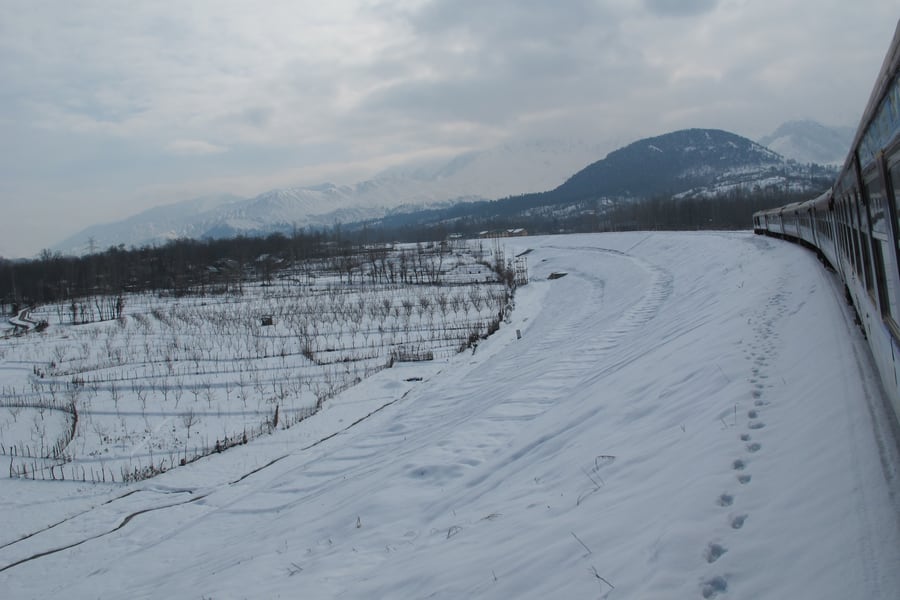
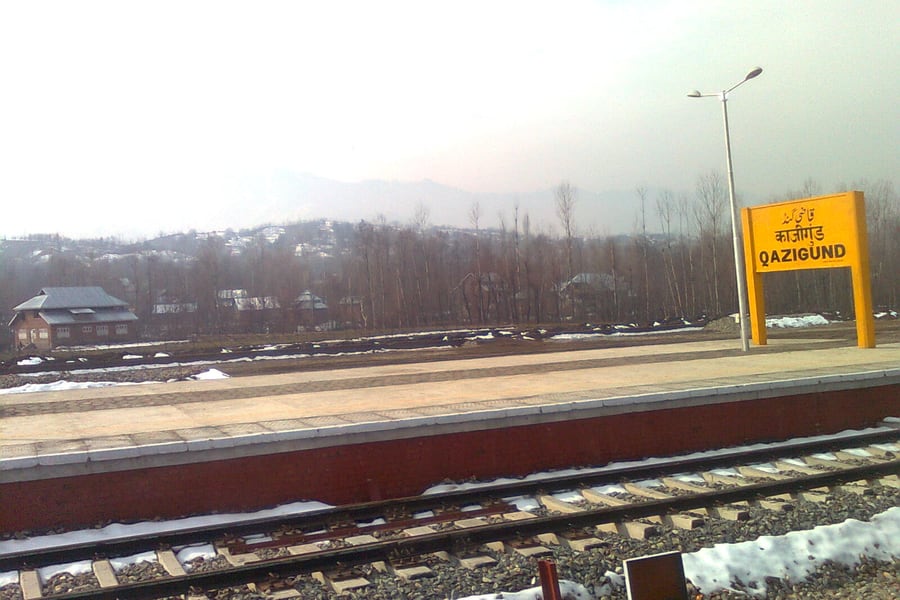
The train comes out in the Kashmir Valley, and the character of the journey changes. From Qazigund the line runs across the flat valley floor past Anantnag, Awantipora and Pampore, the saffron town, among orchards and, in winter, deep snow. Srinagar station stands at Nowgam, eight kilometres from the city centre, and is built in the valley's wooden style, with its signs in Urdu, English and Hindi.
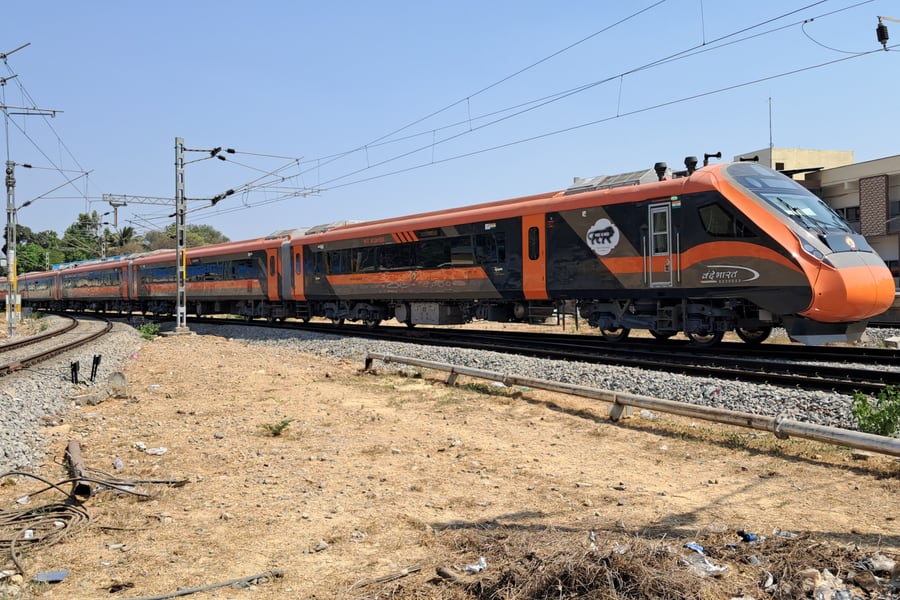
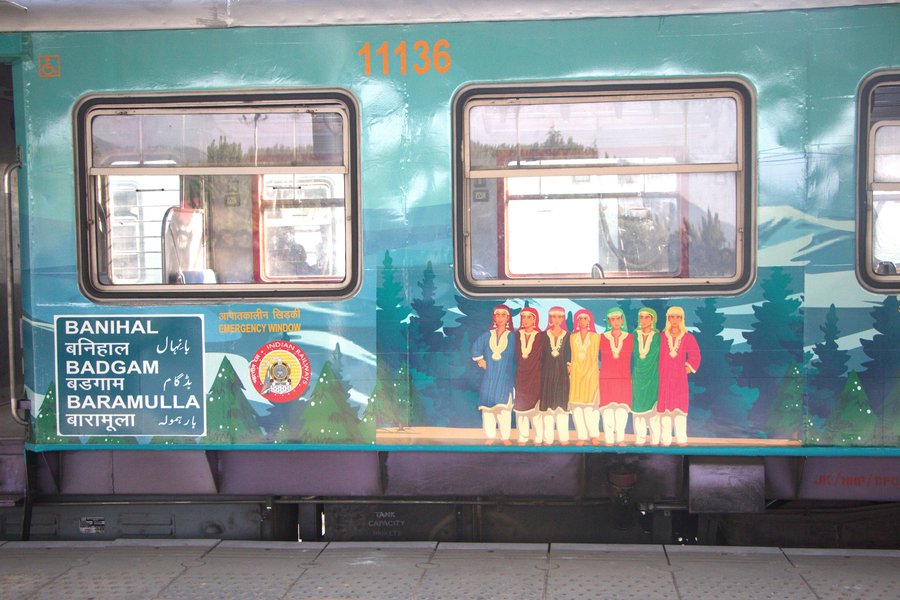
The trains are Vande Bharat chair-car units, built at the Integral Coach Factory in Chennai and adapted for the valley's winters, in a saffron-and-grey livery. Since April 2026 the Jammu–Srinagar trains have run with 20 coaches.
Along the route
 Prime Minister's Office (India) / Wikimedia Commons · GODL-India · 2025 · cropped
The Chenab bridge
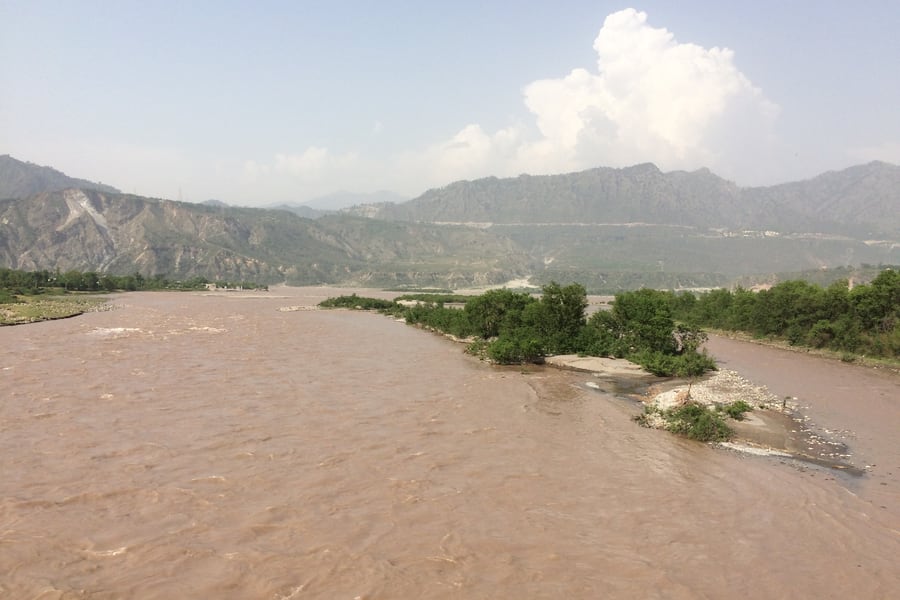
Between Bakkal and Kauri the train runs onto a steel arch 359 metres above the Chenab — 35 metres higher than the Eiffel Tower. The bridge is 1,315 metres long, with a main span of 467 metres, and opened to trains on 6 June 2025.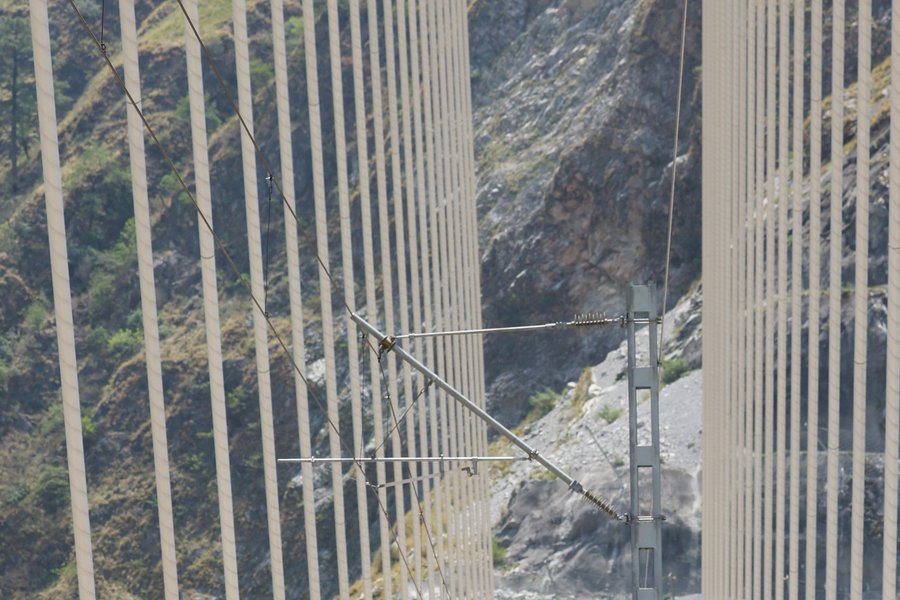 Prime Minister's Office (India) / Wikimedia Commons · GODL-India · 2025 · cropped
The Anji Khad bridge
Between Katra and Reasi the line crosses a gorge of the Anji, a tributary of the Chenab, on India's first cable-stayed railway bridge. Ninety-six steel cables run down from a single pylon 193 metres high.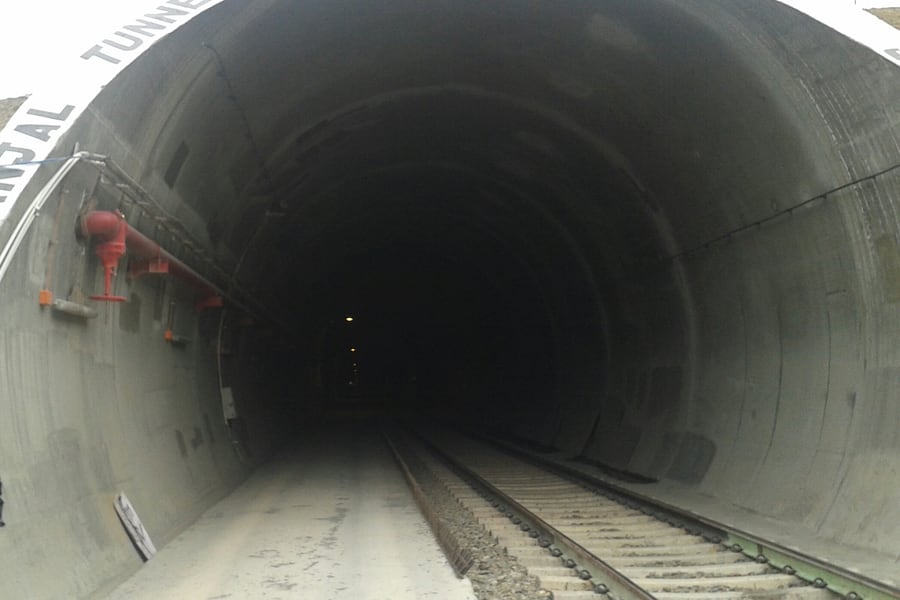 Owais khursheed / Wikimedia Commons · CC BY-SA 4.0 · cropped
Under the Pir Panjal
Beyond Banihal the train enters an 11.2-kilometre tunnel under the Pir Panjal range, opened in 2013, and runs through it for about nine and a half minutes, some 440 metres below the Jawahar road tunnel.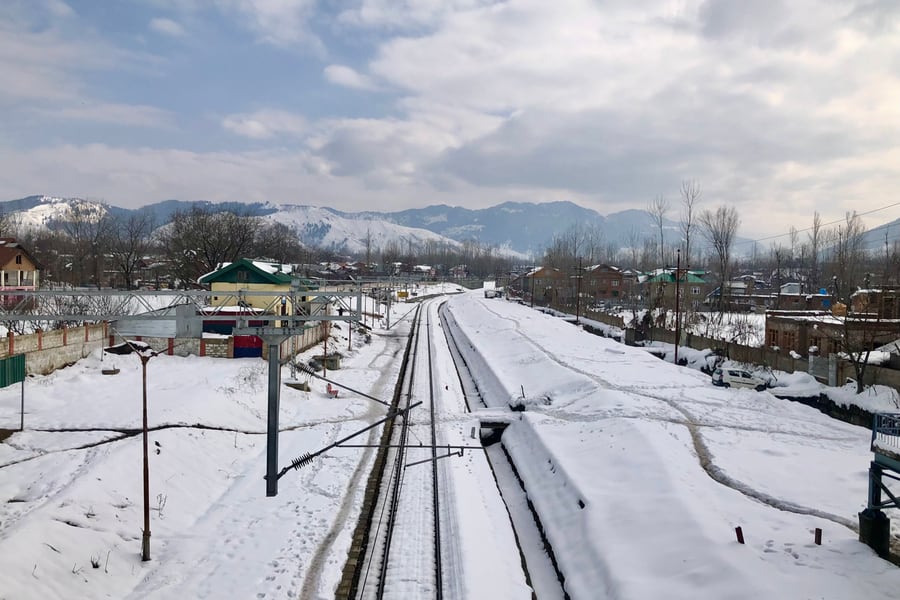 UnpetitproleX / Wikimedia Commons · CC BY-SA 4.0 · cropped
Into the valley
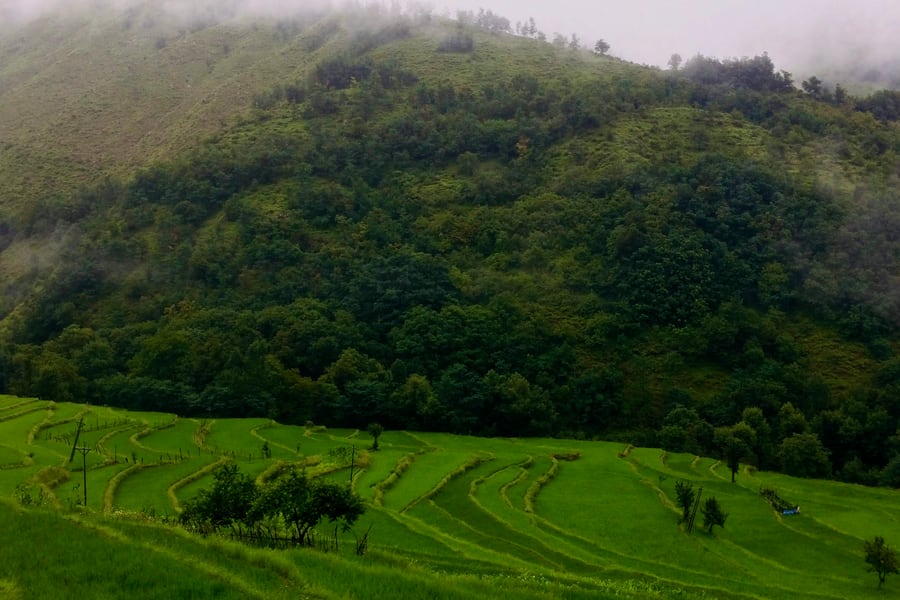
The tunnel ends near Qazigund, and the last 60 kilometres cross the flat floor of the Kashmir Valley, past poplars, orchards and saffron fields. In winter the line runs on through the snow that closes the road.A bit of history
Culture & experiences along the way
 Aakash Goyal / Wikimedia Commons · CC BY-SA 4.0 · cropped
Wazwan
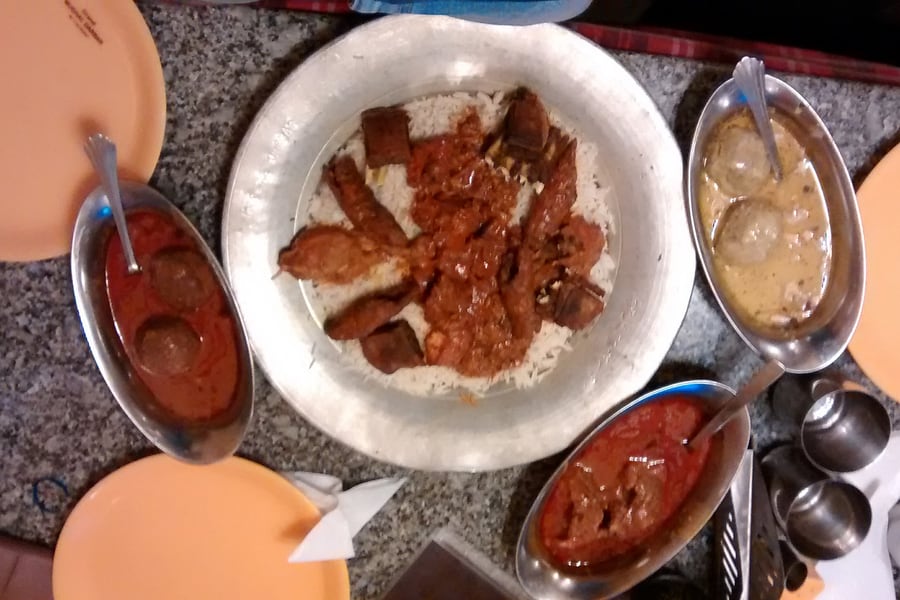
Kashmir's great feast is cooked overnight by a master chef, the wouste waze, and served to guests in fours from a shared copper platter, the traem. It can run to thirty-six courses, many of them meat, and always ends with gushtaba, a large meatball in a yoghurt gravy.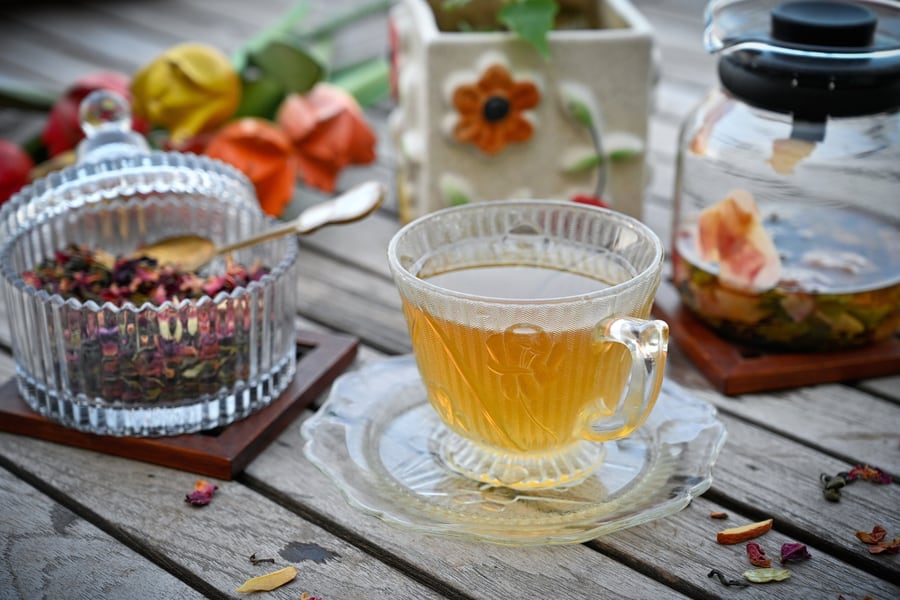 Sayantan Sarkar / Wikimedia Commons · CC BY-SA 4.0 · cropped
Kahwa
The valley's green tea is boiled with saffron, cinnamon, cardamom and sometimes Kashmiri roses, then served sweet with crushed almonds or walnuts. It is traditionally kept hot in a copper samovar over live coals, and is drunk without milk.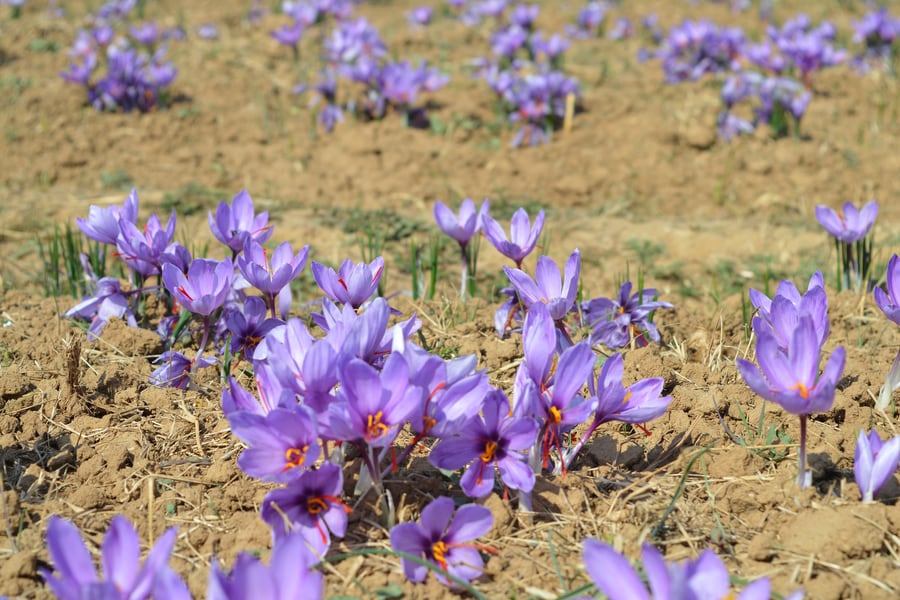 Umarsami / Wikimedia Commons · CC BY-SA 4.0 · cropped
The saffron of Pampore
The train passes Pampore, eleven kilometres before Srinagar, whose fields grow most of India's saffron. The crocus flowers only in October, all within a week or two, and each bloom is picked the morning it opens. Kashmir saffron has held a geographical indication since 2020.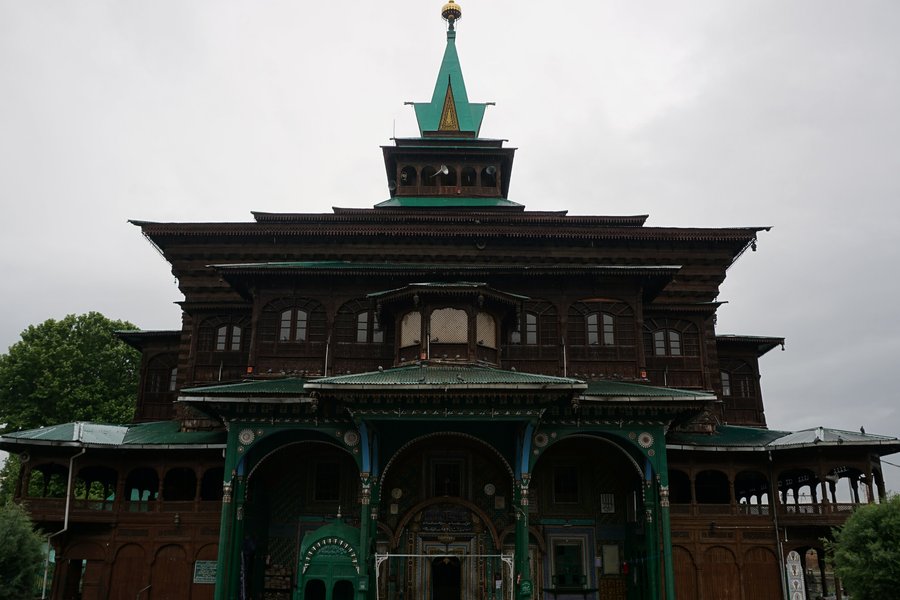 Deepank Ranka / Wikimedia Commons · CC BY-SA 4.0 · cropped
Khanqah-e-Moula
On the Jhelum in old Srinagar, this mosque of 1395 is one of the finest buildings in Kashmir's wooden architecture, its interior decorated in papier-mâché. Burned and rebuilt in 1480 and 1731, it had a new crown fitted to its spire in 2018.Timetables
Two Vande Bharat trains run each way, six days a week each: the 26401 and 26402 do not run on Tuesdays, the 26403 and 26404 not on Wednesdays, so there are two trains in each direction on five days and one on the other two. Every seat is reserved.
Jammu Tawi to Srinagar
| Train | Days | Jammu Tawi | Udhampur | Katra | Reasi | Banihal | Srinagar |
|---|---|---|---|---|---|---|---|
| 26401 | Not Tuesday | 06:20 | 07:41 | 08:10 | 08:30 | 09:58 | 11:10 |
| 26403 | Not Wednesday | 13:20 | 14:18 | 14:55 | — | 16:42 | 18:05 |
Srinagar to Jammu Tawi
| Train | Days | Srinagar | Banihal | Reasi | Katra | Udhampur | Jammu Tawi |
|---|---|---|---|---|---|---|---|
| 26404 | Not Wednesday | 08:00 | 09:02 | — | 11:10 | 11:37 | 12:45 |
| 26402 | Not Tuesday | 14:00 | 15:00 | 16:36 | 17:00 | 17:27 | 18:50 |
The journey takes 4 hours 45 to 50 minutes. Udhampur is Martyr Captain Tushar Mahajan station; the trains stop five minutes at Katra and two at the others.
The Vistadome special
A special train with a glass-roofed Vistadome coach runs between Budgam, just beyond Srinagar, and Katra, calling at more of the valley's stations. Restored to its full route on 29 August 2026 after being cut back for the summer, it leaves Budgam at 07:20 (Srinagar 07:35, Banihal 10:10) and reaches Katra at 13:00; the return leaves Katra at 13:45 (Banihal 18:00) and reaches Srinagar at 19:36 and Budgam at 20:00. As a special, its running dates have been extended a few months at a time.
Times are from IRCTC and its partner ConfirmTkt, checked against the Ministry of Railways' announcement — as of October 2026. Check your train on IRCTC (opens in a new tab) before travelling.
Tickets
Tickets are sold by IRCTC, Indian Railways' booking service, online and in its app. Every ticket is for a reserved seat on a named train, in AC Chair Car or the first-class Executive Chair Car, and a Chair Car ticket includes the meals served at the seat.
Book early. The trains run full in the tourist season: three days before a mid-October date in 2026, the morning train's Chair Car was already eighty places into its waiting list. The fares below are those IRCTC quoted for that week.
Book your tickets
Sameer2905 / Wikimedia Commons · CC BY-SA 4.0 · croppedAC Chair Car
Jammu Tawi ⇄ Srinagar · about 4 h 50
One way from ₹855, meals included, on a reserved seat on a named train.
Book Tickets (opens in a new tab, on irctc.co.in)via irctc.co.inMutahir Showkat / Wikimedia Commons · CC BY-SA 4.0 · croppedExecutive Chair Car
Jammu Tawi ⇄ Srinagar · first class
One way from ₹1,585 in the Vande Bharat's executive class, the first class on board.
Book Tickets (opens in a new tab, on irctc.co.in)via irctc.co.inAmareshwara Sainadh / Wikimedia Commons · CC BY-SA 3.0 · croppedVistadome special
Katra ⇄ Budgam · glass-roofed coach
A slower special train with a Vistadome coach; Katra to Srinagar from ₹1,265.
Book Tickets (opens in a new tab, on irctc.co.in)via irctc.co.inRail Passes
No rail pass covers the Jammu–Srinagar Vande Bharat. Interrail and Eurail are European schemes, and India is not among the countries in Interrail's list of covered railway companies. Indian Railways' own pass for foreign visitors, the Indrail Pass, was withdrawn by Railway Board order on 19 September 2017. Every journey is bought as a ticket for a named train, through IRCTC.
A pass would not help here anyway. The fare is modest; a confirmed seat is what to plan around, so book as soon as your dates are fixed.
Checked October 2026 against Interrail's list of railway companies (opens in a new tab) and the Indrail Pass (opens in a new tab).
Places to Visit
Jammu's forts and palaces are worth a day before the morning train, and Katra, an hour and fifty minutes up the line, is where pilgrims leave it for Vaishno Devi. In Kashmir, Srinagar's station is eight kilometres from the city, so the lake and the gardens are a taxi ride from the train.
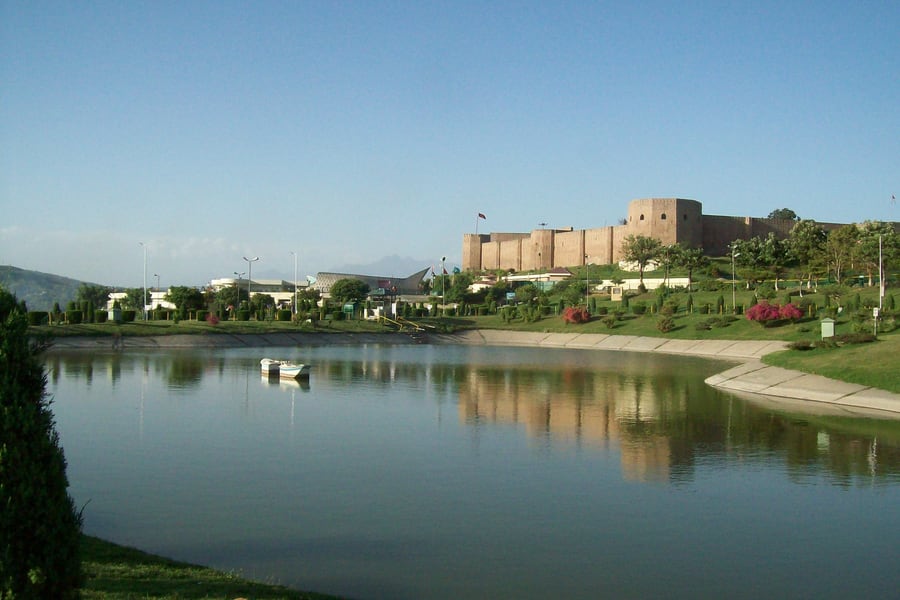 Tejan gupta / Wikimedia Commons · CC BY-SA 4.0 · cropped
Bahu Fort
On a plateau above the left bank of the Tawi, about five kilometres from the centre of Jammu, the fort is held to have been built by Bahu Lochan, brother of the city's legendary founder. Inside stands the temple of Kali known as Bawe Wali Mata, and the forest around it has been laid out as a park, the Bagh-e-Bahu, with views over the city.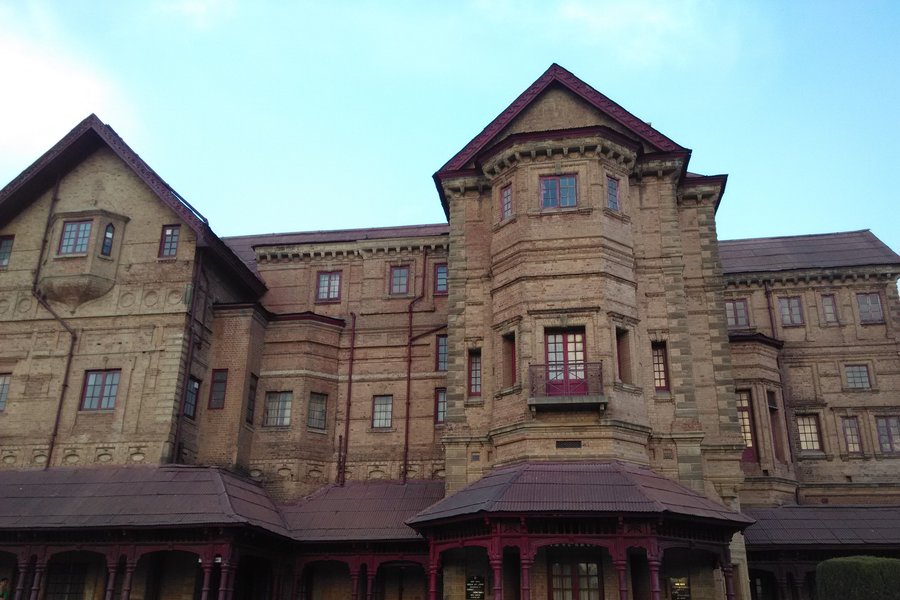 Shahvilayat / Wikimedia Commons · CC BY-SA 4.0 · cropped
Amar Mahal
Planned by a French architect in 1862 and built in the 1890s on the lines of a French château, this palace on a bend of the Tawi was the last residence of the Dogra kings. It is now a museum, with a golden throne weighing 120 kilograms, Pahari and Kangra miniature paintings and a library of 25,000 books.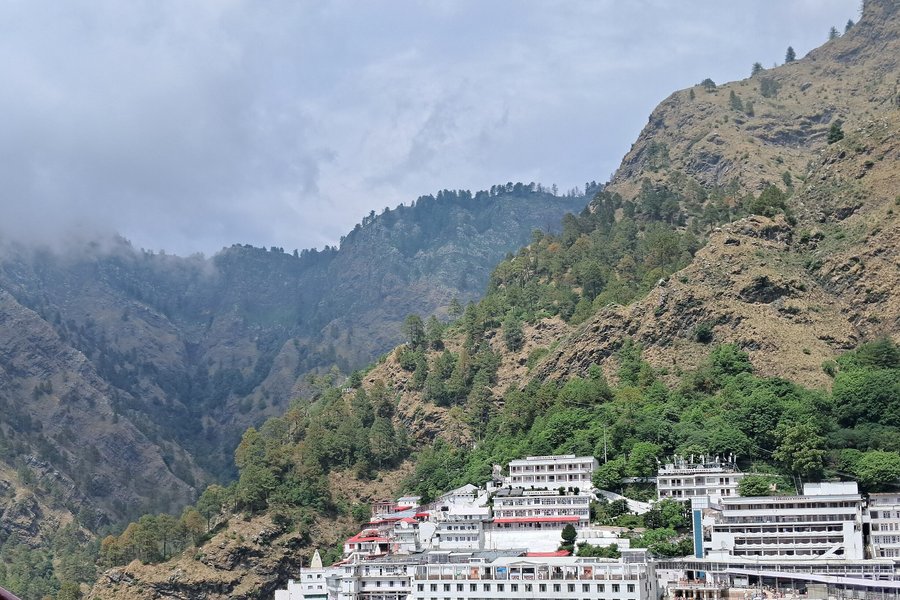 KDhruv406 / Wikimedia Commons · CC BY 4.0 · cropped
Vaishno Devi
The cave shrine of Vaishno Devi stands at 1,585 metres on Trikuta mountain, twelve kilometres up a paved path from Katra, and is one of the most visited pilgrimage sites in India: 9.52 million pilgrims in 2023. Helicopters fly from Katra, and a cable car has linked the shrine with the Bhairon temple since 2018.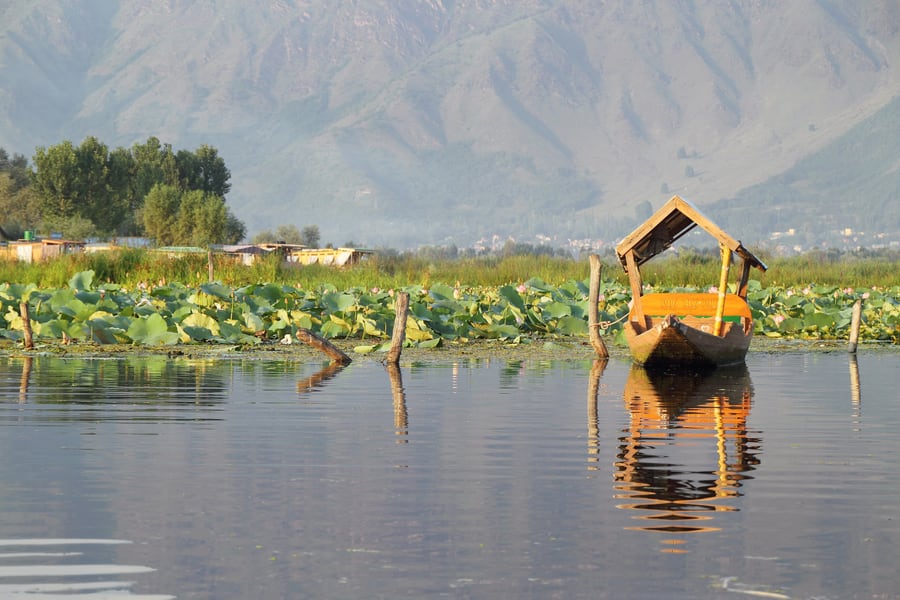 Fulvio Spada / Wikimedia Commons · CC BY-SA 2.0 · cropped
Dal Lake
Srinagar's lake covers 18 square kilometres, with a 15.5-kilometre shore of Mughal gardens, houseboats and hotels. Its floating gardens, the raad, flower with lotus in July and August, and the shikaras, the valley's painted boats, cross it all day. In the hardest winters the water freezes.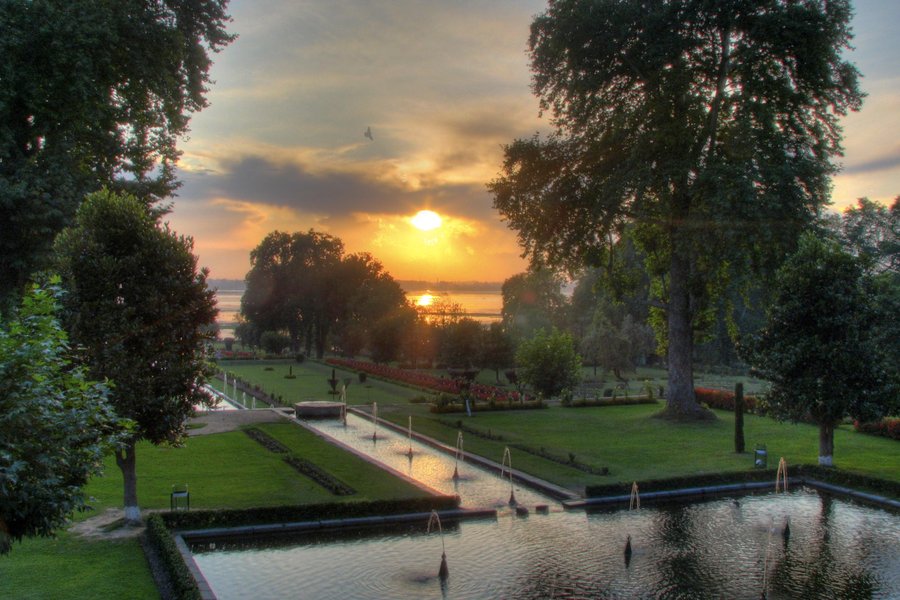 McKay Savage / Wikimedia Commons · CC BY 2.0 · cropped
Nishat Bagh
Asif Khan, brother of the empress Nur Jahan, laid out this terraced garden on the east shore of Dal Lake in 1633, with the Zabarwan range behind it. Shah Jahan admired it so openly, the story goes, and was so piqued when it was not offered to him, that he had its water cut off. It is the second-largest Mughal garden in the valley.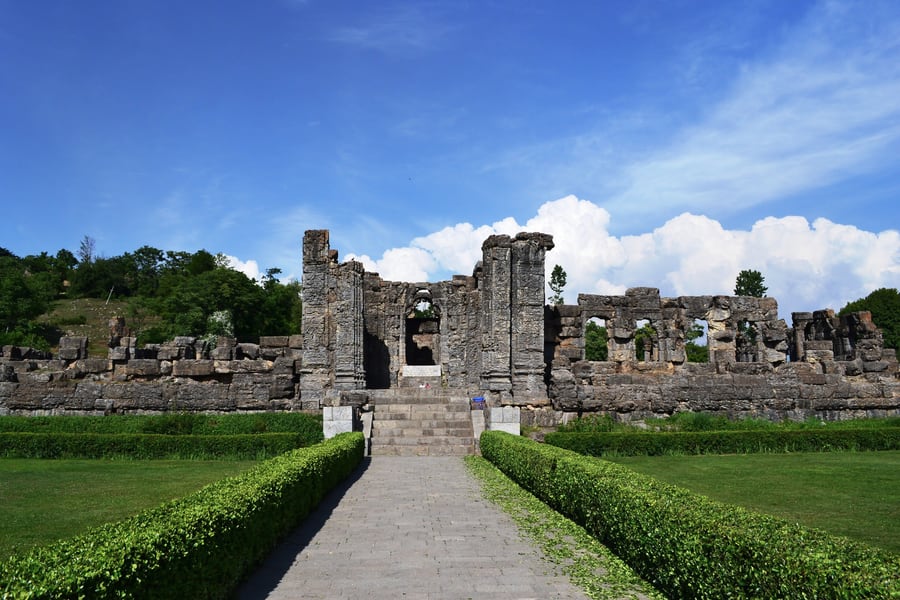 Shaurya / Wikimedia Commons · CC BY-SA 3.0 · cropped
Martand Sun Temple
At Mattan, in Anantnag district, the ruins of a temple to Surya, the sun god, stand on a plateau looking out over the Kashmir Valley. The historian Kalhana records that it was commissioned by King Lalitaditya Muktapida in the eighth century; earthquakes have added to the damage of later centuries.Where to Sleep
The morning train leaves Jammu at 06:20, so a night in Jammu is the easy way to catch it. Both ends of the line have a palace of the Dogra maharajas that now takes guests.
Where to stay
Hari Niwas Palace
Above the Tawi, Jammu
Maharaja Hari Singh's palace, now a hotel of forty rooms in fifty acres of gardens, looking over the Tawi valley to the Trikuta hills.
Check Availability (opens in a new tab, on hariniwaspalace.in)via hariniwaspalace.inThe LaLiT Grand Palace
Above Dal Lake, Srinagar
Built in 1910 by Maharaja Pratap Singh, the palace overlooks Dal Lake and has 113 rooms and suites, ten of them cottages.
Check Availability (opens in a new tab, on thelalit.com)via thelalit.comQuestions or corrections
Planning this trip and stuck on something, or spotted a time, fare or detail that has changed? Send us a message about Jammu–Srinagar Vande Bharat. We read every one, and we update this page when something has changed.