Nilgiri Mountain Railway
David Brossard / Wikimedia Commons · CC BY-SA 2.0
- Distance46 km
- Duration~5 hours (uphill)
- Best seasonOct–Jun
Introduction
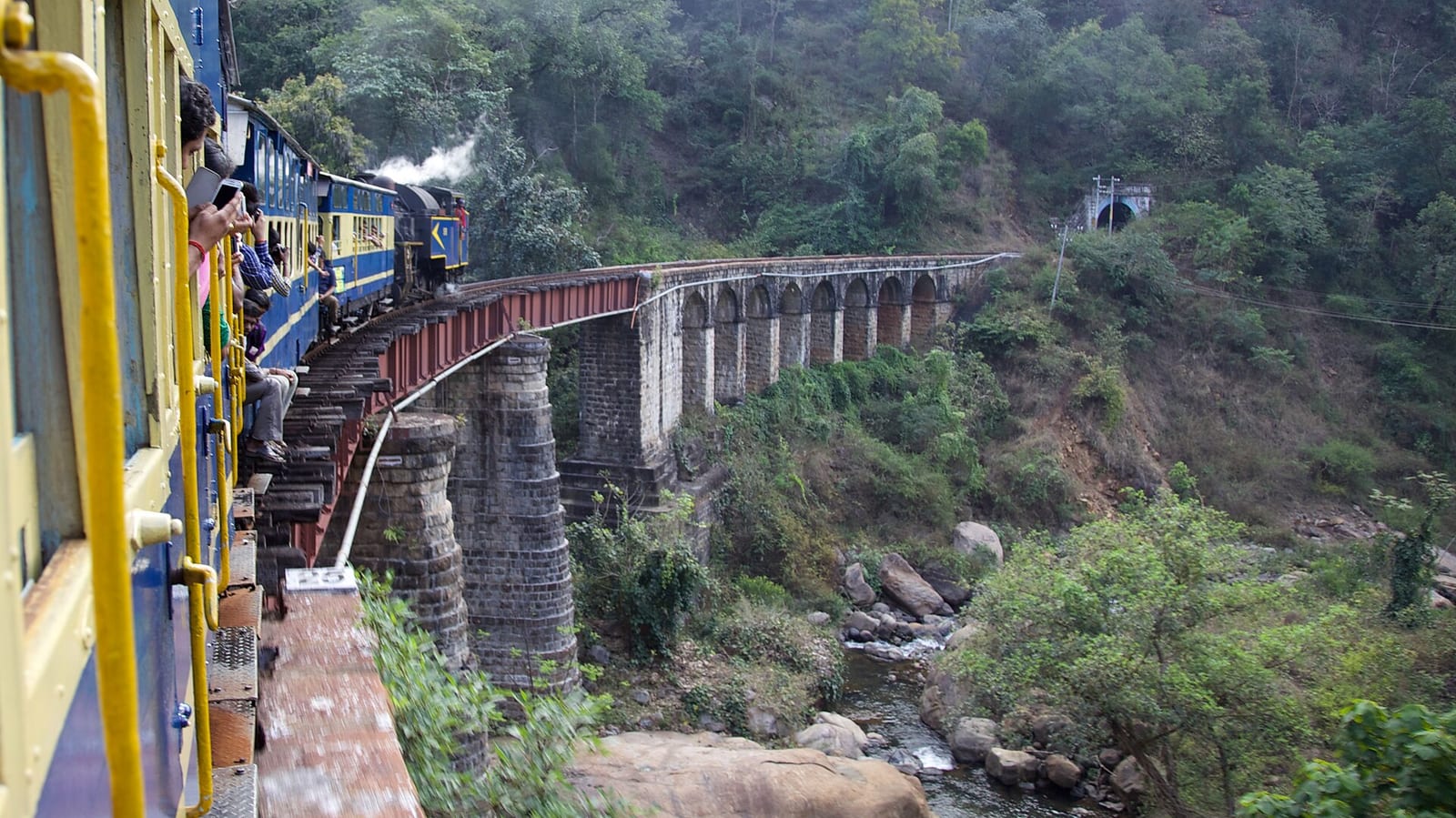
Of the three UNESCO "Mountain Railways of India", the Nilgiri Mountain Railway is the one that has to work hardest. To climb the impossibly steep flank of the Nilgiri Hills in Tamil Nadu, an ordinary train's wheels would simply spin — so this one cheats, gripping a toothed rack rail laid down the middle of the track and hauling itself up hand over hand. It is the only rack railway in India, and the steepest railway in Asia.
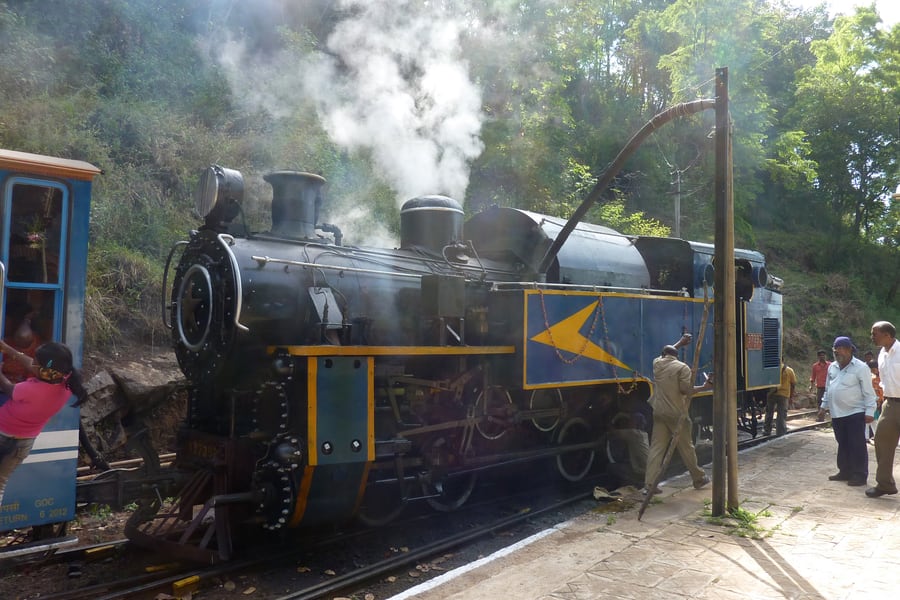
Better still, it does it behind steam. Swiss-built X-Class engines, over a century old in design, push the little metre-gauge carriages up from the hot plains at Mettupalayam, through 16 tunnels and over 250 bridges, into the cool green tea country of the "Blue Mountains", to the old hill station of Ooty at over 2,200 metres.
It is slow — around five hours for just 46 kilometres — and utterly wonderful: one of the last places on earth to ride a scheduled rack-and-pinion steam train, through some of the loveliest hill scenery in southern India.
The Journey
The line runs just 46 kilometres from Mettupalayam, on the plains at 326 metres, up to Udhagamandalam — Ooty — at 2,203 metres. It is a journey of two very different halves.
The first, from Mettupalayam up to Coonoor, is the hard, spectacular part. Here the gradient is brutal — up to 1 in 12, the steepest railway in Asia — so the train engages the Abt rack: a toothed rail between the running rails that a cog beneath the engine bites into, ratcheting the carriages upward. A steam locomotive pushes from the rear, barking and blowing, as the line climbs through 16 tunnels and over 250 bridges and stone viaducts, past waterfalls and the little halts of Kallar and Hillgrove, the plains dropping dizzyingly away below.
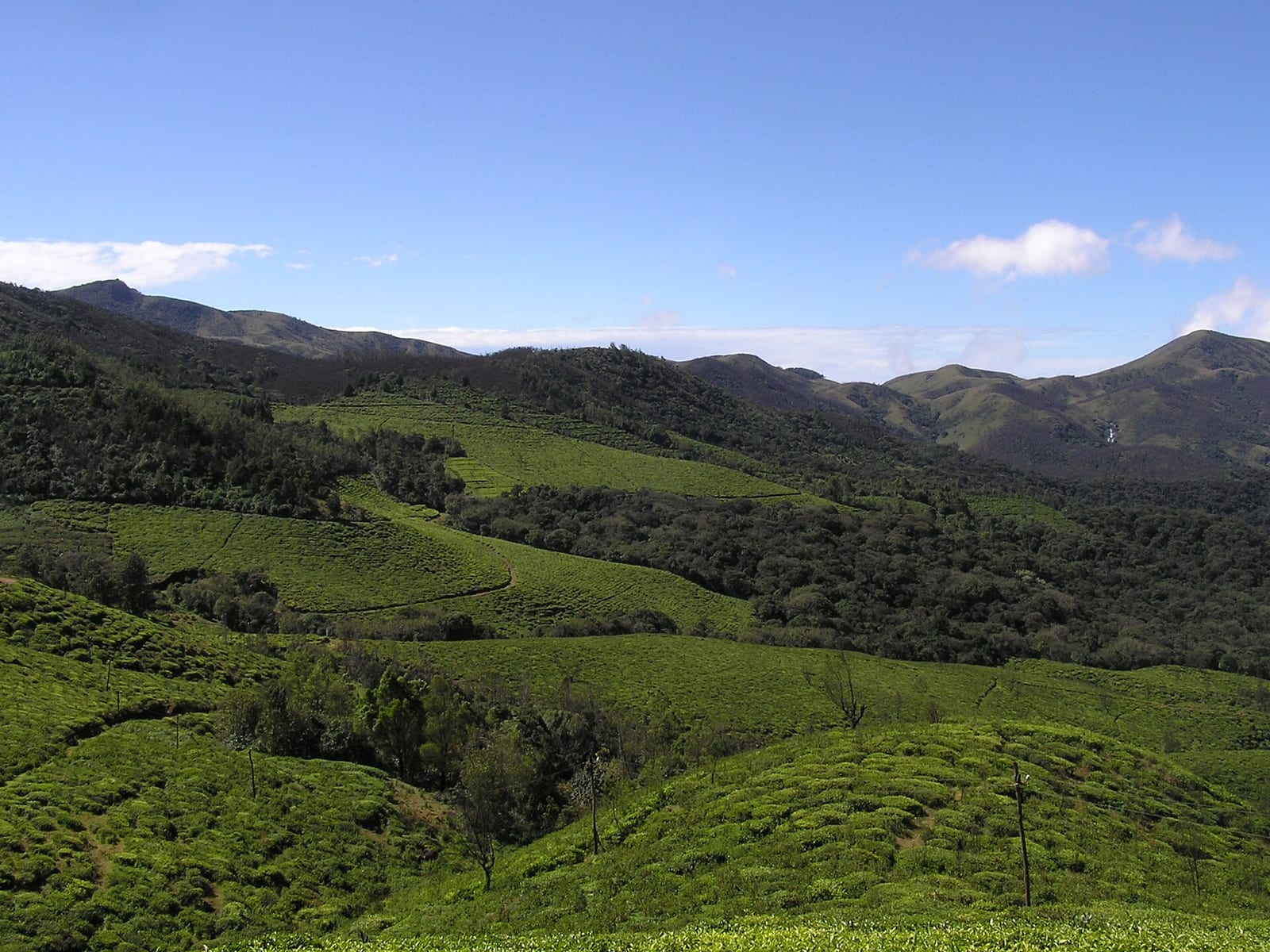
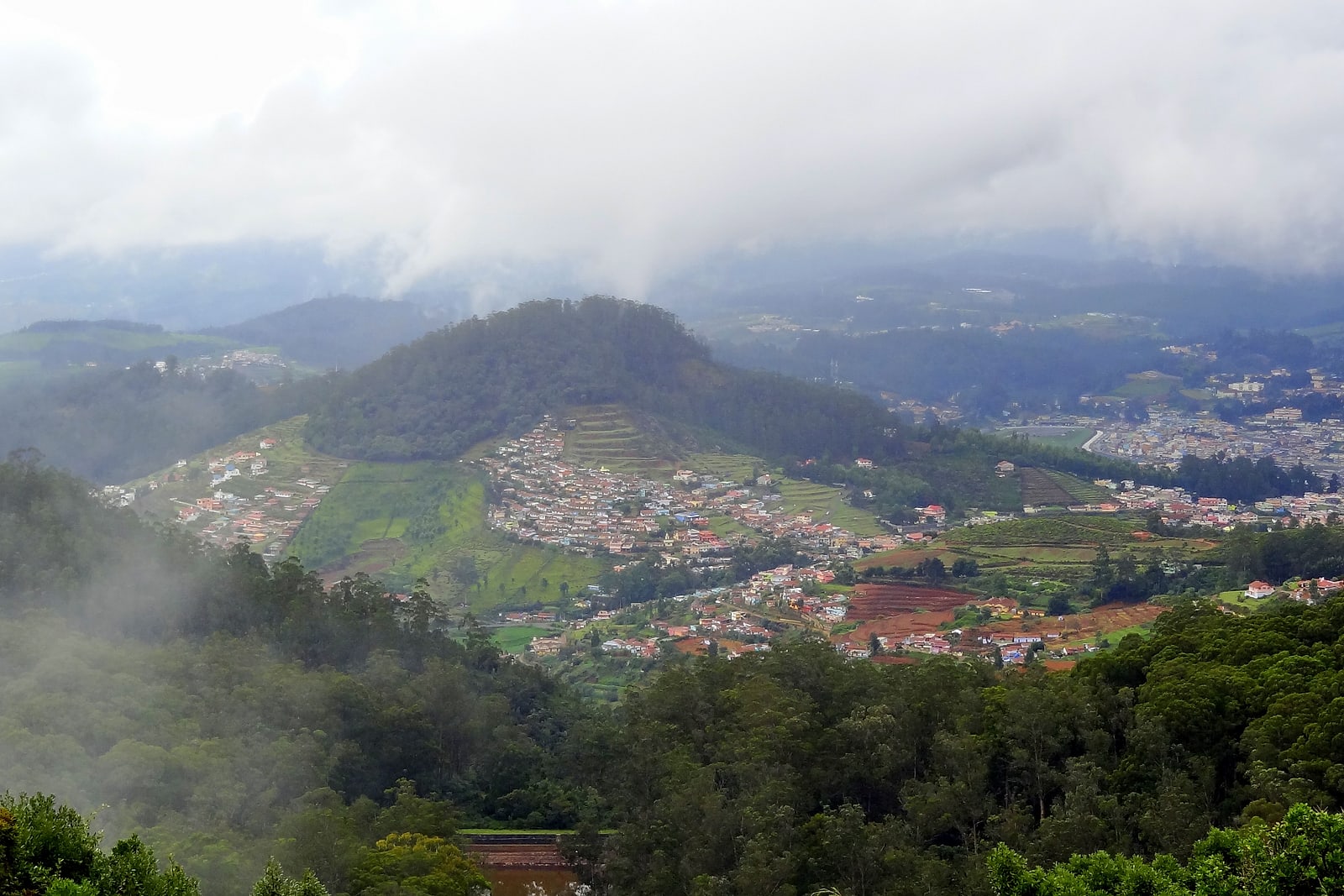
At Coonoor, the rack ends and the mood softens. The upper section to Ooty rolls gently through the classic Nilgiri Hills landscape — a rippling patchwork of emerald tea gardens and dark pockets of native shola forest, the air cool and eucalyptus-scented. Past Wellington and its old military cantonment, the train finally trundles into Ooty, the "queen of hill stations", with its botanical garden, boating lake and colonial bones.
Take the whole line for the full drama of the rack; or, if the single daily through train is full, ride just the pretty Coonoor–Ooty stretch through the tea.
Along the route
Stephan Niewolik / Wikimedia Commons · CC BY 3.0India's only rack railway
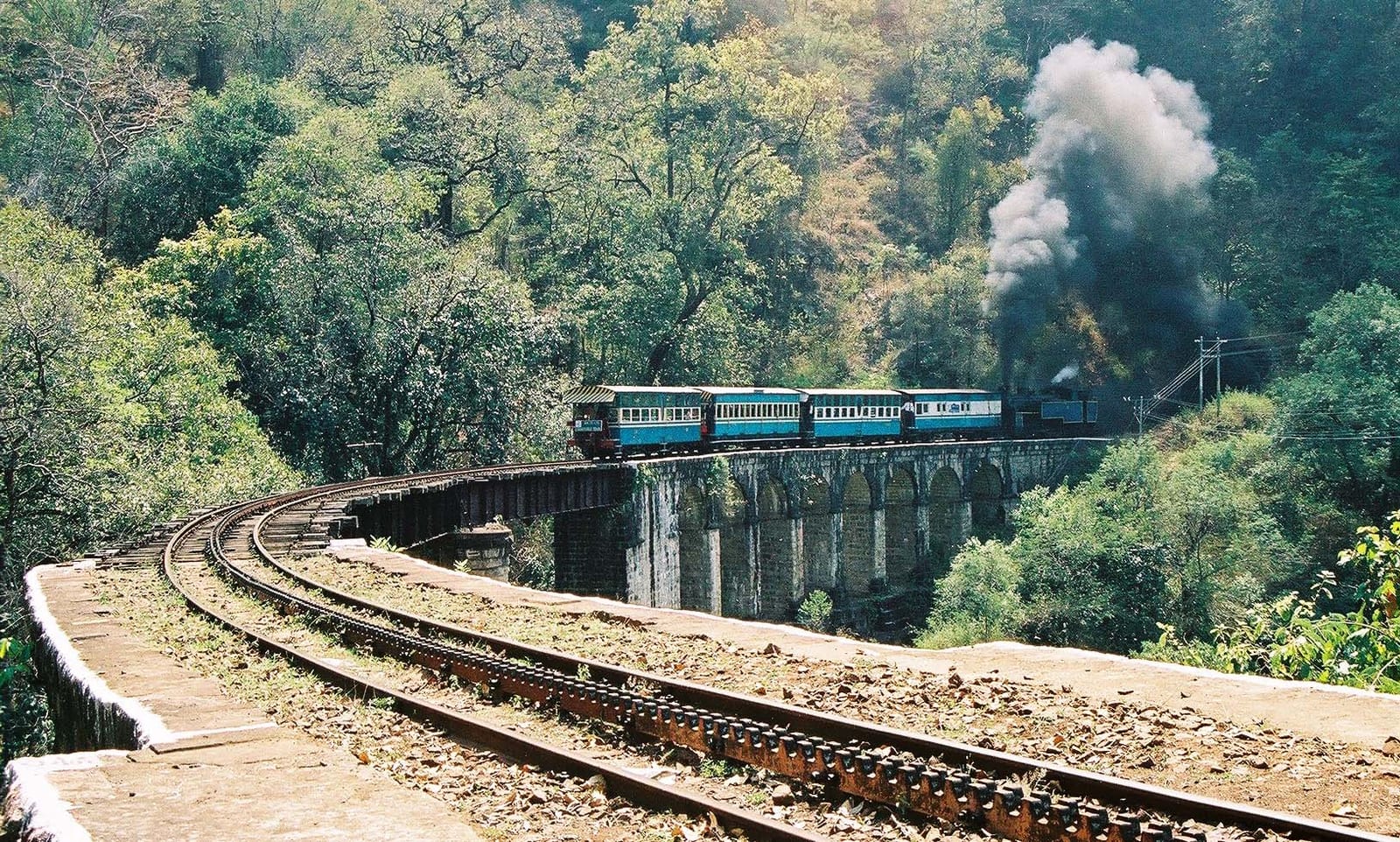
On the steep lower section the train engages an Abt rack — a toothed rail in the middle of the track that a cog on the engine grips to haul it up gradients as steep as 1-in-12, the steepest railway in Asia.Anand Osuri / Wikimedia Commons · CC BY-SA 4.0The tea-clad Nilgiris
The "Blue Mountains" are a patchwork of emerald tea gardens and pockets of ancient shola rainforest — the line climbs straight through them, the air cooling and sweetening with every hundred metres.A.M. Hurrell / Wikimedia Commons · CC BY 2.5Viaducts & tunnels to Coonoor
The rack section from the plains up to Coonoor is the drama — 16 tunnels and 250 bridges, the little train grinding over stone viaducts and past waterfalls at walking pace.A bit of history
Culture & experiences along the way
 Stephan Niewolik / Wikimedia Commons · CC BY 3.0 · cropped
Riding behind steam
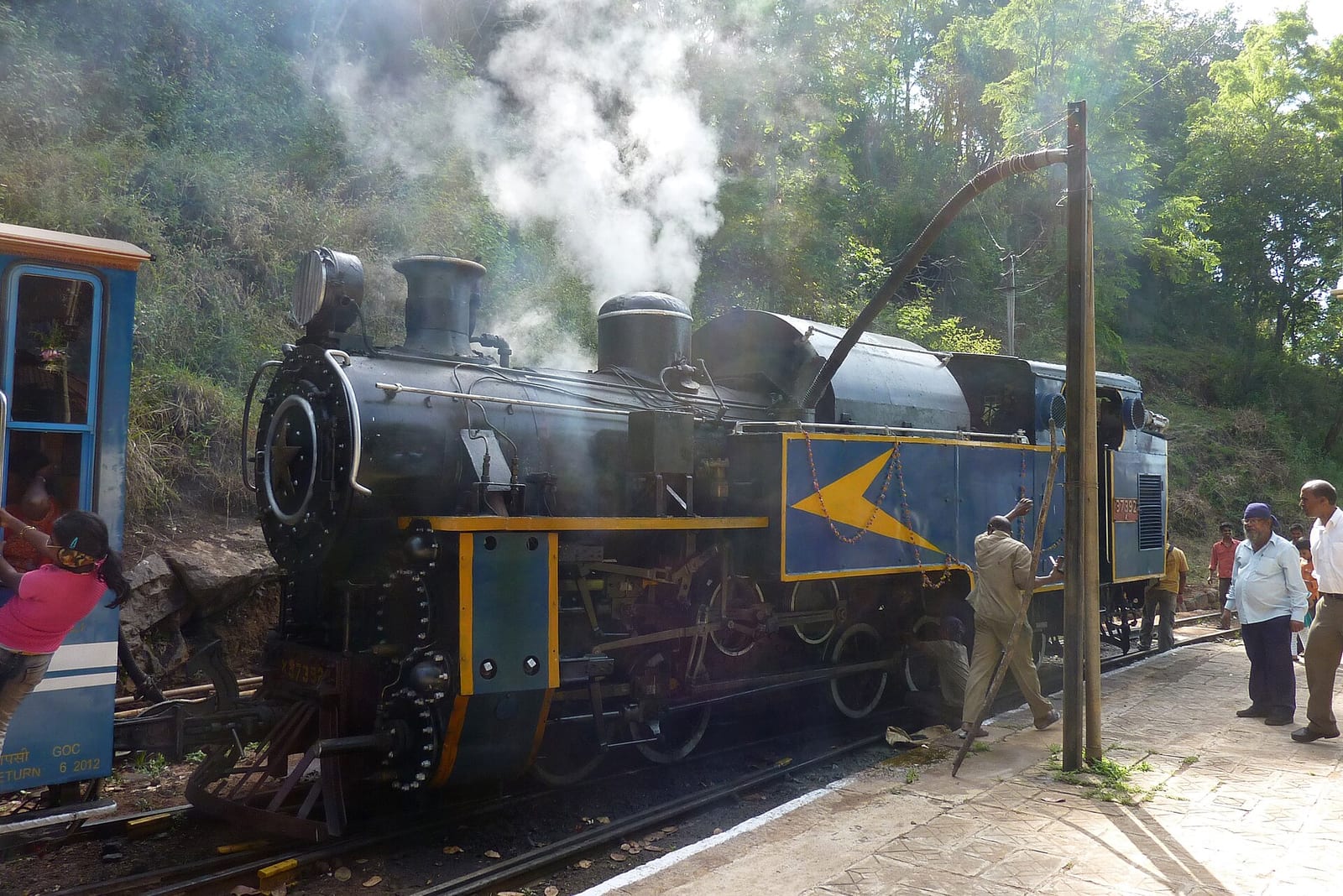
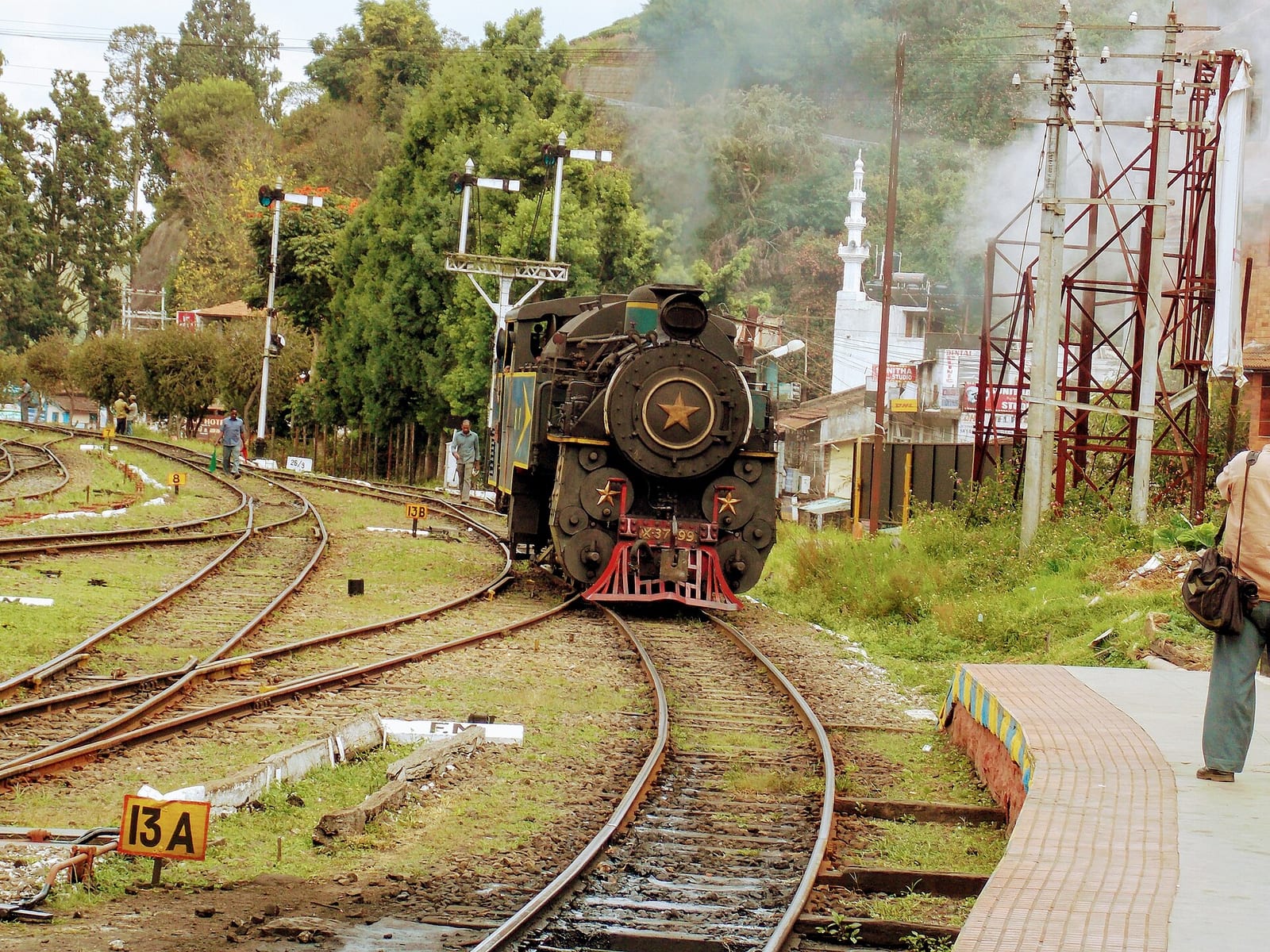
The lower section is still worked by X-Class steam engines, Swiss-built for the rack and pushing from the rear — one of the last places in the world you can ride a scheduled rack-and-pinion steam train.Savmasca / Wikimedia Commons · CC BY-SA 4.0Coonoor & the tea country
Quieter and greener than Ooty, Coonoor sits amid the tea gardens at the top of the rack section — worth a stop for Sim's Park, a tea-factory tour and the viewpoints at Dolphin's Nose.Hemant meena / Wikimedia Commons · CC BY-SA 3.0 · croppedOoty, queen of hill stations
The terminus, Udhagamandalam — Ooty — was the summer capital of the Madras Presidency: a botanical garden, a boating lake, colonial churches and eucalyptus-scented air at 2,200 metres.Timetables
The Nilgiri Mountain Railway runs year-round, built around a single, precious through train each day between Mettupalayam and Ooty, plus several shorter services on the upper section.
Real daily times (2026 — confirm before travelling):
| Train | Route | Depart | Arrive |
|---|---|---|---|
| 56136 | Mettupalayam → Ooty (uphill) | 07:10 | 12:00 (~4 h 50) |
| 56137 | Ooty → Mettupalayam (downhill) | 14:00 | 17:35 (~3 h 30) |
Plus several Coonoor ⇄ Ooty shuttles a day on the gentle upper, tea-country stretch. The uphill run uses steam and rack as far as Coonoor — the dramatic part.
A few things to know:
- Connect at Mettupalayam. The 07:10 uphill train is timed to meet the overnight Nilgiri Express from Chennai, so many travellers arrive on that and step straight across.
- Book well ahead. The single daily through service — especially reserved seats — sells out days in advance through IRCTC; the upper-section shuttles are easier.
- Avoid the monsoon. Heavy rain (roughly June–September and October–November) can trigger landslips; October to June is safer.
- Uphill is the show — ride the 07:10 up if you can.
Times as of the 2026 timetable. Confirm current schedules with the operator — see the Tickets section below.
Tickets
Tickets are sold by Indian Railways through IRCTC and at the stations. Fares are very low, but the single daily through train sells out, so booking early is everything.
The choices:
- Mettupalayam → Ooty (through train) — the full experience: steam up the rack to Coonoor, then on to Ooty. First and second class are offered; reserve as far ahead as you can.
- Coonoor ⇄ Ooty — the upper tea-country section, with more trains a day and easier availability; a good fallback, or a relaxed half-ride.
Tips:
- Reserve early on IRCTC — the uphill through service opens for booking well in advance and fills within days.
- Sit on the correct side — heading up, the best of the valley drops away on the right below Coonoor.
- Arrive on the Nilgiri Express — the connecting overnight train from Chennai lands at Mettupalayam in good time for the morning climb.
- Go up, not down — if you only ride one way, make it the ascent.
Book your tickets
Mettupalayam ⇄ Ooty
The full climb · steam + rack
The complete journey up from the plains, steam-hauled on the rack section to Coonoor and on to Ooty. The classic — and the single daily through service fills fast.
Book Tickets (opens in a new tab, on Indian Railways (IRCTC))via Indian Railways (IRCTC)Coonoor ⇄ Ooty
The upper section
The gentler upper stretch through the tea gardens between Coonoor and Ooty — several trains a day, and an easy way to sample the line if the through train is booked out.
Book Tickets (opens in a new tab, on Indian Railways (IRCTC))via Indian Railways (IRCTC)Rail Passes
No rail pass covers the Nilgiri Mountain Railway. Interrail and Eurail are European schemes, and India is not among the 33 countries in Interrail's list of covered railway companies. Indian Railways' own pass for foreign visitors, the Indrail Pass, was discontinued in 2017. Every journey is bought as a ticket for a named train, through IRCTC or at the station.
A pass would not help here anyway. The fares are very low; the one through train a day sells out, so book early.
Checked October 2026 against Interrail's list of railway companies (opens in a new tab) and the Indrail Pass withdrawal (opens in a new tab).
Places to Visit
The Nilgiris reward a few unhurried days at the top of the line, among the tea and the cool hill air. Ooty sits at 2,203 m and Coonoor at 1,850 m, and the two are close enough that you can base yourself in either — Ooty for the sights, Coonoor for the quiet.
Ooty's other set pieces are within walking distance of each other: St Stephen's Church, consecrated in November 1830, whose main beam and much of its other timber were taken from Tipu Sultan's palace on the island of Srirangapatna and hauled up the Sigur ghat, and a bazaar that is still a genuine working market rather than a souvenir street.
The one thing worth planning around is cloud. These are the Blue Mountains, and by the middle of the day the viewpoints frequently see nothing at all — so take the high ground early and keep the gardens, the tea factories and the market for the afternoon.
 Rangan Datta / Wikimedia Commons · CC BY-SA 4.0 · cropped
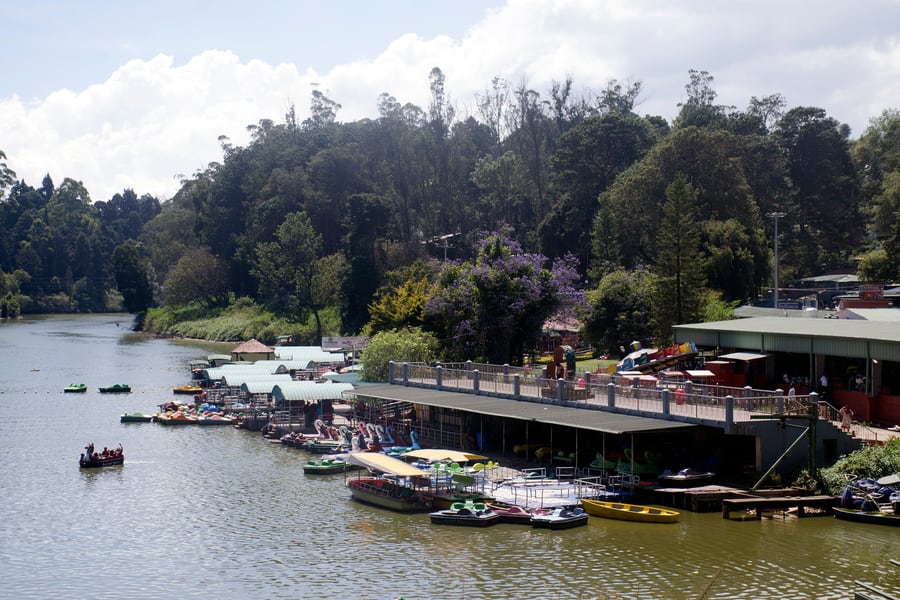
Ooty Lake
John Sullivan, the collector who effectively invented Ooty as a hill station, dammed the streams running through the valley in 1824 to make this lake. It was meant for fishing and for ferrying people across; it has shrunk a good deal since, to about 26 hectares, and the boathouse now rents out pedal boats, rowing boats and motorboats. Around it are a garden, pony rides and a small amusement park.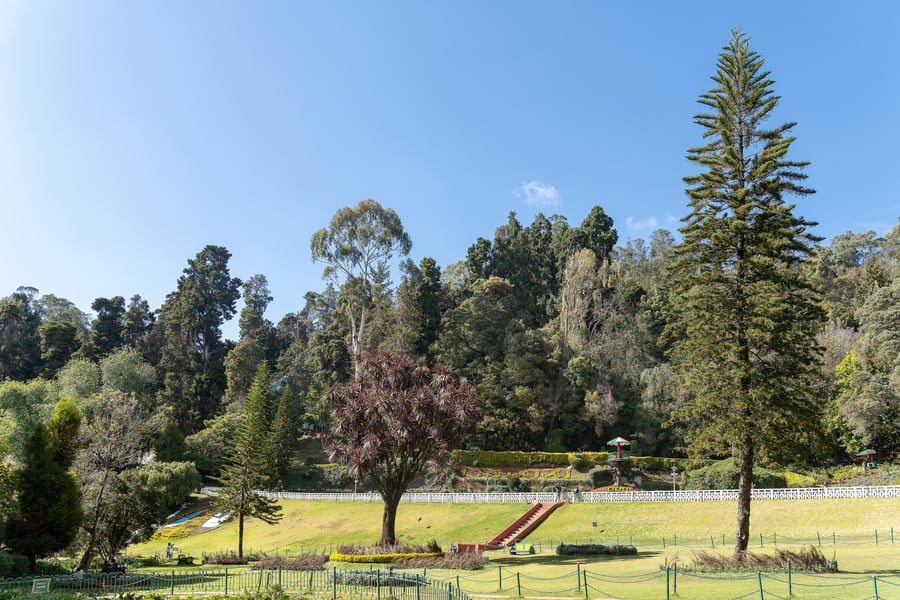 Rainer Halama / Wikimedia Commons · CC BY-SA 4.0 · cropped
The Botanical Gardens
Terraced up the lower slopes of Doddabetta, the Government Botanical Garden was laid out in 1848 under the Scottish gardener William Graham McIvor, sent from Kew by the East India Company, who turned forest above and swamp below into some 55 hectares of lawns and beds. It holds around a thousand species — and, at its centre, a fossilised tree trunk roughly 20 million years old.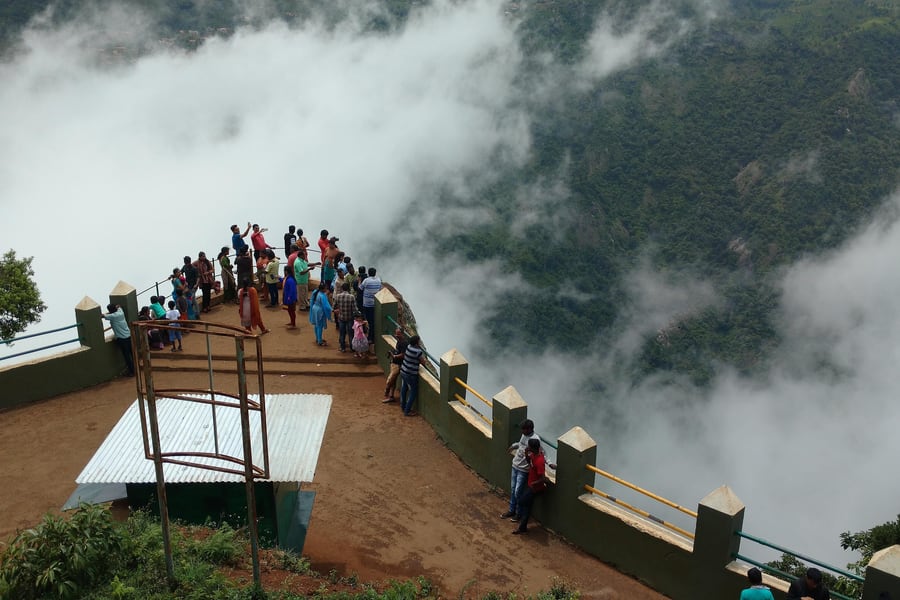 N. Vivekananthamoorthy / Wikimedia Commons · CC BY 4.0 · cropped
Coonoor
At 1,850 m and the last big stop before Ooty, Coonoor is greener, warmer and far calmer than the terminus. Sim's Park, thirty-odd acres named after a secretary of the Madras Club and laid out from 1874, is the set piece, and its fruit show each May is a local institution. The viewpoints are the draw, though: Lamb's Rock at 5.5 km and Dolphin's Nose at 10 km, both looking clean off the edge of the plateau.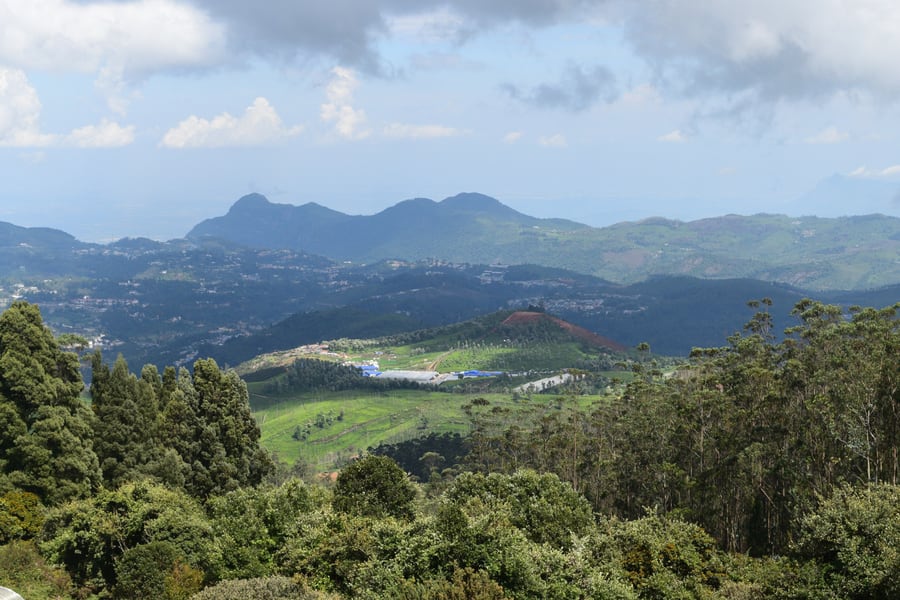 Fruiticos / Wikimedia Commons · CC BY-SA 4.0 · cropped
Doddabetta
The highest point in the Nilgiris and the third-highest in south India after Anamudi and Meesapulimala, nine kilometres out of Ooty on the Kotagiri road. A small observatory at the summit, opened in June 1983, keeps two public telescopes pointed at the plains. Come early: by late morning the cloud that gives the Blue Mountains their name has usually closed the view down to nothing.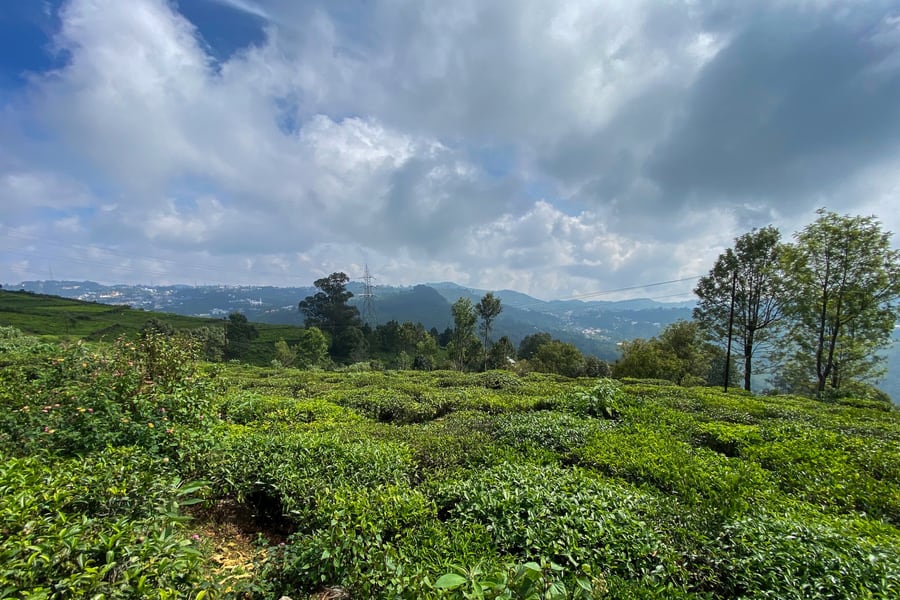 Niranjan Ramamurthy / Wikimedia Commons · CC BY-SA 4.0 · cropped
The tea estates
Tea covers almost every slope between Coonoor, Kotagiri and Ooty, and the gardens are open in a way that Darjeeling's are not — you can walk the paths between the bushes, and most of the small factories will show you withering troughs, rollers and a tasting at the end of it. Nilgiri tea is plucked year-round rather than in flushes, so there is no wrong month to turn up.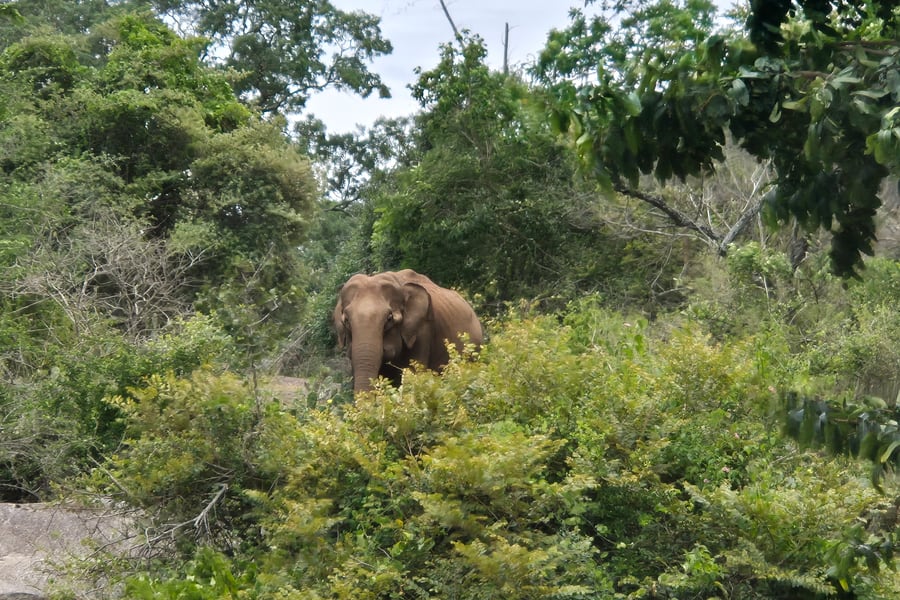 Siyaulhaque / Wikimedia Commons · CC BY-SA 4.0 · cropped
Mudumalai
Down the far side of the hills, 321 km² of forest between 850 m and 1,250 m, declared a tiger reserve under Project Tiger in April 2007 and part of the Nilgiri Biosphere Reserve since 1986. It runs straight into Bandipur to the north and Wayanad to the west, so the elephants, gaur and leopards move across an area far larger than the reserve itself. Around 266 bird species have been recorded.Where to Sleep
Base yourself up in the hills — in Ooty or, for something quieter, Coonoor — and give the tea country a couple of nights.
- Heritage hotels — the Nilgiris are full of atmospheric colonial-era hotels and clubs, all fireplaces, gardens and old-world service; several in Ooty and Coonoor date from the hill station's Raj heyday.
- Tea-estate bungalows & retreats — around Coonoor especially, restored planters' bungalows and boutique estate stays put you among the gardens with valley views (and often home-grown tea on the table).
- Ooty guesthouses & homestays — plentiful and good value around the town and lake, handy for the botanical gardens and the railway station.
- Wellington & Kotagiri — smaller, greener bases on and near the line for those who prefer calm over convenience.
Book ahead for the April–June summer peak and the autumn holidays, when the plains empty into the hills and Ooty is at its busiest.
Questions or corrections
Planning this trip and stuck on something, or spotted a time, fare or detail that has changed? Send us a message about Nilgiri Mountain Railway. We read every one, and we update this page when something has changed.