The Argo Wilis
Fikriyanis / Wikimedia Commons · CC BY-SA 4.0
- DistanceBandung–Surabaya · 696 km
- DurationAbout 10 hours
- Best seasonDry season (April–October) for the clearest highland views
Introduction
If Whoosh is Indonesia showing off how fast it can go, the Argo Wilis is the opposite argument, and just as persuasive: some journeys are worth taking slowly. This is the great daytime express across Java, running the full width of the island from Bandung in the west to Surabaya in the east — nearly 700 kilometres in a single, unhurried day on the rails.
It leaves Bandung in the cool of the morning and doesn't reach the far coast until the light is going, some ten hours later. In between it does something few trains anywhere can: it shows you an entire country. The first hours are the finest, as the line climbs east of Bandung into the Priangan highlands — the Parahyangan, "the abode of the gods" — and threads a landscape of stepped rice terraces, tea slopes and volcanoes that has made travellers who know it call the Argo Wilis one of the most underrated rides in Southeast Asia. Later comes the flatter, historic heart of Java: the royal cities of Yogyakarta and Solo, the wide eastern plain, and finally the port and clamour of Surabaya.
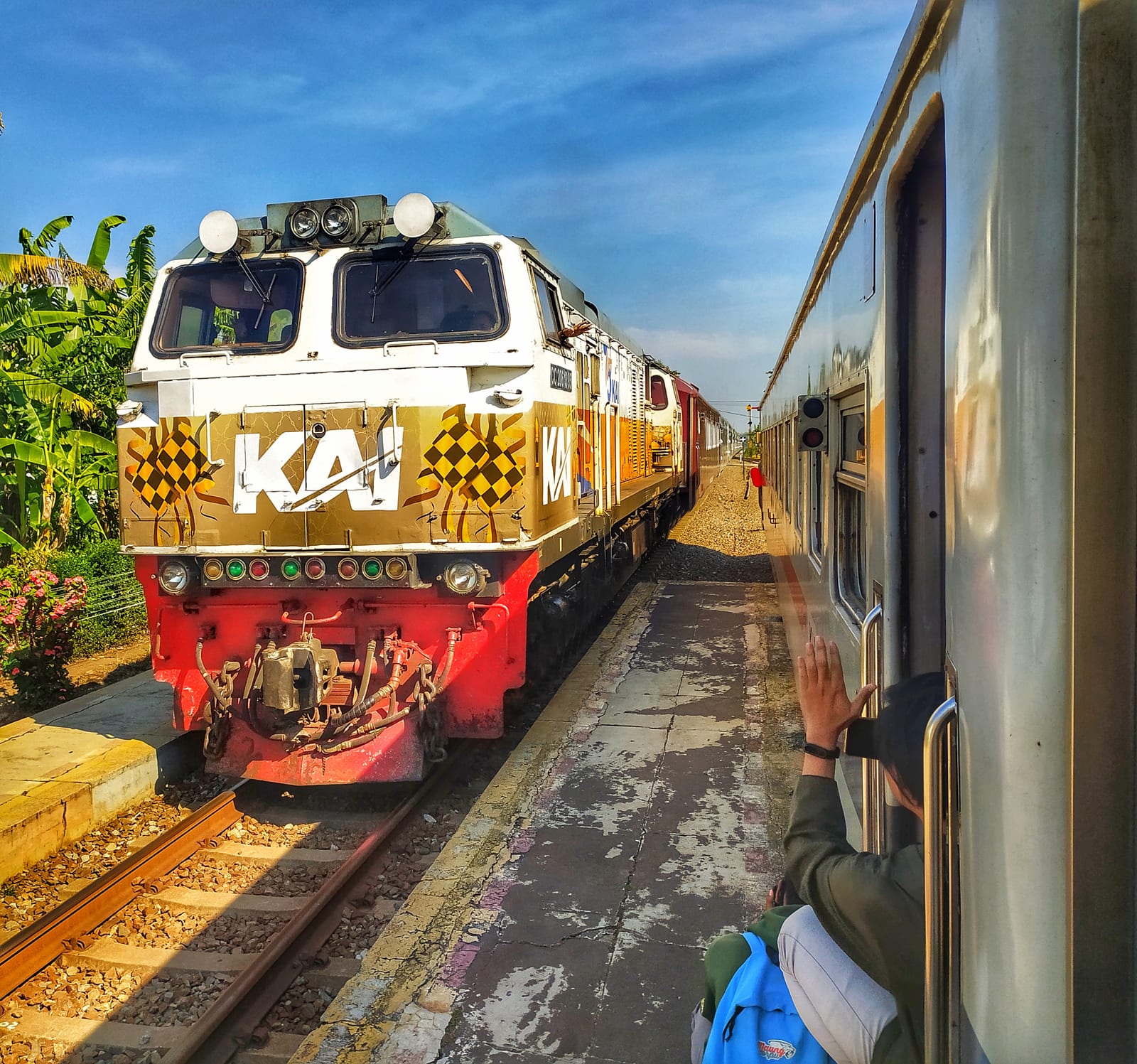
You ride it in comfort. The Argo Wilis is a proper Executive-class train — wide reclining seats, air-conditioning, hot food and coffee — and it carries one of KAI's coveted Panoramic carriages, with glass from floor to roof for the scenery. It is, in short, the classic Indonesian long-distance journey: modern, easy and cheap, but with a whole green island sliding past the window from breakfast to dusk.
The Journey
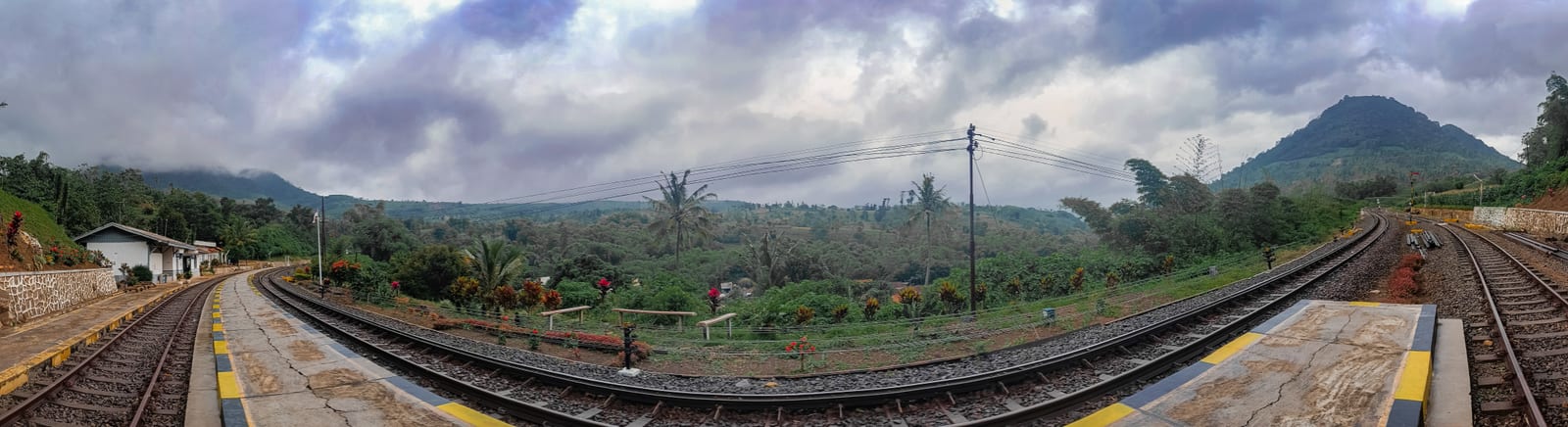
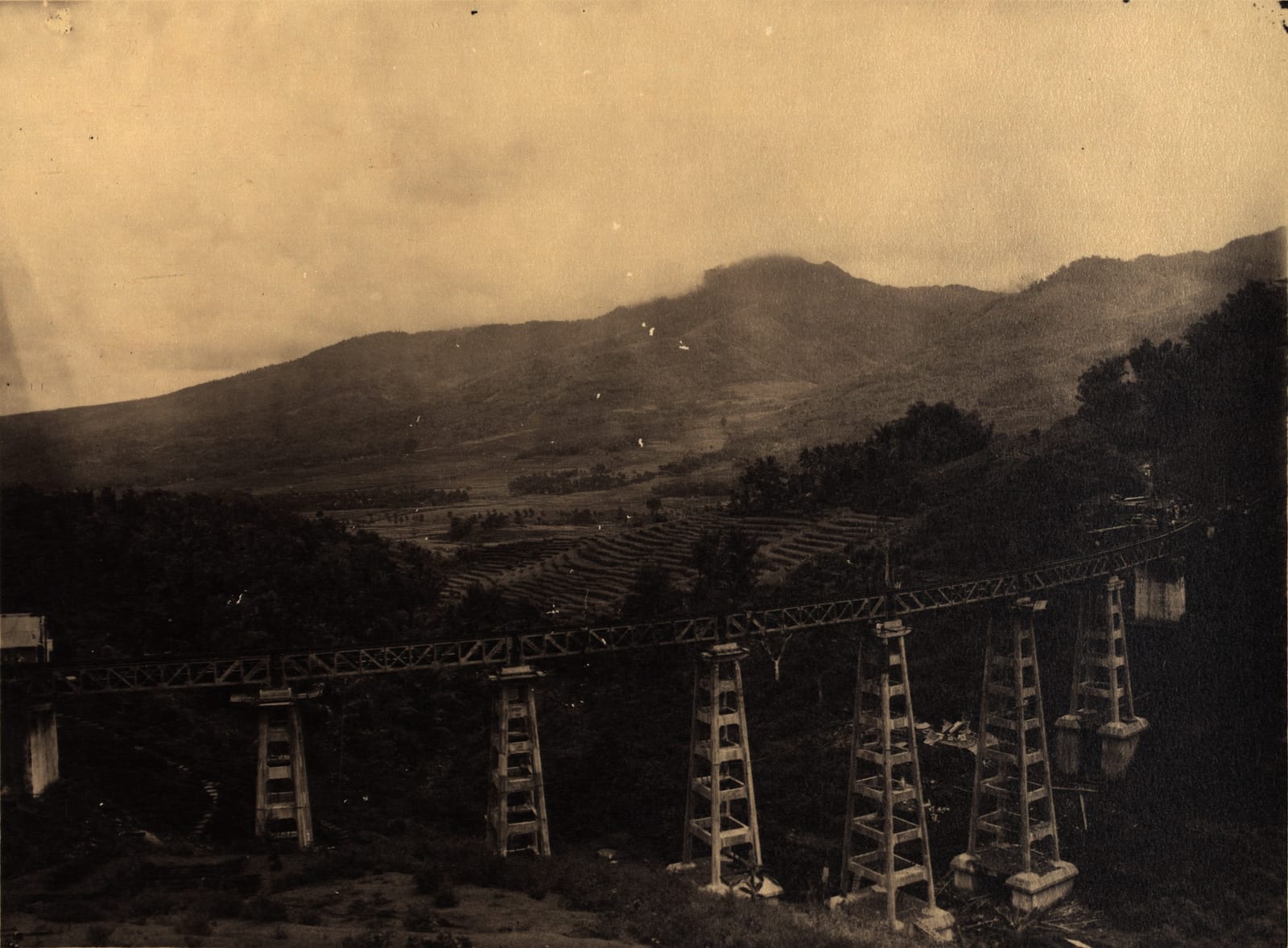
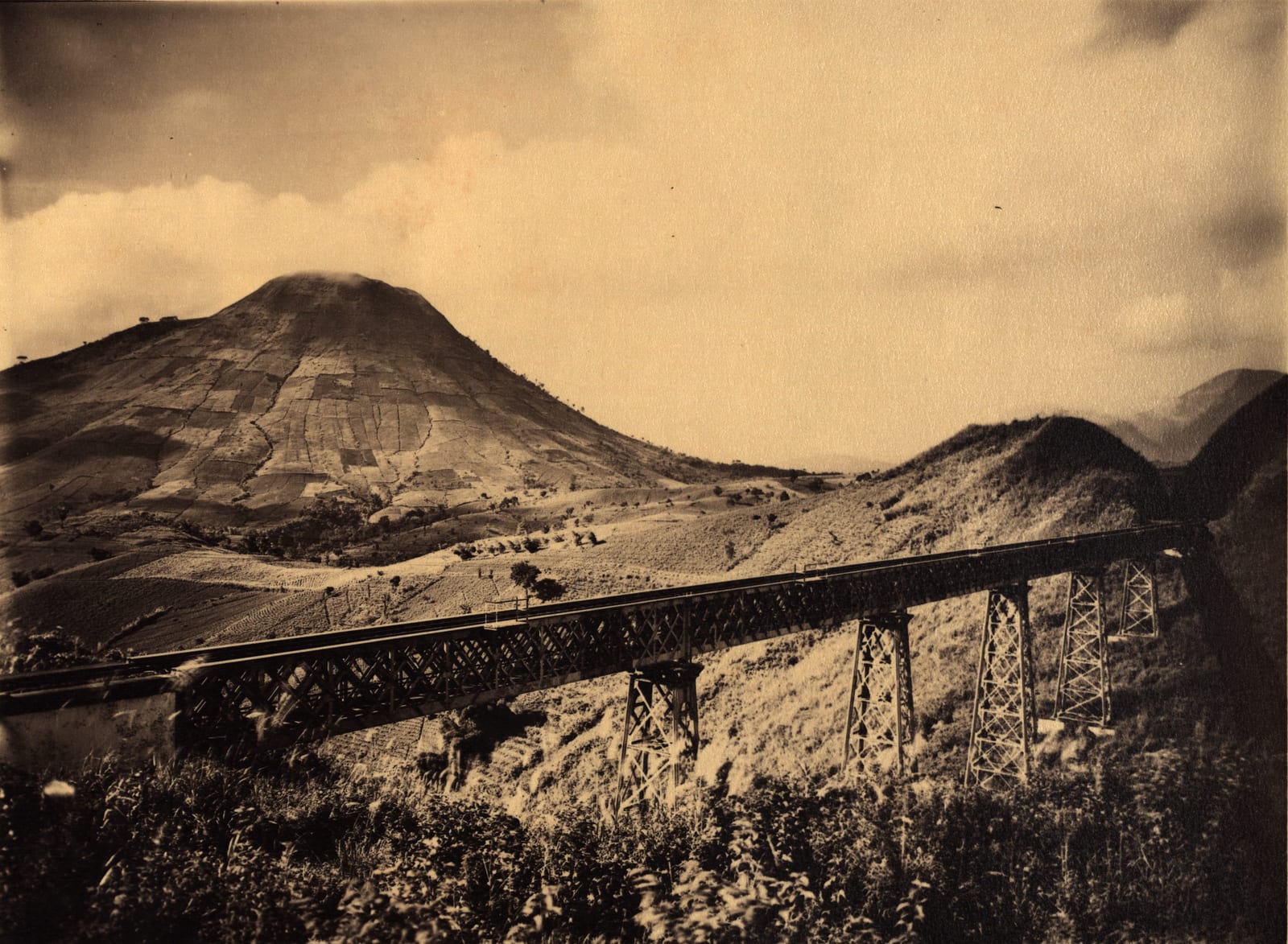
The Argo Wilis pulls out of Bandung at 07:35, and for the first ten minutes it is just a train leaving a city. Then the work begins. East of Bandung the line has to climb over the Nagreg saddle, and this is the stretch that people ride the whole journey for. The train slows to a grind, the track begins to curve and cling, and the country falls away below the windows: deep valleys stepped from top to bottom with rice terraces, hillsides of tea, banana and tobacco, and — when the cloud lifts — the perfect blue cones of West Java's volcanoes standing over it all. Around Lebakjero and Cipeundeuy the view opens on both sides at once, close enough that you look almost straight down into the paddies. It is continuous, and it is the reason the Argo Wilis has the quiet reputation it does.
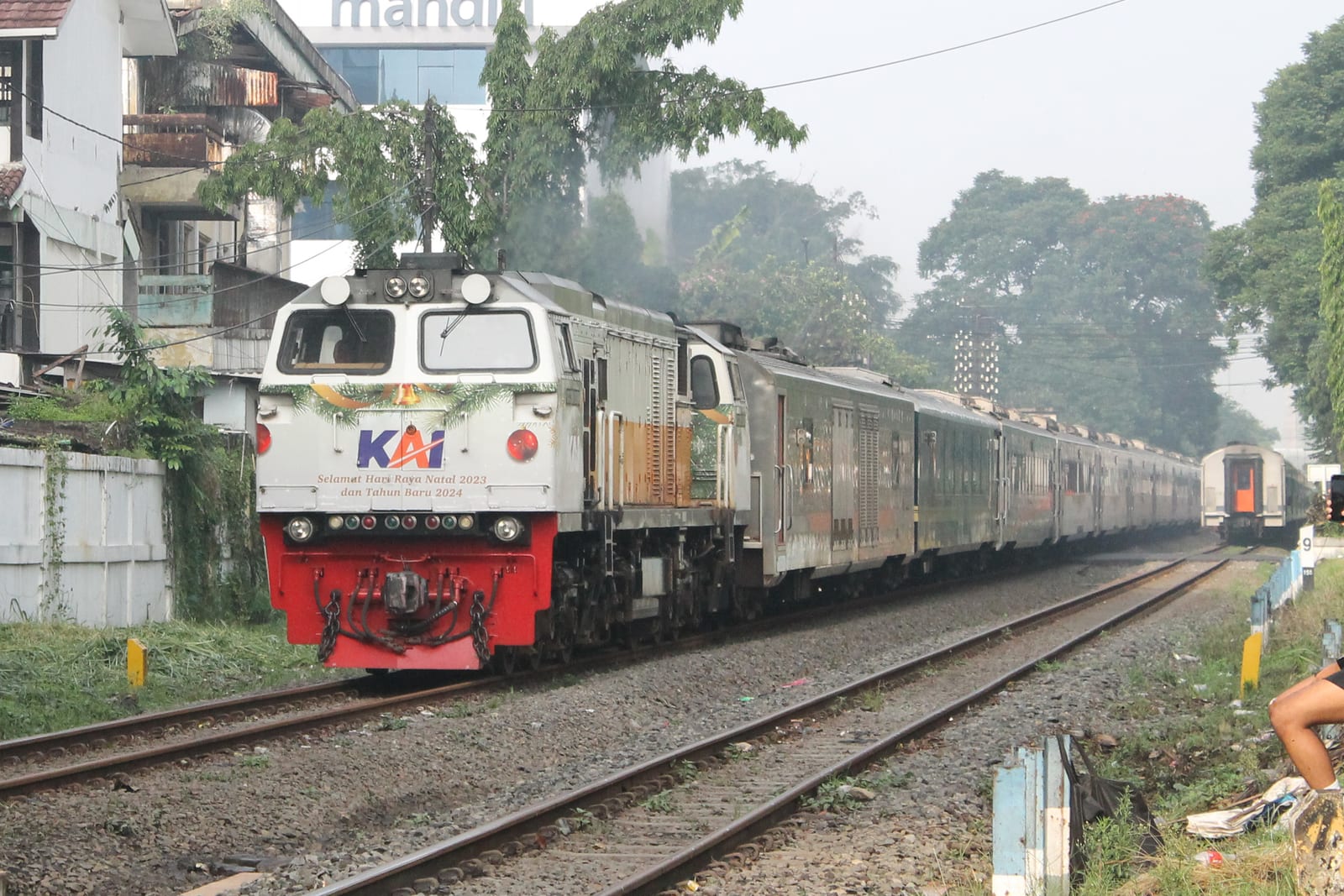
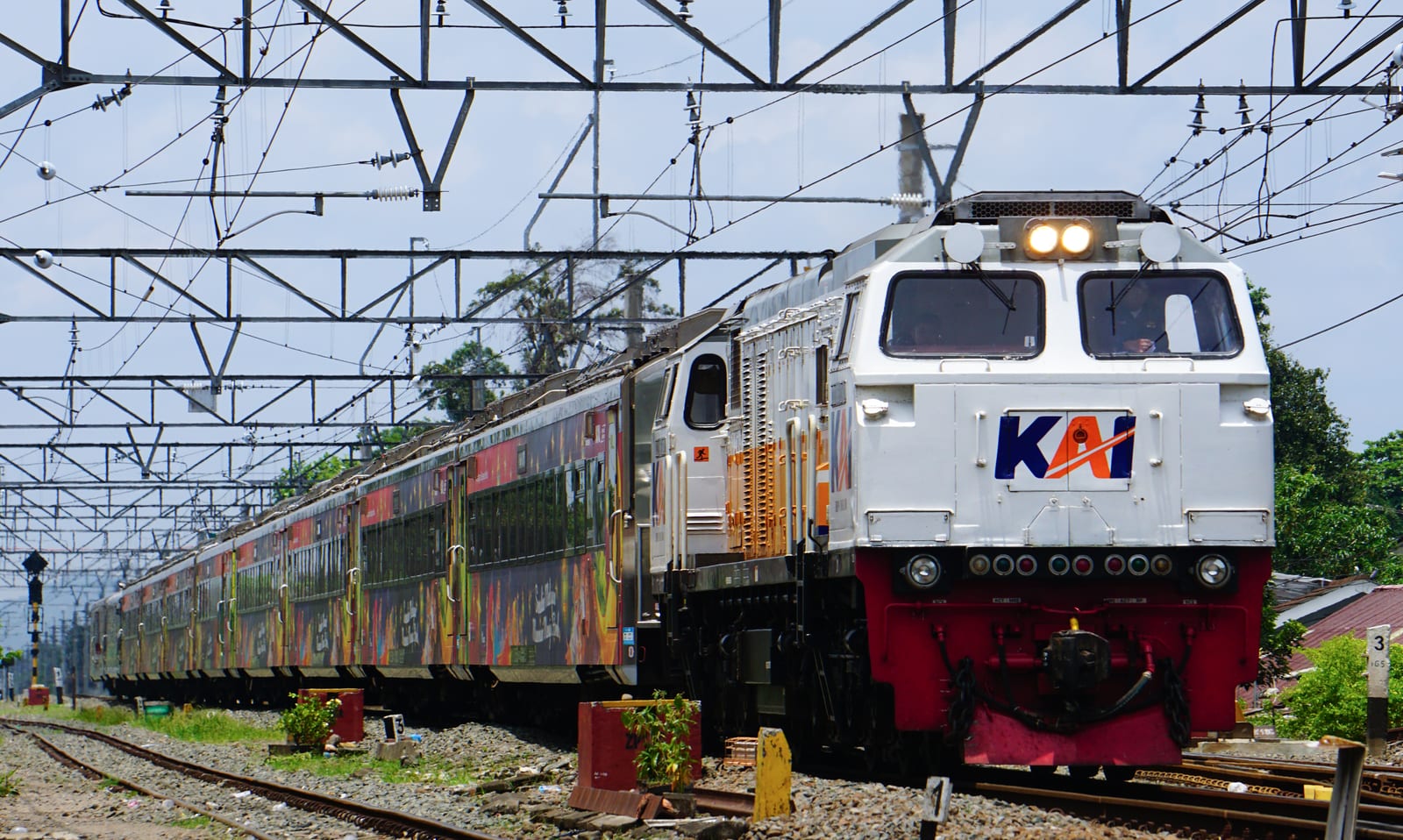
This is not new country for a railway. The Dutch drove the line through the Preanger highlands more than a century ago, on embankments and stone bridges that the train still runs over today; early photographs show the same curves, the same volcanoes, the same improbable steepness. The Argo Wilis is a modern express — hauled by a CC206 diesel, its stainless-steel coaches built by Indonesia's own PT INKA — but the route it takes is a Victorian feat of engineering, and it feels like one.
By late morning the highlands soften and the train settles into a steady rhythm across Central Java: Tasikmalaya, Banjar, the junction at Kroya, and then the historic royal cities — Yogyakarta, seat of a sultan and gateway to Borobudur, and Solo (Surakarta), the other old court city. This is the cultural heart of the island, and many travellers break the journey here rather than ride straight through. On through Madiun and the eastern plain the landscape flattens and industrialises, the volcanoes retreating to the horizon, until in the early evening the train rolls into Surabaya Gubeng, Indonesia's second city and the great port of the east.
You can, of course, do the whole thing in one go — and there is a real satisfaction in watching an entire island pass in a day. But the beauty of the Argo Wilis is that it is also a thread you can pick up and put down: ride the glorious highland section to Yogyakarta, stop for the temples, and rejoin it (or its overnight sister, the Turangga) to finish the crossing whenever you please.
Along the route
MAtra Pictures / Wikimedia Commons · CC BY-SA 4.0The Priangan highlands
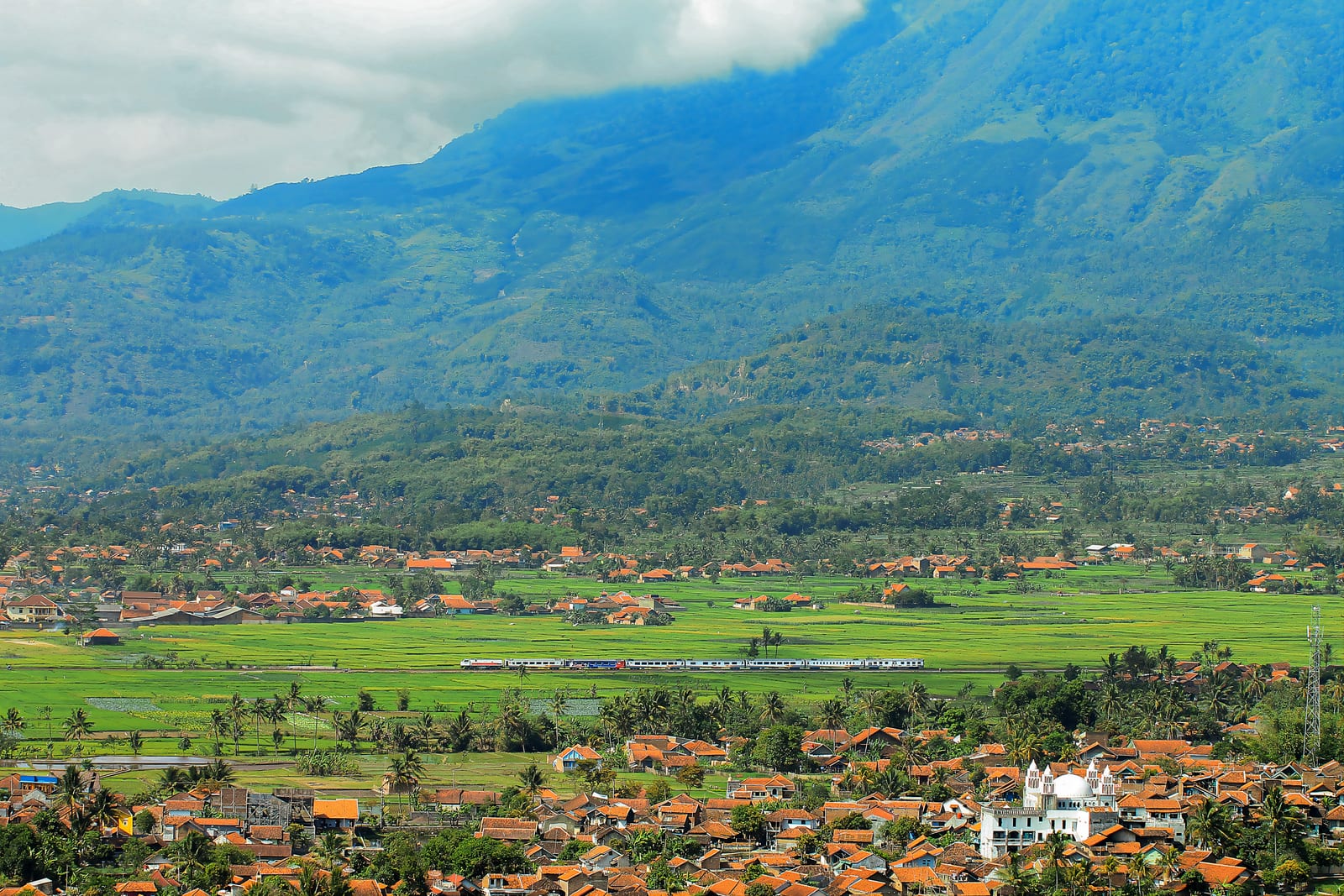
The heart of the ride is east of Bandung, up over the Nagreg incline into the Priangan highlands, where the scenery becomes almost continuous: emerald rice terraces stepping down steep valleys, tea slopes, and volcanoes on every side.KITLV, Leiden University Libraries / Wikimedia Commons · CC BY 4.0A whole island, in a day
The Argo Wilis crosses the width of Java — 696 kilometres, coast to coast, in about ten hours. Leave Bandung after breakfast and arrive in Surabaya for dinner, having watched three provinces scroll past the window.Slleong / Wikimedia Commons · CC0The panoramic carriage
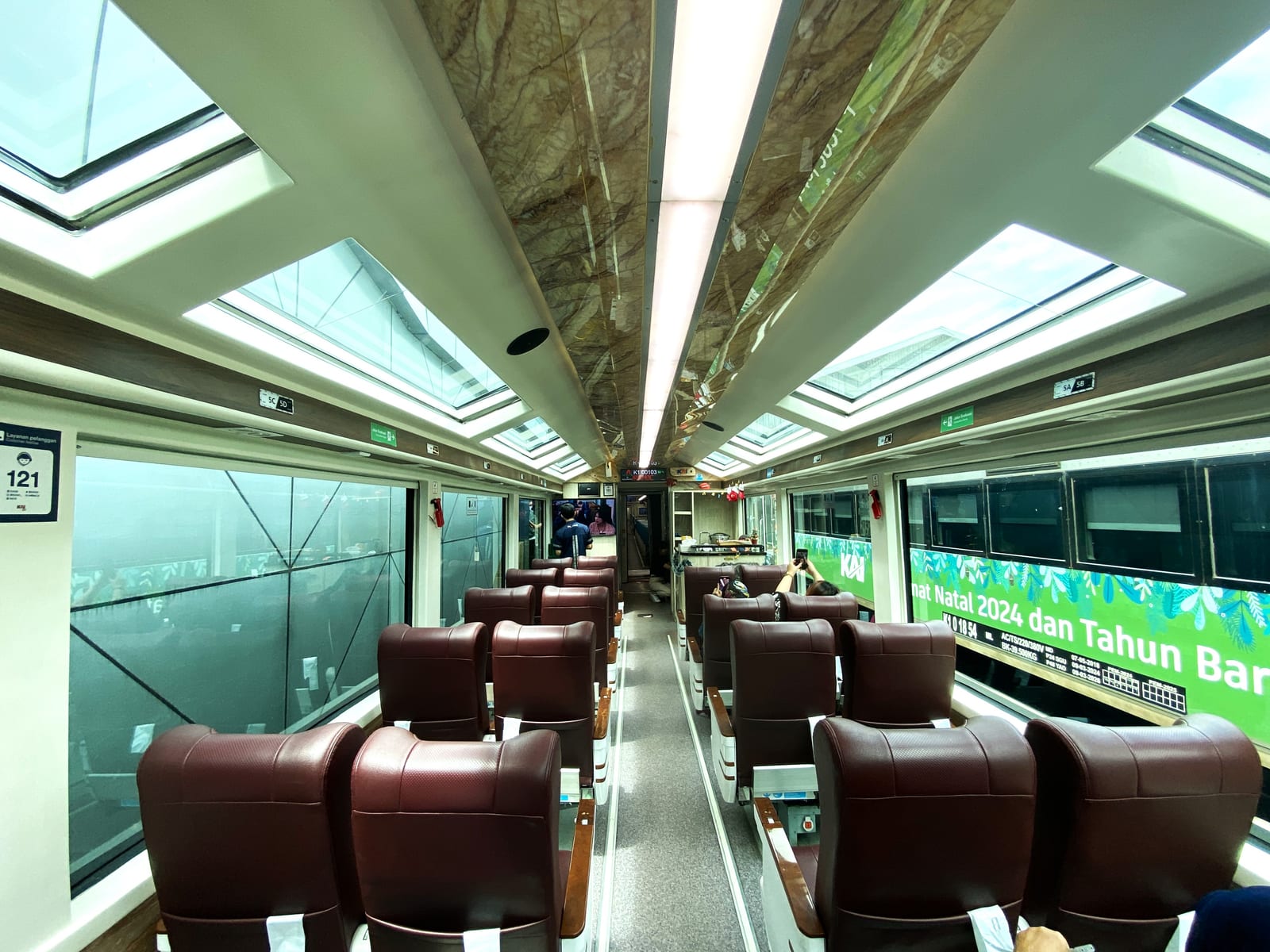
As well as its Executive coaches the Argo Wilis carries one of KAI's Panoramic cars — reclining seats under a curved roof, floor-to-ceiling windows and a glazed ceiling. Seats in it are limited and go fast.A bit of history
Culture & experiences along the way
Luthfi Ramadhan D / Wikimedia Commons · CC BY-SA 4.0Settling in for the long haul
This is a day to enjoy slowly. The Executive cabins are wide, cool and reclining, there is hot food and coffee brought round or from the buffet, and the pace — a gentle 70 to 120 km/h — is part of the pleasure. Bring a book you don't need, because the window will keep stealing your attention, and let the island unspool.NFarras / Wikimedia Commons · CC BY-SA 4.0The climb over Nagreg
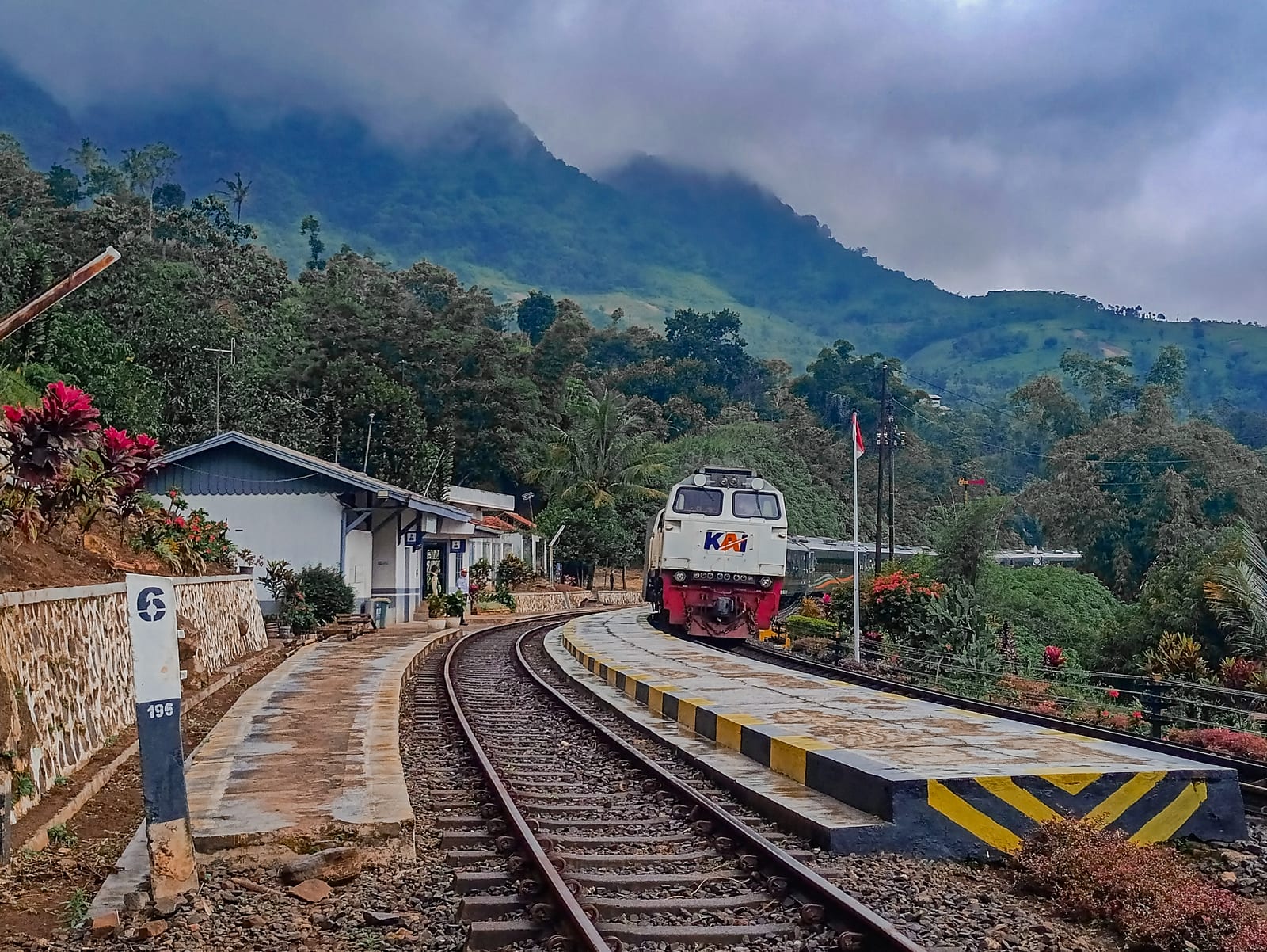
Watch for the couple of hours after Bandung. The train works hard up the Nagreg grade and threads the curves around Lebakjero and Cipeundeuy, where the track clings to hillsides above deep, terraced valleys and the view opens on both sides at once. Sit on the right leaving Bandung for the best of the drops. This is the stretch people ride the Argo Wilis for.NFarras / Wikimedia Commons · CC BY-SA 4.0Break the journey in Yogyakarta
You don't have to ride the full ten hours. Yogyakarta, roughly halfway, is the cultural soul of Java — the sultan's city, base for the great temples of Borobudur and Prambanan — and makes a perfect place to break the trip, spend a few days, and pick up the Argo Wilis again (or its night sister, the Turangga) to carry on east.Timetables
The Argo Wilis runs once a day in each direction, a single long daytime service (trains 9 and 10) timed to leave in the morning and arrive in the evening — so you spend the daylight hours crossing the island and see the scenery, rather than sleeping through it.
Departures (as of the 2026 timetable — confirm before travelling):
| Service | Departs | Arrives |
|---|---|---|
| Bandung → Surabaya Gubeng | 07:35 | 17:15 |
| Surabaya Gubeng → Bandung | 08:30 | 18:17 |
The full run takes about 9 hours 40 minutes, calling at Tasikmalaya, Cipeundeuy, Banjar, Kroya, Kutoarjo, Yogyakarta, Solo Balapan, Madiun, Jombang and Mojokerto along the way.
Good to know:
- Sit on the right leaving Bandung. For the great highland stretch east of Bandung — Nagreg, Lebakjero, Cipeundeuy — the best of the terraced valleys and drops are on the right-hand side going east (the left coming west).
- The Panoramic car sells out first. The single premium Panoramic carriage, with its full-height windows, is the most sought-after on the train; if you want it, book as far ahead as you can.
- Break the journey. Yogyakarta (about halfway) is the obvious place to stop for a few days; the Argo Wilis and the overnight Turangga between them give you a morning and an evening option to continue.
- If you'd rather sleep across Java, the Turangga runs the same Bandung–Surabaya route overnight — but you miss the scenery, which on this line is the whole point.
Times as of the 2026 timetable and subject to change. Confirm current schedules and fares with the operator, KAI, before you travel (see the Tickets section below).
Tickets
The Argo Wilis is operated by Kereta Api Indonesia (KAI), and tickets are easy to buy through the official KAI website and the "Access by KAI" app, at station counters, or via travel platforms such as Traveloka and Tiket.com. Foreign cards can be temperamental on the Indonesian sites; the app and the counters are the reliable fallbacks.
It is an Executive-class train, with a single premium Panoramic carriage. Fares are modest by international standards — a full day across Java in a wide reclining seat costs a fraction of what a comparable ride would elsewhere — with the Panoramic seats priced a little higher and worth it for the view. Booking opens weeks ahead, and the highland scenery, the dry-season months and the Panoramic car all push demand up, so book early if your dates are fixed.
Below, KAI's booking channel and its main site for live schedules, seat maps and fares.
Book your tickets
Argo Wilis · Bandung to Surabaya
The daytime express across Java
The full day-long run between Bandung and Surabaya Gubeng in KAI Executive class, through the Priangan highlands and the royal cities of central Java. One departure each way daily; a limited Panoramic carriage for the best views. Book through KAI.
Book Tickets (opens in a new tab, on Kereta Api Indonesia (KAI))via Kereta Api Indonesia (KAI)Timetable & booking · KAI
Departures, fares and the Panoramic car
Live schedules, fares and seat maps from Kereta Api Indonesia, including the sought-after Panoramic coach. The Argo Wilis runs once a day each way and its best seats sell out early — book ahead, especially in the dry season and around holidays.
Book Tickets (opens in a new tab, on Kereta Api Indonesia (KAI))via Kereta Api Indonesia (KAI)Rail Passes
No rail pass covers the Argo Wilis. Interrail and Eurail are European schemes, and Indonesia is not among the 33 countries in Interrail's list of covered railway companies. KAI sells each journey as a reserved ticket, through its website and app, at the station or through travel platforms.
Checked October 2026 against Interrail's list of railway companies (opens in a new tab).
Places to Visit
The Argo Wilis is a string threaded through the best of Java, and almost every stop is worth getting off for — the highland cities at either end, the Priangan in between, and in the middle the two greatest monuments in Indonesia. Neighbouring Solo (Surakarta), another of the train's stops, offers a quieter, more courtly version of the royal Javanese culture you find in Yogyakarta.
Breaking the journey is easy and worth doing: a night in Yogya turns one very long ride into two good ones. And Surabaya at the eastern end isn't as pretty as Yogya, but it is the real, unvarnished Java — a fitting place to step off after a day of watching the whole island go by, and the way on toward Mount Bromo and the volcanoes of the far east.
 Sabung.hamster / Wikimedia Commons · CC BY-SA 4.0 · cropped
Bandung
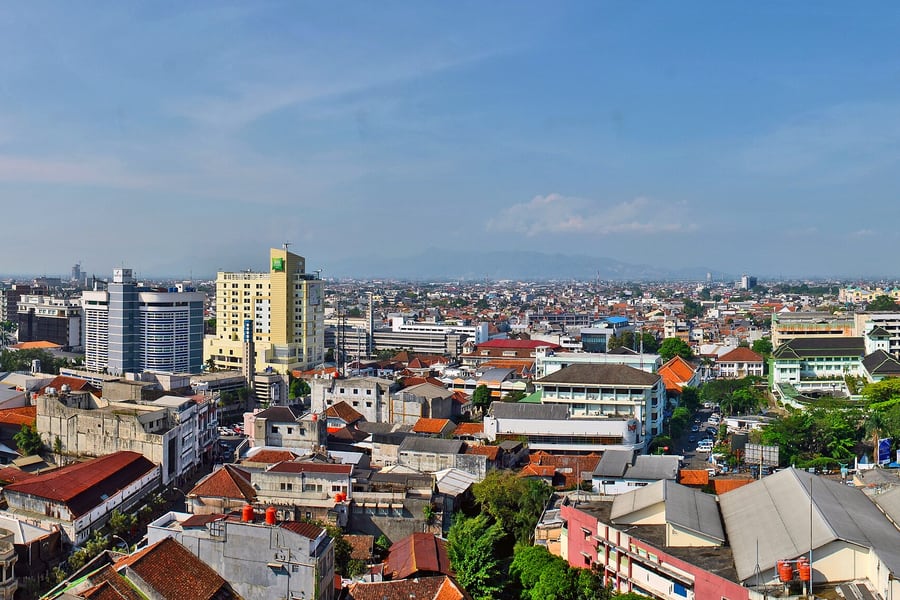
The line's western end, and a good reason to start a day early. Bandung is a cool highland city in a ring of volcanoes, about 700 metres up, with a centre full of 1920s and 30s architecture and a food reputation many Indonesians rate the best on Java. Tea plantations and the Tangkuban Perahu volcano sit on its doorstep. The Argo Wilis leaves at 07:35, so it is worth a night here rather than a dawn dash from Jakarta. Kerildoank / Wikimedia Commons · CC BY-SA 4.0 · cropped
The Priangan highlands
The scenic heart of the ride, and a destination in its own right. For the first hours out of Bandung the train works through the Priangan — the Parahyangan, "abode of the gods" — climbing the Nagreg incline and swinging around Lebakjero and Cipeundeuy between terraced valleys, tea gardens and volcano cones. Most of it is best simply watched from the window, but the estates around Rancabali and Ciwidey take visitors.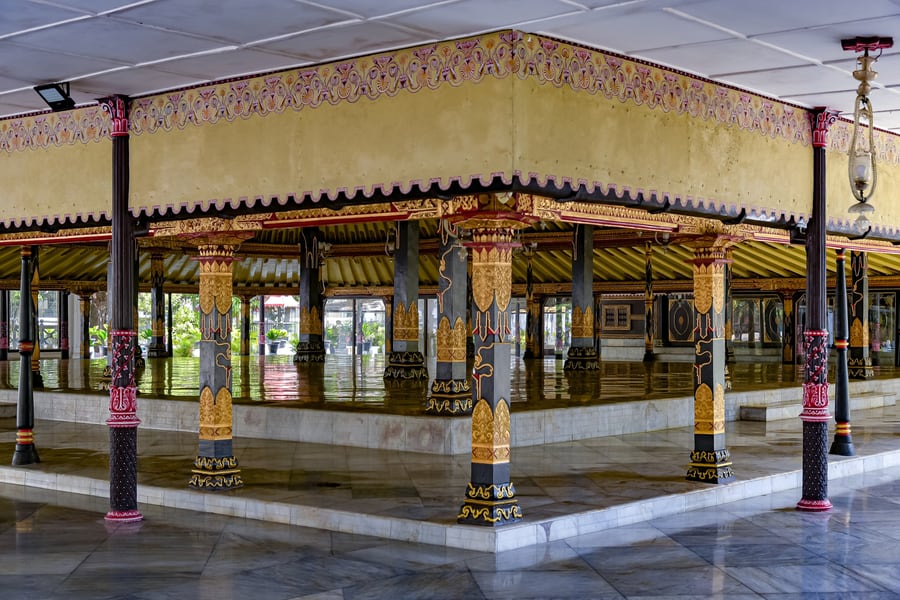 Jorge Franganillo / Wikimedia Commons · CC BY 2.0 · cropped
Yogyakarta
The great prize in the middle of the run, and worth breaking the journey for. "Yogya" is the cultural capital of Java and still a sultanate — the Kraton, built for Hamengkubuwono I in 1755–56, is a working court where gamelan, classical dance and wayang are performed in the pavilions. Around it are the water castle of Taman Sari, batik and silver workshops, and the street food of Malioboro.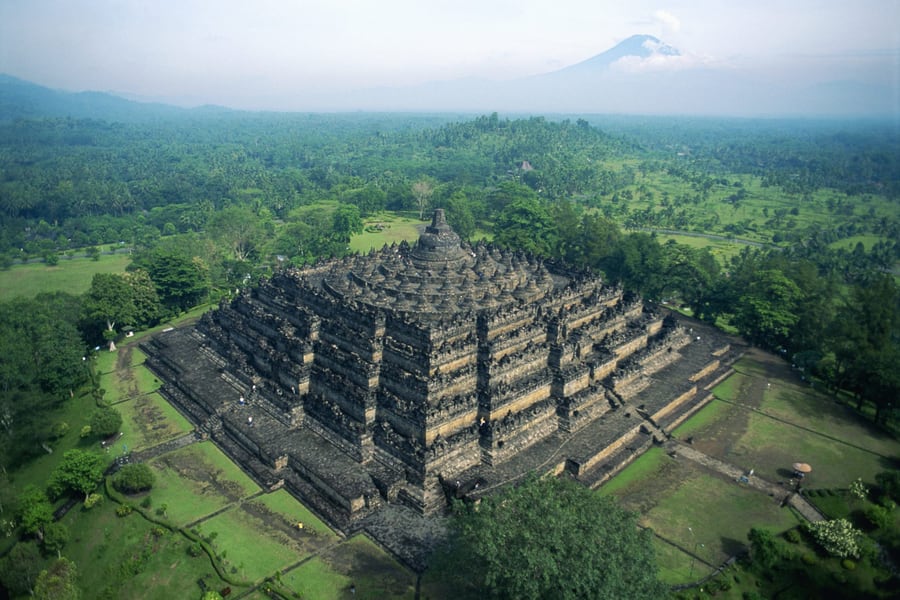 Zaenulihsan91 / Wikimedia Commons · CC BY-SA 4.0 · cropped
Borobudur
An hour or so northwest of Yogyakarta: a ninth-century Buddhist monument raised by the Sailendra kings on a base 123 metres square, carrying 504 Buddha figures, 72 perforated stupas on the upper terraces and 2,672 relief panels. Raffles found it under ash and jungle in 1814; UNESCO listed it in 1991. Dawn, with mist lying in the fields below, is the classic hour — climbing the terraces is capped now and needs a booked slot.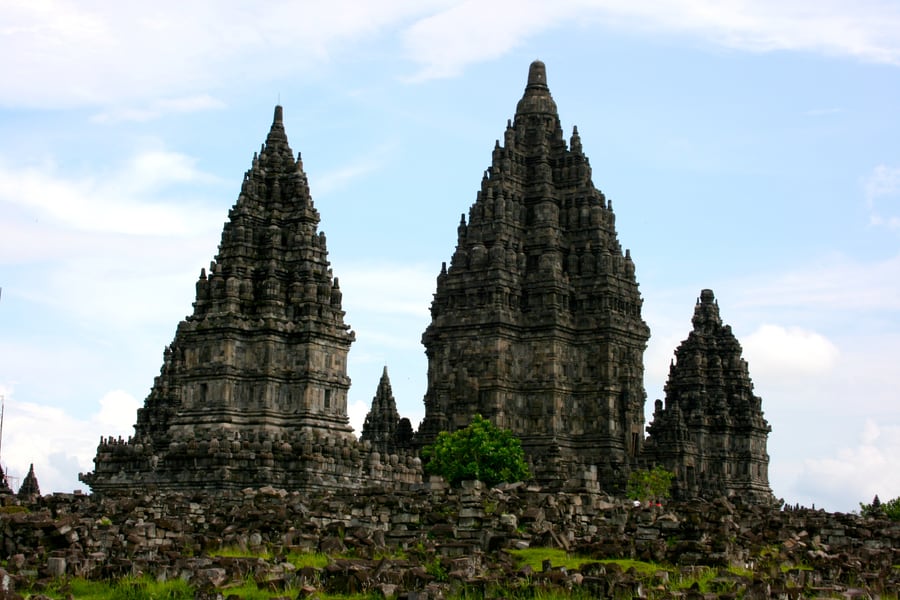 Anthony Cramp / Wikimedia Commons · CC BY 2.0 · cropped
Prambanan
Borobudur's Hindu answer, and a short drive from Yogyakarta out along the Solo road. Begun about 850 under Rakai Pikatan and enlarged by his successors, it is a cluster of tall, sharply carved towers dedicated to Shiva, Vishnu and Brahma, the central Shiva shrine standing 47 metres. Of 240 original structures the eight main temples have been rebuilt, and just six of 224 minor shrines. UNESCO listed it in 1991, alongside Borobudur.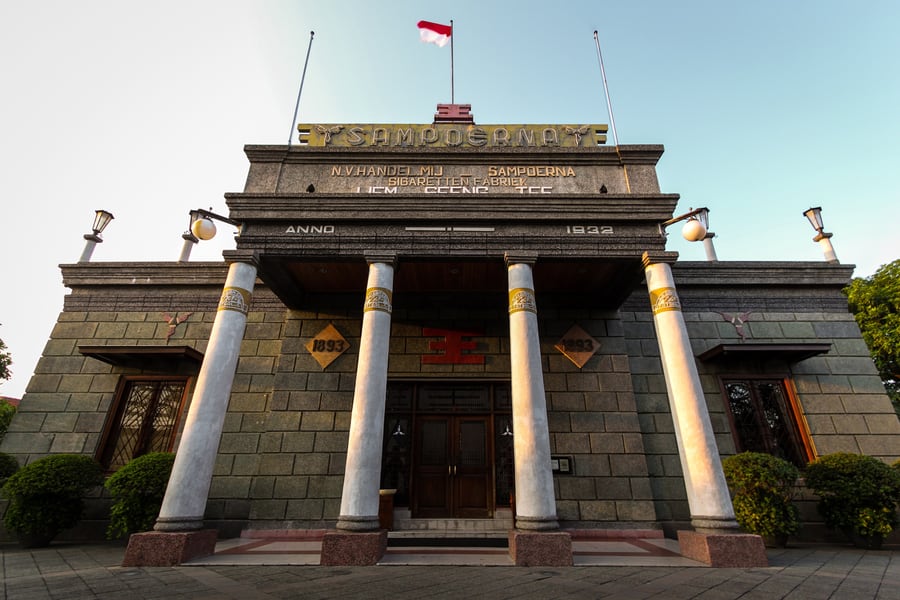 consigliere ivan / Wikimedia Commons · CC BY-SA 2.0 · cropped
Surabaya
A big, hot, working port — Indonesia's second city, and not pretty the way Yogya is. What it has is history and appetite: a proud independence record, an Arab and Chinese old quarter, and the House of Sampoerna, an 1862 Dutch orphanage that Liem Seeng Tee turned into a kretek factory in 1932 and which has been a museum since 2003. It is also the jumping-off point for Mount Bromo.Where to Sleep
Because the Argo Wilis invites you to break the journey, the question of where to sleep is really about which of Java's cities to linger in — and all of them are well supplied at every budget.
In Bandung, at the start, the grand old Dutch hotels — the Preanger and the Savoy Homann on the central Asia–Afrika street — are living Art Deco landmarks, surrounded by modern business hotels and, up toward Dago and Lembang, cooler resort places with valley views.
Yogyakarta, the natural stopover, has the widest range of all: characterful boutique hotels and guesthouses in the streets around the kraton and Prawirotaman, big international names near Malioboro, and beautiful heritage retreats out toward Borobudur, where you can wake close to the temple for a dawn visit. Solo offers quieter, often cheaper equivalents.
In Surabaya, at the end of the line, the international chains cluster in the central business and shopping districts; there are also a few atmospheric heritage hotels recalling the colonial port era. Wherever you plan to stop, book ahead around Indonesian public holidays and the long Idul Fitri season, when Javanese trains and cities alike fill to capacity — and reserve your Argo Wilis seat, especially the Panoramic car, at the same time.
Questions or corrections
Planning this trip and stuck on something, or spotted a time, fare or detail that has changed? Send us a message about The Argo Wilis. We read every one, and we update this page when something has changed.