Arica to Central
EL GUILLE! / Wikimedia Commons · CC BY 2.0 · 2017
- Distance70 km of a 440 km line
- Duration2 hr 50 min up · a day out and back
- Best seasonA handful of dated departures a year
Introduction
The Arica–La Paz railway was built as a treaty obligation. Under the Treaty of Peace and Friendship that Chile and Bolivia signed in 1904, Chile undertook to build a railway from its port of Arica to the Bolivian capital, and it opened on 13 May 1913: 440 kilometres of metre gauge, climbing from the Pacific to a summit of 4,257 metres at General Lagos before crossing into Bolivia. It was the shortest route between the ocean and the altiplano, and for most of the twentieth century it carried passengers as well as ore.
It does not carry them now, except on a few days a year. The last regular passenger trains ran in 1996, and today EFE, Chile's state railway, sells only excursions out of Arica: half-day trips up the Lluta valley to the village of Poconchile, and a smaller number of full-day and evening trains that climb on to Central, an empty railway settlement 70 kilometres inland and 1,400 metres up. Those are the journeys this page describes. They are short, guided and infrequent, and they are the only way to ride any part of this line.
The Journey
Every excursion starts at Estación Chinchorro, in the old railway workshops on Calle Brasil in Arica, which EFE restored in 2024 and opens early so passengers can see the small museum and the archaeology found on the site before the train leaves. The coast here is Chinchorro country — the people who, from around 5450 BCE, made the oldest known deliberate mummies in the world — and the guides begin with them.
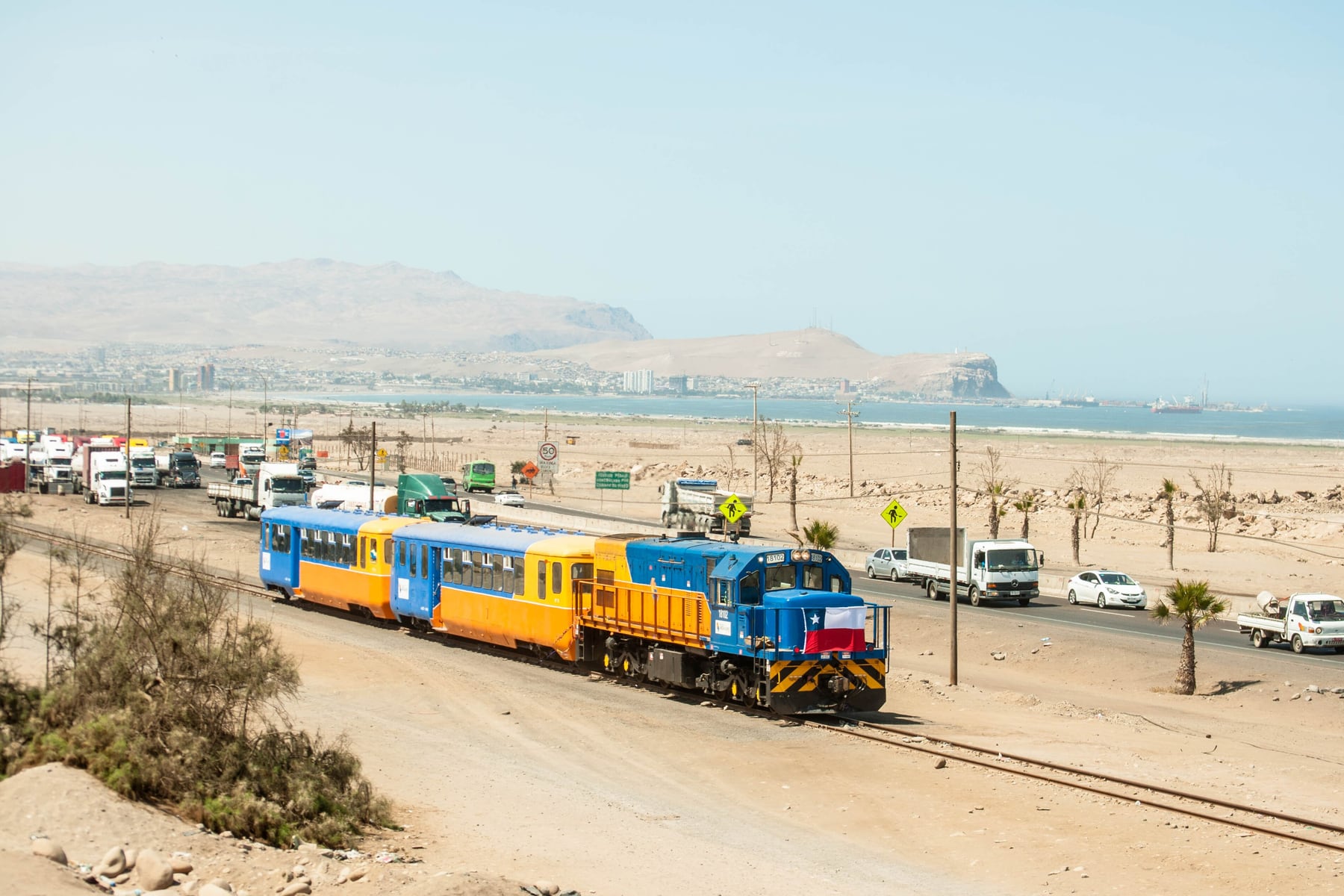
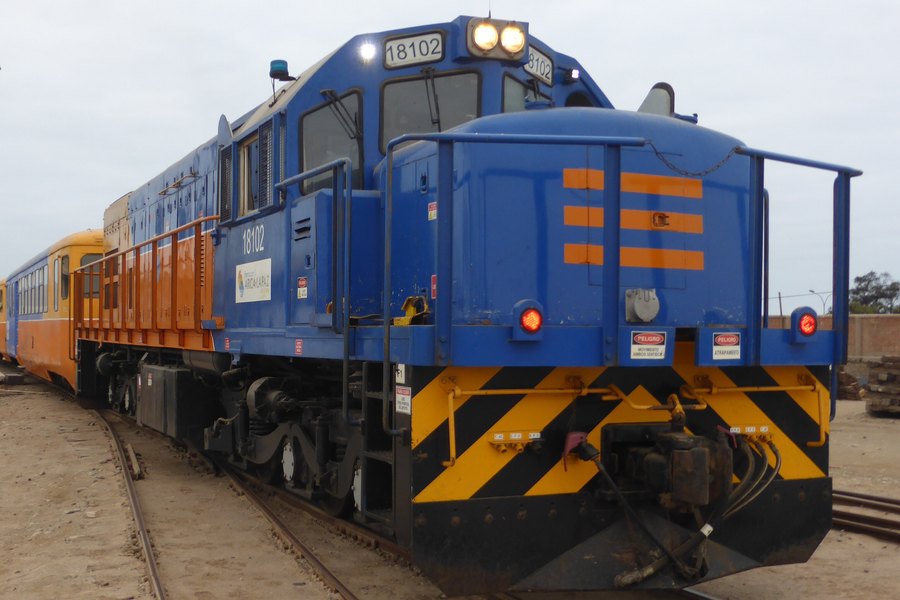
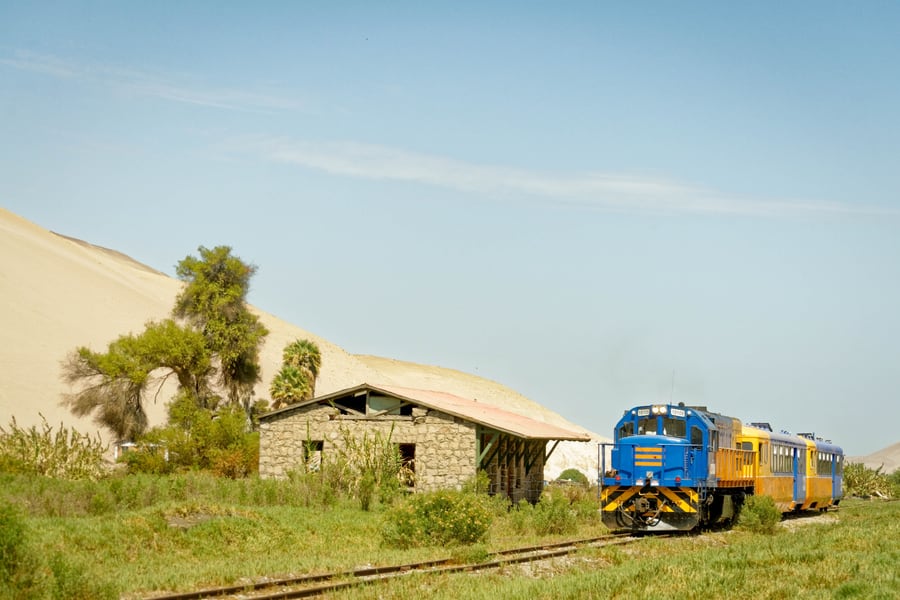
The train is a General Electric diesel in EFE's blue and orange with two coaches built by Schindler in Switzerland in the mid-1950s for Chile's state railway. It leaves the city across the coastal plain, beside the highway and its lorries bound for Tacna and La Paz, and turns inland up the valley of the Lluta.
The Lluta valley
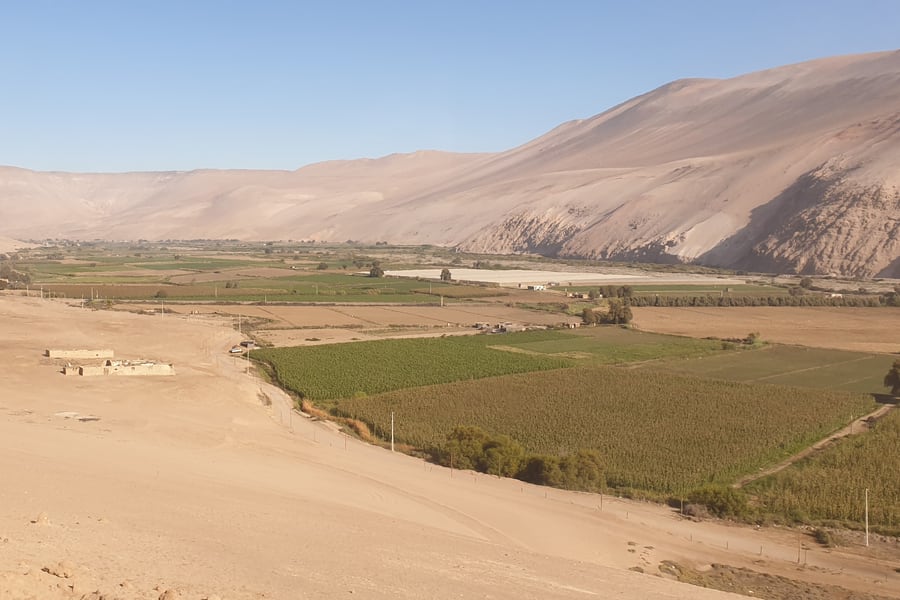
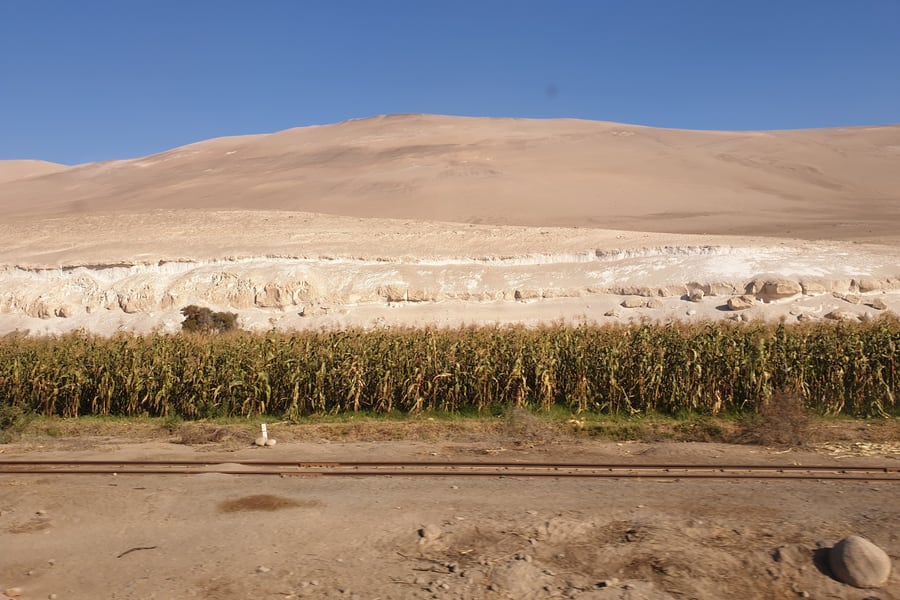
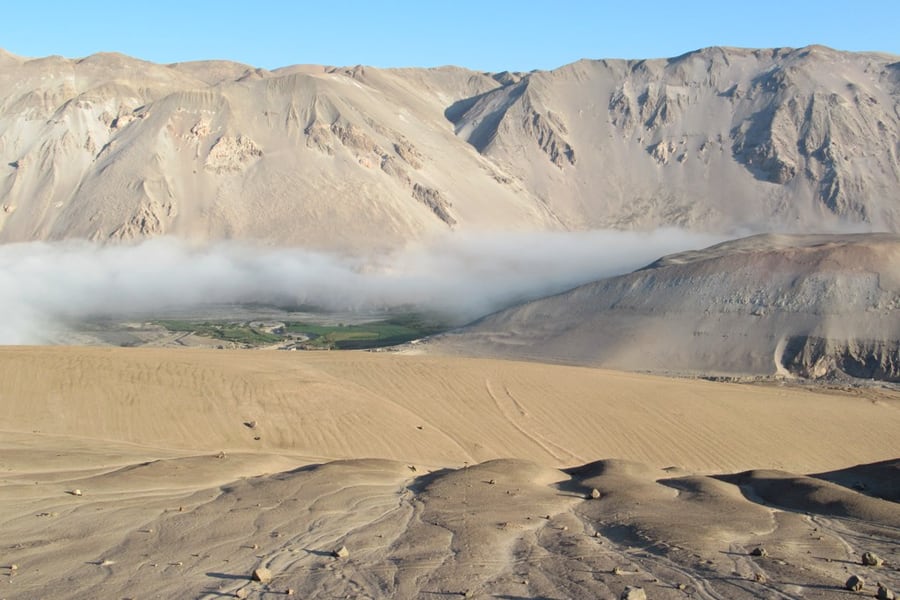
For most of the way to Poconchile the railway runs along the valley floor, and the valley is the whole show: a flat ribbon of irrigated fields, mostly maize, between hills of bare sand and rock where nothing grows at all. The line passes the Colcas de Huaylacán, storehouses of the Arica culture later used by the Inca, and on the valley's south wall there are panels of geoglyphs — figures laid out on the hillside — which the guides point out from the train. Depending on the day, the train stops either at the colcas or at Rosario, an old stone station where valley producers set out stalls.
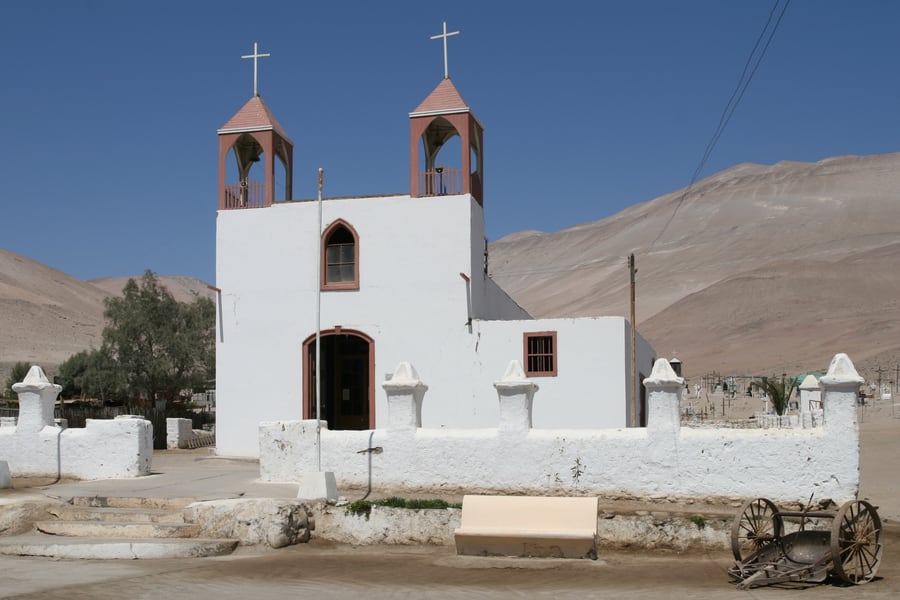
Poconchile, at kilometre 36, is where the half-day trains turn round. The village has a guided walk to its adobe church of San Jerónimo, a national monument, and time for lunch.
The climb to Central
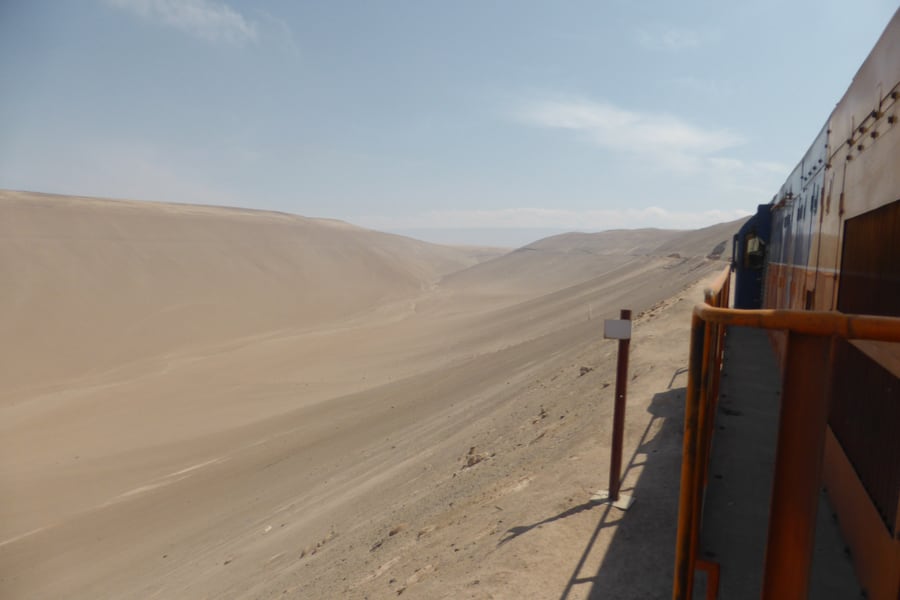
The Central trains go on. Beyond the valley floor the line climbs on a grade of about three per cent, out of the green and into open desert, with the Lluta laid out below, to reach 1,400 metres. Central itself, at kilometre 70, was opened with the railway in 1913 and once housed more than six hundred people; today it houses nobody. It stood at the foot of the rack section, where until 1968 trains climbed on a cog rail to Puquios and the altiplano. The guide walks passengers round the station master's house, the school and the amphitheatre before the train heads back down, stopping at Poconchile for lunch.
Beyond Central
The track carries on up the rack section and over the altiplano to Visviri on the Bolivian border, and it is in working order: freight trains to Bolivia resumed in May 2021. In December 2025 EFE ran a pilot passenger train over the high section between Alcérreca and Visviri, the first passenger train to reach Visviri in twenty-eight years, to test a future tourist service. Nothing is on sale yet.
Along the route
 EL GUILLE! / Wikimedia Commons · CC BY 2.0 · 2017 · cropped
Rosario, and what the valley sells
The Poconchile trains stop at Rosario, an old stone station under a sand slope, where valley producers set out stalls for the passengers. On some days the stop is instead the Colcas de Huaylacán, storehouses of the Arica culture later used by the Inca.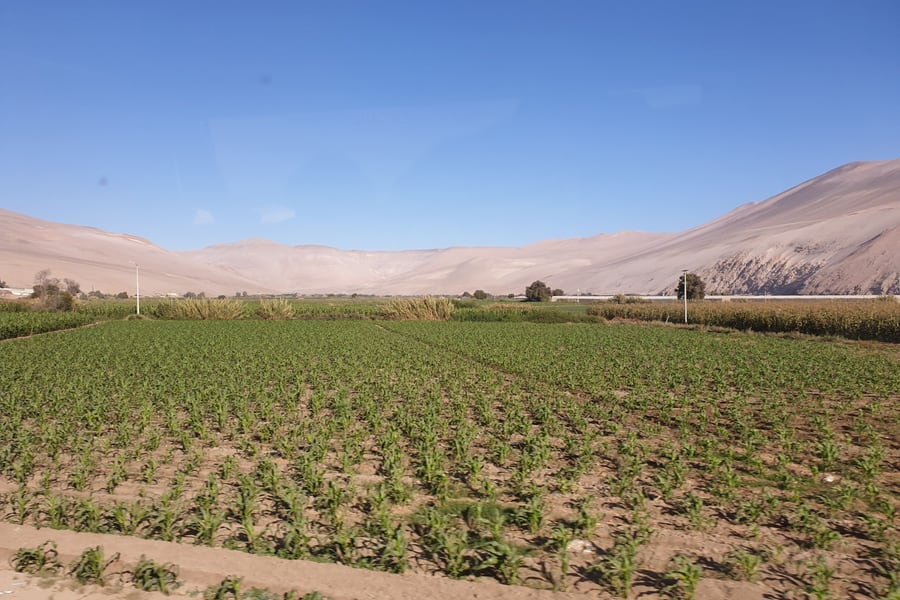 S. Rae / Wikimedia Commons · CC BY 2.0 · 2019 · cropped
Maize in the desert
The Lluta is a narrow strip of irrigation between bare desert hills, and along the line it grows maize. EFE's guides tell the valley's human story through that one plant, essential to the Andean world, and in places the fields reach the rails.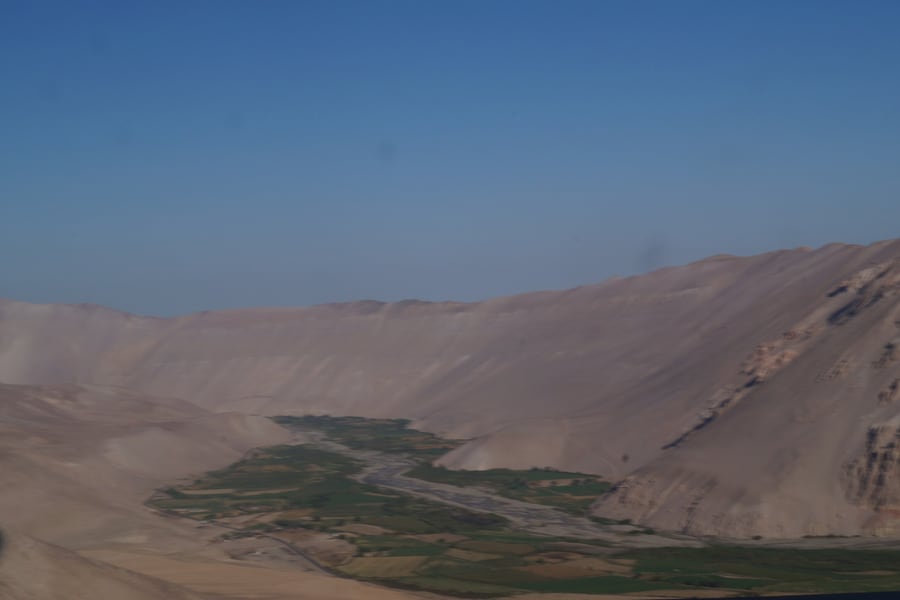 Nereidas / Wikimedia Commons · CC BY-SA 3.0 · 2013 · cropped
Three per cent, and the valley below
Only the Central trains go on beyond Poconchile, and they climb to 1,400 metres on a grade of about three per cent, which for a railway without a rack is steep. The reward is the one EFE promises: the green of the Lluta seen from high above it.A bit of history
Culture & experiences along the way
 Yastay / Wikimedia Commons · CC BY-SA 4.0 · 2015 · cropped
The oldest mummies in the world
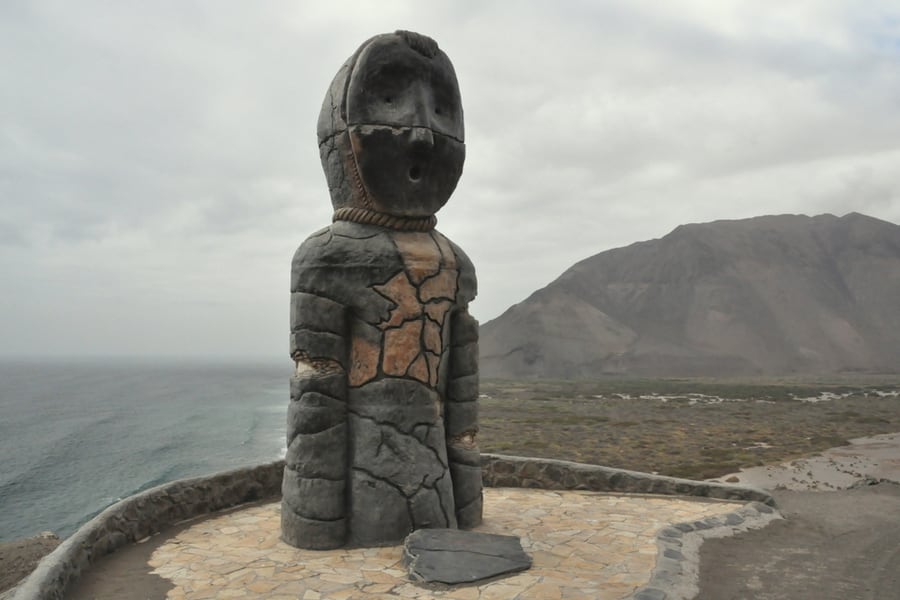
The Chinchorro fished and foraged on this coast from about 5450 BCE, and their cemeteries hold the oldest known deliberately mummified bodies in the world. UNESCO inscribed three of their sites in 2021: two in Arica, below the Morro and at Colón 10, and one at the mouth of the Camarones, where the Momia Guardiana stands over the sea.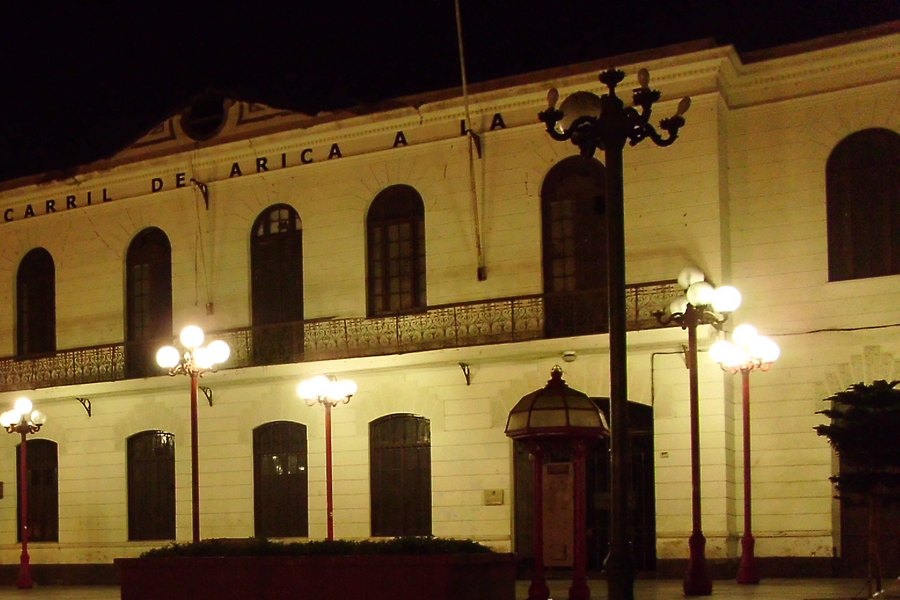 Lorna-Lorna / Wikimedia Commons · CC BY-SA 3.0 · 2012 · cropped
The station the trains no longer use
Arica's passenger station on Calle 21 de Mayo opened with the line in 1913, built by Sir John Jackson's company in a plain neoclassical style from stone quarried at Comanche in Bolivia. It closed to trains in 1982 and has been a national monument since 1990; the railway's name still runs across the front.Timetables
There is no regular timetable. EFE runs excursions from Arica on dated days, and the four below are the only departures on sale for the rest of 2026. All leave from Estación Chinchorro, Calle Brasil 117; EFE asks passengers to arrive 45 minutes before departure.
The dates, trips and times are from EFE Arica's own ticket portal, read in September 2026, and the intermediate times from the operator's itinerary for each trip.
| Date | Trip | Leaves Arica | Back in Arica |
|---|---|---|---|
| Fri 2 October | Tren de las Estrellas, to Central | 18:30 | 02:00 |
| Fri 13 November | Tren de las Estrellas, to Central | 18:30 | 02:00 — showing no availability |
| Sat 28 November | Poconchile, for the valley's Fiesta Costumbrista | 11:00 | 17:20 |
| Sat 5 December | Arica to Central | 08:30 | 17:00 |
Arica to Central, 5 December
| Station | Time |
|---|---|
| Arica (Chinchorro) | dep 08:30 |
| Central | arr 11:20 · guided visit · dep 12:50 |
| Poconchile | arr 14:10 · lunch · dep 15:40 |
| Arica (Chinchorro) | arr 17:00 |
Poconchile, 28 November
The festival day runs an hour later than the usual Poconchile trip: out at 11:00, at Rosario for the Fiesta Costumbrista at 12:15, into Poconchile at 13:20, leaving again at 15:40 with a stop at Rosario at 16:00, and back in Arica at 17:20. On an ordinary Poconchile day the train leaves at 10:00, stops at Rosario or the Colcas de Huaylacán at 11:15, reaches Poconchile at 12:20 and is back in Arica at 16:20.
Tren de las Estrellas
Out at 18:30, at Central at 21:20 for an astronomy session with telescopes, away again at 23:00 and back in Arica at 02:00.
A fourth trip, to the Hacienda Eco-Truly ecological community in the valley, is listed by EFE with its dates still to be confirmed.
Departures are published by the operator: EFE · Servicios turísticos (opens in a new tab).
Tickets
Tickets are sold online by EFE Arica, one date at a time, with numbered seats, and places are limited: the November Tren de las Estrellas was already showing no availability in September. Each trip has three fares — adult, and a lower one shared by children and seniors — and the price covers the train, the guide, and a snack, a cereal bar and a bottle of water handed out on board.
Lunch at Poconchile and anything bought at Central's café is extra, and EFE advises carrying cash, since card payment depends on a mobile signal in the desert. There is one class.
Book your tickets
 Till Niermann / Wikimedia Commons · CC BY-SA 3.0 · 2008 · cropped
Arica to Poconchile
CLP 16,900 adult · CLP 12,900 child or senior
The half-day run up the Lluta valley to Poconchile, with the stop at Rosario and time for lunch and the church.
Book Tickets (opens in a new tab, on efe.cl)via efe.cl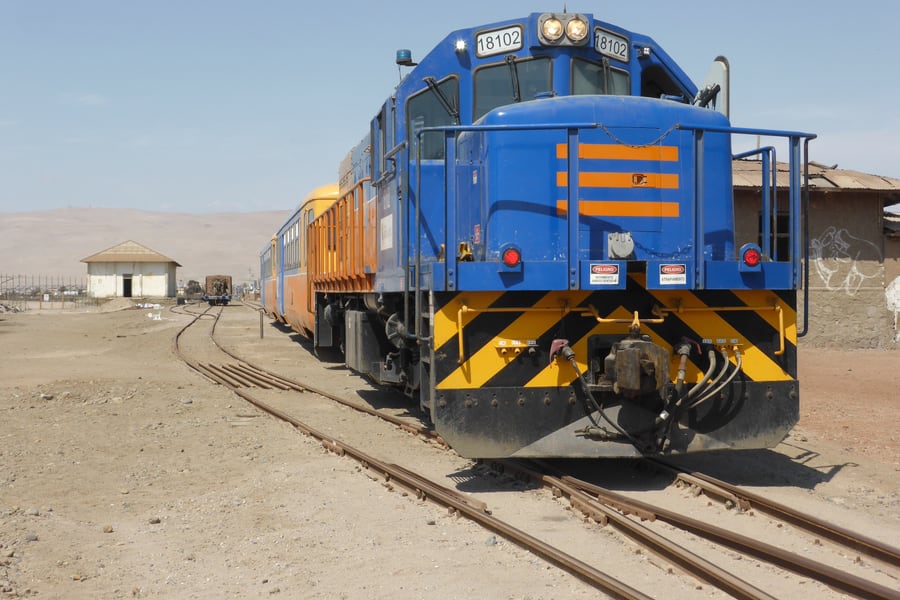 CARLOS TEIXIDOR CADENAS / Wikimedia Commons · CC BY-SA 4.0 · 2018 · cropped
Arica to Central
CLP 23,990 adult · CLP 20,990 child or senior
The full climb to Central at 1,400 metres, a guided walk round the empty station, and lunch at Poconchile on the way down.
Book Tickets (opens in a new tab, on efe.cl)via efe.cl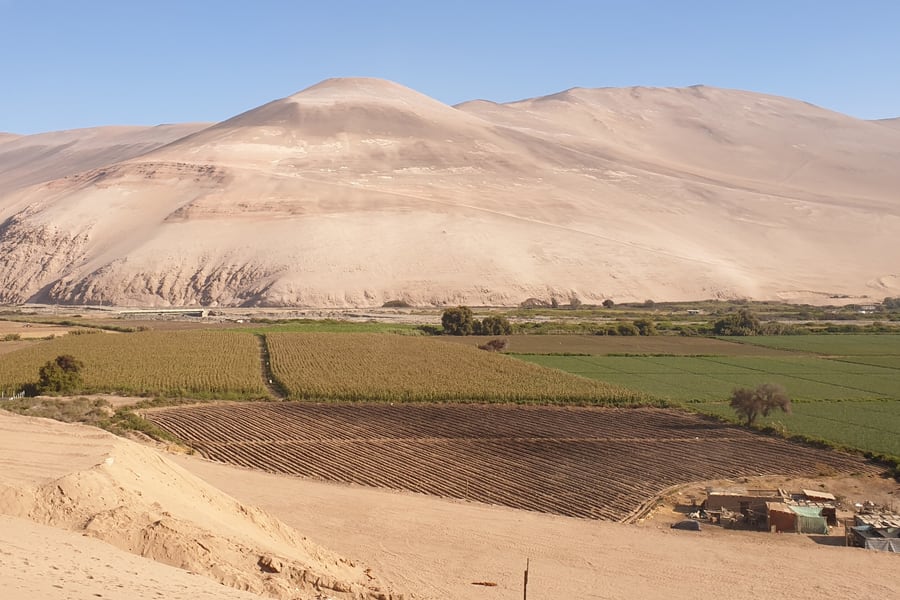 S. Rae / Wikimedia Commons · CC BY 2.0 · 2019 · cropped
Tren de las Estrellas
CLP 26,990 adult · CLP 23,990 child or senior
The evening train to Central for an astronomy session under a sky with no city light, back in Arica at two in the morning.
Book Tickets (opens in a new tab, on efe.cl)via efe.clRail Passes
No rail pass covers this journey. Chile sits outside the Interrail and Eurail schemes, and EFE sells each Arica excursion as a single ticket that includes the guide and the return trip, so there is nothing a pass could discount.
The line is also cut off from the rest of EFE's network. Arica is the only place in the north of Chile where EFE runs passenger trains of any kind; every other service it sells is in the centre and south of the country.
Places to Visit
Four places carry the journey: the city it starts from, the valley it follows, the village where the short trips turn and the empty settlement where the long ones do. Only the first has hotels, restaurants or anything like a timetable of its own; the other three are visited with the train and left with it.
 Jowyto / Wikimedia Commons · CC BY-SA 3.0 · 2012 · cropped
Arica
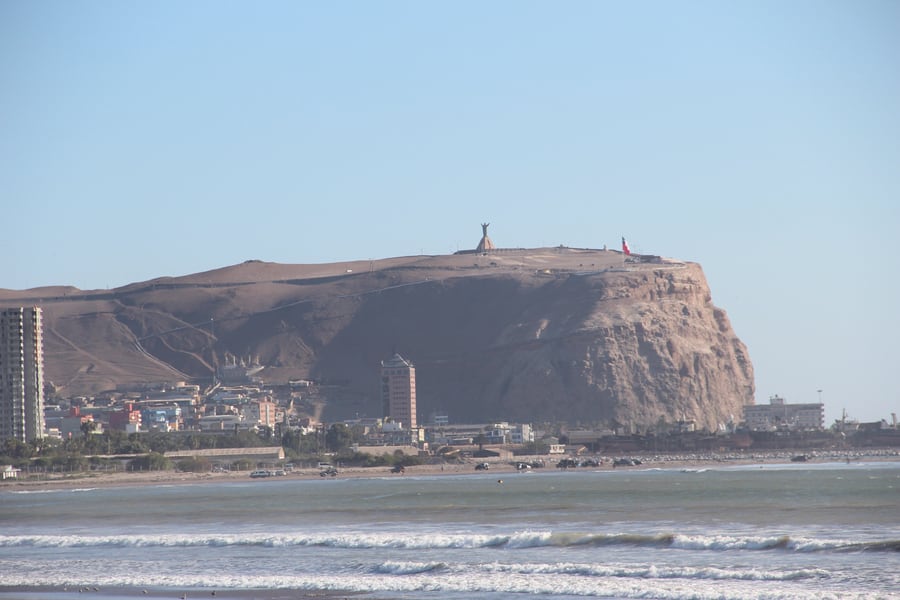
A port 18 kilometres south of the Peruvian border, at the bend in South America's west coast where the Lluta and Azapa valleys come down to the sea. It measures less than a millimetre of rain a year and is often called the driest inhabited place on earth. Over it stands the Morro, a 139-metre headland fought over in 1880, in the War of the Pacific.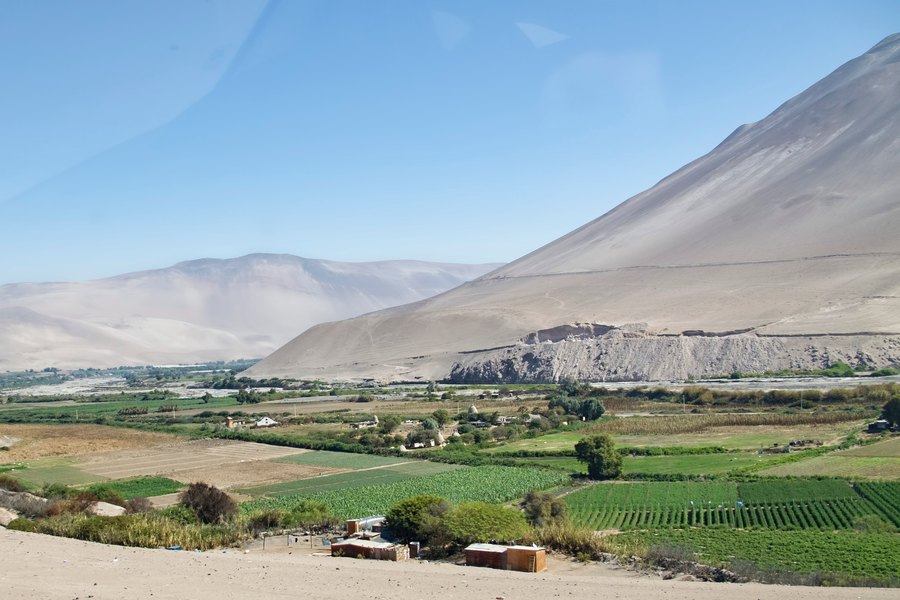 Dan Lundberg / Wikimedia Commons · CC BY-SA 2.0 · 2012 · cropped
The Lluta valley
The Lluta rises on the altiplano above 3,900 metres and reaches the Pacific 4 kilometres north of Arica, the northernmost river in Chile. From Chironta, over 70 kilometres inland, its floor is a ribbon of fields — maize, alfalfa — with bare sand and rock on either side. The railway follows it inland to Poconchile before climbing away from it, so most of the morning is spent looking at this.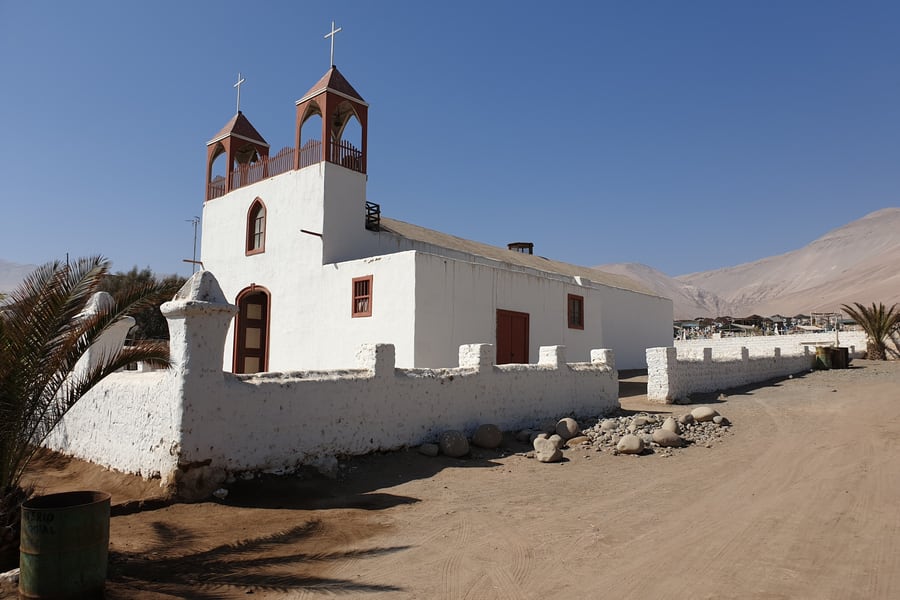 S. Rae / Wikimedia Commons · CC BY 2.0 · 2019 · cropped
Poconchile
A village of pre-Inca origin on the south bank of the Lluta, once a staging post on the road to the altiplano and a store yard for the railway's builders. The first parish of the old corregimiento of Arica was founded here in 1605. Its adobe church of San Jerónimo, rebuilt after the earthquakes of 1868 and 1877, with two timber bell towers, has been a national monument since 2015.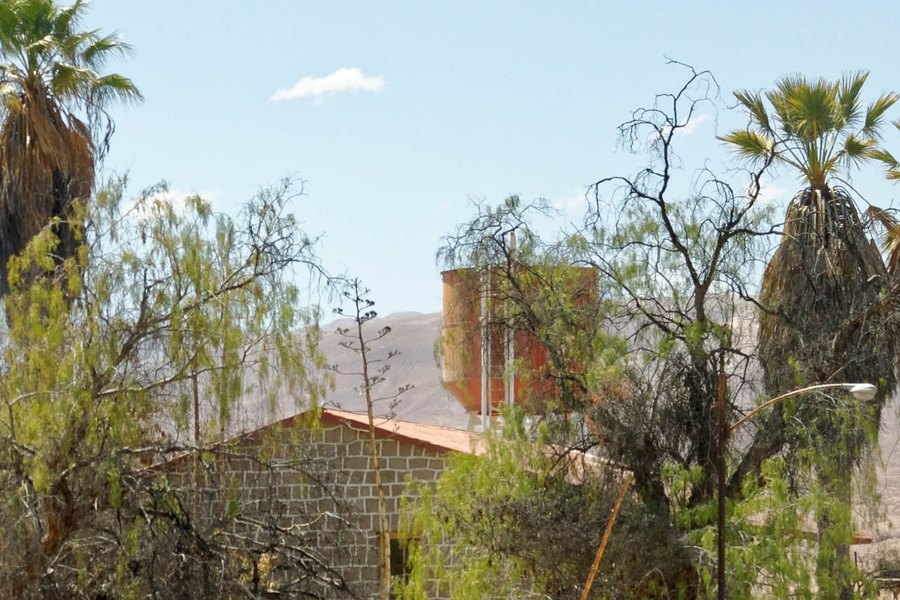 EL GUILLE! / Wikimedia Commons · CC BY 2.0 · 2017 · cropped
Central
A railway settlement opened in 1913 that once housed more than six hundred people, and now houses none. It stood at the foot of the old rack section: from here to Puquios, trains climbed on a cog rail until 1968. EFE's guides walk visitors round the station master's house, the school and the amphitheatre; private investors are restoring the station.Where to Sleep
Every excursion starts and ends in Arica, so a bed in the city covers any of them — including the Tren de las Estrellas, which gets back at two in the morning. Estación Chinchorro is north of the city centre, a short taxi ride from either hotel below.
There is nowhere to stay at Poconchile or Central as part of the trip; both are visited for a few hours and left on the same train.
Where to stay
Hotel Arica
On the seafront at El Laucho beach
The hotel's own site places it at Avenida Comandante San Martín 599, beside El Laucho beach, with rooms and seafront cabins, free parking, a pool, the Península restaurant and a panoramic bar.
Check Availability (opens in a new tab, on hotelarica.cl)via hotelarica.clHotel Amaru
In the centre of Arica
The hotel's own site places it at Rafael Sotomayor 490, a short walk from the Morro, with single to four-bed rooms in standard and superior grades, event rooms and a restaurant.
Check Availability (opens in a new tab, on hotelamaru.cl)via hotelamaru.clQuestions or corrections
Planning this trip and stuck on something, or spotted a time, fare or detail that has changed? Send us a message about Arica to Central. We read every one, and we update this page when something has changed.