Chile

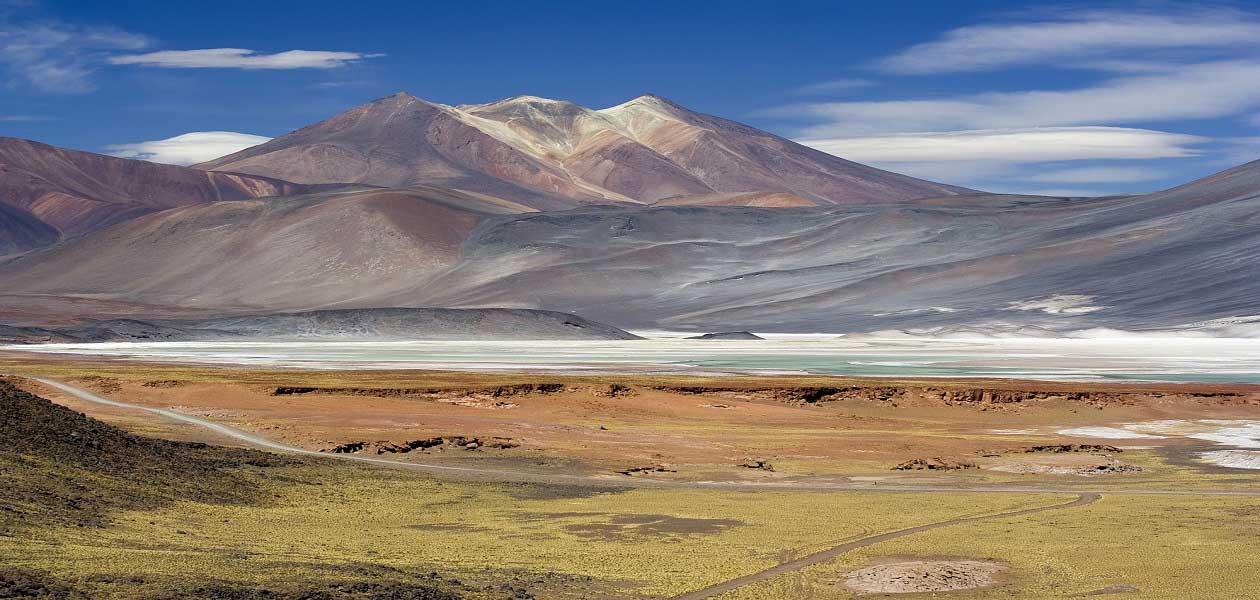
Chile is a ribbon of a country: 756,102 km² stretched more than 4,000 km down the western edge of South America, rarely more than 200 km wide, with about 19.5 million people. The Andes form its entire eastern border and the Pacific its western one, and between them it passes through almost every climate there is — the Atacama, the driest desert on earth, in the north; a temperate Mediterranean middle around Santiago; and in the south the lakes, forests, fjords and glaciers of Patagonia. It is the southernmost country in the world.
A shape like that suits a railway, and Chile's state operator EFE runs a genuinely varied network of named services rather than one national timetable. They range from busy suburban lines around Santiago, Valparaíso and Concepción to long-distance runs south towards Chillán and Temuco, and include two of real character: a surviving branch line worked by a railbus down the Maule valley, and the Chilean end of the international line climbing from Arica towards Bolivia.
Rail journeys in Chile
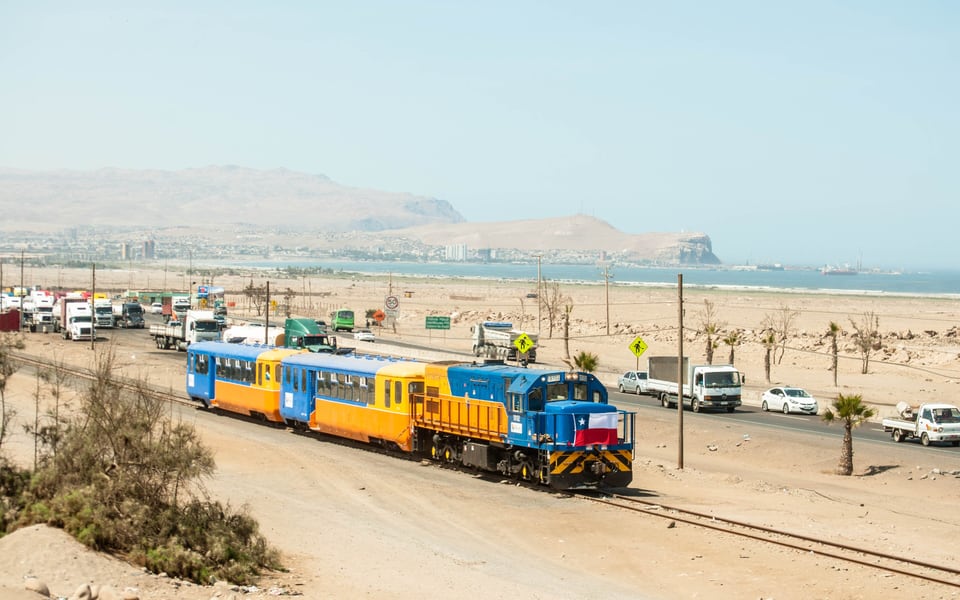
Arica to Central
Chile's railway to Bolivia now carries passengers on a few dated excursions a year — up the Lluta valley to an empty station at 1,400 metres.
View journey →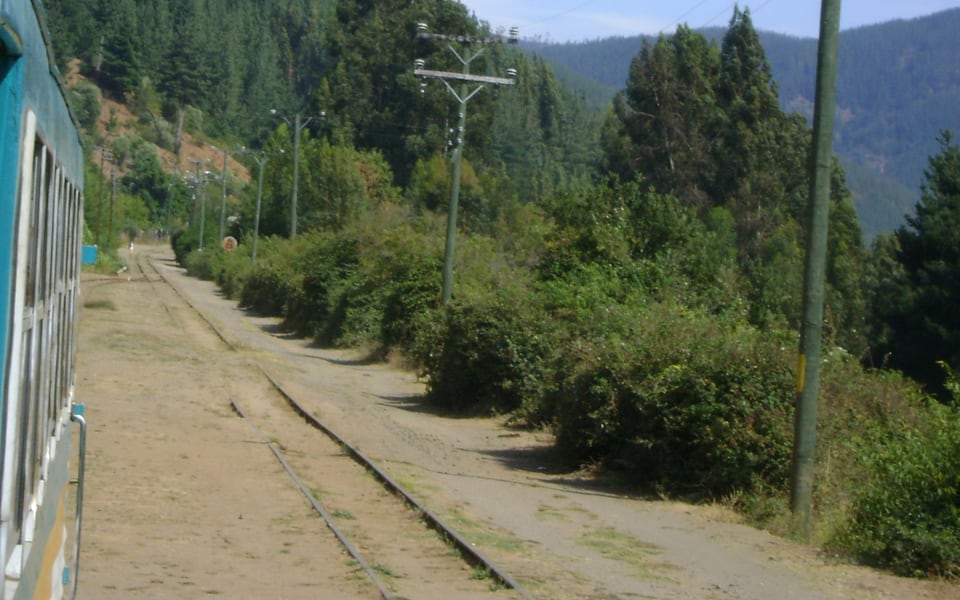
The Ramal Talca–Constitución
Chile's last branch line and its last metre-gauge passenger railway — a railbus along the Maule to the crossing place at the exact midpoint, and back.
View journey →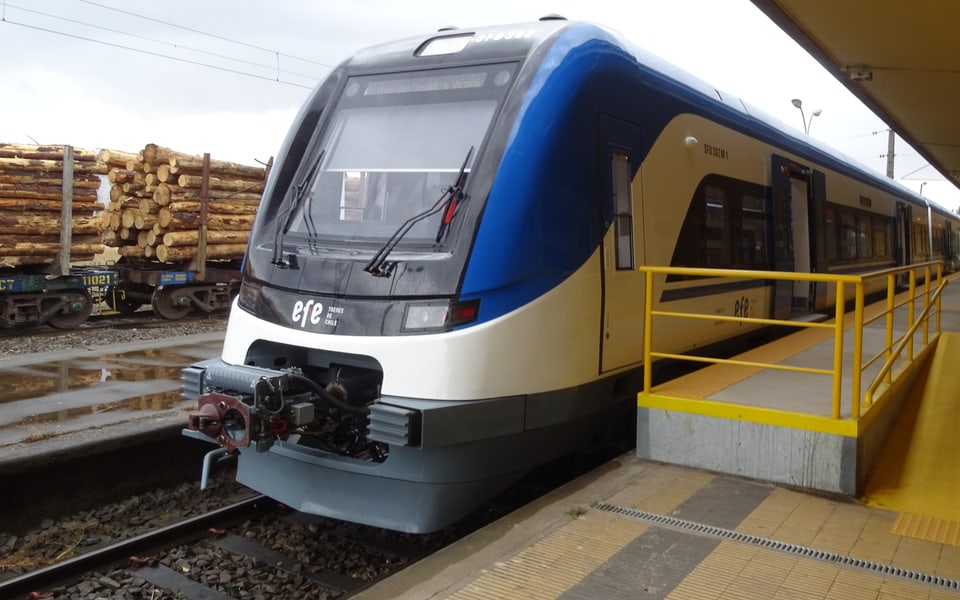
Victoria to Temuco
Sixty-five kilometres of Araucanía farmland for 1,800 pesos, on the line a Belgian engineer brought into Temuco at midnight as 1892 ended.
View journey →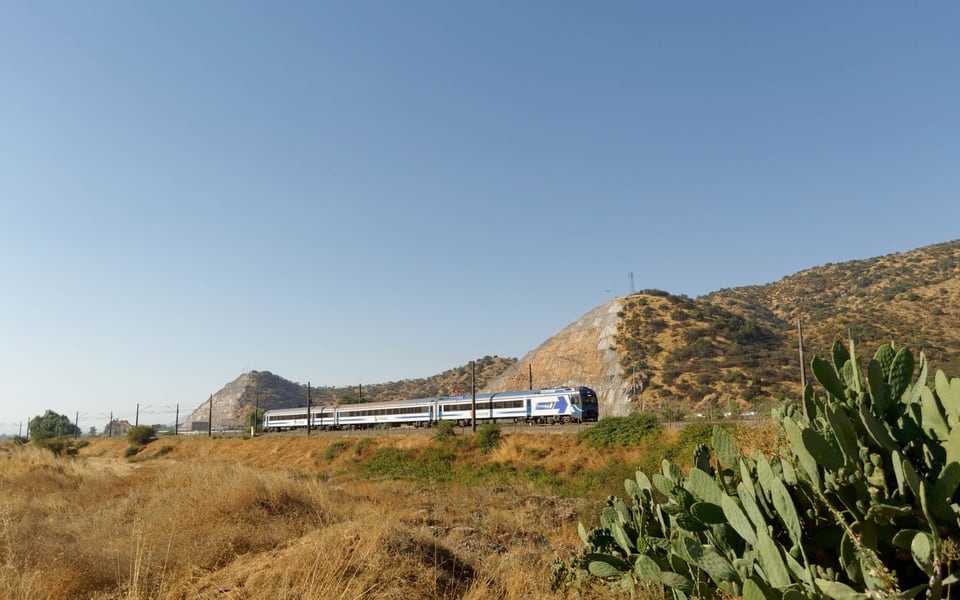
Santiago to Chillán
Four and a half hours down Chile's Central Valley, on a new Chinese bimodal train or a Spanish electrotrén from the early 1980s that still works the midday run.
View journey →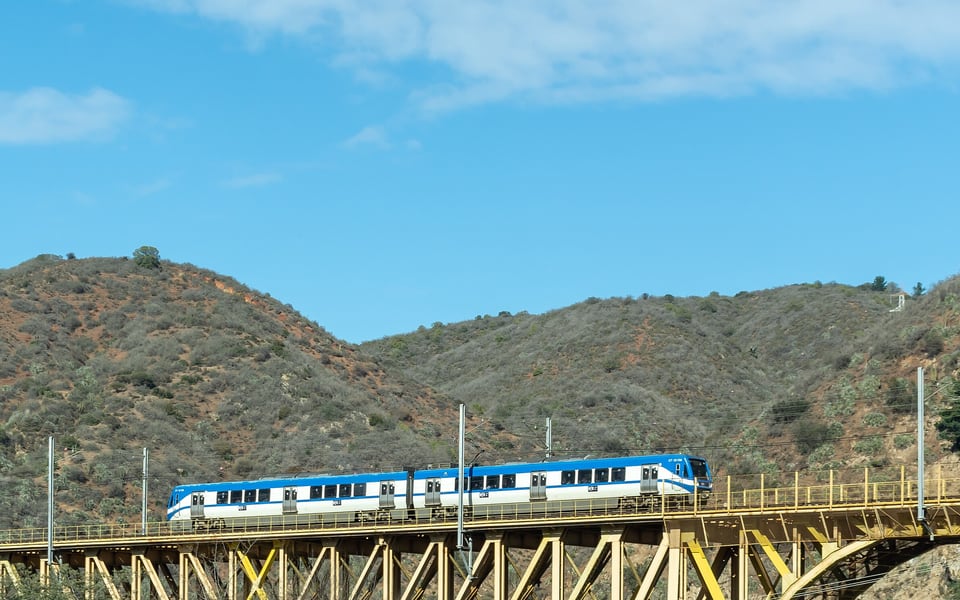
Valparaíso to Limache
From Valparaíso's port along the Pacific, under Viña del Mar and over a bridge from Le Creusot: a train every 12 minutes, under 1,400 pesos end to end.
View journey →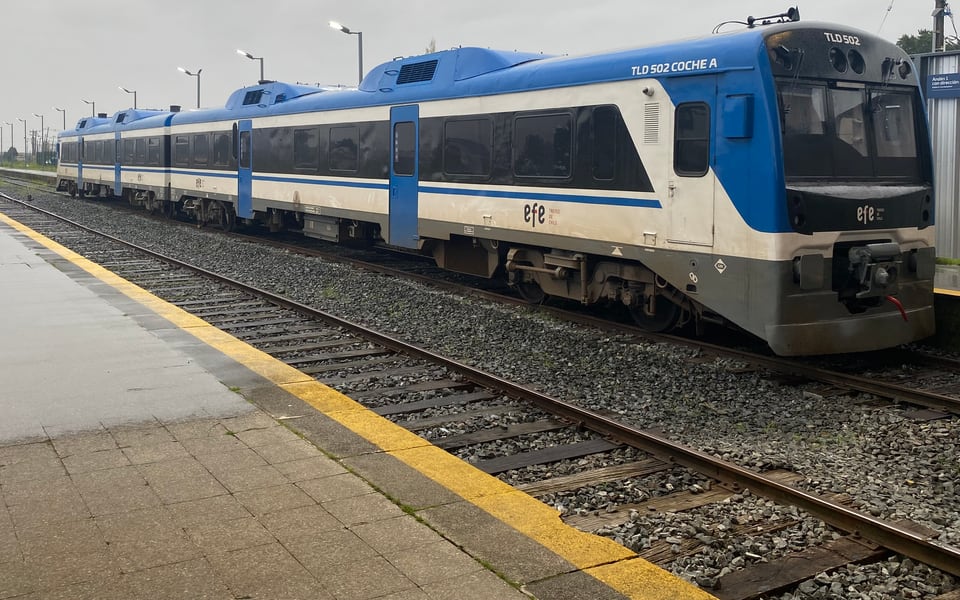
Llanquihue to Puerto Montt
Forty minutes from Lake Llanquihue to Puerto Montt on Spanish-built railcars rebuilt in a navy shipyard, the first passenger trains here in 18 years.
View journey →Good to know
Is there one national timetable, or many?
Many. EFE runs its network as a set of separately branded services — among them Talca–Constitución, Araucanía, Biotren, Nos, Rancagua, Chillán, Laja–Talcahuano, Limache–Puerto and Llanquihue–Puerto Montt — each with its own pages and its own timetable. There is no single national table to consult, so planning means looking up the specific service.
What is the Talca–Constitución branch?
The last surviving branch line in Chile and its last metre-gauge passenger railway, running down the Maule valley from Talca towards the coast, worked by a buscarril — a railbus rather than a train. Track and stations have been a national monument since 2007. It is a genuine lifeline for valley communities that have no road alternative, and it is the Chilean railway journey people travel specifically to ride.
Does the branch still reach Constitución?
Not at present. A winter storm in July 2026 brought down trees and hillside on the lower half of the line, and EFE's own journey planner returns servicio temporalmente suspendido for every station beyond González Bastías, at the branch's exact midpoint, on every date it will sell. Talca to González Bastías runs twice a day each way, and that is the journey written up here.
Can you reach Bolivia by train from Chile?
Not as a passenger. The Arica–La Paz railway, opened in 1913, still carries freight to Bolivia, but its last regular passenger trains ran in 1996. What EFE sells today are dated excursions out of Arica, the furthest of them to Central, 70 km inland and 1,400 metres up — written up on the Arica to Central page.
Can you travel between Santiago and southern Chile by train?
As far as Chillán, yes. EFE Central runs four trains a day in each direction, every day, from Estación Central in Santiago to Chillán, 398 km south, in about four and a half hours, calling at Rancagua, Curicó and Talca on the way. Tickets are sold for a named train with a numbered seat, and fares change with demand — written up on the Santiago to Chillán page.
Is there a train in the Araucanía, around Temuco?
Yes. EFE's Tren Araucanía runs from Victoria to Temuco, 65 km and nine stations in about an hour and a quarter, six times a day on weekdays and three or four times at weekends, with a separate service on from Temuco to Pitrufquén. There is nothing to book: fares are paid in cash at Temuco station or on board — written up on the Victoria to Temuco page.
Can you get around Valparaíso and Viña del Mar by train?
Yes. EFE's Tren Limache–Puerto is an electric line of 43 km and 21 stations from Valparaíso's port through Viña del Mar, Quilpué and Villa Alemana to Limache, with a train every 12 minutes on weekdays and Saturdays and every 15 on Sundays. Fares are paid from a rechargeable card — written up on the Valparaíso to Limache page.
Do trains run to Puerto Montt and the Lakes District?
Yes, on weekdays. Since April 2025 EFE has run a local service from Llanquihue through Puerto Varas and Alerce to La Paloma station in Puerto Montt, 27.4 km in 40 minutes, ten trains each way from Monday to Friday. There is no longer a train from Santiago or Temuco to connect with it — written up on the Llanquihue to Puerto Montt page.
Is there a rail pass?
No. Chile is outside the Interrail and Eurail schemes, and tickets are bought per service from EFE. Given how separate the services are from one another, a pass would have little to cover.