Santiago to Chillán
EL GUILLE! / Wikimedia Commons · CC BY 2.0 · 2018
- Distance398 km
- Duration4 hr 34 min – 4 hr 51 min
- Best seasonAll year, every day
Introduction
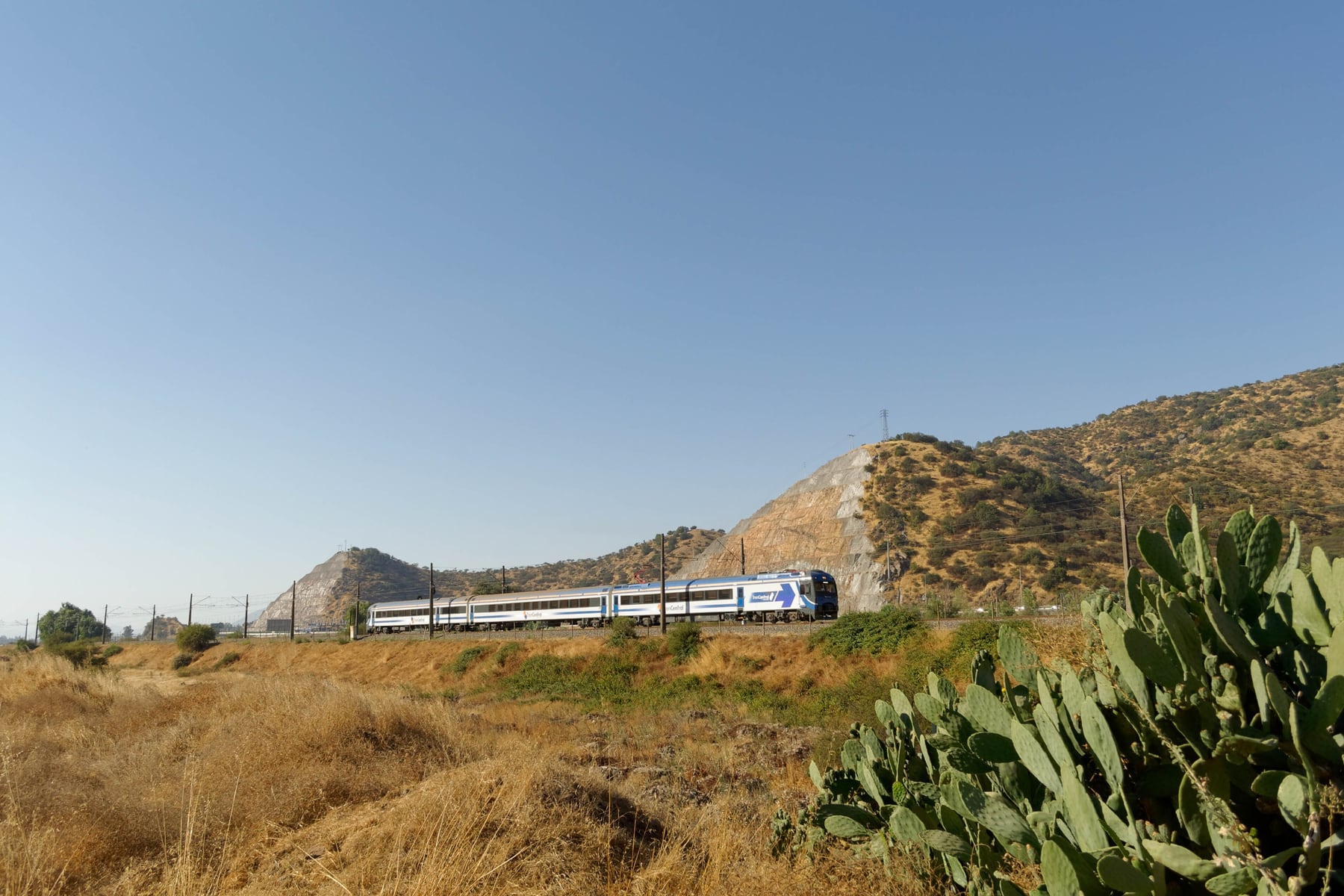
Two very different trains share this timetable. Most departures are worked by one of six bimodal trains built in China by CRRC Sifang, which entered service in January 2024 and can run at 160 km/h under the wires or on diesel when the power fails. Once a day each way the train is instead one of the UTS 444 units: electric trains built for Spain's state railway at the start of the 1980s, sold to Chile, and still carrying passengers south from Santiago more than forty years later.
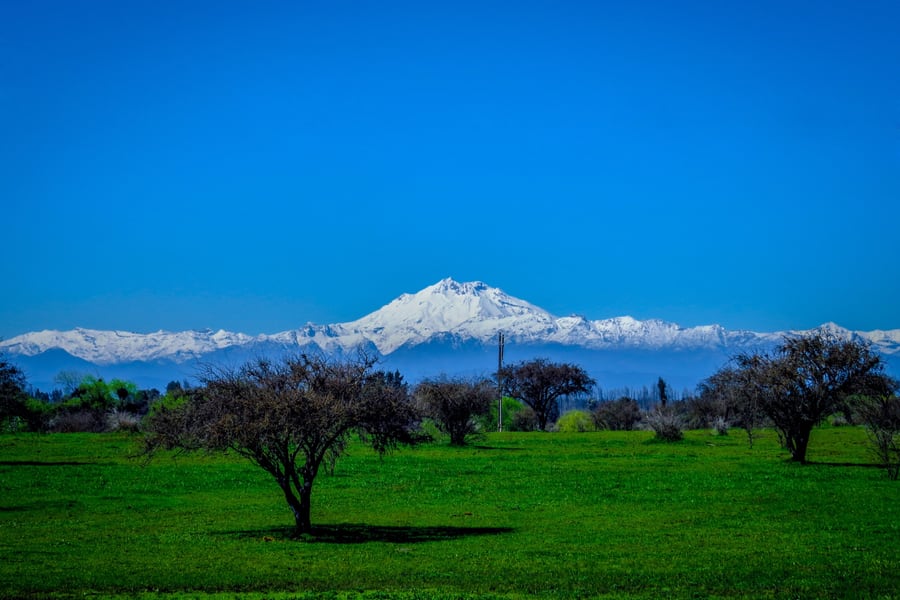
Either way the journey is the same: 398 kilometres down Chile's Central Valley from Estación Central in Santiago to Chillán, the capital of Ñuble, through four regions, twelve stations and four and a half hours of fields, vineyards and river crossings, with the Andes along the eastern horizon the whole way. It runs every day of the year, with seats sold online and at the station windows.
The Journey
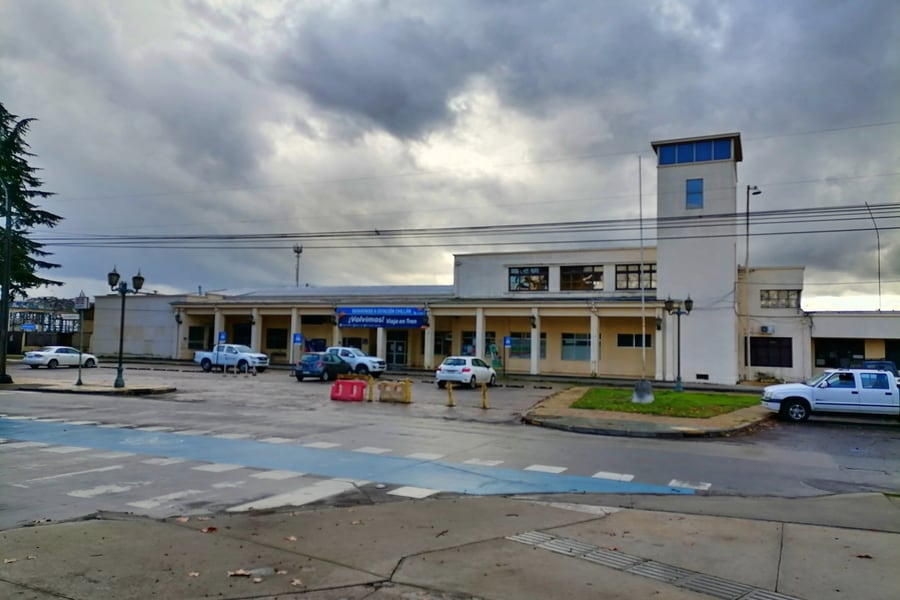
Trains leave from Estación Central, on the Alameda in Santiago, under the iron roof that Schneider & Cie of Le Creusot shipped from France in 1897. The line south is the oldest in this part of Chile: the first section, to San Bernardo, opened in September 1857, and the rails reached Rancagua at Christmas 1859, Curicó at Christmas 1868 and Chillán in 1874.
Two trains
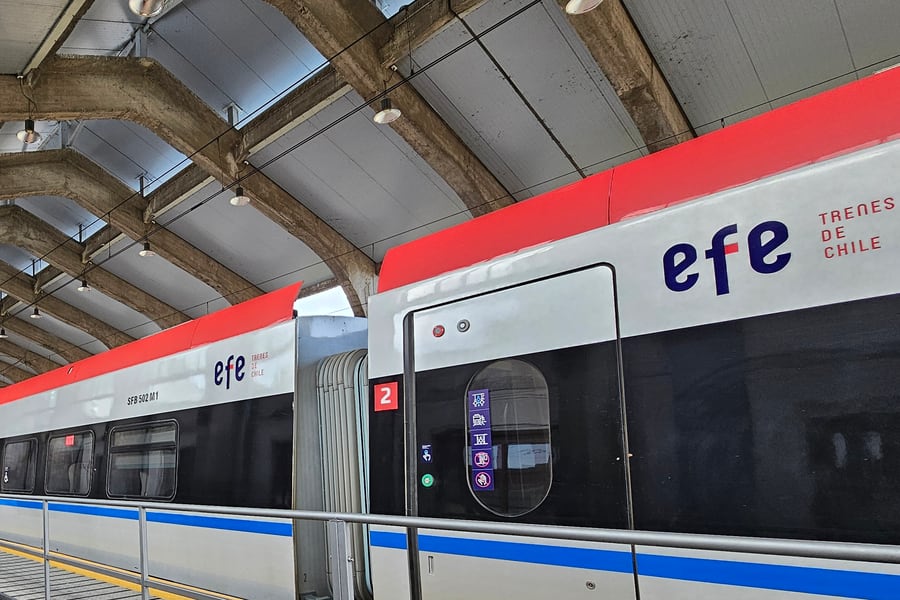
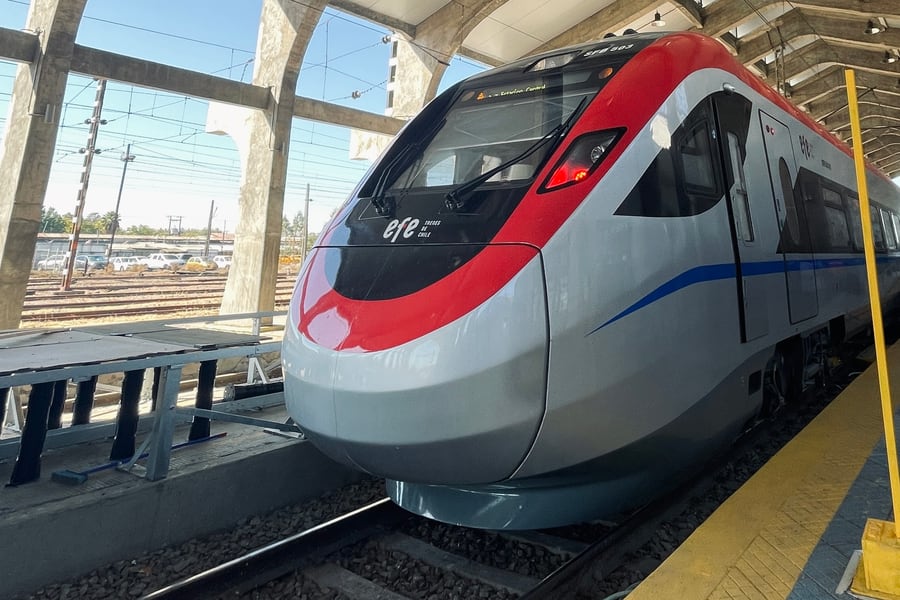
The BMU — EFE's series SFB-500 — is the train most departures use: four cars, 236 seats, automatic doors level with the platform, a café car with bean-to-cup coffee machines, sockets at every seat and room for four wheelchairs. It is bimodal, running from the overhead wires and switching automatically to diesel if the supply fails. EFE ordered six of them for this service alone, and the line is being rebuilt around them: new platforms at San Javier, Linares and Chillán in May 2026, a new station at Curicó in August, and a maintenance centre at Chillán due by the end of the year.
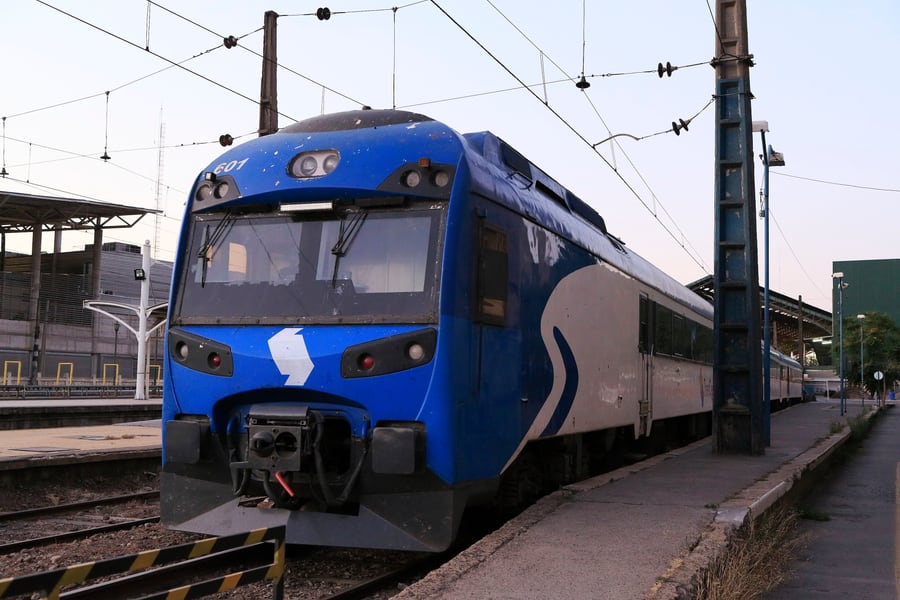
The UTS 444 works the midday train in each direction. The units were built in 1980–81 for Renfe's long-distance services in Spain and ten of them were sold to Chile, where they started the TerraSur service to Chillán in December 2001. They have 181 seats, steps up from the platform, and a café counter. The UTS train is also the one that calls at every station: the BMU services skip Molina and San Javier.
Down the valley
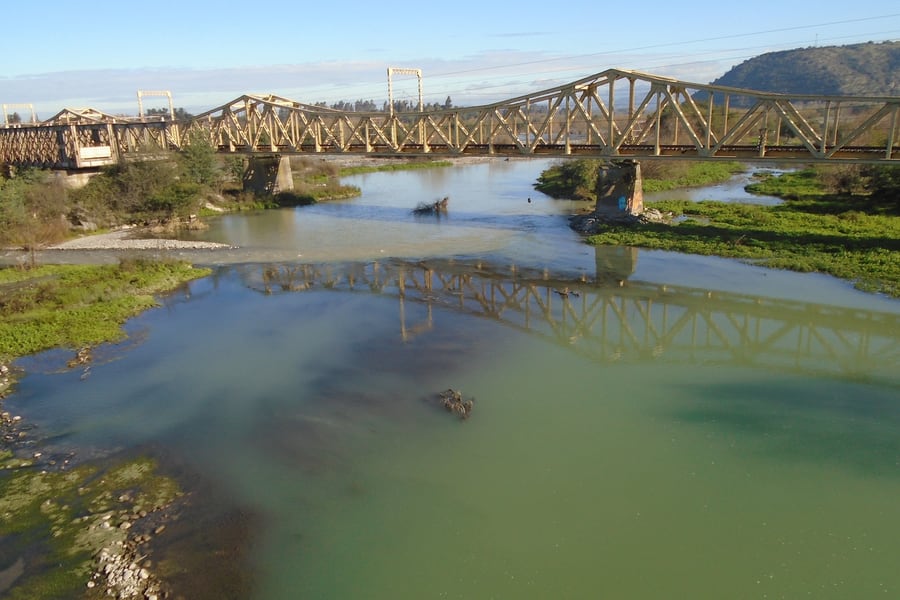
South of San Bernardo the line crosses the Maipo on a long steel truss bridge and runs through the farmland of O'Higgins to Rancagua, the first big stop, and on to San Fernando and Curicó. From there it is the Maule region — six of the twelve stations are in it — with Talca at its centre and the crossing of the Maule river just beyond. After Linares and Parral the snow cone of the Nevado de Longaví stands out on the Andean skyline to the east, and the last stop before the terminus is San Carlos. Chillán, rebuilt after the earthquake of 1939 destroyed it, is the end of the line.
EFE currently warns that journeys are taking longer than usual while it adjusts its operations, so the times below are worth checking again on the day.
Along the route
 Carlos yo / Wikimedia Commons · CC BY-SA 4.0 · 2023 · cropped
A roof from Le Creusot
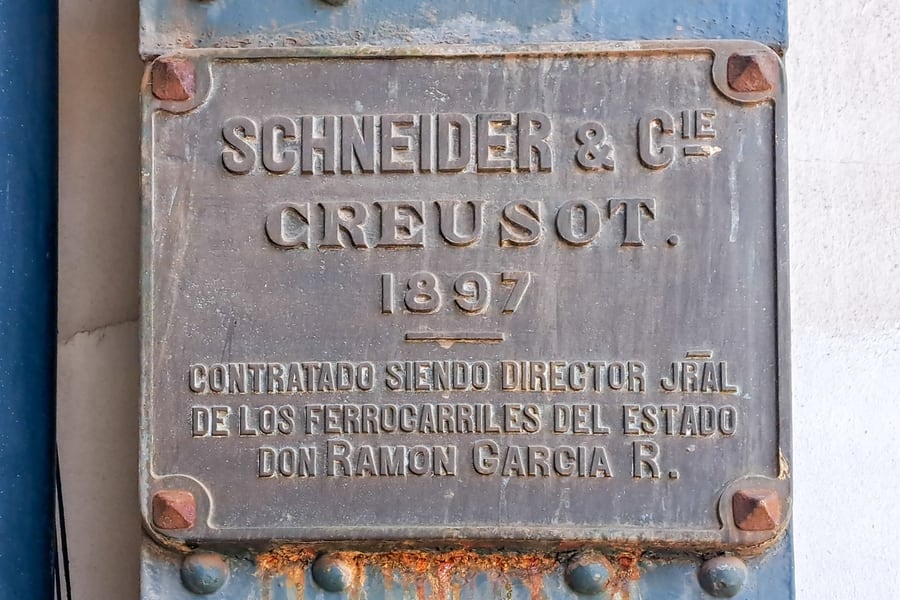
Estación Central's great roof came from France: Schneider & Cie of Le Creusot shipped 990 tonnes of steel in 1897, and a plate on it still names the maker and the year. The station opened in 1900 and has been a national monument since 1983.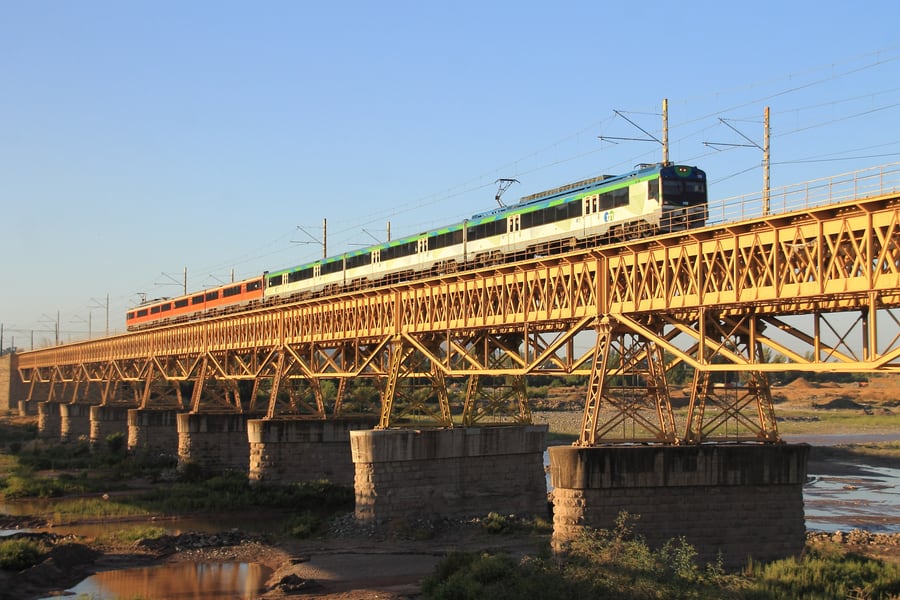 EL GUILLE! / Wikimedia Commons · CC BY 2.0 · 2015 · cropped
Across the Maipo
Beyond San Bernardo the line crosses the Maipo, the river that held up the first railway south: Henry Meiggs was engaged to bridge it in 1858, and not until July 1859 did a locomotive cross, opening the way to Rancagua that Christmas.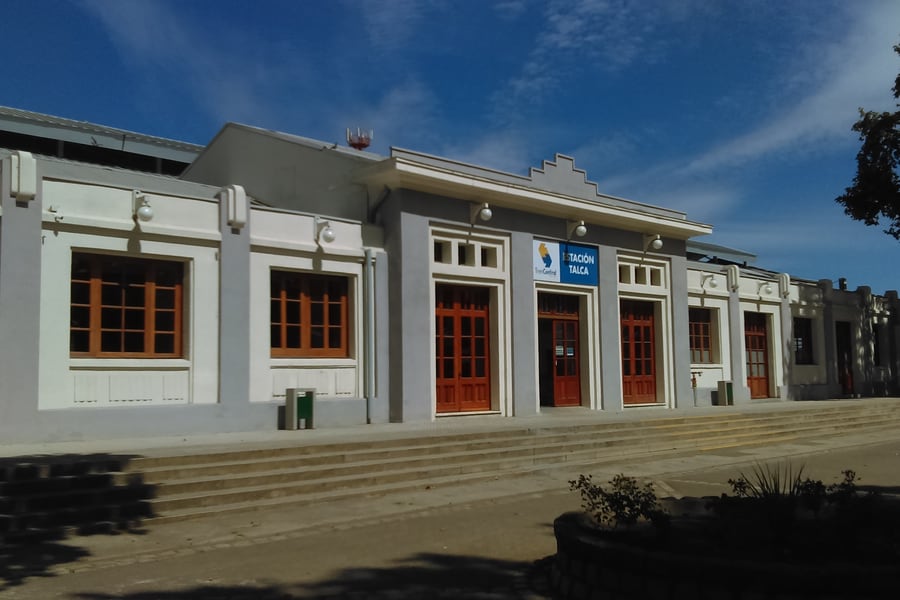 Cristobal carrasco / Wikimedia Commons · CC BY-SA 4.0 · 2017 · cropped
Talca, and the branch to the coast
Talca, the capital of the Maule region, is the one junction on the run that matters to a traveller: the metre-gauge railbuses of the Talca–Constitución branch leave from the same station, twice a day, down the Maule valley towards the Pacific.A bit of history
Culture & experiences along the way
 Panchorioseco / Wikimedia Commons · CC BY-SA 4.0 · 2011 · cropped
The black pottery of Quinchamalí
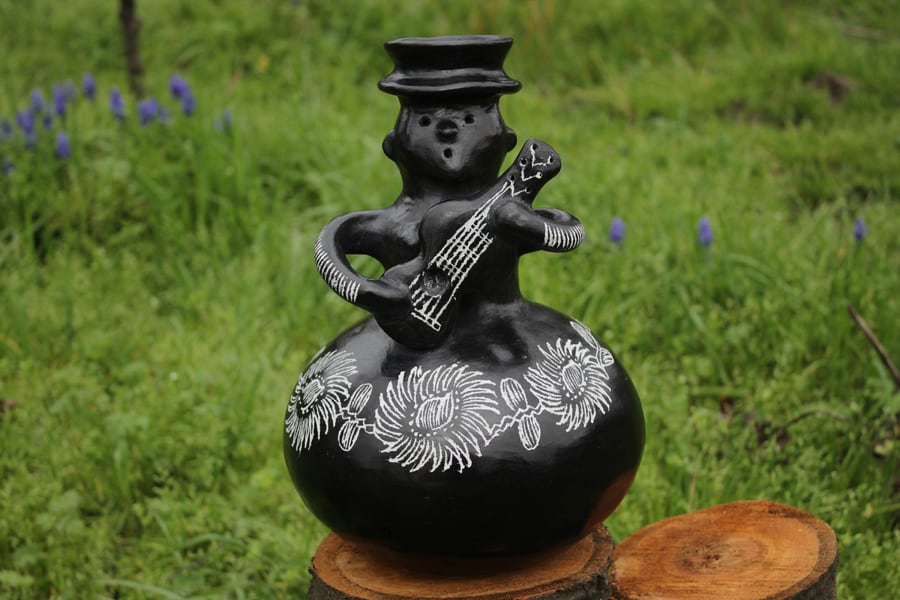
In Quinchamalí and Santa Cruz de Cuca, villages of the Ñuble region, women potters make black pots, tableware and figurines, fired and smoked on straw or dung and incised with white patterns. The best known figure is the guitarrera, a country woman with a guitar. UNESCO put the craft on its urgent safeguarding list in 2022.Timetables
Four trains a day run each way, every day of the year, and on some dates the checkout sells an extra. The times below are from EFE's own journey planner and the train types from its ticket checkout, read in September 2026 for weekdays and Sundays in October.
Santiago (Estación Central) to Chillán
| Train | Leaves Santiago | Arrives Chillán | Days |
|---|---|---|---|
| BMU | 07:40 | 12:14 | Monday to Saturday |
| BMU | 08:35 | 13:10 | Sunday |
| BMU | 09:40 | 14:21 | Daily |
| UTS | 12:20 | 17:08 | Daily |
| BMU | 16:40 | 21:19 | Daily |
Chillán to Santiago (Estación Central)
| Train | Leaves Chillán | Arrives Santiago | Days |
|---|---|---|---|
| BMU | 08:00 | 12:35 | Monday to Saturday |
| BMU | 08:40 | 13:18 | Sunday |
| UTS | 12:35 | 17:26 | Daily |
| BMU | 15:45 | 20:19 | Daily |
| BMU | 16:50 | 21:32 | Daily |
Every stop on the 07:40
| Station | Time |
|---|---|
| Estación Central | 07:40 |
| San Bernardo | 07:56 |
| Rancagua | 08:40 |
| San Fernando | 09:16 |
| Curicó | 09:52 |
| Talca | 10:36 |
| Linares | 11:07 |
| Parral | 11:36 |
| San Carlos | 11:58 |
| Chillán | 12:14 |
The midday UTS calls at every station, adding Molina and San Javier: out of Santiago at 12:20, it reaches Curicó at 14:35, Talca at 15:19 and Chillán at 17:08.
Extra departures appear in the checkout only: on Friday 9 October it also sold a 14:45 BMU, due in Chillán at 19:24, which was not there the following Friday. The operator's service page carries an older table (a 12:05 from Chillán, an 08:35 from Chillán on Sundays); the planner and the checkout agree with each other, and the times above are theirs.
Departures are published by the operator: EFE · Tren Chillán – Estación Central (opens in a new tab).
Tickets
Tickets are sold by EFE Central, online at pasajes.efe.cl or at the station windows (Estación Central's open 06:30 to 22:00), with a numbered seat you can choose when you book. Fares are priced by date and by train, not from a fixed table: the same Santiago–Chillán seat cost CLP 12,000 on a Tuesday in October and CLP 17,000 to 22,500 on Fridays, so travelling midweek pays.
Each train type has its own classes, set out in the two cards below. The checkout also has passenger types for children under 14, babies under three and seniors, and every intermediate station can be booked on its own, from Santiago to Rancagua or from Talca to Chillán.
Book your tickets
 Segurasebas / Wikimedia Commons · CC BY-SA 4.0 · 2024 · cropped
BMU — Standard, Confort or Plus
From CLP 10,000 Standard · Confort from CLP 12,000 · Plus from CLP 12,500
Three fares on the new bimodal trains; every seat reclines, and you choose yours when you book.
Book Tickets (opens in a new tab, on efe.cl)via efe.cl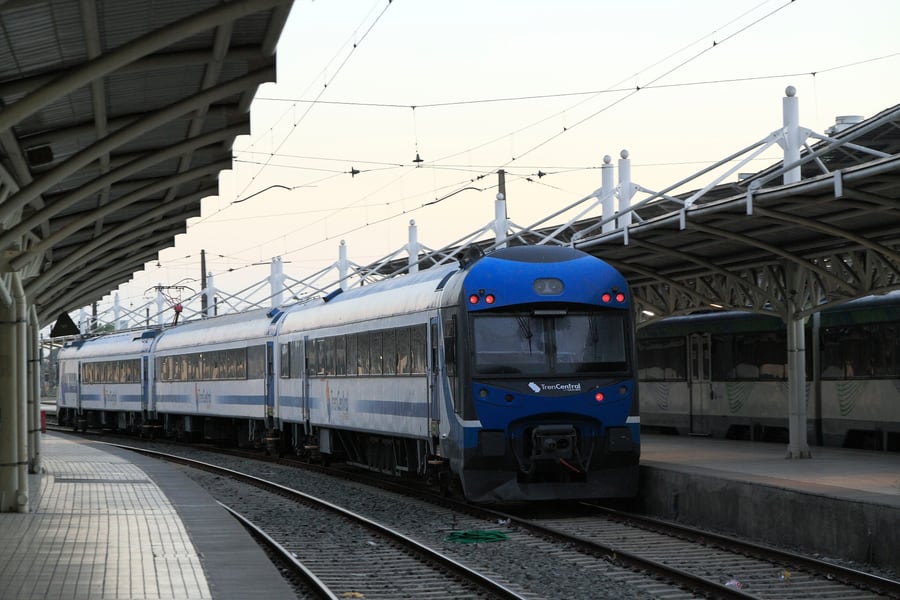 Falk2 / Wikimedia Commons · CC BY-SA 4.0 · 2016 · cropped
UTS — Standard, Preferente, Confort or Signature
From CLP 11,500 Standard · Signature from CLP 15,000
Four fares on the midday UTS train, the one that calls at all twelve stations.
Book Tickets (opens in a new tab, on efe.cl)via efe.clRail Passes
No rail pass covers this journey. Chile sits outside the Interrail and Eurail schemes, and EFE Central sells every seat as a single ticket for a named train and date, priced by demand, so there is no flat fare a pass could replace.
The ticket also stands alone within Chile. It does not include the Talca–Constitución branch, which starts from the same station at Talca and is paid for at the window there, and it does not cover the suburban trains that share the line out of Santiago as far as Rancagua.
Places to Visit
South of Santiago the stops are working provincial towns rather than sights in themselves, and each of the four below is the capital of its province or region, with its main church on the square. Any of them can be a stop-over: tickets are sold between any two stations, and with four trains a day each way there is always a later one to carry on south.
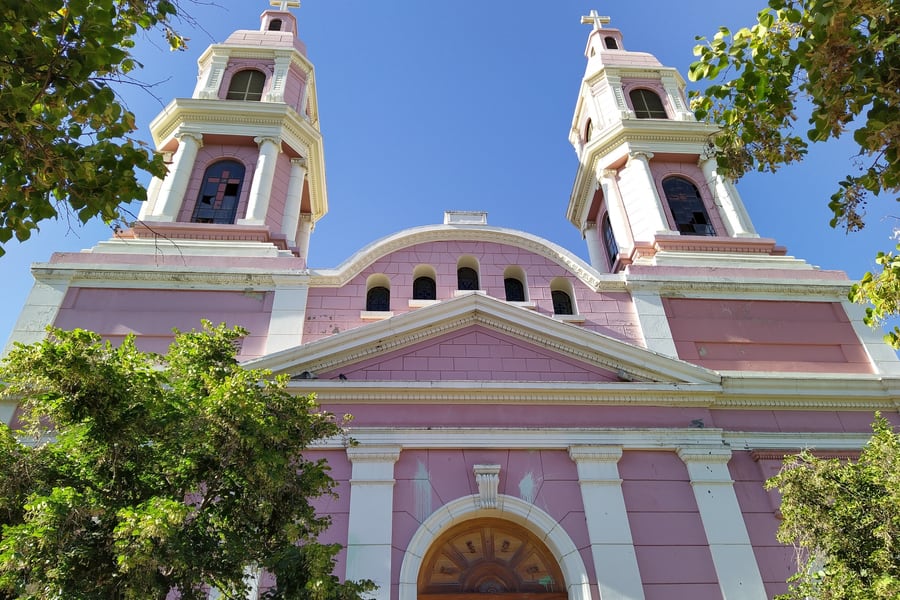 AlonsoRiveraM / Wikimedia Commons · CC BY-SA 4.0 · 2022 · cropped
Rancagua
The Battle of Rancagua was fought around the Plaza de los Héroes on 1 and 2 October 1814, and the parish church that faces it was left badly damaged. Its successor, designed by Juan Herbage and finished by Eusebio Chelli, was blessed in 1876, became a cathedral in 1926 and gained its two towers in 1937.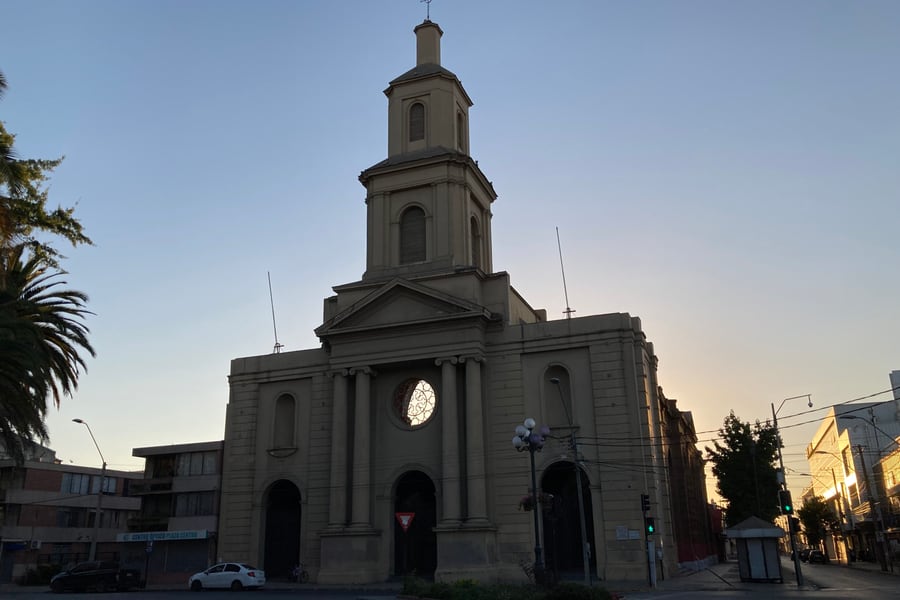 Cris.tbl / Wikimedia Commons · CC BY 4.0 · 2022 · cropped
Curicó
Curicó calls itself the city of wine and has been called the agro-industrial capital of Chile. Its Plaza de Armas, a protected zone since 1986, was planted in 1910 with sixty Canary Island palms and is often compared to a botanical garden; the Iglesia de la Matriz stands on its west side. The new station opened in August 2026.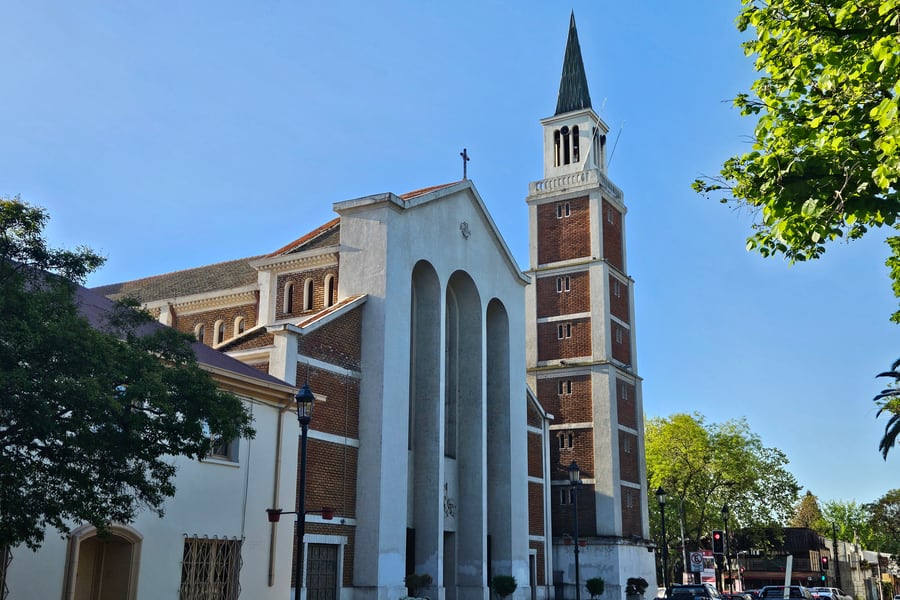 TomasVial / Wikimedia Commons · CC0 · 2024 · cropped
Talca
Founded in 1742 as the Villa San Agustín de Talca, where the Claro river meets two streams, Talca is the regional capital and the heart of Chile's farming country. The earthquake of 1928 wrecked its old cathedral; the present one, with its brick bell tower, was begun in 1939 and consecrated in 1954.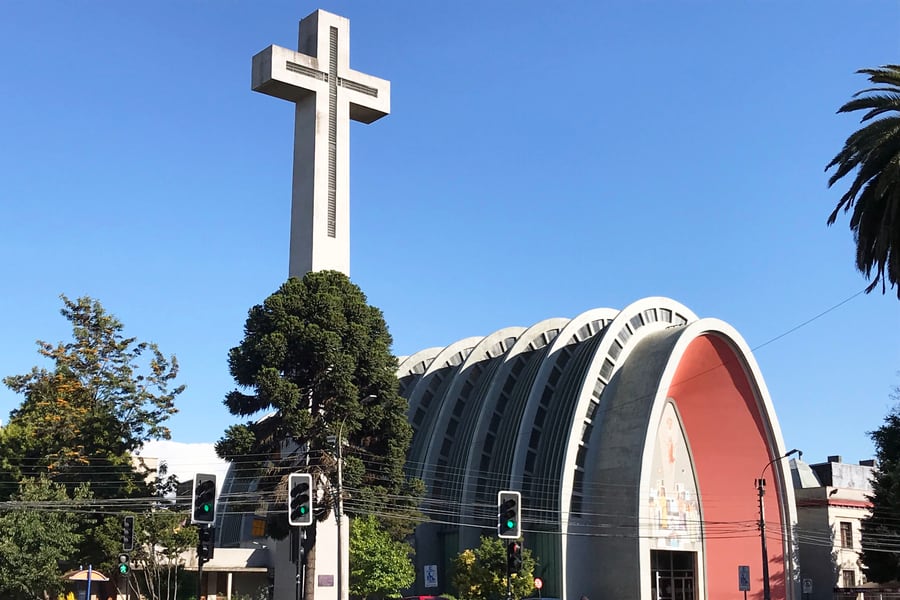 Cuidro / Wikimedia Commons · CC BY-SA 4.0 · 2018 · cropped
Chillán
Chillán was rebuilt after the earthquake of 1939 destroyed it, and its cathedral shows how: a nave of concrete arches designed by Hernán Larraín Errázuriz, built between 1941 and 1960 beside a monumental cross, and a national monument since 2015. The station, first opened in 1874, was also rebuilt after the earthquake.Where to Sleep
The first train south reaches Chillán at lunchtime and the last one gets in after nine at night, so a night in Chillán is the natural way to split a return trip. Both hotels below are in the city centre, near the Plaza de Armas and the cathedral, a short taxi ride from the station.
At the Santiago end, Estación Central has its own station on Line 1 of the Metro, so any hotel near that line puts the first train of the morning within easy reach.
Where to stay
Gran Hotel Isabel Riquelme
On the main corner of central Chillán
The hotel's own site places it at Constitución 576, with 70 rooms, six event rooms, an international restaurant and a bar.
Check Availability (opens in a new tab, on hotelisabelriquelme.cl)via hotelisabelriquelme.clHoteles Las Terrazas
Three buildings in the centre of Chillán
The group's own site lists a Business hotel at Constitución 664, an Express at Constitución 633 and an apart-hotel at 18 de Septiembre 320.
Check Availability (opens in a new tab, on lasterrazas.cl)via lasterrazas.clQuestions or corrections
Planning this trip and stuck on something, or spotted a time, fare or detail that has changed? Send us a message about Santiago to Chillán. We read every one, and we update this page when something has changed.