Llanquihue to Puerto Montt
Caineuser1431 / Wikimedia Commons · CC BY-SA 4.0 · 2025 · cropped
- Distance27.4 km
- Duration40 min
- Best seasonAll year, Monday to Friday
Introduction
For eighteen years no passenger train reached Puerto Montt. The railway that had come down the length of Chile to the city in 1911 lost its last southern services in 2007, and its stations stood empty. On 22 April 2025 EFE brought trains back to the last 27.4 kilometres of it, between the lake town of Llanquihue and the regional capital, and in its first year the line carried 436,000 passengers.
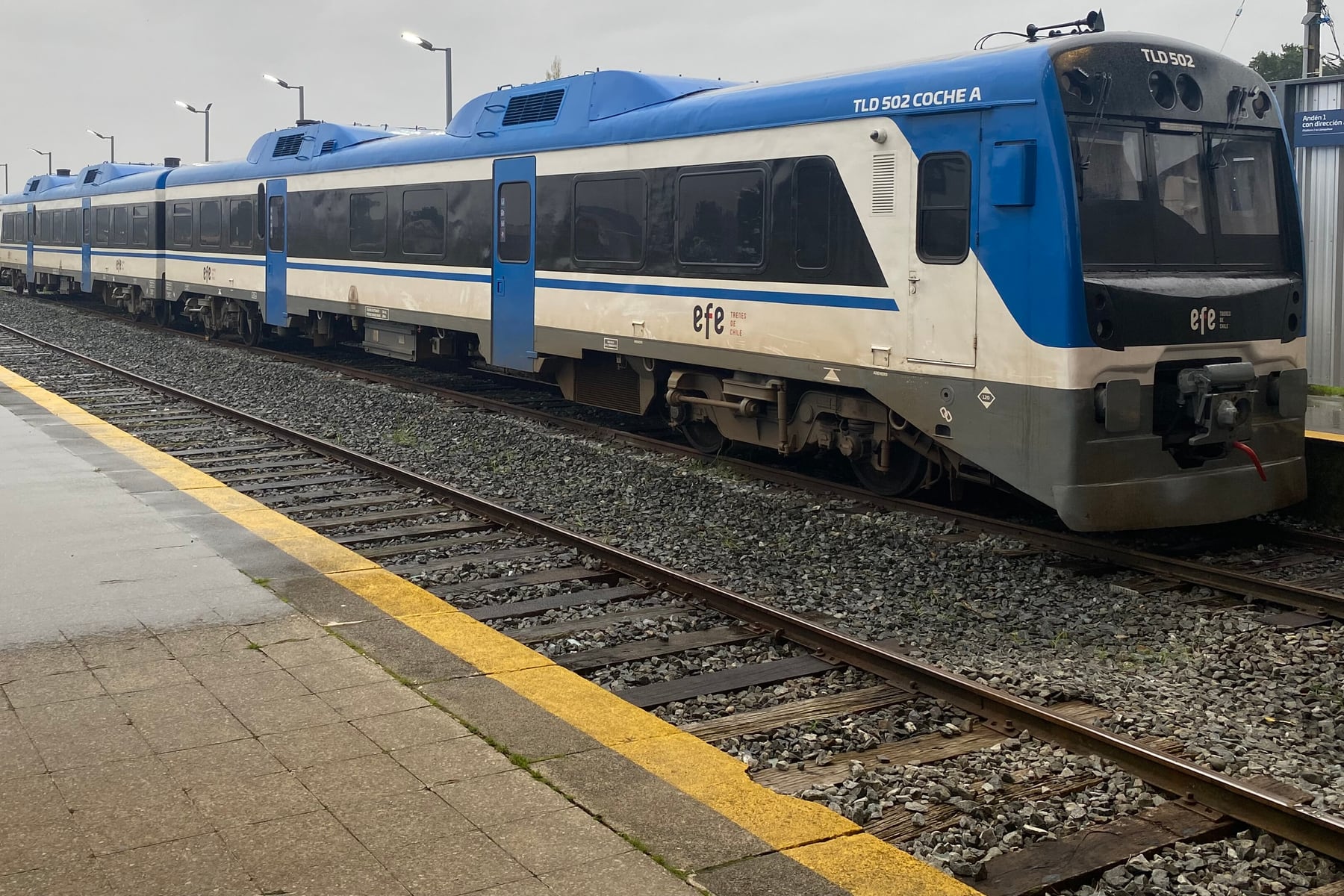
The Tren Llanquihue–Puerto Montt is a short commuter line with a long view. It leaves Llanquihue at the outlet of Lake Llanquihue, Chile's second-largest, calls at Puerto Varas on the same shore, and runs south through Alerce to La Paloma station, on the high ground above Puerto Montt. The trains are Spanish diesel railcars built in the 1980s and rebuilt in 2025 at ASMAR, the Chilean navy's shipyard. Ten trains run each way, Monday to Friday only; the ride takes 40 minutes and costs CLP 1,500, paid on board, with nothing to book.
The Journey
Llanquihue station stands at 1000 Baquedano, in the town that grew up where the Maullín river leaves the lake. The line through it is the southern end of the Longitudinal Sur, the main line south from Santiago: the section from Osorno reached Puerto Montt in 1911, and in November 1913 the first train ran through from Iquique, at the other end of the country.
The trains
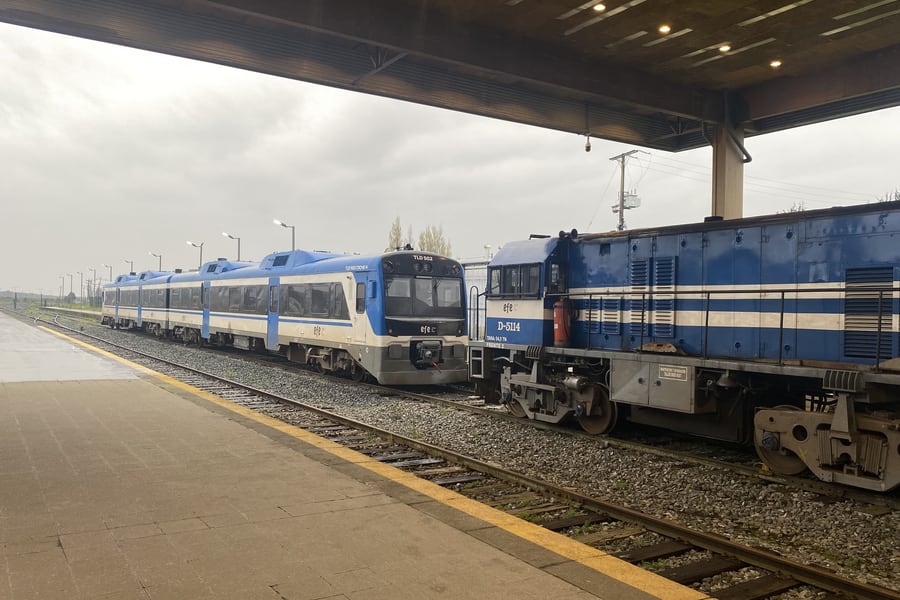
The service is worked by two TLD railcars, the Tren Ligero Diésel, a class of diesel units built in Spain for Renfe by CAF and Babcock & Wilcox between 1982 and 1984, with Fiat engines. Four came to Chile in 2005 for the Temuco–Puerto Montt trains, running without their centre cars. Two were later lost to accidents or stripped for parts; the other two, TLD 502 and TLD 503, ran on between Victoria and Temuco until new Chinese-built railcars replaced them there. In 2025 the Chilean navy's shipyard, ASMAR, rebuilt both with new interiors and systems for this line. A train carries 206 passengers, and a new workshop at La Paloma now looks after them.
Along the lake
The first stop, eleven minutes out, is Puerto Varas, whose station of 1913 stands near the lake, facing the Gran Hotel that the state railway built in 1938 to bring tourists south. Next comes Alerce, a suburb of Puerto Montt with a new platform built for the service; its old station, which began life in 1911 as Arrayán, burnt down in 2023.
Into Puerto Montt
The terminus is not the old station on Puerto Montt's waterfront. That closed to passengers in 1995, when a storm washed out the track at Pelluco, and its site is now a shopping centre. Trains end instead at La Paloma, on the high ground above the city, opened in 2005 and restored for this service. Feeder buses meet the trains there and at Alerce on weekdays to carry passengers on into the city.
EFE currently warns that journeys are taking longer than usual while it adjusts its operations, so allow a little extra time.
Along the route
 Caineuser1431 / Wikimedia Commons · CC BY-SA 4.0 · 2025 · cropped
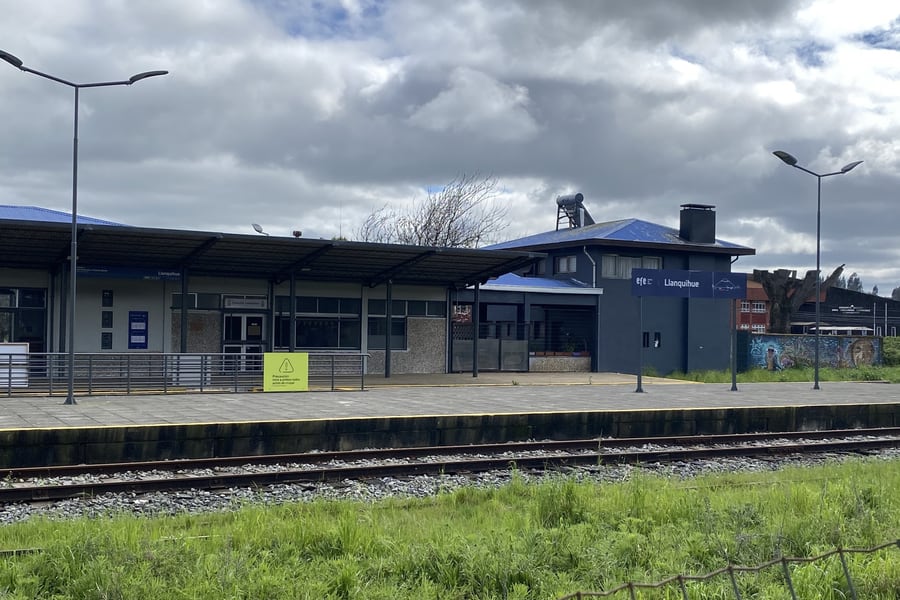
Llanquihue, where the town took its name
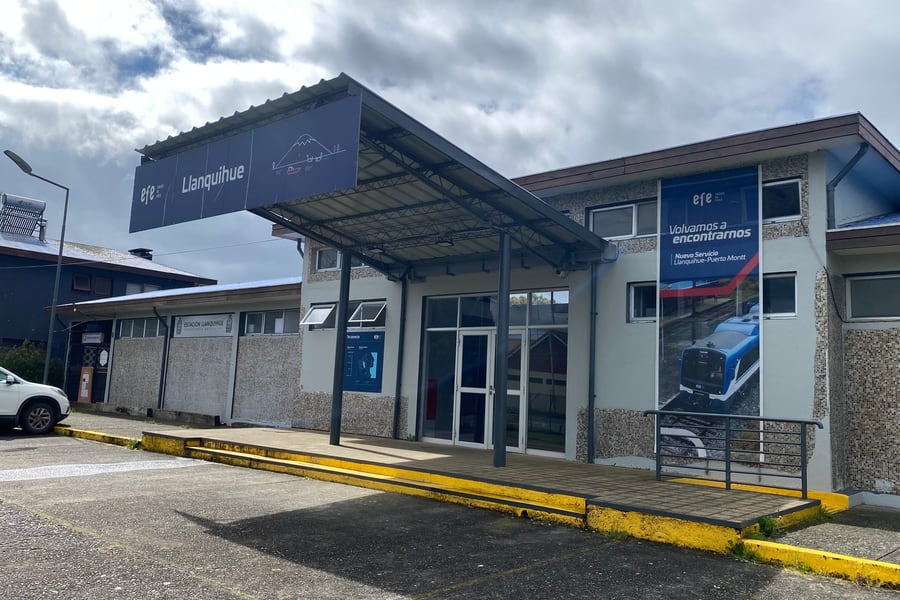
The settlement at the lake's outlet was called Desagüe until the railway came. The station, opened with the line from Osorno, gave the town its present name; closed in 2007, it reopened on 22 April 2025 as the northern end of the new service.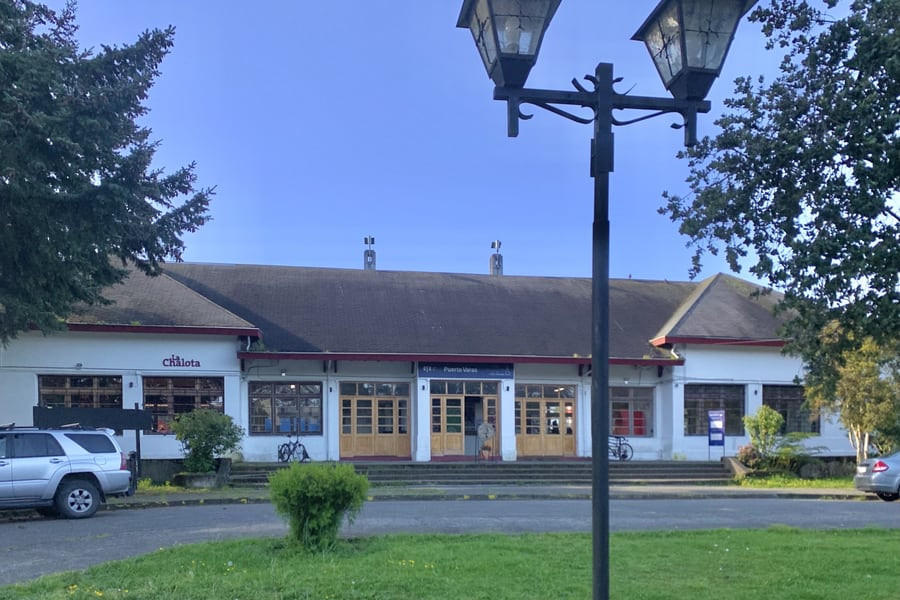 Alexmrz / Wikimedia Commons · CC BY-SA 4.0 · 2025 · cropped
Puerto Varas and its lakeside station
The station of 1913 stands near the lake, facing the Gran Hotel that the state railway built in 1938 to bring tourists south. Restored in 2023 after years of neglect, it now also houses the town's children's library.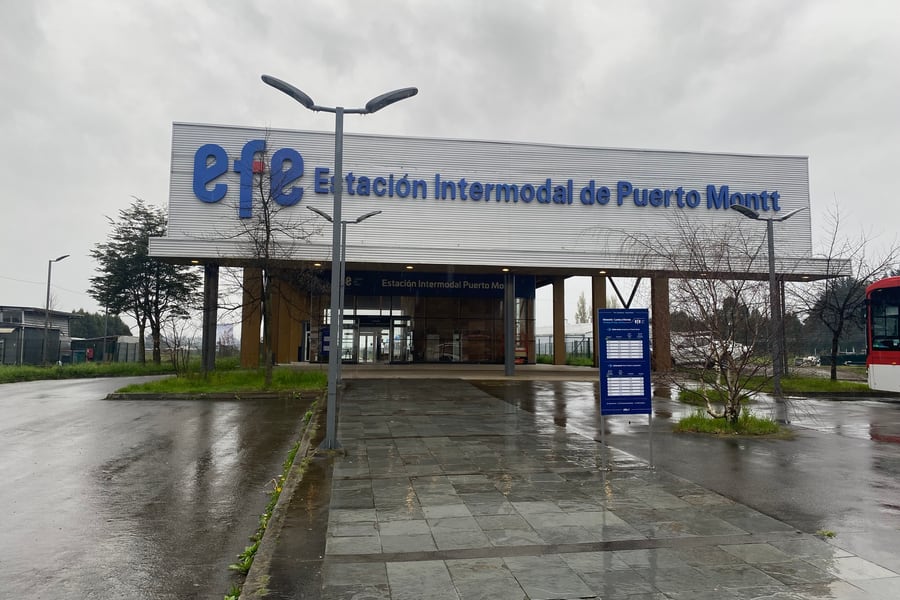 Caineuser1431 / Wikimedia Commons · CC BY-SA 4.0 · 2025 · cropped
La Paloma, the terminus on the hill
Puerto Montt's old station stood on the waterfront; its site is now a shopping centre. Trains today end at La Paloma, on the high ground above the city, a station opened in 2005 and restored for this service, with feeder buses on into the centre.A bit of history
Culture & experiences along the way
 littletroll / Wikimedia Commons · CC BY-SA 3.0 · cropped
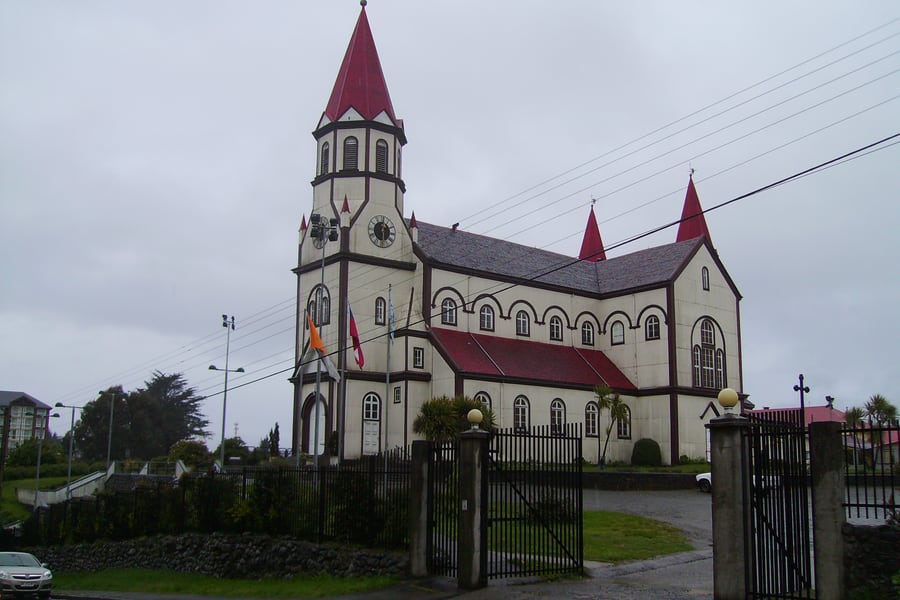
The church of the Sagrado Corazón
Built between 1915 and 1918 on the high ground of Puerto Varas, in ulmo and roble clad with iron sheet, the church was modelled on churches in Baden-Württemberg, one of the regions the lake's German settlers came from. It came through the 1960 earthquake almost unharmed and has been a national monument since 1992.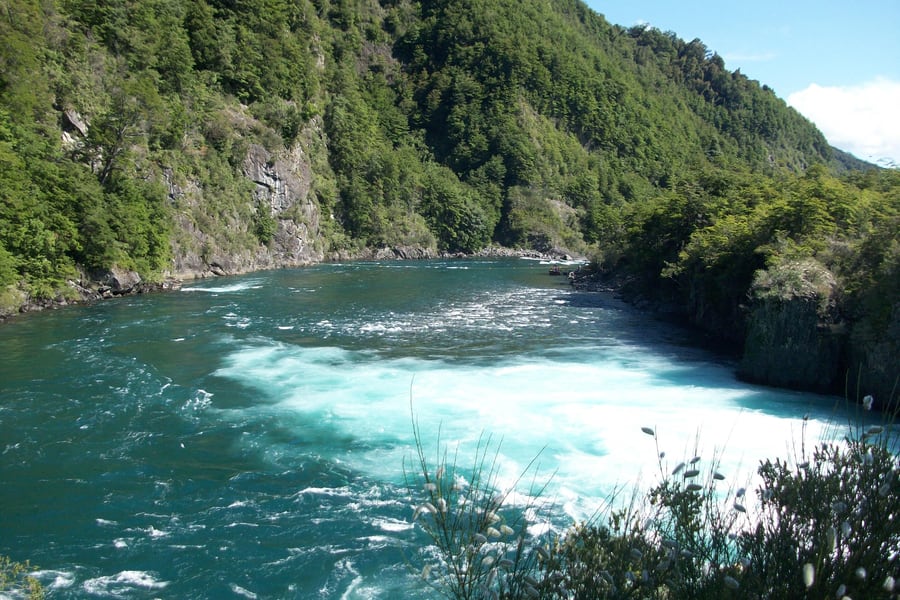 Nelson Pérez / Wikimedia Commons · CC BY-SA 3.0 · 2010 · cropped
The Saltos del Petrohué
Below Lake Todos los Santos the Petrohué river pours over a bed of basalt left by the Osorno volcano, in Vicente Pérez Rosales, Chile's oldest national park, created in 1926. The falls are 64 km from Puerto Varas by road, reached by the buses that run out towards Petrohué.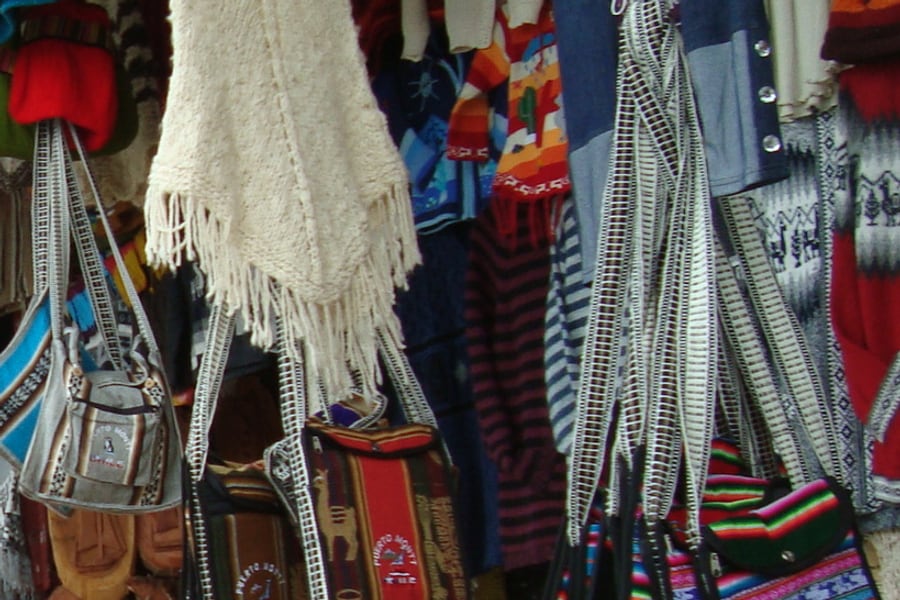 Antocavi / Wikimedia Commons · CC BY-SA 3.0 · 2013 · cropped
Angelmó
On a small bay facing Tenglo island, Puerto Montt's old port holds a crafts fair of woollens and carved wood, a market of fish and shellfish, and the quay where ferries leave for Chiloé, Aysén and Puerto Natales. Nobody is sure where the name comes from.Timetables
Trains run Monday to Friday only; the stations are closed at weekends. There are no reservations: you pay on board and take the next train. Ten trains run each way, about every hour and a half, and the whole run takes 40 minutes. The times below are from EFE's journey planner for the line, read in September 2026 for dates in October.
From Llanquihue
| Llanquihue | Puerto Varas | Alerce | Puerto Montt |
|---|---|---|---|
| 06:50 | 07:01 | 07:19 | 07:30 |
| 08:20 | 08:31 | 08:49 | 09:00 |
| 09:50 | 10:01 | 10:19 | 10:30 |
| 11:20 | 11:31 | 11:49 | 12:00 |
| 12:50 | 13:01 | 13:19 | 13:30 |
| 14:20 | 14:31 | 14:49 | 15:00 |
| 15:50 | 16:01 | 16:19 | 16:30 |
| 17:25 | 17:36 | 17:54 | 18:05 |
| 19:00 | 19:11 | 19:29 | 19:40 |
| 20:35 | 20:46 | 21:04 | 21:15 |
From Puerto Montt
| Puerto Montt | Alerce | Puerto Varas | Llanquihue |
|---|---|---|---|
| 07:35 | 07:47 | 08:05 | 08:15 |
| 09:05 | 09:17 | 09:35 | 09:45 |
| 10:35 | 10:47 | 11:05 | 11:15 |
| 12:05 | 12:17 | 12:35 | 12:45 |
| 13:35 | 13:47 | 14:05 | 14:15 |
| 15:05 | 15:17 | 15:35 | 15:45 |
| 16:35 | 16:47 | 17:05 | 17:15 |
| 18:10 | 18:22 | 18:40 | 18:50 |
| 19:50 | 20:02 | 20:20 | 20:30 |
| 21:20 | 21:32 | 21:50 | 22:00 |
Each train turns round five minutes after it arrives, so a late train in one direction usually means a late train back. Extra Saturday trains ran from January 2026 as a summer trial; they are not in the current timetable.
Timetables and service notices are published by the operator: EFE · Tren Llanquihue–Puerto Montt — Servicio y trazado (opens in a new tab).
Tickets
There is nothing to book and no card to buy first. You pay for each ride as you board — in cash, by credit or debit card, or with a QR code from EFE's app — and the fare depends on how far you go: Llanquihue to Puerto Varas costs CLP 600, Puerto Varas to Puerto Montt CLP 1,200, and the whole line CLP 1,500.
Seniors and students registered for Chilean fare benefits pay less — CLP 750 and CLP 500 end to end — and primary-school children with a student card ride free. You may bring one bag up to 75 x 60 x 45 cm, a folding bike or scooter, and a pet in a carrier.
Book your tickets
 Caineuser1431 / Wikimedia Commons · CC BY-SA 4.0 · 2025 · cropped
Single journey, Llanquihue to Puerto Montt
CLP 1,500 · CLP 600 to CLP 1,200 for shorter trips
Paid as you board, in cash, by bank card or with a QR code from EFE's app; there is nothing to book.
Book Tickets (opens in a new tab, on efe.cl)via efe.clRail Passes
No rail pass covers this journey. Chile sits outside the Interrail and Eurail schemes, and EFE sells no pass or day ticket for this line. At CLP 1,500 at most for the whole run, paid as you board, there would be nothing for one to save.
Places to Visit
The line links three towns between Lake Llanquihue and the sea, which with Alerce make up the metropolitan area of Puerto Montt. With a train in each direction every hour and a half on weekdays, any of them makes an easy stop on the way.
 Rodrigo Fernández / Wikimedia Commons · CC BY-SA 4.0 · 2016 · cropped
Llanquihue
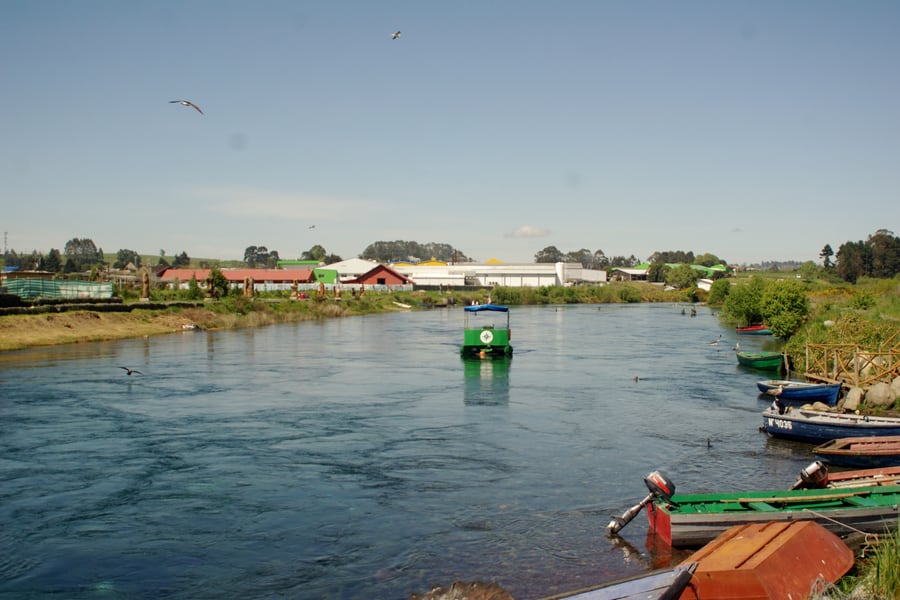
German colonists settled here from the 1850s at the point where the Maullín river leaves the lake on its way to the Pacific, and the village was known simply as Desagüe, the outlet. It became a commune of its own only in 1968. In 1984 it held the Bierfest del Lago, the first beer festival in Chile.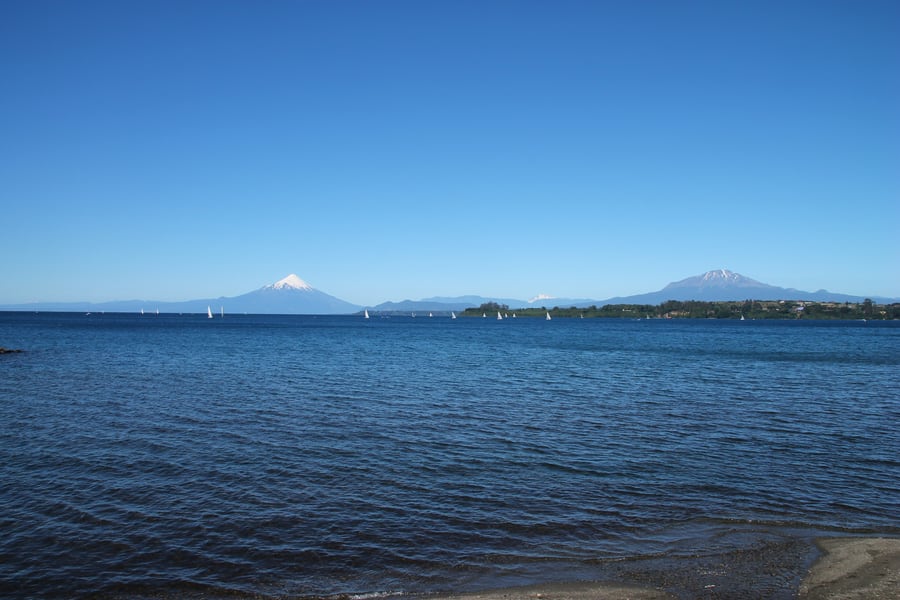 Draceane / Wikimedia Commons · CC BY-SA 4.0 · 2019 · cropped
Puerto Varas
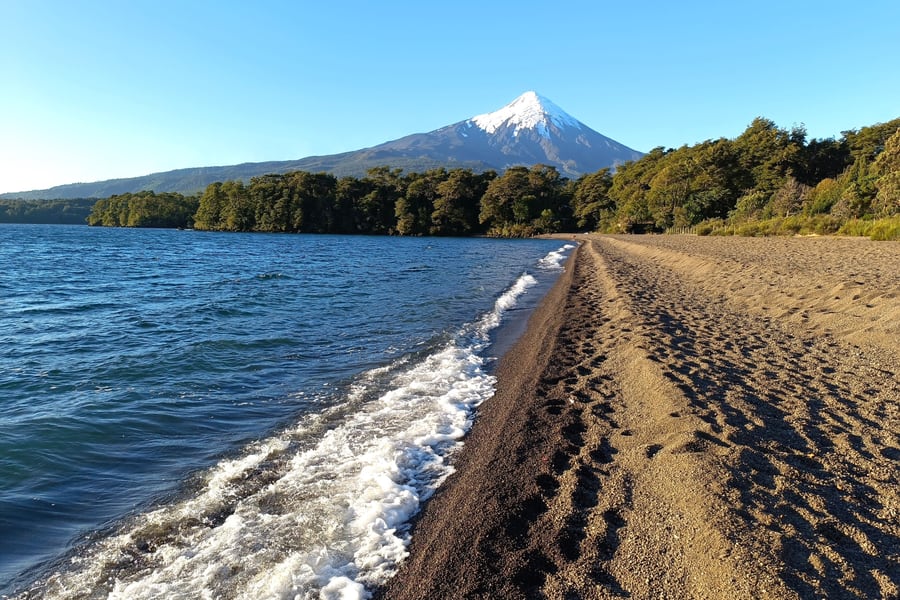
The first 212 German colonists reached the district at the end of 1853, and the settlement was named in 1859 after the interior minister Antonio Varas. It looks across Lake Llanquihue, Chile's second-largest, to the cones of the Osorno and Calbuco volcanoes, and is the base for the lake and the national park beyond.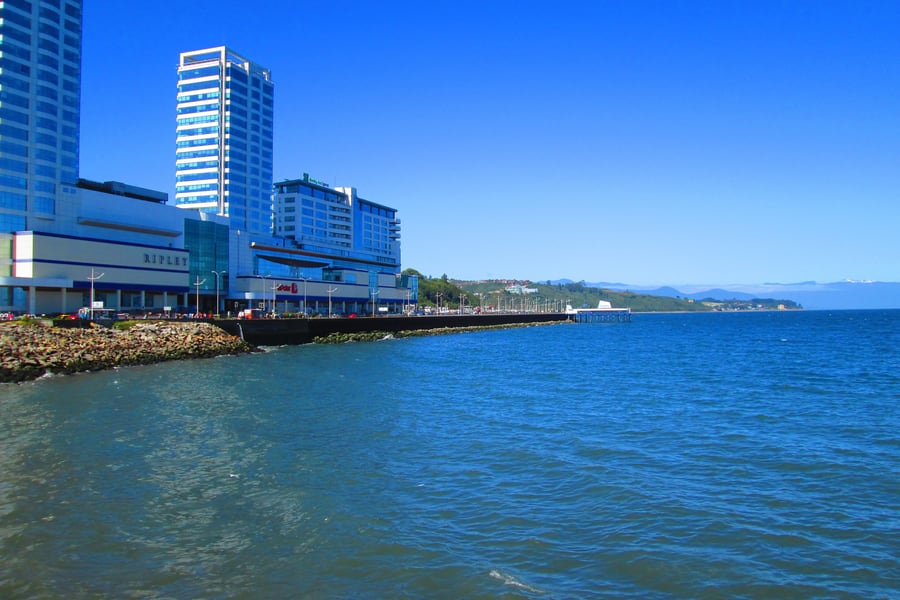 Manxuc / Wikimedia Commons · CC BY-SA 4.0 · 2016 · cropped
Puerto Montt
Founded in 1853 on the Seno de Reloncaví, 918 km south of Santiago, the capital of the Los Lagos region is the gateway to Chiloé and to Chilean Patagonia, and the centre of the country's salmon industry. At Monte Verde, within its own commune, hunter-gatherers left traces some 14,800 years ago.Where to Sleep
Puerto Montt, at the southern end of the line, is where the ferries for Chiloé and the south leave, and the natural base for travellers heading on. Puerto Varas, eleven minutes from Llanquihue, is the base for the lake and the volcanoes.
Where to stay
Hotel Bellavista
In the centre of Puerto Varas
Its own site gives 68 rooms, every one with a view of Lake Llanquihue and the volcanoes, and more than a hundred years on the site.
Check Availability (opens in a new tab, on hotelbellavista.cl)via hotelbellavista.clHotel Gran Pacífico
In the centre of Puerto Montt
Its own site describes views over the bay and the volcanoes, and a restaurant, Los Navegantes, on the tenth floor.
Check Availability (opens in a new tab, on hotelgranpacifico.cl)via hotelgranpacifico.clQuestions or corrections
Planning this trip and stuck on something, or spotted a time, fare or detail that has changed? Send us a message about Llanquihue to Puerto Montt. We read every one, and we update this page when something has changed.