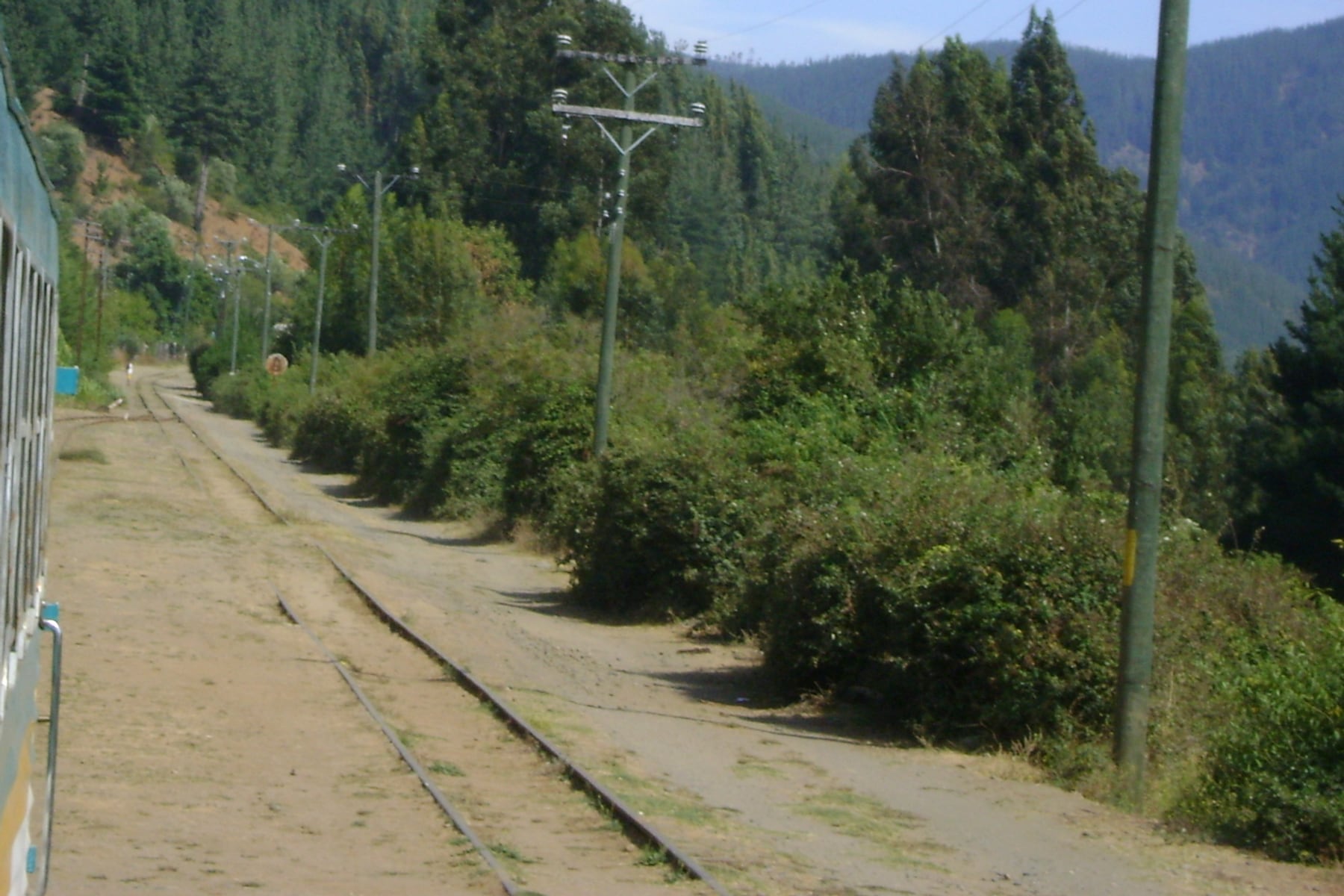
The Ramal Talca–Constitución
Milton Sepulveda Ahumada / Wikimedia Commons · CC BY-SA 3.0 · 2009 · cropped
- Distance44 km of an 88 km branch
- Duration1 hr 18 min each way
- Best seasonTwice a day each way, except Tuesdays and Fridays
Introduction
At González Bastías, forty-four kilometres out of Talca, the railway's two trains have always met. The station sits at the exact midpoint of the eighty-eight-kilometre branch down to the coast, and the timetable was built around it: one railcar out of each end, a crossing on the gravel platform, then on to Talca and to Constitución. Since a winter storm brought trees and hillside down on the lower half of the line in July 2026, that crossing has become the end of the journey. The railcar from Talca runs as far as González Bastías and goes back the way it came.
What still runs is metre gauge, rural, and unlike anything else left in Chile. The Ramal Talca–Constitución is the country's last branch line and its last narrow-gauge passenger railway, laid along the north bank of the Maule from 1889 and finished twenty-six years and seven presidencies later, in December 1915. Track, stations and halts were declared a national monument in 2007, which is why the rails cannot simply be lifted. The villages strung along it are still easier to reach by train than by road. The vehicle is a buscarril — literally a bus-rail: a German Ferrostaal railcar of 1961, a bus body on railway wheels, now being replaced by three Brazilian-built units that arrived in 2025.
The Journey
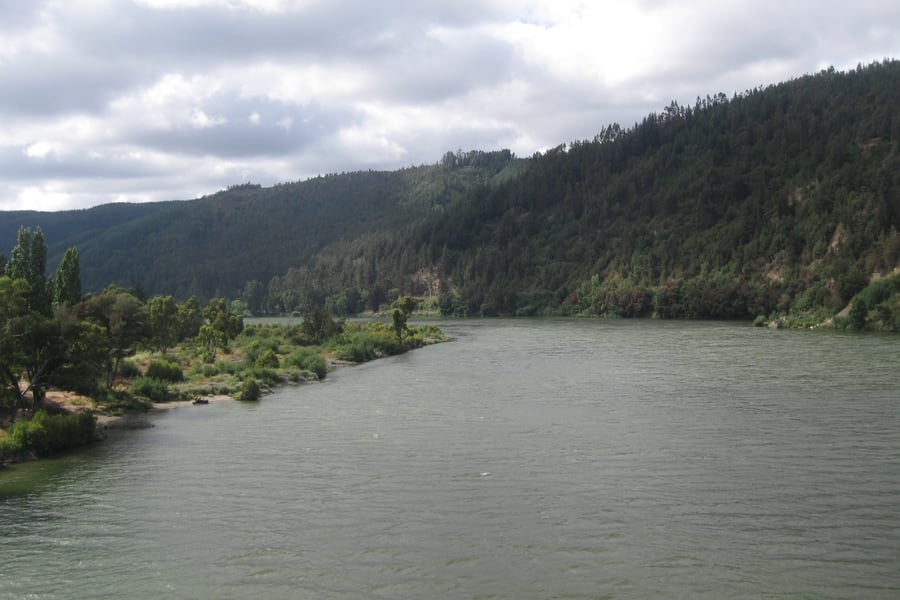
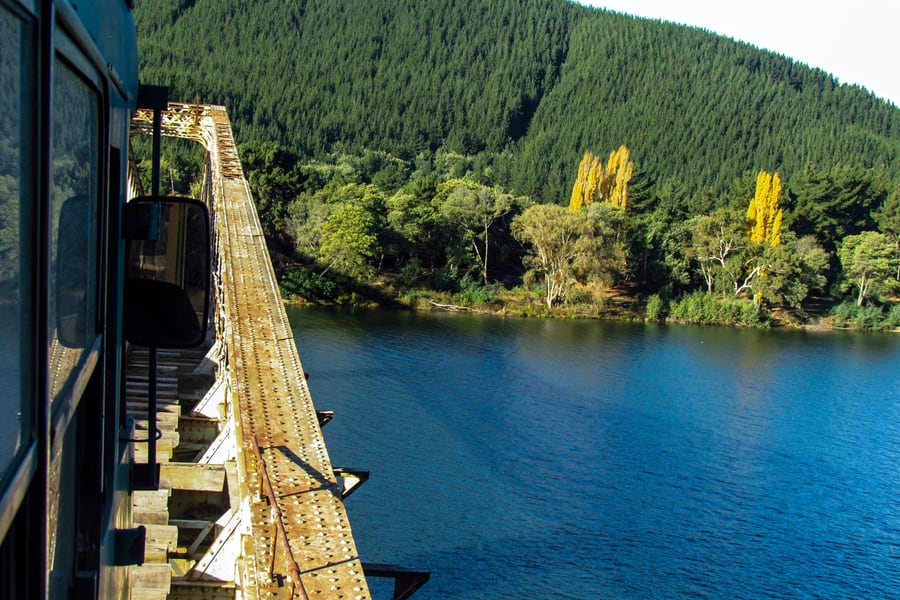
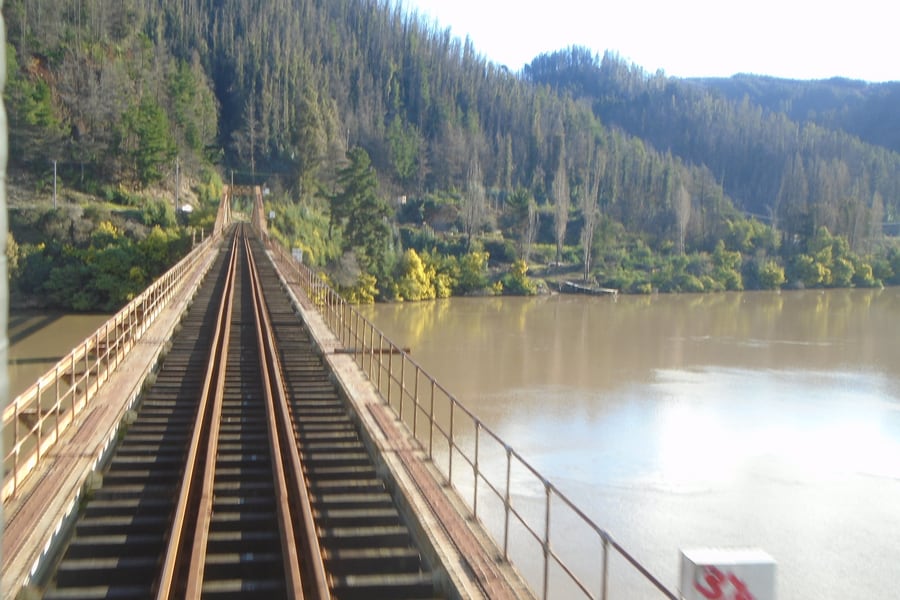
The railcar leaves from Talca's main station, the same platforms the Santiago–Chillán expresses use, and for the first minutes it runs under the wires of the main line before the metre-gauge rails peel away west and the catenary stops. From there the branch has the valley to itself. It follows the north bank of the Maule for its whole length, on a formation that was never straightened and never doubled, through country where the river is the reason for everything: the vines, the willows, the sandbanks, the places people live.
Colín comes up at kilometre 12, where the line crosses the Claro on the first of its metal bridges. Corinto is at 27 — the station was called Pocoa until a Greek miller who had settled there decided the country looked like the Corinth he came from, and the village church dates from 1794. Curtiduría at 34 takes its name from a tannery that worked there between the end of the nineteenth century and the middle of the twentieth; it was the end of the line when the first section opened on 13 August 1892, and it is now better known for rosé grapes and adobe wine cellars. Between them the train stops at Unihue, La Palma, Los Llocos and El Peumo, four of the seven halts that EFE agreed to keep serving after negotiations with the communities along the branch.
González Bastías, and why the train turns there
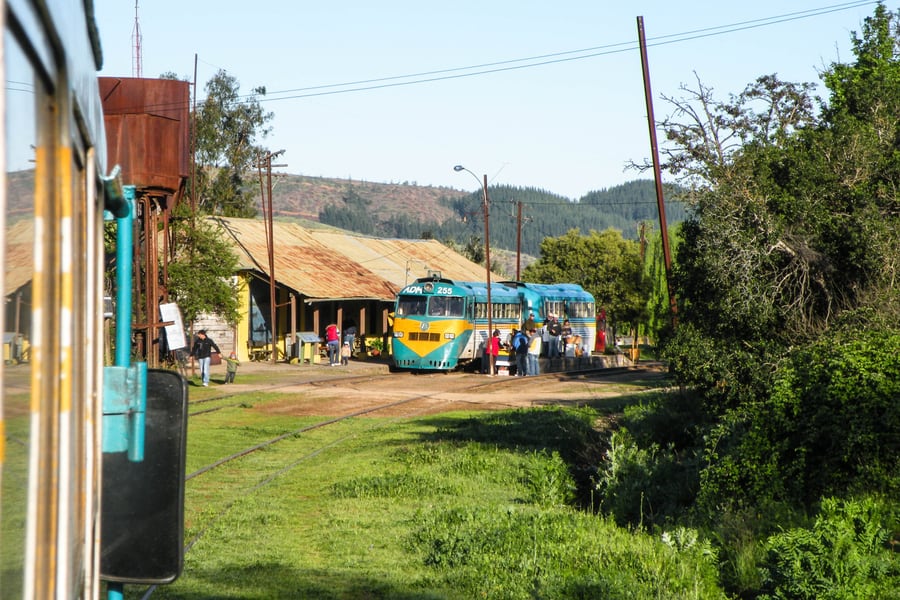
The station at kilometre 44 was called Infiernillo — little hell — until 1956, when it was renamed for the poet Jorge González Bastías, who lived there. It is the branch's crossing station: the single track has a loop, and the two railcars working the line meet on it. That is what put the whole timetable where it is, and it is why the village has a hand-worked turntable, a station restaurant and a reputation for tortillas de rescoldo, the flat bread baked in the embers.
Beyond it, at present, nothing runs. The line goes on to Toconey at 48, Pichamán at 52, Forel at 62 — named after the Swiss biologist François-Alphonse Forel, and standing five hundred metres east of the Quebrada Honda tunnel — then Huinganes at 66, Maquehua at 74, whose station burned in the forest fires of 2017, and finally over the Banco de Arena bridge into Constitución at 88. The operator's own journey planner has answered servicio temporalmente suspendido for every one of those stations on every date it will sell, which for a railway that is the only public transport some of these villages have is a serious thing rather than an inconvenience.
The buscarril
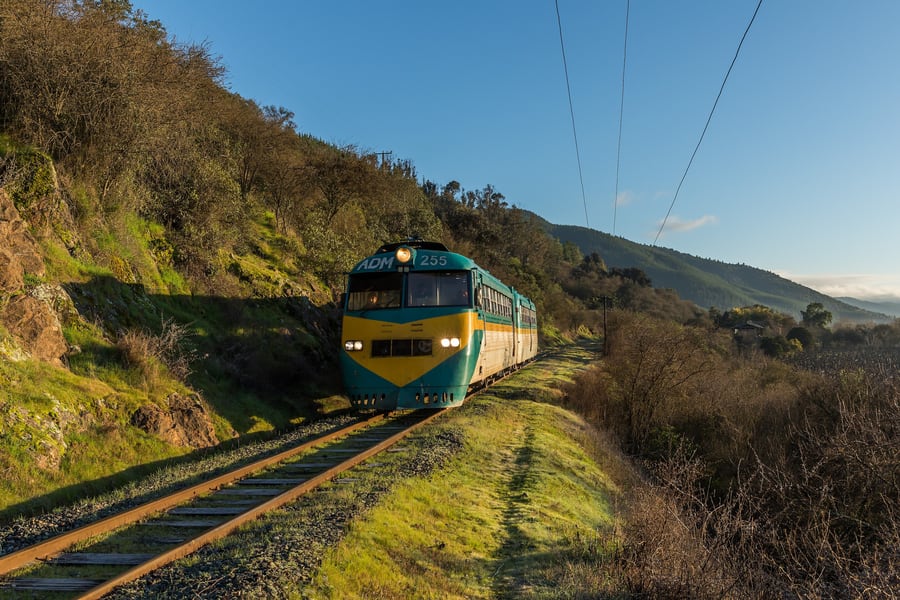
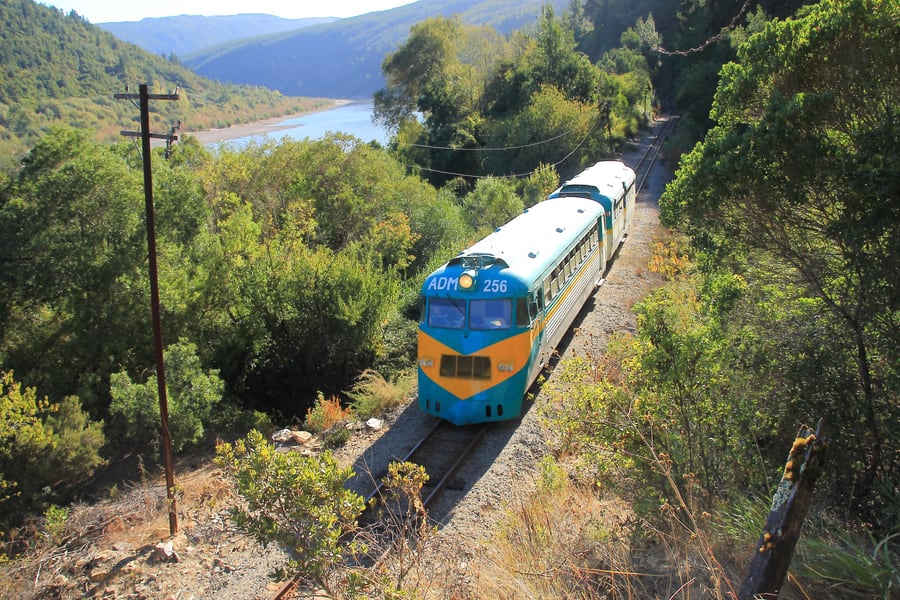
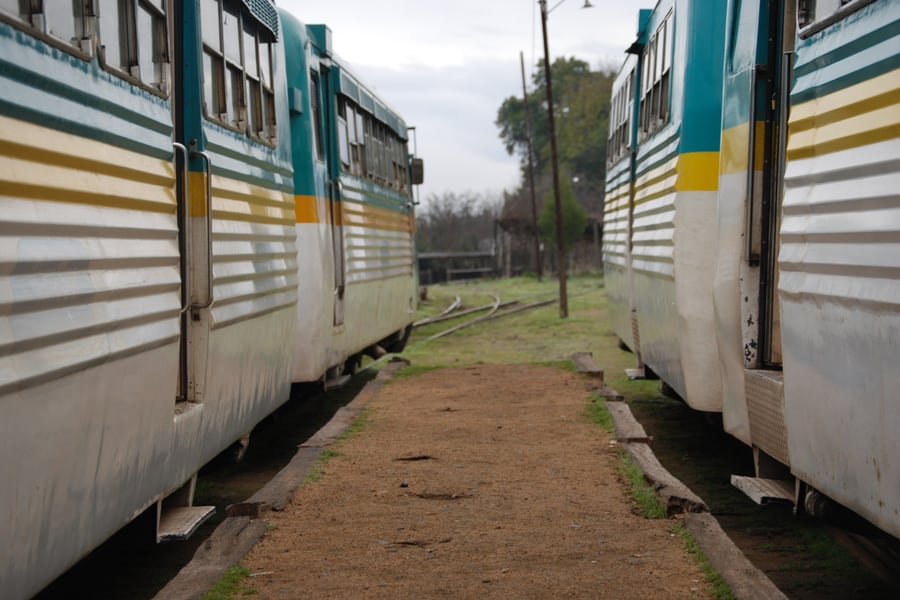
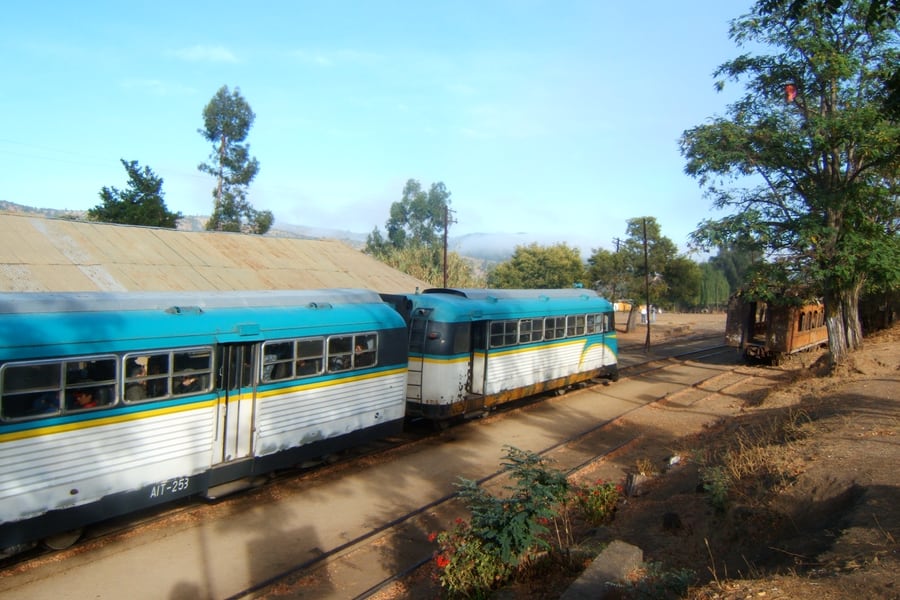
The vehicles that give the line its nickname are Ferrostaal SB-56 railcars, German, built in 1961: a power car and a trailer, twenty-five and a half metres over the pair, thirty tonnes, a 180 horsepower diesel, eighty seats and a single lavatory. They are numbered in the ADM series — 253, 255 and 256 are the ones photographers keep finding — and they wear two liveries, an older teal and yellow and a later orange and green. Sixty-five years of service is not a boast anyone makes of them; it is why they are being replaced.
The replacements are three two-car diesel units from Marcopolo Rail of Brazil, ordered under a US$15 million contract, delivered in 2025 and put through dynamic trials from October of that year. One of them reached Constitución on 11 December 2025, which EFE described as the first new train to arrive there in sixty years. Commercial running began on 3 March 2026 with a mixed fleet, the new unit taking two of the four daily frequencies. They carry 223 — eighty seated, the rest standing — with air conditioning, USB sockets and an accessible lavatory, and they have a cab at each end, so they no longer have to run to a turntable to change direction.
Along the route
 EL GUILLE! / Wikimedia Commons · CC BY 2.0 · 2011 · cropped
The crossing that set the timetable
González Bastías stands at kilometre 44 of 88, and that is no coincidence: the branch is single track with a passing loop there, so the two railcars were timed to meet on it and the rest of the timetable followed. With the coastal half shut, the crossing place is now the terminus.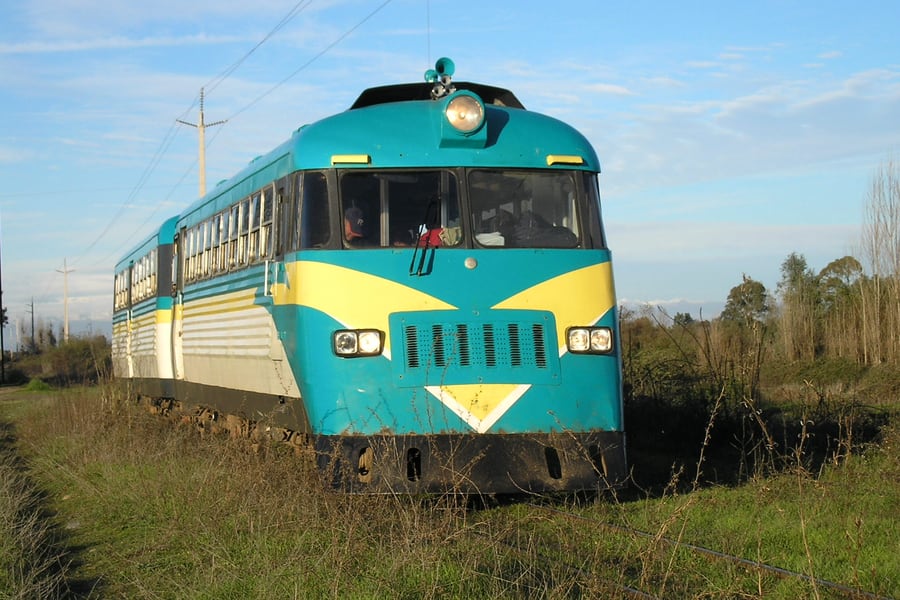 tuguriodetom / Wikimedia Commons · CC BY 2.0 · 2008 · cropped
A bus body on railway wheels
Buscarril is not a nickname the line invented; it is what these vehicles are. Ferrostaal built them in 1961 by putting bus construction on railway running gear. This is the last line in Chile where they earn their keep, and the reason replacements were ordered is that they are sixty-five years old.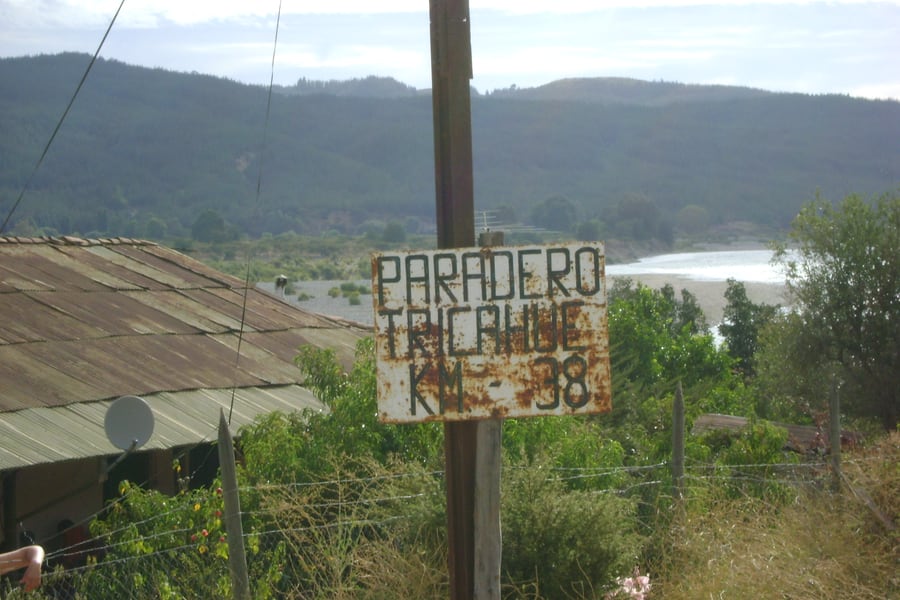 Milton Sepulveda Ahumada / Wikimedia Commons · CC BY-SA 3.0 · 2009 · cropped
A railway that cannot legally be lifted
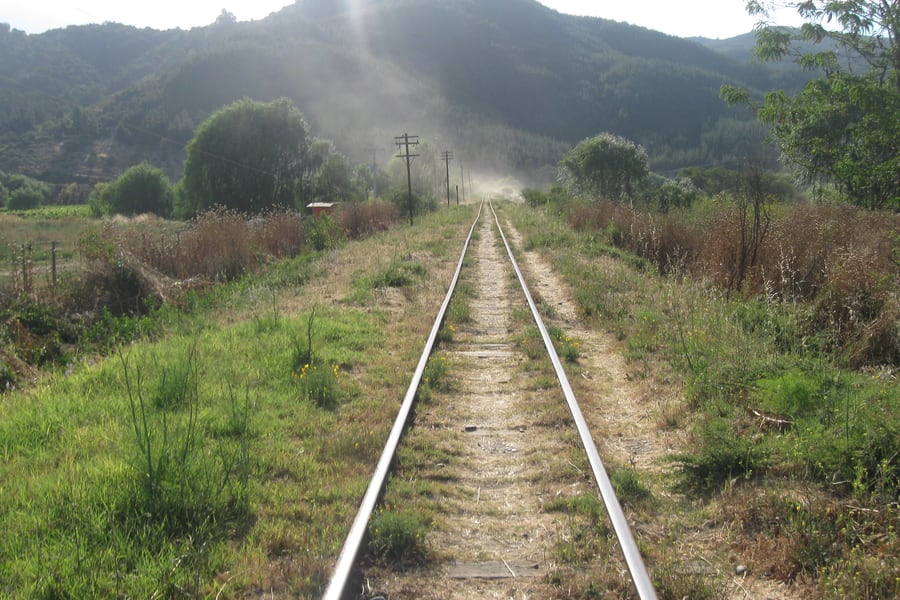
In 2007 the branch was declared a Monumento Nacional — not one building on it, but the track, the stations and the halts together. It is the villages' strongest argument: a line that is a monument cannot simply be closed and taken away.A bit of history
Culture & experiences along the way
 Cristobal carrasco / Wikimedia Commons · CC BY-SA 4.0 · 2017 · cropped
Six hours in Talca, or twelve minutes at the far end
The two departures are not symmetrical, and which way round the day works depends on which end it starts from. From Talca, the 07:15 reaches González Bastías at 08:33 and the return leaves at 08:45 — twelve minutes, long enough to stand on the platform and no longer. From the village the same trains give six hours in the city: 08:45 up, arriving 10:03, and 16:20 back. The branch was timetabled for the people who live on it, and it shows.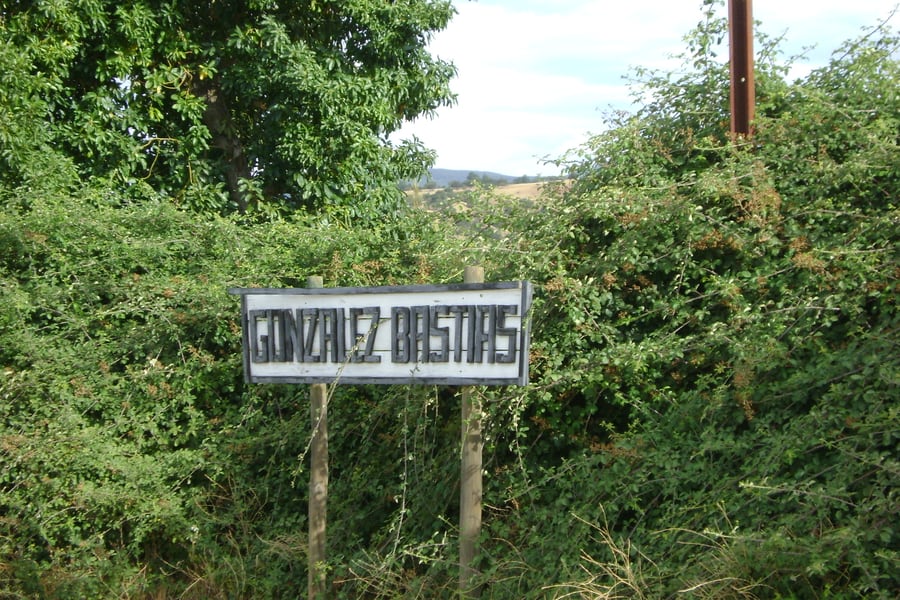 Milton Sepulveda Ahumada / Wikimedia Commons · CC BY-SA 3.0 · 2009 · cropped
The poet of the poor lands
Jorge González Bastías was born at Nirivilo in 1879, worked as a reporter in Santiago among the literary generation of the 1900s, then went home to farm, to serve as councillor and mayor, and to write about the country he could see from his own door. El poema de las tierras pobres — the poem of the poor lands — came out in 1924. He died at Infiernillo on 22 November 1950, beside the station that was renamed for him six years later, and the nameboard in the hedge is hand-lettered.Timetables
Two trains run in each direction, every day except Tuesdays and Fridays. The whole run is forty-four kilometres and takes an hour and eighteen minutes; EFE's own journey planner labels the traction Buscarril.
The times below are the operator's, read from EFE's journey planner in August 2026 and checked across fourteen consecutive dates and again in late November. On Tuesdays and Fridays the planner returns no service at all.
Talca to González Bastías
| Station | Morning | Afternoon |
|---|---|---|
| Talca | 07:15 | 16:20 |
| Unihue | 07:26 | 16:31 |
| Colín | 07:34 | 16:39 |
| Corinto | 07:53 | 16:58 |
| La Palma | 08:04 | 17:09 |
| Curtiduría | 08:10 | 17:15 |
| Los Llocos | 08:17 | 17:22 |
| El Peumo | 08:24 | 17:29 |
| González Bastías | 08:33 | 17:38 |
González Bastías to Talca
| Station | Morning | Afternoon |
|---|---|---|
| González Bastías | 08:45 | 17:50 |
| El Peumo | 08:54 | 17:59 |
| Los Llocos | 09:01 | 18:06 |
| Curtiduría | 09:09 | 18:14 |
| La Palma | 09:14 | 18:19 |
| Corinto | 09:26 | 18:31 |
| Colín | 09:45 | 18:50 |
| Unihue | 09:52 | 18:57 |
| Talca | 10:03 | 19:08 |
The morning pair makes a day return possible in one direction only: out at 07:15 and back at 08:45 leaves twelve minutes at González Bastías, while the 16:20 out and the 08:45 back the next morning is an overnight. From the village end it works the other way round — 08:45 up to Talca and 16:20 back gives six hours in the city.
Two things the published times do not say
EFE's service page for the branch carries two different timetables, one of them stale: an older block with a 07:05 departure from Talca and no stops at Unihue, La Palma or Los Llocos, and a current block matching the planner. Where they disagree at González Bastías, by eight minutes, the planner is the version the operator's own booking system uses.
The four daily frequencies that ran the full length to Constitución until July 2026 are not suspended in part. Every station beyond González Bastías is closed to passengers, and the planner returns servicio temporalmente suspendido for all of them, on every date it will sell. No restoration date has been published.
Departures are published by the operator: EFE · Tren Talca – Constitución (opens in a new tab).
Tickets
The branch has one of the simplest fare tables on the Chilean network and one of the cheapest. EFE's own calculator returns the same figure for Talca to Colín, Corinto, Curtiduría or González Bastías — CLP 1,380 for a general passenger, whether the journey is twelve kilometres or forty-four. Residents of the villages pay CLP 920, and residents who are pensioners or students CLP 460. There is no first class and nothing to reserve.
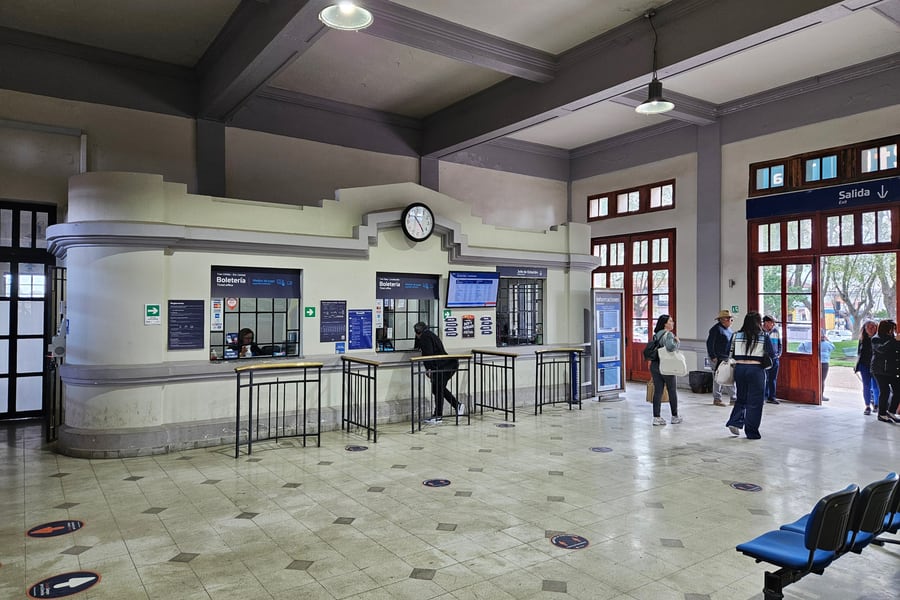
The Talca office sells for cash and the on-board staff sell too. The online quota is deliberately small, because residents have priority — and tried in August 2026 it returned no availability at all, which leaves the ticket office and the train itself as the reliable ways to travel. Luggage is the point on this line: checked items are CLP 500 each, and residents selling what they grow get their first free.
Book your tickets
 TomasVial / Wikimedia Commons · CC0 · 2024 · cropped
Talca to González Bastías
CLP 1,380 one way, general fare
EFE's fare calculator returns the same CLP 1,380 for a general passenger from Talca to Colín, Corinto, Curtiduría or González Bastías — twelve kilometres or forty-four, the price does not change. Residents of the villages pay CLP 920, and residents who are pensioners or students pay CLP 460. The Talca ticket office sells for cash and the on-board staff sell as well; the small online quota is held for residents, and it was returning no availability in August 2026.
via efe.clRail Passes
No rail pass covers this journey, and none would be worth carrying if it did. Chile sits outside the Interrail and Eurail schemes, EFE sells each of its named services separately, and the fare from Talca to the far end of the branch is CLP 1,380. A pass has nothing here to discount.
What does connect is the long-distance train. Talca is one of the stops on EFE Central's Estación Central–Chillán service, which left Santiago four times on the day this was checked in August 2026, and the branch starts from the same station. That ticket is bought separately, from EFE Central (opens in a new tab), and the branch fare is paid at the Talca window or on board.
Places to Visit
Four stops carry the journey as it runs today, and none of them is a resort. The branch was built to serve farms and villages, and what there is to see at each station is what the valley does for a living — grapes, adobe cellars, a country church, a poet's house. The stations themselves are part of the national monument declared in 2007, which is why several of them still look the way they did when the line was young.
 TomasVial / Wikimedia Commons · CC0 · 2024 · cropped
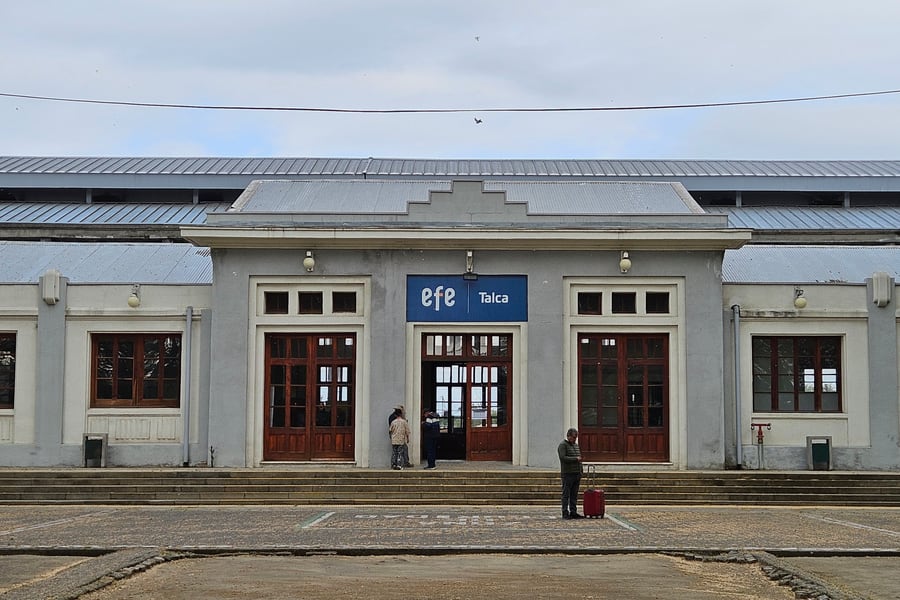
Talca
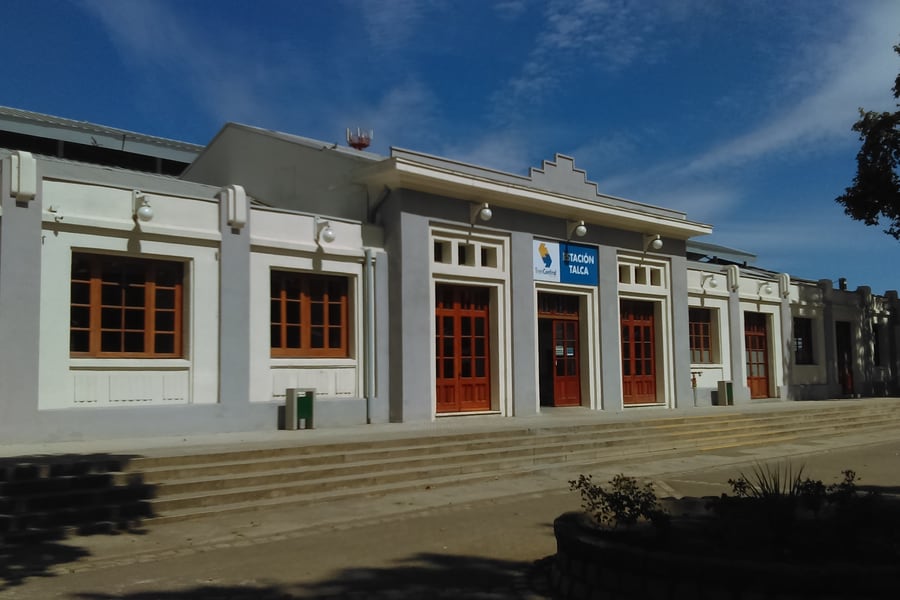
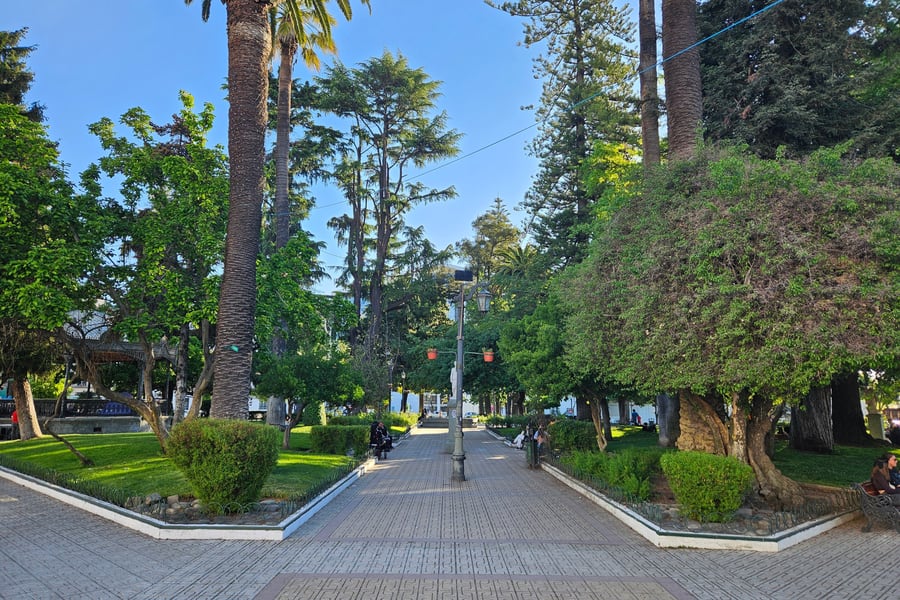
Founded on 12 May 1742 as Villa San Agustín de Talca and now the capital of both the province and the Maule Region, 255 kilometres south of Santiago and standing near where the Claro meets the Maule. It is the working centre of Chile's farming country rather than a sight in itself, and the Plaza de Armas is where that is easiest to see: palms, benches, and the regional government a block away. The branch and the long-distance train share one station.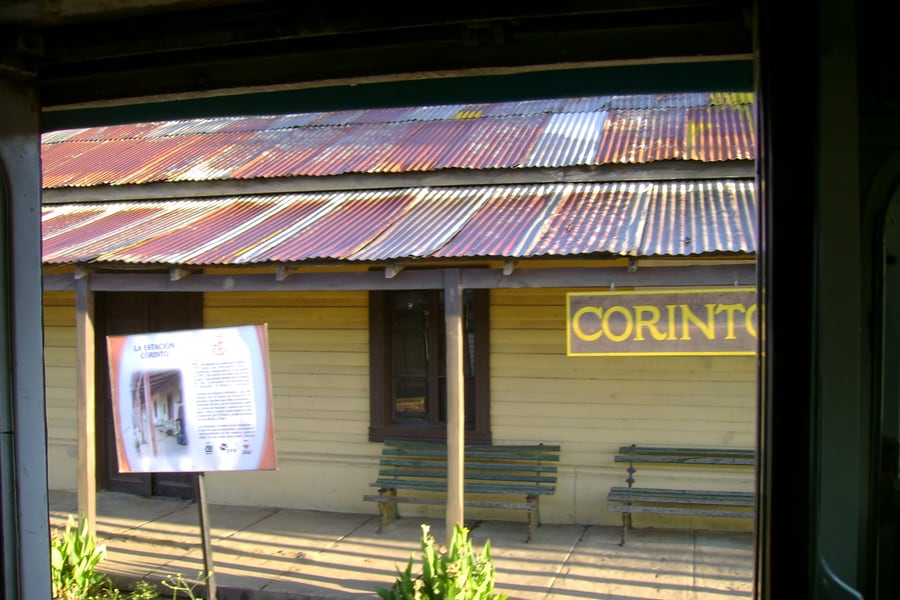 meschmarco / Wikimedia Commons · CC BY-SA 3.0 · 2007 · cropped
Corinto
The station was called Pocoa until a Greek miller who had settled there decided the country reminded him of the Corinth he had left, and the name stuck. The village church dates from 1794, older than the republic and a great deal older than the railway, and it fills on 8 December for the Immaculate Conception. The station building is timber under a corrugated roof, with its name painted across the boards.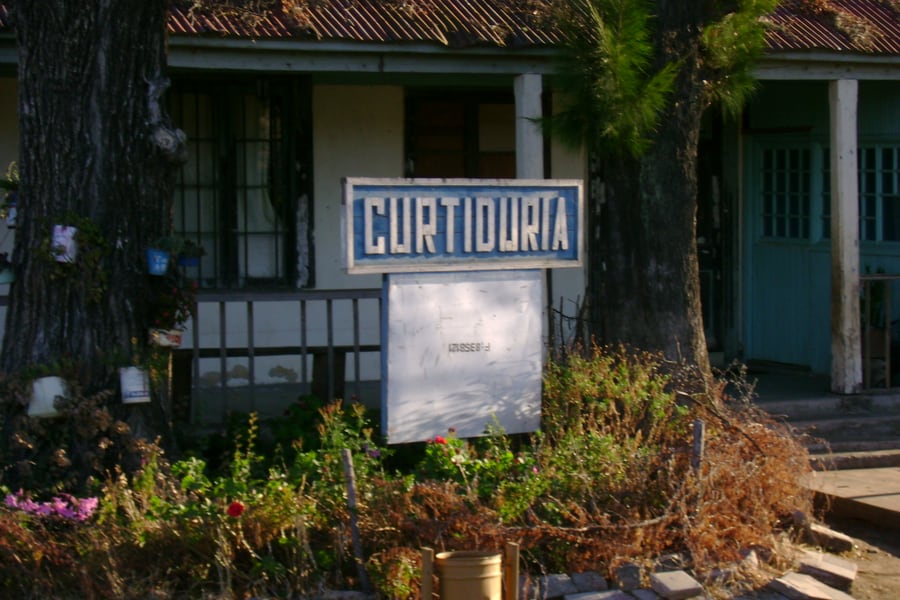 meschmarco / Wikimedia Commons · CC BY-SA 3.0 · 2007 · cropped
Curtiduría
For two years this was the whole railway: the first section opened here on 13 August 1892 and went no further until Pichamán in 1894. The name comes from a tannery that worked in the sector from the end of the nineteenth century into the middle of the twentieth. What the village is known for now is rosé grapes and adobe cellars, and the wine made from País, Torontel and Moscatel vines that have been in the same families for generations.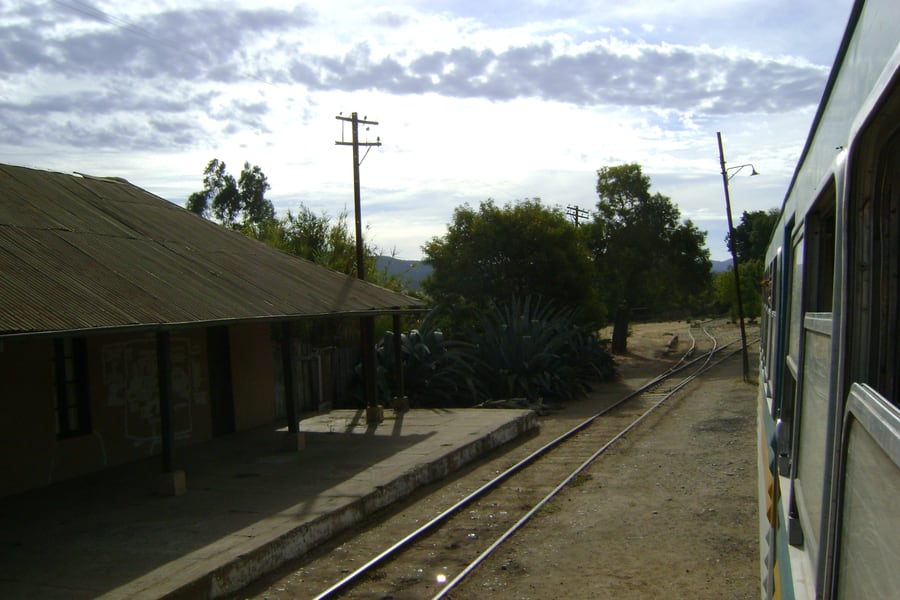 Milton Sepulveda Ahumada / Wikimedia Commons · CC BY-SA 3.0 · 2009 · cropped
González Bastías
A hamlet in the commune of Pencahue with no through road worth the name, which is why the railway matters here. The station has the passing loop, a hand-worked turntable from the days when a railcar had to be turned to go back, and a kitchen that has made the place locally famous for tortillas de rescoldo, bread baked in the ashes. Since July 2026 it has also been the end of the line, and the walk on from here to the coast is a long one.Where to Sleep
Both ends of the day are in Talca. The morning railcar leaves at 07:15 and the evening one gets back at 19:08, so a bed in the city covers the journey in either direction, and Talca is also where the long-distance train from Santiago sets its passengers down.
Along the branch itself the accommodation is domestic rather than commercial. The Asociación Gremial El Ramal, which represents the small businesses strung along the line, lists a cabin at Curtiduría and two options at González Bastías — a historic house and a vineyard — all of them booked by telephone, two or three days ahead, and none with a website of its own. Nothing about them can be verified here beyond the association's own listing, so they get a mention rather than a card.
Where to stay
Hotel Diego de Almagro Talca
On the Alameda, in the centre of Talca
The hotel's own site places it on the Alameda in the middle of Talca, close to the courts, the Plaza de Armas and the cathedral, and counts 107 rooms over eight floors — fifty singles, fifty doubles and seven triples — with four function rooms. It lists a restaurant, a business centre, laundry and underground parking subject to availability, and a heated indoor pool, sauna and gym open until 23:00.
Check Availability (opens in a new tab, on dahoteles.com)via dahoteles.comHotel Casino Talca
Beside Mall Plaza Maule, on the edge of the city
Part of the Casino Talca complex, which its own site places minutes from Ruta 5 Sur and the Plaza de Armas and next to Mall Plaza Maule. Alongside the hotel it lists restaurants, a café, a spa and wellness centre, a gym, a discotheque and a programme of live shows, with the gaming floor and its club at the centre of it. It is the option for arriving late off the Santiago train.
Check Availability (opens in a new tab, on casinotalca.cl)via casinotalca.clQuestions or corrections
Planning this trip and stuck on something, or spotted a time, fare or detail that has changed? Send us a message about The Ramal Talca–Constitución. We read every one, and we update this page when something has changed.