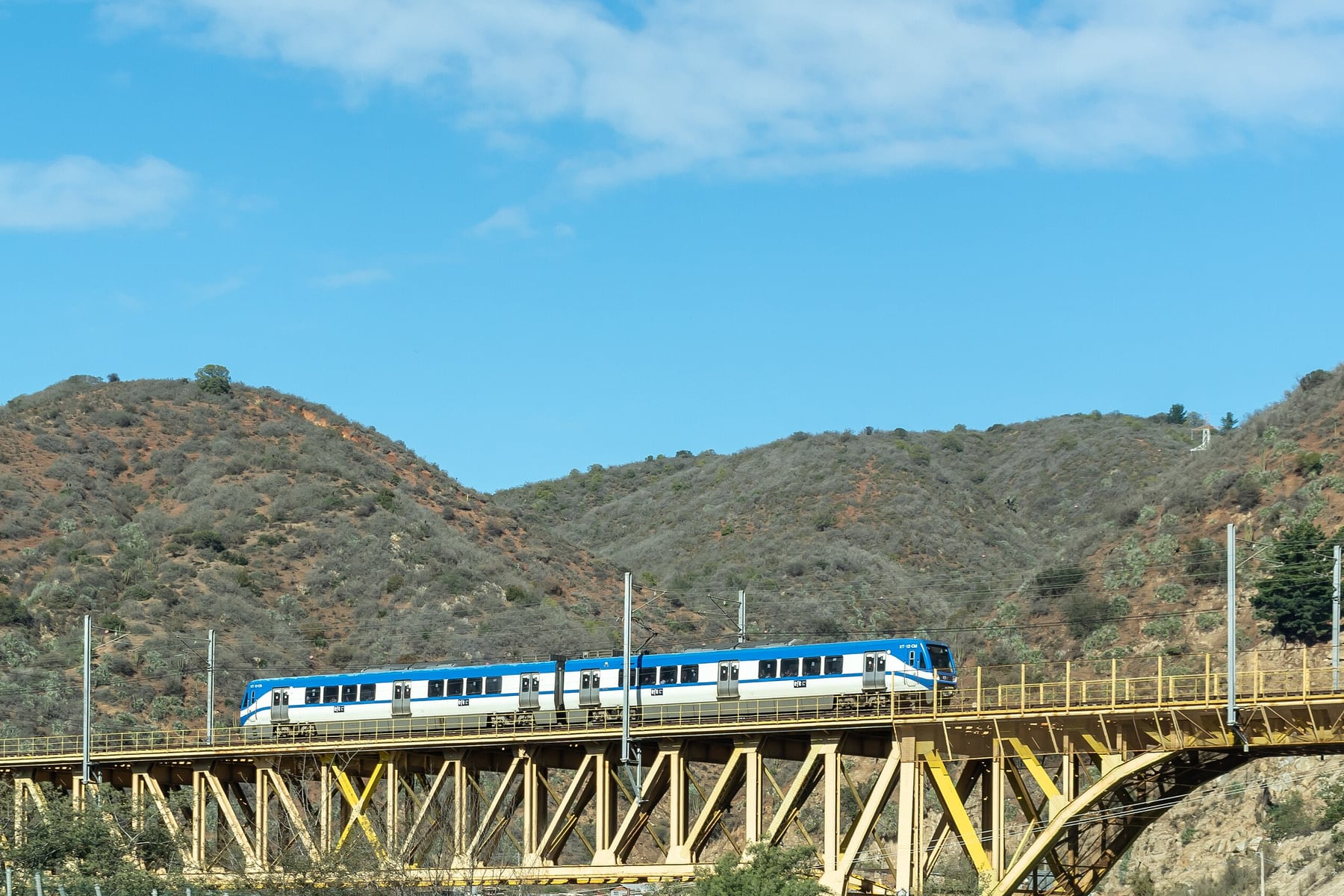
Valparaíso to Limache
Carlos Figueroa / Wikimedia Commons · CC BY-SA 4.0 · 2022 · cropped
- Distance43 km
- Duration1 hr 2 min – 1 hr 3 min
- Best seasonAll year, every day
Introduction
The railway between Chile's main port and its capital started here. Work began at Barón, on the Valparaíso waterfront, in 1852; the first trains ran out to El Salto in September 1855, and by 1863 the line reached Santiago. The through trains have long gone, but the first 43 kilometres, from the port to the market town of Limache, are now a suburban railway that carried a record 2.35 million journeys in March 2026.
EFE's Tren Limache–Puerto is an electric suburban line through the whole of Greater Valparaíso: along the edge of the bay past the fishing cove at Portales, through a tunnel under Viña del Mar, up the Marga Marga valley to Quilpué and Villa Alemana, and out through open hills to Limache. Trains run every 12 minutes on weekdays and Saturdays and every 15 on Sundays, take just over an hour end to end, and cost CLP 1,390 at the busiest times — paid from a rechargeable card, with no booking.
The Journey
Puerto station stands at the foot of Valparaíso's hills beside Plaza Sotomayor and the Muelle Prat. There has been a station here since 1876; the present building, with its tower, opened on 20 January 1937, and since 2011 it has shared the site with a shopping centre.
The trains
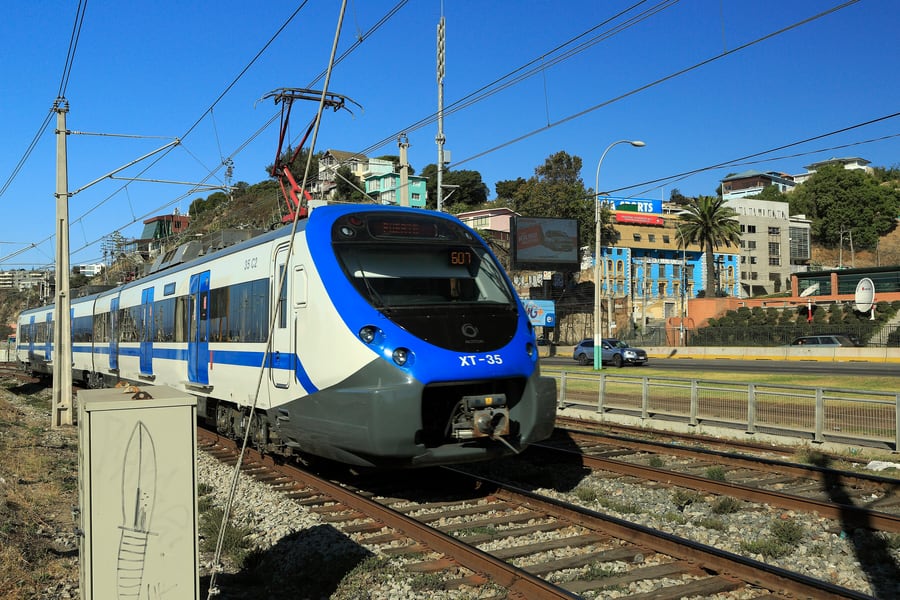
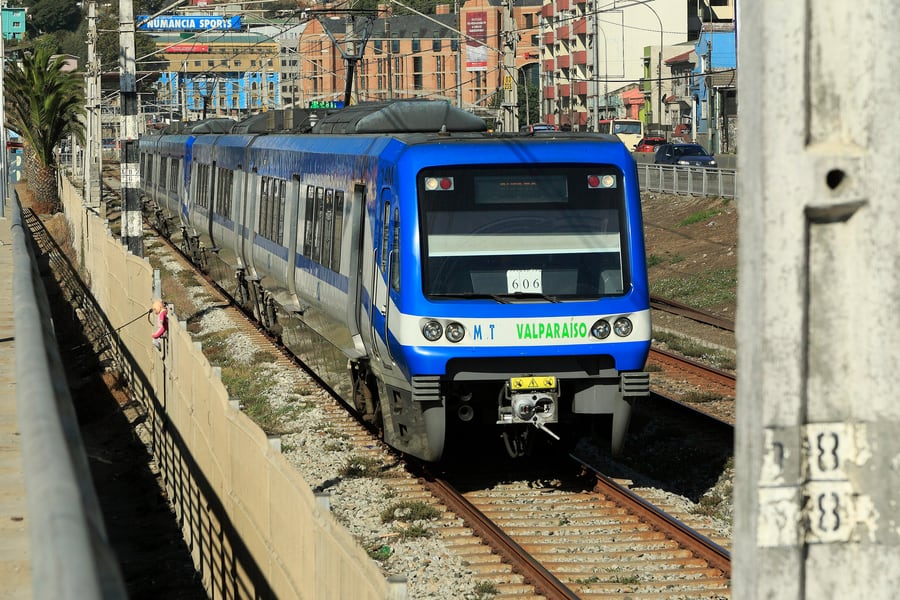
The line runs a fleet of 35 electric units, and five more are joining it during 2026. Most are Alstom X'Trapolis 100s, 27 two-car units built at La Rochelle in 2005–06 for the reopening, joined in 2015 by eight X'Trapolis Modulars from Alstom's Barcelona works, recognisable by their rounded blue noses. The newest are five three-car units from CRRC Sifang in China, 77 metres long and carrying 660 passengers; EFE calls them the Tren 3C, and the first entered service on 22 April 2026.
Along the bay
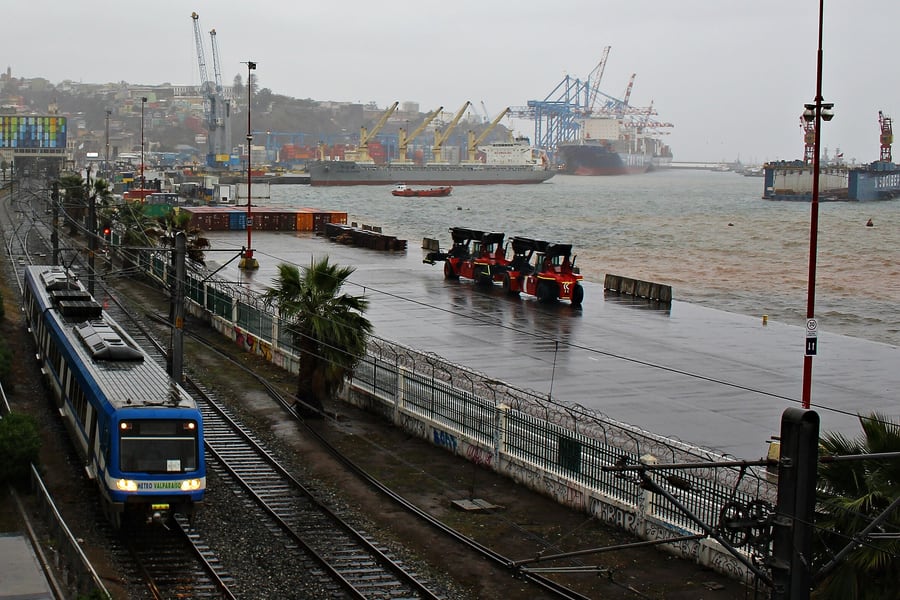
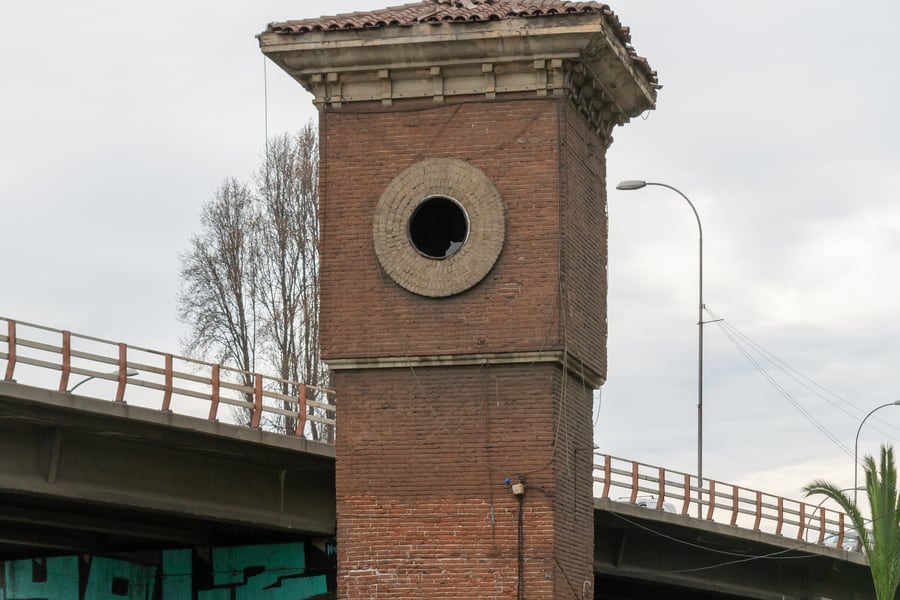
Out of Puerto the line hugs the shore. It passes Bellavista and Francia, then Barón, where the railway began and where a brick clock tower of the first station still stands, and runs beside Avenida España past the fishing cove of Caleta Portales and Recreo, with the bay of Valparaíso alongside. At Caleta Abarca it goes underground for more than five kilometres beneath Viña del Mar, a tunnel built for the 2005 reopening, with four stations below the city streets.
Up the Marga Marga
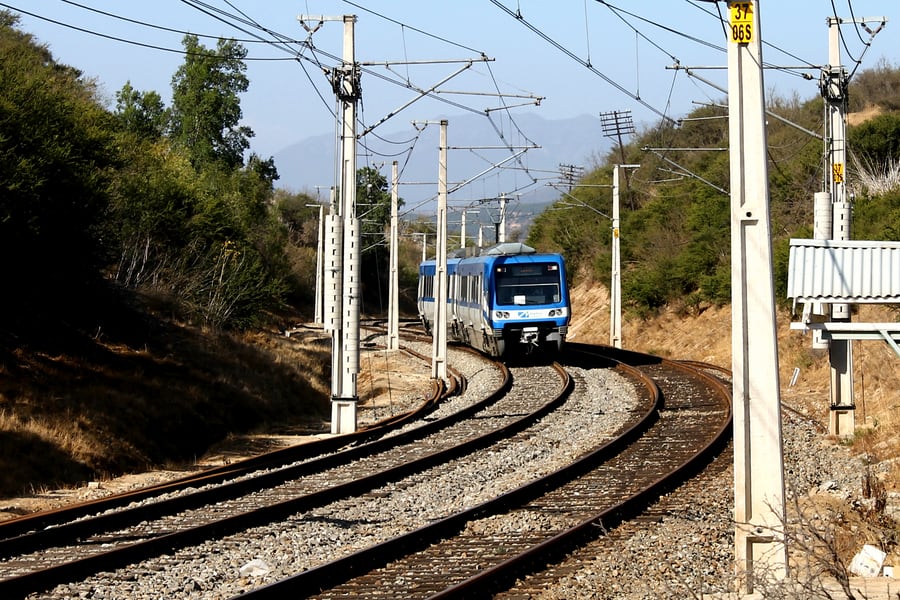
Beyond Chorrillos and El Salto the line climbs away from the coast. It crosses the Marga Marga between Viña del Mar and Quilpué on the Las Cucharas bridge, a steel structure built between 1908 and 1913 by Schneider et Cie of Le Creusot to replace the first bridge of 1856. Valencia, the newest station, opened in January 2026; after it come Quilpué, Villa Alemana and Peñablanca. The last stretch, thirteen minutes without a stop, runs through open hills and round the Queronque curves, where Chile's worst railway accident killed 58 people in February 1986, before the train reaches Limache, under the bulk of Cerro La Campana.
EFE currently warns that journeys are taking longer than usual while it adjusts its operations, so allow a little extra time.
Along the route
 Carlos Figueroa Rojas / Wikimedia Commons · CC BY-SA 4.0 · 2023 · cropped
The tower without a clock
The brick tower at Barón is all that survives of the first station on the Valparaíso–Santiago railway, begun in 1852 and rebuilt after the bombardment of 1866. Its English clock went for repair in 2010, and the face has stood empty since.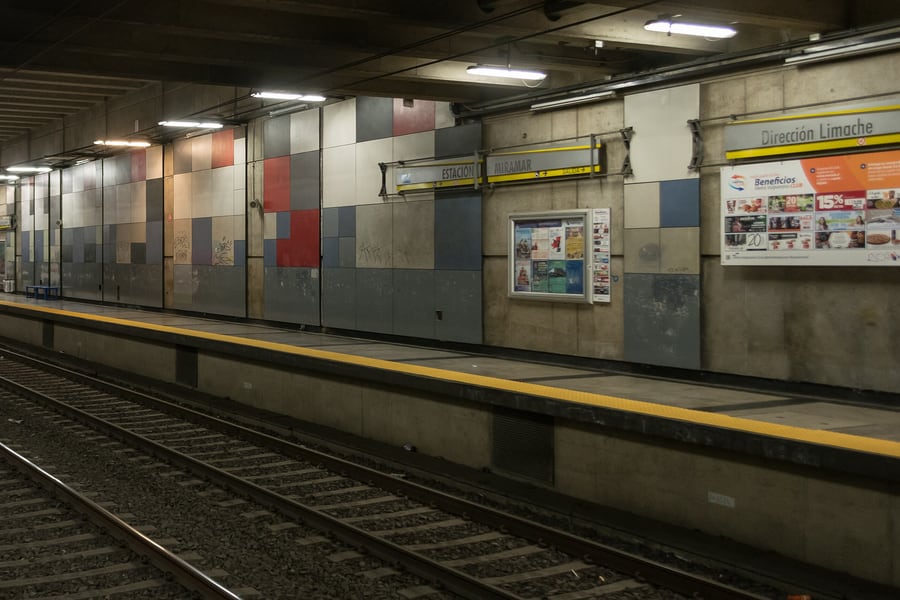 Carlos Figueroa / Wikimedia Commons · CC BY-SA 4.0 · 2020 · cropped
Under Viña del Mar
At Caleta Abarca the line dives into a tunnel of more than five kilometres under Viña del Mar's Avenida Viana and Avenida Álvarez, built for the 2005 reopening. Miramar, Viña del Mar, Hospital and Chorrillos are underground stations.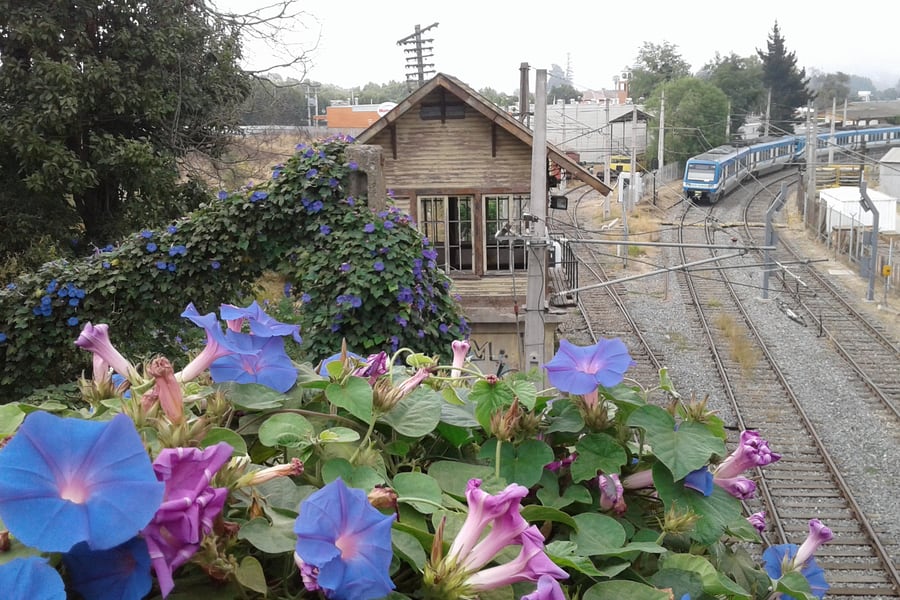 Claudio Vicencio / Wikimedia Commons · CC BY-SA 4.0 · 2017 · cropped
Limache's old cabin
The end of the line is a station building of 1872, rebuilt after the 1906 earthquake and remodelled in its original style for 2005. Beside the tracks stands an old wooden cabin, no longer in use; the line's workshops are next to the station.A bit of history
Culture & experiences along the way
 Arturo Rinaldi Villegas / Wikimedia Commons · CC BY-SA 3.0 · 2012
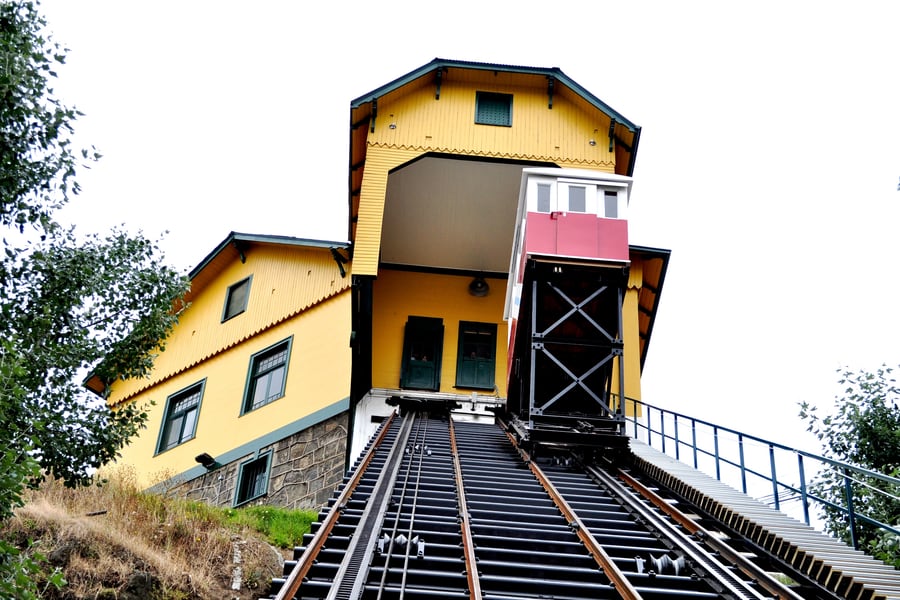
The Ascensor Barón
A short walk from Barón station, this funicular climbs 55 metres of track to a lookout on Cerro Barón in about a minute and a half. Opened in 1909 as Valparaíso's first electric ascensor, it is a national monument, and with the train's card the ride costs CLP 50 instead of 100.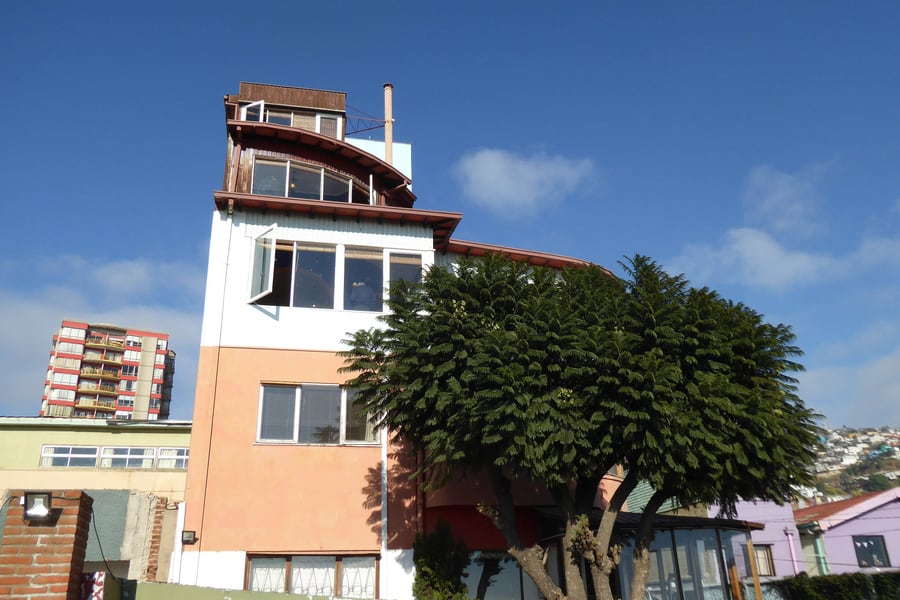 Mikel Santamaria / Wikimedia Commons · CC BY-SA 2.0 · 2018 · cropped
La Sebastiana, Neruda's Valparaíso house
Pablo Neruda bought this unfinished house on Cerro Bellavista in 1959, wanting a home that seemed to float in the air, and opened it with a party on 18 September 1961. Restored in 1991 and a museum since 1992, it looks out over the whole bay.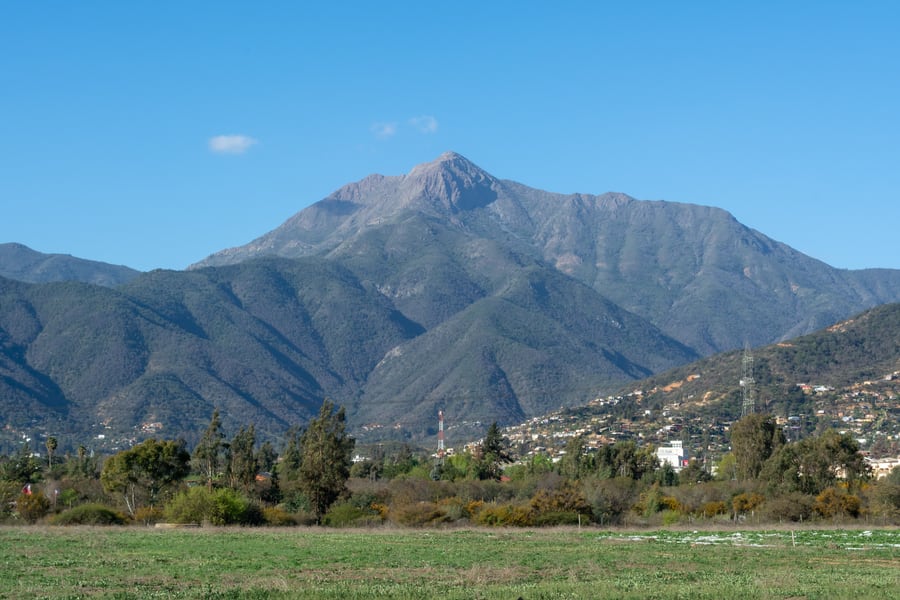 Carlos Figueroa Rojas / Wikimedia Commons · CC BY-SA 4.0 · 2021
Cerro La Campana
The mountain that fills the sky east of Limache is the heart of La Campana National Park, a UNESCO biosphere reserve with one of the last natural forests of Chilean palm. Charles Darwin climbed it on 17 August 1834. The Granizo entrance is in Olmué, a bus ride from Limache.Timetables
Trains run every day, all day, and there are no reservations: you touch your card at the gate and board the next train. The whole run takes 1 hour 2 or 3 minutes. The times below are from EFE's own timetable for the line, published in April 2026 and read in September 2026.
First and last trains
| From Puerto | From Limache | Every | |
|---|---|---|---|
| Monday to Friday | 06:00 – 22:30 | 06:00 – 22:15 | 12 minutes |
| Saturday | 08:00 – 22:24 | 07:00 – 22:06 | 12 minutes |
| Sunday and holidays | 09:00 – 22:12 | 08:00 – 22:06 | 15 minutes |
On weekday mornings and evenings extra trains run on the busy inner part of the line, so that between them a train leaves every 6 minutes: from Sargento Aldea towards Puerto between 06:48 and 09:30, and from Puerto between 07:36 and 10:00 and again between 16:06 and 19:54. Some early trains start at El Belloto, between 06:13 and 07:41. If you are travelling beyond Sargento Aldea, check the destination before you board.
How long from Puerto
| Station | Minutes |
|---|---|
| Barón | 5 |
| Portales | 8 |
| Recreo | 11 |
| Miramar | 14 |
| Viña del Mar | 15 |
| El Salto | 22 |
| Valencia | 32 |
| Quilpué | 35 |
| Villa Alemana | 47 |
| Peñablanca | 50 |
| Limache | 63 |
Stations open at 05:45 on weekdays, at 06:45 (Limache) and 07:00 (Puerto) on Saturdays and at 07:00 on Sundays, and close at 23:30.
Timetables and service notices are published by the operator: EFE · Tren Limache–Puerto — Servicio y trazado (opens in a new tab).
Tickets
There are no paper tickets. Every ride is paid from a Tarjeta de Transporte, a rechargeable card sold at station ticket offices and machines; you touch it at the gates going in and out. The fare depends on how many of the line's three zones you cross and on the time: weekdays 06:30–09:29 and 16:00–19:59 are peak, everything else, including all weekend, is off-peak. Puerto to Viña del Mar costs CLP 510 off-peak, and the whole line CLP 1,290.
The same card pays for the connecting buses from Limache to Quillota, La Calera and La Cruz at no extra cost within 120 minutes, and cuts the fare on Valparaíso's trolleybuses and ascensores. Seniors, people with disabilities and students registered for Chilean benefits pay reduced fares.
Book your tickets
 Falk2 / Wikimedia Commons · CC BY-SA 4.0 · 2017 · cropped
Single journey, Puerto to Limache
CLP 1,290 off-peak · CLP 1,390 peak
Paid from a Tarjeta de Transporte, which costs CLP 3,000 with CLP 500 loaded, at any ticket office or machine.
Book Tickets (opens in a new tab, on efe.cl)via efe.cl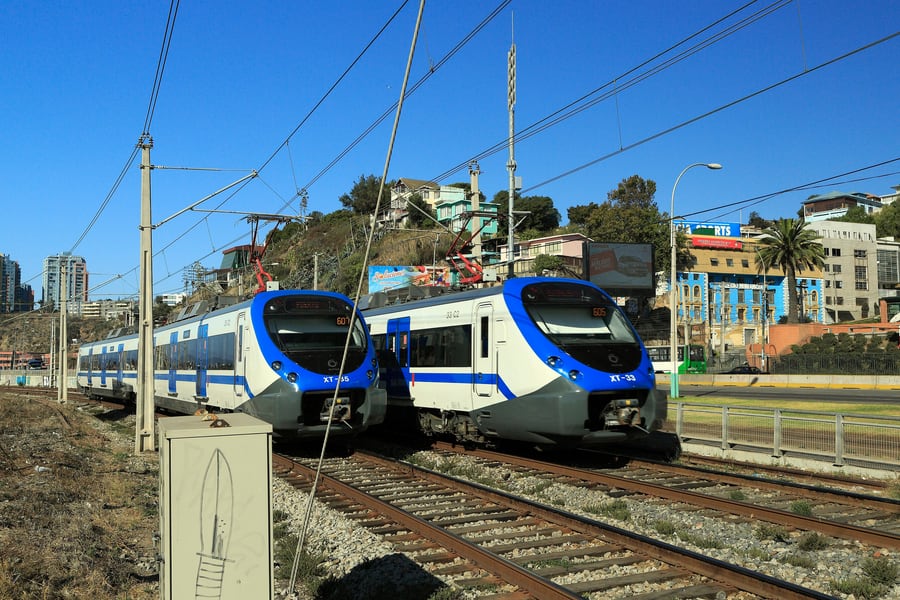 Falk2 / Wikimedia Commons · CC BY-SA 4.0 · 2017 · cropped
Day card (Tarjeta diaria/turista)
CLP 6,300 · CLP 3,800 if you already have a card
Unlimited rides on the whole line on the day you buy it, sold at every ticket office.
Book Tickets (opens in a new tab, on efe.cl)via efe.clRail Passes
No rail pass covers this journey. Chile sits outside the Interrail and Eurail schemes, and at CLP 1,390 at most for the whole line there would be little for a pass to save.
The nearest thing to one is EFE's own day card, the Tarjeta diaria/turista: CLP 6,300, or CLP 3,800 if you already hold a Tarjeta de Transporte, for unlimited rides on the whole line on the day you buy it. For someone who already has a card, CLP 3,800 is less than three off-peak rides the length of the line.
Places to Visit
The line strings together the towns of Greater Valparaíso, from the port where it starts to the farming valley where it ends. With a train every few minutes and one card for the whole ride, any of them makes an easy stop on the way.
 Deensel / Wikimedia Commons · CC BY 2.0 · 2018 · cropped
Valparaíso
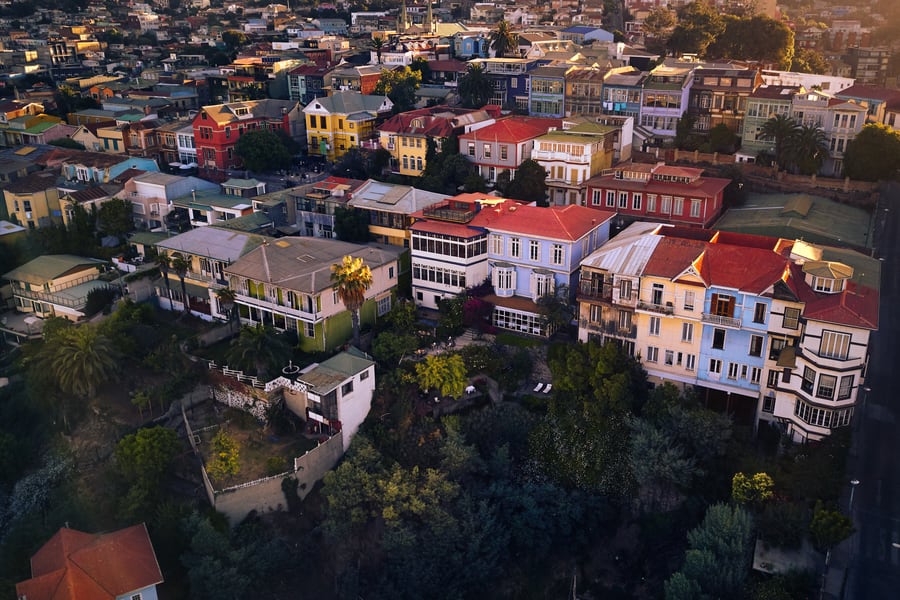
Chile's great nineteenth-century port climbs a ring of hills above the bay. It had Latin America's oldest stock exchange and the continent's first volunteer fire brigade, and its historic quarter has been a UNESCO World Heritage Site since 2003. Cerro Concepción, shown here, was built up by British and German immigrants whose houses still line its lanes.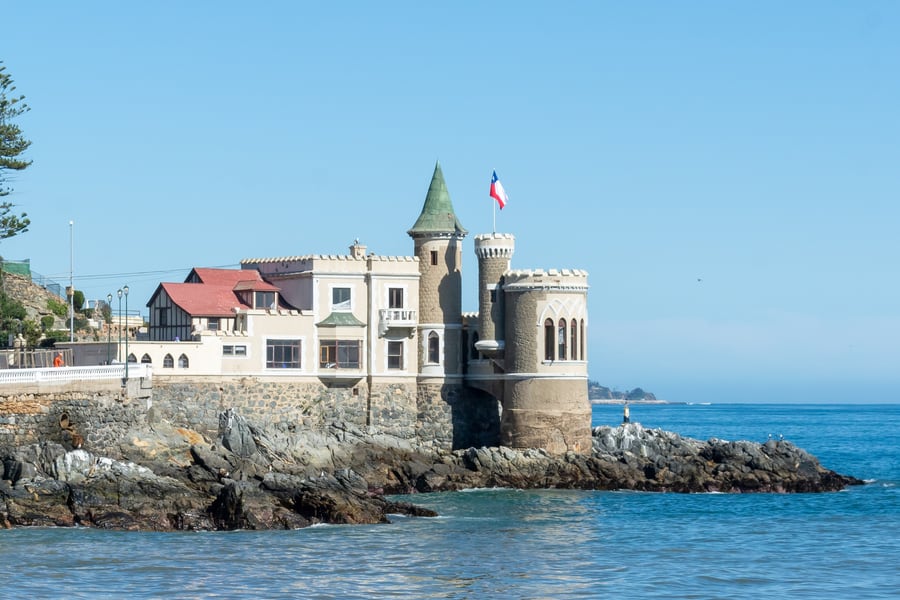 Carlos yo / Wikimedia Commons · CC BY-SA 4.0 · 2023 · cropped
Viña del Mar
Laid out from 1874 on land inherited by José Francisco Vergara, Viña del Mar took its name from vineyards planted on the Marga Marga in 1580, and grew into Chile's seaside resort around its railway station. On the shore near Miramar stands Castillo Wulff, a merchant's house of 1905–06 and a national monument since 1995.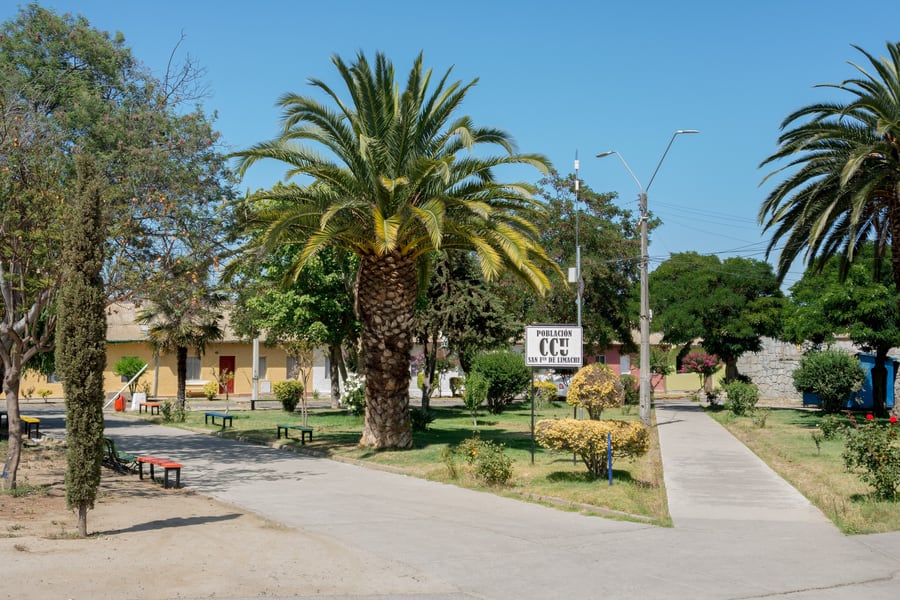 Carlos Figueroa Rojas / Wikimedia Commons · CC BY-SA 4.0 · 2019
Limache
Santa Cruz de Limache was founded in 1857, the year after the railway arrived, and grew in two halves either side of its estero, the station on the north bank. Italian families left their mark on its trade and its restaurants, and since the mid-twentieth century the valley has been known for its tomatoes, sold as far as Santiago's markets.Where to Sleep
Valparaíso is the natural base: the line starts at Puerto, and the historic hills above it hold most of the city's small hotels in restored houses. Both hotels below are on Cerro Concepción, in the UNESCO-listed quarter.
Where to stay
Hotel Gervasoni
On Cerro Concepción, Valparaíso
The hotel's own site describes a restored house of the late 1870s with 15 rooms, breakfast included and a terrace bar.
Check Availability (opens in a new tab, on hotelgervasoni.com)via hotelgervasoni.comHotel Brighton
On Cerro Concepción, Valparaíso
Its own site names its rooms after English novelists and offers rooms facing the bay or the city.
Check Availability (opens in a new tab, on hotelbrighton.cl)via hotelbrighton.clQuestions or corrections
Planning this trip and stuck on something, or spotted a time, fare or detail that has changed? Send us a message about Valparaíso to Limache. We read every one, and we update this page when something has changed.