Victoria to Temuco
LuisCG11 / Wikimedia Commons · CC BY-SA 4.0 · 2022 · cropped
- Distance65 km
- Duration1 hr 15 min – 1 hr 18 min
- Best seasonAll year, every day
Introduction
On the last night of 1892 a 27-year-old Belgian engineer, Gustave Verniory, was still driving rails south across the Araucanía, under orders to reach Temuco before the year ran out. The last rail went down at the station at midnight, and Temuco, founded as a frontier fort in 1881, opened its railway on New Year's Day 1893.
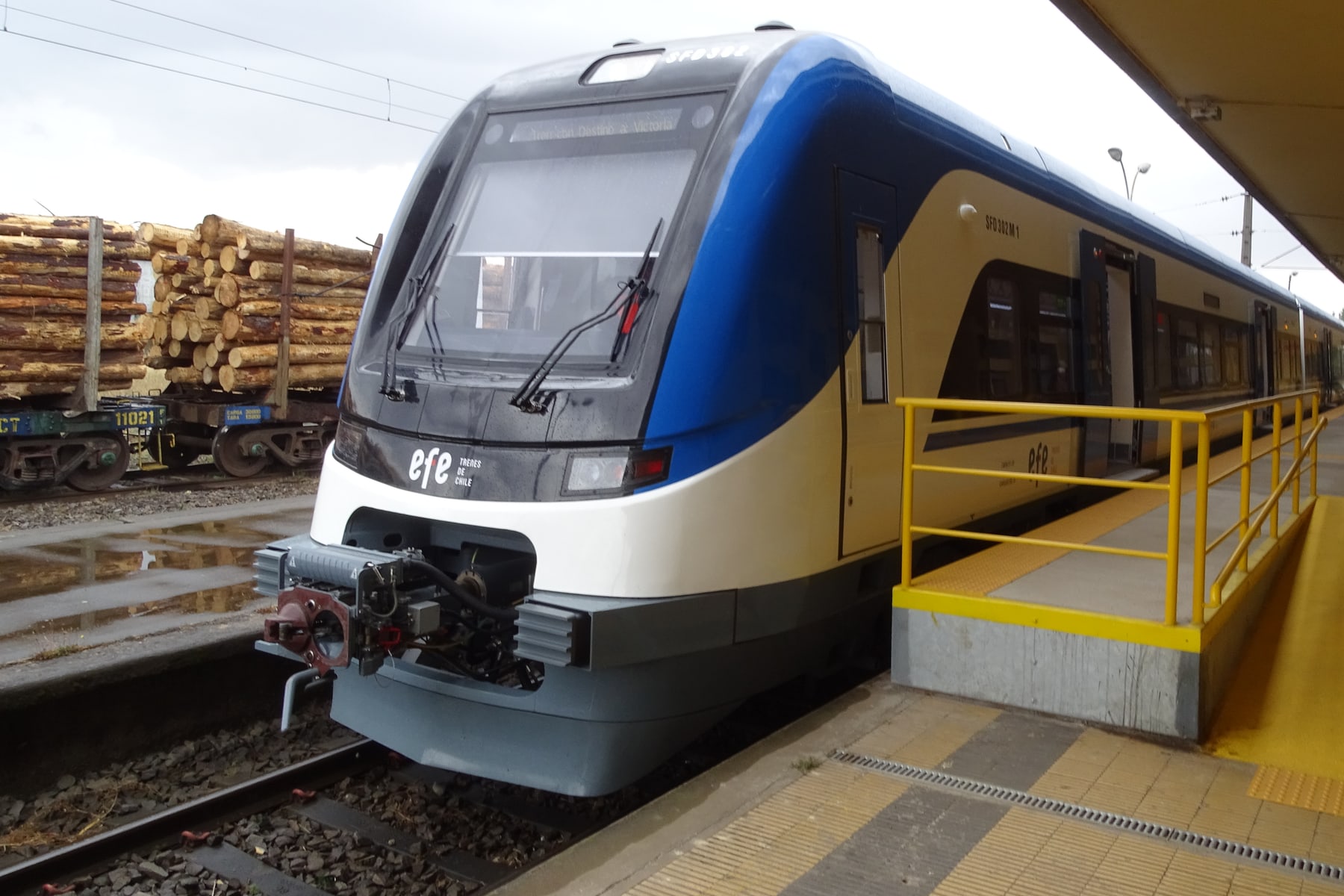
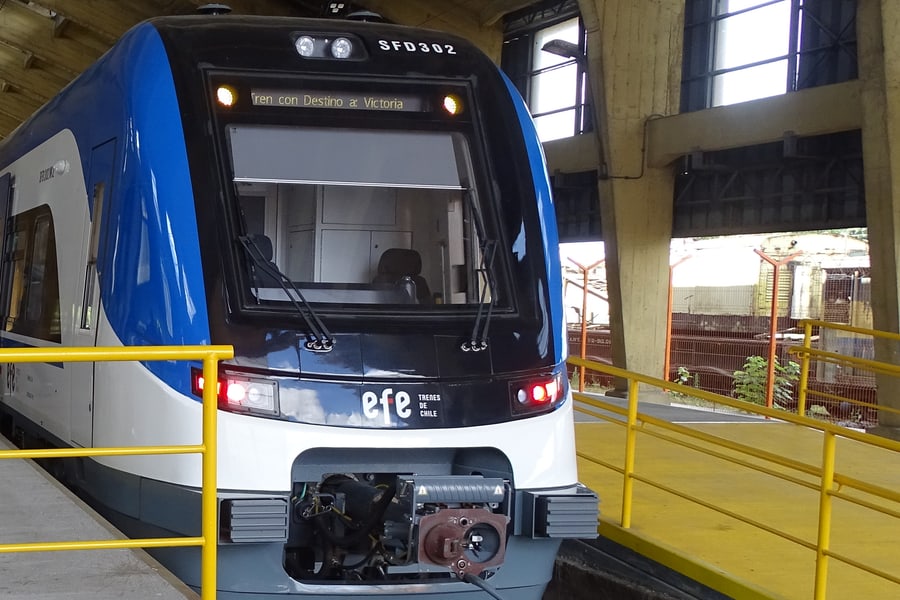
The same 65 kilometres are now EFE's Tren Araucanía: a two-car diesel railcar built in China by CRRC Sifang, running from Victoria to Temuco through nine stations in an hour and a quarter, six times a day on weekdays and three or four times at weekends. It is a local train, used by the people who live along it, and a ride costs CLP 1,800 — cash at the window in Temuco, or to the train staff on board. From Temuco a second service carries on south across the Cautín to Pitrufquén.
The Journey
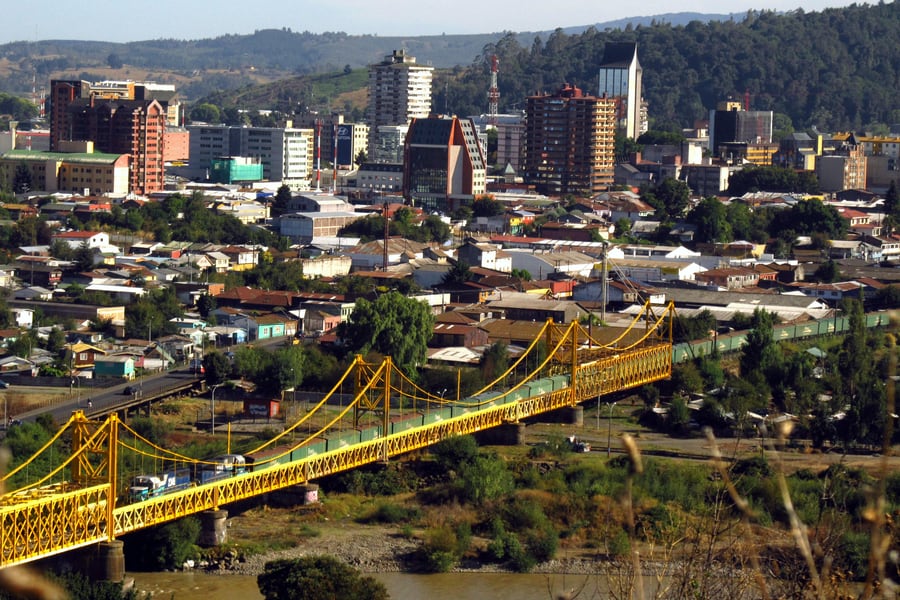
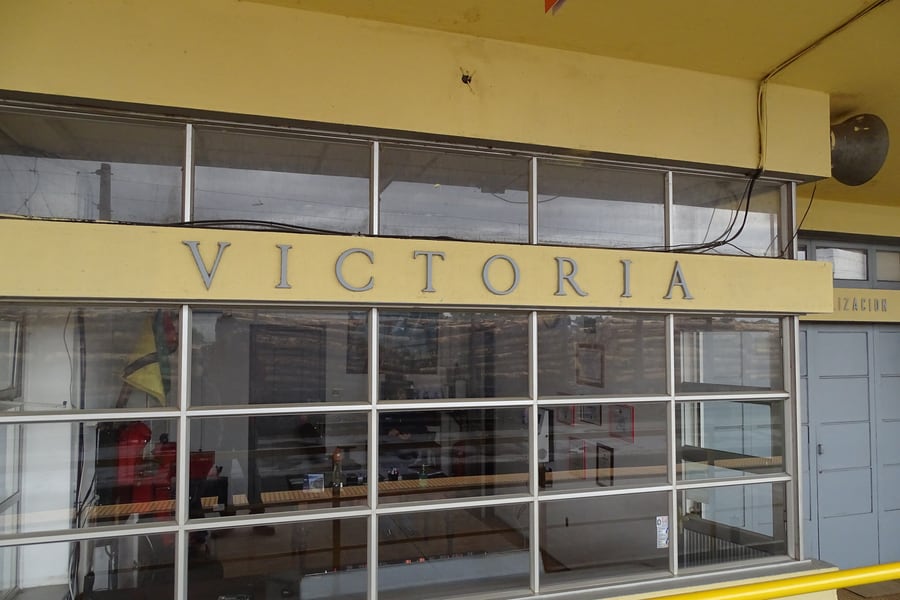
Victoria is the northern end of the line. Founded as a fort in 1881 and settled from 1883 by Swiss, French and other European colonists, it got its railway on 26 October 1890, on the extension south from Collipulli. The trains stop at a long yellow station building whose hall holds a mural of 1981, Cien años de Victoria, painted for the town's centenary, covered over in 2005 and being restored since January 2025.
The train
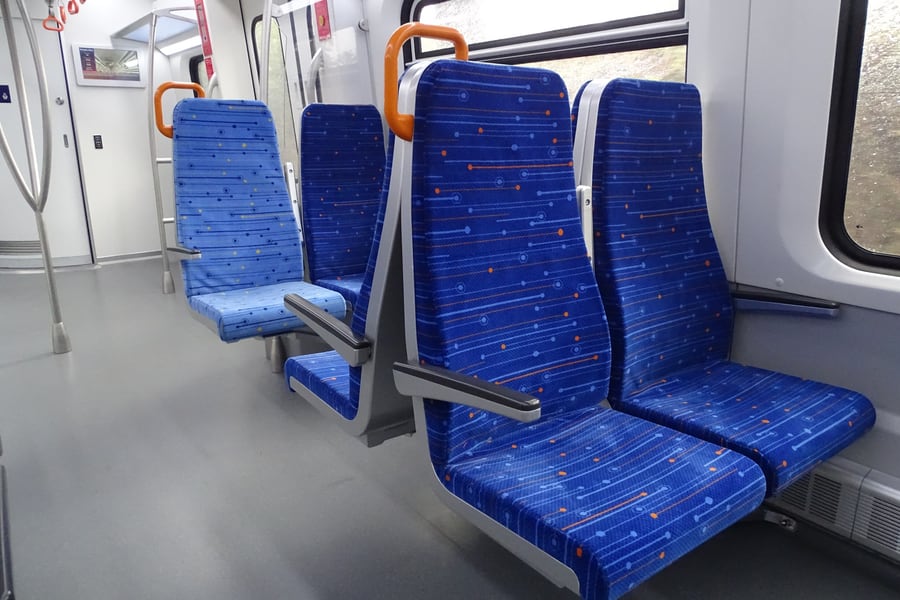
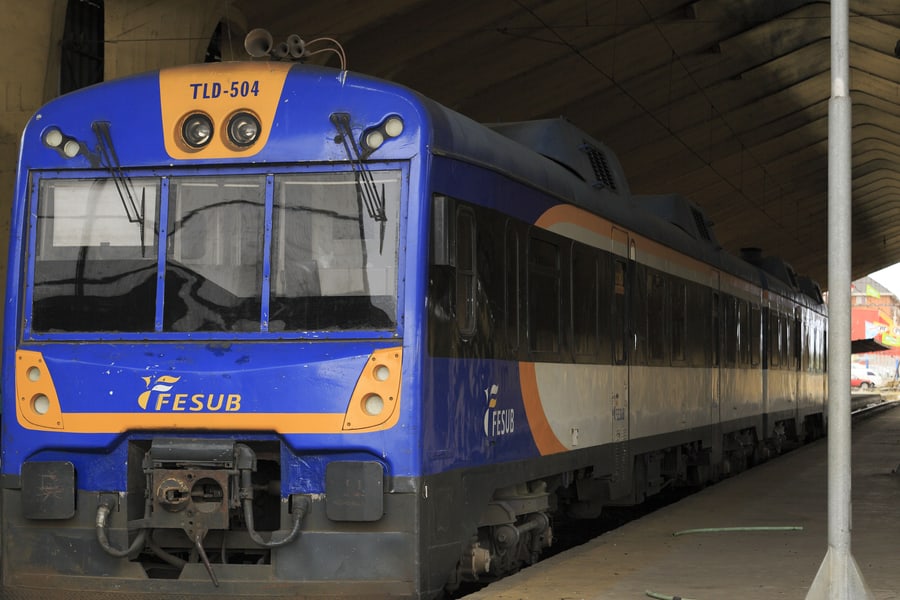
Three two-car diesel railcars, SFD-301, 302 and 303, work the whole service. They were built by CRRC Sifang in China for this line and the Pitrufquén extension, and took over in September 2021 from rebuilt TLD railcars bought from Spain's Renfe, which had run here since 2005. They have step-free access from platforms raised to their floor, air-conditioning, information screens and a toilet on board. Four more of the same model reached Chile in 2026 for EFE's southern services and are due to start work early in 2027.
Through the Araucanía
South of Victoria the line runs through farmland. Púa was once a junction for two branch lines, to Traiguén and to Lonquimay, and both have gone. Perquenco, the next stop, has a curious footnote: in 1860 a French lawyer, Orélie-Antoine de Tounens, proclaimed himself King of Araucanía and Patagonia and named it his capital. Quíllem, Lautaro Centro and Pillanlelbún are simple stops, a raised platform and a shelter each.
Lautaro has two stops, its main station and Lautaro Centro. After Pillanlelbún the train calls at Cajón, reopened in December 2023, and runs in under the concrete train shed at Temuco, the regional capital.
EFE currently warns that journeys are taking longer than usual while it adjusts its operations, so the times below are worth checking on the day.
Along the route
 LuisCG11 / Wikimedia Commons · CC BY-SA 4.0 · 2022 · cropped
A mural under the paint
Victoria station's hall holds Cien años de Victoria, a mural 18 metres long painted by Tomás Vinet Bustos for the town's centenary in 1981. It was painted over in 2005, and EFE began restoring it in January 2025.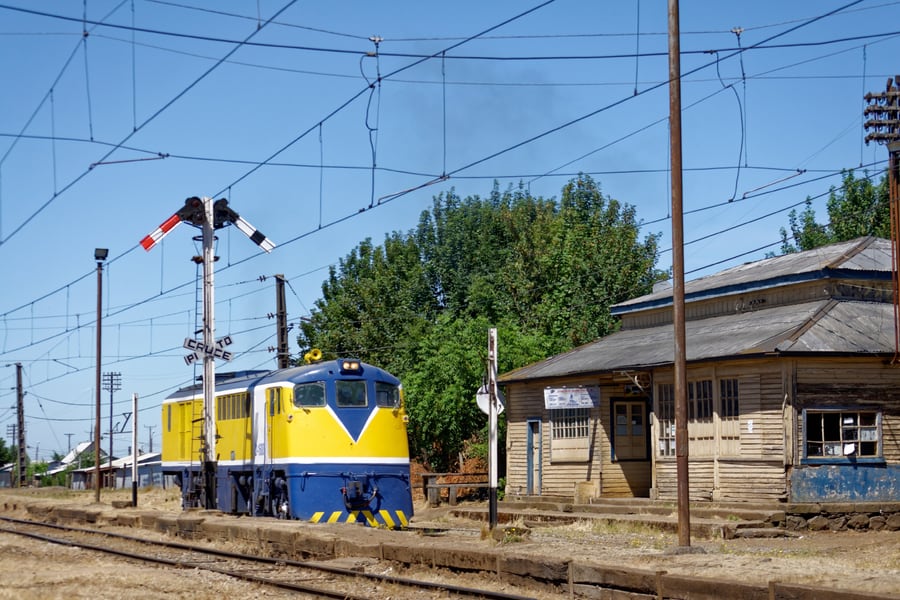 EL GUILLE! / Wikimedia Commons · CC BY 2.0 · 2016 · cropped
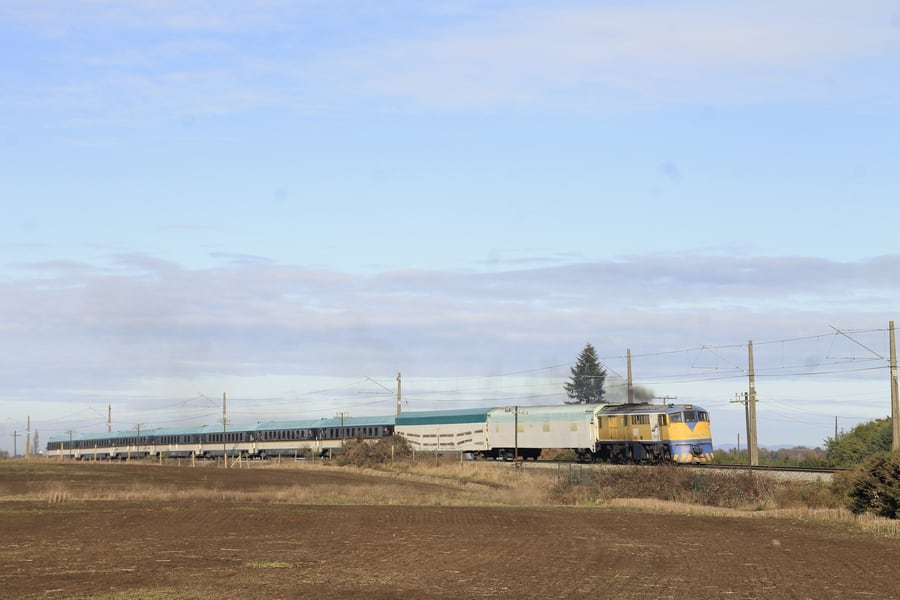
Púa, a junction without branches
Púa, from the Mapudungun for "in the maize field", was the junction for branch lines to Traiguén and to Lonquimay, both now gone. Its wooden station and semaphore signals were still standing when this locomotive stopped to fill its tanks in 2016.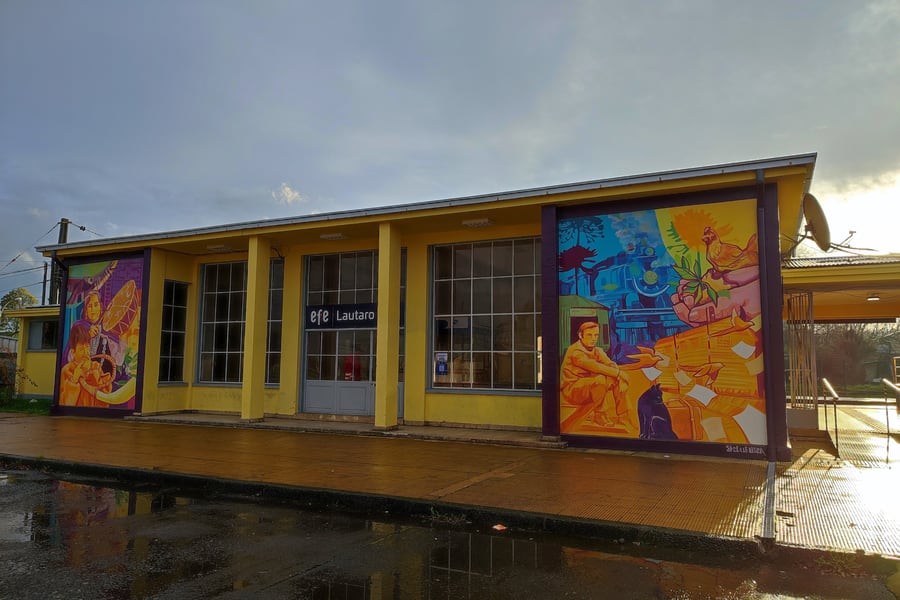 J-BravoS / Wikimedia Commons · CC BY-SA 4.0 · 2022 · cropped
Verniory's Lautaro
The Belgian engineer Gustave Verniory lived in Lautaro from 1890 to 1895 while building the line on to Temuco. His diary, Diez años en Araucanía, published in 1976, describes the frontier towns and the Mapuche families he befriended.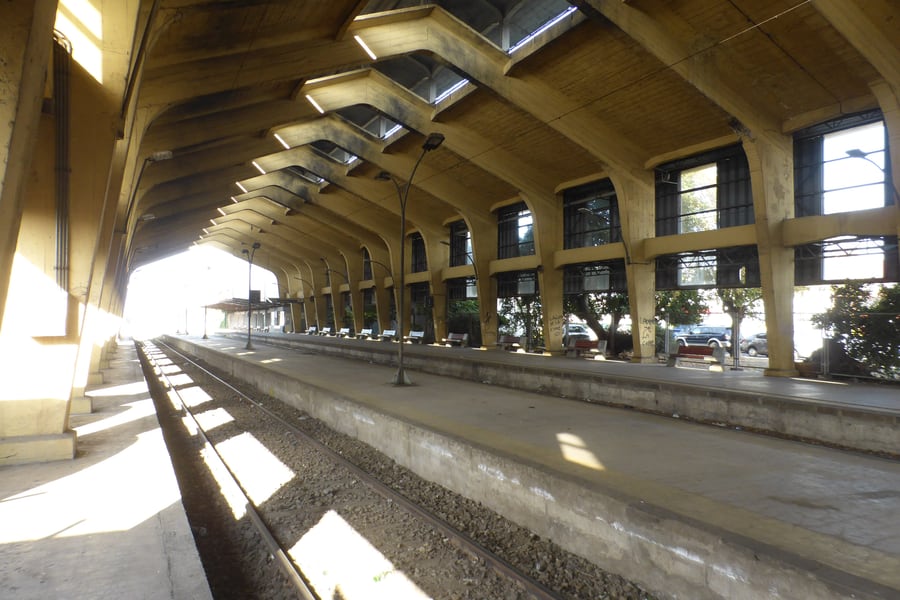 CARLOS TEIXIDOR CADENAS / Wikimedia Commons · CC BY-SA 4.0 · 2020 · cropped
Temuco's concrete train shed
The trains end under a concrete shed finished in 1930, like those at Rancagua and Talca. The station building beside it was all but destroyed by the 1960 earthquake and was last remodelled in 2003.A bit of history
Culture & experiences along the way
 Josschneeberger / Wikimedia Commons · CC BY-SA 4.0 · 2022 · cropped
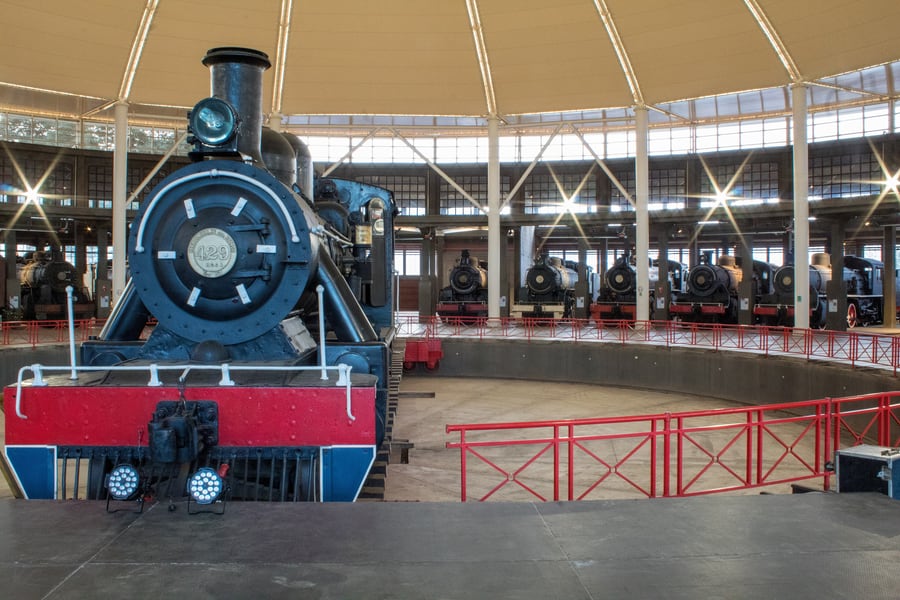
The Pablo Neruda railway museum
Temuco's roundhouse, a national monument since 1989, has been Chile's national railway museum since 2004, with fourteen locomotives built between 1908 and 1953 and a presidential coach. It is named for Pablo Neruda, who grew up in Temuco from 1906, the son of a railway worker.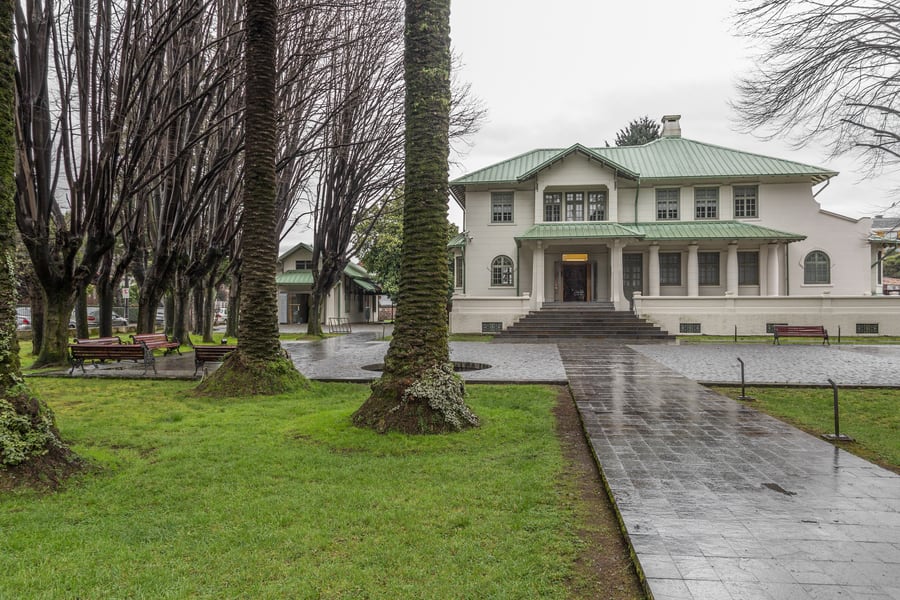 Miguelcarrascoq / Wikimedia Commons · CC BY-SA 3.0 · 2013 · cropped
The Museo Regional de la Araucanía
Opened in 1940 and housed since 1969–70 in Casa Thiers, a settler family's house of 1924 on Avenida Alemania, the regional museum keeps some 700 archaeological and ethnographic pieces, from Pitrén pottery made between AD 200 and 1100 to a canoe cut from a single laurel trunk more than five metres long.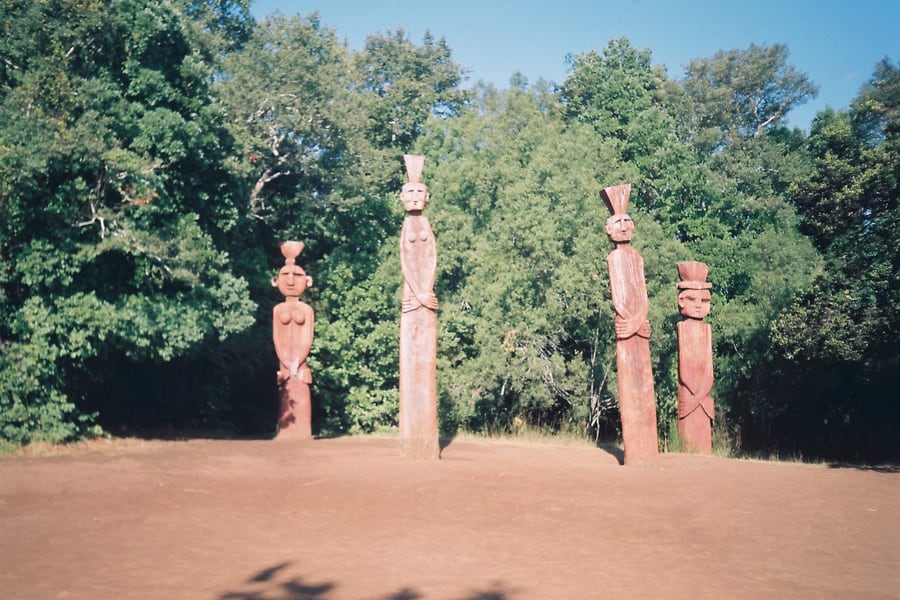 Francisca Barrientos Tapia / Wikimedia Commons · CC BY-SA 4.0 · 2018 · cropped
Chemamüll on Cerro Ñielol
Cerro Ñielol, 89 hectares of native forest inside Temuco and protected since 1939, is where Mapuche leaders and the Chilean army met on 24 February 1881, the day the city was founded. Chemamüll, the carved wooden figures of Mapuche tradition, stand on the hill, including at the ceremonial site that marks the meeting.Timetables
Trains run every day, six a day from Victoria on weekdays, four on Saturdays and three on Sundays and public holidays. There are no reservations: you buy a ticket and board. The times below are from EFE's own journey planner, read in September 2026 for dates in October and November.
Victoria to Temuco
| Monday to Friday | Saturday | Sunday and holidays |
|---|---|---|
| 06:35 → 07:51 | 07:20 → 08:35 | 11:25 → 12:40 |
| 07:50 → 09:05 | 10:50 → 12:05 | 15:30 → 16:45 |
| 10:50 → 12:05 | 15:30 → 16:45 | 19:15 → 20:30 |
| 14:05 → 15:20 | 18:35 → 19:53 | |
| 17:00 → 18:18 | ||
| 18:35 → 19:53 |
Temuco to Victoria
| Monday to Friday | Saturday | Sunday and holidays |
|---|---|---|
| 09:15 → 10:30 | 09:10 → 10:25 | 12:45 → 14:00 |
| 12:45 → 14:00 | 12:45 → 14:00 | 17:10 → 18:28 |
| 17:10 → 18:28 | 17:10 → 18:28 | 20:45 → 22:00 |
| 18:45 → 20:03 | 20:45 → 22:00 | |
| 20:45 → 22:00 |
Every stop on the 06:35 from Victoria
| Station | Time |
|---|---|
| Victoria | 06:35 |
| Púa | 06:49 |
| Perquenco | 06:59 |
| Quíllem | 07:06 |
| Lautaro | 07:17 |
| Lautaro Centro | 07:19 |
| Pillanlelbún | 07:32 |
| Cajón | 07:40 |
| Temuco | 07:51 |
On to Pitrufquén
The Temuco–Pitrufquén trains run on weekdays and Saturdays only, calling at Padre Las Casas, Quepe and Freire and taking 41 minutes. On weekdays they leave Temuco at 08:41, 14:00 and 18:05 and Pitrufquén at 07:05, 09:25, 14:45 and 18:50; on Saturdays only the 08:41 and 18:05 from Temuco and the 09:25 and 18:50 from Pitrufquén run. The 06:35 from Victoria connects in Temuco with the 08:41, a wait of 50 minutes.
Departures are published by the operator: EFE · Tren Araucanía — Servicio y trazado (opens in a new tab).
Tickets
There is nothing to book. Tickets are sold for cash at the ticket office in Temuco station or on board from the train staff, and the fare depends only on how far you go: CLP 1,800 for the whole run from Victoria to Temuco, less for a shorter hop, such as CLP 1,300 between Lautaro and Temuco.
Seniors over 65 with their identity card and students with a valid Chilean student card (TNE) pay reduced fares. The Pitrufquén trains are priced separately, at CLP 1,450 from Temuco, and a through ticket from Victoria to Pitrufquén costs CLP 2,650.
Book your tickets
 LuisCG11 / Wikimedia Commons · CC BY-SA 4.0 · 2022 · cropped
Single ticket, Victoria to Temuco
CLP 1,800 · seniors CLP 900 · students CLP 600
Cash only, at Temuco station's ticket office or on board, with no booking and no seat numbers.
Book Tickets (opens in a new tab, on efe.cl)via efe.clRail Passes
No rail pass covers this journey. Chile sits outside the Interrail and Eurail schemes, and at CLP 1,800 for the whole line, paid in cash on the day, there would be nothing for a pass to save.
The nearest thing to one is the through fare: a single ticket from Victoria to Pitrufquén, changing trains in Temuco, costs CLP 2,650, less than the two separate fares added together.
Places to Visit
The towns on this line were founded within a few years of each other, first as forts and then as colonists' settlements, when the Chilean state pushed south into Mapuche territory in the 1880s, and the railway reached them all within a dozen years. With a train every two or three hours on weekdays, any of them makes an easy stop on the way.
 LuisCG11 / Wikimedia Commons · CC BY-SA 4.0 · 2022 · cropped
Victoria
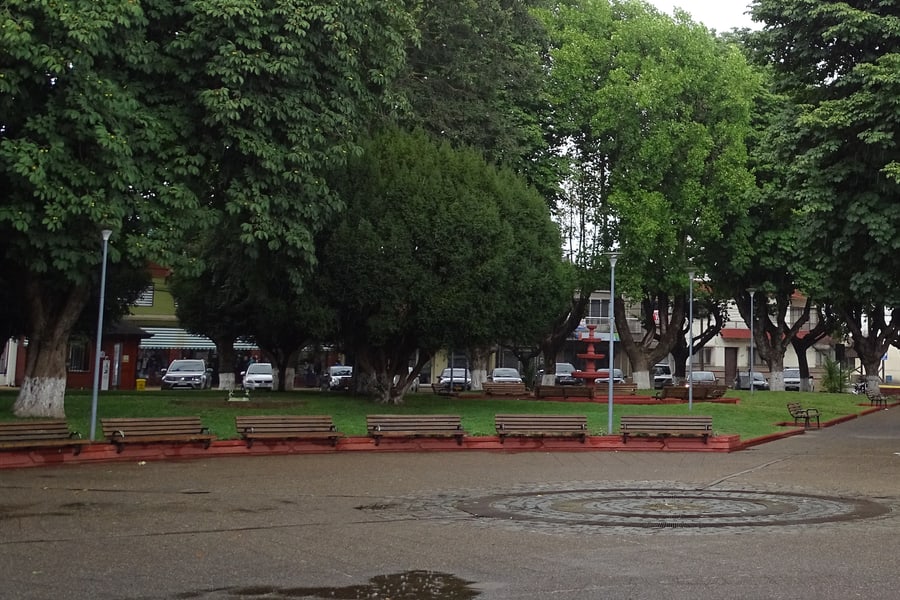
Victoria began as a fort in March 1881, whose founder is still argued over, and was named for Chile's victories in the War of the Pacific. Swiss colonists arrived from 1883, and by the 1890s nearly 7,000 settlers from Switzerland, France, England and elsewhere had come. Its paper, Las Noticias, founded in 1910, is the oldest still published in the region.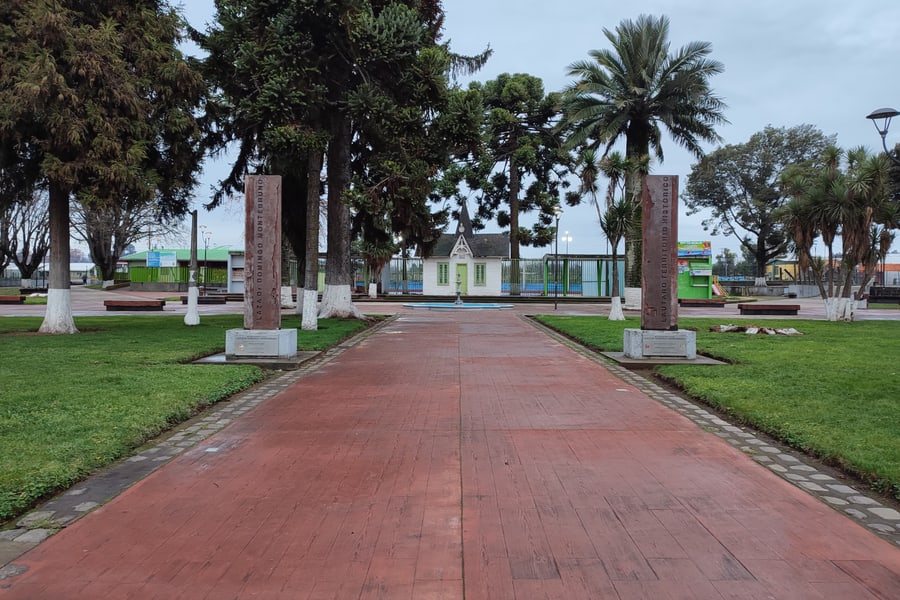 J-BravoS / Wikimedia Commons · CC BY-SA 4.0 · 2022 · cropped
Lautaro
Founded in 1881 as Fort Aníbal Pinto, Lautaro was renamed the next year for the sixteenth-century Mapuche leader. Swiss settlers came from 1885, followed by tanneries, mills and a brewery. The poet Jorge Teillier, who made the provincial town and its trains the stuff of his poesía lárica, was born here in 1935.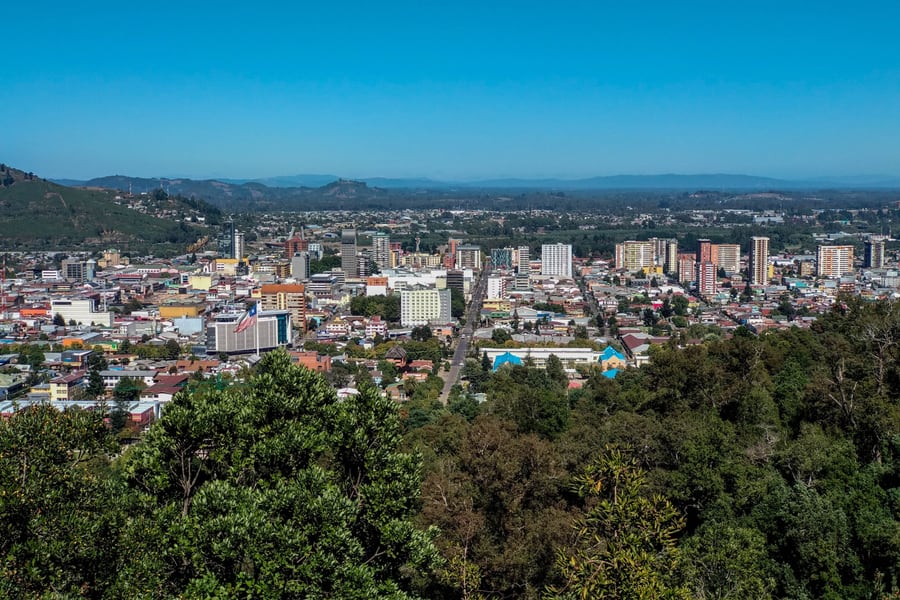 O.gomez01 / Wikimedia Commons · CC BY-SA 4.0 · 2018 · cropped
Temuco
Founded as a fort on 24 February 1881 and named from the Mapudungun Temuko, "water of the temu", a native myrtle, Temuco is now the centre of the largest urban area in southern Chile. Pablo Neruda spent his boyhood here, from 1906 to 1920. Near the station, Feria Pinto, an open-air market built in 1945 to sell the region's farm produce, has some 600 stalls. Babfur / Wikimedia Commons · CC BY-SA 4.0 · 2014 · cropped
Pitrufquén
Pitrufquén, "place of ashes" in Mapudungun, stands on the Toltén river. When the railway bridge over the river was finished at the end of the 1890s, townspeople moved down from the high ground to build by the station. Since June 2023 it has been the southern end of the Tren Araucanía; at Freire, the stop before, the old station was brought back into use with its copper roof repaired.Where to Sleep
Temuco is the natural base: the regional capital, the end of the line from Victoria and the start of the trains to Pitrufquén. The first train towards Victoria does not leave until 09:15 on weekdays, so a night in Temuco makes for an unhurried start. Both hotels below are in the city.
Where to stay
Hotel Nicolás
On General Mackenna, in central Temuco
The hotel's own site places it at General Mackenna 420, with breakfast in the room rate, a restaurant open to all and eight event rooms.
Check Availability (opens in a new tab, on hotelnicolas.cl)via hotelnicolas.clBest Western Ferrat
A chain hotel in Temuco
Best Western's own booking page lists it at Juan Reusch 445, Temuco.
Check Availability (opens in a new tab, on bestwestern.com)via bestwestern.comQuestions or corrections
Planning this trip and stuck on something, or spotted a time, fare or detail that has changed? Send us a message about Victoria to Temuco. We read every one, and we update this page when something has changed.