Ashgabat to Daşoguz
Bohndorf Film-Team / Wikimedia Commons · CC BY-SA 4.0 · 2015 · cropped
- Distance550 km, Ashgabat to Daşoguz
- Duration11 hr 57 min to 12 hr 15 min, overnight
- Best seasonTwo overnight trains a day each way, all year
Introduction
For most of its history the north of Turkmenistan was a long way from its capital by rail. A train from Ashgabat to Daşoguz had to go round the Karakum rather than through it — east to Mary, on through Lebap province and up the Amu Darya along the Uzbek border — a detour some 700 km longer than the straight line. The Trans-Karakum Railway cut across the middle instead. More than 1,500 workers spent over five years building it, with no foreign contractors at all, and it was declared complete on 19 February 2006 at a white marble station in the sand at Içoguz, the place formerly called Darvaza. The journey time halved, to about twelve hours.
Two express trains a day now run each way, both of them overnight, and what they cross is very nearly nothing. Northbound, the operator's timetable shows no stop at all for the first 502 km; the train calls at Andalyp and Görogly in the last 48 km, inside the irrigated green of the Daşoguz oasis, and arrives the next morning. Daşoguz itself is a Soviet-planned provincial capital ten kilometres from the Uzbek frontier, and its own reason for a visitor is just beyond it: the ruins of Konye-Urgench, once the capital of Khwarazm, inscribed by UNESCO in 2005.
The Journey
Türkmendemirýollary books both pairs of trains on this line as tiz otly, fast trains, and on a railway where the Caspian train calls at fourteen stations the label is earned by leaving things out. The line has seventeen stations along its length, some of them serving villages and some built for villages that were still to come. The expresses ignore almost all of them.
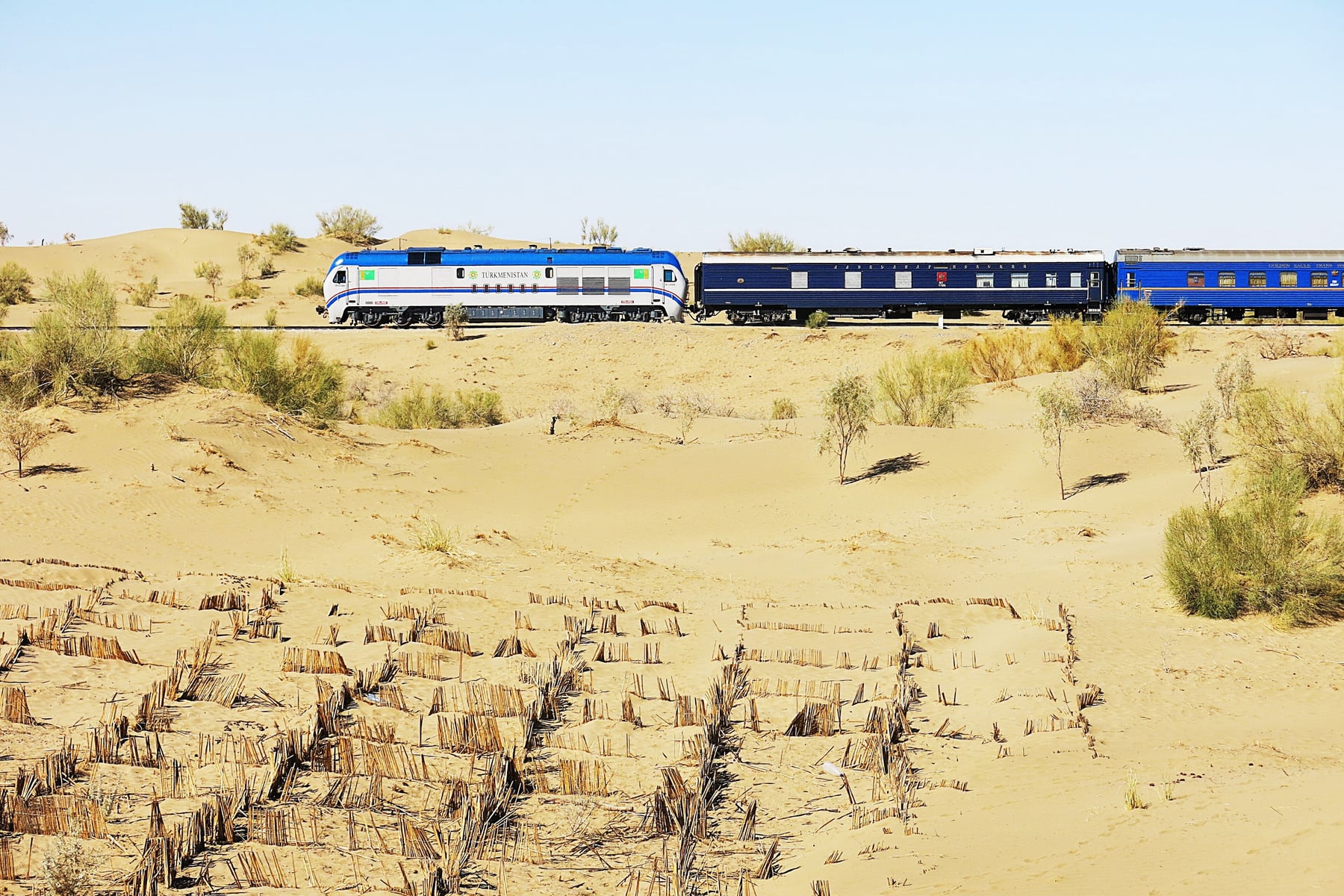
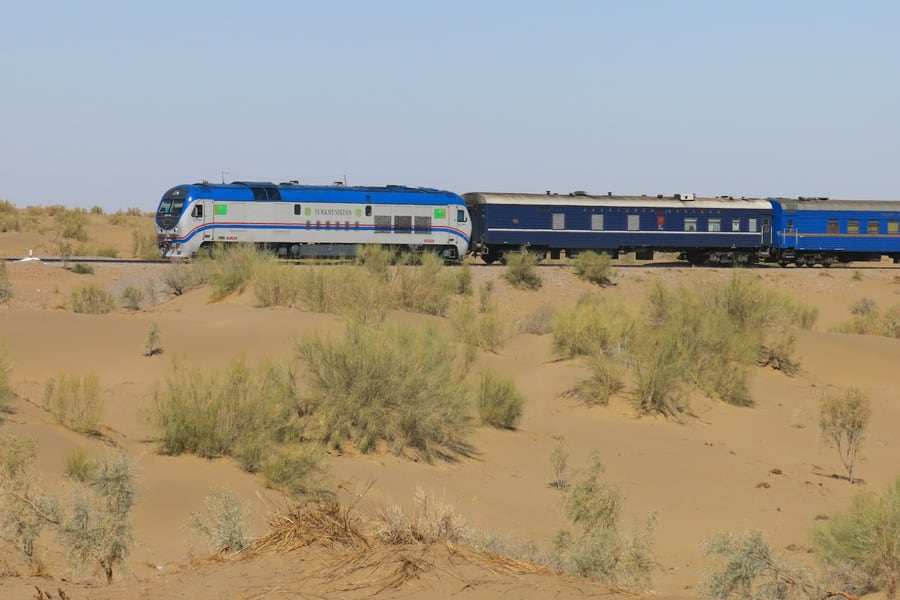
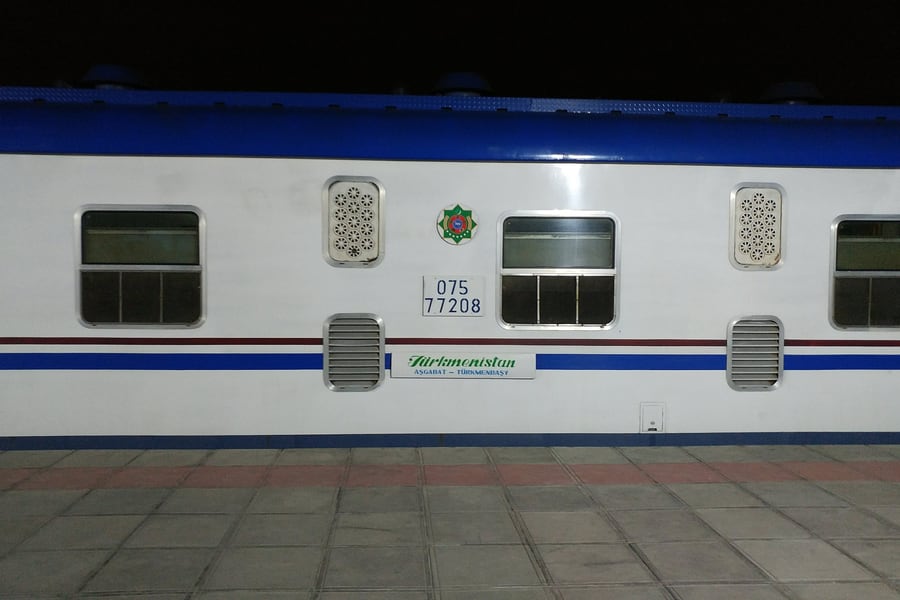
Traction is the same as everywhere else on the network: diesel, Chinese-built, and painted white with a broad blue flash and TÜRKMENISTAN along the flank. The locomotives are CKD9A machines, built in China, and some of them carry ÝÜPEK ÝOLY, the Silk Road, across the nose. The coaches behind are sleeping cars in the operator's three grades, which on a twelve-hour overnight run is what you are paying for.
North out of Ashgabat
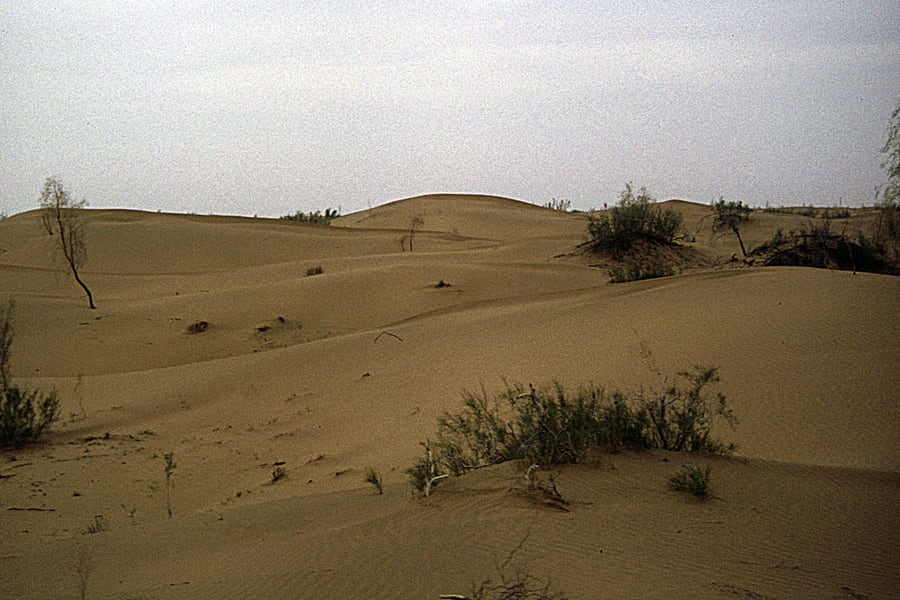
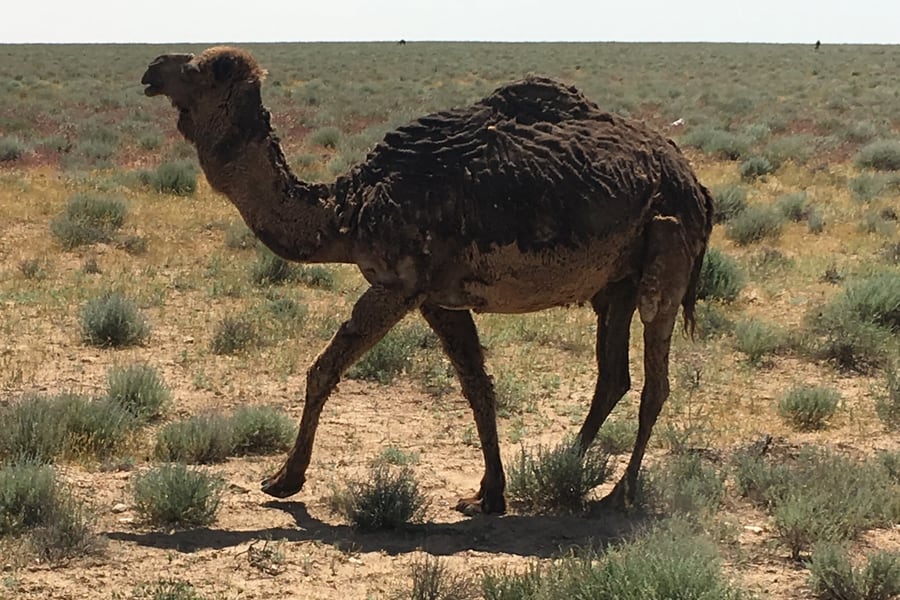
Train 13 leaves the capital at 16:40 and train 93 at 20:30. Both turn away from the Kopet Dag, the mountain wall along the Iranian border that the Caspian line follows west, and head north into the Karakum — the Black Sand, the twelfth-largest desert in the world and about seventy per cent of the country. Rainfall here is somewhere between 70 and 150 mm a year. The early train gives you the edge of the desert in daylight; the late one is a night train from the platform.
Across the middle
The railway runs up the centre of the desert on a line of its own. More than 130 bridges carry it over the dry channels and depressions. The settlements it passes — Bokurdak, Yerbent, Içoguz — are small, and the timetable does not stop at them. Somewhere past halfway, near Içoguz, is the Darvaza gas crater, a collapsed gas field some 70 metres across that was set alight decades ago and burned for more than fifty years as the country's most famous sight; wells drilled around it to draw off the gas have reduced it to a charred hole with a few small pockets of flame. It is reached by road, not from the train.
Into the oasis
The desert ends abruptly where the irrigation of the lower Amu Darya begins. The northbound expresses make their first stop at Andalyp, 502 km out, and their second at Görogly, a district town named after the hero of the Turkmen national epic, before reaching Daşoguz at 550 km. Southbound trains skip Andalyp and stop only at Görogly, 22 km out, so the run back to the capital is 528 km without a single advertised stop.
Along the route
 Allan Mustard / Wikimedia Commons · CC BY-SA 4.0 · 2018 · cropped
North out of Ashgabat
Train 13 leaves at twenty to five in the afternoon, turns its back on the Kopet Dag and is in the Karakum before dark: scrub, grazing, and very few roofs.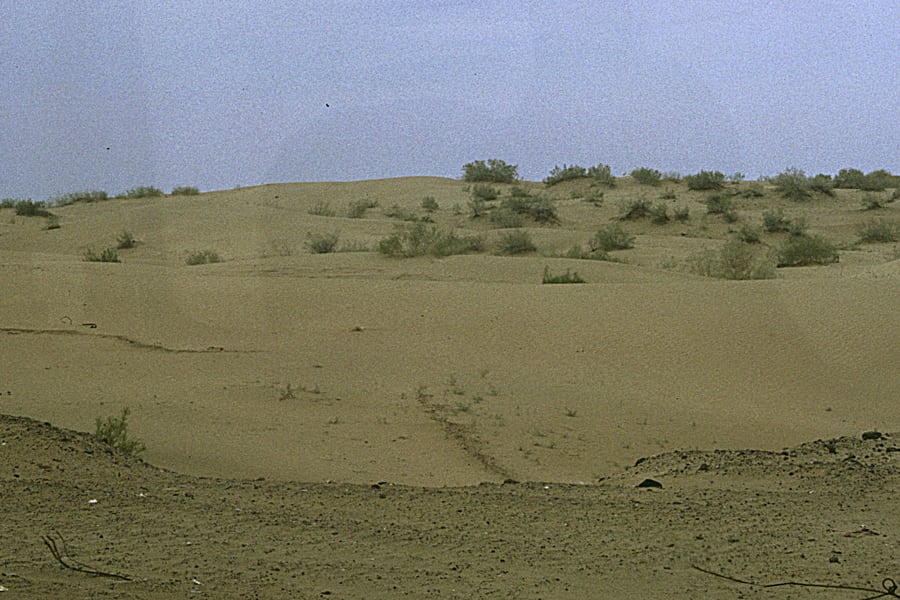 Ziegler175 / Wikimedia Commons · CC BY-SA 4.0 · 1992 · cropped
Five hundred kilometres, no stop
The timetable lists nothing between Ashgabat and Andalyp, 502 km out. Southbound trains call only at Görogly, so the run home is 528 km without a single advertised stop.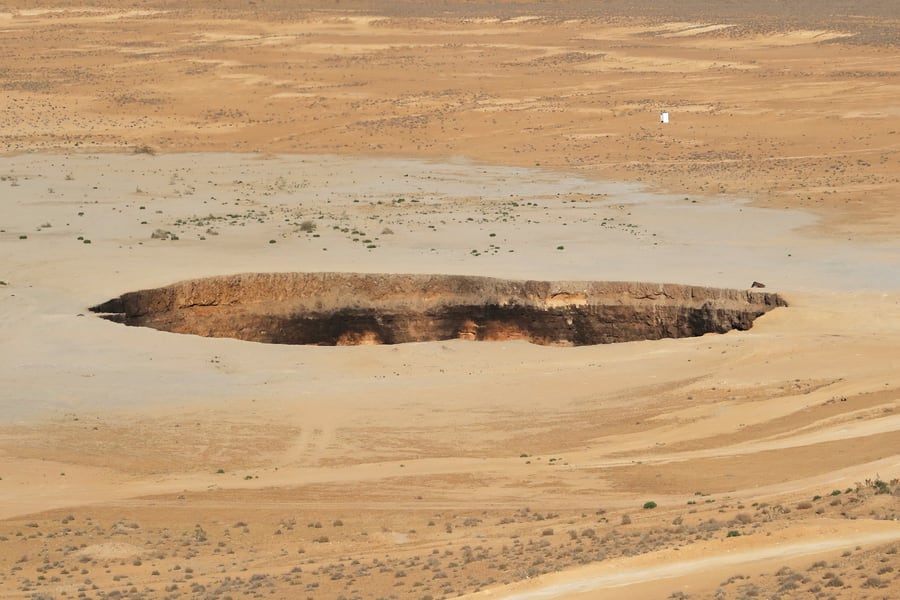 John Pavelka / Wikimedia Commons · CC BY 2.0 · 2018 · cropped
Past Içoguz, once Darvaza
The line was opened here in 2006, at a marble station in the middle of the desert. The burning gas crater nearby has dwindled to a few pockets of flame.A bit of history
Culture & experiences along the way
 John Pavelka / Wikimedia Commons · CC BY 2.0 · 2018 · cropped
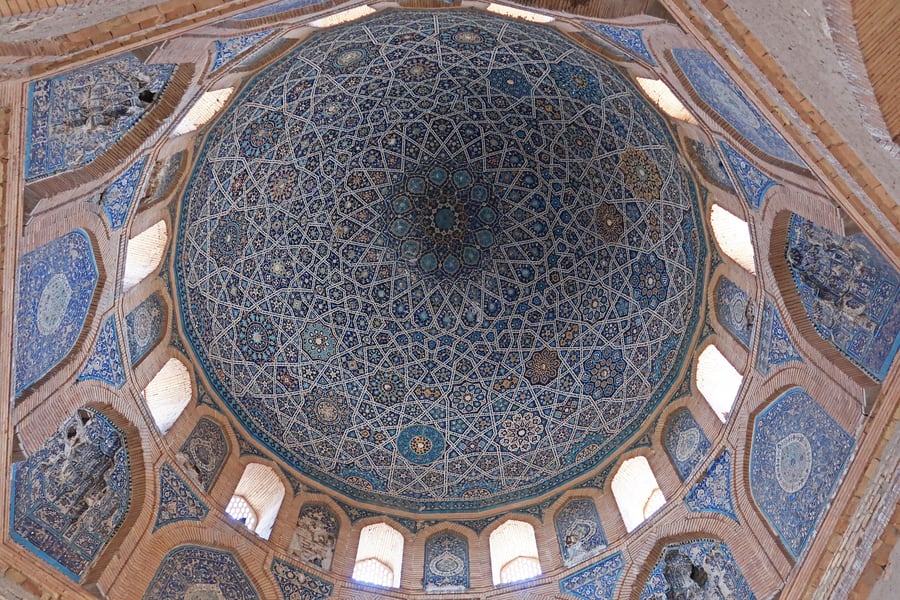
The dome of Turabeg Khanym
The outer shell fell long ago, and what survived underneath is the finest room in Konye-Urgench: a dome of mosaic stars and flowers on a ring of twenty-four panels, mosaic and window in turn. Nobody agrees why it repeats the number twelve — months, zodiac or imams — but everyone agrees it is the period's peak.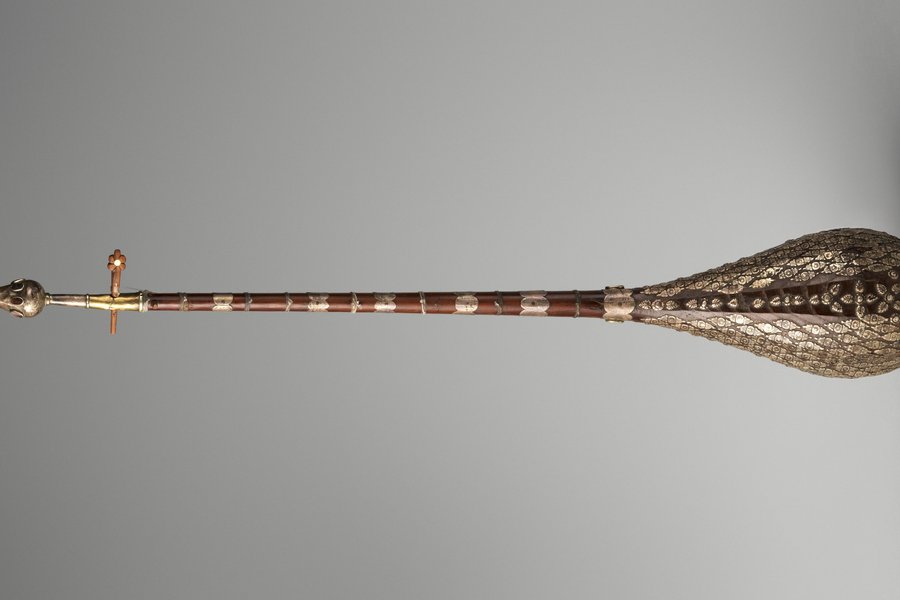 The Metropolitan Museum of Art / Wikimedia Commons · CC0 · cropped
The epic the town is named for
Görogly, the last stop before Daşoguz, carries the name of the hero of the Turkmen national epic: Görogly and his forty horsemen. It is sung seated, to a dutar or a gyjak, by specialist singers, and Daşoguz is one of the two regions where they still work. UNESCO listed the art in 2015.Timetables
Two pairs of trains work the line and all four run daily, all year. Times are the operator's own, read from the Türkmendemirýollary timetable in November 2026.
Türkmendemirýollary publishes the departure from the originating station and the total running time, but no intermediate times and no arrival. The arrivals below are the operator's departure plus the operator's own duration.
Northbound, Ashgabat to Daşoguz
| Train 13 | Train 93 | |
|---|---|---|
| Departs Ashgabat | 16:40 | 20:30 |
| Arrives Daşoguz | 04:46 next day | 08:44 next day |
| Journey | 12 hr 6 min | 12 hr 14 min |
| Stops | Andalyp (502 km, 5 min), Görogly (528 km, 5 min) | Andalyp (502 km, 5 min), Görogly (528 km, 5 min) |
Southbound, Daşoguz to Ashgabat
| Train 14 | Train 94 | |
|---|---|---|
| Departs Daşoguz | 17:35 | 19:25 |
| Arrives Ashgabat | 05:50 next day | 07:22 next day |
| Journey | 12 hr 15 min | 11 hr 57 min |
| Stops | Görogly (22 km, 5 min) | Görogly (22 km, 5 min) |
Both directions are booked as tiz otly, fast trains, over 550 km. Train 93 is the one to take northbound if you want to arrive in Daşoguz in daylight and go straight on to Konye-Urgench; train 13 arrives before five in the morning.
The full timetable for all of the operator's routes is at railway.gov.tm/en/schedule (opens in a new tab).
Tickets
Türkmendemirýollary sells online through its own site and app ten days ahead, and at the booking office five days ahead. Online payment works only with Turkmen Altyn Asyr or Senagat bank cards, and the operator says payments are accepted only from inside Turkmenistan — so a visitor buys at the booking office. Be at the station at least 45 minutes before departure; each passenger may carry up to 100 kg of luggage.
The sleeping accommodation comes in the operator's three grades, below. There is no published fare table for this route; the one figure the operator does publish is the 50-manat VIP service fee.
Book your tickets
Kupe
Four berths behind a door
The operator's middle grade — a closed compartment of two sleeping berths a side, four passengers.
Book Tickets (opens in a new tab, on railway.gov.tm)via railway.gov.tmPlaskart
Open six-berth bays
Sections of three berths a side with no door onto the corridor, and the cheapest way to lie down.
Book Tickets (opens in a new tab, on railway.gov.tm)via railway.gov.tmSW and VIP
Two berths, and a supplement
SW compartments take two passengers; VIP adds a 50-manat service fee, refunded in full if the ticket is returned.
Book Tickets (opens in a new tab, on railway.gov.tm)via railway.gov.tmRail Passes
No rail pass covers Turkmenistan. Türkmendemirýollary sells single berths on named trains and nothing else, and for 550 km the fare is small, so nothing is lost.
The document that governs the trip is the visa. The Embassy of Turkmenistan's instruction is to go through a travel agency, which obtains a Letter of Invitation from the State Migration Service; the embassy quotes roughly a month for it. A transit visa is a separate route with a maximum stay of five days.
Places to Visit
Daşoguz is a transport hub rather than a destination, and the reason to ride this train sits beyond it: the ruins of Konye-Urgench, the old Gurganj, on the left bank of the Amu Darya in the same province. It was the capital of Khwarazm and one of the great cities of the Silk Road until the Mongols destroyed it in 1221 and Timur razed what had been rebuilt in 1388. What stands today is a scatter of monuments from the eleventh to the sixteenth centuries across open ground, inscribed by UNESCO in 2005.
 John Pavelka / Wikimedia Commons · CC BY 2.0 · 2018 · cropped
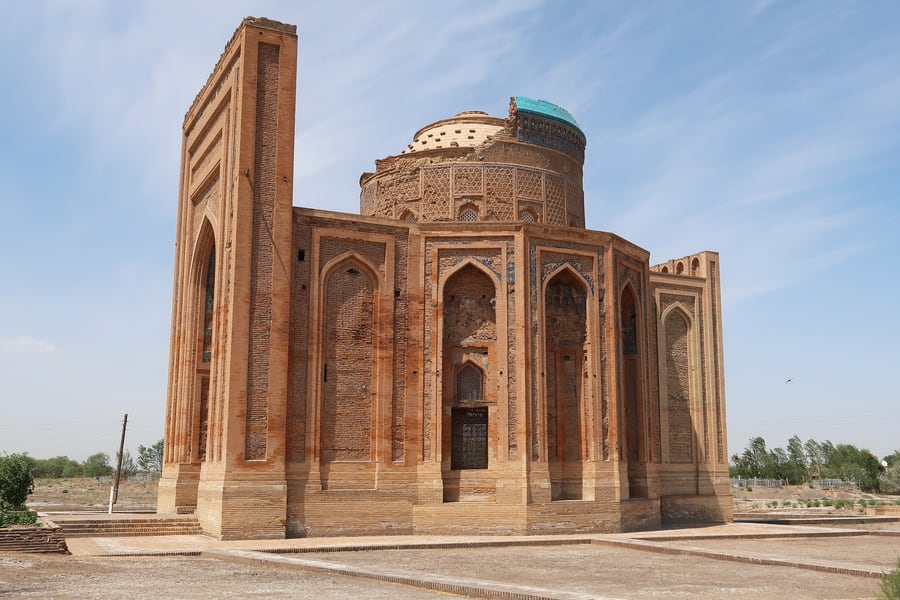
Turabeg Khanym's mausoleum
The largest surviving building in Konye-Urgench, named for the wife of Kutlug Timur, who ruled here for the Golden Horde from 1321 to 1336. Twelve-sided outside and six-sided within, it lost its outer dome centuries ago, which is why the mosaic ceiling inside survives as it does. Its date is argued over: the mosaic faience looks later than her lifetime, closer to Timur's first buildings.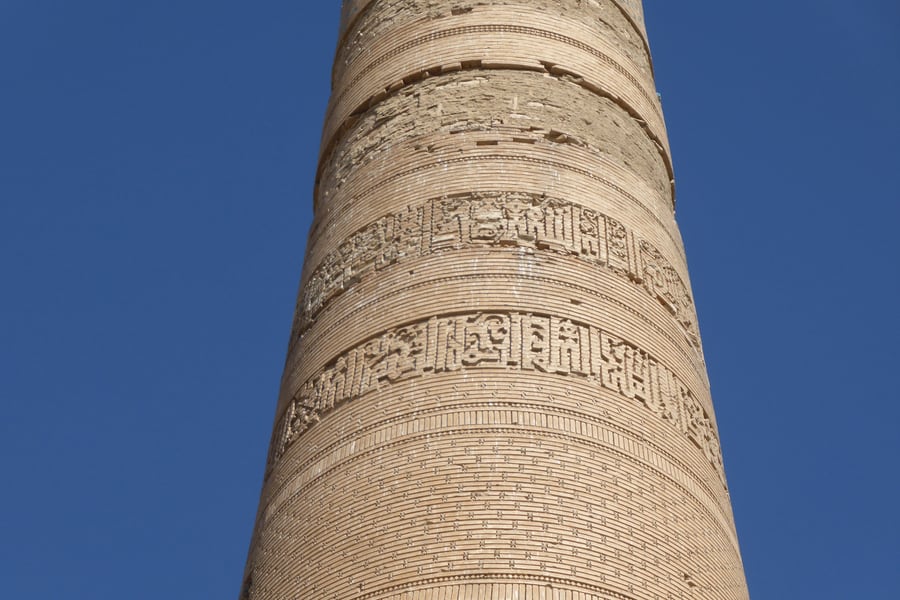 Hans Birger Nilsen / Wikimedia Commons · CC BY-SA 2.0 · 2018 · cropped
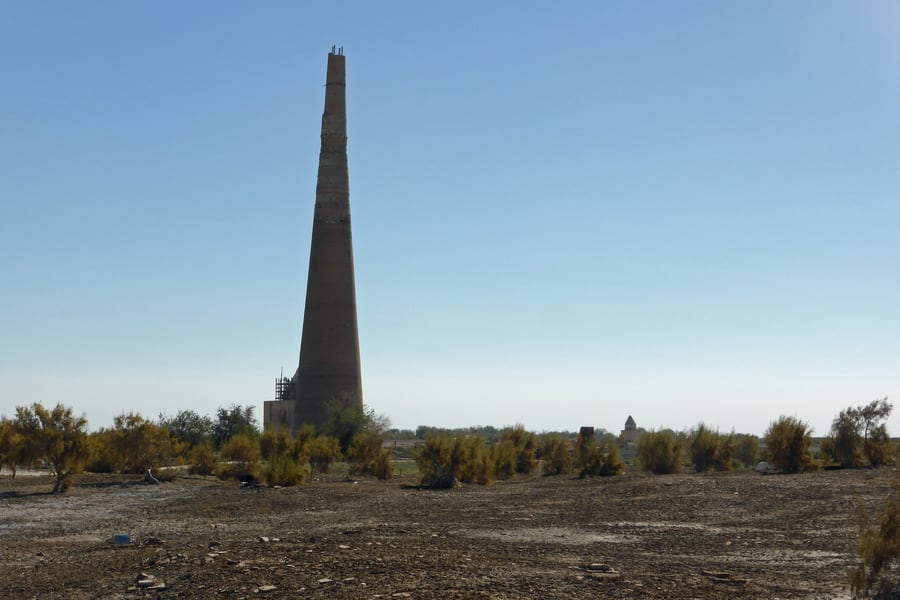
The Kutlug Timur minaret
Sixty metres high, twelve across at the base and two at the top, and the tallest monument on the site. Its brickwork and its bands of Kufic inscription suggest it is older than the man it is named after, who restored it around 1330. It survived the sack of 1388, when Timur had barley sown over the ruined city.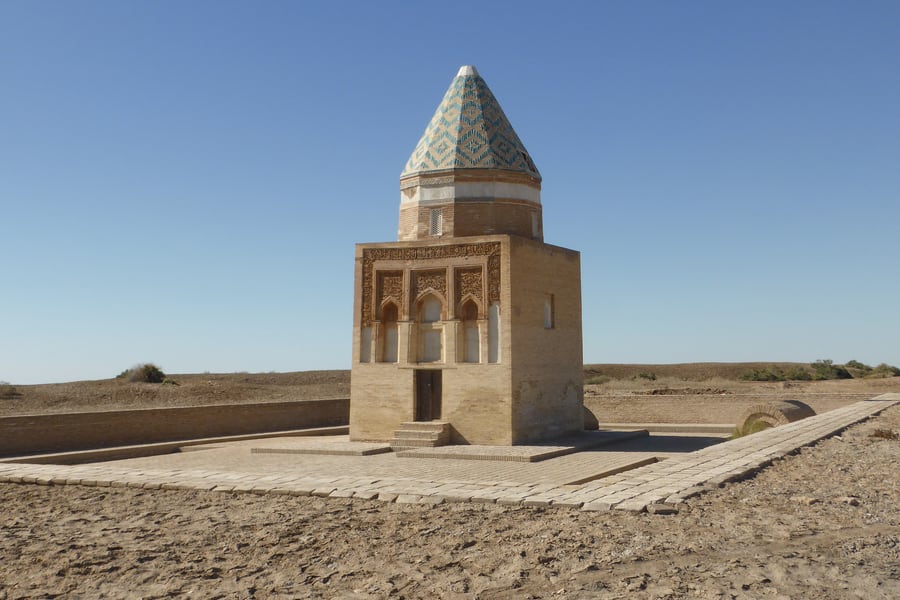 Hans Birger Nilsen / Wikimedia Commons · CC BY-SA 2.0 · 2018 · cropped
Il-Arslan's mausoleum
The oldest standing monument in old Gurganj, from the twelfth century and traditionally the tomb of the Khwarazmshah Il-Arslan, who ruled from 1156 to 1172. A cube of baked brick under a faceted conical roof tiled in turquoise, with carved brick panels and a frieze of script — and, on one recent reading, a cistern for water at some point in its life.Where to Sleep
Turkmenistan is not a country where a bed is booked directly. The travel agency that obtains the Letter of Invitation normally arranges the hotels as well, and that includes a night in Daşoguz.
On this line the train is also the hotel. Both expresses run overnight in each direction, so the berth covers the night, and the early arrivals — 04:46 on train 13, 05:50 and 07:22 into Ashgabat — are the point at which a room booked for the night before makes sense.
Questions or corrections
Planning this trip and stuck on something, or spotted a time, fare or detail that has changed? Send us a message about Ashgabat to Daşoguz. We read every one, and we update this page when something has changed.