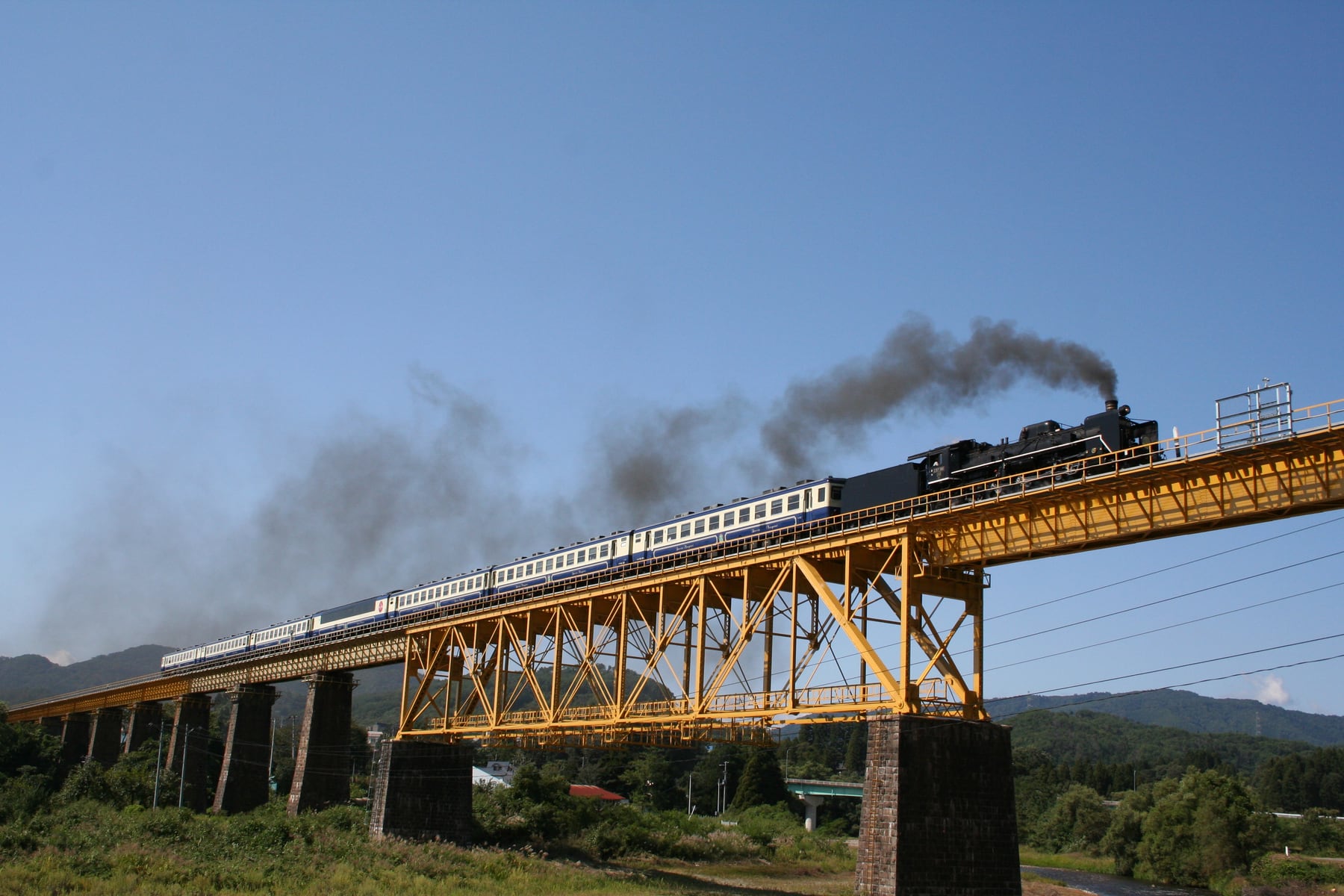
Ban'etsu Monogatari
じゃんもどき / Wikimedia Commons · CC BY-SA 3.0
- Distance111.0 km
- DurationAbout 3½ hours each way, one round trip on running days
- Best seasonApril–November, mostly weekends · autumn colour late October–November
Introduction
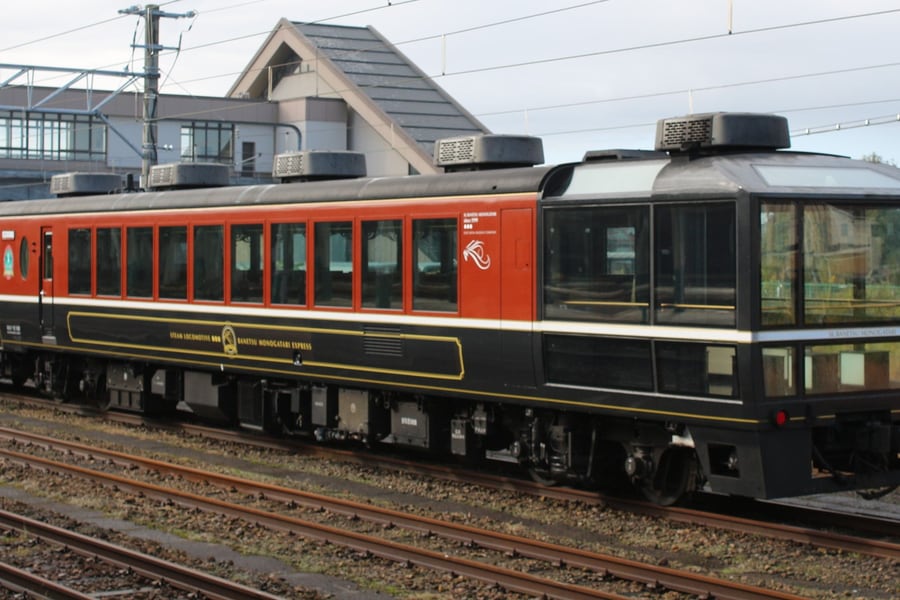
The Ban'etsu Monogatari runs 111 km from Niitsu, a railway town on the plain of Niigata, up the gorge of the Agano River to Aizu-Wakamatsu, the castle town of Fukushima. It is a reserved rapid of seven coaches with wood-grain interiors, three of them with observation rooms and one of those the Green Car, and it makes a single round trip on its running days, mostly at weekends and on holidays from April to late November. Each way takes about three and a half hours.
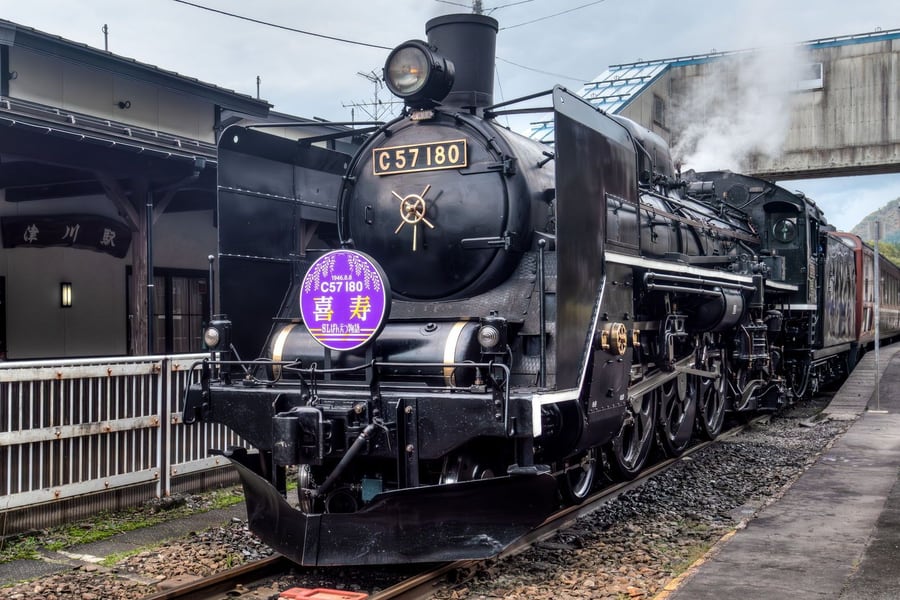
Its engine, C57 180, was built in 1946 and withdrawn in 1969. Instead of the scrapyard it went to the playground of a Niitsu primary school, where railway staff, local people and the children cleaned it for thirty years. When the town campaigned to see it run again, residents raised half the cost of restoring it, and on 29 April 1999 it hauled the first Ban'etsu Monogatari.
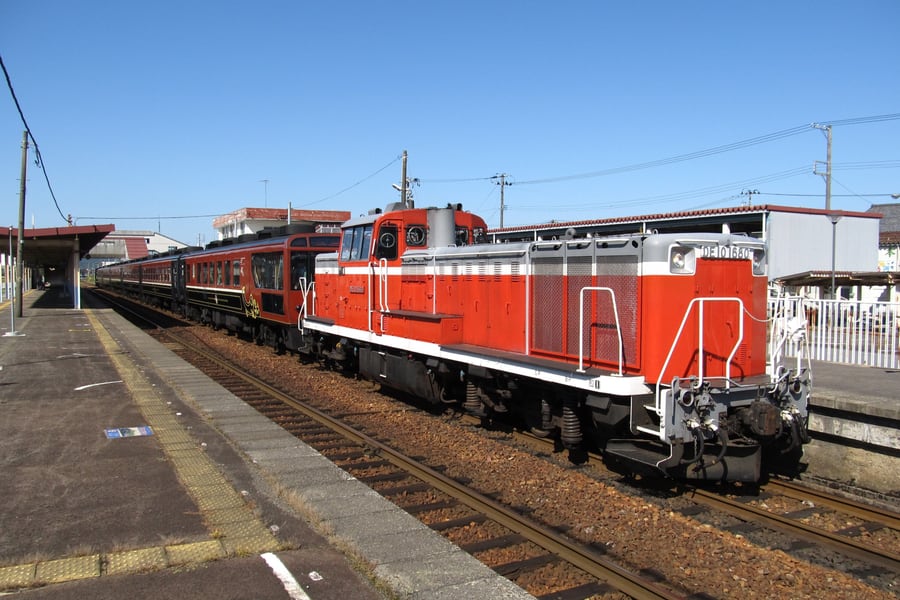
C57 180 turned eighty in August 2026, and it is due a major overhaul in the year from April 2027. JR East is sparing it until then: since July 2026 most dates run as the DL Ban'etsu Monogatari, the same coaches behind a DE10 diesel. Check which one runs on your day; the river, the coaches and the times are the same.
The Journey
The morning train leaves Niitsu at 10:03 and runs east across the plain to Gosen. At Sakihana, where the hot-spring inns line the bank, it meets the Agano River, and from there it follows the river into the hills, through Mikawa to Tsugawa, an old river port under the rock of Mount Kirin.
Tsugawa and the gorge
At Tsugawa the train stops for seventeen minutes while the crew inspect the engine and fill it with water, and you can step down to watch. Beyond, the valley narrows past Hideya, and the line crosses into Fukushima Prefecture between Toyomi and Tokusawa. Going up, the train pauses again for ten minutes at Yamato; coming back, at Nozawa, in the town of Nishiaizu. Just after Yamato comes the Ichinotogawa Bridge, 445 m long and opened in 1910, and then the line drops into the Aizu basin through Kitakata, the town of storehouses, to reach Aizu-Wakamatsu at 13:36. The afternoon train leaves at 15:28 and is back in Niitsu at 18:44.
The line has a name of its own for this half: JR East calls the stretch from Aizu-Wakamatsu to Niitsu the railway of forests, water and romance.
The engine
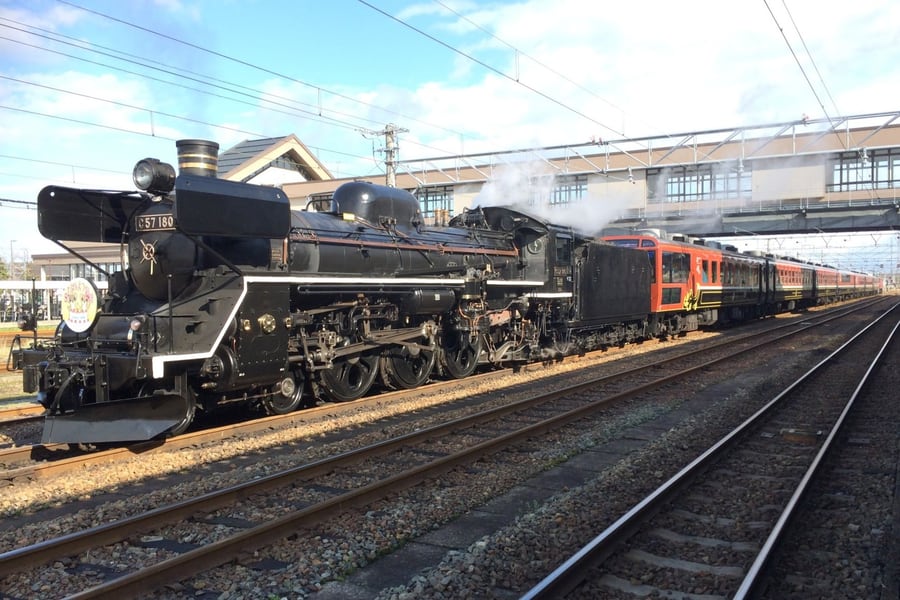
C57 180 is a C57, the class of passenger engine the national railways built from 1937 and nicknamed kifujin, the Lady, for its tall driving wheels and slim boiler. This one came out of Mitsubishi's Mihara works in 1946, spent its whole working life in Niigata Prefecture, and was withdrawn in 1969. Thirty years in a school playground later, it was restored at JR East's Ōmiya works in 1998 and 1999. For its eightieth year it carries purple number plates and rods, from August 2026 until the season ends.
The coaches
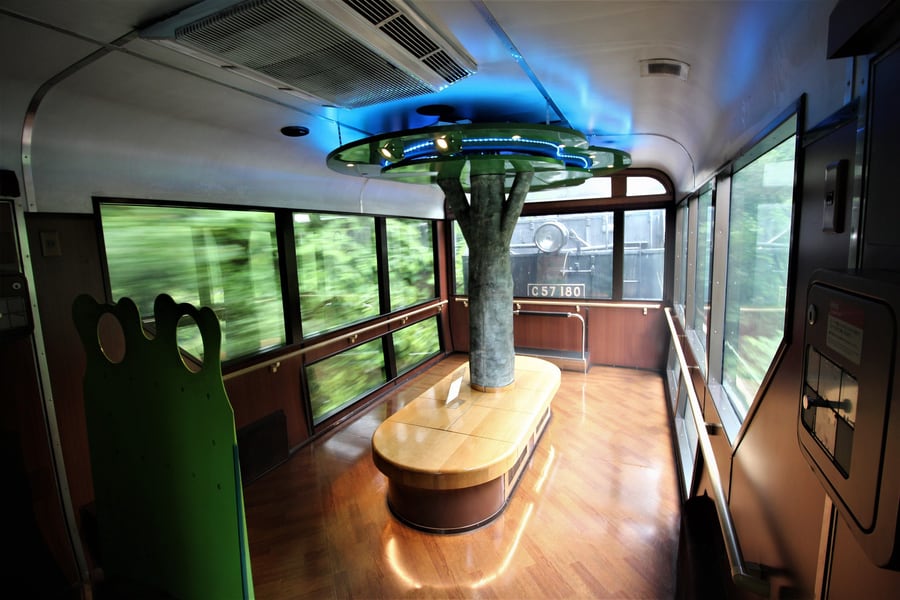
The seven coaches are 12-series stock from the national railways, rebuilt for this train with wood-grain interiors in the style of the Taishō era. Car 1, the Okojo car, named for the stoat that is the train's mascot, is an open space with a children's play room and a panoramic window at the end; car 4 is an observation car with a post box; car 5 has the shop, selling bento, drinks and goods found only on board; and car 7 is the Green Car, thirty reclining seats and its own panoramic room. The rest are four-seat bays. Going up, the engine is coupled to car 1, so the Okojo car looks straight at it; coming back it is on car 7.
On diesel days a DE10 diesel locomotive takes the same coaches over the same timings. On the steam days from 31 October 2026, the morning train runs with C57 180 at the front and the diesel at the back.
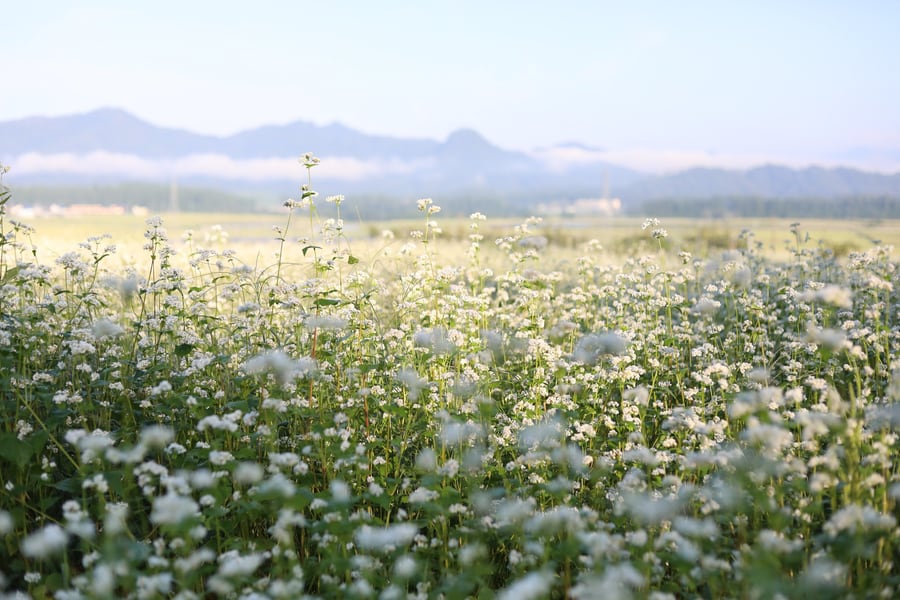
Along the route
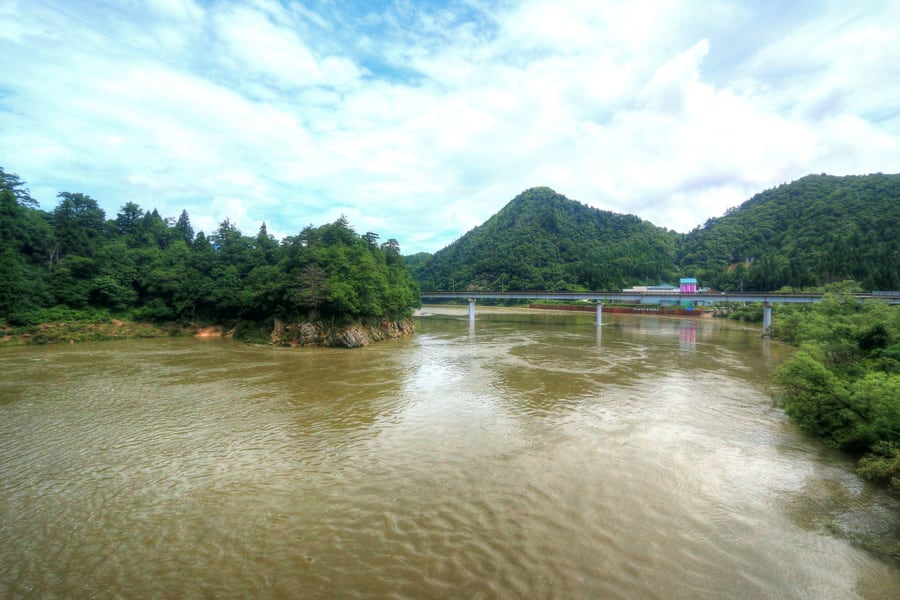 くろふね / Wikimedia Commons · CC BY 3.0
Along the Agano
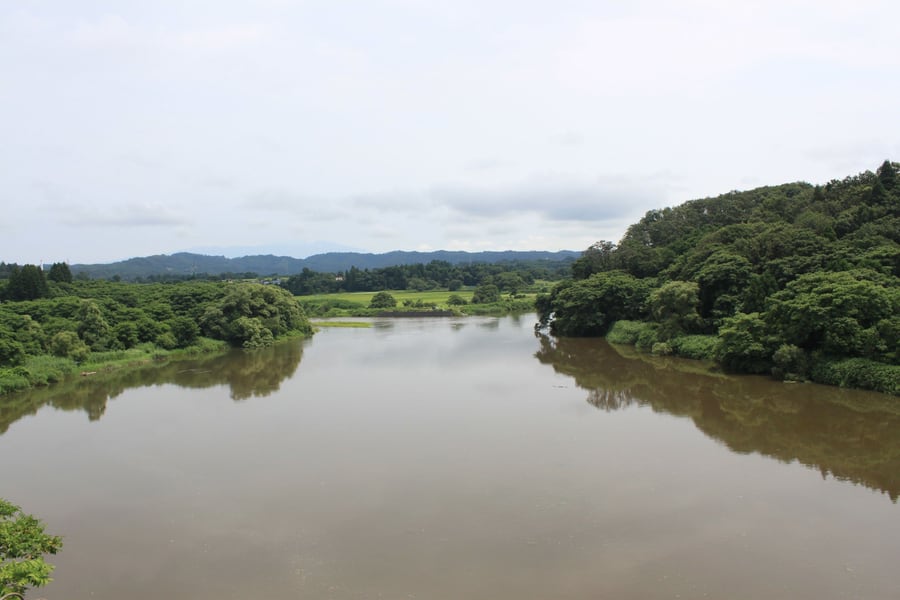
After Sakihana the line runs into the gorge of the Agano River and stays with it for the next hour and more, past Mikawa and Tsugawa and on towards the prefectural border, crossing and recrossing the water on iron bridges between forested hills.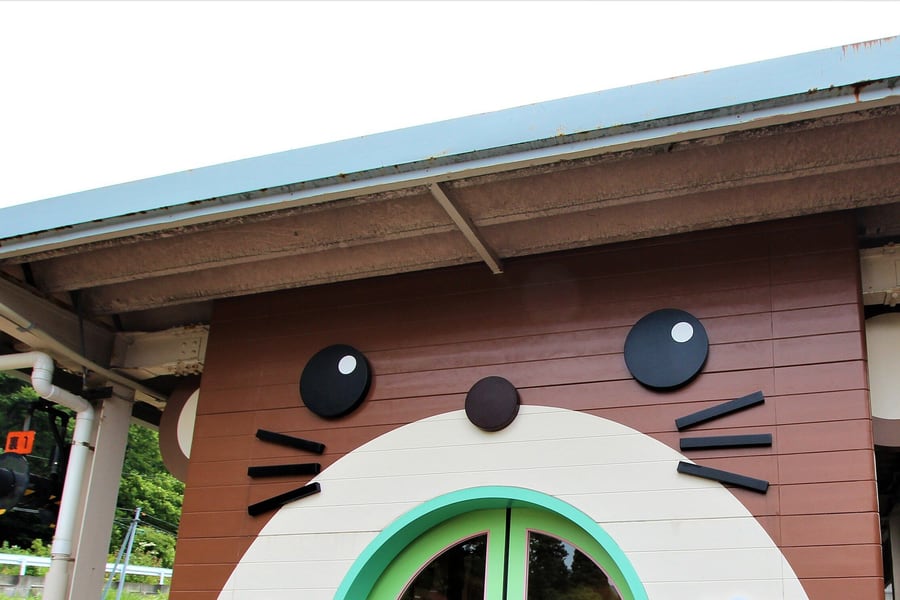 Rsa / Wikimedia Commons · CC BY-SA 3.0 · cropped
Seventeen minutes at Tsugawa
At Tsugawa the engine is inspected and takes on water, and the train waits a quarter of an hour. Step down for the station bento and local produce on the platform, and visit Okojirō's house, the mascot stoat's home.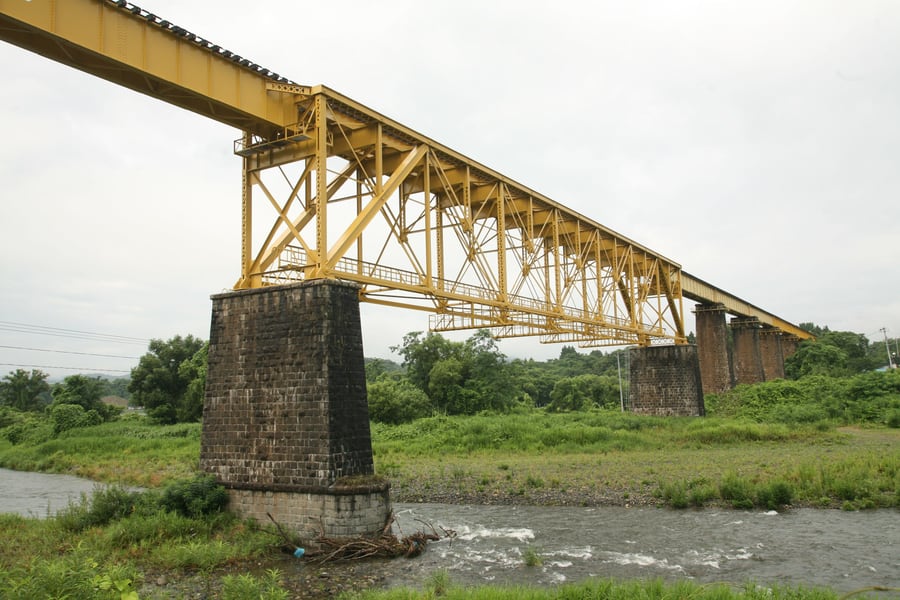 手練 / Wikimedia Commons · CC BY-SA 3.0
The Ichinotogawa Bridge
Between Yamato and Kitakata the train crosses a valley on a 445 m viaduct, 24 m high, opened in 1910. Its yellow middle span is an American-built Baltimore truss, one of the few still in use in Japan.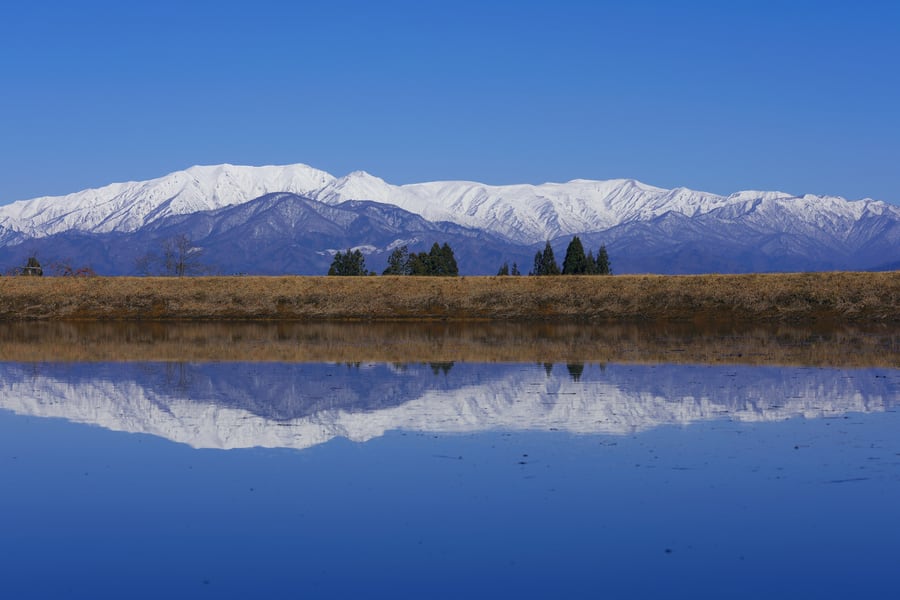 Nishiaizu Town / Wikimedia Commons · CC BY 4.0 · cropped
The Iide mountains
Past the border into Fukushima the line crosses Nishiaizu, the town around Nozawa, which looks north to the Iide range. Its namesake, Mount Iide, stands 2,105 m high on the border of three prefectures.A bit of history
Culture & experiences along the way
 Rory trains / Wikimedia Commons · CC BY-SA 4.0 · cropped
A postcard from the train
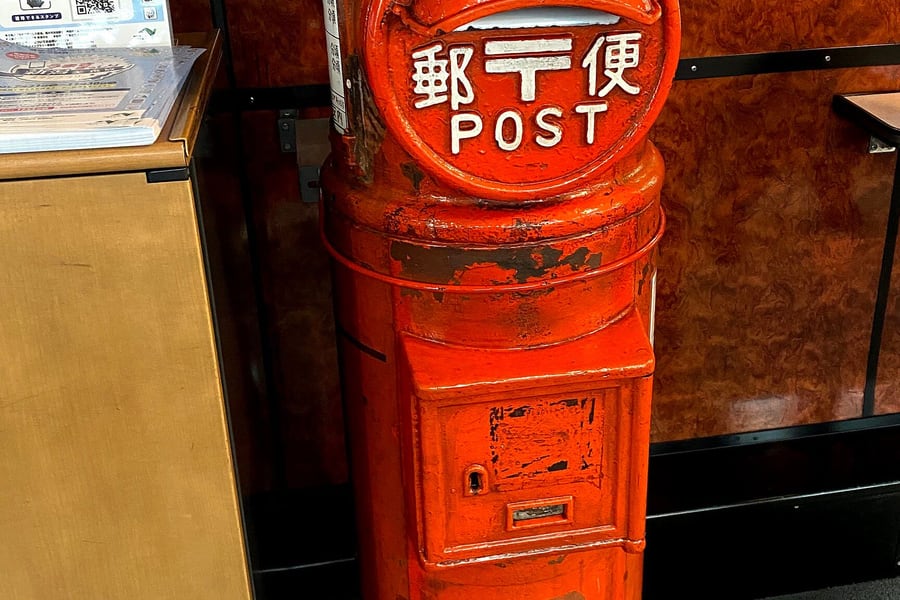
Car 4, the observation car, carries a red pillar box and a commemorative stamp. Write a card on the way and post it on board; JR East warns that the postmark may not always carry the day you travelled.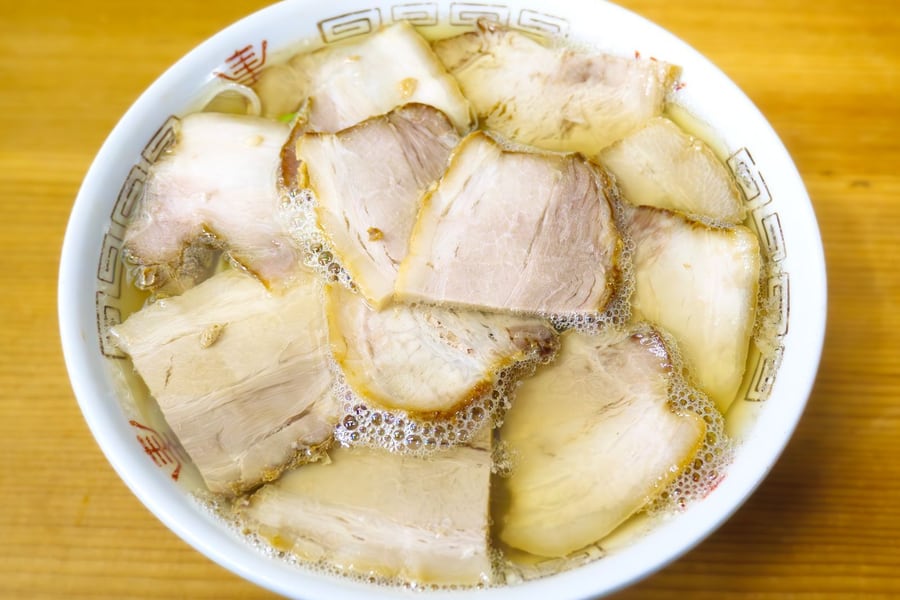 くろふね / Wikimedia Commons · CC BY 4.0 · cropped
Kitakata ramen
Kitakata is one of Japan's ramen towns, with about ninety shops for some fifty thousand people. The bowl is usually a soy broth over flat noodles made with extra water, and the town eats it for breakfast too: asa-ra, morning ramen.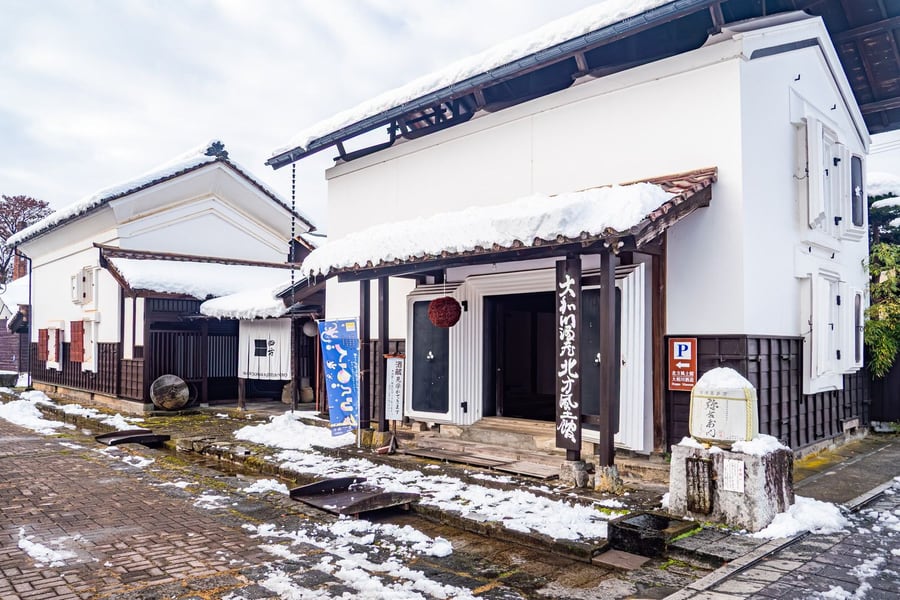 くろふね / Wikimedia Commons · CC BY 4.0 · cropped
Sake in a storehouse
Fifteen minutes' walk from Kitakata station, the Yamatogawa brewery, founded in 1790, opens its old storehouses as the Hoppō Fūdokan. Walk through the tools of past brewing, then taste more than ten of its sakes free of charge.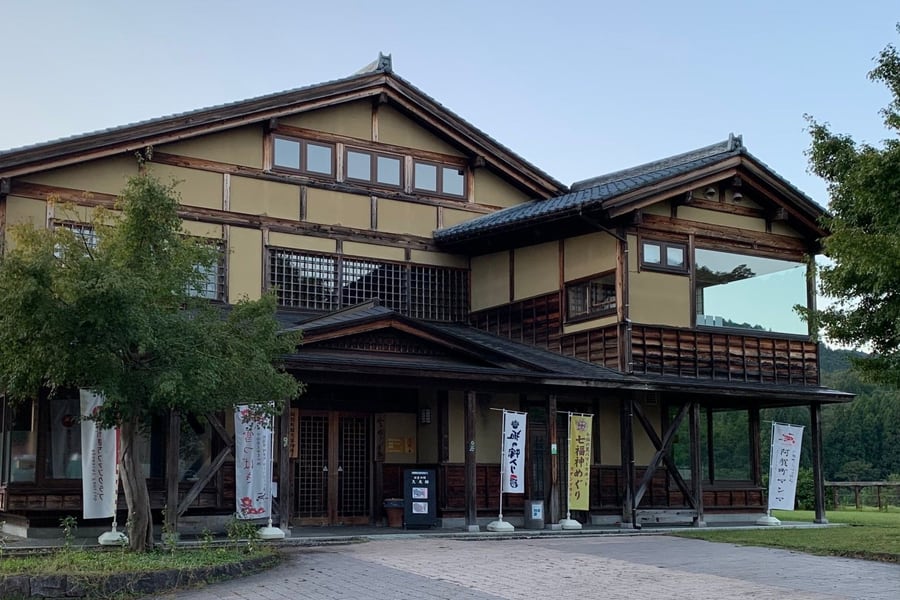 Drph17 / Wikimedia Commons · CC BY 4.0 · cropped
The fox's wedding
Tsugawa's best-known custom is the fox's wedding procession, and a cedar hall by the river is given over to it, with a model of the procession. Paint a papier-mâché fox mask, or book the fox make-up the bride wears. Entry is free; closed on Thursdays.Timetables
The train makes one round trip on each running day, with the same times whether steam or diesel hauls it. Every seat is reserved, so book before you travel.
Niitsu to Aizu-Wakamatsu
| Niitsu | Sakihana | Tsugawa | Yamato | Kitakata | Aizu-Wakamatsu |
|---|---|---|---|---|---|
| 10:03 | 10:39 | 11:11–11:28 | 12:42–12:52 | 13:10 | 13:36 |
Aizu-Wakamatsu to Niitsu
| Aizu-Wakamatsu | Kitakata | Nozawa | Tsugawa | Sakihana | Niitsu |
|---|---|---|---|---|---|
| 15:28 | 15:53 | 16:28–16:38 | 17:23–17:38 | 18:12 | 18:44 |
The train also calls at Gosen, Mikawa, Hideya and Nozawa going up, at Shiokawa going up only, and at Yamato, Hideya, Mikawa and Gosen coming back.
Running days, autumn 2026
| Hauled by | October | November |
|---|---|---|
| C57 180, steam | 11, 31 | 3, 7, 14, 21 |
| DE10, diesel | 3, 4, 12, 17, 18, 24, 25 | 1, 8, 15 |
Good to know:
- Steam or diesel is fixed in advance, by date, on JR East's calendar. On the steam days from 31 October the morning train also has the diesel at the back.
- No dates are listed after 21 November 2026, and none for 2027 yet. C57 180 is due a major overhaul in the year from April 2027, so check JR East's 2027 calendar before planning a trip around steam.
- Local trains cover the same line without a booking: six a day go all the way from Niitsu to Aizu-Wakamatsu, taking about two and a half hours, for example the 09:33 and 11:43 from Niitsu and the 09:48 and 16:39 from Aizu-Wakamatsu.
Times and dates as of October 2026, from JR East's timetable and calendar (opens in a new tab) for the train and its Niitsu station timetable (opens in a new tab).
Tickets
Every seat is reserved. You need the ordinary fare, ¥2,090 from Niitsu to Aizu-Wakamatsu, plus either a reserved seat at ¥840 or a Green Car seat with a ¥2,000 Green charge. Children pay half the fare and the reserved seat. Seats go on sale at 10:00 one month before the day, at JR ticket offices, at reserved-seat machines and on JR East's English booking site, JR-EAST Train Reservation, which needs an account.
Book as soon as your date opens, and check first whether it is a steam or a diesel day. Holders of a JR pass valid on JR East, such as the JR EAST PASS or the Japan Rail Pass, reserve their seat free of charge.
Fares checked October 2026 against JR East's timetable remarks, its passenger rules and its March 2026 fare table; Japanese yen.
Book your tickets
Reserved seat
Ordinary car · added to the fare
Every seat is reserved, on steam and diesel days alike; children pay half.
Book Tickets (opens in a new tab, on JR East)via JR EastGreen Car
Car 7 · Green charge, added to the fare
Thirty reclining seats and a panoramic room of their own, at the Niitsu end of the train.
Book Tickets (opens in a new tab, on JR East)via JR EastNiitsu to Aizu-Wakamatsu
One way, adult · ordinary fare
The basic fare for the whole 111 km, needed on top of a seat or Green ticket.
Book Tickets (opens in a new tab, on JR East)via JR EastRail Passes
The Ban'etsu Monogatari is a JR East train, and the JR passes cover it: the JR EAST PASS, ¥35,000 for five days, and the Japan Rail Pass, ¥50,000 for seven. A pass holder pays nothing extra for an ordinary reserved seat, but must still reserve one before boarding, at a ticket office or online.
For this journey alone, a pass is not worth buying: the fare and a reserved seat come to ¥2,930 each way. It pays when the train is one day of a longer trip, for example out from Tokyo to Niigata on the Jōetsu Shinkansen and back from Aizu-Wakamatsu by way of Kōriyama and the Tōhoku Shinkansen; price that loop as single tickets before buying a pass.
Checked October 2026 against JR East's Ban'etsu Monogatari (opens in a new tab) and JR EAST PASS (opens in a new tab) pages and the Japan Rail Pass prices (opens in a new tab).
Places to Visit
The train runs once each way, so getting off along the way means carrying on by local train; six run the whole line each day from Niitsu. Niitsu and Aizu-Wakamatsu are easy to see either side of the ride; Tsugawa and Kitakata are the stops worth a local-train afternoon.
 MAKIosama / Wikimedia Commons · CC BY-SA 4.0 · cropped
Niitsu
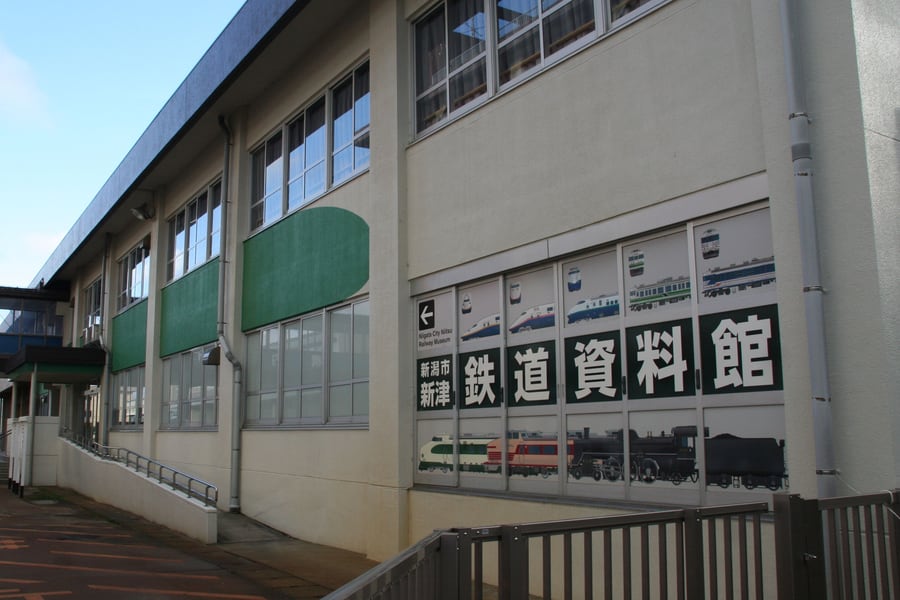
Niitsu grew up as a railway junction; the town museum says one in four working people here once worked for the railways. The Niigata City Niitsu Railway Museum, five minutes by bus from the station's east exit, has a 200-series Shinkansen car outside. It opens 9:30–17:00, closed on Tuesdays; adults ¥390.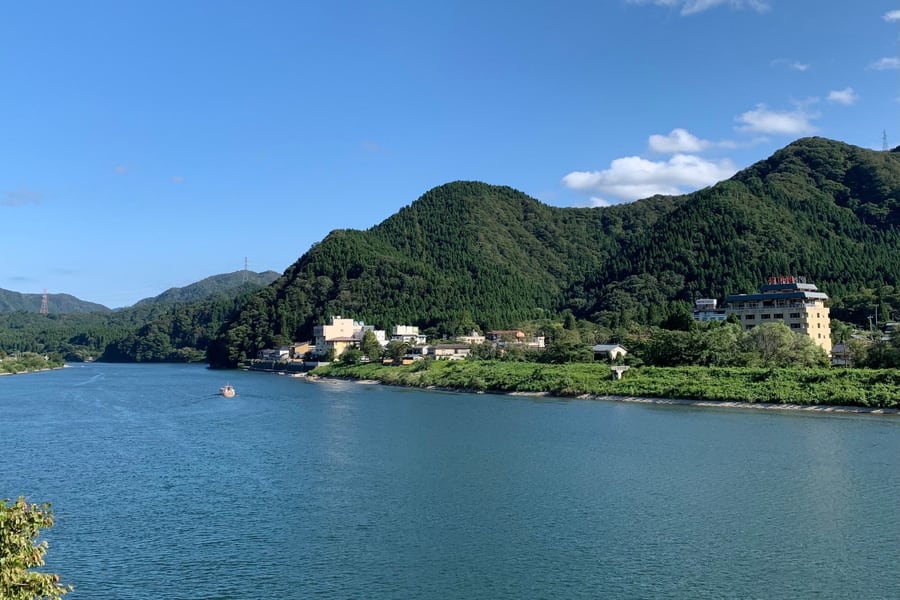 Drph17 / Wikimedia Commons · CC BY 4.0
Sakihana
Two minutes from the station, Sakihana Onsen is a row of seven inns on the bank of the Agano, with a sulphur spring that comes up at 54°C. Its cherry trees, planted about fifty years ago, flower in mid-April, when the train runs through the blossom. From Higashi-Gejō, the next station up, it is a twenty-minute walk to the Agano River Line boats: a forty-minute loop with a boatman's songs and stories, adults ¥2,000.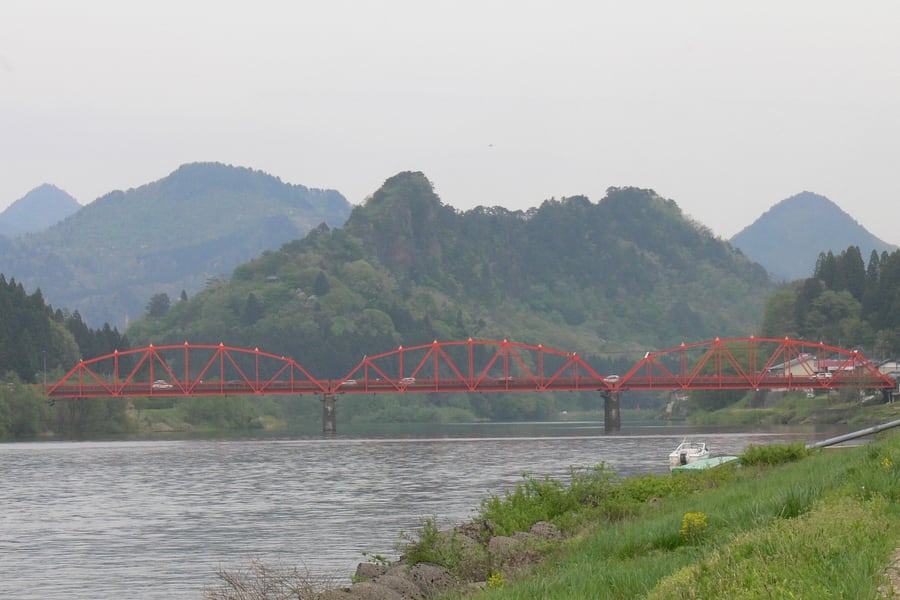 suzune konoo / Wikimedia Commons · CC BY-SA 3.0 · cropped
Tsugawa
Tsugawa was a river port, and its old main street keeps the covered walkways of a snow town. The rock of Mount Kirin rises over the river at the confluence, and the fox's wedding hall, ten minutes' walk from the station, looks straight at it from its upper floor.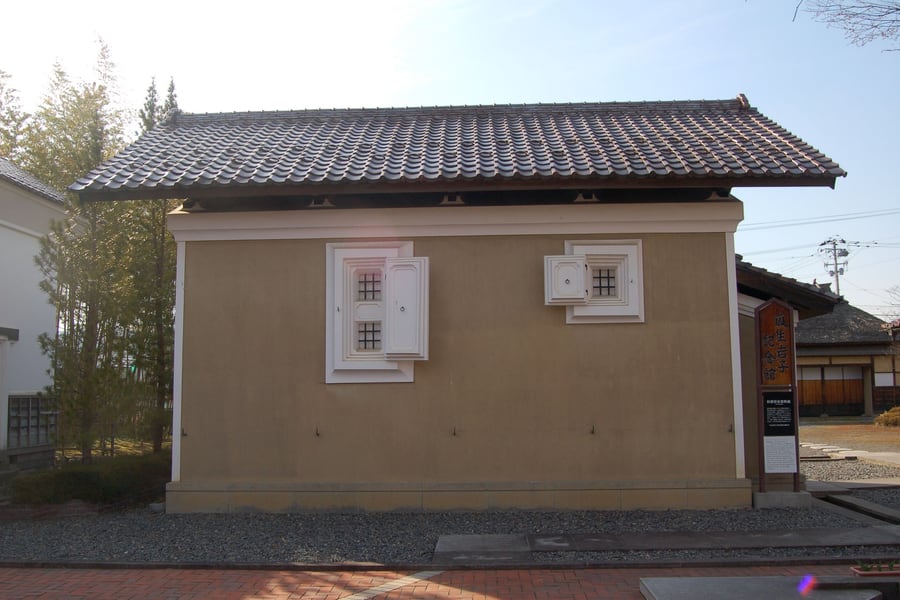 Kenchikuben / Wikimedia Commons · CC BY 3.0 · cropped
Kitakata
Kitakata is known for its kura, thick-walled storehouses of earth and plaster, and unusually they are still lived in and used: as shops, homes, breweries and a temple. Walk from the station to the streets around Fureai-dōri, with ramen on the way and sake at the end.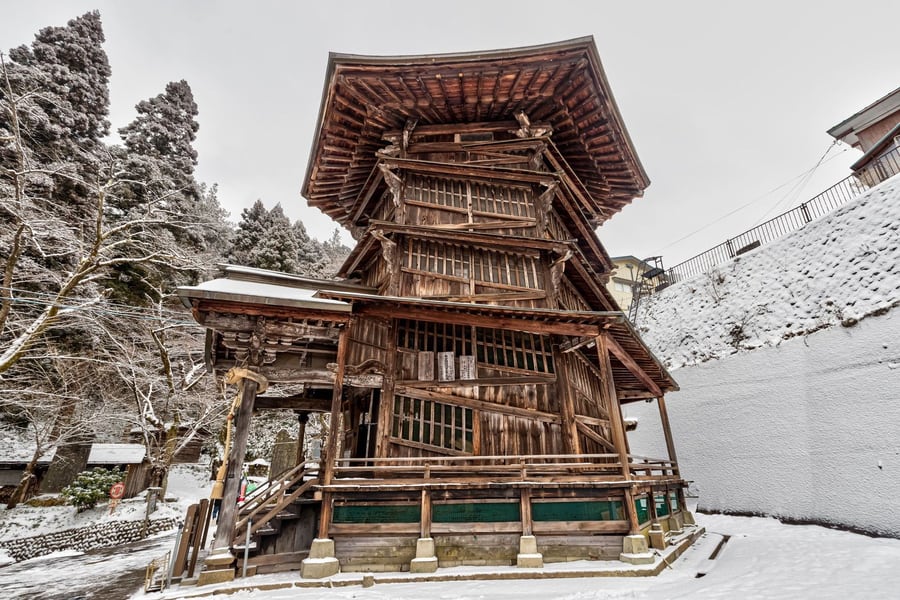 くろふね / Wikimedia Commons · CC BY 4.0
Aizu-Wakamatsu
On Iimori Hill, the Sazaedō is a hexagonal wooden hall finished in 1796, built round a double spiral: one ramp climbs, another descends, and the two never meet. It once held 33 figures of Kannon, so a pilgrimage took minutes. It is an Important Cultural Property.Where to Sleep
The 10:03 from Niitsu is easy to reach from a night in Niigata, a short local-train ride away. At the other end, a night in Aizu-Wakamatsu lets you ride up one day and back the next; a hot-spring inn at Sakihana Onsen, beside the station, breaks the journey on the river.
Where to stay
JR East Hotel Mets Niigata
Niigata · one minute from the station
A station hotel at Niigata, a short local-train ride from Niitsu, with a breakfast of Niigata dishes.
Check Availability (opens in a new tab, on hotelmets.jp)via hotelmets.jpAga no Megumi Bōsenkaku
Sakihana Onsen · two minutes from the station
A hot-spring inn on the bank of the Agano, with an open-air bath fed straight from the spring.
Check Availability (opens in a new tab, on bousenkaku.co.jp)via bousenkaku.co.jpAizuwakamatsu Washington Hotel
Aizu-Wakamatsu · about 3 minutes' walk from the station
A city hotel by the station, for a night in Aizu before the 15:28 back to Niitsu.
Check Availability (opens in a new tab, on washington-hotels.jp)via washington-hotels.jpQuestions or corrections
Planning this trip and stuck on something, or spotted a time, fare or detail that has changed? Send us a message about Ban'etsu Monogatari. We read every one, and we update this page when something has changed.