Japan

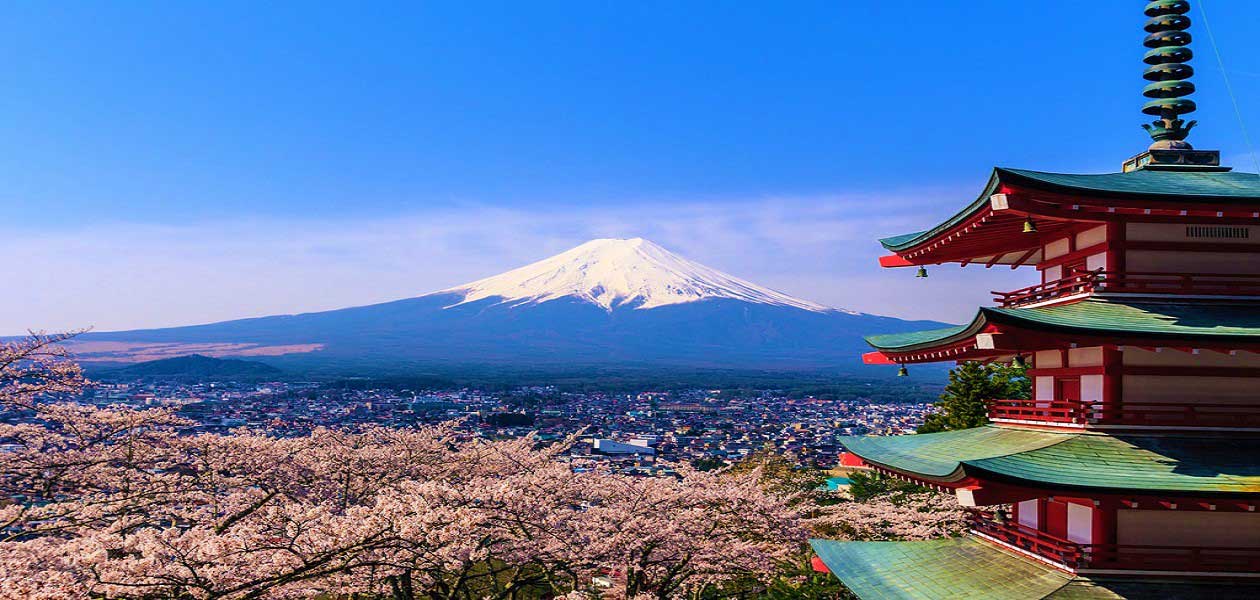
No country has a deeper love affair with the train than Japan. Its railways are famously fast, spotless and punctual to the second — from the Shinkansen bullet trains that streak past Mount Fuji to a web of local lines threading mountains, coasts and cherry-blossom valleys.
The range is extraordinary. Ride the original bullet train, the Tōkaidō Shinkansen, from Tokyo to Kyoto at 285 km/h; zig-zag up the switchbacks of the Hakone Tozan Railway, Japan's oldest mountain line; drift through a Kyoto gorge on the open-sided Sagano "Romantic Train"; or step aboard the Seven Stars in Kyushu, one of the most exclusive cruise trains in the world. Few countries pack so much railway wonder into so small a space.
Rail journeys in Japan
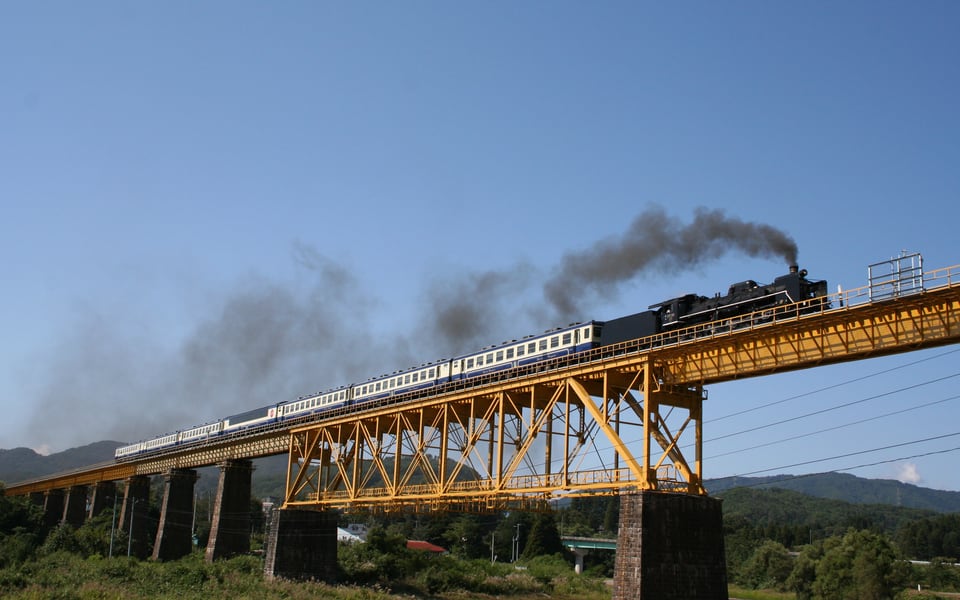
Ban'etsu Monogatari
Seven retro coaches up the Agano River gorge from Niigata to Aizu, behind a 1946 steam engine that spent 30 years in a school playground.
View journey →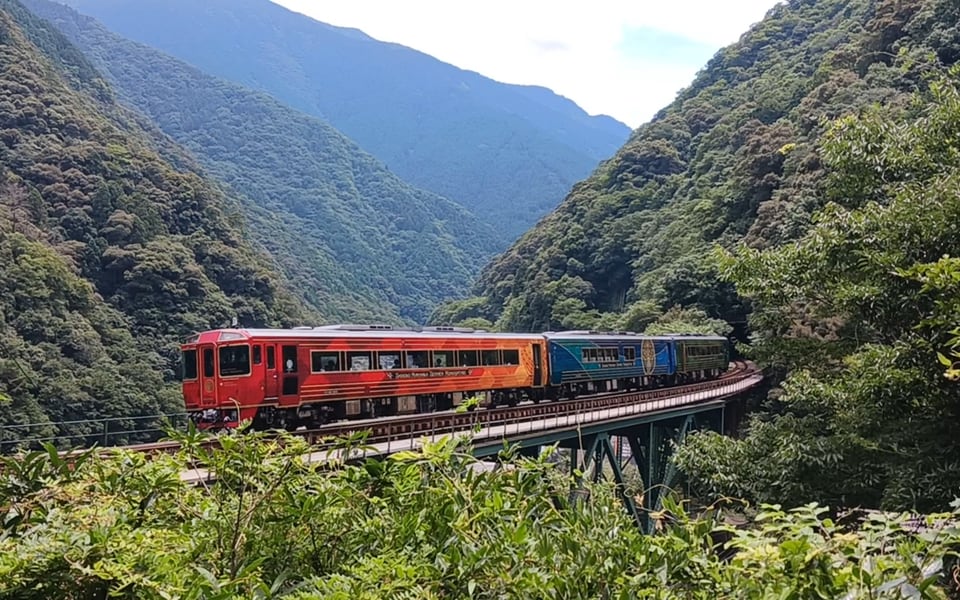
Dosan Line to Ōboke
Over Shikoku's mountains and up the Yoshino River's gorges, on a wood-panelled sightseeing train that reverses at a station no road reaches.
View journey →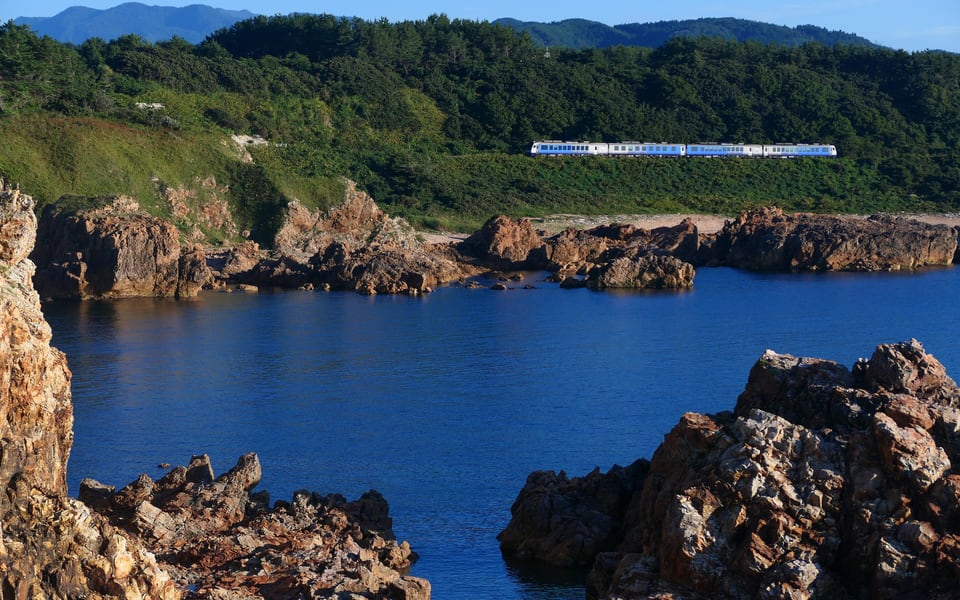
Resort Shirakami
A sightseeing train along the Sea of Japan under the Shirakami mountains, slowing for the views, with Tsugaru shamisen played on board.
View journey →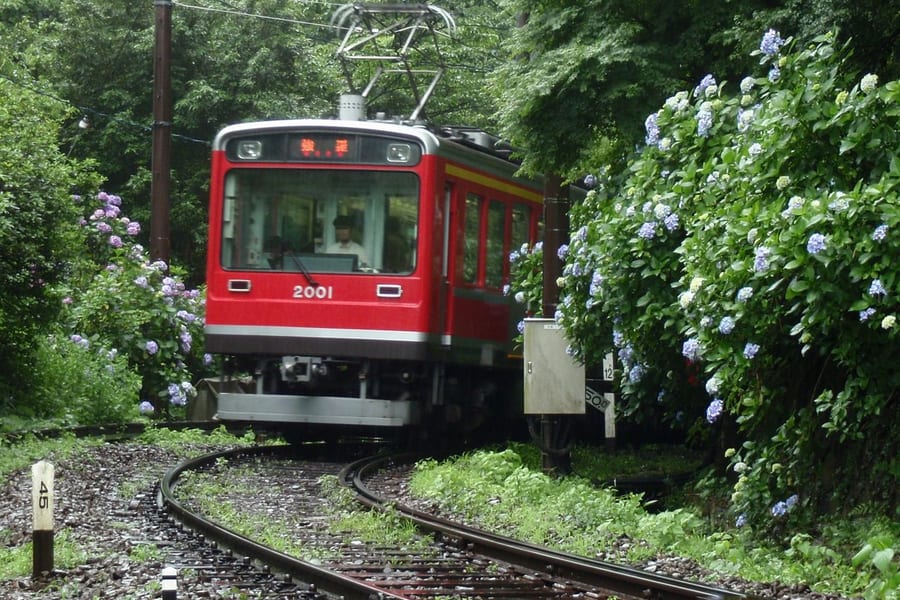
Hakone Tozan Railway
Japan's oldest mountain railway — a little red train that zig-zags up three switchbacks into the hot-spring hills, on a line modelled on the Swiss Alps.
View journey →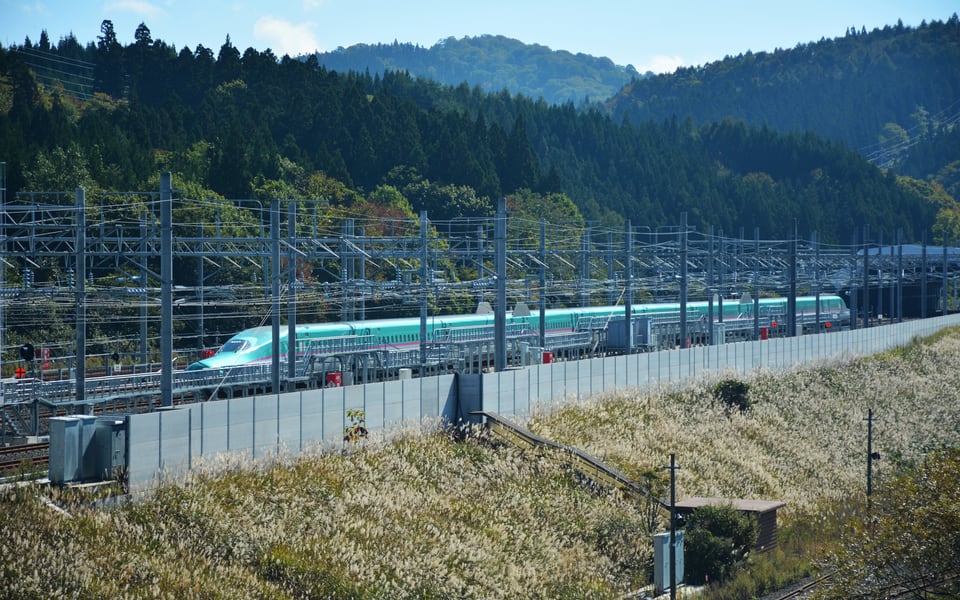
Hokkaido Shinkansen
Under the Tsugaru Strait to Hokkaido: 54 km of tunnel, 23 km of it beneath the seabed, where the bullet train slows to share its rails with freight.
View journey →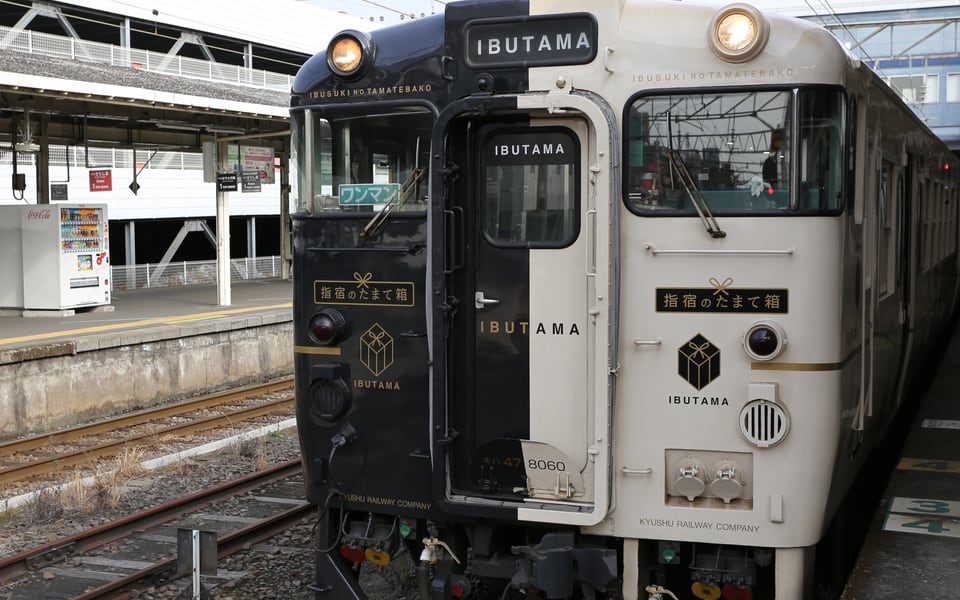
Ibusuki no Tamatebako
JR Kyushu's black-and-white express to the hot springs of Ibusuki, dressed as the Urashima Tarō tale: mist billows from the doors as you board.
View journey →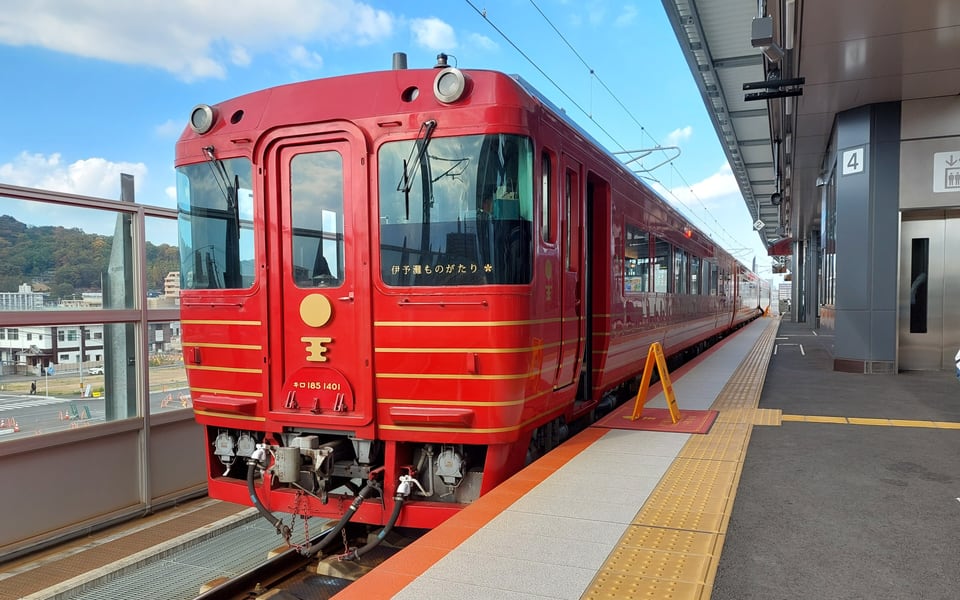
Iyonada Monogatari
Shikoku's first full-scale sightseeing train follows the Iyo-nada coast and halts at Shimonada, a platform above the sea, so passengers can step out.
View journey →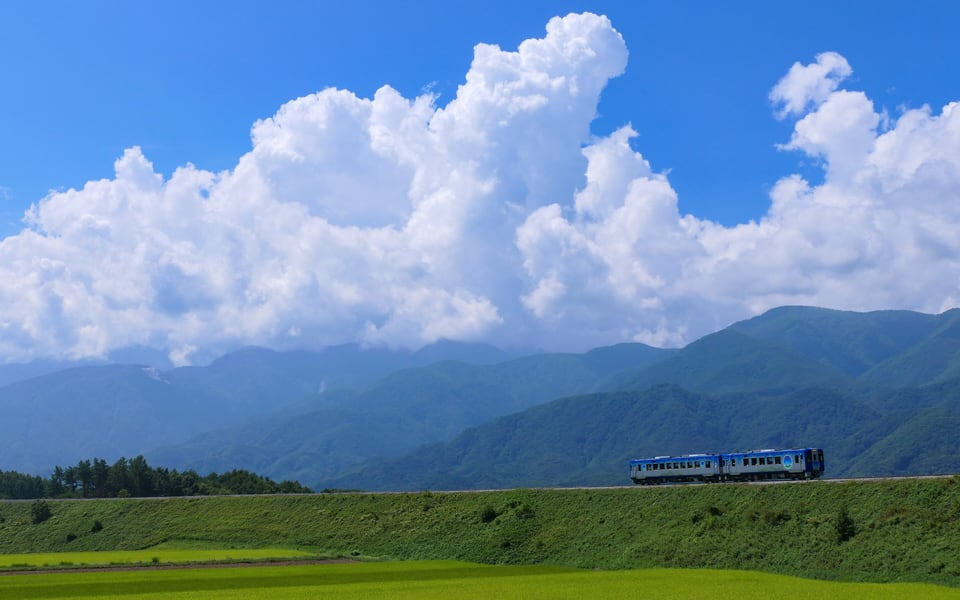
Koumi Line
Two hours over the roof of Japan's railways: a local line from Yamanashi into Nagano that crosses 1,375 m, the highest point on any JR track.
View journey →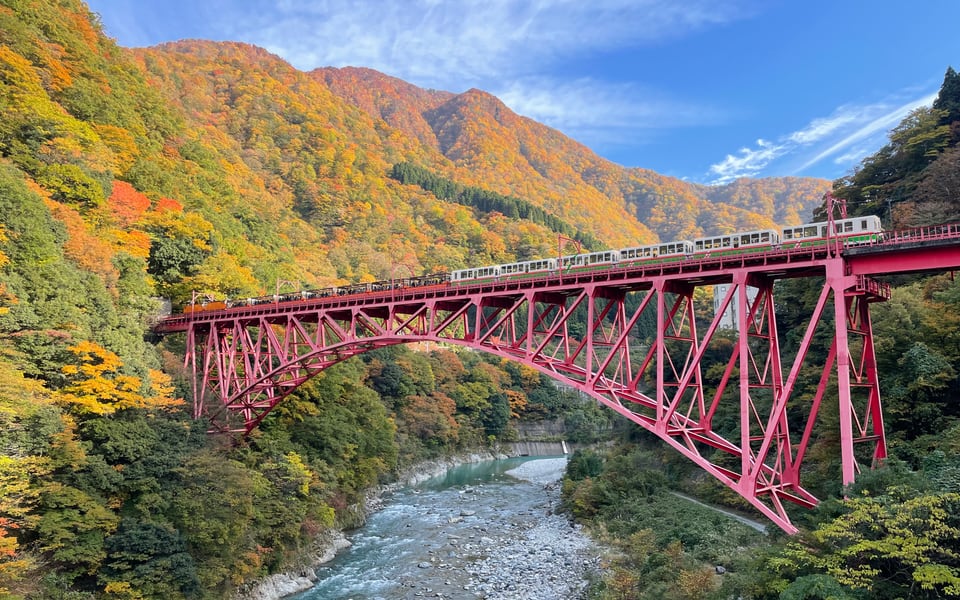
Kurobe Gorge Railway
Built to supply power stations, it once told riders their safety was not guaranteed: 20 km in open cars up Japan's deepest gorge.
View journey →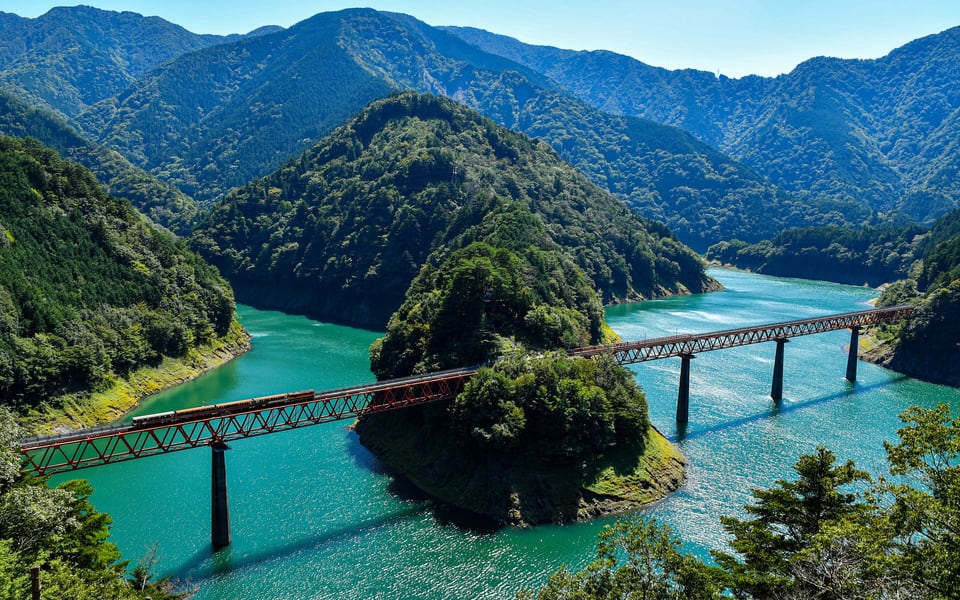
Ōigawa Railway
Japan's only rack railway climbs a 90‰ grade to a station that seems to float on a lake, up the valley that brought steam back to Japan.
View journey →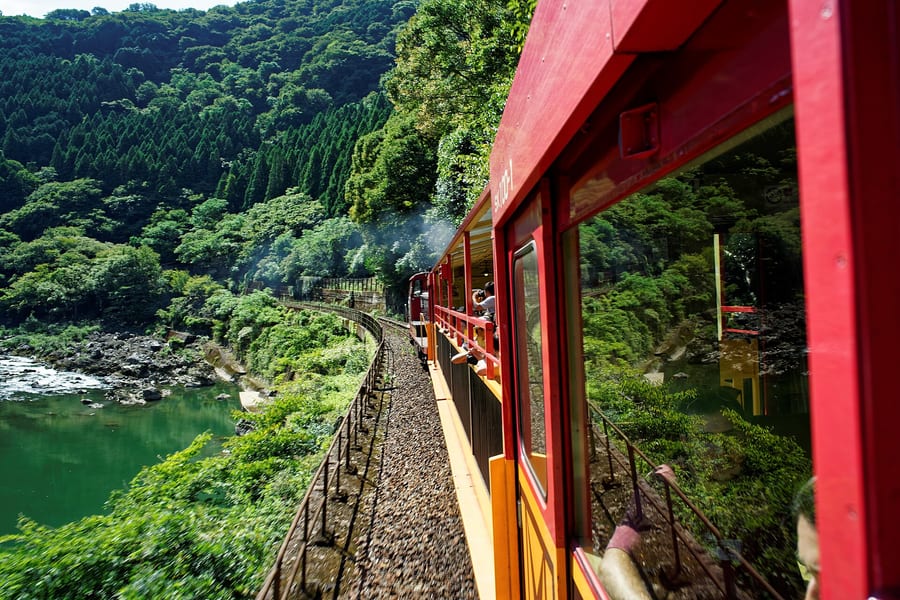
Sagano Scenic Railway
Kyoto's Romantic Train — an open-sided vintage torokko that trundles an abandoned railway through the wooded Hozugawa gorge, under cherry blossom.
View journey →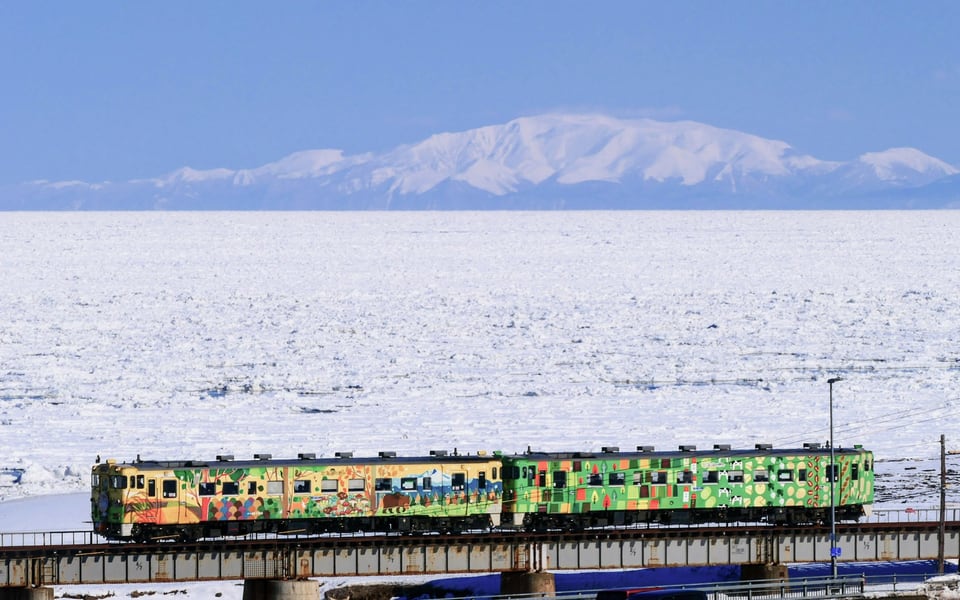
Senmō Line
From the Pacific to the Sea of Okhotsk across Japan's largest wetland, where a steam train runs among the cranes in winter and the sea freezes white.
View journey →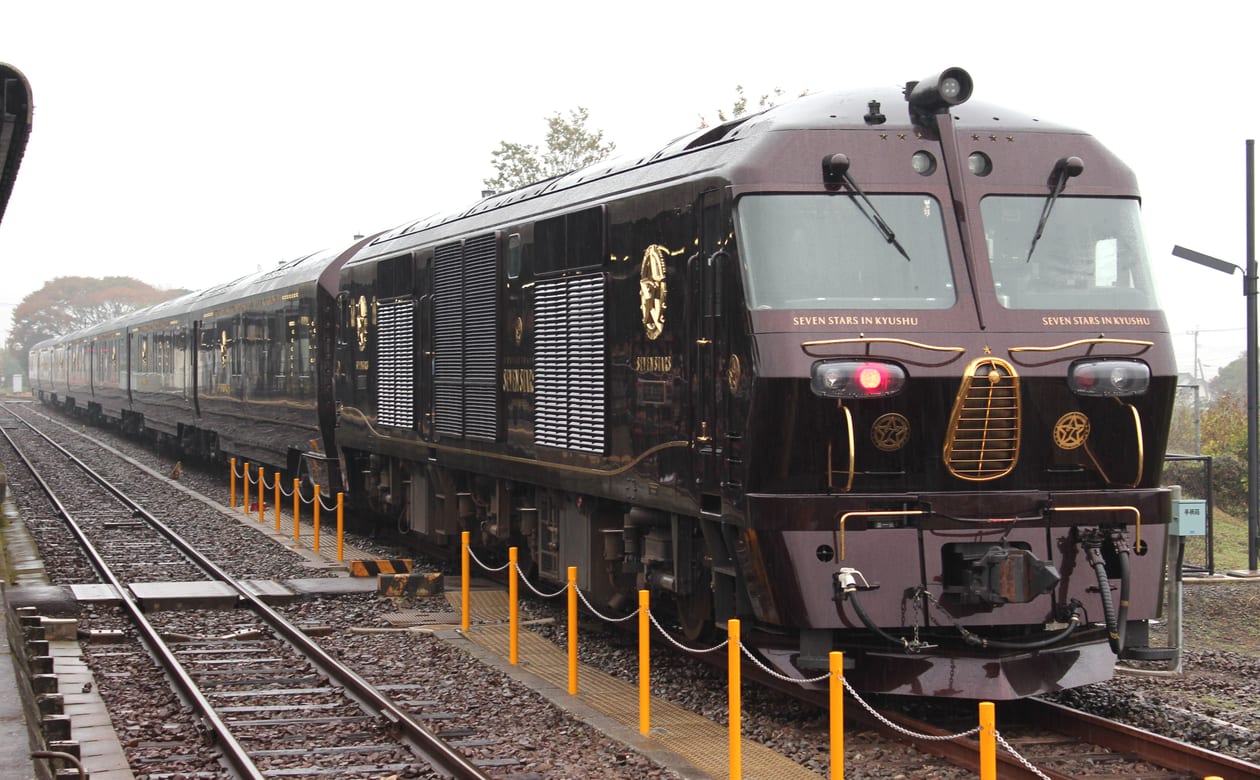
Seven Stars in Kyushu
Japan's original luxury cruise train — a jewel-box sleeper of just fourteen suites, touring the volcanoes, onsen towns and coasts of Kyushu.
View journey →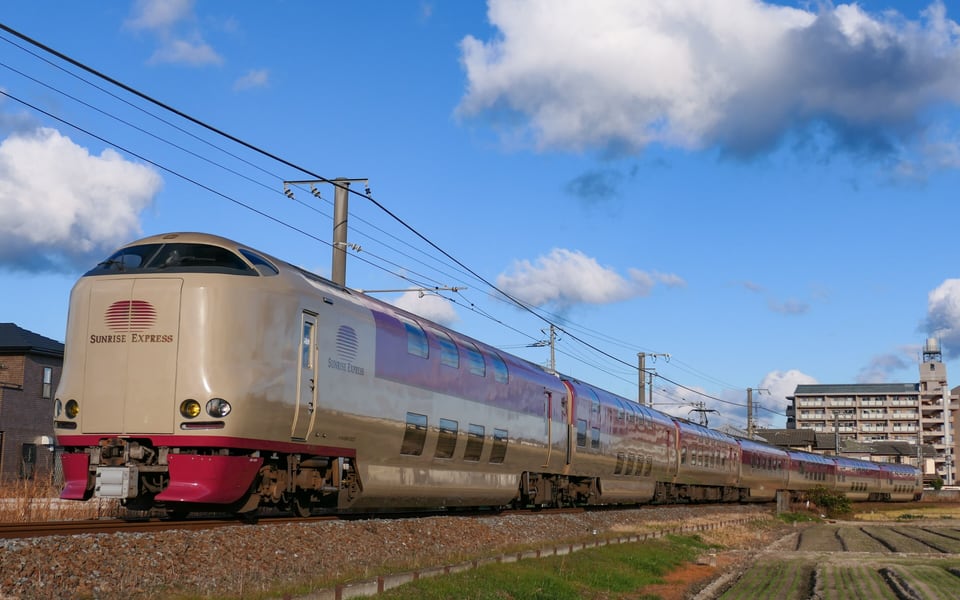
Sunrise Izumo & Sunrise Seto
The only sleeper train in Japan that runs every night: leave Tokyo at 21:26 and wake over the Seto Inland Sea, or in the mountains on the way to Izumo.
View journey →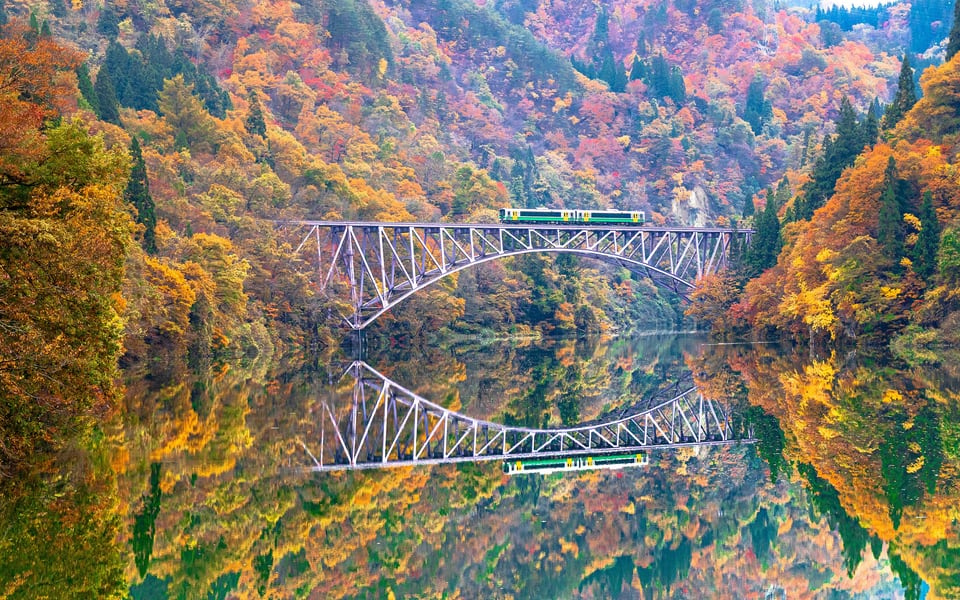
Tadami Line
A slow local train up the Tadami River and over the mountains into Niigata, on a line washed out in 2011 and reopened only in 2022.
View journey →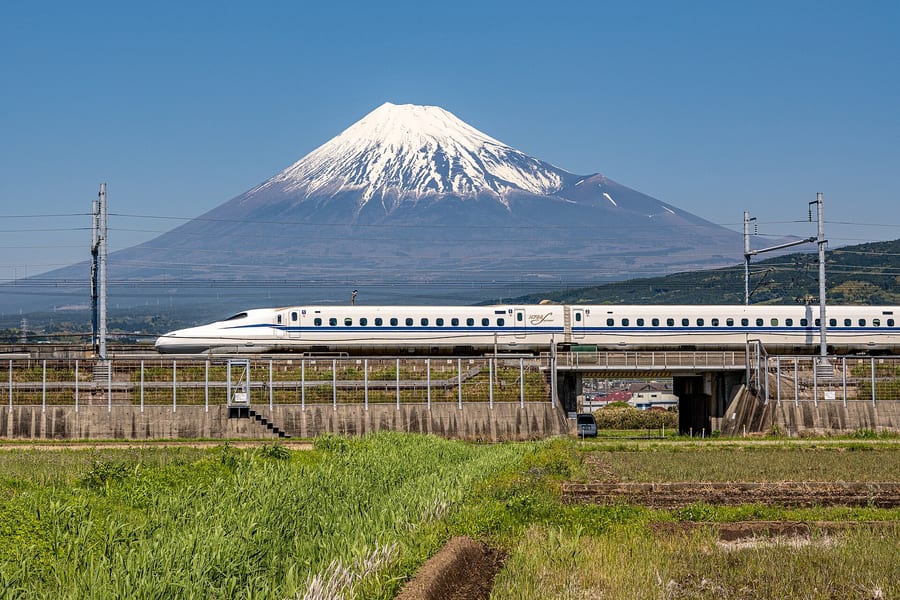
Tokaido Shinkansen
The original bullet train, still one of the world's great rides — Tokyo to Kyoto at 285 km/h, past Mount Fuji on the busiest high-speed line on earth.
View journey →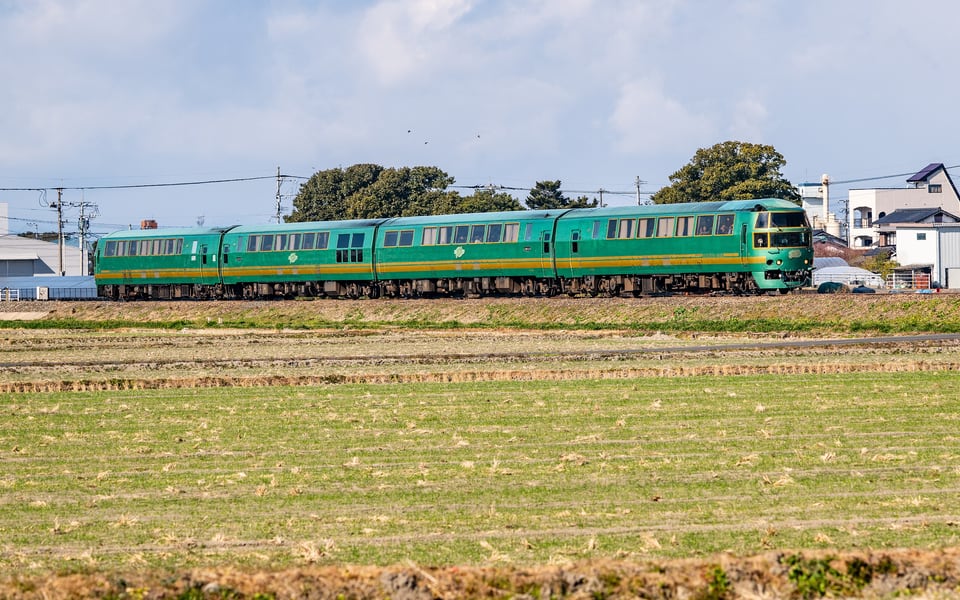
Yufuin no Mori
JR Kyushu's green resort express from Hakata to the hot-spring town of Yufuin, built in 1989 so the holiday would begin the moment you board.
View journey →Good to know
Is the Japan Rail Pass worth it?
It depends on your route. The pass gives unlimited travel on JR trains, including most Shinkansen, for 7, 14 or 21 days. Since the 2023 price rise it only pays off if you're covering long distances — say a Tokyo–Kyoto–Hiroshima loop — so price your actual journeys first. Note that the fastest Nozomi and Mizuho services need a supplement even with a pass — including the flagship Tōkaidō Shinkansen between Tokyo, Kyoto and Osaka.
How do I get around Japan by train?
Effortlessly. The JR Group's Shinkansen link the big cities at high speed, while dense local and private lines and city subways reach almost everywhere else. A rechargeable IC card (Suica, Pasmo and the like) lets you tap through the gates on local trains, subways and buses across most of the country.
When is the best time to travel Japan by train?
Late March to April for the cherry blossom and October to November for autumn colour are the most beautiful — and the busiest. Trains and popular seats book up around these seasons and the Golden Week holiday in early May, so reserve ahead.
Do bullet trains need seat reservations?
Not always — most Shinkansen have both non-reserved and reserved cars, so you can turn up and ride. In peak seasons a reserved seat is well worth it, and a few premium services are fully reserved. Reservations are free with a Japan Rail Pass.