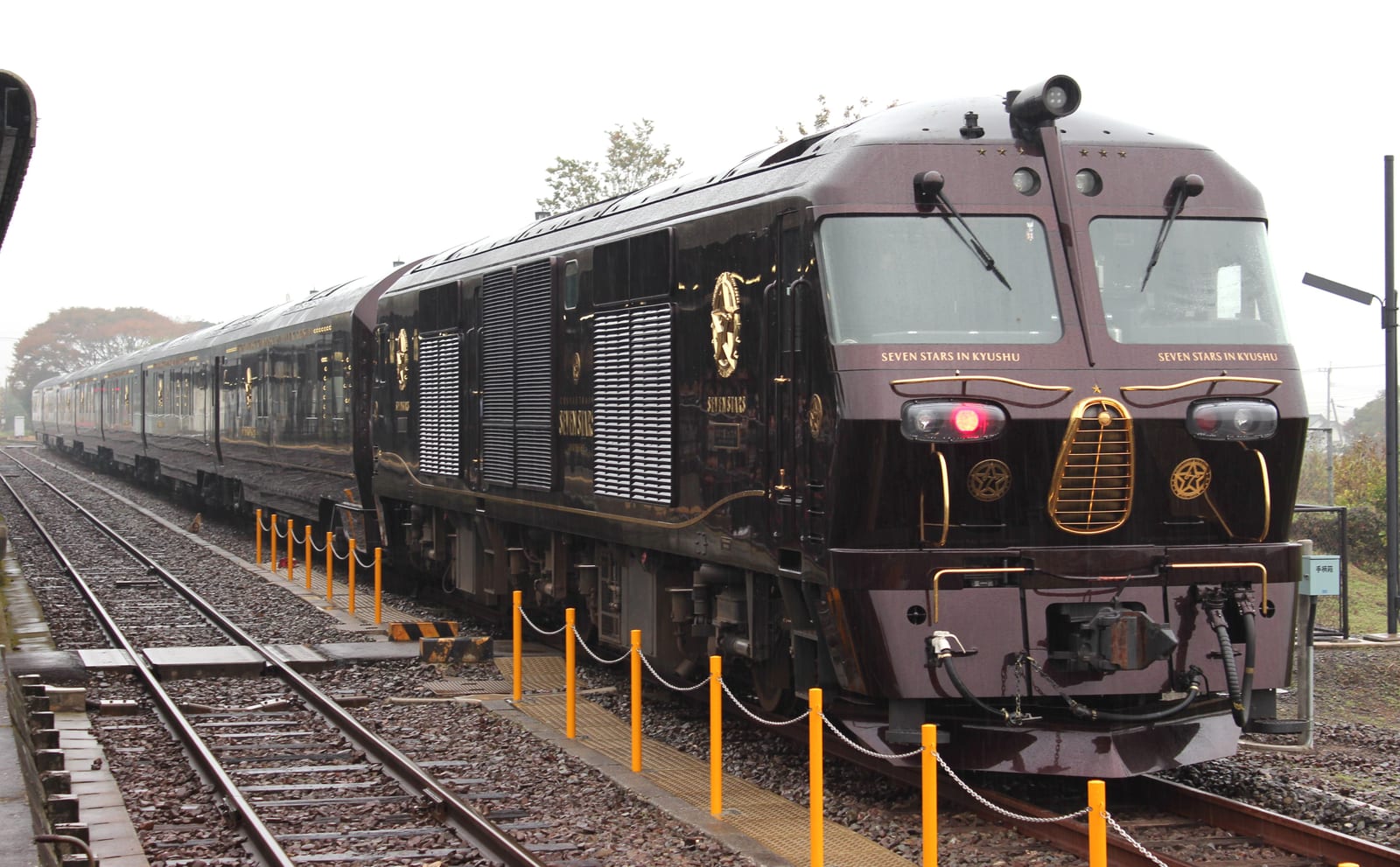
Seven Stars in Kyushu
Rsa / Wikimedia Commons · CC BY-SA 3.0
- Duration2 or 4 days
- Best seasonYear-round
Introduction
Some trains take you somewhere. A handful are the destination in themselves — and the Seven Stars in Kyushu was the first in Japan to be built entirely on that idea.
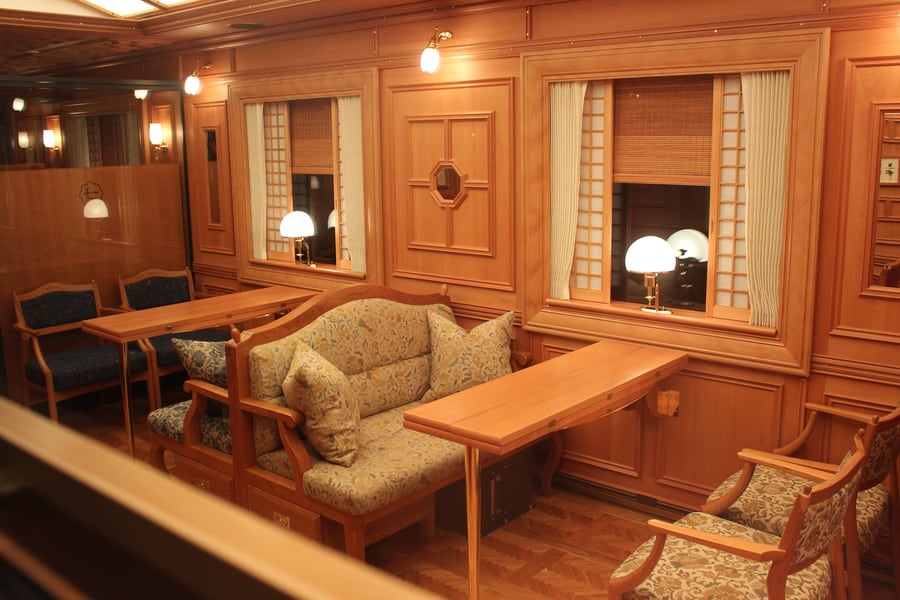
Launched in 2013, it is a cruise train: a rolling luxury hotel of just seven carriages that spends two or four days making a slow loop of the island of Kyushu, Japan's warm, volcanic, hot-spring-laced south. There are only fourteen suites and never more than twenty-eight guests, cosseted by a crew who outnumber them, in interiors so finely made — inlaid wood, Arita porcelain, a grand piano in the lounge — that the train has become a design icon in its own right.
It is also one of the most exclusive travel experiences on earth. Suites are awarded by ballot months ahead and cost a small fortune, all of it inclusive. But for those who ride it, the reward is a Japan seen at walking pace: volcanoes and coastlines sliding past the picture windows by day, the gentle sway of the rails by night.
The Journey
The Seven Stars runs a round trip from Hakata Station in Fukuoka, the gateway city of northern Kyushu, and comes in two shapes.
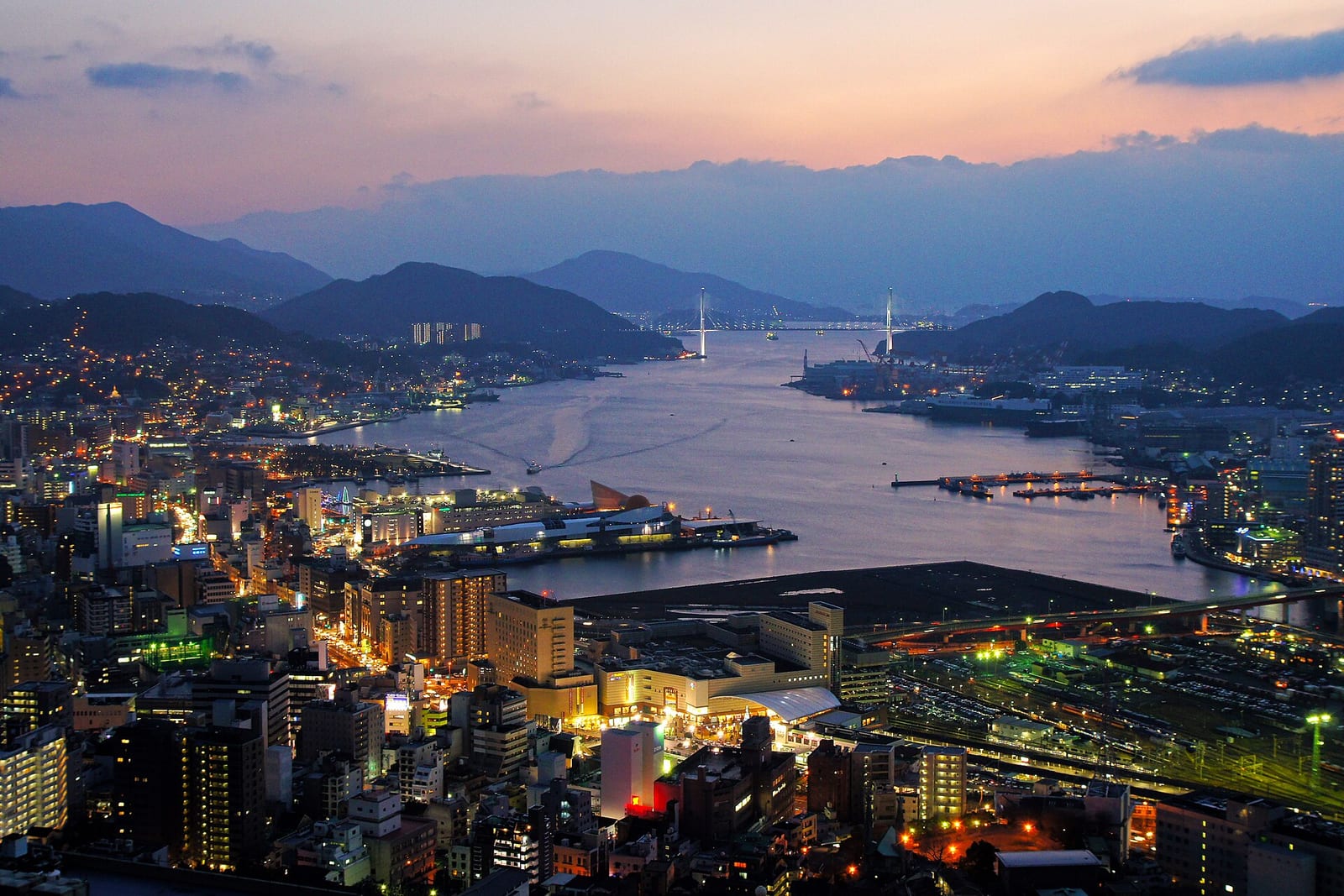
The two-day tour makes a compact western loop — down to the harbour city of Nagasaki, up to the volcanic highlands of Mount Aso, and back by way of the onsen town of Yufuin. The four-day grand tour circles almost the whole island: east to Yufuin, south along the coast through Miyazaki, on to Kagoshima in the far south beneath the smoking cone of Sakurajima, and back north across the Aso highlands to Fukuoka.
Between the sightseeing stops — where guests step off for private excursions, tea ceremonies or hot-spring towns — life on board is the point. Meals are multi-course affairs prepared by celebrated Kyushu chefs and served in the dining car; evenings drift by in the lounge car with live music and a drink as the dark countryside slips past. The name ties it all together: seven stars for the seven prefectures of Kyushu, for the train's seven carriages, and for the seven pleasures of the journey — the scenery, the food, the onsen, the design, and the rest.
It is, in the end, less a way of crossing Kyushu than a way of savouring it — the whole island reduced to a slow, luxurious, moving room with a view.
Along the route
t-mizo / Wikimedia Commons · CC BY 2.0Mount Aso
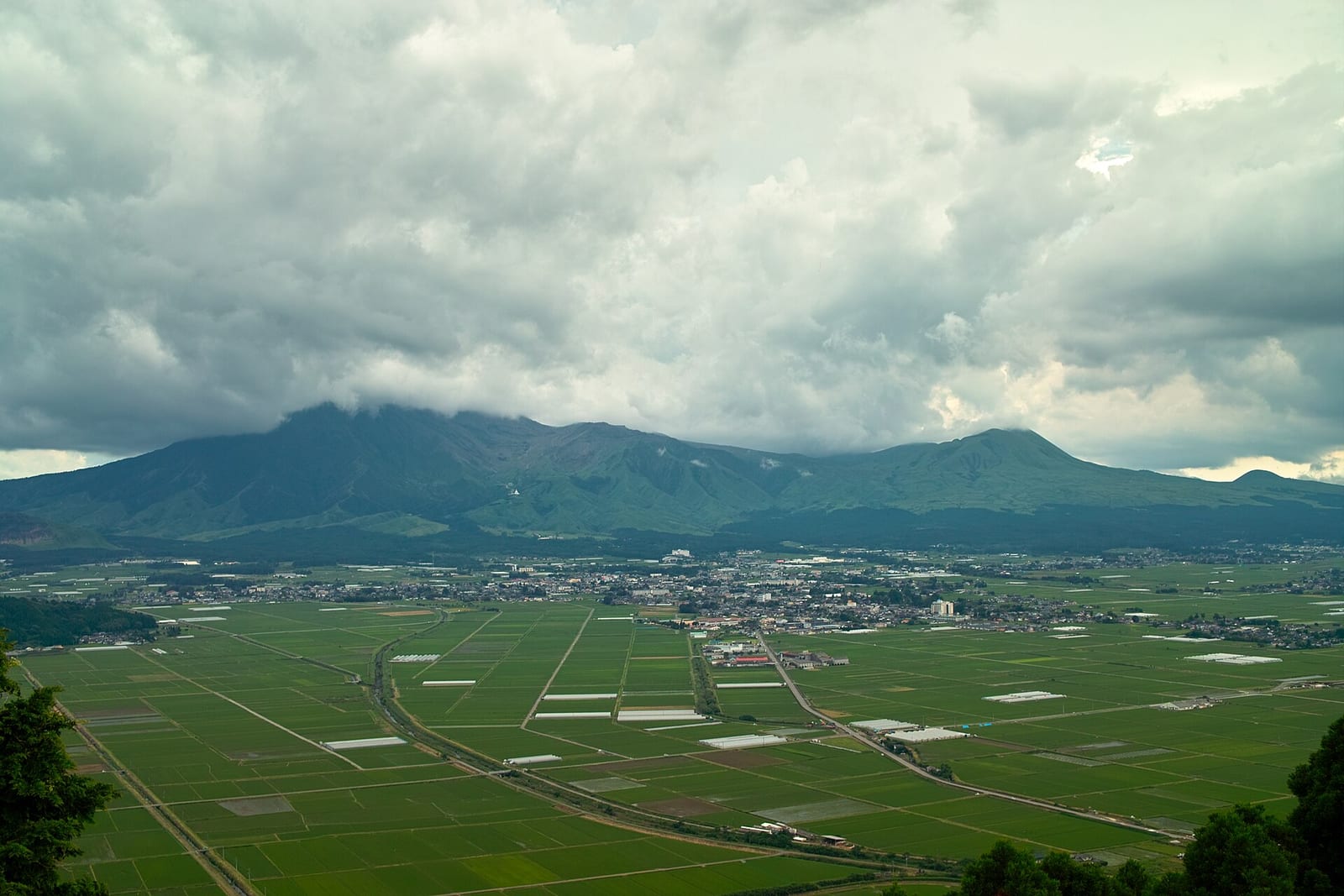
The train skirts one of the world's great volcanic landscapes — the enormous caldera of Mount Aso, a bowl of grassland and smoking craters ringed by mountains, with a station right on the highlands.そらみみ (Soramimi) / Wikimedia Commons · CC BY-SA 4.0Yufuin & the onsen
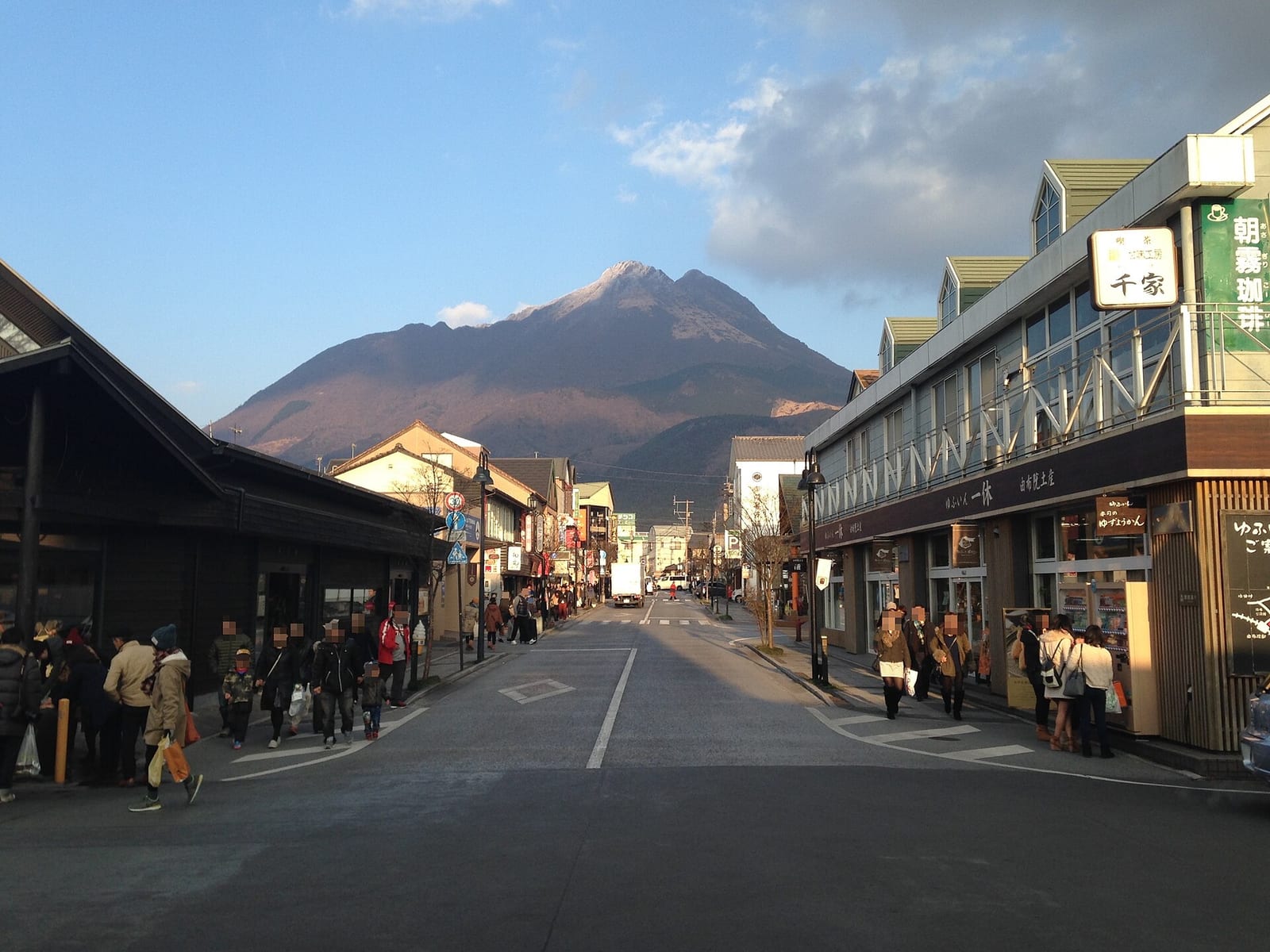
Beneath the twin peaks of Mount Yufu, the spa town of Yufuin is one of Kyushu's most beloved retreats — hot springs, art museums and slow mornings, an island famous for its geothermal waters.Takobou / Wikimedia Commons · CC BY-SA 3.0Kagoshima & Sakurajima
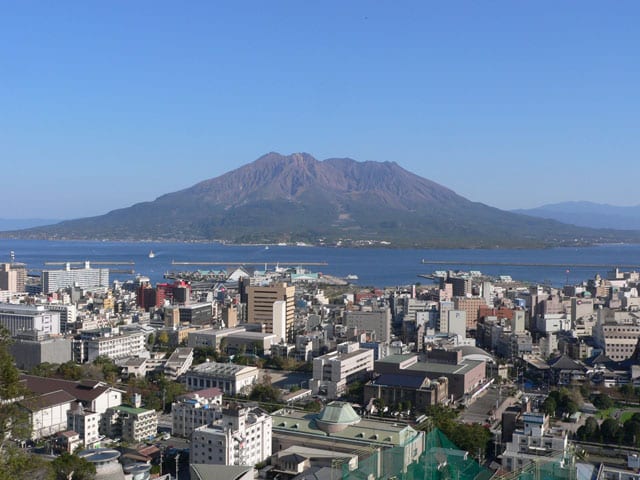
At the southern end of the grand tour, the city of Kagoshima looks across the bay to Sakurajima, a restless volcano that still puffs ash over the rooftops — Japan's answer to the Bay of Naples.A bit of history
Culture & experiences along the way
 Rsa / Wikimedia Commons · CC BY-SA 3.0 · cropped
A train designed as art
Every detail is the work of designer Eiji Mitooka — inlaid woodwork, Arita porcelain, a piano lounge and picture windows. With just fourteen suites for twenty-eight guests, it feels less like a train than a tiny travelling hotel.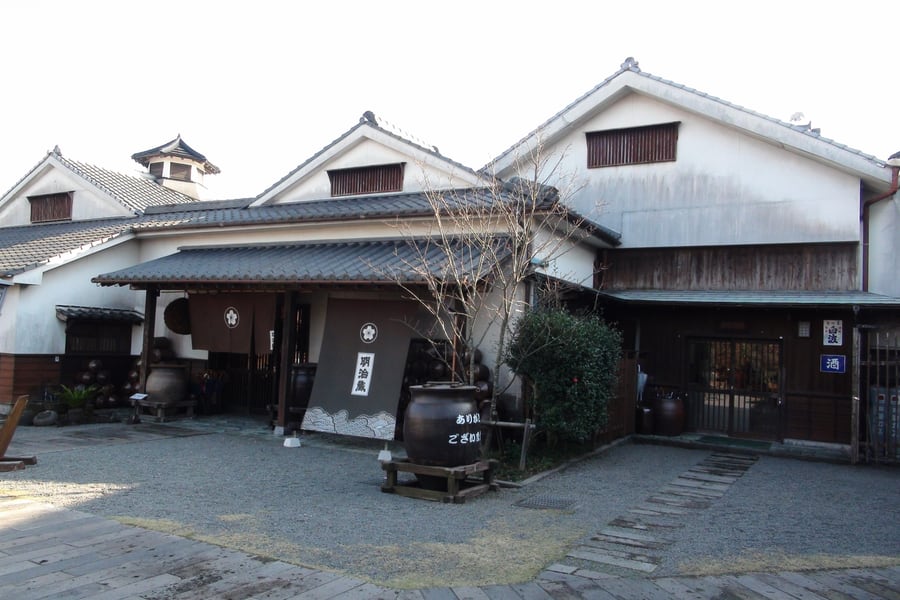 Sakaori / Wikimedia Commons · CC BY 3.0 · cropped
Shōchū, and a distillery you can walk into
Kyushu drinks shōchū rather than sake, and Kagoshima's is distilled from sweet potato. At Makurazaki, Satsuma Shuzo's Meiji-gura still ferments in clay pots more than a century old and opens its doors free, 9am to 4pm, almost every day of the year. Come between August and May and the stills are working.David Stanley / Wikimedia Commons · CC BY 2.0The hells of Beppu
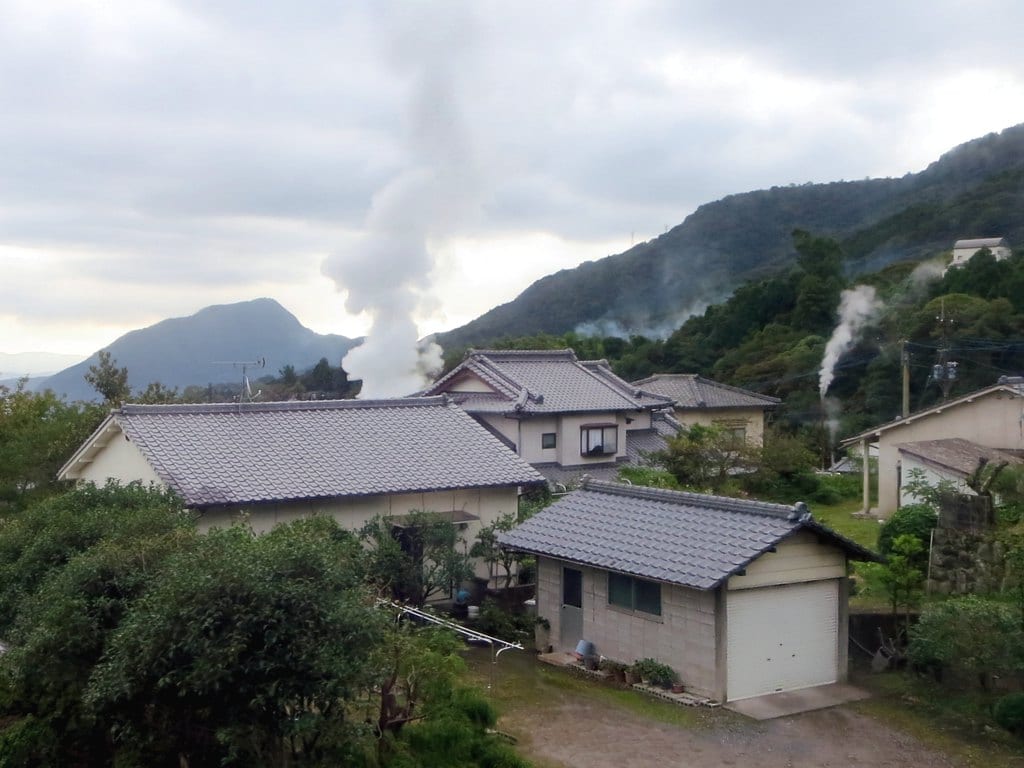
Kyushu is the hot-spring heart of Japan, and nowhere more so than Beppu, where whole hillsides steam and the "hells" bubble in shades of cobalt and blood-red.Timetables
The Seven Stars runs year-round, on set departures rather than a daily service, in two itineraries — both beginning and ending at Hakata Station in Fukuoka:
| Tour | Nights | Rough route |
|---|---|---|
| 2-day | 1 night | Hakata → Nagasaki → Aso → Yufuin → Hakata |
| 4-day | 3 nights | Hakata → Yufuin → Miyazaki → Kagoshima → Aso → Hakata |
Both depart Hakata late in the morning and return there at the end of the tour. The exact route, stops and excursions vary by season and departure, and the schedule is published in advance by JR Kyushu. Because capacity is so tiny — fourteen suites, twenty-eight guests — departures are allocated by a ballot rather than sold first-come, and you apply months ahead of your preferred dates.
Itineraries and departure point as of 2026. Confirm current schedules and the application process with the operator — see the Tickets section below.
Tickets
This is a bucket-list experience, priced and booked accordingly. Fares are all-inclusive — cabin, all meals and drinks, off-train excursions, guiding and entry fees — and among the highest of any train in the world, especially for the four-day grand tour. Rather than quote a figure that shifts with the itinerary and exchange rate, we point you to JR Kyushu's official reservations.
Two grades of suite are offered:
- Suite — a private, en-suite two-person cabin, beautifully finished in Kyushu woods and crafts.
- DX Suite — the two flagship rooms, larger, with a private bath and a wraparound window; the most sought-after cabins on the train.
How it works:
- Apply, don't just book. Places are awarded by ballot, so you submit preferred dates and suite type well in advance and wait to be drawn.
- Plan far ahead. Popular departures — cherry-blossom spring and autumn colour — are heavily over-subscribed.
- Everything's included once you're aboard, so there's little to arrange beyond getting yourself to Fukuoka.
Book your tickets
Suite
Two-person suite
A private en-suite cabin of inlaid wood and Kyushu craftsmanship, your home for the tour. Fares are all-inclusive of meals, excursions and guiding.
Book Tickets (opens in a new tab, on JR Kyushu)via JR KyushuDX Suite
The two grand suites
The train's two flagship suites — larger rooms with a private bath and veranda-style window, the most coveted rooms on board and the first to go in the ballot.
Book Tickets (opens in a new tab, on JR Kyushu)via JR KyushuRail Passes
No rail pass covers the Seven Stars. It is a cruise train, sold by JR Kyushu as an all-inclusive package awarded by ballot. The Japan Rail Pass covers JR's scheduled Shinkansen, limited express, express, rapid and local trains, so there is nothing on the Seven Stars for it to buy.
A pass can still bring you to Hakata. The Japan Rail Pass covers the Shinkansen to Fukuoka on Hikari and Sakura trains; a Nozomi or Mizuho needs the extra ticket JR sells to pass holders.
Checked October 2026 against the Japan Rail Pass scope (opens in a new tab).
Places to Visit
The Seven Stars is a tour of Kyushu in miniature — and every stop is worth more of your time on either side of the trip.
Kyushu rewards the traveller who stays on after the train has gone: the island is small enough to cross in a day and varied enough to fill a fortnight.
 Yoshikazu TAKADA / Wikimedia Commons · CC BY 2.0 · cropped
Fukuoka (Hakata)
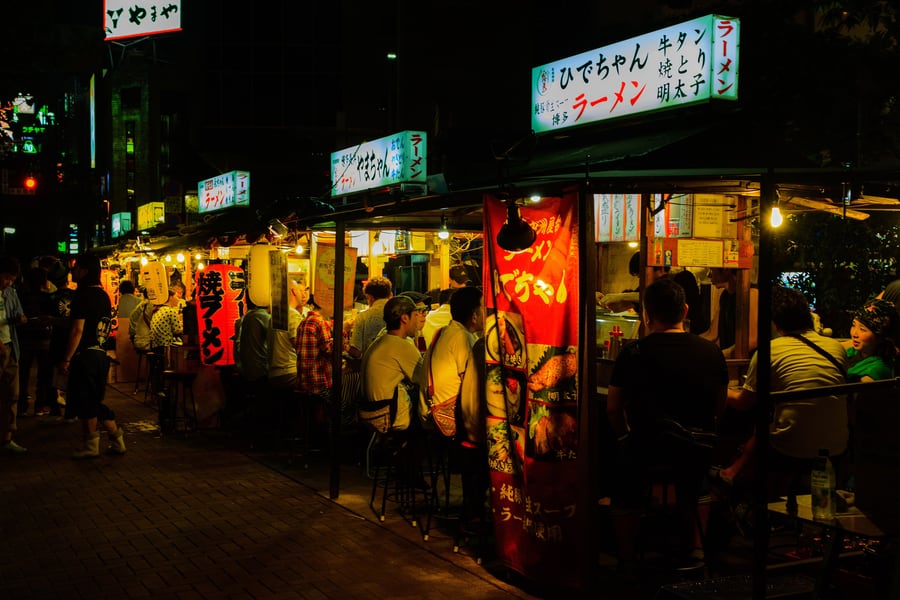
The lively city where the tour begins and ends, and the best place in Japan to eat standing up. Around a hundred yatai — canvas-sided stalls that are wheeled out at dusk and packed away by dawn — open each evening along the Nakasu riverfront, through Tenjin and near the Nagahama fish market, which is far more than any other Japanese city can muster. Sit on a stool, order the milky tonkotsu ramen the Hakata district made its own, and talk to whoever is next to you.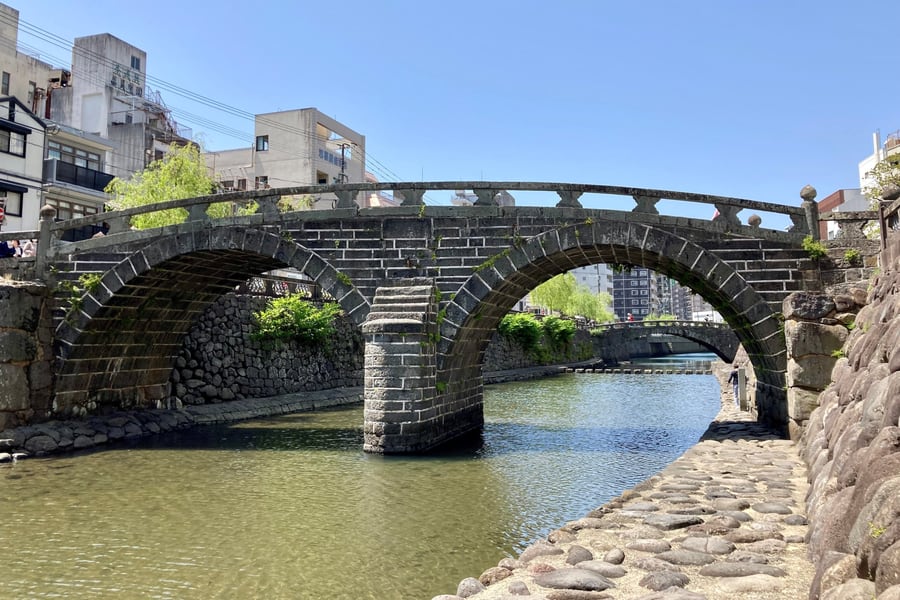 Dudva / Wikimedia Commons · CC0 · cropped
Nagasaki
A hilly, cosmopolitan harbour town that was Japan's one window on the outside world for two centuries, and it shows in the stonework. Meganebashi — the Spectacles Bridge — was built across the Nakashima River in 1634 by Mokusu, a Chinese monk from the city's Kōfuku-ji temple, and is the oldest stone arch bridge in the country; its twin arches and their reflection make the pair of lenses that give it its name. A flood swept it away in 1982 and it was rebuilt from its own recovered stones.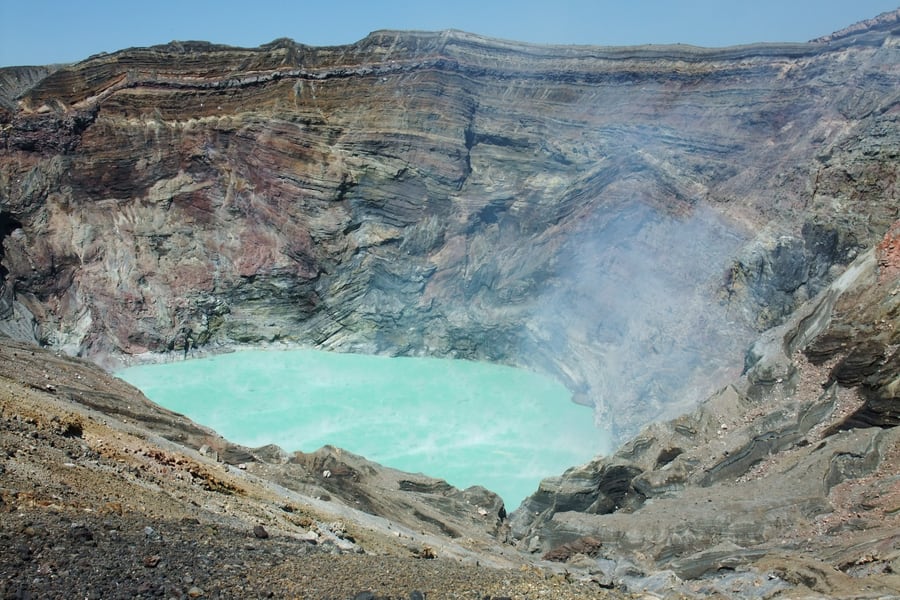 Igorberger / Wikimedia Commons · CC BY-SA 3.0 · cropped
Mount Aso
One of the largest volcanic calderas on earth — twenty-five kilometres north to south, eighteen across and some hundred and twenty around the rim, with towns, farms and a railway living on the floor of it. At the centre, Nakadake still smokes over a turquoise acid lake. Getting close is not guaranteed: the crater ropeway was destroyed in the 2016 Kumamoto earthquake and never rebuilt, a toll road and shuttle bus take its place, and the rim opens and shuts with the day's volcanic alert level.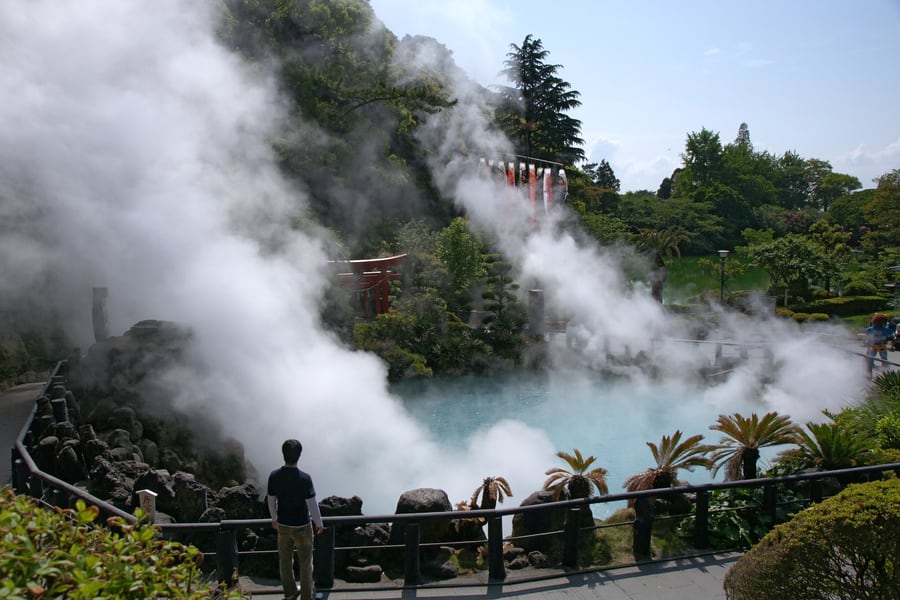 663highland / Wikimedia Commons · CC BY 2.5 · cropped
Yufuin & Beppu
Kyushu's hot-spring country, in two very different moods. Yufuin is gentle and arty, a slow morning of galleries and cafés under the twin peaks of Mount Yufu. Beppu is theatrical: eight separate spa quarters, more than a hundred and fifty bath houses, and whole hillsides that simply steam. Seven of its springs are the "hells" of the Jigoku Meguri circuit — including Umi Jigoku, a pool of astonishing cobalt blue that is for looking at, not for getting into.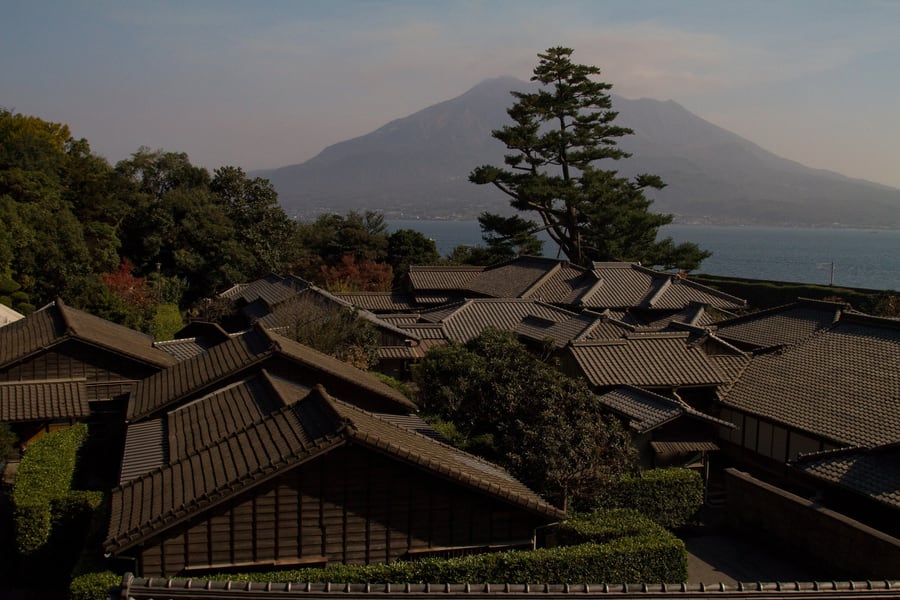 KimonBerlin / Wikimedia Commons · CC BY-SA 2.0 · cropped
Kagoshima
The warm southern city that lives across the water from Sakurajima and sweeps the ash off its cars. Sengan-en, the Shimazu lords' seaside villa and garden of 1658, is the classic view: the whole composition is built to borrow the volcano and the bay as its backdrop. The garden and the neighbouring Shōko Shūseikan — the clan's pioneering 19th-century industrial works — are jointly listed by UNESCO among the Sites of Japan's Meiji Industrial Revolution.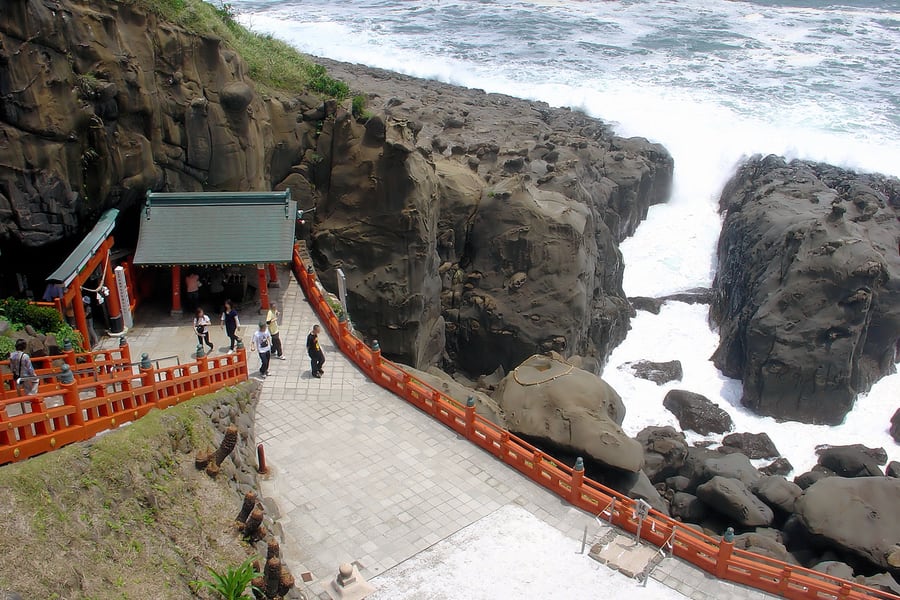 JKT-c / Wikimedia Commons · CC BY 3.0 · cropped
Miyazaki
The sunny side of the island — surf beaches, palm-lined roads and the rock-and-surf shoreline of the Nichinan coast. Its strangest and best sight is Udo-jingū, a vermilion shrine built inside a sea cave in the cliff, reached down a railed walkway with the swell breaking below. It is dedicated to Ugayafukiaezu, father of Japan's legendary first emperor; visitors buy little clay undama and throw them at a target in the rocks — men with the left hand, women with the right.Where to Sleep
On the tour itself, the question barely arises: the train is the hotel. You sleep in your own suite as Kyushu rolls by, and on the four-day itinerary one night is usually spent at a fine ryokan or resort ashore, arranged by JR Kyushu as part of the package. There is nothing to book yourself.
It's the nights before and after that are worth planning:
- Fukuoka — since every tour starts and ends at Hakata, a night here at either end is all but essential. Choose from international hotels around Hakata Station or stylish rooms in the Tenjin district, and leave time for the street-food stalls.
- Onsen ryokan — to extend the mood, add a night at a traditional ryokan in Yufuin or Beppu, sleeping on tatami and soaking in a private hot-spring bath.
- Kagoshima or Nagasaki — either makes a rewarding add-on, with waterfront hotels looking out over the bay.
Book Fukuoka early around the popular spring and autumn departures, when the whole island is busy.
Questions or corrections
Planning this trip and stuck on something, or spotted a time, fare or detail that has changed? Send us a message about Seven Stars in Kyushu. We read every one, and we update this page when something has changed.