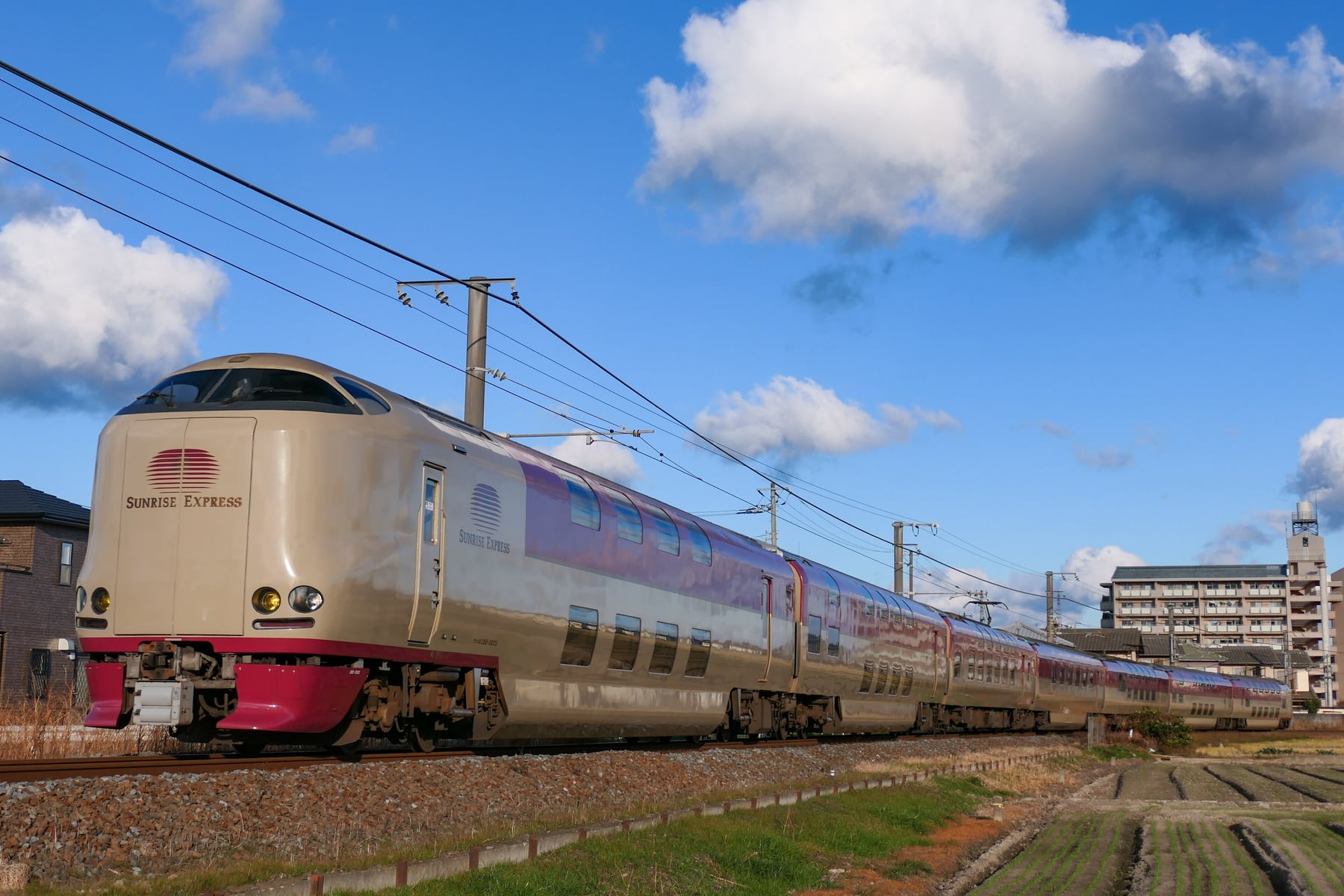
Sunrise Izumo & Sunrise Seto
MaedaAkihiko / Wikimedia Commons · CC BY-SA 4.0
- Distance804.7 km to Takamatsu · 953.6 km to Izumoshi
- Duration10 h 1 min to Takamatsu · 12 h 34 min to Izumoshi
- Best seasonAll year, every night · longer days bring more of the morning into daylight
Introduction
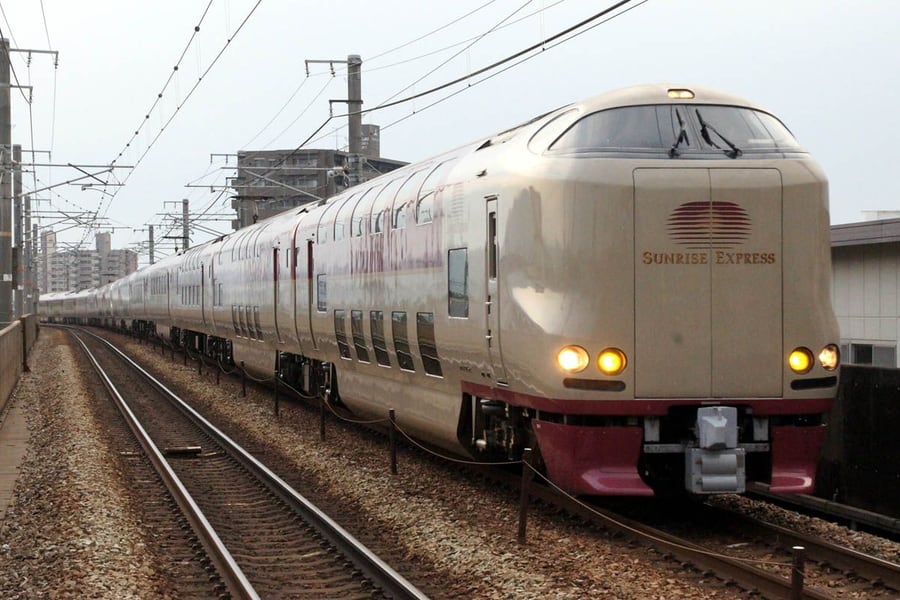
The Sunrise Izumo and the Sunrise Seto are two sleeper trains that leave Tokyo as one. Every night at 21:26, fourteen cars pull out of Tokyo Station and run west through the night; at Okayama, just after six the next morning, they part. Seven cars cross the Inland Sea to Takamatsu on the island of Shikoku, and seven turn north through the mountains to Izumoshi, on the Sea of Japan side of the country.
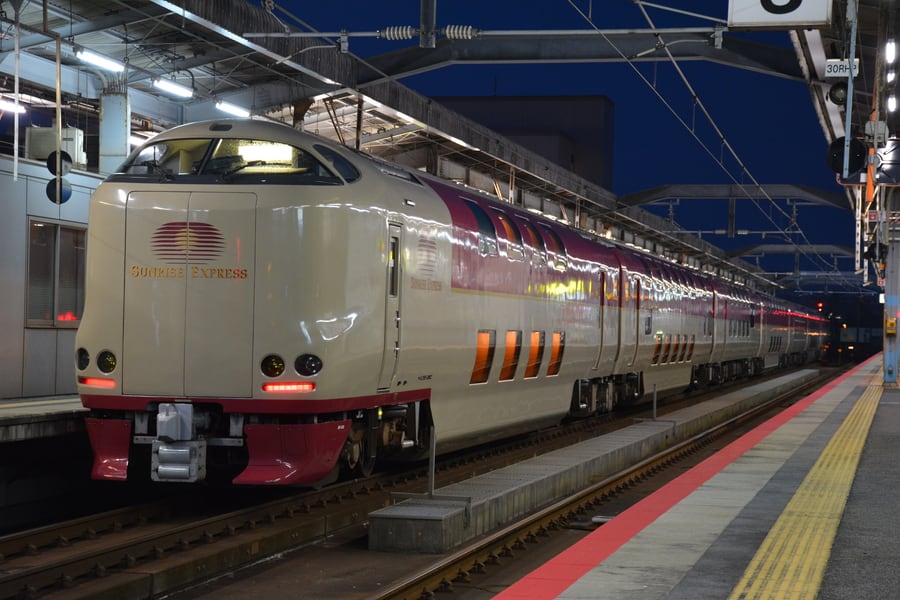
It is the only sleeper train in Japan that still runs a round trip every day. The locomotive-hauled blue trains that once left Tokyo every evening have gone, and the Sunrise is what is left: a train built in 1998 for the purpose, mostly private rooms on two decks, with a carpeted space for those who would rather sleep on the floor.
As Takamatsu's tourist office puts it, you can leave Tokyo after the last flight and arrive before the first. Westbound, the night covers the long run past Nagoya and Kyoto; the morning brings the Great Seto Bridge for one half of the train and the Takahashi River, Mount Daisen and Lake Shinji for the other.
The Journey
The train leaves Tokyo at 21:26 and makes its last evening calls at Yokohama, Atami, Numazu, Fuji, Shizuoka and, just before one in the morning, Hamamatsu. Then it runs through the night, past Nagoya and Kyoto without stopping, and calls next at Himeji at 05:25.
The split at Okayama
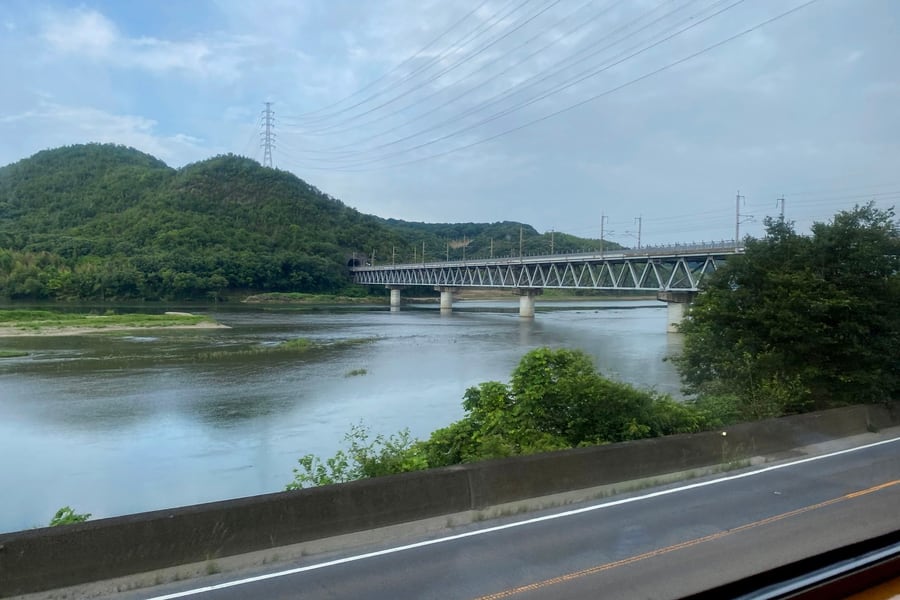
At Okayama, at 06:27, the train divides. The Sunrise Seto leaves first, at 06:31, down the Seto-Ōhashi Line to Kojima, and at about seven crosses the Seto Inland Sea on the Great Seto Bridge, the railway on the lower deck and the expressway above. It calls at Sakaide and reaches Takamatsu at 07:27. On Fridays and days before holidays in many months it runs on to Kotohira, at 08:39.
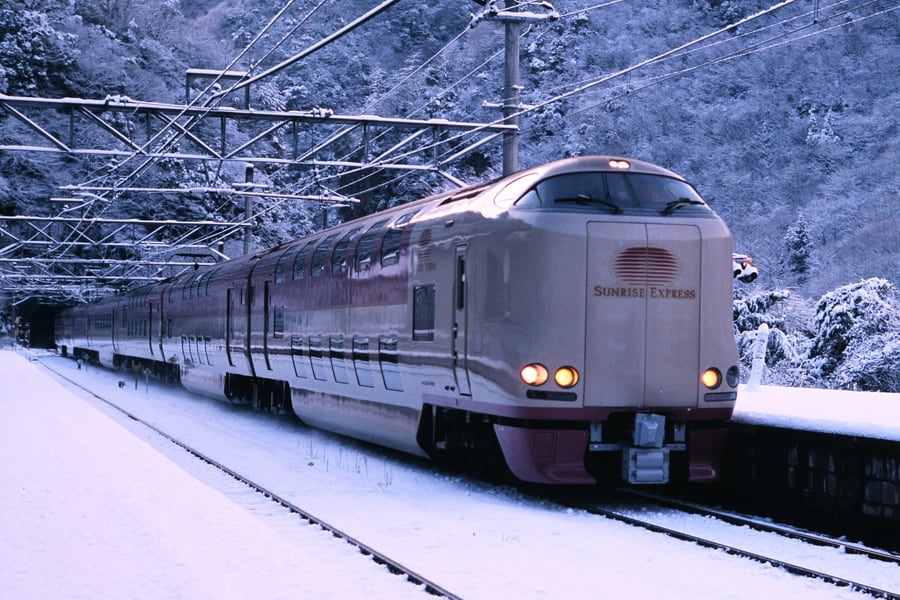
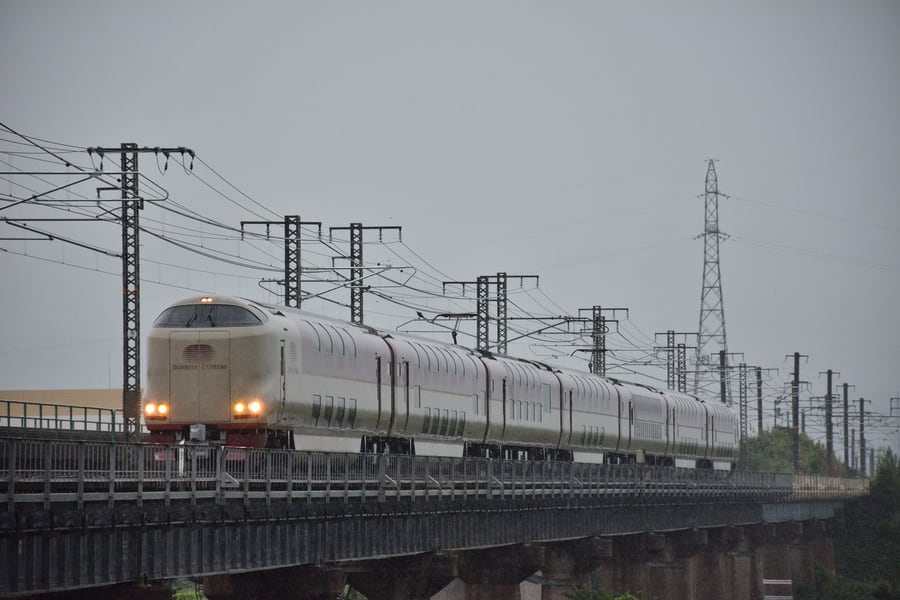
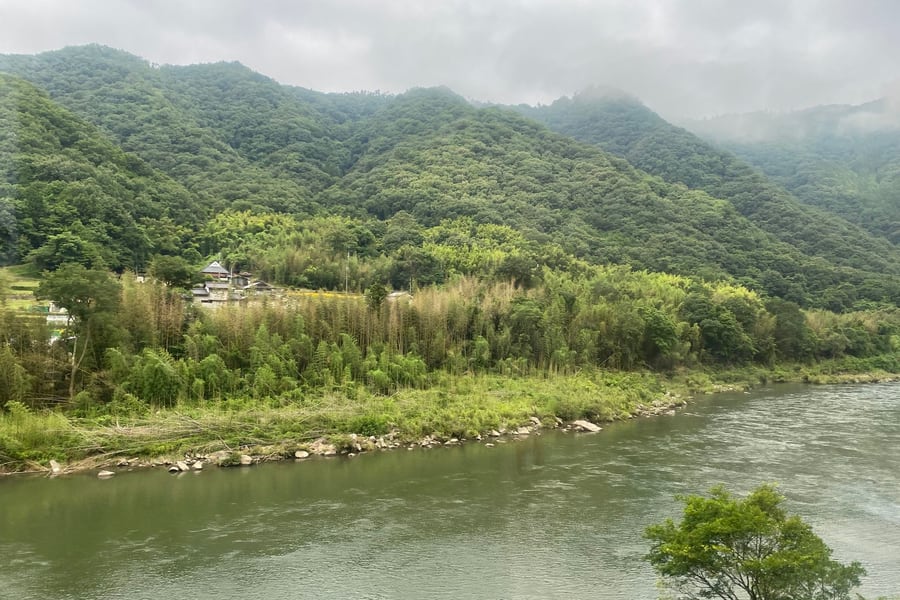
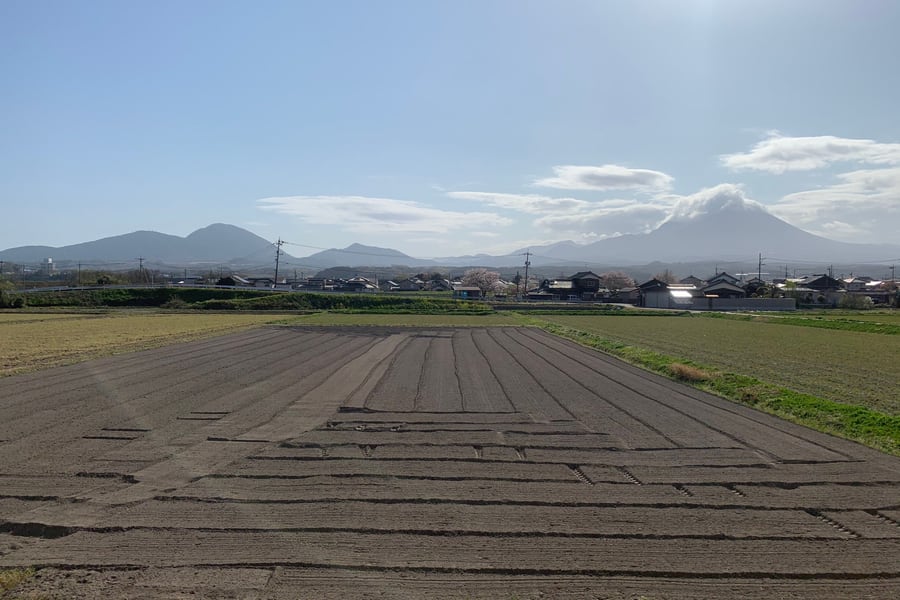
The Sunrise Izumo follows at 06:34 to Kurashiki, where it turns north onto the Hakubi Line. The line climbs beside the Takahashi River, past Bitchū-Takahashi and Niimi, crosses the Chūgoku Mountains and comes down the Hino valley with Mount Daisen ahead. After Yonago it calls at Yasugi and Matsue, runs along the south shore of Lake Shinji, and ends at Izumoshi at 10:00.
Coming back
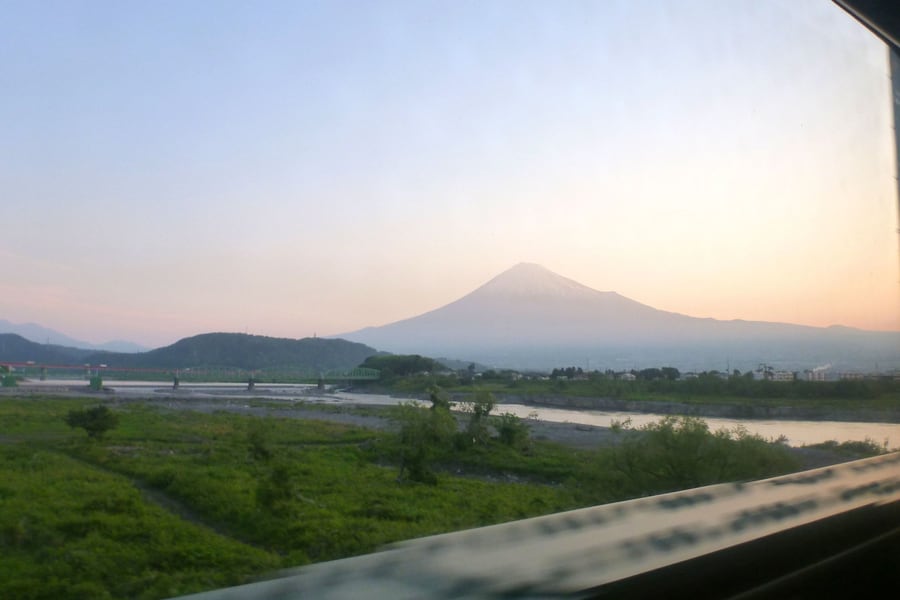
The two halves set off from opposite ends in the evening: the Izumo at 18:57 and the Seto at 21:26. They meet at Okayama, leave together at 22:34, call at Himeji, Sannomiya and Osaka after midnight, and reach Tokyo at 07:08, with Mount Fuji off to the inland side of the train around five.
The train
Each half is a seven-car 285 series electric train, built in 1998 and owned jointly by JR West and JR Central. Its livery is meant to evoke a new dawn, and most of its cars are double-deckers given over to private rooms: Solo, Single, Single Twin, Sunrise Twin and Single Deluxe. The Nobinobi is two decks of carpeted floor, with a place for each passenger. Cars 3 and 10 have a small lounge, a shower and a vending machine. There is no food on board, so bring dinner and breakfast with you.
Along the route
 Kzaral / Flickr · CC BY 2.0
Mount Fuji
Coming east, the train calls at Fuji at 05:09. When it is already light, Mount Fuji stands over the Fuji River on the inland side; JR West's seat map shows which side of the train faces it.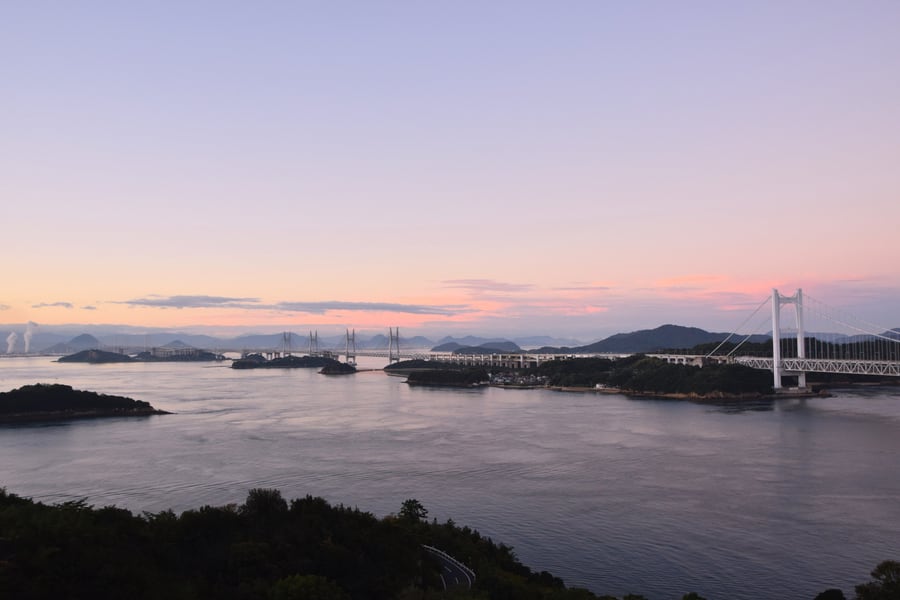 Raita Futo / Wikimedia Commons · CC BY 2.0
The Great Seto Bridge
Going west, the Seto half leaves Kojima at 06:53 and crosses the Inland Sea on the Great Seto Bridge at about seven: 13.1 km of double-deck bridges between Okayama and Kagawa, the railway on the lower deck, opened in 1988.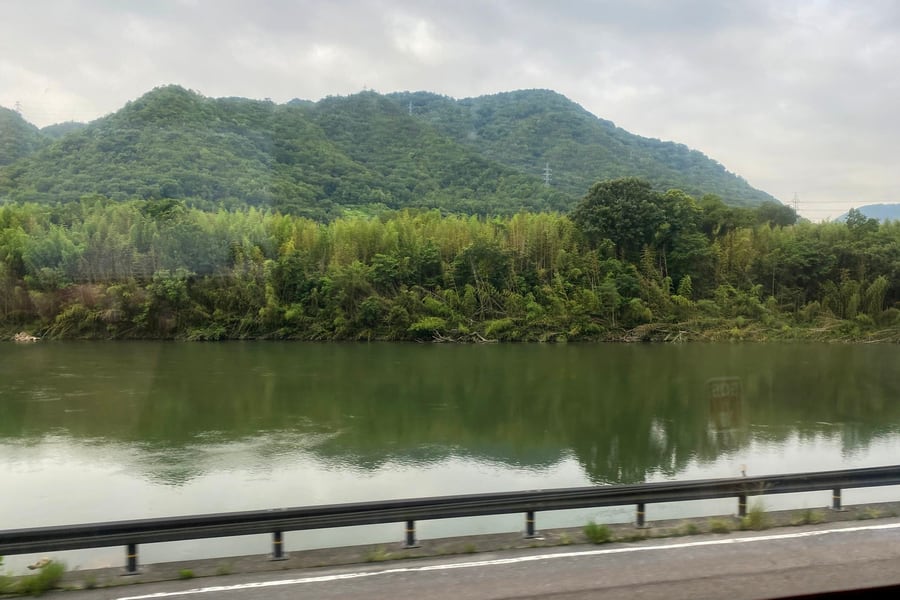 Kzaral / Flickr · CC BY 2.0
The Takahashi River
The Izumo half turns north at Kurashiki onto the Hakubi Line, which follows the Takahashi River up to Niimi and then crosses the Chūgoku Mountains. On a clear morning Mount Daisen, 1,729 m, appears before Yonago.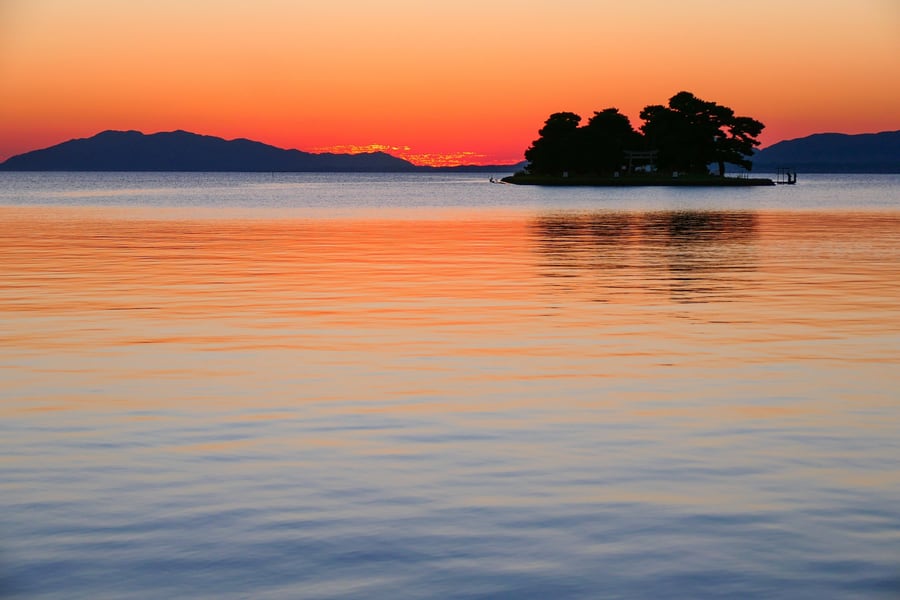 MaedaAkihiko / Wikimedia Commons · CC BY-SA 4.0
Lake Shinji
After Matsue the line runs along the south shore of Lake Shinji, a brackish lagoon 48 km round, to Shinji. Going home, the train leaves Izumoshi at 18:57 and follows the same shore in the evening.A bit of history
Culture & experiences along the way
 Olegushka / Wikimedia Commons · CC0
Rooms by a house builder
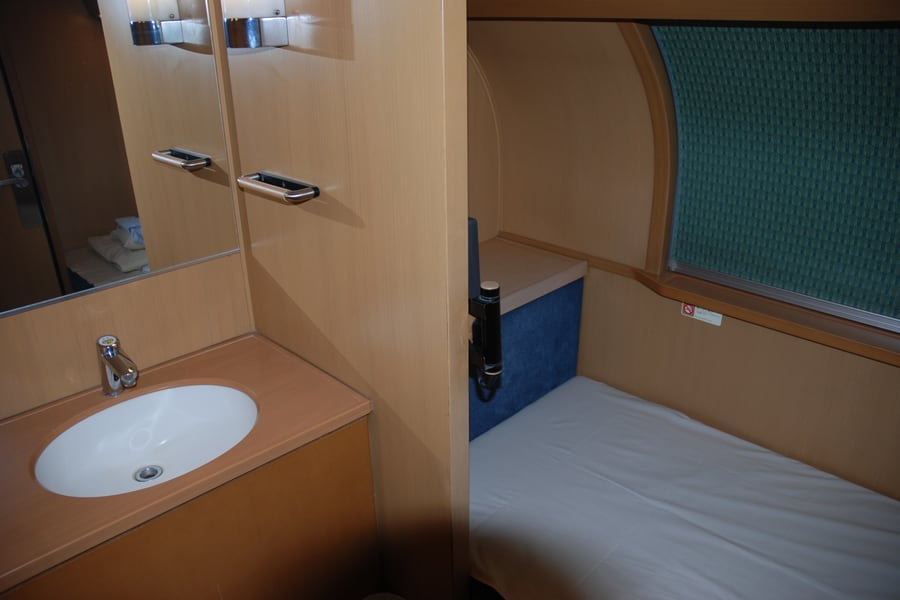
The rooms were fitted out with Misawa Homes, a house builder, in its M-Wood, a panel of wood and resin. Most are Singles; the six Single Deluxe rooms in each half add a desk, a washbasin and a free shower. Every private room comes with nightwear.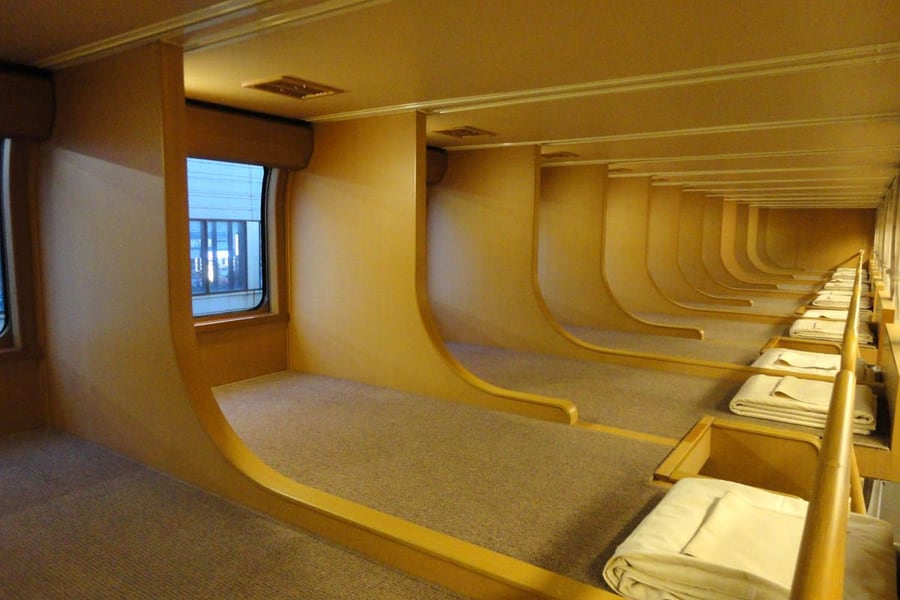 W0746203-1 / Wikimedia Commons · CC BY-SA 3.0
The Nobinobi
The cheapest way to ride is the Nobinobi: two decks of carpeted floor, about one tatami mat each, with a blanket and a reading light and only a low partition between neighbours. It is sold as a reserved seat, not a berth, so there is no berth charge.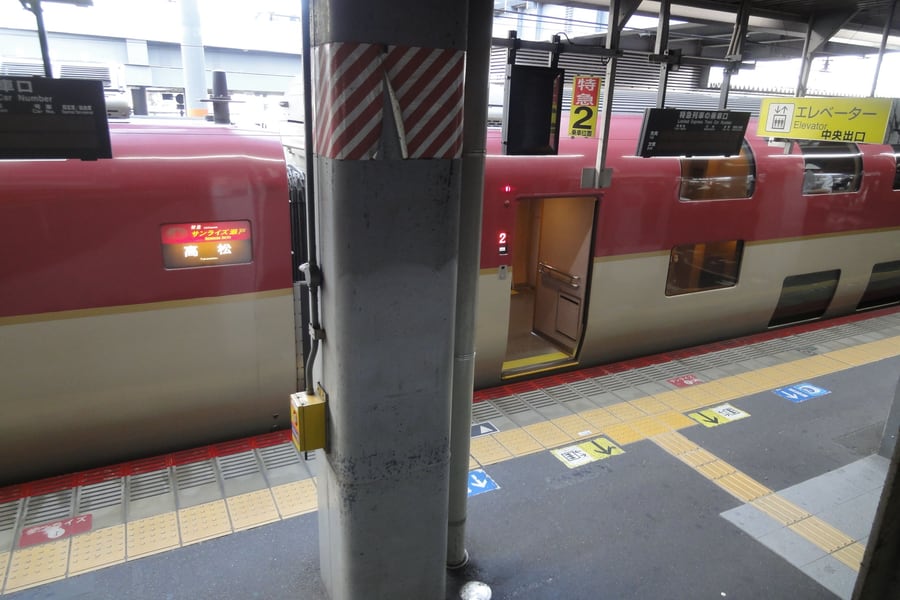 inunami / Wikimedia Commons · CC BY 2.0
Two trains at Okayama
Seven cars for Takamatsu and seven for Izumoshi run coupled as one train from Tokyo. At Okayama they part: the Seto leaves at 06:31 and the Izumo three minutes later. Coming east, the two halves meet again here before the 22:34 departure.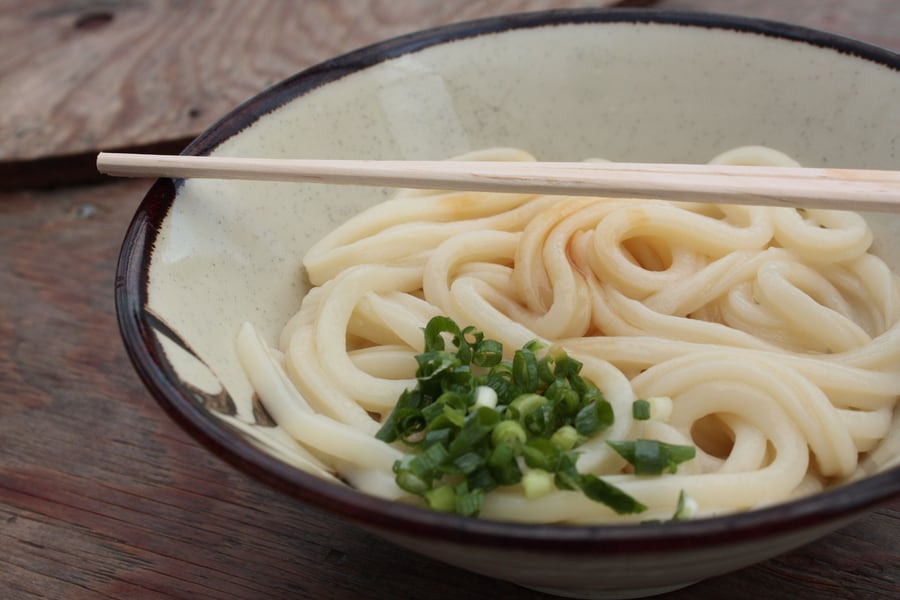 sekido / Wikimedia Commons · CC BY 2.0
Udon for breakfast
Kagawa, the old province of Sanuki, is udon country: Sanuki udon is square-cut and chewy, often served kama-age, in plain hot water with a dipping sauce. Takamatsu's tourist office points arrivals off the 07:27 to the udon shops near the station that open early.Timetables
The Sunrise runs every night of the year, one train in each direction, coupled between Tokyo and Okayama.
Westbound, from Tokyo
| Tokyo | Yokohama | Shizuoka | Himeji | Okayama | Takamatsu | Izumoshi |
|---|---|---|---|---|---|---|
| 21:26 | 21:52 | 23:59 | 05:26 | 06:31 / 06:34 | 07:27 | 10:00 |
On the Izumo branch: Kurashiki 06:46, Bitchū-Takahashi 07:14, Niimi 07:44, Yonago 09:08, Matsue 09:34.
Eastbound, to Tokyo
| Izumoshi | Takamatsu | Okayama | Himeji | Osaka | Shizuoka | Yokohama | Tokyo |
|---|---|---|---|---|---|---|---|
| 18:57 | 21:26 | 22:34 | 23:33 | 00:33 | 04:40 | 06:45 | 07:08 |
On the Izumo branch: Matsue 19:27, Yonago 19:54, Niimi 21:19, Kurashiki 22:14.
Good to know:
- Kotohira. On Fridays and days before holidays in many months the Seto runs on from Takamatsu at 08:02 to Kotohira, arriving 08:39 and calling at Tadotsu and Zentsūji. In autumn 2026 that is 21 nights in October and November.
- No stops in the small hours. Westbound there is nothing between Hamamatsu (00:54) and Himeji (05:26); eastbound, nothing between Osaka (00:33) and Shizuoka (04:40).
- Changes. The departure from Tokyo moved from 21:50 to 21:26 on 14 March 2026; older guides still give the earlier time.
Times as of October 2026, from JR West's timetable. Check your date on JR West's Sunrise page (opens in a new tab) (in Japanese).
Tickets
A ticket is built from parts: the fare, a limited express charge, and either a reserved place in the Nobinobi, which is covered by the express charge, or a berth charge for a private room, which comes with an express charge ¥530 lower. On JR West's planner for Tuesday 6 October 2026, a Nobinobi place from Tokyo came to ¥15,590 to Takamatsu and ¥16,150 to Izumoshi. Berth charges are the same for any distance: ¥6,600 for a Solo, ¥7,700 for a Single, ¥9,600 for a Single Twin and ¥13,980 for the Single Deluxe; the two-bed Sunrise Twin needs two people's charges even for one.
Tickets go on sale at 10:00 a month before the date, and the train is in high demand, so book early. JR West's English booking site sells the private rooms. Fares checked October 2026 on JR West's planner and JR Central's berth charges; Japanese yen, one adult.
Book your tickets
Nobinobi, Tokyo to Takamatsu
Fare and express charge · carpeted berth
The fare of ¥11,760 and the ¥3,830 express charge that reserves a Nobinobi place, for a regular date in October 2026.
Book Tickets (opens in a new tab, on JR West)via JR WestNobinobi, Tokyo to Izumoshi
Fare and express charge · carpeted berth
The fare of ¥12,320 and the same ¥3,830 express charge, for the twelve and a half hours to Izumoshi.
Book Tickets (opens in a new tab, on JR West)via JR WestBerth charge, Solo
Per person · on top of fare and express charge
The cheapest private room; a Single costs ¥7,700, a Single Twin ¥9,600 and the Sunrise Twin ¥7,700 per person.
Book Tickets (opens in a new tab, on JR West)via JR WestBerth charge, Single Deluxe
Per person · on top of fare and express charge
The one A-class room, with a desk, a washbasin and a free shower; there are six in each half of the train.
Book Tickets (opens in a new tab, on JR West)via JR WestRail Passes
The Japan Rail Pass covers the Nobinobi, not the rooms. The Nobinobi is sold as an ordinary reserved seat, and the pass covers ordinary cars on limited express trains, so a pass holder reserves a place at no extra cost. A private room is a sleeping car, and for that the pass requires both the berth charge and the limited express charge to be paid. A 7-day ordinary pass costs ¥50,000 bought online, or ¥53,000 through an agency abroad.
For this journey alone, a pass is not worth buying. A Nobinobi place from Tokyo to Takamatsu costs ¥15,590 without one. A pass pays when the Sunrise is one night in a longer trip that also uses the Shinkansen, and you are content to sleep on the Nobinobi's carpet.
Checked October 2026 against the Japan Rail Pass conditions of use (opens in a new tab) and prices (opens in a new tab).
Places to Visit
The train arrives at breakfast time, with the whole day ahead. The places below follow the two halves of the train: Ritsurin and Kotohira on the Seto side in Shikoku, and Kurashiki, Takahashi, Matsue and Izumo along the Izumo's route north to the Sea of Japan.
 KimonBerlin / Wikimedia Commons · CC BY-SA 2.0
Ritsurin Garden
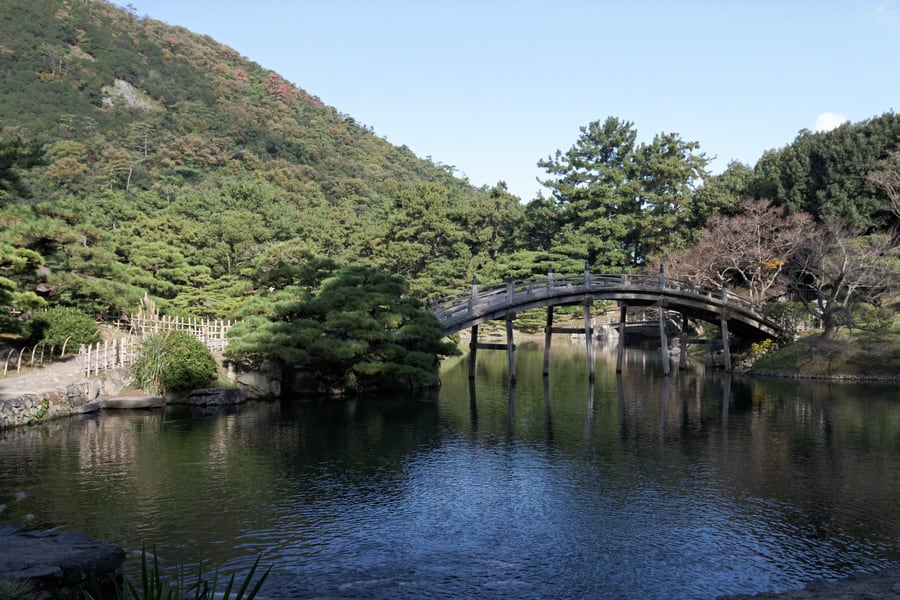
Takamatsu's feudal lords spent a century building this strolling garden under Mount Shiun, from 1625 until its completion in 1745. It opened to the public in 1875 and is a Special Place of Scenic Beauty. Ponds, artificial hills and black pines clipped into geometric shapes fill the southern half, with the Kikugetsu-tei teahouse of about 1640 and the arched Engetsu-kyō bridge.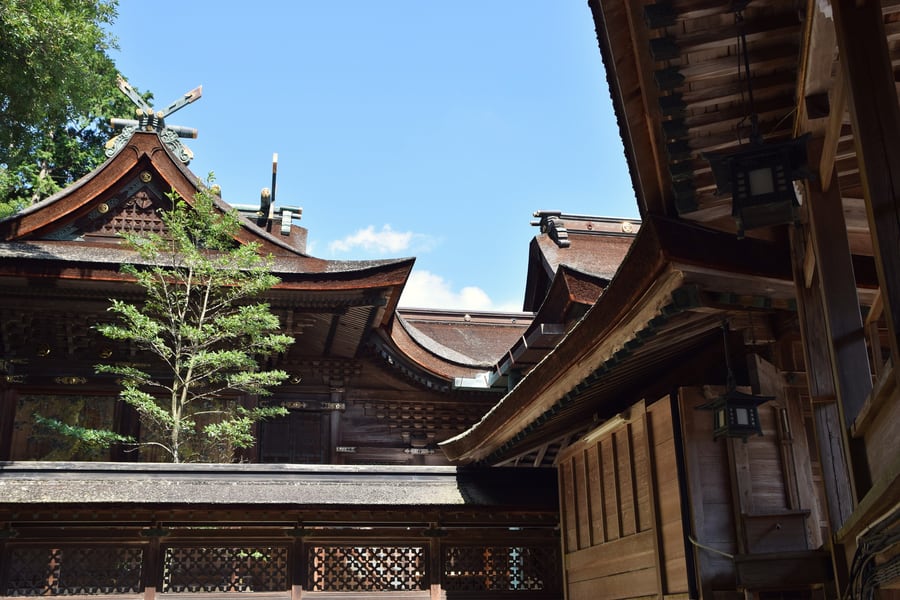 Raita Futo / Wikimedia Commons · CC BY 2.0
Kotohira-gū
The shrine of Konpira-san, guardian of sailors, stands on the slopes of Mount Zōzu above the town of Kotohira: 785 steps up to the main shrine at 251 m, and 583 more to the inner shrine. It heads some 600 Kotohira shrines across Japan. On Fridays and before holidays in autumn 2026 the Sunrise Seto runs on to Kotohira, arriving at 08:39.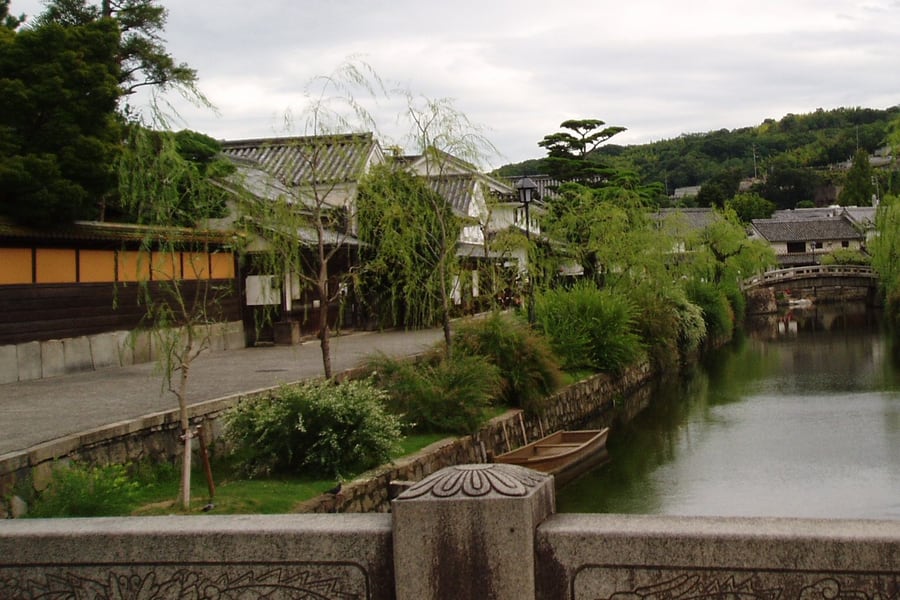 Motokoka / Wikimedia Commons · CC BY-SA 4.0 · cropped
Kurashiki
Twelve minutes after Okayama, the Izumo calls at Kurashiki, whose old merchant quarter, the Bikan historical area, lines a canal with white-walled, black-tiled storehouses and weeping willows. The quarter has no electric poles, which keeps its streets close to how they looked in the Meiji period.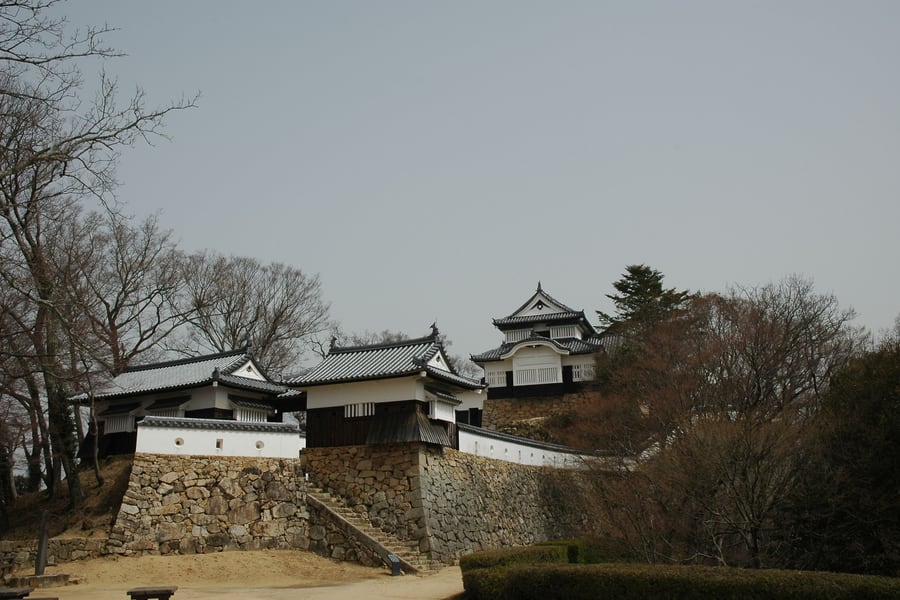 Reggaeman / Wikimedia Commons · CC BY-SA 3.0
Bitchū Matsuyama Castle
Above Takahashi, where the Izumo stops at 07:14, stands the castle highest above sea level in Japan, at 430 m on Mount Gagyū, a ridge over the Takahashi River that commanded the road between the Inland Sea and the San'in coast. Its keep is one of only twelve original tenshu left in the country, and the site has been a National Historic Site since 1956.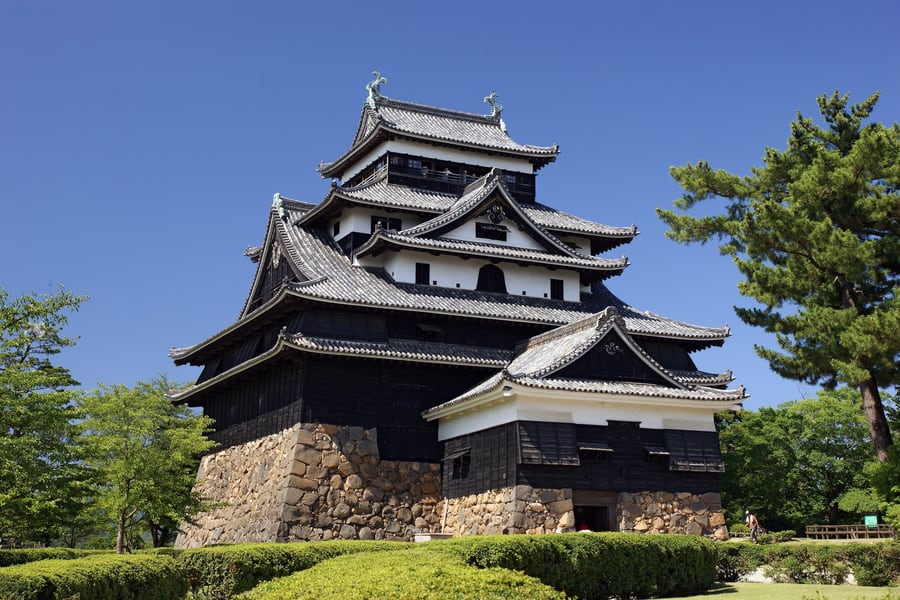 663highland / Wikimedia Commons · CC BY 2.5
Matsue Castle
Built between 1607 and 1611 near the shore of Lake Shinji, Matsue's castle keeps its original wooden keep, the only surviving one in the San'in region and one of Japan's three great lake castles. The Meiji government took down the other buildings in 1875; the keep stayed, and was designated a National Treasure in 2015.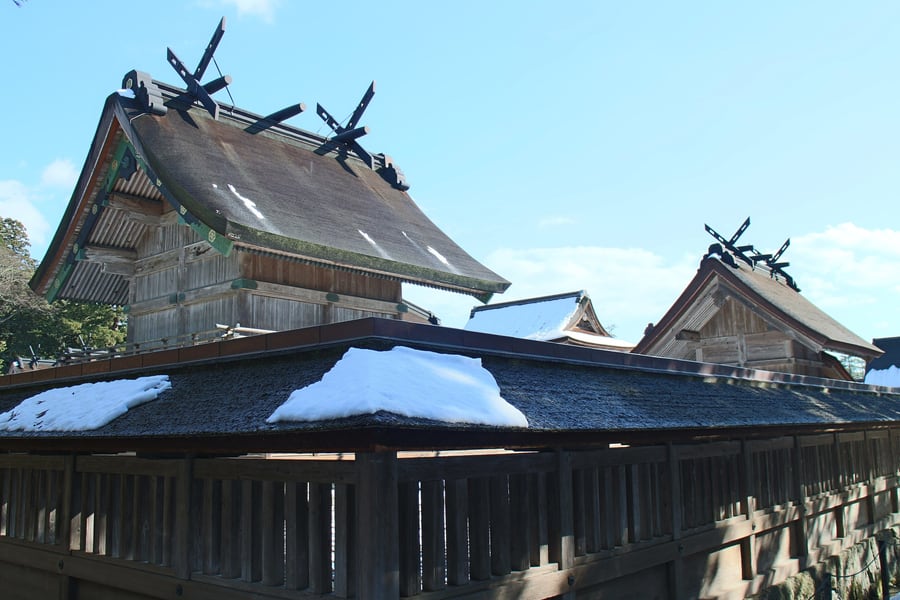 Suicasmo / Wikimedia Commons · CC BY-SA 4.0
Izumo-taisha
Izumo Grand Shrine, dedicated to Ōkuninushi, is widely regarded as the oldest Shinto shrine in Japan; no record gives its founding date. Its main hall gave its name to the taisha-zukuri style and has been a National Treasure since 1952. Tradition holds the hall was once far taller, and the remains of enormous pillars found in 2000 support it.Where to Sleep
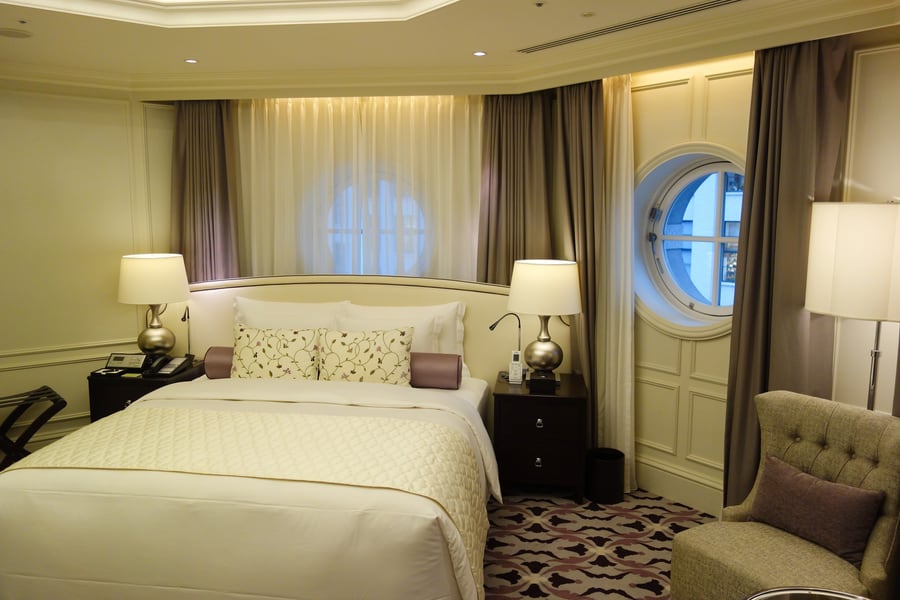
The train is the night's accommodation, but a night either side makes the trip easier. In Tokyo, the Tokyo Station Hotel is part of the red-brick station itself. In Takamatsu, the JR Hotel Clement stands a minute from the station where the Seto arrives.
Where to stay
 Asacyan / Wikimedia Commons · CC BY-SA 4.0
The Tokyo Station Hotel
Tokyo · inside the station building
Opened in 1915 in Tokyo Station's red-brick building and reopened in 2012 after the building was restored to its 1914 form.
Check Availability (opens in a new tab, on tokyostationhotel.jp)via tokyostationhotel.jp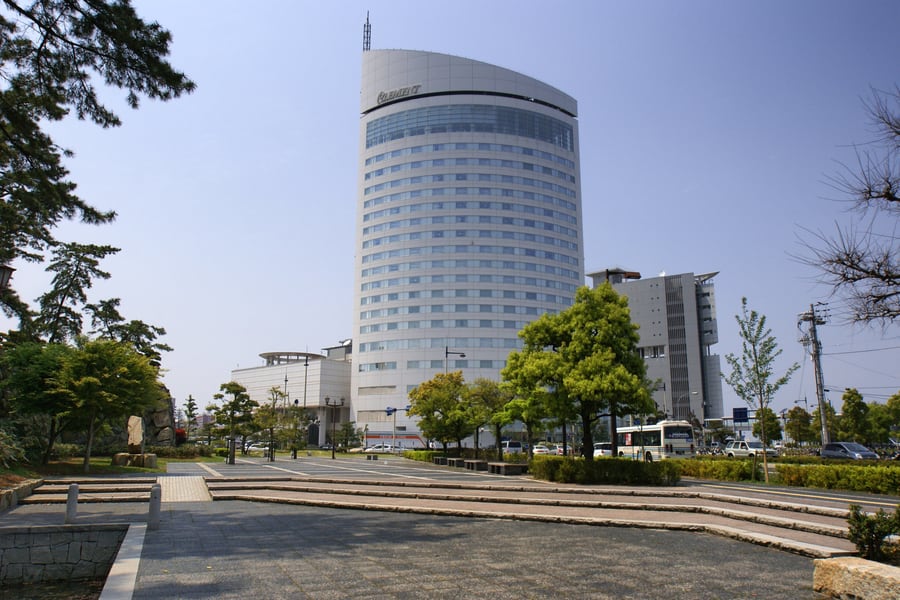 663highland / Wikimedia Commons · CC BY 2.5
JR Hotel Clement Takamatsu
Takamatsu · a minute from the station
A tower hotel a minute's walk from JR Takamatsu station, where the Sunrise Seto ends.
Check Availability (opens in a new tab, on jrclement.co.jp)via jrclement.co.jpQuestions or corrections
Planning this trip and stuck on something, or spotted a time, fare or detail that has changed? Send us a message about Sunrise Izumo & Sunrise Seto. We read every one, and we update this page when something has changed.