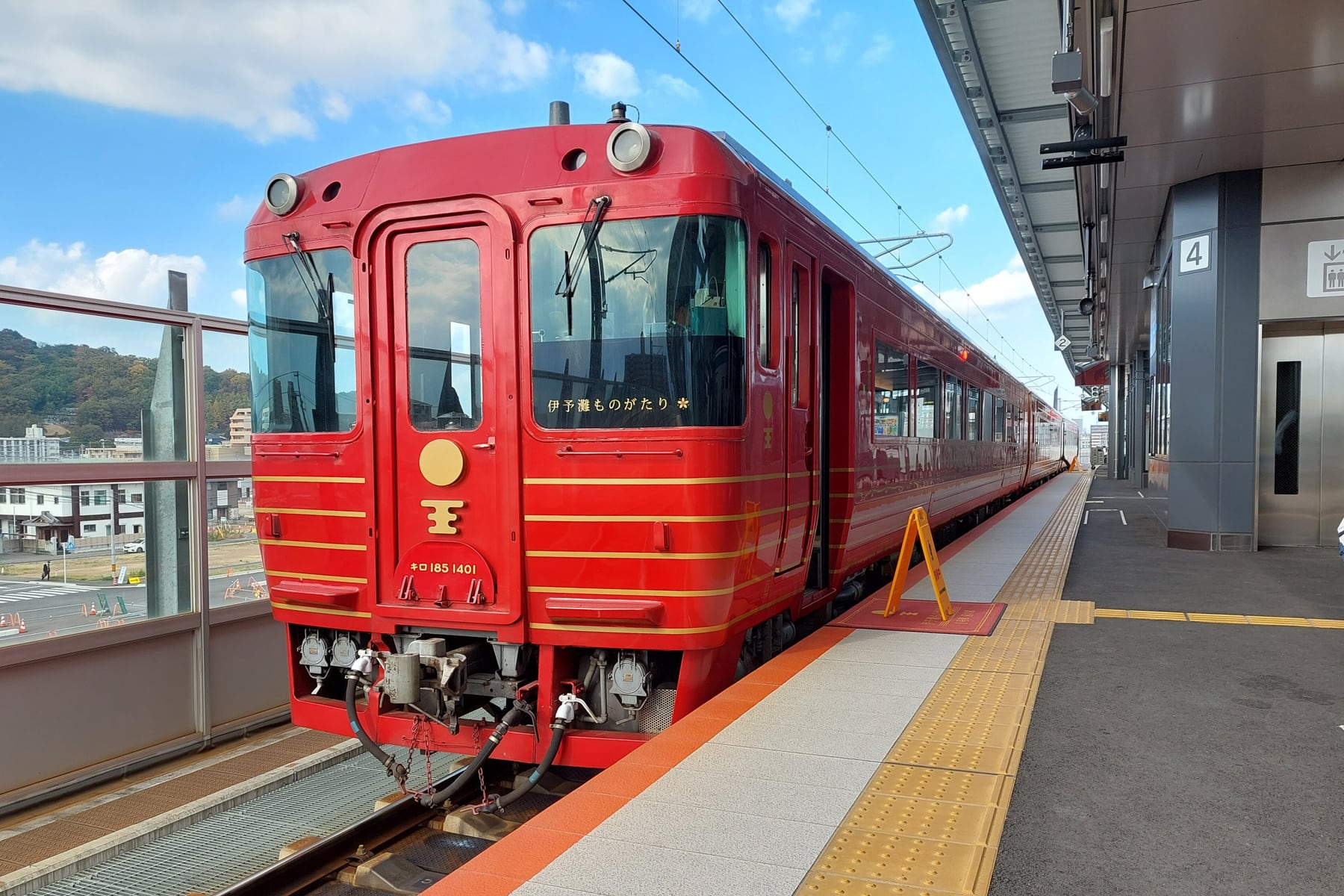
Iyonada Monogatari
CT-May / Wikimedia Commons · CC0 · cropped
- Distance68.4 km
- DurationAbout 2 hours to Iyo-Ōzu · 2¼ hours to Yawatahama
- Best seasonYear-round · weekends and holidays · the evening run for sunset over the sea
Introduction
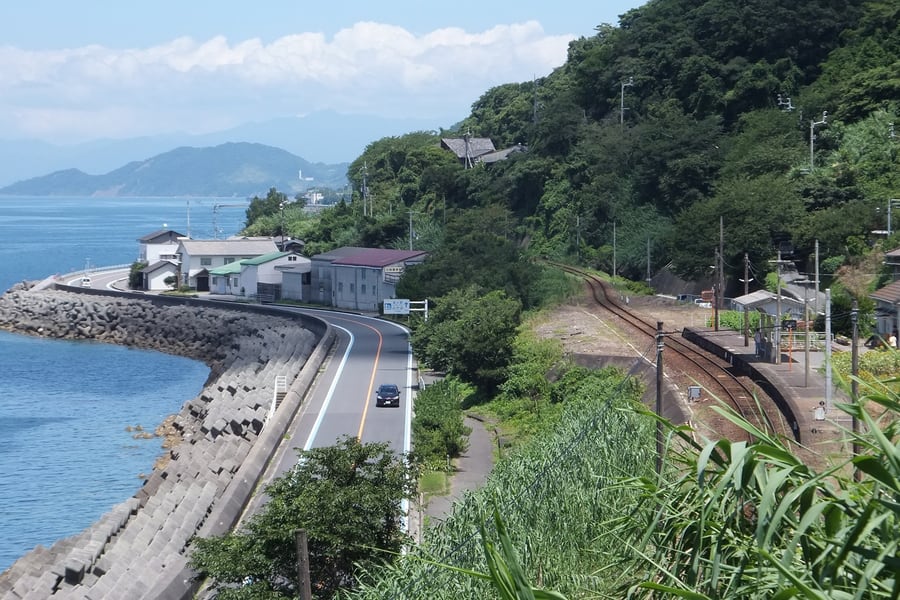
West of Matsuyama the Yosan Line has two ways to Ōzu. Since 1986 the expresses have taken the short cut inland through Uchiko, and the old line along the Iyo-nada coast has been left to a local railcar every two hours. It runs along the shore, stops at Shimonada, a platform above the water, and at Iyo-Nagahama turns inland up the Hiji River to the castle town of Ōzu, before tunnelling on to the port of Yawatahama.
The way to ride it slowly is the Iyonada Monogatari, "the tale of the Iyo-nada", JR Shikoku's first full-scale sightseeing train, which has run since July 2014. It makes four trips on weekends and holidays, each with a breakfast, lunch or afternoon tea booked ahead and served at your seat, and every one halts at Shimonada long enough to step out onto the platform. Along the line, people come out to wave it past.
The Journey
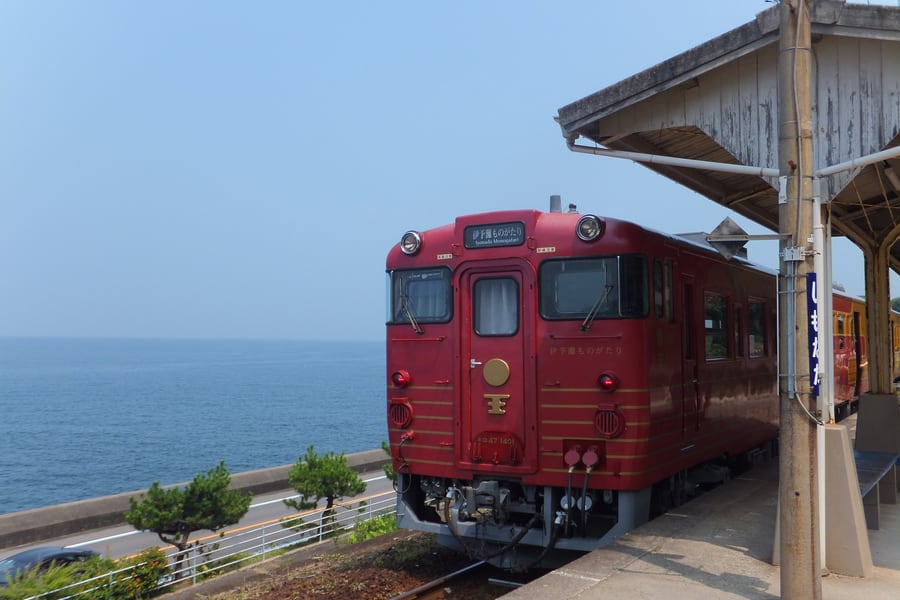
Trains leave Matsuyama, where the overhead wires from Takamatsu end a few stations on, at Iyoshi. Beyond Mukaibara the line divides: the 1986 short cut heads inland under the mountains towards Uchiko, and the coast line, named the Aiaru Iyonada Line in 2014, drops to the sea. It reached Shimonada in June 1935. The station is one platform and a wooden building on a ledge above the shore, and before Route 378 was laid on reclaimed land below it, waves broke under the platform's edge; JR has used it three times on the poster for its Seishun 18 rail ticket.
The coast and the Hiji
At Kitanada the boundary between Iyo and Ōzu cities crosses the platform. At Iyo-Nagahama, once one of Japan's three great timber markets, the line meets the mouth of the Hiji River and turns inland along it. This stretch is older than the coast line: the narrow-gauge Ehime Railway opened from Nagahama to Ōzu in 1918 and was rebuilt to the main-line gauge in 1935, when the coast line joined it. On clear mornings from autumn to winter, cold air pouring down the valley from the Ōzu basin carries a river of fog out to sea at Nagahama, the Hijikawa arashi.
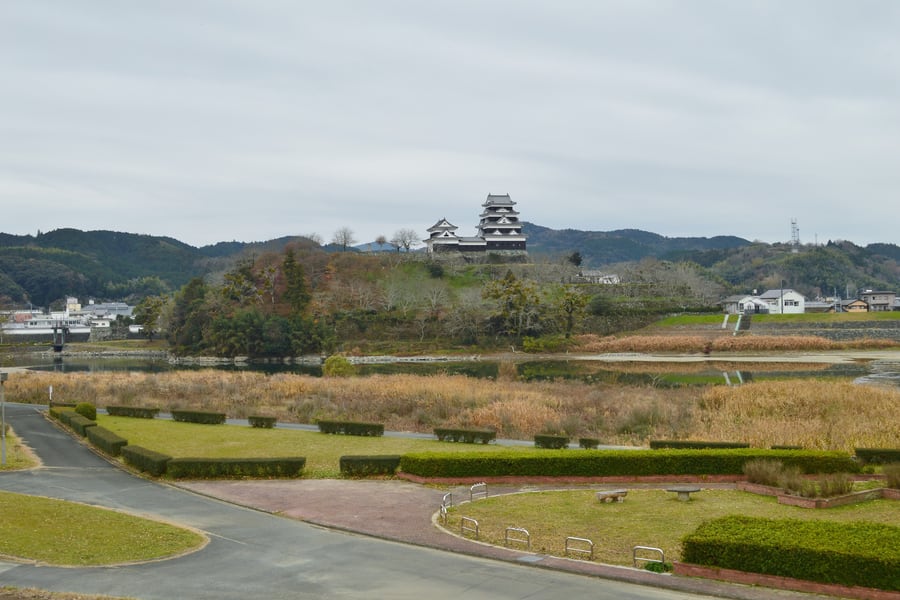
At Gorō, local people dressed as tanuki, the raccoon dog, see the sightseeing train in and out. Past Iyo-Ōzu the line crosses the Hiji on a bridge 269 metres long under Ōzu Castle, where banners are waved at the train from the walls, and runs on through the Yoruhiru tunnel to Yawatahama, which it reached in 1939.
The trains
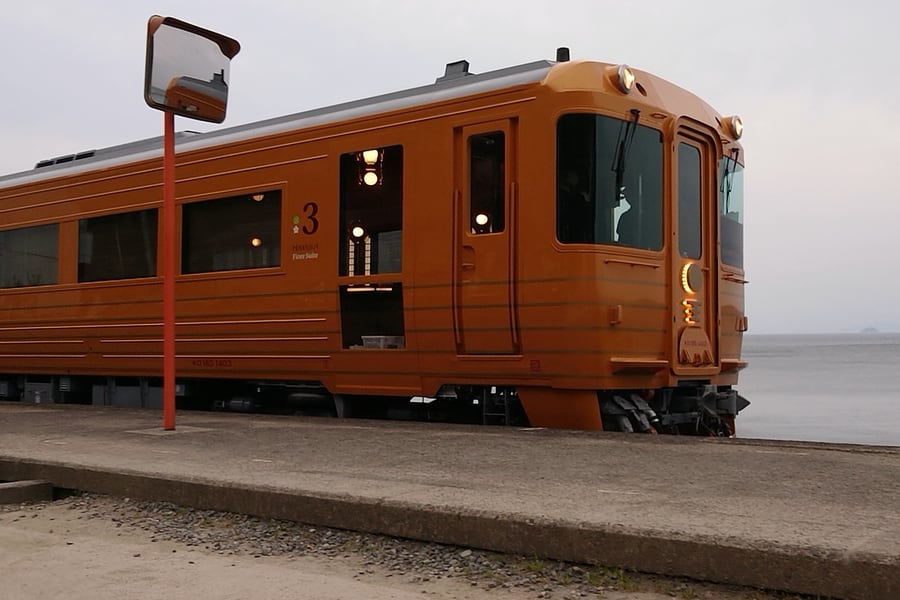
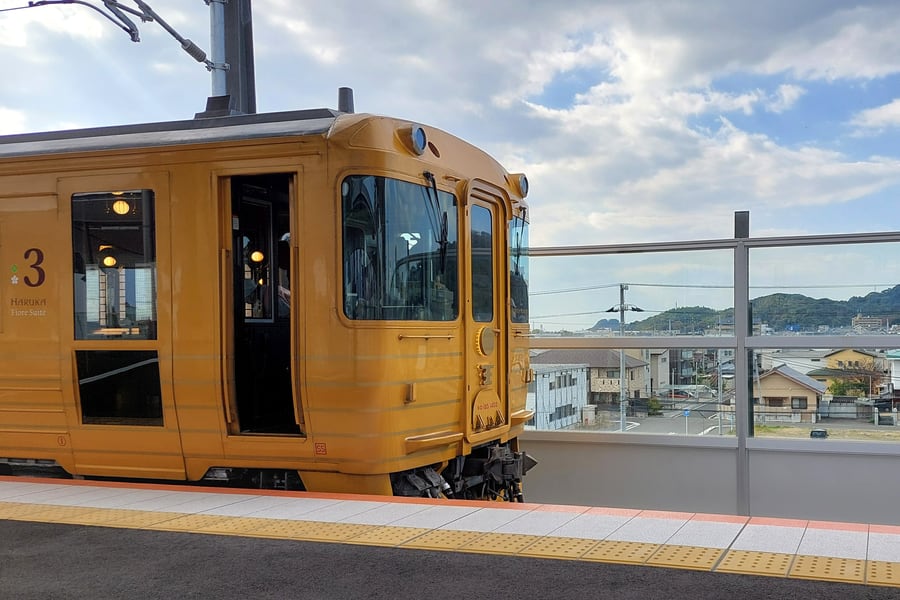
The Iyonada Monogatari runs on three KiHa 185 railcars rebuilt for it in 2022, in JR Shikoku's first metallic paint. Car 1, Akane no Shō, is the madder red of a sunset over the Iyo-nada, and its end has a large glass door for the view ahead; car 2, Kogane no Shō, is the gold of the sun and of Ehime's citrus, with pair seats facing the sea; car 3, Haruka no Shō, holds the Fiore Suite, a private room for two to eight behind a noren hand-dyed in Yawatahama. The washbasins are Tobe-ware porcelain. Every seat is in the Green Car. The first train, two KiHa 47 railcars rebuilt in the same colours, ran from July 2014 to December 2021.
The rest of the time the coast line belongs to local railcars, about every two hours.
Along the route
 MaedaAkihiko / Wikimedia Commons · CC0 · cropped
Iyo-Kaminada
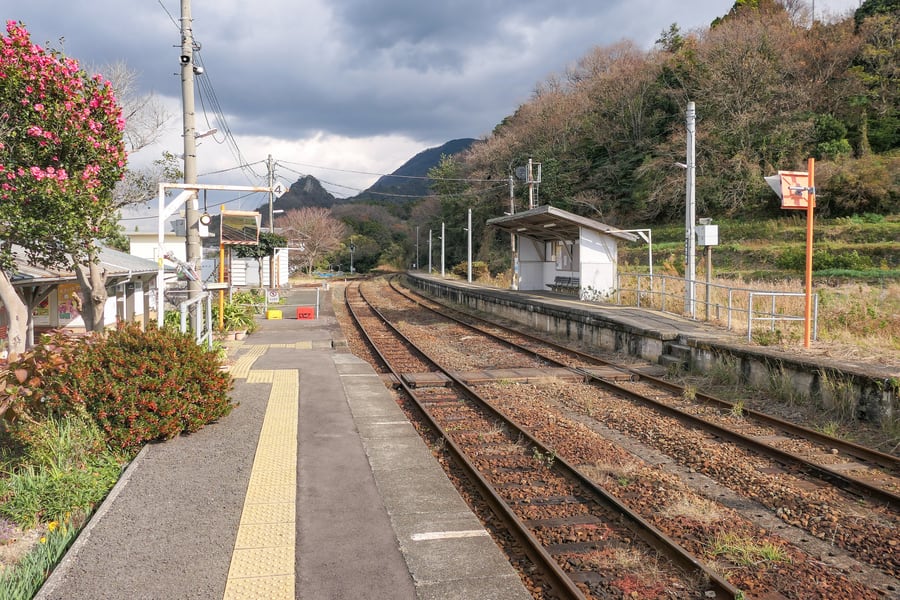
On the Futami run back to Matsuyama the train stops at Iyo-Kaminada, where on some days local people sell produce on the platform and the station's honorary stationmasters, a dog and a cat, come out to meet it.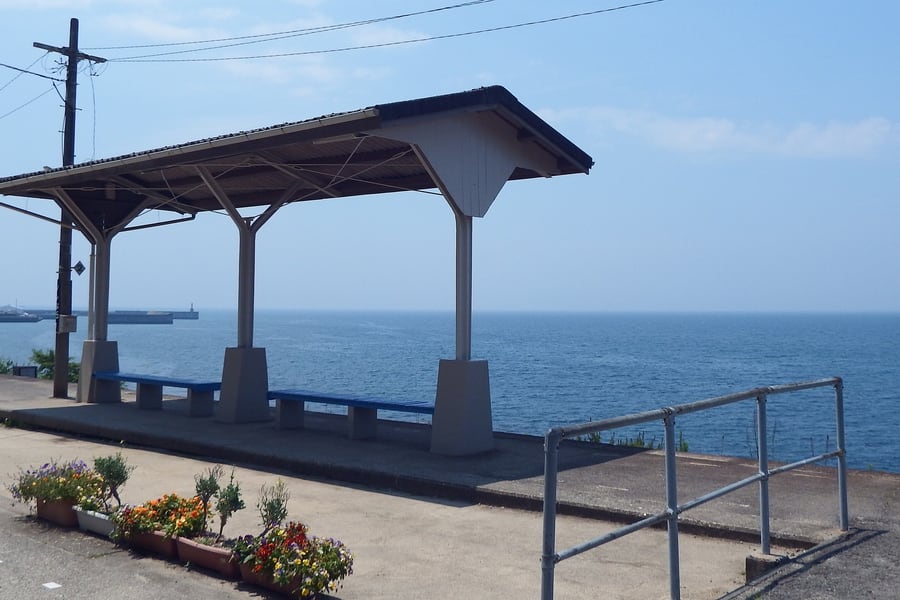 Dokudami / Wikimedia Commons · CC BY-SA 4.0 · cropped
Shimonada
Every run halts for eight to twelve minutes at Shimonada, a single platform with the sea below it; until a road was built on reclaimed land, waves broke under the edge. Passengers step out, and souvenirs are sold.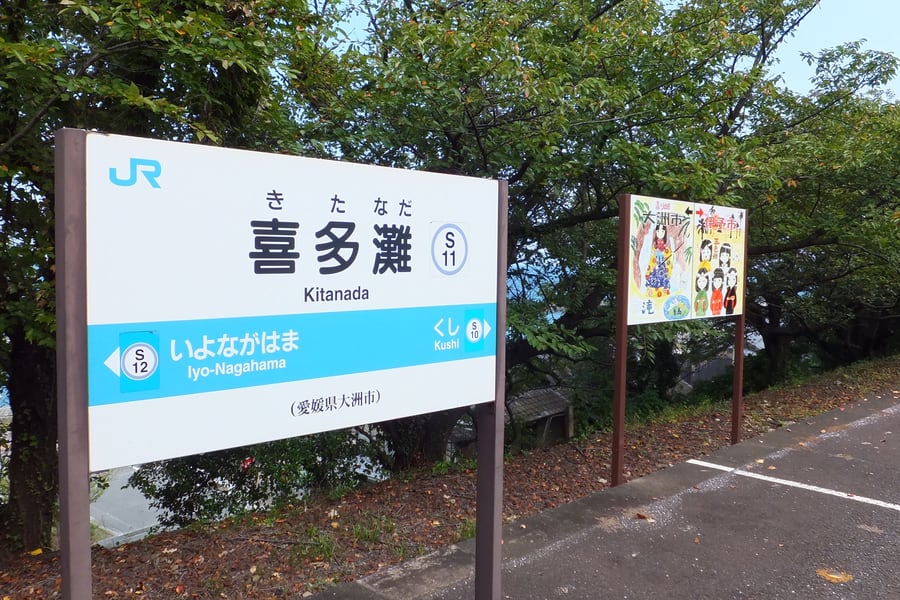 Sunport1216 / Wikimedia Commons · CC BY-SA 4.0 · cropped
Kitanada
The boundary between Iyo and Ōzu cities runs across the middle of the platform at Kitanada. A signboard painted by the train's attendants marks it, with a princess associated with each city.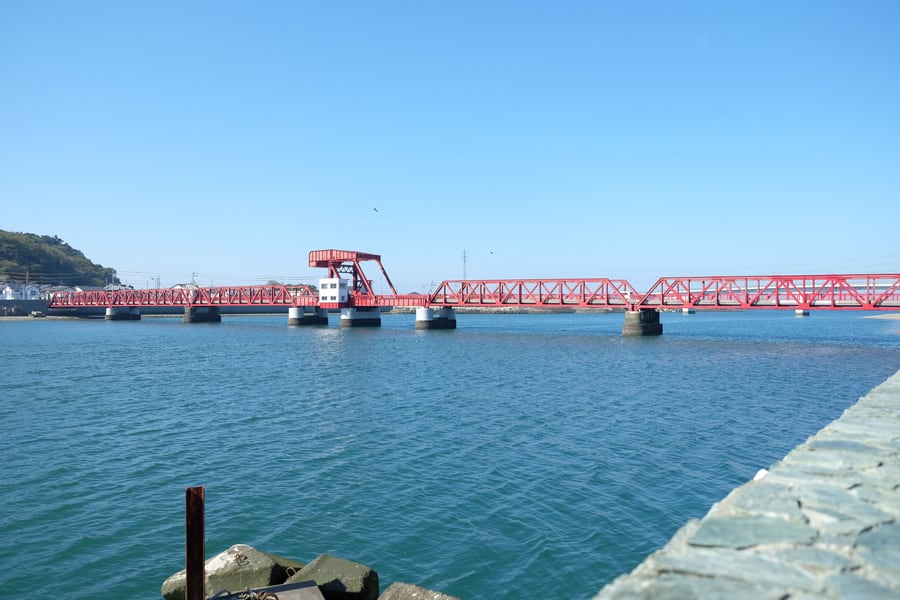 sk01 / Wikimedia Commons · CC BY-SA 3.0 · cropped
The red bridge at Nagahama
At Iyo-Nagahama the line turns inland up the Hiji River, past the Nagahama Ōhashi of 1935, the only road bascule bridge of its age in Japan still working. It still opens, every Sunday at 13:00.A bit of history
Culture & experiences along the way
 Saigen Jiro / Wikimedia Commons · CC0 · cropped
Wave the train across the Hiji
As the Iyonada Monogatari crosses the Hiji River below Ōzu Castle, banners are waved at it from the castle's main enclosure, and anyone may join in. Be there at about 15:18 or 16:45 on Saturdays, Sundays and holidays; it is free.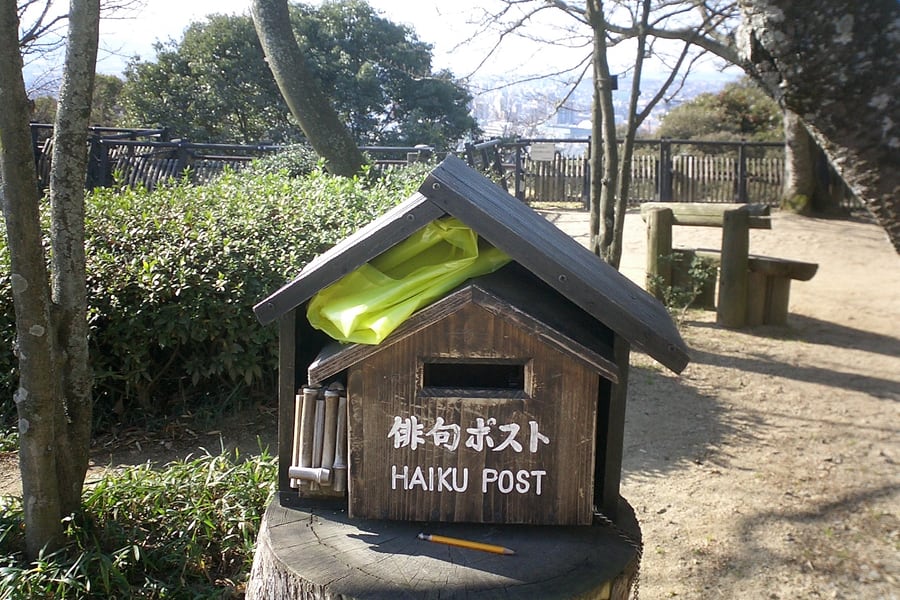 kajikawa / Wikimedia Commons · CC BY 3.0 · 2009 · cropped
A haiku in the post
Matsuyama, the city of the poet Masaoka Shiki, put up its first haiku post below the castle keep in 1968. About eighty now stand around the city, at Dōgo Onsen and JR Matsuyama among them, and the train carries one too. Every three months Ehime poets choose the best.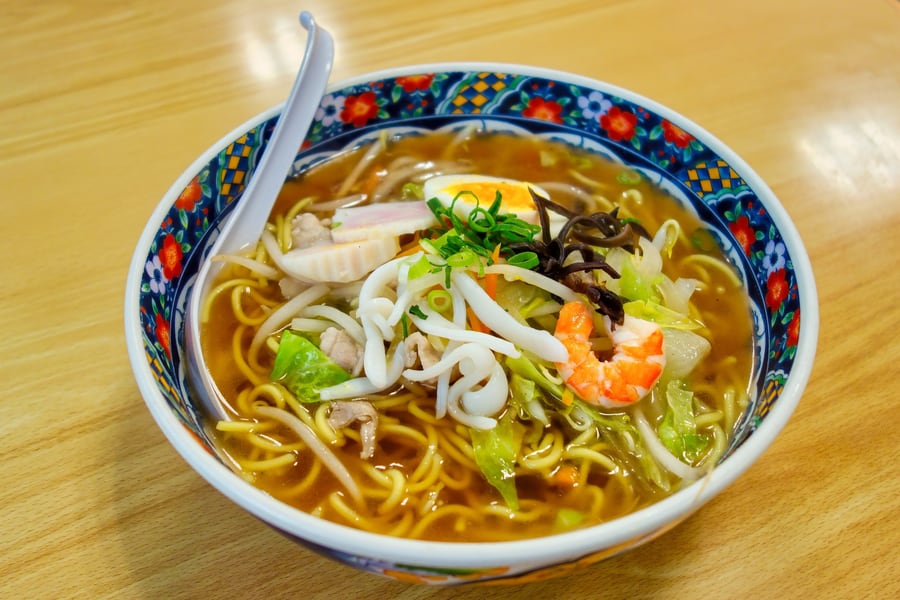 J o / Wikimedia Commons · CC BY-SA 4.0 · cropped
Yawatahama chanpon
The port at the end of the line has its own noodle soup: a light, golden broth of chicken, bonito and kelp, with thick noodles, pork and plenty of vegetables. The food court at the Minatto roadside station by the harbour serves it.Timetables
The Iyonada Monogatari makes four trips on its running days: Saturdays, Sundays and public holidays all year, and some Fridays. JR Shikoku's calendar is published to March 2027; on a few Fridays only one pair of trips runs. Each trip has its own name and its own meal, and every seat is reserved.
Iyonada Monogatari, from Matsuyama
| Trip | Matsuyama | Iyo-Ōzu | Yawatahama |
|---|---|---|---|
| Ōzu (breakfast) | 08:28 | 10:28 | — |
| Yawatahama (lunch) | 13:38 | 15:13 | 15:56 |
Iyonada Monogatari, to Matsuyama
| Trip | Yawatahama | Iyo-Ōzu | Matsuyama |
|---|---|---|---|
| Futami (lunch) | — | 10:57 | 13:03 |
| Dōgo (afternoon tea) | 16:27 | 16:49 | 18:30 |
Local trains by the coast, from Matsuyama
| Matsuyama | To |
|---|---|
| 05:51 | Uwajima |
| 06:56 | Yawatahama |
| 09:45 | Yawatahama |
| …every two hours, at :45… | |
| 19:45 | Yawatahama |
| 21:45 | Iyoshi, change for Iyo-Ōzu |
Local trains from Shimonada to Matsuyama
| Shimonada | Notes |
|---|---|
| 06:45 | |
| 07:35 | change at Iyoshi |
| 08:48 | |
| 11:12 | |
| 13:25 | |
| 15:31 | |
| 17:08 | |
| 19:38 | |
| 21:40 | change at Iyoshi |
Good to know:
- The stop at Shimonada lasts about eleven minutes on the Ōzu trip, twelve on the Futami and eight on the other two. Only the evening Dōgo trip sees the sun go down over the sea.
- Shimonada is about fifty minutes from Matsuyama by local train; the 09:45 is there at 10:34.
- Some Matsuyama trains to Yawatahama run inland through Uchiko and miss the coast: take only those signed for Shimonada and Iyo-Nagahama.
Times as of October 2026, from the Iyonada Monogatari's own plan pages and JR Shikoku's station timetables. Check your date on the train's running calendar (opens in a new tab) and JR Shikoku's timetable page (opens in a new tab).
Tickets
The Iyonada Monogatari is all Green Car: the fare, a limited-express ticket and a Green ticket come to ¥4,780 from Matsuyama to Iyo-Ōzu and ¥5,130 to Yawatahama. A box for three or four in car 1 adds ¥9,000 a table, and the Fiore Suite, all of car 3, ¥33,600 a room. Meals are extra: ¥3,500 for the breakfast or afternoon tea, ¥6,000 for either lunch. By local train, Matsuyama to Iyo-Ōzu is ¥1,080.
Seats go on sale a month ahead at 10:00, at JR ticket offices and, from 2 October 2026, on JR West's e5489 site; the Fiore Suite is sold only at ticket offices. Meal tickets are sold from a month to four days ahead, only to passengers riding the whole trip. Fares checked October 2026 against the train's ticket page and JR Shikoku's fare table; Japanese yen.
Book your tickets
Iyonada Monogatari, Matsuyama to Iyo-Ōzu
One way, adult · fare, limited express and Green
Every seat is in the Green Car; to Yawatahama it is ¥5,130, and the meal is booked separately.
Book Tickets (opens in a new tab, on JR Shikoku)via JR ShikokuFiore Suite, car 3
Private room for two to eight · room charge
The whole of car 3 for one party, on top of each passenger's fare and limited-express ticket.
Book Tickets (opens in a new tab, on JR Shikoku)via JR ShikokuRail Passes
The local trains are covered; the Iyonada Monogatari is not. The ALL SHIKOKU Rail Pass, for visitors to Japan, gives unlimited travel in ordinary unreserved seats on JR Shikoku's limited expresses and local trains: ¥12,000 for three days, ¥20,000 for seven. It does not include Green seats, and the Iyonada Monogatari has no others. The Japan Rail Pass covers JR Shikoku too, ¥50,000 for seven days in ordinary class or ¥70,000 with Green Car seats.
For this journey alone, no pass is worth buying: the sightseeing train is ¥4,780 to Iyo-Ōzu and the local train ¥1,080. A three-day ALL SHIKOKU pass can pay when the coast is one part of a wider trip around the island.
Checked October 2026 against JR Shikoku's ALL SHIKOKU Rail Pass notice (opens in a new tab) of 6 August 2026 and the Japan Rail Pass prices (opens in a new tab).
Places to Visit
The sightseeing train sets down only at Iyo-Ōzu and Yawatahama, so a day in Ōzu fits between the morning train out and the afternoon train back. Local trains by the coast reach both towns every two hours.
 z tanuki / Wikimedia Commons · CC BY 3.0 · 2014 · cropped
Matsuyama
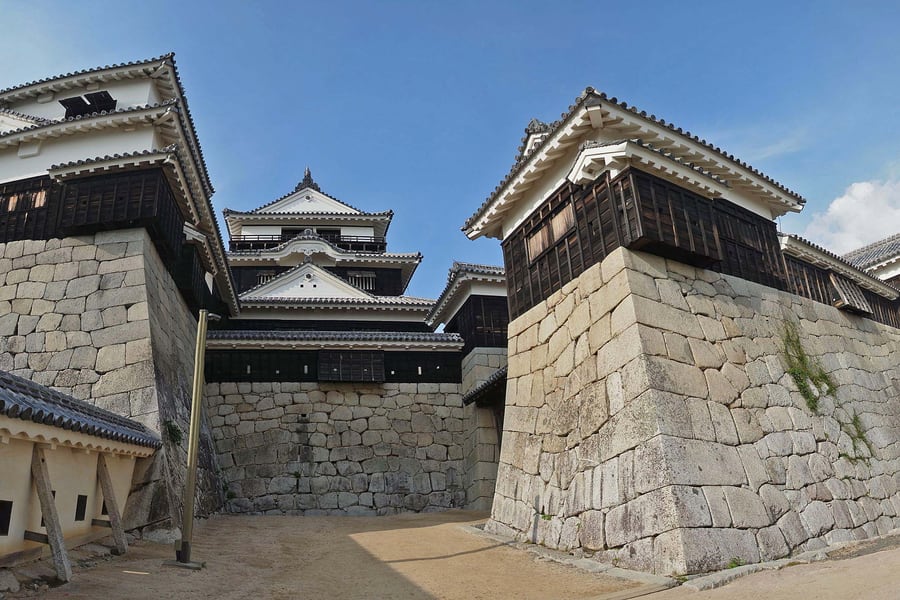
Matsuyama Castle, on a hill in the middle of the city, has one of only twelve castle keeps in Japan still standing from before the end of the Edo period, and the only one with the hollyhock crest of the Matsudaira on its roof tiles. Like Himeji's, the keep is linked to its turrets around a closed courtyard. A ropeway and a chairlift climb the hill.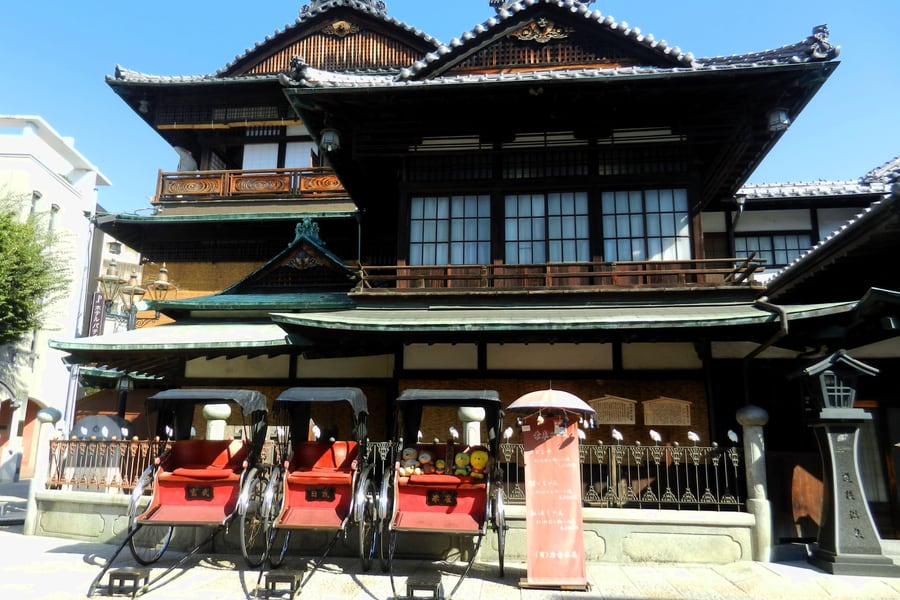 lienyuan lee / Wikimedia Commons · CC BY 3.0 · 2014 · cropped
Dōgo Onsen
Dōgo Onsen is said to be the oldest hot spring in Japan, with some three thousand years of history. Its wooden Honkan, rebuilt in 1894, was the first public bath to be made an Important Cultural Property, and its restoration was finished in December 2024. A drum in the rooftop tower still beats the hour. The Kami-no-yu bath costs ¥700.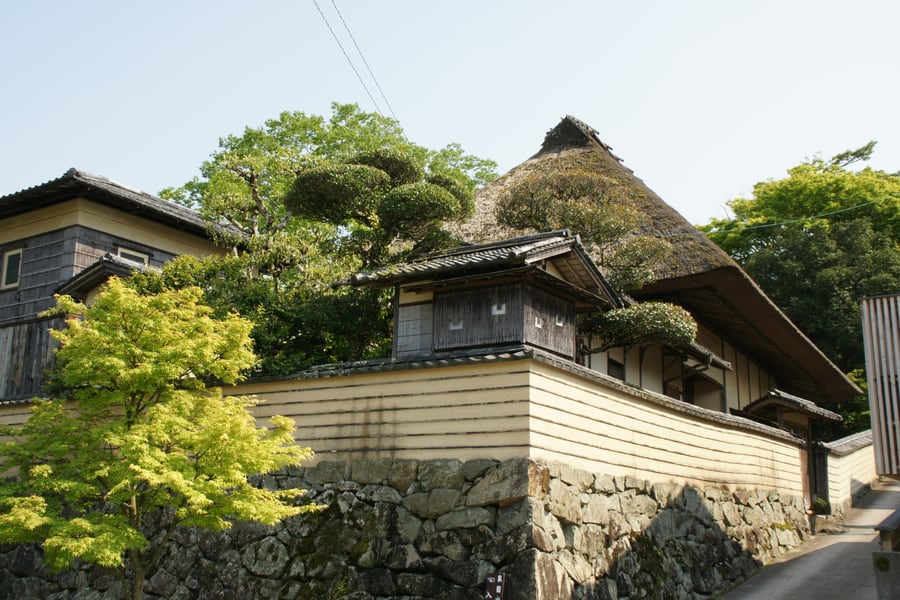 yano / Wikimedia Commons · CC BY-SA 3.0 · 2013 · cropped
Ōzu
The castle town on the Hiji River rebuilt its castle keep in wood in 2004. Twenty-five minutes' walk from the station, Garyū Sansō is the villa a Kobe wax merchant, Kōchi Torajirō, spent ten years building on a cliff above the river from 1899; its thatched teahouse, Furō-an, stands on the cliff edge. Castle and villa together cost ¥880.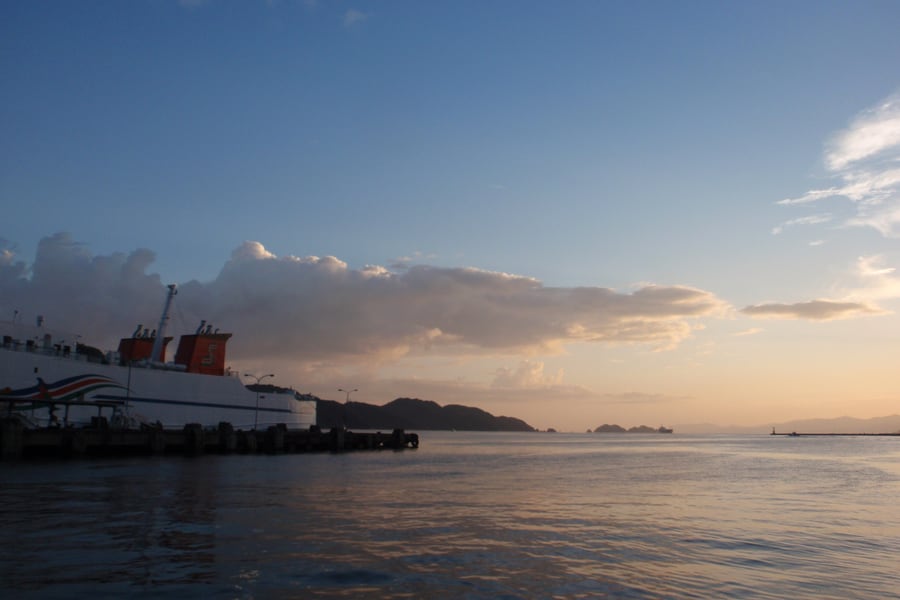 abu_9495 / Wikimedia Commons · CC BY 3.0 · 2010 · cropped
Yawatahama
Yawatahama is a harbour town with ferries across to Beppu and Usuki in Kyushu. The Minatto roadside station on the waterfront, about seven minutes from the station by bus, has the Dōya market, selling fish landed at Yawatahama's own market, and a food court. The sightseeing train arrives at 15:56 and leaves again at 16:27, so a longer look means the local train back, or a night here.Where to Sleep
Matsuyama is the base for every trip, and Dōgo, its hot-spring quarter, the place to stay in it. A night in Ōzu's castle town leaves time for the villa and the castle before the afternoon train calls on its way back.
Where to stay
Dōgo Onsen Funaya
Dōgo · about 3 minutes' walk from the tram
A hot-spring ryokan in Dōgo, founded in 1627, with a garden of its own.
Check Availability (opens in a new tab, on dogo-funaya.co.jp)via dogo-funaya.co.jpNIPPONIA HOTEL Ōzu Castle Town
Ōzu · rooms spread through the old town
A hotel whose rooms are in restored Edo, Meiji and Taishō buildings scattered through Ōzu's castle town.
Check Availability (opens in a new tab, on ozucastle.com)via ozucastle.comQuestions or corrections
Planning this trip and stuck on something, or spotted a time, fare or detail that has changed? Send us a message about Iyonada Monogatari. We read every one, and we update this page when something has changed.