Ibusuki no Tamatebako
Gordon Cheung / Wikimedia Commons · CC BY 2.0 · cropped
- Distance45.7 km
- DurationAbout 52 minutes, non-stop
- Best seasonYear-round · the Chiringashima sandbar March to October, rape blossom at Lake Ikeda in January
Introduction
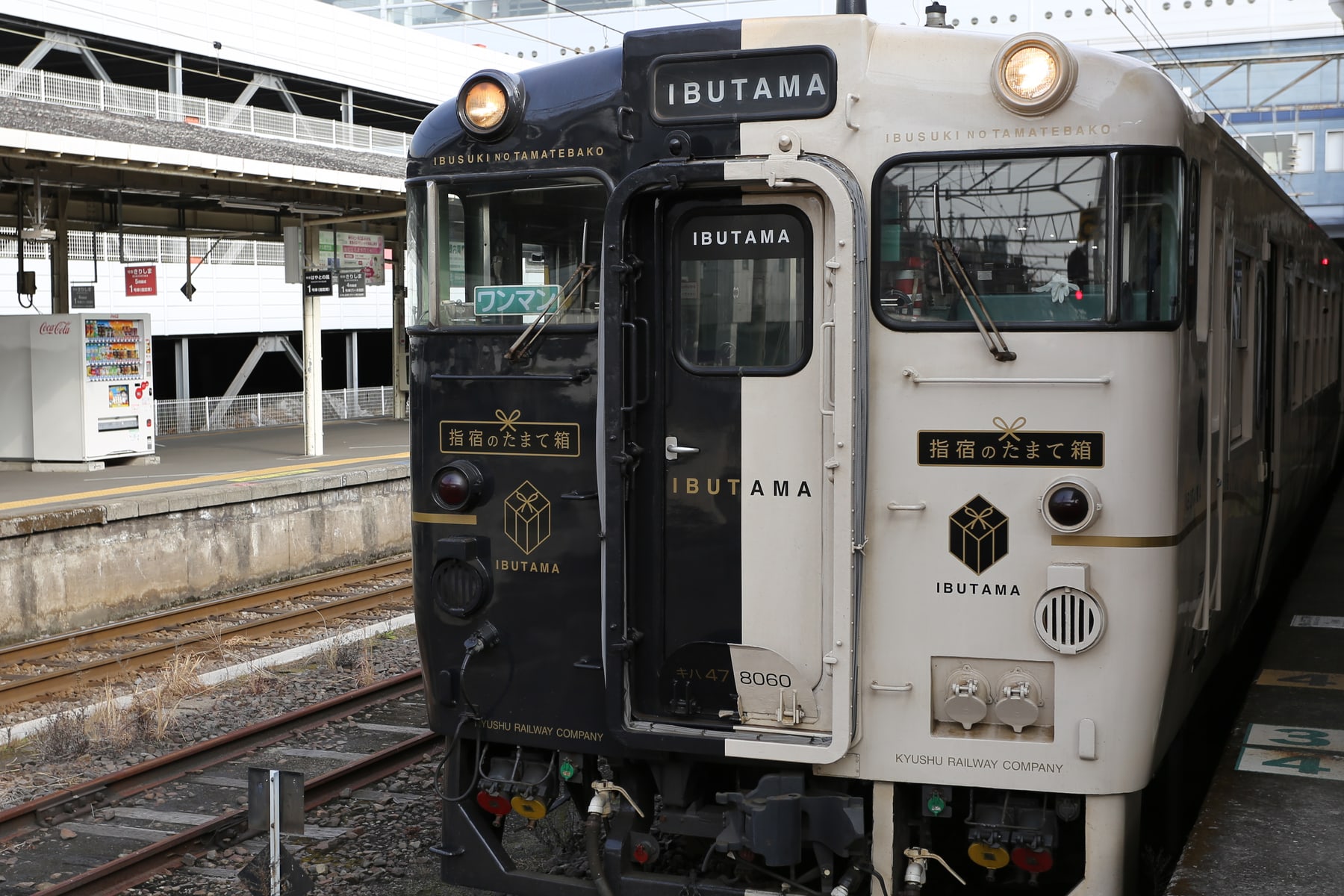
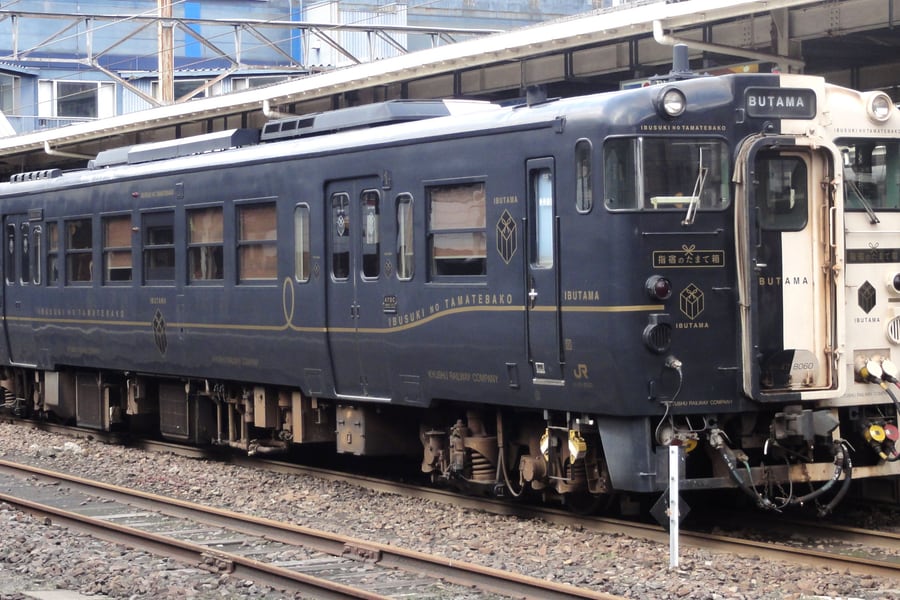
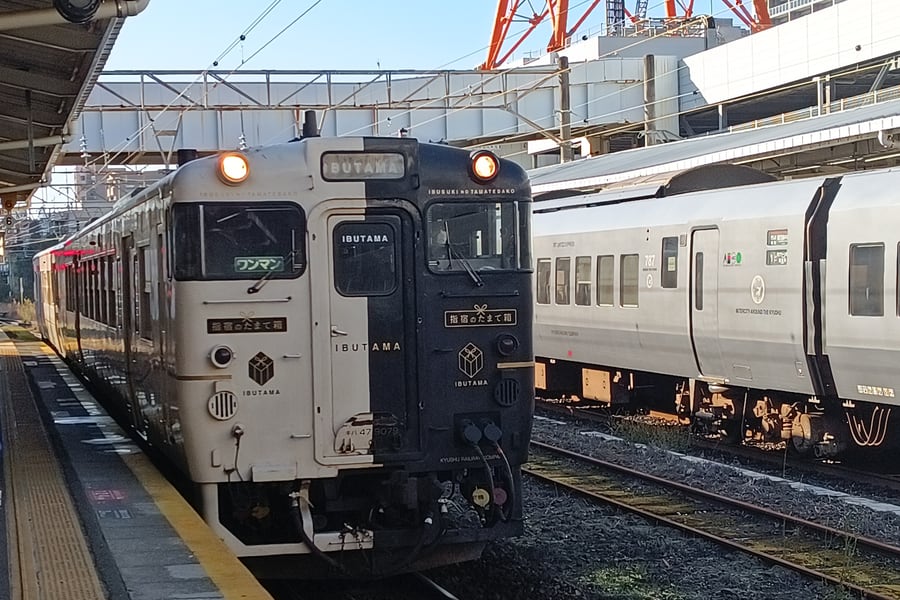
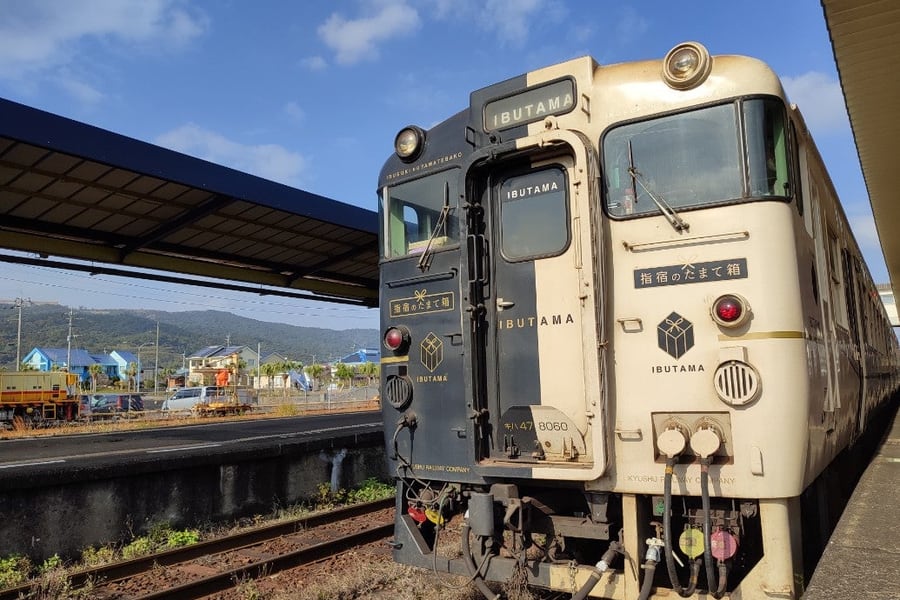
The Ibusuki no Tamatebako, "the treasure box of Ibusuki", is JR Kyushu's limited express from Kagoshima-Chūō to Ibusuki, the hot-spring town near the southern tip of the Satsuma Peninsula. It is built around the folk tale of Urashima Tarō, the fisherman who visits the Dragon Palace beneath the sea and comes home with a box he must never open, and Ibusuki claims to be where that story began. The cars are black on one side and white on the other, and when the doors open a white mist pours from above them.
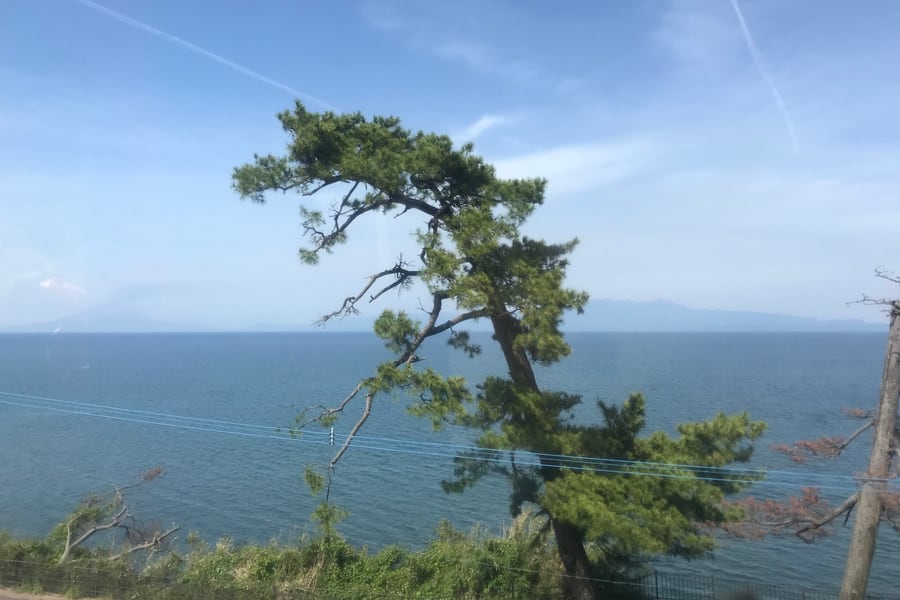
The ride takes under an hour, non-stop, and nearly all of it is beside Kinkō Bay, with the volcano Sakurajima across the water. Seats on the sea side turn to face a long wooden counter under the windows, so the bay is the view for most of the way.
Three round trips run every day, and every seat is reserved.
The Journey
The train leaves Kagoshima-Chūō, the Kyushu Shinkansen's southern terminus, from a platform reached up a staircase hung with photographs of the train. It runs south through the suburbs of Kagoshima on the Ibusuki Makurazaki Line, a single-track, unelectrified railway, and then comes out on the shore of Kinkō Bay.
Along Kinkō Bay
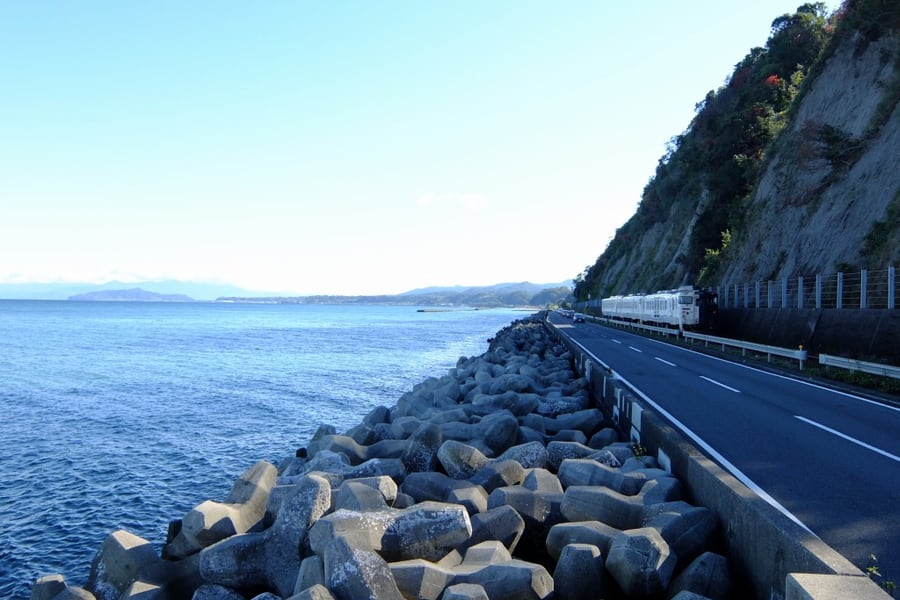
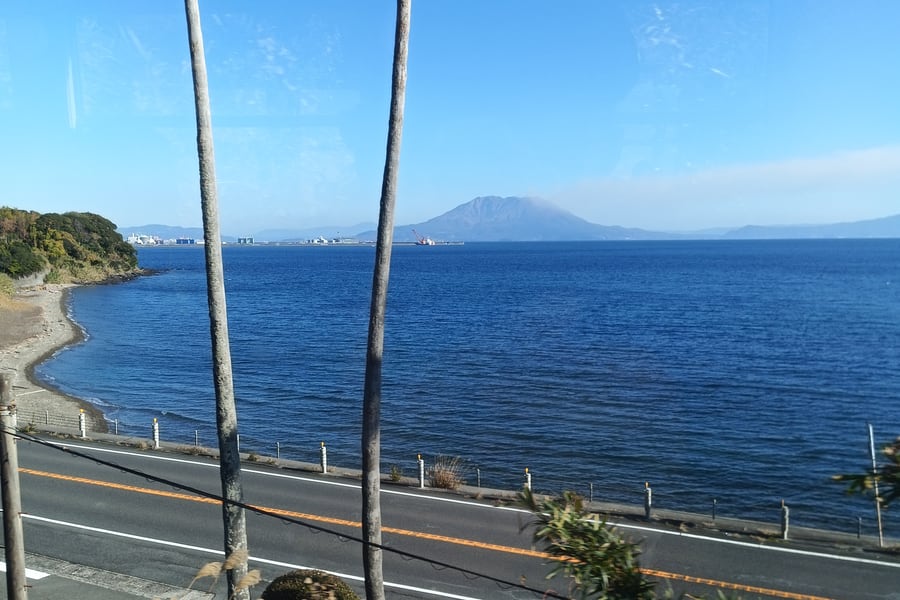
From here the sea is on the left almost all the way, the drowned caldera of an eruption about 29,000 years ago. Sakurajima stands across the water, 1,117 metres high and often smoking, and later the long shore of the Ōsumi Peninsula. The train runs straight through Kiire and along the sea walls below the cliffs to Nukumi. Near Miyagahama the island of Chiringashima comes into view offshore, and a few minutes later the train pulls into Ibusuki, about 52 minutes after leaving Kagoshima. Cabin attendants hand round a commemorative card and help with a photograph beside a dated panel.
The train
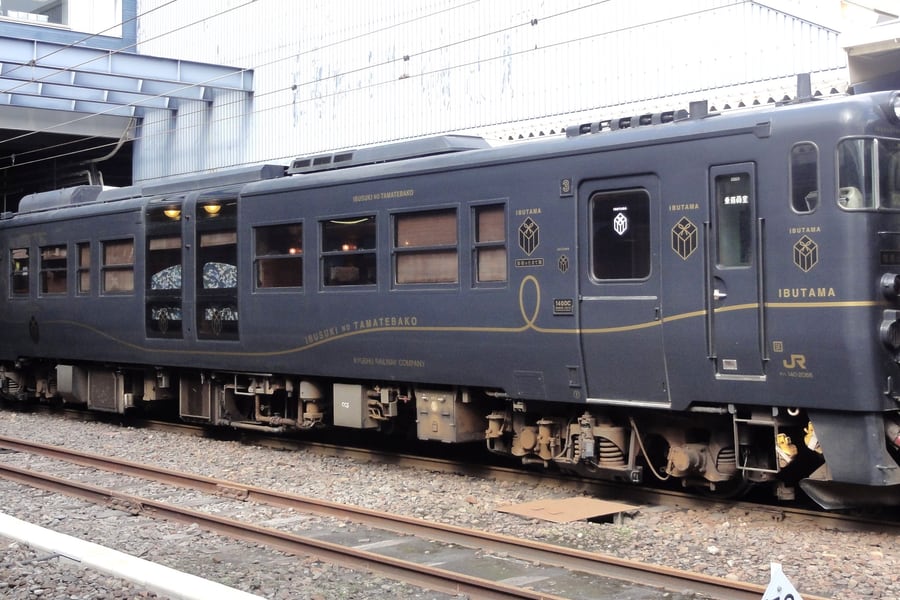
The Tamatebako is two KiHa 47 diesel railcars, 8060 and 9079, rebuilt at JR Kyushu's Kokura Works with interiors by the designer Eiji Mitooka. Car 1 is lined in teak, car 2 in southern-Kyushu cedar; there are swivelling seats at counters facing the sea, box seats for groups of three or four, sofas among bookshelves and a corner of child-sized chairs. A third car, KiHa 140 2066, was rebuilt to match in 2012 and is added on busy days, or stands in for car 1 or car 2 when one is away for inspection; it has no sea-facing counter. The line goes on beyond Ibusuki, by local train only, to Nishi-Ōyama, the southernmost station on JR, and Makurazaki.
Along the route
 Hyppolyte de Saint-Rambert / Wikimedia Commons · CC BY 4.0 · cropped
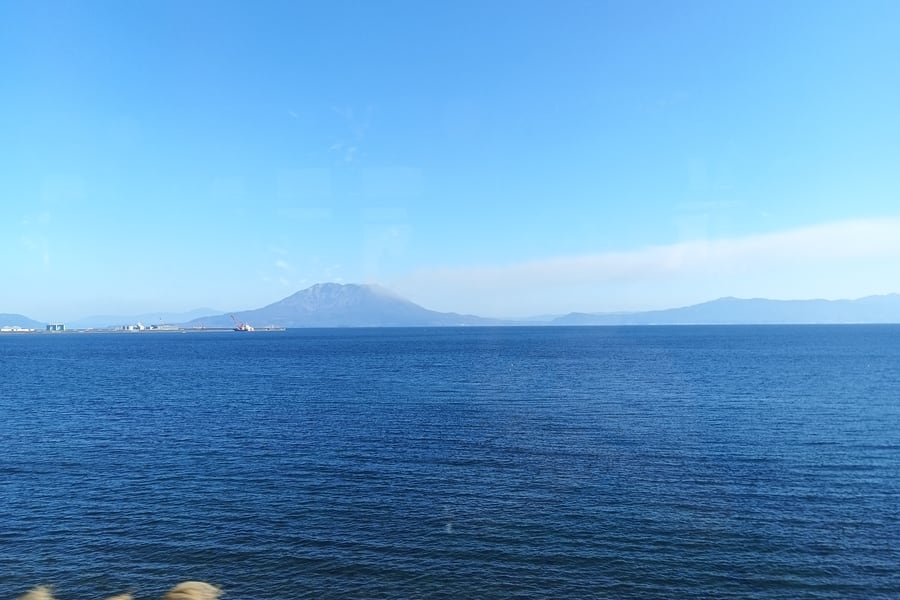
Kinkō Bay
Out of the Kagoshima suburbs the line reaches the shore of Kinkō Bay, the flooded caldera of an eruption about 29,000 years ago, and keeps it on the left almost all the way to Ibusuki. Wild dolphins are sometimes seen from the train.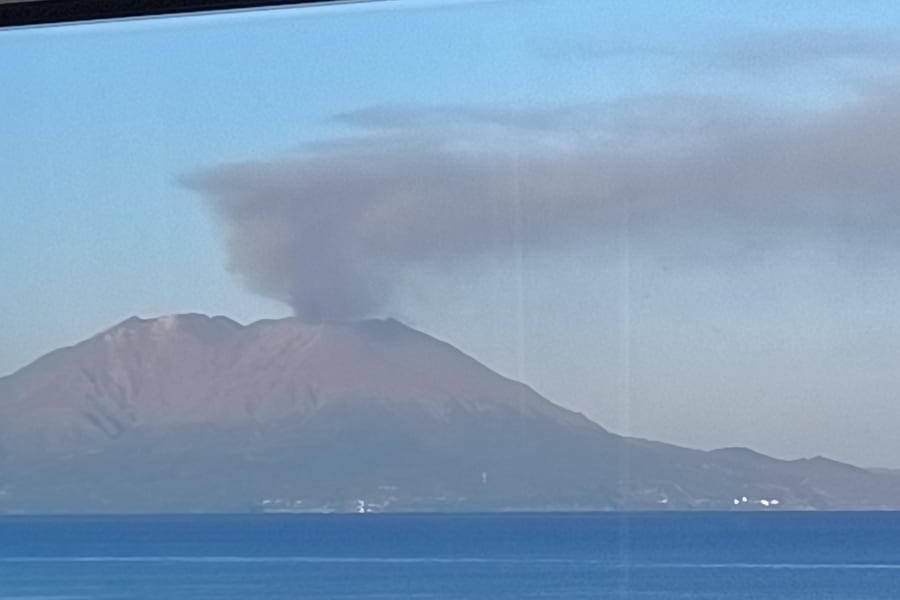 Hyppolyte de Saint-Rambert / Wikimedia Commons · CC BY 4.0 · cropped
Sakurajima
Across the water stands Sakurajima, 1,117 metres high and one of the most active volcanoes in the world. On the way south it stays in view on the left for much of the ride, often trailing a plume of ash.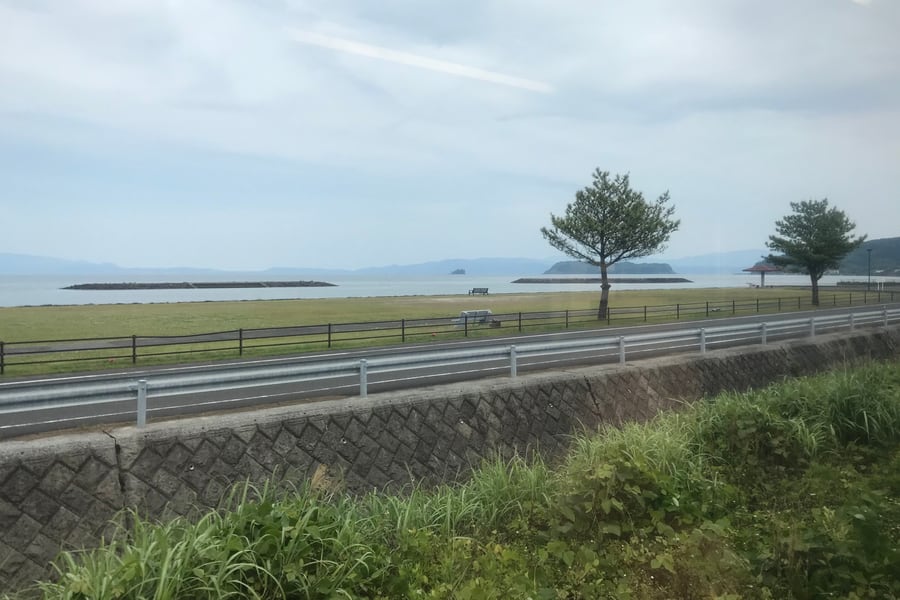 そらみみ / Wikimedia Commons · CC BY-SA 4.0 · cropped
Chiringashima
Approaching Ibusuki, the wooded island of Chiringashima lies just offshore on the left. From March to October a sandbar appears at low tide and people walk out to it; locally it is the island of tying bonds.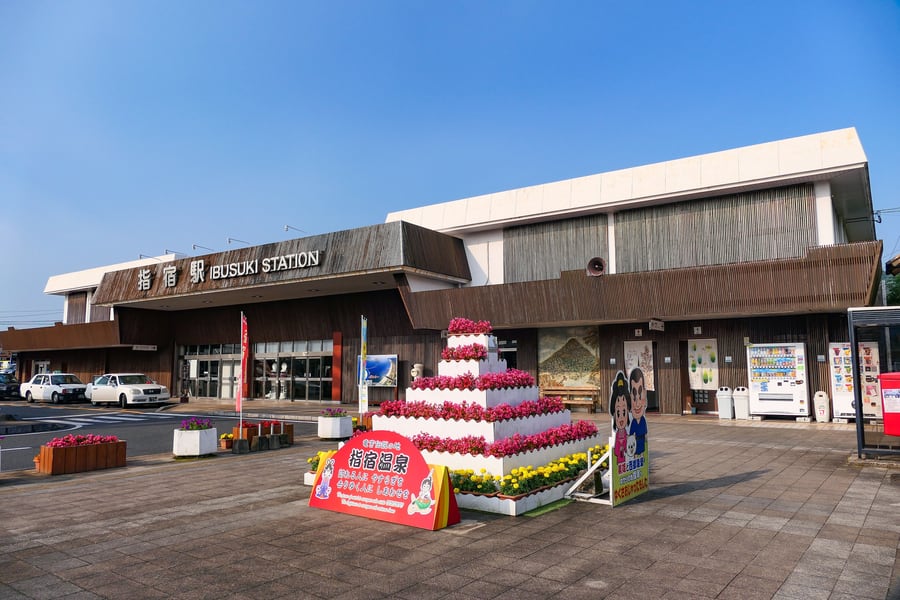 MaedaAkihiko / Wikimedia Commons · CC BY-SA 4.0 · cropped
Ibusuki station
Ibusuki station was remodelled in wood in 2003, after the pine forest on Mt Kaimon. Outside are a free footbath and a postbox repainted in the train's colours. City staff sometimes wave flags as the train arrives.A bit of history
Culture & experiences along the way
 Atsasebo / Wikimedia Commons · CC BY-SA 3.0 · cropped
The smoke from the box
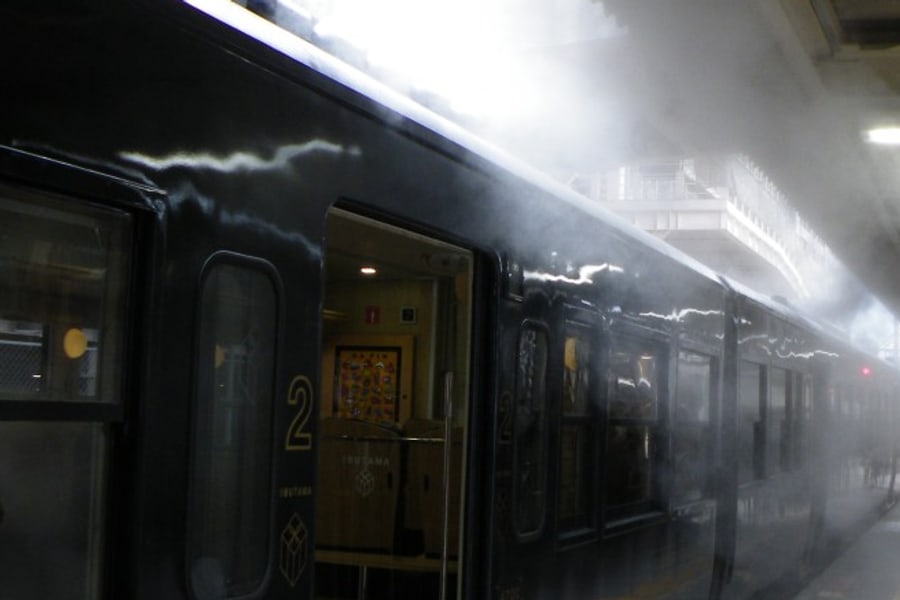
In the folk tale, the fisherman Urashima Tarō comes home from the Dragon Palace and opens the box he was told never to open; white smoke pours out and he grows old. When the train's doors open, a white mist sprays from above them, and you board through it.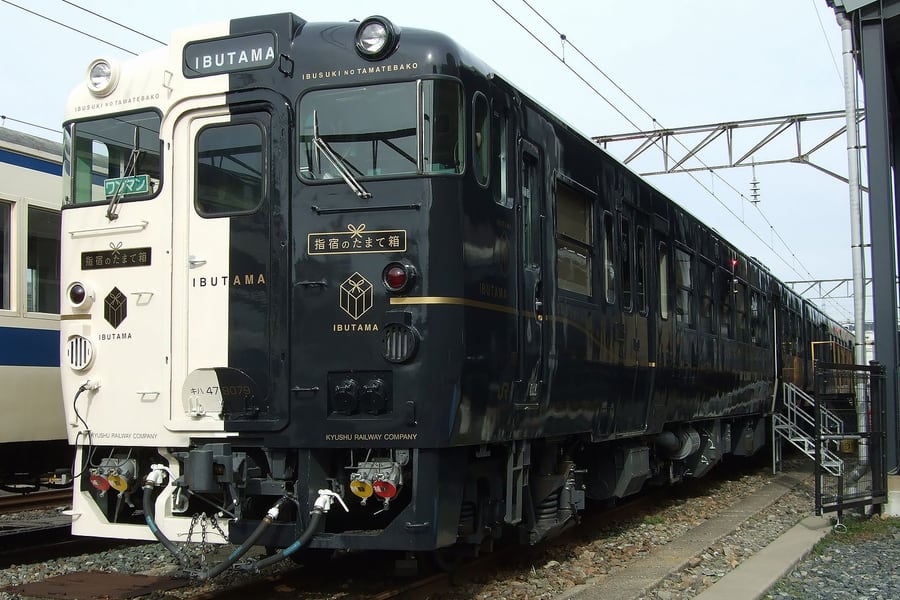 Muyo / Wikimedia Commons · CC BY-SA 3.0
Black hair, white hair
The livery tells the end of the story. The mountain side of each car is black and the sea side white, for Tarō's black hair turning white the moment the box was opened, and the cab fronts are split down the middle. Ibusuki claims to be where the legend began.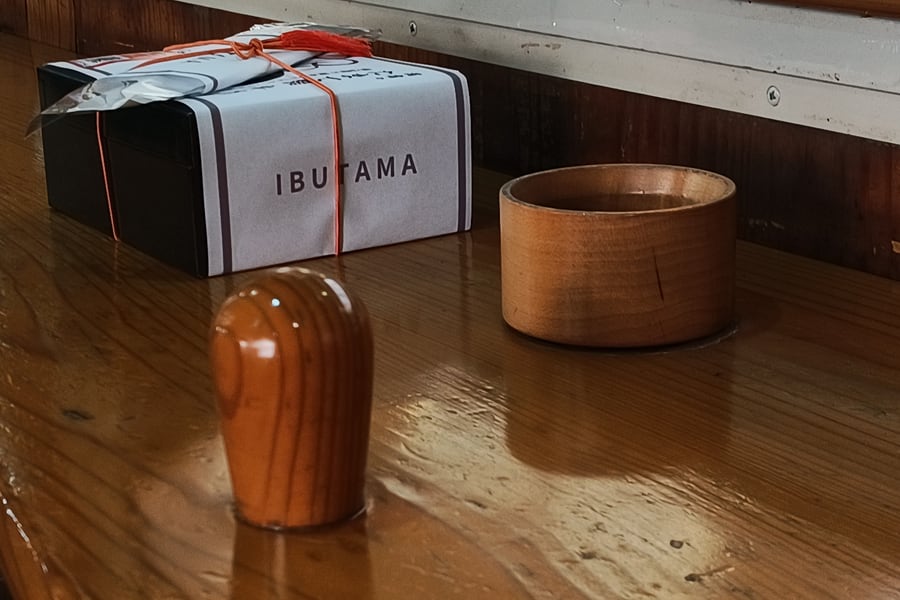 Hyppolyte de Saint-Rambert / Wikimedia Commons · CC BY 4.0 · cropped
A seat facing the sea
Along the sea side, seats turn to a wooden counter under the window, the whole length of car 2. Car 1 is lined in teak of the kind used on liners and yachts, car 2 in cedar from southern Kyushu. The trolley brings the Ibutama sandwich of Kagoshima black pork and egg, and a cider made with spring water from Tōsenkyō.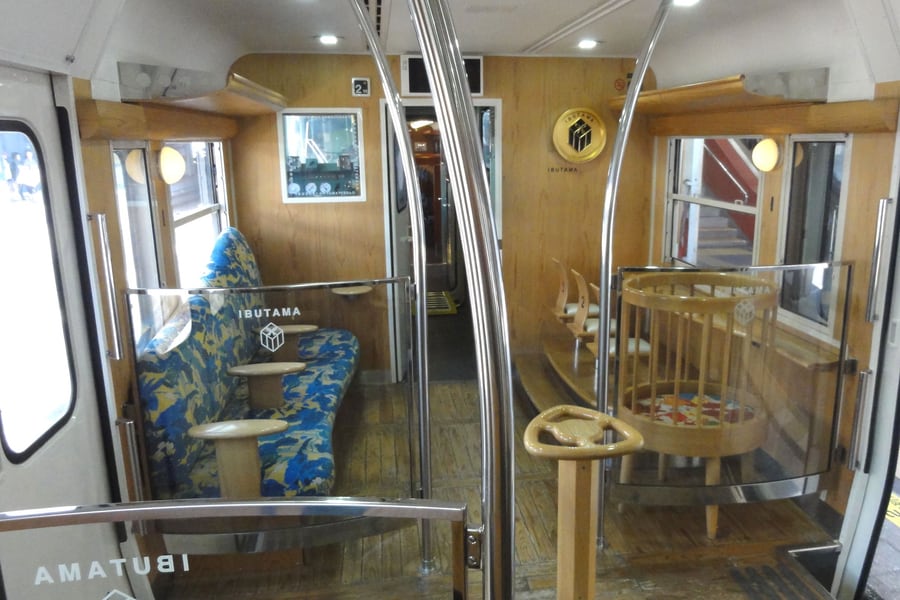 Rsa / Wikimedia Commons · CC BY-SA 3.0 · cropped
A message in the box
At the service counter in car 1 stands a treasure box of its own. Write a few words on a card, a thank-you or a memory of the trip, post it in the box, and the cabin attendant reads it out over the train's speakers. Car 2 has a sofa among bookshelves and a corner of child-sized chairs.Timetables
Three round trips run every day, all non-stop between Kagoshima-Chūō and Ibusuki. Every seat is reserved, and seats cannot be reserved on board.
Kagoshima-Chūō to Ibusuki
| Train | Kagoshima-Chūō | Ibusuki |
|---|---|---|
| No. 1 | 09:56 | 10:47 |
| No. 3 | 11:56 | 12:48 |
| No. 5 | 13:56 | 14:49 |
Ibusuki to Kagoshima-Chūō
| Train | Ibusuki | Kagoshima-Chūō |
|---|---|---|
| No. 2 | 10:56 | 11:48 |
| No. 4 | 12:57 | 13:48 |
| No. 6 | 15:07 | 16:00 |
Good to know:
- Which car. From 9 October to 30 November 2026 the spare car runs as car 1 every day, so only car 2 has the sea-facing counter seats and no box seats are sold. JR Kyushu publishes the formation calendar a month or two ahead.
- Shinkansen connections. Since 18 September 2026 the Kyushu Shinkansen has run more slowly between Kumamoto and Kagoshima-Chūō after the 2026 Kumamoto earthquake, and the connections have moved: the Sakura 401 arrives at 9:39 for No. 1, and No. 6 connects with the Sakura 768 at 16:09.
- Days from December. The train keeps running; JR Kyushu announces the exact days in mid-October.
- Without a reservation, local trains and Nanohana rapids run between Kagoshima-Chūō and Ibusuki through the day.
Times as of October 2026, from JR Kyushu's timetable of 14 March 2026. Check your date on JR Kyushu's Ibusuki no Tamatebako page (opens in a new tab).
Tickets
You need the fare plus a reserved-seat limited express ticket, bought together: ¥2,950 one way for an adult from Kagoshima-Chūō to Ibusuki, with the seat fee varying a little by date. Seats go on sale at 10:00 one month before travel, online through JR Kyushu's reservation site and at JR ticket offices; the four-seat box seats are sold only at the offices. The bento box, filled with Kagoshima produce, must be ordered on JR Kyushu's website between a month and three working days ahead.
The trains are small, two or three cars, so book early for weekends and holidays. Fares checked October 2026 on JR Kyushu's Ibusuki no Tamatebako page; Japanese yen.
Book your tickets
Kagoshima-Chūō to Ibusuki
One way, adult · fare and reserved seat
The whole run with a reserved seat, on sale at 10:00 one month ahead; the seat fee varies a little by date.
Book Tickets (opens in a new tab, on JR Kyushu)via JR KyushuRail Passes
The Ibusuki no Tamatebako is a JR Kyushu limited express, and the JR passes cover it, reserved seat included. The JR Kyushu Rail Pass (Southern Kyushu) costs ¥12,000 for three days and the All Kyushu pass ¥22,000; the Northern Kyushu pass does not cover it. The Japan Rail Pass covers it too, at ¥50,000 for seven days. Book the seat at a JR Kyushu ticket office or machine, free with the pass; the Southern Kyushu pass allows six such bookings. Booking before you arrive, through JR Kyushu's pass website, costs ¥1,500 a section for a sightseeing train.
For the Tamatebako alone, a pass does not pay: a return is ¥5,900 and the three-day pass ¥12,000. It pays once the trip includes the Kyushu Shinkansen between Kumamoto and Kagoshima-Chūō, which the Southern Kyushu pass also covers, or another of the region's limited expresses; price those legs as single tickets before buying.
Checked October 2026 against JR Kyushu's Rail Pass (opens in a new tab) page and the Japan Rail Pass prices (opens in a new tab).
Places to Visit
Ibusuki is the place to stay the night: the sand baths, Chiringashima and Lake Ikeda are all close, and the last Tamatebako back to Kagoshima leaves at 15:07. Kagoshima and Sakurajima make a day of their own at the other end.
 Toecheese-jp / Wikimedia Commons · CC BY-SA 4.0 · cropped
Kagoshima
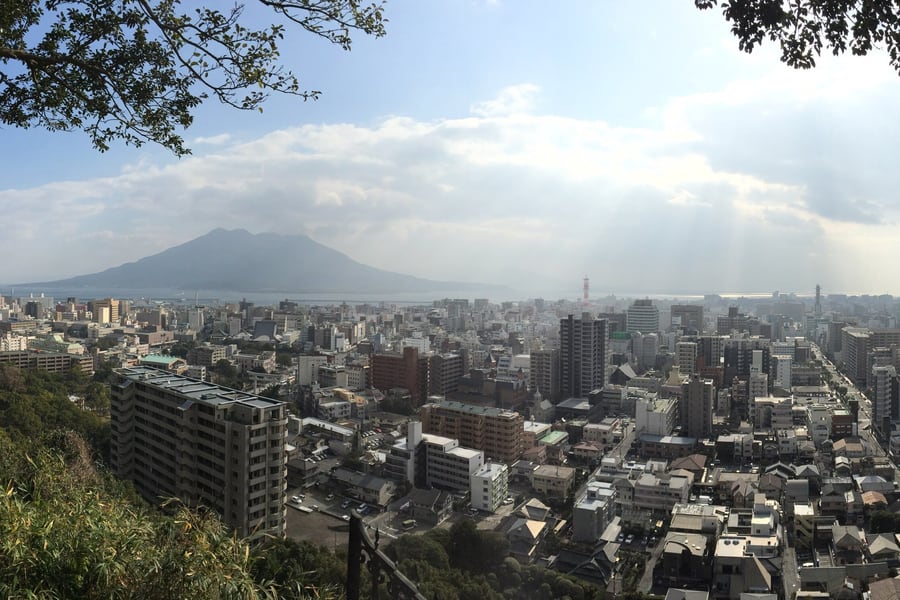
The volcano is a quarter of an hour from the city by the Sakurajima Ferry, which runs around the clock, every 15 to 20 minutes by day. From Kagoshima-Chūō, take the tram to Suizokukan-guchi, about 15 minutes, and walk eight more to the terminal. The volcano smokes often, and its ash can drift as far as Ibusuki.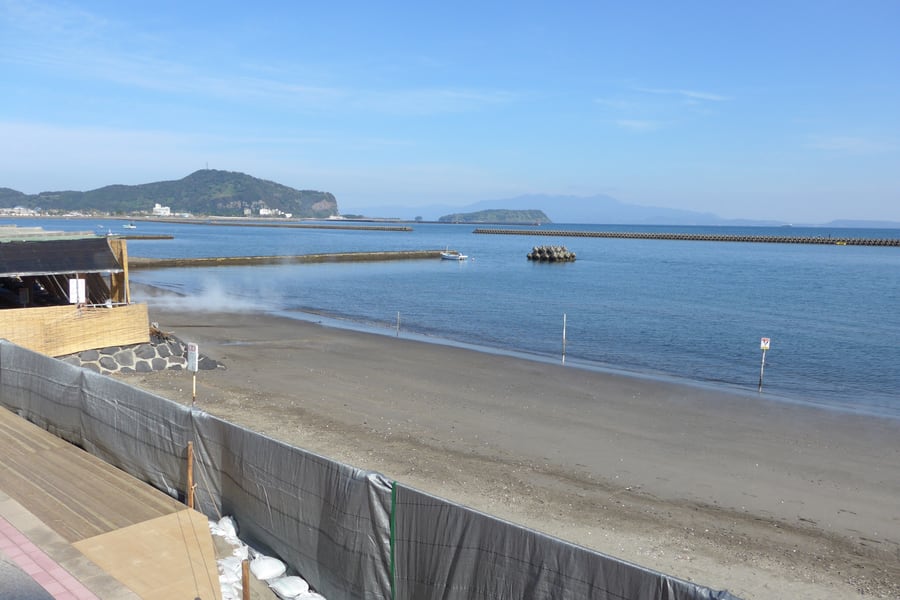 BirdsEyeLV / Wikimedia Commons · CC BY-SA 3.0 · cropped
Ibusuki
On the beach at Saraku, the sand-bath house, you lie down in a cotton yukata and are covered with sand warmed by the hot springs beneath. The basic set, with the bath and yukata, is ¥1,500. It opens 8:30 to 21:00, last entry 20:00, closes for maintenance from 14 to 18 December 2026, and is 20 minutes' walk or five by taxi from the station.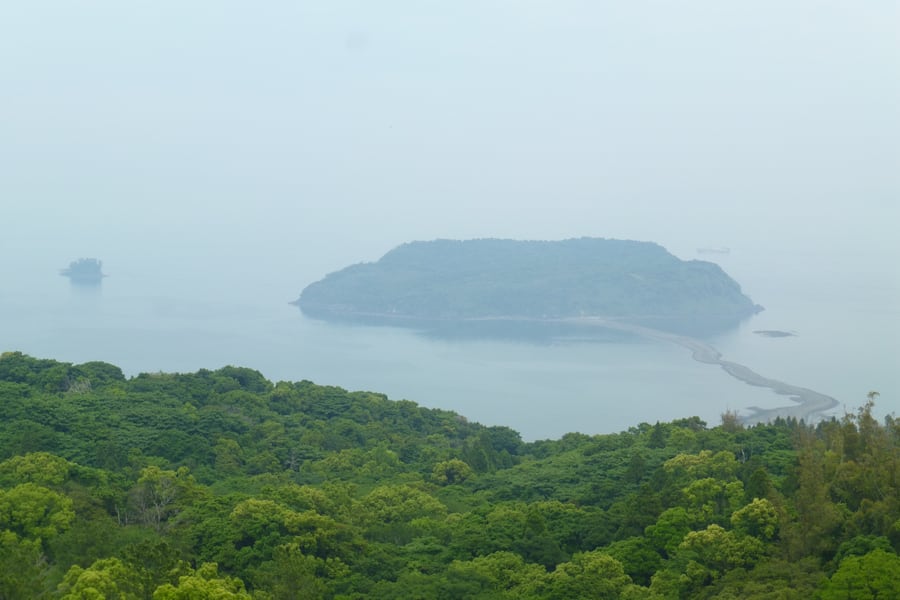 Tam0031 / Wikimedia Commons · CC BY-SA 4.0 · cropped
Chiringashima
From March to October an 800-metre sandbar rises between Tara-misaki and the island, but only around low tide, for five hours at most and sometimes one. Crossing takes about 20 minutes, there is no water or toilet on the island, and the city's tourism office gives the day's times. The Ministry of the Environment counts its sea breeze among Japan's hundred most fragrant landscapes.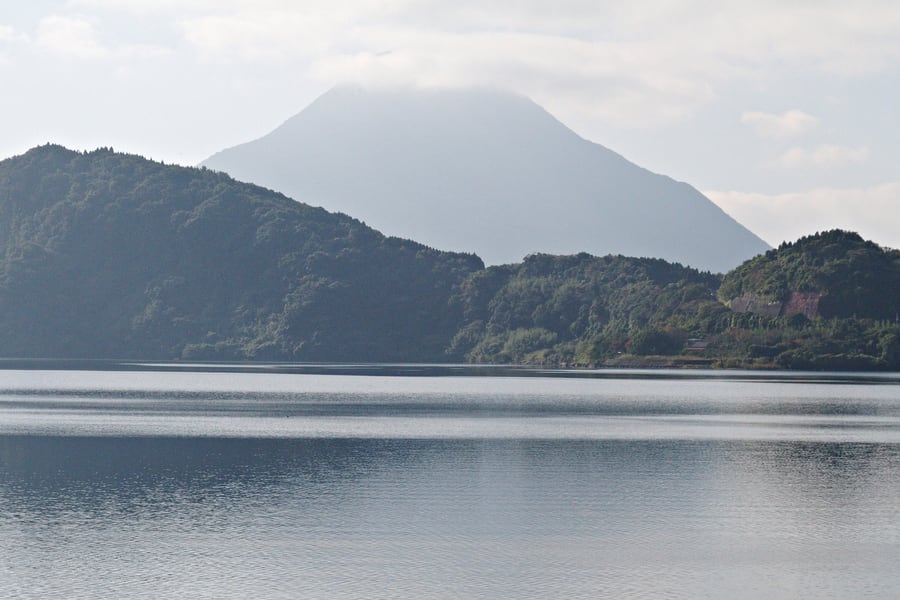 Kimon Berlin / Wikimedia Commons · CC BY-SA 2.0 · cropped
Lake Ikeda
About 5,700 years old, 15 kilometres round and 233 metres deep, Lake Ikeda lies inland from Ibusuki under Mt Kaimon. Its giant eels grow to 1.8 metres and are a protected natural monument; its monster, Issie, has never been proved. In January the shores turn yellow with rape blossom. It is about a quarter of an hour by car from the sand baths.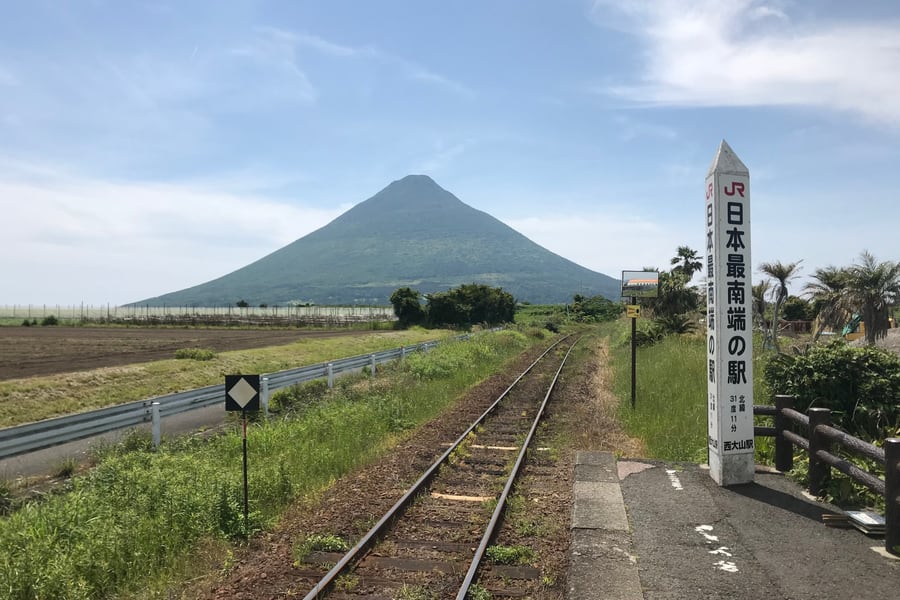 そらみみ / Wikimedia Commons · CC BY-SA 4.0 · cropped
Nishi-Ōyama
Beyond Ibusuki, local trains run on to Nishi-Ōyama, the most southerly station on JR, a single platform in the fields with Mt Kaimon, the 924-metre "Satsuma Fuji", filling the view. On weekdays trains leave Ibusuki at 11:30 and 13:27 and come back at 14:34 and 16:59, so plan the day around them.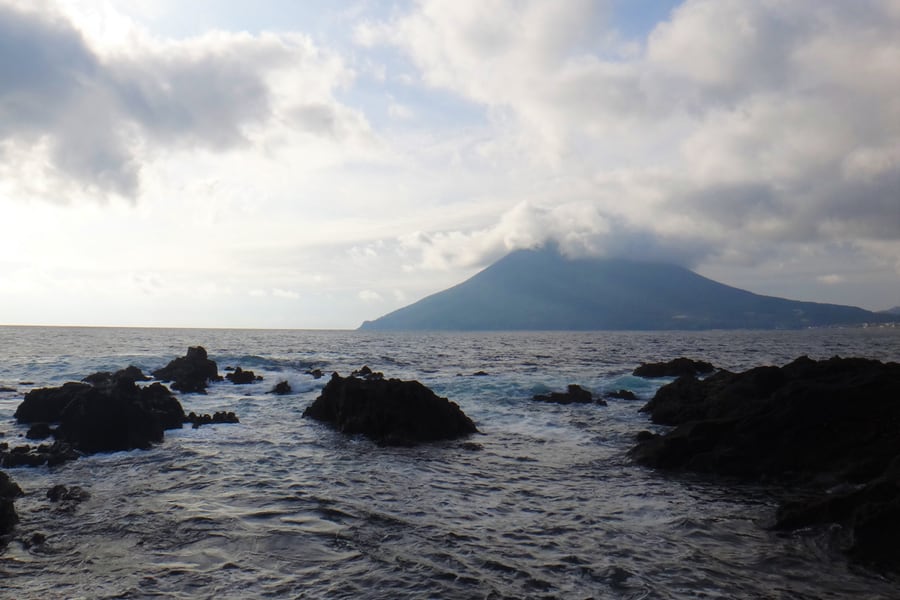 Koda6029 / Wikimedia Commons · CC BY-SA 4.0 · cropped
Nagasakibana
The southern tip of the Satsuma Peninsula is a cape of black volcanic rock looking across the sea to Mt Kaimon. At its point, Ryūgū Shrine marks where Urashima Tarō is said to have left for the Dragon Palace; it is dedicated to Princess Otohime, the princess of the tale, and visitors write their wishes on shells and offer them there.Where to Sleep
Ibusuki is a hot-spring town of ryokan, the Japanese inns where dinner, breakfast and the bath come with the room, and several have sand baths of their own. In Kagoshima, a hotel at the station makes the 9:56 departure easy.
Where to stay
JR Kyushu Hotel Kagoshima
Kagoshima · connected to Kagoshima-Chūō station
A station hotel of the railway's own hotel company, in two wings, a minute from the platforms.
Check Availability (opens in a new tab, on jrk-hotels.co.jp)via jrk-hotels.co.jpIbusuki Hakusuikan
Ibusuki · a ryokan among pines by the sea
A Japanese inn between pines and the sea, with its own sand bath and a great bathhouse, the Genroku-buro.
Check Availability (opens in a new tab, on hakusuikan.co.jp)via hakusuikan.co.jpQuestions or corrections
Planning this trip and stuck on something, or spotted a time, fare or detail that has changed? Send us a message about Ibusuki no Tamatebako. We read every one, and we update this page when something has changed.