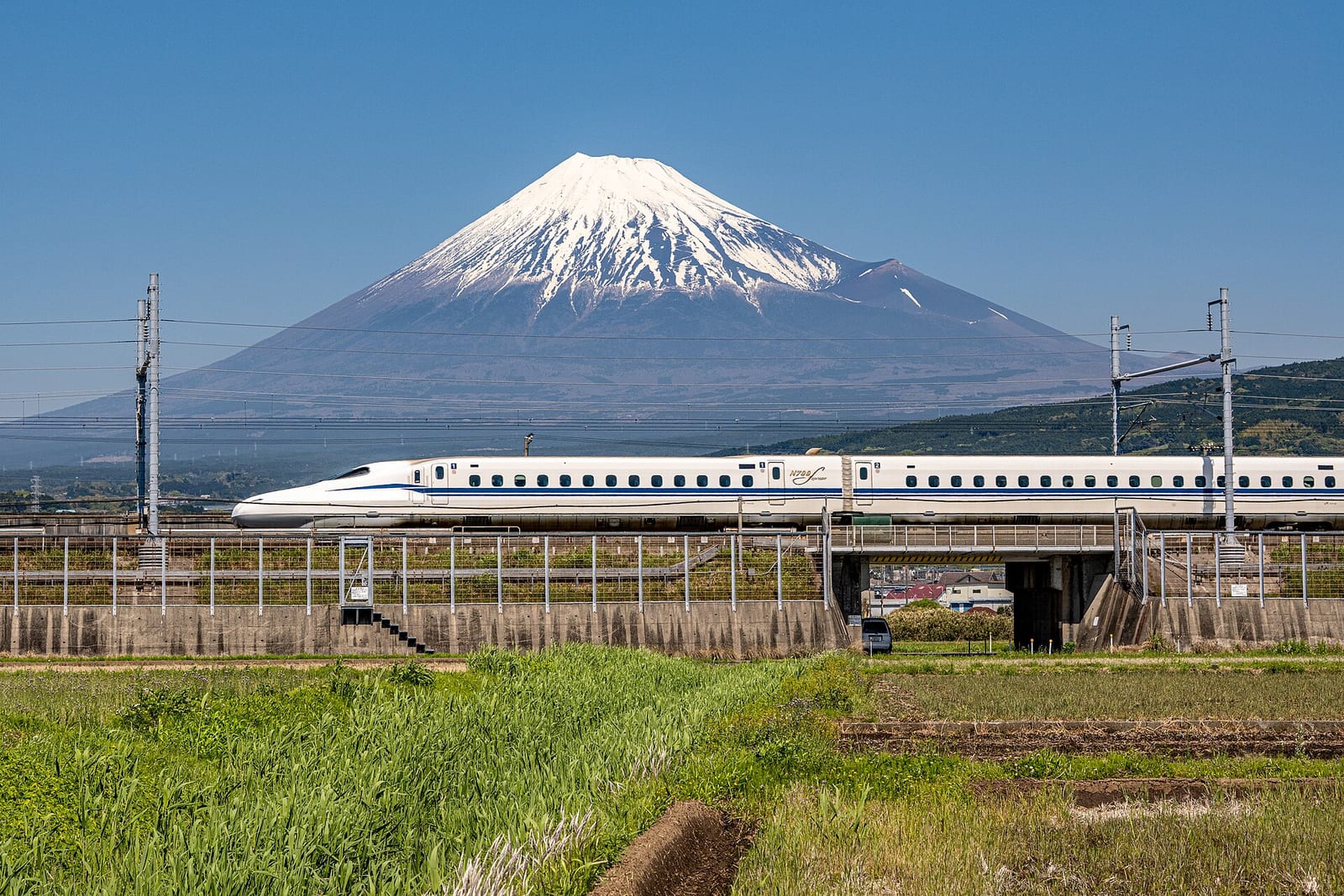
Tokaido Shinkansen
Takeshi Aida / Wikimedia Commons · CC BY-SA 2.0
- Distance515 km (Tokyo–Shin-Ōsaka)
- Duration2 h 21 min (fastest Nozomi)
- Best seasonYear-round — clear winter mornings for Mount Fuji
Introduction
When the Tōkaidō Shinkansen opened on 1 October 1964, days before the Tokyo Olympics, it changed what a train could be. It was the first railway in the world built for regular running above 200 km/h, and its sleek "bullet" trains turned the long haul between Japan's two great cities into a matter of a few smooth hours. Sixty years on, it is still the template every high-speed line on earth is measured against.
It runs 515 kilometres from Tokyo to Shin-Ōsaka, tracing the ancient Tōkaidō — the "Eastern Sea Road" that samurai and merchants once walked for a fortnight — past Yokohama, the foot of Mount Fuji, Nagoya and the temples of Kyoto. Today the fastest Nozomi service covers it in just 2 hours 21 minutes, holding 285 km/h so quietly you barely feel the speed.
This is also the busiest high-speed line in the world: hundreds of trains a day, some 168 million passengers a year, run to a punctuality measured in seconds. Riding it is not just a way to cross Japan — it is one of the defining travel experiences of the country.
The Journey
The journey begins under the great vaulted roof of Tokyo Station, where a train pulls in, is turned around by its famous cleaning crews in a matter of minutes, and rolls out again dead on time. Within moments of departure the city thins into suburbs, and by Shin-Yokohama you are already at full pace.
Then comes the moment everyone waits for. About forty minutes out, the line swings south of Mount Fuji, and on a clear day the whole snow-capped 3,776-metre cone rises over the plain — framed for a few unforgettable minutes in the right-hand windows between Shin-Fuji and Mishima. Sit on the right heading west, and keep your camera ready.
West of Fuji the train races across the industrial belt of Shizuoka and Aichi to Nagoya, then climbs over a low pass into the old heartland of Japan to reach Kyoto — the imperial capital for a thousand years, and for many travellers the real reason to ride. A few minutes more and the line ends at Shin-Ōsaka, gateway to Japan's boldest, most exuberant city.
What makes it extraordinary is not any single view but the sum of it:
- 515.4 km of dead-level, fully grade-separated track — no level crossings anywhere — on standard 1,435 mm gauge, purpose-built in the early 1960s.
- 17 stations through Tokyo and seven prefectures, served by three tiers of train: the express Nozomi, the limited-stop Hikari and the all-stations Kodama.
- A rock-steady 285 km/h cruising speed in sixteen-car trains, the latest of them the beautifully refined N700S.
- A safety and punctuality record that has made "Shinkansen" a byword the world over for how a railway ought to run.
It is fast, spotless and utterly reliable — and, when Fuji appears, quietly magical.
Along the route
jessedyck / Wikimedia Commons · CC0Mount Fuji from the window
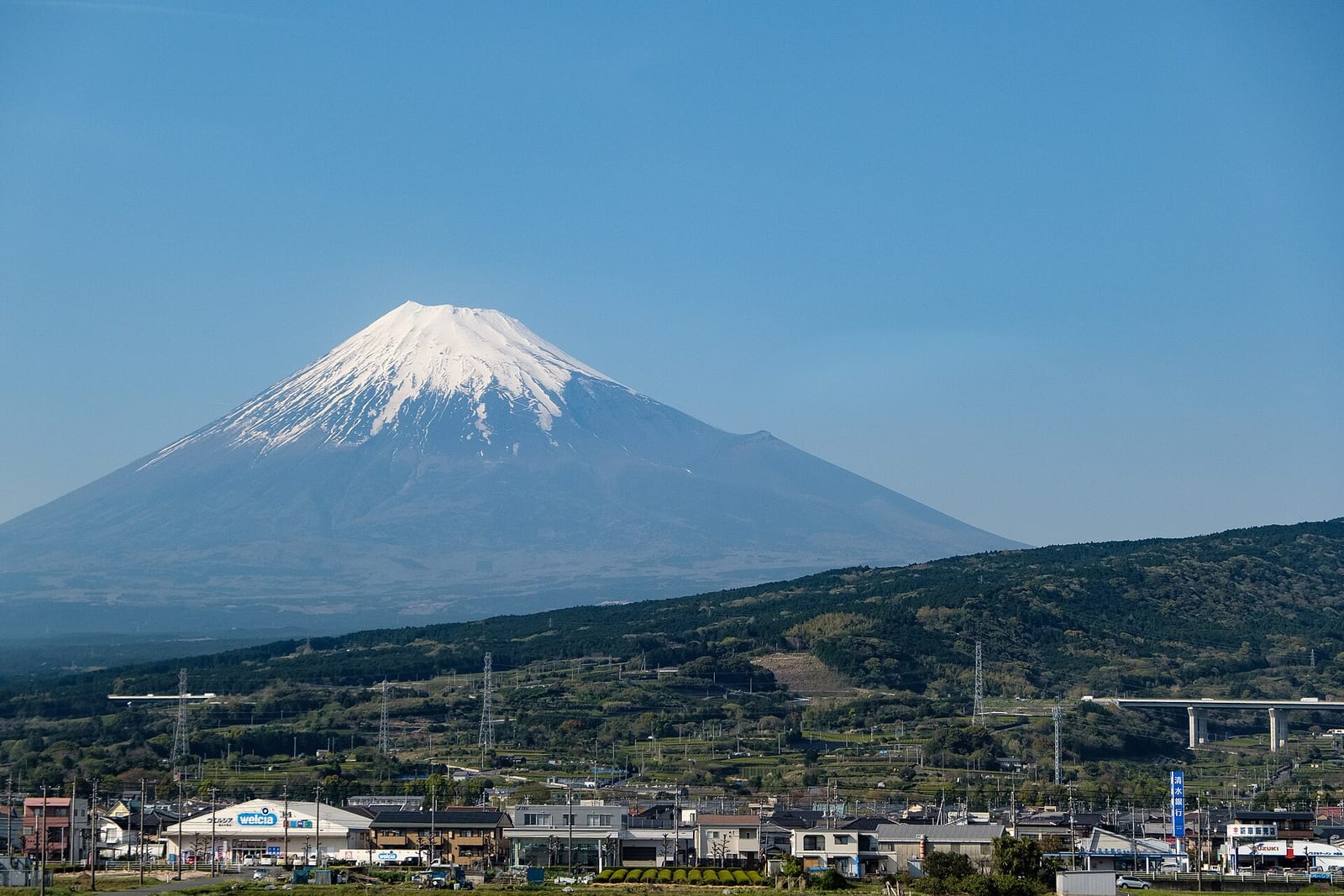
About 40 minutes out of Tokyo the line skirts the southern foot of Mount Fuji, and on a clear day the whole 3,776-metre cone fills the right-hand windows between Shin-Fuji and Mishima. Sit on the right heading west — and hope for a crisp winter morning.MaedaAkihiko / Wikimedia Commons · CC BY-SA 4.0The N700S at 285 km/h
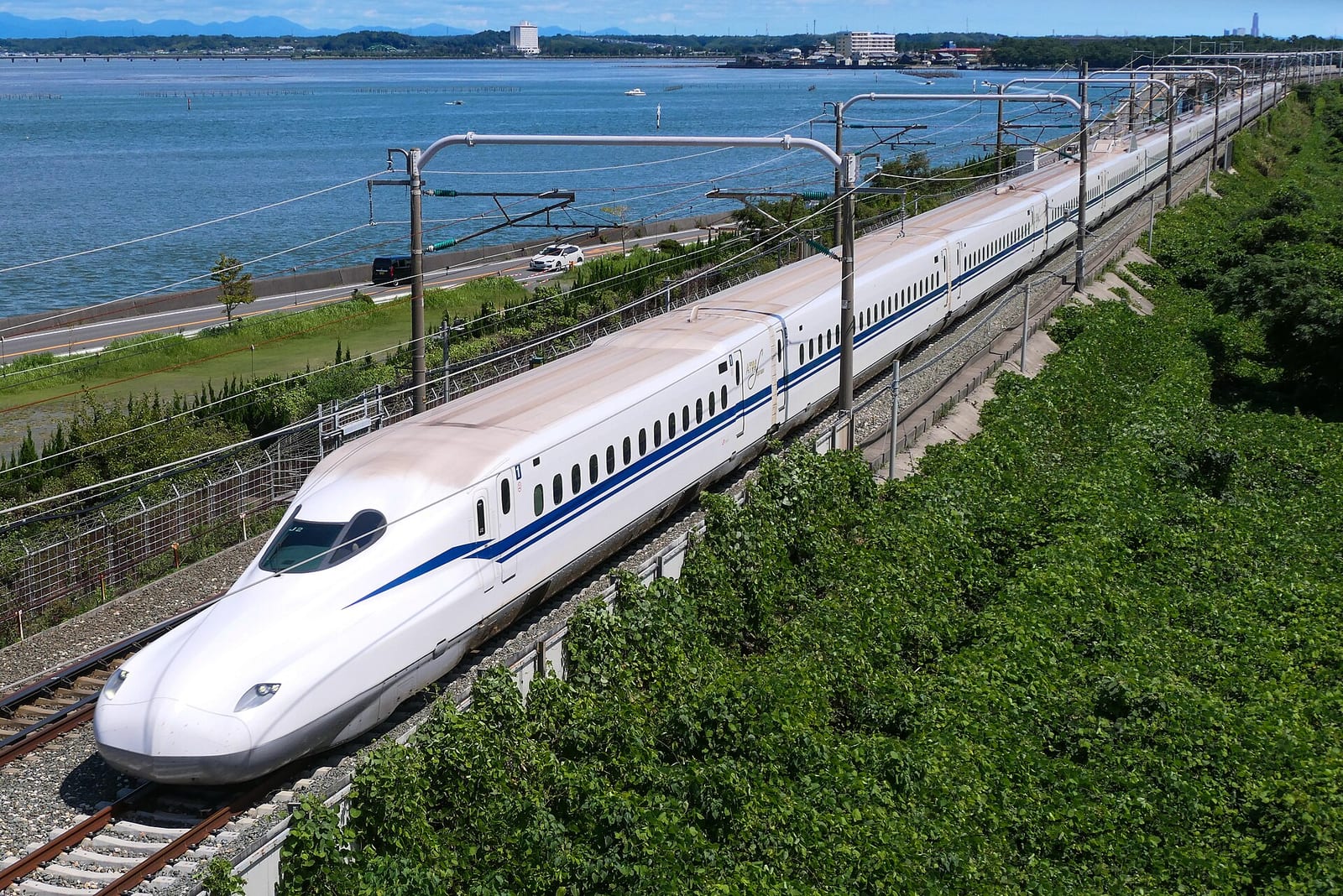
The ride itself is the marvel: sixteen carriages holding a rock-steady 285 km/h so smoothly you can balance a coffee on the tray. The latest N700S trains are the quietest and most refined yet — the distilled result of sixty years of bullet-train engineering.Basile Morin / Wikimedia Commons · CC BY-SA 4.0Kyoto in two hours
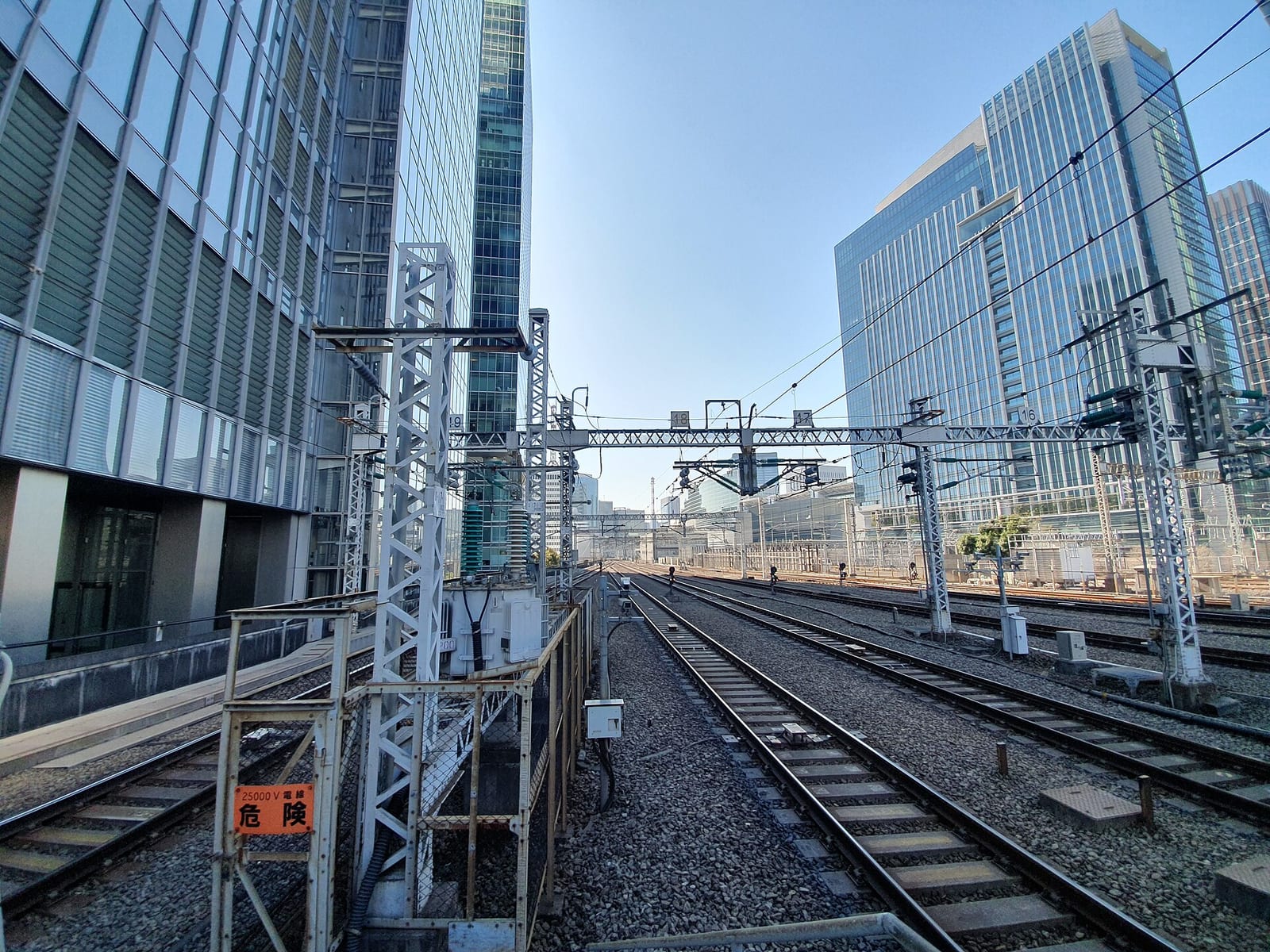
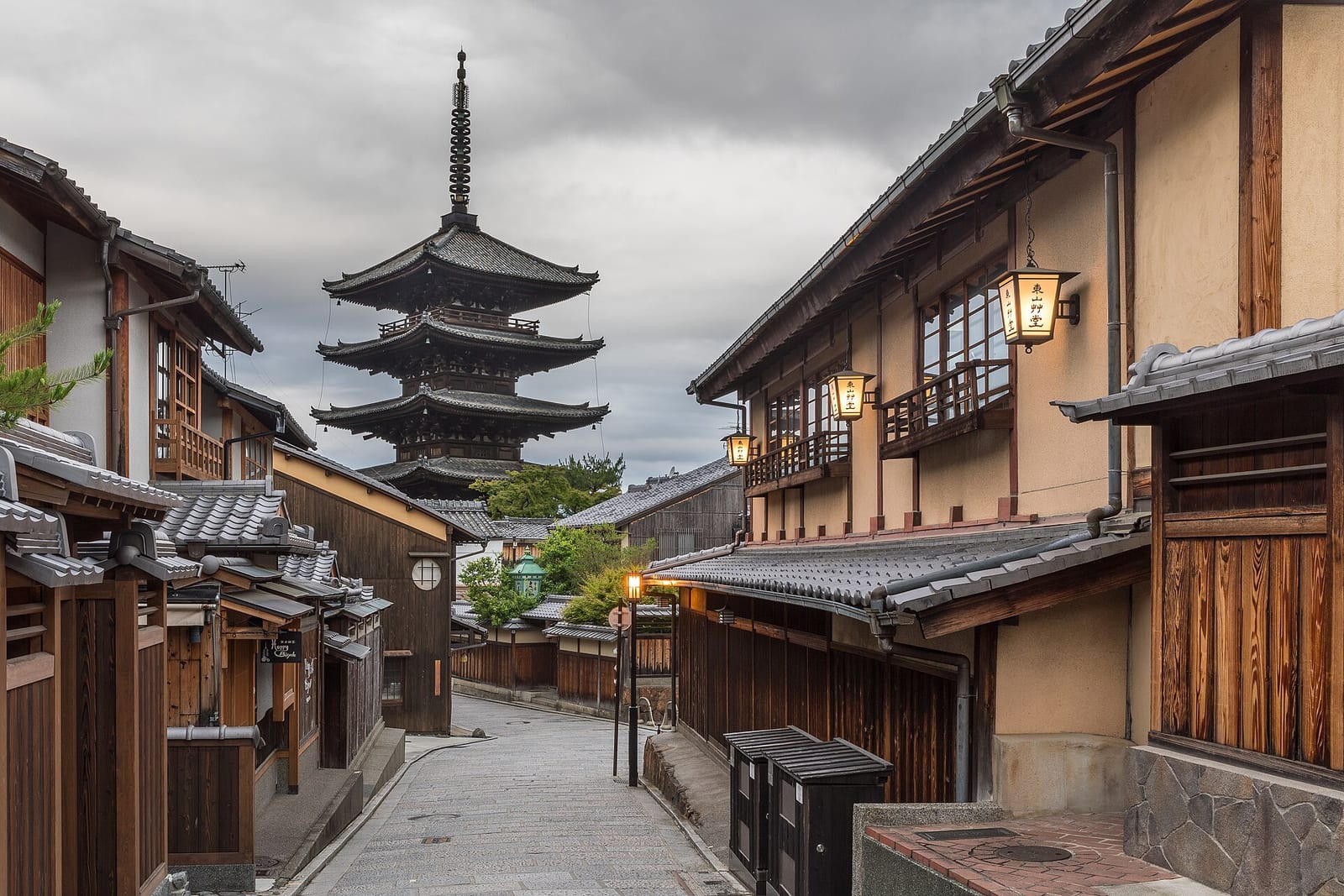
The line delivers you from central Tokyo to the temples, gardens and geisha lanes of Kyoto in well under three hours — the old imperial capital, once a punishing journey down the Tōkaidō road, now an easy morning's ride away.A bit of history
Culture & experiences along the way
Syced / Wikimedia Commons · CC0The ekiben ritual
No Shinkansen journey is complete without an ekiben — a beautifully boxed station lunch, bought on the platform and unwrapped as Tokyo slides away. Each region has its own; half the fun is choosing before you board.MaedaAkihiko / Wikimedia Commons · CC BY-SA 4.0Ride in the Green Car
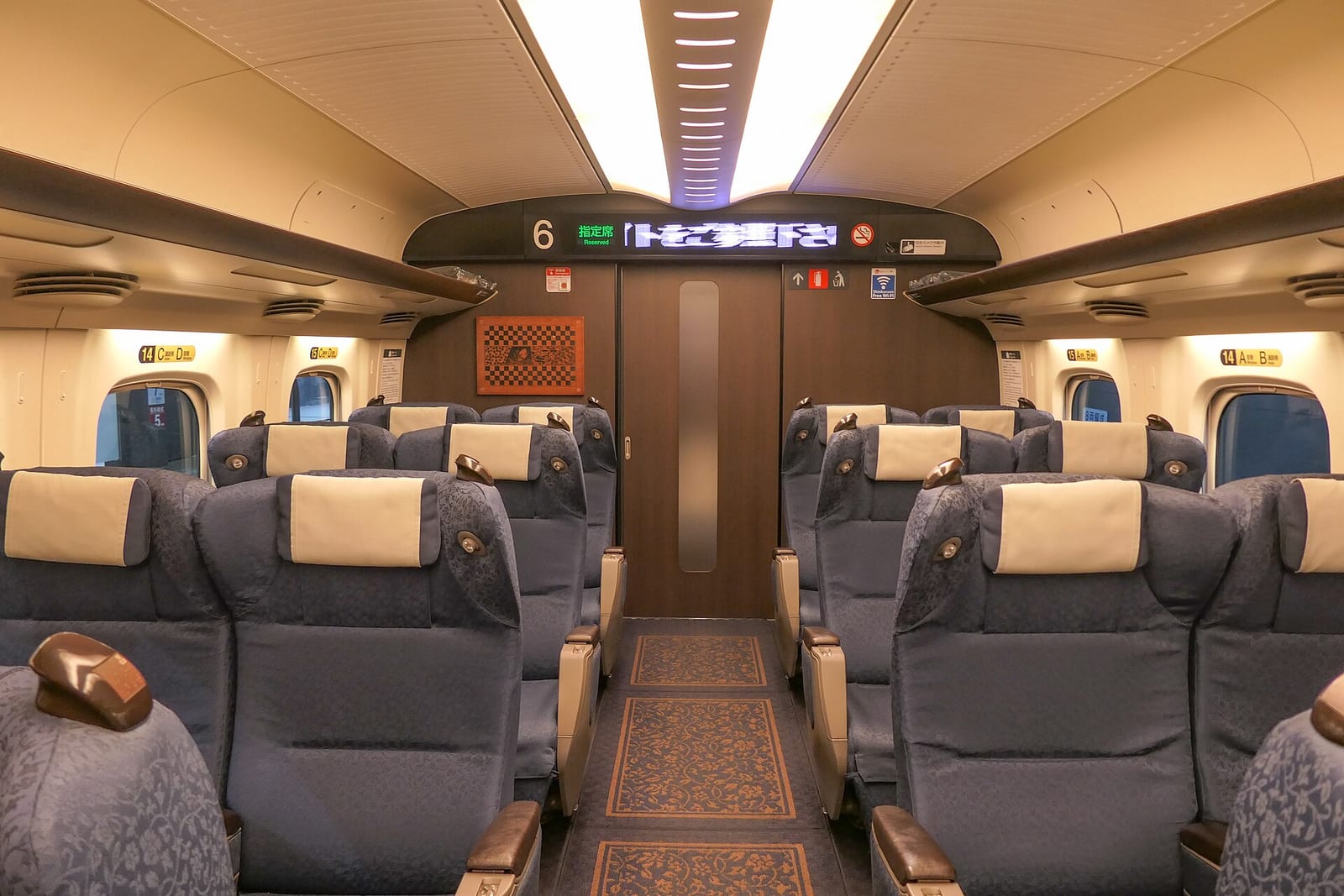
The Green Car is the Shinkansen's quiet first class — wider two-and-two seats, more legroom and a calmer carriage. On a line this busy, that little pocket of stillness at speed is a genuine luxury.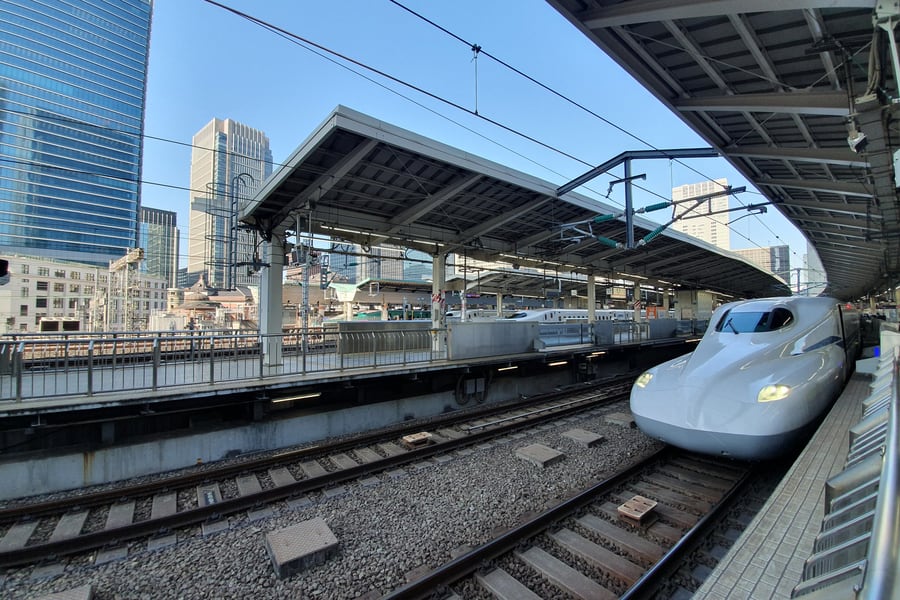 Syced / Wikimedia Commons · CC0 · cropped
Precision as spectacle
This is the busiest high-speed line in the world — hundreds of trains a day, tens of millions of passengers a year — run to the second. Watch the platform crews turn a whole train around in minutes and you understand why Japan is famous for it.Timetables
The Tōkaidō Shinkansen runs all day, every day, at a frequency that feels almost like a metro — at peak times up to a dozen Nozomi an hour leave Tokyo, roughly one every five minutes, alongside Hikari and Kodama services, from about 06:00 to 21:30. You rarely need to plan around a single train; you turn up and take the next fast one.
The three service tiers differ only in how many stops they make:
| Service | Stops | Tokyo → Shin-Ōsaka |
|---|---|---|
| Nozomi | Fewest (fastest) | ~2 h 21 min |
| Hikari | Limited stops | ~2 h 55 min |
| Kodama | Every station | ~4 h |
Every train has both non-reserved and reserved cars, so you can travel on the spur of the moment — though at peak seasons (Golden Week, Obon, New Year) a reservation is well worth it. Note that a Japan Rail Pass is not valid on the fastest Nozomi and Mizuho trains without an extra supplement; with a Pass, aim for Hikari or Kodama.
Frequency and journey times as of the 2026 timetable. Confirm current schedules and reserve (SmartEX / EX) — see the Tickets section below.
Tickets
A Shinkansen fare has two parts: a basic fare for the distance, plus a limited-express (Shinkansen) supplement. You can buy both together at any station ticket office or machine, book online in advance through JR Central's SmartEX, or travel on a Japan Rail Pass — remembering that the Pass needs a top-up on the fastest Nozomi services.
There are two classes on board. Ordinary cars are comfortable and roomy, in reserved and non-reserved varieties; the Green Car is the quieter first class, with wider two-and-two seating and more legroom. A small number of N700S trains also carry premium individual seats, but for most travellers the choice is simply Ordinary or Green.
The options below link to JR Central, which operates the line. Fares checked July 2026 against the operator's English site (opens in a new tab).
Book your tickets
Ordinary Car — reserved seat
Tokyo – Kyoto / Shin-Ōsaka
A reserved seat on a Nozomi, Hikari or Kodama service. Book online through JR Central's SmartEX, buy at the station, or ride with a Japan Rail Pass (note the Pass needs a supplement on the fastest Nozomi and Mizuho trains).
Book Tickets (opens in a new tab, on JR Central)via JR CentralGreen Car
The Shinkansen's first class
The same swift ride with wider seats, more legroom and a hushed carriage. Reserved online via SmartEX or at any Shinkansen ticket office; a Green Car supplement applies on top of a standard fare or rail pass.
Book Tickets (opens in a new tab, on JR Central)via JR CentralRail Passes
The Japan Rail Pass is valid, but not on every train. It covers the Tokaido Shinkansen's Hikari and Kodama trains. It is not valid on any seat on a Nozomi, unless you also buy JR's [ONLY WITH JAPAN RAIL PASS] Nozomi ticket before boarding: ¥4,960 from Tokyo to Kyoto or Shin-Osaka, ¥4,180 to Nagoya, sold from a month ahead at JR ticket offices and machines.
The pass is sold only to visitors entering Japan as a Temporary Visitor. Bought online, a 7-day pass costs ¥50,000 in Ordinary cars and ¥70,000 in Green cars; 14- and 21-day passes are also sold.
For a single trip to Kyoto, a pass is not worth buying. It pays when the Shinkansen is one of several long JR journeys within its seven days. Compare with the fares JR Central quotes on SmartEX for your own route.
Checked October 2026 against the Japan Rail Pass scope (opens in a new tab), prices (opens in a new tab) and Nozomi ticket (opens in a new tab) pages.
Places to Visit
The beauty of the Tōkaidō Shinkansen is that its stops are among the finest places in Japan — and hopping off along the way turns a two-hour dash into a proper journey. Odawara, in particular, is the doorstep of the hot-spring country and the starting point of the Hakone Tozan Railway.
Any of these rewards a night or more — and with trains every few minutes, breaking the journey costs you almost nothing in time.
 Benh LIEU SONG / Wikimedia Commons · CC BY-SA 2.0 · cropped
Tokyo
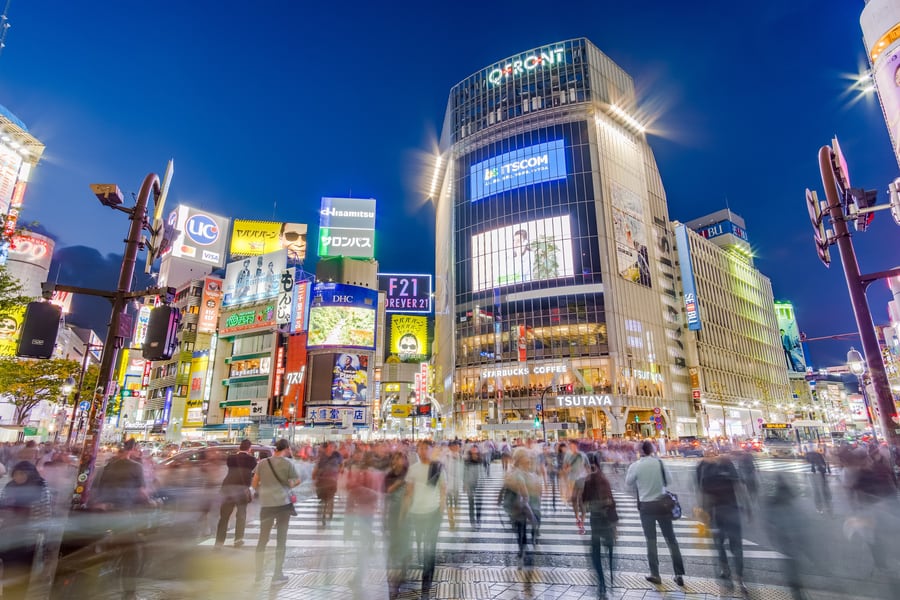
The vast, electric city the line begins in, and the one stop that will not fit into a day. Asakusa keeps the older Tokyo — the great red lantern of Kaminarimon, the shopping street behind it, incense drifting across the temple courtyard. Shibuya is the newer one, where the scramble crossing empties every few minutes into a slow tide of people beneath ten storeys of screens. The Imperial gardens sit quietly between the two.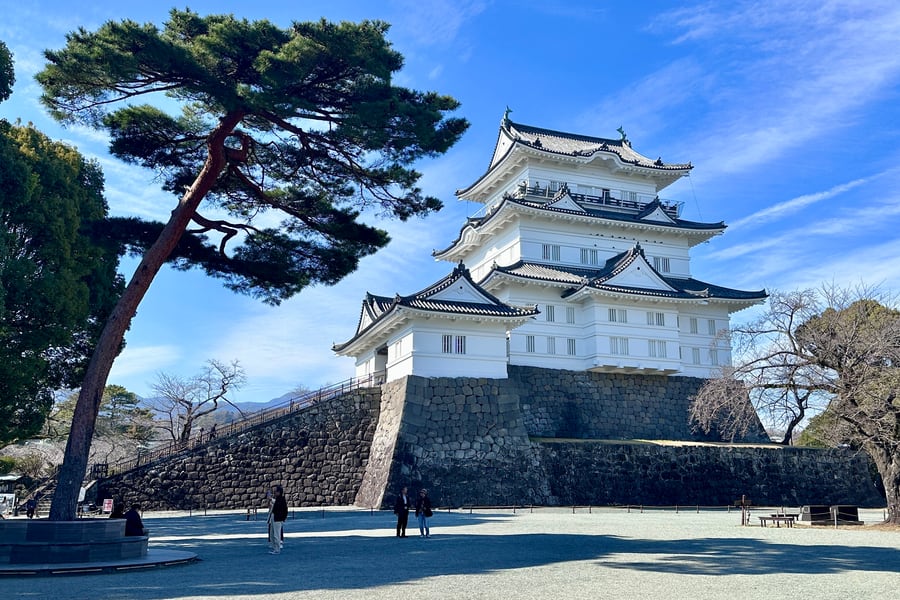 Akonnchiroll / Wikimedia Commons · CC BY 4.0 · cropped
Odawara & Hakone
Twenty-seven minutes out of Tokyo on a Hikari and you are at the gate of the mountains. Odawara Castle stands ten minutes' walk from the station — the stronghold of the Later Hōjō, who held the whole Kantō from here until Hideyoshi wore them down with a three-month siege in 1590. The keep you see is a 1960 reconstruction, strengthened and reopened in 2016. Behind it, the hot-spring valleys of Hakone climb towards Mount Fuji.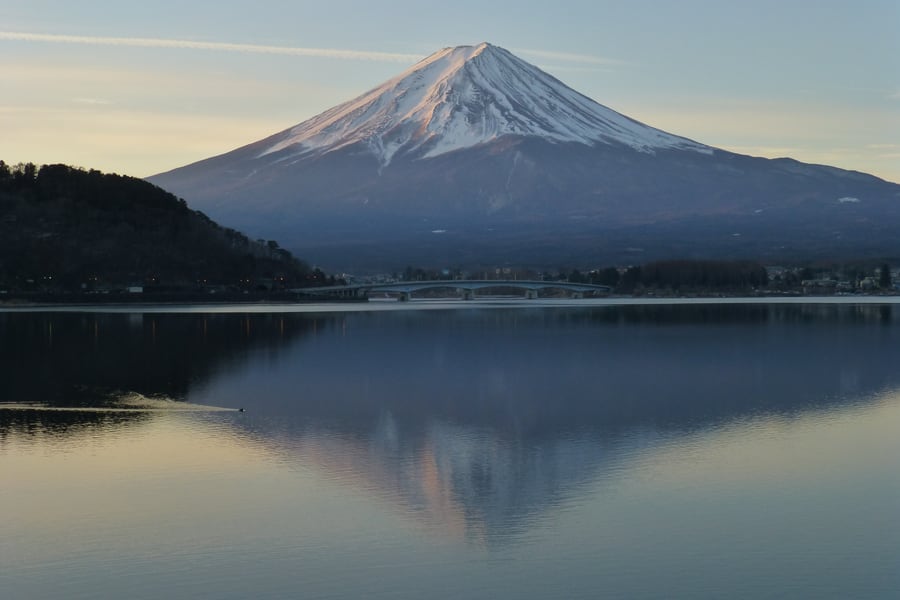 Marion & Christoph Aistleitner / Wikimedia Commons · CC0 · cropped
Mount Fuji country
The train frames Fuji beautifully for about forty seconds. To do better than that you have to get off. Mishima is the usual door: from the station a direct express bus climbs over the shoulder of the mountain to Kawaguchiko and the Fuji Five Lakes on the northern side, where the cone rises straight out of the water and the classic reflection shot is a matter of being up early enough. Stay a night — the mountain is cloud-covered by most afternoons.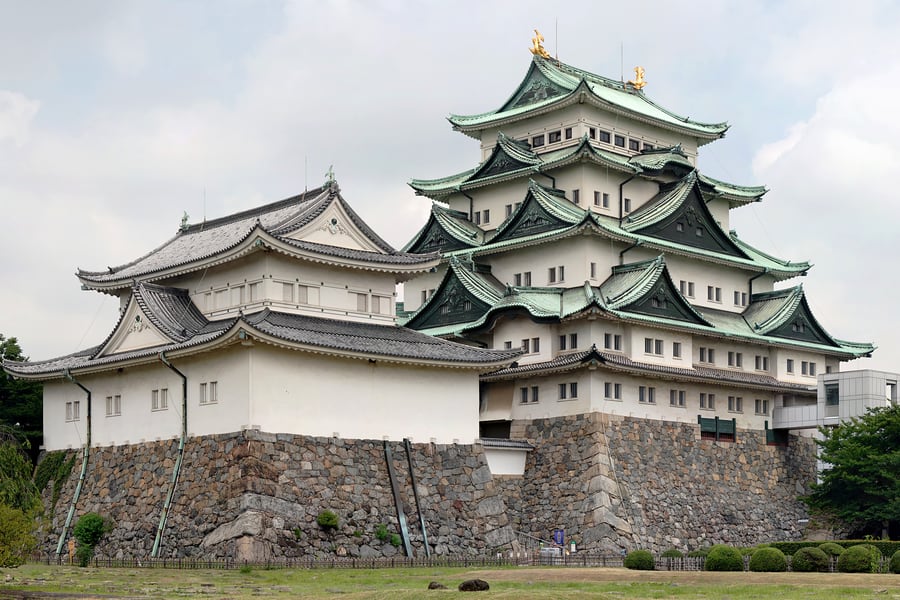 Base64 / Wikimedia Commons · CC BY-SA 3.0 · cropped
Nagoya
A big, unpretentious city with superb railway and industry museums and some of Japan's best casual food. Its castle was raised for Tokugawa Ieyasu in 1610 and crowned with gilded shachihoko, tiger-headed dolphins weighing over a tonne each; the air raid of 14 May 1945 took the lot. One warning: the concrete keep rebuilt in 1959 has been shut since May 2018 on safety grounds, and its wooden replacement is not due before the 2030s. The Hommaru Palace beside it, rebuilt in timber in 2018, is open.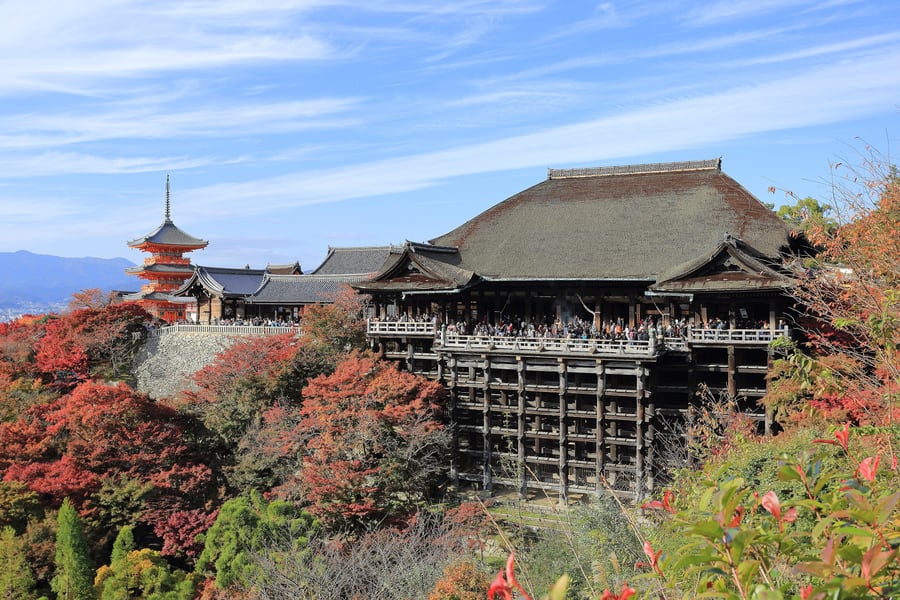 Martin Falbisoner / Wikimedia Commons · CC BY-SA 4.0 · cropped
Kyoto
For many travellers the single richest stop on the line — a thousand years of temples, gardens and geisha districts, all within a tram or bus ride of the station. Kiyomizu-dera has been here since 778, though the hall you walk into dates from 1633; its great veranda stands thirteen metres above the hillside on a lattice of pillars and crossbeams joined without a single nail. Below it, three channels of the Otowa waterfall are still queued for and drunk from.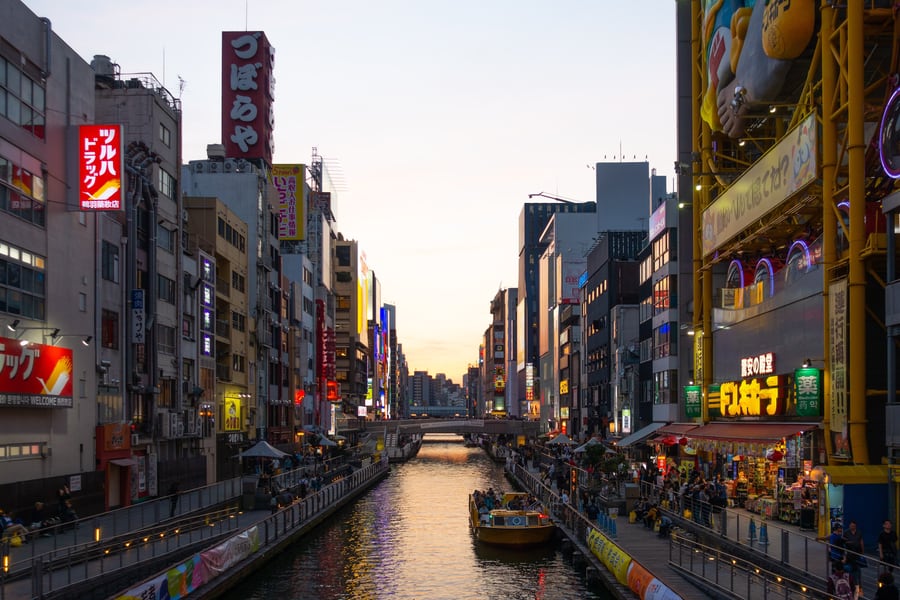 blieusong / Wikimedia Commons · CC BY-SA 2.0 · cropped
Osaka
Fifteen minutes past Kyoto and the mood changes entirely. Osaka is loud, funny and built around eating — the local word for it, kuidaore, means ruining yourself on food. Dōtonbori is where it happens: a canal cut between 1612 and 1615, a theatre district from 1621, and now a corridor of neon over the water where the Glico running man has been sprinting since 1935. He is on his sixth version, LED since 2014, and everybody still stops on Ebisu Bridge to photograph him.Where to Sleep
Because the line links Japan's greatest cities, where you sleep is really a question of which of them you want to wake up in. Tokyo and Kyoto make the two natural bases — Tokyo for its endless energy and Kyoto for its temples and traditional inns — and both offer everything from capsule hotels to landmark towers and, in Kyoto especially, beautiful old ryokan where dinner and a hot bath are part of the stay. Osaka is livelier and often better value, an easy last night before flying home from Kansai. For something quieter, break the trip beneath Mount Fuji or in the hot springs of Hakone, where a night in a ryokan with an outdoor bath is the perfect counterpoint to a day at 285 km/h. Wherever you choose, book well ahead for the cherry-blossom and autumn-colour seasons, when the whole corridor fills.
Questions or corrections
Planning this trip and stuck on something, or spotted a time, fare or detail that has changed? Send us a message about Tokaido Shinkansen. We read every one, and we update this page when something has changed.