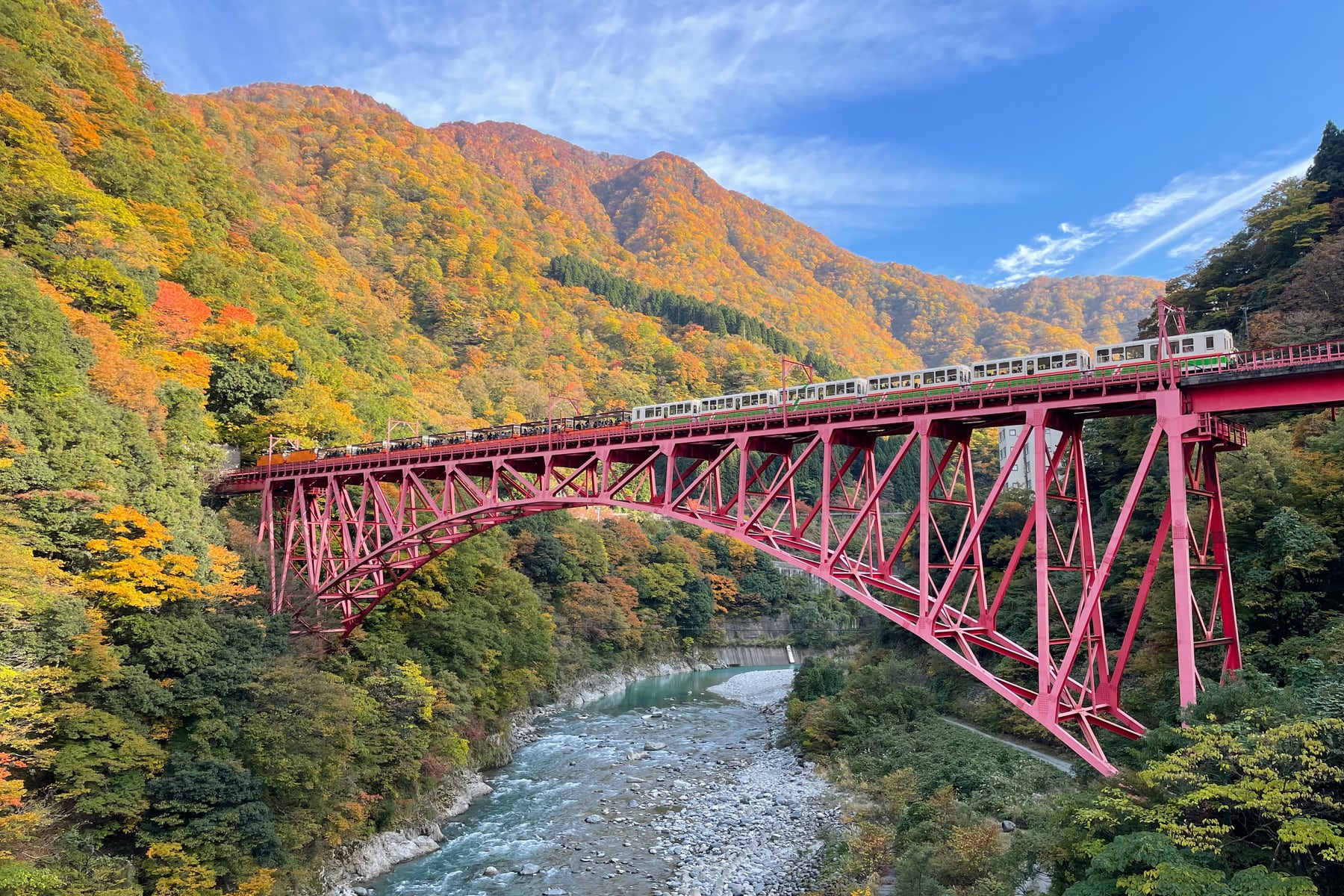
Kurobe Gorge Railway
Totti / Wikimedia Commons · CC BY-SA 4.0 · cropped
- Distance20.1 km
- DurationAbout 1 h 20 min each way
- Best season20 April – 30 November · autumn colour from mid-October to mid-November
Introduction
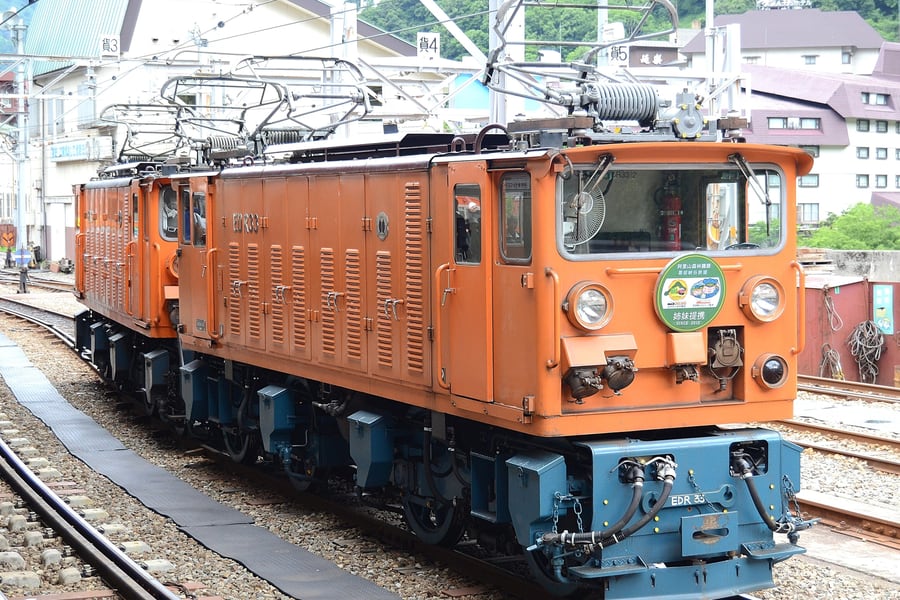
The Kurobe Gorge Railway climbs 20.1 km from the hot-spring town of Unazuki into the gorge of the Kurobe River, in Toyama Prefecture, to Keyakidaira under the peaks of the Northern Alps. Its little orange locomotives pull trains of open cars on 762 mm track, through tunnels and over red steel bridges, at no more than 25 km/h.
It was never meant for visitors. The line was begun in 1923 to carry materials for the power stations and dams of the Kurobe River, and local people and climbers who asked to ride were let on as a favour. Their tickets said in plain words that their safety was not guaranteed. Public passenger trains followed in 1953.
On New Year's Day 2024 the Noto Peninsula earthquake sent rock down onto the Kanetsuri Bridge, and for two and a half seasons trains turned back at Nekomata. The whole line reopened on 1 October 2026, in time for the autumn colour.
The Journey
Trains leave Unazuki and cross the Kurobe River at once on the Shin-Yamabiko Bridge, with the old 1924 bridge alongside. The line runs up the shore of Lake Unazuki, past the castle-like power station at Yanagibashi, and into the national park beyond Moriishi. Only four stations are open to passengers: Unazuki, Kuronagi, Kanetsuri and Keyakidaira. Trains pass the others or wait there for oncoming trains, but nobody may get off.
Through the gorge
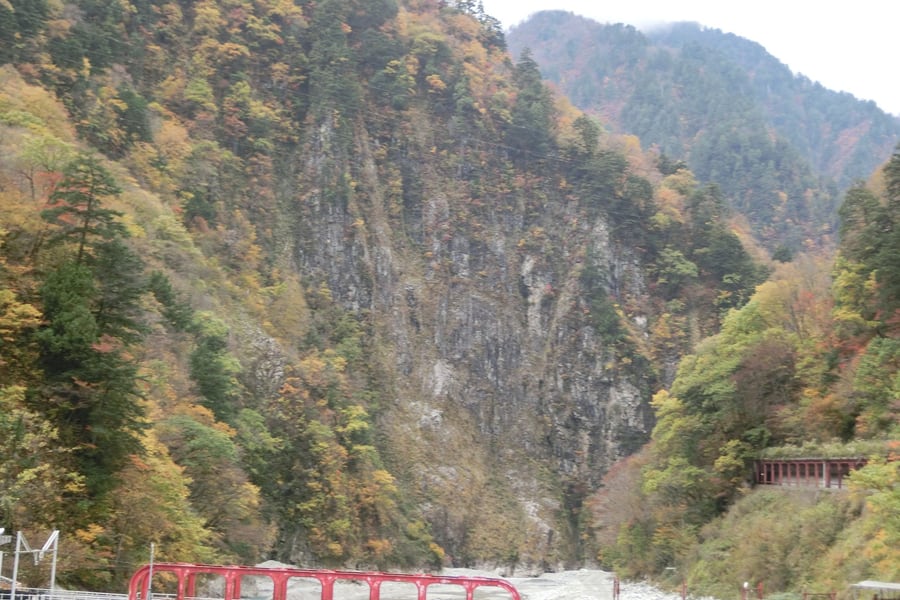
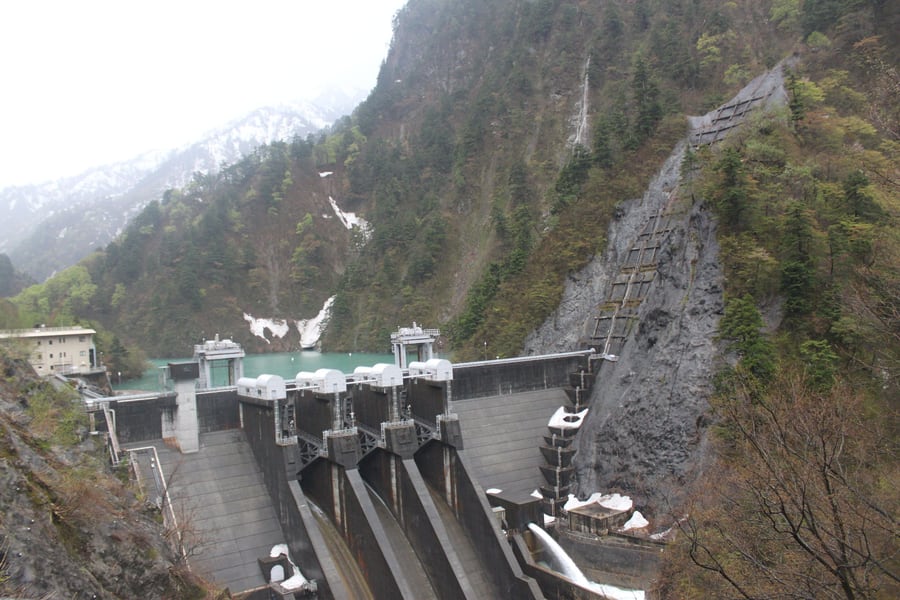
After Kuronagi and the Atobiki Bridge, 60 m high, the gorge closes in. The train passes Dashidaira Dam, the 200 m Nezumigaeshi rock wall and the 1936 power station at Nekomata, then catches Kinshūkan between two tunnels. At Kanetsuri, where snow from the avalanches off Mount Hyakkan lies by the river into summer, the train pulls into a siding to stop and reverses out again. The last stretch climbs past the Koyadaira Dam to Keyakidaira, about 1 hour 20 minutes after leaving Unazuki.
The train
The trains are hauled by electric locomotives and carry both kinds of car: the open cars, with bench seats under a roof, and the closed Relax cars, with windows, for ¥600 extra. There are no toilets on board and no toilet stops, and a recorded commentary describes the sights; the operator's free audio-guide app plays it in English, Korean and Chinese.
Beyond Keyakidaira
From Keyakidaira, Kansai Electric's own works railway continues into the mountains. Since 2 October 2026 part of it has opened to the public as the Kurobe Unazuki Canyon Route, sold only as guided tours to the Kurobe Dam: a 200 m lift shaft inside the mountain, and battery locomotives through a tunnel that is still about 40 °C inside.
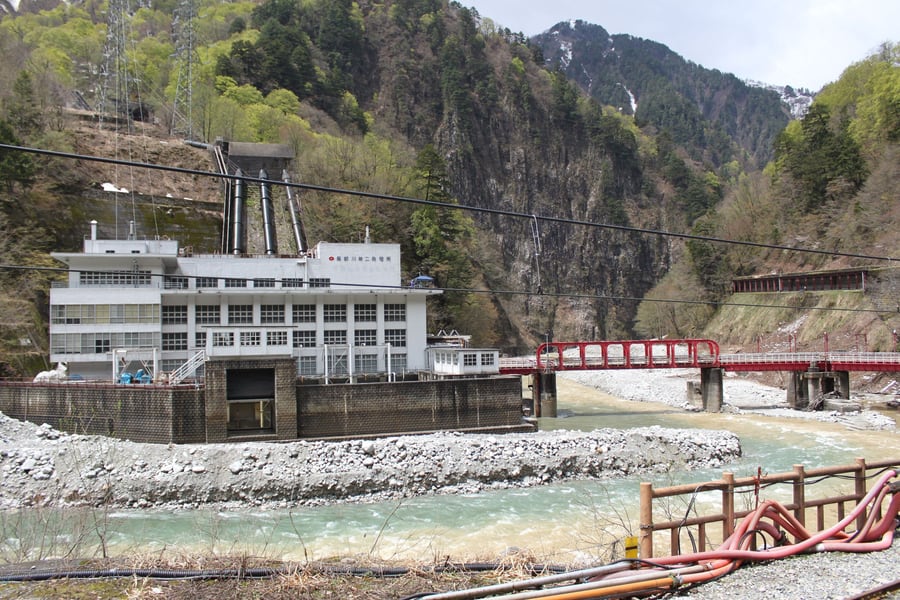
Along the route
 くろふね / Wikimedia Commons · CC BY 3.0
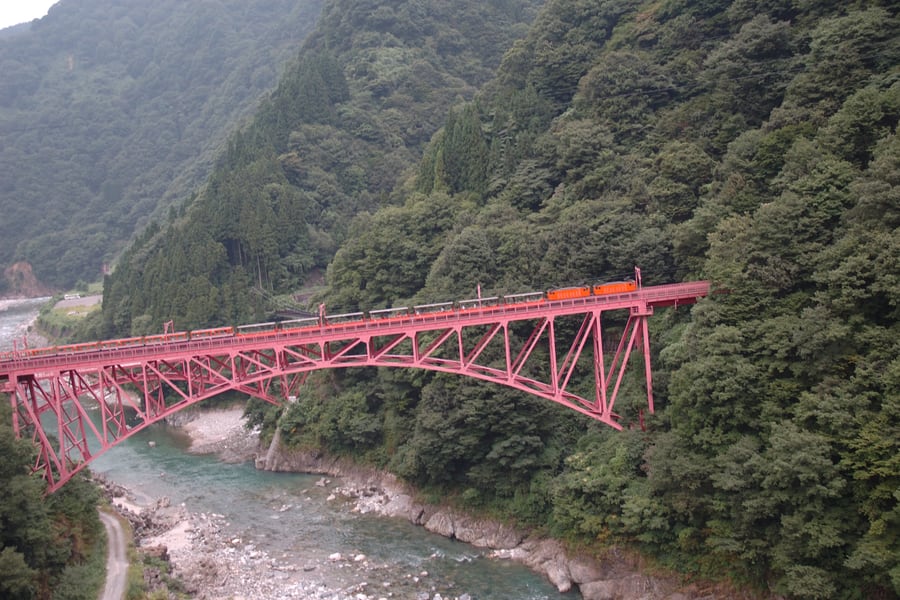
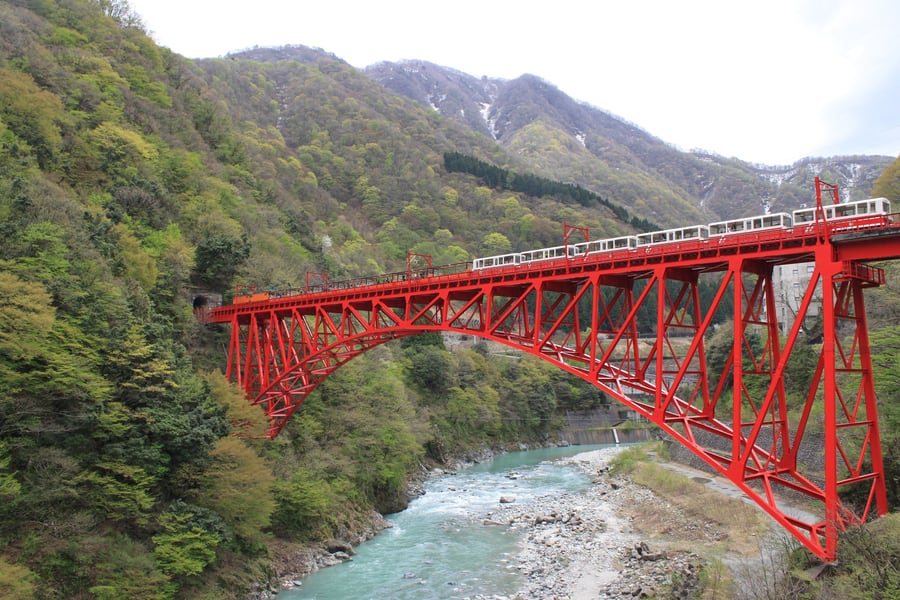
The Shin-Yamabiko Bridge
Leaving Unazuki, the train first crosses the Kurobe River on the crimson Shin-Yamabiko Bridge, 166 m long and about 40 m high. Yamabiko means echo: the old bridge was named for the sound of trains carrying into the hot-spring town.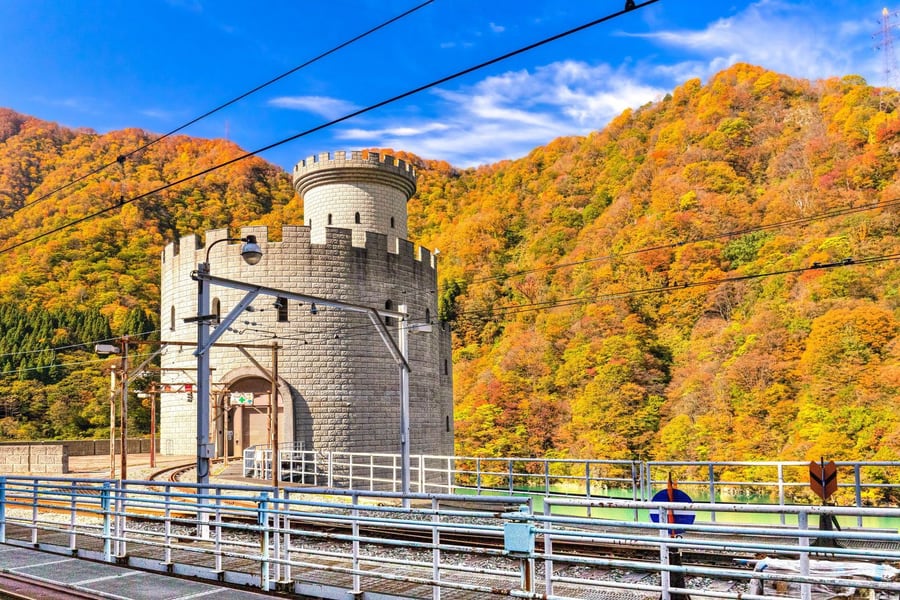 くろふね / Wikimedia Commons · CC BY 4.0
A power station like a castle
Beside Lake Unazuki, at Yanagibashi, the Shin-Yanagawara power station was built to look like a European castle, round tower and battlements included. Yanagibashi station stands in front of it.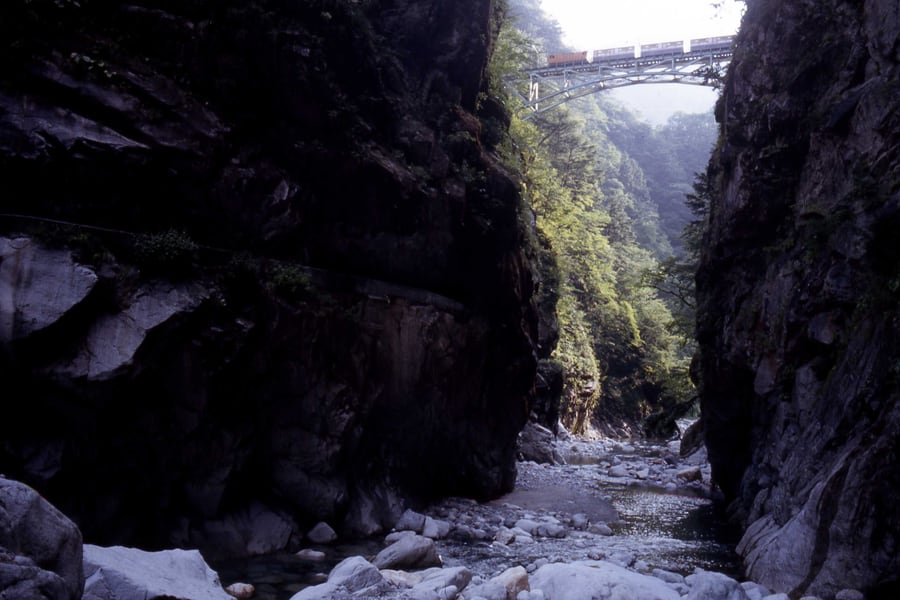 松岡明芳 / Wikimedia Commons · public domain
The Atobiki Bridge
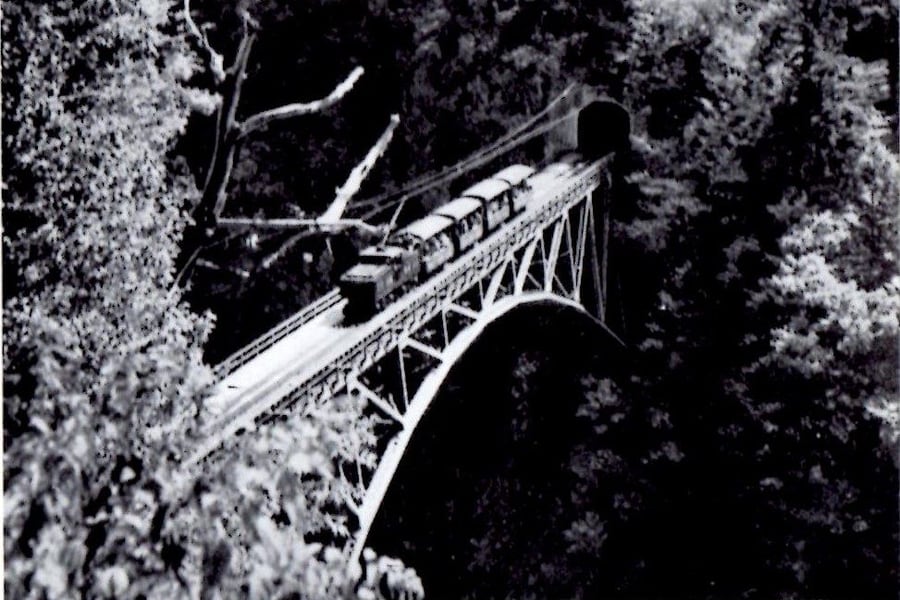
Near Kuronagi, the Atobiki Bridge spans the steepest, deepest valley on the line, 60 m above the water. The name means "backing away": climbers who met the drop are said to have edged back from it.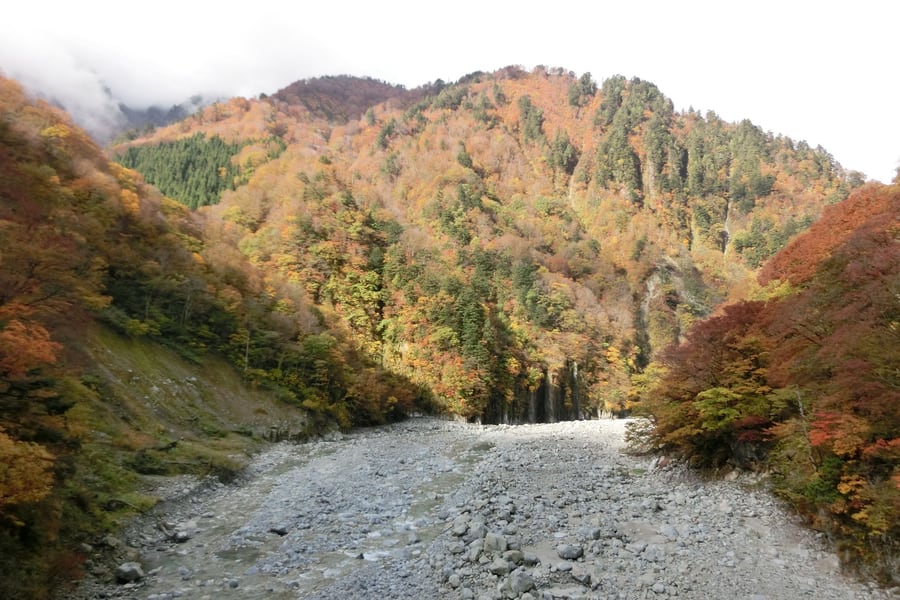 Abasaa / Wikimedia Commons · public domain
Kinshūkan
Between two tunnels before Kanetsuri, the gorge opens for a few seconds onto Kinshūkan, named in 1928 by Prince Kuni for its brocade of autumn leaves. It can be seen from either side of the train, so be ready.A bit of history
Culture & experiences along the way
 Yasu / Wikimedia Commons · CC BY-SA 3.0
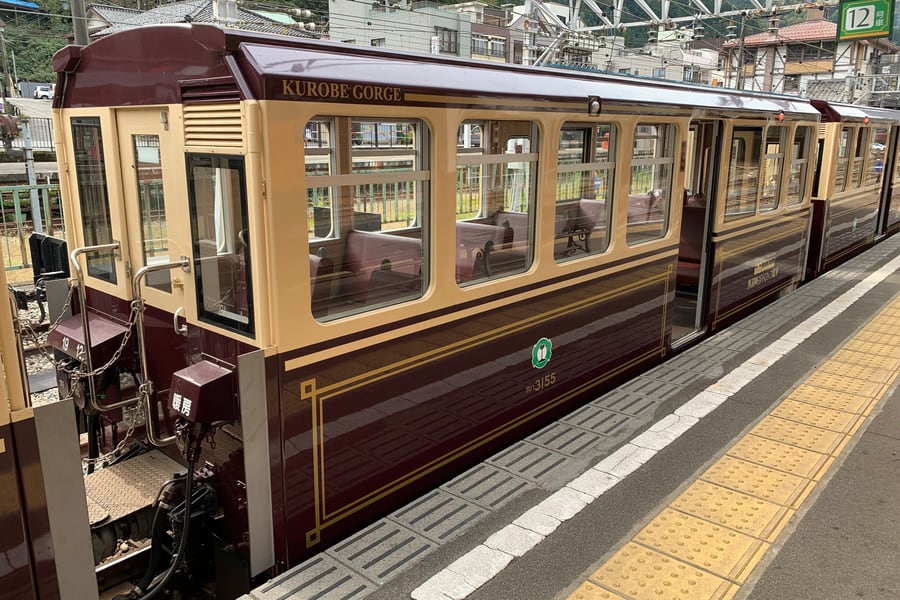
Open car or Relax car
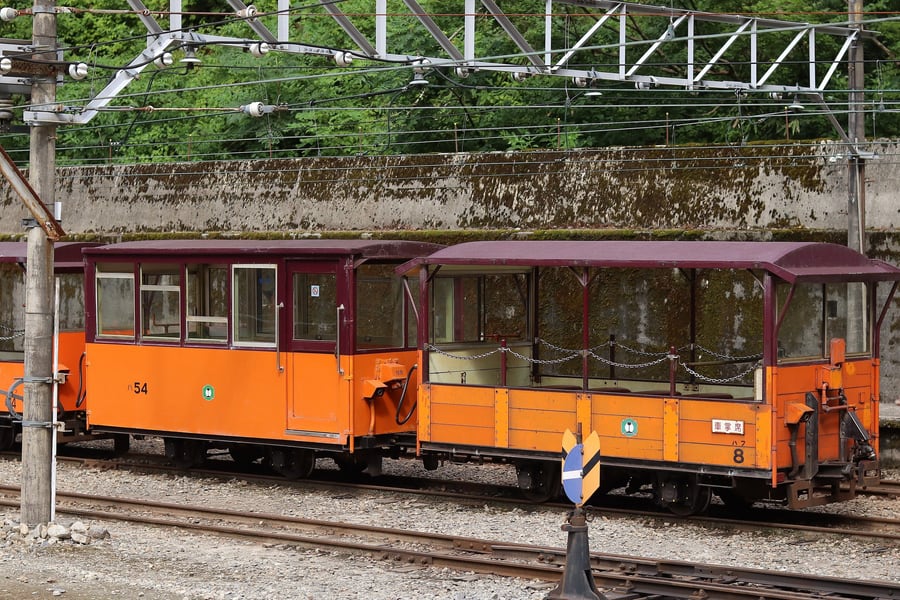
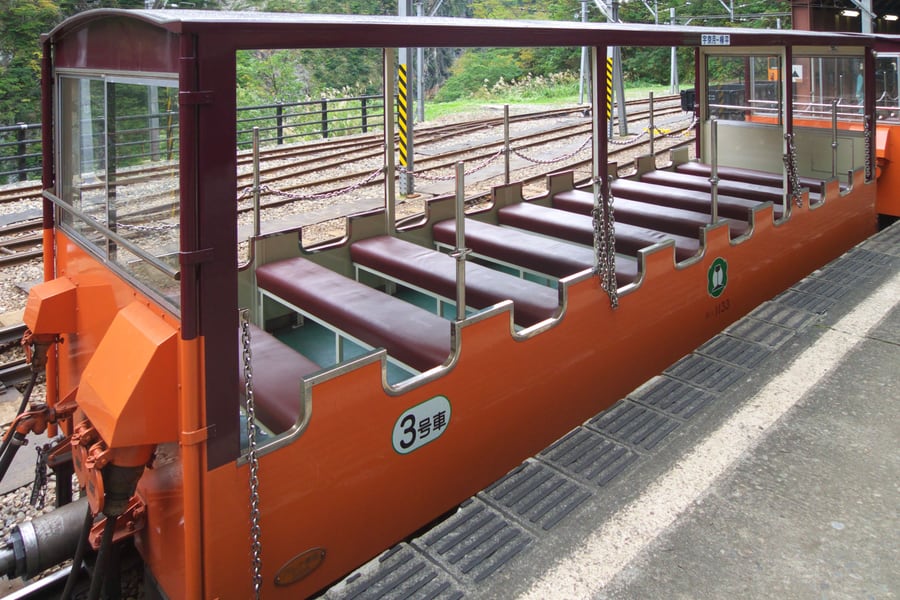
The standard open cars have bench seats four abreast, a roof and no windows: bring a raincoat, and a warm layer from September. For ¥600 a ride, a Relax car has glass windows that open, three seats to a row and seat backs that turn to face forward.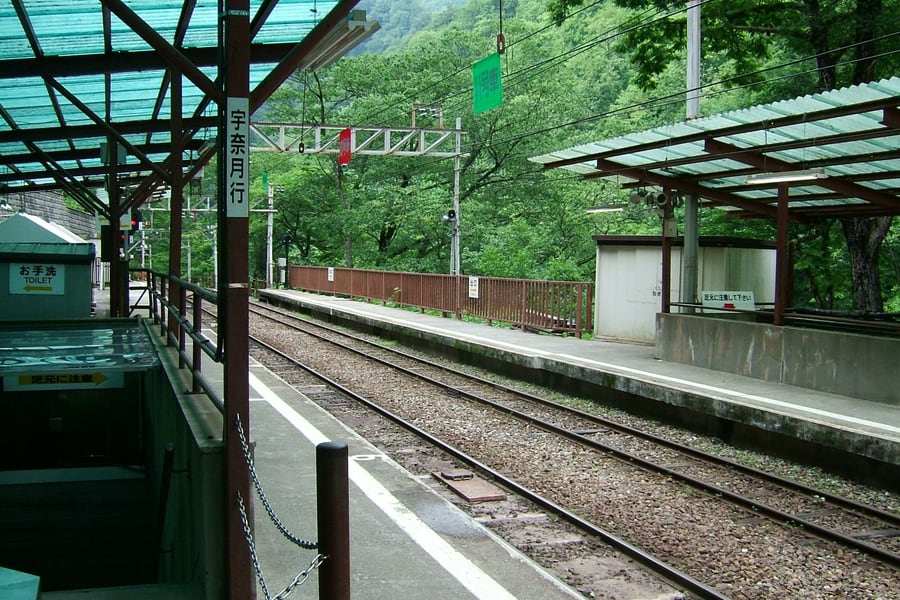 LERK / Wikimedia Commons · CC BY 2.5
The switchback at Kanetsuri
At Kanetsuri the train runs off the main line into a siding to stop, then reverses out before going on. The operator calls it a rare thing in Japan, and a sight for railway enthusiasts. The commentary along the way is voiced by the Toyama-born actress Muroi Shigeru.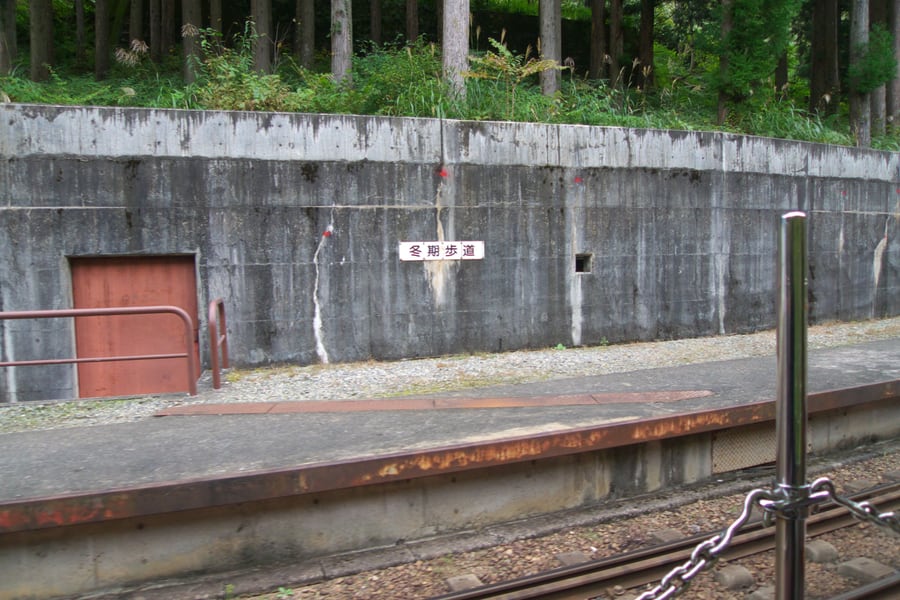 Yasu / Wikimedia Commons · CC BY-SA 3.0
The winter walkway
Watch for the concrete shelter running beside the track. In winter, when avalanches close the line, Kansai Electric's staff still have to reach the dams and power stations, and they walk this covered path, which follows almost the whole route outside the tunnels.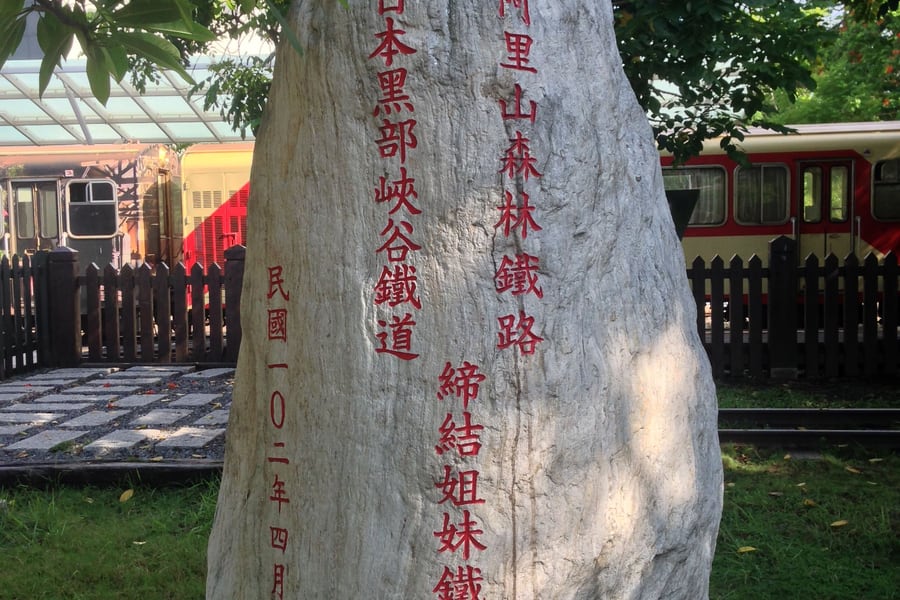 Outlookxp / Wikimedia Commons · CC BY-SA 4.0
A sister railway in Taiwan
Since 2013 the line has been twinned with Taiwan's Alishan Forest Railway, and a stone at Beimen station in Chiayi marks the link. In October and November 2026 each railway gives a free ride to holders of the other's used ticket.Timetables
Trains run from 20 April to 30 November; the line is closed in winter. In 2026 the whole line, to Keyakidaira, runs from 1 October to 30 November.
1 October – 23 November 2026
| Unazuki | Kuronagi | Kanetsuri | Keyakidaira |
|---|---|---|---|
| 08:17 | 08:41 | 09:13 | 09:33 |
| 09:00 | 09:24 | 09:57 | 10:18 |
| 10:44 | 11:09 | 11:43 | 12:03 |
| 12:50 | 13:14 | 13:50 | 14:12 |
| 14:56 | 15:22 | 15:58 | 16:18 |
| Keyakidaira | Kanetsuri | Kuronagi | Unazuki |
|---|---|---|---|
| 10:01 | 10:21 | 10:55 | 11:20 |
| 12:28 | 12:48 | 13:21 | 13:46 |
| 14:37 | 14:57 | 15:29 | 15:54 |
| 16:01 | 16:21 | 16:52 | 17:16 |
| 16:43 | 17:03 | 17:34 | 17:58 |
These are a selection: there are eleven trains each way, leaving Unazuki between 08:17 and 14:56. The 12:09 from Unazuki and the 13:53 from Keyakidaira run on Fridays to Mondays only.
Good to know:
- 24–30 November. Nine trains each way, nearly all made up of Relax cars; the last leaves Unazuki at 14:14 and Keyakidaira at 16:01.
- Open cars only. Some trains, among them the 09:00 and 13:32 from Unazuki, carry no Relax cars.
- Allow time to come back. At Kanetsuri and Keyakidaira you must stay at least 20 minutes, even if you only want to turn round.
- Arriving by train. From the Toyama Chihō Railway, allow at least 20 minutes at Unazuki to change and check in.
Times as of October 2026, from the operator's timetable. Check your date on the Kurobe Gorge Railway's timetable page (opens in a new tab).
Tickets
Fares are by distance, one way: ¥2,480 from Unazuki to Keyakidaira, ¥1,780 to Kanetsuri and ¥830 to Kuronagi, half price for children aged 6 to 11. A seat in a Relax car costs ¥600 more for each ride. A return ticket is valid for two days. Every passenger has a seat in a named car and nobody stands, so in the autumn colour and on holidays the train you want may be full.
Bookings open three months ahead and close at 15:00 the day before. In 2026, seats to Keyakidaira cannot be booked on the website: book by phone or with the dedicated form on the operator's English reservations page. Same-day tickets go on sale at Unazuki from 07:40. Fares checked October 2026 on the operator's site; Japanese yen.
Book your tickets
Unazuki to Keyakidaira
One way, adult · the whole line
The full 20.1 km in an open car; a child aged 6 to 11 pays ¥1,240.
Book Tickets (opens in a new tab, on Kurobe Gorge Railway)via Kurobe Gorge RailwayUnazuki to Kanetsuri
One way, adult · for the riverside hot spring
To the switchback station by the river, which can be booked online; a child pays ¥890.
Book Tickets (opens in a new tab, on Kurobe Gorge Railway)via Kurobe Gorge RailwayRelax car supplement
Per ride · adult or child
A seat in a car with windows, paid on top of the fare for each ride.
Book Tickets (opens in a new tab, on Kurobe Gorge Railway)via Kurobe Gorge RailwayRail Passes
No rail pass covers this line. The Kurobe Gorge Railway is a private company, and the Japan Rail Pass is valid only on JR. From 1 October to 30 November 2026, though, the Japan Rail Pass and seven JR West, JR East and JR Central passes for overseas visitors earn 10 % off: a return to Keyakidaira costs ¥4,480 instead of ¥4,960, on same-day tickets only, shown at the window in Unazuki.
The Japan Rail Pass covers the Hokuriku Shinkansen to Kurobe-Unazukionsen, but not the last leg: the private Toyama Chihō Railway from Shin-Kurobe, next door, to Unazuki Onsen. For this journey alone, a pass is not worth buying.
Checked October 2026 against the operator's notice on JR passes (opens in a new tab) (in Japanese) and the Japan Rail Pass conditions of use (opens in a new tab).
Places to Visit
Most of what there is to see lies at the two ends of the line. Unazuki has its hot springs, a museum and the walk to the dam; up the gorge, Kuronagi and Kanetsuri are each worth breaking the journey for, and Keyakidaira, for now, offers its views from the station roof.
 Fffkk / Wikimedia Commons · CC BY-SA 3.0
Unazuki Onsen
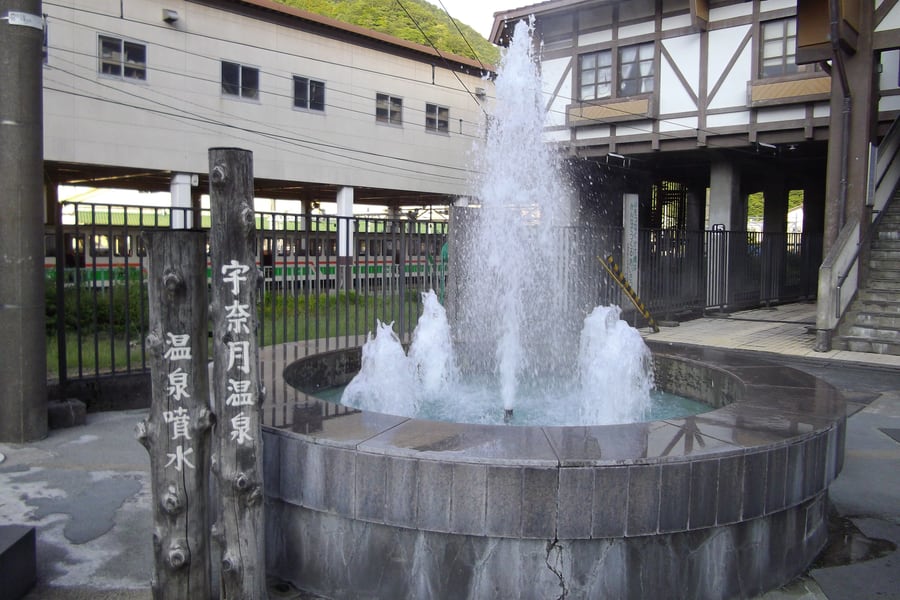
The hot-spring town at the mouth of the gorge opened in 1923, together with the power works, and its water still comes 7 km by pipe from Kuronagi, up the line, where it rises at more than 90 °C. A fountain of it plays outside the Toyama Chihō Railway station, and the town has foot baths and a public bathhouse.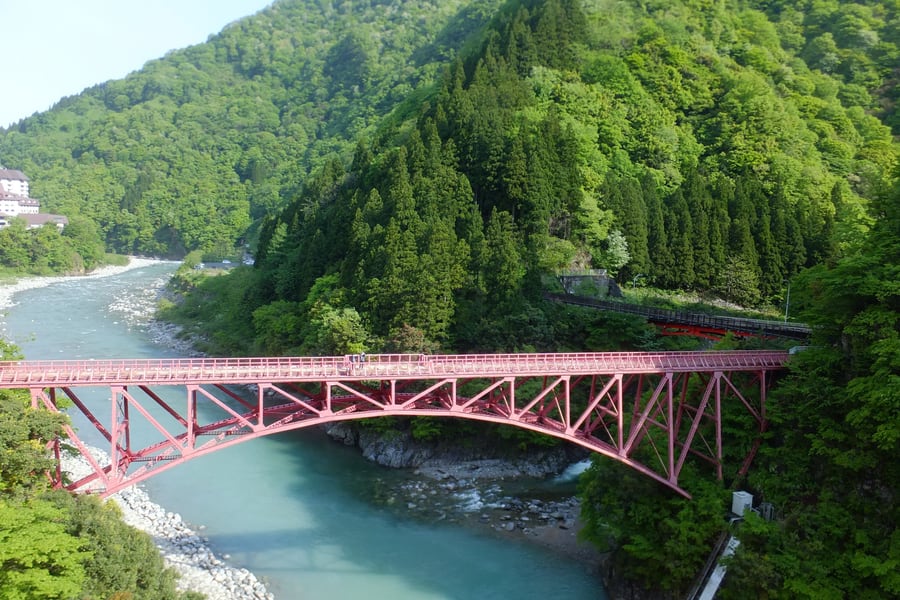 掬茶 / Wikimedia Commons · CC BY-SA 4.0
The Yamabiko Promenade
When the line moved onto the new bridge in 1988, the old route was kept for walkers. The Yamabiko Promenade runs about 1.7 km from Unazuki station through the old tunnels and across the 1924 Yamabiko Bridge, a favourite spot for watching trains on the new bridge alongside; in 2025 the old bridge was put forward for listing as a cultural property.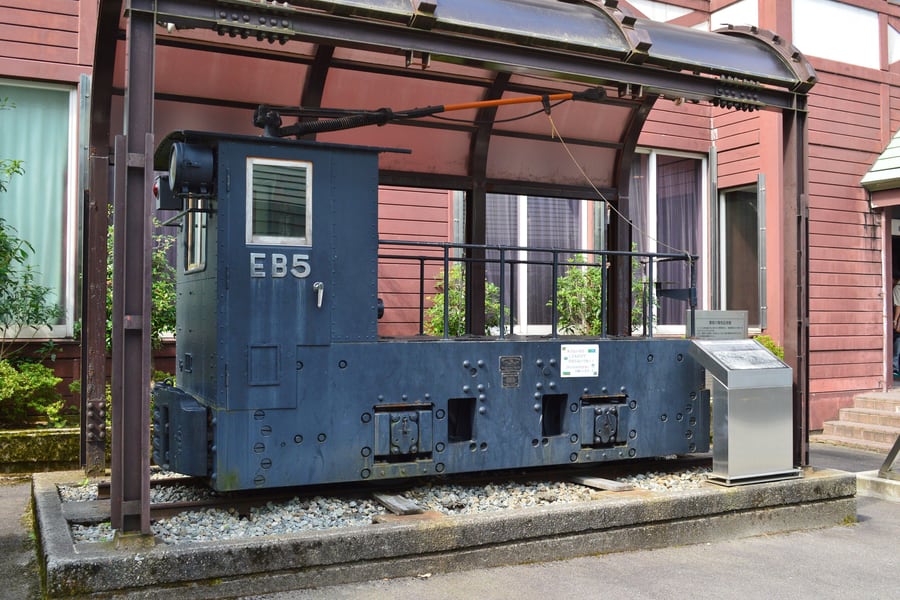 Saigen Jiro / Wikimedia Commons · CC0
Kurobe River Electric Memorial Hall
Kansai Electric's free museum tells the story of the dams and power stations that the railway was built to serve, with a 1/60 model of the Kurobe Dam. Outside the entrance stands EB5, one of the line's first electric locomotives, restored to its original form.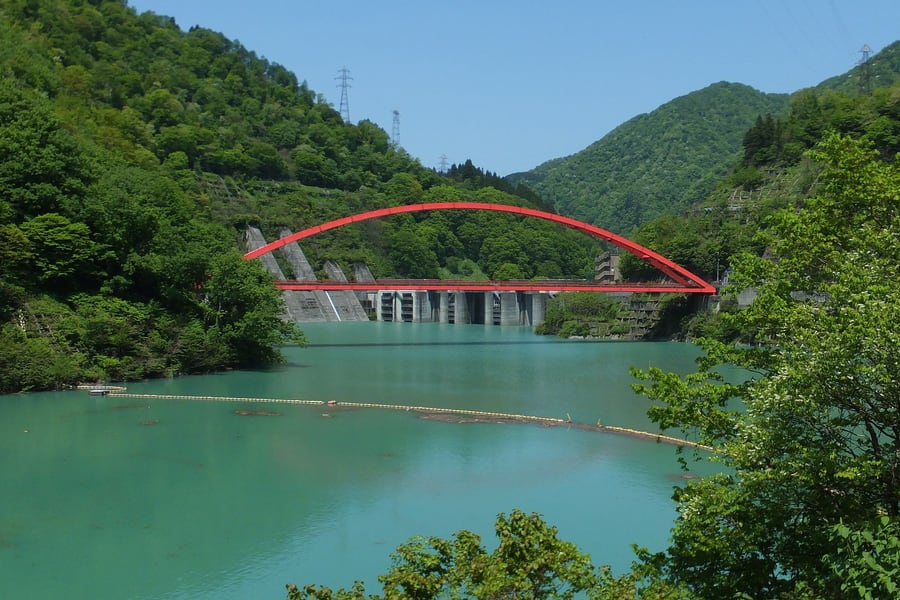 掬茶 / Wikimedia Commons · CC BY-SA 4.0
Lake Unazuki
The newest dam in the gorge, completed in 2001, is 97 m high and holds back the emerald Lake Unazuki, crossed by the red arch of the Komen Bridge. The train runs along its shore after the Shin-Yamabiko Bridge; on foot, the promenade ends near the dam.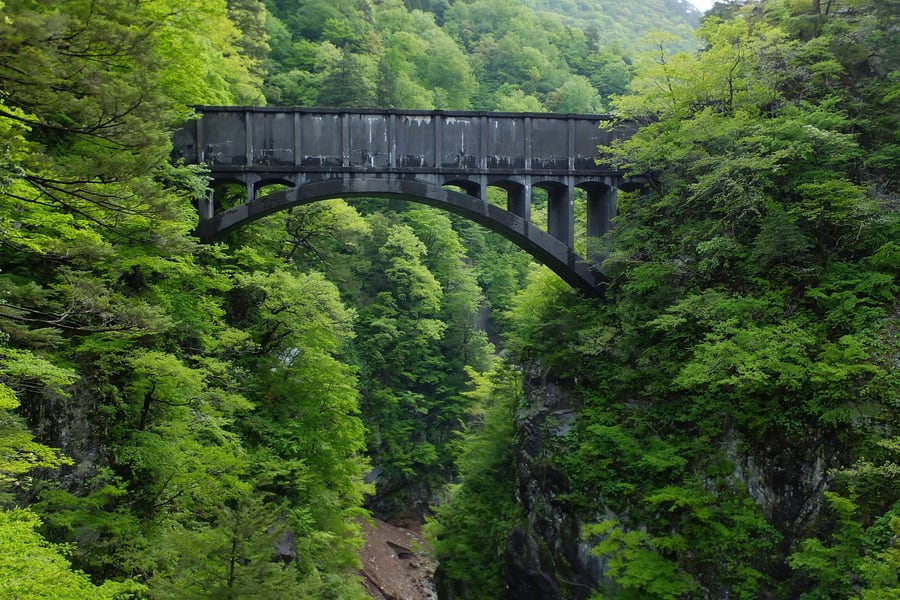 掬茶 / Wikimedia Commons · CC BY-SA 4.0
Kuronagi
A short climb from Kuronagi station is the aqueduct that carries water from Nekomata to the power station at Yanagibashi. Five minutes up the mountain path there is a view of the Atobiki Bridge, and about twenty minutes on is Kuronagi Onsen, the oldest inn in the gorge, which also takes day bathers.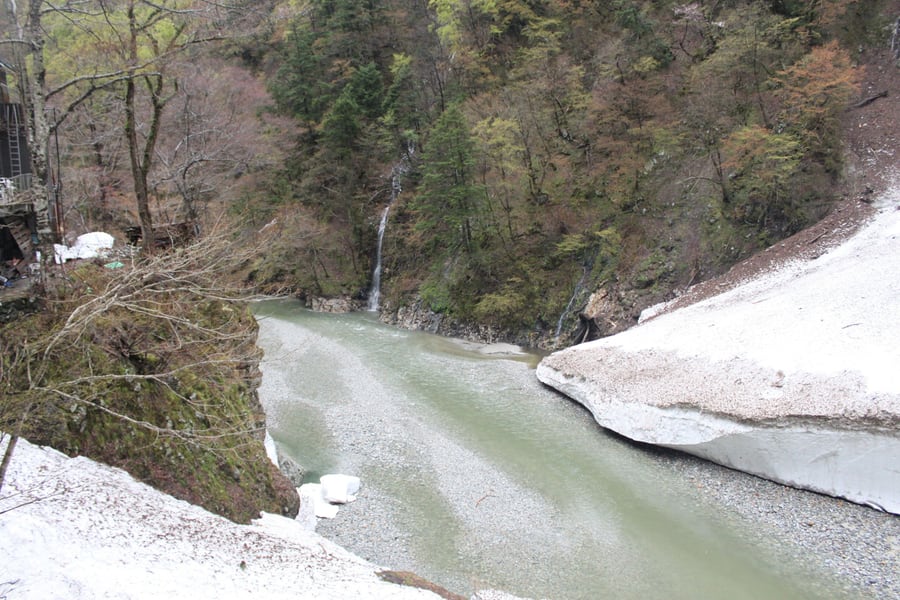 くろふね / Wikimedia Commons · CC BY 3.0
Kanetsuri
Across the river from Kanetsuri station lies the Kurobe perpetual snow, avalanche snow off Mount Hyakkan that lasts through the summer in most years. Fifteen minutes' walk away is the riverbank, where scraping away the gravel lets hot water well up to make a bath of your own.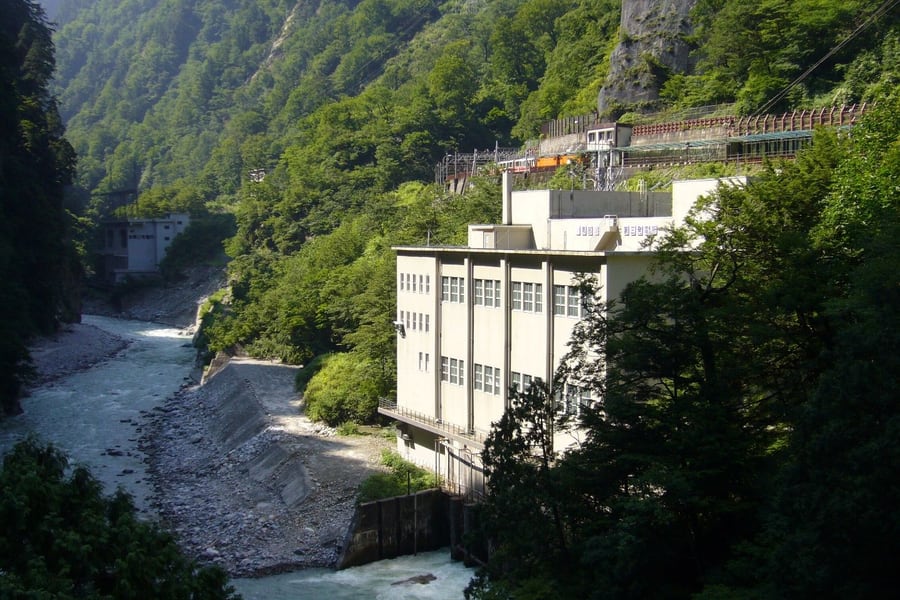 Bergmann / Wikimedia Commons · CC BY-SA 3.0
Keyakidaira
The terminus sits where the Kurobe River is joined by the Babadani, beside the Kurobegawa No. 3 power station. Repairs to earthquake damage continue around the station, so for now visitors are limited to its rooftop viewpoint and the Keyakidaira Visitor Center, on the gorge's nature and the history of its development.Where to Sleep
Unazuki Onsen has the most beds, and a night there means catching the first train at 08:17. To stay inside the gorge, Miyama-so stands beside Kanetsuri station, and Kuronagi Onsen, twenty minutes up the path from Kuronagi, can be reached only by the railway.
Where to stay
 妖精書士 / Wikimedia Commons · CC0
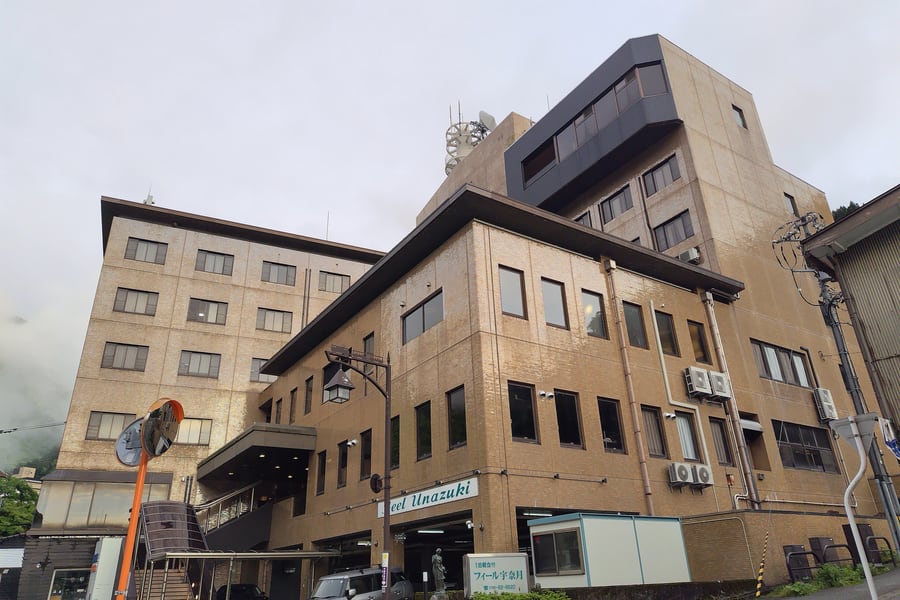
Feel Unazuki
Unazuki Onsen · by the station
A hot-spring hotel near both Unazuki stations, with baths renovated in 2022.
Check Availability (opens in a new tab, on f-unazuki.net)via f-unazuki.net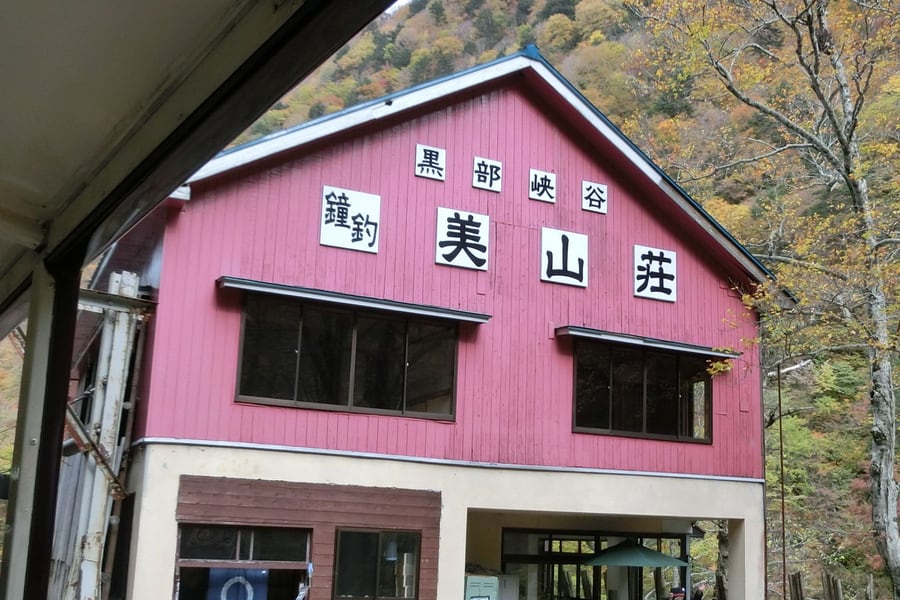 Abasaa / Wikimedia Commons · public domain · cropped
Kanetsuri Miyama-so
Kanetsuri · beside the station
A small inn in the gorge facing the perpetual snow, with a riverside bath cut into the rock.
Check Availability (opens in a new tab, on miyama-jp.com)via miyama-jp.comQuestions or corrections
Planning this trip and stuck on something, or spotted a time, fare or detail that has changed? Send us a message about Kurobe Gorge Railway. We read every one, and we update this page when something has changed.