Senmō Line
MaedaAkihiko / Wikimedia Commons · CC0
- Distance169.1 km
- DurationAbout 3¼ hours end to end, four through trains a day
- Best seasonYear-round · drift ice and the steam train Jan–Feb, the coastal flower garden May–Oct
Introduction
The Senmō Line runs 169 km across eastern Hokkaido, from Kushiro on the Pacific to Abashiri on the Sea of Okhotsk. For its first hour it crosses the Kushiro Wetland, the largest in Japan, a national park of reed beds, slow rivers and lakes where red-crowned cranes come to feed. Then it climbs into the volcanic country of Akan-Mashū National Park, between Lake Mashū and the steaming slopes of Mt Iō, and drops to the Okhotsk coast at Shiretoko-Shari, with the mountains of the Shiretoko peninsula across the water.
It is a single-track local line, and four trains a day run the whole way in each direction, taking a little over three hours. The name is the two ends put together: Sen from Kushiro, Mō from Abashiri.
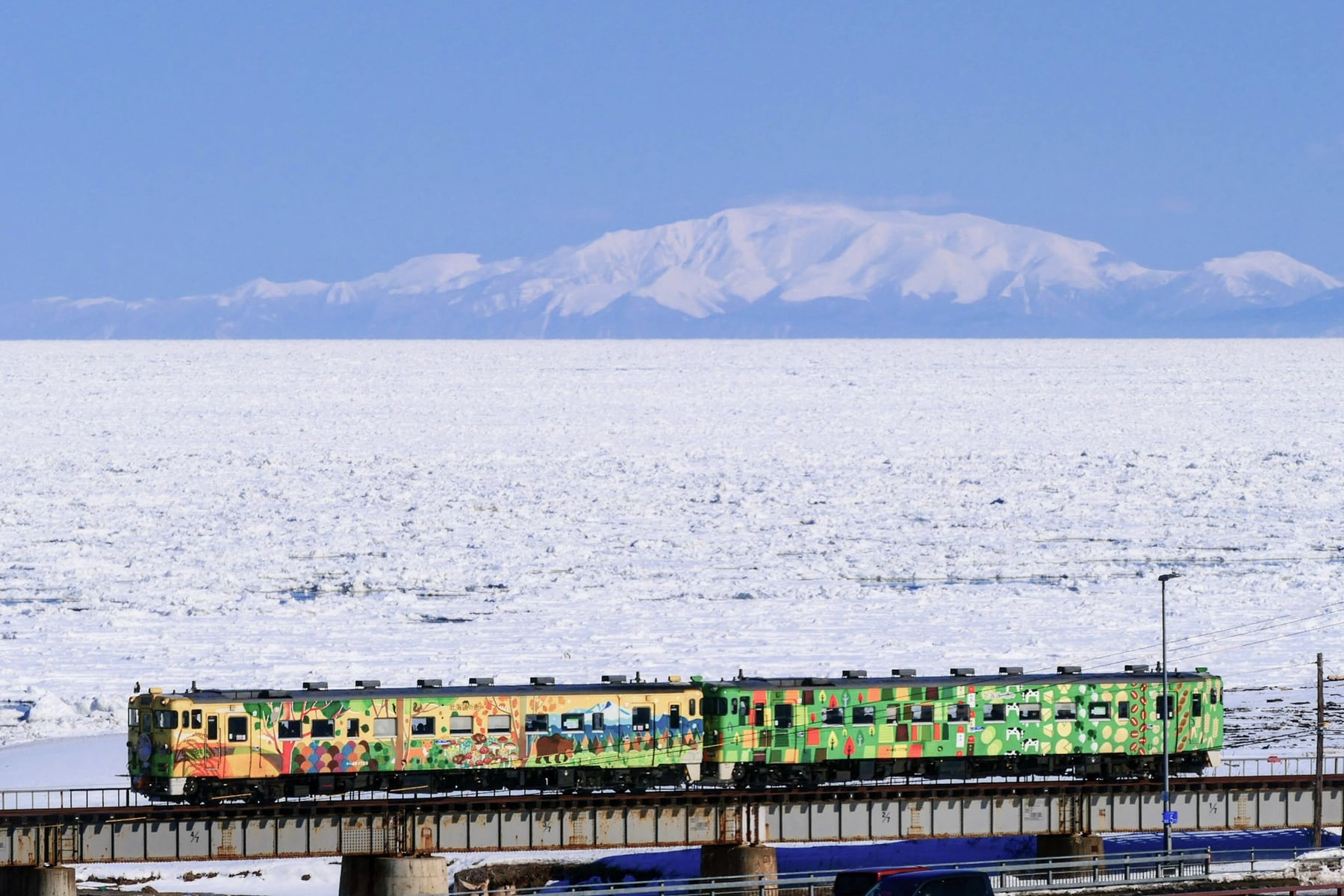
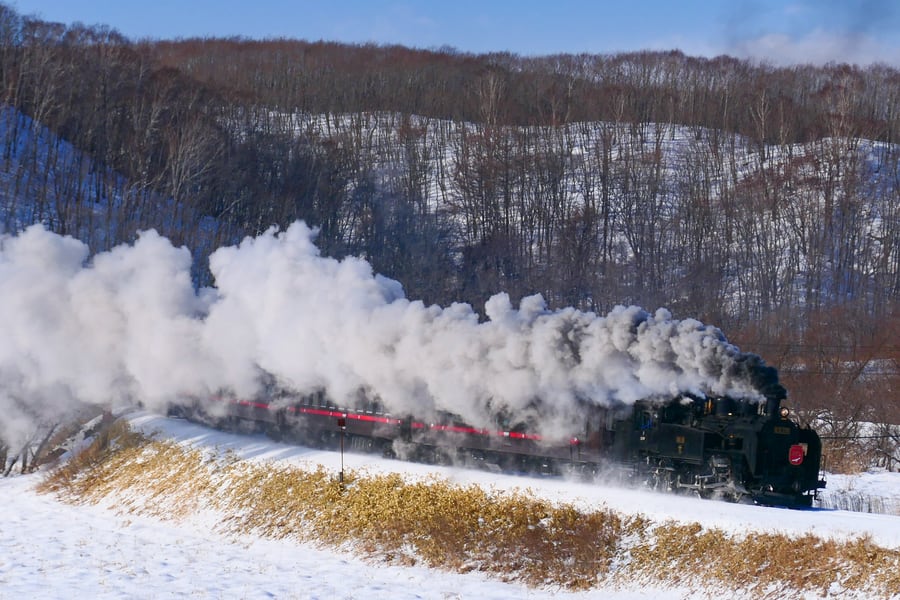
Winter is the line's season. In January and February a steam train, the SL Fuyu-no-Shitsugen, runs through the frozen wetland from Kushiro to Shibecha, and when the drift ice reaches the shore the Ryūhyō Monogatari runs along the coast from Abashiri, stopping at Kitahama, the station closest to the Sea of Okhotsk.
The Journey
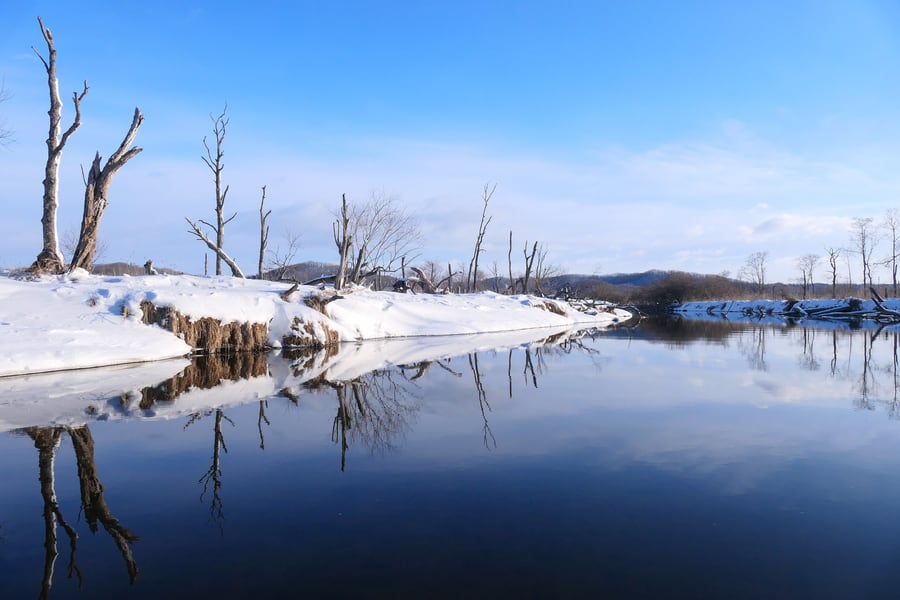
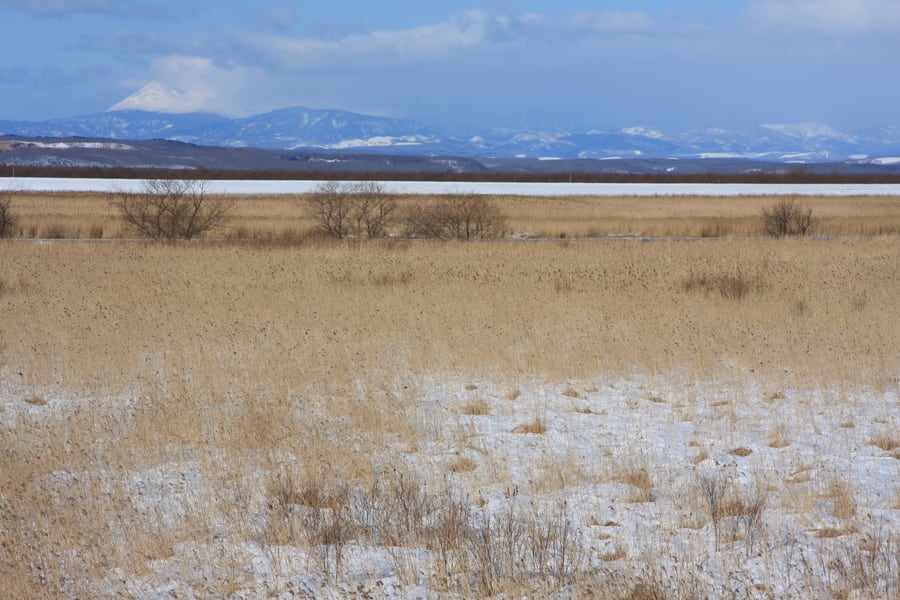
Trains leave Kushiro on the Nemuro Line and turn north at Higashi-Kushiro, where the Senmō Line proper begins. Twenty minutes out they reach Kushiro-Shitsugen, and the line runs along the eastern edge of the Kushiro Wetland: reed and sedge to the horizon, alder thickets, and the Kushiro River winding through them. The wetland became Japan's 28th national park in 1987, and it covers almost 29,000 hectares.
The lakes and the cranes
Past Hosooka the line follows the lakes on the wetland's eastern side, lagoons cut off when the sea withdrew. Tōro stands beside the largest of them. At Kayanuma the station staff once fed red-crowned cranes, and the birds still come to the empty station looking for food. At Shibecha the train leaves the wetland behind.
Into the calderas
From Mashū the line climbs into Akan-Mashū National Park. Lake Mashū lies in its caldera above the town, and at Kawayu Onsen Mt Iō, the "bare mountain" of its Ainu name, steams beside the hot-spring village. Beyond, the line crosses the Nogami Pass and comes down towards the sea.
Along the Okhotsk
At Shiretoko-Shari, the gateway to the Shiretoko peninsula, the train turns west along the Okhotsk coast, past the coastal flower meadows of Genseikaen, to Kitahama, twenty metres from the shore, and on to Abashiri. In February the sea beyond the window can be frozen white to the horizon.
The trains
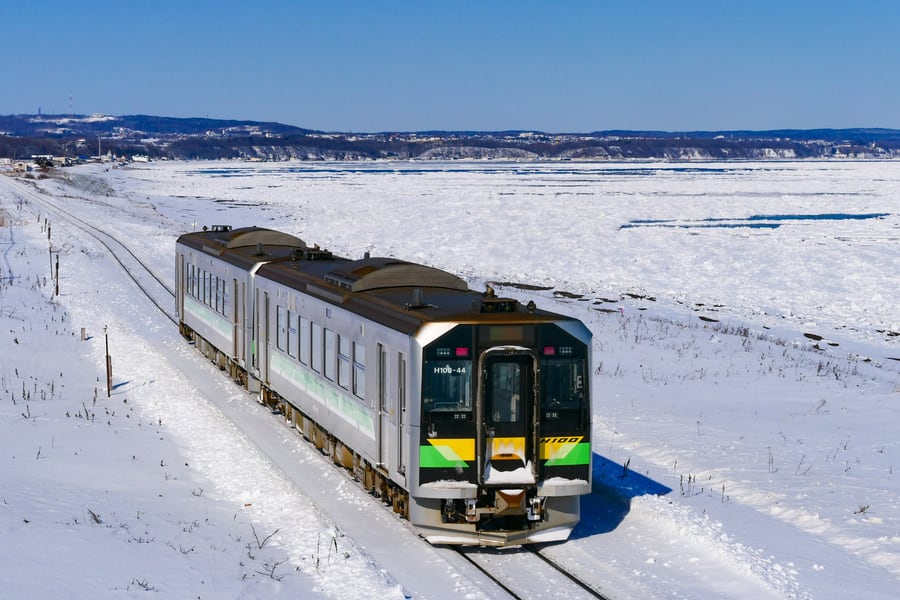
Every regular train is an H100 railcar, the diesel-electric class JR Hokkaido calls DECMO, which has worked the whole line since March 2024. The midday train each way carries the name Shiretoko Mashū. The winter steam train is hauled by C11 171, a tank engine built in 1940 and based at Shibecha in 1949; it runs backwards on the way home to Kushiro, as there is no turntable at the far end. The Ryūhyō Monogatari is a pair of older KiHa 40 railcars painted as the blessings of the forest and of the drift ice.
Along the route
 MaedaAkihiko / Wikimedia Commons · CC BY-SA 4.0
The log station
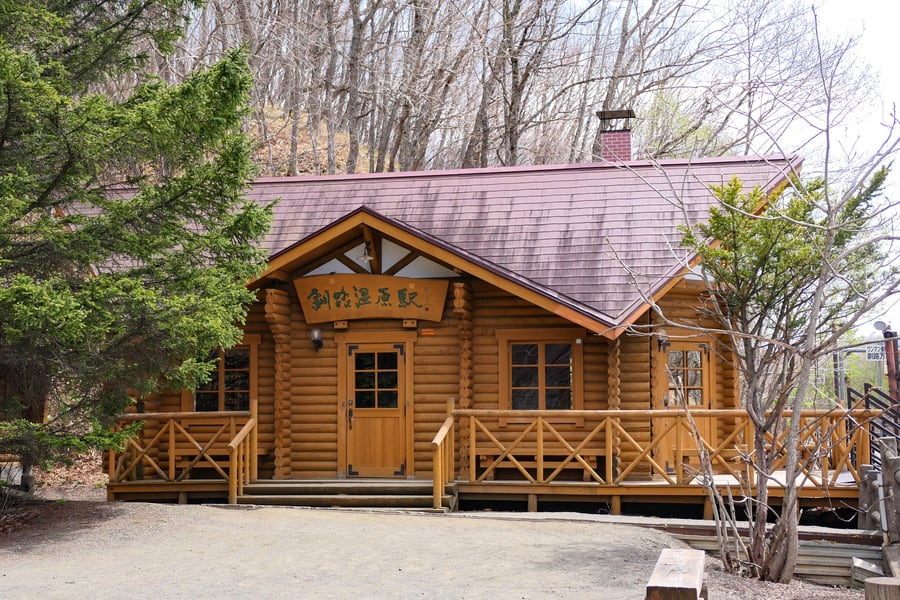
Kushiro-Shitsugen station, opened in 1988 for visitors to the wetland, is a larch log house with a roof shaped like a crane's spread wings. The Hosooka observatory, the classic view over the marsh and the Kushiro River, is about fifteen minutes' walk away.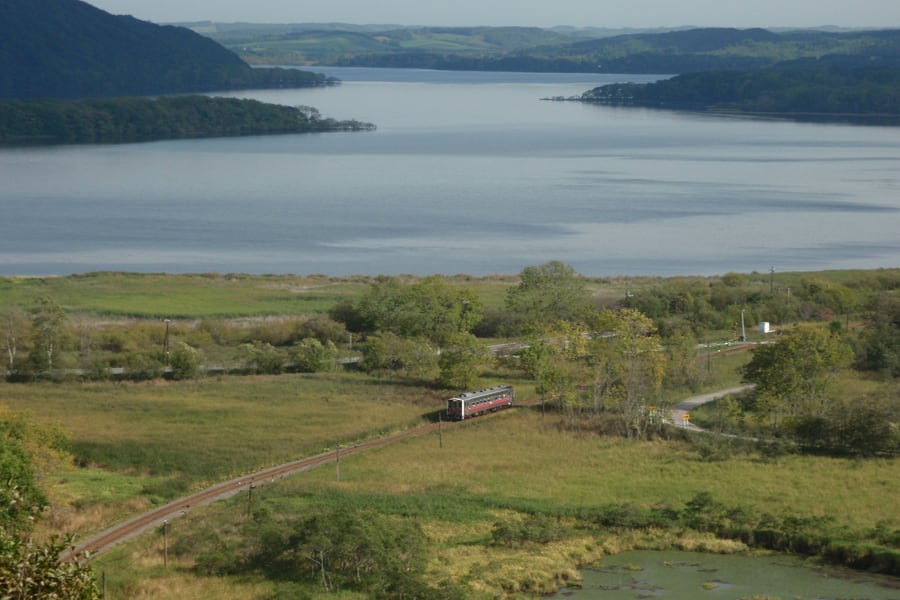 Cassiopeia sweet / Wikimedia Commons · public domain · 2009
Lake Tōro
Past Hosooka the line runs beside the lakes on the wetland's eastern edge, lagoons left behind when the sea withdrew. Tōro station stands by the largest of them, Lake Tōro, where canoe trips set off down the Kushiro River.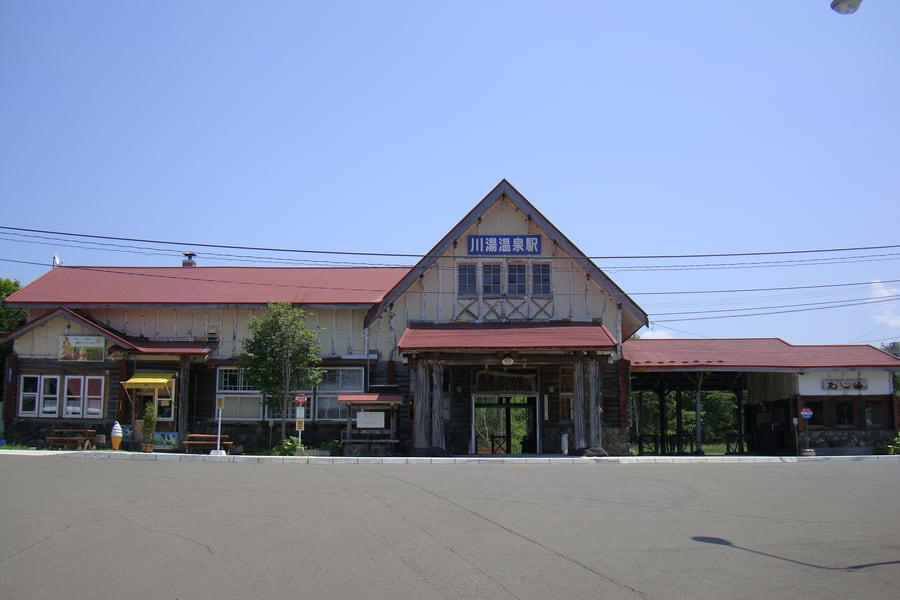 221.20 / Wikimedia Commons · public domain
Kawayu Onsen
Rebuilt in 1936 as a mountain lodge of half-timbering and yew logs, Kawayu Onsen station had its own waiting room for imperial visitors; it is a restaurant now. Beyond it the line climbs over the Nogami Pass and starts down towards the Okhotsk.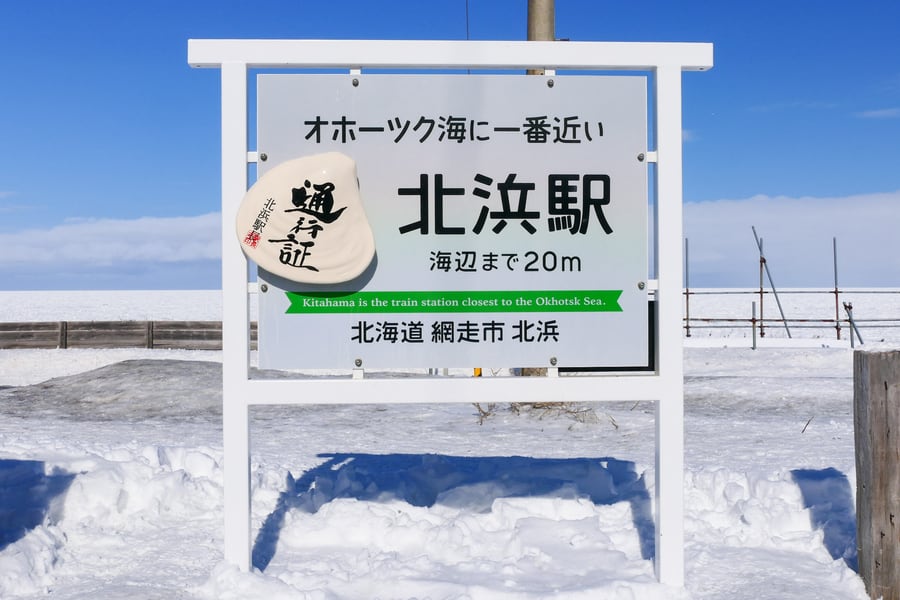 MaedaAkihiko / Wikimedia Commons · CC0
Kitahama
Twenty metres from the shore, Kitahama is the station closest to the Sea of Okhotsk, and in midwinter the drift ice comes right up to it. The old station office is the café Teishaba; the platform's viewing deck was taken down in May 2026.A bit of history
Culture & experiences along the way
 Muramasa / Wikimedia Commons · CC BY-SA 3.0 · cropped
Squid on the stove
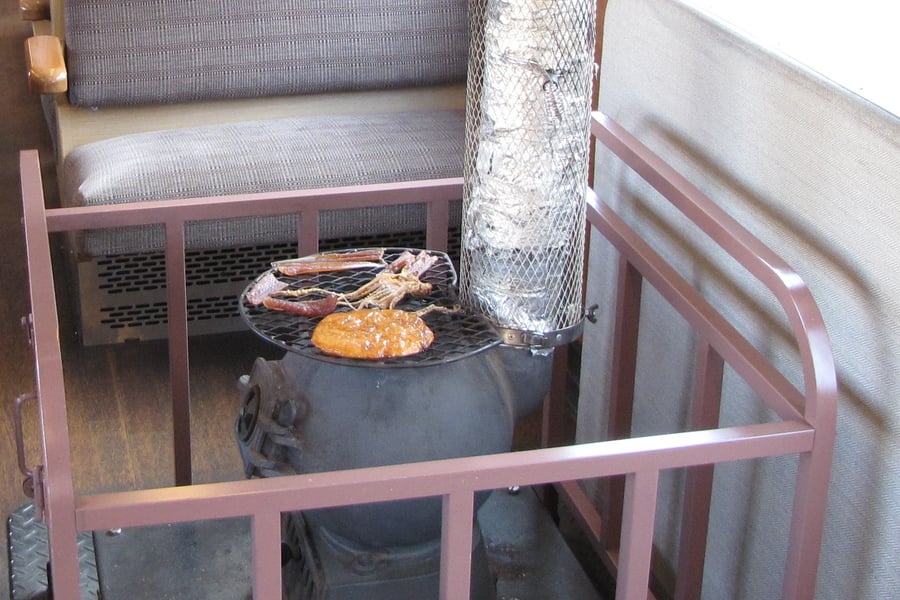
The coaches of the SL Fuyu-no-Shitsugen are warmed by potbelly stoves, and the counter on board sells dried seafood to grill on top of them. A nature guide rides along, and the end cars, rebuilt in 2022, have counter seats facing the Kushiro River and raised box seats behind.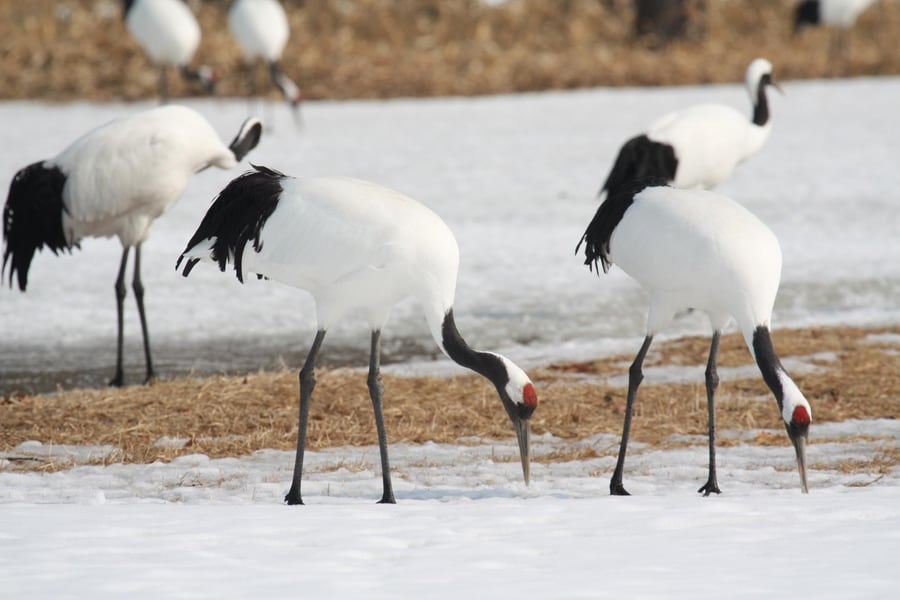 Alastair Rae / Wikimedia Commons · CC BY-SA 2.0
The cranes of Kayanuma
After floods in 1964 drove the red-crowned cranes from their nesting grounds, the staff at Kayanuma station began to feed them. The station is unstaffed now, but the cranes still come looking for food, with whooper swans in winter; watch the fields as the train passes.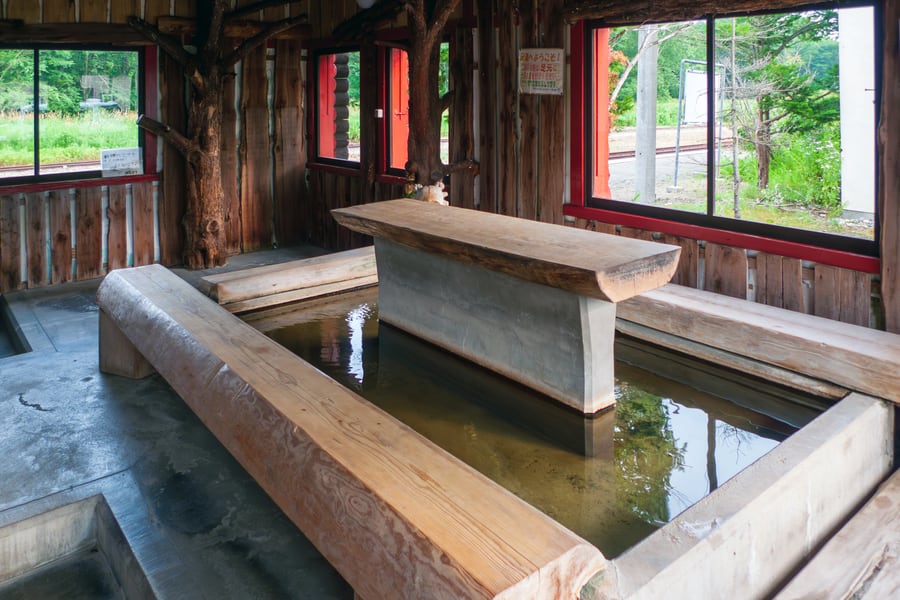 Yasu / Wikimedia Commons · CC BY-SA 3.0
A footbath at the station
Next to Kawayu Onsen station a small log building, put up as the station toilets, was turned into a footbath when new ones were built. In the village, a free footbath beside the visitor centre runs on Kawayu's own acidic sulphur springs. Midori / Wikimedia Commons · CC BY 3.0
A bowl of your own
At Washō Market, near Kushiro station, the katte-don is a bowl of rice you top yourself with your choice of sashimi from the market's seafood, piece by piece. It is the lunch to take before the morning train north.Timetables
Four trains a day run the whole line in each direction, every day of the year, with the same times at weekends. They stop at every station and need no booking. A few more run part of the way: from Kushiro to Mashū or Kawayu Onsen in the evening, and between Abashiri and Shiretoko-Shari or Midori at the Okhotsk end.
Kushiro to Abashiri
| Train | Kushiro | Tōro | Mashū | Kawayu Onsen | Shiretoko-Shari | Abashiri |
|---|---|---|---|---|---|---|
| Local | 06:38 | 07:15 | 08:00 | 08:20 | 09:06 | 09:49 |
| Shiretoko Mashū | 08:47 | 09:26 | 10:12 | 10:29 | 11:14 | 11:59 |
| Local | 14:13 | 14:45 | 15:34 | 15:51 | 16:44 | 17:36 |
| Local | 16:29 | 17:02 | 18:01 | 18:18 | 19:04 | 19:52 |
Abashiri to Kushiro
| Train | Abashiri | Shiretoko-Shari | Kawayu Onsen | Mashū | Tōro | Kushiro |
|---|---|---|---|---|---|---|
| Local | 06:38 | 07:25 | 08:20 | 08:37 | 09:28 | 10:00 |
| Shiretoko Mashū | 10:24 | 11:14 | 11:59 | 12:16 | 13:01 | 13:33 |
| Local | 15:21 | 16:06 | 16:55 | 17:13 | 18:11 | 18:43 |
| Local | 16:42 | 17:29 | 18:18 | 19:01 | 19:57 | 20:31 |
Good to know:
- SL Fuyu-no-Shitsugen. One return trip on its running days, Kushiro 11:05 → Shibecha 12:35, and Shibecha 14:00 → Kushiro 15:42, calling at Higashi-Kushiro, Kushiro-Shitsugen, Tōro and Kayanuma. In 2026 it ran on 32 days between 17 January and 15 March, mostly Thursdays to Sundays and holidays. JR Hokkaido had not yet announced the 2027 dates. Every seat is reserved.
- Ryūhyō Monogatari. Two return trips between Abashiri and Shiretoko-Shari on its running days in the drift-ice season: Abashiri 09:50 and 13:04, Shiretoko-Shari 11:40 and 14:10, with about ten minutes at Kitahama and twenty-five at Hama-Koshimizu. In 2026 it ran from 31 January to 1 March and on 7–8 March; the 2027 dates were not yet out.
- The waits. The 16:29 from Kushiro waits thirteen minutes at Shibecha, and the 16:42 from Abashiri twenty-five at Mashū. The times above are departures.
- Red Star, 2027. JR Hokkaido's new sightseeing train Akai Hoshi is planned between Kushiro and Shiretoko-Shari from late April to mid-July 2027, with an hour's stop at Kushiro-Shitsugen and forty minutes at Kawayu Onsen.
Times as of October 2026, from JR Hokkaido's timetable; winter trains from its January 2026 notices. Check your date on JR Hokkaido's Senmō Line timetable (opens in a new tab).
Tickets
The regular trains need only an ordinary ticket, priced by distance: ¥4,400 from Kushiro to Abashiri, half for children; buy it at Kushiro or Abashiri station before boarding. For stopping off along the way, the Senmō Line Free Pass gives three days on the local trains for ¥5,400; it is an electronic ticket sold through JR Hokkaido's e-Pass and two partner sites, not at stations, and is valid until 28 February 2027.
The winter trains add a seat ticket to the fare. The SL Fuyu-no-Shitsugen is all reserved, ¥1,680 on top of the ¥1,380 fare from Kushiro to Shibecha. The Ryūhyō Monogatari keeps 44 seats on the sea side reserved for ¥840, and the rest are free with the ¥1,040 fare. Seats go on sale one month before travel at 10:00. Fares checked October 2026 against JR Hokkaido's fare search and train pages; Japanese yen.
Book your tickets
Kushiro to Abashiri
One way, adult · ordinary ticket
The whole line on any regular train, bought at Kushiro or Abashiri station; children pay half.
Book Tickets (opens in a new tab, on JR Hokkaido)via JR HokkaidoSL Fuyu-no-Shitsugen seat
Added to the fare · Kushiro to Shibecha
The reserved seat every passenger on the winter steam train needs, added to the ¥1,380 fare.
Book Tickets (opens in a new tab, on JR Hokkaido)via JR HokkaidoRail Passes
The Senmō Line is a JR Hokkaido line, and the JR passes cover it end to end, the winter trains included. The Hokkaido Rail Pass covers every JR Hokkaido line, from ¥22,000 for five days bought before arrival, and the Japan Rail Pass does too, ¥50,000 for seven days. A Hokkaido Rail Pass holder still buys the reserved-seat ticket for the SL Fuyu-no-Shitsugen.
For this journey alone, a pass is not worth buying: the whole line costs ¥4,400. It pays when the Senmō Line is part of a loop from Sapporo. The limited express to Kushiro costs ¥10,320, the Senmō Line ¥4,400 and the limited express back from Abashiri ¥10,870, so the loop comes to ¥25,590 in single tickets against ¥22,000 for a five-day Hokkaido Rail Pass, with the side trips free on top. The Hokkaido Rail Pass is sold to holders of non-Japanese passports.
Checked October 2026 against JR Hokkaido's rail pass page (opens in a new tab), its train pages and fare search, and the Japan Rail Pass prices (opens in a new tab).
Places to Visit
With four trains a day, a stop costs most of a morning or an afternoon, so pick one or two: the wetland near Kushiro, the calderas around Mashū and Kawayu Onsen, or the Okhotsk coast and Shiretoko at the far end.
 Blueapple48 / Wikimedia Commons · CC BY-SA 3.0
Kushiro
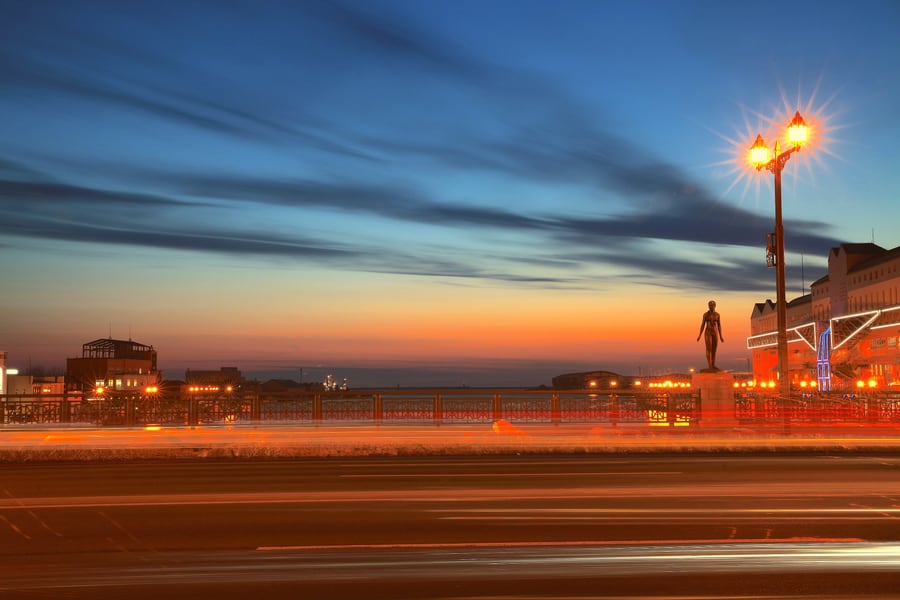
JR Hokkaido counts the sunset from Nusamai Bridge, over the Kushiro River, among the three finest in the world as chosen by sailors. The city is the base for two national parks, the Kushiro Wetland and Akan-Mashū, and Washō Market, near the station, is the place for its seafood. Limited expresses from Sapporo take about four and a half hours.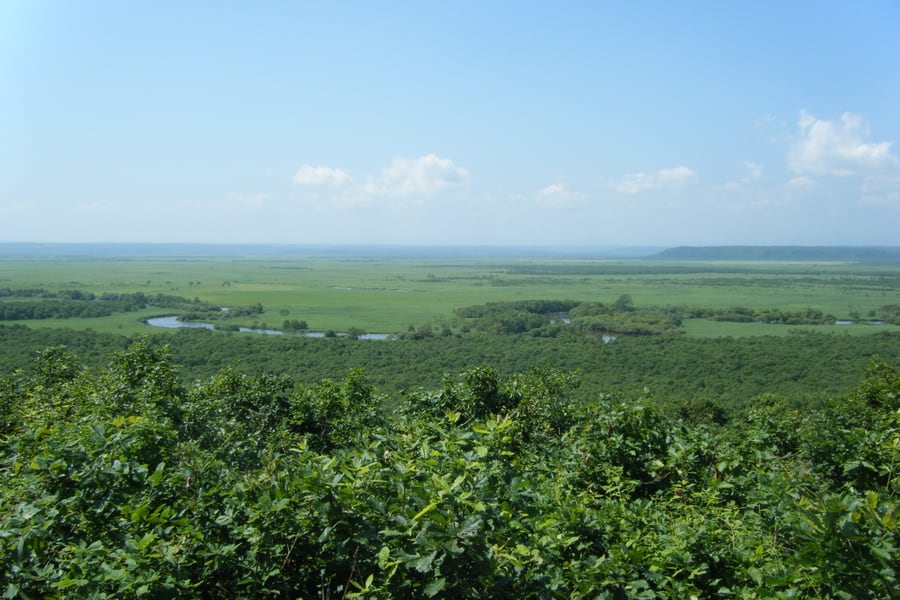 欅 / Wikimedia Commons · CC BY-SA 3.0
Kushiro-Shitsugen
About fifteen minutes' walk from the station, the Hosooka observatory looks out over the Kushiro Wetland, the largest in Japan: 28,788 hectares of reed and sedge, peat laid down over three thousand years, and the river looping through it. The wetland has been a national park since 1987, and the winter steam train calls here.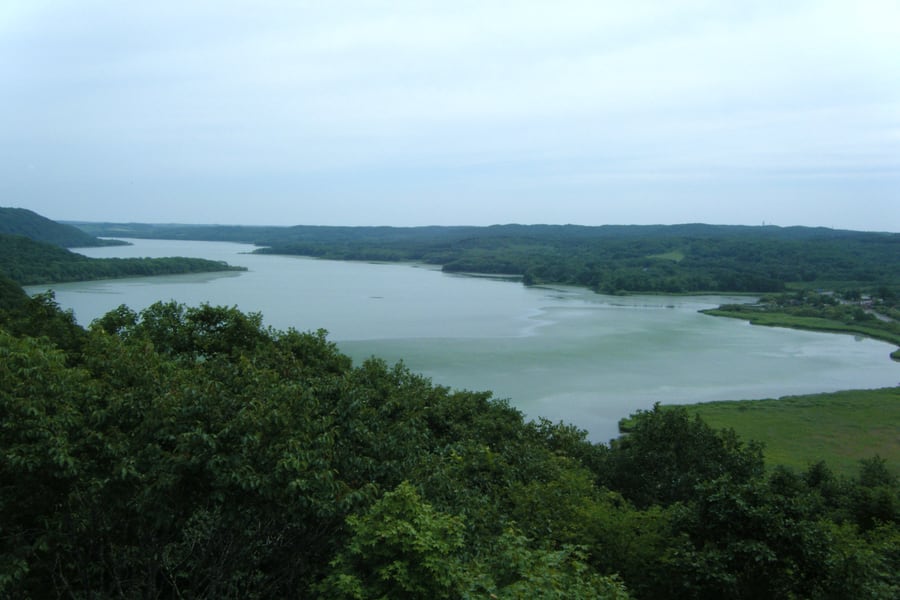 欅 / Wikimedia Commons · CC BY-SA 3.0
Tōro
About forty-five minutes' walk from Tōro station, the Saruboh observatory looks down on five lakes at once, Lake Tōro, the largest in the wetland, among them, with a free telescope for the birds on the water. Canoe trips on the Kushiro River and bicycle hire start from Tōro, and the station's old office is a small café.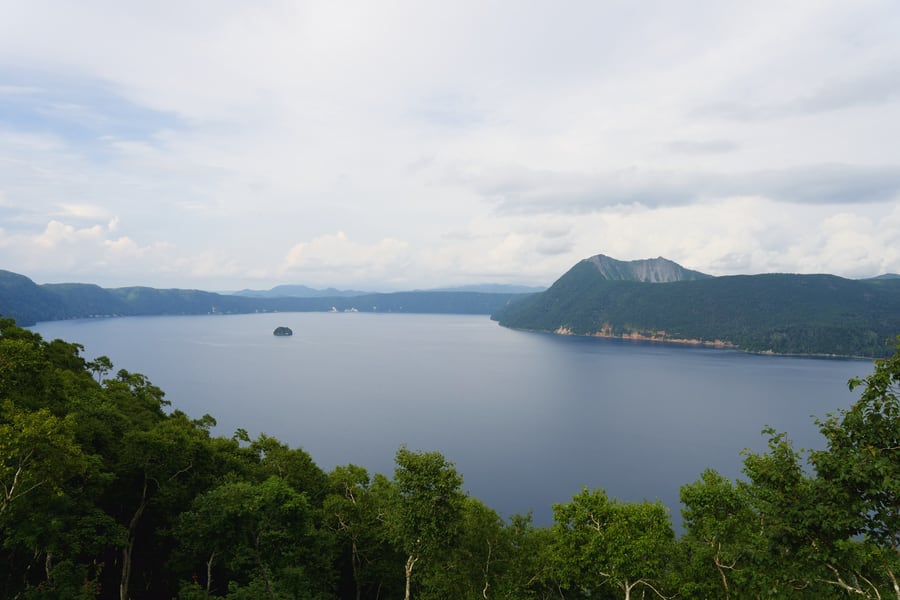 Benlisquare / Wikimedia Commons · CC BY-SA 4.0
Mashū
An Akan Bus line runs from the station up to the first observatory on the rim of Lake Mashū, a caldera lake about seven thousand years old, walled by cliffs 200 to 300 metres high. No river flows in or out, and its water is clear to about twenty metres. The road on to the third observatory closes from November to late April.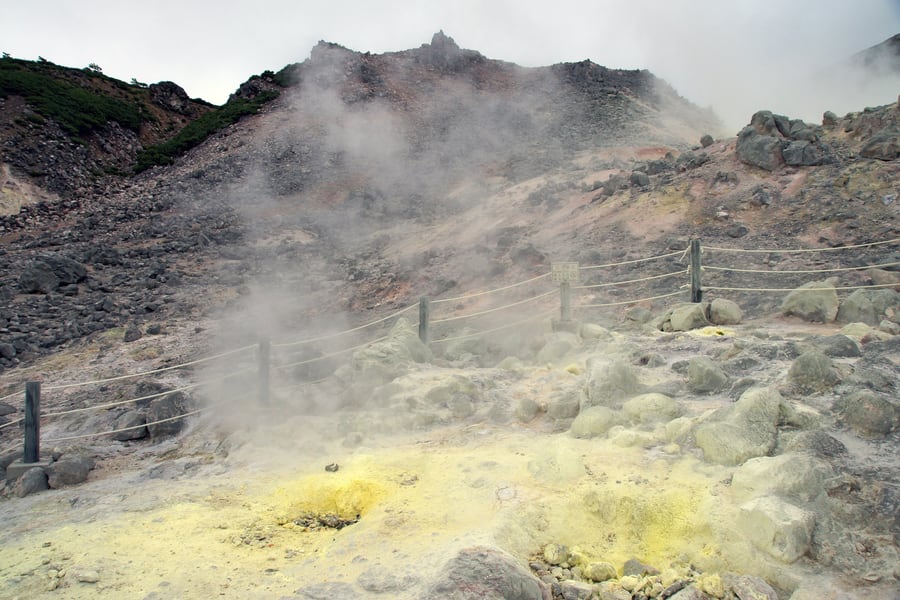 663highland / Wikimedia Commons · CC BY 2.5
Kawayu Onsen
Mt Iō, Atosanupuri, the "bare mountain" in Ainu, is a 512-metre volcano with more than 1,500 steaming vents, where sulphur was once mined. A 2.8-kilometre path runs to it from the Kawayu visitor centre in about an hour, and the rest house at the foot sells eggs boiled in the hot springs. Lake Mashū's first observatory is about twenty minutes from the station by car.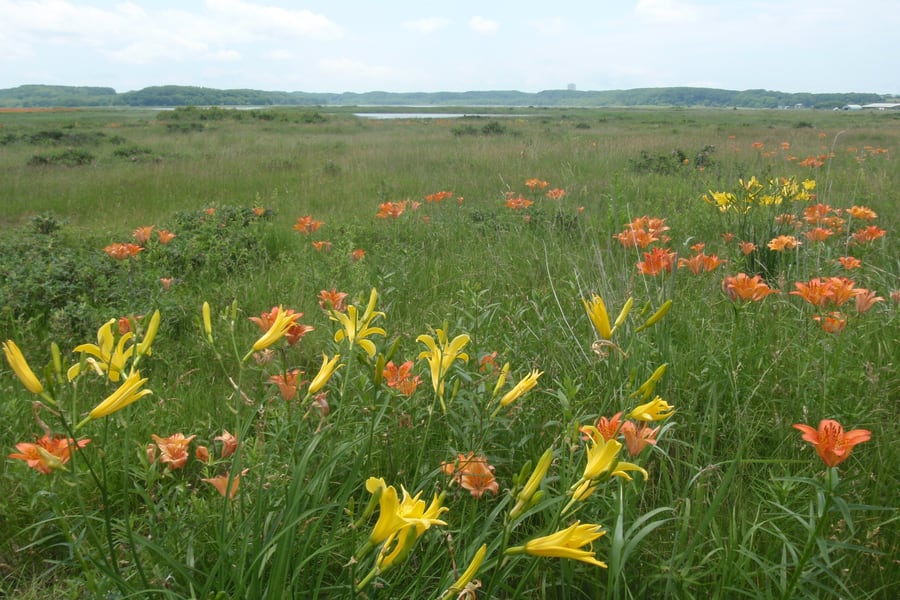 Soica2001 / Wikimedia Commons · public domain
Genseikaen
The temporary station, open from May to the end of October, is the entrance to Koshimizu Gensei-kaen, a strip of coastal meadow where around two hundred kinds of wild flower grow, part of Abashiri Quasi-National Park. From the Tenrangaoka lookout the view runs from Shiretoko to Abashiri, and from May to August the meadow is full of songbirds.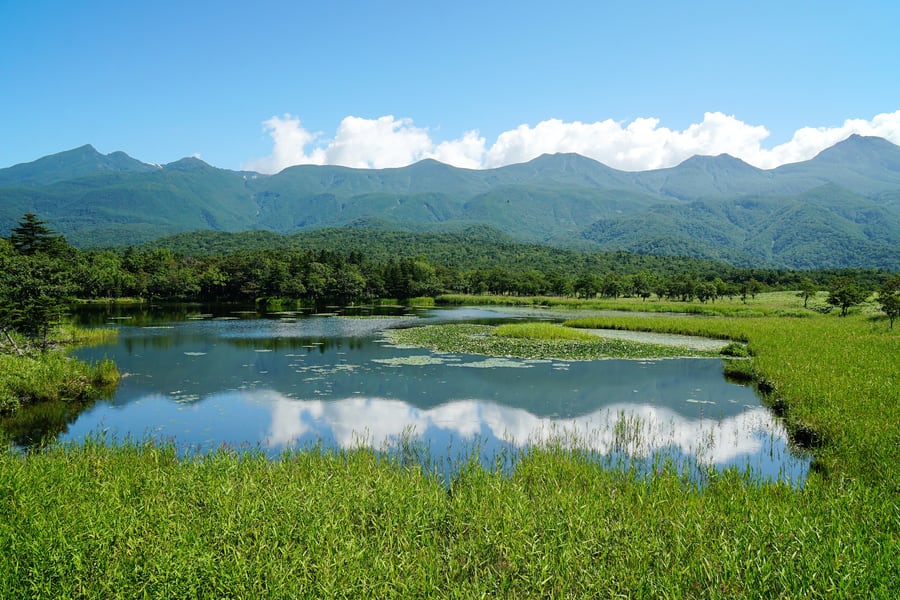 663highland / Wikimedia Commons · CC BY 2.5
Shiretoko-Shari
Shari Bus runs the forty kilometres from the station to Utoro, on the Shiretoko peninsula, and on to the Shiretoko Five Lakes, set in old forest under the Shiretoko range. A raised boardwalk, about 1.6 km there and back, is free and open all season; the paths on the ground depend on bear activity.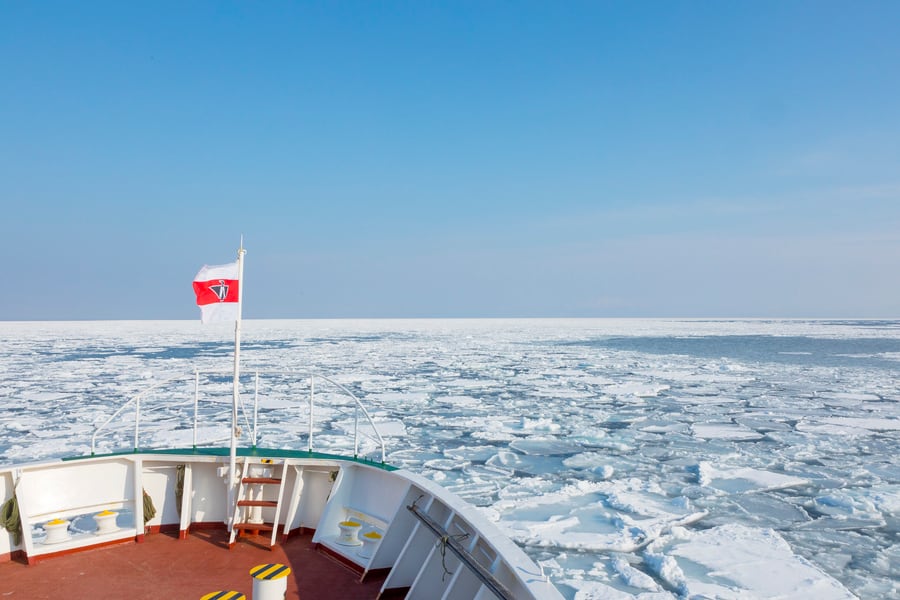 kkawamura / Wikimedia Commons · CC BY 4.0
Abashiri
From 20 January to 31 March the icebreaker Aurora sails from Abashiri's roadside station into the drift ice, which comes down from the Amur and reaches this coast around the end of January. Direct buses run from the station; the large ship costs ¥5,000, or ¥6,000 in February, and when there is no ice it cruises to Cape Notoro instead.Where to Sleep
Stay at one end of the line. A night in Kushiro puts you on the first train north, or on the steam train in winter; a night in Abashiri puts you on the drift-ice train and close to the icebreakers.
Where to stay
Dormy Inn PREMIUM Kushiro
Kushiro · about 9 minutes' walk from the station
A city hotel with a natural hot-spring bath on its 13th floor, looking over Kushiro's port.
Check Availability (opens in a new tab, on dormy-hotels.com)via dormy-hotels.comDormy Inn Abashiri
Abashiri · 2 minutes from the bus terminal
A hotel whose top-floor bath looks out over the Sea of Okhotsk to the Shiretoko range, with drift ice in February.
Check Availability (opens in a new tab, on dormy-hotels.com)via dormy-hotels.comQuestions or corrections
Planning this trip and stuck on something, or spotted a time, fare or detail that has changed? Send us a message about Senmō Line. We read every one, and we update this page when something has changed.