Sagano Scenic Railway
pang yu liu / Wikimedia Commons · CC BY-SA 2.0
- Distance7.3 km (Torokko Saga–Torokko Kameoka)
- DurationAbout 25 minutes
- Best seasonSpring blossom & autumn colour · closed in winter
Introduction
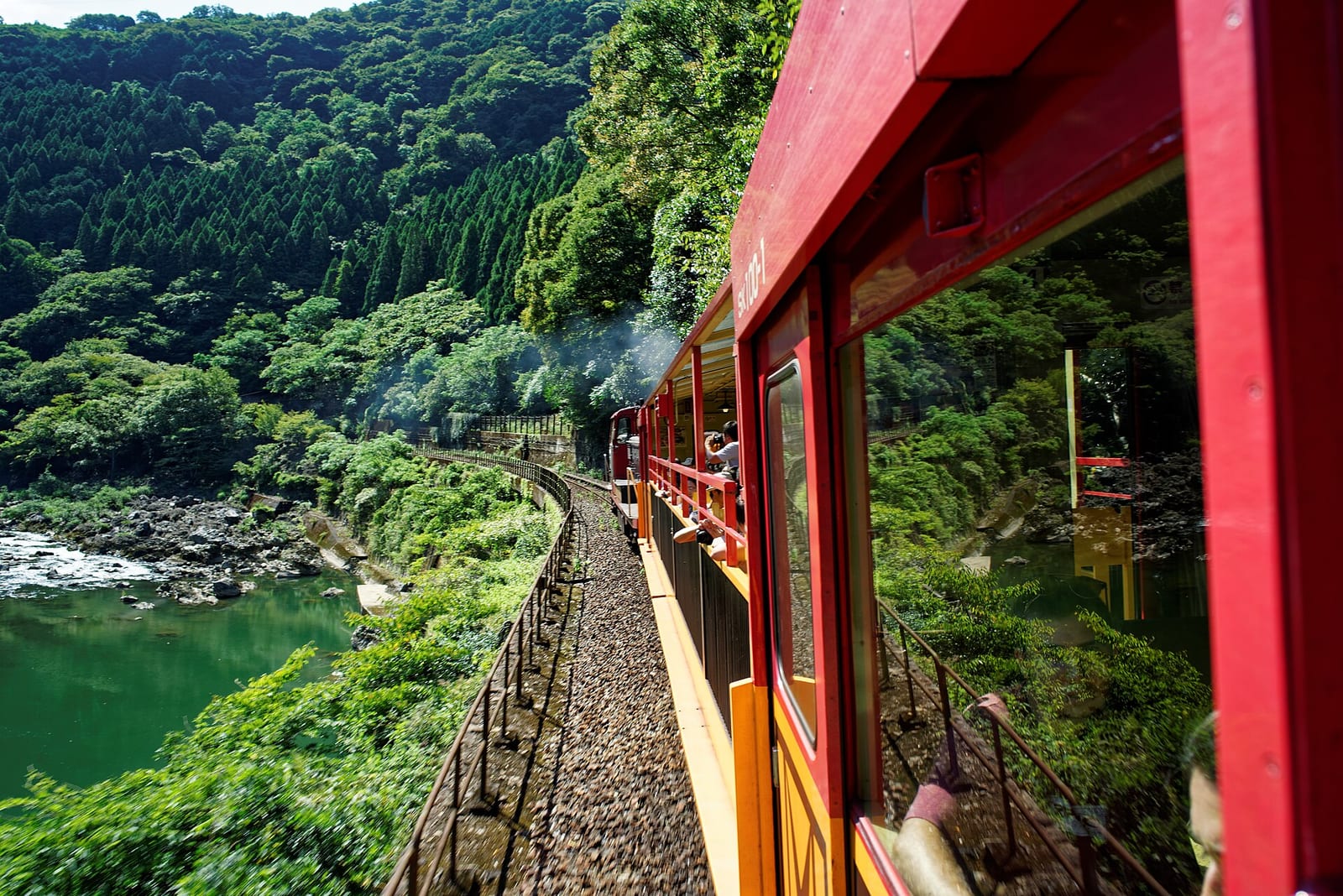
Just west of Kyoto, where the Hozu River carves a wooded gorge through the hills of Arashiyama, runs one of Japan's most charming little railways. The Sagano Scenic Railway — the Sagano Torokko, or "Romantic Train" — is a slow, open-sided sightseeing line that trundles for 7.3 kilometres through the Hozugawa gorge, along a stretch of old track that the mainline trains left behind.
That is exactly why it exists. When the San'in Main Line was straightened and double-tracked in 1989, its beautiful, winding riverside alignment — first laid in 1897 — was abandoned. Rather than let it fall silent, JR West reopened it in 1991 as a heritage sightseeing railway, running vintage torokko carriages hauled by an old diesel locomotive. One carriage is left completely open to the air.
Timed to the seasons — cherry and plum blossom in spring, blazing maples in autumn — and closed through the winter, it is a favourite Kyoto day out: ride the little train up the gorge, then float back down the rapids by traditional boat. After the 285 km/h of the bullet train, the Sagano is a deliberate, delicious slowing-down.
The Journey
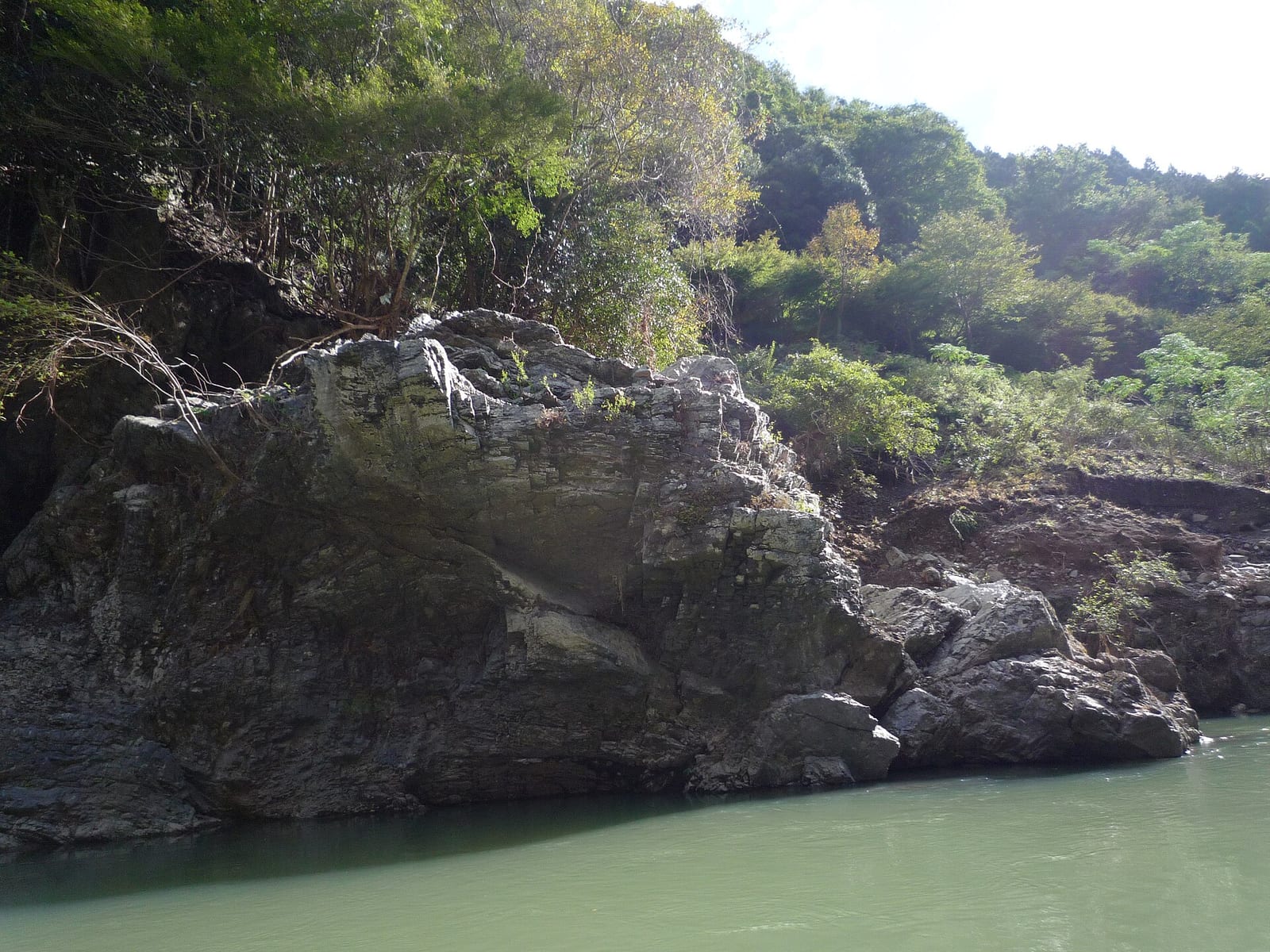
The line starts at Torokko Saga, in the Arashiyama district, beside the modern JR station of Saga-Arashiyama. Within minutes of setting off, the ordinary suburbs fall away and the train drops into the gorge of the Hozu River, and for the rest of the ride the two are inseparable — the track threading the wooded hillside just above the water.
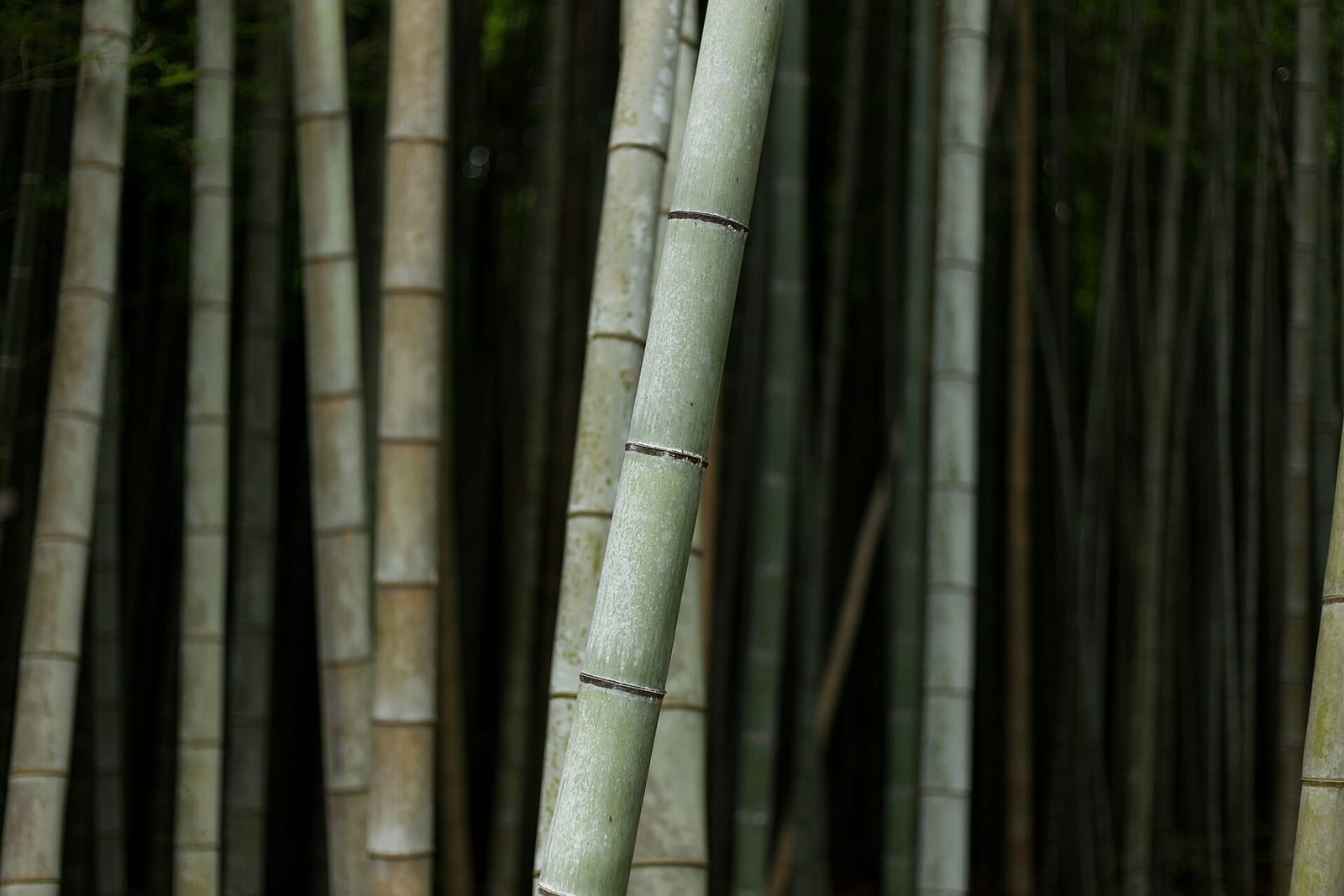
At the second stop, Torokko Arashiyama, you are a short walk from the famous bamboo grove; by Torokko Hozukyō the gorge has closed in completely, all rapids and overhanging maples, with the little flat-bottomed river boats visible far below. The train crosses the river on old steel bridges, curves past cliffs the mainline now bypasses in tunnels, and finally rolls out into the open at Torokko Kameoka, twenty-five unhurried minutes and 7.3 kilometres later.
What gives the journey its character:
- It runs on the original 1897 alignment of the San'in Main Line, freed for tourism when the mainline was rerouted onto a new double-track course in 1989 — the rails and stations are still owned by JR West.
- The trains are genuine "torokko" — open-sided carriages converted from freight wagons, with wooden benches — hauled by a vintage Class DE10 diesel locomotive, one at each end.
- Car 5, "The Rich," is completely open, with no glass at all, so on a fine day nothing stands between you and the gorge.
- The whole line is built around the seasons: it closes for winter and reopens for the blossom, running at its most spectacular under the autumn maples of November.
It is a short ride, and a slow one — and that is entirely the point.
Along the route
pang yu liu / Wikimedia Commons · CC BY-SA 2.0Along the Hozugawa gorge
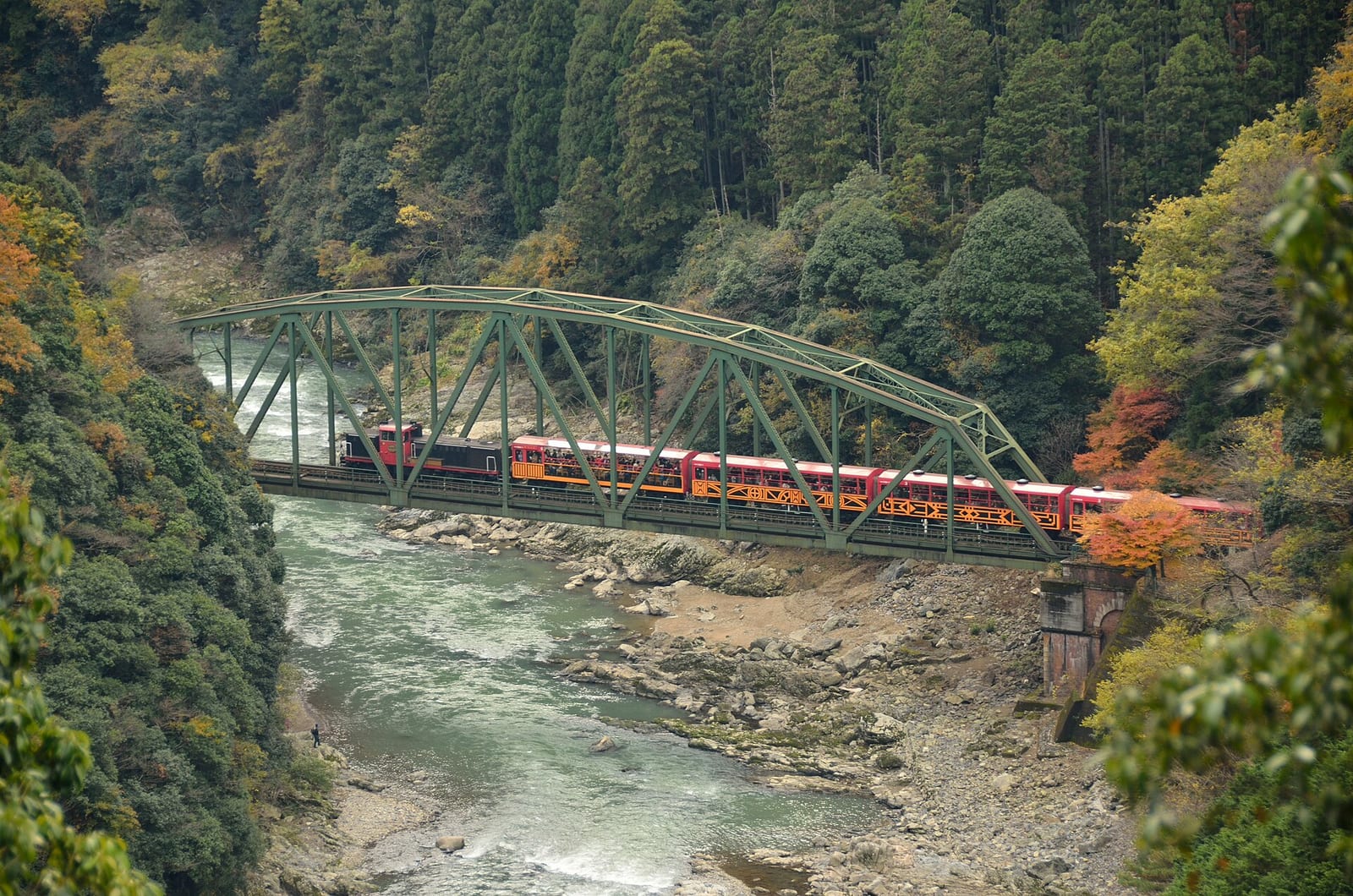
For most of its 7.3 kilometres the little train hugs the wooded gorge of the Hozu River, often just above the water, looking down on the rapids and the traditional flat-bottomed boats that shoot them. It is a stretch of countryside no road reaches.Takeshi Kuboki / Wikimedia Commons · CC BY 2.0Blossom and blazing maples
The Sagano line is timed to the seasons. In spring the gorge is dusted with cherry and plum blossom; in November it erupts into some of the most spectacular autumn colour near Kyoto — the reason tickets vanish weeks ahead.Streetdeck / Wikimedia Commons · CC BY-SA 4.0The open-sided torokko
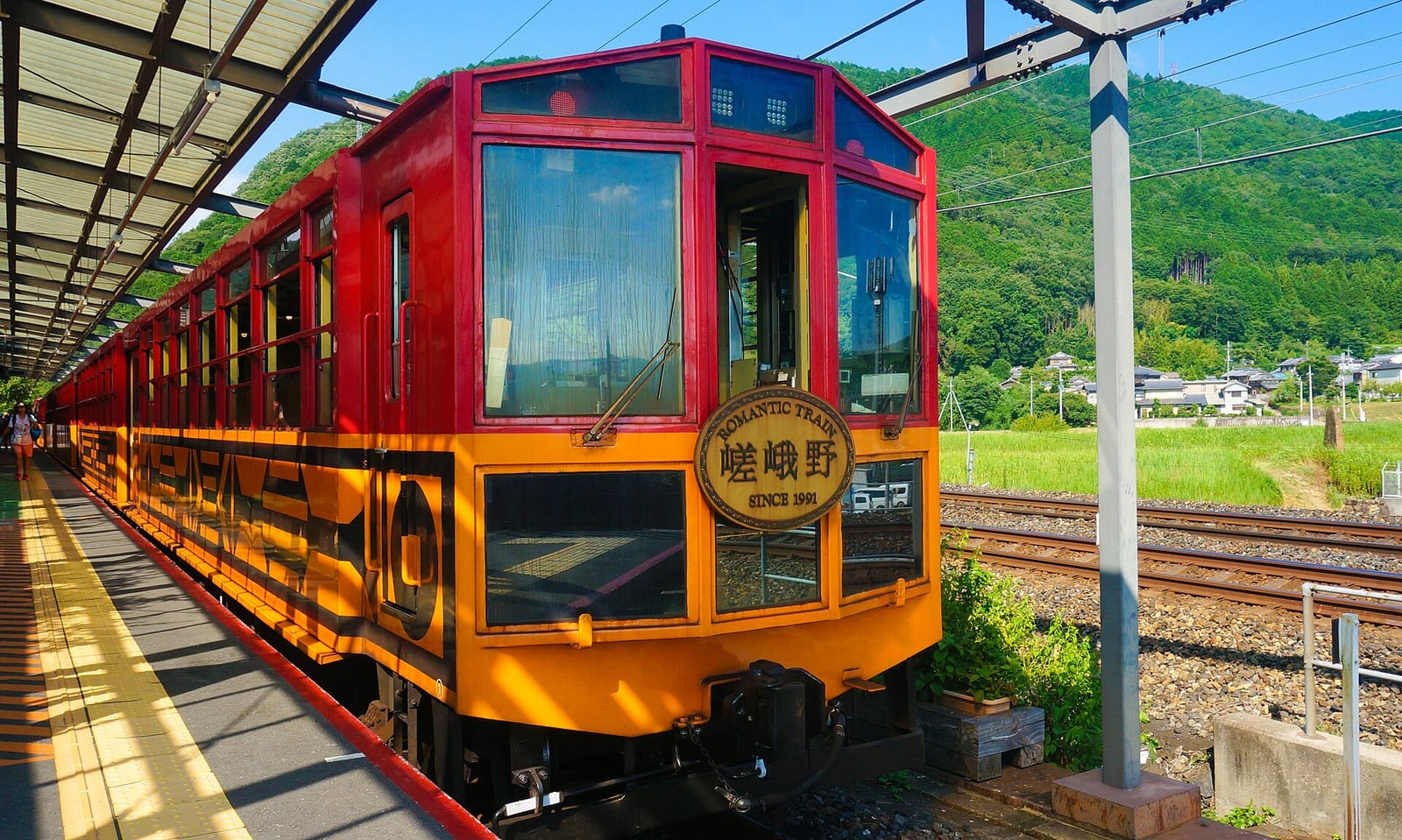
The charm is in the carriages themselves: old-fashioned "torokko" cars, converted from goods wagons, with wooden benches and windows that open right up to the gorge — one car left fully open to the air, so nothing comes between you and the view.A bit of history
Culture & experiences along the way
Sjaak Kempe / Wikimedia Commons · CC BY 2.0Ride up, float back down
The classic Sagano day pairs the train with the water: ride the torokko up to Kameoka, then descend the Hozugawa by traditional flat-bottomed boat, the boatmen poling and rowing you back through the rapids to Arashiyama.Erol Ahmed / Wikimedia Commons · CC0Arashiyama & the bamboo
The Torokko Saga terminus sits in Arashiyama, one of Kyoto's loveliest districts — a short walk from the towering, sighing corridor of the famous bamboo grove and the temples and river views around it.pang yu liu / Wikimedia Commons · CC BY-SA 2.0A window with no glass
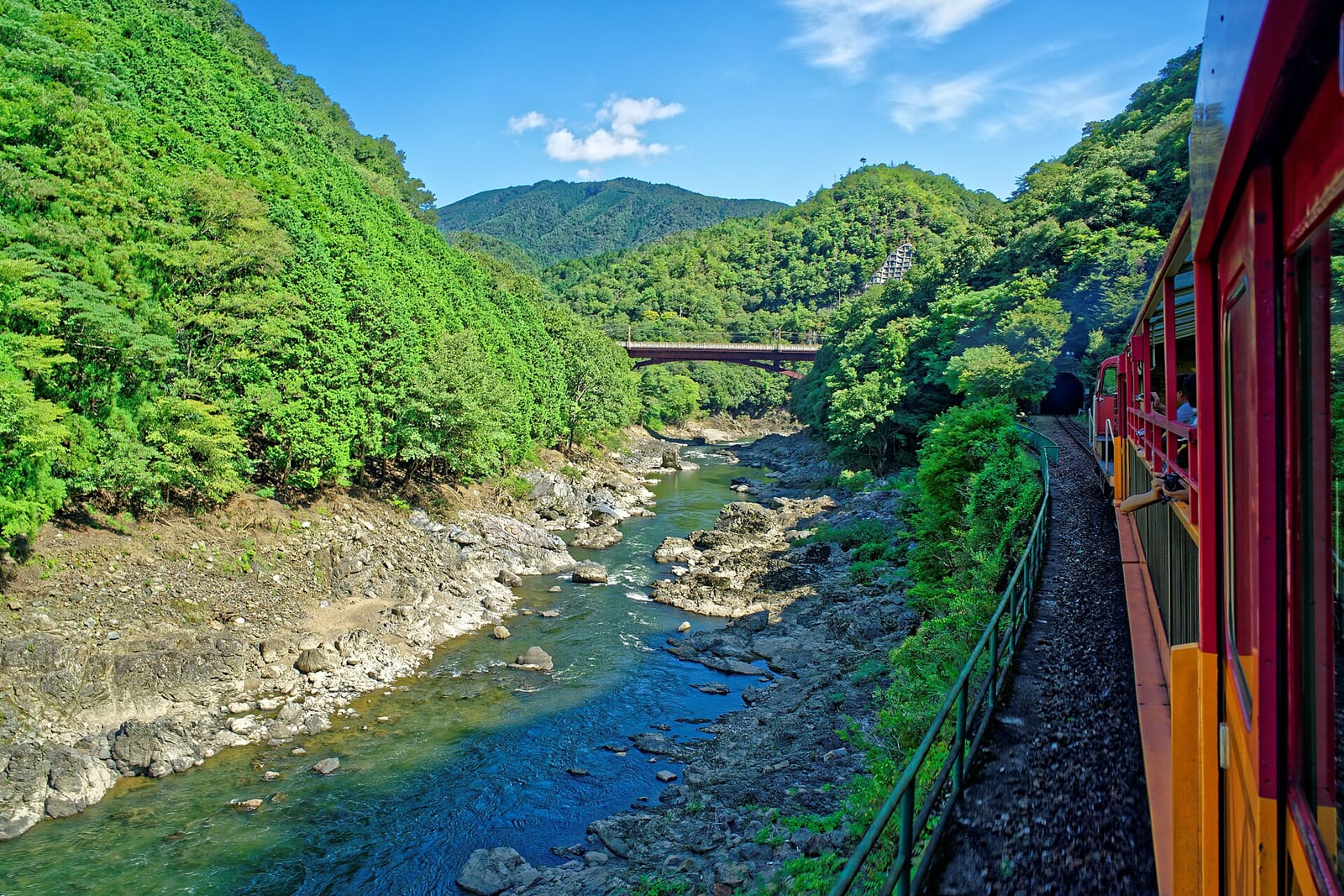
Slow, open and unhurried, the Sagano train is the antithesis of the bullet train an hour away — a chance to feel the mountain air, hear the river and watch the gorge unfold at walking pace, camera in hand.Timetables
The Sagano Scenic Railway runs hourly in each direction between Torokko Saga and Torokko Kameoka, from morning to late afternoon. Crucially, it does not run all year: it closes on Wednesdays and through the winter (generally January and February), reopening for the spring blossom, and runs from about March to late December.
Real departures (2026 — confirm before travelling):
| From | Hourly departures | Extra (select days) |
|---|---|---|
| Torokko Saga → Kameoka | 09:02, 10:02 … 15:02 | 17:10, 18:26 |
| Torokko Kameoka → Saga | 09:30, 10:30 … 15:30 | 17:43, 19:10 |
The trip through the gorge is 7.3 km, about 25 minutes. Every seat is reserved, and in the two peak seasons — the spring blossom and the November maples — trains sell out well in advance, so book as early as you can.
Most visitors ride one way and return by a different route — either the Hozugawa river boat down to Arashiyama, or the regular JR San'in line back through the tunnels. From Torokko Kameoka a short bus or walk reaches the river-boat boarding point.
Times as of the 2026 timetable. Confirm operating days, seasons and reservations with the operator — see the Tickets section below.
Tickets
All ordinary seats on the Sagano Scenic Railway are reserved, and there are only a few trains a day, so tickets are the one thing you should sort out before you arrive. They go on sale one month ahead, through JR West ticket offices and travel agents and via the operator, and for the blossom and autumn seasons they can sell out almost immediately — book the moment they open.
There is one exception. Car 5, "The Rich," is the fully open carriage, with no glass at all; its tickets cannot be reserved and are sold only on the day, at the departing station, and only when the weather is fine. If it is running, it is the seat to have.
The options below link to the Sagano Scenic Railway. Fares checked July 2026 against the operator's English site (opens in a new tab).
Book your tickets
Reserved torokko seat
Torokko Saga – Torokko Kameoka
A reserved seat in the open-sided carriages for the full run through the gorge. Seats go on sale a month ahead and sell out fast for the blossom and autumn seasons, so book early through the operator or at a JR West ticket office.
Book Tickets (opens in a new tab, on Sagano Scenic Railway)via Sagano Scenic Railway"The Rich" open car
The fully open fifth carriage
Car 5, nicknamed "The Rich," is completely open to the air — no windows at all. It can't be reserved in advance: tickets are sold only on the day, at the departing station, and only when the weather allows.
Book Tickets (opens in a new tab, on Sagano Scenic Railway)via Sagano Scenic RailwayRail Passes
The Japan Rail Pass does not cover the Sagano Scenic Railway. The romantic train is run by its own company, not by JR, and the JR Pass terms say the fare on a private railway must be paid. Every seat on it is reserved and bought from the operator.
The pass does cover the way back. JR West's Sagano Line between Kyoto and Saga-Arashiyama and Umahori, the usual return after the gorge, is a JR line within the pass.
Checked October 2026 against the Japan Rail Pass scope (opens in a new tab) and the Sagano Scenic Railway (opens in a new tab).
Places to Visit
The Sagano railway sits at the heart of Arashiyama, one of Kyoto's most beautiful corners, and pairs naturally with the sights along the Hozu River.
The train, the boat and the bamboo together make a classic half-day out from Kyoto — easily stretched to a full one.
 Naokijp / Wikimedia Commons · CC BY-SA 4.0 · cropped
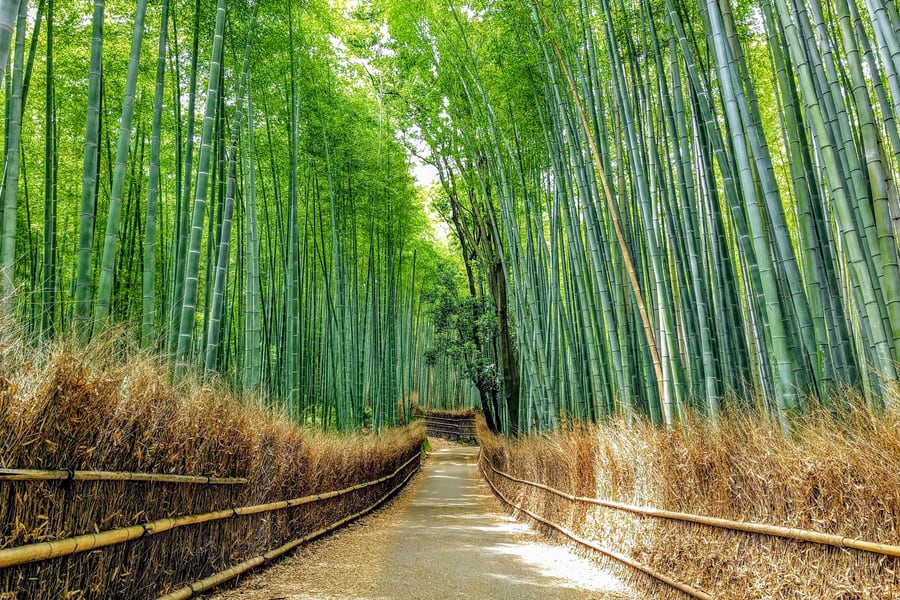
Arashiyama Bamboo Grove
The towering corridor of green a short walk from Torokko Saga, where a path of roughly five hundred metres runs between bamboo tall enough to close over your head. What makes it singular is not the sight but the sound — the creak and rattle of stems in the wind is one of the hundred soundscapes the Ministry of the Environment put on its national list in 1996. Come at first light: by mid-morning the path belongs to everybody.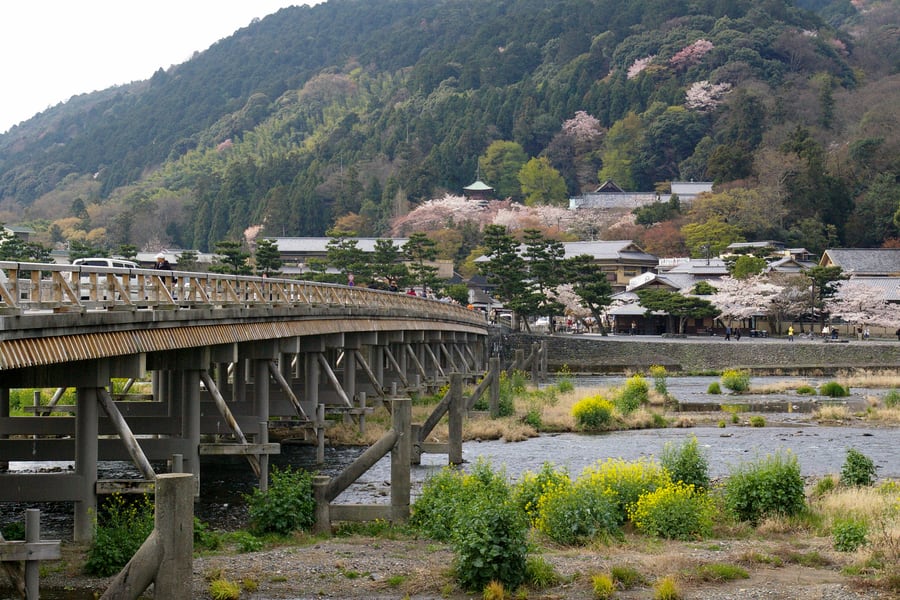 Tomomarusan / Wikimedia Commons · CC BY 2.5 · cropped
Togetsukyō Bridge
The postcard image of Arashiyama — a low, 155-metre span across the Ōi River with wooded hills rising straight behind it. The name means "moon-crossing," from the Kamakura-period Emperor Kameyama, who watched from a boat as the full moon seemed to walk across the deck. A bridge has stood here since 836; the present one dates from 1934 and is a piece of quiet craft, reinforced concrete underneath and cypress parapets on top, so that it still reads as timber from the bank.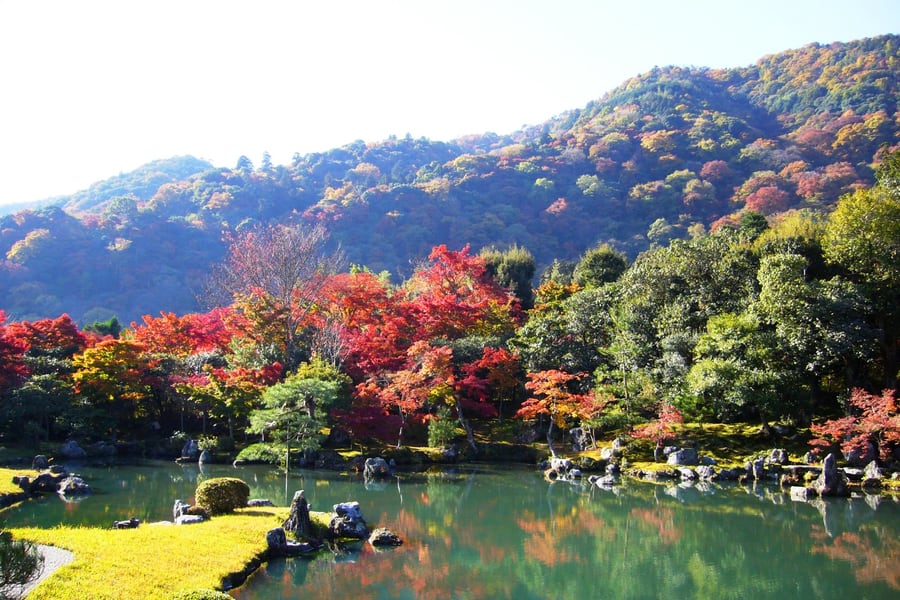 ttshr1970 / Wikimedia Commons · CC BY 3.0 · cropped
Tenryū-ji
A UNESCO-listed Zen temple with one of Japan's finest gardens, founded in 1339 by Ashikaga Takauji to console the spirit of Emperor Go-Daigo — the rival he had just defeated. The buildings have burned and been rebuilt repeatedly, six times in the Middle Ages alone, but the Sōgen-chi garden laid out by the monk Musō Soseki has survived essentially unchanged: a pond walk that deliberately borrows the Arashiyama hills as its far wall.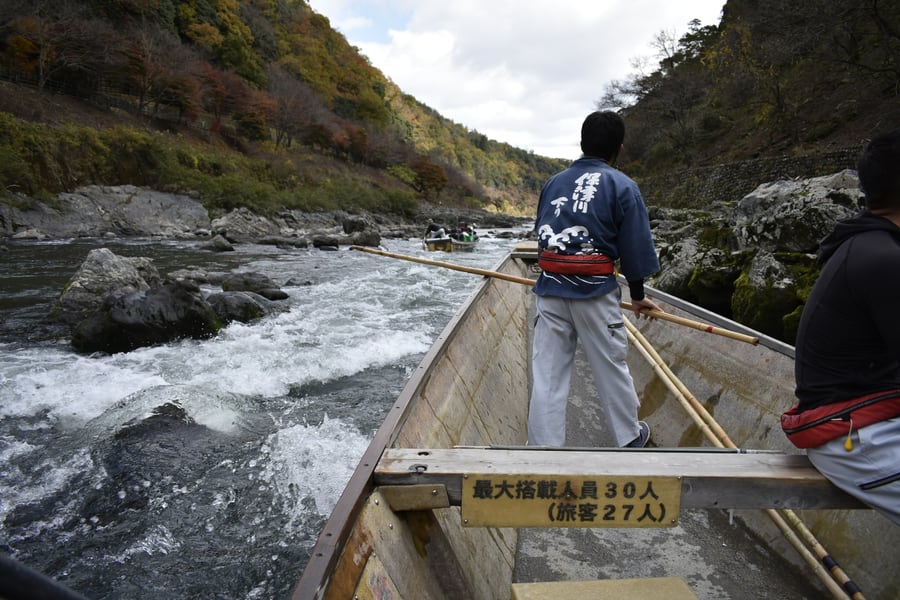 江戸村のとくぞう / Wikimedia Commons · CC BY-SA 4.0 · cropped
The Hozugawa river boats
Sixteen kilometres and about two hours from Kameoka back down to Arashiyama, in a flat-bottomed boat worked with poles and oars through rapids the train only looks down on. Suminokura Ryōi opened the gorge to boat traffic in 1606 to float timber and charcoal to Kyoto, and the trade held until 1895 — when the railway arrived and took the freight away. That railway is the very line the torokko runs on today, and the boats turned to passengers the same year.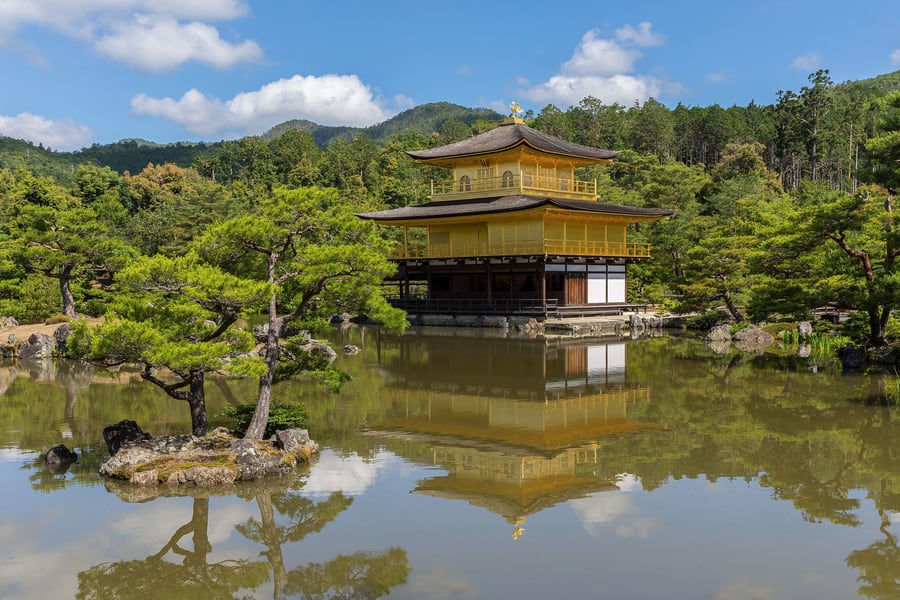 Basile Morin / Wikimedia Commons · CC BY-SA 4.0 · cropped
Central Kyoto
A short ride away lies the city of a thousand temples. Kinkaku-ji, properly Rokuon-ji, began in 1397 as the retirement villa of the shogun Ashikaga Yoshimitsu; a novice monk burned it down in 1950 and the copy that replaced it in 1955 was re-gilded in the 1980s with twenty kilos of gold leaf, ten times the weight of the original. Fushimi Inari's tunnels of vermilion torii climb the hillside on the other side of town.Where to Sleep
The Sagano railway is an easy outing from anywhere in Kyoto, so most travellers base themselves in the city and come out for the morning — and Kyoto rewards a proper stay, with everything from sleek modern hotels near the station to traditional machiya townhouses and beautiful ryokan inns in the old quarters of Gion and Higashiyama. For something quieter and closer to the gorge, Arashiyama itself has a handful of lovely riverside ryokan, where you can wake to mist on the hills and have the bamboo grove almost to yourself before the day-trippers arrive. Wherever you stay, plan well ahead for the cherry-blossom weeks of spring and the maple season of November, when Kyoto is at its most crowded and its most breathtaking.
Questions or corrections
Planning this trip and stuck on something, or spotted a time, fare or detail that has changed? Send us a message about Sagano Scenic Railway. We read every one, and we update this page when something has changed.