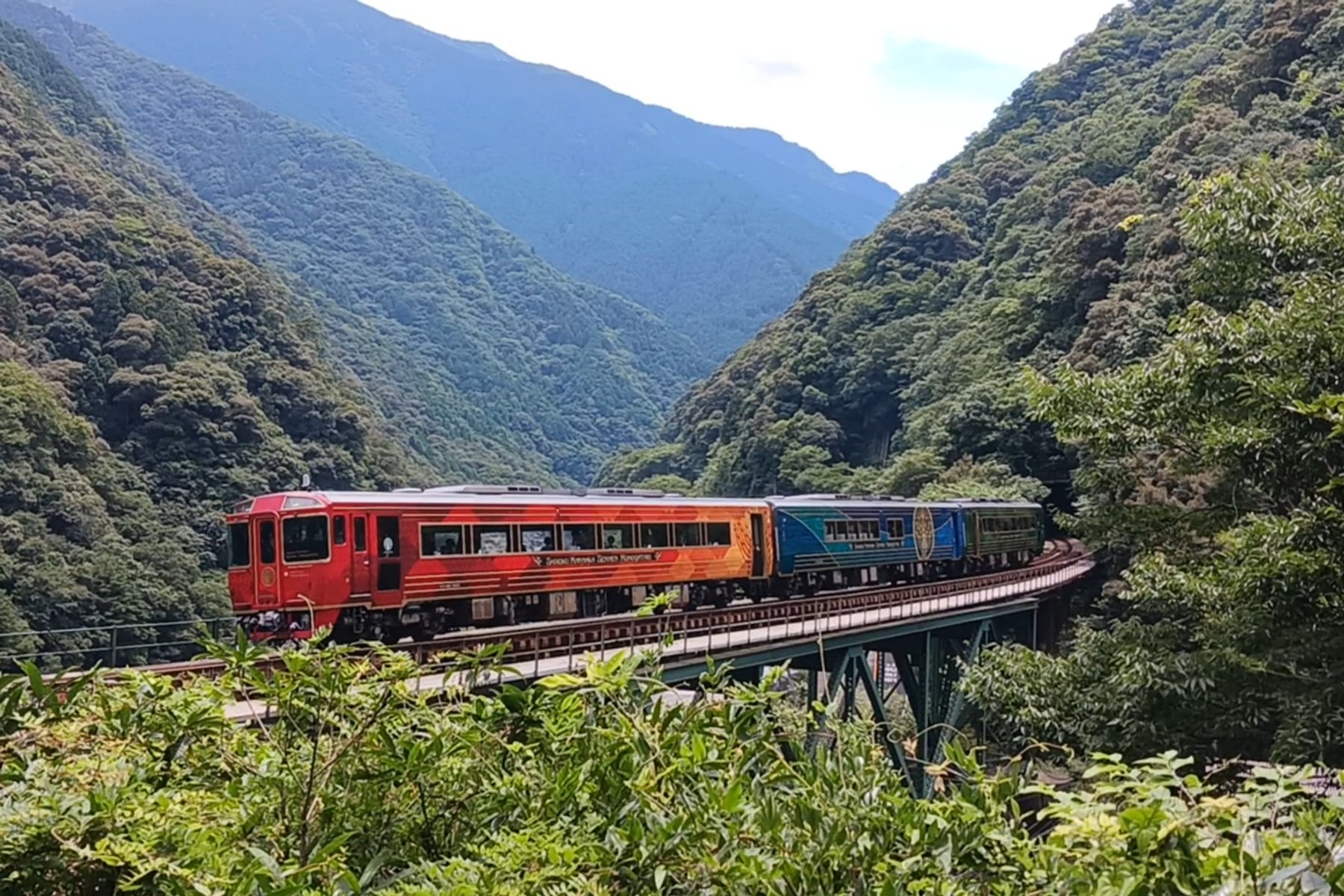
Dosan Line to Ōboke
海翔だよー / Wikimedia Commons · CC BY 4.0 · cropped
- Distance65.5 km
- DurationAbout an hour by limited express · 2¼ hours on the Sennen Monogatari
- Best seasonYear-round · spring blossom and autumn colour in the gorges, sunflowers Jul–Aug
Introduction
The Dosan Line leaves Tadotsu, on the Seto Inland Sea, and crosses Shikoku through its mountains towards Kōchi and the Pacific. Its first 65.5 km, as far as Ōboke, cut a cross-section of the island: the rice plain of Sanuki, the shrine town of Kotohira, a climb over the Sanuki range to a station no road reaches, and then the Yoshino River, which the line follows upstream through the gorges of Koboke and Ōboke.
The limited expresses to Kōchi cover it in about an hour, every hour. The way to ride it slowly is JR Shikoku's Shikoku Mannaka Sennen Monogatari, "the thousand-year tale of the middle of Shikoku": three wood-panelled cars, a lunch booked ahead and served at your table, and one return trip on most Fridays, weekends and holidays. It takes two and a quarter hours to Ōboke, stopping on the way for the switchback at Tsubojiri.
The Journey
Trains leave Tadotsu, where the Sanuki Railway, from which JR Shikoku descends, opened its line to Kotohira in 1889. They run south across the Sanuki plain to Zentsuji, the birthplace of the monk Kūkai, and to Kotohira, where Mt Zōzu, with the shrine of Konpira-san on its slope, stands to the right of the train. The overhead wires end here; beyond, every train is diesel.
Over the mountains
South of Kotohira the line passes the sunflower fields of Mannō and starts to climb, on gradients as steep as 1 in 40, into the Sanuki range. The Inohana tunnel, 3,845 metres long, takes it under the main ridge into Tokushima Prefecture, and on the far side Tsubojiri sits alone at 272 metres in a wooded ravine. It is a switchback station: a train that stops runs past the platform into a siding and reverses in, and leaves the same way. From there the line drops to Awa-Ikeda, crossing the Yoshino River on a bridge 571 metres long.
The gorges
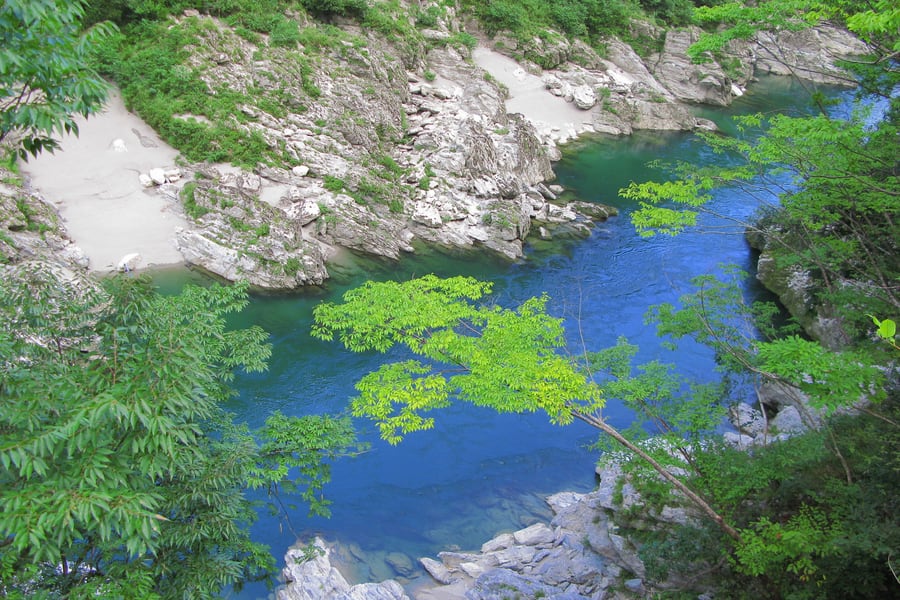
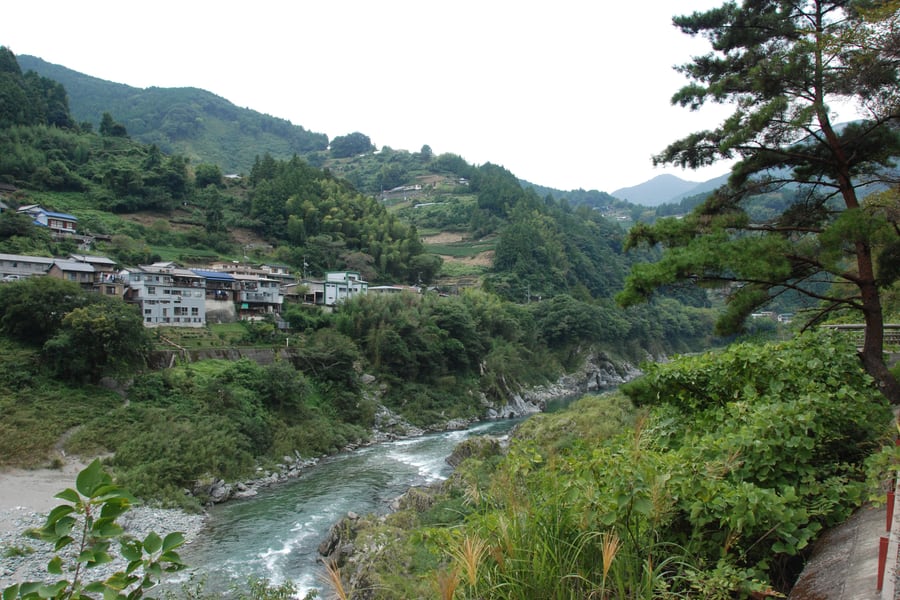
From Awa-Ikeda the line turns upstream along the Yoshino River, the second-longest in Shikoku. Past Awa-Kawaguchi it enters the gorges of Koboke and Ōboke, about eight kilometres of grey-green schist that the river has cut through over two hundred million years. The gorge is both a natural monument and a place of scenic beauty, and from the train it appears in flashes between the tunnels. Ōboke station stands on the river's bank, with a view of the water from its side platform.
The trains
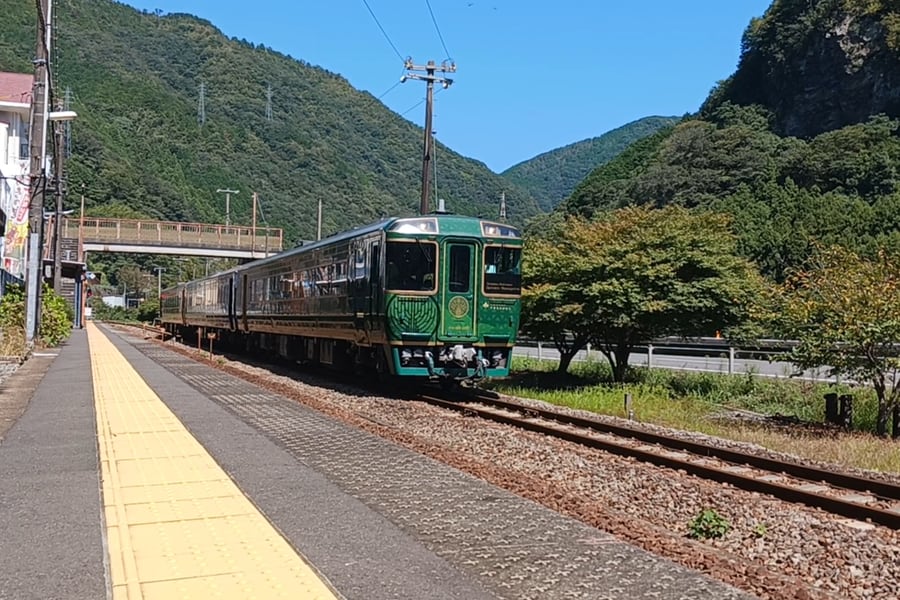
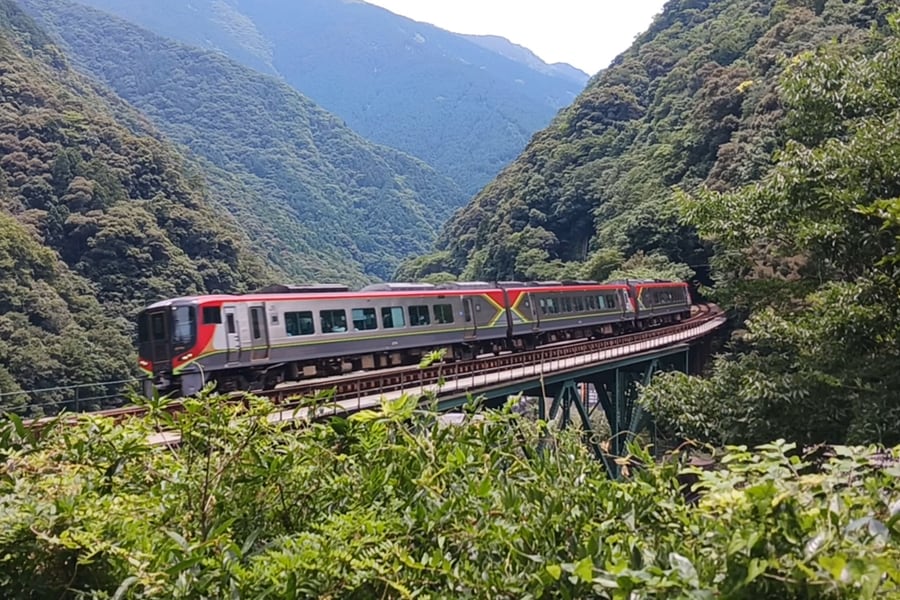
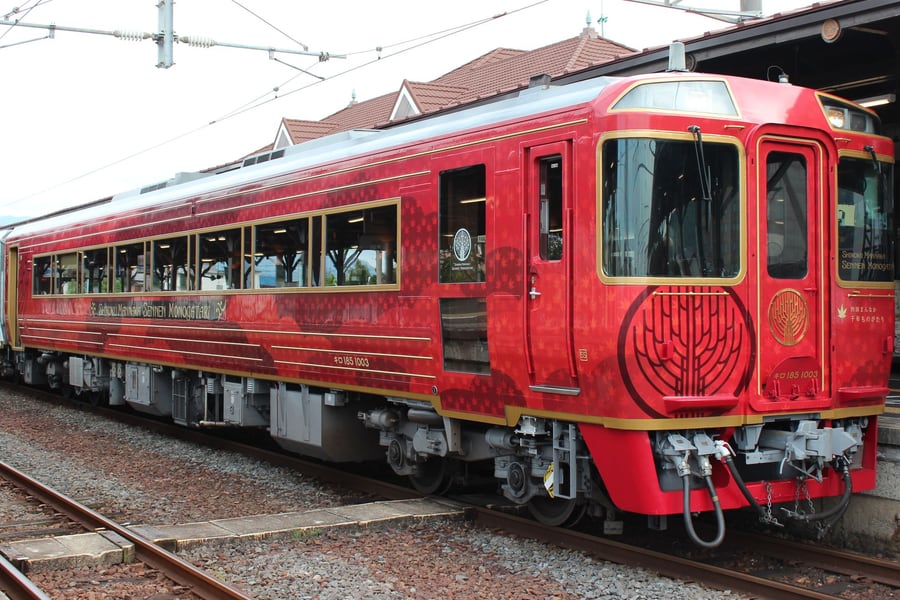
The Shikoku Mannaka Sennen Monogatari is three KiHa 185 railcars rebuilt by JR Shikoku for its first run in 2017, each dressed for a season: green for spring in car 1, blue and white for summer and winter in car 2, and red for autumn in car 3. Inside they are panelled like an old farmhouse, with a seven-metre bench sofa in car 2. Every seat is in the Green Car. The morning run to Ōboke is the Sora no Sato Kikō, the afternoon run back the Shiawase no Sato Kikō. The regular limited express, the Nanpū, runs from Okayama to Kōchi with JR Shikoku's 2700-series diesels, which have worked every Nanpū since March 2021; five of its round trips are painted as Anpanman trains.
Along the route
 Osamiw / Wikimedia Commons · CC BY-SA 4.0 · 2018
Sunflowers at Mannō
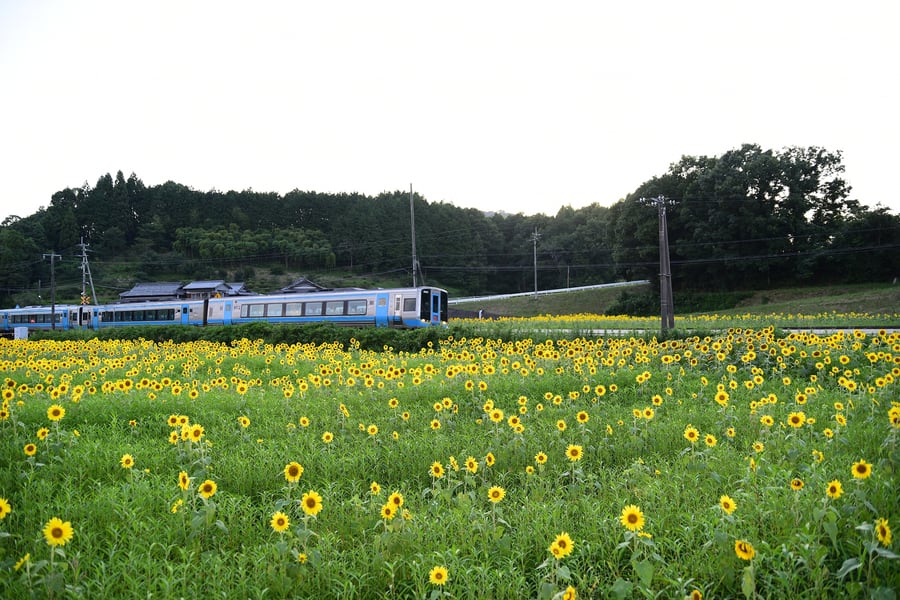
South of Kotohira the line runs past the fields of Mannō, where around 250,000 sunflowers bloom from early July to the middle of August, and the train passes close enough to see them from the window.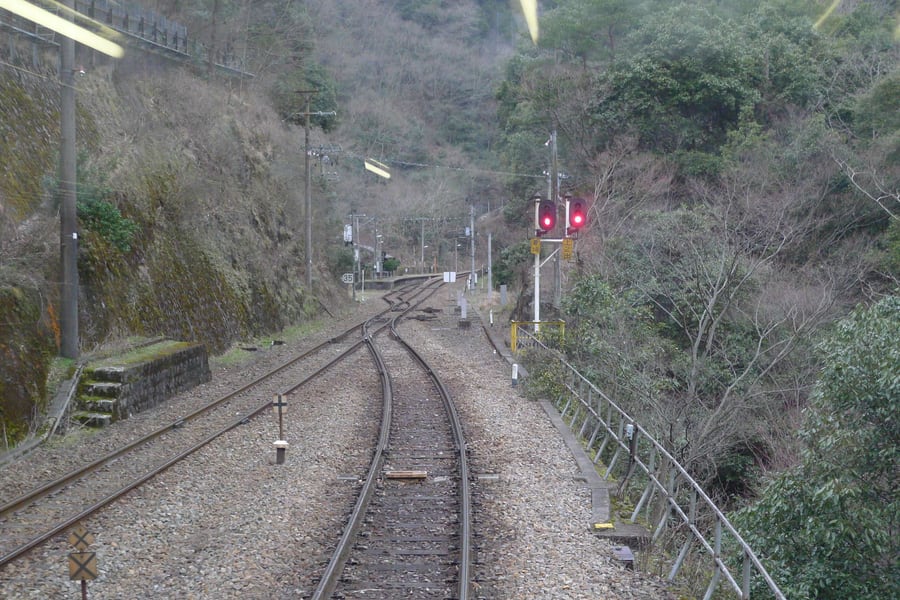 Yasu / Wikimedia Commons · public domain · cropped
The Tsubojiri switchback
Tsubojiri, in a ravine with no road to it, is a switchback: trains run into a siding and reverse to the platform. The Sennen Monogatari makes the move, and passengers may step out while it waits.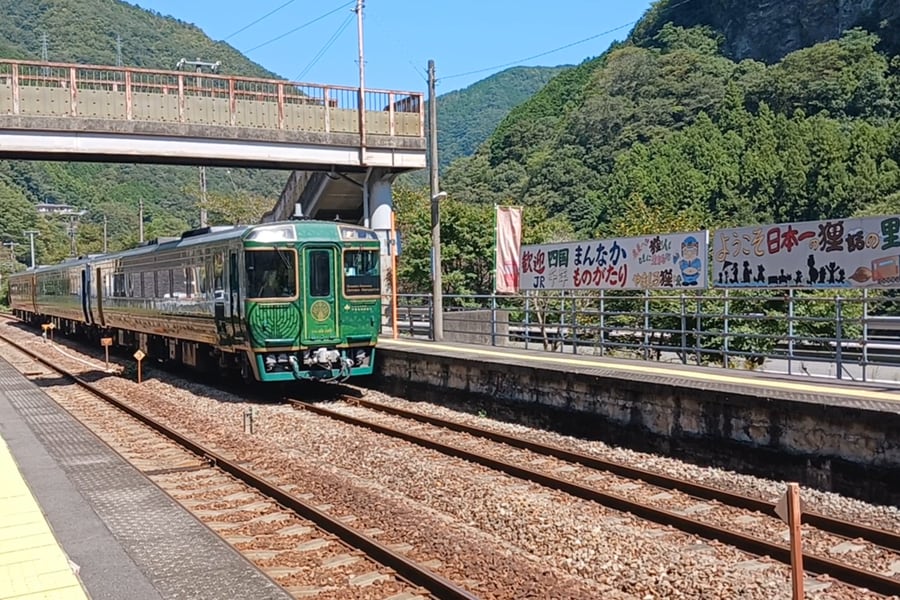 海翔だよー / Wikimedia Commons · CC BY 4.0 · cropped
Awa-Kawaguchi
On the way back from Ōboke the Sennen Monogatari stops at Awa-Kawaguchi, on the Yoshino River, where local people sell produce outside the station. All along the line, people in the fields wave the train past.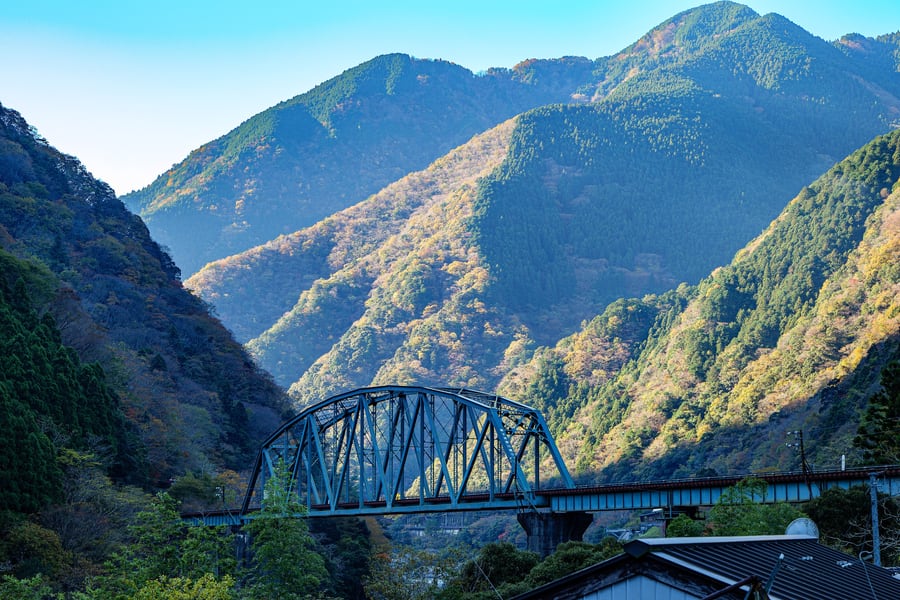 ウォルサム / Wikimedia Commons · CC BY 4.0
The Koboke gorge
Three kilometres below Ōboke, the Koboke gorge is the smaller of the two, its rocks worn into odd shapes. Koboke station is cut into the cliff high above the river, and the line crosses the gorge on steel bridges.A bit of history
Culture & experiences along the way
 暇・カキコ / Wikimedia Commons · CC BY-SA 4.0 · cropped
Lunch in a picnic box
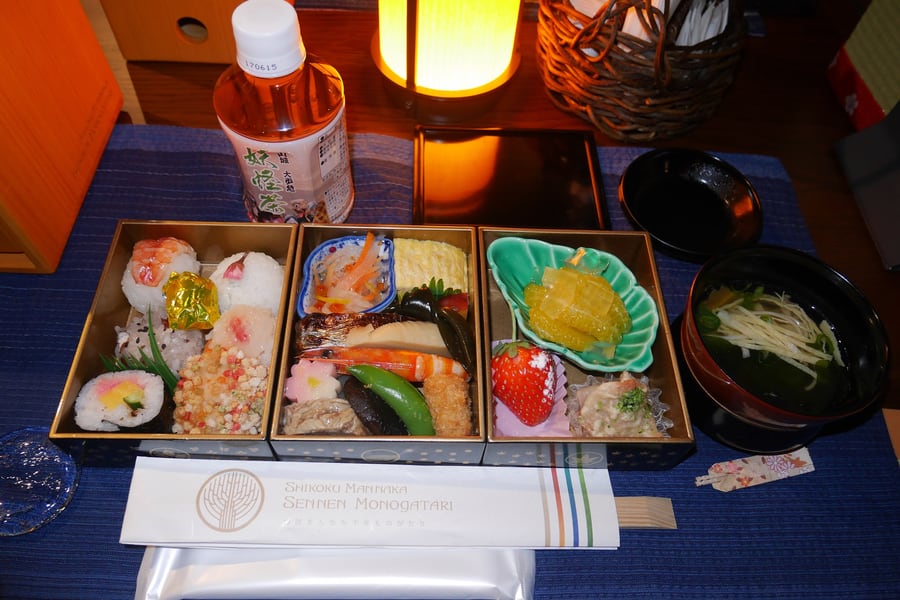
On the afternoon train, lunch comes in a three-tier yusan-bako, the box Tokushima children once filled for a day in the hills, made up by the chef of Ajishō Fujimoto. The morning train serves Western dishes from Kamitsubaki, the restaurant run by Kotohira-gū. Both must be booked ahead.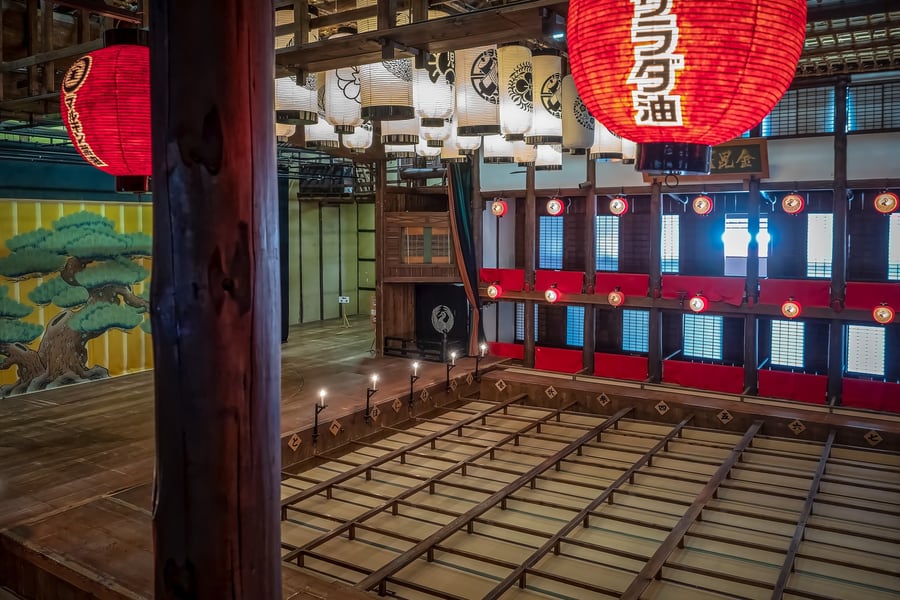 Dunphasizer / Wikimedia Commons · CC BY-SA 2.0 · cropped
Kabuki at Kanamaru-za
In Kotohira, the Kanamaru-za is the oldest kabuki playhouse still standing in Japan, built as a permanent theatre in 1835 and now an Important Cultural Property. Every spring it fills again for the Konpira kabuki season.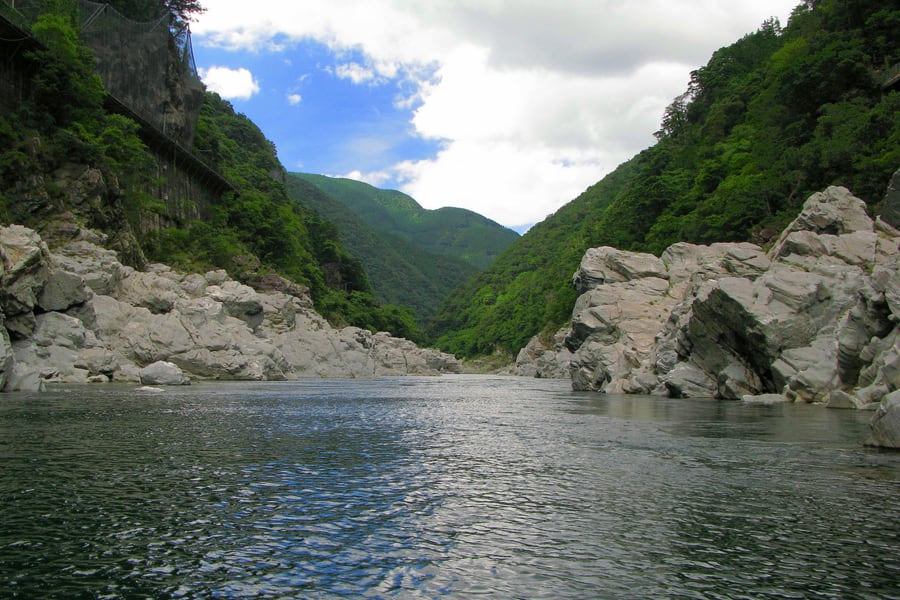 京浜にけ / Wikimedia Commons · CC BY-SA 3.0 · cropped
By boat through Ōboke
Boats leave from the Mannaka restaurant, about twenty-five minutes' walk from Ōboke station, for a half-hour, four-kilometre run up the gorge under its schist walls. They go whenever there are passengers, from 9:00 to the last at 16:30, for ¥1,800; no booking is needed.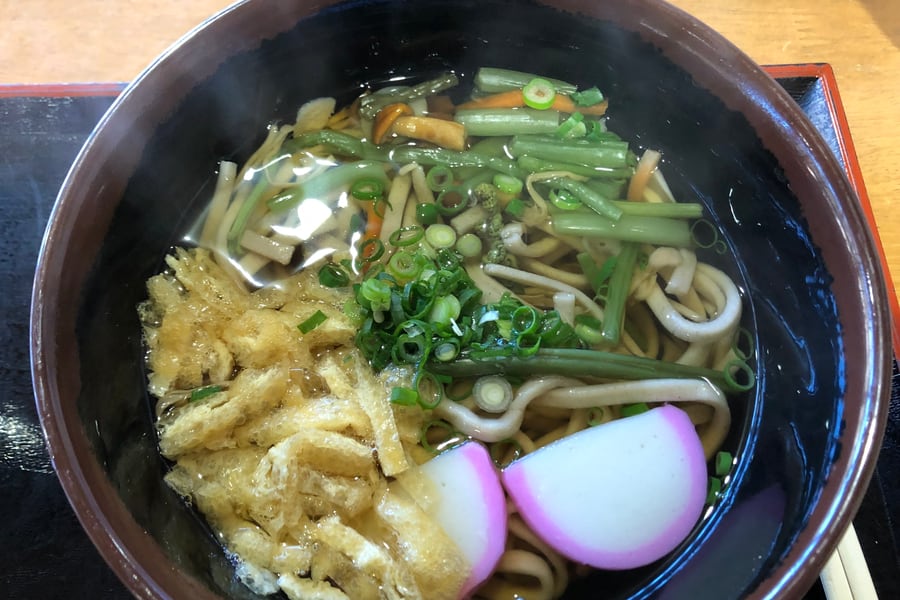 Totti / Wikimedia Commons · CC BY-SA 4.0 · cropped
Iya soba
The buckwheat noodles of the Iya Valley are thick and short, from a grain the women of Iya once milled by hand at the stone quern. Try a bowl at the Mannaka restaurant by the boat landing, or by the vine bridge.Timetables
The Shikoku Mannaka Sennen Monogatari makes one return trip on its running days: mostly Fridays, Saturdays, Sundays and public holidays, all year, with a break in the first half of January. JR Shikoku's calendar is published to March 2027. Every seat is reserved, and boarding on the morning run is only at Tadotsu, Zentsuji and Kotohira.
Shikoku Mannaka Sennen Monogatari
| Train | Tadotsu | Zentsuji | Kotohira | Ōboke |
|---|---|---|---|---|
| Sora no Sato Kikō | 10:19 | 10:26 | 10:48 | 12:34 |
| Train | Ōboke | Kotohira | Zentsuji | Tadotsu |
|---|---|---|---|---|
| Shiawase no Sato Kikō | 14:19 | 16:31 | 17:07 | 17:21 |
Limited expresses, Tadotsu to Ōboke
| Train | Tadotsu | Ōboke |
|---|---|---|
| Shimanto 3 | 08:50 | 09:42 |
| Nanpū 3 | 09:44 | 10:41 |
| Nanpū 5 | 10:48 | 11:41 |
| …about hourly, at :47 past… | ||
| Nanpū 17 | 16:47 | 17:42 |
| Nanpū 27 | 22:23 | 23:16 |
Limited expresses, Ōboke to Tadotsu
| Train | Ōboke | Tadotsu |
|---|---|---|
| Nanpū 2 | 06:48 | 07:49 |
| Nanpū 8 | 10:02 | 10:59 |
| …about hourly… | ||
| Nanpū 28 | 20:23 | 21:15 |
| Shimanto 4 | 21:28 | 22:22 |
Good to know:
- Tsubojiri is served by three local trains a day each way: towards Awa-Ikeda at 12:34, 14:53 and 16:53, towards Kotohira and Tadotsu at 06:56, 08:29 and 13:53. The limited expresses run through without stopping; the Sennen Monogatari pauses there and passengers may step onto the platform.
- Local trains between Kotohira and Ōboke mostly need a change at Awa-Ikeda.
- Tadotsu times for trains towards Okayama are departures; the train arrives a minute or so earlier.
Times as of October 2026, from JR Shikoku's station timetables and the Sennen Monogatari's own seat-availability page. Check your date on JR Shikoku's timetable page (opens in a new tab) and the train's running calendar (opens in a new tab).
Tickets
On the Nanpū, a single from Tadotsu to Ōboke is ¥1,430 for the fare and ¥1,200 for an unreserved limited-express seat, ¥2,630 in all; children pay half. The Sennen Monogatari is all Green Car, so the fare, a limited-express ticket and a Green ticket together come to ¥5,130 from Tadotsu, or ¥4,940 from Zentsuji or Kotohira. Children pay half the fare and express ticket but the full Green charge. A table for three or four is ¥9,000 a table on top of each passenger's fare and express ticket.
Seats are sold at JR ticket offices and, for journeys from 2 October 2026, through JR West's e5489 site; they go quickly at weekends. The lunch is a separate meal ticket booked through JR Shikoku's travel reservation centre, not on e5489. Fares checked October 2026 against JR Shikoku's fare table and the train's ticket page; Japanese yen.
Book your tickets
Sennen Monogatari, Tadotsu to Ōboke
One way, adult · fare, limited express and Green
Every seat is in the Green Car; from Zentsuji or Kotohira it is ¥4,940, and the lunch is booked separately.
Book Tickets (opens in a new tab, on JR Shikoku)via JR ShikokuNanpū, Tadotsu to Ōboke
One way, adult · unreserved seat
The fare and an unreserved limited-express ticket on any Nanpū or Shimanto, about an hour.
Book Tickets (opens in a new tab, on JR Shikoku)via JR ShikokuRail Passes
The regular trains are covered; the Sennen Monogatari mostly is not. The ALL SHIKOKU Rail Pass, for visitors to Japan, gives unlimited travel in ordinary unreserved seats on JR Shikoku's limited expresses and local trains: ¥12,000 for three days, ¥20,000 for seven. It does not include Green seats, and the Sennen Monogatari has no others. The Japan Rail Pass covers JR Shikoku too, ¥50,000 for seven days in ordinary class or ¥70,000 with Green Car seats.
For this journey alone, no pass is worth buying: the Nanpū is ¥2,630 each way and the Sennen Monogatari ¥5,130. A three-day ALL SHIKOKU pass can pay when Ōboke is one stop on a wider trip around the island.
Checked October 2026 against JR Shikoku's ALL SHIKOKU Rail Pass notice (opens in a new tab) of 6 August 2026 and the Japan Rail Pass prices (opens in a new tab).
Places to Visit
With a limited express every hour, any stop costs an hour at most. The morning Sennen Monogatari sets down only at Ōboke, so to see Zentsuji or Kotohira on the same day, ride the regular trains for that part of the trip.
 Zairon / Wikimedia Commons · CC BY 4.0 · cropped
Zentsuji
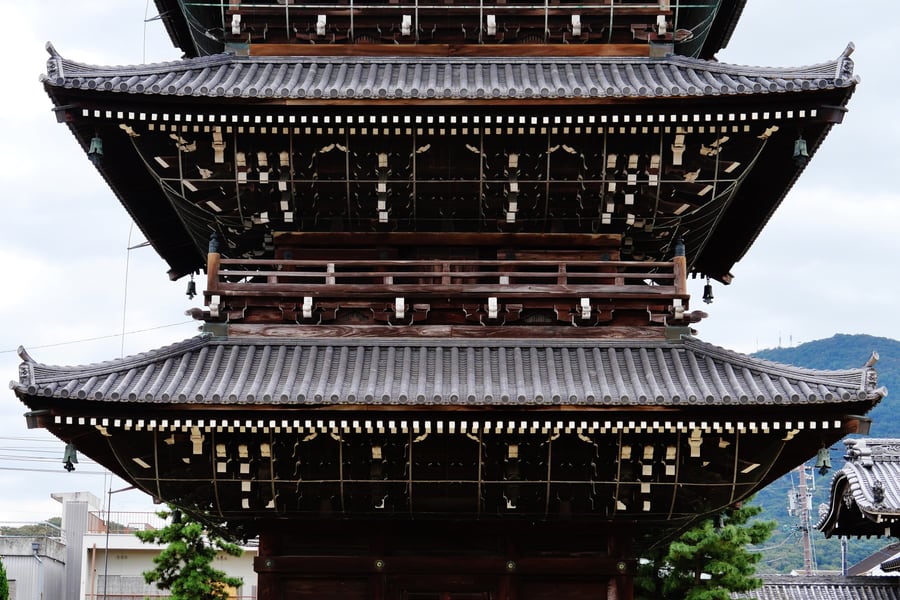
The monk Kūkai, founder of Shingon Buddhism, was born here in 774, and Zentsū-ji, the 75th of the 88 temples of the Shikoku pilgrimage, stands on the spot. Its eastern precinct holds the Golden Hall and the five-storey pagoda; in the western one, the kaidan-meguri is a walk said to wipe away past wrongs.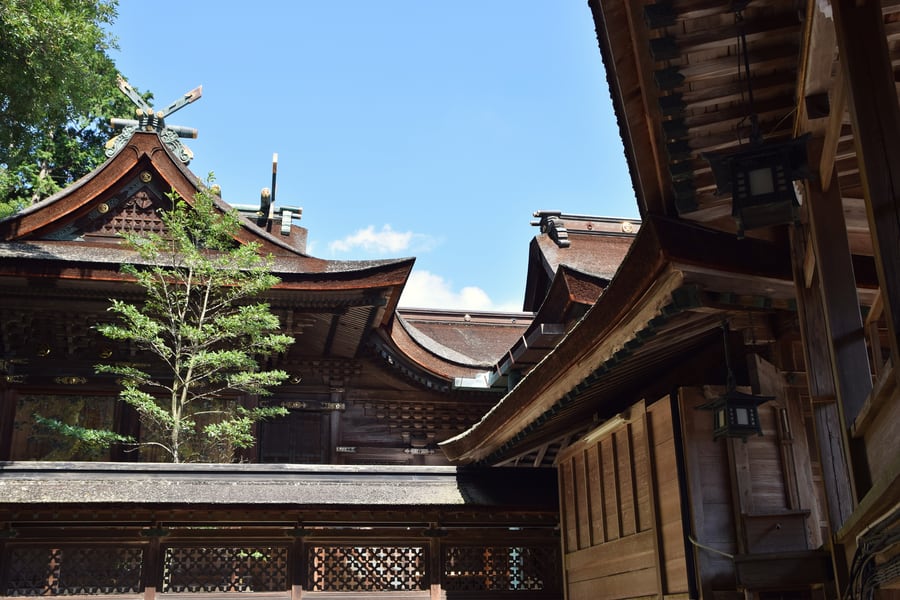 Raita Futo / Wikimedia Commons · CC BY 2.0
Kotohira
Kotohira-gū, Konpira-san, is the shrine of the god of the sea, high on the slope of Mt Zōzu; in the Edo period a pilgrimage here was a journey of a lifetime. It is 785 stone steps to the main shrine and 1,368 to the inner one. The station, a timbered Western-style building of 1936, has its own lounge for the Sennen Monogatari.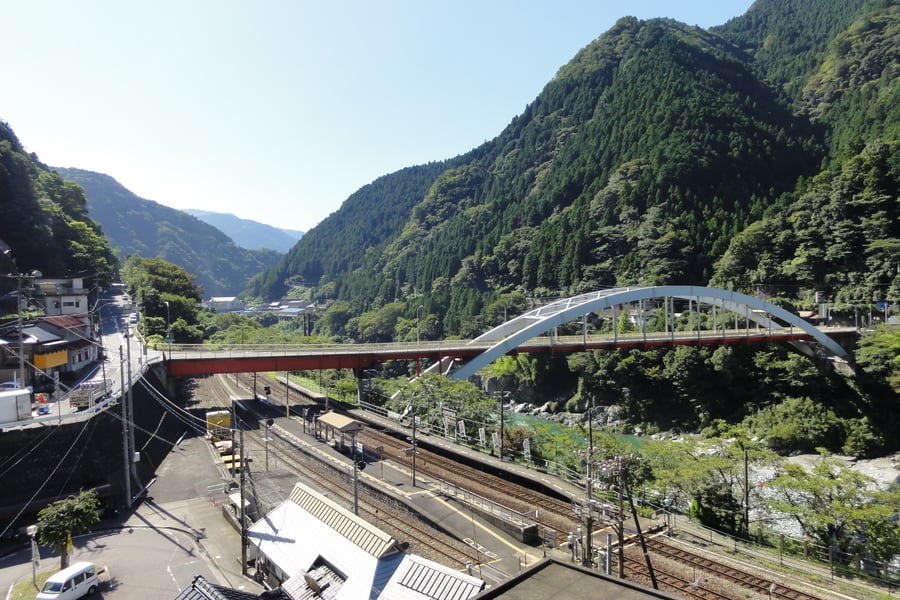 Rsa / Wikimedia Commons · CC BY-SA 3.0 · cropped
Ōboke
About twenty minutes' walk from the station, the Lapis Ōboke roadside station has a museum of rocks and minerals (¥600) and a free hall of the yōkai, the goblins of local legend, open daily from 9:00 to 17:00 for most of the year. The most famous, Konaki-jijii, the crying old man, has a stone statue in the Fujikawa valley, about forty minutes' walk away.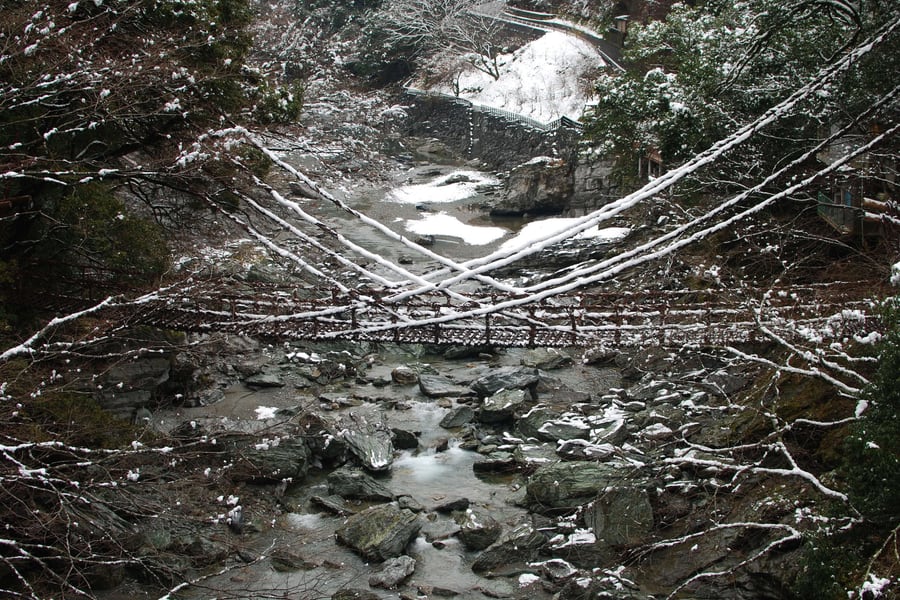 John.E.Robertson / Wikimedia Commons · CC BY 2.0 · 2009
The Iya Valley
Buses run from Ōboke station into the Iya Valley, said to be where the defeated Heike clan hid, to the Kazurabashi: a suspension bridge woven from about six tonnes of vines, 45 metres long and 14 metres above the river, rebuilt every three years. Crossing costs ¥550. On the way the valley road passes the Hi-no-ji gorge, named for a bend shaped like the character hi.Where to Sleep
Kotohira is the easier base for the morning train, which calls there at 10:48. At the other end, a night by the gorge at Ōboke leaves a whole day for the boat and the Iya Valley before the afternoon train back.
Where to stay
Kotohira Onsen Kotosankaku
Kotohira · about 5 minutes' walk from the station
A hot-spring ryokan five minutes from the shrine's approach; guests who book direct can borrow walking shoes for the climb.
Check Availability (opens in a new tab, on kotosankaku.jp)via kotosankaku.jpŌbokekyō Mannaka
Ōboke · beside the gorge
A hot-spring inn three minutes from the boat landing, which collects guests from Ōboke station.
Check Availability (opens in a new tab, on mannaka.co.jp)via mannaka.co.jpQuestions or corrections
Planning this trip and stuck on something, or spotted a time, fare or detail that has changed? Send us a message about Dosan Line to Ōboke. We read every one, and we update this page when something has changed.