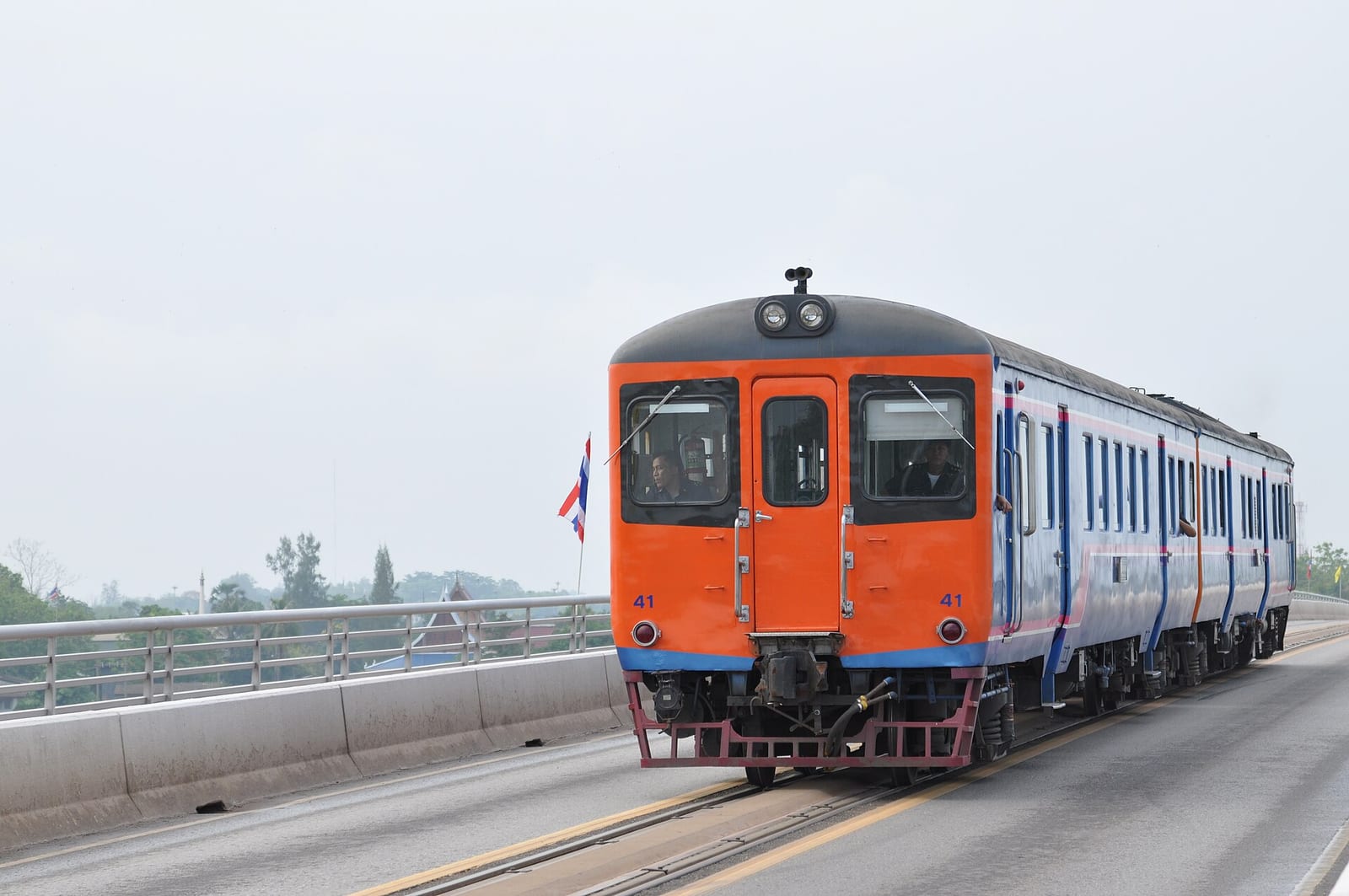
The Bangkok–Vientiane Sleeper
shankar s. / Wikimedia Commons · CC BY 2.0
- DistanceKrung Thep Aphiwat (Bangkok)–Nong Khai–Vientiane (Khamsavath) · about 630 km
- DurationAbout 11½ hours overnight · daily
- Best seasonNovember to February — cool, dry nights across the Isan plateau
Introduction
Not every great railway journey is about speed. Some are about the slow, deliberate pleasure of crossing a border the old-fashioned way — over a river, at walking pace, with your passport in your hand and a whole country waiting on the far bank.
For years, arriving in Laos by train meant a frustrating relay: a Thai sleeper north to Nong Khai, a scramble across the road bridge or a tiny shuttle railcar over the Mekong to a lonely halt called Thanaleng, and then a taxi into Vientiane. The train never really took you into Laos at all.
That changed on 19 July 2024, when the State Railway of Thailand extended its overnight service all the way to the Lao capital. Now a single train — Rapid No. 133 — runs from Bangkok's vast new Krung Thep Aphiwat terminal, up through the fields and market towns of the Isan plateau, across the First Thai–Lao Friendship Bridge at breakfast time, and into Khamsavath, Vientiane's own metre-gauge station. One ticket, one train, two capitals.
It is everything the sleek bullet trains of the Laos–China Railway are not: a slow, sociable, metre-gauge night train of open windows and rocking berths. And that is exactly the appeal. Ride it for the romance of entering Laos overland — and because, once you step off at Khamsavath, a shuttle bus can whisk you straight to the high-speed line for the fast run north. This is the front door to railway travel in Laos.
The Journey
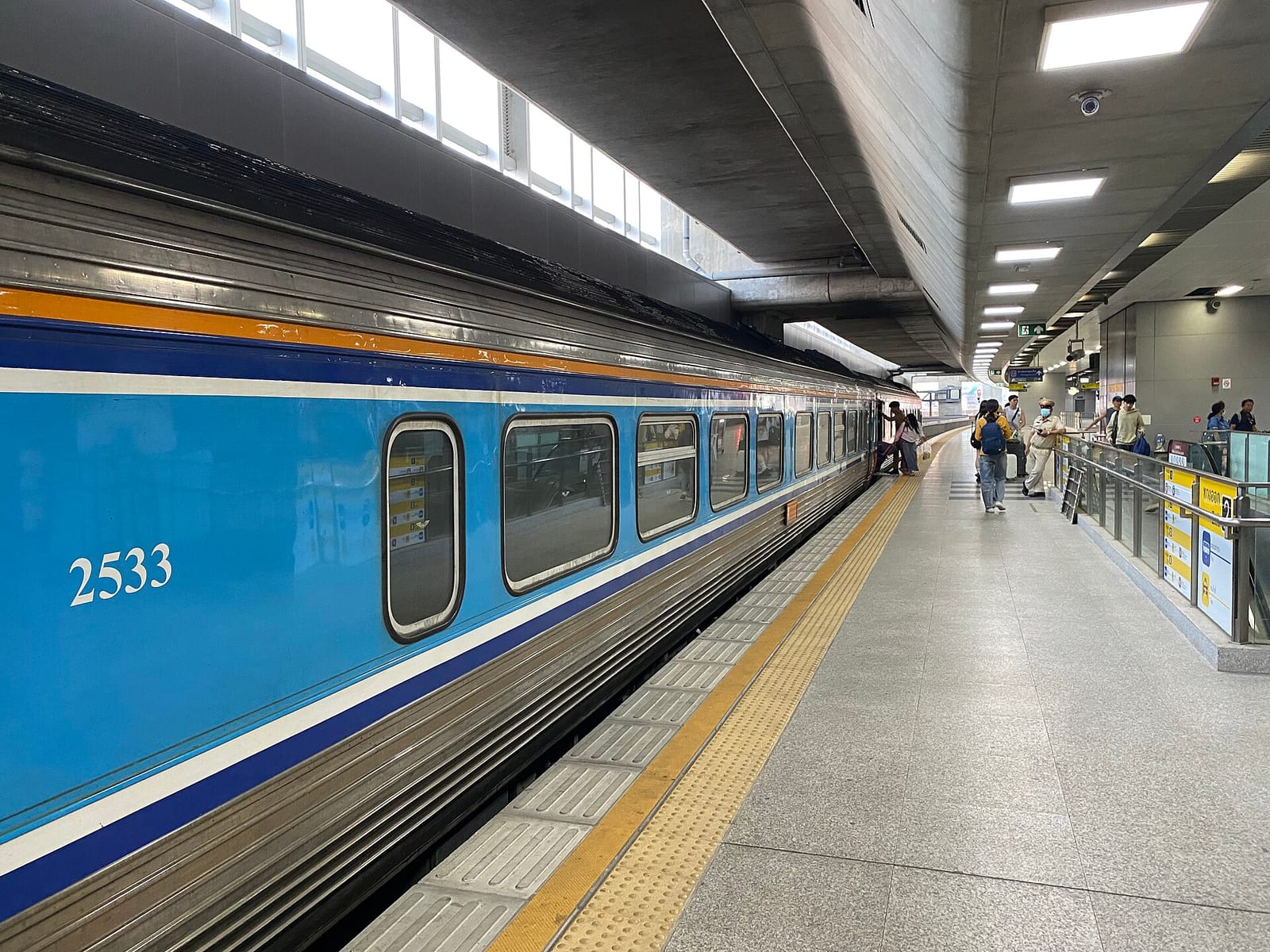
The journey begins under the soaring roof of Krung Thep Aphiwat Central Terminal, Bangkok's enormous main station, as the evening train marshals its carriages. Rapid No. 133 pulls out around 21:25 and settles into its northward rhythm, curving away from the city on the long climb up to the northeastern plateau.
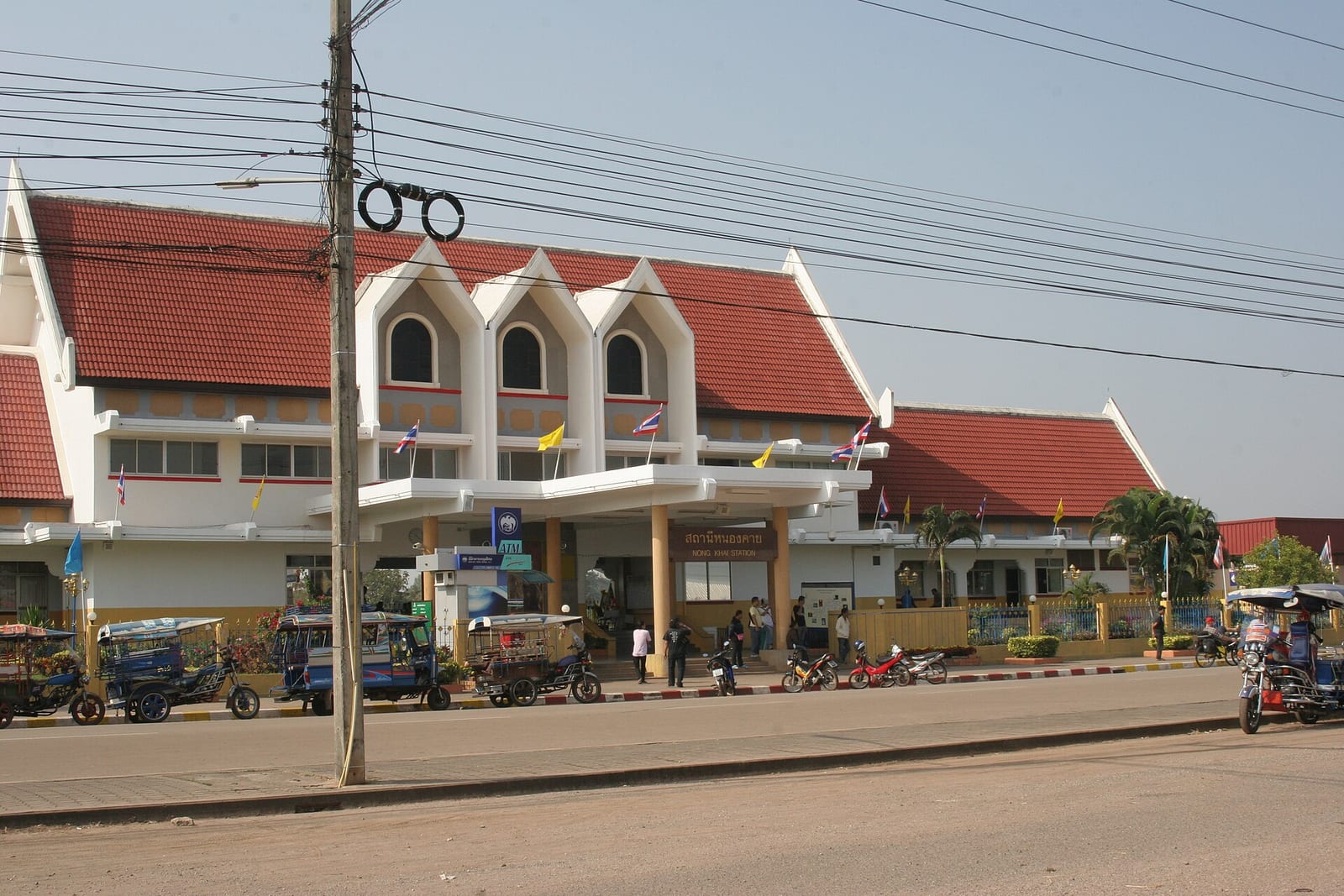
You sleep through the heart of Isan, Thailand's rural northeast — a landscape of rice paddies, sugar-cane and small market towns. The train pauses in the dark at Khon Kaen and, around dawn, at Udon Thani, before rolling down to the Mekong at Nong Khai at about 07:55. This is the last stop in Thailand, and the moment the journey becomes an adventure: everyone continuing to Laos gathers their bags and files through Thai immigration on the platform, a process the timetable allows about forty minutes for.
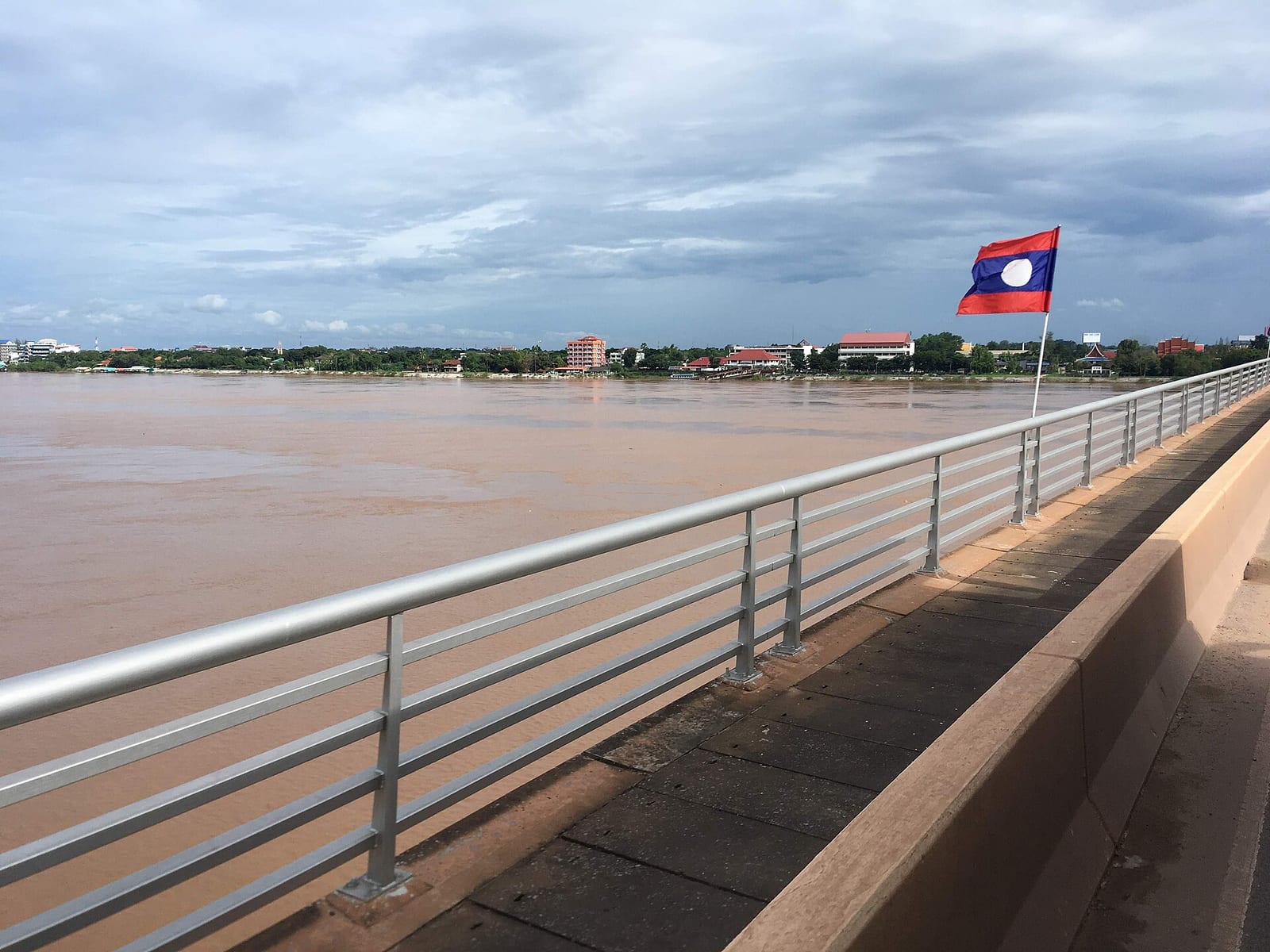
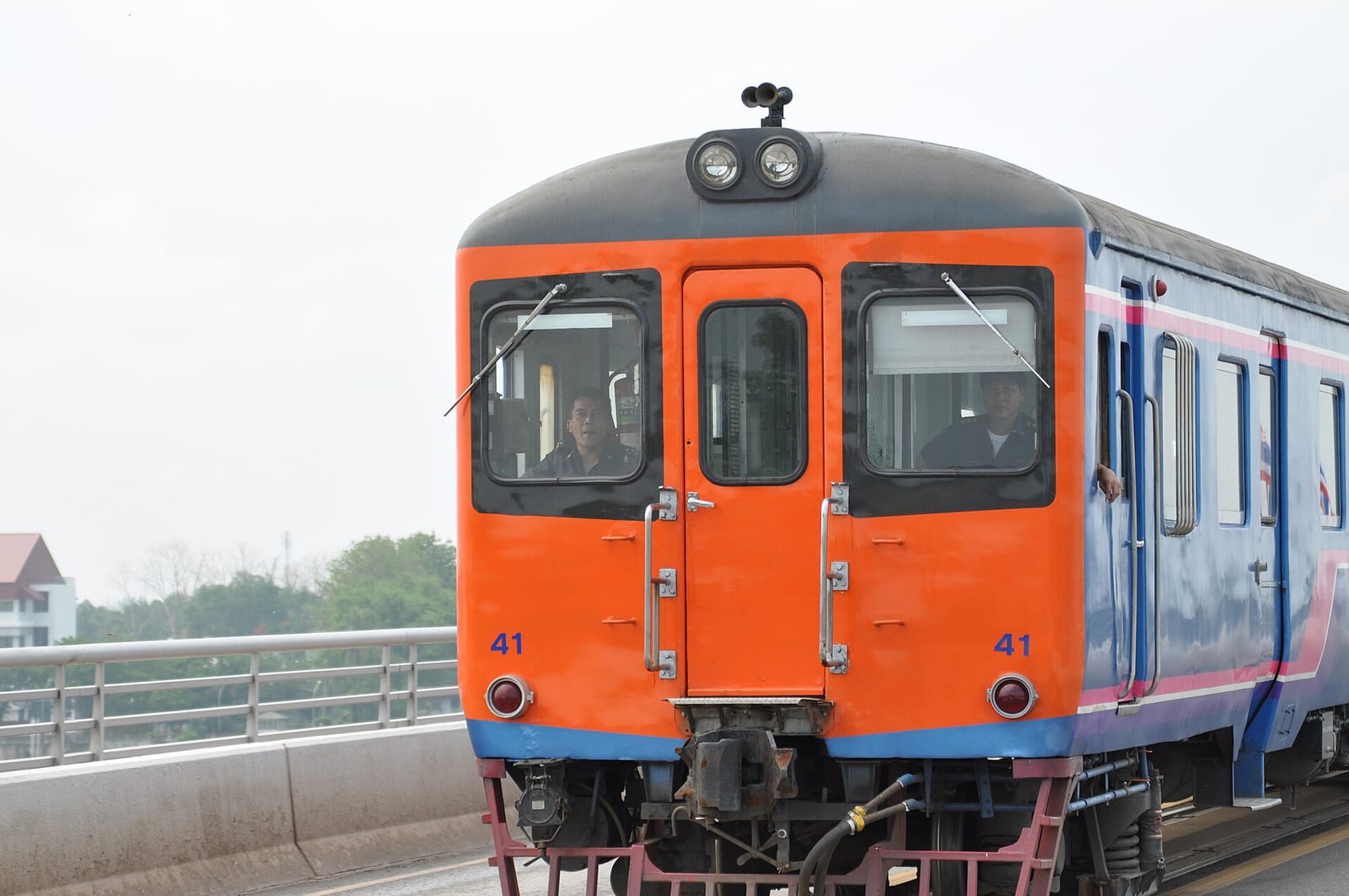
Then comes the crossing. The train eases out onto the First Thai–Lao Friendship Bridge, where a single metre-gauge track runs down the centre of the roadway between the lanes of traffic. Below, the Mekong slides by, broad and brown; ahead, the Lao flag flies over the far bank. The train barely does more than crawl — and that is the point. You are watching yourself enter Laos.
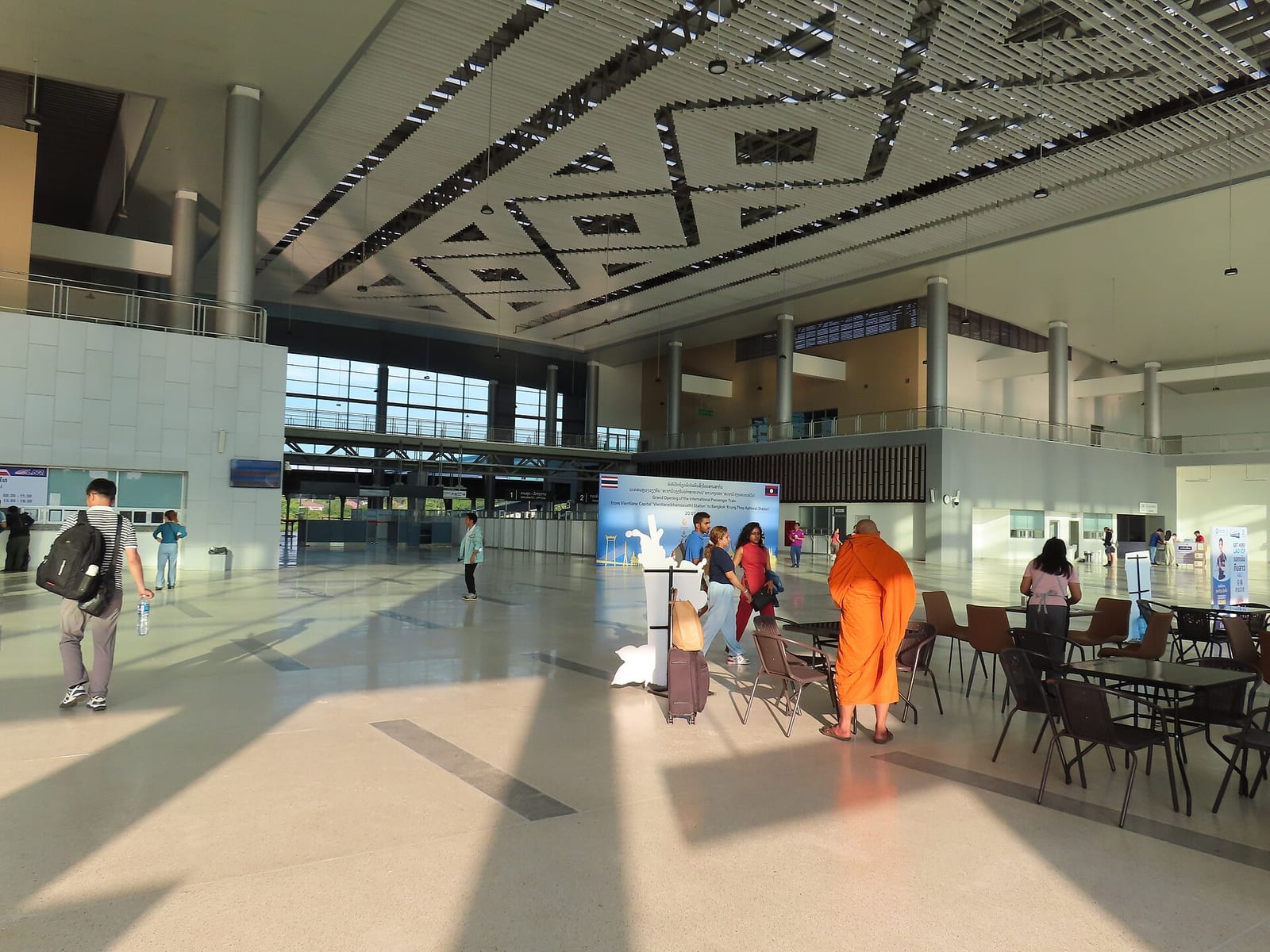
On the north side the line runs a few kilometres more to Khamsavath, Vientiane's metre-gauge terminus, arriving around 09:05. Here you clear Lao immigration, step out into the warm morning, and find yourself — at last — genuinely arrived in Laos by rail. From the forecourt, a shuttle bus waits to carry you into the city, or out to the high-speed station for the bullet trains of the north.
Along the route
Reversemos.sapanaht / Wikimedia Commons · CC BY-SA 4.0One train, all the way from Bangkok to Laos
Since 19 July 2024 a single sleeper has run the whole way from Bangkok into Laos — no longer just to the border but across the Mekong and into Vientiane itself. About eleven and a half hours of old-fashioned, window-down railway travel between two capitals.shankar s. / Wikimedia Commons · CC BY 2.0Over the Mekong by rail
The moment of the journey is the First Thai–Lao Friendship Bridge. A single metre-gauge track runs down the centre of the roadway, and the train eases across the silt-brown Mekong at walking pace. Laos's first railway, in 2009, was nothing more than this hop.カップメーン / Wikimedia Commons · CC0The new gateway at Khamsavath
Until 2024 the train stopped just inside Laos at little Thanaleng, from where you were on your own. Now it carries on to Khamsavath, seven kilometres from downtown Vientiane, with Lao immigration on the platform.A bit of history
Culture & experiences along the way
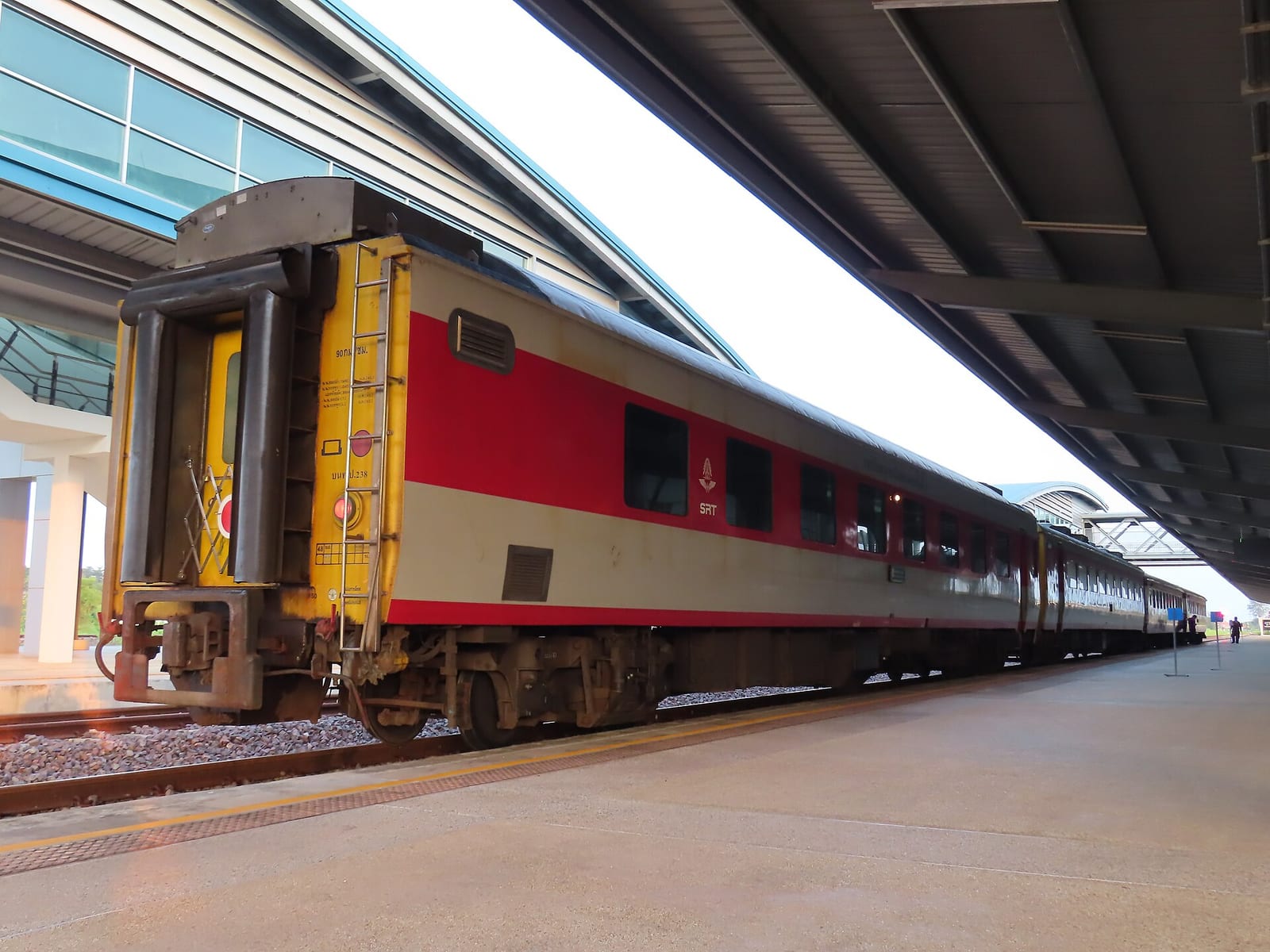
shankar s. / Wikimedia Commons · CC BY 2.0Take a sleeper berth
The through train carries a mix of carriages: breezy third-class seats with fans and open windows (barely a couple of hundred baht all the way into Laos), air-conditioned second-class reclining seats, and — the one to book — a proper second-class sleeper, where a made-up berth lets you doze across Isan and wake near the Mekong. Cheap, sociable, and a world away from a flight.シャムネコ / Wikimedia Commons · CC BY-SA 3.0The border ritual
Crossing by train means two sets of formalities. You clear Thai immigration at Nong Khai, where the train pauses about forty minutes, then rumble over the bridge and complete Lao immigration at Khamsavath on arrival. Most nationalities can get a Lao visa on arrival or an eVisa beforehand; have a passport photo, small US-dollar notes and a pen ready to keep it painless.カップメーン / Wikimedia Commons · CC0Change here for the bullet train
This old metre-gauge sleeper is the perfect prelude to Laos's other railway. From Khamsavath, the airport-style shuttle runs to the Laos–China Railway station on the city's northern edge — so you can arrive from Bangkok by slow night train in the morning and be gliding up to Luang Prabang on a Lane Xang bullet train the same afternoon.Timetables
The direct cross-border train runs daily in each direction: Rapid No. 133 from Bangkok to Vientiane, and Rapid No. 134 on the return.
Bangkok → Vientiane (Khamsavath), as of the 2026 timetable (checked July 2026):
| Station | Time |
|---|---|
| Krung Thep Aphiwat (Bangkok) — depart | 21:25 |
| Khon Kaen | ~05:19 (+1) |
| Udon Thani | ~07:07 |
| Nong Khai — arrive | 07:55 |
| Nong Khai — depart (after Thai immigration) | 08:35 |
| Vientiane (Khamsavath) — arrive | 09:05 |
The return No. 134 runs overnight from Vientiane back to Bangkok. The short cross-border hop between Nong Khai and Khamsavath takes only about 30 minutes, but allow for immigration at both ends.
Good to know:
- It's a metre-gauge night train, not a bullet train. Total time is about 11½ hours — this is a slow, characterful ride, and comfortably an overnight.
- Book the sleeper. The through train carries third-class fan seats, air-conditioned second-class reclining seats and a second-class sleeper; the sleeper berths are the ones to reserve and the first to sell out.
- Fares are very low. Third class runs all the way into Laos for around 281 baht; the air-conditioned second-class seat is about 574 baht, and a second-class sleeper berth roughly 784–874 baht depending on upper or lower.
- A smoother alternative to the border. For more comfort as far as Nong Khai, take the modern Special Express sleeper from Bangkok and change to the cross-border train there.
Times as of the 2026 timetable and subject to change. Always confirm current departures with the operator before you travel (see the Tickets section below).
Tickets
The whole journey is a State Railway of Thailand service — even the Lao section — so one ticket from the Thai railway rides it through. Tickets go on sale up to 60 days ahead on SRT's official D-Ticket site, and the sleeper berths sell out well before departure in the cool season and around Thai and Lao holidays.
The carriages are very different experiences. Third class is fan-cooled with open windows and bench seats — atmospheric, astonishingly cheap, and a long haul overnight. The second-class sleeper is the sweet spot: a curtained, made-up berth, with the lower roomier and a little dearer than the upper. The fare is only part of the arrangement, though: you also need the paperwork to enter Laos, so travel with a spare passport photo and small US-dollar notes.
Book your tickets
Bangkok → Vientiane (Khamsavath)
Rapid No. 133 · overnight, daily
The direct night train to Laos. Departs Krung Thep Aphiwat around 21:25 and reaches Vientiane's Khamsavath station next morning. Book through the State Railway of Thailand's official D-Ticket site up to 60 days ahead; a second-class sleeper berth is the most comfortable way to cross.
Book Tickets (opens in a new tab, on State Railway of Thailand)via State Railway of ThailandThe return & a smarter connection
No. 134 · and the Nong Khai express
Rapid No. 134 makes the return run from Vientiane to Bangkok. For a more comfortable ride to the border you can also take the modern Special Express sleeper from Bangkok to Nong Khai and switch to the cross-border train there. All are bookable on the State Railway of Thailand's D-Ticket site.
Book Tickets (opens in a new tab, on State Railway of Thailand)via State Railway of ThailandRail Passes
No international rail pass covers this train. Interrail and Eurail are European schemes, and neither Thailand nor Laos is among the 33 countries in Interrail's list of covered railway companies. The whole journey is a State Railway of Thailand service, bought as one ticket for a named train and berth.
A pass would add little anyway. The fares are low, and the berth is what sells out.
Checked October 2026 against Interrail's list of railway companies (opens in a new tab).
Places to Visit
The night train delivers you to Vientiane, and the Lao capital rewards a slow day or two before you press on north. It is one of Asia's most laid-back capitals — a low-rise, tree-lined city strung along a bend in the Mekong, easy to cover by bicycle or tuk-tuk and small enough to see comfortably in a day.
Two things worth knowing that are not below. Patuxai, the Lao answer to the Arc de Triomphe, stands at the head of Lane Xang Avenue with a staircase to a rooftop view over the city. And the COPE Visitor Centre tells the story of the country's unexploded-ordnance legacy with real dignity — give it an hour, and give it your attention.
Then comes the clever part. Because the sleeper sets you down at Khamsavath, you are already on the rails — and a shuttle to the high-speed station puts the whole of northern Laos within a couple of hours. Spend your day in Vientiane, sleep by the Mekong, and let the Laos–China Railway carry you up to Vang Vieng and Luang Prabang next morning. The old train brings you into the country; the new one takes you through it.
 Stefan Fussan / Wikimedia Commons · CC BY-SA 3.0 · cropped
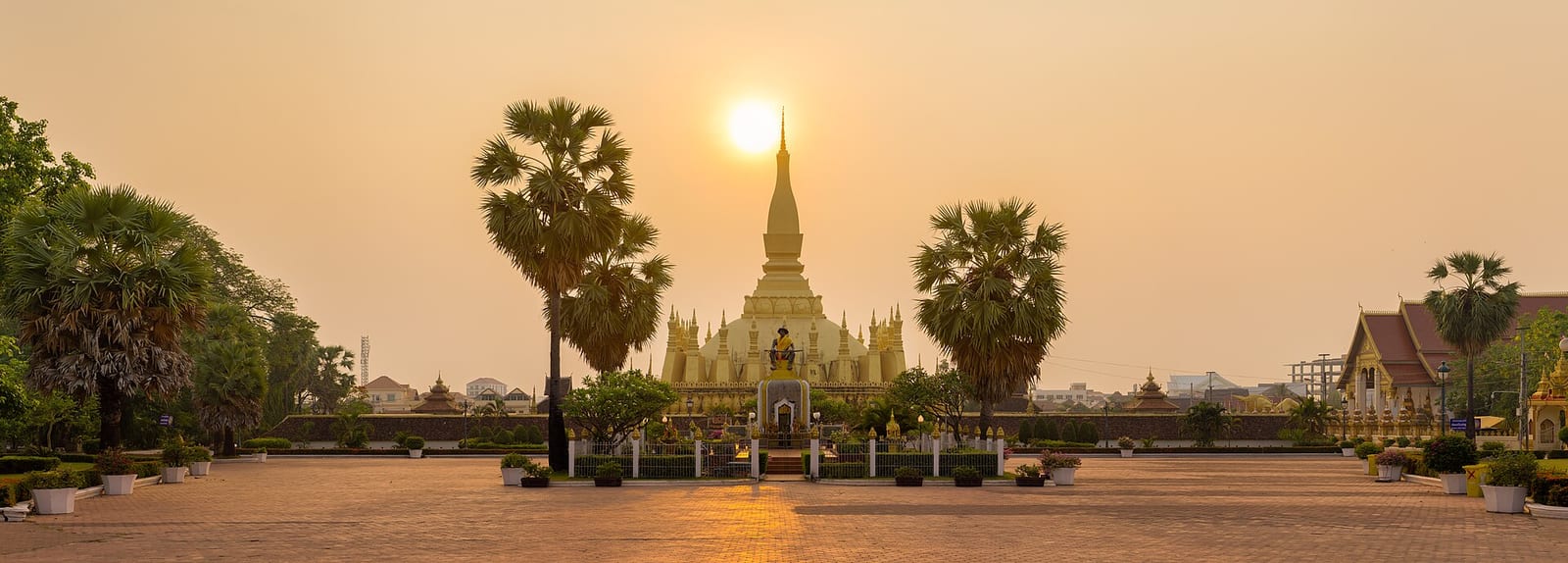
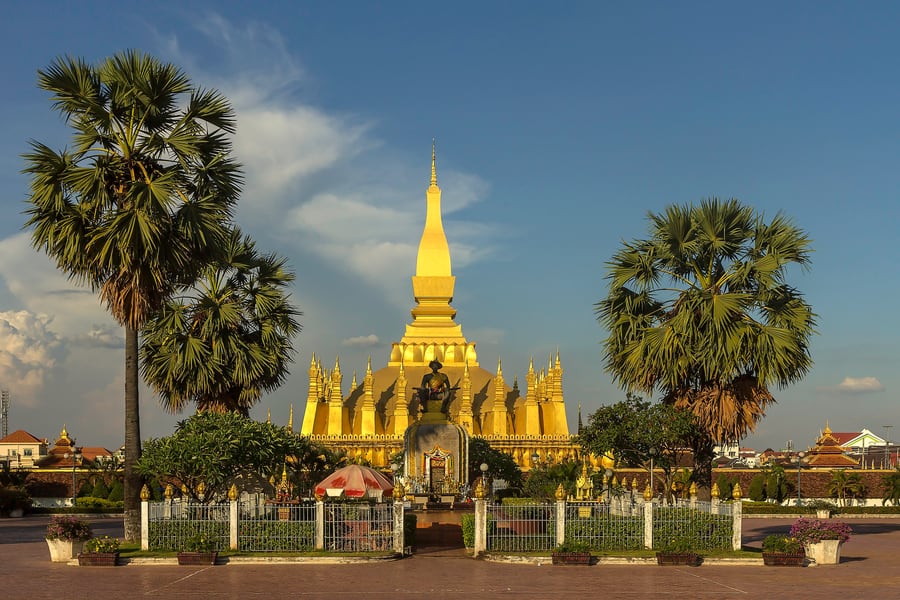
Pha That Luang
King Setthathirat moved his capital from Luang Prabang to Vientiane and ordered this stupa built in 1566 — a 45-metre spire on a base 69 metres square, ringed by thirty smaller ones. A Dutch envoy received here in 1641 reckoned the gold leaf on it weighed a thousand pounds. A Siamese army destroyed it in 1828; the French rebuilt it in 1900 from Louis Delaporte's 1867 drawings, got it wrong, and did it properly in the 1930s.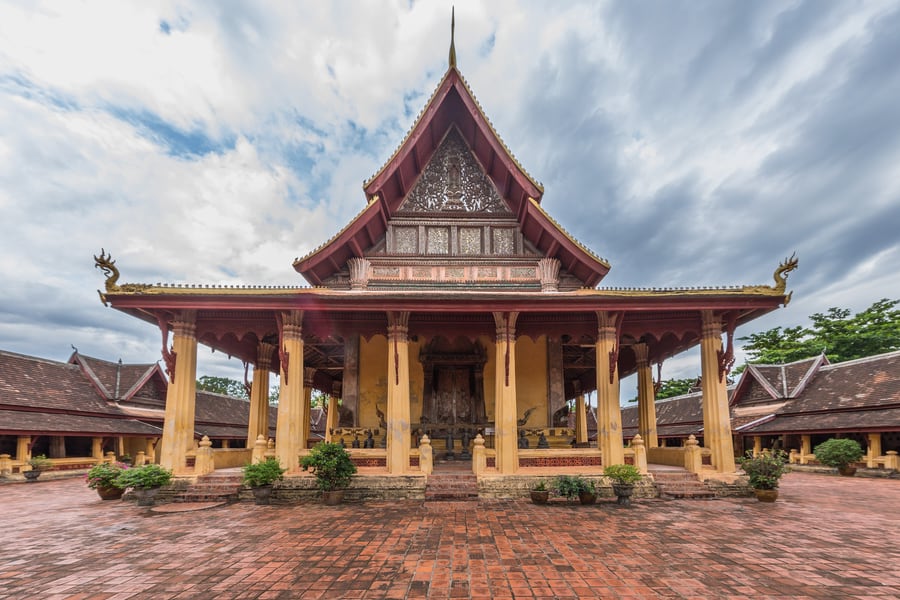 Basile Morin / Wikimedia Commons · CC BY-SA 4.0 · cropped
Wat Si Saket
Built in 1818 on the order of King Anouvong, and the one temple that came through the Siamese sack of 1827 — the invading army liked its ornate five-tiered roof and its terrace enough to make the compound their own headquarters and lodgings. It may be the oldest building still standing in Vientiane. The cloister wall around the courtyard holds more than two thousand small ceramic and silver Buddhas set into niches.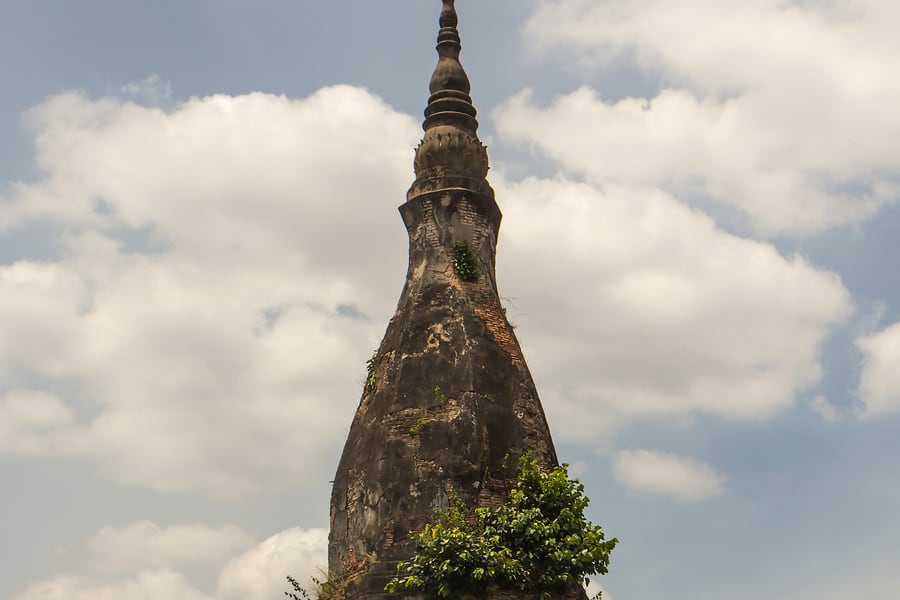 Stefan Fussan / Wikimedia Commons · CC BY-SA 3.0 · cropped
That Dam
A blackened brick stupa marooned in a traffic roundabout, shrubs growing out of its flanks and not a scrap of gold left on it. Lao tradition holds that a seven-headed nāga lives inside and rose to defend the city against the Siamese army in 1827. It did not work: the invaders stripped the covering and it has stood bare ever since. Five minutes from the old French quarter, and quietly the most memorable thing in Vientiane.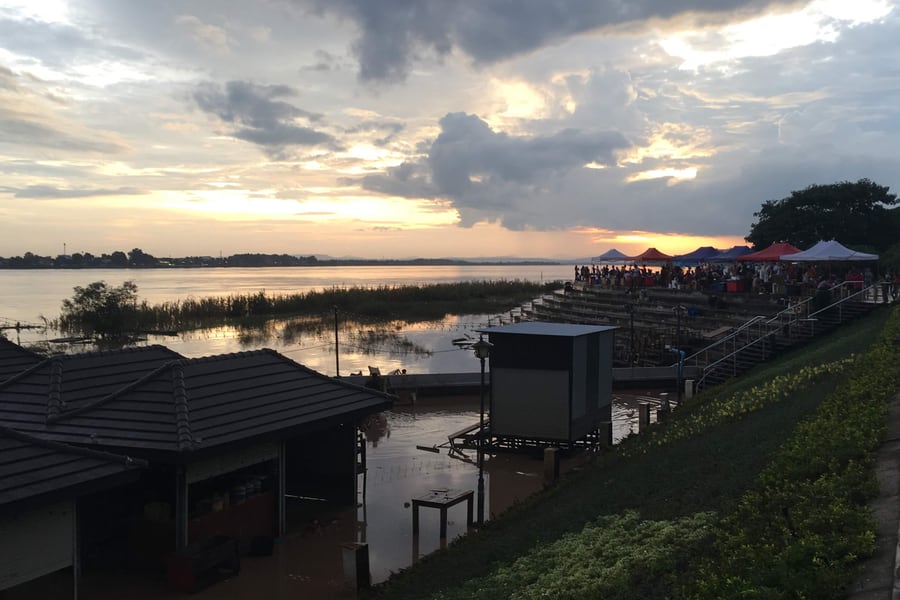 Christophe95 / Wikimedia Commons · CC BY-SA 4.0 · cropped
The Mekong riverfront
The great event of a Vientiane day is still the sun going down over the Mekong, with Thailand on the far bank and the river running wide and brown between. At dusk the night market unrolls along the promenade — clothes, phone cases, grilled fish — and most of the city seems to turn out for it. Nothing about the evening is urgent, which is exactly the right antidote to eleven and a half hours in a sleeping car.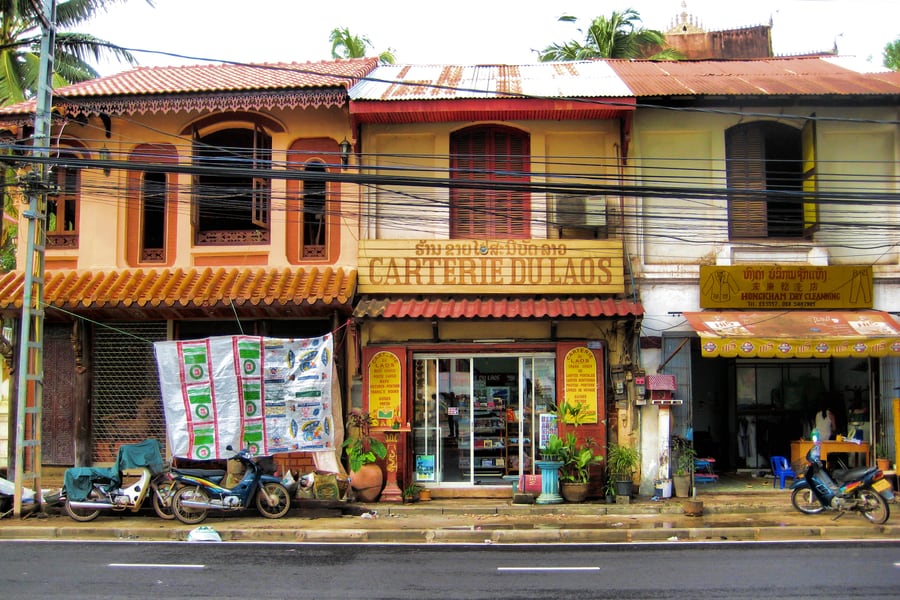 Francisco Anzola / Wikimedia Commons · CC BY 2.0 · cropped
The French quarter
France ran Laos from here for half a century and central Vientiane still shows it: ochre shophouses with shuttered upper floors, villas set back behind frangipani, and pavement cafés selling baguettes and fierce coffee next door to noodle stalls. Most of it is lived-in and a little scruffy rather than restored, which is the charm of the place. The quarter is small enough to walk in a morning, or cover by tuk-tuk in half of one.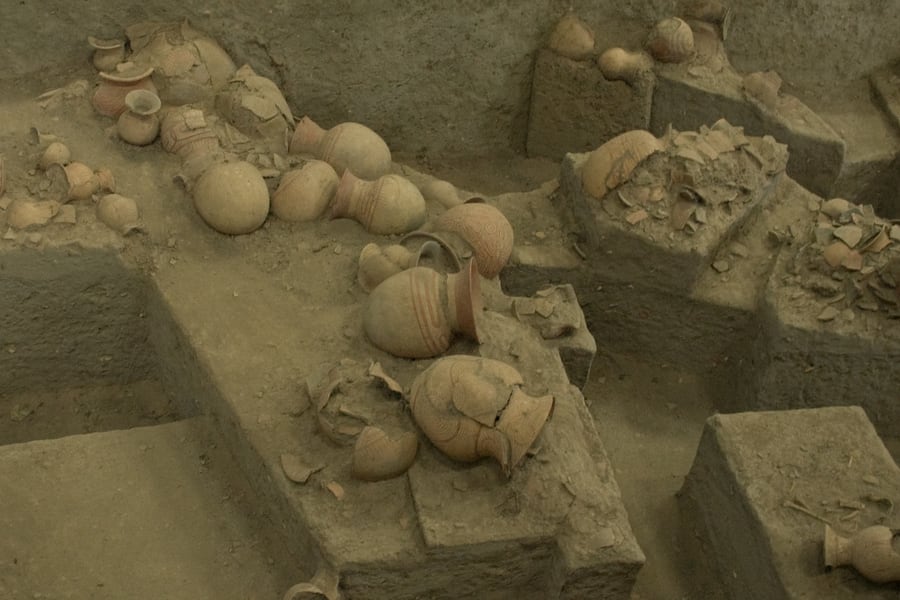 Steve from Bangkok, Thailand / Wikimedia Commons · CC BY-SA 2.0 · cropped
Ban Chiang
The night train's most unexpected detour lies on the Thai side, in Udon Thani province. Ban Chiang is a prehistoric settlement mound, discovered in 1966 and a UNESCO World Heritage Site since 1992, whose red-painted pottery is among the most distinctive early ceramics in Asia. Part of the excavation is left open where it was dug, the pots lying in the burial pits as they were found. Break the journey to see it.Where to Sleep
Your first night on this journey is spent on the train itself — which is rather the point. A second-class sleeper berth, curtain drawn and window darkening over the Isan plateau, is the most comfortable way to make the crossing, and it means you step off in Laos rested rather than road-weary. Book it early; the berths are the first thing to sell out.
Once in Vientiane, base yourself near the Mekong riverfront. This is the city's most atmospheric quarter — the sunset promenade, the night market, the riverside restaurants and the best of the cafés and bakeries are all within a short stroll, and the main temples are an easy walk or a cheap tuk-tuk away. The capital offers the full range, from simple guesthouses in restored shophouses to polished international four-star hotels, and rooms are generally good value.
Keep in mind the geography of the stations. Khamsavath, where the night train arrives, sits about seven kilometres from the centre, while the Laos–China Railway high-speed station is further out again on the city's northern edge. Both are linked to town by shuttle bus, taxi and tuk-tuk, but if you have an early onward train it is worth sorting your transfer — and your next ticket — the day before.
For most travellers the pattern is simple and satisfying: arrive off the sleeper in the morning, spend a day and a night in Vientiane by the river, then continue north by high-speed train the following day.
Questions or corrections
Planning this trip and stuck on something, or spotted a time, fare or detail that has changed? Send us a message about The Bangkok–Vientiane Sleeper. We read every one, and we update this page when something has changed.