The Laos–China Railway
Julia Denton-Barker / Wikimedia Commons · CC BY-SA 2.0
- DistanceVientiane–Vang Vieng–Luang Prabang–Boten · 422 km
- DurationVientiane–Luang Prabang ~2 h · Vientiane–Boten ~5½–6 h
- Best seasonNovember to February — the cool, dry season, when the karst country is clearest
Introduction
For most of its modern history, Laos was one of the few countries on earth with barely any railway at all. A short spur across the Mekong from Thailand, opened in 2009, ran a couple of shuttle trains a day and stopped almost as soon as it started. To travel the length of the country — from the capital Vientiane up through the mountains to Luang Prabang and on to the Chinese frontier — meant a full day, sometimes more, on winding, landslide-prone roads.
Then, on 3 December 2021, everything changed. The Laos–China Railway opened: a brand-new, electrified, standard-gauge line running 422 kilometres from Vientiane to the border town of Boten, where it meets China's network and carries on to Kunming. Nearly half of it runs inside tunnels — seventy-five of them — and much of the rest crosses 167 bridges and viaducts flung across the valleys. Sleek "Lane Xang" bullet trains, named for the old Lao kingdom of a million elephants, now cover the ground at up to 160 km/h.
It is not a 300 km/h super-railway, and it does not pretend to be. What it is instead is genuinely transformational: a ten-hour bus grind over the passes, folded down into a two-hour glide past limestone karst and terraced hills. For the traveller it has opened up the classic Laos itinerary — Vientiane, Vang Vieng, Luang Prabang — as a string of easy, comfortable, absurdly cheap train rides. This is the story of the most important railway in Southeast Asia to open in years.
The Journey
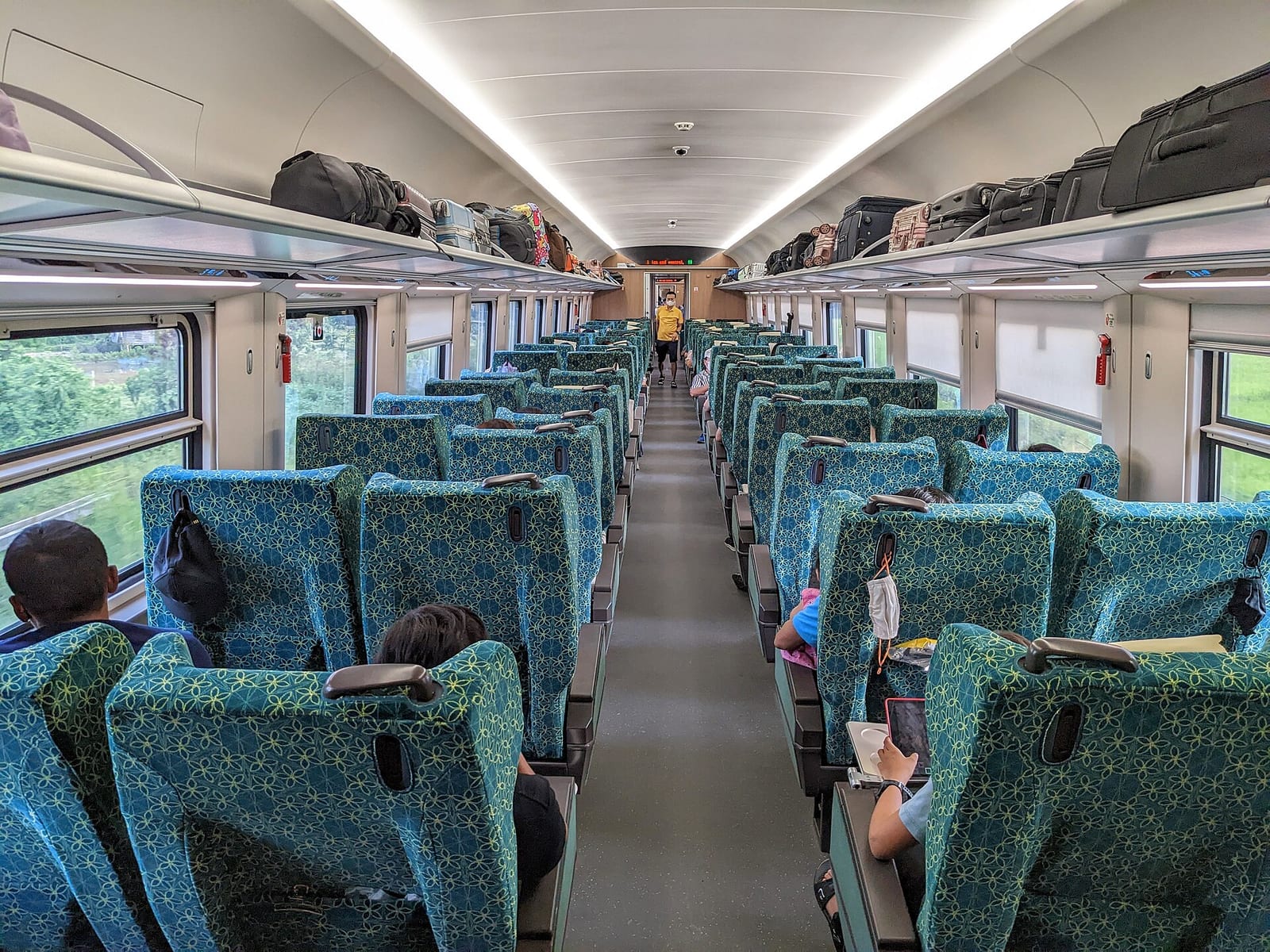
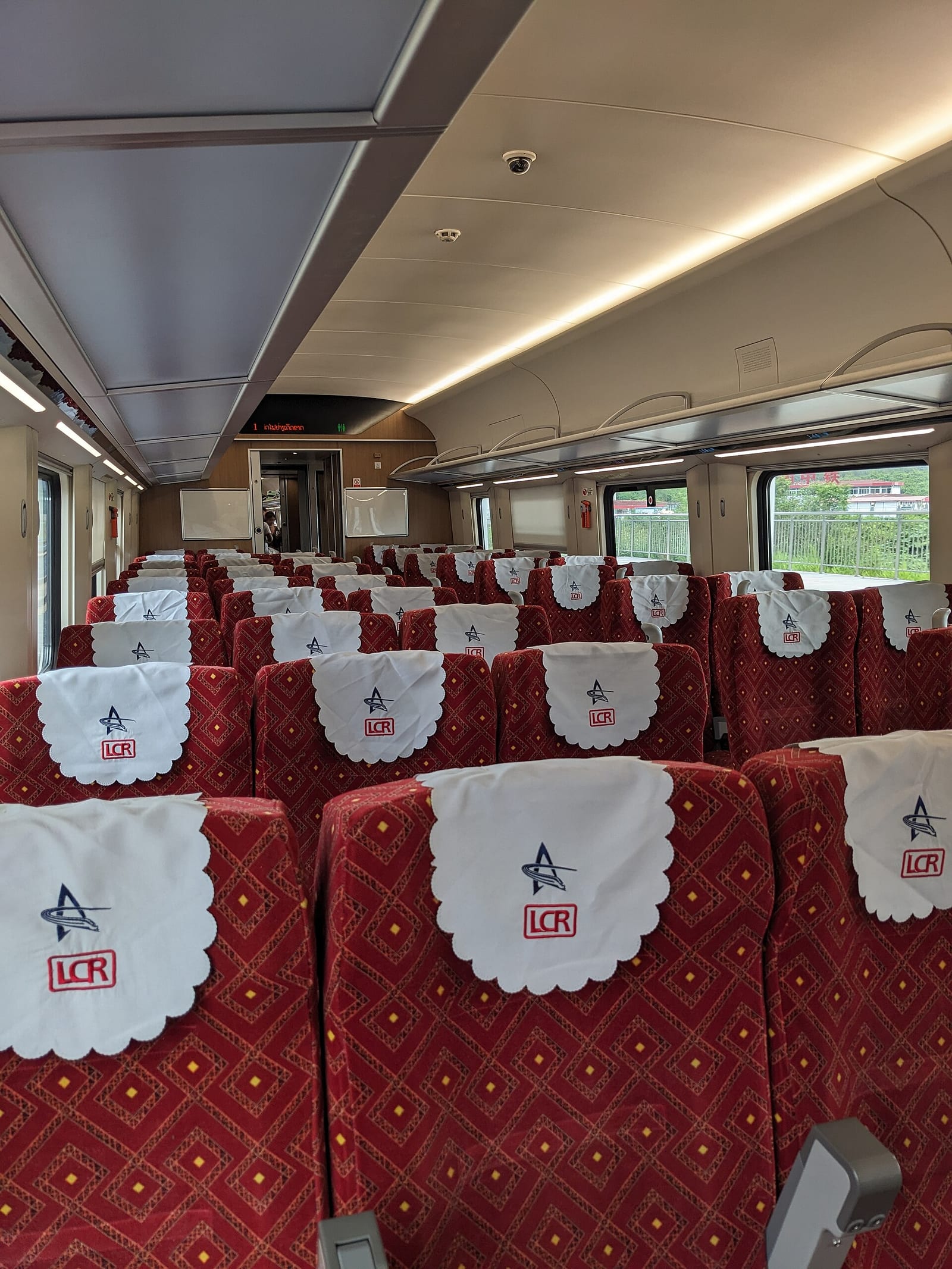
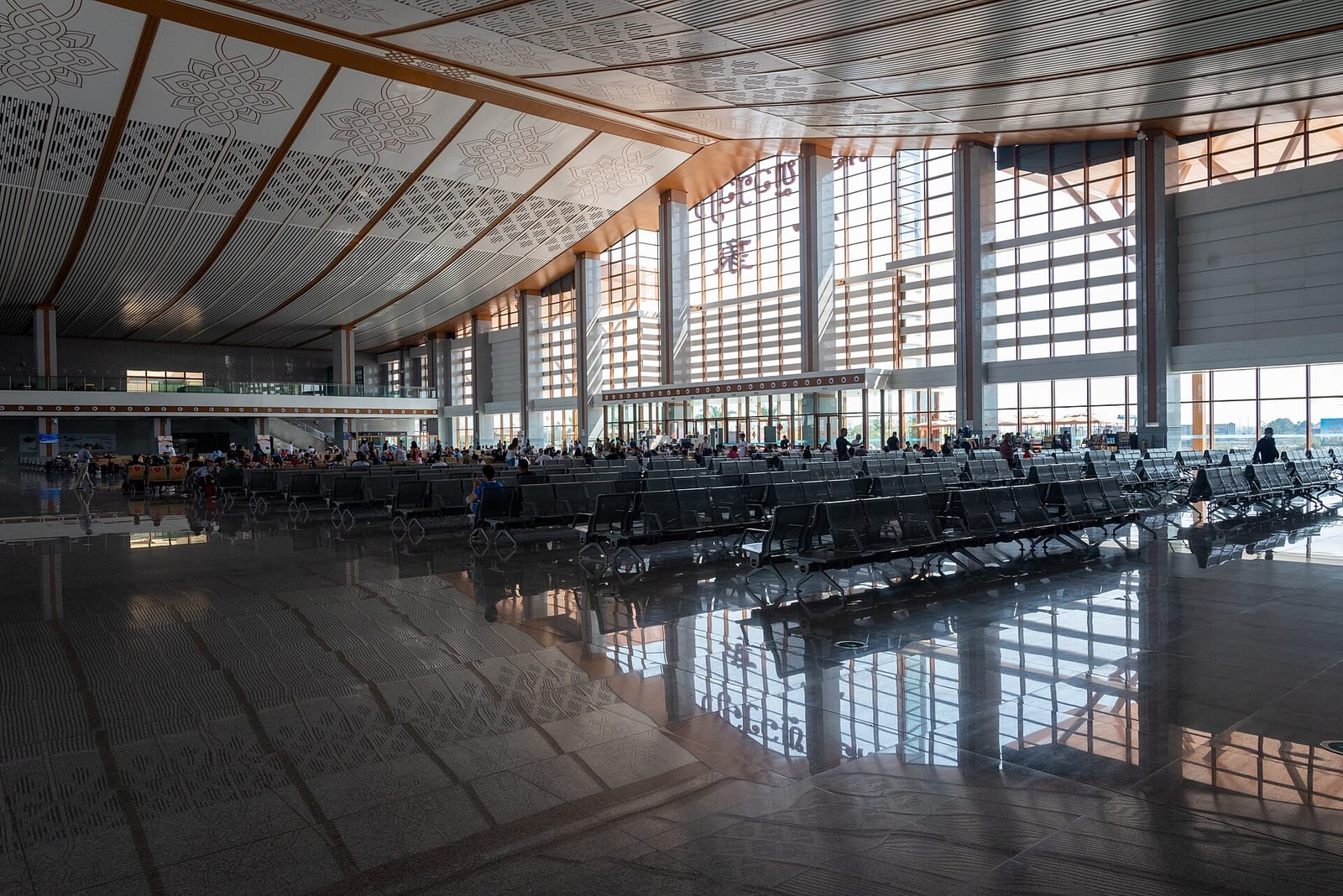
The journey begins on the northern edge of Vientiane, at the modern station out at Xaythany. The Lane Xang trains are unmistakably Chinese in style — bullet noses, airliner cabins, electronic seat reservations, airport-style boarding gates — and they leave to the minute. Settle in; within a few minutes of pulling out, the capital's suburbs give way to open country.
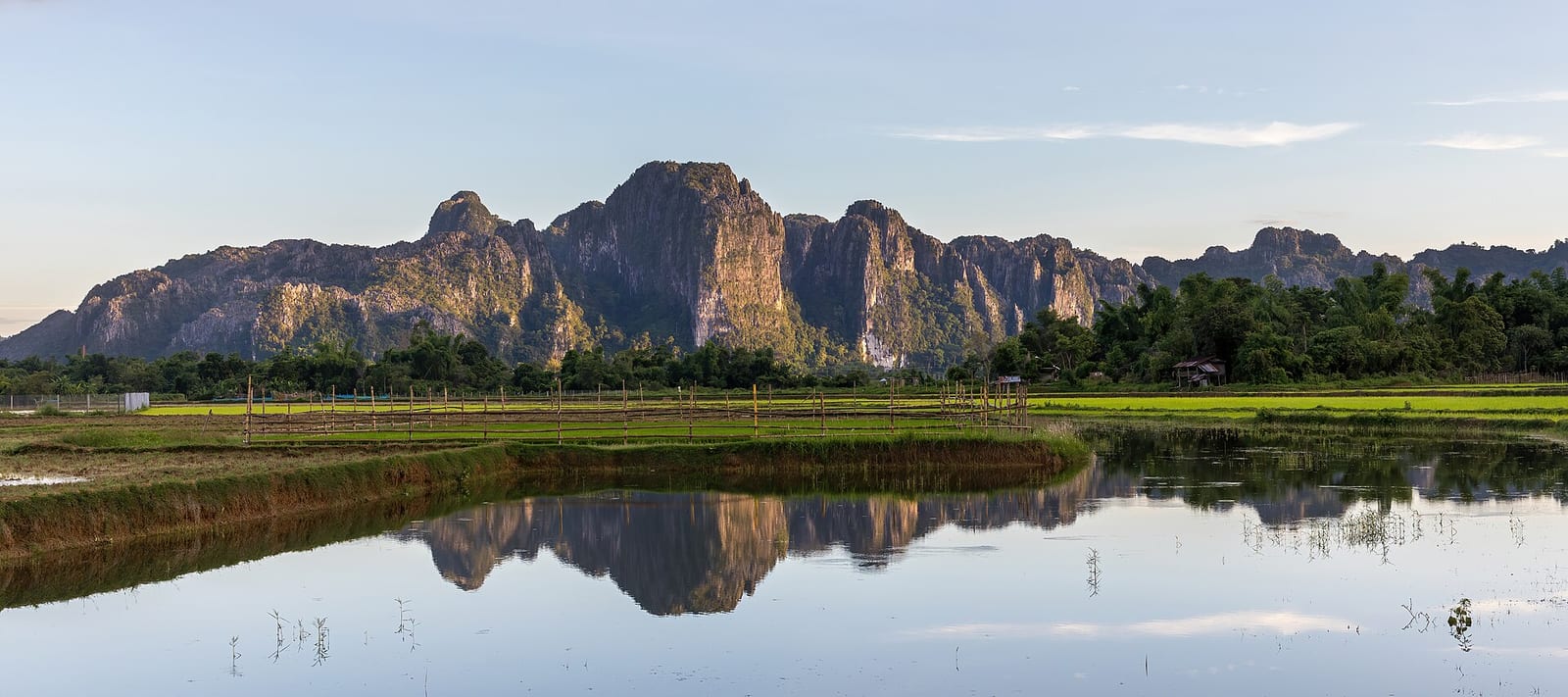
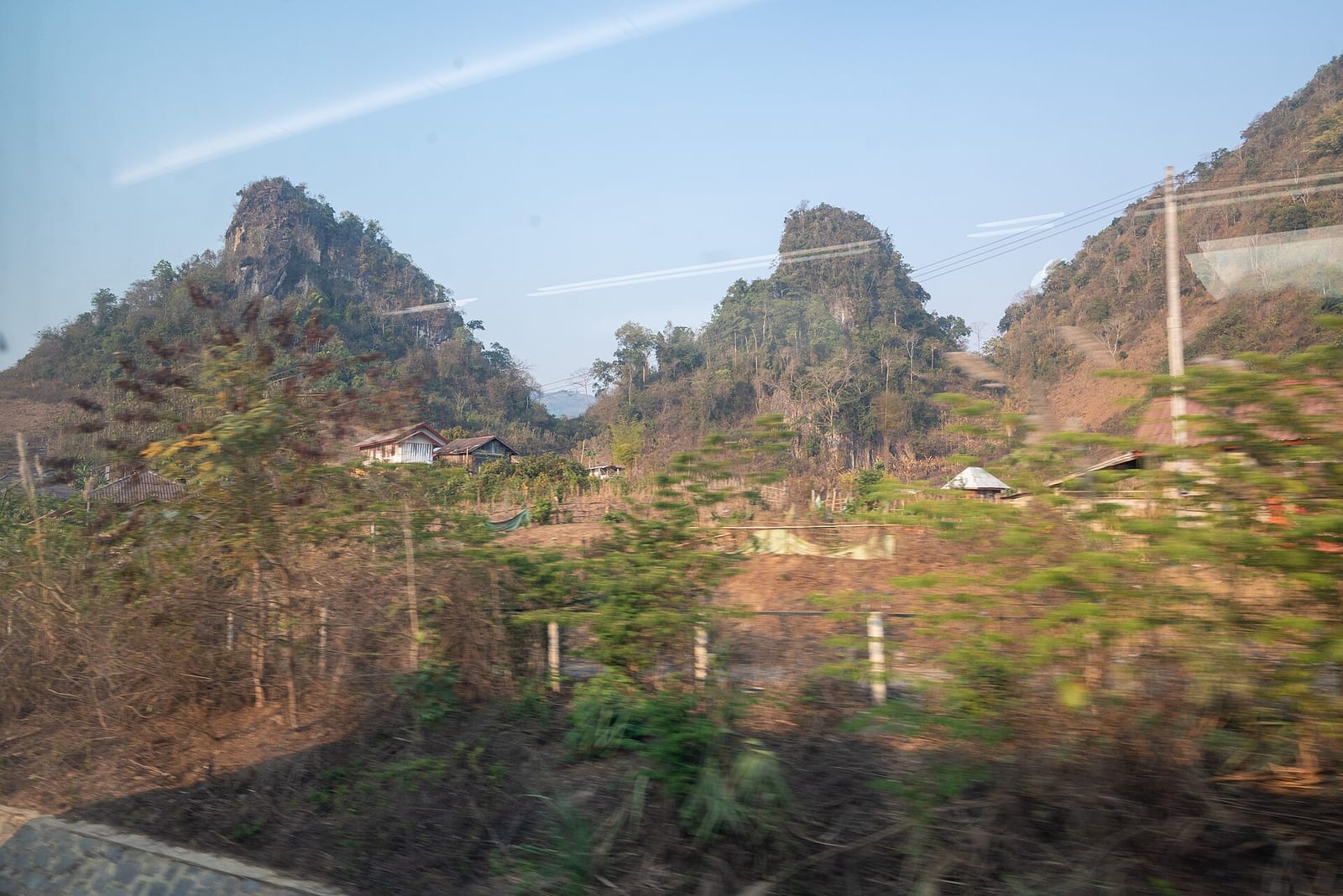
The first great set-piece comes a little over an hour north, at Vang Vieng. Here the line threads a landscape of sheer limestone karst — grey-green towers rising abruptly out of the paddy fields, wreathed in morning mist, mirrored in flooded rice terraces. The train ducks in and out of tunnels, and each time it bursts back into daylight another wall of pinnacles is waiting. It is some of the most theatrical scenery in Southeast Asia, delivered from a comfortable seat with the air-conditioning humming.
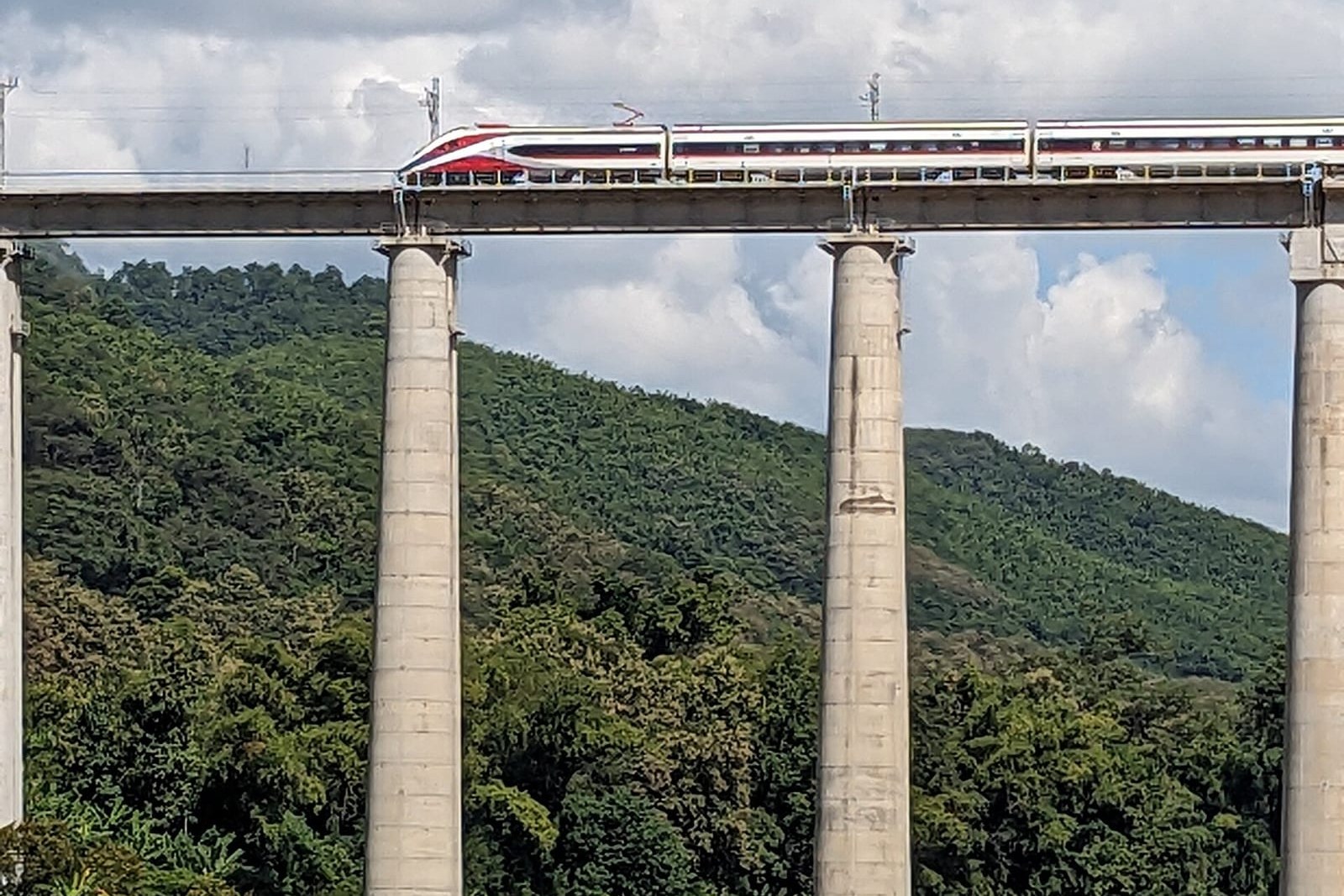
North of Vang Vieng the railway climbs into the mountains of northern Laos in earnest, and here you appreciate what the engineers did. Rather than snake up the valleys as the road does, the line simply drives through the ranges and steps across the gorges — a rhythm of long dark tunnels punctuated by sudden, vertiginous viaducts high above forested rivers. One of the finest spans carries the train across a Mekong tributary north of Luang Prabang, the bullet train tiny against the tall concrete piers.
At Luang Prabang — two hours out from Vientiane — many travellers break their journey for the former royal capital, its monasteries and its dawn alms-giving. Beyond it the line runs on through Oudomxay to Boten on the Chinese border, where, for those with the visa and the appetite, the rails continue all the way to Kunming.
Along the route
Julia Denton-Barker / Wikimedia Commons · CC BY-SA 2.0A railway that changed a country
Before December 2021, landlocked Laos had almost no passenger railway at all. Then the Laos–China Railway opened — 422 kilometres, nearly half of it inside 75 tunnels. Overnight a ten-hour bus grind over the mountains became a smooth two-hour ride.Basile Morin / Wikimedia Commons · CC BY-SA 4.0Vang Vieng and the karst country
The loveliest stretch runs through Vang Vieng, where jagged limestone karst towers rise straight out of the paddy fields. From the train the pinnacles come and go between the tunnels like classical landscape paintings made real.Dominik Landwehr / Wikimedia Commons · CC BY-SA 4.0Luang Prabang, the golden city
Two hours from Vientiane the train reaches the former royal capital, a UNESCO town of gilded monasteries and dawn processions of saffron-robed monks. Its station sits about eleven kilometres out, so allow for a short transfer.A bit of history
Culture & experiences along the way
Julia Denton-Barker / Wikimedia Commons · CC BY-SA 2.0Book early — and expect station queues
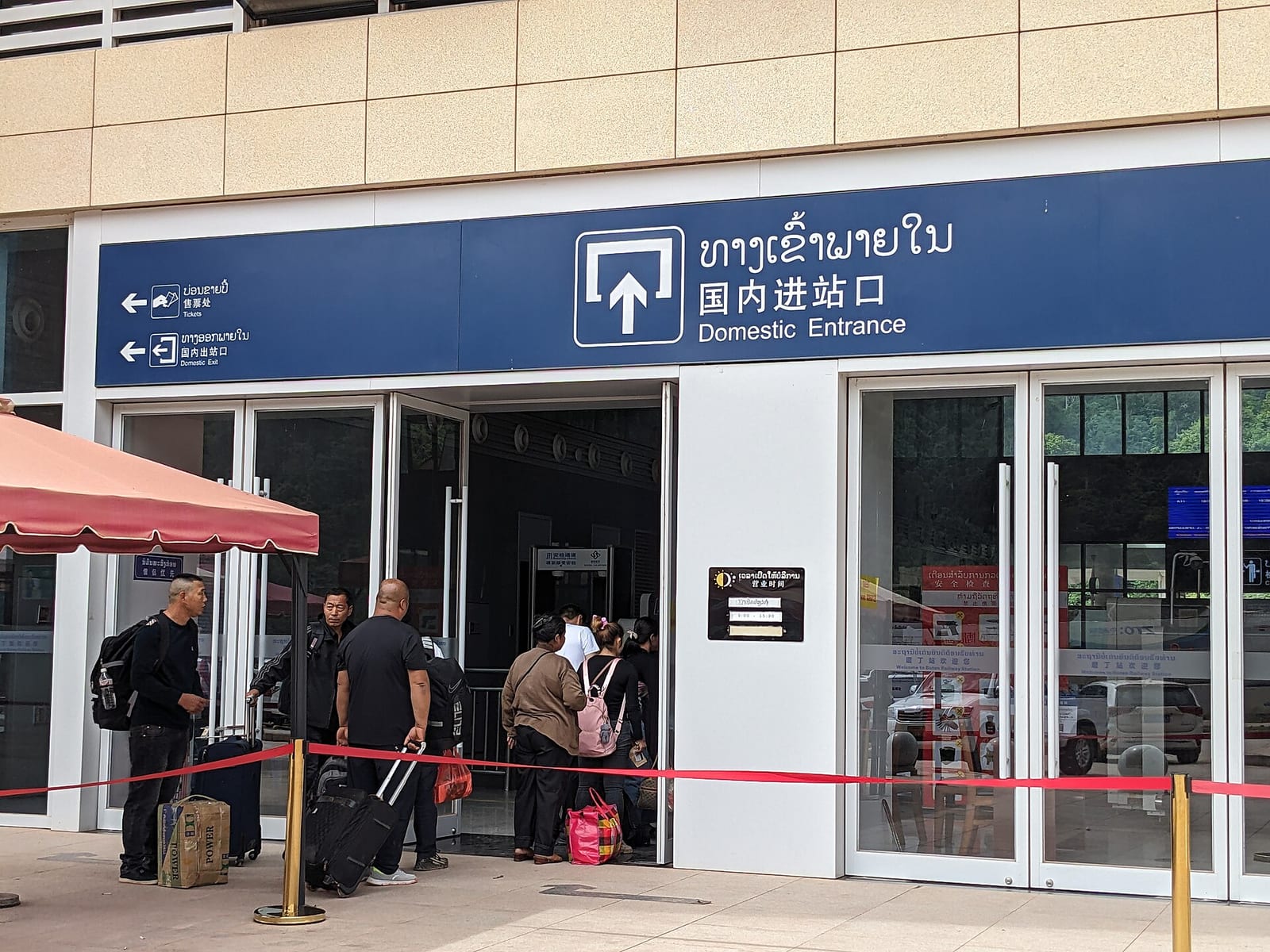
Seats on the Lane Xang trains are reserved and they sell out, especially Vientiane–Luang Prabang at weekends. Station windows open only about three days before departure, so most foreign travellers book ahead through the LCR Ticket app (it needs a Lao SIM) or a booking agent. Turn up early — the stations run on airport-style security and boarding gates.Dominik Landwehr / Wikimedia Commons · CC BY-SA 4.0Mind the out-of-town stations
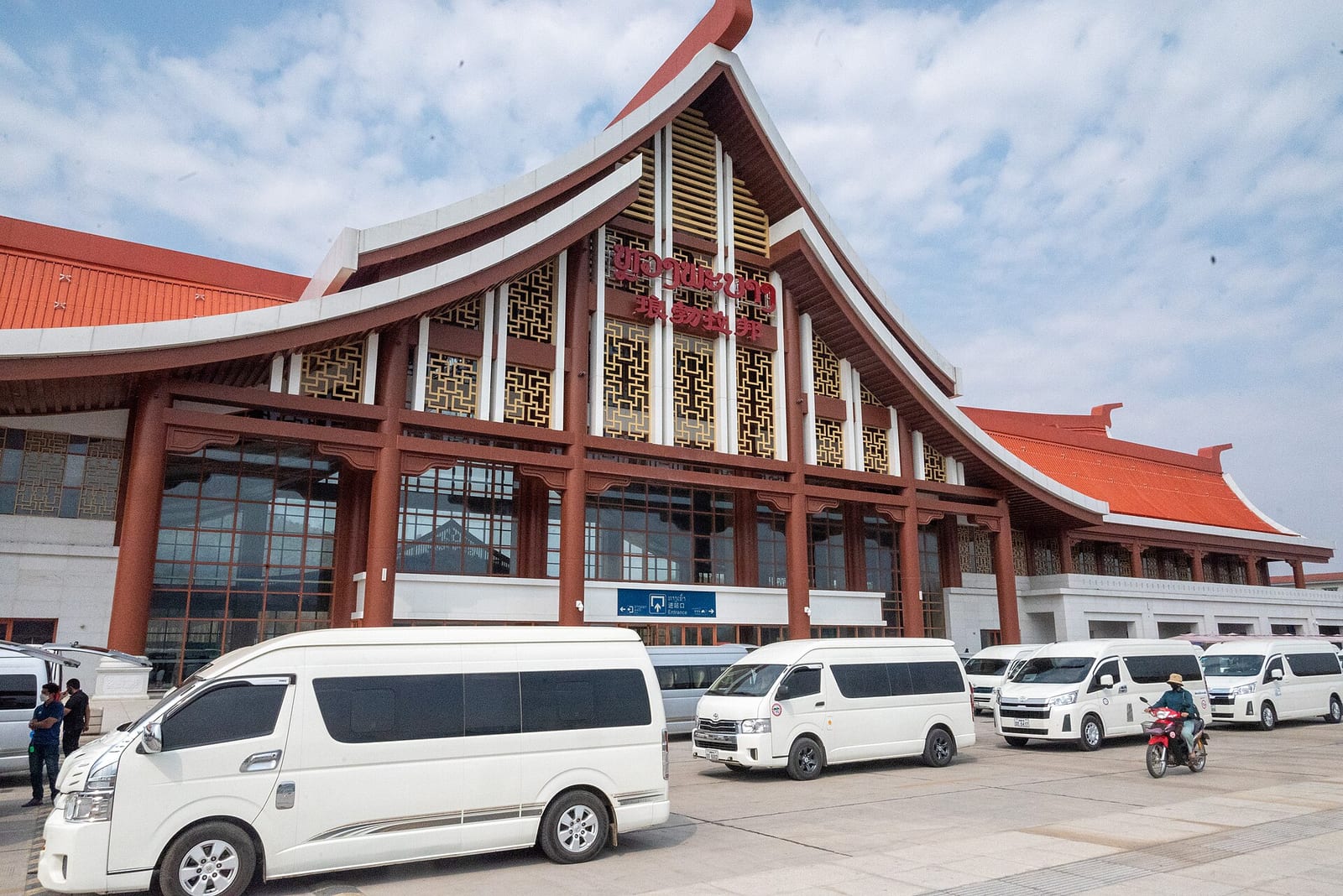
The catch of a brand-new railway across a mountainous country is that the stations sit well outside the towns. The Vientiane station is out at Xaythany, 10–20 km north of the city; Luang Prabang's is about 11 km from the old town. Shuttle vans and tuk-tuks meet every train, but leave time and a little cash for the transfer at each end.Julia Denton-Barker / Wikimedia Commons · CC BY-SA 2.0Ride on into China
Boten is not the end of the story. Since April 2023 international through trains have run straight from Vientiane to Kunming in southern China — about 1,035 kilometres in roughly nine and a half hours, border formalities included. With a Chinese visa you can board in the Lao capital in the morning and be in Yunnan by evening.Timetables
The Laos–China Railway runs several "Lane Xang" EMU services a day in each direction, plus the international through trains to and from China. Not every train runs the full length of the line — many work Vientiane–Luang Prabang, others carry on to Boten — so check the destination when you book.
A representative selection of northbound departures from Vientiane, as of the 2026 timetable (checked July 2026):
| Train | Depart Vientiane | Luang Prabang (approx.) | Toward |
|---|---|---|---|
| C98 | 07:20 | ~09:20 | Luang Prabang / Boten |
| D88 | 08:00 | — | Kunming (China) through train |
| C92 | 09:50 | ~11:50 | Luang Prabang |
| C82 | 12:54 | ~14:54 | Luang Prabang / Oudomxay |
| C86 | 15:15 | ~17:15 | Luang Prabang / Boten |
Southbound, Luang Prabang → Vientiane departures run through the day (for example around 10:30, 12:50 and 18:56), taking roughly two hours back to the capital.
Good to know:
- Vientiane–Luang Prabang takes about 2 hours; Vientiane–Boten about 5½–6 hours. Exact intermediate times shift with each timetable, so treat the arrivals above as a guide.
- Book early. Seats are reserved and sell out — especially Vientiane–Luang Prabang at weekends and holidays. Station windows open only about three days before departure, so most visitors book ahead through the LCR Ticket app or a booking agent (see the Tickets section).
- Fares are low. Vientiane–Luang Prabang costs roughly 330,000 kip (about US$16) in second class and 522,000 kip (about US$25) in first — a fraction of a flight, for a far better view.
- The international train to Kunming (China) runs daily, covering the ~1,035 km in about 9½ hours including border checks; it is booked through China Railway.
Times as of the 2026 timetable and subject to change. Always confirm current departures before you travel (see the Tickets section below).
Tickets
Buying tickets is the one genuinely fiddly part of an otherwise effortless journey. For the Lao section there is still no full online booking open to foreign travellers: station windows sell only about three days before departure and the popular runs go fast, while the official LCR Ticket app needs a Lao mobile number to register. In practice most visitors either buy at the station a few days ahead or use a booking agent, who will secure a seat weeks in advance for a modest fee.
Both classes are air-conditioned, and fares are very low — around US$16 second class and US$25 first for the flagship Vientiane–Luang Prabang run. The international train to Kunming is a separate matter, bookable on China Railway's 12306 platform and needing a valid Chinese visa. Arrive early whichever you take: the stations run airport-style security and the trains leave exactly on time.
Book your tickets
Vientiane – Vang Vieng – Luang Prabang
The Lane Xang high-speed EMU
The everyday way to ride the Laos–China Railway. Tickets for the Lao section sell at station windows (open about three days before departure) and through the official LCR Ticket app; foreign visitors usually book ahead via an agent to lock in a seat. Second or first class; Vientiane–Luang Prabang takes about two hours.
Book Tickets (opens in a new tab, on Laos–China Railway)via Laos–China RailwayInternational train to Kunming
Vientiane – Boten – Kunming, China
The cross-border service carries on from Boten into China, reaching Kunming in about nine and a half hours including immigration. These through trains can be booked on China Railway's official 12306 site; you will need a passport and, for the China leg, a valid Chinese visa.
Book Tickets (opens in a new tab, on China Railway (12306))via China Railway (12306)Rail Passes
No rail pass covers the Laos–China Railway. Interrail and Eurail are European schemes, and Laos is not among the 33 countries in Interrail's list of covered railway companies. Every seat is sold as a ticket for a named train, at the station or through an agent, and the fares are very low.
Checked October 2026 against Interrail's list of railway companies (opens in a new tab).
Places to Visit
The great pleasure of the Laos–China Railway is that it strings the country's headline destinations onto a single, easy line.
Luang Prabang is the jewel of them: a UNESCO World Heritage town cradled between the Mekong and the Nam Khan, where more than thirty gilded monasteries share the streets with colonial shophouses. Get up in the dark at least once for the tak bat, the dawn alms-giving procession of saffron-robed monks — and watch it from a respectful distance rather than joining the scrum. Note that the railway station is about eleven kilometres from the centre.
Vientiane, the line's southern anchor, is covered in full on the Bangkok–Vientiane Sleeper, which is how most people arrive at this railway in the first place. And at the northern end the line runs out at Boten on the Chinese border, where the through trains carry on to Kunming.
Between them, the railway has made a loop of northern Laos that once took the best part of a week feel like a long, comfortable weekend.
 Basile Morin / Wikimedia Commons · CC BY-SA 4.0 · cropped
Vang Vieng
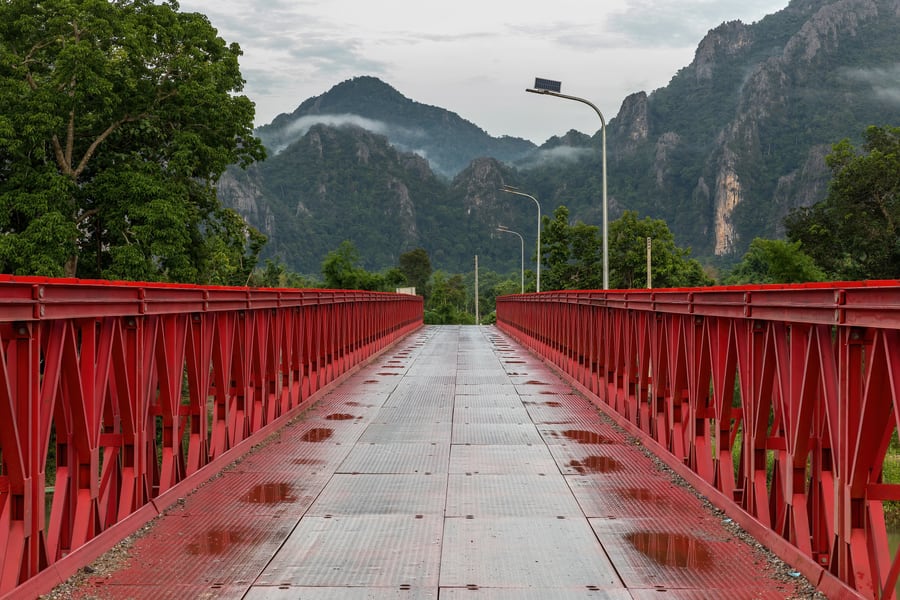
An hour or so north of Vientiane, Vang Vieng sits on the Nam Song beneath a wall of limestone towers, 130 km up the line. It was a staging post between Vientiane and Luang Prabang from about 1353, then a US airstrip in the Vietnam War, then a byword for tubing and buckets — and it has since rebuilt itself around dawn balloon flights, ridge viewpoints, river caves and lagoons. The old red bridge is still the best vantage.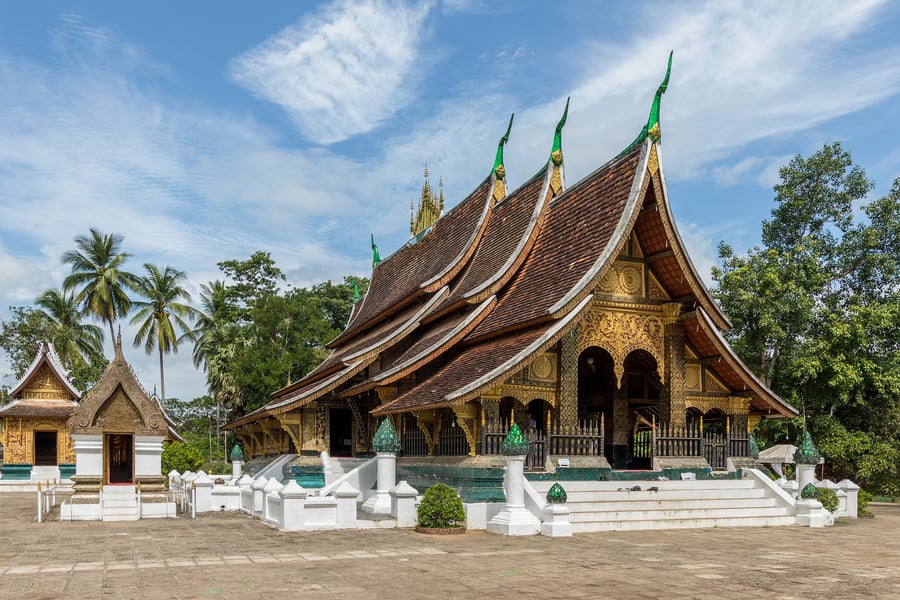 Basile Morin / Wikimedia Commons · CC BY-SA 4.0 · cropped
Wat Xieng Thong
Built between 1559 and 1560 by King Setthathirath at the tip of the peninsula where the Nam Khan runs into the Mekong, and one of the most important monasteries in Laos. The roof is the thing: a sweep of tiers that drops almost to the ground, low and heavy as a folded wing. Inside are gilded doors and painted panels, and on the rear wall a tree of life picked out in coloured glass mosaic. Ten minutes' walk from the old town's centre.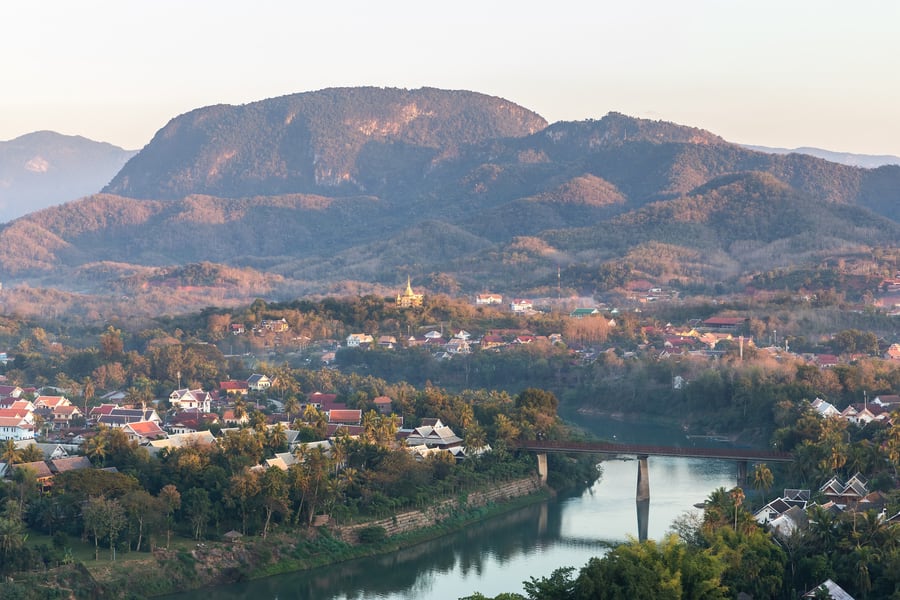 Basile Morin / Wikimedia Commons · CC BY-SA 4.0 · cropped
Mount Phousi
The 100-metre hill in the middle of the old town, with the Mekong on one side and the Nam Khan on the other and 328 steps to the summit. Wat Chom Si stands on top and Wat Tham Phou Si halfway up, and a good share of Luang Prabang climbs it for the sunset, so expect company. The view is the one everybody remembers: tiled monastery roofs, two rivers meeting, and the hills going blue behind them.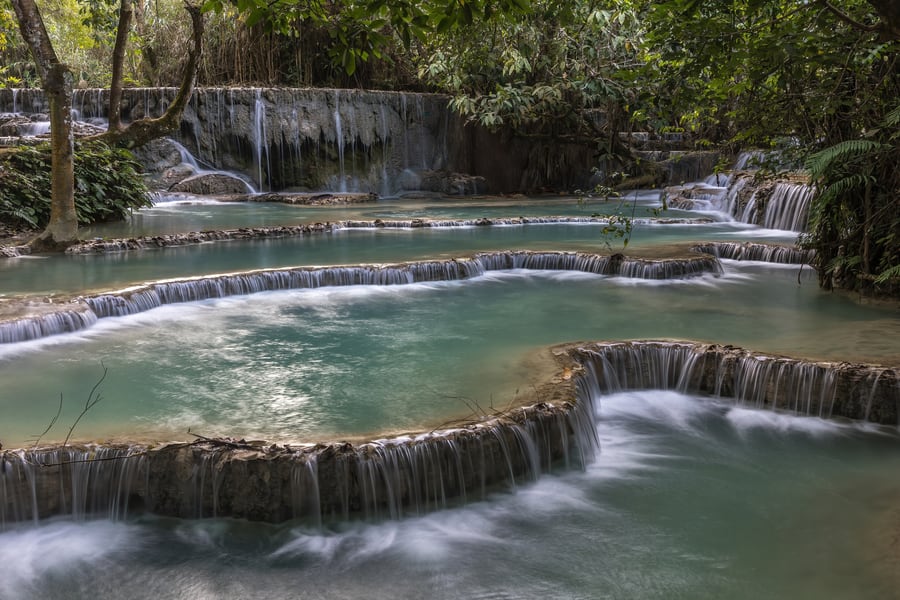 Basile Morin / Wikimedia Commons · CC BY-SA 4.0 · cropped
Kuang Si Falls
29 km south of Luang Prabang, the Kuang Si stream comes over a 60-metre main fall and then spreads down the hillside in shallow limestone terraces, pool after pool the colour of milky turquoise. Several are open for swimming and the water stays cold all year. It is half a day from town by tuk-tuk or minivan, and the single most photographed place in northern Laos — so go early, before the middle of the morning.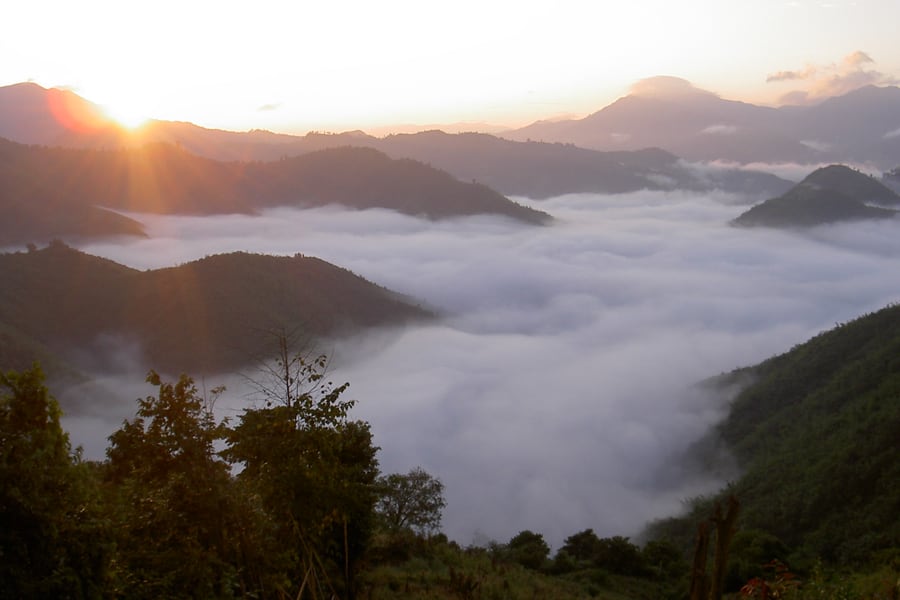 Luisah / Wikimedia Commons · public domain · cropped
Oudomxay
Muang Xay, capital of Oudomxai province, is where the line leaves the tourist route behind — a working market town in a bowl of hills, with a station on the railway and an airstrip ten minutes' walk from the centre. The Khmu make up around 60 per cent of the province's population, and these are some of the most ethnically varied uplands in Laos. Get up early and the valleys below the ridges fill to the brim with cloud.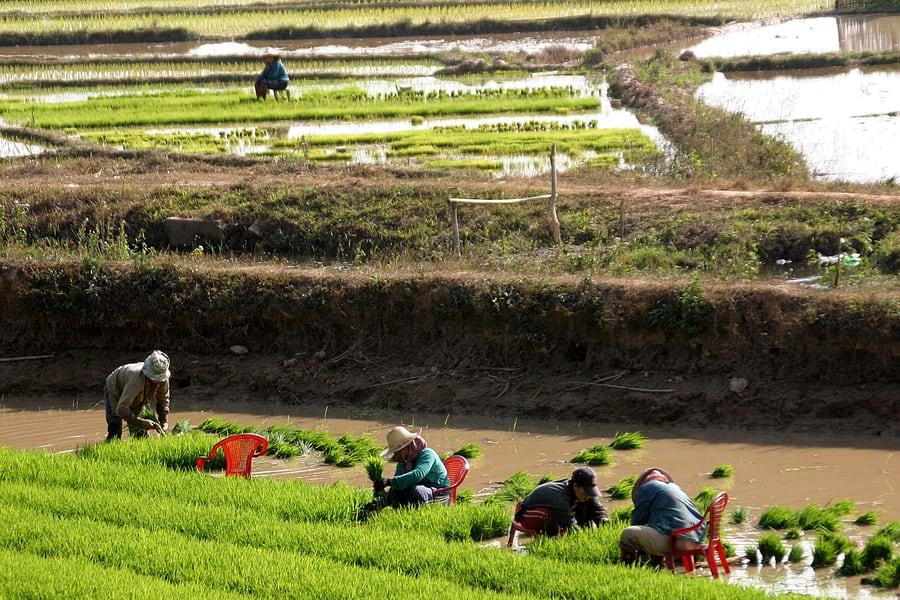 Gerd Eichmann / Wikimedia Commons · CC BY-SA 4.0 · cropped
Luang Namtha
The far north-west, and the least-visited stop on this list worth making. Rice terraces fill the valley floor, the hills behind hold Khmu, Akha and Tai Lue villages, and the trekking is genuinely remote. One practical warning: the railway station serving it is Nateuy, a short drive outside Luang Namtha itself, with Boten and the Chinese border beyond — so check which station your ticket actually names.Where to Sleep
Because the railway makes hopping between towns so easy, the natural approach is to sleep in the destinations themselves rather than near the out-of-town stations.
In Luang Prabang, the obvious place to base yourself is the UNESCO old town, on the peninsula between the two rivers. Restored French-colonial townhouses now house boutique guesthouses and a handful of genuinely lovely heritage hotels, all within walking distance of the night market, the monasteries and the Mekong. Book ahead in the November–February high season, when the town is busiest.
In Vang Vieng, choose a riverside spot on the Nam Song with the karst as your backdrop — waking to mist on the limestone towers is the whole point. Options run from simple bungalows to smarter resorts a little out of the centre.
In Vientiane, stay along or near the Mekong riverfront for the sunset promenade, the night market and easy reach of the temples and cafés. The capital has the widest range, from backpacker guesthouses to international four-star hotels.
At every stop, remember the station transfer: trains are met by shuttle vans and tuk-tuks, but if you have an early departure it is worth arranging your ride into the (often distant) station the night before. A little planning at each end keeps the railway's great gift — effortless, scenic, inexpensive travel through the heart of Laos — exactly that.
Questions or corrections
Planning this trip and stuck on something, or spotted a time, fare or detail that has changed? Send us a message about The Laos–China Railway. We read every one, and we update this page when something has changed.