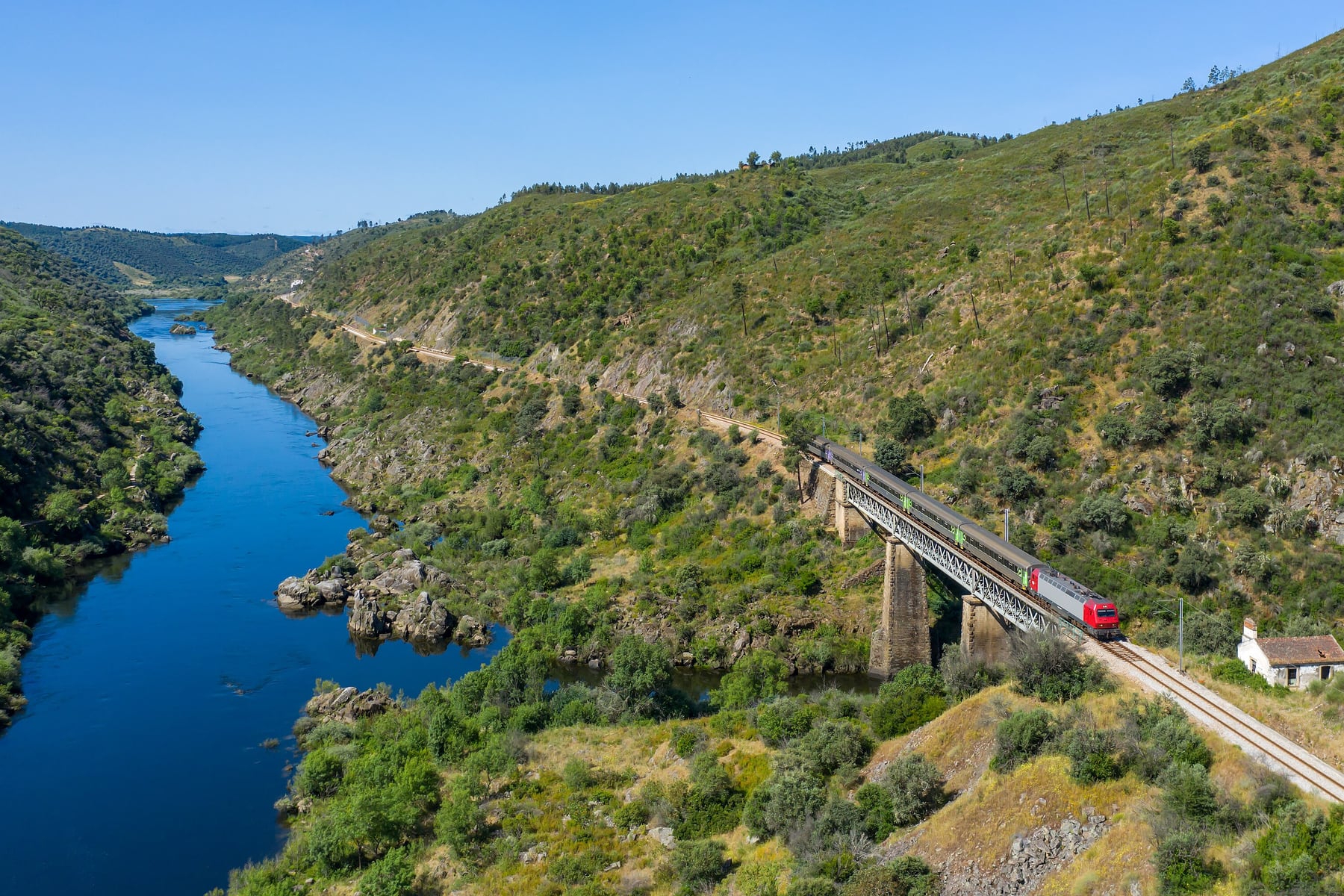
The Beira Baixa Line
Kabelleger / David Gubler / Wikimedia Commons · CC BY-SA 4.0 · cropped
- Distance240 km · Entroncamento to Guarda
- DurationAbout 4½ hours from Lisbon
- Best seasonAll year · three Intercidades a day each way
Introduction
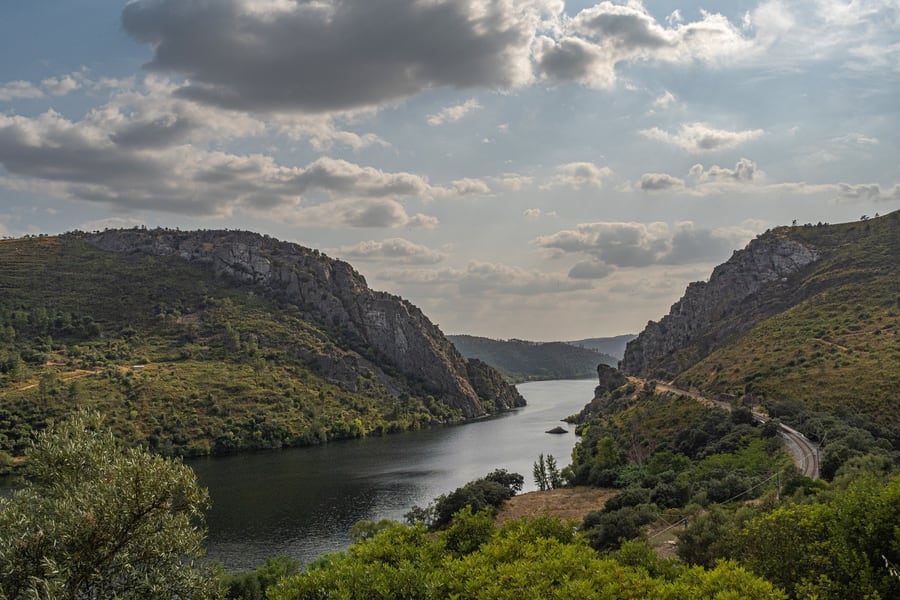
At Vila Velha de Ródão the Tagus has cut its way through a ridge of quartzite. The gap it made, the Portas de Ródão, is 45 metres wide at its narrowest, between walls that rise about 170 metres above the water, and since 2009 it has been a protected natural monument. The river takes the whole of the gap. The railway, which has followed the Tagus upstream all the way from Abrantes, goes through the same ridge a little to one side, in a short tunnel that carries the gate's name.
That is the moment the Beira Baixa line is remembered for, but it is only one hour of a long climb. The line runs 240 km from Entroncamento to Guarda, single track and electrified, and was opened by King Carlos and Queen Amélia in 1891. Beyond Ródão it leaves the river for the plateau of Castelo Branco, tunnels through the Serra da Gardunha, follows the foot of the Serra da Estrela to Covilhã, and finishes at Guarda, the highest city in mainland Portugal.
The top of that climb was missing for twelve years. The section from Covilhã to Guarda closed in 2009 for works that then stopped, and trains returned only in May 2021. Today three Intercidades a day run the whole line from Lisbon in about four and a half hours, for a fare of €23.65.
The Journey
The Intercidades leaves Lisboa Santa Apolónia, calls at Oriente, and runs up the main line to Entroncamento, the railway junction where the Beira Baixa line begins. From here the train turns east.
The Tagus
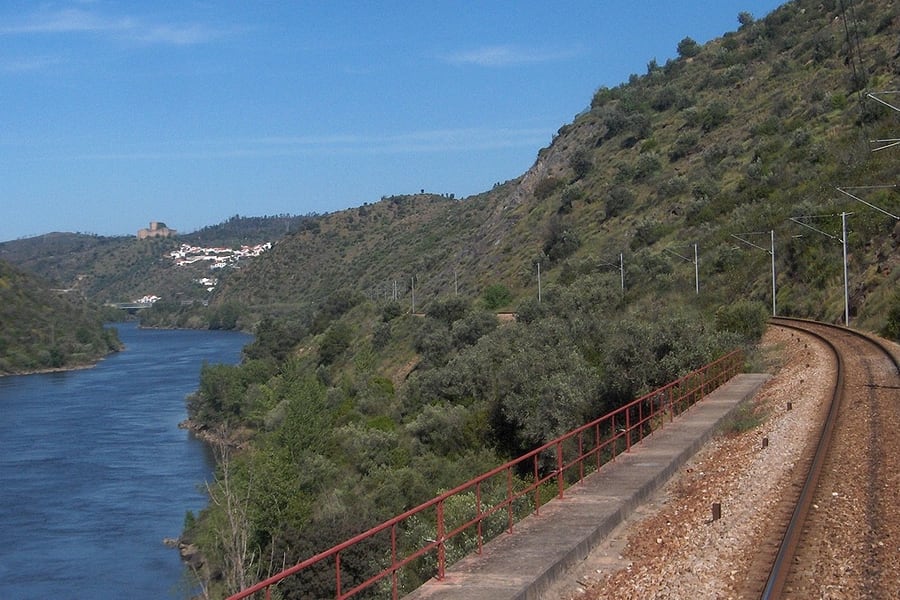
Past Abrantes the line keeps to the valley of the Tagus, upstream past Belver and the Fratel dam, often running just above the water. The river grows narrower and the hills steeper until, at Vila Velha de Ródão, it squeezes between the quartzite walls of the Portas de Ródão. The gorge is a protected natural monument, and the small square tower of the Castelo do Rei Wamba stands on top of its northern side.
Castelo Branco, the Gardunha and Covilhã
At Ródão the line leaves the Tagus and climbs onto the plain of Castelo Branco. North of the city the land rises into the Serra da Gardunha, which the line passes in the 646-metre Gardunha tunnel, the longest of its tunnels. Building through this country took a workforce that CP puts at up to 15,000 at the peak of the works. On the far side lie Fundão and the cherry orchards of the Cova da Beira, and then Covilhã, on the flank of the Serra da Estrela.
The reopened top
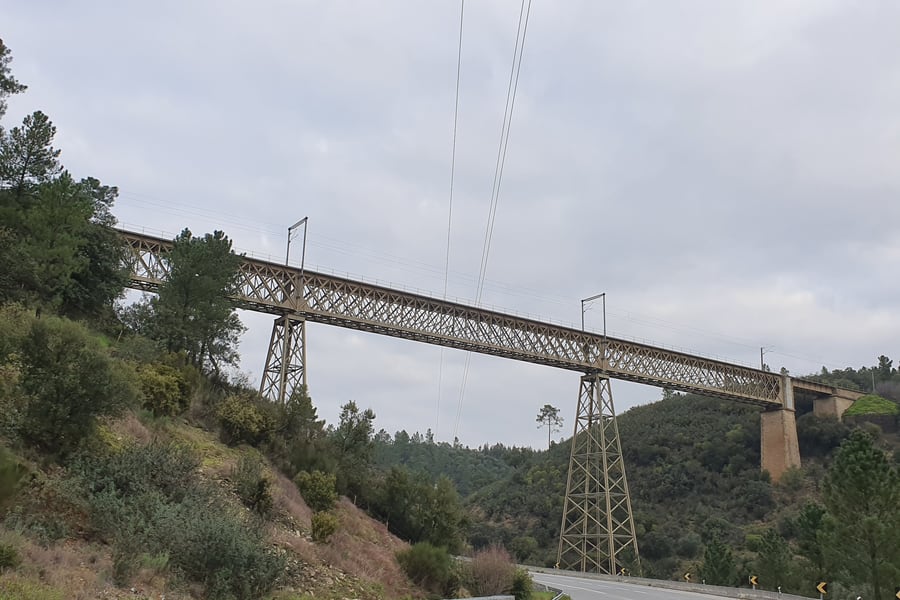
Covilhã to Guarda was the last section to open, in 1893, its works held up by the financial crisis of 1891–92. It was closed in 2009 for renewal; the works stopped in the economic crisis with only part of it done, and trains returned in May 2021, on rebuilt and electrified track. The line crosses the Zêzere, passes Belmonte, climbs on steel viaducts past Benespera and Sabugal, and reaches Guarda, where it meets the Beira Alta line.
On board
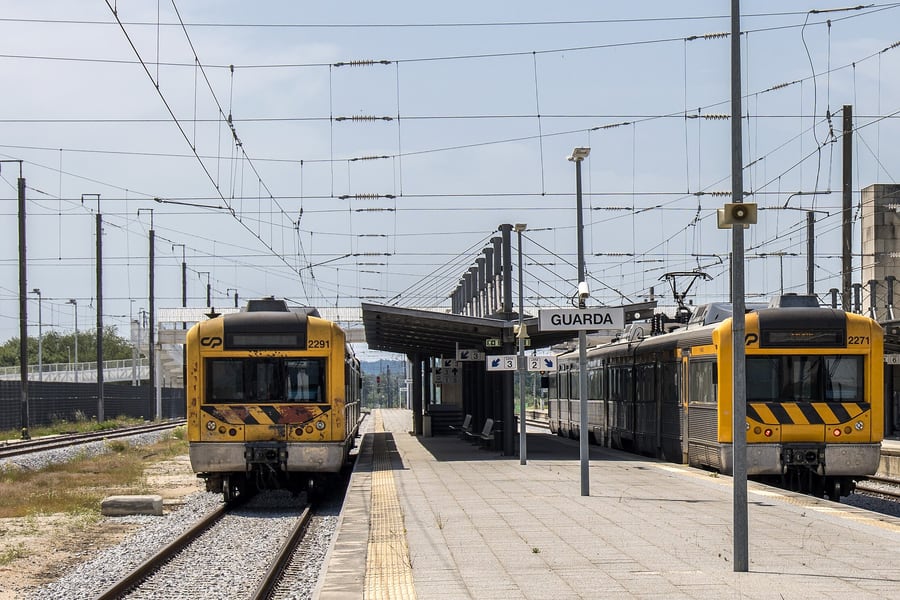
The Intercidades has 1st- and 2nd-class carriages, a bar carriage, free Wi-Fi and spaces for bicycles. Seats are reserved with the ticket.
Along the route
 Antero Pires / Wikimedia Commons · CC BY-SA 2.0 · cropped
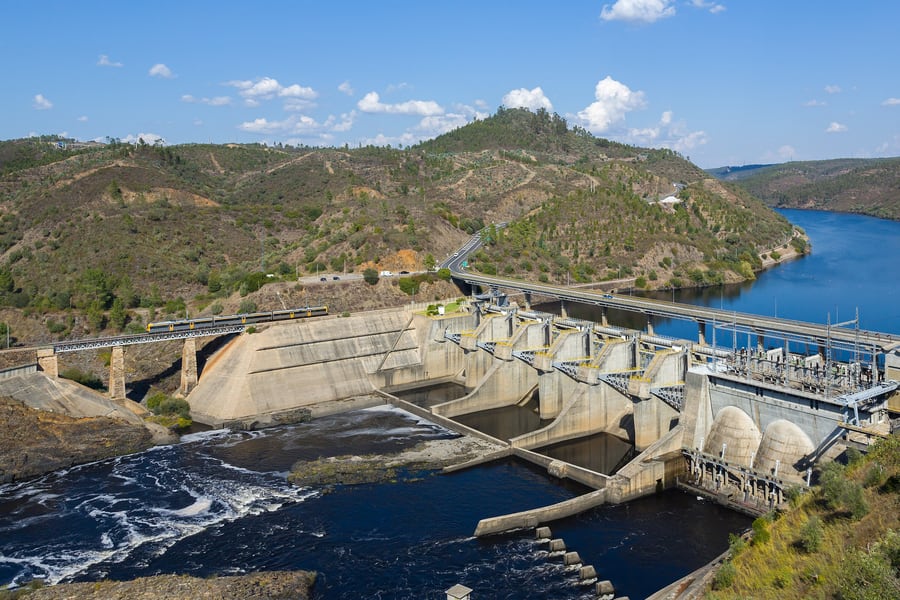
Along the Tagus
From Abrantes the line follows the Tagus upstream for mile after mile, past Belver and its castle and the Fratel dam, running for long stretches just above the water on the valley side.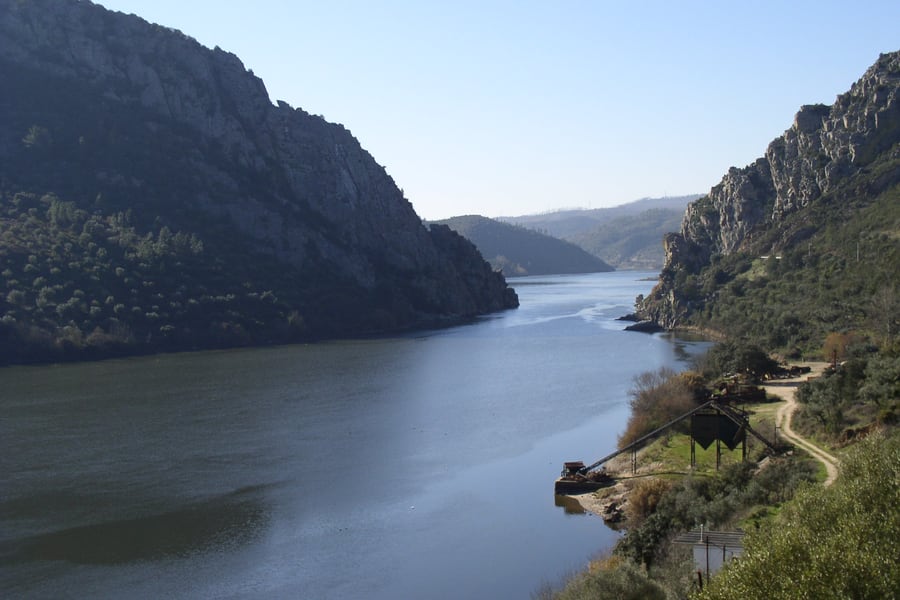 Nuno Tavares / Wikimedia Commons · CC BY-SA 3.0 · cropped
The Portas de Ródão
At Vila Velha de Ródão the Tagus squeezes through a 45-metre gap between quartzite walls about 170 metres high. The river has the gap; the railway passes the ridge in a short tunnel named after it.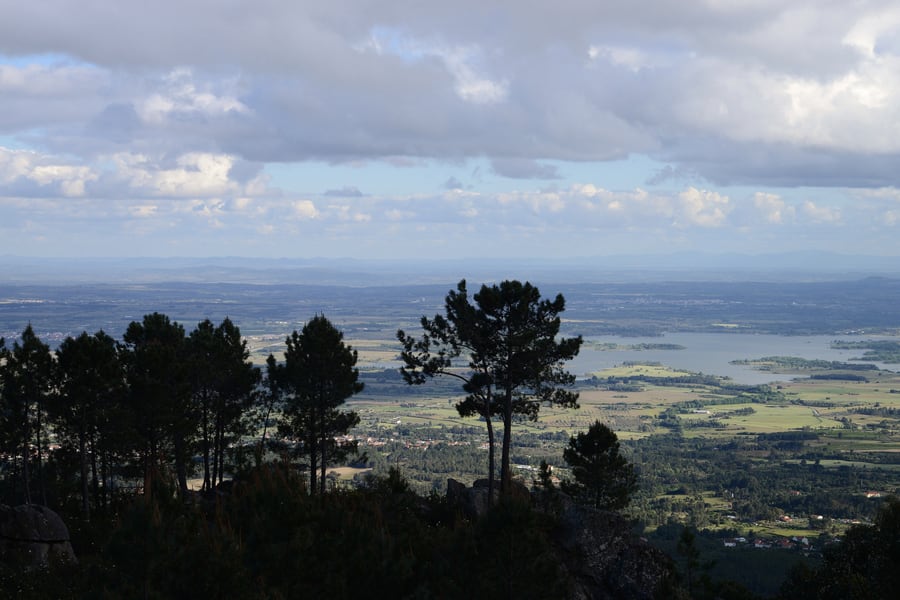 Alvesgaspar / Wikimedia Commons · CC BY-SA 4.0 · cropped
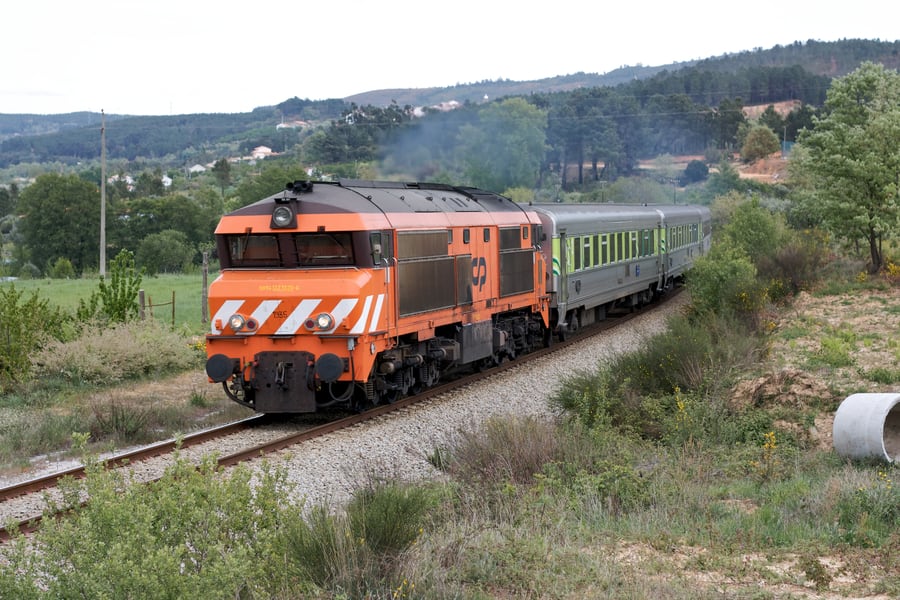
The Gardunha
Between Castelo Branco and Fundão the line climbs into the Serra da Gardunha and runs through the 646-metre Gardunha tunnel, the longest on the line, before dropping into the Cova da Beira beneath the Serra da Estrela.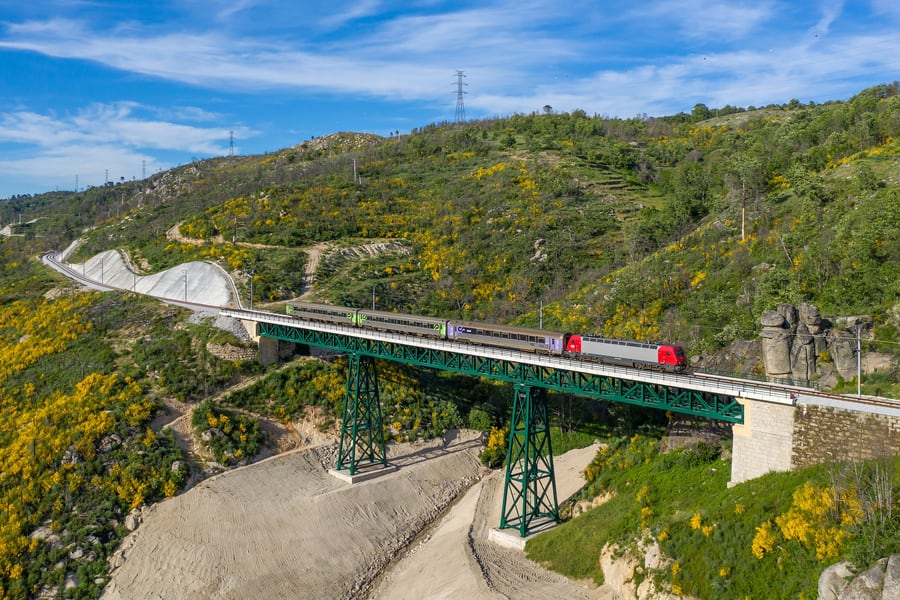 Kabelleger / David Gubler / Wikimedia Commons · CC BY-SA 4.0 · cropped
Covilhã to Guarda
The last stretch was closed in 2009 and reopened in 2021, rebuilt and electrified. It crosses the Zêzere and climbs on steel viaducts to Guarda, the highest city in mainland Portugal.A bit of history
Culture & experiences along the way
 Jbanha / Wikimedia Commons · CC BY-SA 4.0 · cropped
Griffon vultures at the Portas
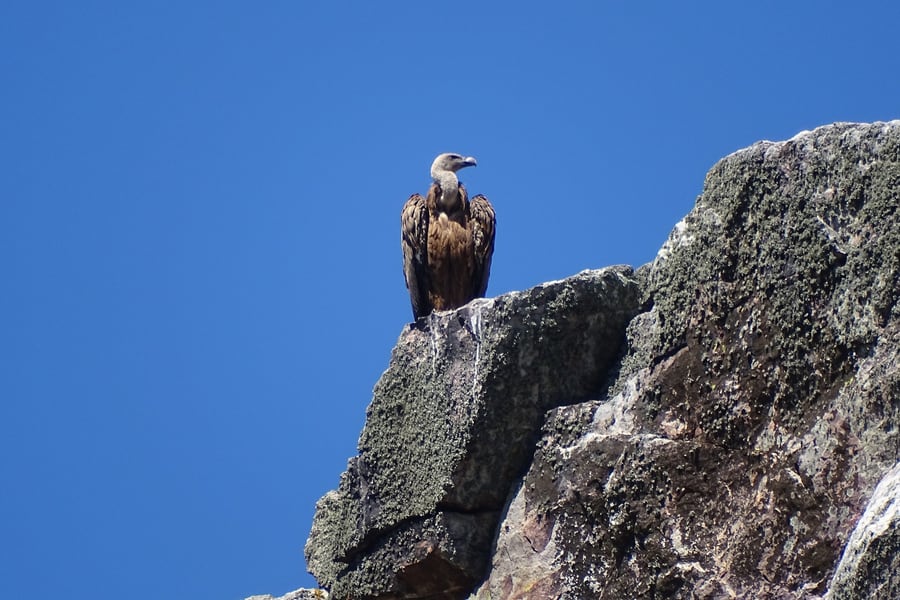
The cliffs of the Portas de Ródão hold Portugal's largest colony of griffon vultures, and black storks and red kites live here too. Watch for them from the castle on the northern gate, or from the river below the cliffs, where this one was photographed from a kayak.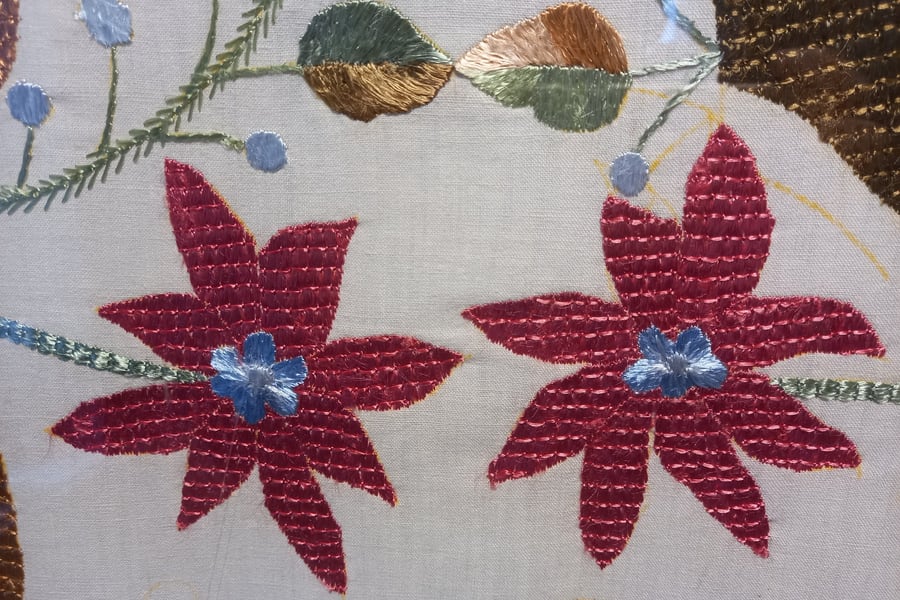 Hipersyl / Wikimedia Commons · CC BY 4.0 · cropped
Castelo Branco embroidery
Castelo Branco's bedspreads, natural silk on linen, have been made since the mid-16th century. Their motifs carry meanings: the Tree of Life, paired birds for a married couple, carnations and roses for man and woman. The city museum in the old bishop's palace keeps a collection, and the designs reappear in the city's pavements.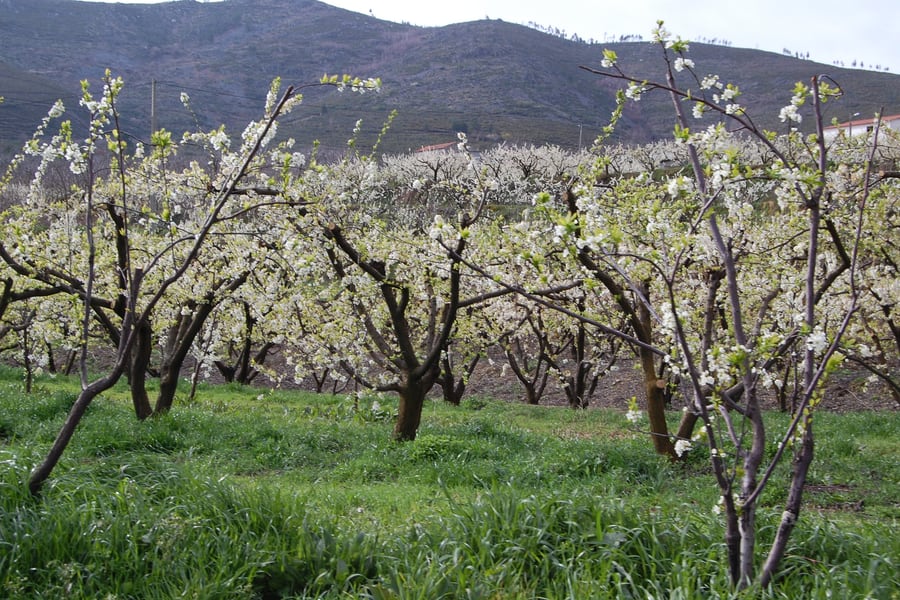 Sara Jaques / Wikimedia Commons · CC BY-SA 4.0 · cropped
Cherries of the Gardunha
Fundão is famous in Portugal for its cherries, grown below the Gardunha and protected as Cereja da Cova da Beira, including old local varieties such as De Saco and Morangão. The orchards flower in spring, the Festa da Cereja follows in June, and Alcongosta's old primary school is now the Casa da Cereja, all about the fruit.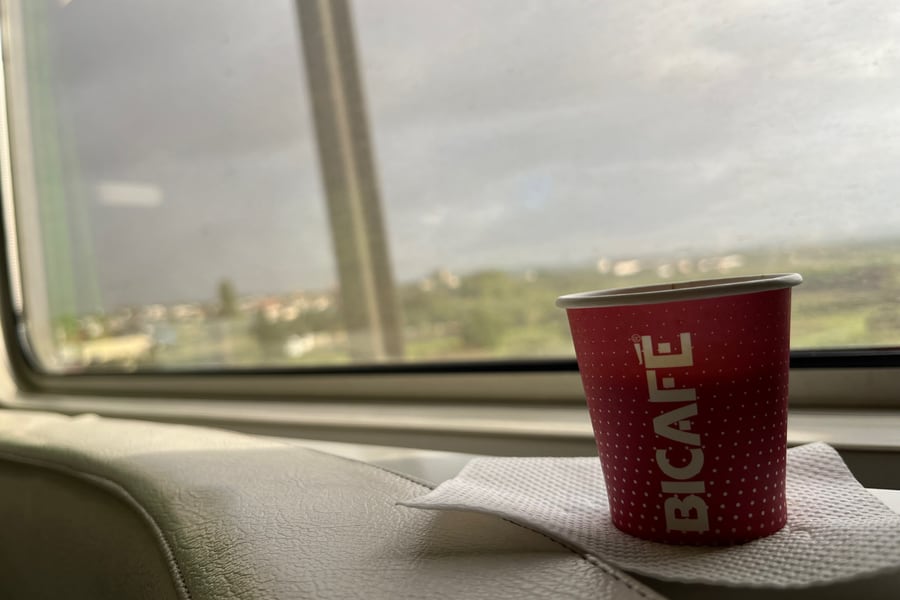 Jon Worth / Wikimedia Commons · CC BY 2.0 · cropped
Coffee in the bar car
Every Intercidades has a bar carriage. A coffee at the window along the Tagus, with the river sliding past below, is the simplest pleasure on the line.Timetables
Three Intercidades a day each way run the whole line between Lisbon and Guarda, every day of the week, in about four and a half hours. Seats are reserved, and tickets are sold on cp.pt, in the CP app and at stations.
Lisbon to Guarda
| Train | Lisboa Santa Apolónia | Entroncamento | Vila Velha de Ródão | Castelo Branco | Covilhã | Guarda |
|---|---|---|---|---|---|---|
| IC 541 | 08:15 | 09:24 | 10:39 | 11:04 | 11:55 | 12:45 |
| IC 543 | 13:15 | 14:23 | 15:35 | 16:06 | 16:56 | 17:42 |
| IC 545 | 19:15 | 20:26 | 21:49 | 22:14 | 23:04 | 23:50 |
Guarda to Lisbon
| Train | Guarda | Covilhã | Castelo Branco | Vila Velha de Ródão | Entroncamento | Lisboa Santa Apolónia |
|---|---|---|---|---|---|---|
| IC 540 | 07:02 | 07:48 | 08:38 | 09:02 | 10:21 | 11:20 |
| IC 542 | 14:07 | 14:53 | 15:43 | 16:07 | 17:21 | 18:20 |
| IC 544 | 18:25 | 19:11 | 20:04 | 20:30 | 21:43 | 22:50 |
Every train also calls at Lisboa Oriente, Abrantes, Fundão, Belmonte-Manteigas and the smaller stations of the Covilhã–Guarda section. Check the route when you book: CP also runs Intercidades from Lisbon to Guarda by the Beira Alta line through Coimbra, leaving Santa Apolónia at 07:30, 12:30 and 18:30, which do not pass Ródão. For the Tagus, take the trains above.
As of 20 October 2026, from the timetables on CP's journey planner (opens in a new tab) for weekday and weekend dates in late October 2026.
Tickets
The Intercidades is an ordinary CP train, so the ticket is an ordinary point-to-point fare, bought from CP online, in the app or at the station, with the seat reserved on it. Lisbon to Guarda costs €23.65 in 2nd class and €32.85 in 1st.
CP sells Promo fares in advance, at €14.50 for the whole trip on some departures, but they cannot be refunded. CP also offers discounts for young people, seniors and groups, and 10% off a return. From CP's own pages, in euros, as of October 2026.
Book your tickets
Intercidades, 2nd class
€23.65 · Lisbon to Guarda
A reserved seat on one Intercidades from Lisbon to Guarda via Ródão and Covilhã, about 4½ hours.
Book Tickets (opens in a new tab, on CP)via CPIntercidades, 1st class
€32.85 · Lisbon to Guarda
The same train in the 1st-class carriage, with wider seats.
Book Tickets (opens in a new tab, on CP)via CPPromo, 2nd class
€14.50 · non-refundable
A cheaper advance fare on some departures, which cannot be refunded.
Book Tickets (opens in a new tab, on CP)via CPRail Passes
Interrail and Eurail passes cover the Intercidades. Interrail's table of railway companies lists CP's Intercidades as included in both the Global Pass and the Portugal Pass, with a compulsory reservation. The reservation costs €5 and can only be bought in Portugal, from CP.
For this journey alone, a pass is not worth buying. The full fare from Lisbon to Guarda is €23.65, and an advance fare can be less. A pass pays when the Beira Baixa is one leg of a longer trip through Portugal or across Europe.
Checked October 2026 against interrail.com (opens in a new tab) and its reservation fees (opens in a new tab).
Places to Visit
The Intercidades calls at each of these towns, so the line is easy to break: the gorge at Ródão, a garden in Castelo Branco, the mountains above Covilhã, and two old towns at the top.
 Raquel N. Rodrigues / Wikimedia Commons · CC BY-SA 3.0 · cropped
Castelo do Rei Wamba
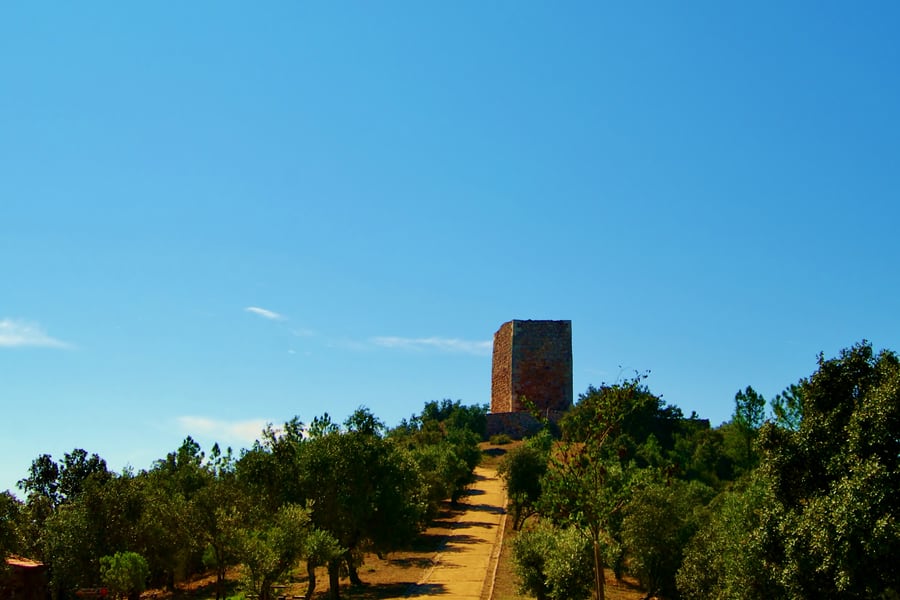
On top of the northern gate of the Portas de Ródão stands a square watchtower that legend gives to the Visigothic king Wamba, though it was more likely a Muslim-era lookout, rebuilt in the 12th century, probably by the Templars. With the small chapel of Nossa Senhora do Castelo it is a listed monument, and the view from its walls runs down the Tagus below the gorge.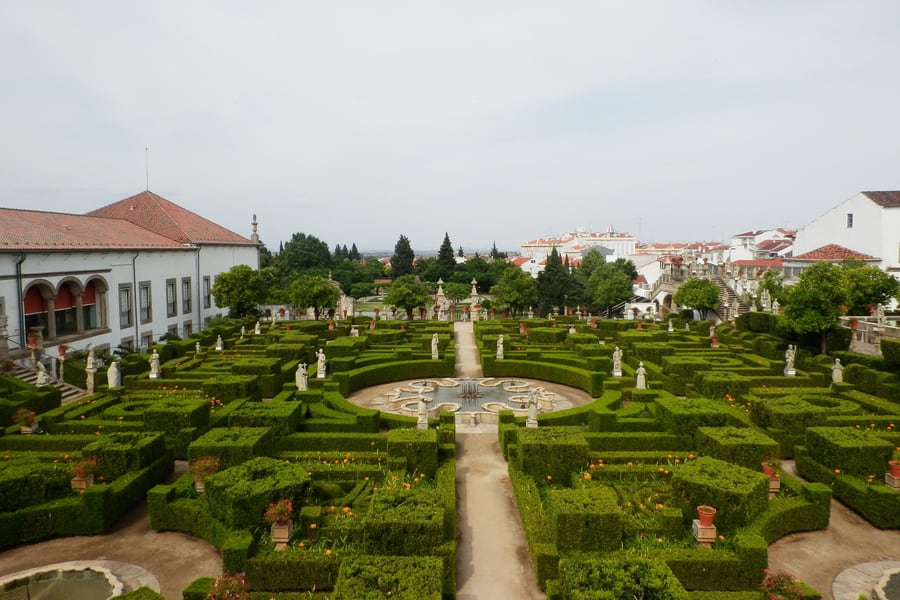 Threeohsix / Wikimedia Commons · CC BY-SA 4.0 · cropped
Jardim do Paço Episcopal
Bishop João de Mendonça laid out this Baroque garden beside the bishops' palace in the 18th century: clipped hedges, pools and a crowd of stone saints, apostles and kings. The kings of the sixty years of Spanish rule were carved smaller than the rest. The palace itself is now the city museum, home to the embroidery collection.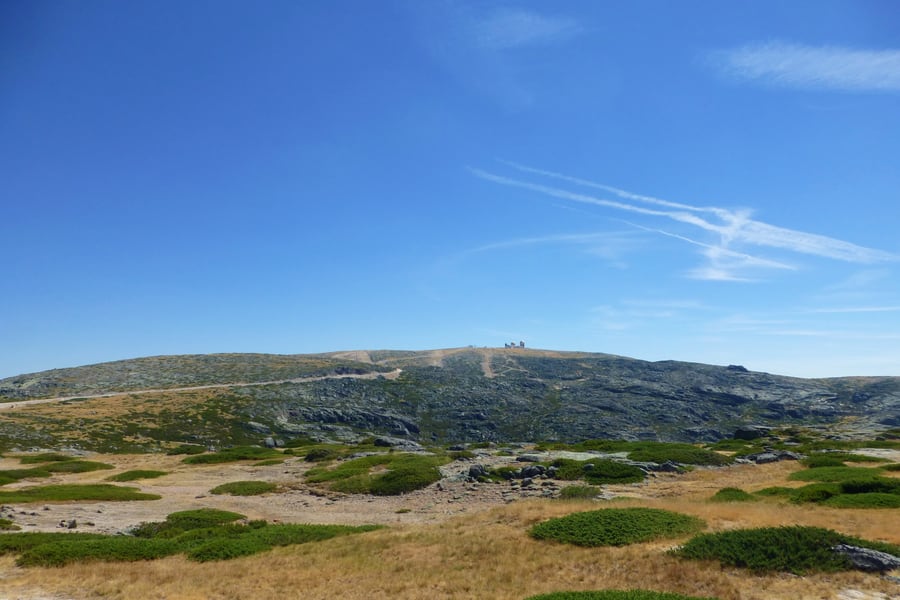 Reinhard Müller / Wikimedia Commons · CC BY-SA 4.0 · cropped
Torre, Serra da Estrela
Covilhã sits on the flank of the Serra da Estrela, and 20 km away by road is Torre, at 1,993 metres the highest point of mainland Portugal. It is a plateau rather than a peak, reached by paved road, with a ski area, and snow can fall there from October to April.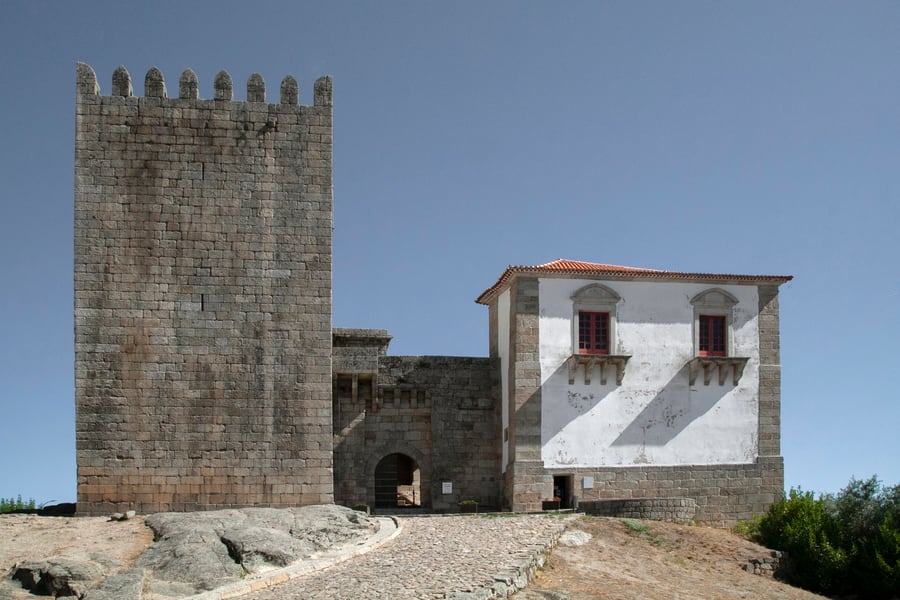 Carlos Vieira Romão / Wikimedia Commons · CC BY-SA 4.0 · cropped
Belmonte
Belmonte's castle was built at the end of the 12th century, and the Cabral family made it a fortified manor where Pedro Álvares Cabral, who later led the voyage to Brazil, spent his early years. The town is also known for its Jewish community, which kept its faith in secret for centuries, opened a synagogue in 1996 and a Jewish Museum in 2005.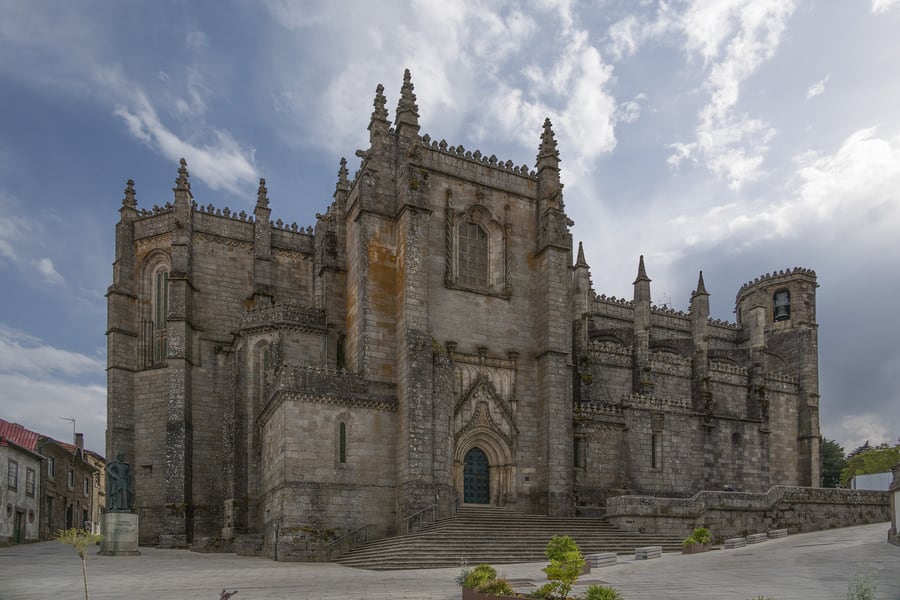 Alexkom000 / Wikimedia Commons · CC BY 4.0 · cropped
Guarda Cathedral
Guarda's cathedral took a century and a half to build, from 1390 to about 1540, so it begins Gothic, in the manner of Batalha, and ends Manueline, with twisted columns and carved window frames. Inside, the stone altarpiece of the main chapel is the work of the French sculptor João de Ruão, installed in the 1550s.Where to Sleep
The whole line fits into a day from Lisbon, but the upper half rewards a night: in a converted convent above Belmonte, or in the mountains above Covilhã.
Where to stay
 Elisete Reis / Wikimedia Commons · CC BY-SA 3.0 · cropped
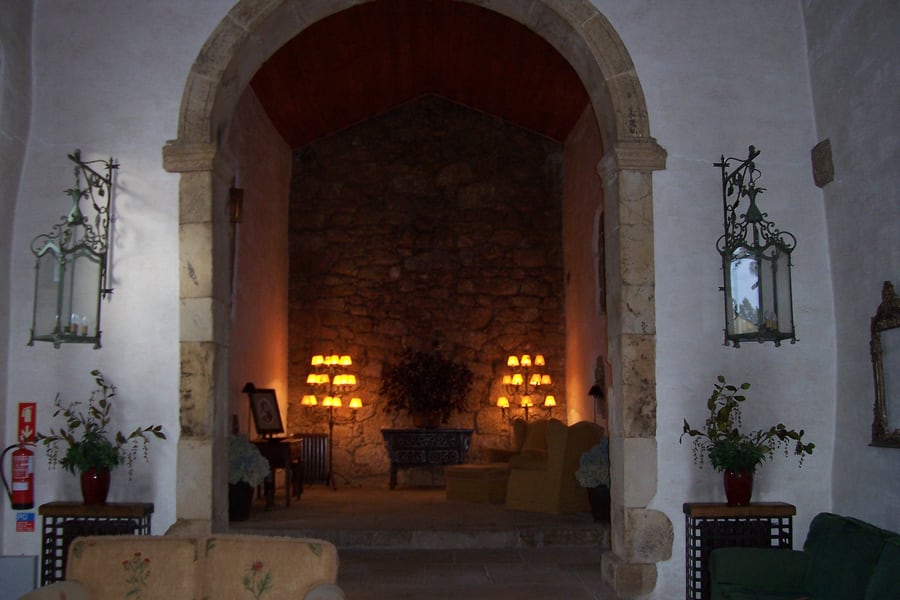
Pousada Convento Belmonte
A former convent above Belmonte
Built from the ruins of the Convent of Nossa Senhora da Esperança, with its old chapel and sacristy now the lounge and bar, looking over the Cova da Beira.
Check Availability (opens in a new tab, on pousadas.pt)via pousadas.ptPousada Serra da Estrela
In the mountains above Covilhã
The old Serra da Estrela sanatorium, restored by the architect Souto Moura, inside the Serra da Estrela Natural Park.
Check Availability (opens in a new tab, on pousadas.pt)via pousadas.ptQuestions or corrections
Planning this trip and stuck on something, or spotted a time, fare or detail that has changed? Send us a message about The Beira Baixa Line. We read every one, and we update this page when something has changed.