Belgrade to Vršac
Smiley.toerist / Wikimedia Commons · CC BY-SA 4.0 · cropped
- DistanceBelgrade Centre–Vršac · 93 km
- Duration1 h 41 to 1 h 51 each way
- Best seasonDaily all year · September for the grape harvest
Introduction
The train to Vršac leaves the capital, but the railway it runs on was not built from there. Vršac had trains on 30 August 1858, on a line from Timișoara to the Danube port of Báziás, when the town belonged to the Austrian Empire. A branch reached west to Vladimirovac in 1894, and on to Pančevo in 1896. Belgrade stood on the far bank of the Danube, in another country, and until 1918 the river between them was a frontier. It was joined last, in 1935, when the Pančevo Bridge opened and gave the city its first railway across the Danube.
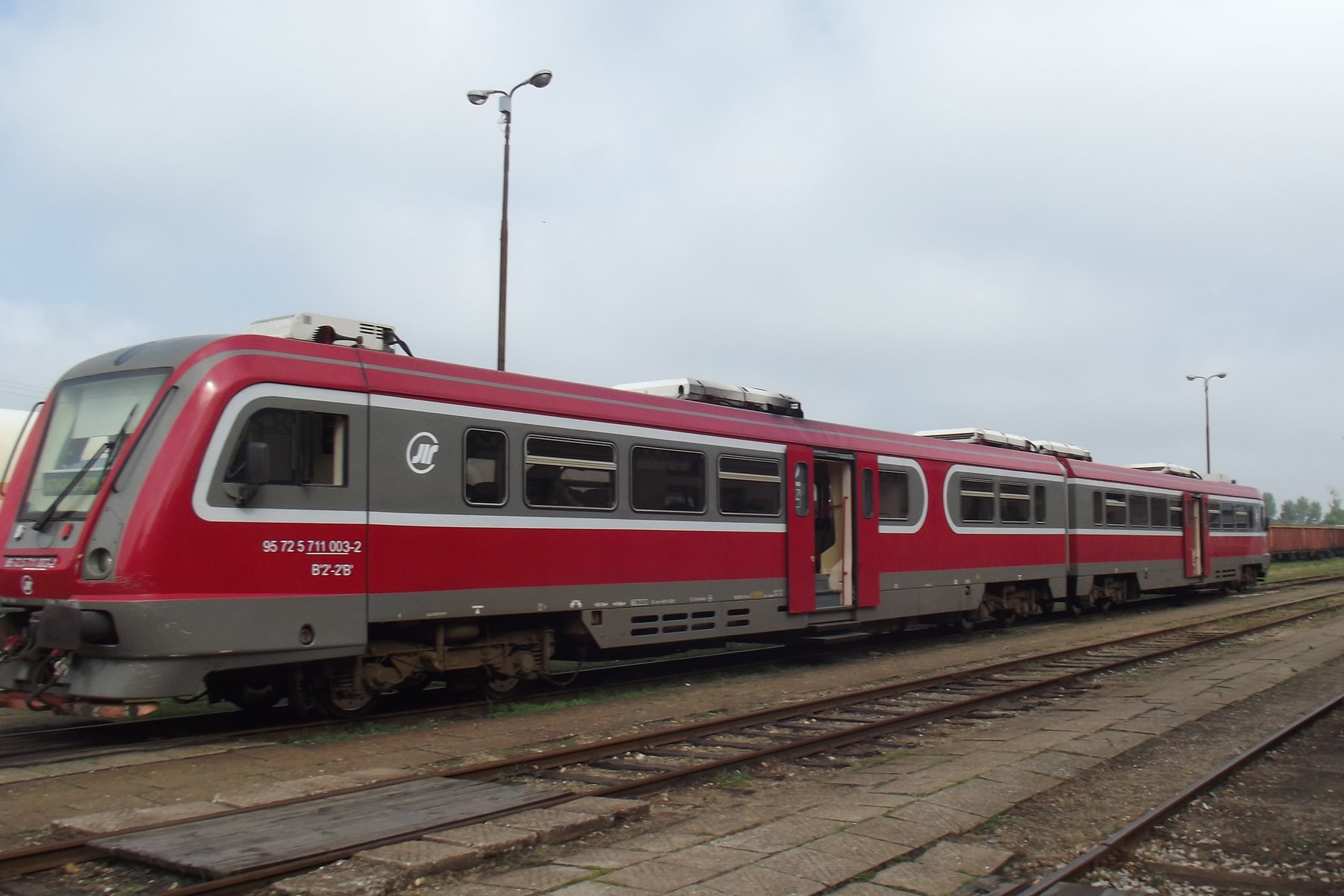
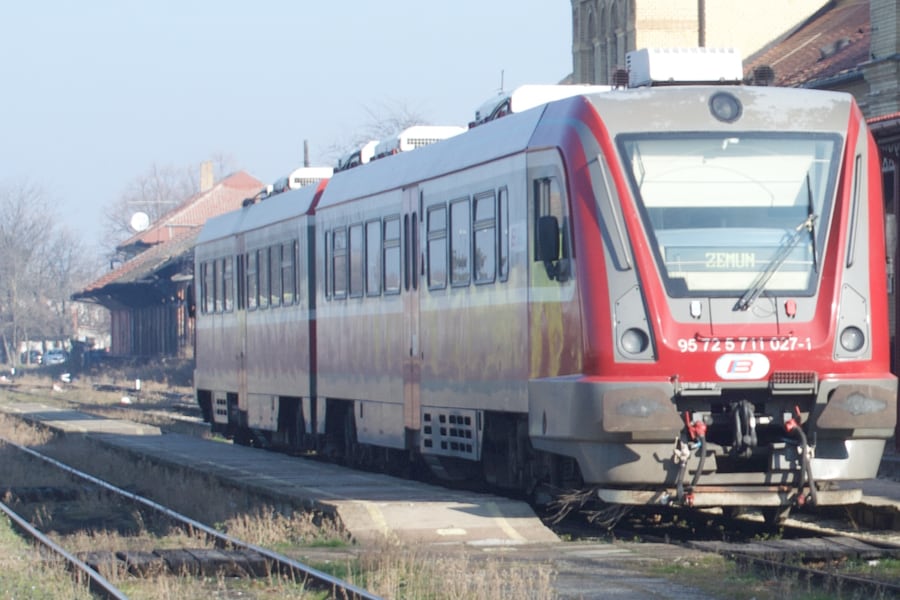
So the ride runs the history backwards. It starts under Belgrade, in a tunnel, crosses the river on the bridge that completed the line, and then heads east for 93 kilometres across the flat farmland of the Banat to the hills at the end of it. The trains are class 711 diesel units, two cars each, and the line was the first they worked when they arrived from Russia in 2011.
At the far end is Vršac, a small town of vineyards under a fifteenth-century tower, with the Romanian border in the hills behind it. Srbija Voz, which runs the trains, publishes its own guide to the town and calls it lepa varoš, the beautiful town of the Banat.
The Journey
Every Vršac train starts at Zemun, on the west side of Belgrade, and calls at Belgrade Centre about ten minutes later. From there it goes straight underground, into the Vračar tunnel, 3,397 metres long, with two stations beneath the city: Karađorđev park and Vukov spomenik. Eleven minutes out of Belgrade Centre it comes into daylight at Pančevački most, on the bank of the Danube, and turns onto the bridge.
The bridge that finished the line
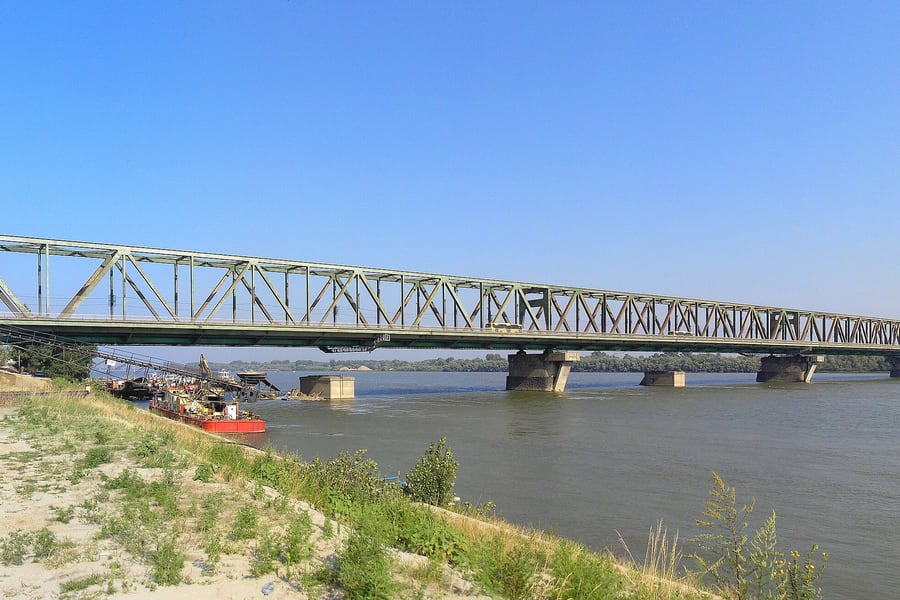
The Pančevo Bridge carries a road and a single railway track across the river, 1,526 metres of steel in all. Until it opened on 27 October 1935, the railways of the Banat, built while the region was part of Hungary, had no link with the Serbian network south of the Danube, and the river's only railway bridges in the region were at Novi Sad and at Cernavodă in Romania. The first bridge was blown up in April 1941 to slow the German advance. Its replacement carried a train on 7 November 1946, three weeks before the first cars, and it was the only Danube bridge in Serbia that survived the bombing of 1999.
On the far bank the line runs through Pančevački rit to Pančevo Glavna, half an hour from Belgrade Centre, and Pančevo Varoš, where the overhead wires end. Beyond Pančevo the railway is a single, unelectrified track, which is why the trains are diesels.
Across the Banat
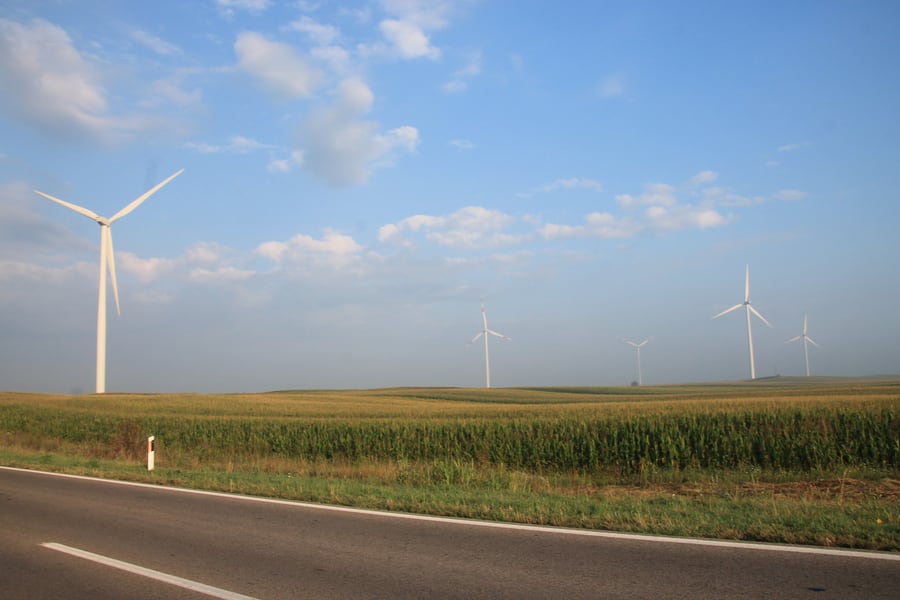
The next hour is the plain: maize fields, long straight stretches of track, and near Alibunar the turbines of a wind farm. The stations come every few minutes, each one a village: Banatsko Novo Selo, Vladimirovac, where the line from Pančevo met the line from Vršac in 1896, Alibunar, Banatski Karlovac, Nikolinci, Uljma and Vlajkovac. The track was laid out for 80 to 120 km/h.
The trains are class 711, two-car diesel units built for Serbia by the Russian firm Metrovagonmash, on the pattern of its RA2 railcar. The first was presented in September 2011, and this was the first line they worked. They have 120 seats, air-conditioning and space for bicycles, and run second class only.
Vršac
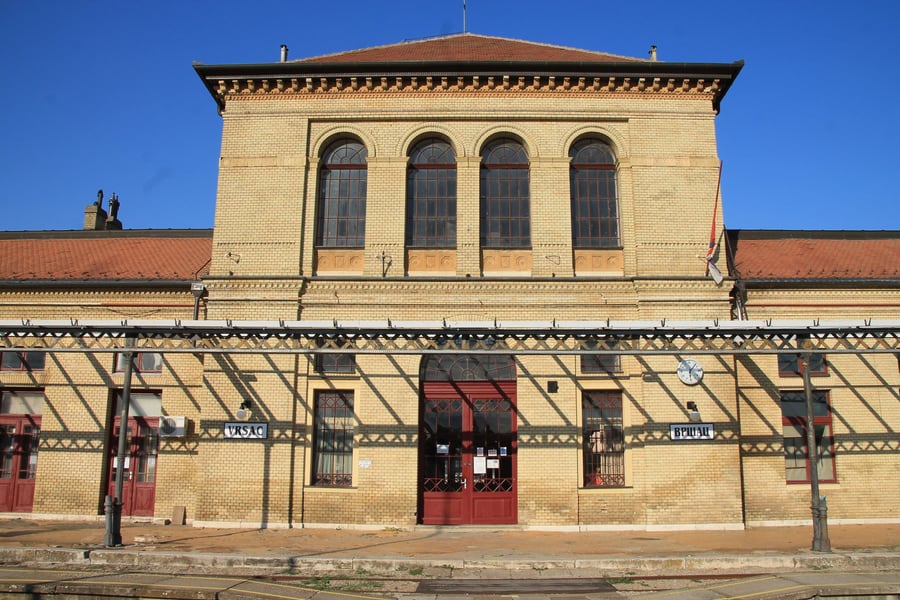
The plain ends at the Vršac hills, an island of old rock rising out of it, with the medieval tower on the nearest summit. The train ends at Vršac station, a yellow-brick building of 1902 by Ferenc Pfaff, chief architect of the Hungarian State Railways, with its booking hall and iron platform canopy intact.
The line is to be rebuilt. A reconstruction from the Pančevo Bridge to the Romanian border, for speeds of up to 160 km/h, is being planned with a loan of about €102 million from the World Bank and the French Development Agency; in July 2026 Serbia's planning agency began the environmental assessment of the corridor.
Along the route
 IIAleksandarII / Wikimedia Commons · CC BY-SA 3.0
Under Belgrade
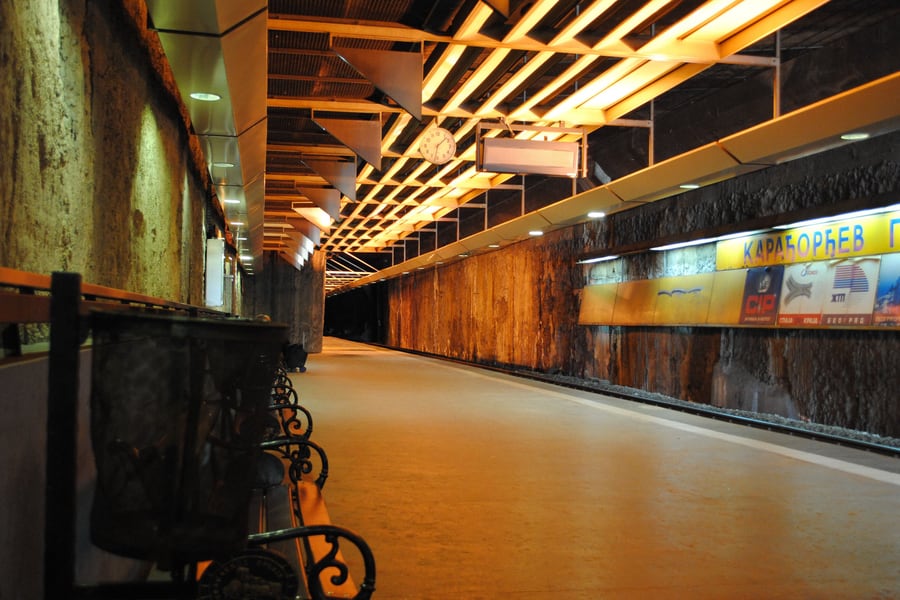
From Belgrade Centre the train goes underground, through the Vračar tunnel, 3,397 metres long, with two stations below the city: Karađorđev park and Vukov spomenik. It comes out at Pančevački most, on the bank of the Danube.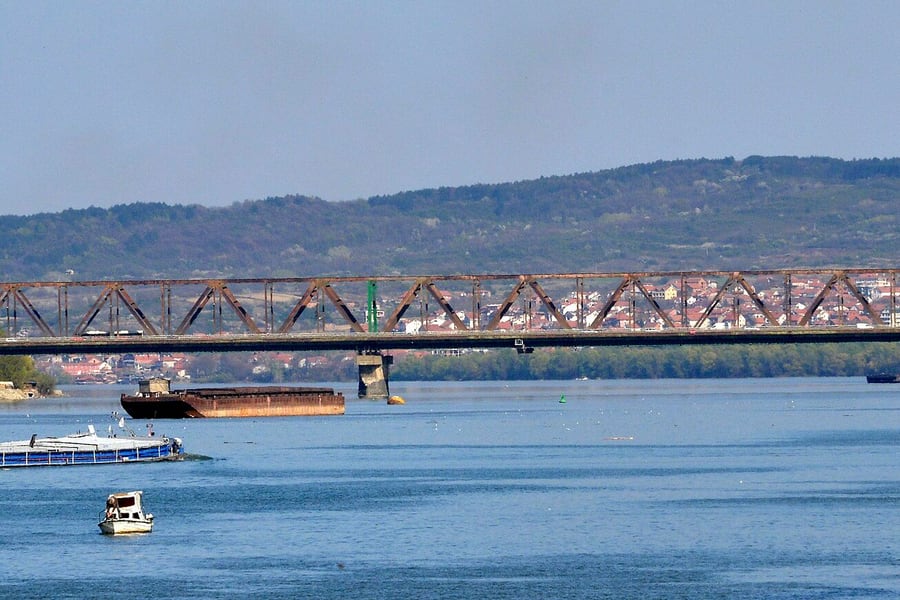 Miomir Magdevski / Wikimedia Commons · CC BY-SA 4.0 · cropped
Across the Danube
The Pančevo Bridge is 1,526 metres of steel. Blown up in April 1941, it was rebuilt after the war, and on 7 November 1946 a train crossed it three weeks before the first cars. In 1999 it was the one Danube bridge in Serbia left standing.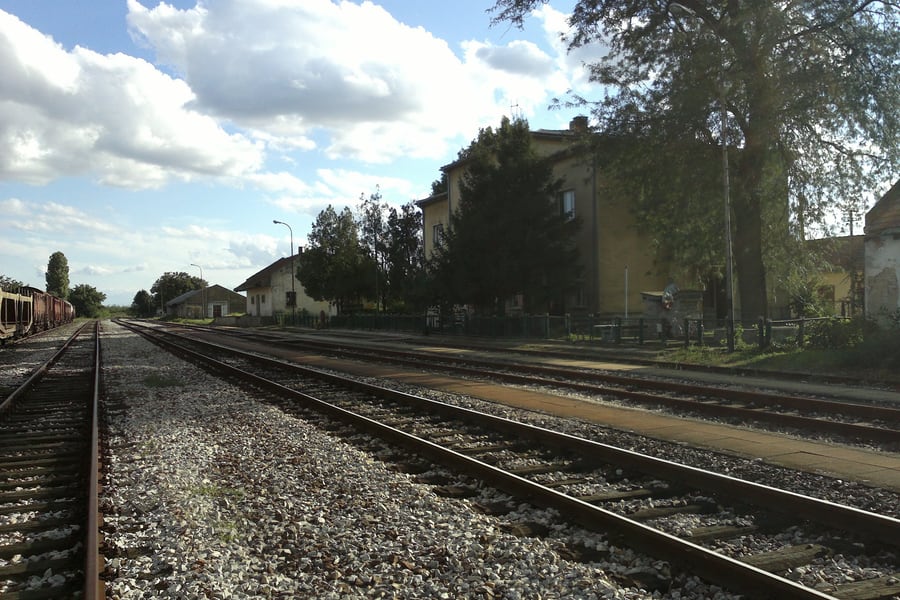 Strahinja95 / Wikimedia Commons · public domain · cropped
Where the pieces met
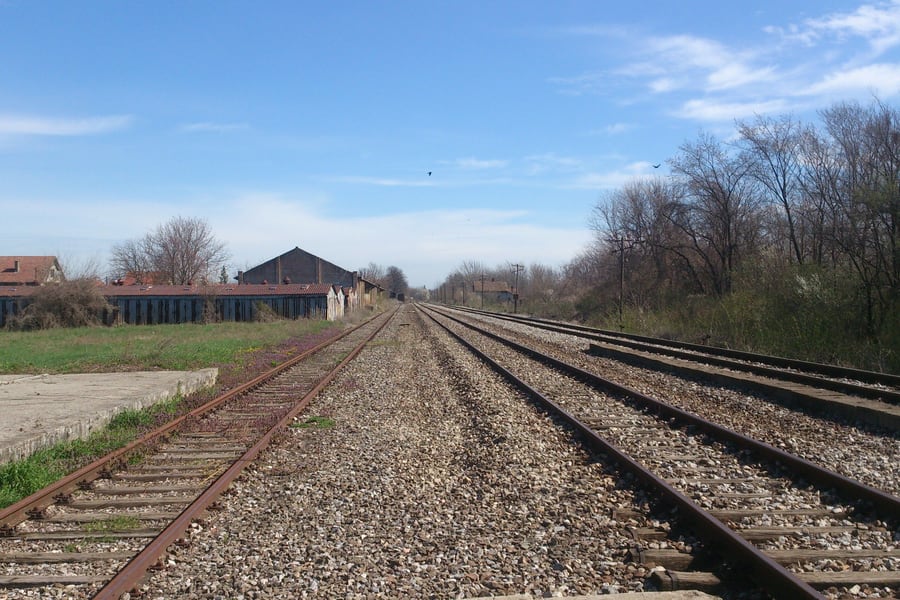
Vladimirovac station opened on 8 December 1894, on a line from Vršac to Kovin. On 26 August 1896 the line from Pančevo reached it, and Vršac was joined to Pančevo. It took another 39 years for the rails to reach Belgrade.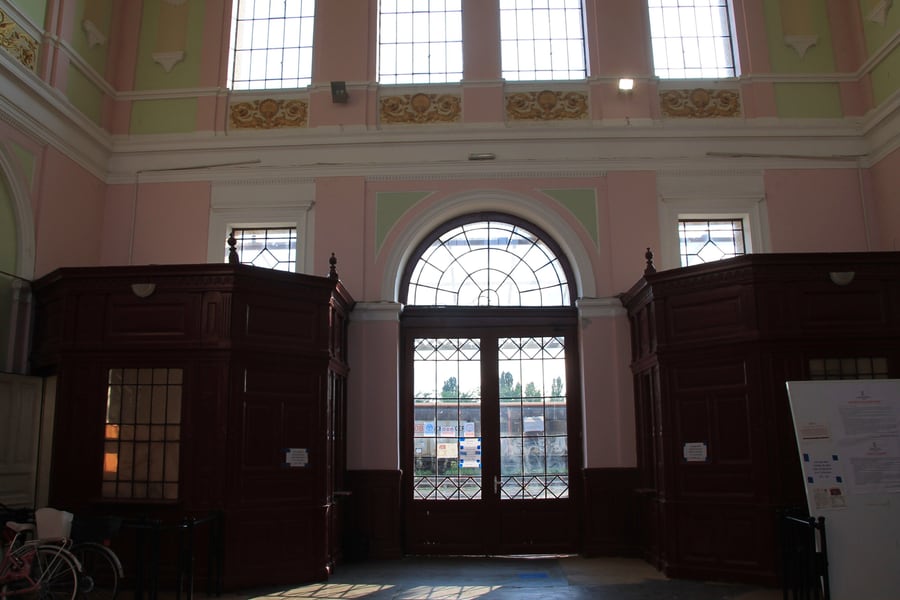 Ванилица / Wikimedia Commons · CC BY-SA 4.0
A station by the MÁV's architect
Vršac station was built in 1902 to designs by Ferenc Pfaff, chief architect of the Hungarian State Railways, when the town was in Hungary. Its booking hall keeps the carved wooden ticket booths and the tall arched windows.A bit of history
Culture & experiences along the way
 Saskafotosaska / Wikimedia Commons · CC BY-SA 3.0 · cropped
The grape harvest days
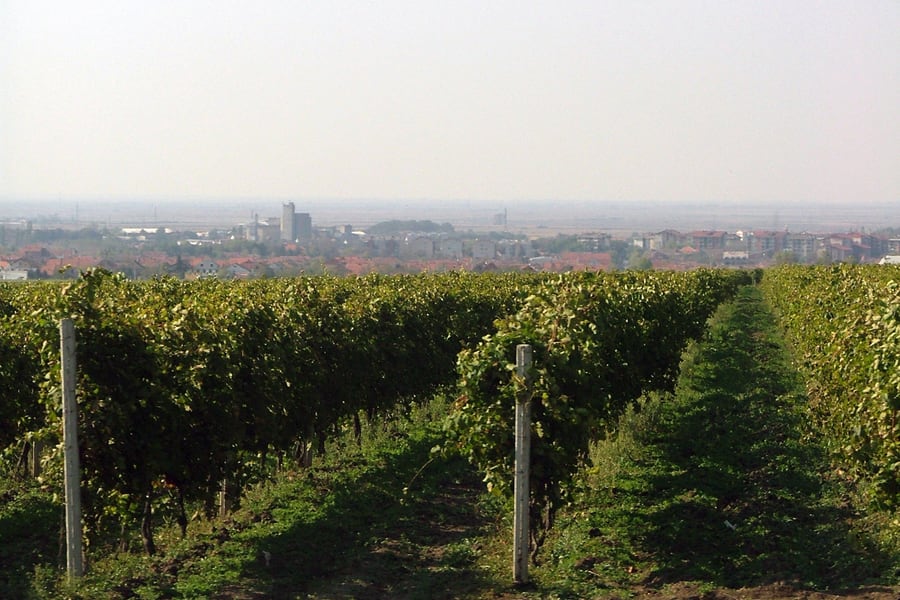
Vines have grown on the slopes of the Vršac hills since ancient times, and the vineyards run down towards the town. Every September Vršac holds its grape-harvest days, the Grožđebal. Srbija Voz's own guide to the town promises a wine that may be the finest you have ever drunk.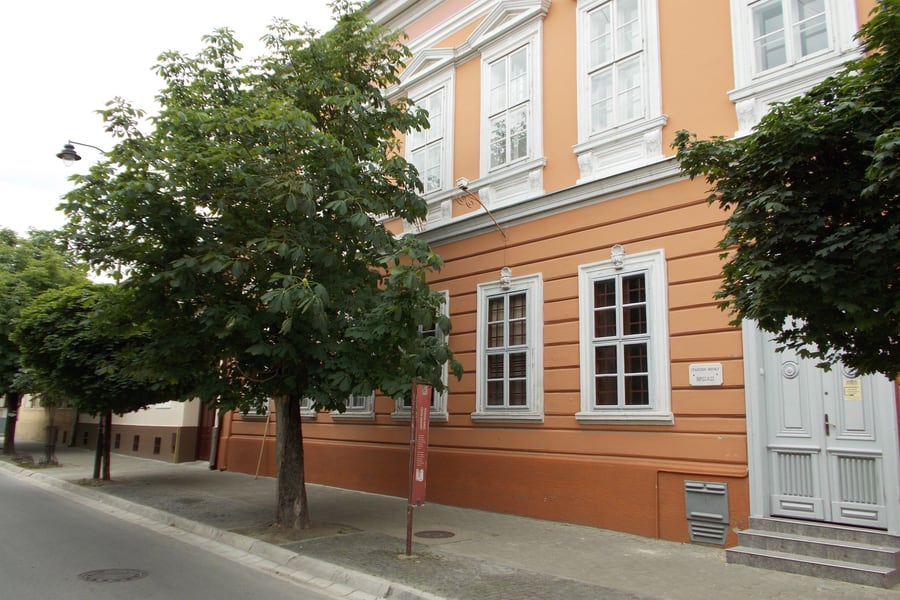 Свифт/Svift / Wikimedia Commons · CC BY-SA 4.0 · cropped
Paja Jovanović's triptych
The painter Paja Jovanović was born in Vršac in 1859. Around 1895 the town council commissioned him to paint it for the Budapest Millennium Exhibition: a market, a harvest among the vines, a farmer sharpening his scythe. The Vršac Triptych won a gold medal and hangs in the City Museum, in two rooms given to his work.Timetables
Srbija Voz runs six trains a day in each direction, every day of the week, the same on weekdays and weekends. All of them run through to and from Zemun, about ten minutes beyond Belgrade Centre. They are Regio trains, second class only, with no reservation, and take 1 hour 41 to 1 hour 51 minutes between Belgrade Centre and Vršac.
Times as of November 2026. Check departures in Srbija Voz's journey planner (opens in a new tab).
Belgrade to Vršac
| Zemun | Belgrade Centre | Vršac |
|---|---|---|
| 06:50 | 06:59 | 08:43 |
| 09:52 | 10:01 | 11:46 |
| 11:24 | 11:33 | 13:24 |
| 14:50 | 15:00 | 16:43 |
| 16:25 | 16:34 | 18:17 |
| 20:50 | 20:59 | 22:42 |
Vršac to Belgrade
| Vršac | Belgrade Centre | Zemun |
|---|---|---|
| 04:40 | 06:21 | 06:30 |
| 06:08 | 07:50 | 07:59 |
| 09:10 | 10:52 | 11:01 |
| 12:13 | 13:54 | 14:03 |
| 14:09 | 15:52 | 16:01 |
| 18:40 | 20:26 | 20:35 |
Every train makes the same twelve calls between Belgrade Centre and Vršac: Karađorđev park, Vukov spomenik and Pančevački most in Belgrade, Pančevo Glavna and Pančevo Varoš, and seven village stations across the Banat. From Belgrade Centre it is about half an hour to Pančevo Glavna and an hour and ten minutes to Alibunar.
Tickets
The Vršac trains are ordinary Srbija Voz Regio trains, so there is one class, one fare and no reservation. Since 15 July 2026 a single from Belgrade to Vršac has cost 600 dinars, and buying it online or in the Srbija Voz app takes 5 per cent off.
Buy before you board. A ticket bought from the conductor carries a surcharge of 500 dinars if you got on at a station with a ticket office or a ticket machine, and the same applies to a return ticket used on a different train or date from the one printed on it.
Book your tickets
Belgrade to Vršac
Srbija Voz · six trains a day, second class
An ordinary Regio fare with no reservation, 5 per cent cheaper bought online or in the app than at the counter.
Book Tickets (opens in a new tab, on srbijavoz.rs)via srbijavoz.rsRail Passes
Interrail and Eurail passes cover these trains. Interrail's list of railway companies includes Srbija Voz's Regional trains in both the Global Pass and the One Country Pass for Serbia, with no reservation needed. The Belgrade city trains, BG:voz, are excluded, but the Vršac trains are not among them.
For this journey alone a pass is not worth buying: the fare is 600 dinars. It is worth having only if you are already travelling around Serbia on one.
Pass conditions checked against Interrail's railway-companies page, last updated 21 October 2026. Conditions change with each season, and the pass issuer's page is the one that binds.
Places to Visit
Vršac is the reason to make the trip: a small town with a tower on the hill above it, a bishop's palace in the centre and vineyards on the slopes. The places below are in and around it, with the sand dunes of Deliblato beyond.
For Belgrade, where the journey begins, see the Soko to Novi Sad, which also starts at Belgrade Centre.
 Altitonantis / Wikimedia Commons · CC BY-SA 4.0
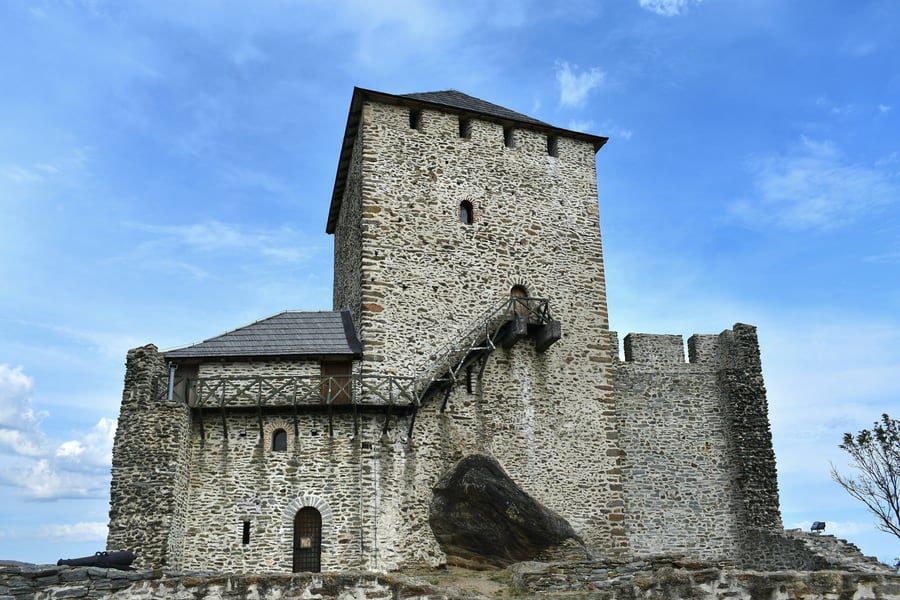
Vršac Tower
The tower on the hill above Vršac is the keep of a fifteenth-century fortress, which historians credit to the Serbian despot Đurađ Branković, built after the fall of Smederevo in 1439. It stands at 399 metres, the views reach into Romania, and the castle around it has been rebuilt since 2009. It has been a protected monument of great importance since 1991.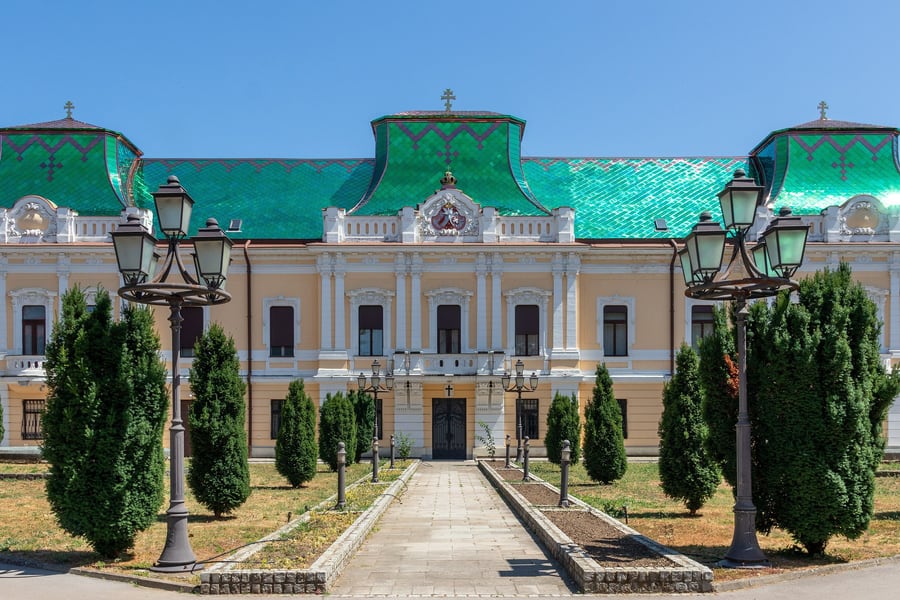 No.cilepogača / Wikimedia Commons · CC BY-SA 4.0 · cropped
The Bishop's Palace
The seat of the Serbian Orthodox Eparchy of Banat was built in 1750–57, when the see moved here from Caransebeș, by an architect from Prussia whose name is lost. It is the church's only baroque episcopal residence, and was remodelled in 1904. Its chapel keeps an eighteenth-century iconostasis, and the palace holds a fourteenth-century icon from Kyiv and 292 others.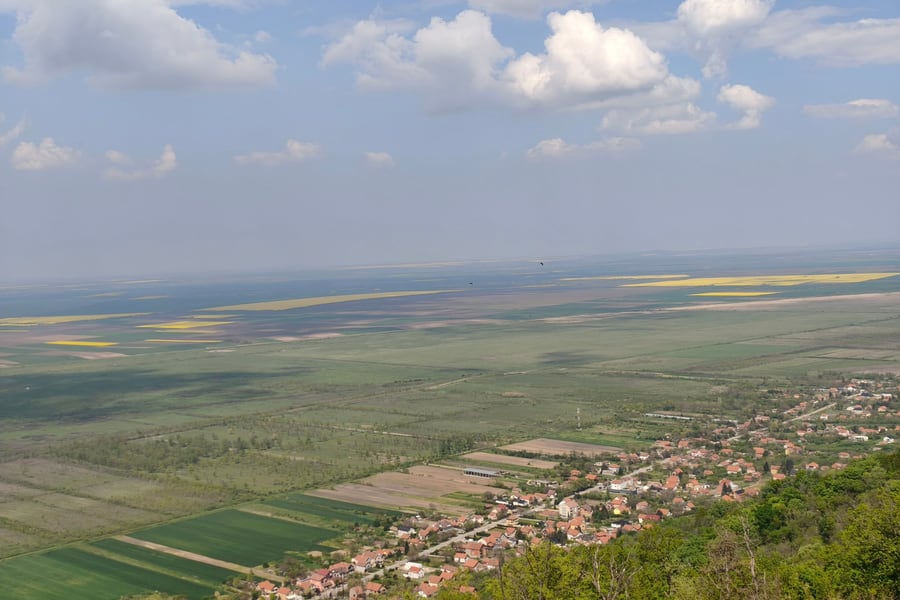 Nter25 / Wikimedia Commons · CC BY-SA 4.0 · cropped
The Vršac hills
The plain ends at Vršac, against a massif 19 kilometres long that runs on into Romania. Its highest point, Gudurički vrh, at 641 metres, is the highest in Vojvodina, and from the slopes the Banat lies flat to the horizon. The hills have been a protected landscape since 1982, with 120 recorded species of birds.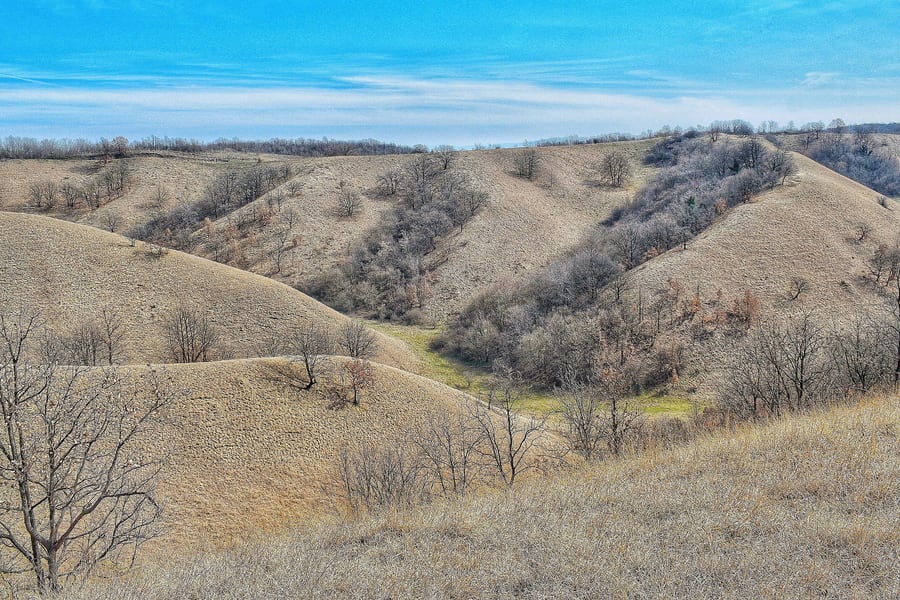 Analazic212 / Wikimedia Commons · CC BY-SA 4.0 · cropped
Deliblato Sands
North of the Danube, sand dunes cover a strip some 35 kilometres long, one of the largest sandy areas in Europe, left by the withdrawal of the Pannonian Sea and shaped by the Košava wind. The special nature reserve covers about 35,000 hectares across four municipalities, with steppe grassland and some 900 species of plants, the Banat peony among them.Where to Sleep
With six trains a day in each direction and the last one back from Vršac at 18:40, the journey works as a day out from Belgrade: leave on the 06:59 or 10:01, and you have most of the day in Vršac.
Belgrade is the easier base, with the widest choice of hotels. To stay for the grape-harvest days in September, or to walk in the Vršac hills or the Deliblato Sands, book a room in Vršac itself.
Questions or corrections
Planning this trip and stuck on something, or spotted a time, fare or detail that has changed? Send us a message about Belgrade to Vršac. We read every one, and we update this page when something has changed.