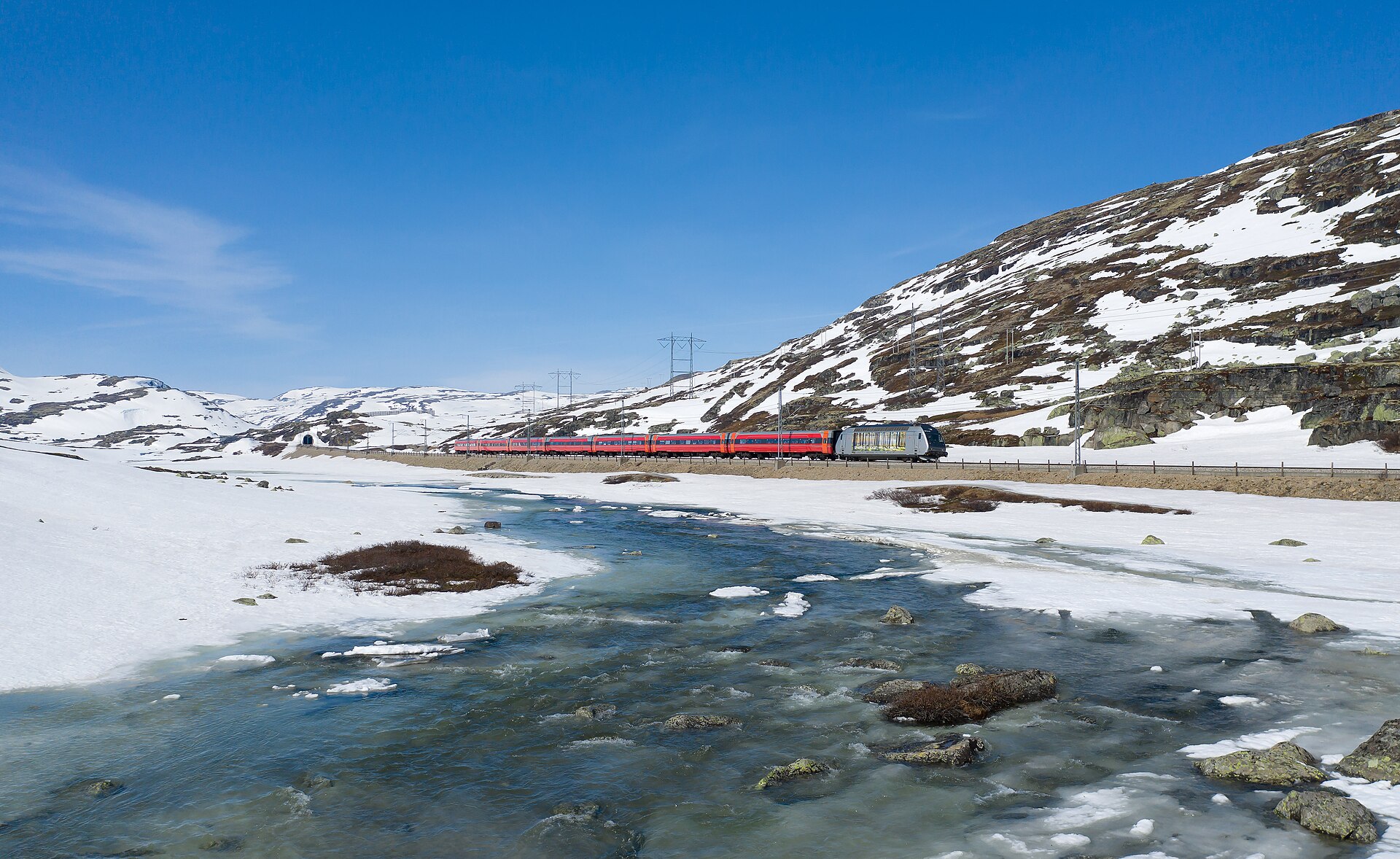
The Bergen Railway
Kabelleger / David Gubler / Wikimedia Commons · CC BY-SA 4.0
- DistanceOslo–Bergen · about 490 km
- Duration6 hours 40 minutes to 7 hours
- Best seasonYear-round — snow on the plateau into June, cycling season July–September
Introduction
Somewhere west of Geilo the trees give up. It happens gradually and then all at once: the birch thins, the last cabins fall away, and the train comes out onto a landscape of grey rock, black water and old snow that stretches to every horizon. This is the Hardangervidda, the largest mountain plateau in Europe, and the Bergen Railway spends more than a hundred kilometres up here — the highest mainline railway in Northern Europe, and one of the very few anywhere that crosses a continent's roof rather than tunnelling politely beneath it.
Norway's two biggest cities are only 300 kilometres apart as the crow flies, but between them lies a wall of mountain that kept them, for most of history, closer to Copenhagen and Newcastle than to each other. Parliament argued for five days before voting, on 1 March 1894, by 60 votes to 53, to spend an enormous share of a poor country's budget on connecting them. What followed was a decade of work at 1,200 metres, in a place with no roads and no shelter, where the snow falls in metres and the temperature drops far below freezing. The navvies — the rallare — bored 113 tunnels through 28 kilometres of rock. The longest of them, the Gravehalsen, took six years and was cut by hand through solid gneiss.
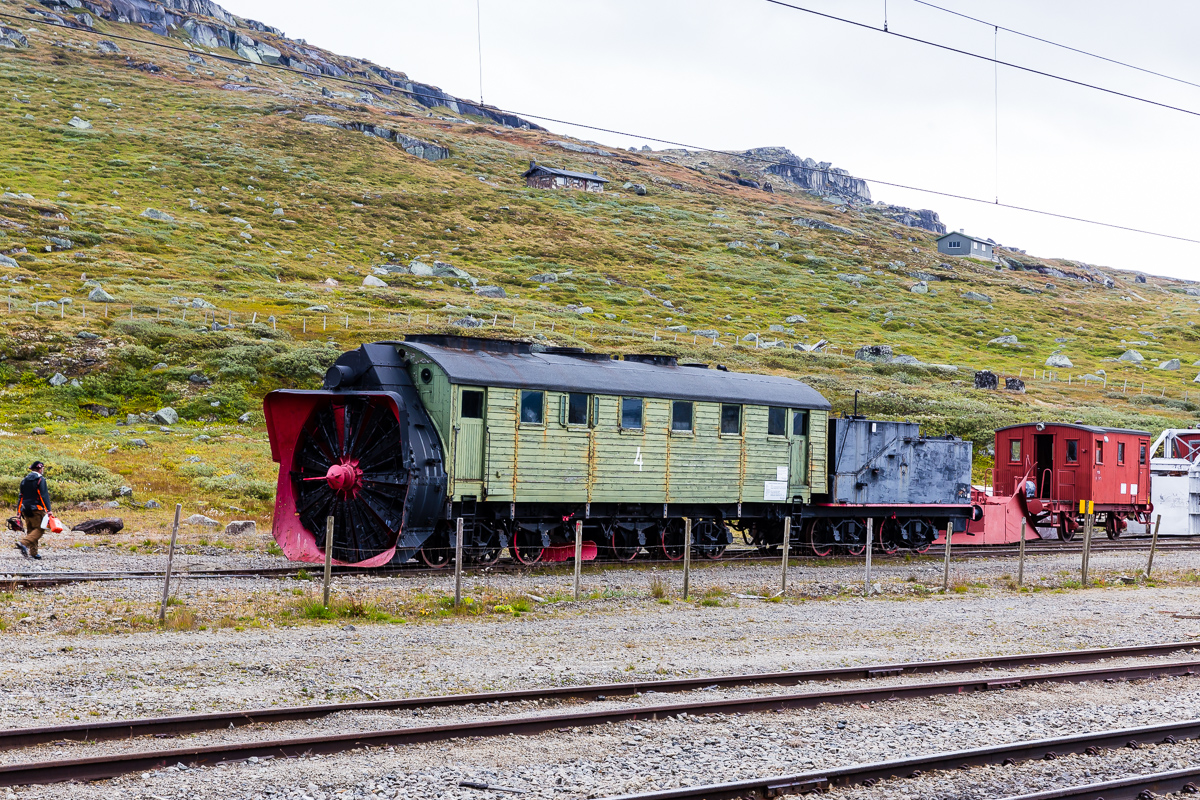
The line opened on 27 November 1909. King Haakon VII called it the Norwegian engineering masterpiece of his generation. Then the mountain set about trying to close it again. The first official opening train, two years earlier, had been buried in a drift and forced to reverse; it took a month and a half to dig the railway out. For the next eighty years the fight went on with snow sheds, rotary ploughs and crews stationed permanently at Finse, until in 1993 the ten-kilometre Finse Tunnel finally took the worst of it underground.
What that leaves you with today is a seven-hour ride that has no dull hour in it. You leave Oslo through commuter country, climb the long green ladder of the Hallingdal, break out onto the plateau, run for two hours through a landscape that looks like the surface of another planet — it has actually played one, in The Empire Strikes Back — and then fall away west through waterfalls and fjord-heads into rain-washed Bergen. In 2009 Norwegian television filmed the whole thing from the cab and broadcast all seven hours and sixteen minutes of it, unedited, on the line's hundredth birthday. It drew record ratings and became a national talking point. They had accidentally invented slow television, and they had chosen exactly the right train.
The Journey
Out of Oslo, up the Hallingdal
The first hour is the least of it, and that is fine — it gives you time to find the buffet car. The train slips west out of Oslo S along the Drammen Line, through tunnels and suburbs, then turns north at Drammen and works its way up to Hønefoss, where the Bergen Line proper begins. From here the railway takes hold of a valley and does not let go: the Hallingdal, a long, straight, north-westward trench of farms, timber and river, climbing so gently at first that you barely notice it.
By Nesbyen and Gol the farms are higher and the forest darker. By Ål the valley has narrowed. And at Geilo, 794 metres up and about three and a half hours out of Oslo, the character of the journey changes completely. Geilo is a ski town, the point where the train leaves the inhabited world behind — and the point where, if you have any sense, you move to the window and stay there.
The Hardangervidda
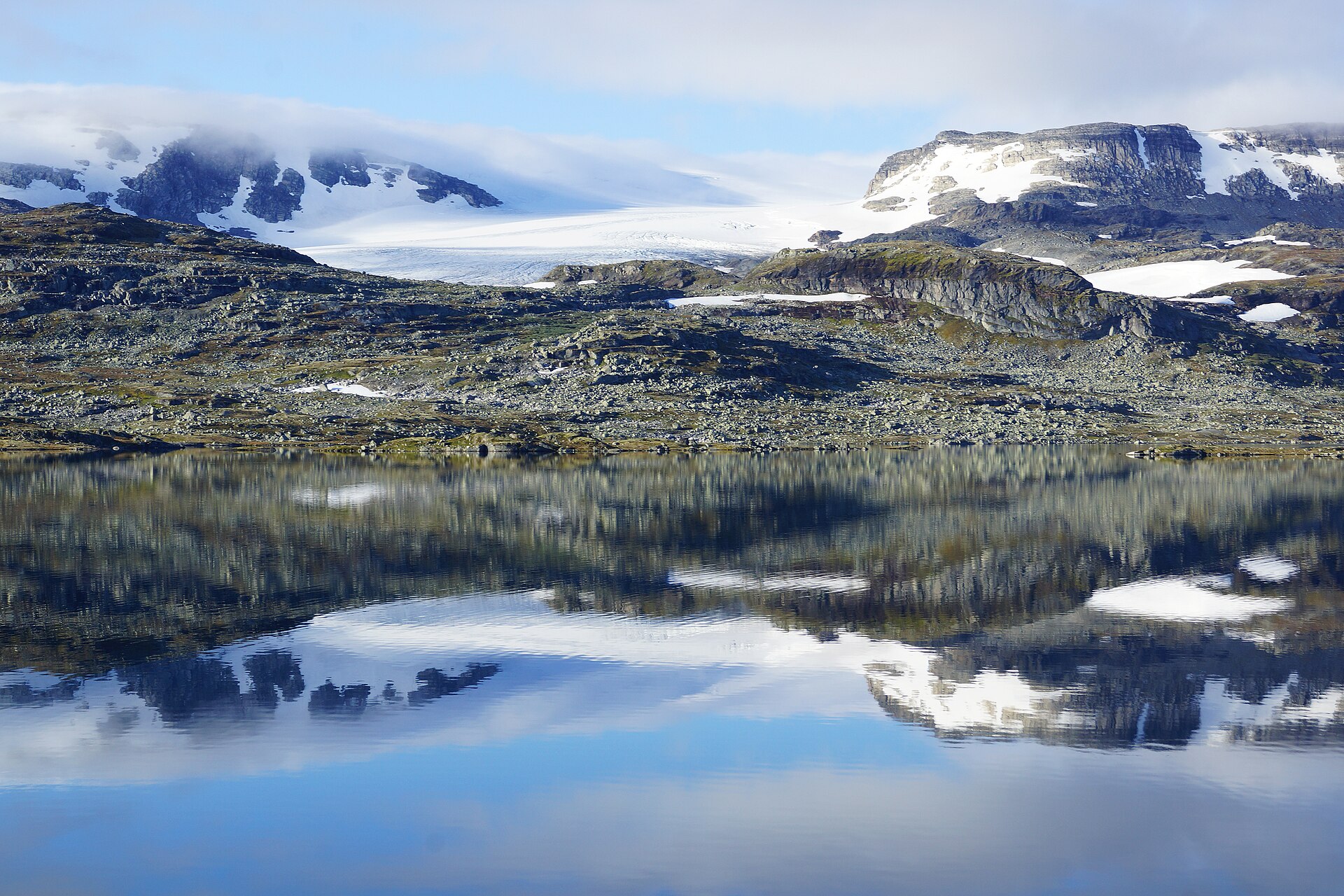
What follows is the reason people come. For the next two hours the railway crosses the Hardangervidda — 6,500 square kilometres at an average height of 1,100 metres, the largest plateau of its kind in Europe and entirely above the tree line. It is almost empty of people and full of wild reindeer, whose herds here are among the largest in the world. In the lakes the ice can still be breaking up in June. The line runs at over a thousand metres from Ustaoset onward, and the landscape simplifies down to four things: rock, water, snow and sky.
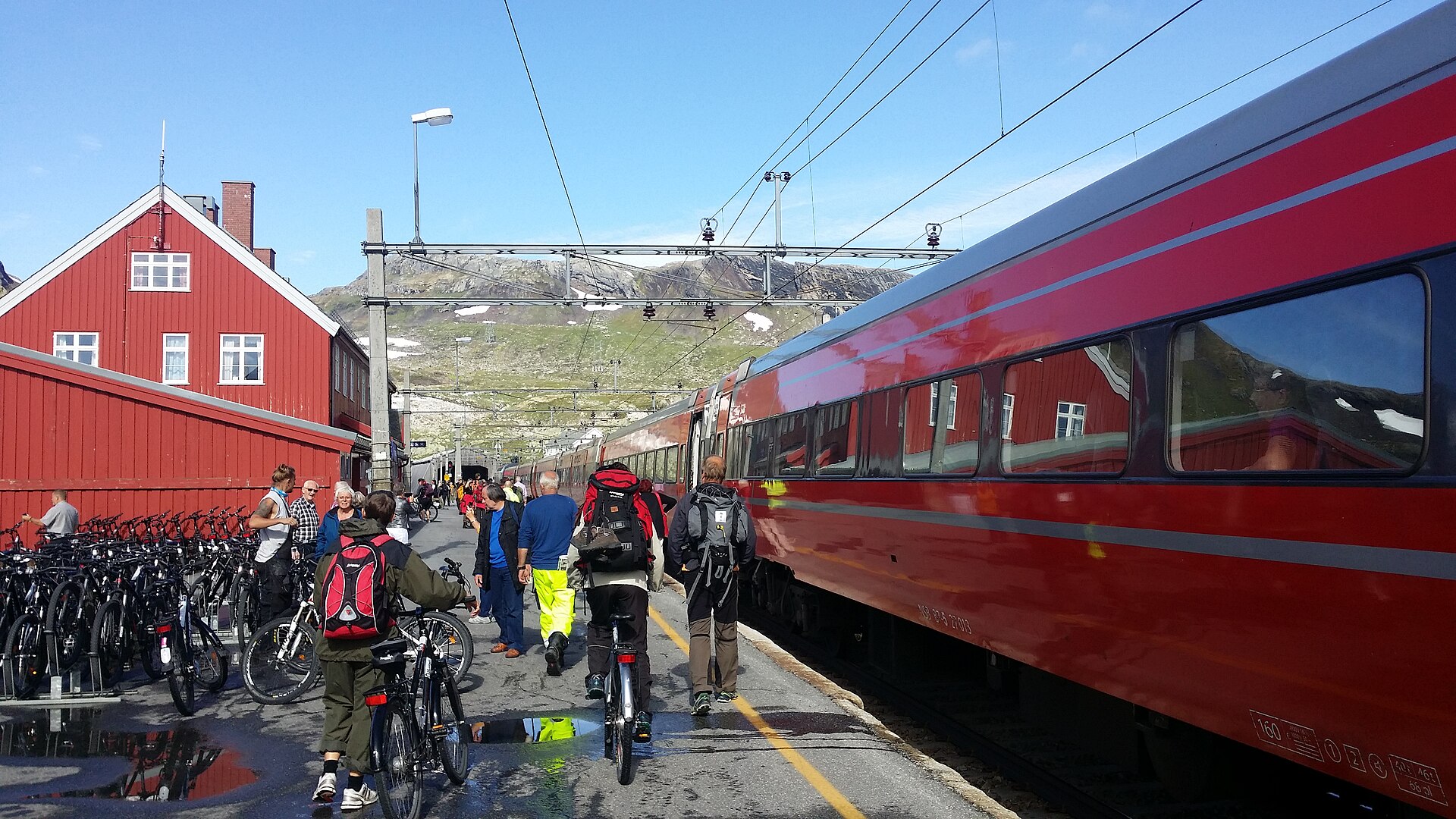
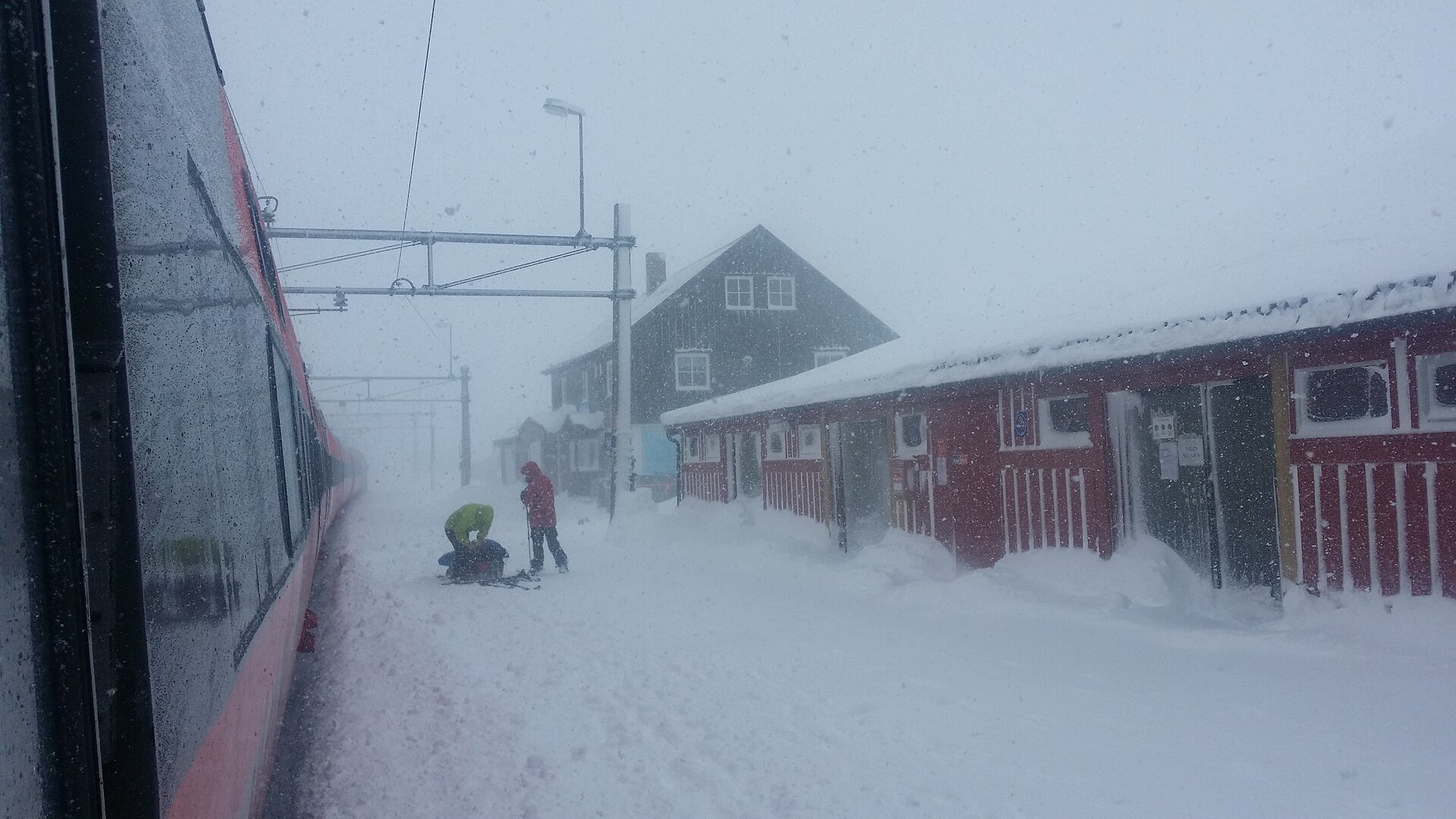
Finse, at 1,222 metres, is the highest station in Norway and the still point of the whole journey. It has a hotel, a hostel, a handful of cabins, a navvy museum and a permanent population of about fifteen. It has no road. It has never had a road. The train is how the mail arrives, how the skiers arrive, how everything arrives — and in summer the platform disappears under bicycles, because the old construction road over the mountain, the Rallarvegen, starts here.
Just west of the station the train dives into the Finse Tunnel, ten and a third kilometres of rock built in the early 1990s to escape the drifts that used to close the line for days at a time. At 1,237 metres inside it, unseen and unannounced, you cross the highest point on the Norwegian railway network.
Beyond the tunnel comes Hallingskeid — 1,110 metres, no road, no village, a shelter for walkers and a long snow tunnel that burned down in 2011 with a train inside it — and then Myrdal, perched on a shoulder of the mountain at 866 metres. Look out of the left-hand side here for a second, much smaller platform and a set of dark green carriages. That is the Flåm Railway, which will drop 864 metres in twenty kilometres to reach the fjord.
Down to the sea
From Myrdal the descent is spectacular and fast. The train plunges into the Gravehalsen Tunnel — five and a third kilometres, hand-cut through gneiss over six years, once the longest tunnel north of the Alps — and emerges into an entirely different country. Waterfalls come down the rock faces on both sides. Trees return, then meadows, then the wide green bowl of Voss, a town of white-water rivers and paragliders 56 metres above the sea.
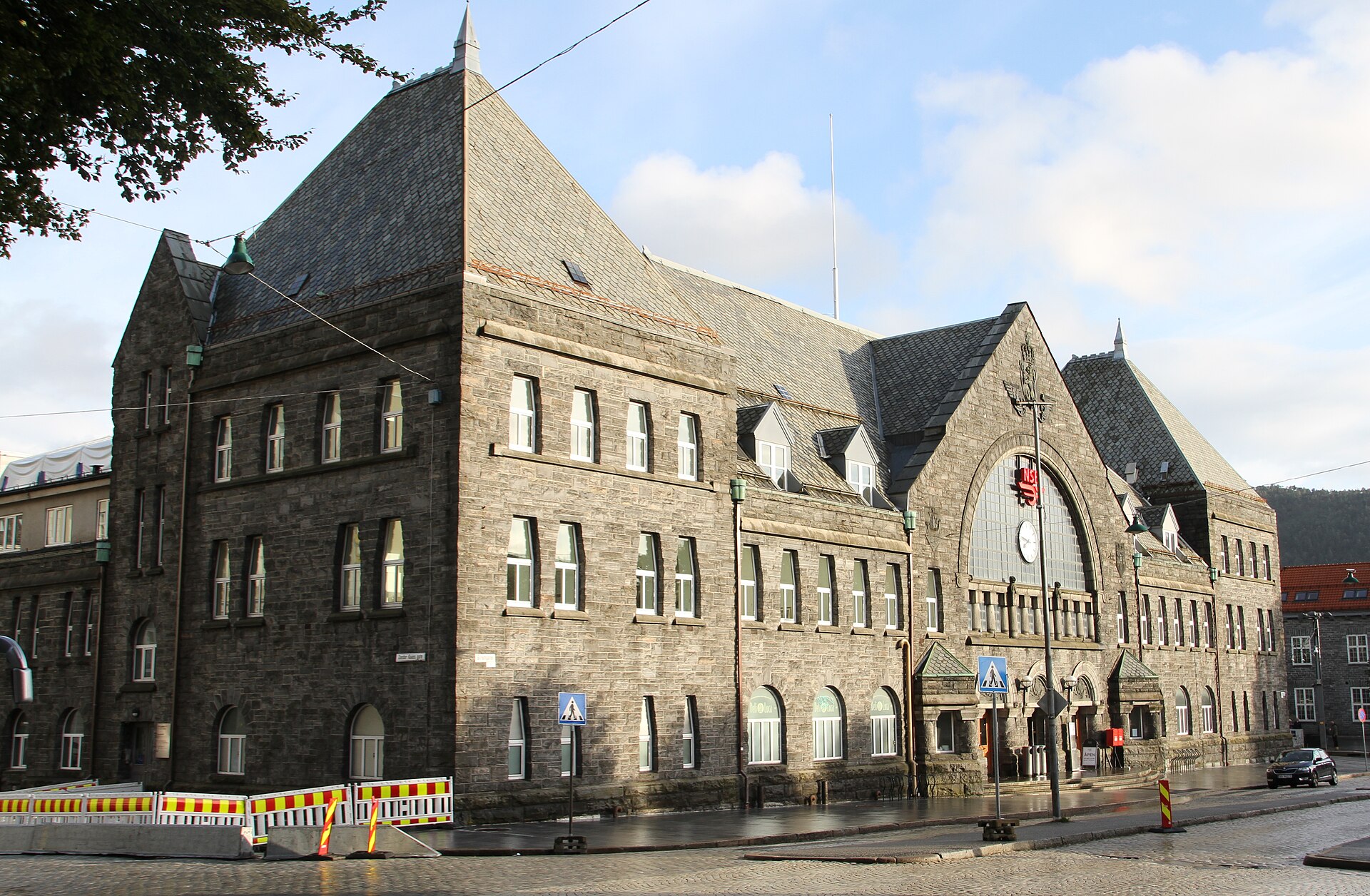
The last hour runs beside fjord water almost the whole way: Bolstadøyri, Dale, Stanghelle, the line clinging to the shoreline of the Sørfjord with the mountains dropping straight into it. Then the long bore of the Ulriken Tunnel through the mountain that stands behind Bergen, and you arrive under the stone arches of Bergen station, seven hours and a whole climate away from where you started. It will probably be raining. It usually is — and somehow Bergen is one of the loveliest cities in Europe anyway.
A note on which way round
Most people ride west, Oslo to Bergen, because the journey builds — city, valley, plateau, fjord, sea. Eastbound has its own argument: you get the fjord scenery in the first hour while you are still fresh, and the plateau in the middle of the day. In winter, when the light is short, take the early morning departure in either direction so that the high section falls in daylight. That single choice matters more than any other on this line.
Along the route
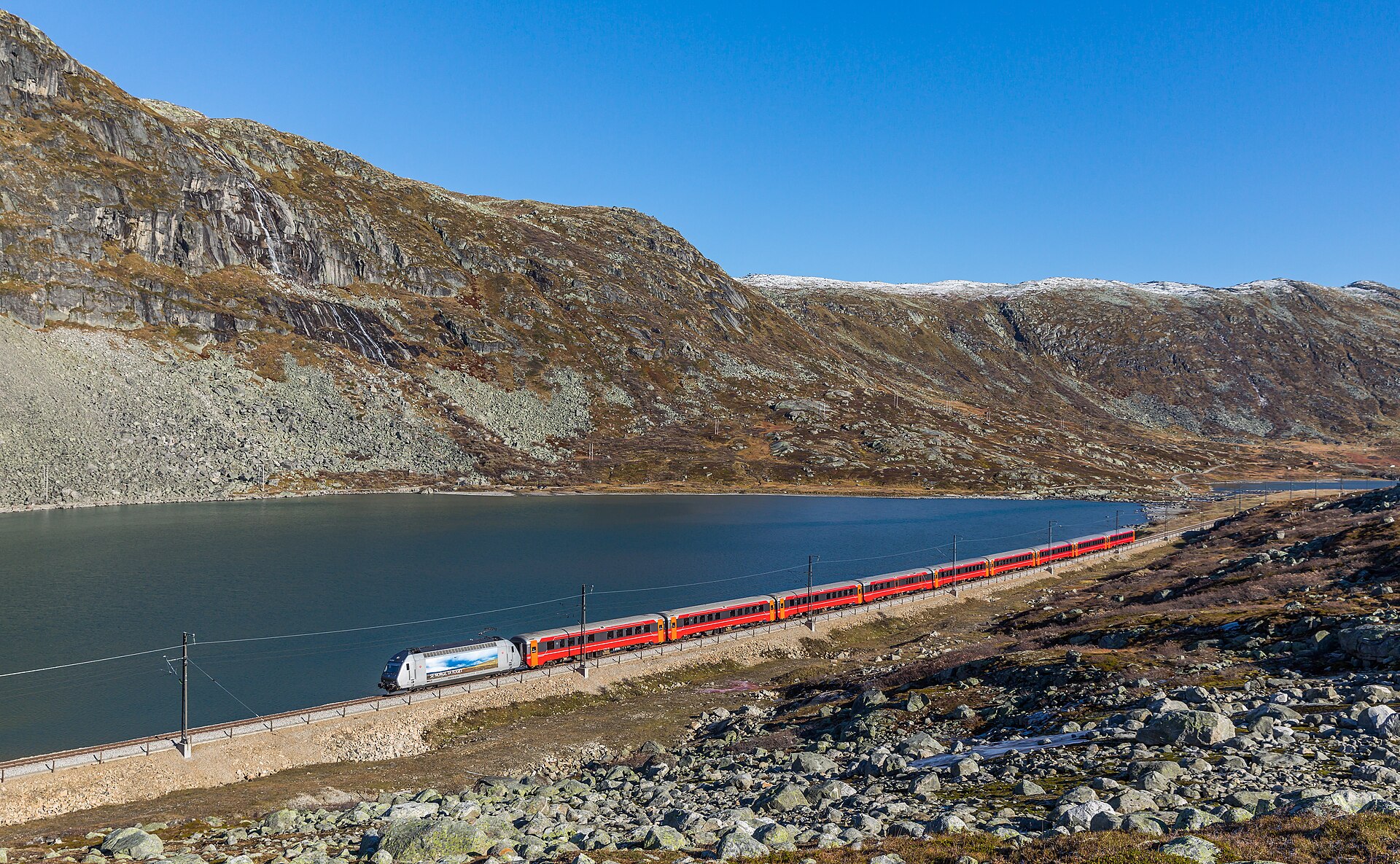
Kabelleger / David Gubler / Wikimedia Commons · CC BY-SA 4.0A hundred kilometres above the tree line
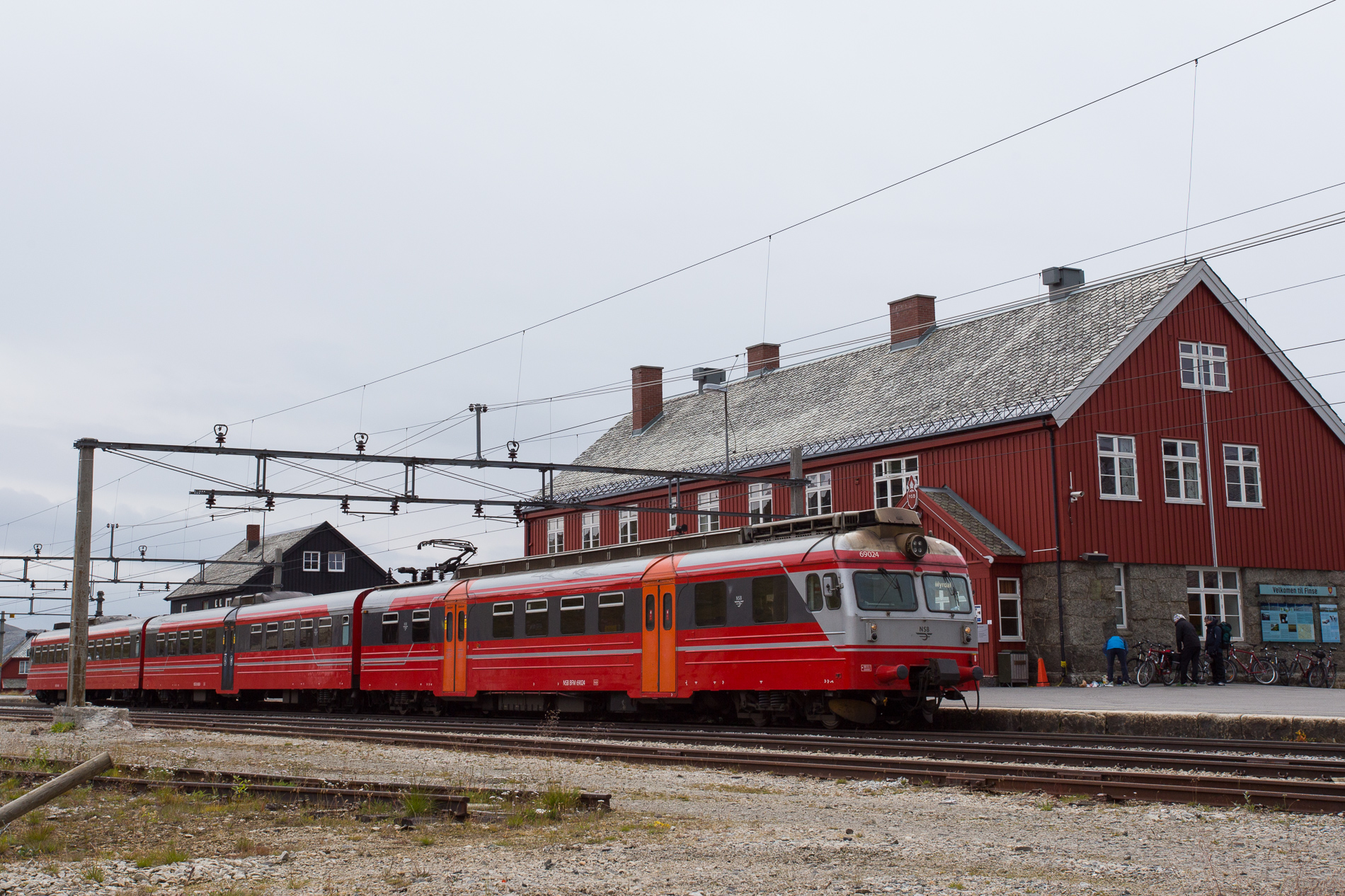
Between Geilo and Myrdal the line climbs out of the forest altogether and spends hours on the Hardangervidda, Europe's largest mountain plateau: no trees, no farms, barely any roads. The summit, 1,237 metres, is inside the Finse Tunnel.toresetre / Wikimedia Commons · CC BY-SA 2.0Finse — the station with no road
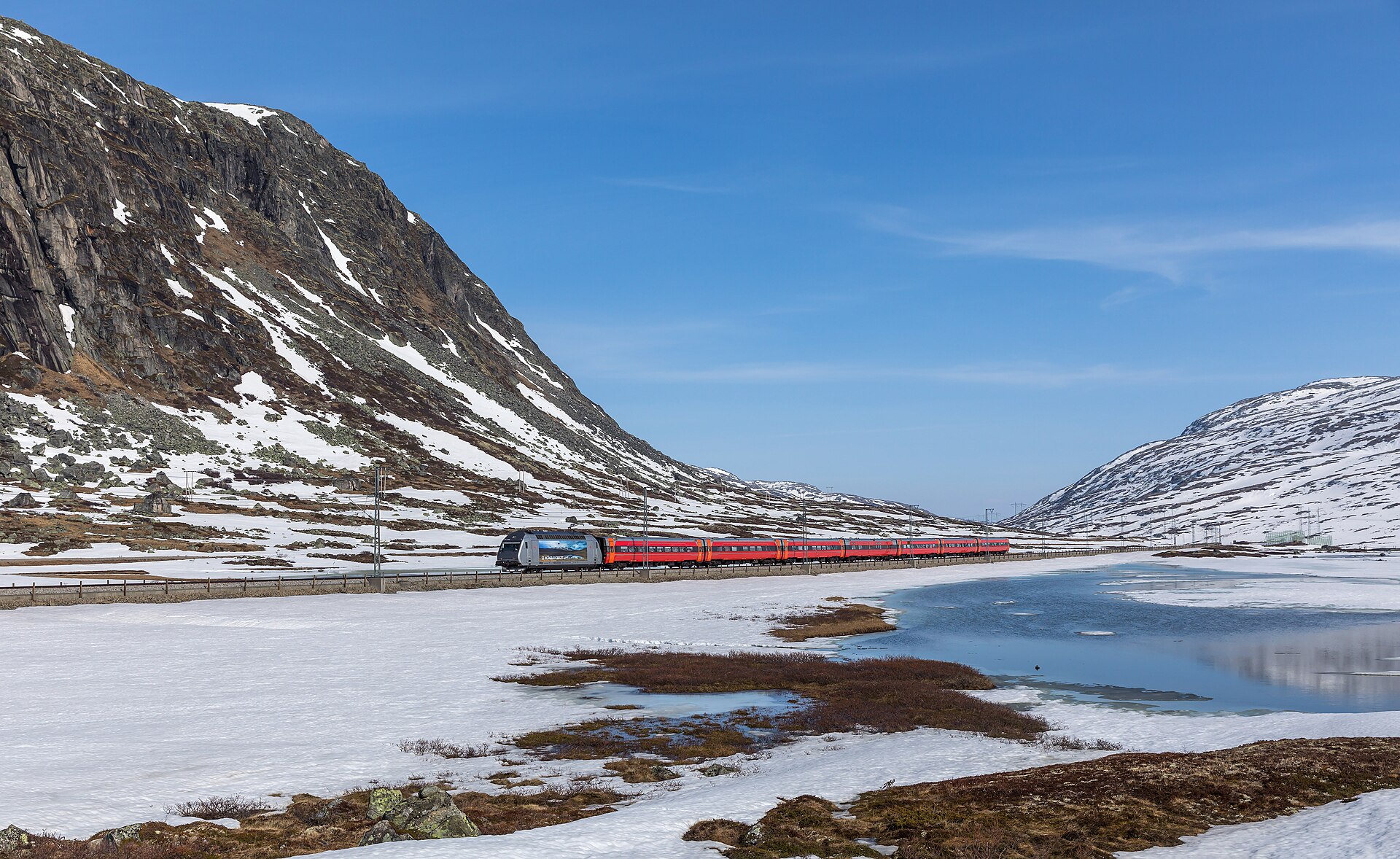
Finse is not reachable by car and never has been. Fifteen people live there, and the railway is the only year-round way in — which is why Amundsen, Scott and Shackleton trained on the ice above it, and why George Lucas filmed Hoth here.Tore Sætre / Wikimedia Commons · CC BY-SA 4.0The line the snow nearly beat
The official opening train of December 1907 got stuck in a drift and had to reverse; it took six weeks to dig the line out. The answer finally came in 1993 with the 10.3-kilometre Finse Tunnel under the worst of it.A bit of history
Culture & experiences along the way
Kabelleger / David Gubler / Wikimedia Commons · CC BY-SA 4.0Ride the train that invented slow TV
On 27 November 2009 — the line's hundredth birthday, to the day — Norwegian television broadcast seven hours and sixteen minutes of unedited footage from the cab of a Bergen Line train. Bergensbanen minutt for minutt was a national event, and it created an entire genre: slow TV. Riding the line yourself is the original version, window included, and the good news is that you get to choose your own soundtrack.Kolbkorr / Wikimedia Commons · CC BY-SA 4.0Get off at Finse and cycle the Rallarvegen
The road the navvies built to construct the railway, the Rallarvegen, is now one of the great bicycle rides in Europe — unpaved, high, and running 80 kilometres from Haugastøl through Finse and Myrdal down to Flåm on the fjord. Trains carry the bikes, the platform at Finse fills with them all summer, and more than 20,000 people ride it in a season that only lasts from July to September.Randi Hausken / Wikimedia Commons · CC BY-SA 2.0Change at Myrdal for the Flåm Railway
High on the mountain at Myrdal, one platform belongs to a different train altogether: the green carriages of the Flåm Railway, which drop 864 metres in twenty kilometres down to the Aurlandsfjord. It is the most famous branch line in the world, and it exists because of this one — built to give the Hardangervidda crossing a link to the sea. Most people ride the two together.Timetables
The Bergen Line is a scheduled main line, not a tourist special: six daytime through trains each way on weekdays, plus one night train, run by Vy as line F4. The times below are the through workings as of July 2026.
Oslo S → Bergen
| Train | Oslo S | Geilo | Finse | Myrdal | Voss | Bergen |
|---|---|---|---|---|---|---|
| 61 | 06:23 | 09:59 | 10:49 | 11:21 | 12:05 | 13:12 |
| 63 | 08:23 | 11:56 | 12:37 | 13:06 | 13:52 | 15:00 |
| 601 | 12:01 | 15:49 | 16:35 | 17:04 | 18:00 | 19:08 |
| 65 | 14:23 | 18:01 | 18:53 | 19:26 | 20:11 | 21:33 |
| 67 | 16:23 | 20:11 | 20:49 | 21:19 | 22:06 | 23:18 |
| 605 (night) | 23:01 | – | 03:49 | – | – | 06:23 |
Bergen → Oslo S
| Train | Bergen | Voss | Myrdal | Finse | Geilo | Oslo S |
|---|---|---|---|---|---|---|
| 60 | 06:19 | 07:28 | 08:12 | 08:38 | 09:16 | 13:07 |
| 62 | 08:08 | 09:20 | 10:02 | 10:31 | 11:12 | 15:09 |
| 602 | 11:49 | 13:03 | 13:52 | 14:20 | 15:04 | 19:07 |
| 64 | 15:38 | 16:56 | 17:40 | 18:06 | 18:48 | 22:27 |
| 66 | 16:48 | 18:06 | 18:55 | 19:27 | 20:13 | 00:07 |
| 606 (night) | 23:01 | – | – | 02:00 | – | 06:30 |
The fastest booking is currently train 63, Oslo 08:23 → Bergen 15:00 — 6 hours 37 minutes. Most runs take between 6 h 40 m and 7 h 10 m.
Things worth knowing. The night train does not run on Saturday nights in either direction. Weekend daytime timetables are slightly thinner than Monday–Friday — one or two of the supplementary trains (601/602, 607/608) come and go with the day of the week and the season. And separately from the through expresses, a regional service (line R40, Bergen–Voss–Myrdal–Ål) covers the western half of the line several times a day, which is useful if you only want the mountain section or are travelling to Myrdal for the Flåm Railway.
In winter, take an early train. The high section between Geilo and Voss is the whole point of the journey, and in December and January it is dark by mid-afternoon. The 06:23 or 08:23 from Oslo, and the 06:19 or 08:08 from Bergen, put the Hardangervidda squarely in daylight.
Operator: Vy — vy.no (opens in a new tab). Times shift with the December and June timetable changes, and engineering work occasionally puts buses on the Voss–Bergen section, so check before you travel.
Tickets
Everything is booked through Vy, and the single most useful thing to know is that Norwegian rail fares work like airline fares: a limited number of cheap minipris tickets are released for each departure well ahead, and once they are gone the price climbs steeply. Book early and Oslo–Bergen is one of the best-value long journeys in Europe; book on the day and it is emphatically not.
Ordinary standard seating is comfortable for seven hours, and Komfort adds a wider seat, more legroom and free coffee for a modest supplement. Seat reservations are included on the long-distance trains and worth caring about — the fjord run into Bergen is best from the left going west. Interrail and Eurail are valid but still need a reservation. Bicycles are carried for a small fee and should be reserved in summer, because space fills.
Book your tickets
Day train · Oslo to Bergen
The full crossing in daylight
The classic ride: about six hours forty minutes to seven hours end to end, with six departures each way on weekdays. Book early for Vy's cheap advance fares, and take a morning train in winter so you cross the Hardangervidda in daylight. Comfort class buys a bigger seat, free coffee and a quieter carriage.
Book Tickets (opens in a new tab, on Vy)via VyNight train · Oslo to Bergen
Sleep across the mountains
The overnight service leaves both cities around 23:00 and arrives soon after six in the morning, with two-berth sleeper compartments as well as ordinary seats. It runs six nights a week — not on Saturday nights — and it crosses the plateau in the dark, so treat it as transport rather than sightseeing.
Book Tickets (opens in a new tab, on Vy)via VyRail Passes
Interrail passes are valid. Interrail's table of railway companies lists Vy as included in Norway, so the Bergen Railway is covered by a one-country Interrail Norway Pass, the Interrail Nordic Pass or a Global Pass. Interrail advises always reserving in Norway because trains fill up. A seat reservation with Vy costs €6 in second class, and is free with a first-class pass. On the night train a seat is €4–6 and a sleeping compartment for one or two €86–107.
Whether a pass pays depends on when you book. Vy's cheapest advance fares make Oslo–Bergen good value on a ticket, but they sell out. A pass pays when you travel at short notice, or when Bergen is one stop of a longer trip through Norway.
Checked October 2026 against interrail.com (opens in a new tab), Interrail's Norway page (opens in a new tab) and its domestic (opens in a new tab) and night-train (opens in a new tab) reservation fees.
Places to Visit
The Bergen Railway is unusual among long scenic lines in that breaking the journey is genuinely worth doing rather than a sacrifice — the plateau stations are destinations in their own right, not just names on a timetable.
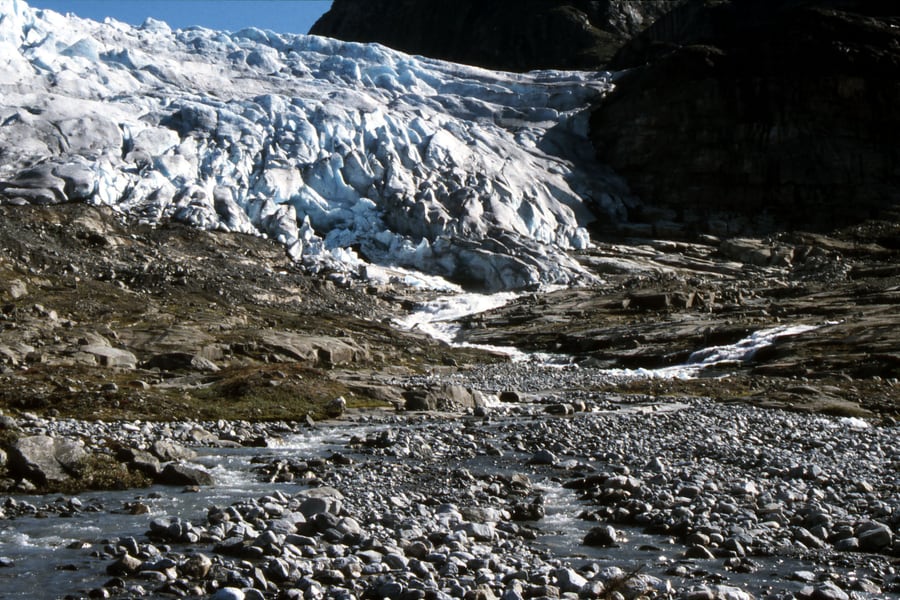
Finse has one more claim worth knowing about. The ice above the village is the closest thing in Europe to a polar ice cap at railway distance, which is why Amundsen, Scott and Shackleton all trained on it before heading south. So, in 1979, did a film crew: the snowfields became the ice planet Hoth in The Empire Strikes Back, and people still walk out to the location.
The thing to plan around is that the seasons here barely overlap. Finse lies under snow into June and the Rallarvegen cycle route normally opens in July; the fjord arm at Flåm is at its best in late spring with the meltwater running; Geilo only makes complete sense in winter. One itinerary rarely catches all three at their best, so pick the one you actually came for and build around it. If time is short, Finse and Bergen are the two stops that repay it most — and Bergen needs a full day, and deserves two.
 GerdM / Wikimedia Commons · CC BY-SA 2.0 DE · cropped
Finse
The one stop that repays getting off — fifteen residents, no road, and a great deal going on. The Rallarmuseet tells the story of the navvies who built the line and the men who kept it open in winter, the post office of 1904 is Norway's oldest and highest, and this is the only practical way to Hardangerjøkulen, whose blue ice can be walked with a guide.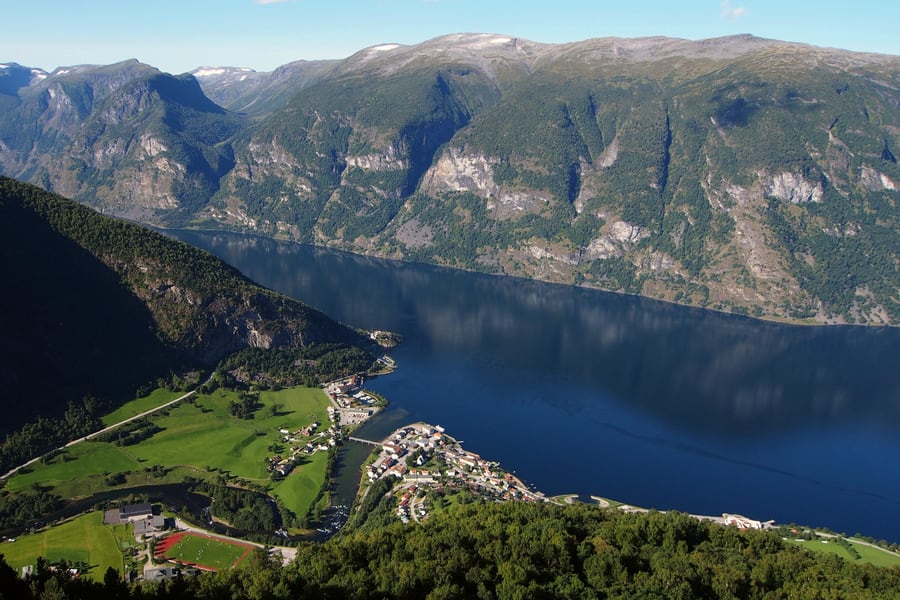 rheins / Wikimedia Commons · CC BY 3.0 · cropped
Myrdal and Flåm
Myrdal is a platform on a mountainside at 866 metres and almost nothing else — but it is where you change for the Flåm Railway, twenty kilometres and 864 metres straight down to the Aurlandsfjord. Flåm sits at the head of an arm of the Sognefjord, Norway's longest and deepest, and is the departure point for cruises into the UNESCO-listed Nærøyfjord.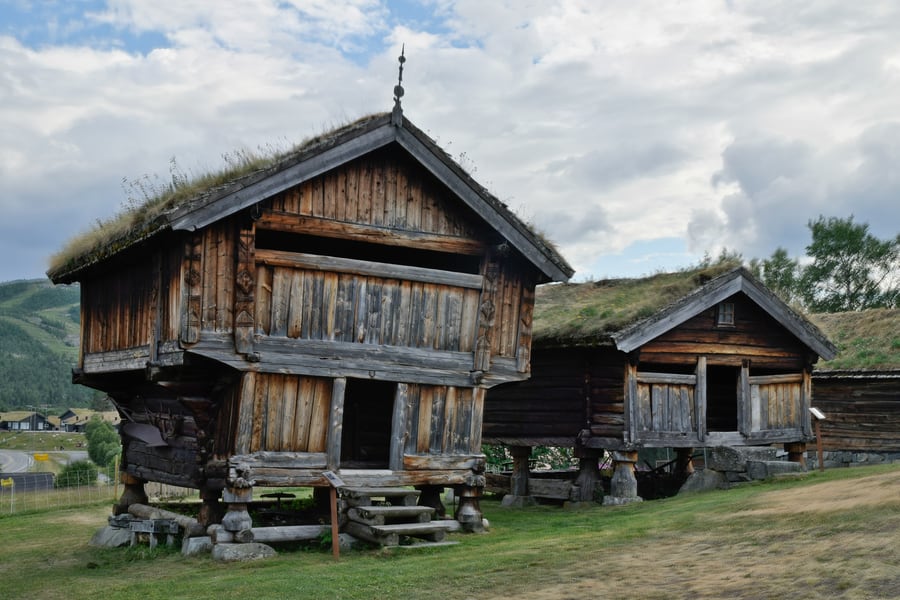 Osbern / Wikimedia Commons · CC BY-SA 4.0 · cropped
Geilo and the Hallingdal
Geilo is the eastern gateway to the plateau — lifts and pistes in winter, and in summer a base for walking and cycling into Hardangervidda National Park. Lower down, Gol and Ål sit in handsome old stave-church country, and Nesbyen holds the record for the highest temperature ever measured in Norway: 35.6 °C, on 20 June 1970.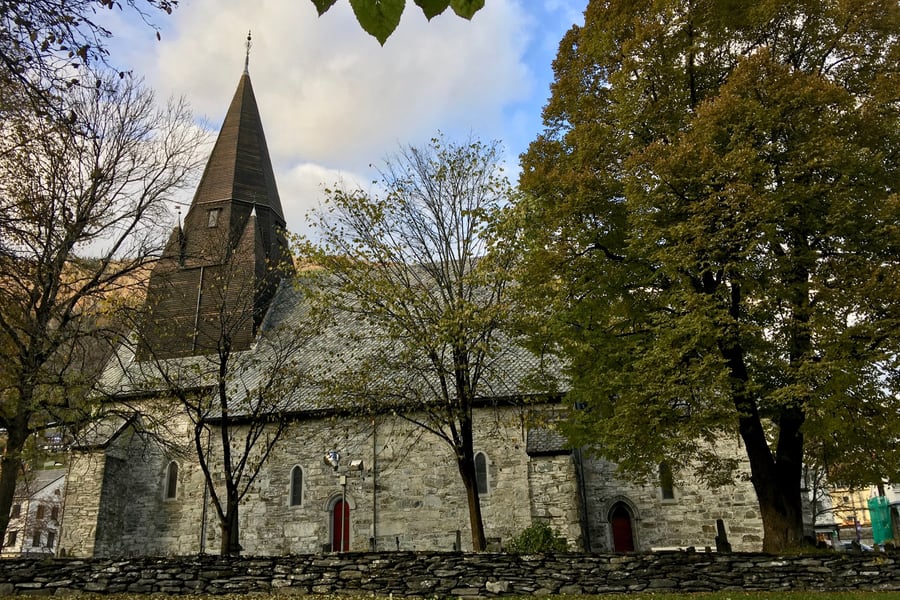 Wolfmann / Wikimedia Commons · CC BY-SA 4.0 · cropped
Voss
An hour short of Bergen, Voss is where Norway goes to throw itself off things — white water on the Vosso, paragliding and skydiving from the surrounding mountains, and an annual extreme-sports festival. It is also simply a good place to break the journey, with a lake, a cable car straight up from beside the station, and a stone church consecrated in 1277.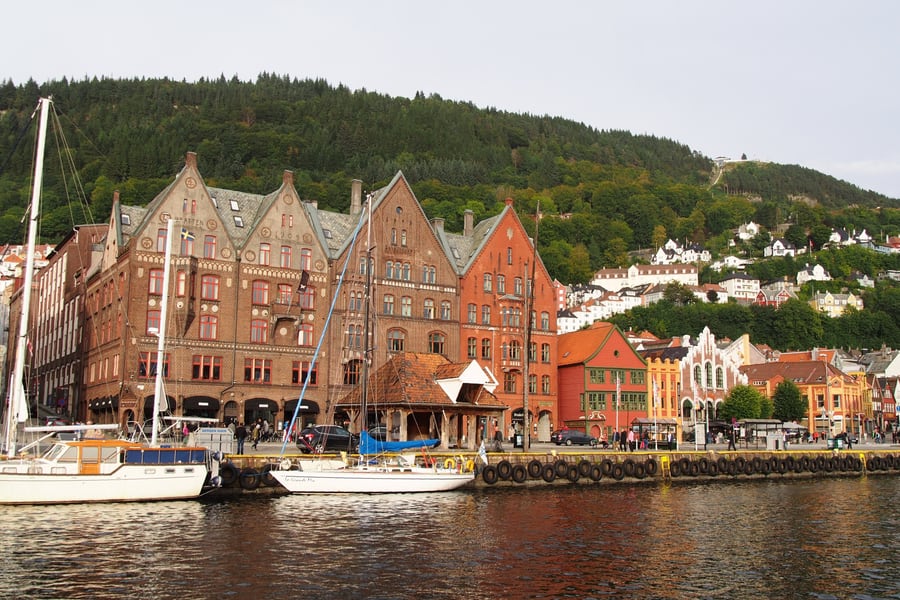 rheins / Wikimedia Commons · CC BY 3.0 · cropped
Bergen
The reward at the end. Bryggen, the row of leaning wooden Hanseatic trading houses on the old wharf, is a World Heritage Site and the image everyone has of the city. Around it sit the fish market, the Fløibanen funicular up Mount Fløyen, Grieg's villa at Troldhaugen, and the quays for the coastal steamer north. Bergen was Norway's capital in the 1200s.Where to Sleep
You can do the Bergen Line in a day and sleep at either end — but the best version of this journey involves stopping somewhere in the middle, and the middle is unlike anywhere else in Europe.
On the mountain. Finse has two places to stay, both reached only by train. Finse 1222 is a proper mountain hotel on the platform, named for the altitude, comfortable and famously busy with skiers in spring; Finsehytta, run by the Norwegian Trekking Association (DNT), is a large staffed mountain lodge a short walk away, with bunk rooms, dormitories and the plain, generous food that Norwegian huts do so well. Both need booking well ahead in the March–May ski-touring season and in the July–September cycling season, and both empty out entirely between times. Nothing here is cheap, and nothing here is ordinary.
At Geilo, the eastern gateway, there is a full ski-resort range of hotels, apartments and cabins, and the trains stop right in the centre — an easy place to break the journey if Finse feels too austere or too booked.
At Voss, an hour short of Bergen, you will find hotels by the lake, a large hostel and plenty of guesthouses aimed at the adventure-sports crowd. It works well as a last night before the city, or as a base for day trips up to Myrdal and Flåm.
In Bergen, the choice is wide. Staying near Bryggen or the harbour puts you among the wooden warehouses and the fish market, a ten-minute walk from the station. The area immediately around Bergen station itself is convenient and generally cheaper. Book early in the summer months and around the Bergen International Festival in late May, when the city fills.
In Oslo, the station area has everything from budget chains to the grand old hotels, and the airport train runs to the same platforms — useful if you are flying in the night before an early departure.
A practical note: if you are travelling on the night train in either direction you will arrive around six in the morning, long before check-in. Most hotels will store your bags, and both cities are pleasant places to be awake early.
Questions or corrections
Planning this trip and stuck on something, or spotted a time, fare or detail that has changed? Send us a message about The Bergen Railway. We read every one, and we update this page when something has changed.