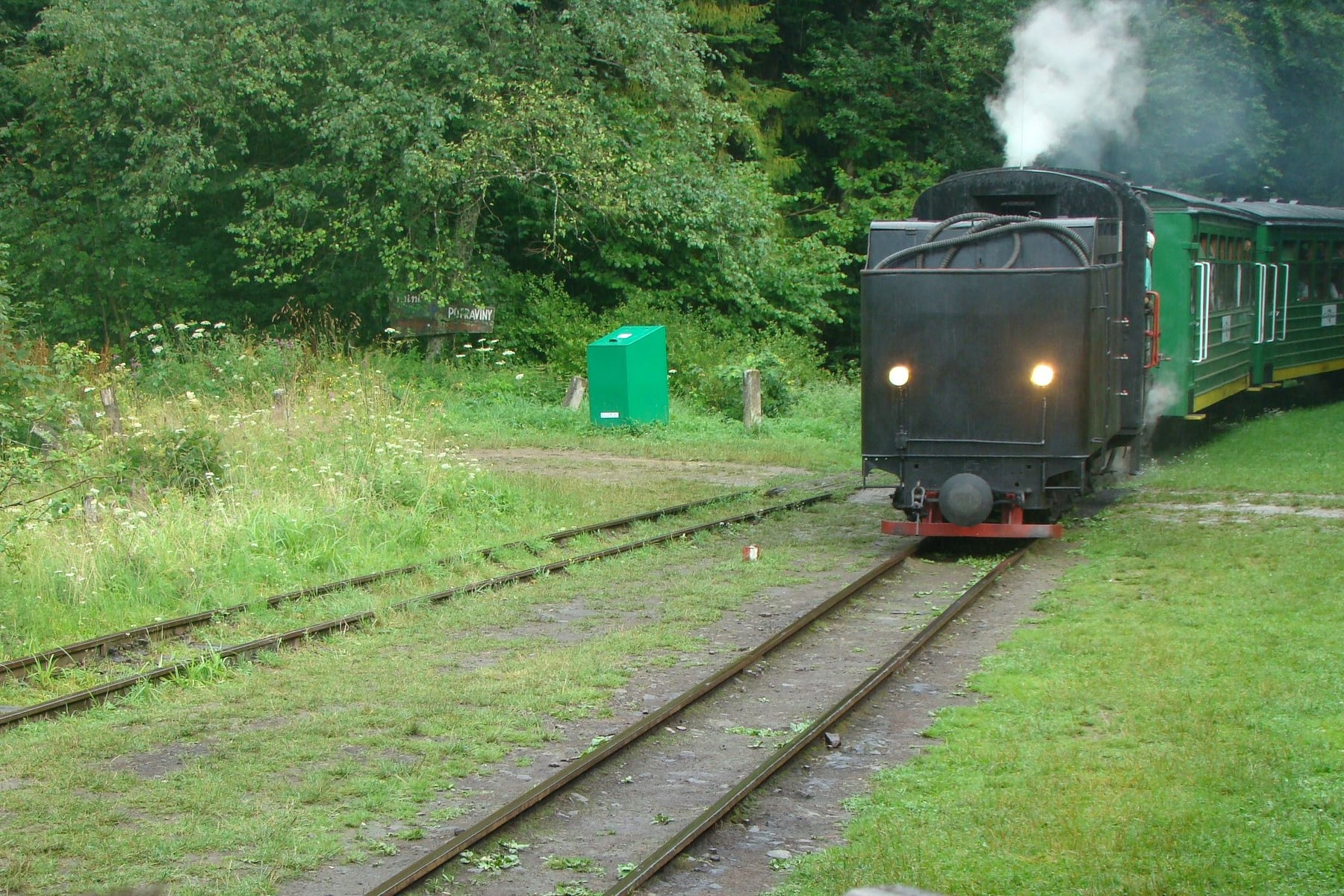
The Bieszczady Forest Railway
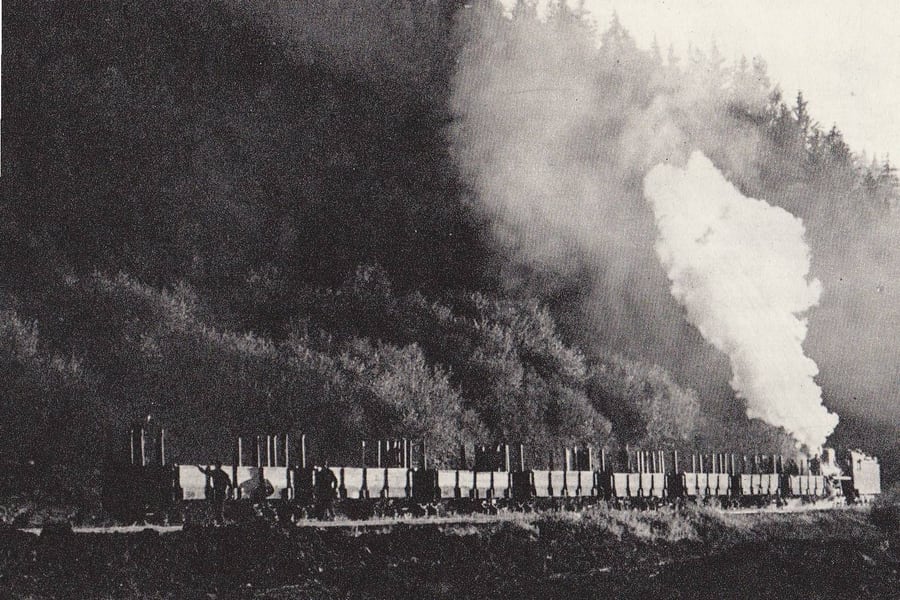
Michał Derela / Wikimedia Commons · CC BY-SA 4.0 · cropped · photographed 2014
- Distance9 km to Balnica · 750 mm gauge
- Duration2 hours return, with 30 minutes at Balnica
- Best seasonMay to October, the beech woods turning in autumn
Introduction
From May to October a narrow-gauge train leaves the forest settlement of Majdan and runs nine kilometres to Balnica, near the Slovak border. Balnica was a village of about 500 people before the Second World War. In 1947 its Lemko population was moved to western Poland under Operation Vistula, and the village was never rebuilt. Eight people are registered there now. The railway tells visitors they cannot reach the station by car or coach, so in summer the train still does what a road would do elsewhere, carrying people to a place on the map that has very little left on the ground.
The line opened in January 1898 to bring timber down from these mountains to the main railway at Nowy Łupków. After 1945 it stood idle: the operator's own history gives the depopulation of the Bieszczady as one reason nobody restarted it. Rebuilding began in 1950, for the forests rather than the villages, and by 1964 the network reached 73 kilometres. Regular trains were withdrawn at the end of 1994.
Since July 1997 a foundation has run what remains as a tourist railway, and it now carries around 160,000 people a year, far more than it did when it had a working population to serve.
The Journey
Trains start from Majdan, 586 metres up in the Solinka valley, where the shed, the yard and the wooden station stand in a settlement built for the railway's own workers in the 1960s. The first bridge beyond the shed has the stone abutments of an earlier bridge, built before 1898, standing beside it, and more of them show on the way to Solinka. For the first dozen minutes or so the track runs beside the Carpathian road, past the houses at Żubracze.
Over the divide
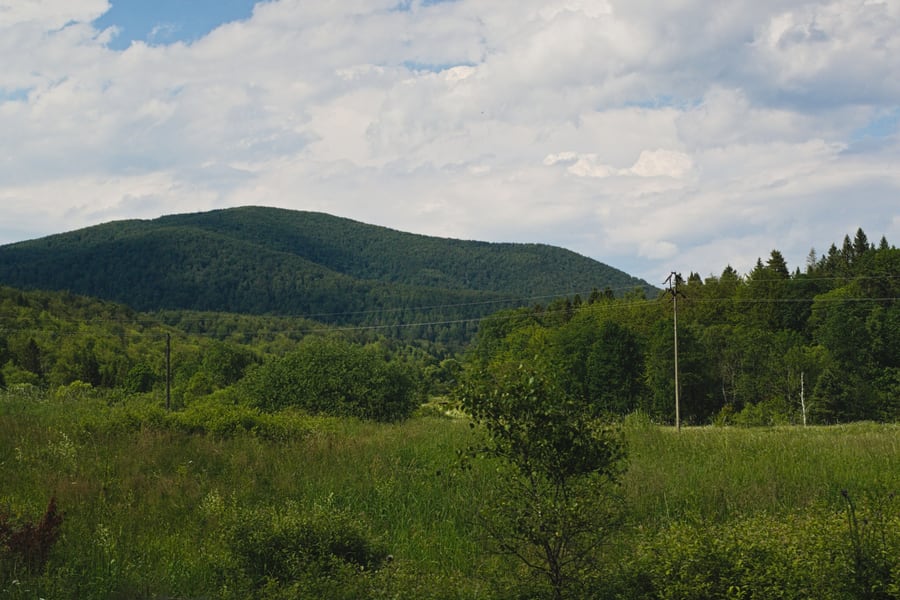
Beyond Żubracze the line crosses the road and turns south into a side valley, with the 1,105-metre mass of Hyrlata on the left and Matragona on the right. The train goes almost the whole way round Matragona. It climbs into the open at Solinka, on the main Carpathian watershed, where a stream rises that drains to the Black Sea by way of the Udava. The steam trains stop here and go back.
Along the border
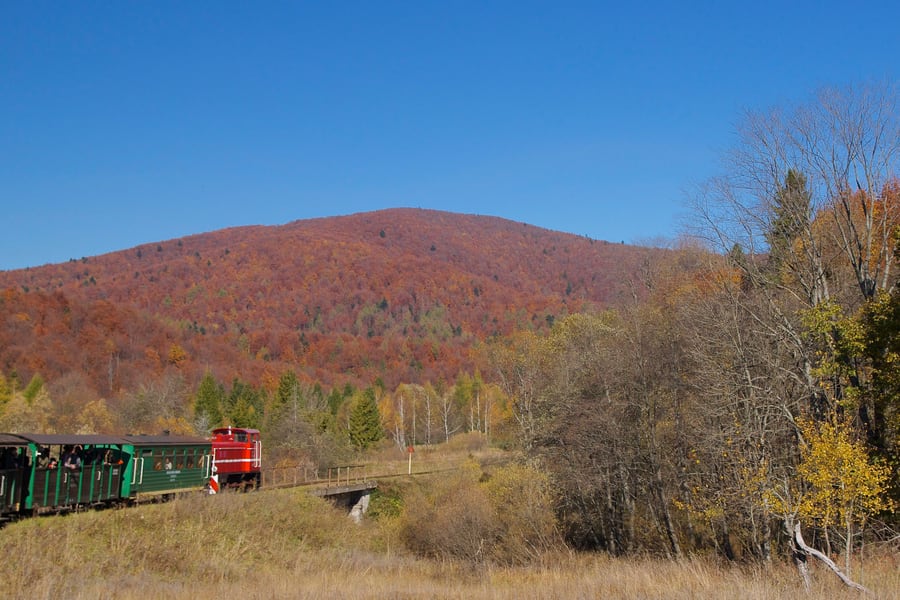
The diesel trains carry on in a wide curve from south to west, reaching 715 metres on the southern flank of Matragona and running along the Polish-Slovak frontier, with border posts visible from the window. Between 1918 and 1938 the frontier followed the watershed, which put a short stretch of this track inside Czechoslovakia, and trains crossed it escorted by border guards. Poland took over the land on 27 November 1938, and the awkwardness ended.
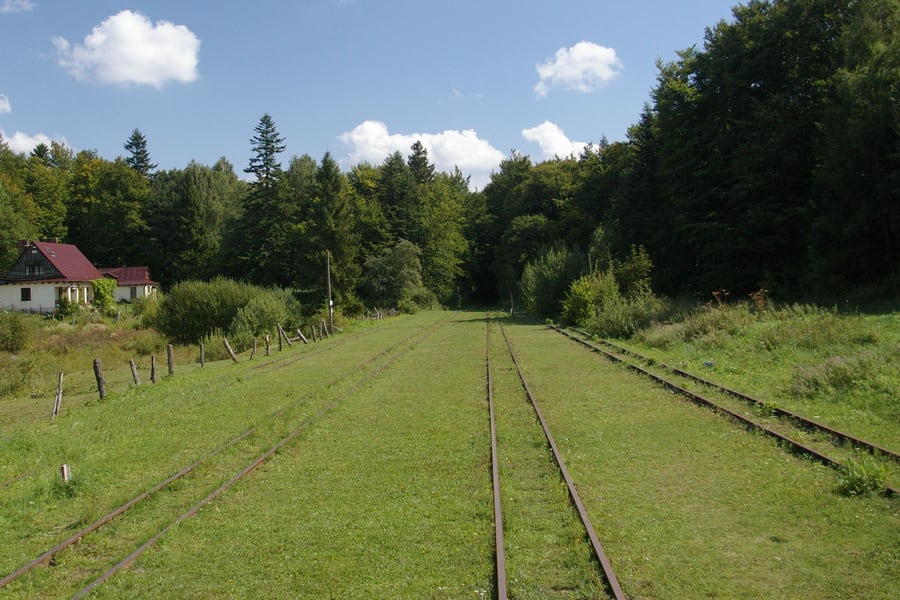
Balnica, 703 metres, was where timber trains were made up for the run down to Rzepedź and Łupków, which explains the wide grassed-over yard. Passengers get half an hour here, enough for a look round, before the train returns the same way.
The locomotives and coaches
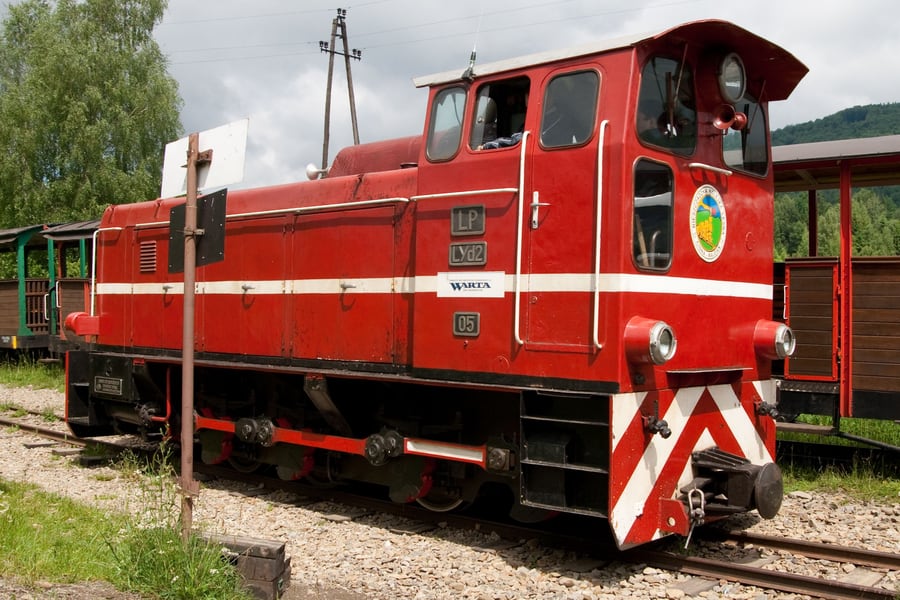
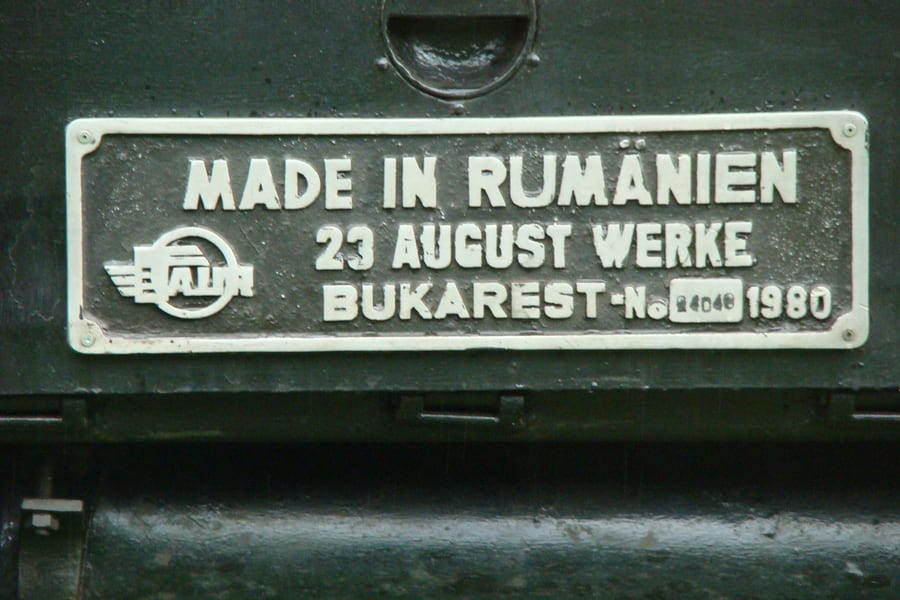
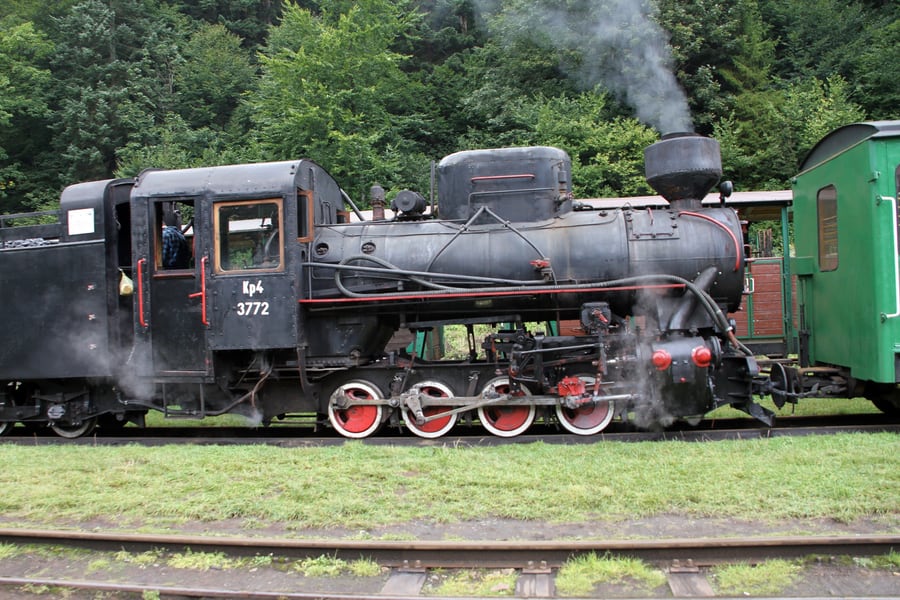
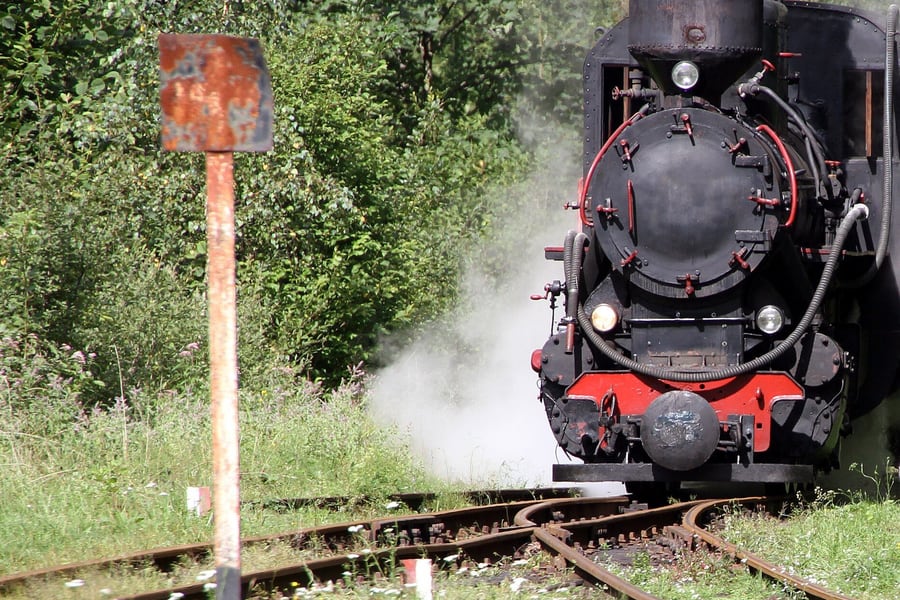
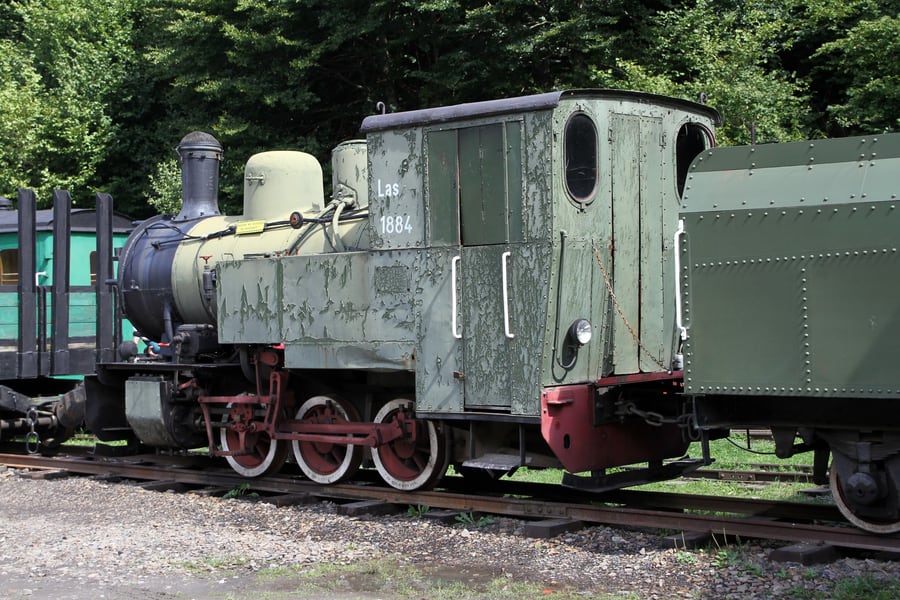
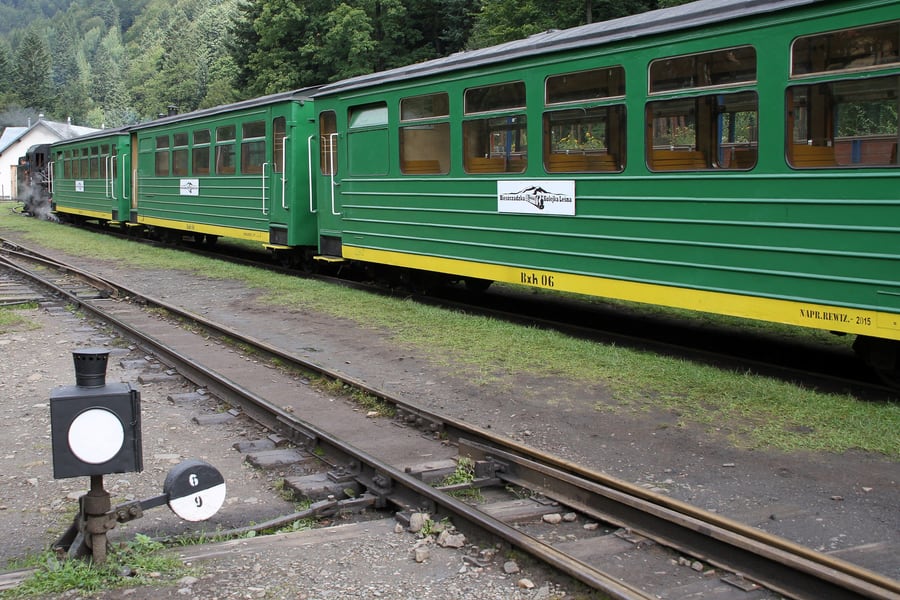
The Balnica trains are hauled by Lyd2 diesels, built by the 23 August works in Bucharest; the operator dates its locomotives to 1977–80. They pull open-sided summer coaches. The summer steam trains use Kp4-3772 and closed coaches with windows. The Kp4 is a Soviet design built at Chrzanów in southern Poland between 1950 and 1959, almost all of them for export, and very few ever worked in Poland. The railway also keeps a smaller forest engine, Las-1884. The eastern route through Cisna towards Przysłup has been out of use since a landslide in 2020.
Along the route
 Gerd Eichmann / Wikimedia Commons · CC BY 4.0 · cropped
Majdan
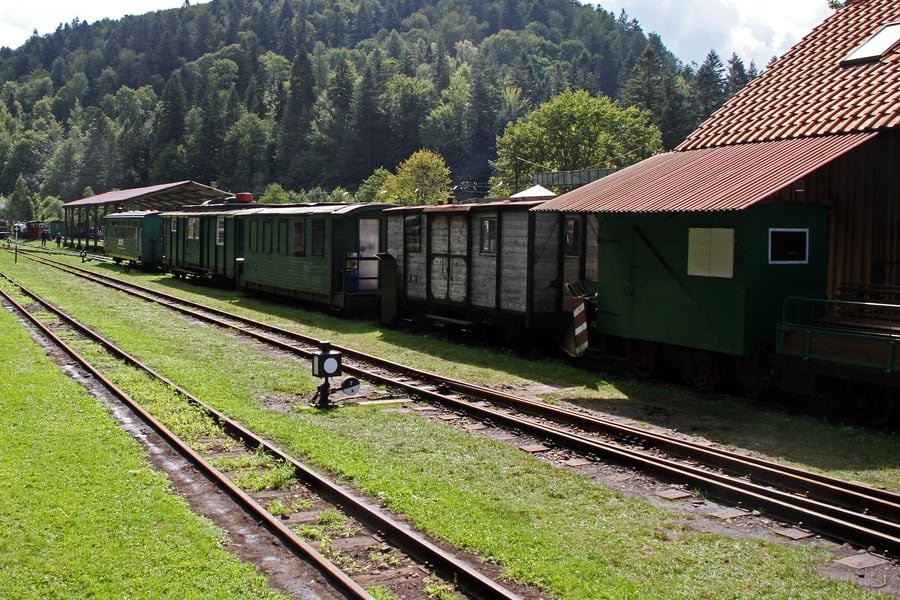
The engine shed, the yard and the wooden station are all here, in a forest settlement that grew around an iron foundry. Leaving, the train crosses a bridge with the stone abutments of its pre-1898 predecessor still standing beside it.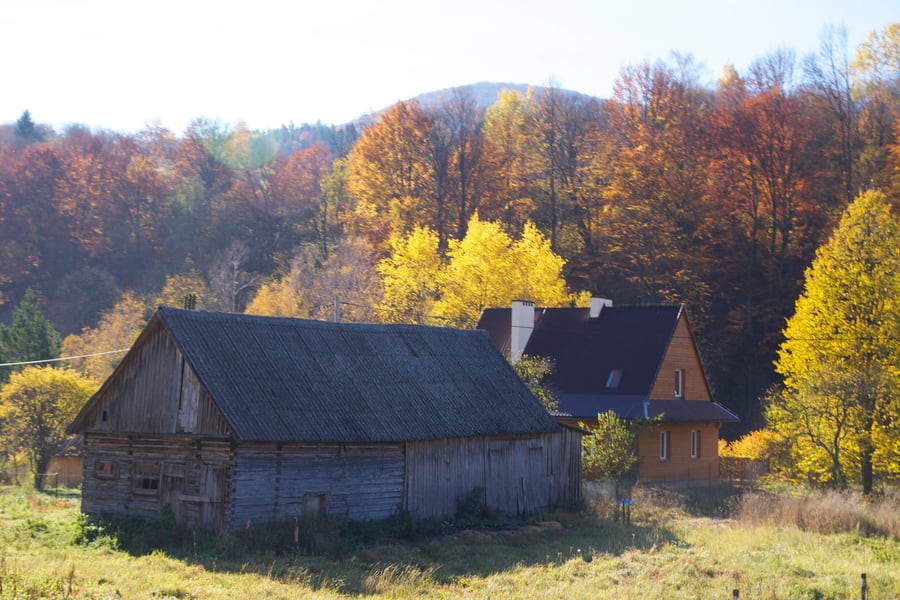 Hanc Tomasz / Wikimedia Commons · CC BY-SA 3.0
Żubracze
A village recorded in 1552 and named for the bison. Its people were removed in 1946 and 1947, and the operator's own route notes say that nobody stayed and the houses were burned. Later settlers have built here since.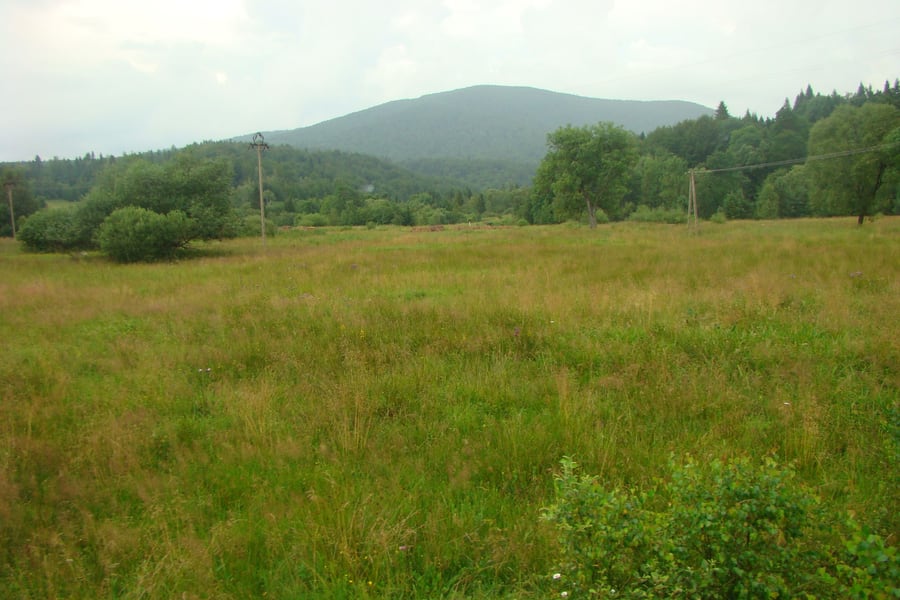 Michał Derela / Wikimedia Commons · CC BY-SA 4.0 · cropped
Solinka and the watershed
The steam trains turn back in this open valley at 725 metres, on the main Carpathian divide. Water to the south runs by way of the Udava to the Black Sea. A nature trail leaves from the halt towards Slovakia.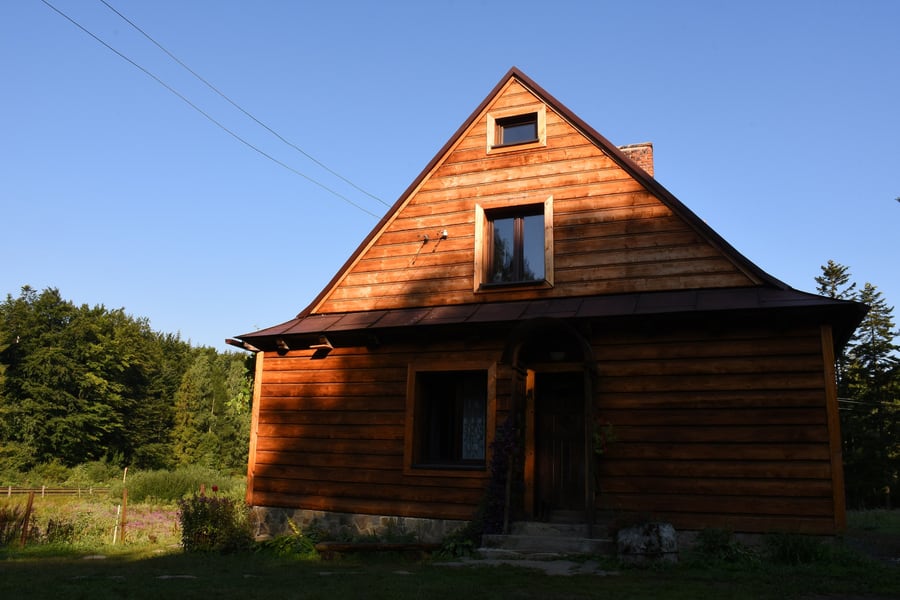 Ben Skála, Benfoto / Wikimedia Commons · CC BY-SA 3.0
Balnica
The line climbs to 715 metres along the state border, with boundary posts visible from the window, then drops into the station. A shop, a few houses and the woods are what the thirty-minute stop has to offer.A bit of history
Culture & experiences along the way
 Paweł 'pbm' Szubert / Wikimedia Commons · CC BY-SA 3.0 · cropped
What is left of Balnica
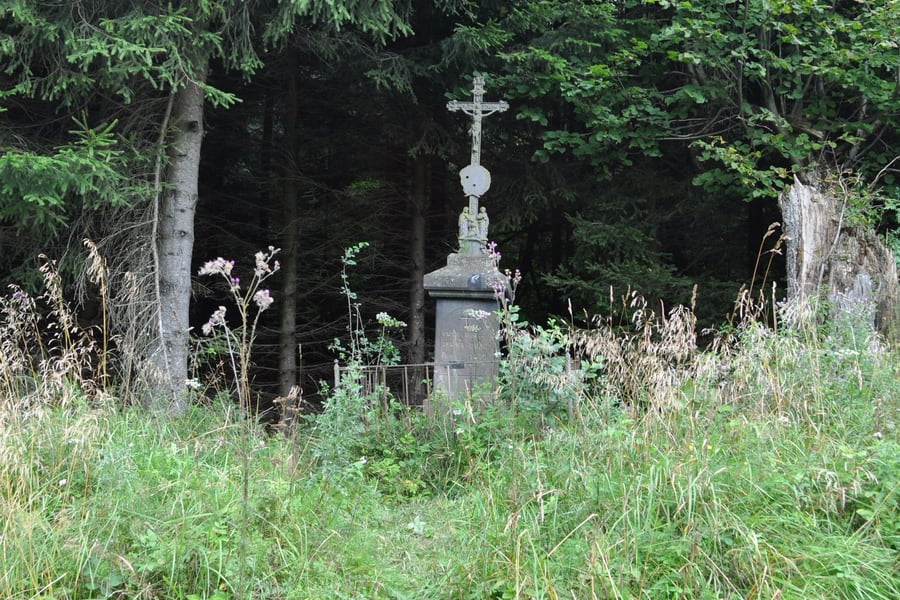
The yellow trail through the former village passes the traces of the Greek Catholic church wall, a few crosses and headstones standing in the grass, and a small restored chapel over a spring that local tradition holds to be miraculous. They are all that remains above ground of the people who lived here.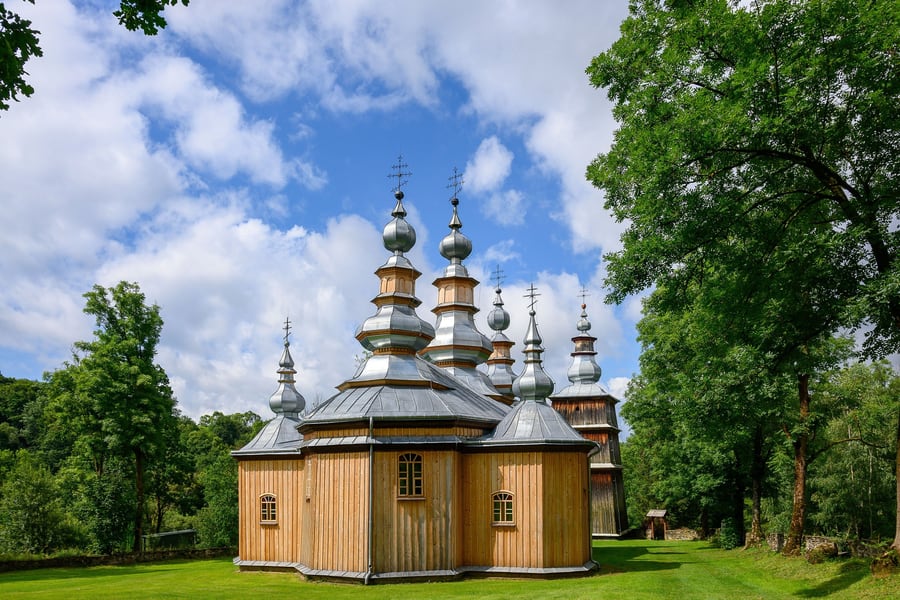 Daniel.zolopa / Wikimedia Commons · CC BY 4.0 · cropped
The wooden tserkva at Turzańsk
Built in 1801–03 in the East Lemko tradition, with five onion-domed turrets and a separate bell tower of 1817, this log church is one of sixteen Carpathian tserkvas on the UNESCO list since 2013. It is an Orthodox parish church, and its iconostasis was carved by Josyp Bukowczyk in 1895.Timetables
The railway runs from May to October, and every train is a round trip from Majdan. A return to Balnica takes two hours, including 30 minutes at Balnica, and is diesel-hauled. A return to Solinka takes an hour and a quarter, including 15 minutes there, and is hauled by the steam engine. There are no Monday trains except in July and August.
2026 departures from Majdan
| To Balnica | To Solinka (steam) | |
|---|---|---|
| May, Tuesday and Wednesday | 09:30 | |
| May, Thursday and Friday | 09:30 | |
| May, weekends | 09:30 · 12:00 | |
| June and September, Tuesday, Wednesday, weekends | 09:30 · 12:00 | |
| June and September, Thursday and Friday | 09:30 · 12:00 | |
| July and August, Tuesday to Friday | 09:30 · 09:45 · 12:00 · 12:15 · 14:30 | 10:00 · 12:30 |
| July and August, Monday and weekends | 09:30 · 09:45 · 12:00 · 12:15 · 14:30 | |
| October, Tuesday to Friday | 09:30 | |
| October, weekends | 09:30 · 12:00 |
As of November 2026, from the railway's 2026 timetable (opens in a new tab). The 2026 season ended on 25 October, and the 2027 timetable has not yet been published. Last winter the railway was closed from November to the end of April.
Getting to Majdan
Majdan is on the road between Cisna and Komańcza. The nearest main-line station for long-distance trains is Zagórz, about four hours direct from Kraków by PKP Intercity, and there is no rail connection onward to Majdan, so the last stretch is by road. The foundation's office in Majdan answers on +48 13 468 63 35 and at biuro@fbkl.pl.
Tickets
Both trips cost the same. Tickets are sold online until midnight the day before, but only part of each train goes on sale that way; the rest are sold at the Majdan ticket office on the day. A ticket guarantees a seat, though seats are not numbered, and in high summer the trains fill up. Reduced fares are for children up to 15. Prams and dogs cost 10 zł each, paid on the spot before departure.
Anyone visiting Majdan station without riding pays a 2 zł platform ticket. From the railway's fare poster and ticket page, as of November 2026.
Book your tickets
Majdan to Balnica and back
47 zł · ages 3 to 15, 37 zł · under 3, 2 zł
The diesel-hauled return trip, two hours with half an hour at Balnica.
Book Tickets (opens in a new tab, on Bieszczadzka Kolejka Leśna)via Bieszczadzka Kolejka LeśnaSteam train to Solinka and back
47 zł · ages 3 to 15, 37 zł · under 3, 2 zł
Behind Kp4-3772, one hour and a quarter, on the days the timetable marks for steam.
Book Tickets (opens in a new tab, on Bieszczadzka Kolejka Leśna)via Bieszczadzka Kolejka LeśnaCharter a train
1,110 zł up to 30 people · 7,400 zł for the whole train
Groups can book a diesel-hauled trip to Balnica outside the timetable through the foundation's office.
Book Tickets (opens in a new tab, on Bieszczadzka Kolejka Leśna)via Bieszczadzka Kolejka LeśnaRail Passes
No rail pass covers this railway. Interrail's table of railway companies lists PKP Intercity, POLREGIO and the regional operators for Poland, and no forest railway. Everyone pays the foundation's own fare.
A pass can still get you to the region. PKP Intercity's trains to Zagórz are covered by a Global Pass or a Poland Pass, with reservations recommended or compulsory depending on the train, and POLREGIO regional trains need no reservation.
For this trip alone a pass is not worth buying: the ride is 47 zł. It pays only if the Bieszczady are one stop on a longer journey through Poland or beyond.
Checked November 2026 against Interrail's table of railway companies (opens in a new tab) and the railway's fares (opens in a new tab).
Places to Visit
The Bieszczady is walking country, and the railway sits at its quieter western end. The rest of what is worth seeing lies along the roads to Cisna, the national park and Komańcza.
 Paweł 'pbm' Szubert / Wikimedia Commons · CC BY-SA 3.0 · cropped
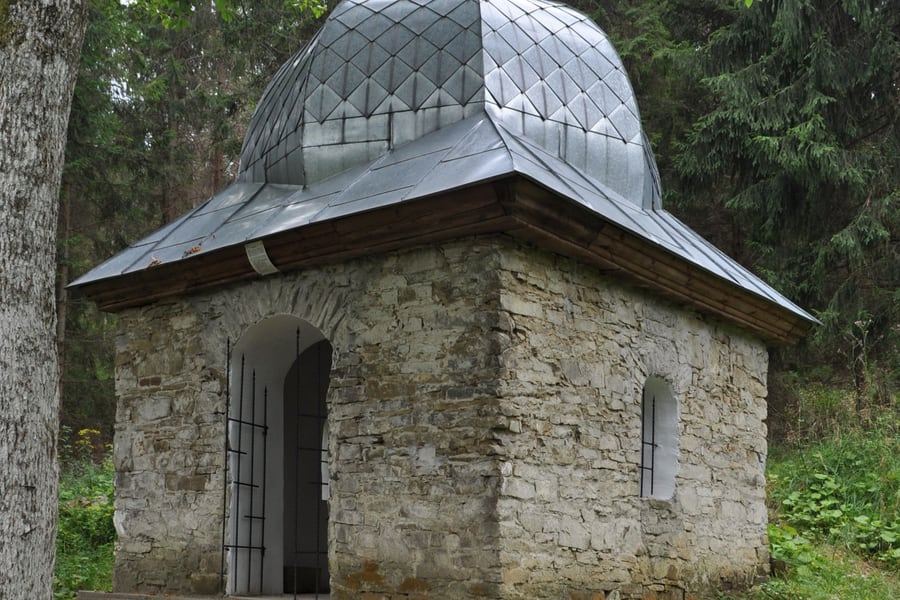
The chapel at Balnica
A small stone chapel with a metal onion roof, restored and standing in the woods, marks a spring that was once the goal of local pilgrimages, and holds an image of Our Lady of the Forest. It is one of the few things left of a Lemko village founded in 1549, which counted about 500 people before the Second World War.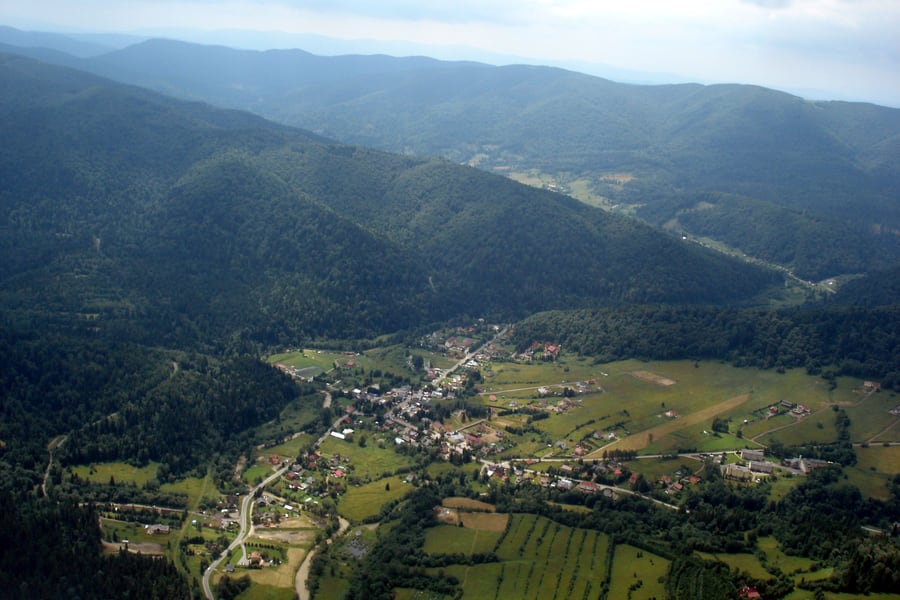 Zuluanonymous / Wikimedia Commons · CC BY-SA 3.0 · cropped
Cisna
Once home to the Fredro family's iron foundry, Cisna sits in a deep basin of the Solinka among forested ridges, and is the area's main base for walkers. After the fighting and resettlements of 1944–47, only about thirty Polish families remained here. Hiking paths lead from the village towards Wołosań, 1,071 metres.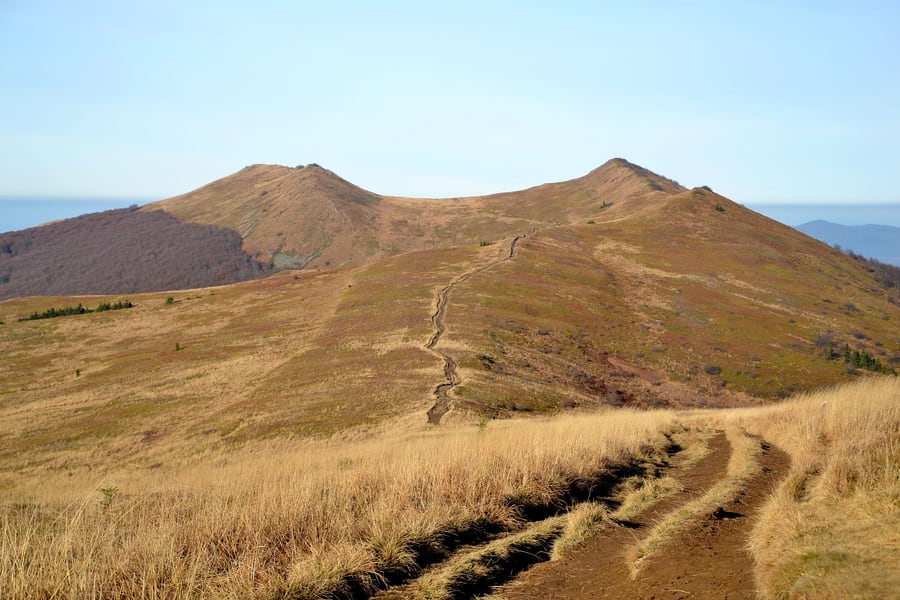 Pudelek / Wikimedia Commons · CC BY-SA 4.0
Połonina Wetlińska
The park was founded in 1973 and now covers 292 square kilometres, with bears, wolves and European bison in its forests. Above the tree line stretch the grass ridges called połoniny. Wetlińska rises to 1,255 metres at Roh, and the Chatka Puchatka shelter stands at 1,228 metres, the highest in the Bieszczady.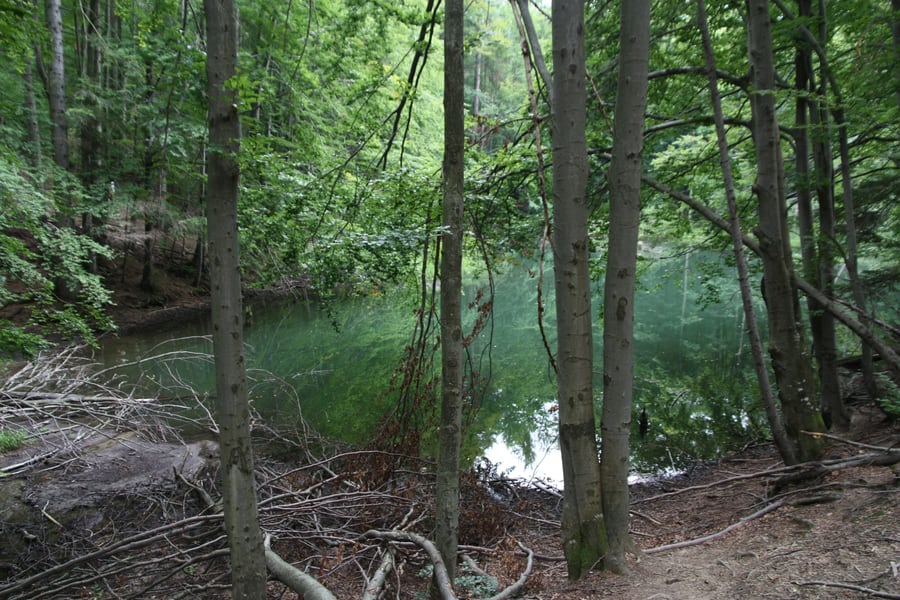 Yarl / Wikimedia Commons · CC BY-SA 3.0
The Duszatyn lakes
On 13 April 1907, the day before Easter, the western slope of Chryszczata slid into the valley and dammed the Olchowaty stream. The two lakes that formed lie among beech at about 700 metres, in a tiny reserve set up in 1957. The red Main Beskid Trail reaches them from Komańcza through Prełuki and Duszatyn.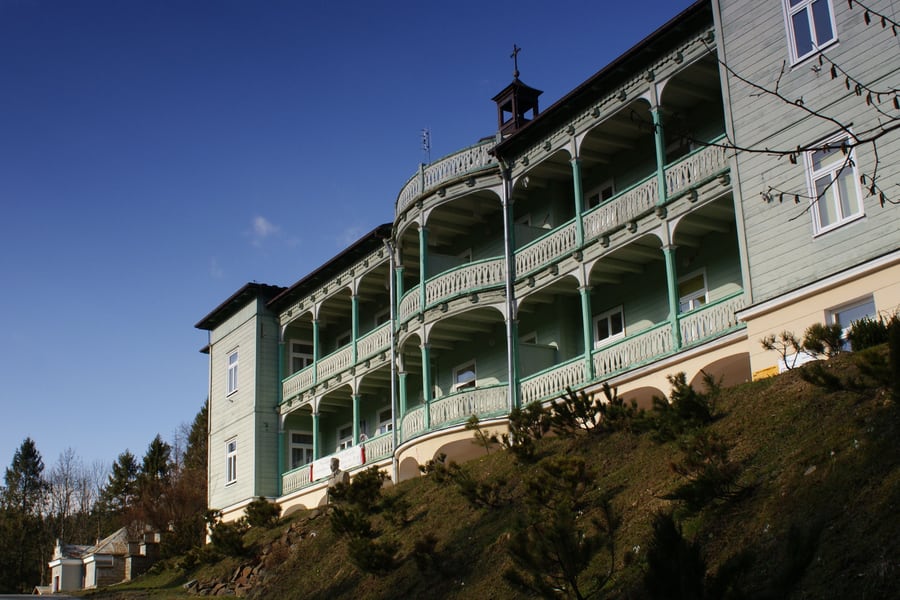 tomekder / Wikimedia Commons · CC BY-SA 3.0 PL
The convent at Komańcza
Cardinal Stefan Wyszyński, Primate of Poland, was held by the communist authorities in this timber-galleried house of the Nazareth sisters from 29 October 1955 to 28 October 1956. Here he wrote the text of the Jasna Góra Vows. The sisters keep his room open to visitors, with its iron bed, its kerosene lamp and the typewriter on which his manuscripts were copied.Where to Sleep
Cisna, close to the Majdan station, is the place to stay for the first train of the day.
Where to stay
Wołosań
Holiday and training centre run by the State Forests, Cisna
Thirty-four rooms and studios in the middle of Cisna, with a restaurant and a separate house called Koliba, close to the forest railway.
Check Availability (opens in a new tab, on wolosan.pl)via wolosan.plQuestions or corrections
Planning this trip and stuck on something, or spotted a time, fare or detail that has changed? Send us a message about The Bieszczady Forest Railway. We read every one, and we update this page when something has changed.