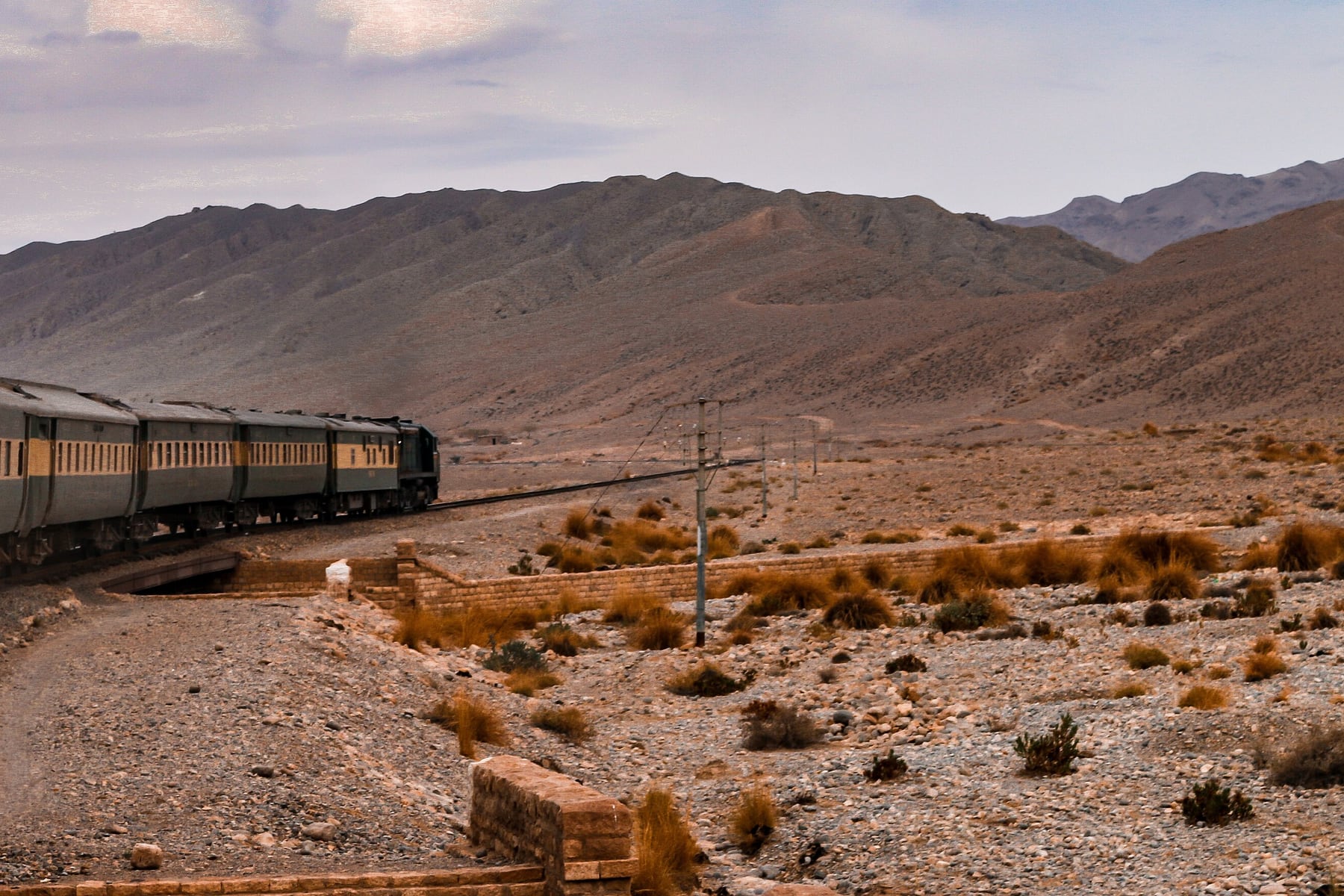
The Bolan Pass Railway
Arslan Arshad / Wikimedia Commons · CC BY-SA 4.0 · 2016 · cropped
- DistanceQuetta to Sibi Junction · 141 km, 17 tunnels
- DurationAbout 4½ hours down, 5 hours up
- Best seasonOctober to March; Sibi on the plain averages 44 °C in June, and Kolpur gets snow in winter
Introduction
Travel advisory. The UK Foreign, Commonwealth & Development Office advises against all travel to Balochistan Province, which is the whole of this journey, and advises against using Pakistan's railway network at all, citing the risk of terrorist attacks and derailments. This train, the Jaffar Express, was hijacked in the Bolan Pass on 11 March 2025, and 64 people died. Services through the pass are suspended at short notice, sometimes for a day, sometimes for weeks. The advice was updated on 18 November 2026 and was still current on 24 November 2026. Read it, and your own government's version, before you book. The page below describes a train that runs and that people use every day; the decision is yours to make with the facts in front of you.
The Bolan Pass is the southern counterpart of the Khyber, the gap in the mountains between the Indus plain and the plateau of Quetta, and the railway through it was one of the hardest things the British built in India. It took three attempts. The first track was laid in the bed of the Bolan river and a steam locomotive reached Quetta on it in August 1886; floods destroyed it, then destroyed a second line built higher up, and the line that trains use today, carried up the Mushkaf valley instead, did not open until 15 April 1897.
What it climbs is the reason to ride it. In 141 kilometres from Sibi to Quetta the line rises from about 130 metres to the summit at Kolpur, nearly 1,800 metres up, through seventeen tunnels, across the river again and again, and on the steepest stretch at a gradient of 1 in 25. Trains going up need a second locomotive; trains coming down stop at every station to prove their brakes before they are let in.
The Journey
The southbound Jaffar Express, 39UP, leaves Quetta at nine in the morning, and the run to Sibi is daylight all the way. Quetta sits on its plateau at about 1,680 metres, so the first three-quarters of an hour is a gentle climb across open country past Spezand to Kolpur, at roughly 1,790 metres the summit of the line. After Kolpur the ground falls away.
From Kolpur to Ab-i-Gum the line drops on a ruling gradient of 1 in 25, four feet in every hundred, which is steep for any adhesion railway and very steep for a broad-gauge main line. On the way up, trains are worked from Ab-i-Gum with a second locomotive. On the way down, every station in the pass has a catch siding: the points are set by default to send an incoming train up a short spur that ends steeply in the hillside, and they are changed to the main line only after the train has come to a complete stop and shown its brakes hold. No downhill train runs straight into a station in the Bolan.
Mach, the Mushkaf and the plain
Mach comes at about eleven. It is a coal town of three parts — the railway colony, the bazaar and the jail — and the train stands fifteen minutes. Below Mach the railway leaves the Bolan for the Mushkaf valley, the alignment chosen in the 1890s because it kept the line out of the riverbed, and the line threads one tunnel after another through spurs of rock. Look out for the old formation: in places the abandoned tunnels and embankments of the two earlier lines sit lower down the slope than the one you are on.
The hills end abruptly. Beyond Pehro Kunri and Mushkaf the line runs out onto the Kachhi plain, flat and hot, and reaches Sibi Junction at about half past one. Northbound, 40DN climbs the same ground in the afternoon and is into Quetta at ten past five.
The traction is a hood-unit diesel in Pakistan Railways green with white chevrons on the nose, as on the rest of the network.
⚠️ What you will see depends on the soldiers. A reporter who rode the Quetta departure in December 2025 found at least a dozen Frontier Corps personnel on board, escort vehicles on the road alongside and checkpoints through the pass, and passengers were told to keep the windows shut. Security checks at Quetta delayed the departure by an hour.
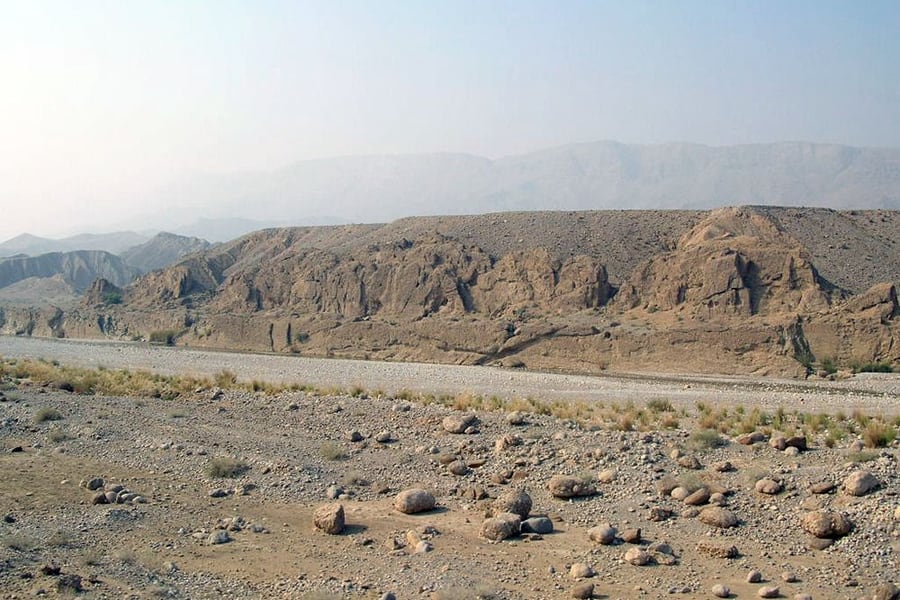
Along the route
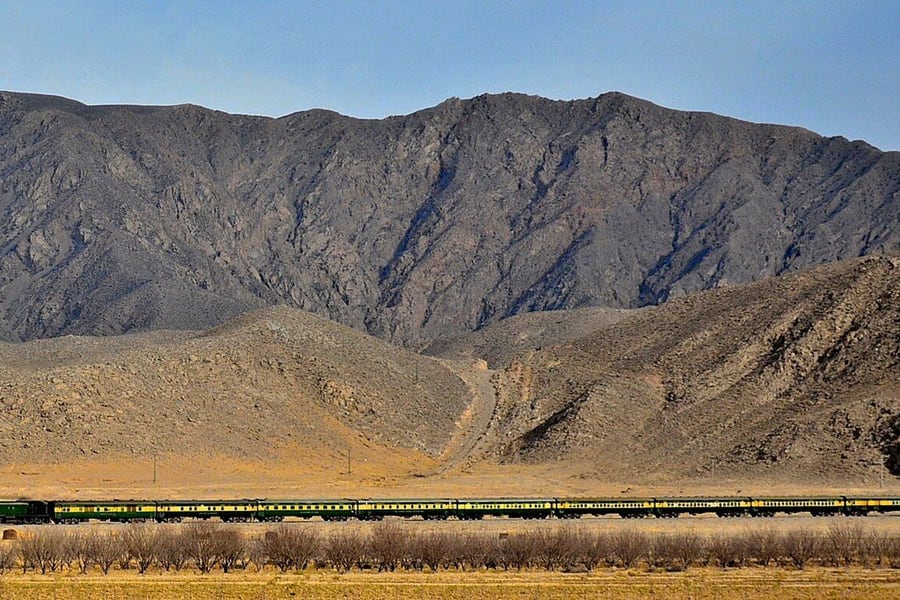
 Najamuddin Shahwani / Wikimedia Commons · CC BY 3.0 · 2012 · cropped
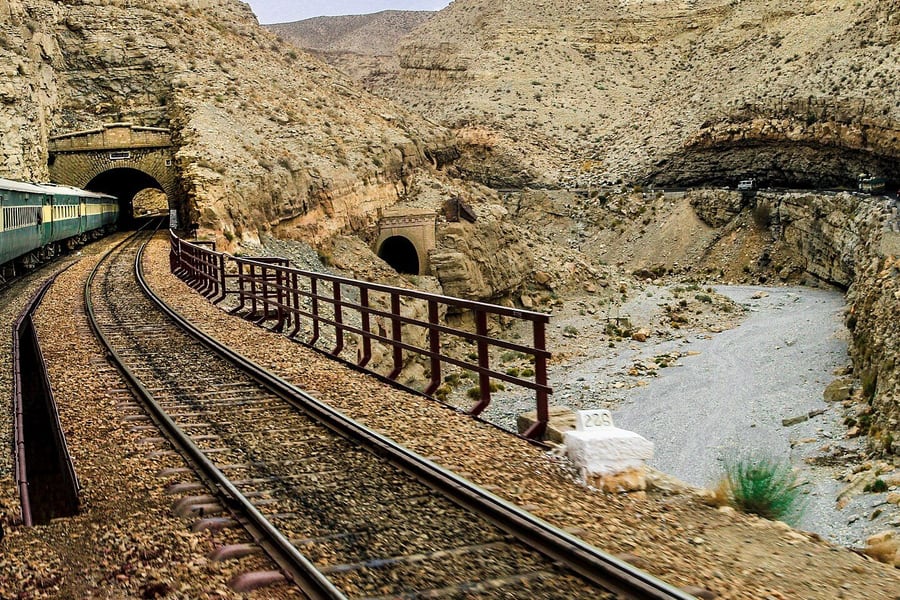
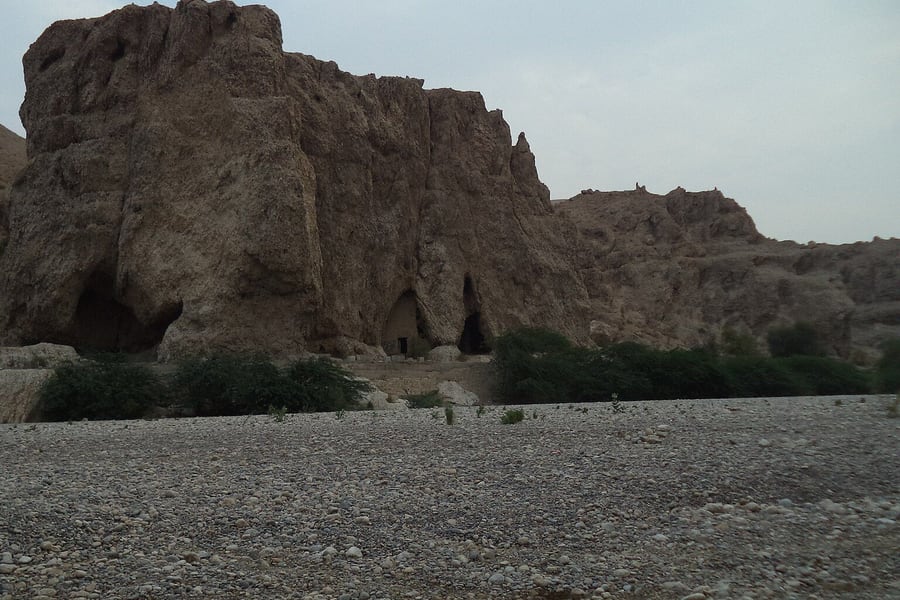
The line in the riverbed
The first track, laid in 1885–86, ran along the bed of the Bolan itself. A flood took it in 1889, and a second line higher up went the same way. Old tunnels and formation from both can still be seen beside today's line.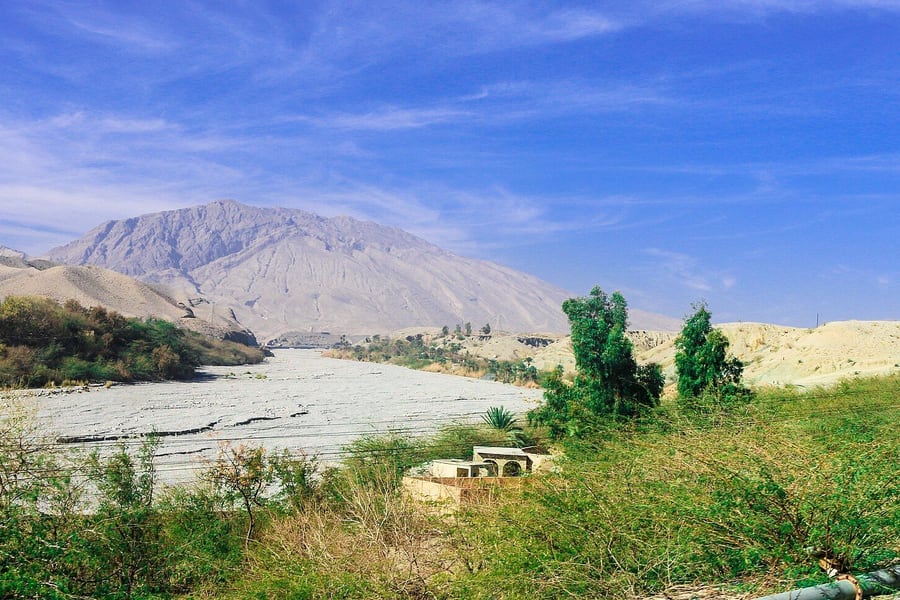 Arslan Arshad / Wikimedia Commons · CC BY-SA 4.0 · 2016 · cropped
Mach
A coal town at about 1,000 metres, in three parts: the railway colony, the bazaar and a jail built in 1929. The Jaffar Express stands here for a quarter of an hour, the longest stop in the pass.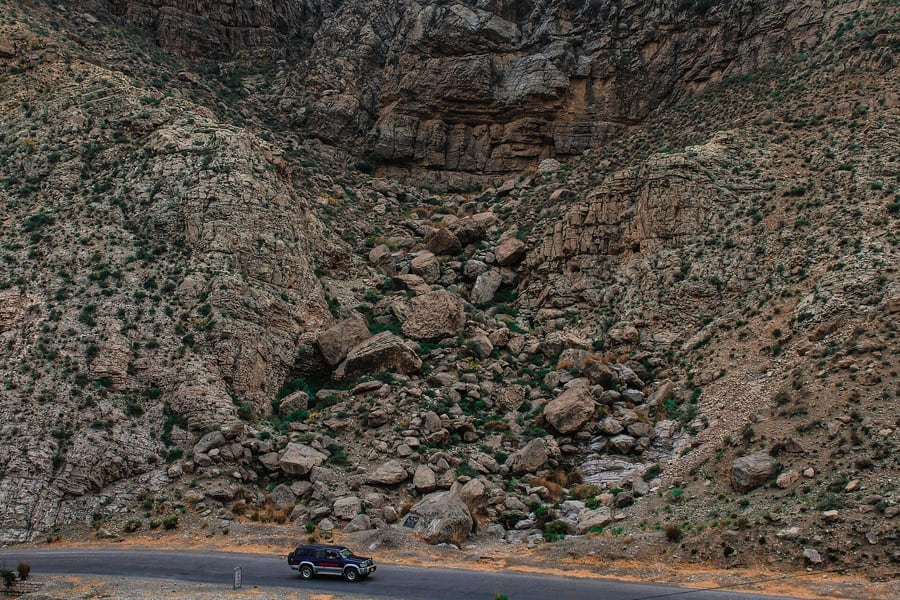 Shehroz khan / Wikimedia Commons · CC BY-SA 4.0 · 2016 · cropped
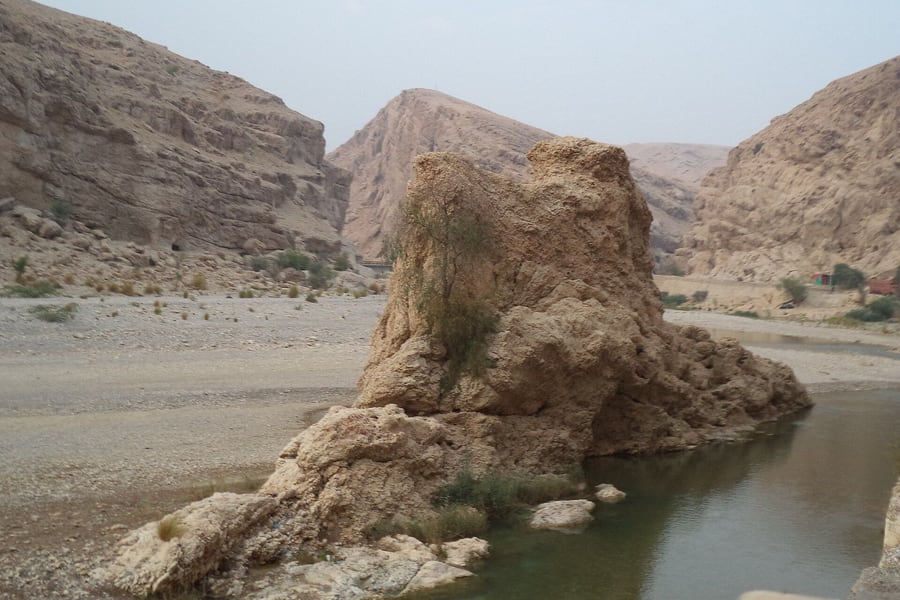
The road through the gorge
The N-65 highway shares the pass with the railway, and between tunnels you see it in pieces below: a ribbon of tarmac under walls of folded limestone, on the route traders and armies used for centuries before either existed.A bit of history
Culture & experiences along the way
 Miansari66 / Wikimedia Commons · CC0
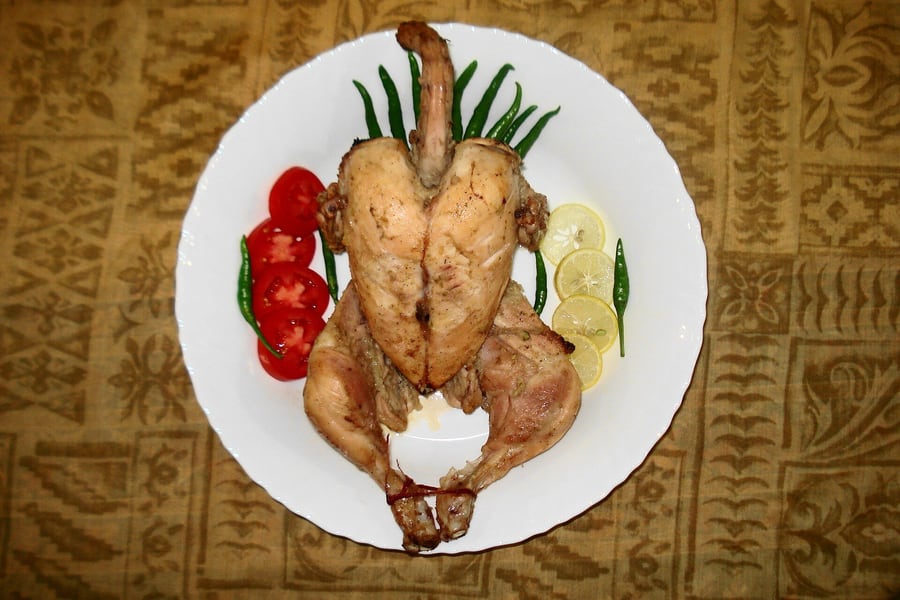
Sajji
The Baloch way with meat: a whole lamb marinated in little more than salt, roasted against a stone tandoor with rice cooked inside it, served rare with kaak bread. In Karachi, Lahore and Islamabad it is usually chicken, as here, cooked through and served with rice.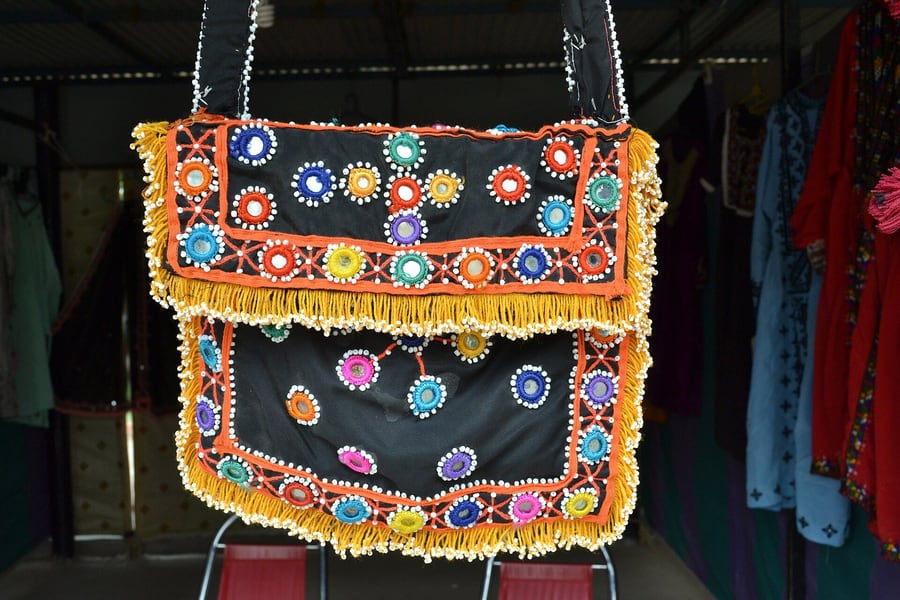 Khalid Mahmood / Wikimedia Commons · CC BY-SA 3.0 · 2012 · cropped
Balochi needlework
Dense geometric embroidery, worked traditionally by women and handed down the generations, each tribe with its own designs. Arrows, diamonds and flowers are the common motifs, often set with small mirrors. It decorates dresses above all, and cushions, curtains and bags like this one.Timetables
The train through the pass is the Jaffar Express, which runs every day in both directions between Quetta and Peshawar, a run of about thirty-four hours. The Bolan is its first or last few hours, and both directions cross it in daylight. Every class is reserved.
39UP · Quetta to Sibi (continues to Jacobabad, Rohri, Lahore and Peshawar)
| Station | Arrive | Depart |
|---|---|---|
| Quetta | — | 09:00 |
| Kolpur | 09:45 | 09:50 |
| Mach | 10:55 | 11:10 |
| Ab-i-Gum | 11:40 | 11:42 |
| Sibi Jn | 13:35 | 14:05 |
40DN · Sibi to Quetta (left Peshawar at 07:00 the day before)
| Station | Arrive | Depart |
|---|---|---|
| Sibi Jn | 11:40 | 12:10 |
| Ab-i-Gum | 14:05 | 14:10 |
| Mach | 14:40 | 14:55 |
| Kolpur | 16:05 | 16:10 |
| Quetta | 17:10 | — |
Pakistan Railways also lists the Bolan Mail (3UP / 4DN) between Karachi and Quetta, which crosses the same pass.
Expect disruption. The Jaffar Express is regularly cancelled at short notice for security or track work, and when it is, the train from Peshawar is held at Jacobabad, before it enters Balochistan: on 29 October 2026, for instance, the Quetta departure did not run and the northbound train went no further than Jacobabad. Check on the morning you travel.
As of November 2026. Times are Pakistan Railways' published schedule and drift; check the operator's board at Pakistan Railways Train Timings (opens in a new tab), which lists this train as 39UP and 40DN, or call 117 free from any phone in Pakistan.
Tickets
Pakistan Railways prices by distance. Its published passenger fare table, in force since 20 April 2025, puts the Jaffar Express in the column it shares with the Karachi, Business, Karakoram and Tezgam expresses, and Quetta to Sibi falls in the 141–145 km band. The cards below are the fares in that band; there is an AC Sleeper class on the train as well, at Rs 2,250, which by day buys a berth to sit on.
Tickets are sold at station windows and online through RABTA, the operator's own e-ticketing system, which also has an Android and iOS app. Reservation is compulsory in every class, and a ticket for this short stretch is sold on a train that started or ends a day and a half away, so buy before the day.
Book your tickets
Economy
Rs 550, Quetta to Sibi
Open seating, and the class most of the train is made of.
Book Tickets (opens in a new tab, on pakrailways.gov.pk)via pakrailways.gov.pkAC Standard
Rs 900, Quetta to Sibi
Air-conditioned reserved seating, which matters on the plain below Ab-i-Gum.
Book Tickets (opens in a new tab, on pakrailways.gov.pk)via pakrailways.gov.pkAC Business
Rs 1,450, Quetta to Sibi
Wider reclining seats in an air-conditioned saloon, reserved by seat number.
Book Tickets (opens in a new tab, on pakrailways.gov.pk)via pakrailways.gov.pkRail Passes
There is no rail pass for Pakistan, and no scheme this journey belongs to. Tickets are sold train by train and class by class, and no international pass is honoured on the network.
Nothing is lost by it. The whole Quetta–Sibi run costs Rs 550 in Economy and Rs 1,450 in AC Business, so there is no fare for a pass to save; what matters on this train is getting a reserved seat at all, and only a booking does that.
Checked against Pakistan Railways' own fares and ticketing pages, November 2026.
Places to Visit
⚠️ Every place below is in Balochistan, where the FCDO advises against all travel. Local authorities may require a police escort or a permit for foreign visitors; ask before you go, not on arrival. With that said: the pass has more to it than the line, and these are the three places along it that people come for.
 Aysafaran / Wikimedia Commons · CC BY-SA 4.0 · 2017 · cropped
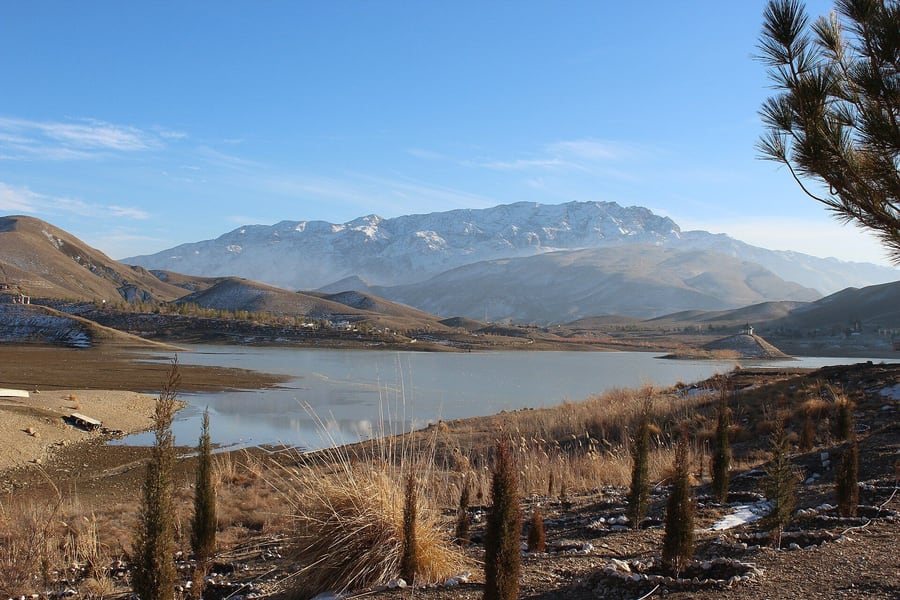
Hanna Lake, Quetta
A reservoir built in 1894 where the Urak valley begins, 17 kilometres east of Quetta, held between two mountains by a wall like the battlements of a fort. There is a lakeside restaurant under pine trees, and on the eastern shore the province's only rowing, canoeing and sailing centre. The water level depends on the snowmelt, and the lake has dried out completely more than once.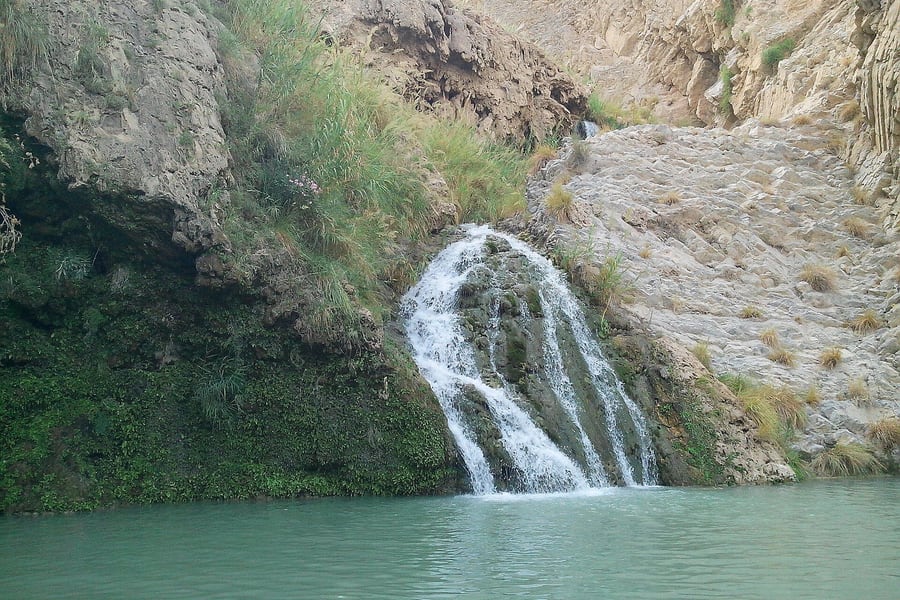 Najamuddin Shahwani / Wikimedia Commons · CC BY 3.0 · 2014 · cropped
Pir Ghaib
A waterfall in the Bolan valley, about 70 kilometres from Quetta, that runs down the rock into green pools among palm trees. The name is a legend: the saint Pir Ghaib, pursued through the gorge, prayed at a blank rock wall and it opened to take him in — the Invisible Saint. His sister Bibi Nani is said to lie downstream. Local Hindus worship him as Mahadev.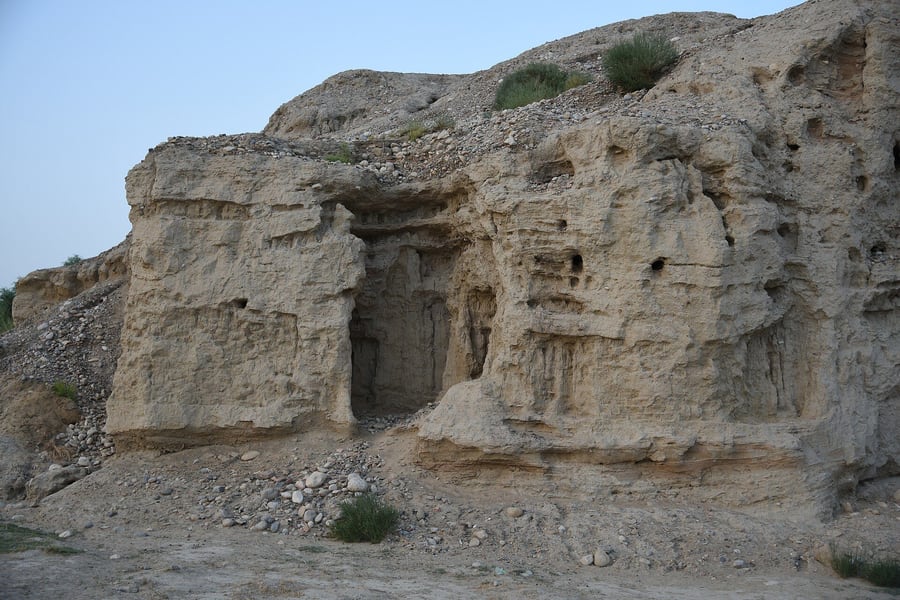 mhtoori / Wikimedia Commons · CC BY-SA 4.0 · 2018 · cropped
Mehrgarh
On the Kachhi plain near the foot of the pass, one of the earliest places in South Asia where people farmed and herded. A French mission led by Jean-François and Catherine Jarrige found it in 1974 and dug for most of the next quarter-century; the first village, in the north-east corner of the site, is dated to as early as 7000 BCE, and some 32,000 objects have come out of its six mounds.Where to Sleep
This journey takes half a day, so the train does not solve a night for you, and the nights either side are in Quetta or Sibi.
There are no hotel cards on this page. The FCDO advises against all travel to Balochistan, and every bed on this route is in it; it would be wrong to send a reader to one behind a cheerful "check availability" button. Both cities have hotels. If you are going, arrange the stay through someone with local knowledge, and tell the local authorities where you will be, rather than booking off a page like this one.
Practical Information
Security first. Read the advisory at the top of this page, then read your own government's version in full. The FCDO advises against all travel to Balochistan and against using the railway network at all. On the train you can expect armed Frontier Corps and police on board, metal detectors and sniffer dogs at Quetta station, and unscheduled stops in the pass.
Foreign travellers. The FCDO's advice is to contact the local authorities at your destination before you travel: in higher-risk areas they sometimes arrange a police escort, and they will tell you whether you need a No Objection Certificate from the Ministry of Interior. Do this before you buy the ticket, not at the station.
Photography. Security staff at Quetta station have made passengers delete photographs of the station. Ask before you take a camera out, on the platform or on the train.
Visas. You need a visa and must apply in advance. Your passport must be valid for at least six months beyond the date of your visa application. Journalists' visas carry extra travel restrictions.
When to go. October to March. Sibi is among the hottest places in Pakistan, with June averaging 44 °C, while Kolpur and Mach, high above it in the pass, get snow in a hard winter.
Language. Urdu, Balochi, Brahui and Pashto in the pass; Pakistan Railways publishes in English, and station boards carry both English and Urdu.
Travel advice checked against gov.uk/foreign-travel-advice/pakistan, November 2026.
Questions or corrections
Planning this trip and stuck on something, or spotted a time, fare or detail that has changed? Send us a message about The Bolan Pass Railway. We read every one, and we update this page when something has changed.