The Youth Railway — Sarajevo to Maglaj down the Bosna
Stanisław Ludwiński / Wikimedia Commons · CC BY-SA 3.0
- DistanceSarajevo–Maglaj, on the 240 km Šamac–Sarajevo line
- DurationAbout 2 hours 33 minutes on the through train
- Best seasonLate spring to early autumn
Introduction
On 1 April 1947, in a country still in ruins, Yugoslavia began building a railway from the Sava down to Sarajevo. It had no money and very little machinery, so it used young people instead — some 212,000 volunteers, working in brigades through the spring, summer and autumn. They laid track at an average of about 1,100 metres a day. On 16 November 1947, a little over seven months after the first sod, the first train ran the whole way.
That line is still the spine of central Bosnia, and the stretch of it between Sarajevo and Maglaj is a genuinely worthwhile ride — not because it is spectacular for its whole length, but because of what it passes through.
North out of the capital the train picks up the Bosna and follows it for the rest of the day. Within an hour it is crossing the Visoko basin, the heartland of the medieval Bosnian state: this is where the kings were crowned, in a Franciscan church at Mile founded in 1340, and where their castle still stands in outline on the hill above the town. Then comes Zenica, the steel city, unapologetically industrial. And then, just downstream of it, the valley narrows without warning into a gorge, the river doubles back on itself, and a fortress appears on the spur inside the bend. That is Vranduk, and the railway goes through the hill beneath it in the longest tunnel on the line.
Beyond Vranduk the Bosna runs on north through Nemila and Žepče to Maglaj, where another ruined fortress looks down from a bluff and the valley finally opens out.
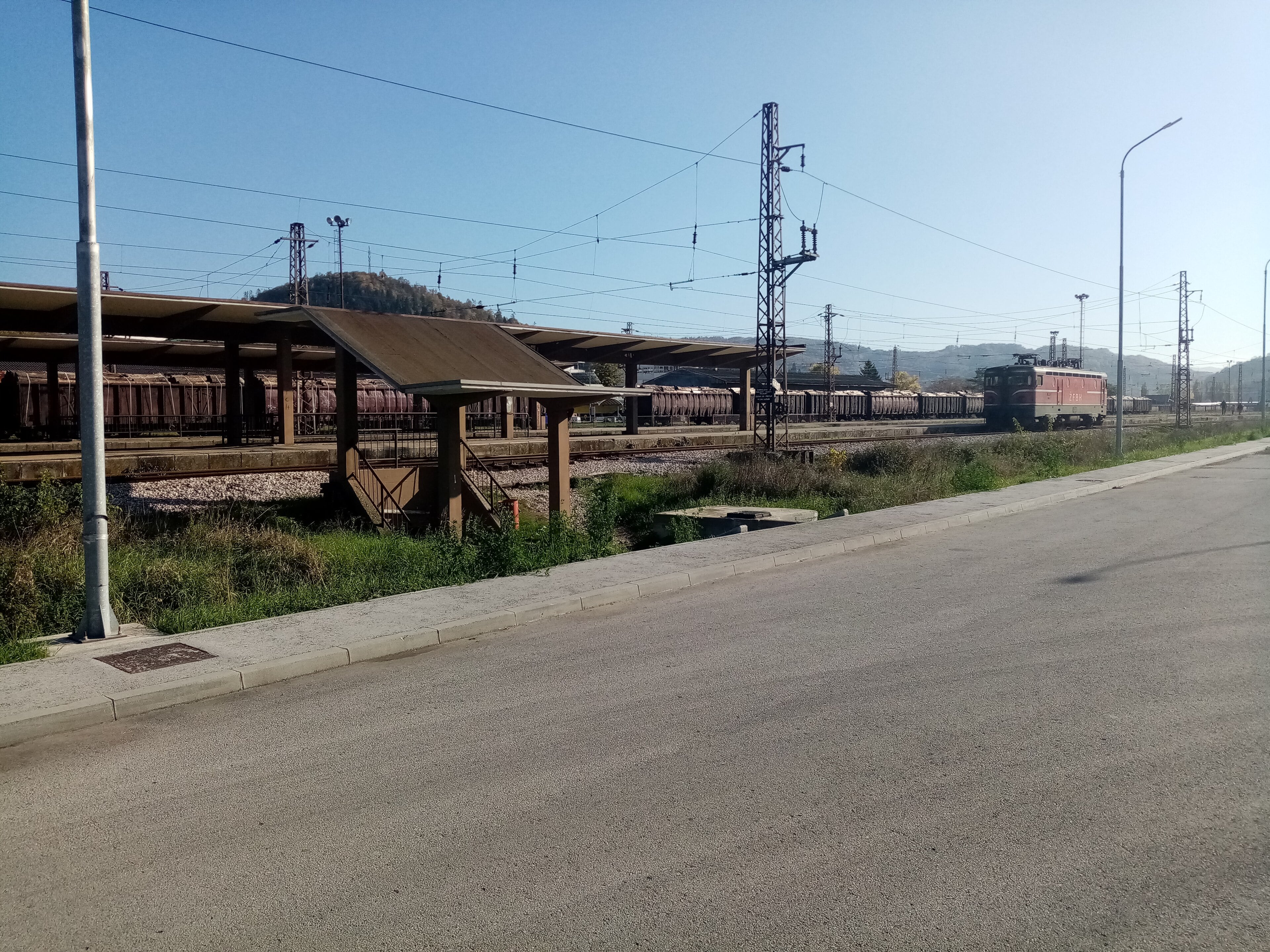
It should be said plainly what this is and is not. It is not a tourist train, not a heritage operation, and not a luxury one. It is a working electrified railway carrying freight out of the Zenica steelworks, with one through passenger train a day in each direction and a handful of commuter locals. Some of what you see from the window is heavy industry.
But it is cheap, it is real, and it runs through the valley where Bosnia was invented — on rails that a quarter of a million teenagers put down in seven months, almost eighty years ago.
The Journey
The through train, 710, leaves Sarajevo at 16:28 and reaches Maglaj at 19:01 — two and a half hours, with the light going golden over the valley in the second half of the year. In the other direction 711 leaves Maglaj at 06:07 and is in Sarajevo before nine.
Out of Sarajevo
The first half hour is city and suburb: Alipašin Most, Rajlovac, the yards at Semizovac. It is not pretty, and there is no use pretending otherwise. What it is, is informative — this is the industrial apron of the capital, and the railway threads straight through the middle of it.
At Podlugovi the hills draw in and the train settles onto the Bosna, which it will now follow for the rest of the journey.
The Visoko basin
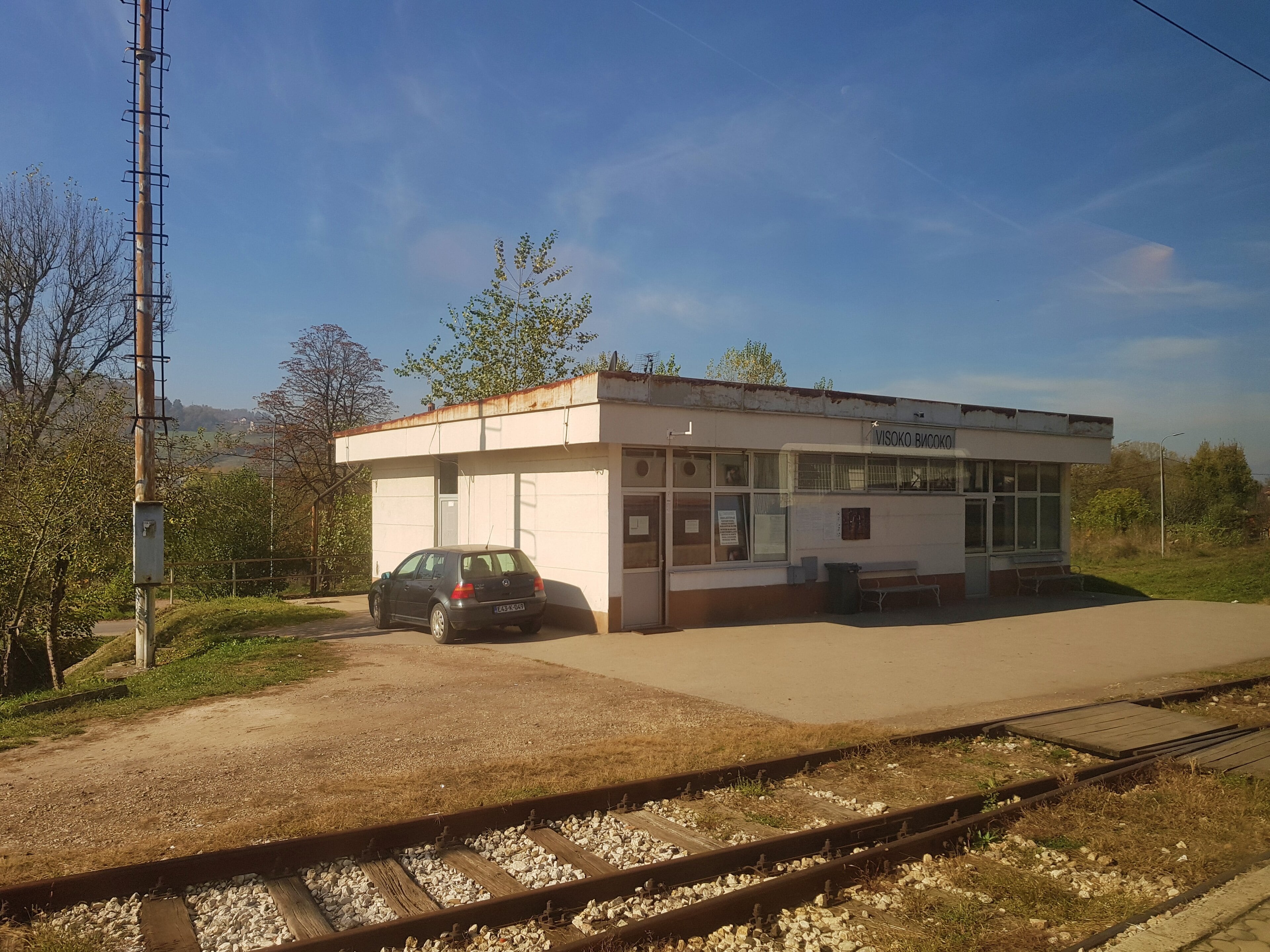
Visoko is the first stop that matters. The basin opens out, green and wide, and it is worth knowing what you are looking at: this was the centre of the medieval Bosnian state. On the hill of Visočica above the town stand the low walls of Visoki, the royal castle. Out at Arnautovići, a few minutes away, a field holds the foundations of the friary of St Nicholas at Mile, built in 1340, where Tvrtko I was crowned king of Bosnia in 1377 and where he was buried. There is very little to see and a great deal to think about.
Zenica
Zenica is the largest place on the line and the reason the line is electrified and busy. The steelworks dominate the approach and the town, and the train runs past a good deal of it. Zenica is also the practical hinge of the journey: nearly all the local services from Sarajevo terminate here, so if you are breaking the trip, break it in Zenica.
Vranduk
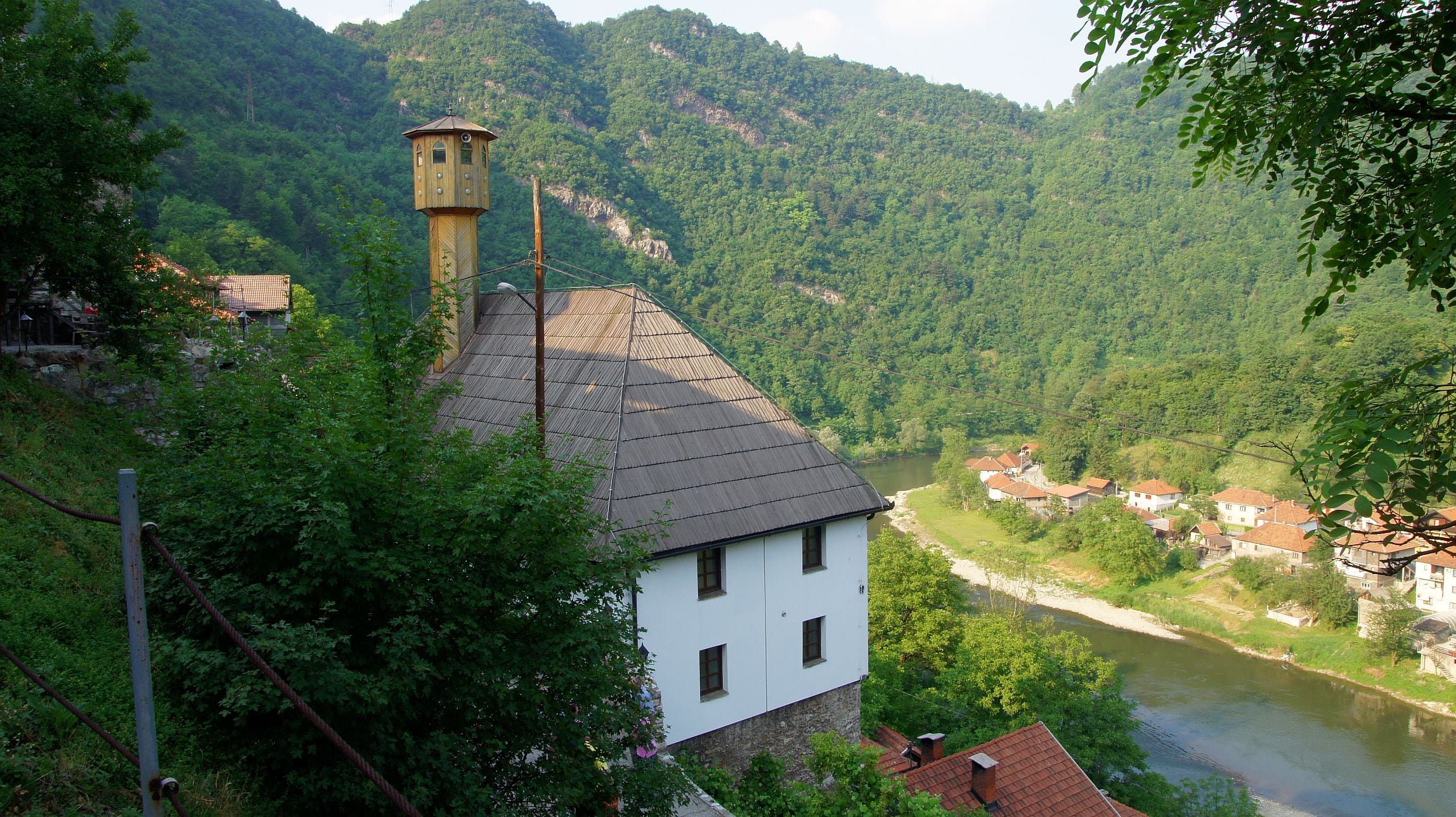
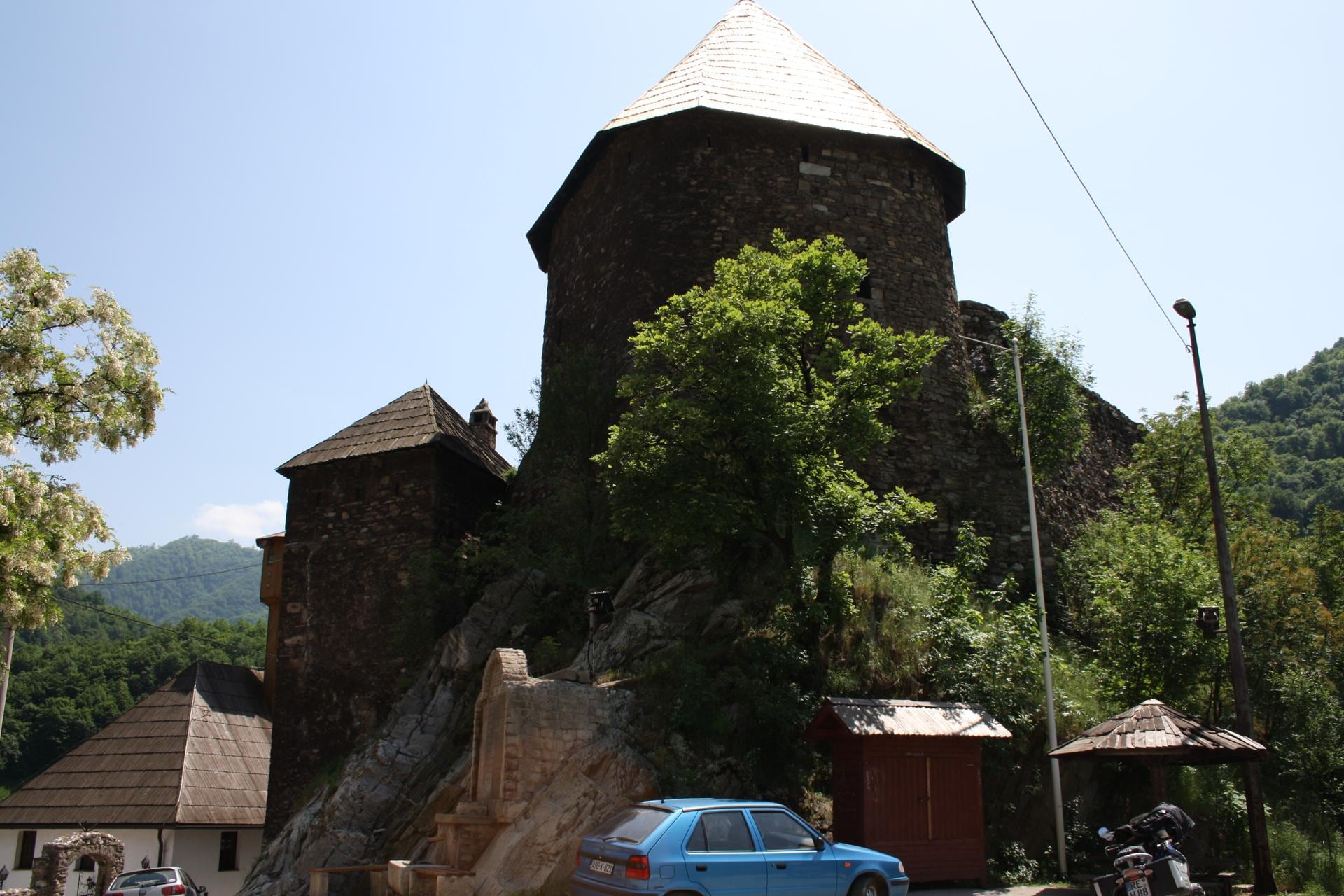
Then the best part. A few kilometres beyond Zenica the valley closes into a gorge, wooded and steep on both sides, and the Bosna makes a hairpin turn. On the spur inside the bend sits Vranduk — a fortress of the 12th to 14th century with a village of steep roofs crammed below it and, under the citadel, a small Ottoman mosque named for Sultan Mehmed II. The railway takes the longest tunnel on the whole Šamac–Sarajevo line through the hill here.
It is a short stretch and it is over quickly. Have the camera out before Zenica falls behind.
Down to Maglaj
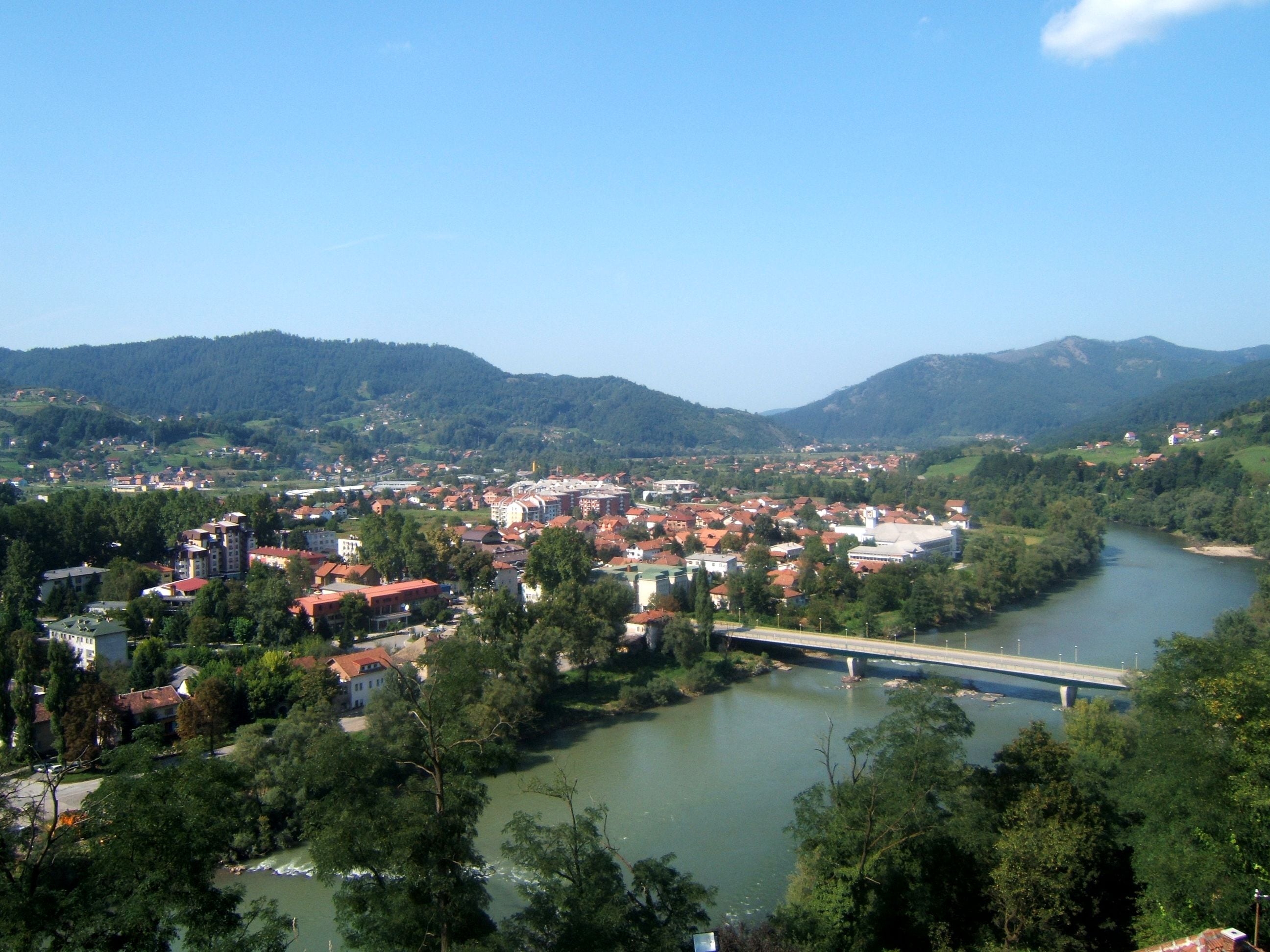
North of the gorge the valley stays narrow through Nemila and Bistričak, then loosens towards Žepče and Begov Han. The last run into Maglaj is gentle: the river broadens, the hills step back, and the town appears along the water with its ruined fortress on a bluff above the roofs.
The train
Ordinary ŽFBH stock — a locomotive and coaches, plain fabric seats, windows that open, no catering and no commentary. The line is electrified throughout, so the ride is quiet. Bring something to eat and drink, particularly on 711, which leaves Maglaj before dawn.
Along the route
trinium / Wikimedia Commons · CC BY-SA 3.0Built by teenagers in seven months
The railway you are riding was laid between April and November 1947 by youth work brigades — some 212,000 young volunteers — putting down track at about 1,100 metres a day. It is why this line, and not an older one, carries the traffic of central Bosnia.Stanisław Ludwiński / Wikimedia Commons · CC BY-SA 3.0The gorge at Vranduk
Just downstream of Zenica the Bosna doubles back on itself, and on the spur inside the bend stands Vranduk, a medieval fortress with a village packed under its walls. The line's largest tunnel goes through the hill here, and it comes without warning.Simon Legner / Wikimedia Commons · CC BY-SA 4.0The valley the kingdom was run from
Between Sarajevo and Zenica the train crosses the Visoko basin, heartland of the medieval Bosnian state, where a friary of 1340 became the place Bosnia's kings were crowned. Almost nothing survives above knee height, which is somehow the point.A bit of history
Culture & experiences along the way
Assetta / Wikimedia Commons · CC BY-SA 3.0Take the through train, not the locals
One train a day each way runs the whole way as a fast train: 710 out of Sarajevo in the late afternoon, 711 back from Maglaj early in the morning. The locals only go as far as Zenica or Visoko and mostly run at commuter hours. If you want the gorge and the full valley in one sitting, it is 710 and 711 or nothing.Szajci / Wikimedia Commons · CC BY-SA 4.0An ordinary working railway
Set your expectations honestly. This is central Bosnia's freight corridor — electrified, busy with steel and coal out of Zenica, and lined for stretches with industry. The reward is not luxury but texture: a real country seen from a real train, at a fare nobody would call expensive, with a gorge and three fortresses along the way.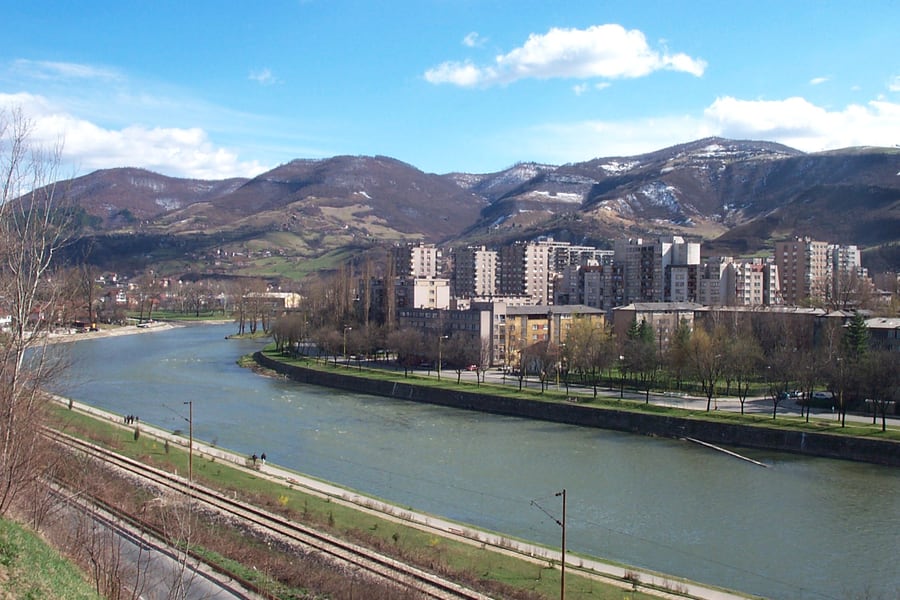 Philidenfer66 / Wikimedia Commons · Public domain · cropped
Break the trip at Zenica
Zenica is the halfway point and has by far the most trains — several locals a day from Sarajevo on top of the through service. Splitting the journey there turns an awkward timetable into a manageable one, and puts Vranduk, a short way downstream, within easy reach for an afternoon.Timetables
This is a year-round, everyday railway rather than a seasonal one — but the useful trains are few, and the operating-day notes are where people come unstuck.
The through trains — as of August 2026
| Train | Route | Departs | Arrives | Runs |
|---|---|---|---|---|
| 710 | Sarajevo → Maglaj | 16:28 | 19:01 | Every day except Saturdays |
| 711 | Maglaj → Sarajevo | 06:07 | 08:47 | Every day except Sundays |
These are the only two services that cover the whole route, and they are classed as fast trains. Note that they do not rest on the same day: there is no 710 on a Saturday and no 711 on a Sunday, so a Saturday-out, Sunday-back weekend by through train is impossible in both directions.
Locals to Zenica and Visoko
| Train | Route | Departs | Arrives | Runs |
|---|---|---|---|---|
| 2150 | Sarajevo → Zenica | 04:44 | 06:28 | Not weekends or public holidays |
| 2151 | Zenica → Sarajevo | 04:59 | 06:39 | |
| 2156 | Sarajevo → Zenica | 15:41 | 17:25 | Not weekends or public holidays |
| 2157 | Zenica → Sarajevo | 15:32 | 17:42 | Not weekends or public holidays |
| 2158 | Sarajevo → Zenica | 22:02 | 23:42 | 26.06–27.09.2026, Fri/Sat/Sun only |
| 2101 | Maglaj → Zenica | 04:48 | 06:21 | |
| 2102 | Zenica → Maglaj | 15:36 | 17:08 |
There are also several short workings between Sarajevo and Visoko through the day — roughly 05:24, 08:17 and 17:21 out, and 06:48, 09:29 and 18:36 back — most of which also skip weekends and public holidays.
Reading the timetable properly
Two traps. The first is the weekend gap: most of the locals are commuter trains and simply do not run on a Saturday or Sunday, which leaves the single through train doing all the work. The second is that Zenica, not Maglaj, is the well-served destination — if the through times do not suit, going only as far as Zenica opens up several more departures.
For the gorge at Vranduk, either through train works, but 710 has the better light for most of the year.
Where to check
The operator is Željeznice Federacije Bosne i Hercegovine, and the full table — train numbers, times and the asterisked operating-day notes — is published at zfbh.ba/en/time-table (opens in a new tab). The current edition is the ŽFBH timetable for 2025/2026.
Times read from the operator's published timetable, August 2026.
Tickets
Buy at the station window before you board. ŽFBH does not publish a fare table for the Bosna valley services, so no figure is quoted here — but domestic fares in Bosnia and Herzegovina are low and this is a short journey on an ordinary train. There is no online sale and no seat reservation, so nothing needs arranging in advance. Carry cash in convertible marks and do not rely on a card reader at a wayside station.
The office at Sarajevo is staffed for the main departures; at Visoko, Žepče and Maglaj assume limited hours and be ready to pay the conductor. What you get is a locomotive and coaches, fabric seats, opening windows, no catering and no announcements in English — and at these prices that is a fair offer. ⚠️ Train 711 leaves Maglaj at 06:07, when nothing will be open: buy food the night before.
Book your tickets
Sarajevo → Zenica → Maglaj
The Bosna valley line
The through fast trains 710 and 711, plus locals to Zenica and Visoko. Run by ŽFBH. Buy at the station; fares on this line are not published online, and are low by European standards. Check the operator's timetable page before travelling — the weekday-only notes matter here.
Book Tickets (opens in a new tab, on ŽFBH (Railways of the Federation of BiH))via ŽFBH (Railways of the Federation of BiH)Rail Passes
A pass works on this line, and the Bosna valley is one of the places where the paper-versus-mobile distinction can catch you out — because the route this railway belongs to crosses between the country's two operators.
Which pass
There is no One Country Pass for Bosnia and Herzegovina — Interrail says it "is not available" — so the only option is the Interrail Global Pass, or the Eurail Global Pass if you live outside Europe. It covers 33 countries, which is the sensible way to use it: as one leg of a Balkans trip rather than for this journey alone.
Sarajevo to Maglaj sits on ŽFBH metals, part of the operator's Doboj–Sarajevo main line, so a Global Pass is valid for the whole of the ride described here.
No reservations
Bosnian trains carry no seat reservations. Interrail's own wording is that "you can board all trains and find your preferred seat" — so there is no booking step, no reservation fee, and nothing to arrange before you travel. Given how few trains there are, arriving early is still sensible; it just is not compulsory.
Where the paper-pass trap bites
⚠️ This matters here more than on any other Bosnian journey. On ŽRS trains — Republika Srpska's operator — only a paper Interrail pass is accepted; a mobile pass is not. This journey ends at Maglaj, safely inside ŽFBH territory. But the same line continues north through Doboj, where the ŽRS network takes over towards Banja Luka, Novi Grad and the Croatian border.
So: if you are riding Sarajevo–Maglaj and turning round, a mobile pass is fine. If you plan to carry on north out of Doboj, get a paper pass — otherwise you may find yourself unable to use it for the second half of the trip.
Is it worth it?
Not for this journey by itself; the domestic fare is low and the pass will not repay itself on one run. It earns its place if the Bosna valley is your route into or out of the country.
Pass conditions checked against Interrail's Bosnia-Herzegovina page, August 2026.
Places to Visit
Nearly everything worth stopping for on this line is medieval, and most of it is a ruin. That is not a complaint — the Bosna valley was the core of the medieval Bosnian state, and the fortresses along it are the physical record of a kingdom that most visitors have never heard of.
Visoko comes first, about an hour out of Sarajevo, and it carries more history per square kilometre than anywhere else on the route. On the hill of Visočica stand the remains of Visoki, the royal castle — a circuit of low walls, a gate, and a view over the whole basin that explains the siting instantly. Out at Arnautovići, a short way off, the foundations of the friary of St Nicholas at Mile sit in a field beside a road. A church stood here by 1244; the friary went up in 1340; and from 1377, when Tvrtko I Kotromanić was crowned, this was where the kings of Bosnia received the crown. Tvrtko's grave has been identified in the north wall.
Zenica is the halfway town and the practical base — the steel city, unromantic, but the place with the most trains and the most beds.
Vranduk is the one everybody remembers. A few kilometres downstream of Zenica the Bosna turns back on itself and a fortress of the 12th to 14th century stands on the spur inside the bend, with a village crammed under the walls and a small Ottoman mosque named for Sultan Mehmed II below the citadel. The railway tunnels through the hill here. Note that the trains do not usefully stop for visitors — Vranduk is best reached from Zenica by road, as an afternoon.
Maglaj, at the northern end, has the other fortress: walls and a tower on a bluff directly above the river, a short climb from the town, with the Bosna and the roofs spread out below.
One honest word of warning. Visoko is also known internationally for claims about "Bosnian pyramids" made of the hills around it. Those claims are not accepted by archaeologists, and the genuine article — a royal capital with real, datable remains — is the better reason to get off the train.
 Stanisław Ludwiński / Wikimedia Commons · CC BY-SA 3.0 · cropped
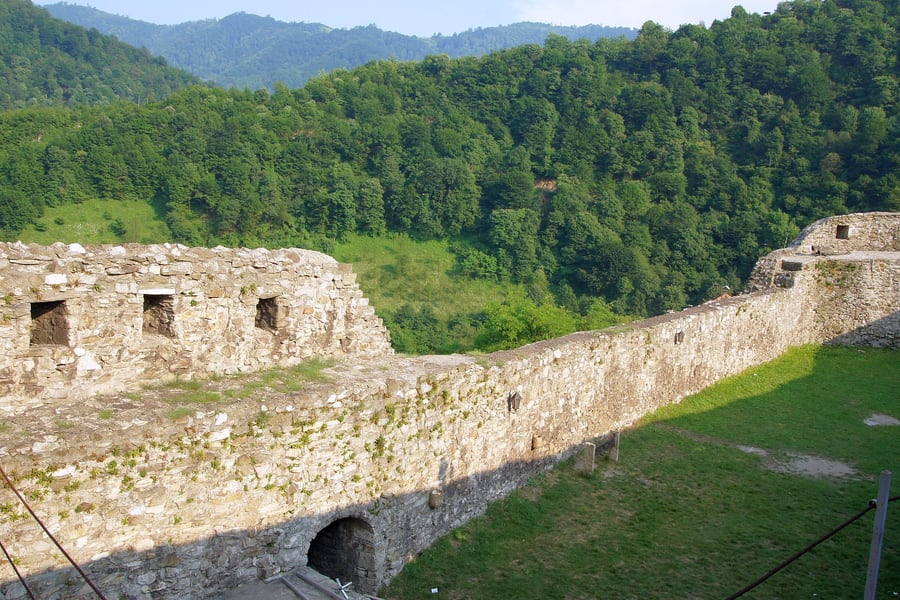
Vranduk
A stone fortress on a spur inside a hairpin bend of the Bosna, built somewhere between the 12th and 14th centuries — nobody knows by whom — with a tight village of steep roofs beneath it. After the Ottoman conquest a small mosque went up below the citadel, dedicated to Sultan Mehmed II and still known as the Emperor's Mosque. Climb to the walls for the view straight down the gorge.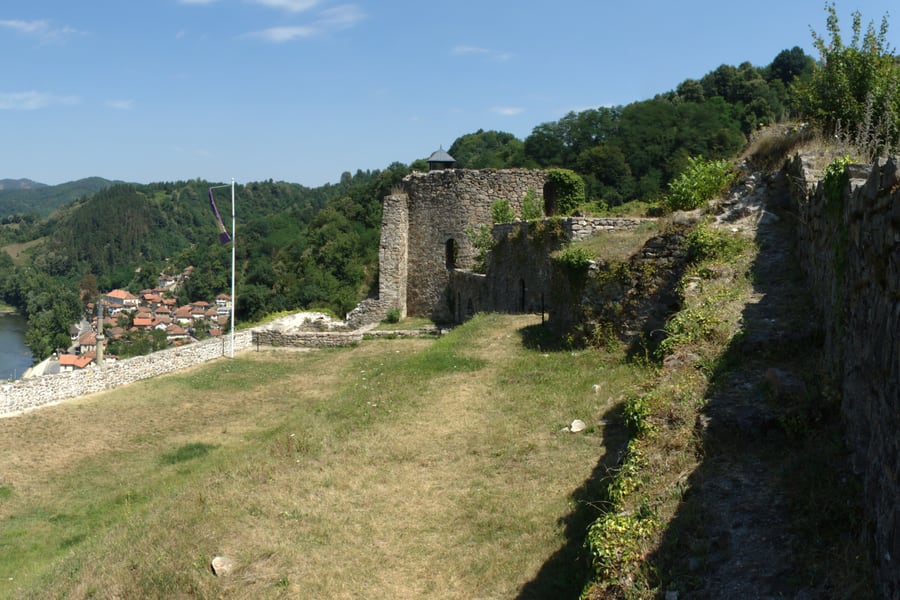 Aktron / Wikimedia Commons · CC BY 3.0 · cropped
Maglaj fortress
The old town stands on a bluff over the river at the northern end of the ride, its walls and tower ruined but substantial, with the roofs of Maglaj and the green Bosna directly below. It is a ten-minute climb from the town and the best thing to do with the gap between trains — which, on this timetable, is likely to be a long one.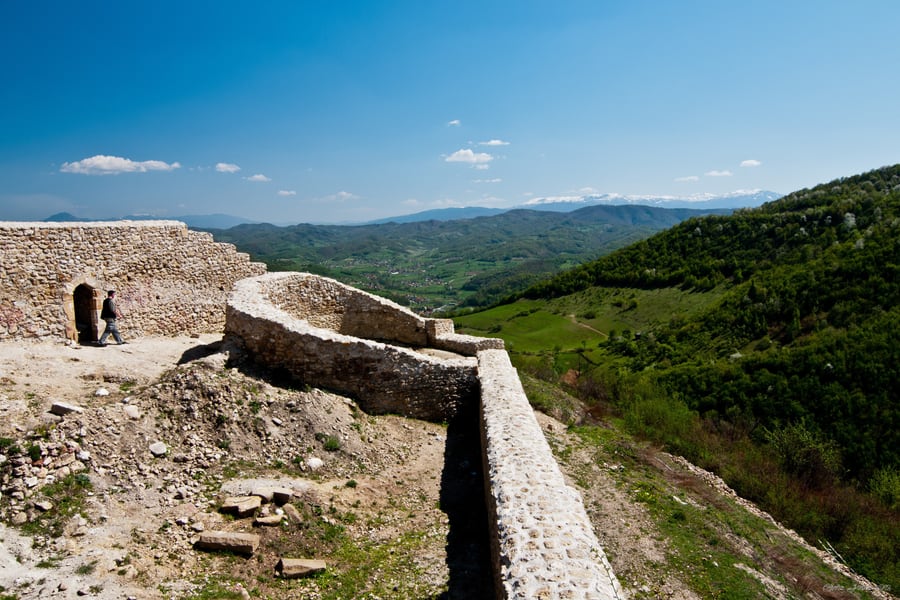 CJ / Wikimedia Commons · CC BY 2.0 · cropped
The old town of Visoki
The royal castle of medieval Bosnia, on the hill of Visočica above the town. What is left is a circuit of low walls and a gate on a grassy summit, but the view over the whole Visoko basin makes the reason for building here obvious: everything moving up or down the Bosna passed below. This was the seat the Bosnian bans and kings governed from, and the coronation church at Mile lies a short way off. A steep but short walk up, with no gate, no ticket and usually nobody else there.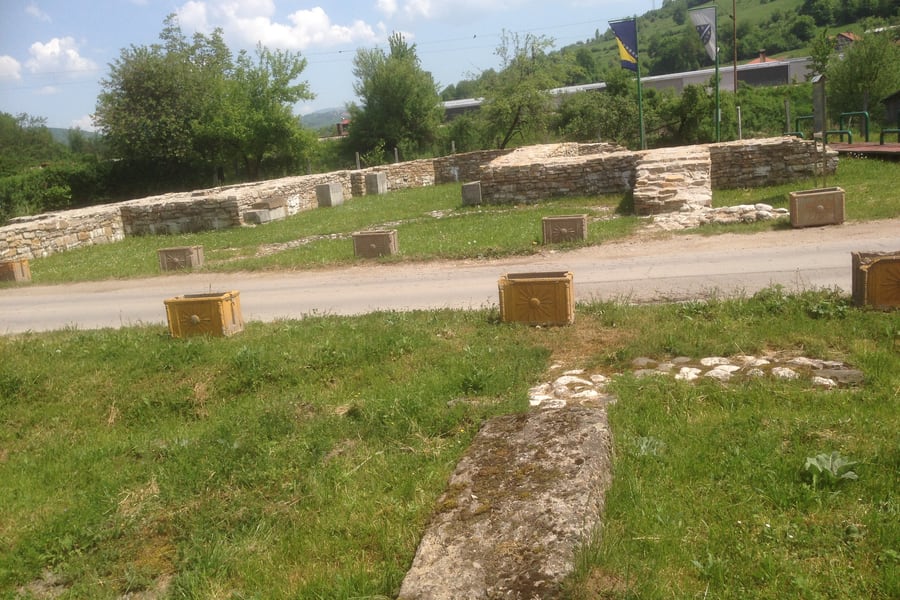 Zavičajac / Wikimedia Commons · CC BY-SA 4.0 · cropped
Mile
Low foundations in a field, and one of the most important places in Bosnian history. A Franciscan friary of St Nicholas was built here in 1340; from 1377, when Tvrtko I Kotromanić was crowned, it was where the kings of Bosnia took the crown, and Tvrtko's own grave has been identified in the north wall of the church. The site appears in writing as early as 1244.Where to Sleep
The timetable, more than the scenery, decides where you sleep on this line. With one through train a day in each direction and most locals running only on weekdays, the trip is far easier split than done in one go.
Sarajevo is where most people will start and it needs no introduction: the widest choice of accommodation in the country, at every price, and the 710 leaves in the late afternoon so there is no need to be up early.
Zenica is the sensible middle. It is not a tourist town — it is a working steel city — but it has hotels aimed at business travellers, it is the best-connected station on the route, and it puts Vranduk within an easy afternoon by road. If you want to see the gorge properly rather than through a window at speed, a night in Zenica is how you do it.
Maglaj is small, and the northern terminus of the useful service. Staying there is what makes the early 06:07 departure survivable, and the fortress above the town is a good way to spend the evening. Expect a modest choice — a couple of hotels and some private rooms.
A note on direction. Because 710 does not run on Saturdays and 711 does not run on Sundays, a weekend built around the through train has to be planned in one direction or the other, not both. Going out on a Friday afternoon and back on a Sunday morning works; the reverse does not.
We do not yet list individual hotels for this journey. When we do, they will be places we have checked rather than places that have paid to appear.
Where to stay
 Fred Romero / Wikimedia Commons · CC BY 2.0 · cropped
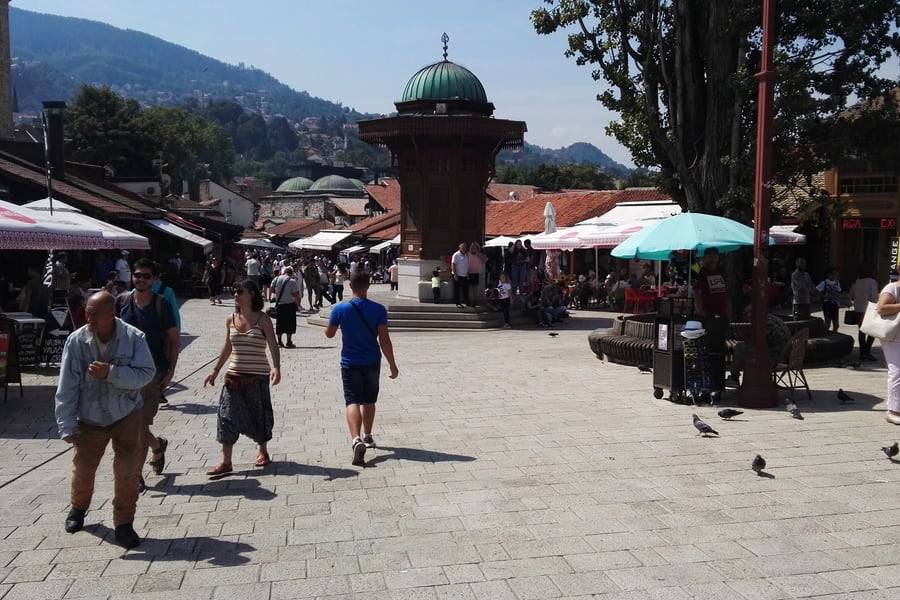
Hotel Europe
Sarajevo, where the line begins
The obvious base for the afternoon departure: Sarajevo's oldest grand hotel, trading since 1882 at the edge of Baščaršija, a short ride from the main station. Worth knowing if you are taking the 16:28 north and want the morning in the city first.
Check Availability (opens in a new tab, on hoteleuropegroup.ba)via hoteleuropegroup.baQuestions or corrections
Planning this trip and stuck on something, or spotted a time, fare or detail that has changed? Send us a message about The Youth Railway — Sarajevo to Maglaj down the Bosna. We read every one, and we update this page when something has changed.